You may recall a month back, to the day, Josh gate crashed an early morning Welly Dam session with the news he aims to climb a grade 20 this year. Having sufficiently completed his last challenge of bagging a 20min 5km run, his sights are now set on building his climbing fitness. Just like with running there are Apps to help train for set goals, instead he is opting to work it out in his own way. In my humble opinion, the best was is increased contact time on rock building up experience of how to read and move on rock:
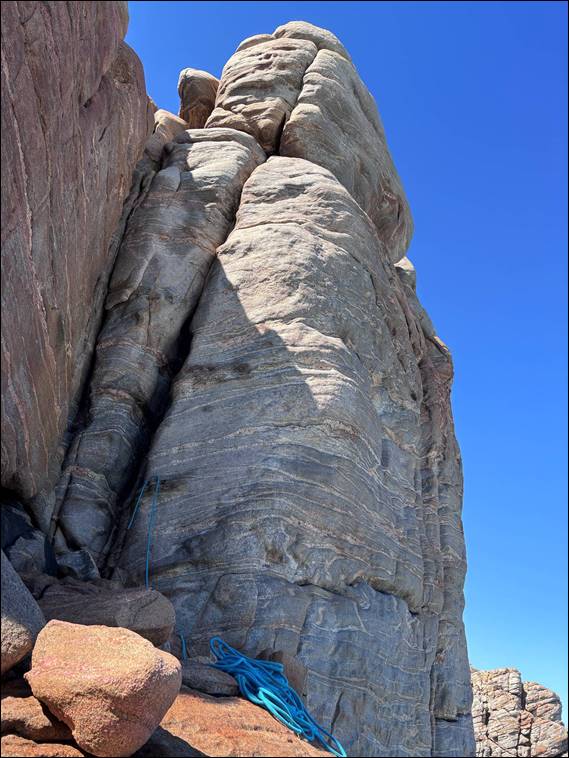
And as alluded to previously, there is no hint that he feels the need to be able to lead whichever grade 20 it may be. Happy to stick with a rope above him, or at least that is how he feels at the moment. When asking him what he fancied today, he felt a shorter crag may be better seeing his stamina on rock is somewhat lacking at the moment. This led me to thinking about the Organ Pipes. It has a nice range of grades and several routes which have particular sections that would be good to make him work on reading the rock and his body positioning:
With all these aspects in mind I worked up a tick list of lines. Four of the six he has not been on before. He should have no memory of them and will need to work out the puzzles they present. Not that he confesses to recalling any of the movements on the two lines he has been on previously. I tend to have a pretty good ‘motor memory’, which enables me to recall holds and gear placements on the majority of routes I have climbed. Often when people are in strife, and they want beta I can offer it from the ground even when they are high above:
I’ve dug out a paper on this precise ability, which suggests it is both a cognitive and physical skill developed through experience. Well I do climb a lot. Going on to suggest it stems from people who have a higher level of spatial memory, attentional focus, and ability to visualize movement patterns. Traits that come with a ‘pattern thinker’ cognitive style, which is strongly associated with Autism Spectrum Disorder. Reading on there are a few other characteristics related to that which seem to be lining up for me. I digress:
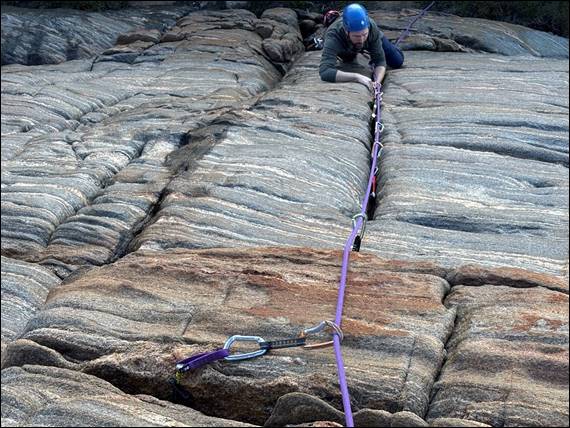
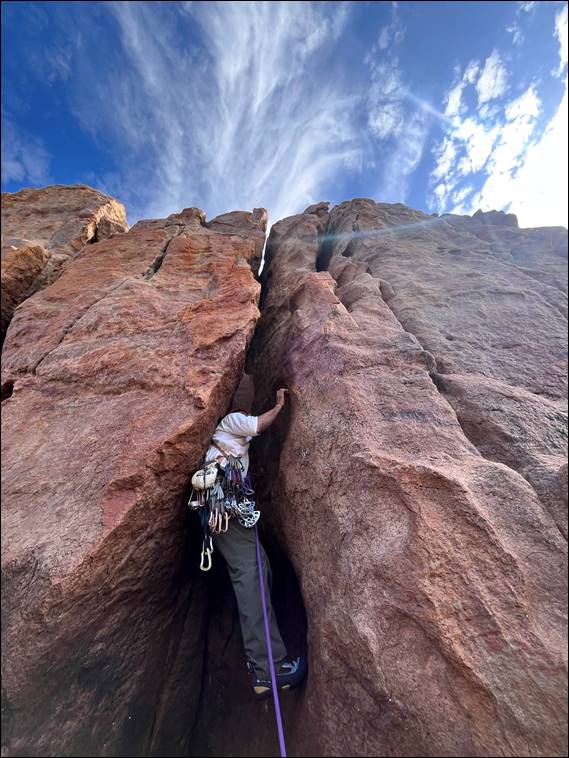
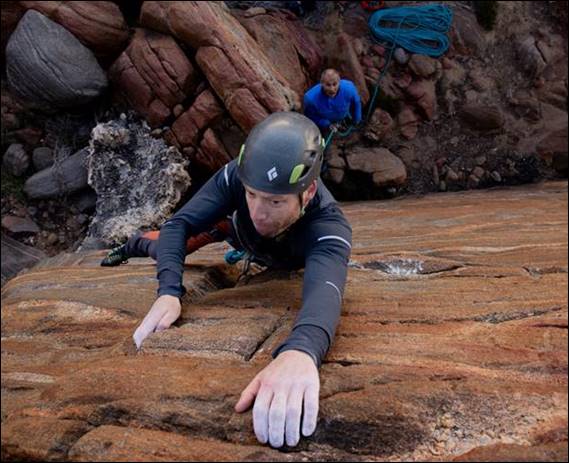
While the grades of the routes, in the order we aimed to bag them were 12, 14, 15, 16, 17, and lastly 16, I already knew the line that would give him the most trouble. Maybe because the difficulties on the grade 15 are the longest lasting, or maybe it is just a sandbag route. I think the latter. Two images up he is about to completely the steep and feisty start. Just one hold to go. Then his footwork, quite literally, let him down and he knows it. With ropes that can stretch as much as 30% this meant he dropped and had to battle the same sequence again:
With each attempt he seemed that bit less controlled in his climbing. No amount of beta I gave him was reaching his brain. Something that is completely natural in situations when you experience intense muscle fatigue, in this case in his forearms. Your brain becomes overrun with stress signals and shifts to emergency survival mode. The ability to think clearly is eroded. That said he finally managed to get up, by which time he looked completely pooped. Definitely time for a rest to allow his blood flow to normalise and brain to reset:
Which it did and did really well, as we bagged the next three lines in good style. Despite the fact they are given a higher grade, which indicates their crux movements are harder than the climb that gave him so much trouble. With the list ticked we agreed it was time to roll. It was a grand session in glorious weather. And has given Josh a few things to think about working on, which we talked about on the way home. I was doubly pleased as I had also selected the climbs to allow me a bonus of bagging the second ascent of three of the routes:
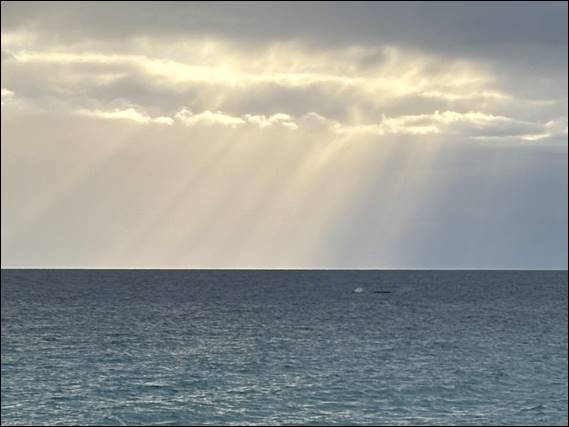
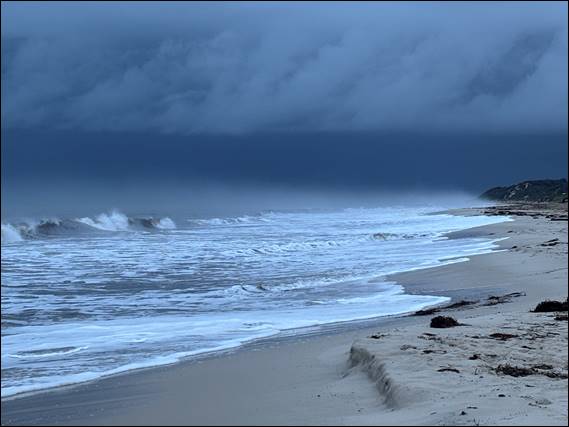
Being such a glorious day I simply had to get out for a wee bit. But first a bunch of domestic duties needed attention. And while I tended to those, Lisa wandered down to the beach for the customary dip. Not that I think I would have enjoyed the cold plunge nor the social scene that goes with it, but I was a little envious when she told me the salmon run had gone past after they got out of the water. With the fish clearly visible in the near shore waves. Close enough that they could have caught them with a net, if they’d had one:
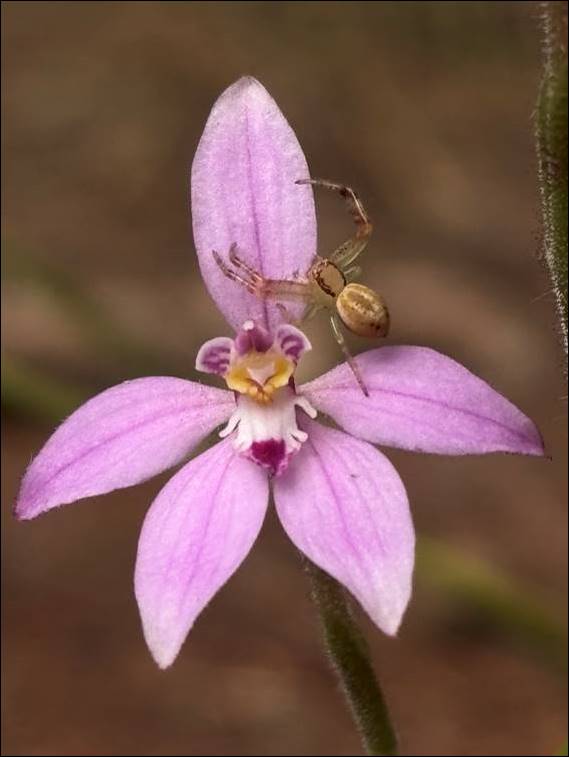
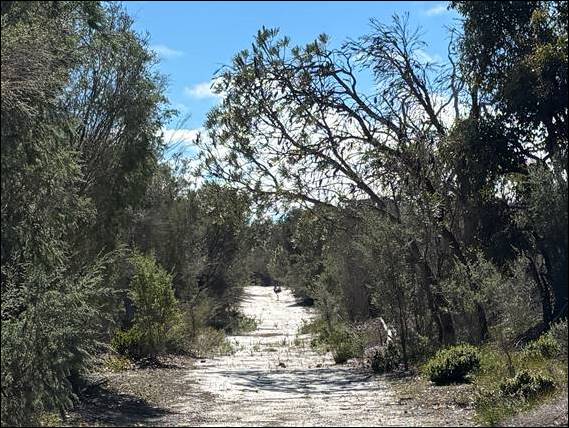
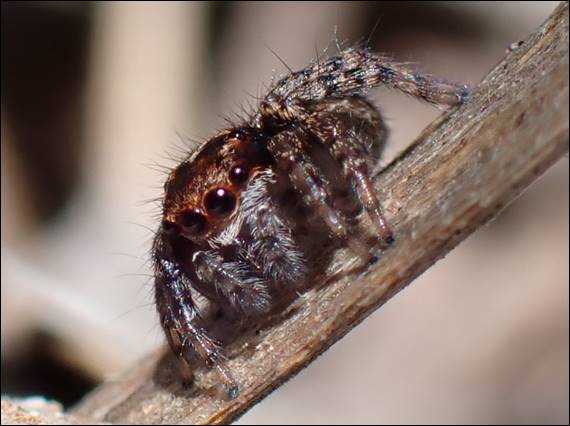
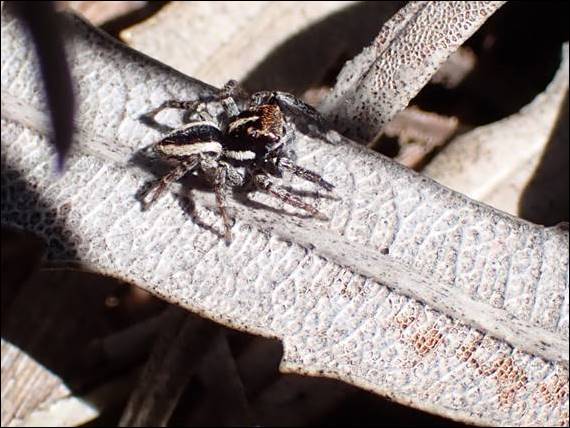
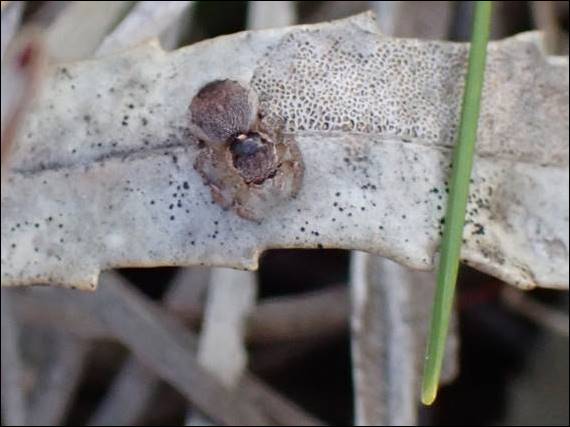
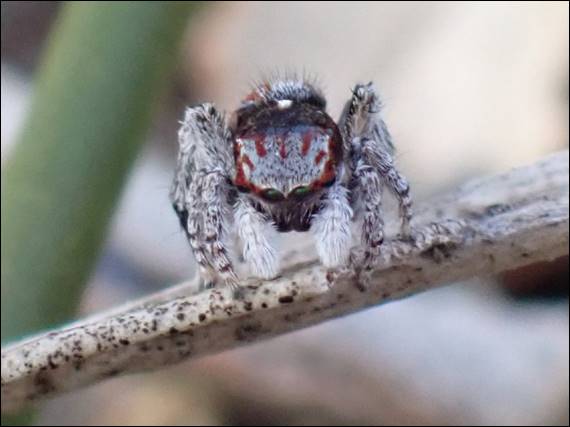
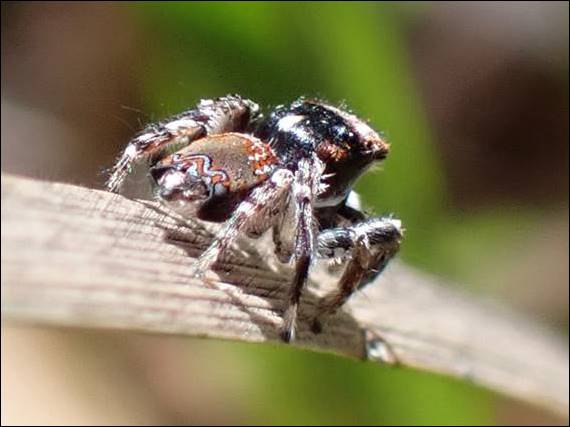
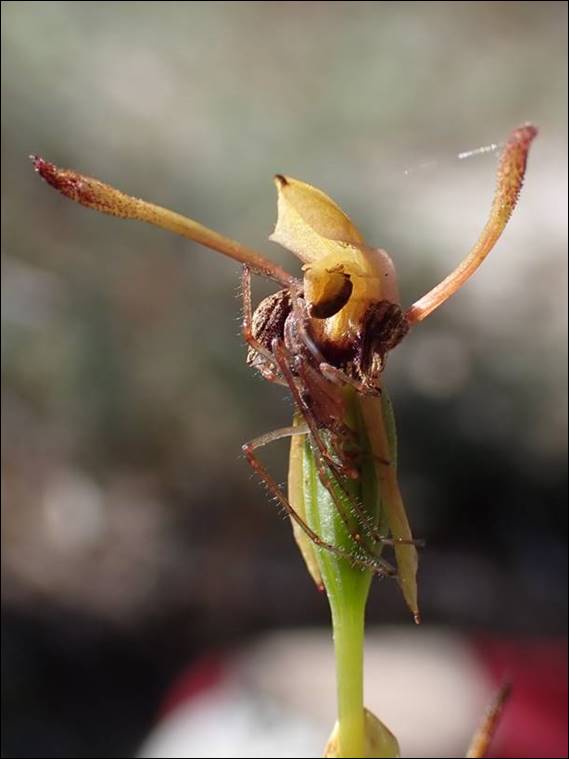
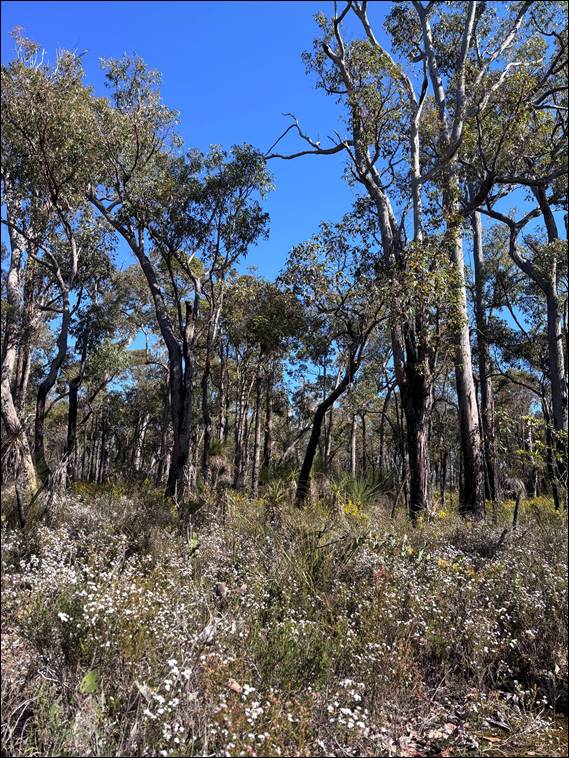
It is all about timing and creating the opportunities. And after the mundane stuff I wanted to achieve was done I snuck out myself heading inland to the Capel Nature Reserve. If I had been in African Savanna I might have needed to watch out for a big cat lazing on a branch, or if I had been in the northern hemisphere potentially a lynx. The only Lynx I was likely to see was however of the spider variety. Lynx Spiders (Oxyopes) are small, with long spines on their legs. They are unique in that their eyes are arranged in a characteristic hexagonal pattern:
Only six of their eyes form this shape. The other two are located in front of and below the main group. If you look carefully you can make out this arrangement in the above image. In my last post I alluded that most spiders have poor sight, but not all do. This is one genus that has very good vision. Evolving this way due to not using a web meaning they need to be able to see their prey, which they pounce on. They then use their spiny legs to hold them still while they inject them. Being hard to identify they are often listed as Oxyopes sp. in regional surveys:
They are not however too hard to find being diurnal, i.e. active during the day. This one would have been a mere 3-4mm long, and I could just about make out that it had caught something. If I am right it is likely that the spider is sucking the juice out of a common mosquito species found in the area, called Culiseta (Culicella) atra. I’m also game to go one step further to suggest the spider I saw helping to keep the mosquito population down may have been a Spotted Lynx Spider (Oxyopes punctatus). Females get to 6mm and males 4mm:
In complete contrast the female and male Golden Orb-Weaving Spiders (Nephila edulis), shown together a few images up, reach 40mm and 6mm respectively. I’ve previously detailed how mating for this species is a risky business. Studies have shown that females can exhibit post-copulatory cannibalism, with a 12% probability of the male becoming a meal. One thing on the males side is that these spiders do not have good vision, being web builders. As long as he stays completely still he is relatively safe:
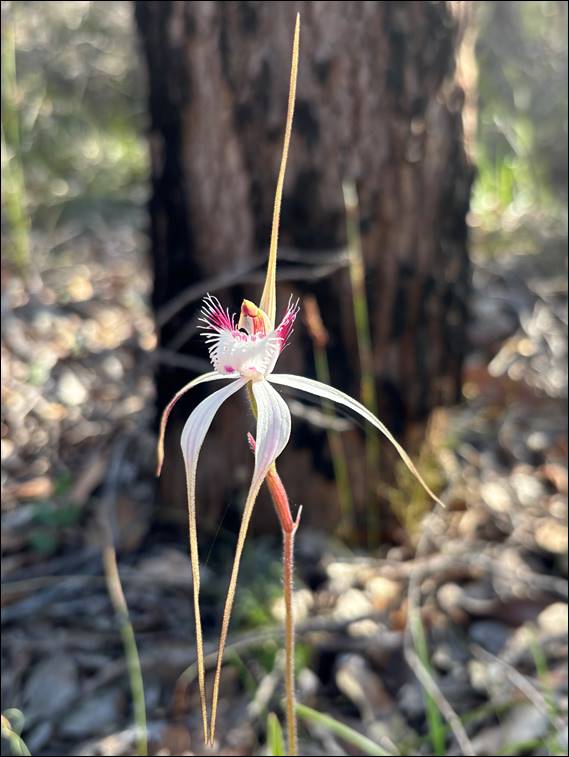
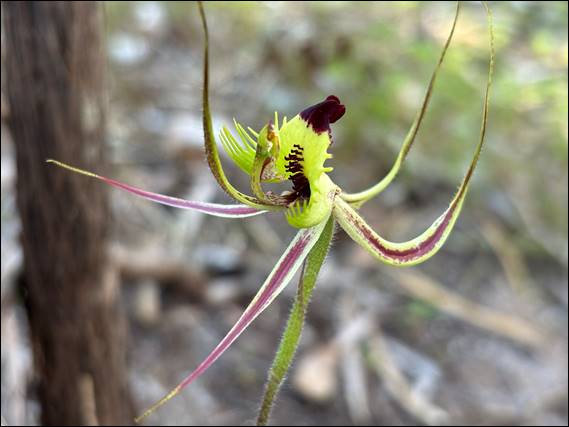
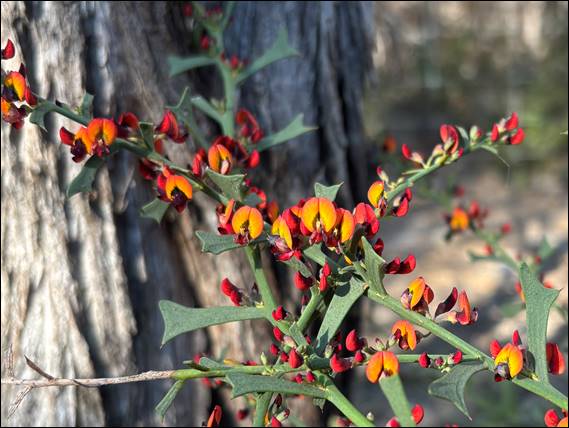
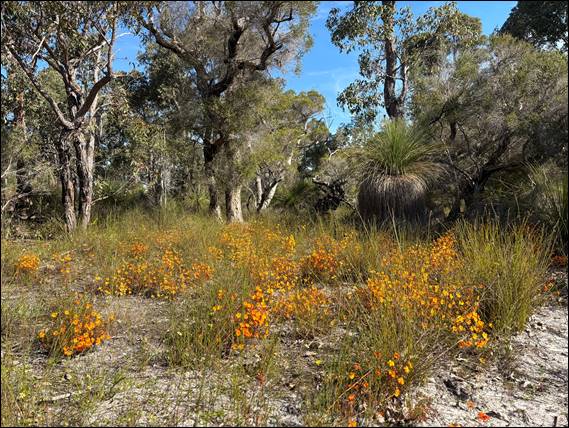
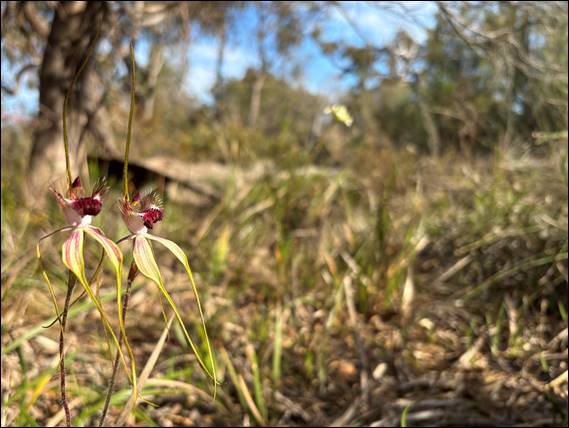
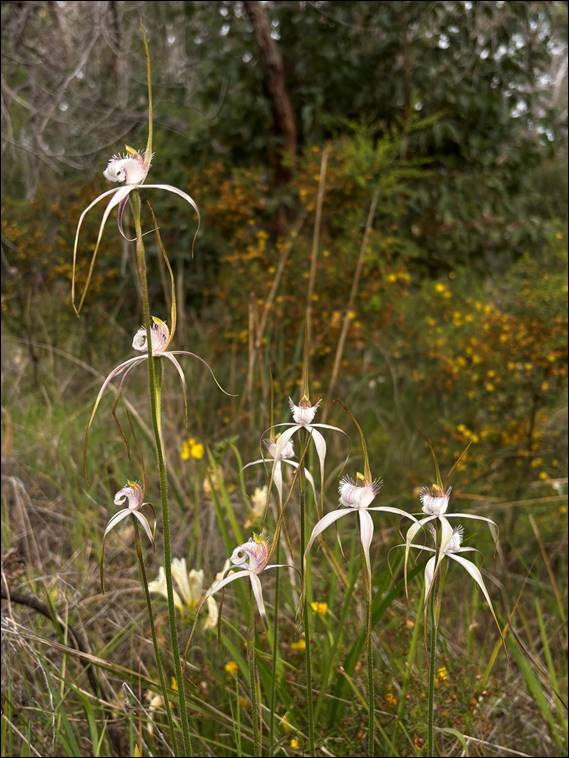
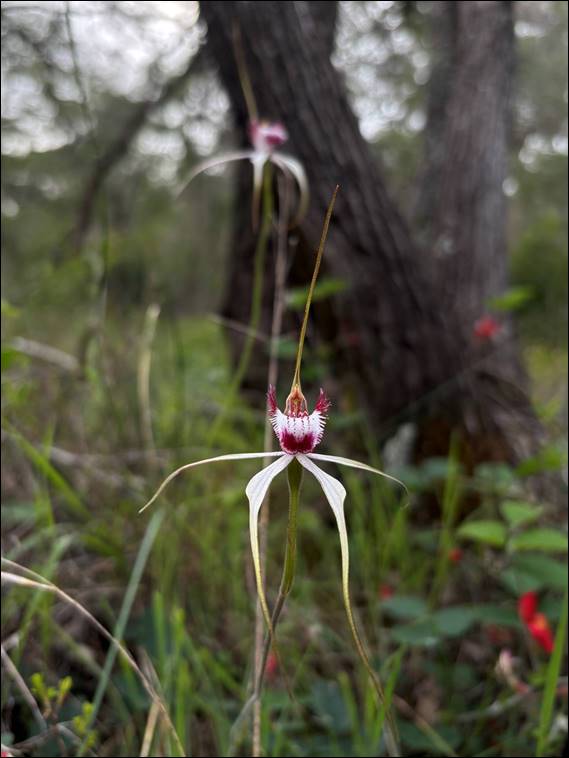
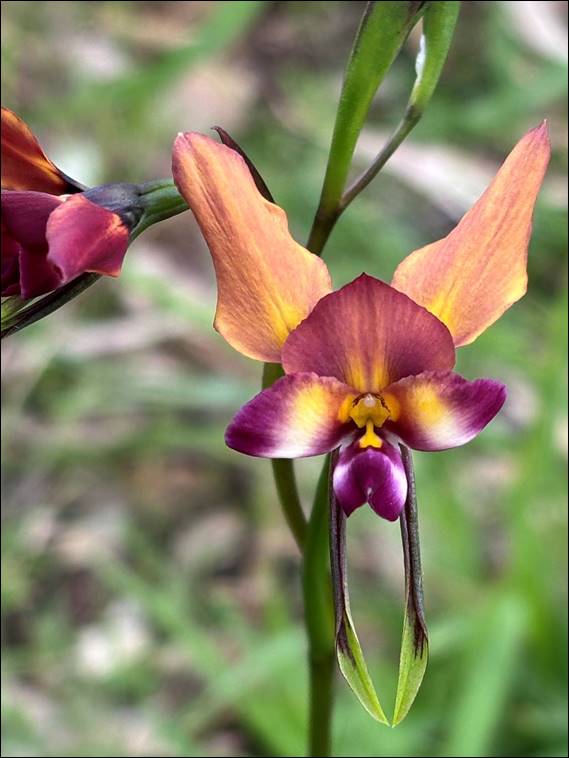
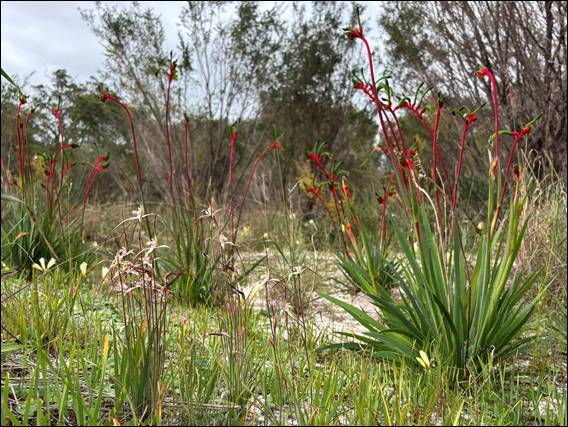
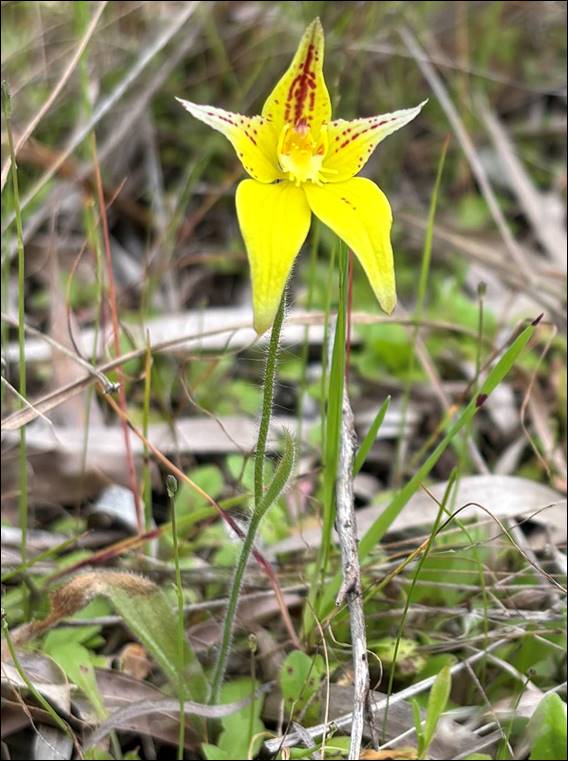
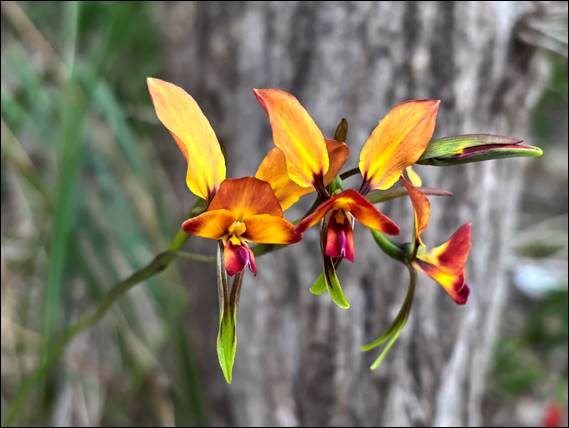
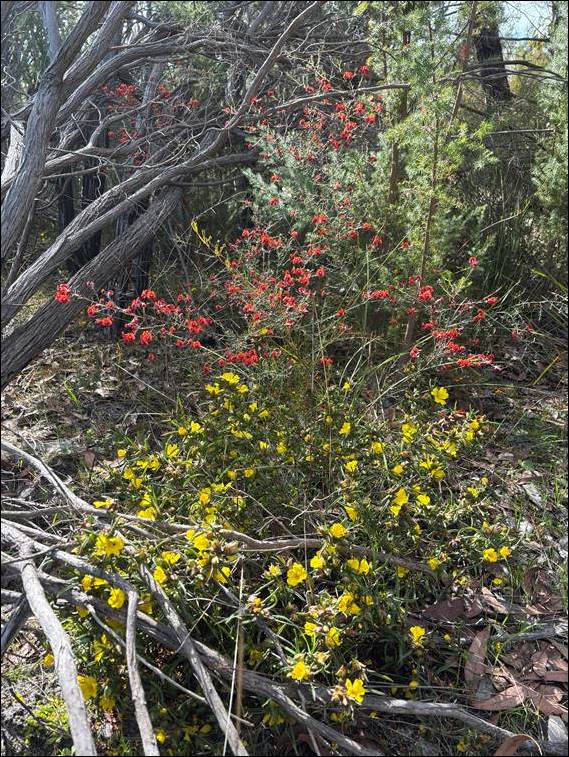
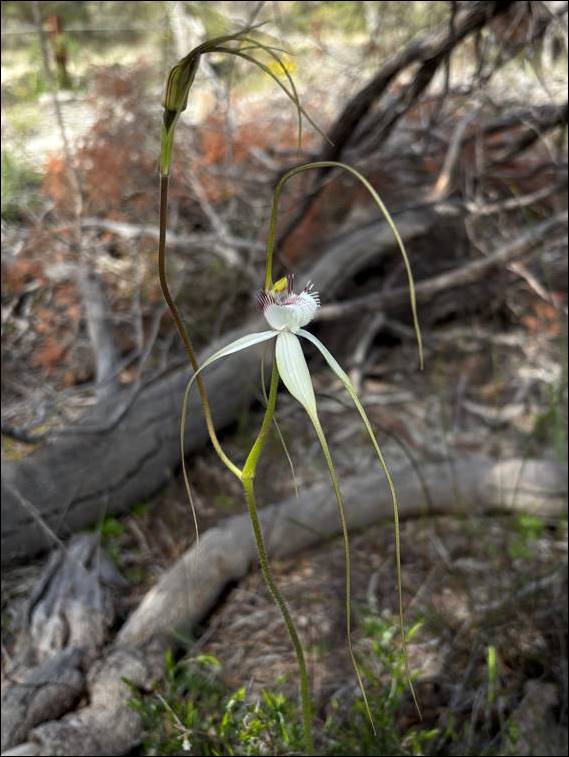
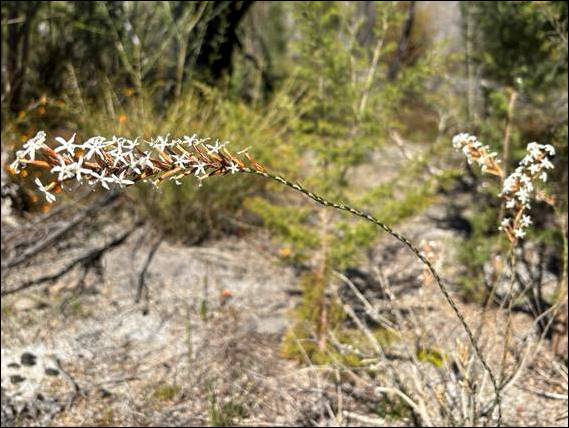
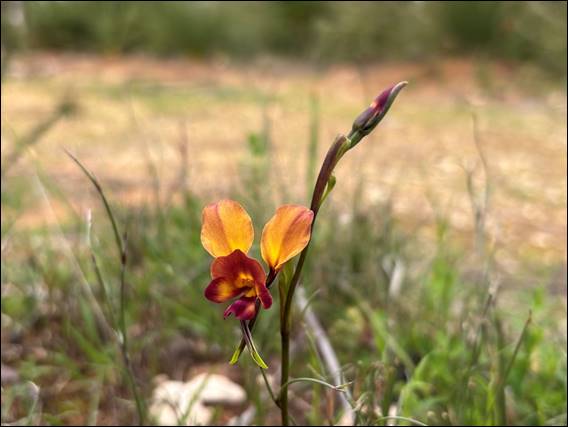
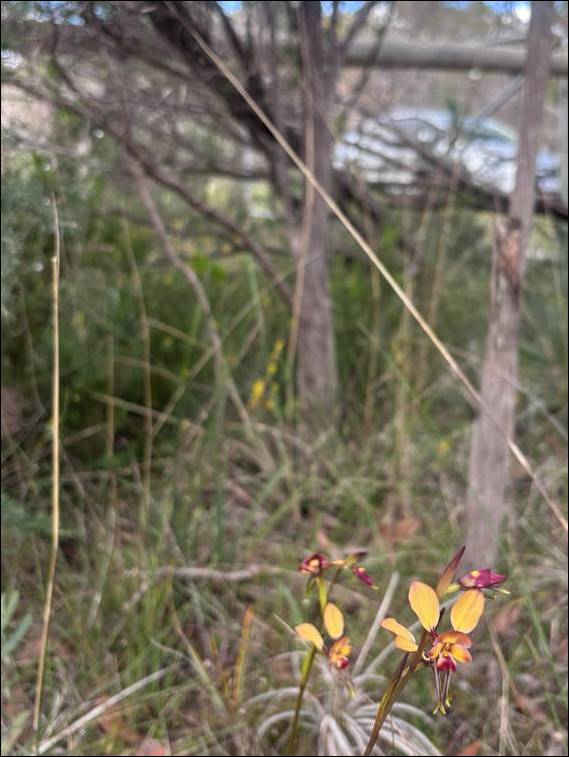
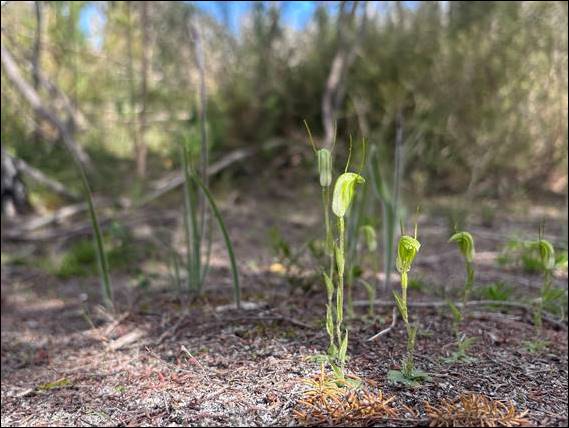
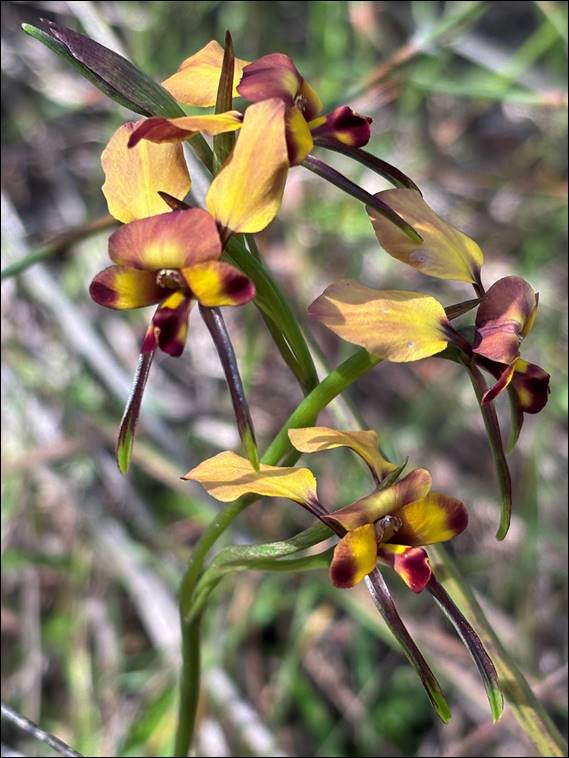
I didn’t come here to spot spiders but was happy to spend a bit of time checking them out. After all there are not too many orchids species out this early for me to hunt. I’ve started with one I have already shown this season, the Common Bunny Orchid (Eriochilus dilatatus subsp. multiflorus). Included again because this plant has half the number of flowers this sub-species can have. Most specimens I find have no more than three or four. This one has nine out with one more coming. There is only one subspecies of Bunny Orchid that can have more flowers, and I have yet to find that species this season:
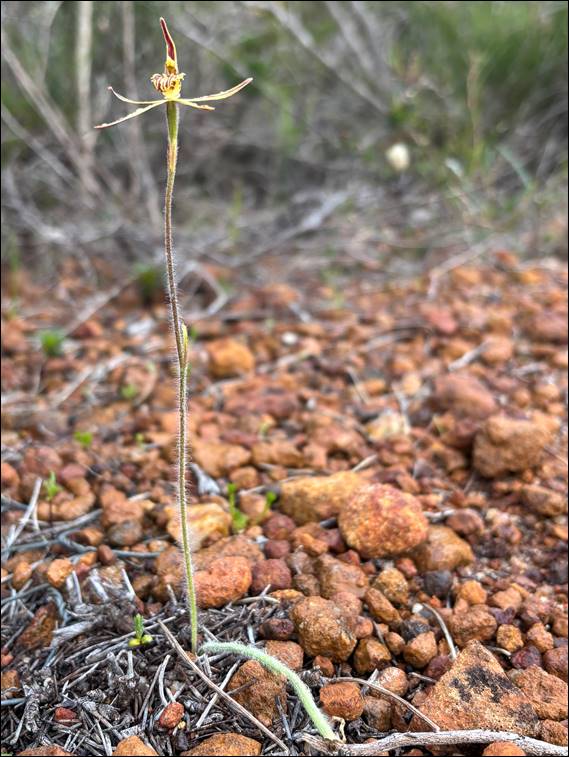
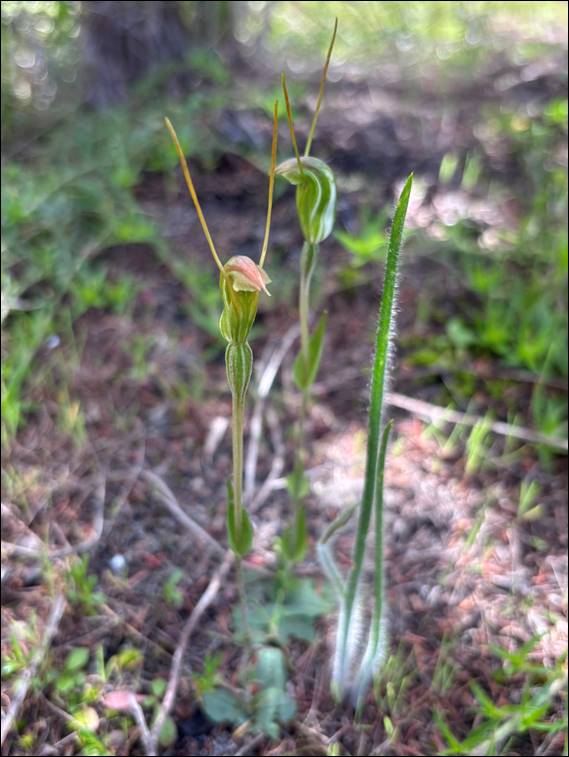
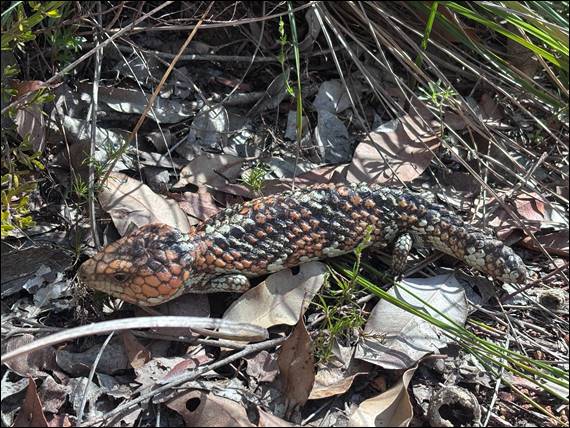
But my next find today, as we sneak past a lovely image of yet another Brown Oyster Mushroom (Pleurotus australis), was a Hare Orchid (Leporella fimbriata). These can have up to four flowers on each plant, and I found lots of specimens but with no more than three flowers. This orchid tricks male winged Bull Ants (Myrmecia urens) by releasing pheromones that mimic the female ant. If however the plant does not manage pollination the flower can last right through till September. At five months it is one of the longest lasting flowers of any orchid species in our area. Not that this looks to impress this Bobtail Lizard (Tiliqua rugosa):
Some will say it is not my strongest suit. Admittedly I do have a general tendency to call a spade and spade that, as time rolls on, I find more and more people struggle to deal with. The term comes from the Latin word subtīlis, meaning finely woven, thin, or delicate. It was adopted into Middle English in the 1300s from Old French, shhh don’t tell the French. Since the 1800s we have moved into the Modern English phase, for which the term subtlety now covers a range of meanings from fineness/thinness, cunning/craftiness, to delicacy/nuance:
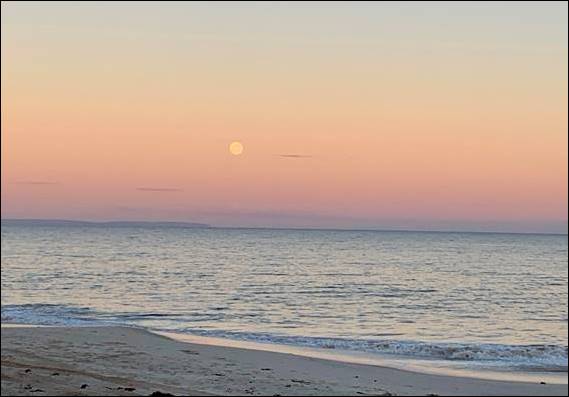
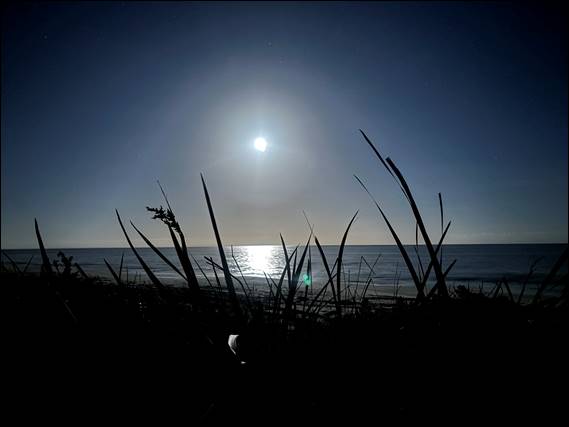
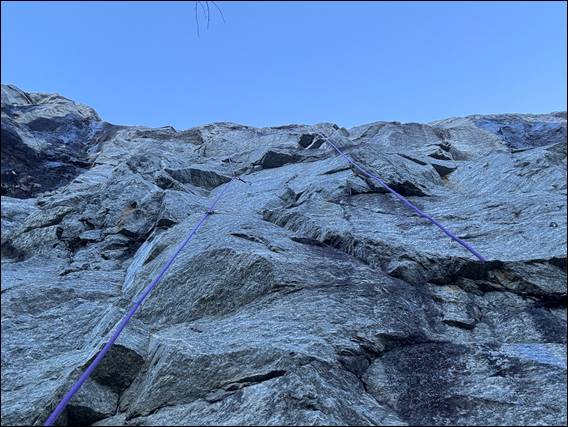
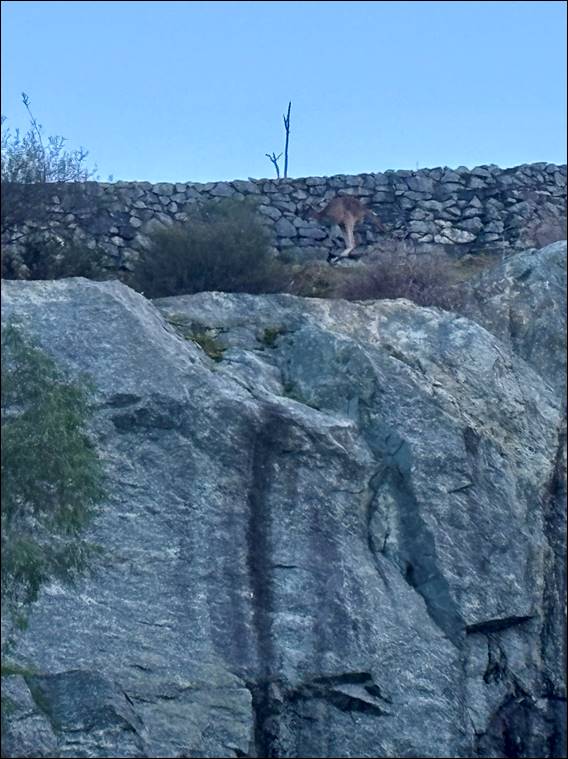
I thought I was being cunning in setting our timing for a quick dash up the hill this morning. Stood at the base of the wall at precisely the time first light was due to arrive, it felt dark. We hadn’t brought head torches. At least the clear sky above enabled the light reflecting off the Waning Gibbous moon to reach us. At 64% of illumination a full moon, this provided 0.05 lux where we stood. Only half the minimum light needed by the human eye to make shapes out. It was my lead and I was tied in and kinda ready to go. It was slow going as I gingerly went up:
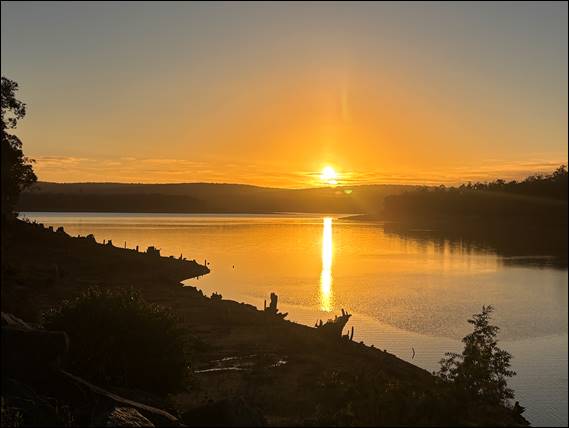
Each hand/finger hold and each foot hold was placed with extra care. The body hadn’t warmed up, and I knew it wouldn’t until we had a couple of routes under our belts. In my mind I questioned the climb I had decided to start on. At least our proximity to the equator was on my side. Rather than moving at a shallow angle the sun comes up more vertically across the horizon. Resulting in first light coming in pretty quickly, and by the time we had both finished we were bathed in several hundred lux, ample to see what we needed to:
Not to say we didn’t need to apply delicacy to our climbing. Approaching the edge of winter the rock is absorbing less heat during the day, and with cooling nights more of that ‘less heat’ is sucked from the rock. Such mornings can offer great conditions for friction, but until we’ve ‘warmed up’ it is not so great for muscular performance nor how our bodies translate sensory feedback. As such Howsie’s lead was equally as slow and cautious, but for quite different reasons. My focus was more on what I could see, his was more on what he could feel:
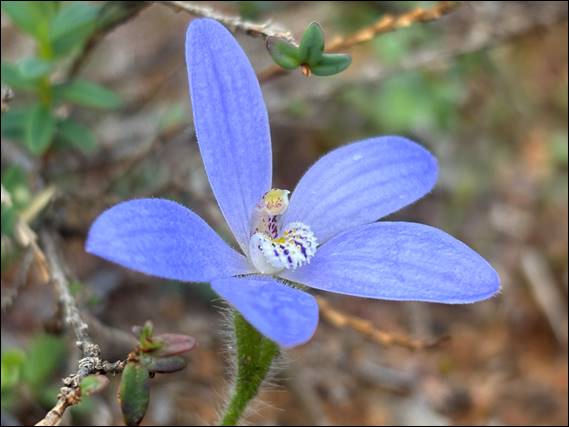
Only a few climbs at the dam require you to ‘top out’ and belay from above. We picked one of those for our fourth route. Very much on purpose, as we wanted to see if there was a floral display above. While we may have been on a timeframe to get to work, it also pays to slow down and to absorb what nature has to offer. Here we found two subspecies of the Bunny Orchids, and I’ve included an image of one of the many Crinkled-leafed Bunny Orchids (Eriochilus dilatatus subsp. undulates). An orchid that does not use mimicry or deception:
Very few orchids attract pollinators with actual nectar. This is one of the Bunny Orchid subspecies kind enough to offer a reward to the small native bees it aims to attract, with a tasty treat at the base of the column. Howsie, wondered if we may have also seen the Blunt-leafed Bunny Orchid (Eriochilus dilatatus subsp. brevifolius). It has a similar leaf although the colouration near the base is different, just a slight nuance. A fact many seem to have overlooked or missed if you check this subspecies out on the Atlas of Living Australia:
After spending some time checking out the orchids on display, we were doubly rewarded when our bodies felt refreshed and once again ready for action. Enough for us to decide to bump the grade up for the last two lines. And it was during these that I did exhibit signs of being able to be subtle. Howsie started strong but began to tire, and so I applied just enough support and encouragement without being overbearing. Especially when I could sense the draw of sitting on the rope was nibbling at his mind, helping him to push through:
Since my first sighting of a Common Bunny Orchid (Eriochilus dilatatus subsp. multiflorus), when climbing with Craig at Wilyabrup five weeks back, I have only venture out once to see what else I might find. That ended up being a bit premature, when a week later at the Capel Nature Reserve didn’t see anything on the orchid front. Yesterday, back at Wilyabrup, I stopped on the drive out in a little patch of bush where I often have success. This spot was good to me again, with loads of Common Bunny Orchids flowering:
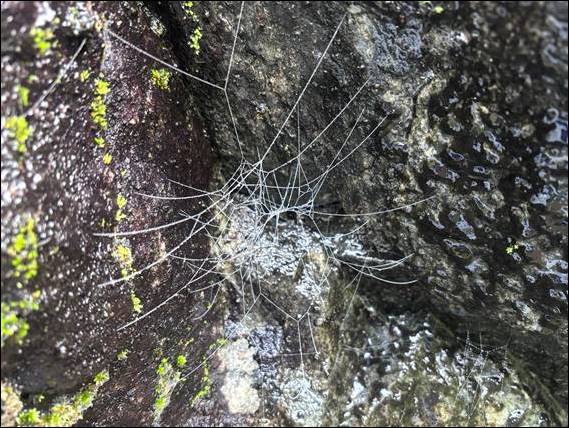
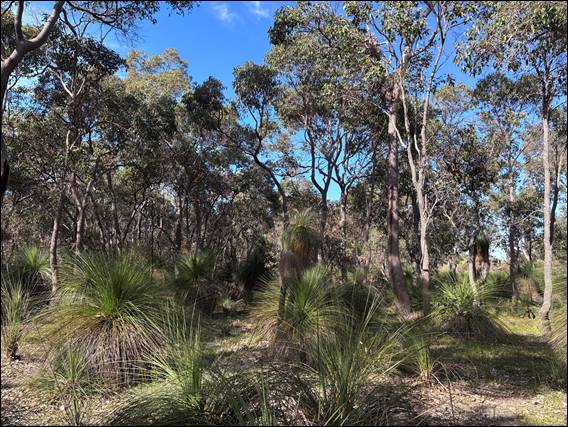
Setting me to think it was time to head back to the Capel Nature Reserve. Here I had success with lots of the same species, and heaps of little basal leaves uncurling as they poked out from the soil. But check out this tiny 5mm silk ball, hanging by a silk thread from a grass stalk. In the close up you can see it’s textured surface and a tiny hole at the top. This is where, after having completed their first moult inside the protection of the sac, the spiders emerge. Releasing their first strand of silk, which the breeze catches and they drift off to find a home:
This is egg sac of a Two-tailed Spider (Tamopsis sp.), a species I have not seen before. It is a small and exceptionally well camouflaged ambush hunter. In all the literature I have found they say the female will often endeavour to blend the egg sac into the surroundings, for protection. Then staying close by. This was not the case on either count for this find. Below is another small find, after find this particular leaf covered in these small ball-shaped sacs I looked hard for more, but didn’t see any. Diderma hemisphaericum is a myxomycete:
In layperson an terms it is a slime mould. Found worldwide, and while known to be present in Western Australia, it is not considered common. On inspection other species of Diderma found in the area I am pretty sure I’m on the money. It forms small ball like structures that are typically found on decaying leaves, twigs, and plant debris. The outer smooth white cartilaginous layer, covers a dark brown in mass of spore. Becoming brittle as it matures, the outer layer ruptures to expose the spore that rely on environmental factors to be dispersed:
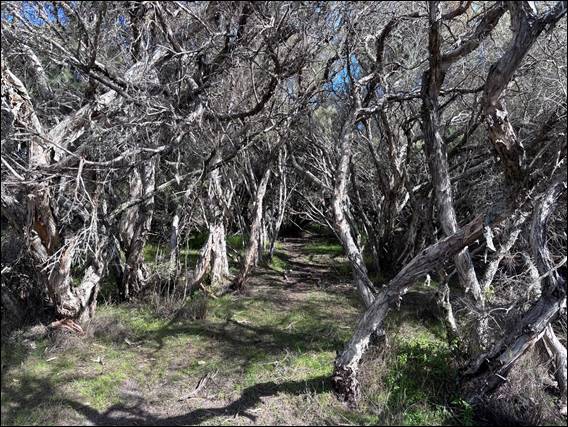
Rather than feed on the decaying plant matter it is found, slime mould consumes the bacteria, fungal spores and/or mycelium, and other organic matter found on the host material. The Brown Oyster Mushroom (Pleurotus australis) however, does feed off the dead or decaying wood that it resides. That said it can also be found on living trees, and in our area particularly likes Peppermint Trees (Agonis flexuosa). The mycelium of this fungus, which are a root-like network of thread-like filaments, assist with tapping into another unlikely source of food:
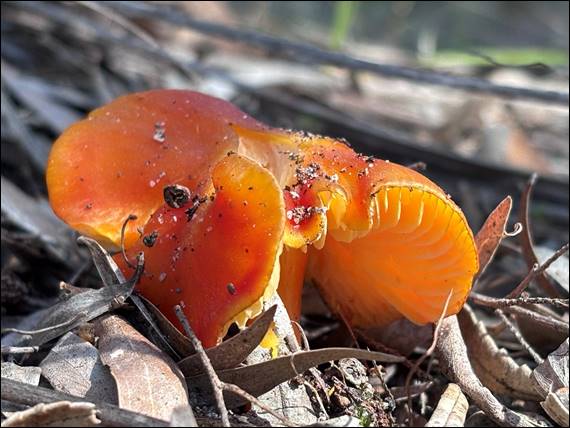
As with most species of Pleurotus, this fungus also has a carnivorous side. Needing to source nitrogen and other essential nutrients, which the rotting wood they grow on cannot provide in sufficient supplies. The mycelium release toxins that paralyse nematodes, microscopic worms found in the soil, which are then digested. You may think the above and below are different, but they are the same species in different life stages. The above young specimen showing a more dark and vibrant coloured cap, which with age fades into a paler colour:
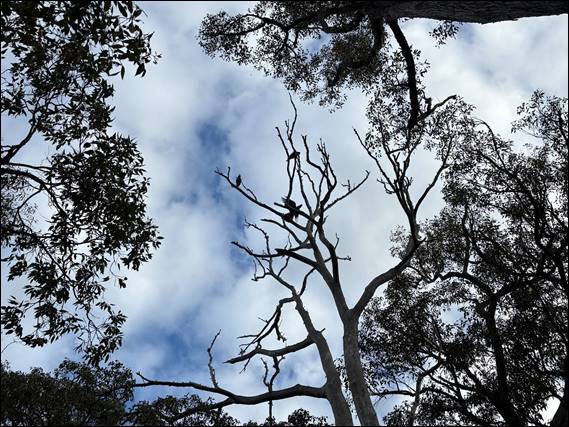
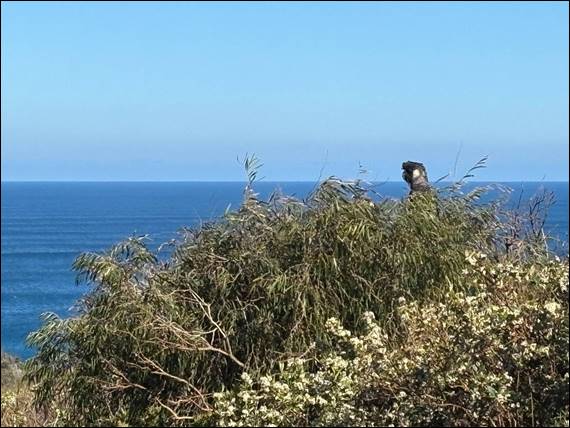
There was plenty of bird song about. I am however somewhat biased to favouring the call of the Forest Red Tailed Black Cockatoo (Calyptorhynchus (Calyptorhynchus) banksii naso). Some may call it harsh but it holds fond memories for me, and a flock of maybe eight gave me a wonderful vocal and visual display while they feasted on high. I also spied a smaller flock of Carnaby’s Cockatoo (Calyptorhynchus latirostris) clearly distinguished by their high pitched calls, and verified by the flash of white as they flew by. The Forest Red Tailed Black Cockatoo is here year round, only moving within a local range in response to food availability:
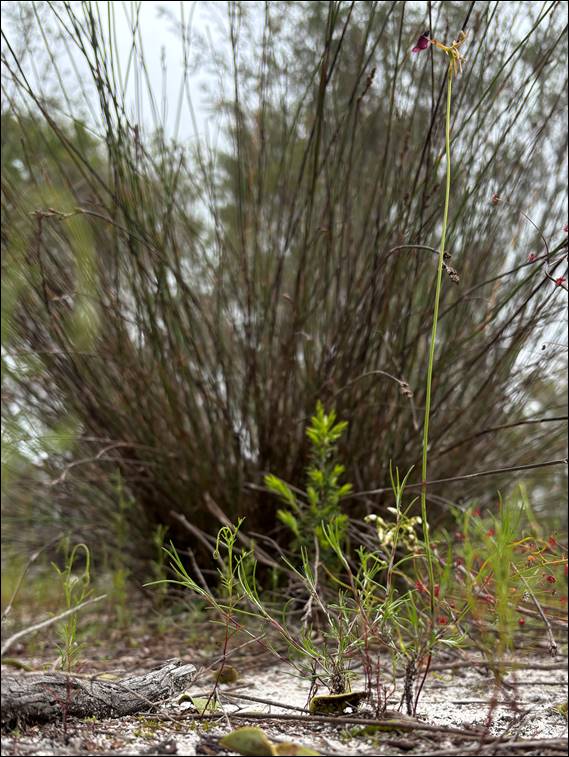
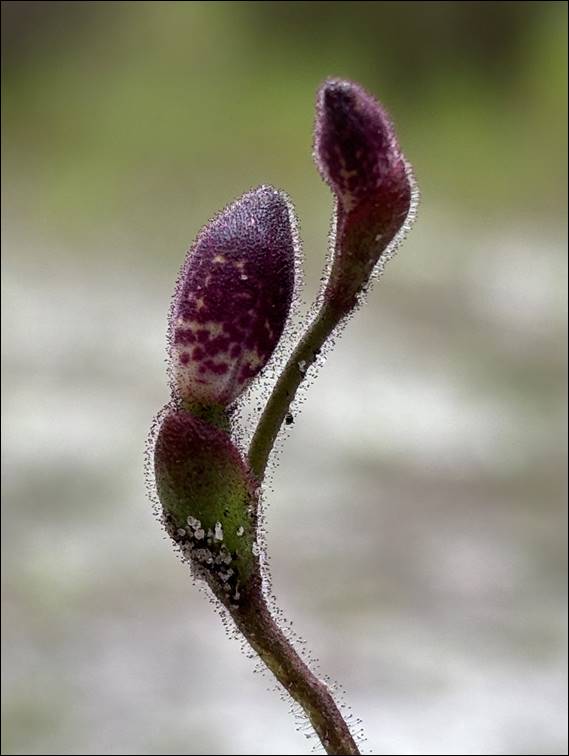
Whereas Carnaby’s Cockatoos migrate between inland Wheatbelt and our Swan Coastal Plain habitats. Residing here from approx. January to July, arriving after having spent their winter breeding season in the drier inland environment. Back down on the ground I was taken by this Drosera tubaestylis. The species name is derived from the unique, small, trumpet-shape styles that form a tight cluster in the flower. While an early flowering species, typically in late May to June, the styles are not visible in this specimen that has just started to bloom:
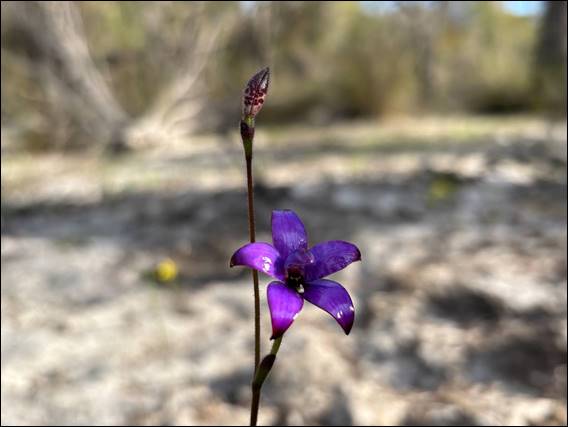
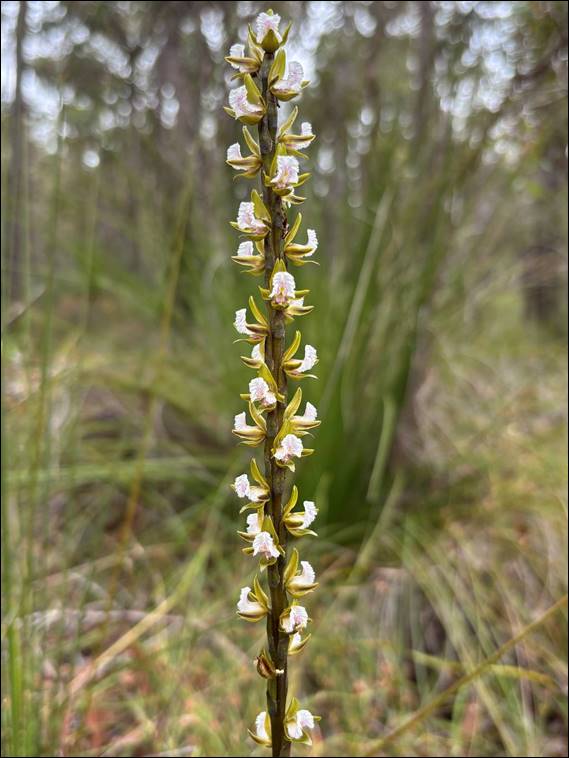
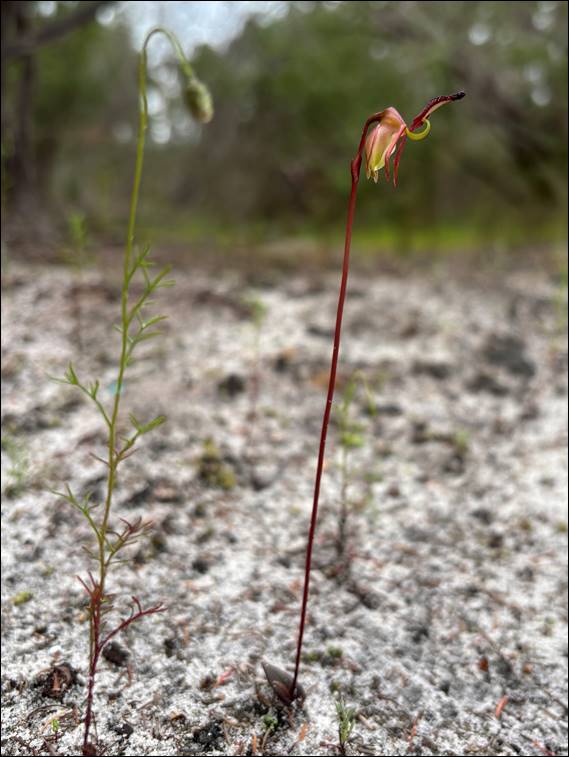
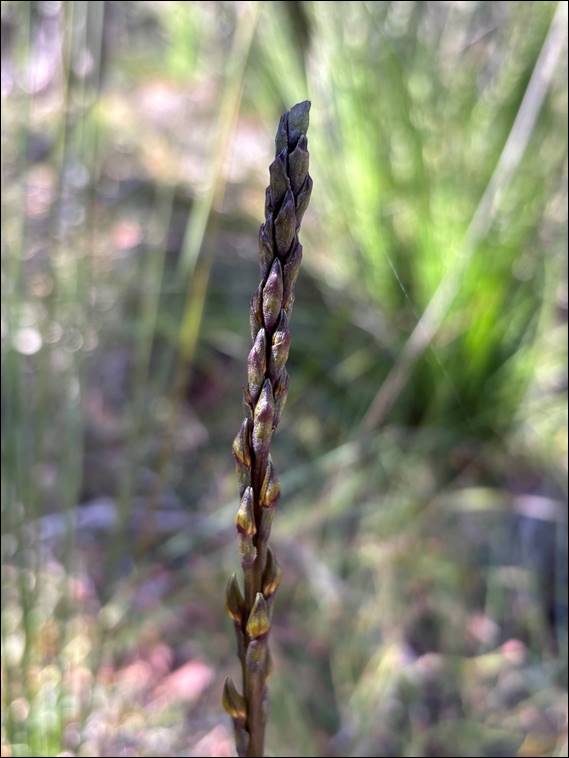
There was also success with orchids when I found my second species of the year. Several Leafless Orchids (Praecoxanthus aphyllus) were out, which tend to be solitary growing far apart from one another. These are tricksters. Using a strong fragrant and calli that look to be laden with pollen to attract native bees. The flower does not however have any nectar, so after completing their pollinating duties the bees are left wanting. It is also not leafless, having a leaf that forms a tiny insignificant scale or bract at the base of the stem:
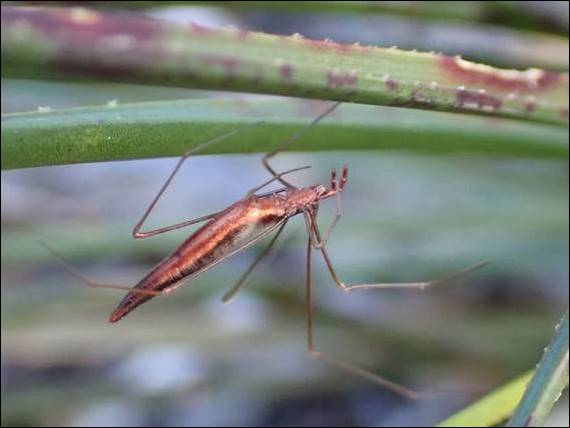
Lastly an Australian Garden Orb Weaver (Hortophora transmarina), with its eight eyes visible in two neat rows. Sight is our most used sense but spiders generally have very poor vision. Not good for night hunting, which most do. Instead they have specialised sensory hairs and pit-like sense organs in their exoskeleton. Vertical hairs on the upper segment of their legs can detect air movement and where it is coming from. The speed, frequency, and spatial pattern of the vibrations telling them if the wing beats are from a prey and predator:
A 1927 film titled The Unknown was almost lost forever, but was restored several years back. Considered one of the premier works of the silent film era. A period that commenced approx. 35 years before it started to wane, when technology enabled sound to be incorporated. An ability that crept into the scene in same year of 1927. For various reasons most of silent films have been lost. Worldwide over three quarters will never be seen again. Some countries such as Japan, lost nearly all of their productions. This morning I was stepping into the unknown:
Today was not however something to fear. A term often synonymous with the thought of stepping into the unknown. As it can conjure up thoughts of uncertainty and unfamiliar circumstances, which may heightening anxiety and concern. On this full moon morning I was heading out for a solo mission on rock. The word on the local climbing chat group was the conditions would be glistening this weekend. Suggested due to the general forecast indicting a chance of a wee sprinkle, on both days. I was however to prepared to risk the uncertainty:
The film is recognized for its dark tones and high drama, and as I walked into my chosen crag to play on, despite first light having arriving, the sky continued to display dark foreboding tones. But after Howsie and my first opportunity to explore the many crags, previously unknown to us but now detailed for all to enjoy in the Stirling Ranges guidebook, there was no risk of high drama today. It was back to our relatively small single pitch crags with solid rock on the more well-trodden climbs, plus this dark morning I had the added safety of a rope above me:
What was a little unknown was how I would feel today. My legs had certainly felt the big hikes, with a heavy pack, from last weekend. Walking in, it seemed they may have fully recovered. But once on the wall they complained a bit each time I had to make a high step. My arms also seemed a little noodley today, something that was a little unexpected. The good news, despite the clouds threatening to make the rock glisten, was that there was not a hint of any shining, sparkling, or gleaming surfaces today. While I felt a little out of condition, the rock was the opposite:
With my somewhat weak feeling arms and occasionally complaining legs, it was a bit of an unknown as to how many routes I might manage. Especially seeing there were very few easier lines here, most are that bit steeper and sustained. I pushed those thoughts to the dark recesses of my mind. And at precisely the same time that Lisa would be stepping into the ocean for her weekend bob, which I imagined would feel cold today, I started up my first lap on the first route. Managing to struggle my way upwards and beating the expected pump:
Back at home Lisa said it had been very cold. But the Peppy Plungers are determined and stayed in for close to twenty minutes by which time their extremities were turning blue. I too was determined picking of six fun lines. Only once taking on the role of main character of The Unknown, when I used the rope like a circus performer. Topping out for the last time the sun broke through, dispelling any uncertainty of today’s conditions. Aptly the last route was an unclaimed line so is credited to Unknown, which started this whole theme. You can blame Peter for that:
I have a vague recollection of including a reference about a guide being released, probably a wee while back now. One that had drawn Howsie and my attention, as well as many others. After my last visit to the UK in February we planned two trips to this majestic place. The first would have seen me gate crash a Howe family weekend at The Lily. A lovely spot I have stayed at once before during another foray that Howsie and I did down this way, some five years back as detailed in this post: https://sandbagged.blog/2021/05/09/small-world/:
It could have been that I was still in holiday mode, jet lagged, or maybe age is increasing the leakiness of my brain. Regardless, I got the dates mixed up and double booked myself for the day that was to be the first planned trip here. There was no contest and of course Lisa won out, when I suggested that we have a night away in Pemberton. Yet another wet and cool stay in the relaxing forested area, despite being in the last throes of summer. The weather wasn’t a whole heap better in the Stirling Ranges, so it was kind of lucky that I did stuff up:
All up it worked out well, and I have to admit I did feel a little guilty to have even thought it was reasonable to Shanghai Howsie for a day. Despite Nadia having said it would be OK. On a side note the term Shanghaiing came about in the late 19th century. Meaning to kidnap people to serve as sailors on ships. It was a rife practise in England and America. Particularly in San Francisco, when they would be forced onto the Shanghai Passage. Once on that trip getting home was very difficult, other than to continue on a journey round the globe:
The abduction would often be through violence, intimidation, or drugging. There is a report of 100 men being taken in one night using drug-laced whiskey, when they attended a fake ‘booze cruise’. It got so bad in America that they brought out legislation to ban it, but that contained loopholes, as is so often the case. And it was not until the early 20th century that it was made a federal crime in the Seamen’s Act 1915. An act that is just one year younger than the Act we still use to manage water resources here in Western Australia:
I’ll make no apology for that little bit of history. When Jonas stumbled across the climbing in the Stirling Ranges in the early 2010s, he commenced a journey that took over a decade of exploration. Both of new routes and the history of climbing in the area. It was his guidebook, which he finally published in late 2025, that had drawn Howsie and I back to this place. I got an email from Jonas in 2016, three years after he started this mammoth journey. He had invited me to come down and explore the area with him, and did so several times since then:
Something I never managed to take up. Maybe a missed opportunity but there is no point looking in the rear view mirror. I was keeping myself busy enough. Plus committing to weekends at a place that takes four hours to drive to, with crags that generally require at least an hour to walk into, it would have taken me away from Lisa and Elseya too much. I’d already done that to them in developing the guides for Alice Springs and the South West of Western Australia. Funnily enough they were published a decade apart in 2005 and 2015 respectively:
The Stirling Range guide came out at a decade later in 2025. If I had taken up the offer from Jonas I would have immersed myself deeply into the area. While it is Jonas’s guide, as with John’s recent book of climbing in Australia, I would have become heavily invested. Instead I can now simply enjoy the fruits of Jonas’s labour, and be immensely grateful for all his hard work. Climbing in the Stirling Ranges is not to be taken lightly, it is remote mountain style stuff. Many areas get very few visits, although that may change now the guide is out:
We have both climbed here a bit over the years so knew what we were up for. Even still it does take a little getting used to. It is certainly sensible to re-familiarise yourself with the place. More so, due to having been mostly a crag rat in recent years, climbing on single pitch faces. Most of which get regular action so are generally devoid of loose rock. As such our goals were not lofty in grades but high in meterage, aiming for multi-pitch routes. However, rather than chew a whole day on one line we aimed for two areas to bag a few choice lines:
You may sense that I am pushing the safety aspect that bit more in this post, and for good reason. Accidents here become a lot more involved than at our local spots. This switching into a more serious mode is nothing new for me. When I started climbing over thirty years back I had it instilled in me, by the ‘old boys’ I used to climb with. The time it kicked in the hardest was during an attempt on the mighty Horseshoe Ridge on the Isle of Skye, recounted in this post: https://sandbagged.blog/2017/08/27/part-6-scotland-the-long-road/:
Our first destination was the South Face of Mount Trio. A wall that I looked at with yearning during Lisa, Elseya, and my many camping and glamping trips since we first stayed at the Mount Trio Bush Camp in 2010. But not one I ever managed to get to when I came here to climb. So I was excited to sample the delights on offer. The Stirling Ranges was the place where the first roped climbing routes were undertaken in Western Australia, and it remained the main focus into the late 70s. The first known but not recorded line, was establish on Mount Trio in 1957:
That route was not on this face, but there was a historic line that I did fancy jumping on. Howsie and I started our day early, and I was to blame for that. I didn’t miscalculate as badly as our first planned trip, and this time it was due to work. We shuffled plans about and then had to change them again, to avoid a front with a good amount of rain due to hit Monday. What with the distance to get here it is not really the place to come if you don’t get two decent days on rock. This saw us leave in darkness, so we could arrive at the carpark of Mount Trio at 7:30:
After sorting out the gear to even up the weight of the packs, we began the hike up the leg achingly steep hikers trail towards the summit. At the saddle there is a goat track that leads to the South Face, from where we opted for the West Gully decent to the base of the crag. This covers the first five images. With each step and as the walls started to tower above us, the excitement and nervousness built in equal measure. Looking at the primo features on offer, I racked up for the first pitch of Directtissima. A true sandbag route from 1974:
The guide warned us of this, and had even taken caution by bumping the grade from a lowly 12 (S 4a) to 16 (HVS 4c/5a). The first pitch certainly felt unrelentingly steep, and I had to work hard. Possibly, the nerves were on edge, maybe I was tired from the walk in, or was it the relative lack of sleep due to the ‘sparrow farts’ start. No matter, it was utterly absorbing and truly brilliant. Howsie followed up and we sat on top of the flake to take it all in. When we are places like this, we slow down. Taking time to soak in the experience and situation:
The climbing is a bonus, and for this route a sobering thought was that when they established this climb and gave it a lowly grade 12 (S 4a), they had no camming devices. Something we made lots of use of. Hopefully, you are following the images as I slowly catch up. Howsie took the second pitch, which was equally stunning. Only awarded one star, we considered with two brilliantly absorbing pitches it was the best of the four lines we hit here. Howsie then took on the next lead, being drawn in by the obvious and main feature of the wall:
A wonderful flake, providing a magnificent near 40m pitch. Rip’em Off come in at 16 (HVS 4c/5a) and was first climbed in 1973. This is awarded two stars. The first pitch was very deserving of this, if not three. Howsie even used a bit of old school trad gear that I simply had to take an image of, being the sling round a horn of rock. We looked up at the second pitch and decided to rap back down. Even the guide says the second pitch is a letdown. This then allowed me to bag the first pitch of Sisyphus, which is awarded three stars in the guide:
A 1971 route, and yet again 16 (HVS 4c/5a) and yet again really fun. This conveniently finished near the previous lines first pitch. Allowing us to sample the upper pitch. While the guide says it is, and it was, a little meh, we had to do it at least once. Our rating of the routes in relation to stars was opposite the guide and went three, two, one. However, each person’s experience will always be unique and can vary on different days, as such it is just a guide. All three lines were stonking and well worth the effort. Then there was one more line to bag:
Staircase is given grade 4 (not quite a M in the UK system). Listed as a long five pitch route, and a good beginners climb. First climbed in 1966, so we climbed it on the sixtieth anniversary of the first ascent, which was pretty epic. As was the line. Those old climbers were bold as brass. The gear was scant, even with camming devices which they had none of. I’ve included an image of Howsie following up the first pitch, in which I challenge you to find my gear placements. And an image of Howsie going up the second pitch, which did have more gear:
We climbed it with packs, making it even more fun. But it is certainly not a beginners route due to the long runouts, even if they came up on second they would risk a big pendulum fall on the first pitch should they slip. We loved it! Better still it went on, and on, and on, and we reckon it went for close to 180m. A brilliant way to end the first days climbing, on what is described as ‘the original route of the mountain and one of the first in the Range’ (the first to be written up that is). The day was not over yet and first we had to get off the peak:
After finding the above scramble, it was back down the hikers track. Arriving at the Mount Trio Bush Camp as light was fading from the sky. We definitely made the most of our first day. Bob will be happy to hear we managed our old goal of a 1,000ft of ascent on rock, with some 340m (1,100ft). While I have rambled on with some climbing talk I have included a few images to show the rock texture, which varied quite a bit on some lines, and scenery. Also an image of what I believe to be Sulphur Dust Lichen (Chrysothrix chlorina):
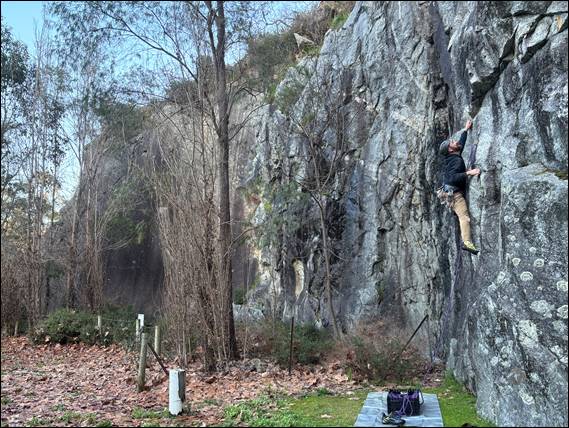
The Stirling Range, especially the south-facing slopes, is reputed to have the most varied and abundant lichen growth in Western Australia. This stand out that is a brilliant yellow likes shady damp rock faces, and is usually found under overhangs and in crevices. The area is also well known for orchids, another reason I enjoy coming here. It is however still a tad early in the season and we didn’t see any. When Lisa, Elseya, and I first came here the camp site was quiet and peaceful. Now in complete contrast it is a humming place, but still hold charm:
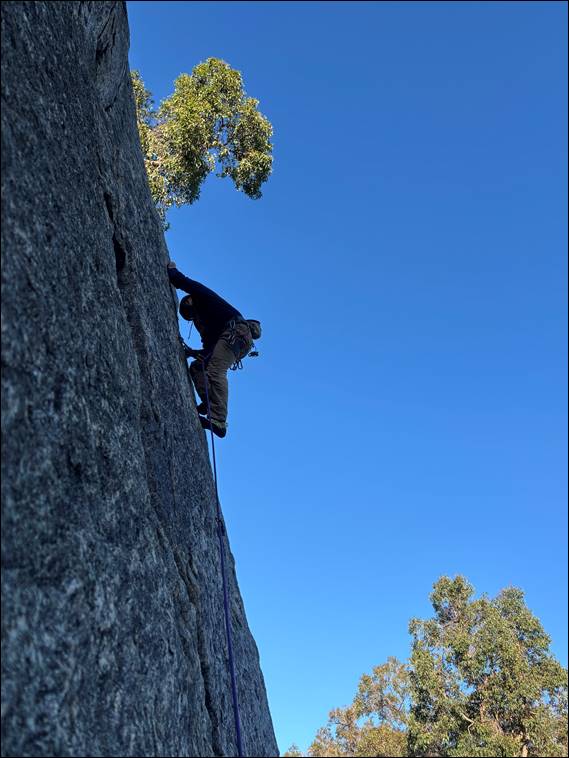
Arriving when we did, there was time to pitch the tents, have a brew, and make and eat dinner before it was time to hit the sack. We were however delayed, when someone sat right next to me and started gabbing away. I feel like I can be forgiven for not immediately recognising Alan. One of the social crew back in the day, who I had not met for some four years since he moved north (https://sandbagged.blog/2020/04/21/alan-the-tagalong/). He just so happened to be down to enjoy the area with his mates Shane and Colin:
If you do read the linked post about Alan, the one change that was evident is that his endurance has waned somewhat. Admitting that even the walk up and down Talyuberlup had worn him out. Back in his day he had run up and down all of the six main peaks in the Stirling Range’s in one day. It really was lovely to see him and he was still smiling like a Cheshire Cat. Sadly being as weary as I felt, my social cup didn’t take long to fill and my sleeping bag was calling. Plus we had another early start planned, but not as early as some:
From three onwards for an hour and half, car after car after car put its headlights on and drove out. Undoubtedly all heading to where we intended to go. The difference being that they were aiming to watch sunrise from atop of Bluff Knoll. We however got up at four and reversed our arrival by having breakfast, a brew, and then breaking camp. It was a leisurely pace, and we arrived at the Bluff Knoll carpark at six. Vehicles were spilling over by some 300m meters on both sides of the approach road:
In the darkness, a trail of headlights weaved the path of the hikers track and there were several atop the peak. A peak that would be called a Munro in Scotland, due to being above 3,000ft (914.4m). It is the tenth tallest peak in Western Australia but the highest in the south, as all nine that are above it are in the northern region of the Pilbara. We started our walk as first light started to creep in, so didn’t need head torches. Having a bit of a trudge ahead of us, taking about the same time as for the Mount Trio approach but with a more forgiving grade:
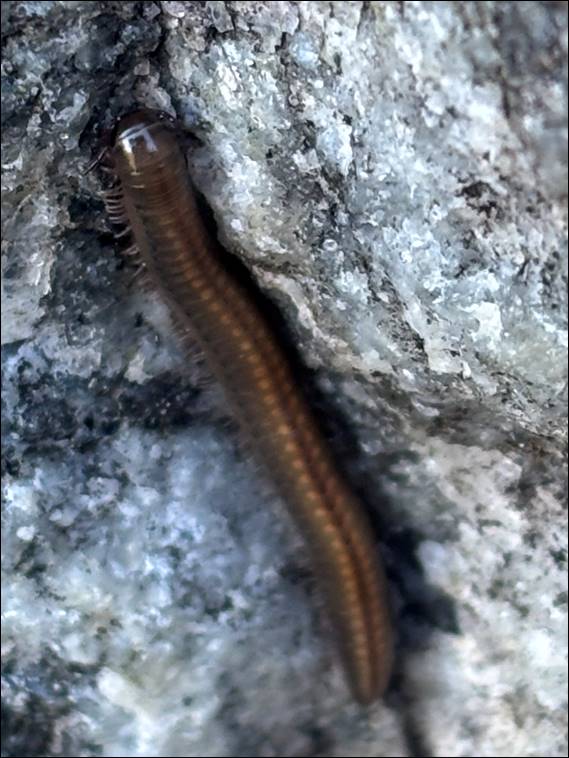
Not that our legs acknowledge that. When the track veers left to reach the summit, it was our cue to leave the hordes of people. Part way across to The Fortress, which is one of the faces on Coyananrup, we came across the above Eastern Massif Tiger Millipede (Atelomastix tigrina). Not the first time I have seen one, and there is an image of one in the post linked at the start of this one. Back then I didn’t identify this species , which is listed as vulnerable. It has a very restricted and patchy range, all contained within the eastern part of the Stirling Range:
Onwards we went. Along a ridge and then down to round the edge of The Fortress. As soon as we got up close and personal, it loomed some plus 70m above us. Looking steep and overhung in many parts. Mount Trio comprised geological features of folded sedimentary rock that was relatively homogenous, which gave it a crag like feel in comparison to this spot. The Fortress, like the nearby Bluff Knoll, comprised folded and faulted quartzite, sandstone, and shale. The blocky nature looked less stable and along with its steepness it was intimidating:
We both felt it. There is however only one way to see if it was just in our minds, and that was to get on and climb. We racked up with Howsie taking first lead today. Taking on a relatively new route from 2003 called Coyanacorna. No surprises that this one star route was graded 16 (HVS 4c/5a), which seemed to have become our staple grade. The climbing felt more nervous and it was not as easy to read if the rock would stay in place. It did but care was required, checking for cracks indicating weaknesses and at times avoiding bigger unattached blocks:
I came up on second grateful for the rope above me, as I accustomed my brain. The second equally engaging pitch was just as entertaining, problem solving, and nervous as the first. I took this one as the cloud rose up the hillside and over us, obscuring any view. The steepness was more evident here. We relish the exposure of air below our feet, but with steepness comes a tendency to hold on tighter than you need to. It was a stellar line and a great introductory route. But what next. Mind you before thinking about that we had to figure out how to get off:
Jonas has done a great job of detailing descents in his guide. For our two locations they were often aided by permanent or thread anchors to allow an abseil. The one shown below was a little nervous, due to all the sizable loose rocks on the ledges you passed on the rap. To avoid any unintended incidents, we slowed down even more and took our time. In part because of this and despite the earlier start on rock, we knew we wouldn’t get a 1,000ft of ascent in today. The routes took longer as did the descents, and with one in the bag it was time for food:
Sat down munching on snacks several Potter Wasps (Trypoxylon) flew round us. The below one landed on my top, which provided the perfect background to show the prey it had captured. These solitary wasps are, for humans, non-aggressive. But this species is not so for spiders. Leaving their prey with their eggs, so when the larvae hatch they have a fresh live meal. The spider it has caught is doomed to be buried in a purpose built mud nest or any hole that seems suitable. We watched some going in and out of holes in the rock next to us:
The lingering cloud of the morning was disappearing, and being north facing the cliff would have full sun. It was the first time we shed layers for a route, feeling like we did not need to wrap up. Howsie had already picked the line. Being one of the first new routes Jonas and his mates had scoped out in the Stirling Ranges in 2014. Freeballing goes at grade 17 (HVS/E1 5a). It is given two stars and is talked up in the guide. And rightly so. The long first pitch was all consuming, sustained, and extremely good. Howsie was rightly proud as punch with his lead:
On second, weariness weighed heavy on me. At the belay I sat down to sort the gear. And only after some time dared look up at the crux pitch. Setting off nervously things soon flowed well. Then just below the crux I found a large loose flake that put me on edge. Reaching up in the wall above the holds felt small. On fingertips only, I cranked up. To avoid the flake I had to spreadeagle my legs making the next move feel very long, with gear below my feet. I got a little vocal as I went up. The holds improved but I did not stop for about three meters. A big fall awaited:
Managing to keep it together, the whole pitch was soooooo good. I had however attracted the attention of hikers on the main track some 3-400m away. A crowd had formed watching intently. I hardly heard their distant murmuring. Howsie however heard the call of a kid shouting ‘go red helmet, he got up’ as I topped out. Howsie came up as most of the crowd started to disperse. As he passed the crux he attempted to lightly place a foot on the flake. It spun into the air and exploded below. He fortunately managed to hold on, and kept going:
Wow, wow, wow is all we could say about that route. It had it all. But it had also taken it all out of us. I could feel my muscles starting to cramp up from the two big days. Rapping back down and sat at our packs we ate more food and guzzled water. Pondering one more line, but that would mean a much later departure. We had hoped to get home tonight, to allow some family time on this long weekend. Plus there would be no climbing on Monday if we had stayed tonight. Not just because of the rain, but also because we felt toasted:
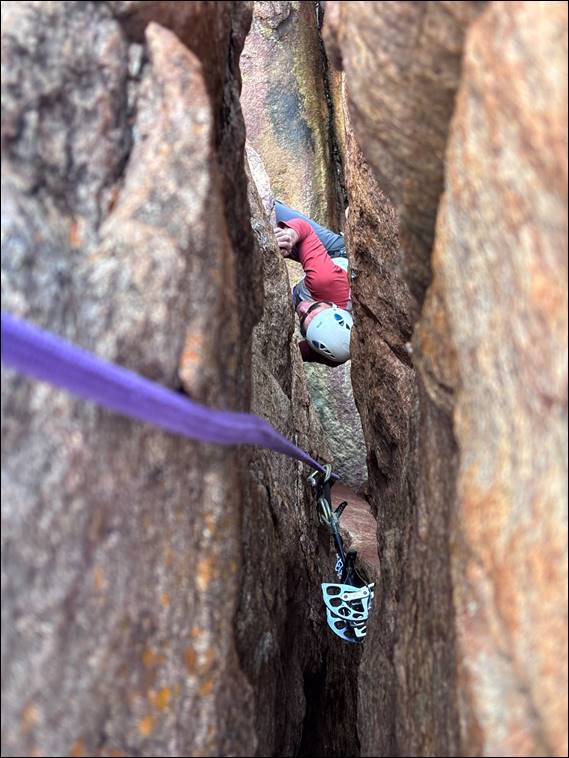
Decision made. We packed up and hoicked it back to the main track. Practically running, we passed lots of people sweating their way up and anyone heading down. Saying hello to everyone we passed, and just about everyone was cheerful and happy. When we went to pass Success and his partner, who were heading down, they asked if we were the ones they had seen climbing. Indeed we were, and he kindly provided me with a couple of photos he took of Howsie just starting up the second pitch, which I have used three images up:
A Canadian lady heading down, taking it very easy with hike poles but with an ear to ear grin of her achievement today, politely asked if we had any water that we could spare. Not for her but someone she called ‘her adopted hiker’, who was too shy to ask for it himself. He was heading down after completing the Ridge Walk. If you are keen to see what that hike is like check out this post https://sandbagged.blog/2021/11/28/a-most-unexpected-journey/. We obliged and offered what water we had left, before continuing our rapid descent. Rolling up to Howsie’s home at seven, grateful to be back but also still buzzing from two glorious days:
Going for a solo mission today I wasn’t intending to write anything up, but after finally plumping for a title for my last post I felt I had unfinished business. The term ‘plumb tuckered out’ came to me at the end of writing the post, and as such didn’t get any attention. Just as the idiom I did look into in that post, this phrase also comes from America. It was used a lot in western films of the 1930s and 40s, especially by actor George “Gabby” Hayes. ‘Tuckered out’ was however first used in print way before that in 1839, so goes back even further:
Tucker is 19th century American slang that means to tire, exhaust, or wear someone out. And some suggest the inclusion of the word plumb relates to its meaning in Appalachian English, being completely. Seems to make sense and it ties in well. Today I wasn’t sure if I would tie into a rope at all. The motivation just wasn’t quite there, and I can’t put my finger on why. It was not due to the overnight front that brought in rain and a bigger swell. A swell that caught Lisa off guard, when during her Saturday morning bob she got dunked and lost her glasses:
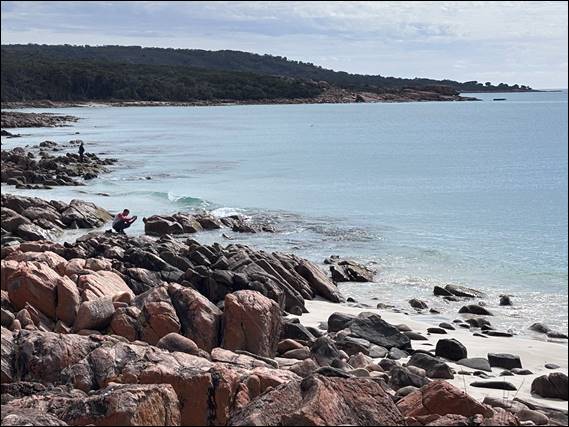
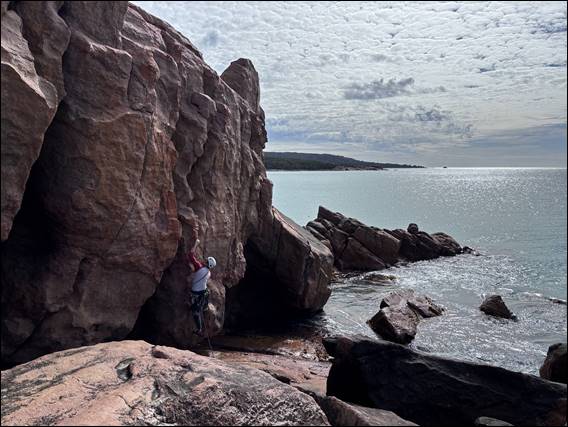
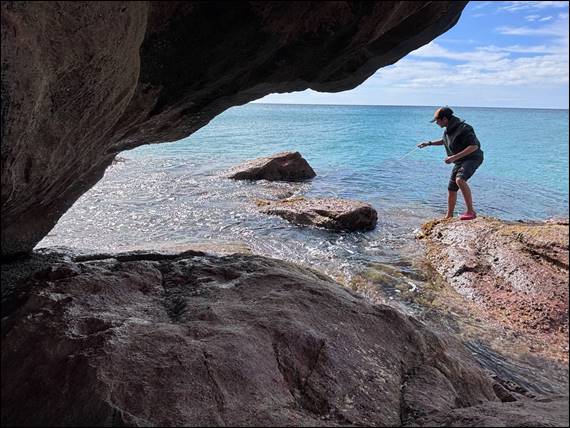
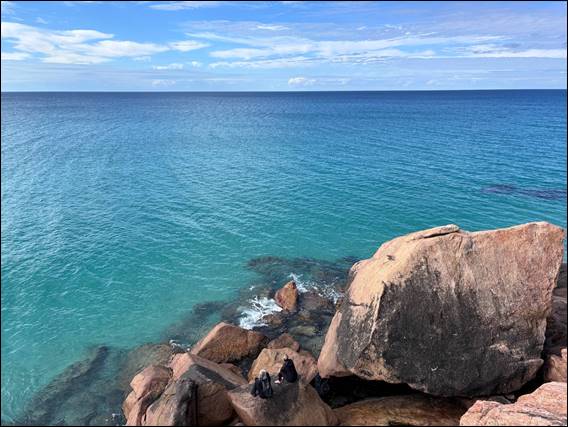
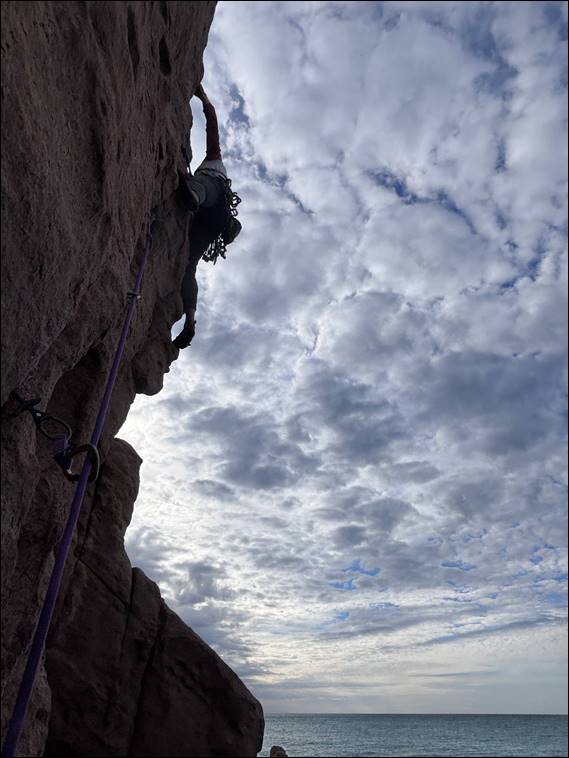
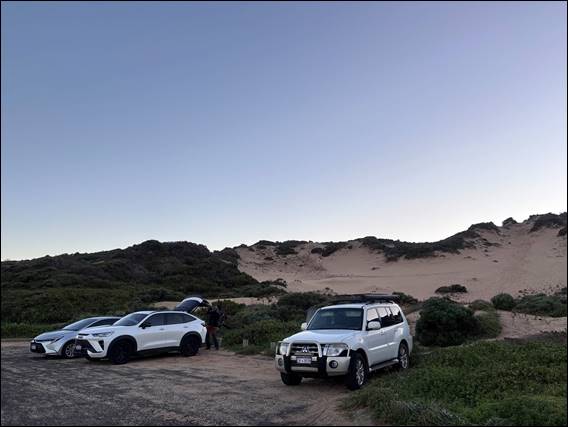
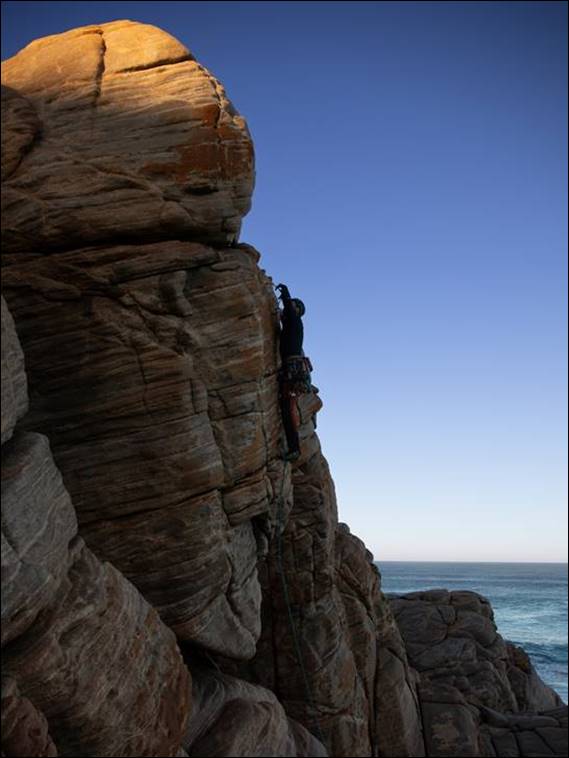
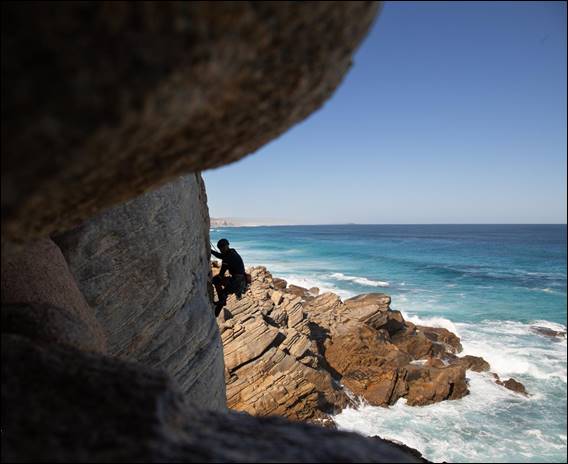
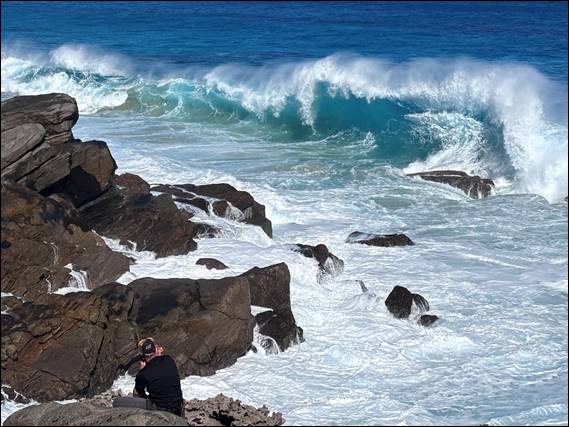
Proving it is not just me that loses things to the ocean. A big swell would normally make me itch to get out, providing a more atmospheric situation if you pick the right crag. Midmorning I decided to head out, and where better on a day like today than Moses Rocks. Arriving at 11am I surprised, but not complaining, to find an empty carpark. Shouldering my pack and aiming for Rumpole’s Rocks. Where you get up close and personal with the ocean and the might of the waves are tempered by a series of rock bars, enough to make it safe:
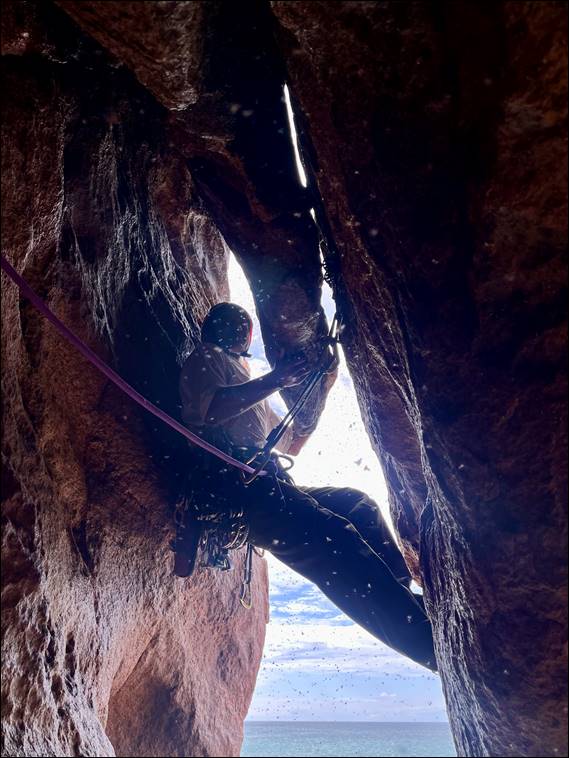
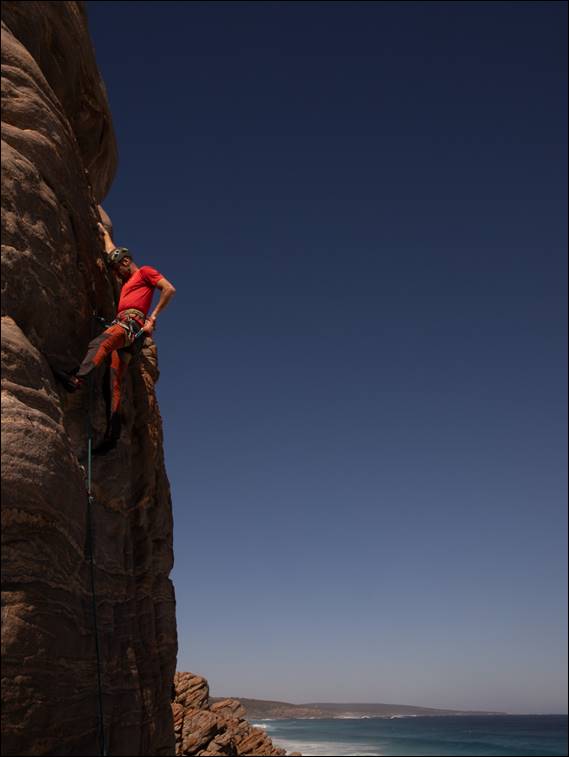
Here I set a plumb line on each of my six chosen climbs. The word plumb comes from the Latin word for the chemical element lead, ‘plumbum’. Use of a string with a bob on it to aid construction dates back over 4,000 years, to when the ancient Egyptians built the pyramids and the bob was made of lead. However, the first identified use of the term plumb line was far more recently in 1456. The first few routes felt tough and I felt somewhat tuckered out, but not so far as to say plumb tuckered out. And as I hit each successive climb I felt better:
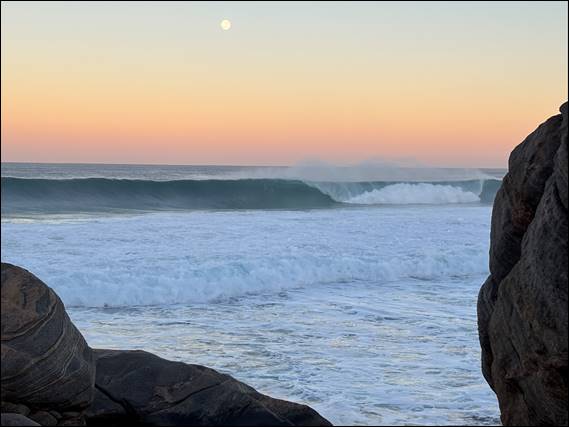
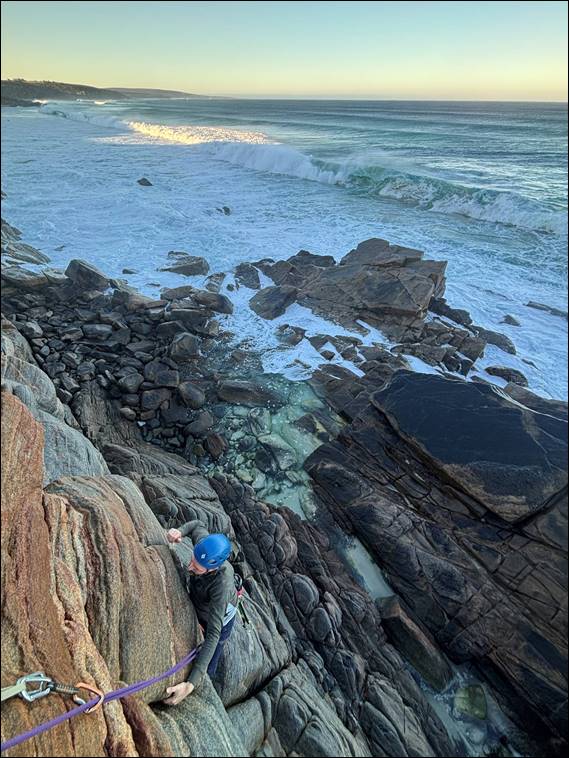
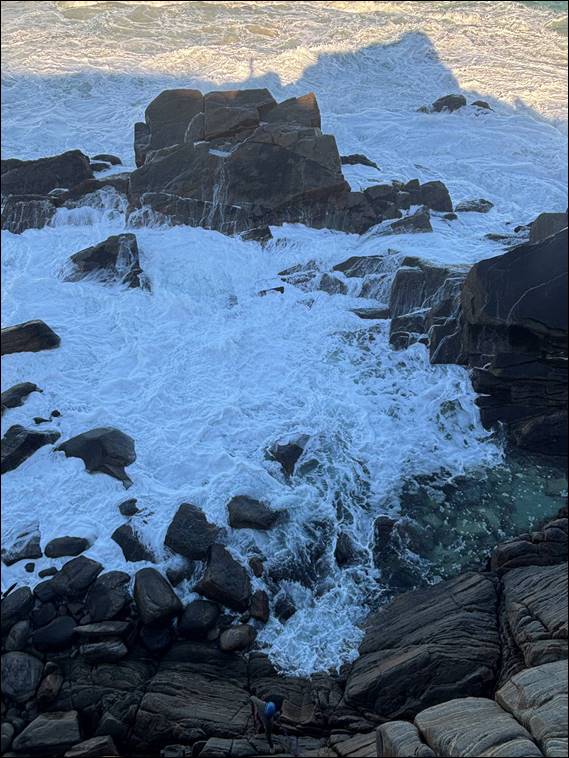
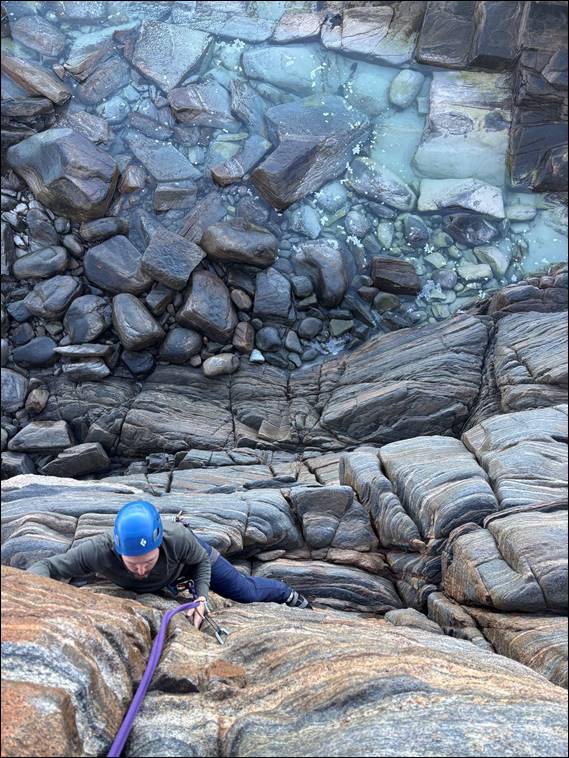
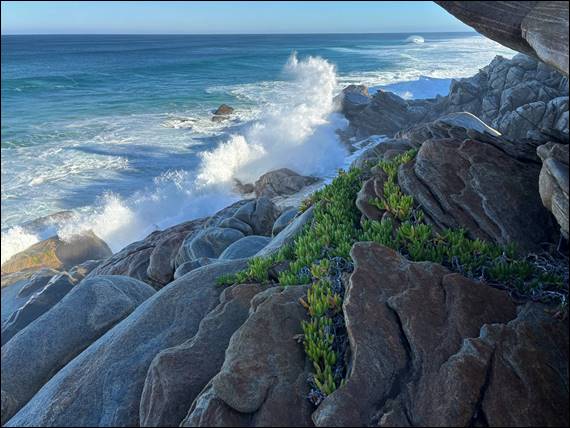
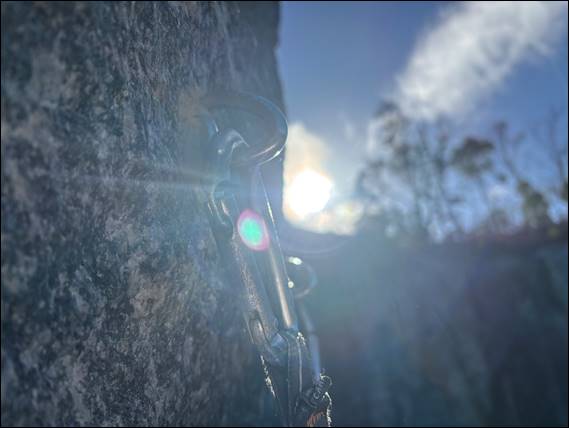
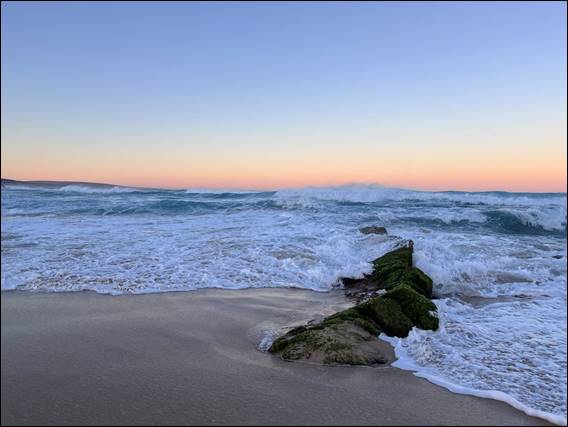
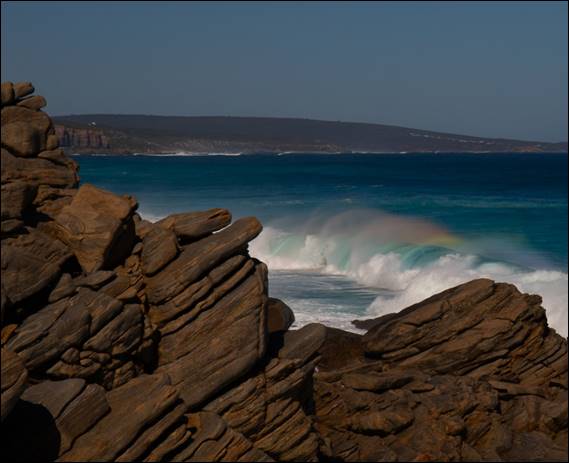
With big crashing waves right on my back I was risking salty conditions. Conditions that Craig may call glistening. But the winds were on my side, and the gentle seaward breeze had been and continued to push the spray back to whence it came. And just like with the empty carpark, I was surprised to find very pleasant dry and super grippy rock. As the images and the rock conditions allude to, the front had been and gone. All that remained was the swell, making for wonderful sea cliff climbing conditions, not that it is everyone’s cup of tea:
It certainly unnerved David when I brought him here in similar conditions. I could sense he nervously watched the waves more than me, as he belayed from the waterline. One route was enough to experience it, after which he was keen to find another crag. Today I took the time to wandered a bit further along to see what else may be worth exploring. Finding a few spots that showed promise. As with much at Moses Rocks they were short walls, but looked fun. Only however if the base of the walls become accessible during calmer conditions:
Things at work seem to slow down a tad during the Easter school holidays. Maybe due to hordes of people taking advantage of the opportunity to book just a few days off and be rewarded with a decent break. The downside for us, living where we do, is many of these people gravitate towards our neck of the woods. Resulting in busy roads, booked up accommodation, and a general difficulty in getting away from the crowds. Despite this when I took a couple of days off this week Lisa and I managed to have a couple of lovely days out:
This particular day being quite apt as we did indeed head out to the woods. But not in our local neck, which some believe is a word that replaced the term naiack in the original use of the idiom. This word means ‘point’ or ‘corner’ in the North American native language of Algonquian. We drove a short hour to get to the Golden Valley Tree Park, located just outside of Balingup. Being the largest arboretum in Western Australia, both in terms of size and the number of species of which there are some 500. Not bad for a park established in 1980:
Even more so when you consider it is community run. The genus best represented is the Oak (Quercus), of which they boast 40 of the approx. 500 species found globally. Some 90 are native to North American so it seems right to start with the above species, the Pin Oak (Quercus palustris). Starting to put on a display to show of why we decided to come here. To witness some autumn colours. Plus coming here allowed us to bring the poodles. In the image below, as Lisa read up on the Oak collection, Sooky is wondering why we stopped:
That is not to say there wasn’t lots of stopping, usually when they wanted to check out the smells. We knew it would be a slow paced stroll, but that was fine with us. The species name of the above Gall Oak (Quercus lusitanica) refers to the ancient Roman Province of Lusitania that is roughly present-day Portugal and Extremadura in Spain. Like many trees it wasn’t showing signs of turning yet, we came here a bit too early. There were however a couple of standouts, this Mongolian Oak (Quercus mongolica) being one with a blaze of yellow:
It is quite staggering that this community managed park has been as successful as it has. Reading up on many of the species we found, it is hard to work out how these trees have survived. This one usually thrives in cold, dry climates in mountainous areas, hardly what little Balingup has to offer. There were others that prefer coastal environments, which this place is far from. Then as we moved away from the Oaks, and other intersperse species, we came to a tall stand of familiar trees, London Plane Tree (Platanus acerifolia):
These tall proud trees stood well above the others and caught the wind in their canopies, ladened with leaves. The gentle rustling sound drew our attention and we stood there for a while, and the poodles had to lump it. Particularly in poetry or literature the sound is called psithurism. Derived from psithuros, a Greek word that means whispering. This term is often used to infer a noise that has a calming and meditative quality, which this certainly was. These trees are found in many parklands and streetscapes in major cities of England:
They are not however widespread across the countryside of England. Being not only an introduced species, but also a hybrid. The first two specimens being planted in England way back in the 1660s in Cambridgeshire, and quickly becoming a popular choice for growing cities. In part because they rarely shed branches, making them relatively safe, but also because it is a tough tree. Being able to grow in compacted soils and put up with poor air quality. The hybrid species was not purposely created, and was more likely an accidental cross-pollination:
Where this occurred is unclear but it may have been in Spain in the early 17th century resulting from a cross between the Oriental Plane (Platanus orientalis) and American Plane (Platanus occidentalis). Two images up is another hybrid, and the one that drew Lisa and I to want to come here today. The Autumn Blaze Maple was purposely created by crossbreeding. Done to combine the fast growth and adaptability traits of Silver Maple (Acer saccharinum)and brilliant red autumn colour and strong structure of the Red Maple (Acer rubrum):
Both native North American species. While there was an impressive global diversity on display many of species we spotted originated from this area. The park has two distinct parts displaying a world collection, which I have been describing so far, and an Australian collection, across 35ha and 25 ha respectively. Moving from the world collection with shapely deciduous trees and ground cover that gave the area a more lush feel, there was a very stark contrast when we entered the dry Australian area landscape with, dare I say, more spindly trees:
While the walk started in familiar territory, it did include sections that were not so familiar. Covering the more tropical areas of Australia. Somehow they have managed to even grow some rainforest species, such as the above evergreen Firewheel Tree (Stenocarpus sinuatus) with its namesake flowers that were stunning. It is surprising how well a tree used to the climate of the Nambucca River in New South Wales to the Atherton Tableland in tropical Queensland survives so well here. Then there were the Bottle Trees (Brachychiton rupestris):
Again from Queensland. One of several species in the genus of Brachychiton, which all display a large swollen trunk. While Bottle trees are a different genus to Boabab trees, the one on display is often mixed up with the Australian Boabab (Adansonia gregorii). Because of the similarly shaped trunk. I was particularly drawn to this tree as it reminded me of the African Baobab (Adansonia digitate). A tree I regularly saw in Ghana’s Upper East Region. While I had a closer look, the others took a seat and Nicka watched me to make sure I came back:
In Ghana the tree was often called the upside-down tree. During the dry season it would lose all its leaves, and the branches would then resemble roots. It was also known as the tree of life, providing multiple sources of food. I have a large batik artwork from Burkina Faso depicting the tree in this way, with villages and people merged into its impressive form. All up we wandered for about just over two hours and in contrast to the journey out, during the drive back, there was little life on display in the poodles who slept most of the way home:
In the topsy-turvy world of weather these days, which is a self-inflicted phenomenon, the reason I got wrapped up in the topic of autumn weather having only just starting to feel like it has arrived in my last post was justified. The forecast was for warmer-than-average days and nights and a high chance of below-average rainfall, which has been proven right. The bad news being that this brings with it increased risk of bushfires. The good news is that we have been enjoying an extended period of better weather for enjoying the great outdoors:
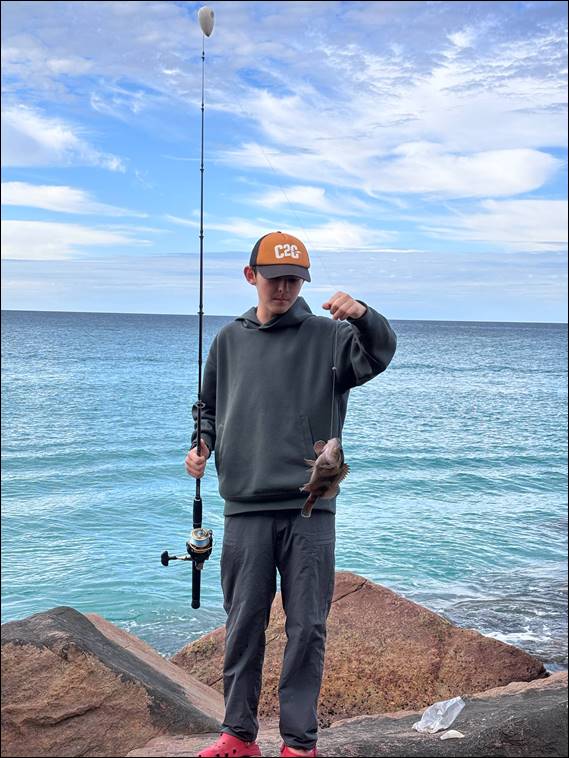
And not only for time on rock. This uncharacteristic period has arrived with a more stable and less active pattern than normal. Importantly with less cold fronts. Resulting in wind and ocean conditions that are at times more settled than they have been over the usual snorkelling season. This weekend brought another pocket of very calm conditions, so I took advantage with a couple of local dives. The first being on Saturday, having to share the water with people fishing off both the shore and boats. And like my dive I hear they didn’t have much success:
I did however see some other marine creatures worthy of mention. Starting with this Pale Mosaic Seastar (Echinaster arcystatus), of which I spotted a few. Not a new find, but one that I always enjoy. When it comes to diet, and once an adult, this carnivorous seastar is mostly a predator. However, species in the genus Echinaster are also known opportunistic feeders. When prey are scarce they have been known to feed off the dead, and are also able to switch their diet and sustain themselves by absorbing nutrients from decomposing organic matter:
Next up is the Mosaic Seastar (Plectaster decanus), which happens to be the only species in the genus Plectaster. This is one of just a few poisonous sea stars. It is not a huge risk to humans but if handled for too long can cause numbness. It is believed the toxicity comes from what they eat. This seastar is again a carnivore but is also a specialist feeder, nourishing itself on stationary invertebrates. Mostly sponges and bryozoans. Absorbing the chemical defences of the sponges they eat, which is considered to then persist in the seastar making it poisonous:
I was also pleased to come across one of the largest species of Comb Jellies (ctenophora). With an estimated 60 species in Australian waters, approx. only 35 have been named. This being one, the Winged Pocket Comb Jelly (Neis cordigera) that often exceeds a foot in length. I’ve previously talked about how they propel themselves using tiny hairs called cilia. Comb Jellies are the largest animals to swim using this technique. Another distinguishing feature separating these from jellyfish is they do not have stingers. They do however have colloblasts:
While jellyfish have cnidoblasts. Both are similar, comprising a spring-loaded spiral tether that shoots out to capture prey. Cnidoblasts are harpoon-like and deliver a toxin to immobilise the prey, hence the stinging sensation we can feel to varying degrees. Whereas cnidoblasts form a sticky pad after firing, as the granules at its end rupture to quite literally glue itself to its prey. Next was my first sighting of a jellyfish of the Aequoreidae family, or many-ribbed or crystal jellyfish. There are a quite few species in Australian waters, and can be difficult to identify:
This one I am however pretty sure is a Southern Crystal Jellyfish (Aequorea australis). Detailed as a common and smaller species often found in temperate southern Australian waters. The bell of these are usually up to 2.5cm, but can reach up to 8cm. With over 100 tentacles reaching 250mm trailing below the bell, so fine that they are hard to see until the light catches them. And as can be seen below, I did spot some fish. The ones that stood out the most were the Horseshoe Leatherjacket (Meuschenia hippocrepis), in varying life stages:
Then on Sunday after a morning out, clinging off the walls of the quarry at the Welly Dam, Lisa and I headed to the beach with the poodles. I didn’t feel bad when I left her on the shoreline. She’d come armed with her backpack chair and intended to relax, plus by chance a few people she knew were down with their dogs. As the dogs played and humans had a dip or too, this human lost himself in another underwater adventure. Soon finding myself several hundred meters out, which I later heard made the others ask Lisa if she ever worried about me:
Lisa replied to them that she is used to me heading out solo, and has ‘given up’ worrying. Before I got that far out, in the relative shallows, a Southern Eagle Ray (Myliobatis tenuicaudatus) lazily swam underneath me. I got the feeling it was watching me with as much interest as I watched it. Aptly named, as it swims by flapping the pectoral fins up and down. This is different to many other rays, which use an undulating motion. It is also different in that it has a very obvious frog-like head and duck like bill, used to hunt for prey in the sand:
Quite a few other locally found rays use the same method of ‘hydraulic mining’ or ‘hydraulic jetting’, to uncover buried prey. None of them however display the same, or even similar, modified head to assist with this process. I was even more chuffed when I came across a solitary Short-Tailed Nudibranch (Ceratosoma brevicaudatum). It’s not been a great season for finding these colourful creatures. This species grows up to half a foot in length, and is one of the largest nudibranchs commonly found in Western Australia. But not the biggest:
That title is held by the Spanish Dancer (Hexabranchus sanguineus). Not one I am likely to see, as it is found in the tropical waters much further north. It is also quite elusive being primarily nocturnal. Despite the varying ground I covered and how far out I went, it was again surprisingly quiet on the fish front. The only image I’ll include is of a Globe Fish (Diodon nicthemerus), hidden in a cave and unable to escape my camera. I did however come across a heap more Southern Crystal Jellyfish, including one that had a tiny fish hiding in its bell:
I wasn’t able to get a clean image of that and also struggled with my next two finds, but had to include them. The first is a very young Comb Jelly, for which I’m not game to work out which species. They have a quick and basic life cycle, and can reach maturity in a few months. Usually at night they release thousands of eggs and sperm,. Fertilization results in a free swimming planktonic larval stage. Then during several stages they develop into adults. You may notice that this one has tentacles, these are lost as it transitions to its final adult form:
The above find was no more than 1cm in length, so it took some effort to get a clear image. My next find was even smaller and probably half the size. I had to get an image, being a first time sighting for me. One that does not get many reported observations. A Crimson Jellyfish (Turritopsis rubra) is in its adult form, which can reach a whooping 7mm. The name comes from its bright red stomach and gonads, clearly visible inside the bell that is fringed with its tentacles coiled up. Most jellyfish are classified as carnivores but this one is a rare omnivore:
Along with us, only about 3% of the animal kingdom are classified as omnivores. This species needs to feast on things small enough for it to capture and digest, so will go for plants and animals alike. It is closely related to the Immortal Jellyfish (Turritopsis dohrnii), which is the only member of the animal kingdom proven to be biologically immortal. Being able to reverse aging by transitioning from a fully mature adult to a juvenile form, to restart life. While not proven through research, some believe the Crimson Jellyfish may also possess this ability:
Having reached halfway through autumn, a few noticeable differences are creeping into our early morning starts. The nights are cooling off, which means the rock during the first few lines can make the fingers feel a bit tingly. This is due to the rock having radiated out more of the heat it had captured the day before, and as such is colder to touch. But also, as these are quick fire sessions, we tend to jump on and start climbing before our blood circulation has increased. This makes the extremities, such as fingers, more vulnerable to feeling the cold:
On weekends we could start a bit later to least allow the air temperature to warm up. That would however result in missing out on the glorious spectacle of watching the world wake up. Friday driving up the hill for another before work climb, the sky had a big patch of cloud that looked like it was going to be set on fire as the sun worked its magic. It was not to be, but there was a bit of colour as the session started. This time with three, as Josh gate crashed the party. Having set himself a challenge meaning he needs to build up his contact time on rock:
He’s decided that by the time the year is out he wants to climb one grade 20 route clean, and now it is print there is no backing down. He has not gone so far as to say he needs to lead it, making it more realistic in view of his limited ability to get out. Today he joined us for the first two climbs. The first he went well on. While he persevered to get to the top of the second, the start gave him a bit of a spanking. Coming down toasted, he opted to head off for a run allowing Howsie and I to crank on a few routes at Josh’s desired grade and above:
The above route being the stiffest opposition that saw me fly a couple of times. Six routes down and it was time to get to work. But I was not done with the quarry walls yet, as a window of opportunity for a short session on Sunday arose. Rongy was keen but we needed to be back at a reasonable time. Later than when we squeeze in before work trips, so we had a slightly later start. Made a few minutes later when we got caught at the training crossing. And for the first time that I can recall we got caught at the crossing on the return trip too:
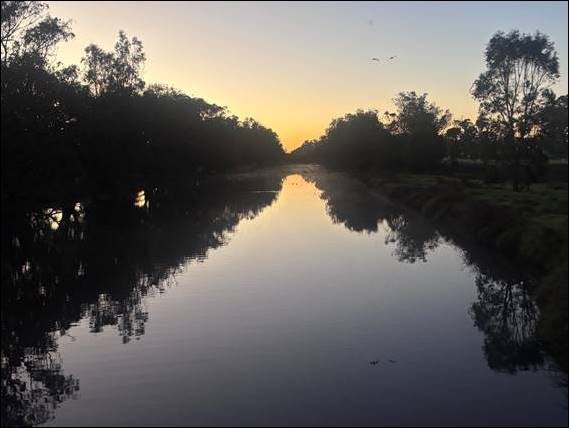
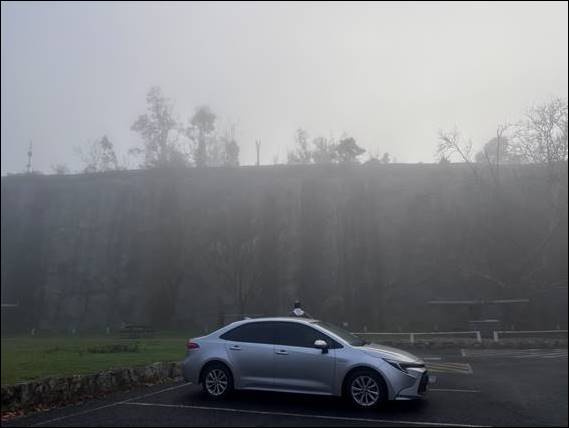
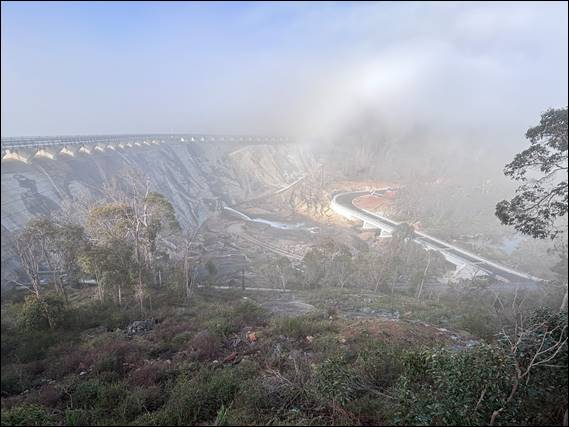
Arriving this time after the sun was up. It again felt cold in the quarry, so before hitting the walls we went to watch the mist drifting, swirling, and rising above the reservoir. Back at the walls, where the sun doesn’t reach, it felt like there was another sign of Autumn. The air felt damp. Fortunately the rock was mostly dry, so it didn’t hamper our climbing. Starting sensibly but keeping the momentum up, and throwing in a few more demanding routes as we went. Today’s tally was seven lines, and as weariness crept in we both got spat off the last line:
A sign to wrap up and Rongy was done. But I was keen to get it clean and as we had time I led it again, allowing me to even up my numbers. It was another two very successful and fun mornings at the dam, a place that never disappoints. Mind you I would say that about every place I climb at, so maybe I’m biased. Better still the old body held up well with two pretty demanding sessions, which is a great sign. While the changes Autumn brings are now being felt in earnest, I can safely say that there are no signs of the Autumn blues creeping in here: