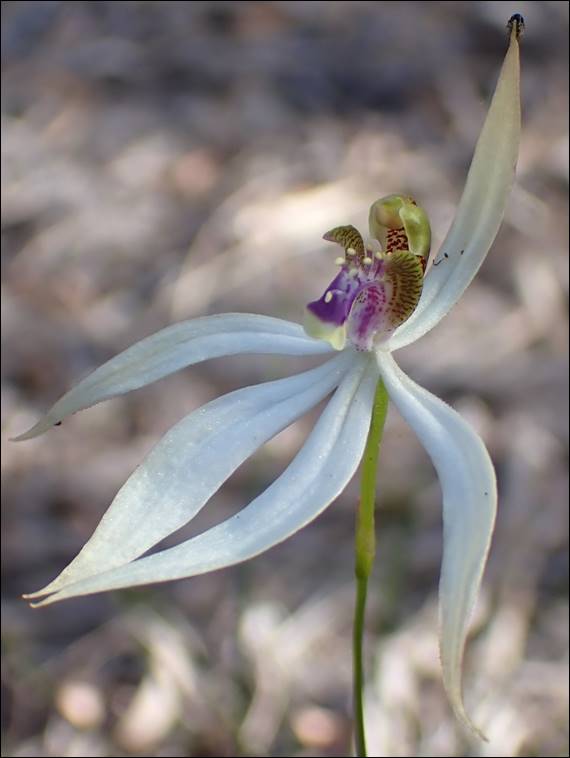
Since my first sighting of a Common Bunny Orchid (Eriochilus dilatatus subsp. multiflorus), when climbing with Craig at Wilyabrup five weeks back, I have only venture out once to see what else I might find. That ended up being a bit premature, when a week later at the Capel Nature Reserve didn’t see anything on the orchid front. Yesterday, back at Wilyabrup, I stopped on the drive out in a little patch of bush where I often have success. This spot was good to me again, with loads of Common Bunny Orchids flowering:
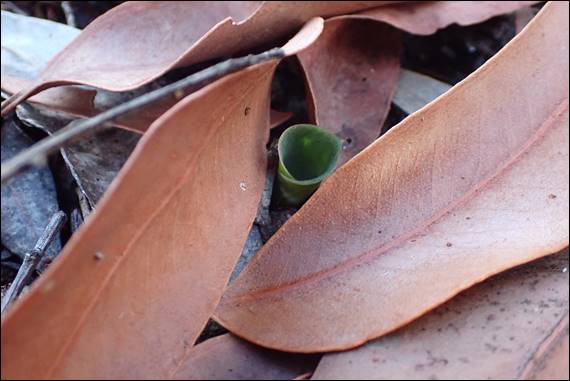
Setting me to think it was time to head back to the Capel Nature Reserve. Here I had success with lots of the same species, and heaps of little basal leaves uncurling as they poked out from the soil. But check out this tiny 5mm silk ball, hanging by a silk thread from a grass stalk. In the close up you can see it’s textured surface and a tiny hole at the top. This is where, after having completed their first moult inside the protection of the sac, the spiders emerge. Releasing their first strand of silk, which the breeze catches and they drift off to find a home:
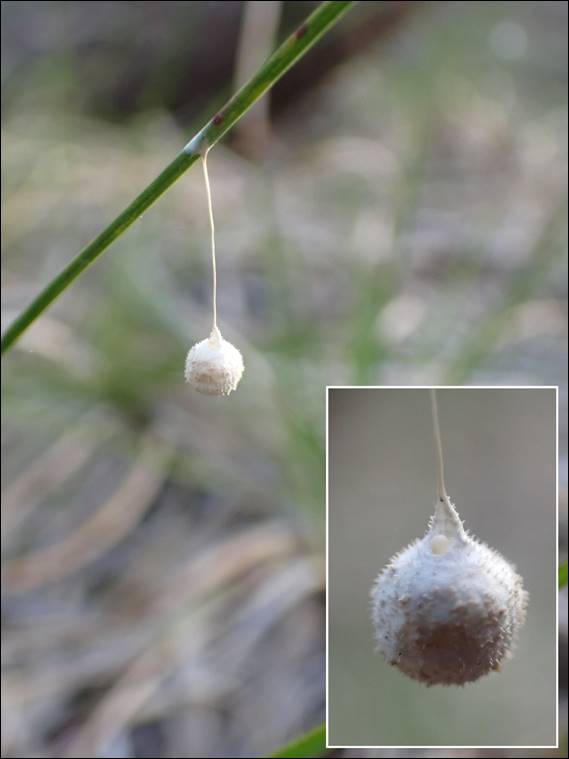
This is egg sac of a Two-tailed Spider (Tamopsis sp.), a species I have not seen before. It is a small and exceptionally well camouflaged ambush hunter. In all the literature I have found they say the female will often endeavour to blend the egg sac into the surroundings, for protection. Then staying close by. This was not the case on either count for this find. Below is another small find, after find this particular leaf covered in these small ball-shaped sacs I looked hard for more, but didn’t see any. Diderma hemisphaericum is a myxomycete:
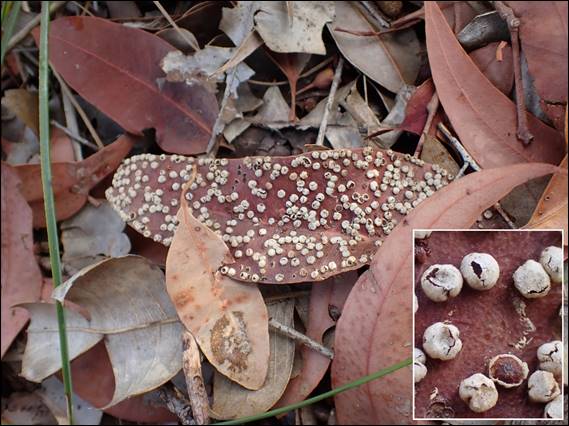
In layperson an terms it is a slime mould. Found worldwide, and while known to be present in Western Australia, it is not considered common. On inspection other species of Diderma found in the area I am pretty sure I’m on the money. It forms small ball like structures that are typically found on decaying leaves, twigs, and plant debris. The outer smooth white cartilaginous layer, covers a dark brown in mass of spore. Becoming brittle as it matures, the outer layer ruptures to expose the spore that rely on environmental factors to be dispersed:
Rather than feed on the decaying plant matter it is found, slime mould consumes the bacteria, fungal spores and/or mycelium, and other organic matter found on the host material. The Brown Oyster Mushroom (Pleurotus australis) however, does feed off the dead or decaying wood that it resides. That said it can also be found on living trees, and in our area particularly likes Peppermint Trees (Agonis flexuosa). The mycelium of this fungus, which are a root-like network of thread-like filaments, assist with tapping into another unlikely source of food:
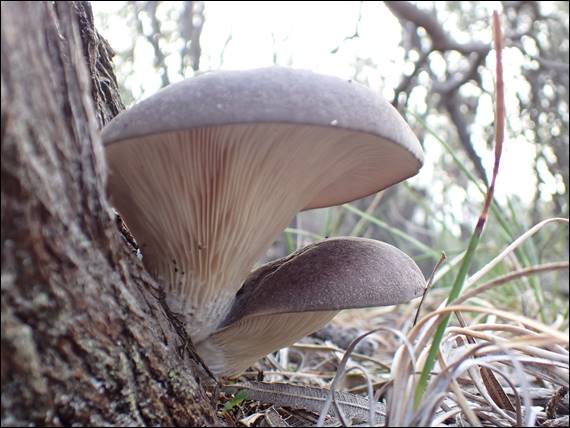
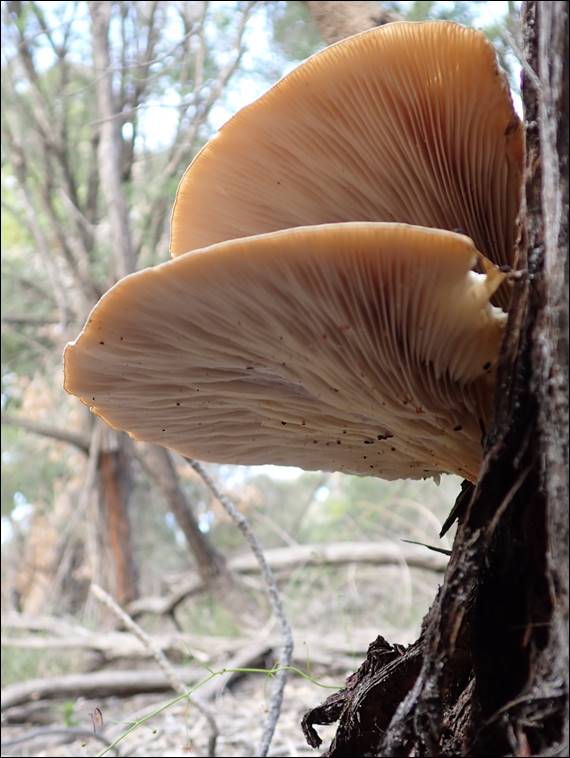
As with most species of Pleurotus, this fungus also has a carnivorous side. Needing to source nitrogen and other essential nutrients, which the rotting wood they grow on cannot provide in sufficient supplies. The mycelium release toxins that paralyse nematodes, microscopic worms found in the soil, which are then digested. You may think the above and below are different, but they are the same species in different life stages. The above young specimen showing a more dark and vibrant coloured cap, which with age fades into a paler colour:
There was plenty of bird song about. I am however somewhat biased to favouring the call of the Forest Red Tailed Black Cockatoo (Calyptorhynchus (Calyptorhynchus) banksii naso). Some may call it harsh but it holds fond memories for me, and a flock of maybe eight gave me a wonderful vocal and visual display while they feasted on high. I also spied a smaller flock of Carnaby’s Cockatoo (Calyptorhynchus latirostris) clearly distinguished by their high pitched calls, and verified by the flash of white as they flew by. The Forest Red Tailed Black Cockatoo is here year round, only moving within a local range in response to food availability:
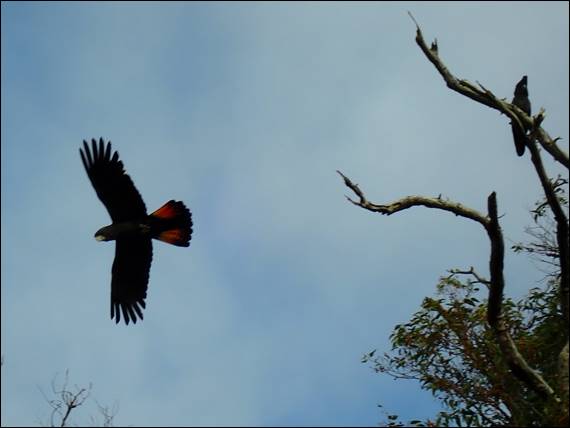
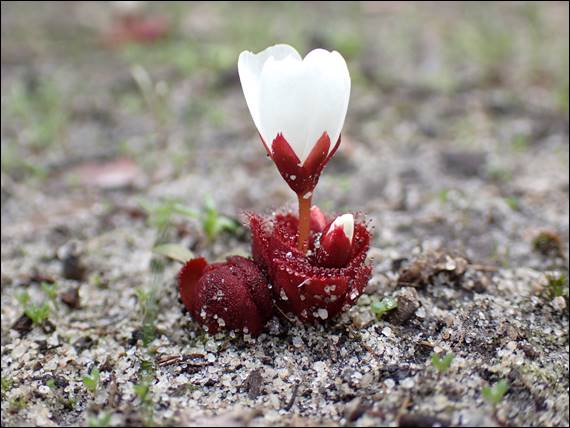
Whereas Carnaby’s Cockatoos migrate between inland Wheatbelt and our Swan Coastal Plain habitats. Residing here from approx. January to July, arriving after having spent their winter breeding season in the drier inland environment. Back down on the ground I was taken by this Drosera tubaestylis. The species name is derived from the unique, small, trumpet-shape styles that form a tight cluster in the flower. While an early flowering species, typically in late May to June, the styles are not visible in this specimen that has just started to bloom:
There was also success with orchids when I found my second species of the year. Several Leafless Orchids (Praecoxanthus aphyllus) were out, which tend to be solitary growing far apart from one another. These are tricksters. Using a strong fragrant and calli that look to be laden with pollen to attract native bees. The flower does not however have any nectar, so after completing their pollinating duties the bees are left wanting. It is also not leafless, having a leaf that forms a tiny insignificant scale or bract at the base of the stem:
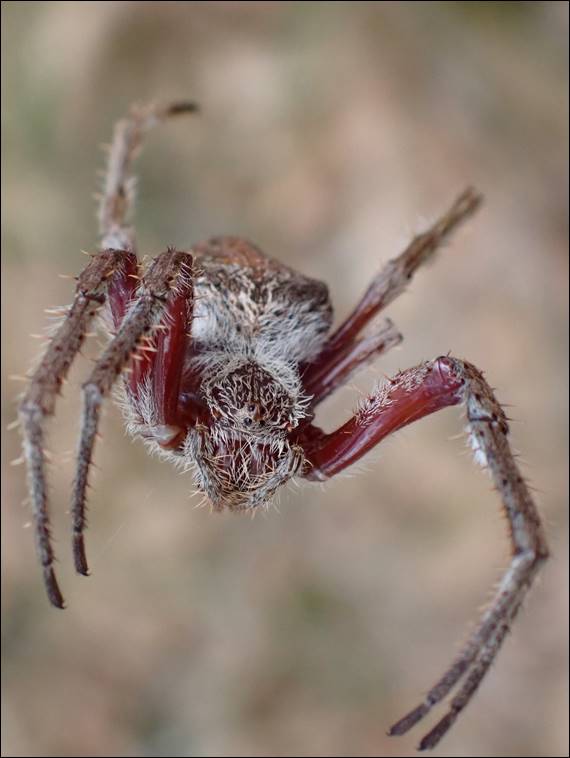
Lastly an Australian Garden Orb Weaver (Hortophora transmarina), with its eight eyes visible in two neat rows. Sight is our most used sense but spiders generally have very poor vision. Not good for night hunting, which most do. Instead they have specialised sensory hairs and pit-like sense organs in their exoskeleton. Vertical hairs on the upper segment of their legs can detect air movement and where it is coming from. The speed, frequency, and spatial pattern of the vibrations telling them if the wing beats are from a prey and predator:
 Sandbagged