Being such a glorious day I simply had to get out for a wee bit. But first a bunch of domestic duties needed attention. And while I tended to those, Lisa wandered down to the beach for the customary dip. Not that I think I would have enjoyed the cold plunge nor the social scene that goes with it, but I was a little envious when she told me the salmon run had gone past after they got out of the water. With the fish clearly visible in the near shore waves. Close enough that they could have caught them with a net, if they’d had one:
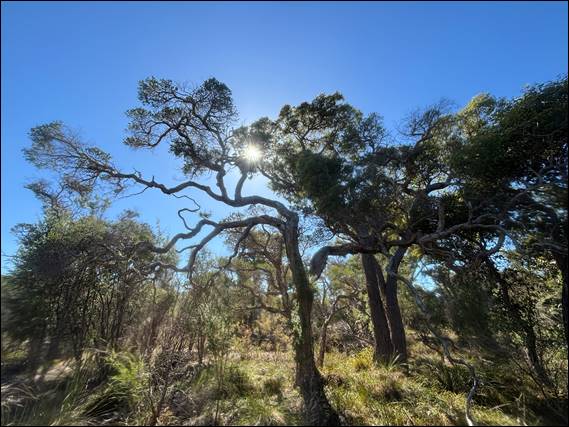
It is all about timing and creating the opportunities. And after the mundane stuff I wanted to achieve was done I snuck out myself heading inland to the Capel Nature Reserve. If I had been in African Savanna I might have needed to watch out for a big cat lazing on a branch, or if I had been in the northern hemisphere potentially a lynx. The only Lynx I was likely to see was however of the spider variety. Lynx Spiders (Oxyopes) are small, with long spines on their legs. They are unique in that their eyes are arranged in a characteristic hexagonal pattern:
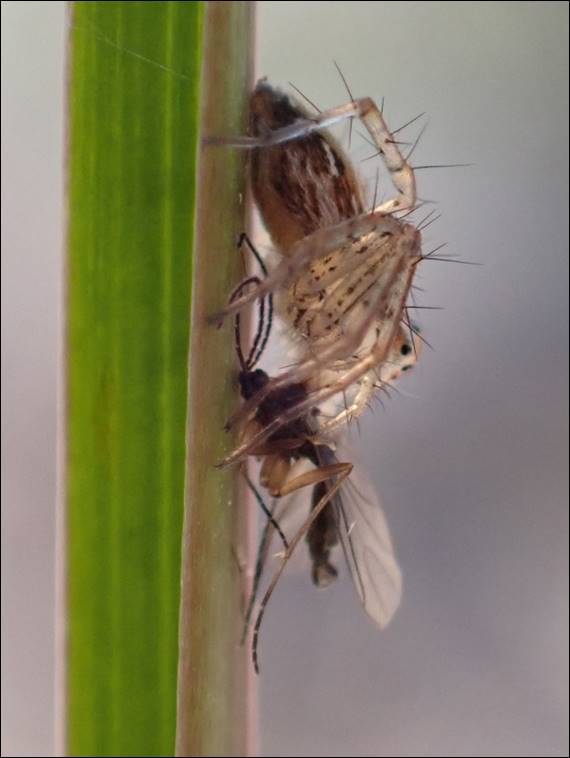
Only six of their eyes form this shape. The other two are located in front of and below the main group. If you look carefully you can make out this arrangement in the above image. In my last post I alluded that most spiders have poor sight, but not all do. This is one genus that has very good vision. Evolving this way due to not using a web meaning they need to be able to see their prey, which they pounce on. They then use their spiny legs to hold them still while they inject them. Being hard to identify they are often listed as Oxyopes sp. in regional surveys:
They are not however too hard to find being diurnal, i.e. active during the day. This one would have been a mere 3-4mm long, and I could just about make out that it had caught something. If I am right it is likely that the spider is sucking the juice out of a common mosquito species found in the area, called Culiseta (Culicella) atra. I’m also game to go one step further to suggest the spider I saw helping to keep the mosquito population down may have been a Spotted Lynx Spider (Oxyopes punctatus). Females get to 6mm and males 4mm:
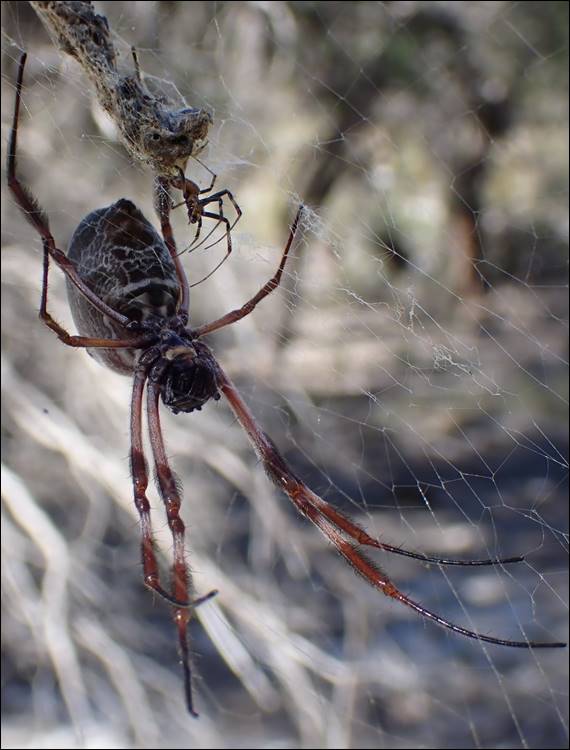
In complete contrast the female and male Golden Orb-Weaving Spiders (Nephila edulis), shown together a few images up, reach 40mm and 6mm respectively. I’ve previously detailed how mating for this species is a risky business. Studies have shown that females can exhibit post-copulatory cannibalism, with a 12% probability of the male becoming a meal. One thing on the males side is that these spiders do not have good vision, being web builders. As long as he stays completely still he is relatively safe:
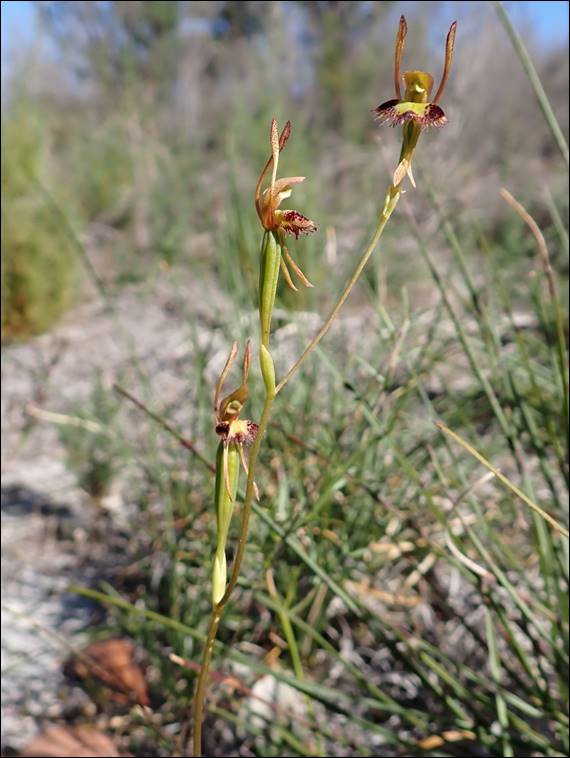
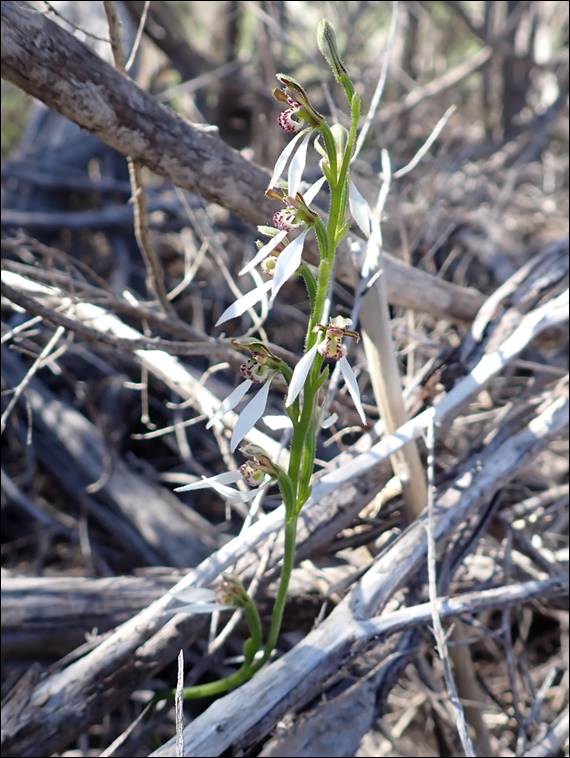
I didn’t come here to spot spiders but was happy to spend a bit of time checking them out. After all there are not too many orchids species out this early for me to hunt. I’ve started with one I have already shown this season, the Common Bunny Orchid (Eriochilus dilatatus subsp. multiflorus). Included again because this plant has half the number of flowers this sub-species can have. Most specimens I find have no more than three or four. This one has nine out with one more coming. There is only one subspecies of Bunny Orchid that can have more flowers, and I have yet to find that species this season:
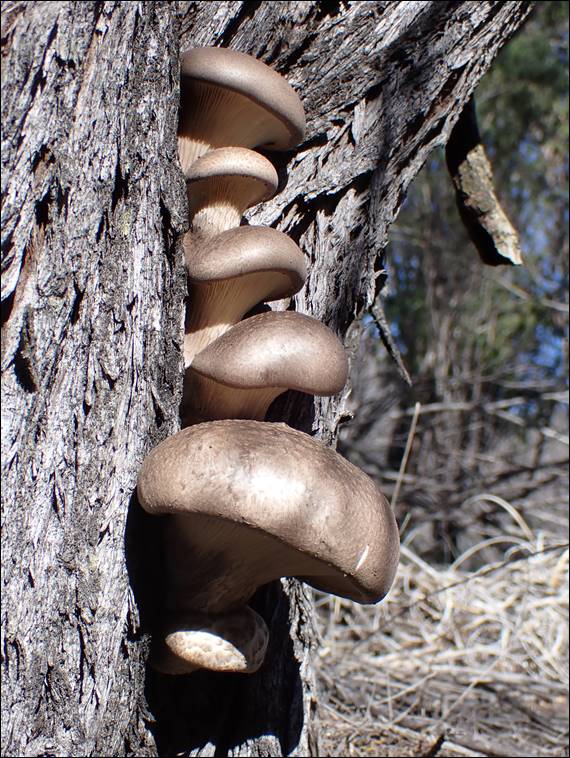
But my next find today, as we sneak past a lovely image of yet another Brown Oyster Mushroom (Pleurotus australis), was a Hare Orchid (Leporella fimbriata). These can have up to four flowers on each plant, and I found lots of specimens but with no more than three flowers. This orchid tricks male winged Bull Ants (Myrmecia urens) by releasing pheromones that mimic the female ant. If however the plant does not manage pollination the flower can last right through till September. At five months it is one of the longest lasting flowers of any orchid species in our area. Not that this looks to impress this Bobtail Lizard (Tiliqua rugosa):
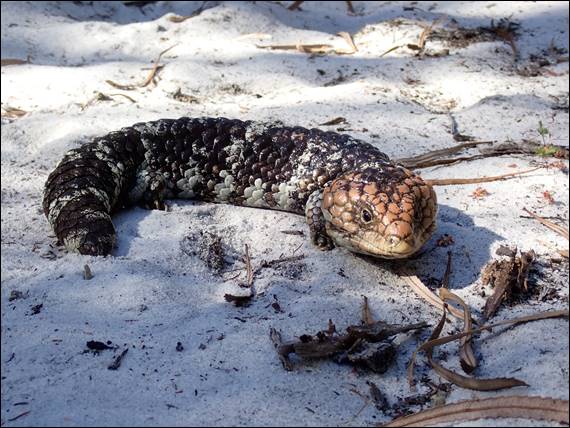
 Sandbagged