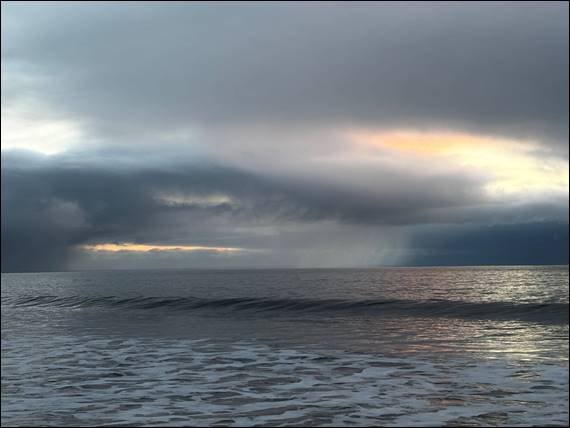
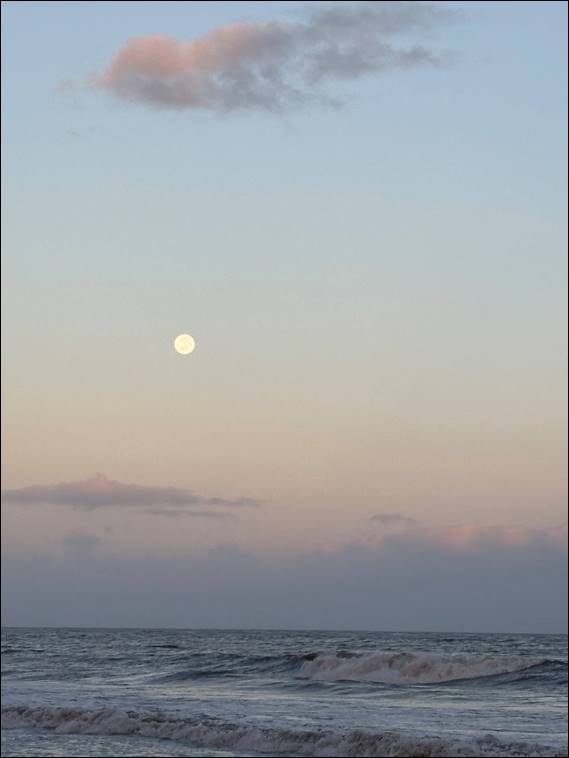
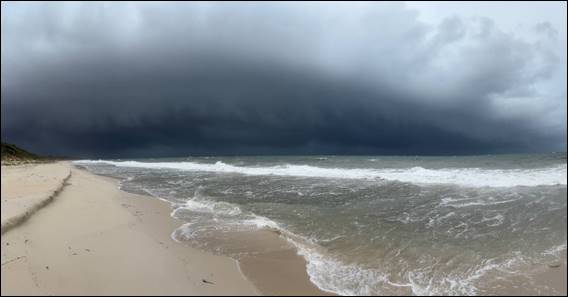
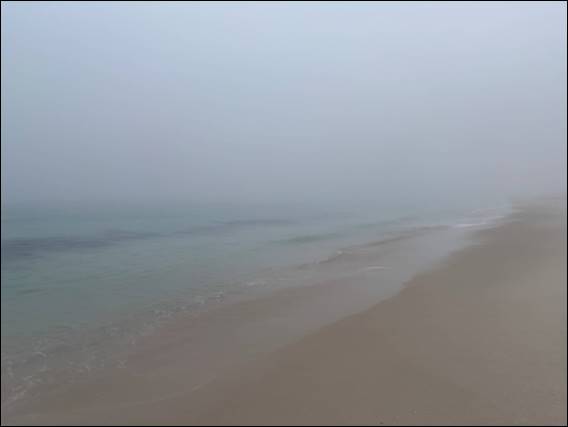
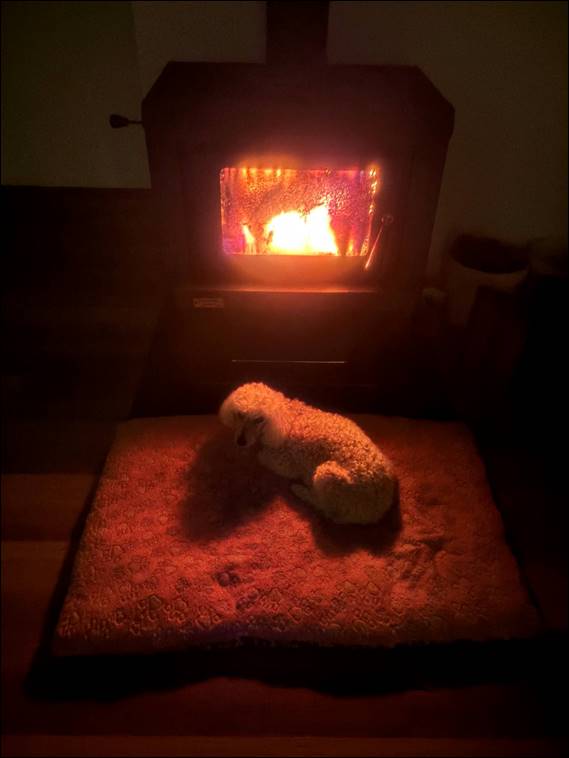
My last post of a dive was over six weeks back; an unusual abstinence for watery activities for this time of year. Up until March the image library for each successive year would normally be filled with more underwater than above water imagery. I did have a sneaky snorkel a week after the last one I posted, and while the water clarity wasn’t too bad there was really nothing of interest to be seen. Having taken this week off, both to get back into the (time) zone and ease my body back into the humdrum of life, I can join Lisa for her morning beach walks:
Today the ocean looked flat with hardly a ripple to be seen. In addition the nearshore waters looked to be reasonably clear. However, while there may not have been any waves the water’s edge was gently surging up and down the beach. And as it did so South Western Stingers (Carybdea xaymacana) were left stranded in the sand. The freshly washed up ones still pulsated. In response to the nervous system continuing to function and tell the muscular ring on the bottom of their bell, used to propel it through the water, to rhythmically contract:
There are four main life stages of jellyfish. As a box jellyfish (Cubozoa) the last two stages of the South Western Stinger comprise a juvenile and adult medusa stage. Thus skipping the ephyra stage that some other jellyfish go through. Key features distinguishing juvenile from adult medusa stages are the bell size and length of the tentacles. The term medusa having been adopted, not surprisingly, because similar to the mythological Medusa with snakes instead of hair turning people to stone, the sting from jellyfish can sometimes deliver a paralysing sting:
In the above two images. The washed up specimen has tentacles of similar length to the bell, whereas the free swimming specimen above has much longer tentacles. These may be examples of the juvenile and adult medusa stages, although the bells are similar sizes and when washed up the tentacles contract which could explain the darker colour. Even after being washed up the nematocysts, or stinging cells, can remain active. The ability to sting can last several hours and potentially up to a day. The duration being dependent upon the tentacles staying moist:
Encouraged by the conditions, but not being completely fooled in view of the length of water washed beach, I decided that after the household chores were done I should jump in. And just to try something different I went off the beach at Wave Walk. Here the reef is very close to shore and also quite shallow, making it a bit of a nursey to quite a few species. The water, as expected, was a tad cloudy. I started by scouring the deeper waters for half an hour with nothing to show for it, before heading back along the shallower near shore reef:
Fish came into sight here, with the boys showing off their colours such as the above male Whitebarred Boxfish (Anoplocapros lenticularis) and Shaw’s Cowfish (Aracana aurita). Maybe giving it one last go with the ladies, as the spawning season for these species starts to draw to a close. In the murkiness my eyes caught a Southern Eagle Ray (Myliobatis tenuicaudatus) leisurely cruising along side me. Content to simply watch it glide, it was not till I went to take an image that is sped up. Leaving a trail of the dust in the water behind it:
After the long thirty-two hour trip back from the homelands, this morning was day two of waking up in Western Australia time. It felt much harder to rouse and get going today than it did yesterday. As a person who is normally up early and ready to go as soon as I wake up, it is a strange feeling to roll out of bed at six and feel like all I want to do is crawl back into it. No doubt within a day or two the body clock will be back to the old routine. Today, however I had arranged to head out for a climb and as such I had no choice but get moving:
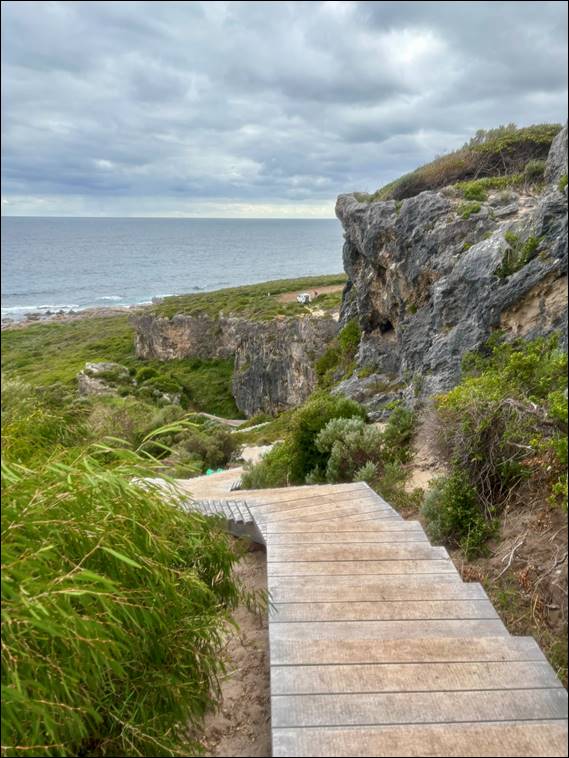
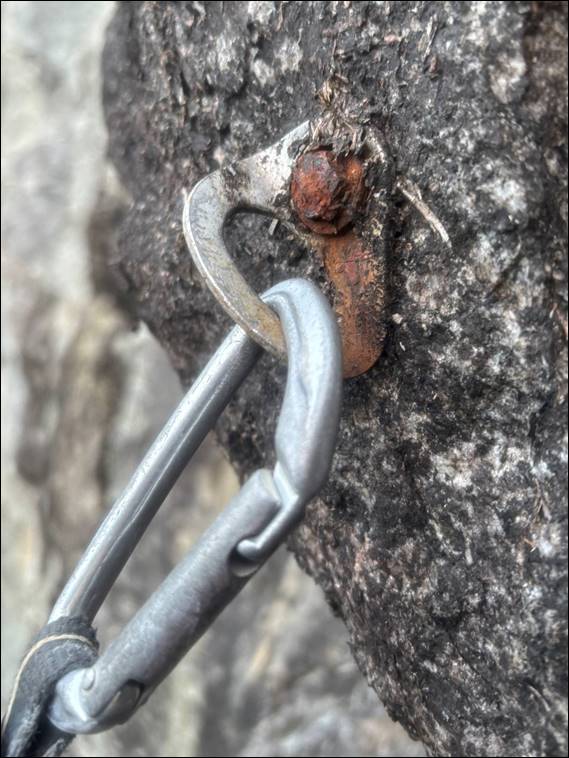
The destination was the furthest crag from home in the south west and most southerly in the Leeuwin-Naturaliste National Park. Cosy Corner, being an hour a half drive away. During which, after the narrow, winding, pot-holed, and high stonewall-sided country lanes I bombed about with the folks on just last week, even the country roads felt like highways. Easily wide enough to allow two cars to pass by each other without so much of a hint of worry. Some may be doing the maths, it is after all summer, and yes you are right:
It was a later than usual start for me. The agreed 8am commencement time had been organised with Rod. His request and for reasons that made sense, plus it allowed me in my sluggish state to feel ready for action when I arrived. You may recall Darby, who I climbed with at Moses Rocks just before my visit to the homelands to see the folks. Well he had bumped into Rod during a climbing trip to the south coast, and after getting chatting he mentioned to Rod that I had just released a bunch of mini-guides for the south west:
One being Cosy Corner, which so happens to be Rod’s local crag. The lucky bugger lives a short ten minute drive down the road. On learning about the mini-guide he reached out, letting me know that he has been cleaning the place up. Having recently got back into roped climbing, as opposed to just pebble pinching, he’d been visiting the crag regularly. And clean-up he did. Not just in bagging heaps of new routes, which led me to updating the mini-guide, but also picking up all the litter and broken glass left by careless tourists and visitors:
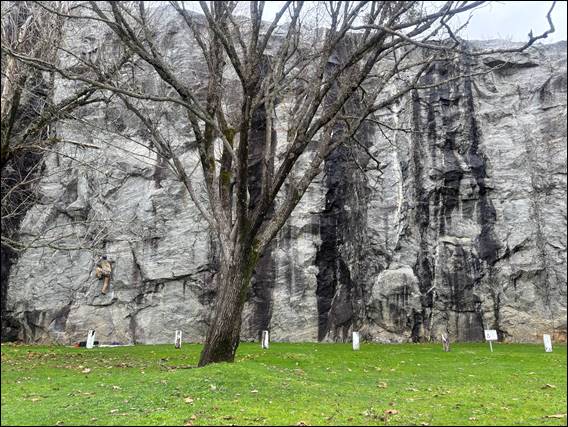
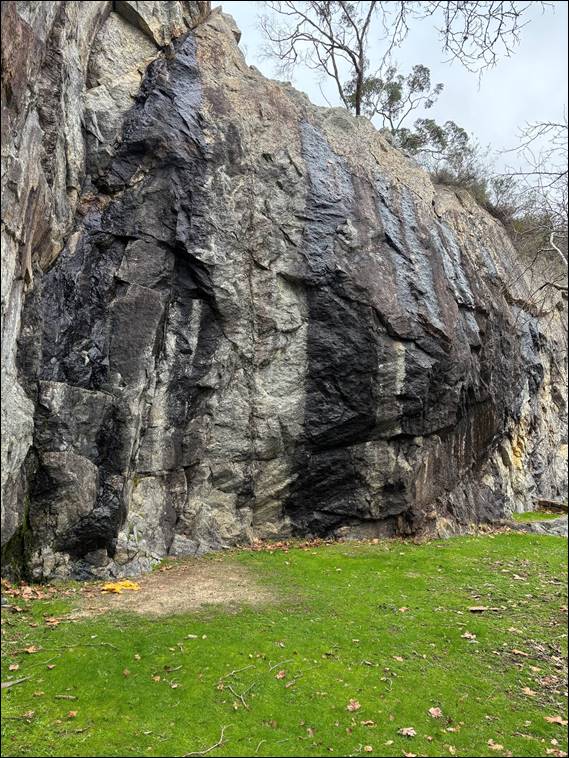
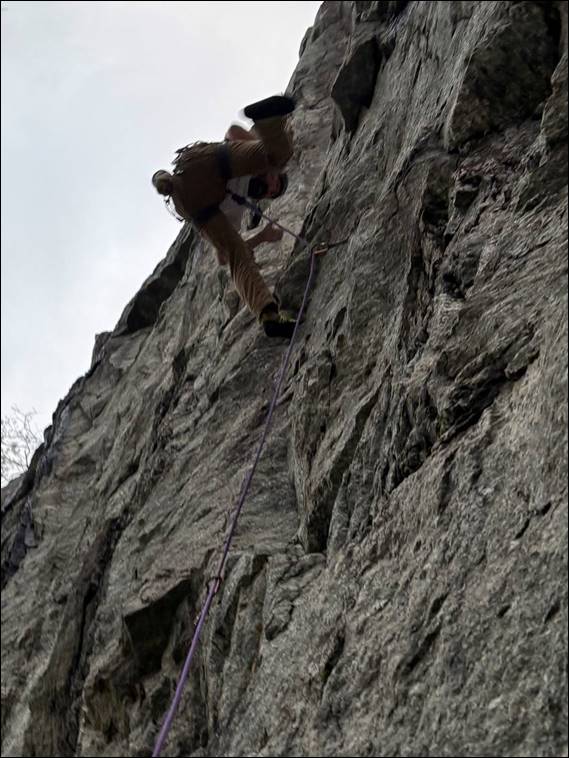
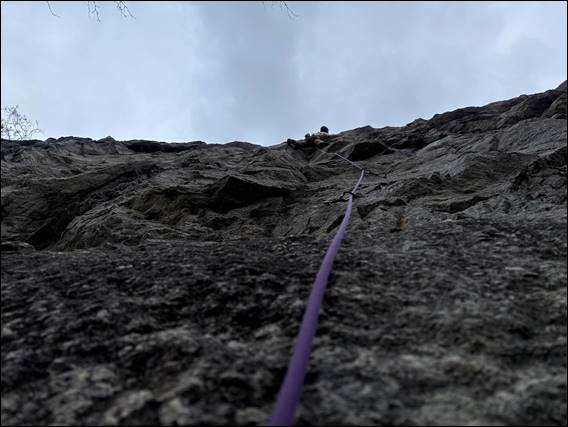
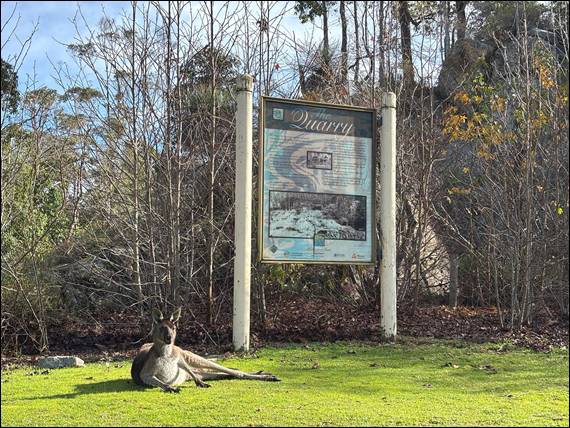
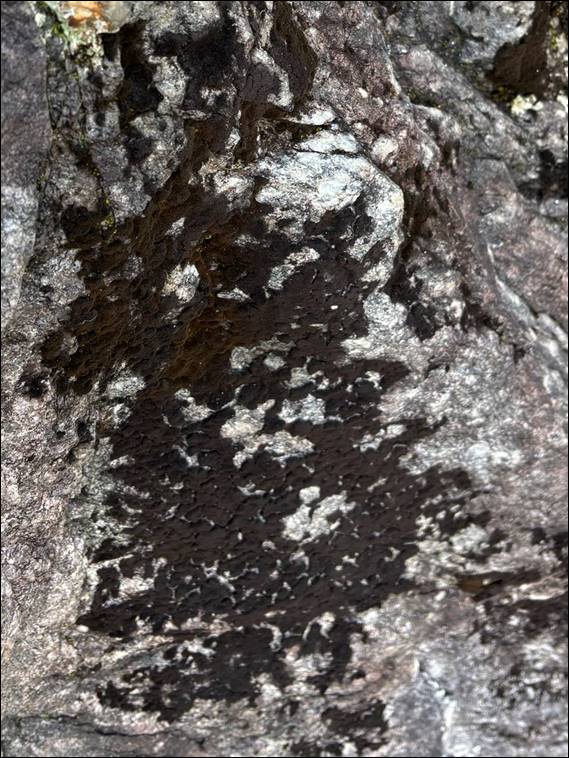
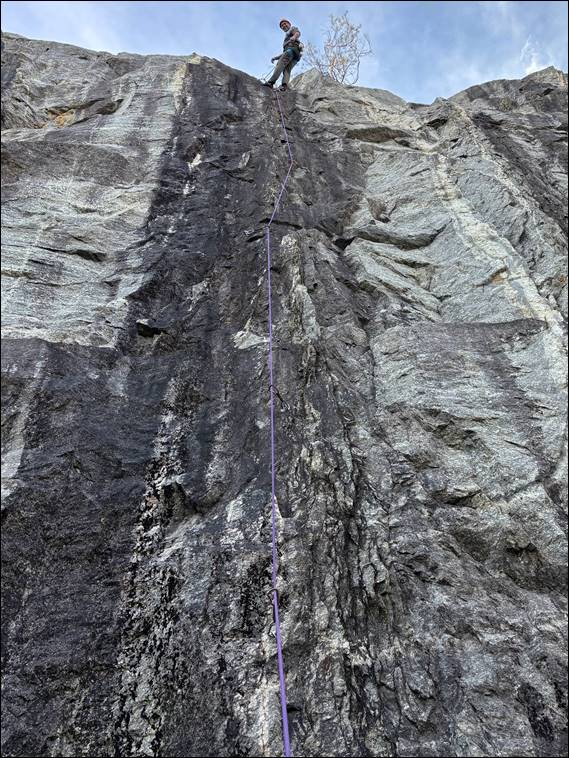
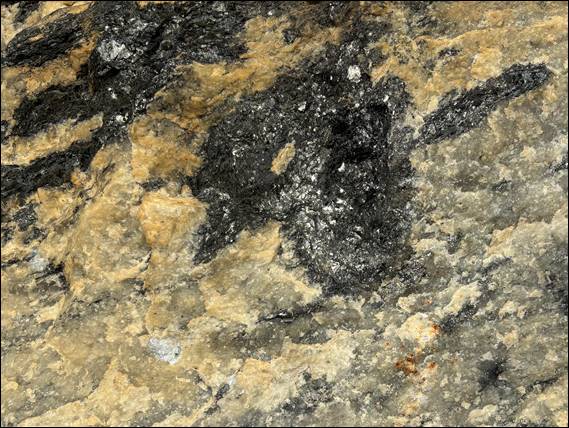
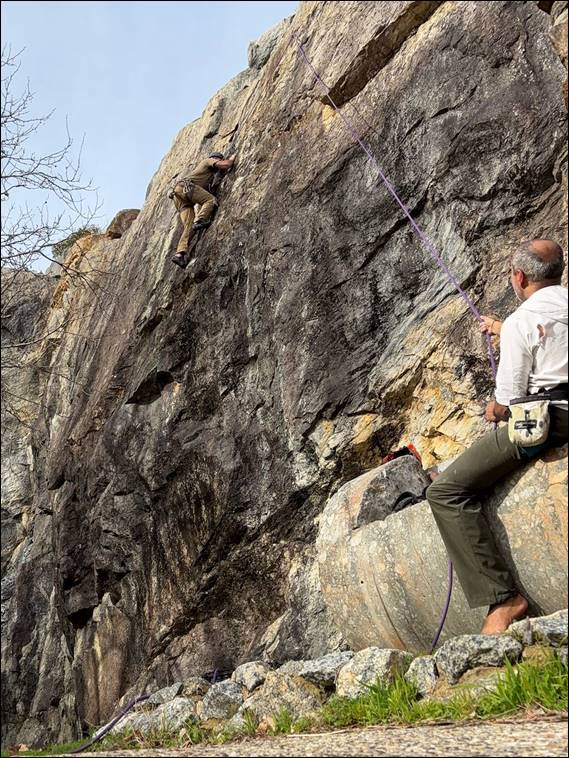
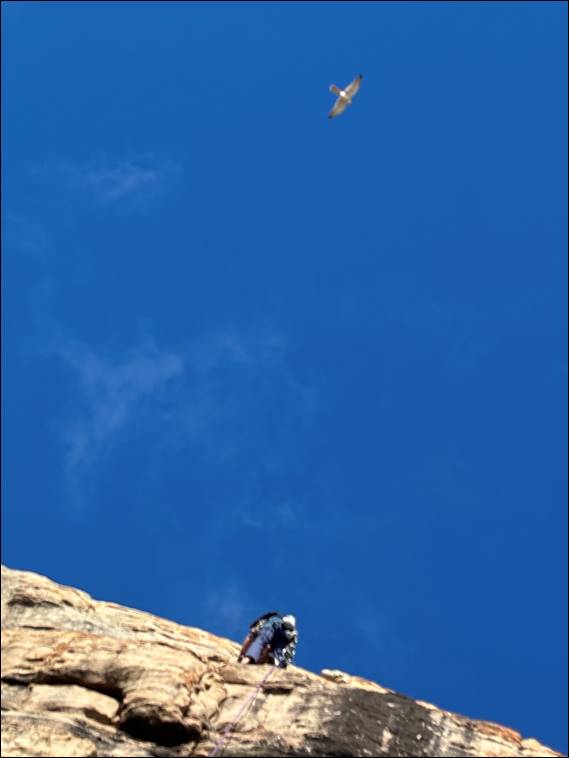
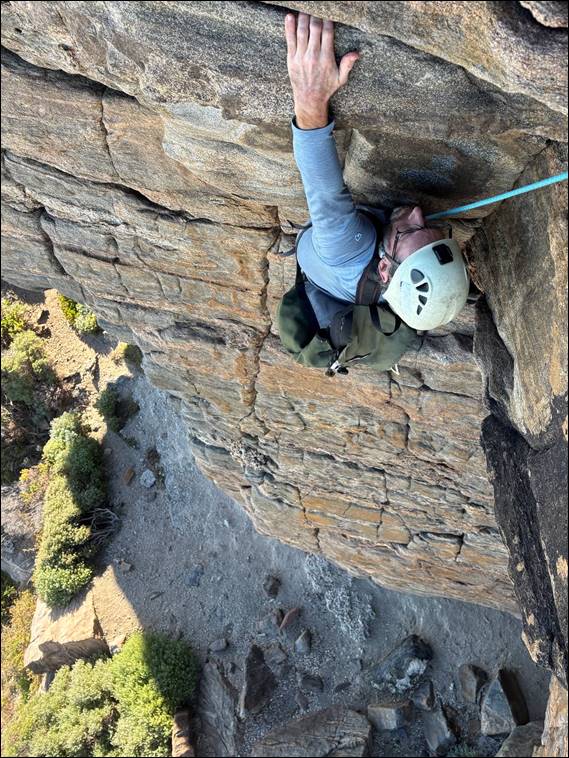
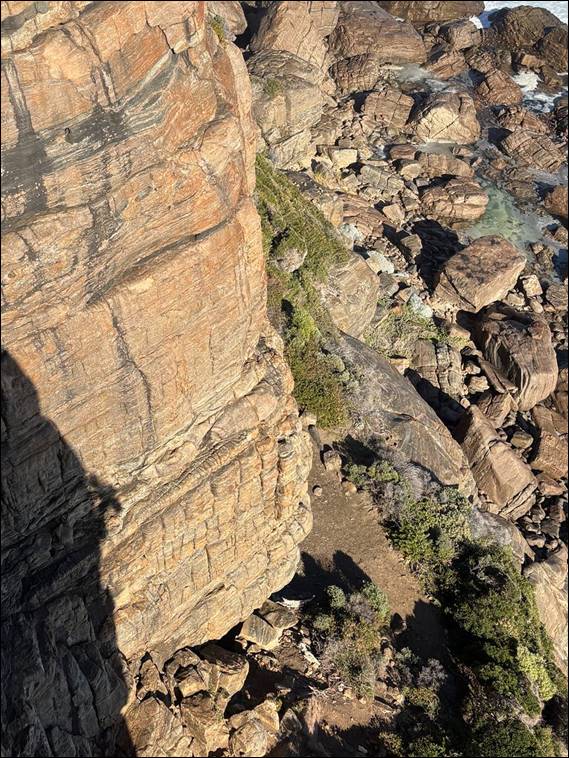
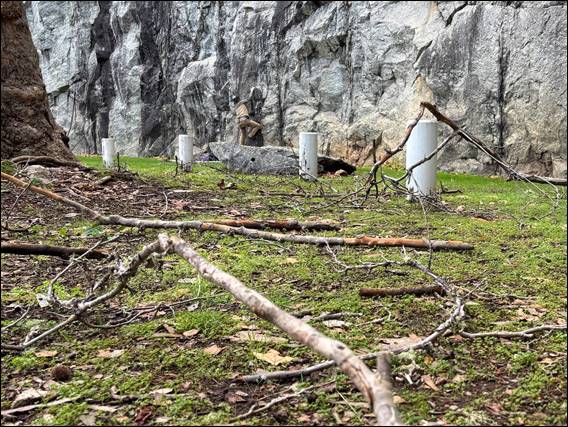
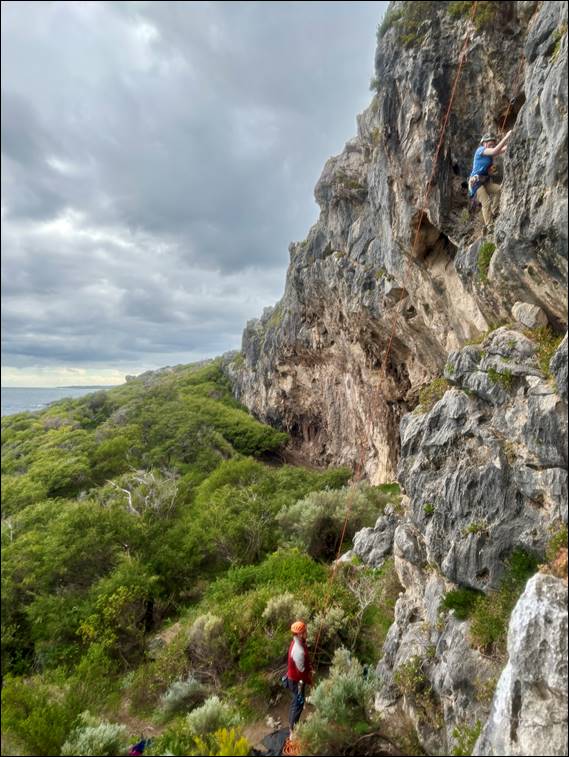
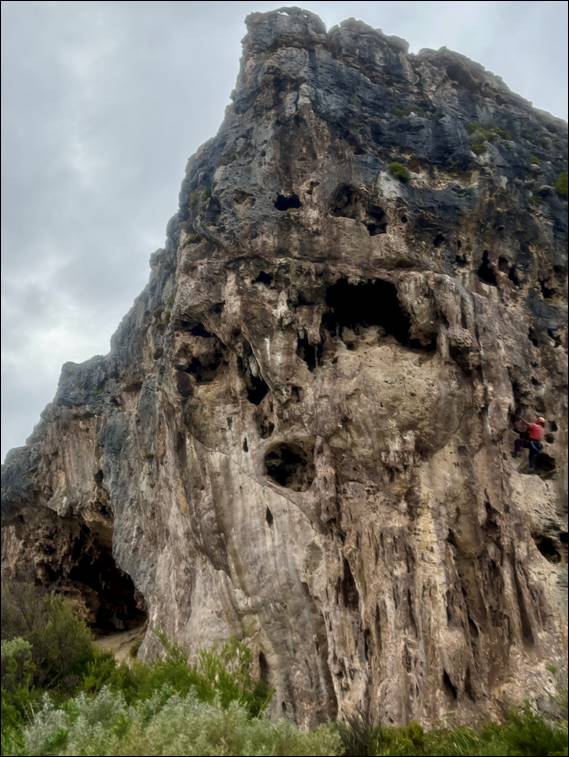
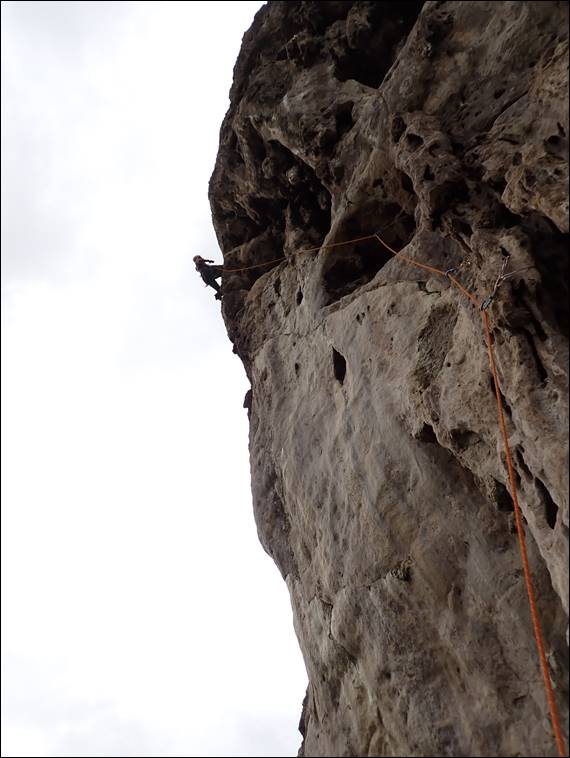
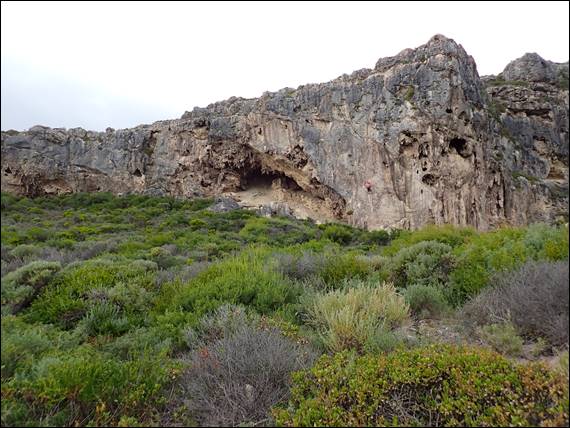
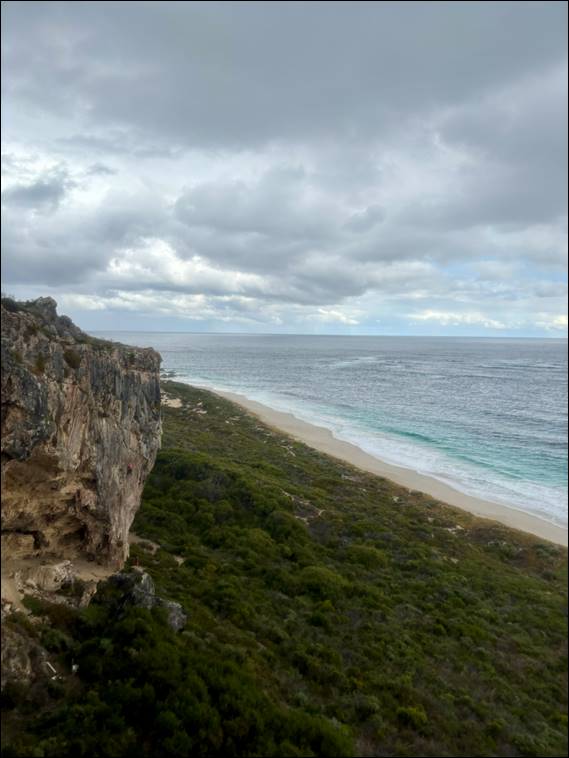
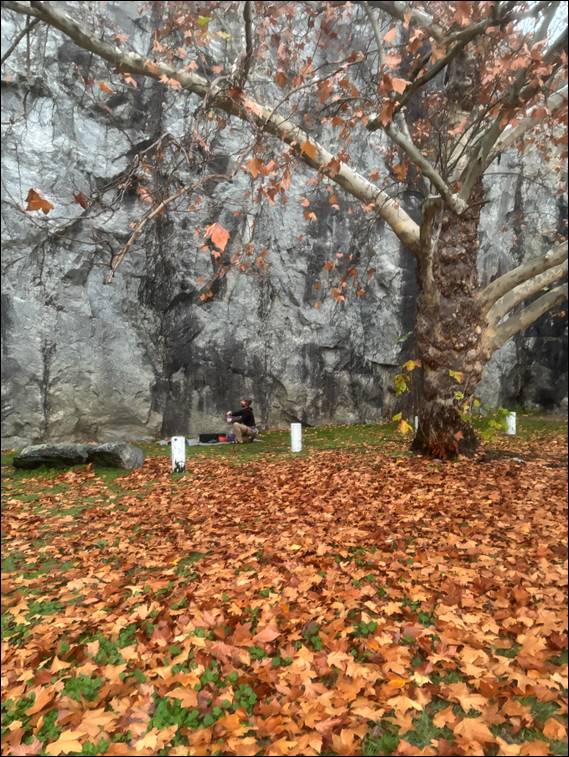
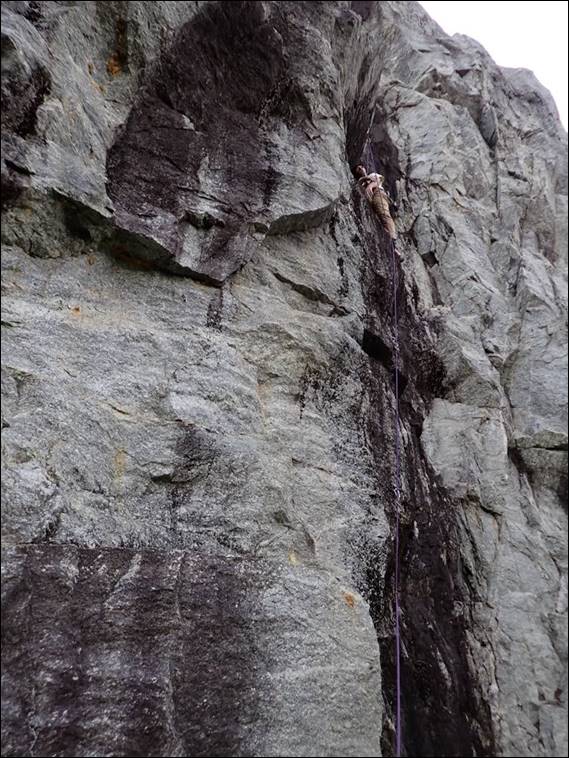
He had put up lines at various locations along the main face, and a stack of some fifteen or so at an area he named the Crystal Palace. The face can be seen in the second image, and it includes a fat quartz vein above the black Anorthosite base. This is up to a meter deep in some parts, and is where the name came from. Howsie and I have often looked at this wall and pondered whether to play on it. Each time having instead gone to the other cleaner looking parts of the main area, where we have managed to bag a number of first ascents:
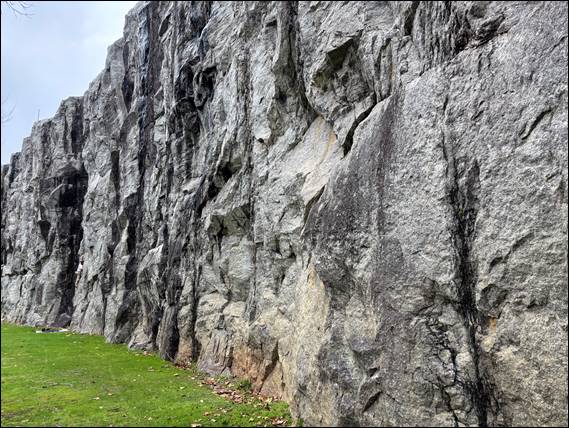
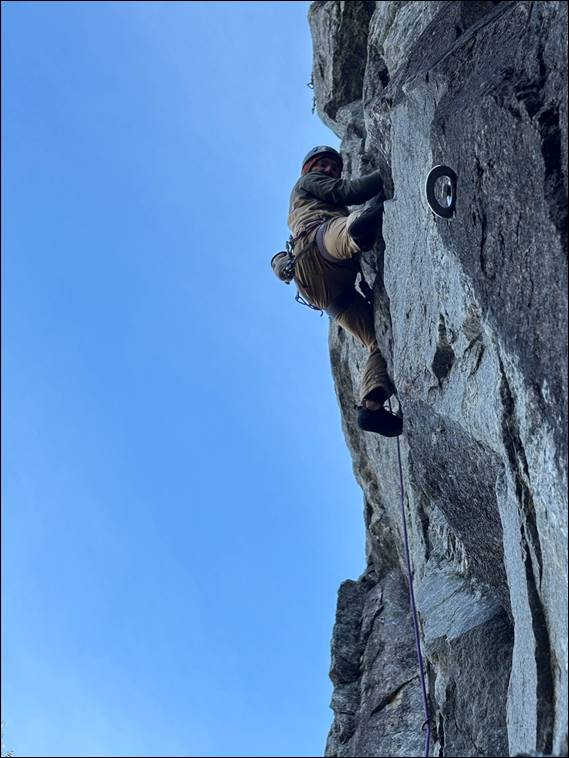
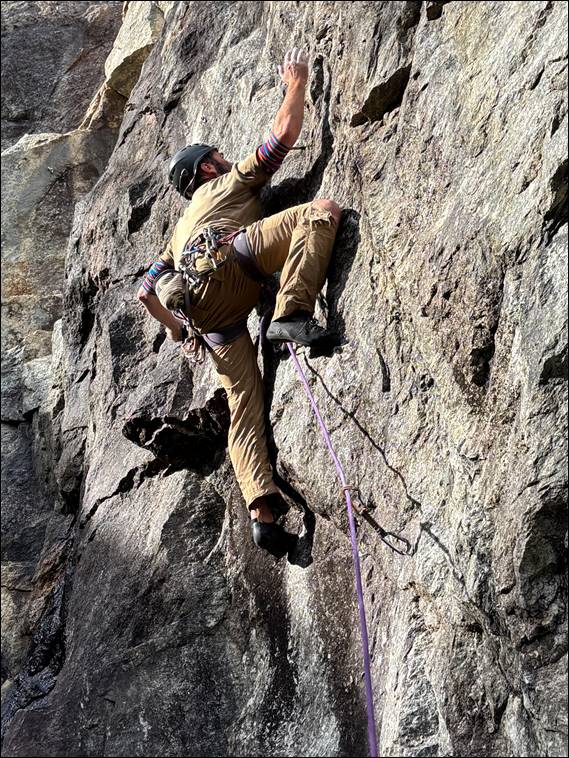
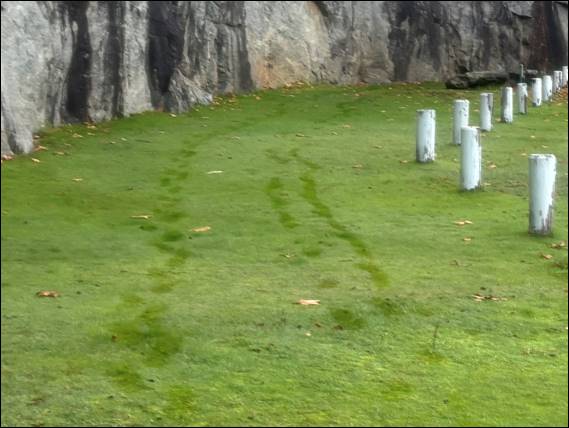
Not however as many as Rod had. And this led to he and I organising a catch-up at his local crag, where he offered to point out some of the lines. The climbs at the crystal palace have not been individually included in the mini-guide, the area has merely been given a mention stating that all the likely lines have been climbed. As the images suggest it is a broken face. Ramps and ledges, break up the steeper sections. These offer mini-expedition type lines, as opposed to the more sustained routes that most ‘modern’ climbers seek:
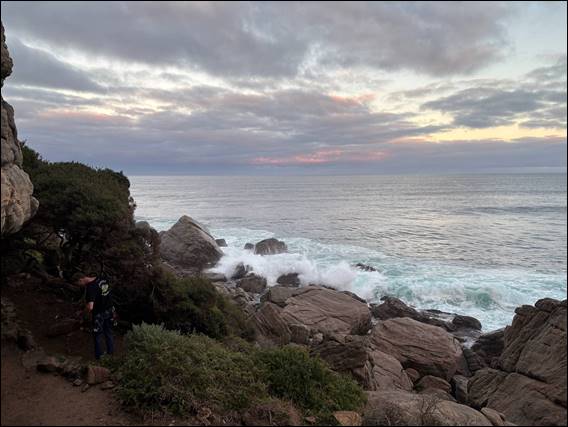
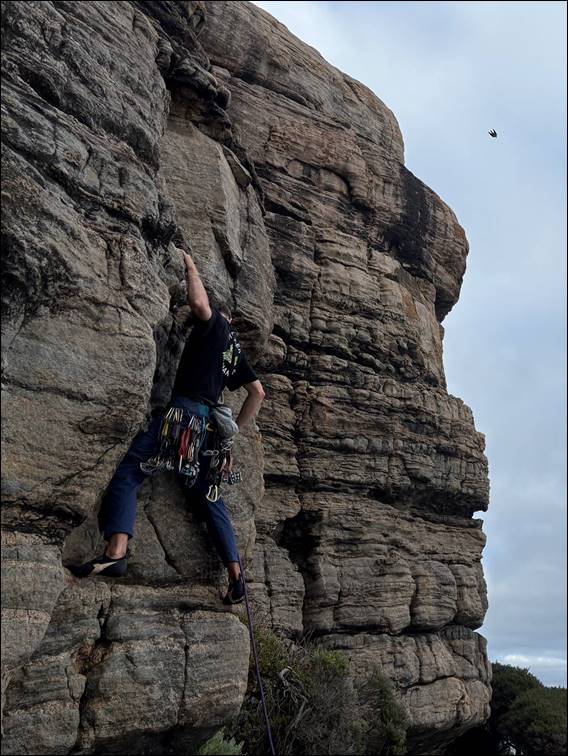
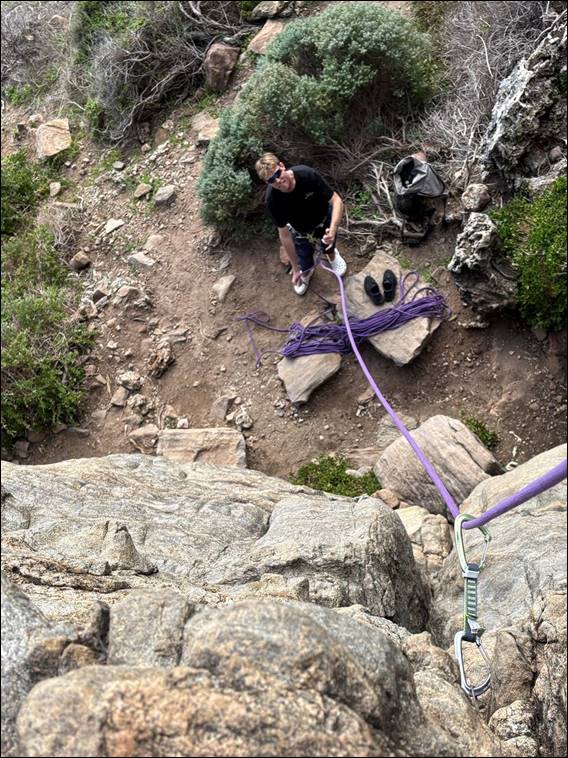
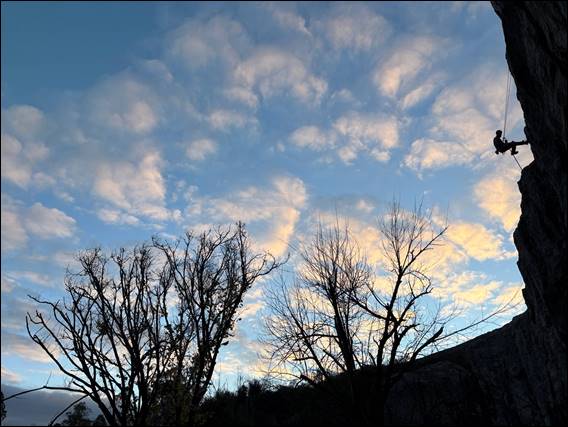
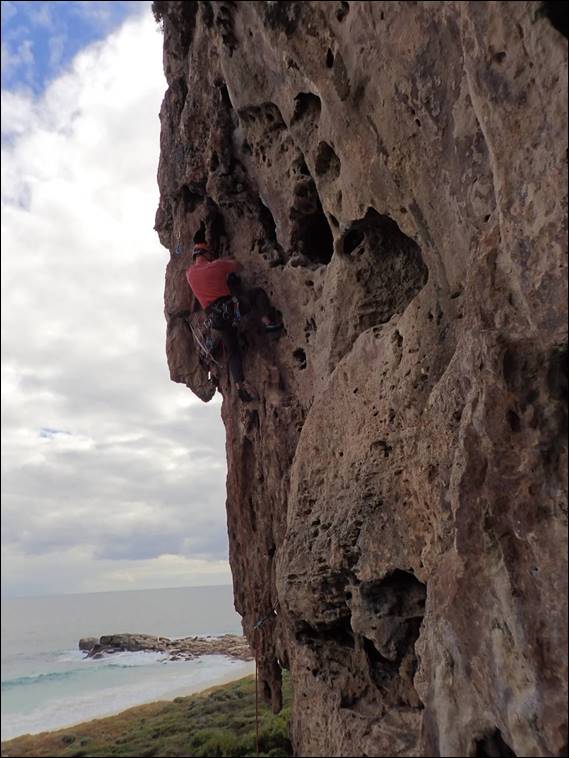
And when I say the ‘modern’ climbers, I mean those who tend to have come out of the gyms with prowess and glory being the goal. As opposed to the old school trad climbers who head outdoors to absorb the whole adventure. Rod, like me, is of the latter sort. As such we both lapped up the climbs, with their varied climbing despite the grades being relatively low. Rapping down and then climbing out, relishing the grippy rock and gear placements, until the sun started to pop over the top of the cliff and the tide below began to lap at our feet:
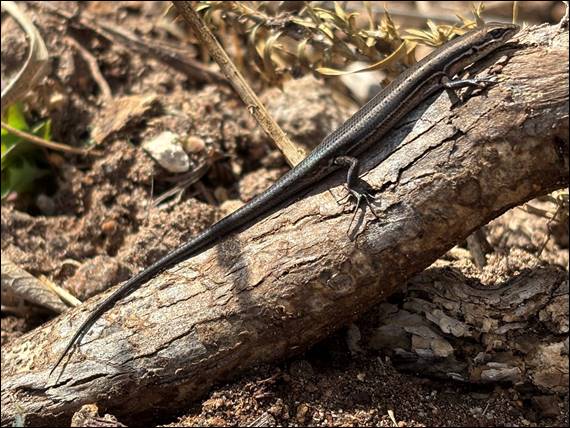
Even with the late start this allowed us to get six very fun climbs in. With plenty more to sample, but that will be for another time. Maybe Howsie and I should have jumped on this gem of an area, but we snoozed and lost out. Before we left Rod was keen to point out a particular route, one that is in the mini-guide and called Neptune’s Trident. I am definitely keen to jump on it, on a calmer ocean day. Wandering along to the vantage point a Southern Heath Monitor (Varanus rosenbergi) lazily walked across our path, topping off a wonderful morning out:
Nine months can fly past to the point that if you sneezed you might just miss it. During my last trip to the homelands at the tail end of, a very flowery, British spring time I sneezed a lot due to a bad bout of hay fever. This time I hoped that would not be the case, being in the thick of winter. Who knew what the weather had in store. Heading back on a nine month rotation allows me to sample a range of times of the year; each one bringing a different adventure for my morning walks and the daily car trips with the folks, as we head into the countryside:
It was a warm mid to high thirties in Perth when I left, on a different airline to my usual choice. This saw me stopping over for a few hours in Doha, at an airport that in one particular area looked more like a botanical garden. The grandeur of the place putting our international airport terminals back home to shame, on so many levels. The setting made the few hours that bit easier to cope with, as my eyelids were getting very heavy. Then it was onto Manchester where at 6am I was greeted with darkness and lowly single digit temperatures:
Seeta kindly picked me up and we stopped on the way home to get a bite to eat, and to catch up. It was still a wee bit early to be getting to the folks place, plus she was heading away for a well-deserved trip away later today. Meaning it was the only chance for us to natter about life and things in general. My trip had been planned around my sisters week long break, which allowed her to be rest assured that I would be around to keep an eye on the folks. The week had been kept free of appointments, which meant our trips out would be fun ones:
Having arrived as early as I had. And feeling not too bad we had time to squeeze in a visit to the Yonderman Café, on the first day. I do like this place and was hoping once more to sample their wonderful oatcakes, and break out the first of what was to be many games. The meal was everything I have come to expect here, bloomin’ marvellous. Something we all agreed on. Despite being nine months between visits here, the staff still recognised us and we had a good chat. They even asked if we would make a second visit to them this time round:
I wasn’t able to make any promises about squeezing in another trip there this time. Due to what is becoming a bit of a routine, and having already planned our destinations for each day. Most times we had lunch at a pub, and then made our way to a café for dessert. There were however a couple of lunches at cafés, at the request of the folks. As mentioned before, the weather was all a bit uncertain. Some parts of England have received rain every day of this year, and this has resulted in some areas being affected by serious flooding:
The flooding has been for extended periods, resulting in many people also being without water and/or power. The folks are however lucky with where they live, which has not, and due to the topography is not likely to be flood affected. Being winter, wet weather was to be expected. It is a time of the year when you may question whether country drives to explore new places is worthwhile. However heading out in different conditions other than just when it is nice, provides for a different experience:
For our first day out, which usually lasted for 5 to 7 hours, we headed across to Holmfirth, located in the Holme Valley of West Yorkshire. On my last trip when Dave, my folks postie for many a year, and I had headed out for a walk he had suggested the area. This is where a British show called Last of the Summer Wine was filmed. It ran for a whooping thirty seven years from 1973 till 2010. A show about the exploits of local characters called Compo, Clegg, and Foggy, which is reputed to hold the record as the world’s longest-running comedy:
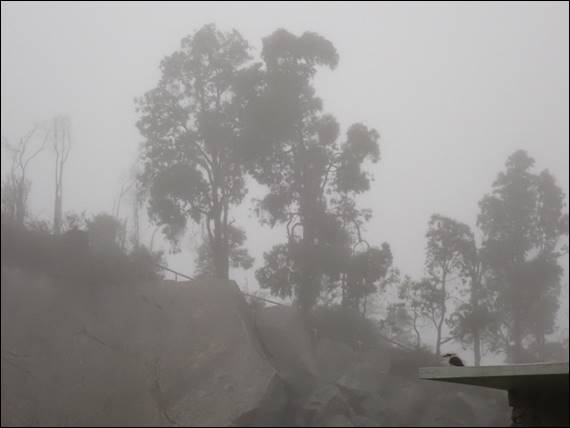
It was and still is a very popular, and in my opinion brilliant show. The town has not surprisingly cashed in on this, and has become a bit of a tourist attraction. As such while we drove through it, we did not aim for a pub in the town. Before we get there, and talking about the weather again, you will see several images up that as we passed over Holme Moss Summit we were well and truly encased in cloud. The steep drop to the side of the road hidden from sight, the steep inclines make this a renowned and challenging climb for cyclists:
This has resulted in it often being referred to as “Le Col de Moss”, and today we fortunately did not come across any cyclists. The folks loved the experience, view or not, as we drove up and over the highest point. In the lower lying land we dropped below the cloud that still hung heavy above us. Making our way to the Rose & Crown, in Thurstonland where the landlord made the comment of “so you are the people who made the booking”. My last couple of trips have been in the warmer months and as such places were booked up:
This time most of the places were relatively quiet, so I may not have needed to book. But a couple of spots were pretty busy so I am glad I did. Our first meal was lush, brimming platefuls of food were relished and devoured. My dad and mam, at 92 and 94 respectively, still manage to have a healthy appetite. And while they are slowing down and more wobbly than last time, they are still able to manage and enjoy these trips. Compared to my last visit I could tell there had been a significant change in their mobility, but they are still both sharp:
Proven by their ability to play that games, which we played both at home and when we went out. Triominos, may seem an easy enough game. However, they are still quick to add up the dice and scores for Yahtzee, and manage to shuffle all the tiles on the table about to make different sets in Rummikub. This time however, in part due to the weather but also their mobility there was very limited walking. Confined to walking to and from the car to get the house and places we were eating. Between each place we ate there was a country drive:
The drives between each stop varied from one and half to half an hour, allowing us to take in various routes and different sights. After our stomach filling meal at the Rose & Crown, we spotted a tall building on a hill. This resulted in a diversion. At a carpark I ran up the many steps to check it out, leaving the folks in the car; only to find a higher carpark that we then drove to. Castle Hill, was first known to be settled some 4,000 year ago. The tower however is a mere 127 years old, constructed to commemorate Queen Victoria’s Diamond Jubilee:
We then motored along to the Wild Café, hidden off the beaten track. It was so good, with the best cheesecake I’ve ever had despite being gluten free and vegan. They gave us the last piece to take home, which my dad snaffled at some point. I’ve slotted in an image that is pretty dark. Despite first light and sunrise not arriving till 6:45 and 7:20’ish, I still had a few early morning walks. Some of the paths were muddier than I had previously experienced, making for fun and slippery times. Arriving back as the morning and folks were stirring:
On a couple of mornings however, it was either raining too much or my boots were still to sodden from the previous day. For our second day, we headed out for a double café trip. My dad was keen to get back to the Olive Tree Café, which they had been too several times with my sister. It was my first time here and I could see why they liked it. This was the only day that my dad’s Parkinson got in the way of him enjoying the meal, which was a real shame as it was a place of his choice. The staff were however wonderful, and took it in their stride:
In fact everywhere we went as I escorted the folks in, at times one on each arm, not just staff but also other patrons were extremely considerate. Opening doors, moving out of the way, giving us time to shuffle in, and also spending time to have a chat. My dad likes a chat, and will bend the ear of anyone willing to listen. The staff at the Olive Tree Café were particular champions in this regard. After we moved on he was back to his usual self and was able to thoroughly enjoy cake and tea at the Quackers Café, in the image with the puzzle:
The puzzle is relevant, being a Wasjig puzzle. Elseya and my favourite brand of puzzle. The day I left home, Elseya, Jade, and I worked furiously to finish the one that had been hogging the table for a few weeks. This resulted in us finishing the puzzle, and me departing for the airport some twenty or so minutes later than I intended too. The next puzzle we will start just so happens to the same as the one in the image above. This was also the only puzzle at this café, in amongst the games that people can make use of as they enjoy their beverages:
In the next image the folks are getting into the car for the next trip out. Rugged up and hugging their clothes round them. The temperatures never hit double figures, and it was not uncommon to be below five degrees. It was after all winter. The pavers out the front of the house, and also in the back garden were once again algae coated. When wet they were quite slippery and dangerous for the folks. As such in between trips out and games, and when the limited daylight hours permitted, I set about pressure washing them:
It took quite a few sessions and chewed into time a fair bit, but was well worth it once it was done. In the image they are getting into the car to head to the Devonshire Arms, the only pub that was a last minute choice. Required when my chosen place suddenly changed its opening hours. It was a great replacement, worthy of a repeat visit. The folks are cheersing Elseya’s birthday, which I unfortunately missed due to the timing of this visit. This journey saw us dip into the Staffordshire Peak District, a sneaky trip by me so we could drive past The Roaches:
The café we visited before the drive by was the one we liked least, although as my dad reminds me the staff were lovely. The Roaches were shrouded in cloud, but it was still worth it. I was going to say that once we got home, even though it was raining, we finally got to see a bit of sun. However, if you check the image from the pub the shadows hint it also came out for a bit then to. During our time in the car however it was once more misty and cloudy. Back home the games came out again and Leena, who took the sneaky picture, popped over:
I mentioned Dave the old postie, old as in previous as opposed to age. And once more on this trip he and I organised a day to get into the hills. I’ve write that great hike up separately: https://sandbagged.blog/2026/02/12/mostly-sensible/. The intermission of a day in-between the trips for my folks was needed, as they were getting a little weary and the bit of quiet time to recuperate was well timed. After the hike with Dave I had enough time to complete the work on the pavers, by which time my feet were sloshing about in water inside my boots. Meaning there was no morning walk the next day:
That night Neil and Leena popped over for a takeaway, which was the only evening meal we had and indeed needed. With a forecast for clearer weather on Friday and as we had not seen the views from Holme Moss Summit on our first full day trip, I decided to take the same route. As we approached the valley before the mighty hills, snow was sprinkled on the higher ground. Needless to say I got very excited, and the folks were also very happy to see the white stuff. Being a novelty, as it is not the sort of weather they would normally get out in:
As we drove up into the hills the snow fell thick and fast. The top had a good four to six inches. The road was slushy and we went slowly especially on the steeper and windier sections. It was absolutely brilliant. I stopped several times, braving the zero degrees and biting wind to get out and take it all in. Needless to say the folks stayed in the car. To top it off the Cherry Tree pub was another cracker, with a wonderful outlook. Even in the depths of winter it was very popular with heaps of tables reserved. I felt better for booking this one:
The café I had planned was called the Hidden Gem, but google maps took us the wrong way and we couldn’t find it. Having had the time to check it out in more detail I can see where we went wrong. But rather than waste time while we were out, I quickly spied another place and that turned out really good. We even got snowed on as we went back to the car, before heading back over as many high hills as we could to see more snowy landscapes. Including Snake Pass opened in 1821. Known for hairpin bends, steep gradients, and sweeping views:
These road conditions also means it is detailed as being “high-risk, accident-prone nature, winter closures, and recent landslips”. We risked it regardless, despite the conditions that were far from clear as forecast. Being well and truly rewarded with stunning views. Saturday arrived and was again forecast to be clear day. Looking out the window at 5:30 I could see stars. Having intended to get one last morning walk in, it looked to be a good day for it. Minus four degrees also meant the puddles and mud would all be frozen solid:
It was a lovely walk, and despite the temperatures it didn’t feel too bad. The best part was watching the morning hues change, as shown in the above two images. Unlike back home sunrise here is a slow affair. One you can savour and really absorb due to occurring at such a gentle pace. The clear skies meant that we were in for a treat of great sights for our last trip out. The intention being to head to the Goyt Valley area. My only concern was that in view of the mercury rarely going above zero degrees today, was whether ice would be on the roads:
Dave suggested it should be fine, so we went for it. He was mostly right, but ice did indeed exist on some of the steeper hills where the sun had not got to. I kept a careful eye out, and on occasion it was not possible to avoid the wheels spinning. Luckily for us these sections were short lived and we were able to safely navigate our way along. Being a Saturday throngs of others were out. Above is Cats and Shining Tor, where Dave and I had hiked over only meeting one person. Today, as that local had predicted, it was like a highway:
Our destination today was a place we went to last time. That time it had been an afternoon café stop, for tea and cake only. The folks checked out the menu back then and said that they thought it would be a nice place to have lunch. I’m very pleased they did, and that we went there today. The blues skies and white covered hills resulted in the Peak View Tea Rooms really living up to its name. This time the folks did get out of the car and onto the snow just to get to the café, making me a little nervous so we moved extra cautiously:
Not wanting to waste such a wonderful experience, we drove round a fair bit afterwards. The roads we took went round Axe Edge Moor, where Staffordshire, Cheshire, and Derbyshire meet. Resulting in us dipping in and out of each county multiple times. Back in the 18th century criminals & convicts would use this location to escape across these boarders. The reason being that back in the day law enforcement in each county was separate, a system that no longer exists but back then it allowed them avoid being apprehended:
We also drove through Flash. The highest village in the United Kingdom, being 1,519 feet or 463 m above sea level. Wanlockhead in Scotland was claimed to be higher by 12 feet or 4 m, however while Wanlockhead is indeed a village there are no buildings there at the claimed elevation. After such a great café and drive, you may think the last café would likely be a letdown. It was however really good. The Blaze Farm tea rooms are in an old milking shed and boasts scrumptious homemade and award winning “Hilly Billy Ice Cream”:
Maybe a strange choice in such cold temperatures but we had ours with hot chocolate fudge cake and apple pie, which “warmed the cockles of our hearts”. A Latin based 17th century idiom, meaning to make someone feel deep happiness, contentment, or a sense of cosy, affectionate gratitude. A fitting way to end the trip. In the evening I could tell the folks were weary, making mistakes in the games they didn’t earlier in the week. A sure sign a week of fun, was just right. Next morning I left them in darkness, to have a much needed day or three of relaxation:
Last time I visited England, Dave and I only managed an afternoon hike. During which he mentioned he had considered taking me for a walk round Windgather Rocks. The short 12m rock face is claimed to be one of the friendliest and most popular climbing crags in the Peak District. It has been a favourite for many people over the last hundred years, having an abundance of routes. Many lower grade lines means it is a great place to learn to lead climb. On trad of course, as bolts are an extreme rarity in the Peak District, although the climbs are at times a little run out:
In fact bolts are forbidden on gritstone, so only exist from historic placements of which there are very few indeed. Windgather Rocks comprises Chatsworth Grit, a carboniferous sandstone formed 300–360 million years ago. The a coarse-grained nature of this type of “grit” lends itself to even better friction if that is possible. This in part makes the location such a beginner-friendly crag. Why is all this relevant? Well Dave had hinted to being up for giving climbing a crack, and I found out he has many years back had a go at climbing at this very location:
In our favour his neighbour is an avid climber, and she was happy to lend us all the gear meaning I didn’t need to cart all my stuff over. While she questioned Dave about rock climbing in winter, in my days of climbing in England we climbed year round so knew what we may be up for condition wise. We had a date set and gear organised for the great adventure, however as the day approached and due to stuff that was happening in Dave’s life he confessed to not being in the right head space for climbing:
He was however still very keen to get out for a hike, to help blow the cobwebs away. Picking me up relatively early so we could get back just after lunch, we still headed to Windgather Rocks with the intention of hiking round part of the Goyt Valley. As with the first few days of country drives with my folks, the cloud hung low in the sky. Tendrils stretching down into, and being blown by a cold wind up, the valleys. Above we have just passed Cats Tor and ahead lay Shining Tor, at 40m higher and with its peak just about covered in clouds:
Shining Tor is the highest hill in the county of Cheshire, and on a good day 360 degree views stretch far and wide taking in the Clwydian Range in North Wales and The Wrekin in Shropshire, amongst other land marks. But not today. Being a weekday the area was quiet and we met very few people for the majority of the walk. On the hike up to Shining Tor only one local came past. He had a bit of chat in part as he spotted me picking up litter and was grateful for that. Mentioning that on a nice day the place is transformed with hundreds flocking here:
As I stood atop the short walls shown above, I spied more rubbish so went down to get it. Intending to also use it as an excuse to scramble back up the rocks. They were however green and slimy, so I erred on the better side of caution and didn’t attempt them. Making me think that it was a good thing that Dave had swayed today’s adventure from vertical ascents to those of a more gentle angle. I did however spot hundreds of Ladybirds (Coccinellidae). Such clusters are called a loveliness, and are used to stay warm and safe during hibernation:
I’d never seen these clusters before. There were large groups of them in the cracks all over this rock, and it looked pretty amazing. There were also quite a few differing patterned and coloured ladybirds. I have now read that there are over 40 species in the United Kingdom, with 26 easily recognizable due to distinct features, and 5-6,000 worldwide. I could be wrong but the above may be a melanic (black) colour morph of the Harlequin Ladybird (Harmonia axyridis Var. Spectabilis), and kinda wish I had taken more images of the different sorts we saw:
Above and looking west is Shutlingsloe, it is right on the edge of the Peak District and stands at 506 meters (1,660 feet). This particular peak has steeper sides than others and from the right direction, as I discovered on the last day out with the folks, it can resemble a distinct alpine style pyramid-shaped profile. This has earned it the local name of the “Matterhorn of Cheshire”, despite standing at only 11% of the height of the Matterhorn in the Swiss Alps. As we approached a T-junction in the path another prominent landmark came to view, this time an inn (or pub):
The Cat and Fiddle Inn was the second-highest pub in Britain at 515 meters (1,689 feet), so higher than the “Matterhorn of Cheshire”. But is pipped of the title by 13 meters (43 feet), by the Tan Hill Inn in Swaledale, North Yorkshire. The Cat and Fiddle Inn however closed down in 2015, and when it reopened in 2020 it became a distillery as opposed to a traditional pub. Unlike a couple of years back when Dave and I unsuccessfully changed course to head to the Snake Pass Inn, https://sandbagged.blog/2024/05/05/hard-yakka/, this time we were not tempted:
Instead we made our way down towards Errwood, taking a winding path through a wood and navigating long sections of the path that resembled a stream. This took us in a roundabout way, as we stumbled across tracks that took our fancy, to the Errwood Hall Burial Ground. Here the Grimshawe family and their favourite servants have been laid to rest. This now makes more sense, as Dave I wondered why some graves had stone headstones and others had iron crosses. The latter no doubt being for the favourite servants:
The Grimshawes owned the estate until 1930. It was then sold to the Stockport Corporation, who built the Fernilee and Errwood reservoirs in the 1930s and 1960s respectively, as key water supply sources. We were heading there next, but not before passing the remains of Errwood Hall. Once a stately 19th century mansion, completed in the 1830s in the centre of a 2,000 acre estate that included a private coal mine as well as the Cat & Fiddle Inn. After the death of the last resident in 1929, the hall was demolished in 1934:
Below are the only remnants of the mighty halls. Not being a formally listed building, they were able to modify what was left primarily due to safety risks. These obvious modification in part takes away from the feel of the place. It includes a shrine dedicated to a Spanish governess that taught the family’s children, and who is rumoured to haunt what is left of the house. Leaving the ruins behind we made our way down to the waterbodies, firstly the upper Errwood reservoirs. Completed in 1968 for a princely sum of £1,500,000:
And then onto Fernilee reservoir, completed in 1938 for a mere £480,000. Within this one there are several buildings, which includes the Chilworth Gunpowder Factory. Originally established in 1801 as the Fernilee Gunpowder Works, until it was taken over in 1888 by the Chilworth Gunpowder Company. It was operated until 1921. Closing down due to the consolidation, primarily in Scotland, and declining demand of gun powder post-World War I. And finally being laid to rest with most of the buildings being submerged underwater:
I’ve not mentioned any of the birdlife that we both heard and saw, which seemed to come alive more and more as we walked. Most species were mentioned in the above linked post, so the only one to crack a reference is the above Great Tit (Parus major). Obviously used to human contact, as they allowed us to get very close. We saw these as we wandered along the reservoir, and soon after Dave hinted this had turned into a Sunday stroll. In response to this we diverted up a small goat track straight up the hill. A track that soon disappeared:
With no paths and deep in the woods we came across the above shack, which someone had painstakingly built. Continuing up to the top of Hoo Moor to allow us to see where to go, and from here we sighted Windgather Rocks. This terrain had no paths and was a bog land of tuffs and holes, ready to fill your boots with water. This happened regularly. It was slow going, and made even slower when we tried to cut through a felled pine plantation with dangerously slimy and rotten timbers. It was no longer a Sunday stroll, and Dave pulled me up and talked sense into me. We retreated and circumvented the dangerous path:
Back on the bog lands we eventually found a path that took us to Windgather Rocks. Weary but very happy. Here I had to at least have a close up look at what the place had to offer, and being sensible I did this from the ground. Dave meanwhile sat there looking across the valley caught up in his own thoughts. Then as we were about to leave he pointed to a slab and said it looked pretty good, and that was enough. Despite the wet and muddy boots I headed up the slab. Dave tried not to watch but couldn’t stop himself, holding his breathe the whole time. Maybe next time I’ll get him up a line or two here:
Timing is everything and today I didn’t quite get it right. Driving out on the eve of a full moon, three quarters of an hour or so before first light. Someone had snuck ahead of me, as we drove out of Peppy Beach through the at times kangaroo infested road. Not surprisingly it was dark and this resulted in the people in front having the luxury of using their full beams and spotlights to light their way. Whereas I, being considerate, was left with just my main beams. Luck was on my side in that there was not a kangaroo in sight, at least none that I saw:
I can’t recall the last start that has been in darkness like that. Today however it felt the right thing to do, as it was supposed to get pretty warm. Making an early start on rock worthwhile. Just before new year’s while Josh and I were down at Wilyabrup, we bumped into Darby. I’ve met him a few times at Willyabrup, and this time after a little chat I discovered he had bought himself a new trad rack. Asking what line and which crag he may scratch it up for the first lead, it transpired he wasn’t aware of the lesser visited climbing spots along the coastline:
As such we kept in touch, as I advised that I would soon be releasing a whole bunch of mini-guides for the area, which would help him discover more of the area. Word has spread about them and the page is the most visited on my blog over the past year. The guides have also been downloaded a bunch of times. That said we still had Moses Rocks all to ourselves today, and despite being a mere ten minutes from where Darby lives has never been here. Not even for stickybeak. As such I handed him the floppy end to sample the place the best way:
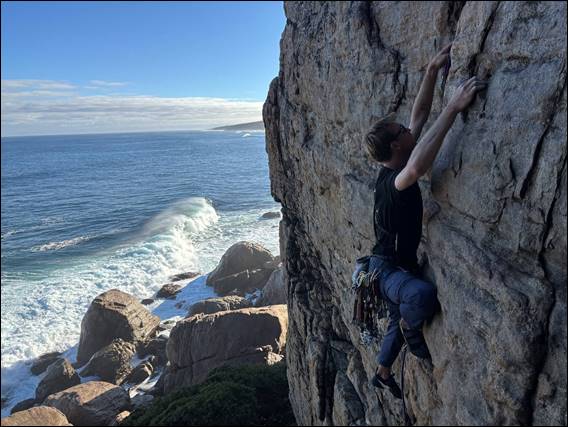
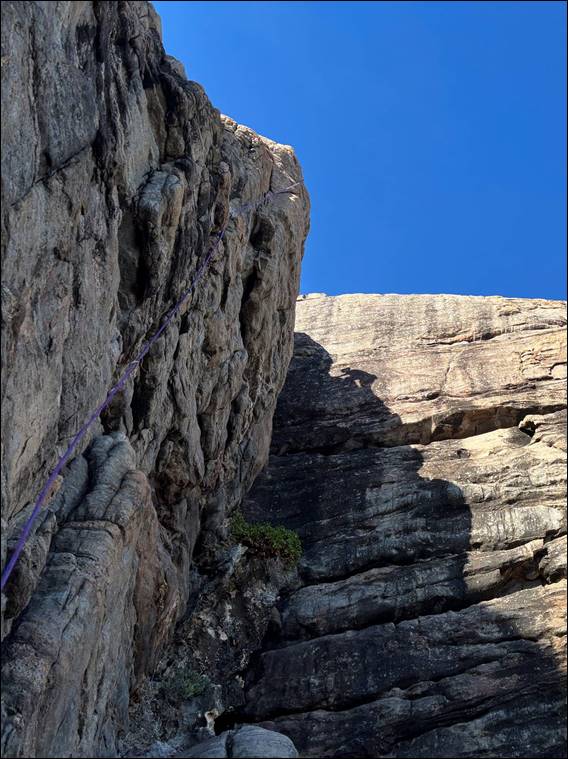
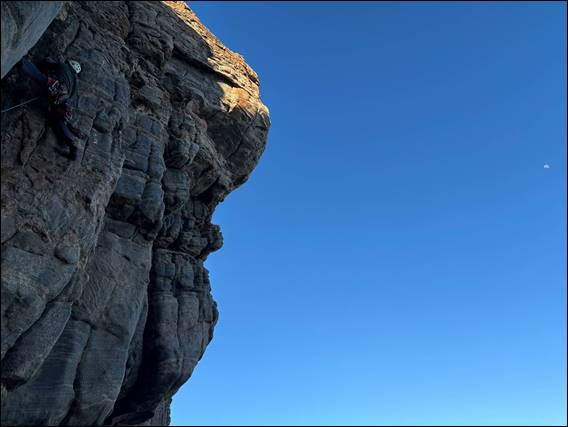
Being on lead. Several times he offered me the chance to get on the sharp end, but I was more than happy to follow up these well-rehearsed routes. As can be seen, for those familiar with the place, we went into the zawn. The full moon would be out tonight, and that meant the moon was the closest it gets to earth. A mere 225,000’ish miles. That is 14,000’ish miles closer than its average distance during the a synodic month. Being how long it takes the moon to complete a cycle from new moon to new moon, some 29’ish days:
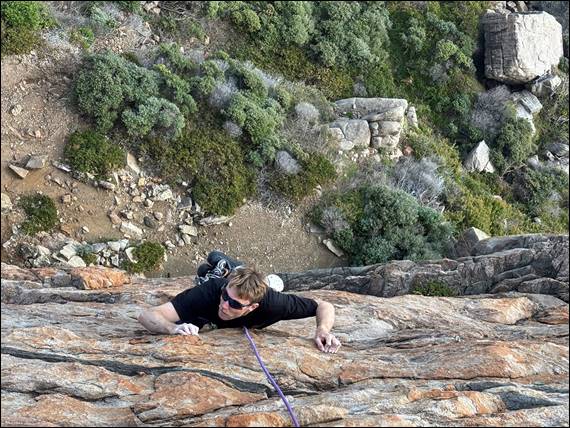
Why is all this relevant, well the combined gravitational pull of the sun and moon is at its greatest. Resulting in higher high tides and lower low tides. Today low tide was at six in the morning. Added to this there was only a moderate swell. You could suggest that not just the sun and moon, but the very stars had aligned. The base of most routes were dry, and the risk of being wave washed was low. Making the most of this window of opportunity, four lines were gobbled up including the one below that in early December sent me to the physio:
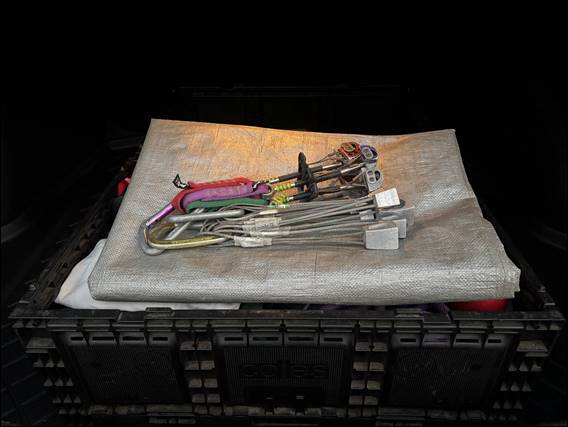
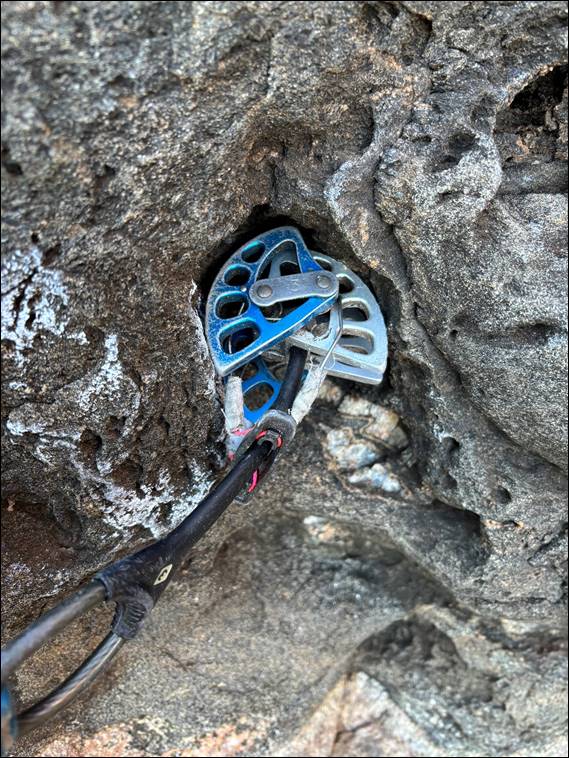
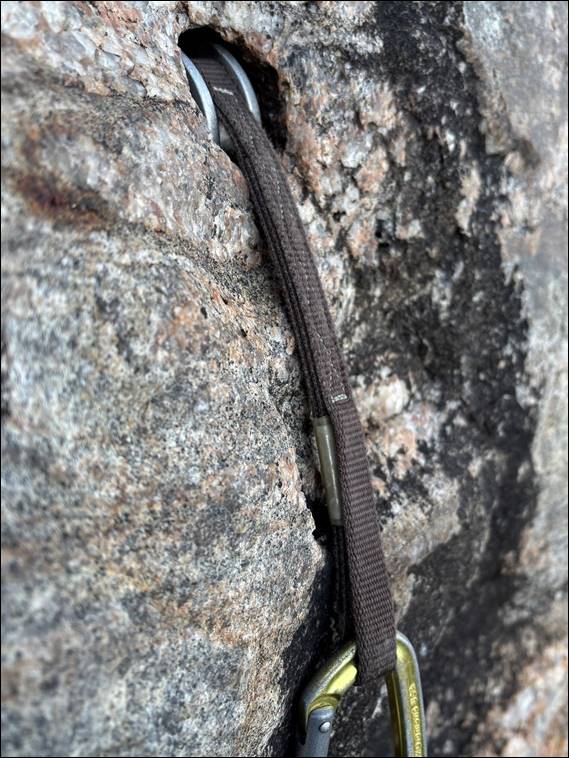
Today I am pleased to say there were no slips, the dry rock certainly assisted. Seeing we climbed with Darby’s gear, two images up is picture of one of his recent acquisition. A slider nut. It is a piece of gear that I do not have in my arsenal but have at times pondered. They certainly got a work out today in the zawn. Next time we head out, assuming I will lead something, I might use them myself to see if I will be tempted to splash out. Some of my gear did come along today, and below I think Darby has been converted into the way of the tricam:
As he was just about to start the fourth route in the zawn, a surprise set of waves came in and we did get a little wet. A sign that it was time to move to Hands Up wall, which is high and dry. While the slider nuts got a workout in the zawn, the tricams took over as the most used gear on this wall. Their versatility and use in difficult to protect flared cracks won him over, and he suggested he will seriously look into getting some. As it started to warm up and I suggested that I would be keen to head out soon. But not before four more lines could be ticked:
For the last line, Darby’s eyes went back to the line that had piqued his interest when we first walked past this part of Moses Rocks. A feisty grade 21, that Howsie will be pleased to hear he went for. It is certainly by far the hardest line I have been on since my regular visits to the physio started three months back. The physio had however told me last week that based on how I was going with the rehab, I should be ok to test myself a bit more on rock. And thanks to Darby test it I did, and I’m pleased to say it felt pretty good:
You gotta love public holidays, especially when they result in a long weekend. Rolling out later than I normally head to work, the sky was a mixed bag of not knowing what it wanted to do. Howsie and I were however prepared to take the gamble, but didn’t feel it was necessary to have an early start on days like these. We were aiming for Wilyabrup, where roofs would provide us with a bit of shelter if things turned. On arrival it would have been easy to have had false hope, as there was lots of blue sky and glorious bone dry rock:
Out to sea the clouds told a different story, and a moderate to fresh westerly was blowing it right towards us at a rapid rate. Managing to get to our usual spot to dump the bags and rack up, before it dumped on us. The worse of it skimmed just north of our location concealing the coast, but we got enough of it to make most people second guess their next move. Seeing I all geared up, and had already resided to hitting a few low grade lines the decision was made. Climbing Hope as the rain just started to ease off, with water streaming down the rock:
Howsie came up with no rain falling on him, and by the time we wandered back down the clouds were mostly gone and the sun was back out. The winds dried the rock quickly, allowing him to have a dry run up Thunder Thighs. He was feeling a little weary today, so was also happy with a chilled pace. Having had a few big days in Perth with the family, during which he managed to sneak in a ‘power’ session at one of the bouldering gyms. The reason for visiting the gym was not all selfish, as he also picked up a new climbing guide for me:
The guide is for the Stirling Ranges, and provides a wealth of information that is making it very enticing to consider heading to the proper big hills. I have not climbed there anywhere as much as I would like, in part as is a much bigger commitment to head there. It is a place where the weather can close in, and unlike here where we can hide under a roof when you are up on a multi-pitch route you need to be prepared. For today however, and as I geared up for my next lead we were able to wait for the next belt to ease off:
You’d never have guessed that we are in summer and just a few days back it was a toasty near 40 degrees. Today we were rugged up in winter gear and for my second lead I climbed Sirius in one big pitch, in wetter conditions than my first lead. Whether it was because the water washed the rock clean of all the chalk, salt, and other minerals deposited by the spray, or just my mental state I’m not sure, but the rock felt good and secure. Watching as water ran behind the wires, as I fiddled them into cracks, I lapped up the conditions:
The cycle continued as before, with Howsie again seconding up as things were drying out and then he got another dry run up the wonderful Verbosity. Partly encouraged to hit this line, the longest here, after my big single pitch adventure. Sat atop after this glorious line we pondered how it had been a bit of a stop starty morning, and sure enough being my lead again there was another cloud bank heading our way. Having thoroughly enjoyed our morning and the mixed bag of conditions, we decided to hop out of there with dry gear:
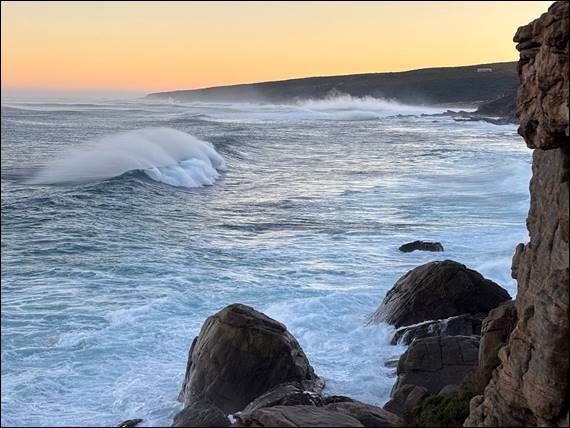
Barrelling waves greeted us on arrival, at what is locally known as Honeycombs Beach. Promoted on tourist sites for various features, including being a ‘fantastic surfing spot’. The surfing sites however don’t ham the place up as much, simply saying it has ‘quite reliable surf’ adding it is an ‘often challenging surf’ spot. Looking at the waves I feel I can tell if they are surfable or not, but I really have no idea what I am looking for or talking about. Howsie has a better idea, as he surfs whereas I do not. No surprises we didn’t come here to surf:
Today I did increase my understanding of what makes a good surf break, and also why this particular beach can be a challenging surf spot. As a climber I know the place as Moses Rocks Beach, but the real beach of that name is approx. 1km to the north. Where there is a more consistent and forgiving surf break being better, they say, for beginners. Not that any of this makes me want to take up surfing. With the rocks we were aiming for being so close to the ocean, big barrelling waves can result in challenging conditions for climbing in two ways:
The first being access. Fortunately while the waves were impressive, the tide was low resulting in the mass of water hitting a rock bar well before they got close to the rocky headland. With the energy taken out of what looked like power waves, we were able to boulder hop without the fear of waves crashing in. The second is the spray. As the water evaporates from the spray on the rock it can make the surface feel greasy. This reduces the friction and makes the climbing much more insecure. This can occur for one of two reasons:
Pure salt, is dry in nature. However, left on the rock is becomes hygroscopic, which describes a substance that can absorb moisture from the air. It is the moisture and not the salt that can make the rock feel slippery. Then there are the other minerals in the ocean, which can also contribute to this unfavourable outcome. Amongst other minerals, seawater contains magnesium, calcium, and potassium. Again as the water evaporates, the build-up of these can result in a slickness forming. You could say it’s a double whammy:
Being early morning, the land was cooler than the ocean and with no major atmospheric lows or highs to interfere, the wind did what we expect. Coming off the land and out to the ocean. Combined with the waves of today, this resulted in long streaming manes coming off the white stallions, as they galloped towards the coastline. Taking with it, the spray back out to sea. Salt residue could be found in small low down pockets, at times providing intricate patterns. Not from the spray but pools left to dry out, after the tides and swells receded:
We can also bring our own moisture, to reduce the friction. This will generally occur on humid days and/or when climbing in the sun. In an effort to cool down our bodies naturally release sweat. Our fingers have a very high concentration of glands that produce the sweat, more than armpits. Added to that fingertips have the highest density of sweat pores on the entire body, which are the holes through which the sweat is exuded. For climbers as we wear skin off our fingertips, this can interfere with this process and release more sweat:
Today however the humidity was low, we were climbing in the cool of the morning, and the face was shrouded in shade. In short the rock was dry and the friction was great. The at times flared and rounded holds were feeling great, resulting in building our confidence to trust them and go for it even when the gear in the same flared features were not so inspiring. All of this lead to one route after another falling, and we worked our way through a healthy number of quality lines. Nothing too serious, of course. I’m still being sensible:
That said this area does have a few good puzzles that are not straightforward to unlock, requiring focus and a bit of grit. The fingertips never wore down so much as to bring on extra sweat, but the arms started to wear out just as we took on a couple of the real brainteasers. Getting to them just in time to be able to pull the moves, after which we knew we were done. I guess just like surfing, climbing is a bit of a balance act. A whole bunch of things need to come together for it to work, which it did today for another splendid morning out:
Keeping things sensible while still trying to shake things up, I can see all the lesser frequented and smaller crags along our coastline will get a visit over the next few months. Today, Howsie and I headed out today to Lost Buttress. A place I am particularly fond of, not just because of the climbing but also the lovely approach. Walking out along the coast he told me how his ‘app-led’ training program had reached the 9km mark, with the goal of being ready for a half marathon in April. Suddenly the longer approach didn’t seem like the best idea:
Even more so when he said things had been ‘niggled’ by yesterday’s 9km run. With the ever increasing distances the technology will instruct him to complete the niggles are a bit of a worry. It seems that it is not just me that has to make some sensible decisions. Fortunately the rock hopping did not aggravate his niggles, and we soon arrived at our destination. Here I started the proceedings on a route that has, in my opinion, one of the most comfortable jams of any route. With a perfectly sized crack, for my hand, that has smooth yet grippy rock:
Being rationale I left Howsie to tackle the harder of the moderate routes here. Allowing him to enjoy the exposure that seems so out of balance for such a relatively small crag. Then before my second lead I was maybe not so wise. Prior to today the far northern wall, which is even shorter, only had one line on it. A significant back story about that climb is detailed in this past post https://sandbagged.blog/2015/10/09/no-longer-scarred-for-life/. Much to my joy the tide and swell defied today’s forecast, and the normally wave washed wall was dry:
Not only that but the boulders at the base were also dry, allowing easy and safe access. This lead to a flurry of four new lines being put up. All solo’s, meaning neither of us were being entirely sensible. While the routes were nothing too hard, should we slip the landings were not particularly inviting. However, when conditions like this come along they are not to be sniffed at. We simply got carried away with the excitement, feasting on the opportunity. Having developed all the mini-guides it is now easy for me to update these with new climbs as we establish them:
As such you’ll need to head to that post and look at the guide for Lost Buttress to see what new lines we did https://sandbagged.blog/2025/12/29/mini-guides-for-crags-of-the-south-west-of-western-australia/. Not seeing anything else worth bagging on the short wall, it was back to the main and taller area. Here we gobbled up another four splendid routes, with Howsie again keen to take on the slightly stiffer opposition, before we called it a day. Whether it was the morning’s activities or the building heat of the day, the legs felt more lethargic walking out:
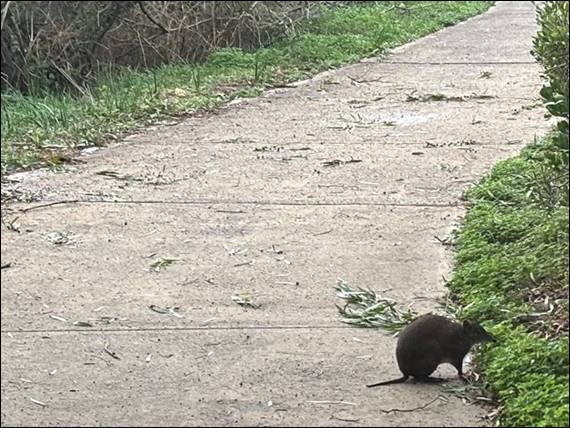
Passing The Playground, and despite the great bouldering on offer, our shoes stayed in our packs. Our arms were satisfied with the morning’s adventures. We did however briefly stop to inspect the highway of activity under the wall. Trying to make out what had been shuffling about, looking likely to have been visited by crabs and reptiles, as well as a Southern Brown Bandicoot (Isoodon obesulus). I mentioned how surprised I was that we do not see more reptiles, during these morning trips out. Especially considering time we are out and the lesser frequented areas we visit:
Someone must have been listening, as when we were nearing the carpark we came across a juvenile Southern Heath Monitor (Varanus rosenbergi). So well camouflaged we nearly didn’t see it. This one being approx. a foot long, just a fifth of what they can grow to. I’ve read the eggs are laid in active termite mounds, which have sophisticated passive ventilation. This provides the warmth and humidity required for incubation. Once hatched the young monitor can then feast on their host, and will continue to make use of the mound for shelter for several months:
All good things must come to an end, and the shutdown at work finished last week meaning tomorrow it’ll be back to the grind. Before that happens there was time today for another dive, this time with Geoff and his usual partner in crime Benny. They tend to head out to fish or hunt crays, but this time he advised the dive would be just to cool off. That said they still came armed with spear guns and catch bags. Rongy and Sarah also joined us, as we drove a fair way past the point. The reef stretches all the way to Stratham, approx. 7km away:
You can stop pretty well anywhere along this part of Geographe Bay, and find great ground to search. Our dive spot was approx. 4km away from the beach access at Peppy Beach. Starting with a very shallow swim passing a school of Tarwhine (Rhabdosargus sarba) hugging the ocean floor, while Southern Garfish (Hyporhamphus melanochir) seemed to be hovering above, as they skimmed just below the ocean’s surface and kept a safe distance from me. Once we reached the reef the water got deeper and the clarity improved greatly:
Quite a few different fish, schooling and solitary, were about but I initially kept my focus on the nooks and crannies. Looking for anything unusual, without too much success. This sponge, hidden in a hollow was however a pretty cool. Sponges, once considered plants, are the simplest animals on the planet. However, with at least 10,000 species globally and close to 20% of those found round Australia, they are also infuriatingly difficult to try and identify. You have probably guessed where this is going, and no I had no success with this specimen:
Moving onto fish the below is likely a female Western Blue Groper (Achoerodus gouldii). I say likely as these fish grow very slowly, and it is suggested that a fish of 40cm and 80cm is likely to be 8 and 25 years old respectively. Like the Southern Garfish, this one also kept a safe distance hence the poor image quality but it clearly wasn’t showing the expected markings of a juvenile. Being a little under two foot long it may be about to reach the initial phase of sexually mature as a female. This happens on average at about 15-20 years of age, and length of about 65cm:
Once they reach 30 years of age their length does not increase much more. Living one of the longest life spans for a wrasse, reaching a ripe ole age of 70 and growing to a maximum length of 175cm. These fish home-range, meaning they live within a certain area, and as such can be more susceptible to overfishing. I do not recall seeing a Western Blue Groper before, but had heard they can be found here. While my next image is of a fish I have seen many a time, it is worth including due to the amazing patterns and vivid colours:
Easily being recognised as a male Horseshoe Leatherjacket (Meuschenia hippocrepis), another popular recreational fish. And the final image is also of a popular catch, being two from a small shoal of Southern Calamari Squid (Sepioteuthis australis). Identifying males from females externally is tricky, even the differing size and patterning shown in the image doesn’t help. Unlike the long lifespan of the Western Blue Groper, these cephalopods have a lifespan of about a year living as an adult for a mere 4 month. Seeing the others exit with empty catch bags, my finds get to live for another day:
The Australian White Ibis (Threskiornis molucca) is by no means an uncommon bird. Once a wetland bird, it has learned to live in our urban jungles by scavenging food from our rubbish tips and bins. Thriving on what we throw away. This changed foraging approach, purely driven by our wasteful lifestyle, has earned it a number of unkind names including the dumpster diver, tip turkey, and most commonly known the bin chicken. That aside to see a flock of the size we saw driving out today was an unusual and impressive sight:
Admittedly the flock included the Straw-Necked Ibis (Threskiornis spinicollis), another of the three species of ibis native to Australia. Another quite a common bird to see, but unlike the Australian White Ibis they have not adapted to a wider variety of food and are only rarely opportunistic scavengers of our refuse. Despite a forecast of a hot day, we were not heading out early. The sun beat on our backs as we walked towards the coast. Aiming for a crag that like the Australian White Ibis does not get a particular good rap:
It is however something different, and as with every little crag we have along our coastline there are a few gems if you are prepared to give it a go. Today Sam, along with Josh, were prepared to do just that. Sam hadn’t been here before, but with the new mini-guides out he was able to get a feel for the place before we arrived. Nothing too tall and mostly straight forward climbing, has earnt the crag the name of Beginners Wall. A good place for those who are learning and those who don’t get out too often:
Having learnt better than to suggest he goes on second, while he gets his head back into things, Sam took the pointy end. Easing into it on a couple of the lower grade routes. Josh meanwhile seemed more than content to have a rope above him, hinting he may change his mind as the morning wore on. It didn’t. Not that Sam complained. He has a hankering for enjoying the added intensity of being in control of your own safety and having the rope below you. This is probably the crag I have come to the least, so needed to reacquaint myself with it:
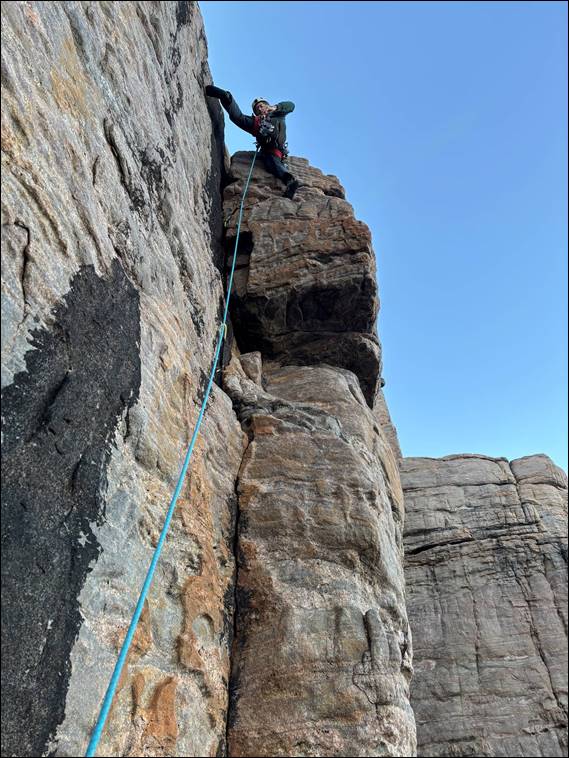
There are several routes I have put up with the likes of Steve and Lou, and looking up at them I questioned the grades we gave them. Neither Sam nor Josh seemed inspired to jump on these, and as I am in sensible mode at least for another couple of months we passed them by. However, as we checked them out another possible line came to view, and so became Sam’s cherry popping first ascent shown above. Done in the best fashion possible, on-sight. Having no knowledge of what lay ahead as he climbed, so became Rope Cutter (11):
Just as he was about to get started, Josh bouldered up a scrambly line to get a bird’s eye view of the line Sam was about to attempt. Dislodging some rather large blocks that tumbled downwards. They missed Sam and me but nicked the rope enough to open up a small hole in the sheath. Not so much we couldn’t use it, but enough to encourage me to finally decide to retire it. After all it has seen a lot of action over a quite a few years. In fact, while I feel it is fine, I am surprised no one has suggested that maybe we shouldn’t use it anymore:
Unperturbed Sam lapped up line after line, as the routes I suggested progressively got trickier. We did however make sure we gave him the end of the rope that hadn’t been nicked. Seven lines down, and his arms gave way. By now all of us were happy to wrap it up. Although maybe not quite so happy to leave the sea breeze behind, as we started to bake the further inland we wandered. Another grand day out, and on my return I added some refuse to our bins but not the sort that would be of interest to any bin chickens: