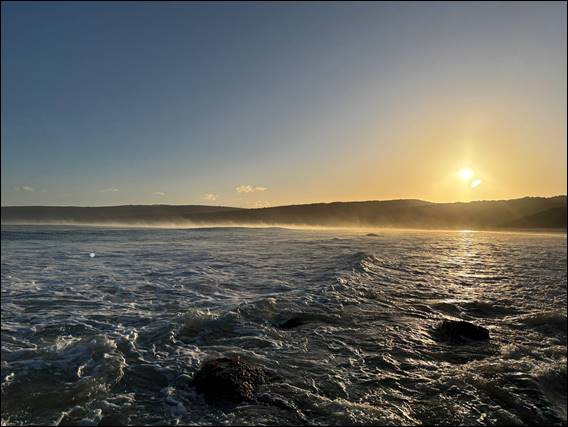
The climbing this morning was on occasion interrupted by text messages flying between John and I about his book. He was busy with last minute edits. Telling me how he was thinking of dealing with my comments, as well as a few other oddities that I had picked up. I was just arriving at the spot we park up to walk into Smiths Beach, on another crisp and cold morning. Steam was drifting off the ocean as the sun started to warm up our part of the world. Three thousand plus kilometres west of where John was no doubt frantically typing away:
For Howsie, Rongy, and I there was no rushing. It was a slightly later start that made the driving that bit more relaxed. More light to see what might lie ahead, and also a lower chance of kangaroos being on the road. Rongy was the one keen to come here. He had suggested it for last weekend’s destination. A big swell, recent rain, and the possibility of more water from the sky had swayed us to the more friendly Wilyabrup. Today all three of those reasons not to come here last time were absent. Plus he was all fired up about one particular route:
Howsie was just happy to get out, no matter where we went. He did however hint at not feeling very climbing fit. Something I doubt he would have mentioned if we had been going to any one of the other coastal crags along this slice of the west coast. I too was also not fussed about where we went. I did however go a step further than Howsie, saying upfront that the two of them could bag all the leads today. Ah Smiths Beach. The trad climbing crag that holds the same fearsome reputation that Welly Dam does for sport climbing:
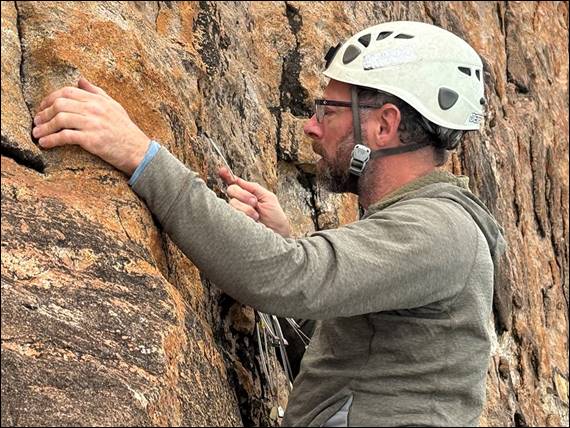
Due to me messaging John, and wanting to get a decent image of the mist over the ocean, the other two wandered ahead of me. I got to the top of the zawn after they had already scrambled into it. The first thing I noticed was that they were wandering to the right hand wall, called Harbour Wall. Not intentional named for this reason but a harbour would suggest it is a place of safety. The left hand wall of Camelot Castle, which you first pass under as you enter the zawn, looms ominously above you. Steep and foreboding:
Just like the purpose of castle walls, this face feels like it is intended to keep would intruders out. Rongy and Howsie had felt this imposing feature staring them down. As if taunting them and saying “do you dare”? It had been too long since they had climbed here. They did not dare. Instead being drawn to the relative safety of the harbour. Full of quality low to moderate grade routes, that would have slotted perfectly into the options of climbs to choose from for John’s book. Sadly during his trip to the west he did not have the time to come here:
As we messaged each other I sent John an image or two of our surrounds and antics. His responses indicated that the visual wow factor of this place piqued his interest. With luck I’ll be able to provide him with a tour of our local spots later this year, allowing him to sample them for himself. For Smiths Beach in particular I am interested to see what he thinks of the grades we gave these lines, when we established the place very nearly fifteen years back. Today we were a little unsure, but that is not an unusual feeling to have when climbing here:
The rounded holds and technical nature of the climbing is both extremely engaging, quite physical, and very deceptive. It takes a few more regular visits to Smiths Beach before you once more become accustomed to the style and are willing to push the grades a bit more, a bit like climbing at Welly Dam. We found the moderate and supposedly lower graded routes satisfied our desire to climb, while slowly but surely nibbling away at our stamina and energy levels. To the point that we didn’t try to siege the castle walls, as we pondered what next:
To my surprise neither Howsie nor Rongy had any recollection of climbing the above line, in the second and smaller zawn. Allowing yet another route within our grade range for the day to be bagged. A range that is the focus of John’s book, and certainly worthy. Indeed his book is putting the spotlight on climbs that are often overlooked. Not considered hard or extreme enough to be given the limelight in today’s many forms of media. I would however challenge any capable climber to come here, bag what we did today, and not come away smiling:
Getting ready for a wander this morning with thoughts of a near three quarter of an hour drive, my plans were scuppered. My own doing. I started messaging John, which saw me doing a bit more editing of his near complete book of moderate climbs in Australia. English language was my worse subject at school, by far, so I find it funny that I am checking amongst other things grammar. It has taken some self-education to make sure my advice is correct. However, as most will realise, English is a complex language with many variables:
Several people are assisting as editors. Resulting in differing views being provided on some matters, especially punctuation. Poor old John is feeling a bit like a piggy in the middle, with conflicting advice coming from multiple fronts. To assist he is also doing some of the same self-education I’ve undertaken, to check his options. The end is tantalisingly close. Come Monday it’ll all be done and dusted, in terms of edits and changes, when the book goes to print. My suggestion has been to go with what he prefers, and stick to his guns:
There wasn’t a whole heap that I could contribute this morning. Although it was enough for me to miss my window of opportunity for a walk slightly further away. There was a time limit. Lisa and I were aiming to head out for breakfast at our recently found favourite haunt. Still keen to get into nature meant going to the another old faithful, the Capel Nature Reserve. Days are warmer but last night was cold. Barely breaking past the point where water reaches its maximum density, 4°C. Strolling along my toes were tingling in my safety sandals:
I hardly dared wonder how cold it was for Lisa and the Peppy Plungers this morning. Sticking to their weekend ritual of submerging themselves in the ocean. Later I heard they unanimously agreed it was freezing. My tingling toes, in comparison to them dropping their core temperature, wasn’t worth mentioning when I got home. Happily I was able instead to report on some great finds. Like me a few orchids had also started to notice the warmer days. It was amazing what has since popped up since last weekend, when I spent hours looking:
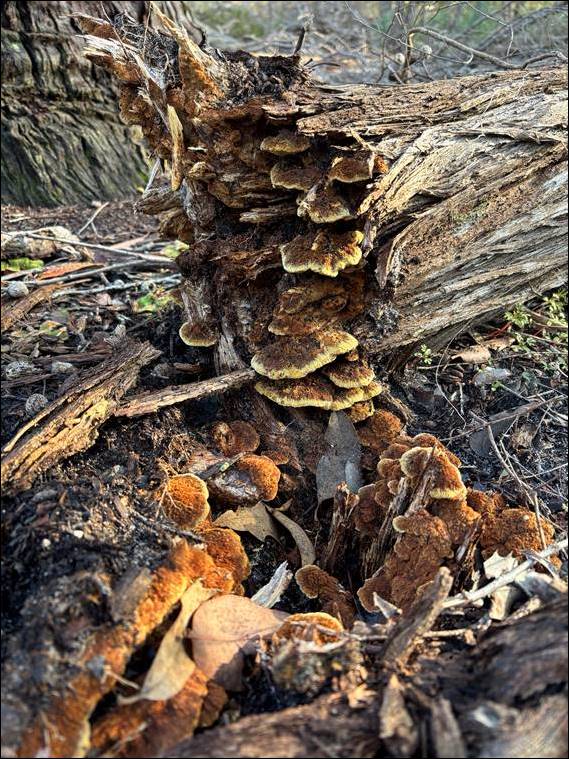
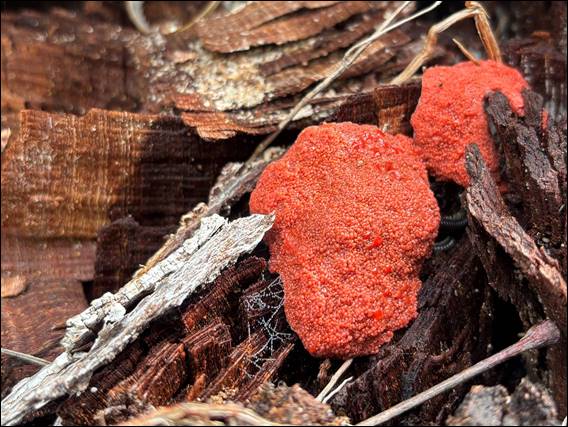
In the first image, the brilliant vermilion-red colour, looking all the more stunning in the morning light, drew me towards the fungus. For some reason the Scarlet Bracket Fungus (Pycnoporus coccineus) had inverted. Maybe someone had knocked the branch. Luckily for me it allowed a close inspection of the intricate honeycombed structure, created by a myriad of cavities in which the spores are formed. This is a repeat fungus from a few weeks back and the second image is a repeat from last weekend here, a Jug Orchid (Pterostylis recurva):
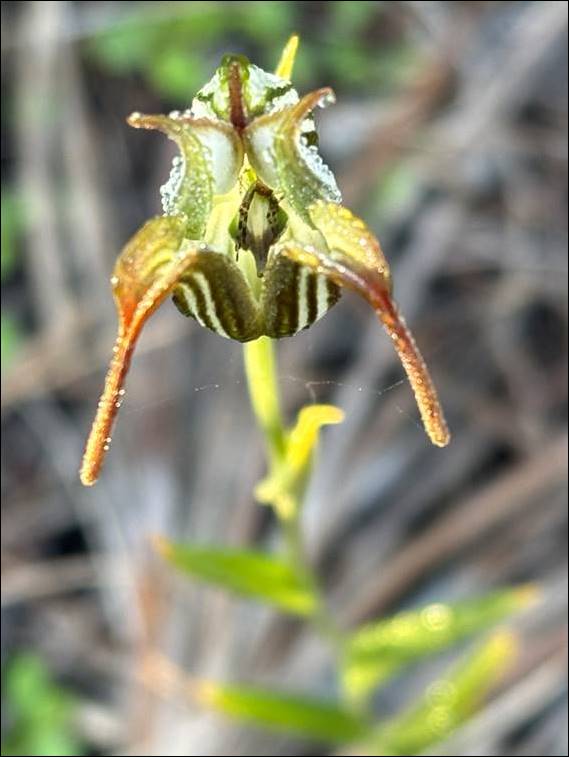
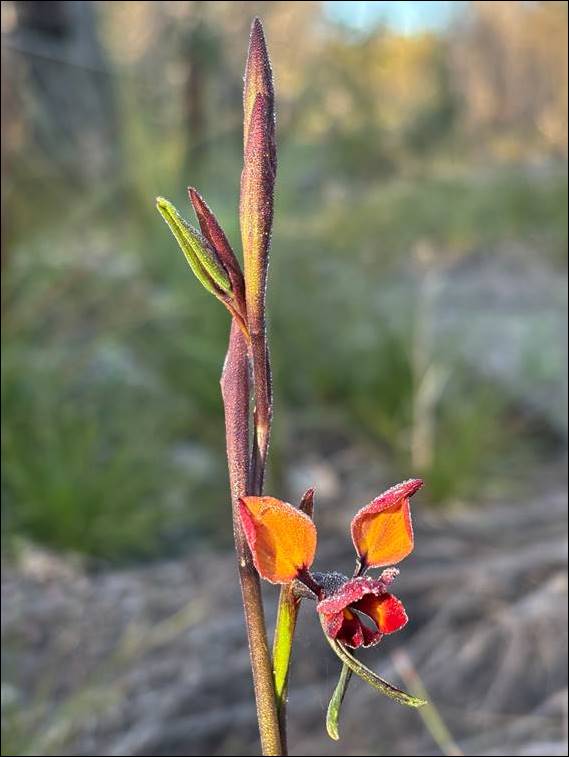
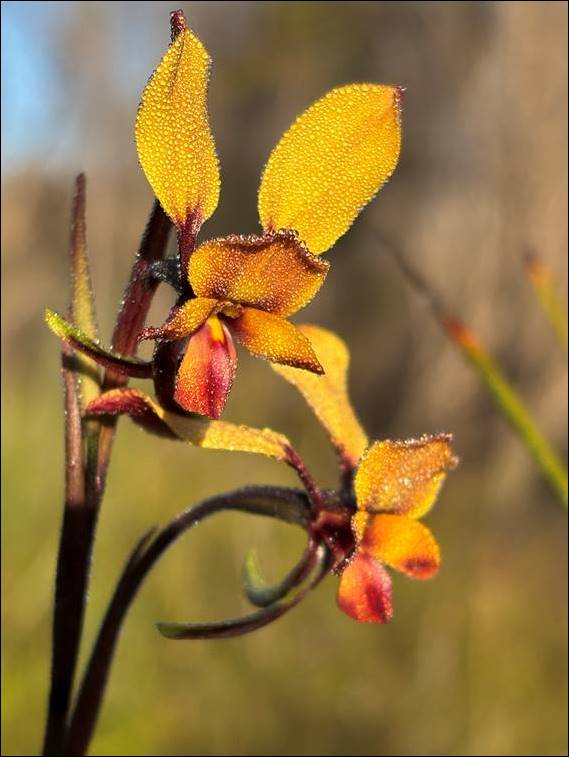
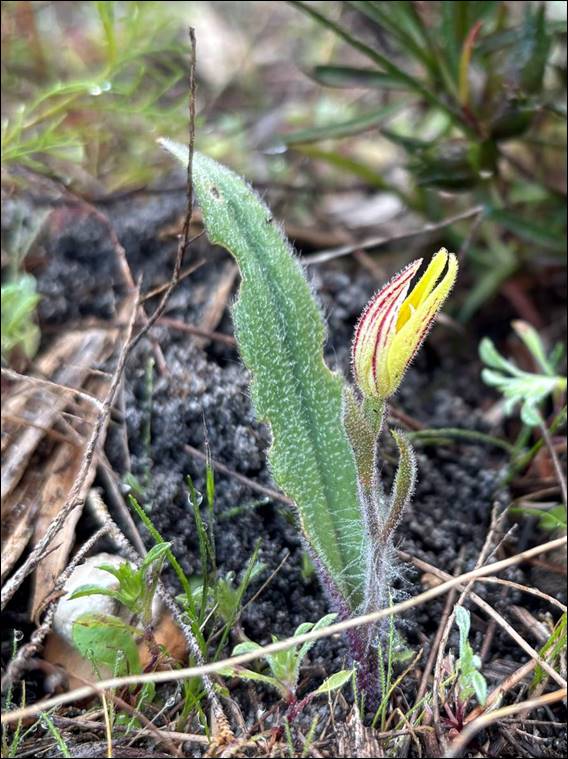
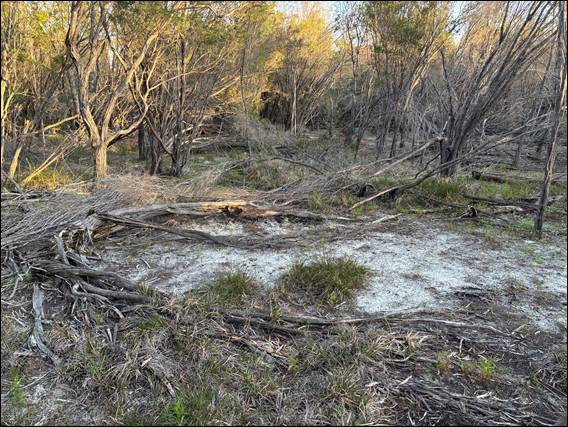
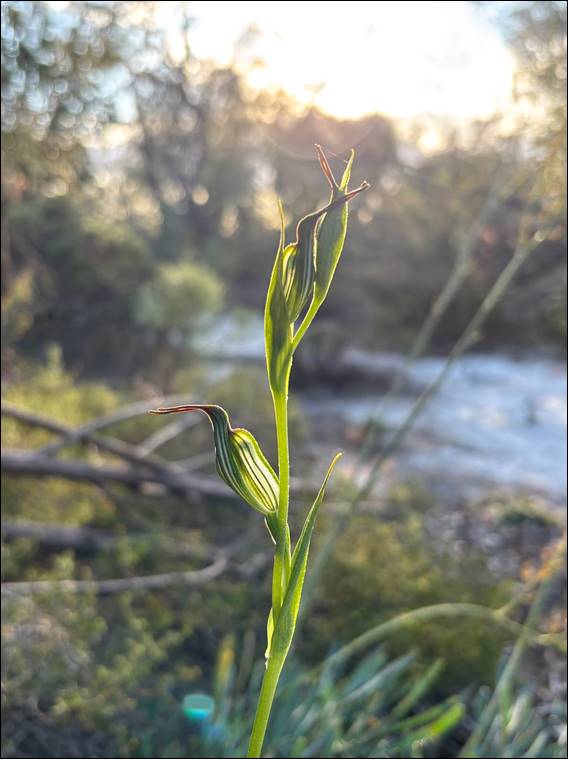
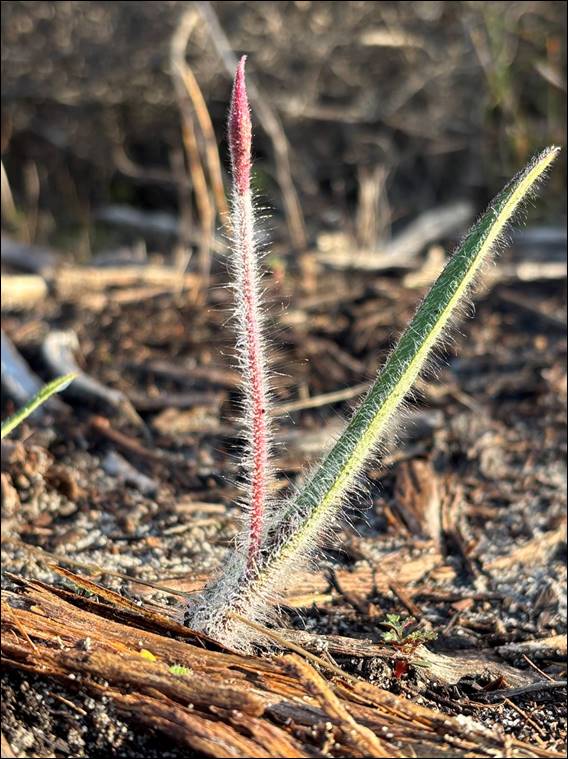
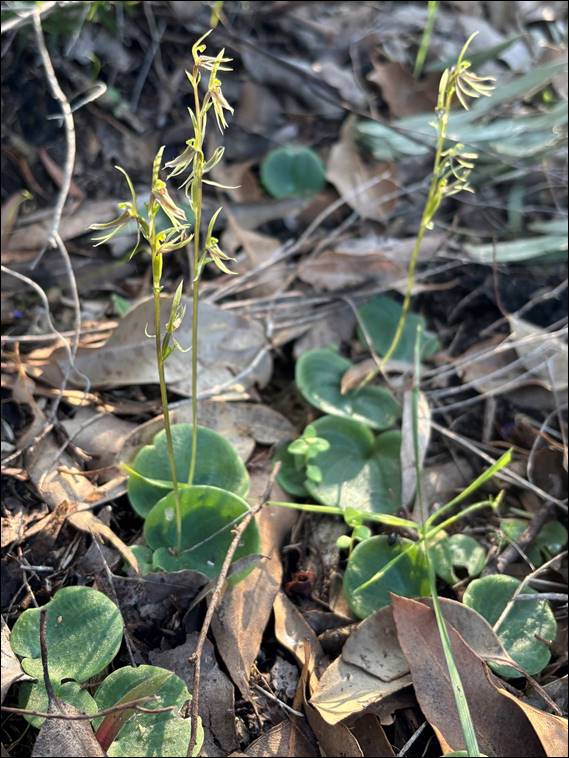
My reason for including it was not the Jug Orchid but what I saw inside it. More than likely a Flower Spider (Thomisidae), wanting to be left in peace. Quite a few Jug Orchids were in flower, which surprised me as I had not noticed their stems last weekend. Equally I had not seen the stems of Yalgorup Donkey Orchids (Diuris porphyrochila) nor Kemerton Donkey Orchids (Diuris cruenta), shown in the third and fourth images respectively. Yet today they were out in force, made all the more prettier by being covered in tiny dew drops. The last species for this post is the earliest flowering of the Duck Orchids:
A Flying Duck Orchid (Caleana nigrita) not quite ready to put on a floral display. But one John will appreciate, as he has used an image of a Large Duck Orchid (Caleana major) in his book. Sadly a species not found over here. Unlike the above Oak Conk (Fuscoporia gilva) that for some reason caught my eye like the Scarlet Bracket Fungus had, which is found all over. I made it home in time for Lisa and I to head out and grab a relaxing munch and game; followed by a wander at the Ambergate Nature Reserve. Where there was absolutely nothing to see, other than a shy Bobtail Lizard (Tiliqua rugosa) that buried its head in undergrowth:
We are creeping toward the end of winter and into spring, with only a week left. No doubt this will result in a higher chance of me bumping into others out hunting orchids in my local haunts. The south west of Western Australia is well known for its diversity of orchids, and it attracts avid hunters from both within the state and across Australia. I’ve come across people who have said that they make an annual pilgrimage here to check what may be out. So before things start to heat up I thought I’d squeeze another quiet stroll in:
I’ve previously mentioned that whether some species will be in flower can be reliant on summer bushfires. But most species can more reliably be expected to emerge from their winter slumber. Not being dependent upon anything so extreme to be aware that it is time to come out. There are two obvious catalysts. Heat, not as high as that created by fire, just the seasonal warming daytime temperatures. Kind of linked to this is the intensity of the sun and the increasing daylight hours, which can also be a biological trigger:
The other obvious one being the abating rain, although there is more to rainfall patterns with the build-up of the soil moisture ratio also being important. Without the right mix the dormant plants may not be able to adequately access water and the nutrients required to give them the energy to grow. Purely for convenience I popped into the Capel Nature Reserve, less driving required allowing more time for very slow walking. With the amount of trips I make here you may think I know ever square metre, but there are still undiscovered nooks:
My approach of heading into the bush and wandering about aimlessly with no idea of direction, distance, and often time, means I really have no idea of which bits I have been to and which I have not. Today however I came across a patch, which I can say with a degree of certainty, that I have not seen previously. Before I get to that I probably need to play catch-up. Having admitted to walking very slowly, I am equally guilty at time of rambling on in my post, so I first need to provide a bit of context for the images included so far:
The Caladenia genus is that of the mighty spider orchids. All up there are approx. 350 species, 180 of which can be found in Western Australia, and 140 in the south west. While there are many other genus of orchids, the spiders are regarded by some as the most spectacular. Varying in shape, size, and colour and with so many crammed in one part of the state it is clear why people would want to come here. The most common being the Cowslip Orchid (Caladenia flava subsp. flava), for which I still like to celebrate the first one I see each season:
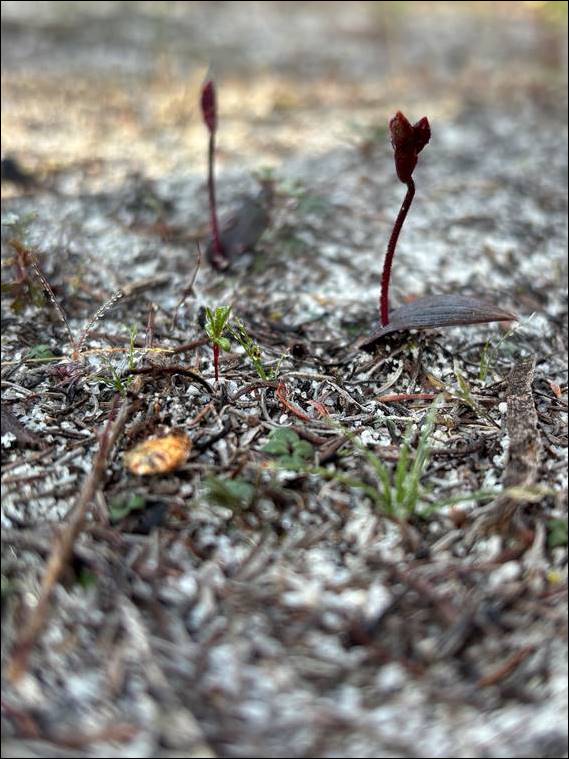
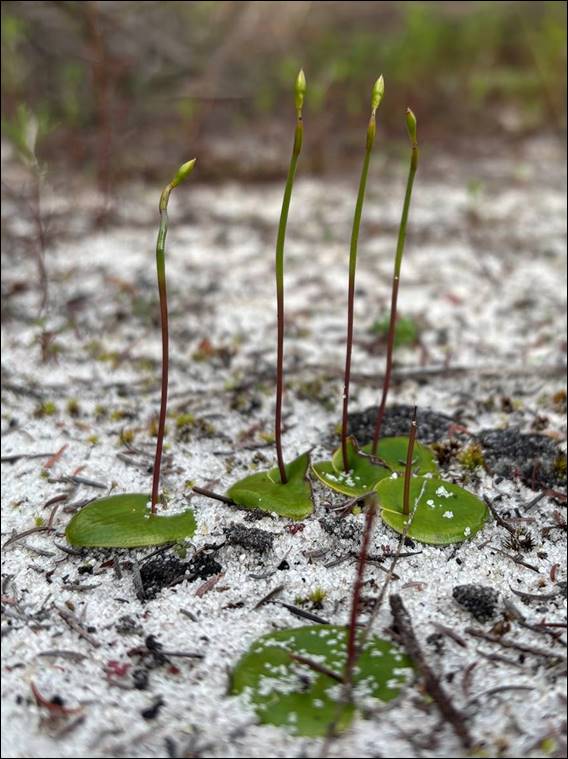
Shown in the first image it usually found in flower from July to August, this is yet another species hinting to me that we are having a late and potentially compressed orchid season. For the second image I got rather excited, when I came across clump of Glossy-leaved Hammer Orchids (Drakaea elastica). The second area I have found them. Unlike the other spot, which is on an access track, this one is more protected and looked to have a few preparing to flower. An important enough find for me to pin the location and photograph it for when I go back:
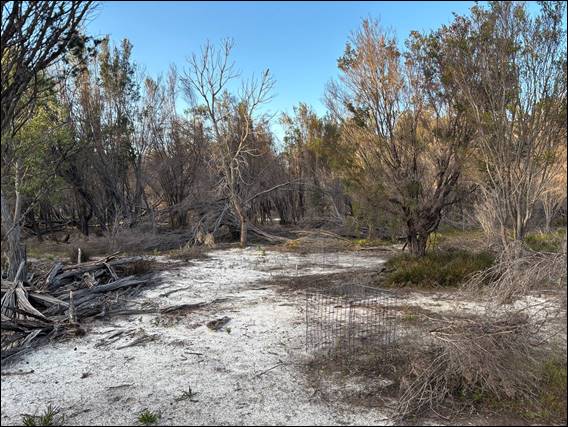
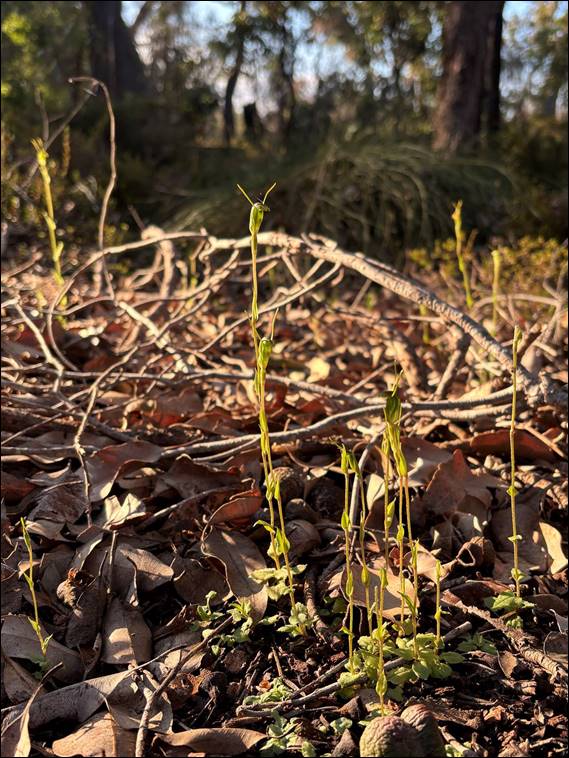
Wandering along a mere thirty yards and into another clearing I spotted five or six cages, shown in the third image. And sure enough they were located over more patches of this critically endangered species, under World Conservation Union. Noting that strangely, and a bit disappointingly, under state and federal Australian legislation it is only listed as rare and endangered, respectively. I found more patches spread across this area, not protected by cages. Quite a few had spiked and look like they may bloom, as shown in the fourth image:
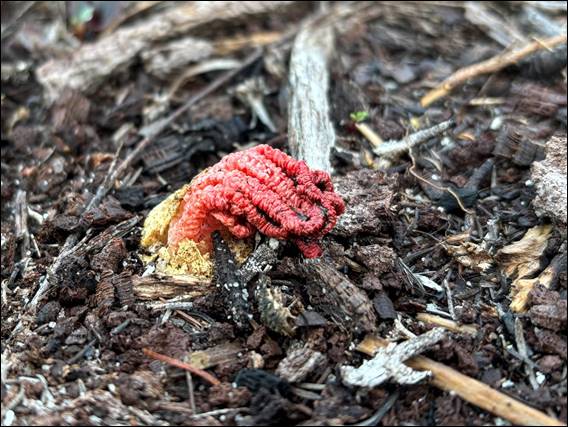
The stroll was proving to be a success when I also came across a fungi I have been keeping an eye out for. Having only stumbled across it once before, some years back. The creepy looking Craypot Stinkhorn (Colus pusillus), for which there is no need to say which image it is in. The wrinkly red finger like tentacles will form a cage like structure. This happen all in the course of a day, and it looks to me the cage is yet to form. More success was had in finding flowering orchid species with repeat finds of fairies, snails (two images up), and greenhoods:
For the latter genus this included my first, nearly in flower, Jug Orchid (Pterostylis recurva) shown two images up. There are usually heaps of these about, but this was the only plant I found. Then there were loads of Caladenia genus spikes, some of which I recognised, others I am not so sure. The above I am pretty confident is a Chapman’s Spider Orchid (Caladenia chapmanii), which is a real beauty. After picking up the pace I have final caught up with my images, however I may head out again later to see if the Craypot Stinkhorn has formed its cage:
Due to Howsie having changed his job he is now working a five days a week. This has scuppered our geologically focused weekday excursions, which we were lucky to have enjoyed for quite some time. However, with the return of Rongy and Sarah from their near twenty months of travel, the chance to squeeze in the occasionally weekday climb has been rekindled for the immediate future at least. Picking the right day to head out is still feel a bit like playing Russian roulette, well maybe not quite to that extreme:
But it is hard to predict what the conditions will be like on any given day at a particular location. In the end Friday won out although it was still a little hit and miss as to where we would go. A decision left till the last moment, as we were driving down. Mind you watching gloomy clouds, rainbows, and raindrops dancing on the windscreen it did not inspire that we had made the right choice. I was quietly hopeful, and indeed we had chosen wisely. As we parked up and looked west the clouds were parting to let some blue sky show:
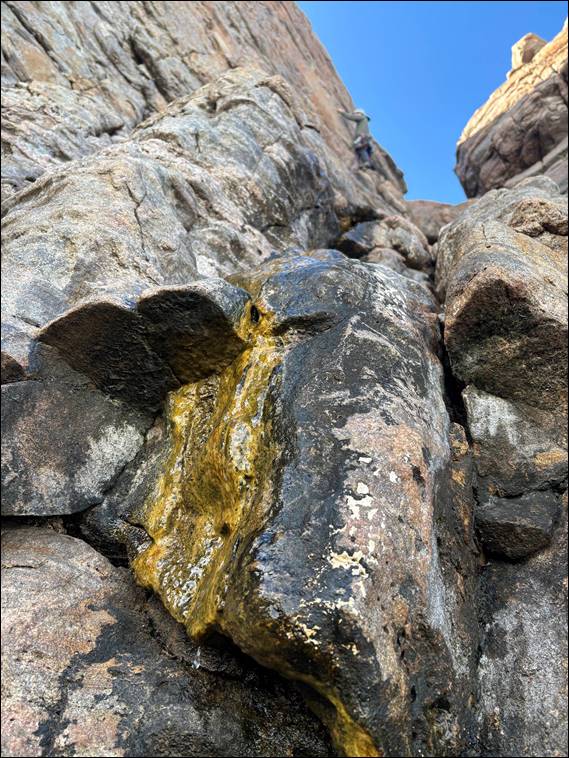
There was the occasional sign of the seemingly continual wet winter months we have had. The orange slime had me wondering and from what I have found it is could be a result of leached mineral deposits. I do not recall seeing such a vivid orange here before, and this was the only place on the crag where I saw it. I am doing a bit of guess work, and it may have been enhanced due to the near continual flow of water through the fissures and cracks in the granitic genesis, over a number of months:
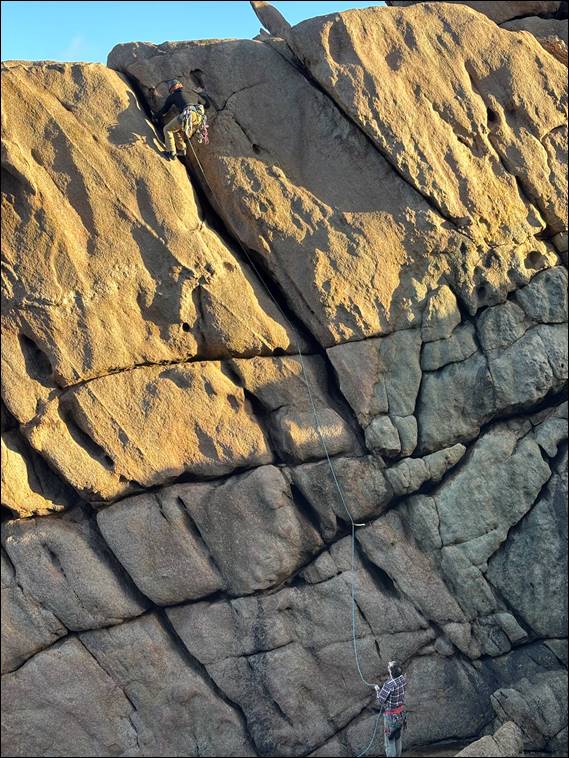
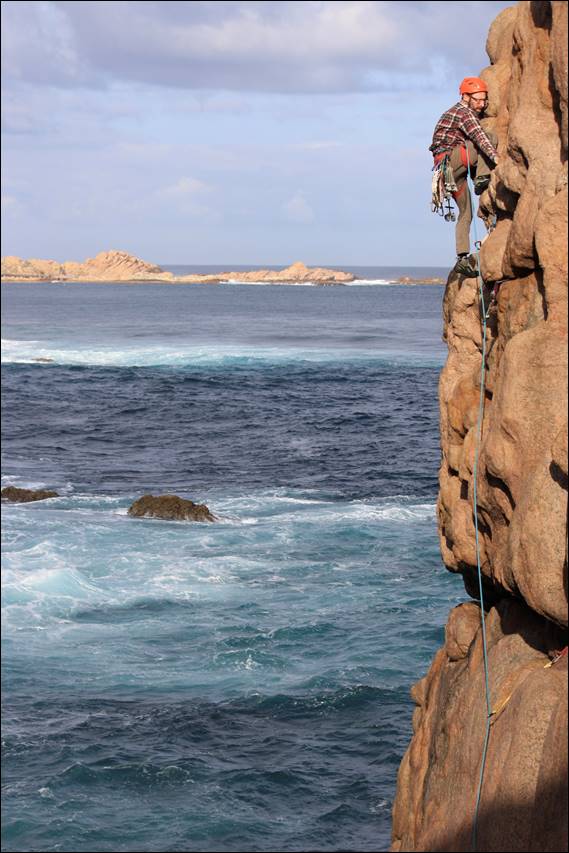
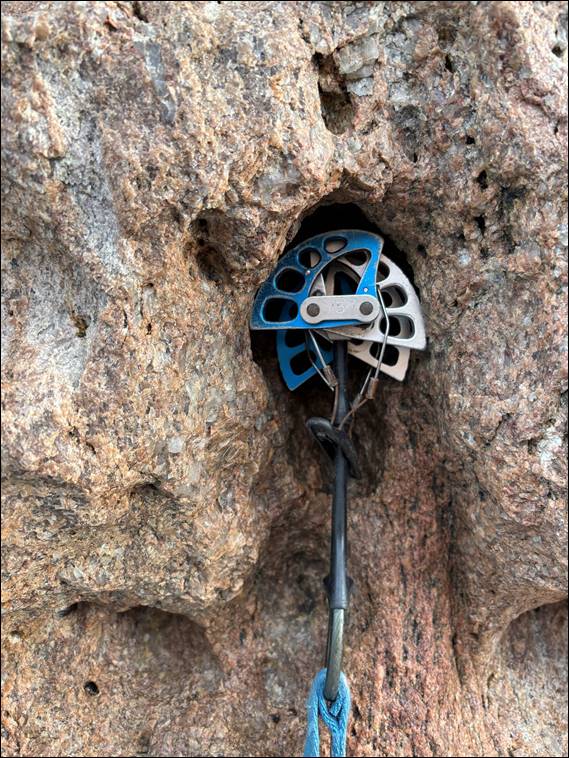
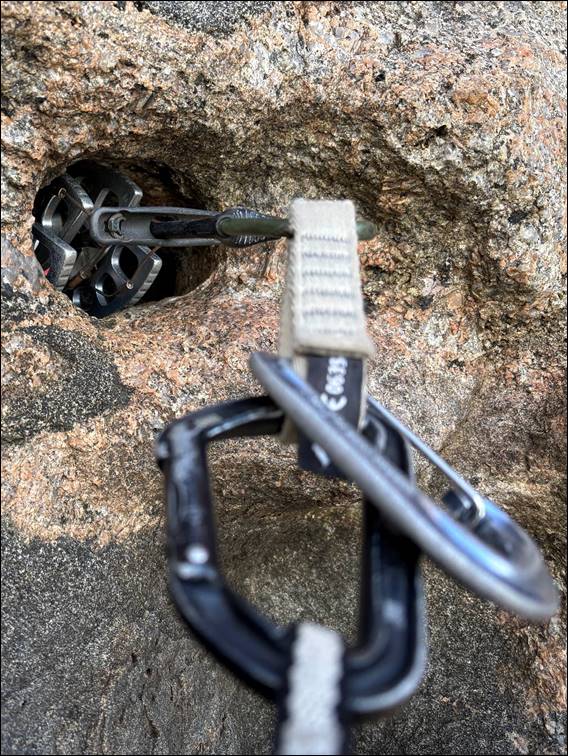
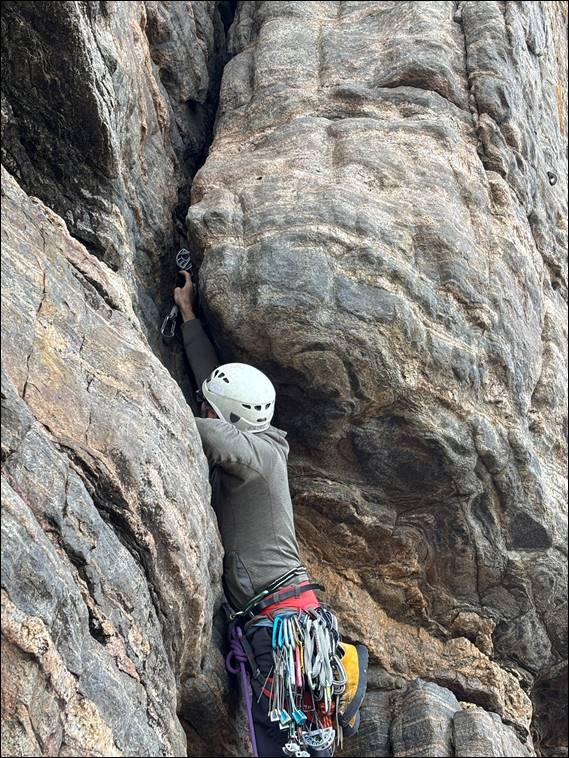
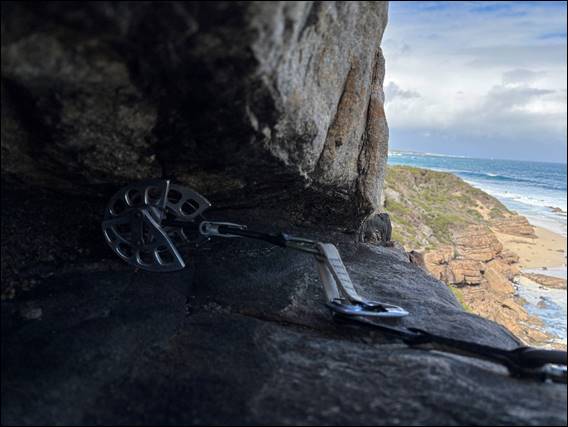
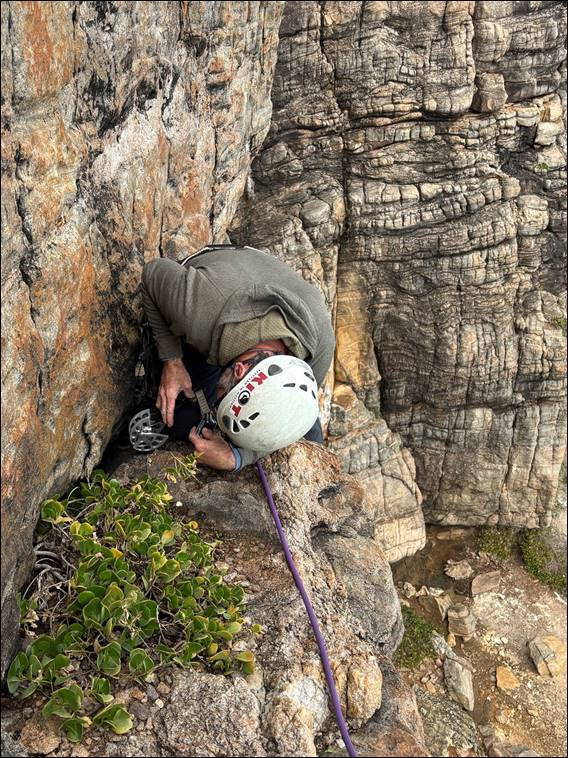
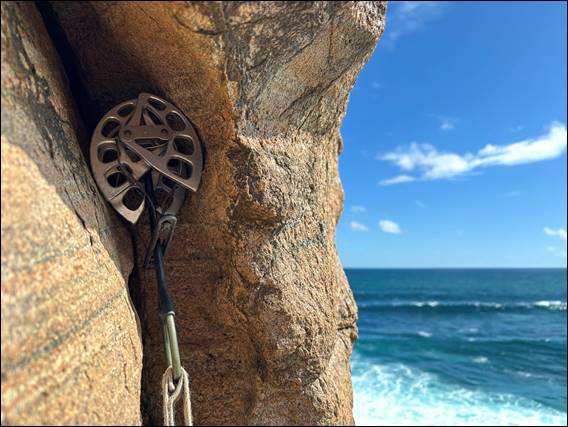
Other than the occasional bit of rock with water seeping down, the rock was mostly in near mint condition. As Rongy has been away, and this was his first climb at Wilyabrup since his return I let him choose the lines and also lead them. Not that he was short of getting climbing in during his travels. It did however mean I could relax a bit more on the routes. As may be evident from the images he had set himself a task to place the No.4 Camelot on each climb. A piece of traditional climbing protection that does not get the same following as the pink tricam:
Yes there really is a following for the small pink tricam, which I have mentioned in a past post: https://sandbagged.blog/2025/01/25/weighing-up-the-choices/. That said Mario will be happy to see us paying homage to what is often the biggest bit of gear on someone’s harness, and which in his mind is one of the best. He will endeavour to place this beast on most routes, although sometimes it is just too damn big to find a spot. For the climb below, a two pitch route, the trusty bit of hardware was placed in the exactly the same spot on both pitches:
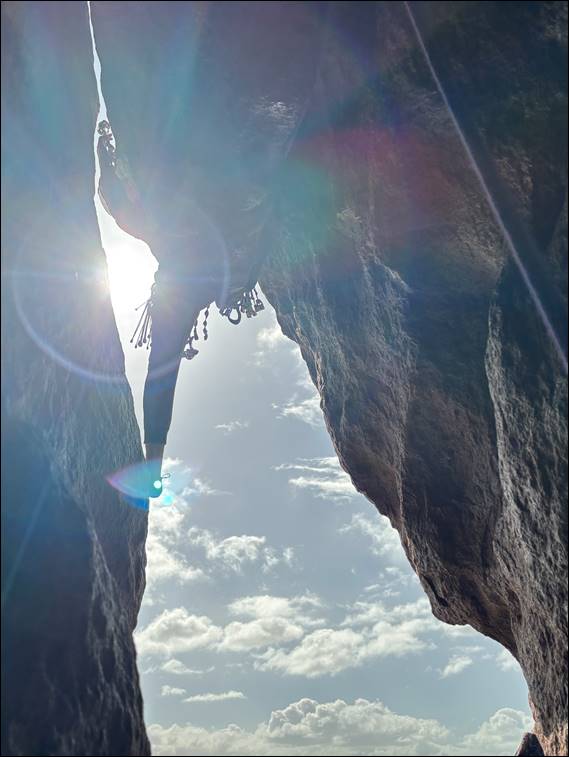
We guessed Mario would not been too upset with this approach, as there was nowhere else on either pitch it would fit. For the second pitch it was needed more as a directionally piece to avoid a zipper effect. Meaning having all the gear rip out due to where the belayer is standing, if the leader fell and the rope went tight. The belay stance for this line is off to the side. The route follows a great seam it is but very thin and only takes the tiniest and tinniest of wires for quite some distance. It looks like Rongy is contemplating how good they may be:
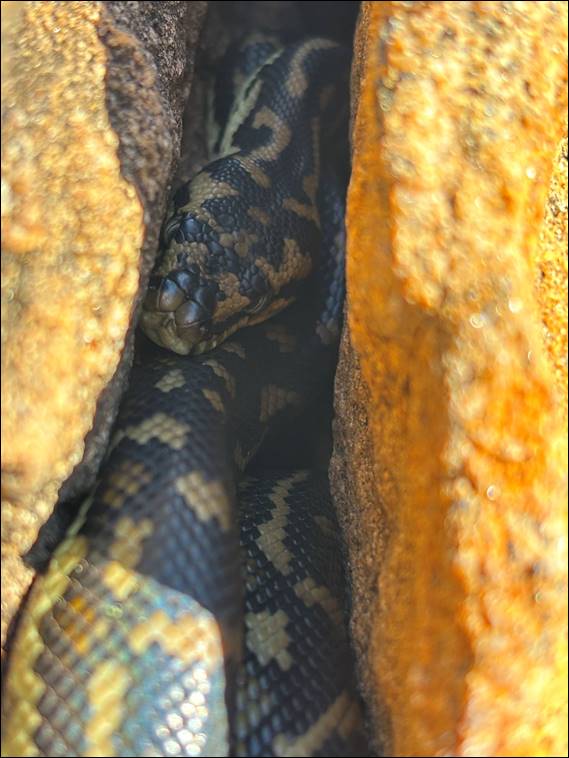
These wires are in complete contrast to the might No.4 Camelot, but if placed well are great. Some of these small wires have brass heads, which are designed to mould to the rock to increase the friction, in a fall situation. Camelot’s will also increase the friction with the rock when arresting a fall, by virtue of the camming movement. For the last climb of the day Rongy offered me the pointy end, there was of course only one option. The obvious finale that would allow us to climb out with packs, and look for a friend:
I am of course not referring to the first commercially successful camming devices for climbing; the Wild Country Friends that were released in the mid-70s. I added a raft of these friends to my arsenal when I bought my first rack in the early-90s. The Camelot’s were released several years later. No the friend we were looking for, as you may have already guessed, was of course of the a scaly type. Sure enough a Southwestern Carpet Python (Morelia imbricata) was, like the above No.4 Camelot, snuggly placed in the big flake:
One thing I will never get tired of is watching the world wake up. The pre-sunrise hues may not have been stretching across the skies this morning, but it was still a beautiful sight. The road ahead was taking me towards the light, meaning I was heading east. There is only one climbing destination that way, within a reasonable distance, being Welly Dam. Some may be surprised I was heading there today. Seeing how I have mention that I still needed to be careful to ensure I keep moving forward on my road to recovery:
Added to that I was out on rock just a couple of days back with Craig. Today was however going to be a very relaxed session at the Dam, if there could ever be such a thing. Matt works in the same office as me, and as I worked from home on Friday a message popped up from him with a picture of my online mini-guide about the climbing at Welly Dam. He has been looking for activities to keep in shape, and has been coming to the Wellington National Park for decades. As a kid and then more recently with his family, and to hike and mountain bike:
He confessed to never having climbed before, but had always enjoyed scrambling up rocks. During his trips this way he had noticed the bolts and thought why not try it. One thing led to another and after a quick google search he stumbled across my guide. At the time he was not aware that I climbed, and he was also completely oblivious to the delights of Welly Dam. Having read in my guide he picked up that the place has in the past been given a bad rap. In my opinion a rap that is undeserved, but I was very clear that this is not a beginners place:
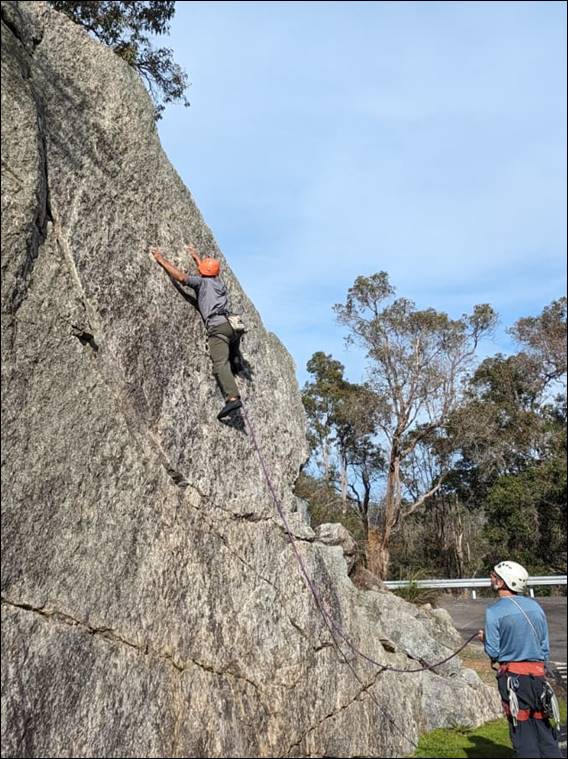
He was however super keen to give it a go. Living ten minutes from Welly Dam and due to family commitments not having the time to be able to drive and walk into the more forgiving places to learn the ropes along the west coast, we ended up agreeing to meet here today. Luckily his shoe size was such that he could fit into my shoes, so I came armed with shoes, harness, ropes, and gear. When he asked what he needed to bring my reply was simply ‘a can do attitude and to be prepared to be defeated by the dam’:
As with anyone starting out there is a fair amount of downloading to be done: which muscles to use and when; having real faith in your footwork and the shoes, check the second image; thinking of the most efficient way to move and position your body; and remembering to breathe. Sounds so obvious, but it is amazing how these simple things can be completely forgotten when you get into an unfamiliar or comfortable situation. And for a first taste of climbing Welly Dam does not offer any routes that are not likely to put you on edge:
Matt was not put off. After some instructions and a bit of bouldering, which lasted maybe half to three quarters of an hour, there were more instructions. This time of rope work, belaying, trad gear, and safety calls. Essential knowledge before we tied in for a real climb. It was just as this was happening that another car rolled in, and through the open window I saw Sarah and Rongy’s smiling faces. Telling me that just yesterday they got back from their 20 or so months of travelling, under a cloak of secrecy. So it was a complete shock to see them:
The timing of their arrival at the dam was great. With a few more people about support and encouragement could be given from above and below, as Matt made his first ever roped climbing ascent. Needing to put the mass of information he had been given, over the last hour or two, into practise. Holding it together and even finding a hands free rest half way up, although to start with I wasn’t sure he would follow my instructions to let go with his hands and dangle them by his waist. Enjoying it so much he then belayed Rongy on another line:
Managing to get up, despite finding it technically way more difficulty and also having a tiring body. Understanding that from here on the routes would only get harder, he was happy call it a day. He may however have got the bug, hinting he would be investing in a pair of climbing shoes. With just the three of us left Rongy encouraged me to take a lead, before he jumped on one more route. It was a lovely and unexpected catch-up. And while it may not sound like we did heaps of routes, what with all the bouldering my body told me enough was enough:
A distinctive noise came from above at daybreak, as I started my walk at Manea Park. But not one that I expected to hear from above. I was a bit surprised to see a male and female Australian Shelduck (Tadorna tadornoides) high up in a tree. I’ve had to do a bit of reading up and found that they are known to roost in various places including rabbit burrows and holes in cliffs, but they prefer tree hollows both to roost and nest. In this regard they are similar to what may be regarded as the aptly named Australian Wood Duck (Chenonetta jubata):
These two species are in contrast to most other duck species that prefer to nest near water, and will only on occasion use tree hollows. I left them to it and very soon after stumbled on another nice surprise. A Silky Blue Orchid (Cyanicula sericea) with just one flower. Last year because we seemed to go from winter to summer temperatures, without much in-between, we didn’t get to see too many of these. Similarly this year, as it has been wet for longer, it seems that some of the more common Snail and Greenhood species are not very common:
Not too far down the way I found a solitary Dwarf Pink Fairy (Caladenia reptans), the earliest pink fairy species to flower. The spot was more out of luck, seeing I had taken a wrong turn that took me back out of the park and I only spied it as I came back the same way. I’ve got a few local places lined up that I know I will have a reasonable chance of finding particular species. But heading back to the same ole haunts for repeat finds takes the joy out of going to new patches of bush and unexpectedly stumbling across what it may have to offer:
Intending to be out for a short walk, the two early finds got me keen to take a bigger loop into a few parts of the park that I had not been too before. This included some very swampy areas. Where there were tracks, long stretches of them were under water. Undeterred I marched on. When I wasn’t watching my step to avoid getting too wet, I was looking all over for something fun. The orchids seemed to dry up on me for this area, although I did spot quite a lot of Earthball (Sclerodermataceae) and Earthstar (Geastraceae):
I believe the one that I have included below is a Smooth or Onion Earthball (Scleroderma cepa). I have not been able to find out to much about this species, but as they age they turn from white to a pale brown or yellowish brown. The outer skin can have tiny scales or be smooth, hence it’s common name. I did wonder if it was a Puffball (Agaricaceae) because of the small opening at the top. However, the thicker and more leathery skin, which is called the peridium, made it clear that it was not a puffball:
My next image clearly of a Sundew (Drosera). The plant had a small basal rosette of leaves, from which five equal length stems came out. Not upright but extending out horizontally, being held just above the ground. This gave the plant a star like form, which stood out from other sundews I have seen. Along each stem the small green leaves had delicate pink tentacles each with a sticky dewdrop, called mucilage, at the end. From a distance the cluster of leaves at the end of each stem, as shown below, made the stems look clubbed:
Despite all the detail I took note of, I have not been able to link this plant with the more commonly found sundews in this area. Mind you there are over 150 species in the South West of Western Australia, so I am not all that surprised I didn’t find it. I may have failed with the identification, but I did come across another orchid. The Midge Orchid (Cyrtostylis huegelii) is normally out in July and can be found in big numbers. This year it has taken till today, mid-August, for me to find any and even then I only found a couple flowering:
While some species seem thin on the ground, I’m hoping that the slightly different seasonal conditions this year may bring out a few other species. Whether ones I have not seen so much, or if I am lucky species I have yet to stumble across. I will do my utmost to hunt them out, but the success or not of the orchids coming out are at the mercy of the weather gods. We will have to wait and see how favourably they look down on us. But for now, as I ended my two hour walk I was super happy to find a second Silky Blue Orchid (Cyanicula sericea):
Another year has ticked over for Craig, and that can only mean one thing. It was time for a climb. It so happened that he had just come of his shift yesterday. Meaning he was in town, available, and keen as mustard. There is no need for the gifting of gizmos, gadgets, trinkets, or other such items between us. A bit of time on rock and being in nature is all the presents that are required. It took a bit of wrangling to make things work but we got there eventually. Even the weather gods played nice today, aided by a purposefully late’ish start:
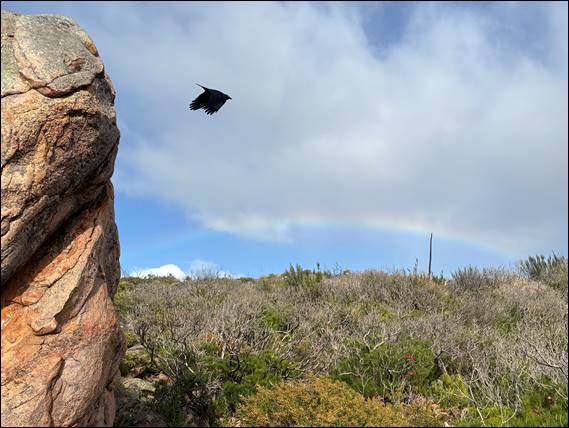
It rained for a fair bit of the drive out, however the stiff westerlies did their work and blew the gloominess away. With only the remnants of a few drops here and there, and a barely visible rainbow that adding a splash of colour in the sky as we arrived. We had picked Castle Rock for today. The reason for coming here ended up not being a reason at all, so we could have gone elsewhere. But that is another story. The routes here did however provide the perfect playground to allow us to go lead for lead, without messing with Craig’s head too much:
Another front had rolled in overnight, with near gale to gale force winds. As a result the ocean looked brown and mucky, something that I could not recall seeing here before. While I’m quite used to it at our local beach, this bay in my memory has always been blue and inviting. Even when the clarity has been a bit down the colour has still been vibrant. Delving into my image library, which includes images from all seasons spanning over a decade, I was not able to find a trip here when the water had looked as churned up as it did today:
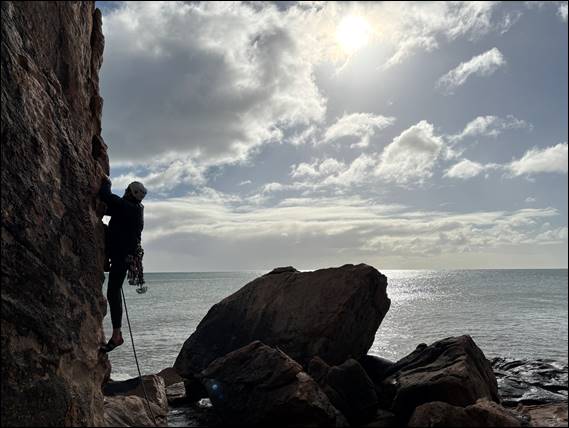
Despite the overnight and morning dampness the rock was in remarkable condition. Quite possibly due to the stiff wind, which persisted as the morning wore on. Also the way the castle sticks out on the coast making it a prime target for even the slightest breeze. Even when the sun was on our backs the wind was biting, so we stayed rugged up for most of the morning. The good thing about the coolness being the air can’t hold as much moisture and skin is harder. Both of these result in improved friction, which is no bad thing when climbing:
I wasn’t sure where Craig’s head may have been. Especially having just come off a two week shift yesterday, and with his lack of time on rock of late. There was no sign of resistance when I gently suggested he may want to kick the proceedings off with nothing too silly, just a fun warm up. In truth we didn’t hit anything silly all morning, bar one route. For such a small crag, it is surprising how it is possible to pack in a great variety of routes with flakes, chimneys, cracks, and slabs. And all at a sensible moderate to low grades of 17 or less:
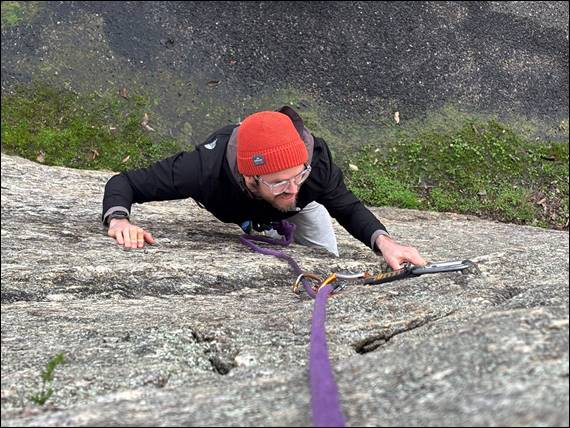
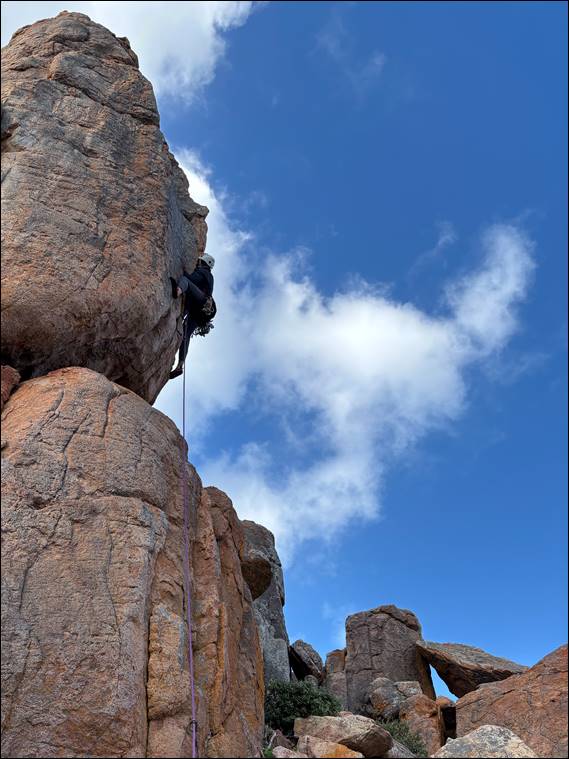
Some may disagree with that statement, but I have used the term moderate because in John’s soon to be published book of grade 17 and under climbs that is the term used. Then there was the line shown below. Graded 16, by yours truly. Slightly overhung, rounded, and pumpy. Fair to say it really is a sandbag route, and felt by everyone I bring here to be considerable harder than the two 17s that Craig led today. During my last visit Howsie was ‘keen’, with a bit of persuasion, to lead it. Craig did not feel the same ‘keenness’:
There was no getting out of it, it was down to me to take this one on. That is not strictly speaking true, Craig did say we could just not climb the line. But I could feel it calling me, then once on it taunting me, and then it spat me off. Not wanting to admit defeat, I got back on and polished it off. Craig fared better on this one with the rope above him. In fact he did really well bagging four clean leads, as well as following up three other lines all in good style. You could say the gift of his time on rock today couldn’t have gone better:
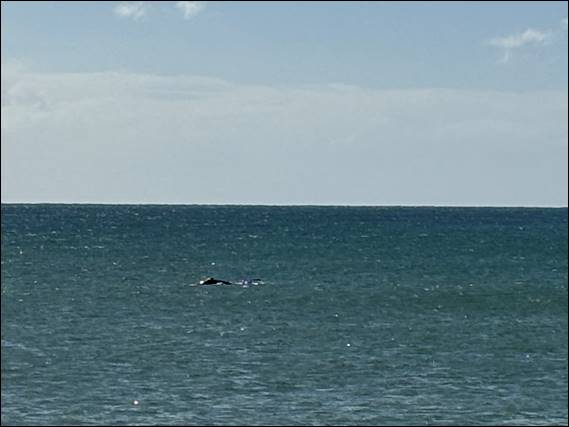
There is however the second component to the birthday gift, and Mother Nature came up with the goods too. It was Craig who spotted them. A Humpback Whale (Megaptera novaeangliae), identified by its dorsal fin, along with its calf was cruising past. You’ll have to excuse the slightly blurry image, but it was the best we could manage with our phones. Not that we really needed an image. Seeing it was good enough for us, and the sighting certainly put the icing on the cake for Craig’s birthday climb:
Sunday morning arrived and I felt the need to get out in nature, without the need to drive too far. The Capel Nature Reserve beckoned, with an unexpected fine day and the sun beaming down on the world. I hope I don’t jinx things but maybe we might start to have a few good days align with the weekend. There’s been some chatter at work about how the winter weather seems to come in that bit harder on the weekend. Not surprisingly there is no scientific evidence to support this conspiracy theory, but sometimes it sure seems to be the case:
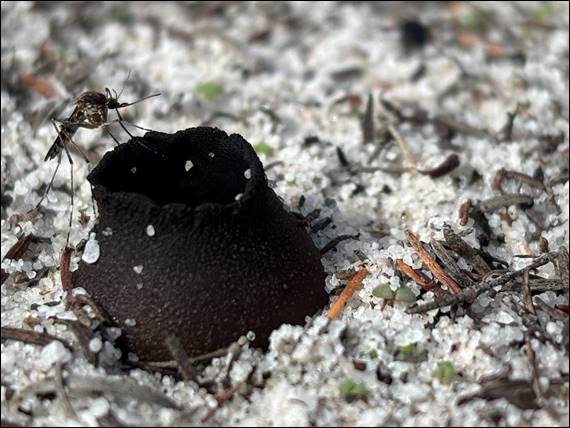
I wasn’t feeling overly hopeful on the orchid front, so as not to be disappointed. The usual flurry of greenhood species in July, just haven’t wanted to play. Maybe it has been a tad too cool and wet for them. And today’s short burst of glory wasn’t going to make them suddenly spring out the ground just for me. But such warm weather will result in a less joyful find, or was it that they found me. We’ve got about 100 species of them in Western Australia, and this one is an Aedes camptorhynchus that can carry Ross River virus and Barmah Forest virus:
In order for the blood sucking females to infect me, they first need to have taken blood from a mammal that carries one of the viruses. In this area that is most likely to be from a kangaroo, wallaby, or possum. I didn’t however take the image to go on about one of the most annoying creatures I am aware of, other than at times humans, but the fungi that it landed on. The cup shaped body told me it was a species within the genus Peziza, which belongs to the Pezizaceae family. It took a little digging but I identified it as Peziza psammobia:
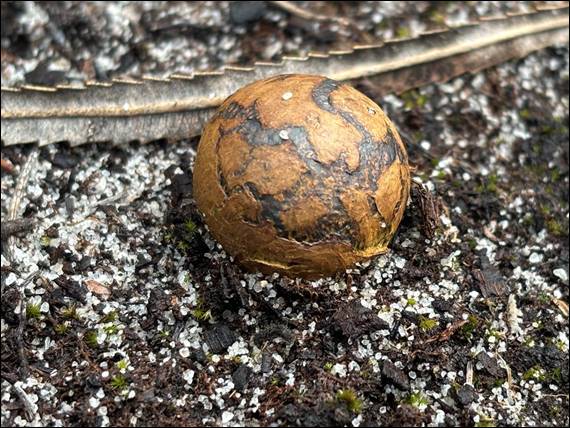
This species is native to Queensland but also found in Western Australia, which in part was why it took a little more work to figure out. The reason for the cup is to focus the force of raindrops, and this in turn helps to spread the spores. Quite literally splashing them out and into the surrounding earth. And while I am on the topic of earth, I was quite taken by my next find that looked like the globe, with landmasses and a watery ocean. I’ve pinned this one down to being a Horse Dung Fungus (Pisolithus marmoratus):
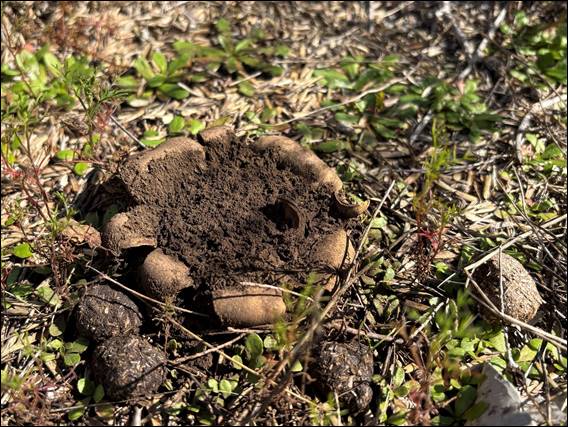
It is described as having a ‘roughly spherical fruiting-body mottled with shades of black, brown and gold and with a rough surface texture’. And is another species within the same genus as the Dead Man’s Foot (Pisolithus arhizus) that I found last time I came here, which had a very different surface pattern (https://sandbagged.blog/2025/07/26/a-winning-streak/). The next find was a repeat from that walk being a Star Earthball (Scleroderma polyrhizum), only this time the dark brown spore powder had as yet not been dispersed and filled the crater:
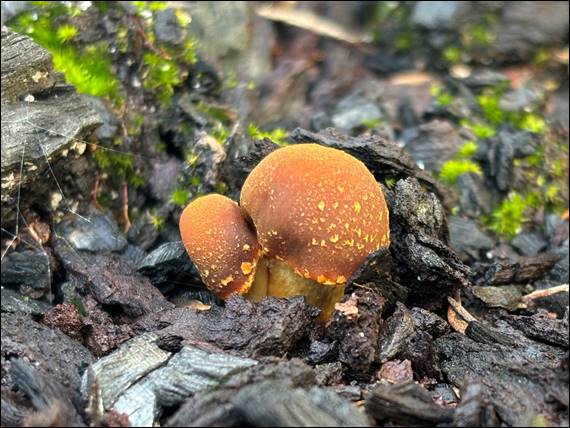
After the relatively dull coloured fungi finds I was hankering for a change, preferable something with a splash of brightness about it. I’m not entirely convinced about what I found, but it fitted the colourful bill. The thick stem with vertical looking stripes makes me think I could be right. That along with the flecks, almost scaly looking features, on the small bun shaped cap. And finally being found in a decomposing tree stump, makes that three traits indicating it could be a Spectacular Rustgill (Gymnopilus junonius):
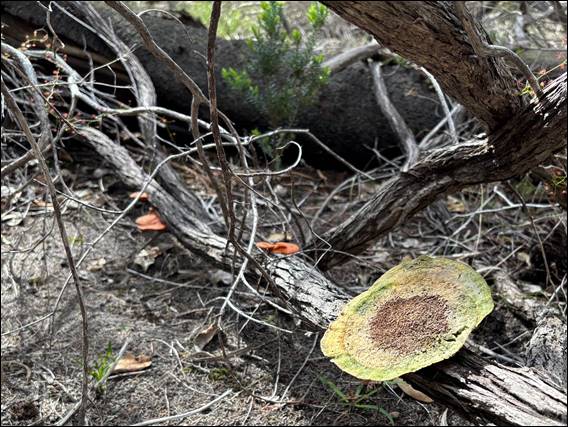
Next was a common Scarlet Bracket Fungus (Pycnoporus coccineus), another decomposer fungus. It was found to secrete enzymes that aided the degradation of softwood, in a study in 2015. The bright and vibrating younger specimens were no doubt enjoying slowly breaking down the fallen limb, but it was the older specimen that I focused the image on. Rather than having a bracket shape it was like a plate. Having dulled with age but still showed the radial pattern, and underneath continued to display the same orange colour of the younger ones:
At the end of yet another fallen tree I found a third colourful display. Not a fungi this time, but a Red Raspberry Slime Mold (Tubifera ferruginosa). Found across the globe it is reputed to be the most widely known and distinct slime mold. While it resembles a cushion made of bubbles, it is actually constructed of gelatinous rods called sporangia. Tightly clumped together each rod is no more than 0.5mm in diameter and 3-5cm long. While called Red Raspberry, specimens can be a wide range of colours including silver, black, gold, or pink:
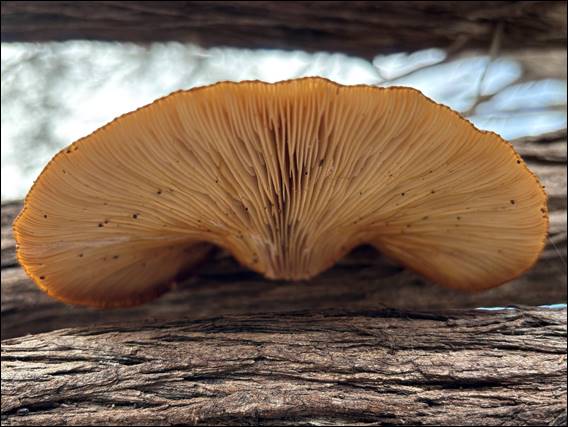
The last fungi is from the Crepidotus genus. Seven species have been identified in Australia and this one is Crepidotus eucalyptorum. Rightly or wrongly in England these were sometimes called slipper mushrooms. While I’ve read the Latin word crepid means slipper, but can also mean a base or shoe. Some say it can also refer to something being burst or cracked. The verdict on otus being more conclusive meaning ear in Latin. Despite so many options for a fun common name, like my first find today this one does not seem to have one:
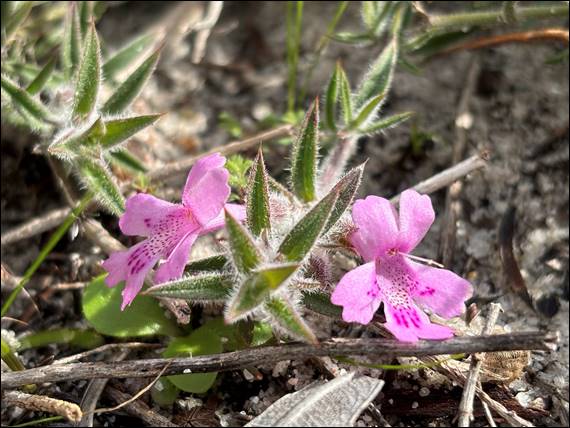
All in all it was a pretty good wander, no orchids were out but I spied some nice finds nonetheless. I was kind of hoping that a scaly friend might be tempted out of brumation by the sun. Despite scouring the ground, trees, and especially fallen logs and hollows none were to be found. So instead I’ll finish with something that does have a common name, and that is aptly called a Snakebush (Hemiandra pungens). A prickly little plant, so one I had to careful walk round in my safety sandals:
Now I know one reason the snorkelling was particular pants last summer. It is due, in part at least, to the moon’s 18.6-year wobble. This may sound like something out of a science fiction film. However, unlike those films where the moon is either at risk from an asteroid strike or breaks its orbit to commence on a collision course with earth, this wobble is a natural phenomenon. All the moon does is tilt slightly, and the effect of this changes the gravitational pull on earth. During the peak period tides can increase by as much as a 30-40% in our local area:
The moon’s wobble is predicated to reach its peak in 2025 for Western Australia. Hopefully, after this year, the summer snorkel seasons may start to improve for the next nine or so years. Noting of course there are other contributing factors at play. Why am I talking about this? Well we are assessing why the sea grass in an estuary may not be doing so great over the last year. Sea grass being critical for the ecosystem. Being a habitat, food source, and nursery for many marine species. And it seems the moon’s wobble is likely to affect sea grass health:
Next question is why are we doing this? Well, the general populations memories are short lived, too short to be able to recall impacts from cycles that last nearly two decades. As such and as a result of recent observations by citizen scientists, things are stirring in this space. Our role is to objectively understand and respond to these claims, based on science and facts. In other studies they have identified the moon’s wobble can play a significant role in the health of mangrove wetlands. And like sea grass meadows, they too are also critical for marine species:
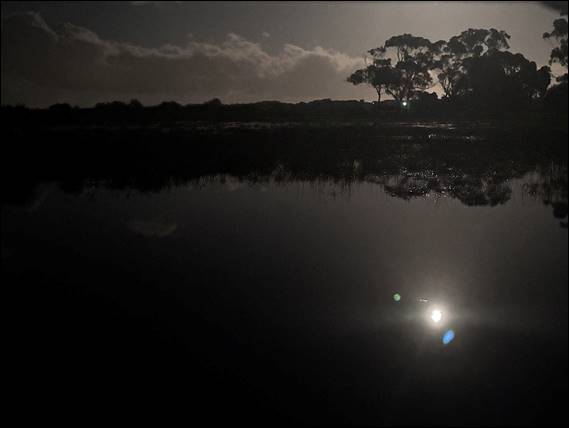
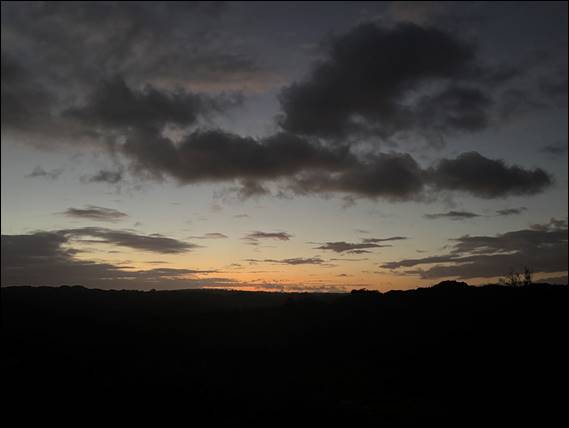
It would seem that I myself have wobbled off the path for this post. Not surprisingly I was not heading out snorkelling, at such an early hour nor as we enter the last month of winter. I went off track because the waxing gibbous moon was so intense, as I was driving out. It was providing 99.5% illumination only just shy of a full moon, which is due tonight. The glorious sight stayed with me most of the way to my destination. With approx. 10km to go the moon slipped behind a cloud bank. So extensive and filled with moisture that there was no trace of the moon:
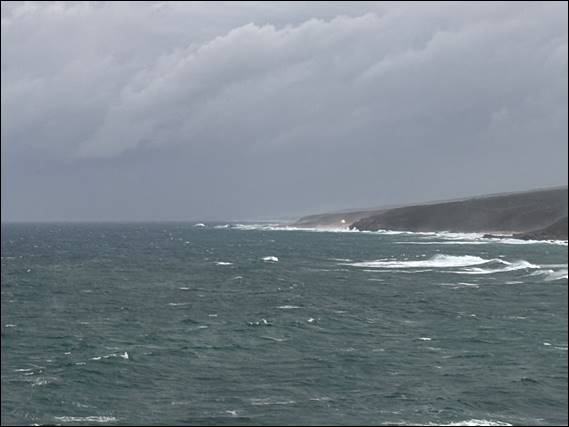
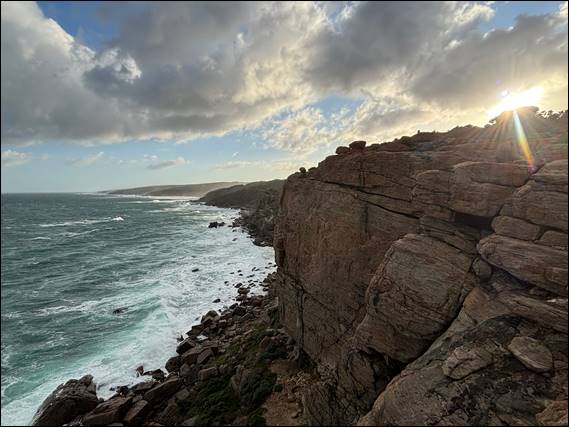
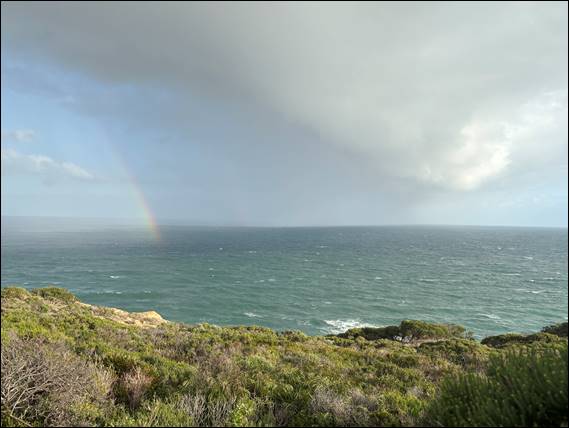
It was a gamble heading out, and I had ummed and ahhed about where to go. Only making a decision after being on the road for half an hour. The charts suggested I would be alright till mid-morning. The clouds told another story. While the second image shows a relatively cloud free sky to the east, back home, the next image shows Moses Rocks. Taken a mere half an hour after getting to the cliffs. If I had gone there I would have got wet from early on. The lights of a car perched above the beach, 4km north of where I stood, was probably a surfer checking the conditions:
You may not be surprised to hear that I was flying solo today. Plumping for Wilyabrup for ease of setting up. Thinking there would not be time to faff about, plus the longer lines appealed. With no time to mess about I set my schedule during the second half of the drive out. Two set ups, six lines, twelve laps, average grade of 15, and bang on 300m of climbing. The only other thing I focused on was watching the clouds. Switching from threatening to clearing several times. Not until I had completed what I had set my mind too did it come in. Catching up with me just before I got back to car:
The title may suggest to some that I am being contentious, but that is not the intent. Like most outdoor pursuits there are many forms of climbing. Speed, sport, and bouldering have being brought to the attention of the wider community through inclusion in the Olympics, but there is also trad, aid, soloing, mixed, ice, alpine, and more. I’m certainly not putting one above the other, so what is this all about? Well blame John Morris, who has very kindly allowed me to review and provide feedback on every word in a climbing book he is writing:
If you want to find out about the book, you’ll have to check out a past post called The photo shoot. As this post evolves there are likely to be a few more links, as I dip even further into the past. Other than that catch up with John back in April 2022 for which I have Howsie to thank, and I mean thank in a positive light, John and my paths have not crossed physically. Until the end of July 2025, when he was in the west for work. I drove to Mandurah late one afternoon for a catch up, and we whiled away a few hours talking about climbing, family, and life:
But mostly climbing. If you had not guessed both John and I have rocks in our blood. One of the last subjects was me reliving an epic experience I had, courtesy of Howsie and Kym. The term epic being relevant to John’s book, and is a word that I do hope will get used. Reliving that unforgettable experience set my mind thinking. And it is for that reason I am writing this post. But before I let slip what the purest form of climbing is for me, it makes sense to go back to where it all started. And for that I have Andy Bulgin to thank, again in a positive light:
You’ll see a young Andy in the first image of this post Part 1 – North Wales – were it all began. He introduced me to climbing, specifically trad climbing. This was the major form of climbing at the time in the British Isles, and it probably still is. The ethics of the people I climbed with were simple, ground up ascents and have fun. We didn’t chase grades or glory, we relished the situations. And since my first climb on rock in April 1993 with Andy I have been lucky to have had a huge amount of awesome experiences, mostly on trad:
There are more great times ahead to add to the memories, I am sure. While there is always that thought that we could have done more in our past life, there is no point in looking back. But on occasion our eye’s will flick a peek at the rear view mirror. I have been guilty on occasion of having done this, which has taken me back even further to late 1986. I had just arrived in Coventry to start student life. Bringing a new meaning to freedom. And this of course included house parties, and at one I remember people climbing all over the stairs:
I heard they were ‘climbers’ and it came across to me that they were just showing off. I paid them no heed. Fast forward to 1993, after Andy had unwittingly changed how I would live my life. When at a party at our house I was the one ‘showing off’. Traversing across the second storey of the front of the building, reaching between and pulling into each window recess. Finding myself completely unaware of anything but the movement. Totally absorbed and if I am truthfully happier in that moment, than I was at the party itself. I finally understood:
Like I said, for me, it is not the glory nor is it the desire to climb harder. There are no goals, the only wish is to be on rock. If I had understood all that back in 86’ I might have had another seven or so years of enjoying being on rock, but I didn’t. Having started climbing in England, ground up trad is what I knew. I very rarely dipped into sport climbing. It just didn’t have the same draw. Trad offered an added component of placing protection. Needing total and utmost confidence in your skills, honing the mind even more than when there is preplaced protection:
It is true that soloing hones the mind even further, and I have been known to solo some climbs that people have thought were a little silly. However, I am always drawn back to trad. With its rich and long climbing history, my time in England was spent climbing routes detailed in guidebooks. As such I knew it had already been climbed and what grade people have given it. Step back in Andy. On a trip to Skye, we had an experience that he was lucky to survive. This has been detailed in this post Part 6 – Scotland – the long road:
After that, the big mountainous routes we had driven so far to reach were not so appealing to him. He was still keen to visit a much smaller crag. One we had no knowledge of whether there were even any routes on. Walking along I spied a line, and was deadest that it would go. It felt tough, and going up not knowing what may lie ahead added a whole new dimension. Would there be any gear of worth, would it even be climbable, are there any loose sections? Andy below waived and tried to get me to come down, but I continued upwards:
So became my first ever first ascent. The Freezer, which I think was 15-20m tall and we gave it HVS 5b (Aus 18/9). Done with the ethics that had been etched into my very soul, ground up. It was the only first ascent I did in England. And not until I moved to Alice Springs in 2000, did I started to bag more first ascents. A playground with more rock and opportunities that you can poke a stick at. Other than the harder routes we established on Left Wall, where I even placed a couple of hand drilled bolts, all my new routes were established ground up:
Some people liked to inspect the lines first. After all the Heavytree Quartzite rock in the centre may be incredible hard but it is also at times very brittle and broken. My ethics weren’t swayed by this. Navigating the rock quality on top of finding gear, while figuring out how to get up the line, merely added to the experience in my mind. My near five years of climbing in the great Red Centre is well documented here Part 11 – Alice Springs – rock, rock and more rock! And I’ll likely need to refer back to this post a few times:
In late 2005 Lisa, Elseya, and I arrived in the South West of Western Australia. Before we left Garn Cooper told me that we were moving to the place in Australia with the least amount of climbing potential. Having had the chance to read John’s book I am beginning to understand why he said that. However, there are pockets of joy to be had here. My energy for discovery has been satisfied, as I found new lines and a few new areas. Also delving into sport climbing a bit more, even establishing a handful of routes with this one in my view being a standout:
The Northern Territory and Western Australia may not have the abundance of rock to match other states. But they both have relatively small climbing communities, and that has offered me the opportunity feast on bagging first ascents. With well in excess of a hundred to my name, which is more than most climbers could hope for. Many may fall into oblivion, while some will live on. I may even find one day that some have become highly regarded. Being sought out by climbers who seek the classics that have been awarded a healthy dose of stars:
So where does this all lead? As you may have been able to unpick from this longer than expected introduction, the purest form of climbing for me is a successful trad on sight first ascent. There is no better feeling than looking up and not knowing, but having the confidence to give it a go. Pushing fear to the back, living in the moment, becoming one with the rock, and blocking everything else out. A healthy mixture of adrenaline and fear helps, to both get you through and keep you safe. And if all goes well you’ll reach the top with an ear to ear grin:
This resulted in me reflecting on routes I’ve established, and which ones stood out. Within minutes and not needing to try too hard, I had scribbled a selection of eighteen on a post note. There was no turning back so next I scoured my images to find choice shots, avoiding repeat uses from past posts or guides. Preferable of the first ascent, which was not always possible. The images used so far have all been on sight first ascents, other than one solo first ascent, one sport climb first ascent, and two I was not successfully on the first attempt but the images were too good not to use:
Direct Crack Line 125m 14 (UK VS 4c), Dan Ewald and Krish Seewraj (alt) Apr 2000
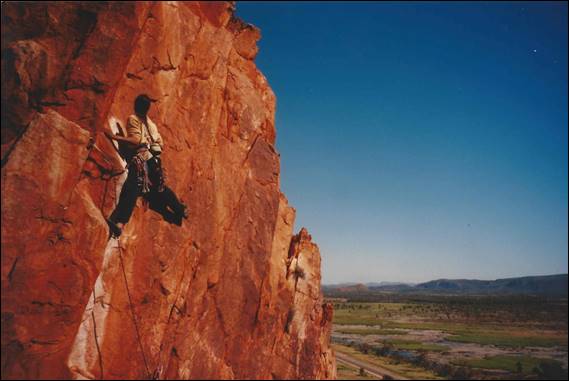
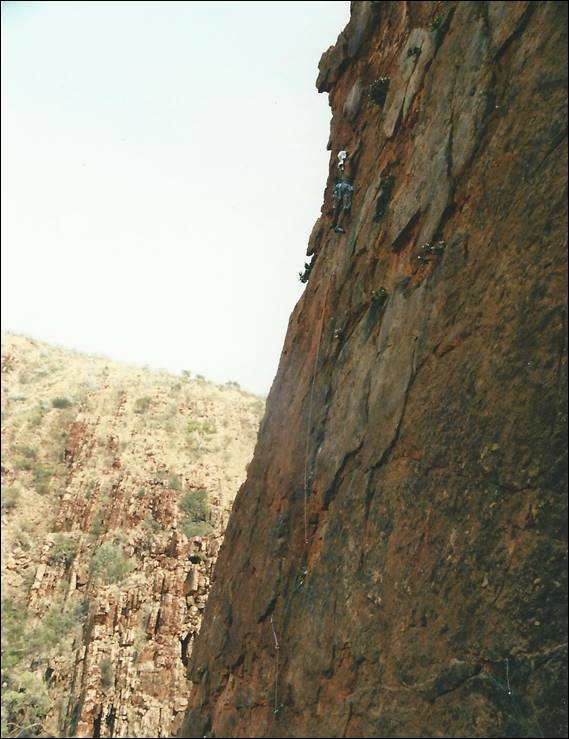
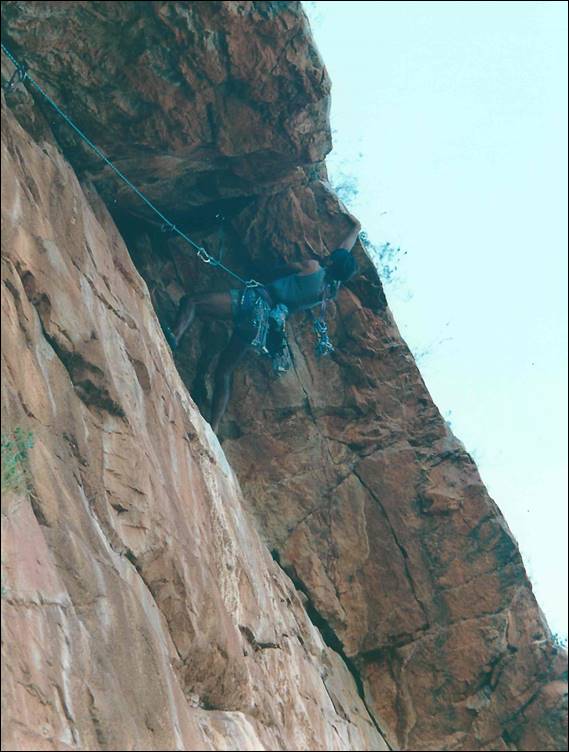
Listed in chronological order, the first nine are in the Red Centre. For more background and images on all of these check Part 11 – Alice Springs – rock, rock and more rock! Dan Ewald was one of a few that took advantage or my unwavering enthusiasm. This route is special being the longest route in the centre, other than an obscure line on the remote Mt Zeil. Unbeknown to us we were not first, finding an aging piton. Despite that it still warrants inclusion, with three divine pitches of equal grade and length. So good I took Lisa up it soon after, and here she is perched on the second belay:
A Most Unlikely Journey 50m 17 (UK HVS/E1 5a), Krish Seewraj, Mark Rewi (alt) Aug 2000
I did many stunning climbs with Mark Rewi. He had more go-go juice than me, so pushed me to test and go beyond my limits. Any route on Mt Gillen, overlooking the town of Alice Springs is worthy. This climb being no exception. A true alpine style ascent with route finding being worked out along the way. It doesn’t always go as you planned, and the rock can quickly turn to choss. But with a level head it will always result in an epic, in a good way. The line provided a wonderful meandering adventure up the red stained Heavytree Quartzite:
Batten Down the Hatches 15m 19 (UK E1/2 5b), Krish Seewraj, Jason Geres Mar 2002
This is the only climb I have not been able to find an image of a climber on. Jason Geres and I made an effort to have midweek climbs, allowing time to explore many areas. Some were obscure and we never returned. Not this small face. High on the range, it diverted us from getting to the Garden Wall. And this was the first route I established on it, following the slanting crack in the middle of the face. Steep, sustained, and with bomber protection. Also the only route I’ve ever found a bat on. We managed to leave in peace, and I can still hear it squeaking:
Where’s the Gardener 25m 18 (UKE1 5a/b), Krish Seewraj, Jason Geres Mar 2002
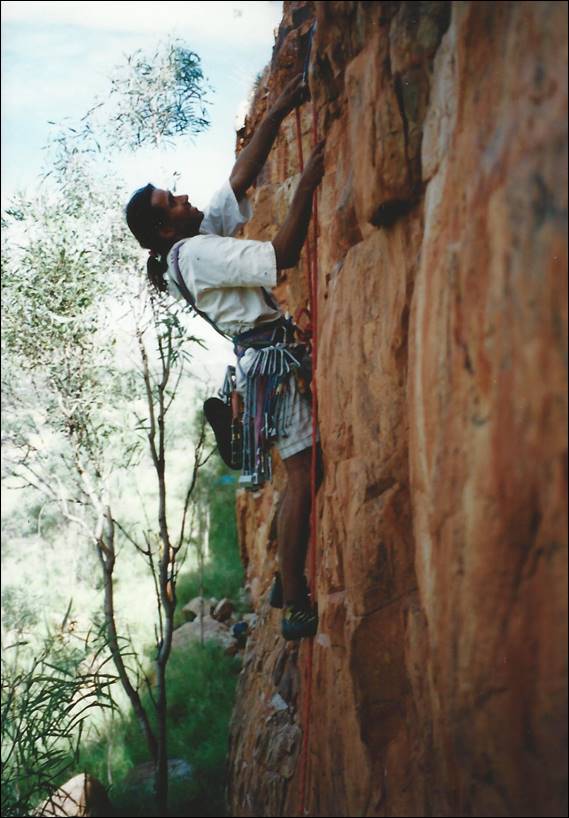
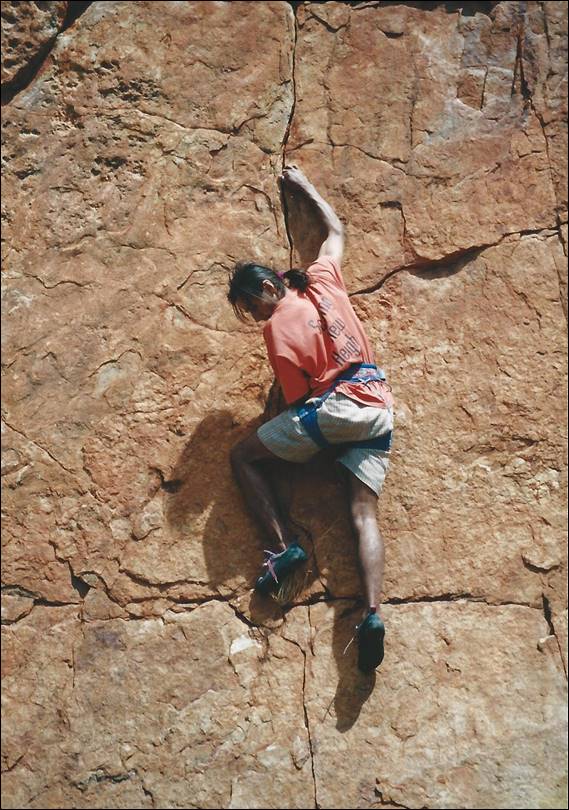
Here is Jason himself, at the Garden Wall just a week after we put the above route up. Never overly keen to lead but always happy to give me a belay. No matter how sketchy things became. Doing ground up first ascents meant you might need to do a bit of cleaning as go. Not only checking for and removing loose rock, but at times clearing naturally formed mini garden beds to enable protection to be placed. This route had the most gardening required of any route I put up, but it was oh so worth it. I hear it is now considered a must do route:
Pear Drop 20m 20 (UK E2 5b/c), Krish Seewraj, Pat Spiers Apr 2002
This image was taken on Jason’s birthday, and is the first ascent of pitch one of Mee-Gwitch 50m 19 (UK E1/2 5b). Just over a week later I returned with Pat Speirs. A master of keeping a calm head in some of the most ridiculous situations. After leading the first pitch, and where the route heads right up a bouldery mess, he looked up and suggested a different path simply saying ‘your lead’. I can’t recall the width, but the roof felt huge. With no way to see the headwall above I climbed out several times before committing. Truly exhilarating, an absolute must do for those seeking a real out there experience:
Avoiding a Greek Wedding 25m 23 (UK E4 6a), Krish Seewraj, Pat Spiers, Jason Geres May 2002
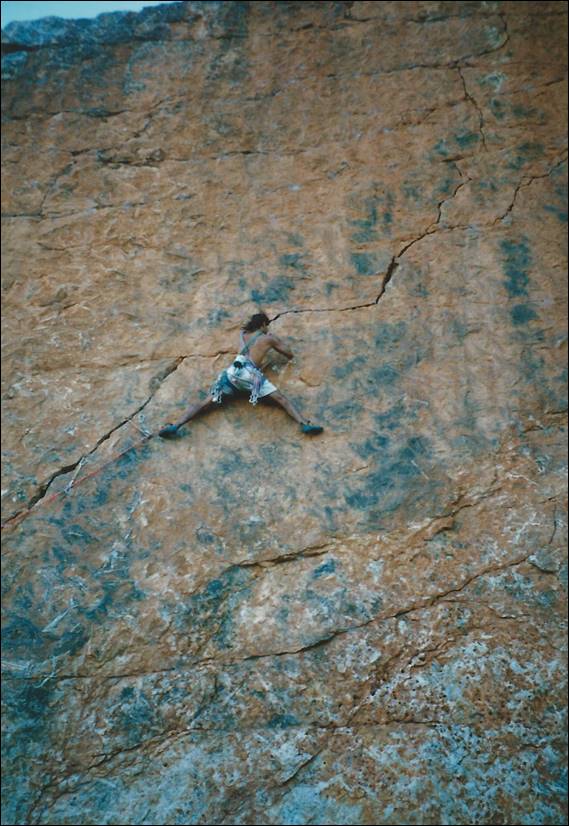
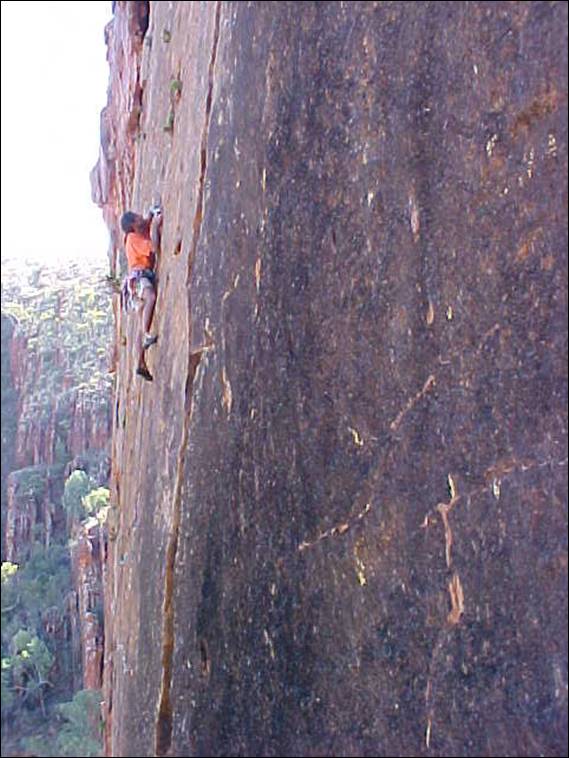
It felt like I put a new route up most weeks. So it is interesting most of the standout lines are from 2002. Granted, thanks to Mark and Pat, it was the year I climbed with more confidence than ever before. Maybe that is why these ascents stick in my mind more than others. This route is by a long way the leader of the pack and not because it’s the hardest. Utterly, utterly absorbing due to its position, steepness, sustained nature, and at times barely sufficient gear. Words will never do justice in explaining my feelings on the route. My most impressive on sight first ascent, without doubt:
Stitching Time 22m 19 (UK E1/2 5b), Krish Seewraj, Dan Ewald Jun 2002
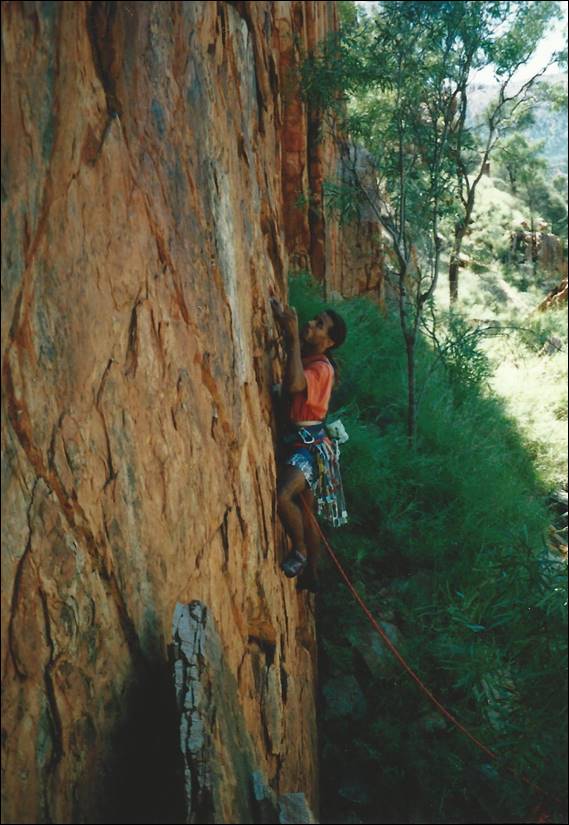
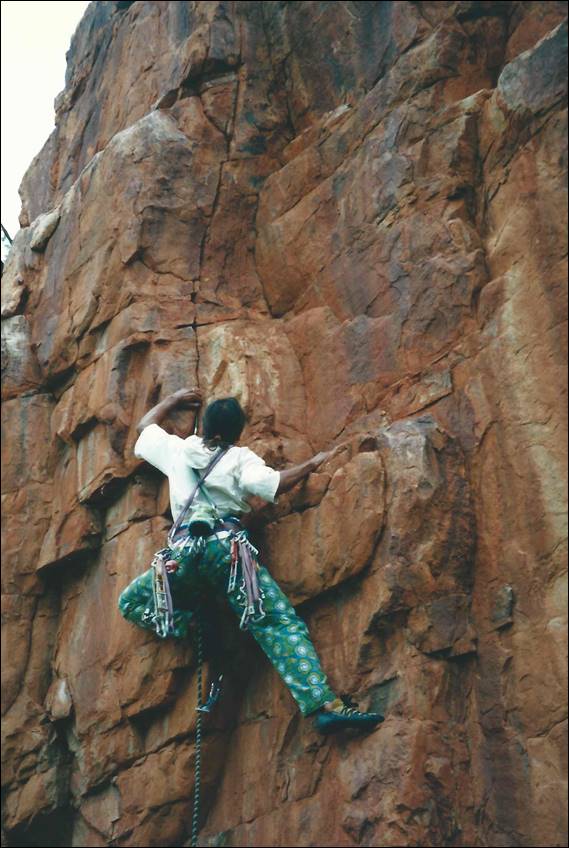
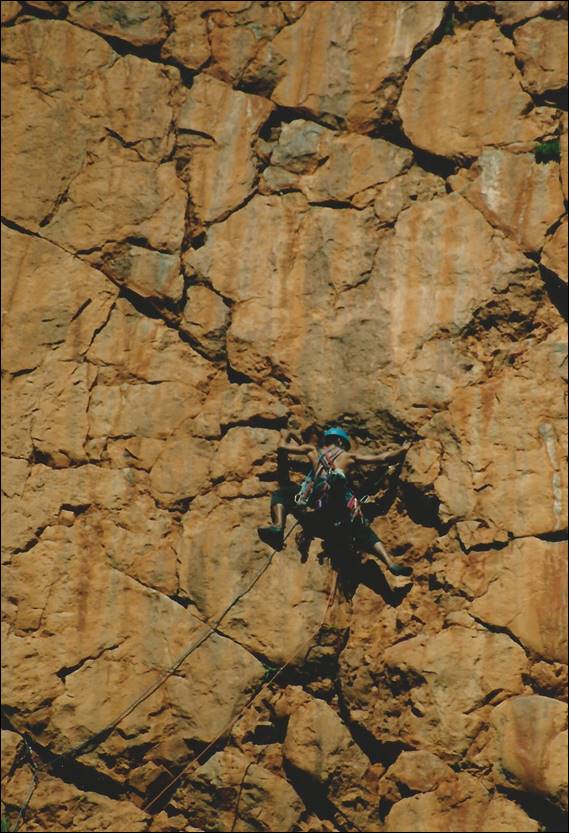
I am usually the one taking photos. But as I climbed this beautifully blocky looking chocolate mudcake wall, three cameras followed my every move. At the start, and despite being careful, a big block came away in my hand. Big enough to do damage, but it fortunately didn’t. The scene was set. Not a word was ushered as I went on. I didn’t even hear the shutters of the old film cameras taking enough pictures to give me a catalogue of every move, some from several angles. From my time in the Alice this comes in at number 2, and is now another sought out route:
This route typifies how Jason would calmly, or was it out of ignorance, accept that if I said something would go, that it would go. I could have been torn between this line and Block Head 25m 19 (UK E1/2 5b) just to its right, but that route had a big, scary, and stubborn block that thwarted the first attempt. While the bottom half of this line may be considered a little scrappy, the top half is sublime. Thin for holds and on gear, delicate and technical, and hugely committing. Plus any route that makes Pat need to consider his next move has to be worthy:
A Matter of Time 14m 17 (UK HVS/E1 5a), Krish Seewraj, Mark Rewi Aug 2002
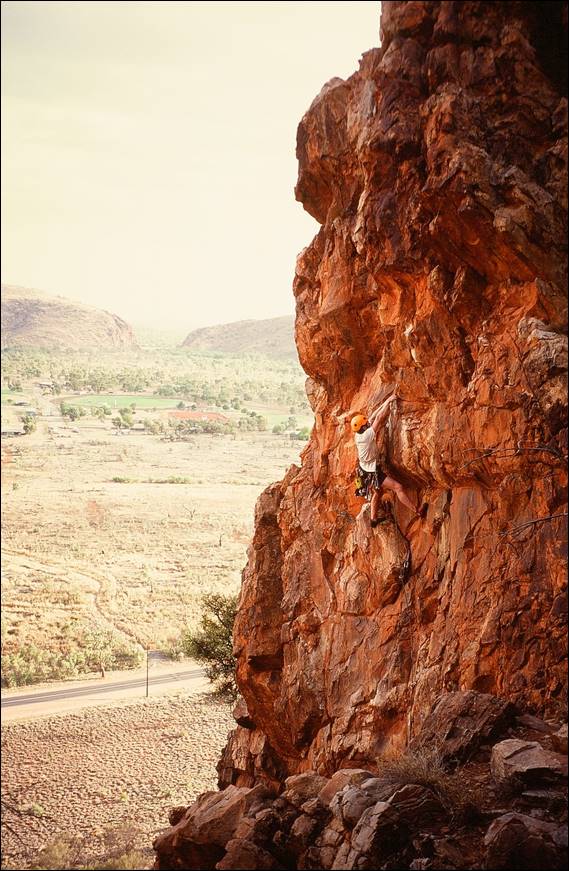
Technically some may say I did not climb this route as a true on sight first ascent. That is because for four years Jock Morse had called dibs on it. He and others had top roped it, so I knew it would go, but he never had the gumption to lead it. That said I had no idea what grade he thought it may be. When I did lead it, which happened to be by accident as I didn’t know exactly where it was, I did so with no prior information. It really was so worthwhile, being the best line on the small scattered crags on Blatherskite Range. Jock missed out:
The Beach 10m 16 (UK HVS 4c/5a), Krish Seewraj, Ryan Doe Dec 2010
Having climbed in the South West of Western Australia with its limited number of areas and routes for nearly twenty years, some ask if I ever get bored. Every time the answer is no. Something is always different. Ryan Doe and I happen to be in the right place at the right time to witness conditions only seen once in two decades. There’s an image of me on a new route to the climbers left in the introductory ramble, with no beach. We bagged a route each on rock normally waves washed, thinking they will never be repeated. Howsie has repeated mine, having to contend with a damp start. Man it felt tough:
Billowing Sails 15m 17 (UK HVS/E1 5a), Krish Seewraj, Craig Johnson Jan 2011
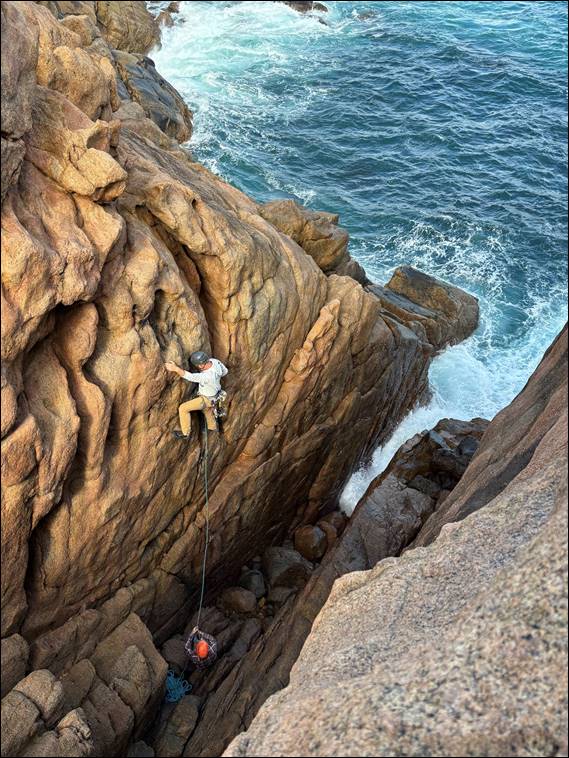
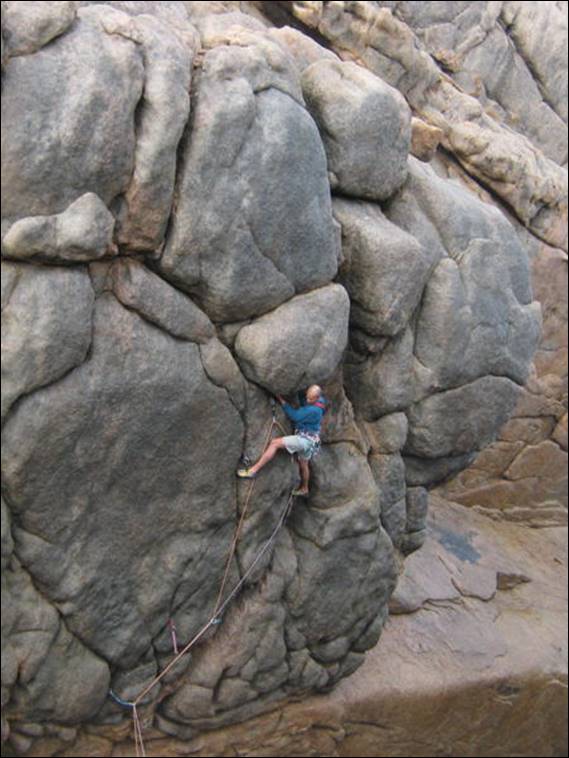
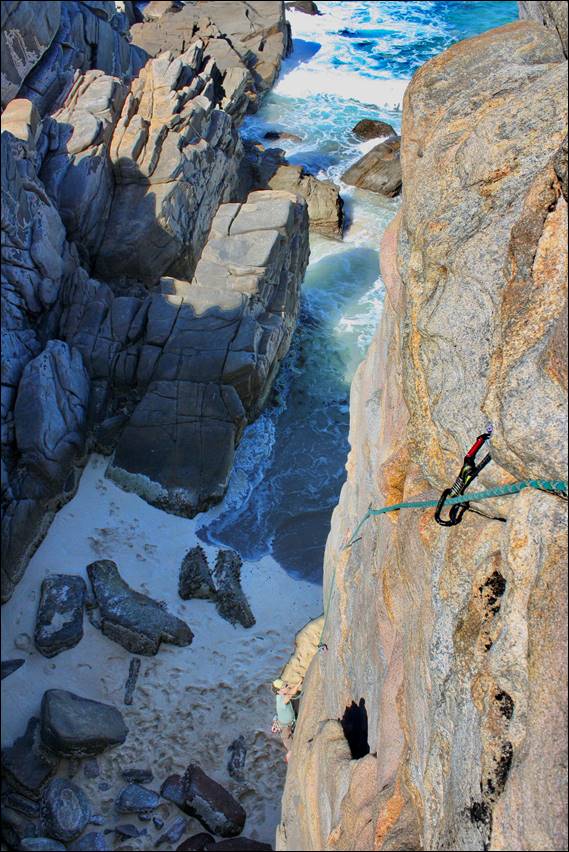
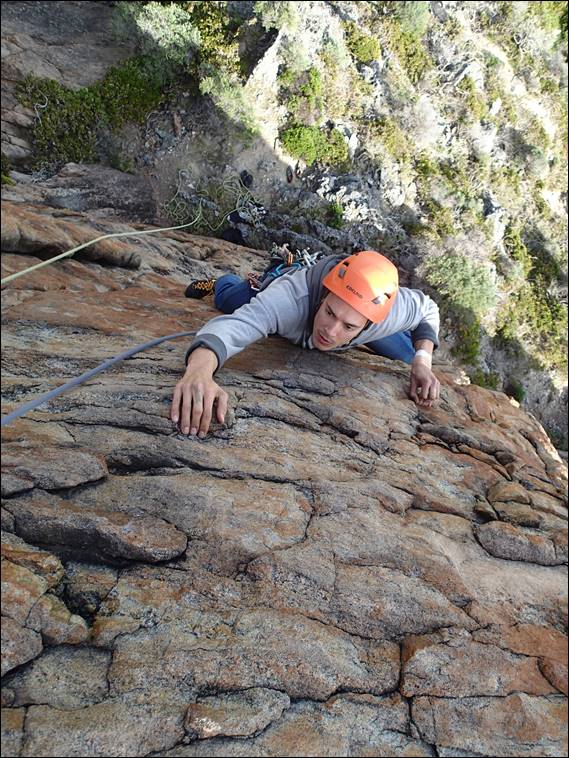
I’ve been lucky to have established a few new areas in the South West. Smith Beach is my favourite. I love every route here even though some scare me, more so with age. It is the place that tested my resolve to maintain an on sight ground up first ascent ethic more than anywhere else. Images I have of Craig Johnson’s facial expressions coming up on second during my ascents, shows the intensity required. Rounded holds, steep lines, flared cracks, and a flaky coastal granite feel. Quite a few people who come here do not return. A traditional style trad climbers place, requiring true grit. This route won out due to its epic position above the ocean:
The Unbolted and The Beautiful 20m 16 (UK HVS 4c/5a), Krish Seewraj, Andrew Malone Mar 2011
I like to stay away from politics, including climbing politics. However, this line dragged me into the great bolting debate. Anyone can bolt, many do, and at times in places and on routes that do not need them. This occurred here, including a retro bolt of a trad line, just before I put this route up. It was created a little out of protest and to make a point, hence the name. What transpired is a wicked route in its own right, a very direct and well balanced climb. Enough gear to be sane if you know how to use trad, after all it is an art form. Although one runout may make some think twice:
The above three lines in the South West were established before I started writing up my adventures. From here on in, if you want a bit more information I’ve linked the related post in the title to each blurb. In England I was accustomed to seasonal climbing bans in areas where seabirds frequented. Being relevant when Howsie spotted a nest on a face we wanted to climb, in which we saw two fledglings being fed. This resulted in us exploring and finding another wall with two hidden gems, one each. Both beautiful clean lines, a reward for respecting nature:
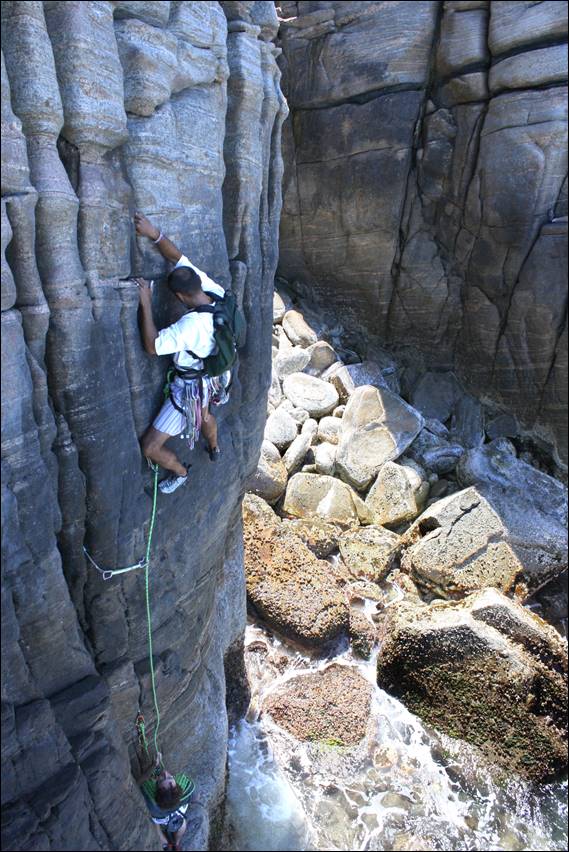
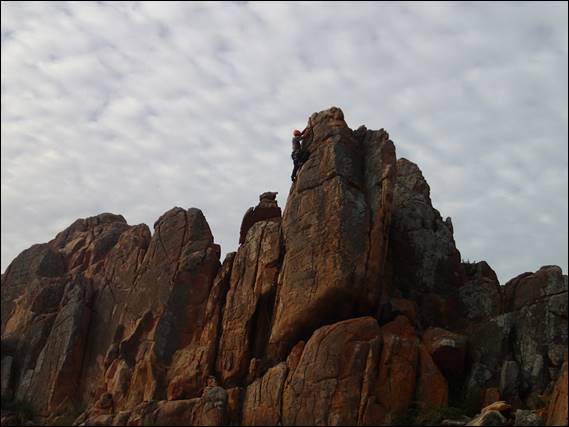
Wilyabrup is visited by many. The vast majority of those who come here flock to the main area, unaware or not interested in a number of great neighbouring outcrops scattered along the coastline. For me these tend to have a more trad feel to them. Not having been climbed as much, care is required. This route typified that need, which is why it appeals to me. Before trusting them I knocked on every possible hold, as did Chris Wiggins when he followed up. Every time I have repeated the climb I have again felt the need to check each hold. Despite the care taken, the last time I led it one popped off sending me flying:
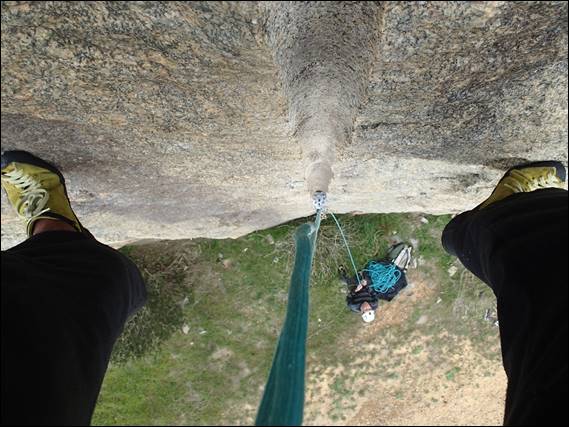
While a trad line, this is on a quarried face. The original routes here were all bolted, then someone put up a trad line that followed a blast hole. I was a bit miffed that I hadn’t consider trying this before. Where the cylindrical blast holes were intact enough, meaning anything more than half, cams fitted perfectly. Now that my eyes had been opened to this possibility, I found two more blast holes that I thought may be OK. This one is my favourite of the two, and it not only sticks in my mind due to the pure novelty factor but also because the climbing is great. If not a little intense:
Of all the other crags neighbouring Willyabrup main cliffs, the Terrace and Northern Blocks see the most action. Kym Hartley loved this area and I helped him put up a few serious additions. In truth I felt the walls were climbed out, until Mario De Decker pointed out a possibility. A link route, but different enough to warrant giving it a go. Mario doesn’t have the same desire for new routes, so encouraged me to go for it. The long traverse was exposed with just air below, getting pumpier and harder. Finishing with a big move into the final corner. I was exhausted, but pleased that both Rongy and Mario were equally stuffed when they followed:
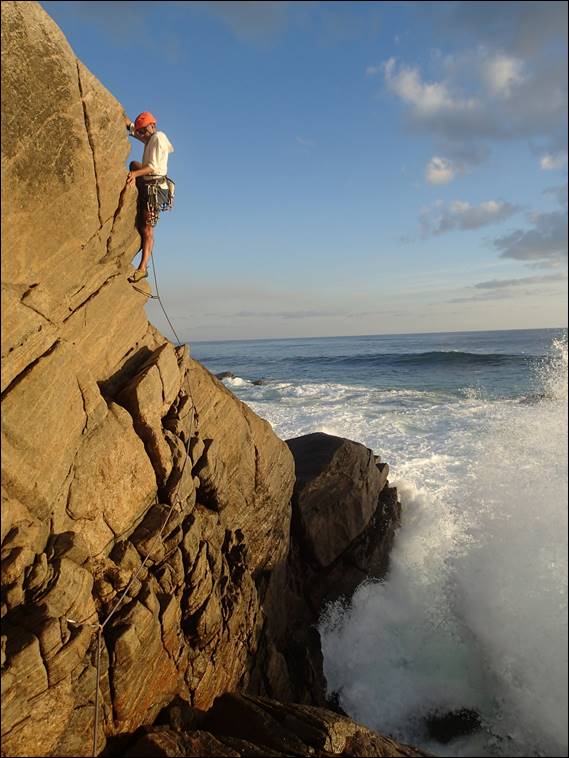
I would have plumped for the Traditionalist 20m 19 (UK E1/2 5b), but Kym felt the rock was too suspect and wanted to top rope the line first, so it wasn’t on sight. But before bagging that route, I jumped on another potential line. Up steep to slightly overhung twin cracks on a boulder, above a wave washed platform. From below Kym and I thought it may be grade 17, but looks can be deceiving. It turned into one of the best climbs I’ve done in terms of having to focus on body position for each and every move. Only just managing to deal with the pump, before topping out:
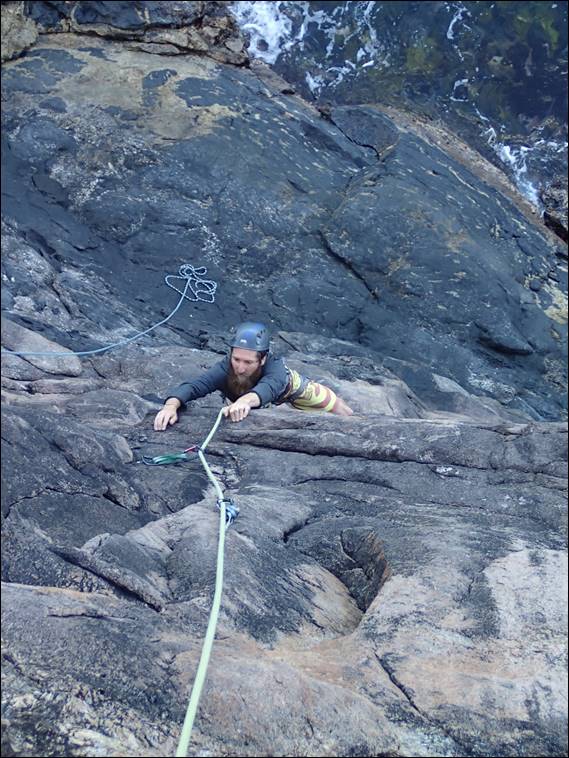
This is the route I relived when I caught up with John, which initiated this post. Kym says that whenever we head out on rock together ‘great things happen’. He’s not wrong, and great things happened during our last catch up. Wicked ground up on sight ascents for Howsie, Kym, and me, it’s infectious! As soon as we walked up to this wall, I saw the line and knew I had to climb it. Howsie and Kym looked a little less certain, and despite it raining when I started I refused to back off. Skies cleared, gear was found, and I slowly worked out each move to reach the next hold. It went on, and on, and on. This successful trad on sight first ascent deserved a huge whoop and holler when I got to the top:

























 Sandbagged