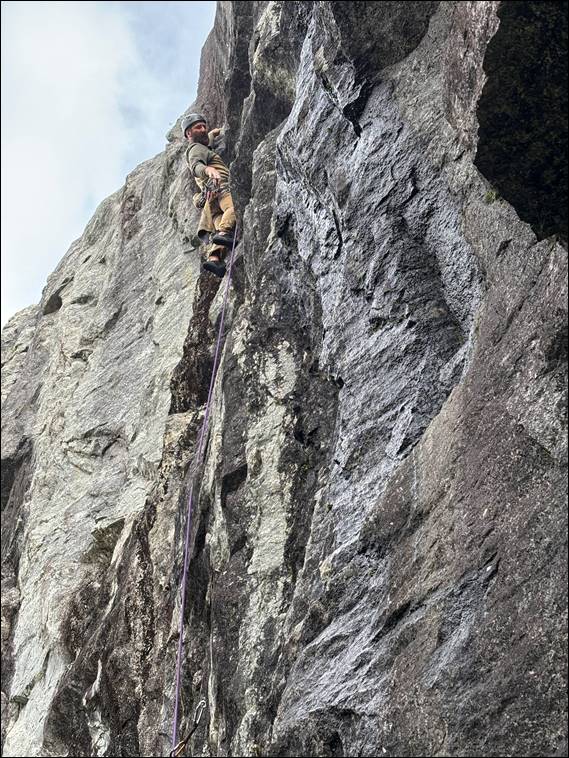
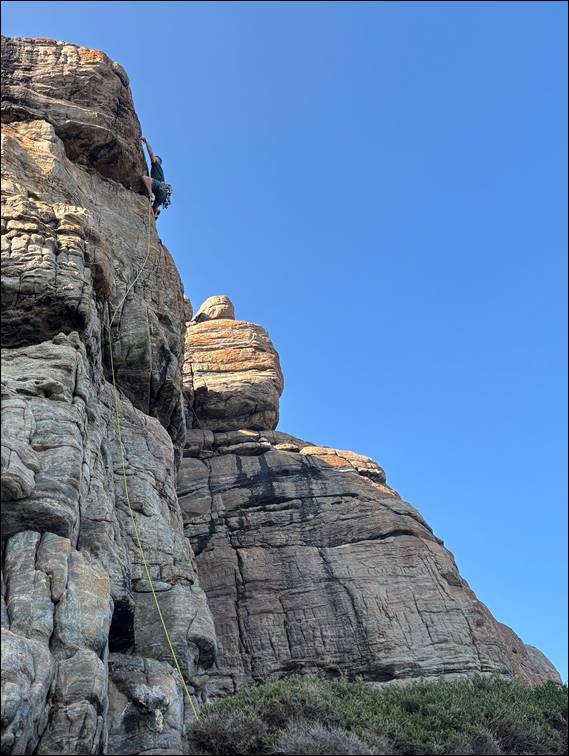
With a wet weekend ahead and being unable to take Friday off, the option of an early morning before work climb was back on the cards. Having the entire day off, Rongy who initiated the discussions decided to use his full day for more leisurely activities. Howsie was still chomping at the bit, and there is only one place to head for such a short fire session that allows us to get back in time for work. Much as we relish the climbing style here, it is a place where the origins of the phrase ‘chomping at the bit’ does not spring to mind:
Originating from a horse grinding its teeth on the metal bit in its mouth, as it eagerly awaits the start a race or ride. Whereas we suddenly feeling less confident, weaker, and not so keen to take the first lead on arrival, and after looking blankly at the sheer looking walls. Not wanting to be the one to be hit with the realisation that we have not been here for too long and that it is hard climbing, as we more clumsily make our way up. I would not go as far as to say that we would make an ass of ourselves, but the phrase is probably closer to the mark:
A phrase with a much older history, having been first used in a book I recall from my days sat in a classroom being forced to learn about English literature. Reading Shakespeare’s ‘A Midsummer Night’s Dream’, which has the first known written use of the term. The actually wording being ‘This is to make an asse of mee, to fright me, if they could’, when fairy Puck magically transforms Nick Bottom’s head into a donkey. Not that I can recalled that level detail from my classroom days, I had to look that up. Today was however different:
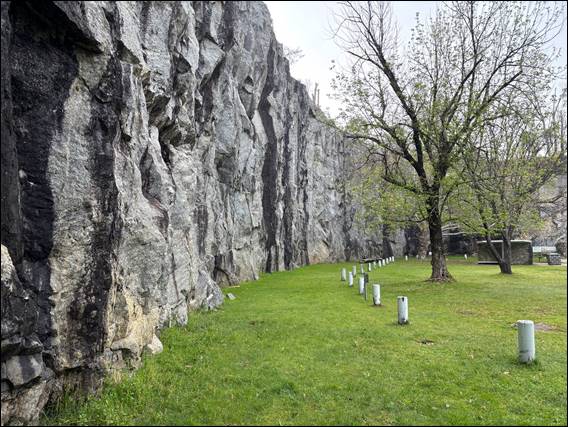
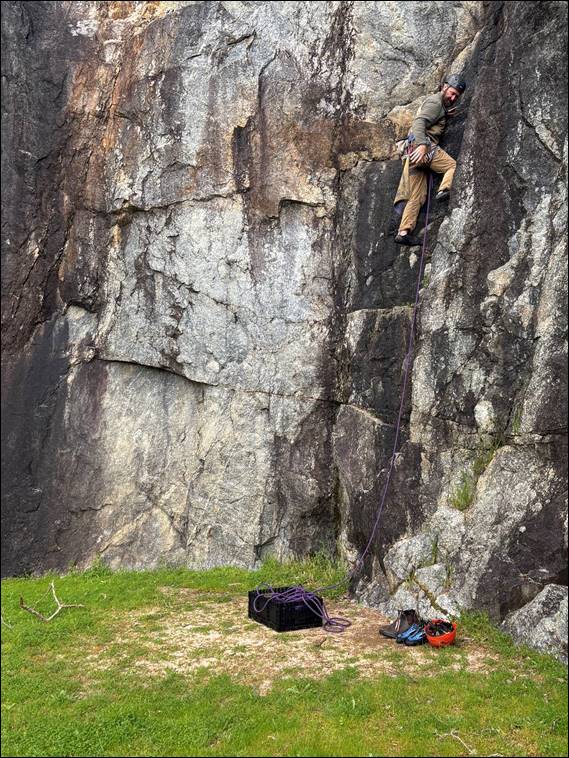
I had come with a plan, already set my mind and prepared myself mentally for what was to come. Being physically prepared is a whole other matter, but we know the routes well enough and with that advantage the mental game can help a lot. Not hanging of small holds too long, if we know a better stance is above. Howsie was surprised when I racked up and placed the crate at the base of the first route. Today with this positive attitude the grass was greener, also in reality as the grass was greener at the base of the wall than I can ever recall:
I won’t say it was easy. But I held on for every route, faring much better than my last trip here over six weeks back when I had to take a rest in the harness when following Rongy on the only route we did on the big walls. This time I had a few nervous moments requiring some loud vocal queues to push through. Not quite the ‘hee-haw’ sounds of a donkey but it may have made other people wonder if we were OK. Maybe they didn’t hear as no one came to check on us, which I am pleased about as it would have been a tad embarrassing:
As the above image shows there was an event occurring, so there were a lot of people milling about. Fortunately they stayed at the top carpark. Leaving us alone in the quarry where we had a great time racking up six fine routes before our attention was diverted elsewhere. I’ve since read it was the AusCycling Enduro National and Oceania Championships, which started a few days back and goes till Sunday. In a way Howsie and I were lucky the road to the quarry wasn’t closed, which did occur the last time there was a national mounting biking event here:
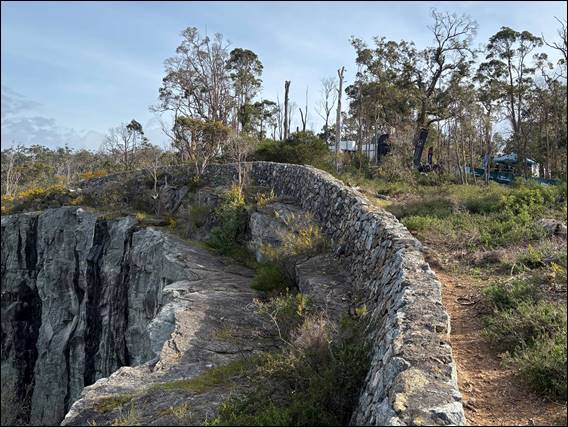
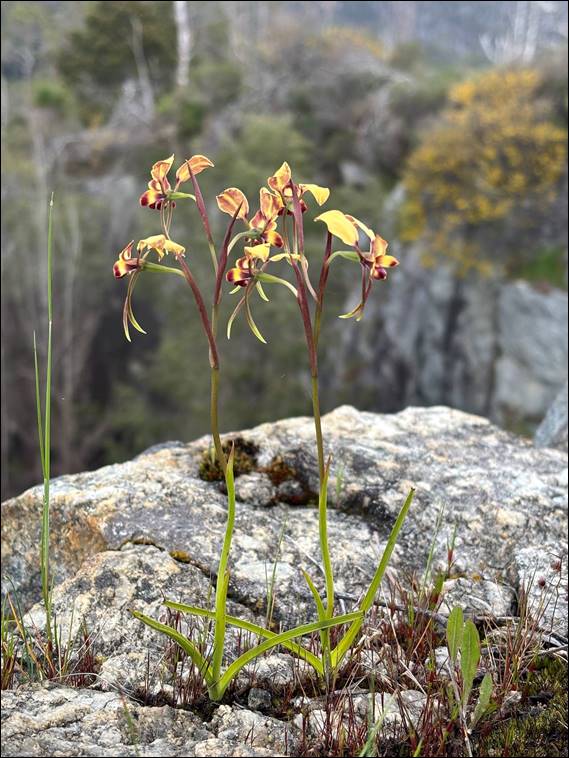
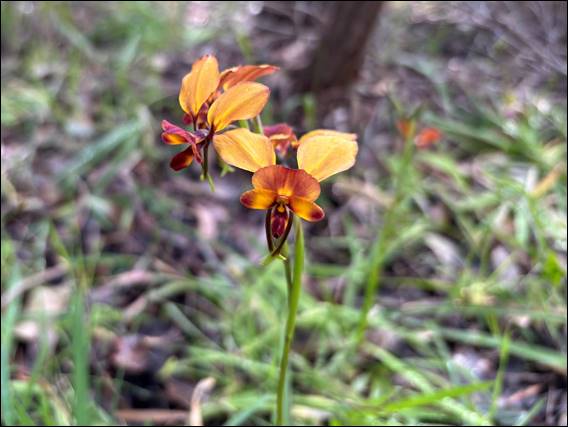
We purposely topped out on our last route, rather than lowering off the anchors to get back down. This allowed us to wander along the top, where there was still plenty of water lying about so late into spring. The narrow strip of granite with its thin veneer of mossy soil amazes me with the variety of orchids we see. Above we came across the Small-flowered Donkey Orchid (Diuris porrifolia), the leaves giving it away. The name porrifolia comes from Latin words porrum and folium meaning ‘a leek’ and ‘leaf’ referring to the shape of the leaves:
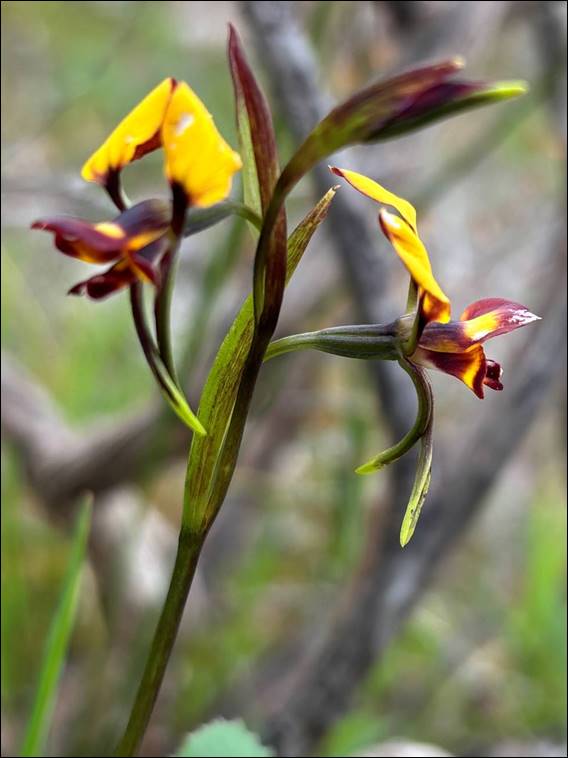
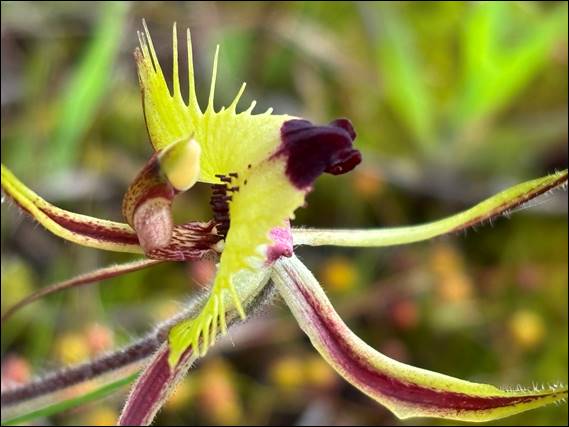
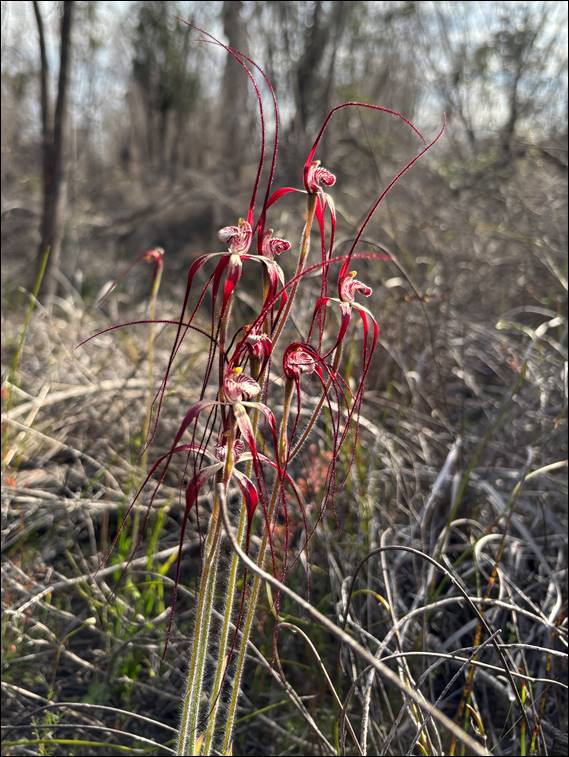
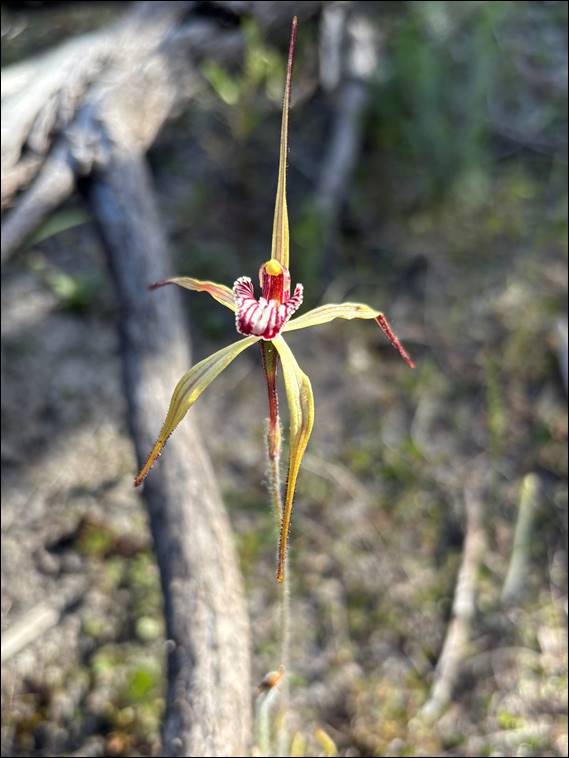
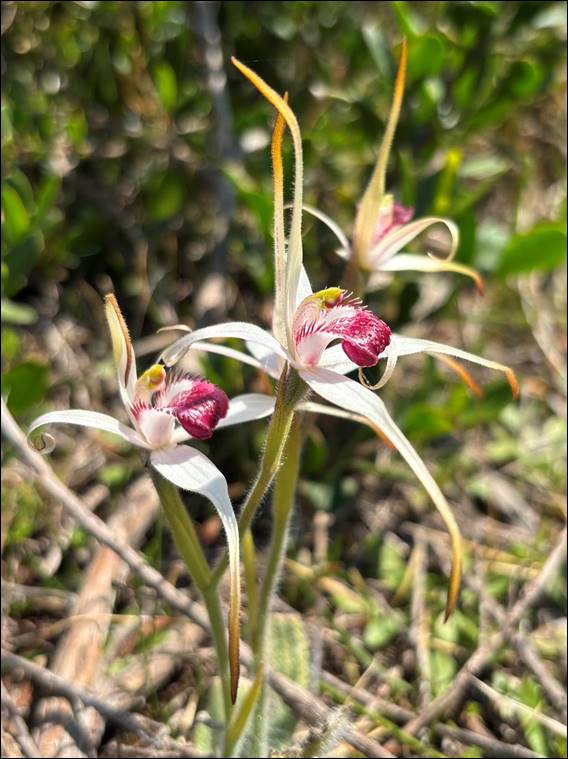
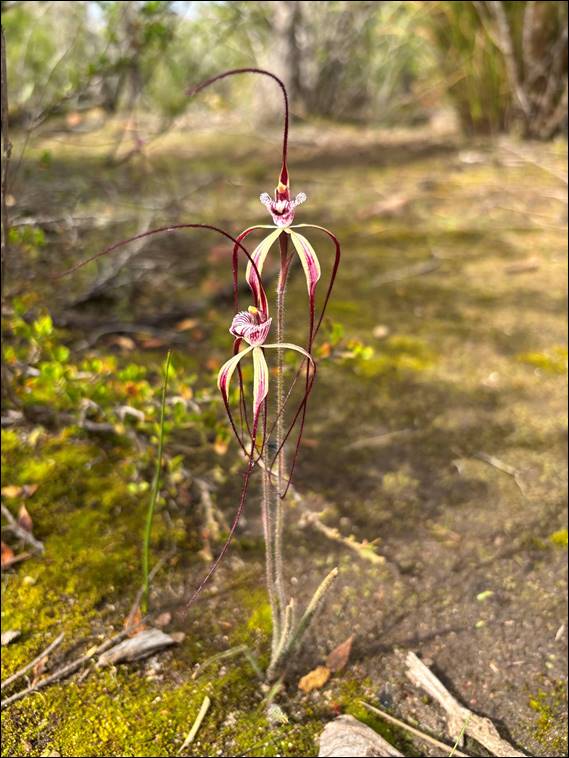
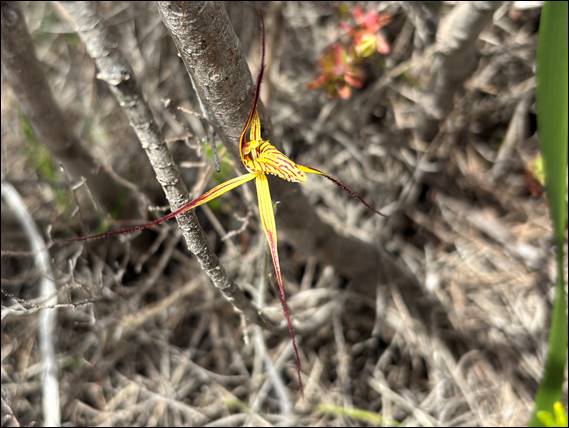
We saw these a year ago, almost to the day https://sandbagged.blog/2024/10/11/packing-it-in/. You could say I made an ass of myself by mistaking a donkey for a bee. Back then I incorrectly suggested they may have been a Dark Bee Orchid (Diuris insignis). This was due to the more ‘tunnel’ like appearance of the shape when you look at them side on, as above. I have decided not to jump at shadows this time, and will stick to identifying the below as Forest Mantis Orchid (Caladenia attingens). Despite what seems an unusually wide labellum:
Over the last few weeks I’ve been sent images by Howsie and work Josh of their finds at more southerly places. Coincidently they happen to have been from two of the places Lisa and I have visited this year, during our short weekend getaways. The images were of course of orchids, and species that are not found in our patch. One location is a potential day trip, but it is at a distance that requires more commitment. Instead I have committed to Lisa and I endeavouring to aligning our southerly getaway destinations with the orchid season:
While this means they will have to wait till next year, there is fortunately still more to be found in our area. I almost missed out on another opportunity this time a local one, which came up through work. However, in reaching out the community member who had set up the original opportunity offered to take me for a look through a bit of bush that they have spent decades looking after. Seeing it was work initiated I reached out to likeminded work colleagues, and the group grew a bit. It certainly was not like my usual solitude type wander:
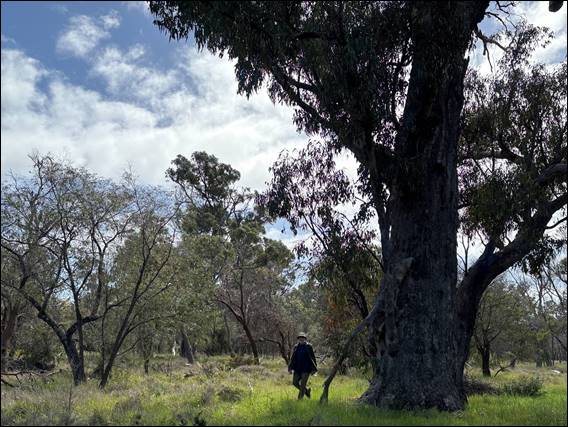
It was regardless of the numbers still very worthwhile and a place I may revisit by myself one day. Especially seeing the Minninup Tuart Woodland is a mere ten minute drive from home. Unlike the Tuart Woodland that is right on our doorstep, this one is a bit further north and separated by the Capel River and farmland. What struck me was that unlike the rest of the Tuart Forest National Park, this area has somehow managed to avoid being overrun by the dreaded, highly invasive, and toxic Arum lily (Zantedeschia aethiopica):
This was more of a guided tour, but it still comes down to keeping a sharp eye out and knowing what to look for. Quite a few of the usual species were out, but the stars were most definitely the spiders. It was clear that the community member knew this area and much of the flora really well. They have however expanded their knowledge across all flora, and the Orchids family was not their strong point. I pointed out a couple of unusual aspects of some of the finds but mostly took images to do my own investigation later:
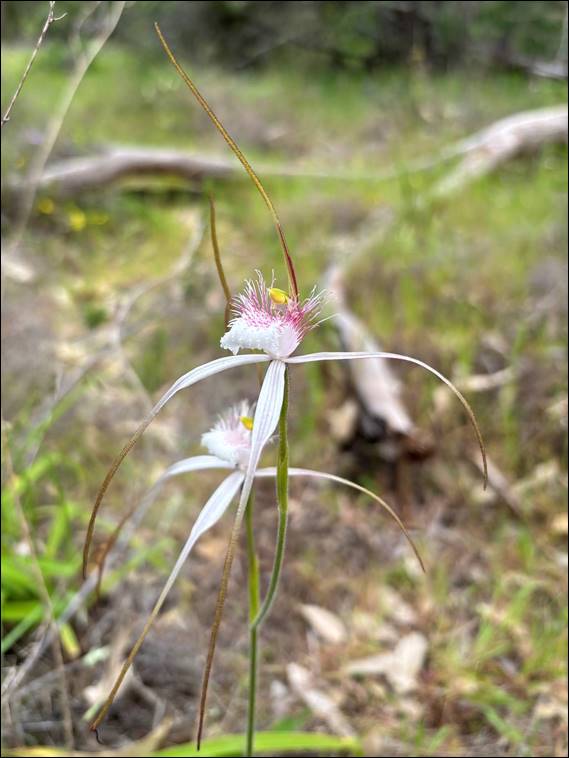
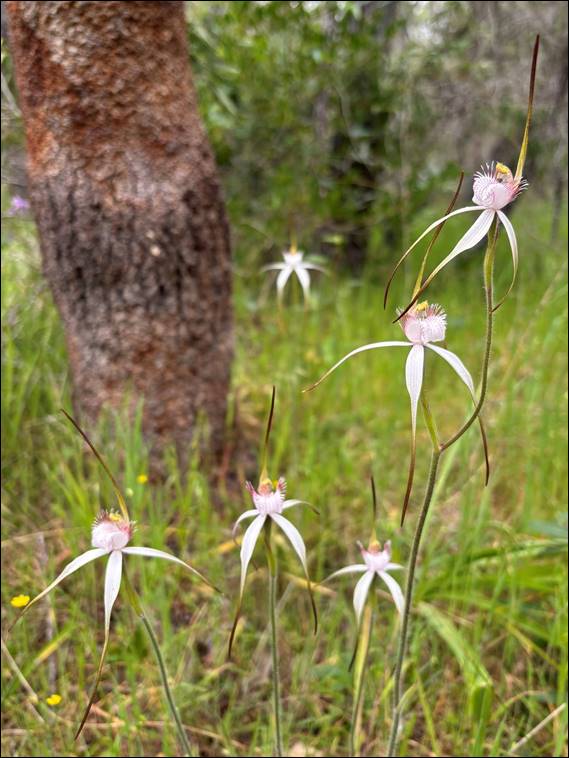
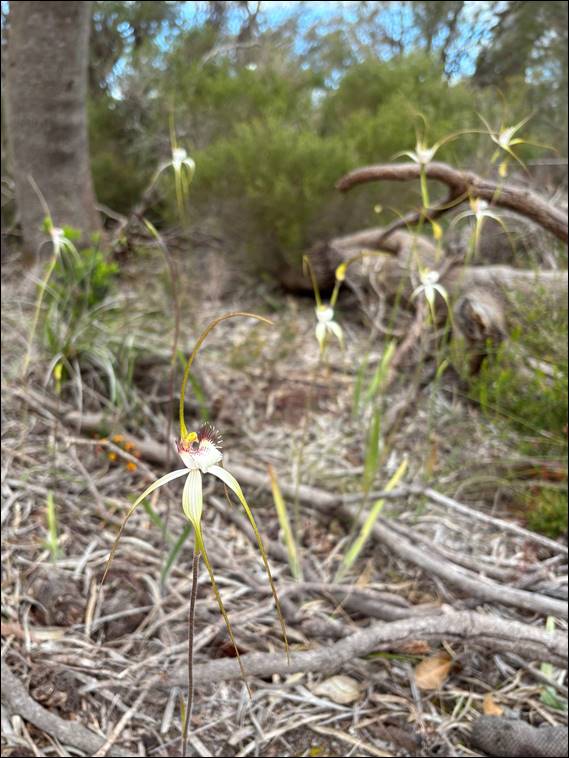
This lead me down a rabbit hole, to the point that I decided to call in the experts. I have not been in touch with Noel Hoffman for a year, one of the co-authors of one of the main Orchids books for western Australia. He replied in as lovely and personable a manner as ever, and I was pleased when he confirmed my thinking. So going all the way back to the beginning we start with the Sandplain White Spider Orchid (Caladenia speciosa), it was the next image however that started to make me doubt despite being advised it was the same species:
The fringes are straighter, shorter, and generally neater, and the petals shorter in overall length and with darker, slightly heavier clubbing. This led me to suggest it may be the Coastal White Spider Orchid (Caladenia longicauda subsp. calcigena). However, while the habitat is correct it seemed to be out of recorded range. Records suggest it is found from Bunbury northwards but the various public databases show no recorded observations south of Lake Clifton, which is seventy kilometre to the north as the crow flies:
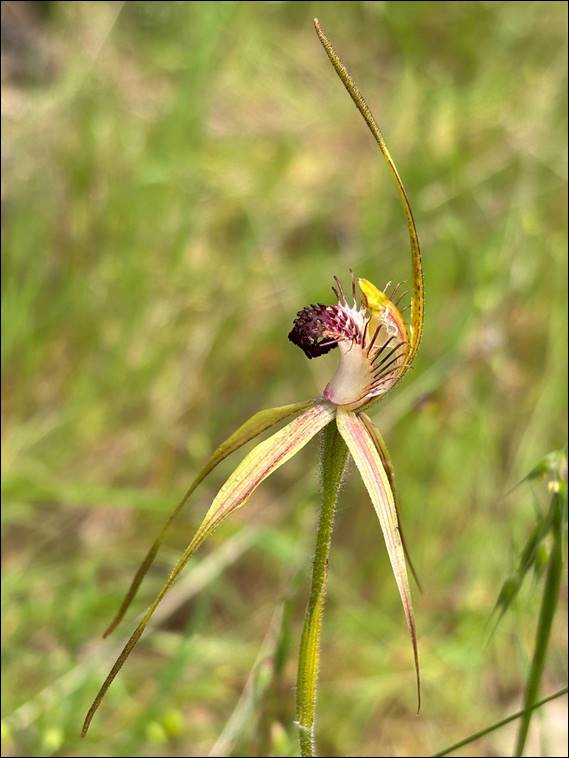
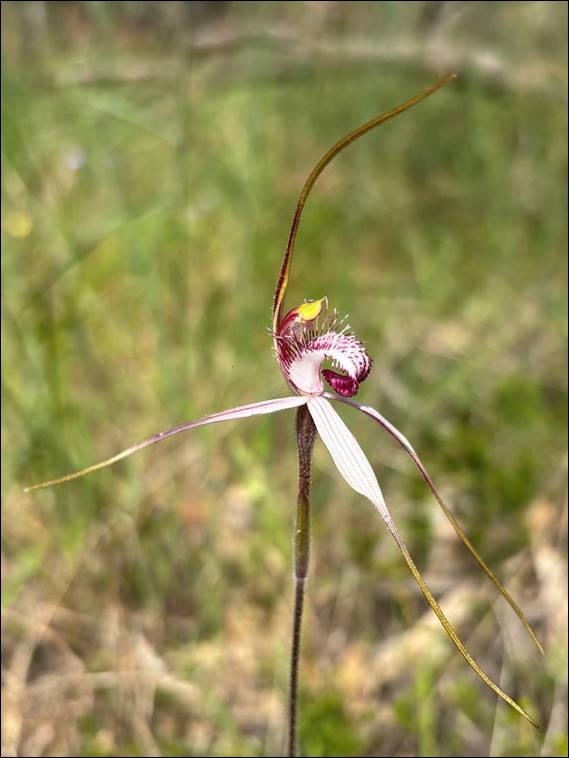
Noel confirmed my identification, although also admitting that the white spiders are a tricky bunch. He also confirmed the next image as being a Tuart Spider Orchid (Caladenia georgei), not a Karri Spider Orchid (Caladenia brownii) as had been suggested by our guide. The calli extending over the red tip of the labellum being the giveaway feature to distinguish between them. And even better the following image is a cross between the Coastal White and Tuart Spider Orchid, a commonly found hybrid two hundred kilometre to the north at Joondalup:
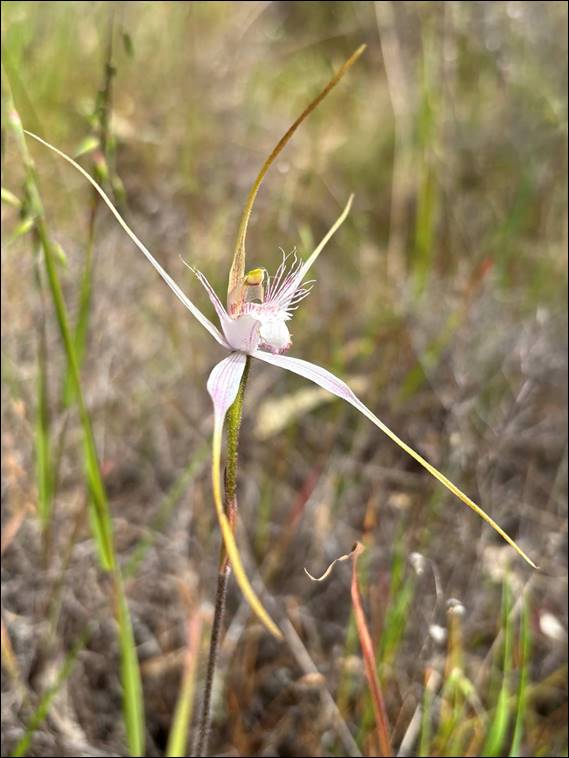
The last spider has both Noel and I stumped, it is clearing a hybrid of a Sandplain White Spider Orchid but with which other species? The way the petals and sepals are being held and the distinct pale clubbing has not helped us one bit, so it remains a mystery. The next image is of someone else who joined the trip being Brendan who used to work with us, and is now gainfully retired. It was lovely to catch up with him and his partner Sharon, and I get the feeling that he will enjoy seeing his mug in this post:
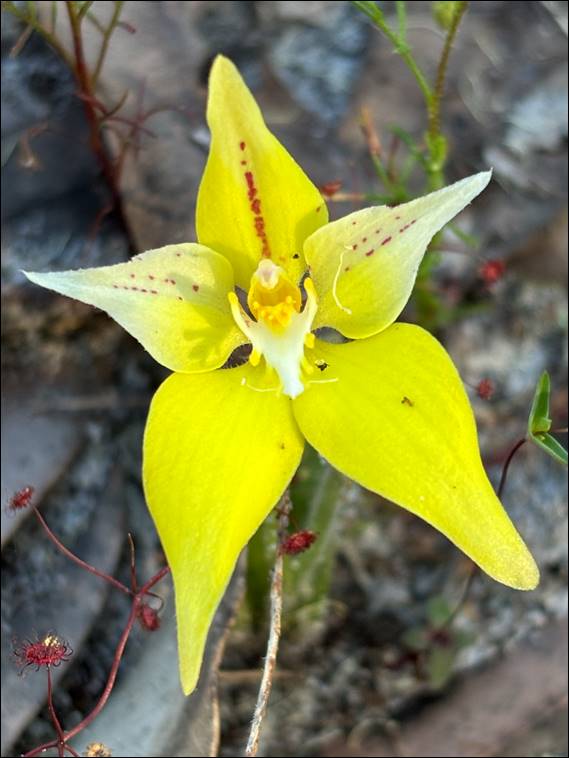
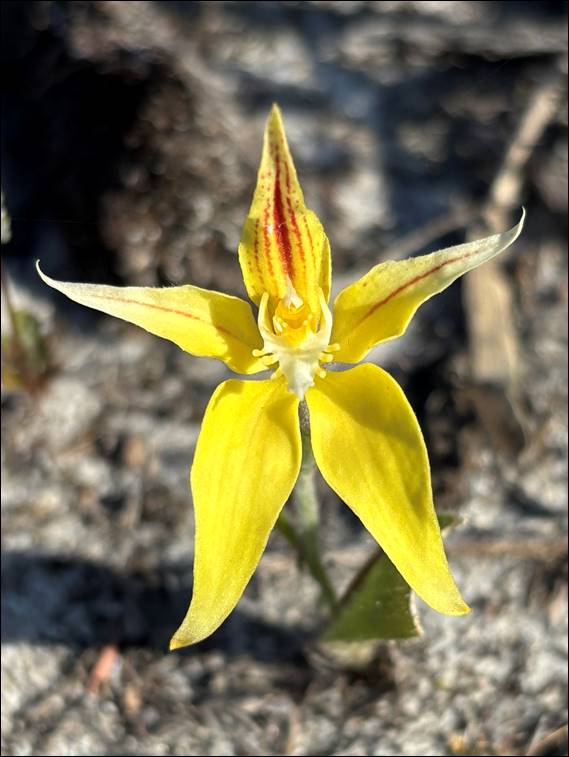
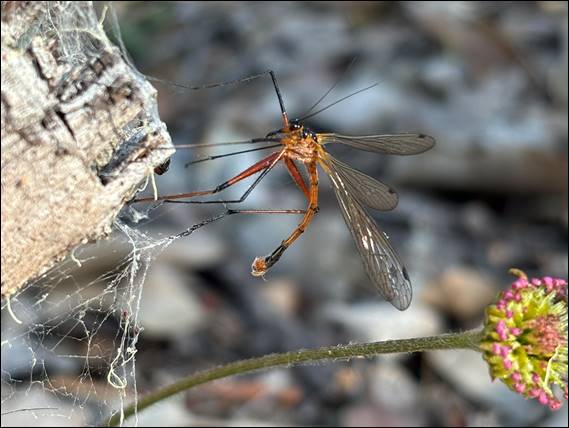
The last three images are from the Capel Nature Reserve, a short trip on Thursday and the only midweek trip I managed. The Karri Cowslip Orchid (Caladenia flava subsp. sylvestris) flowers later than the Cowslip Orchid (Caladenia flava), is generally taller and has pale tipped petals and sepals. With narrower petals and sepals the second one may be a hybrid with a Pink Fairy Orchid (Caladenia latifolia), which is a common find. For my last image I found a predator becoming the prey, being a Common Western Scorpionfly (Harpobittacus similis):
After an amazing morning at Moses Rocks I intended to go for a wander to look for some orchids. Not sure that I could top the mornings sights, I went anyway thinking the afternoons time in nature would be stunning in its own way. In part urged to go being keen to head to a place I was told about by an elderly couple some years back, orchid enthusiasts I had bumped into in another patch of bush. There is very little information about the Yelverton National Park. Managed by the state government even their website doesn’t give much away:
It has a single track, which is part of a near ten kilometre one way walk trail that gets good reviews. Other than that this seven square kilometres of bush has no other facilities. In 2004 a timber reserve was put aside to create the national park, there is no detail as to why this occurred. However, the current website describes the park as a ‘native forest containing a particularly diverse range of vegetation types and a high concentration of declared rare and priority flora species’. My hopes were raised as I parked up and wander up the track:
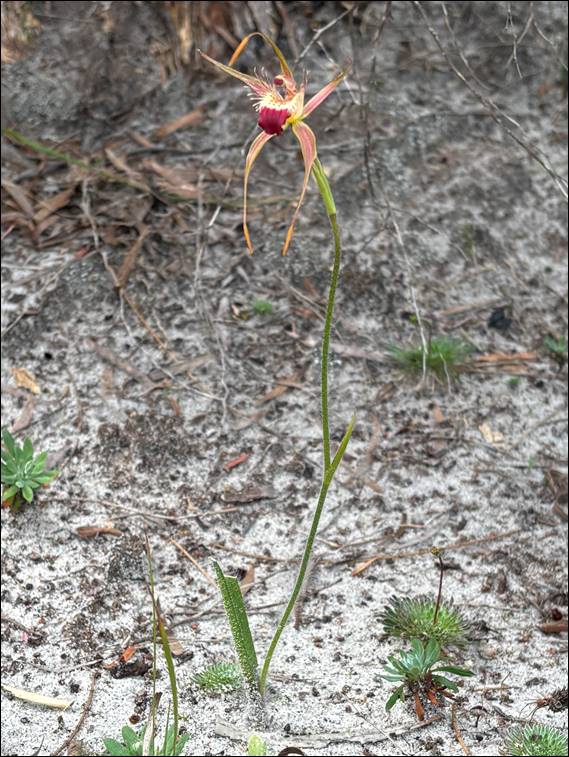
Not far along the track, which also gets vehicle traffic, I spotted a Rusty Spider Orchid (Caladenia ferruginea) and on finding this I went off track to wander through the bush proper. The first find was not the one above, as that was a more bedraggled specimen unlike the one I have included that is looking in great shape. A relatively commonly found spider orchid, found across much of the South West both coastal and inland. I saw a few of these dotted about, mostly along the side of the track when I eventually re-joined it on my return:
The condition of the park was great, being mostly weed free and having a wide range of plants. What I liked even more was that on the insect front there were no mosquitoes. This was noticeable, as when looking for orchids and moving slowly these pesky insects can be very irritating. Even more so when you stop to take images. It is the first patch of bush I have wandered through this season where I have not been hounded by them. There is a creekline in the lower areas that would have had water in it. Even close to that I didn’t notice any:
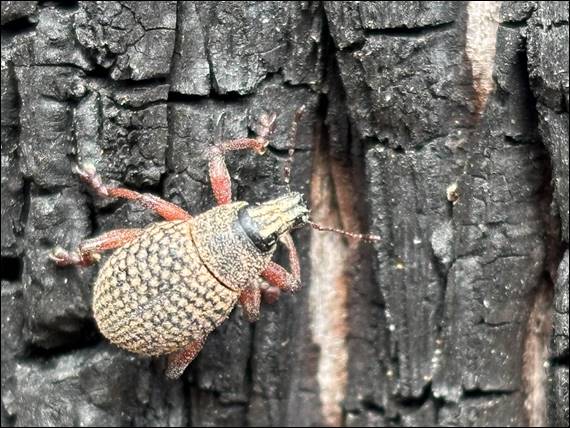
It could be the healthy biodiversity, with natural predators keeping them at bay. Or possibly some of the plants species contain essential oils that repel them but I am not skilled up enough to identify those. Regardless it made a very pleasant change. Sticking with insects for just a moment, because like the park I found it in there seems to be a lack of information about the species. The Redlegged Weevil (Catasarcus impressipennis) is found across southern Western Australia although there not a huge amount of recorded observations:
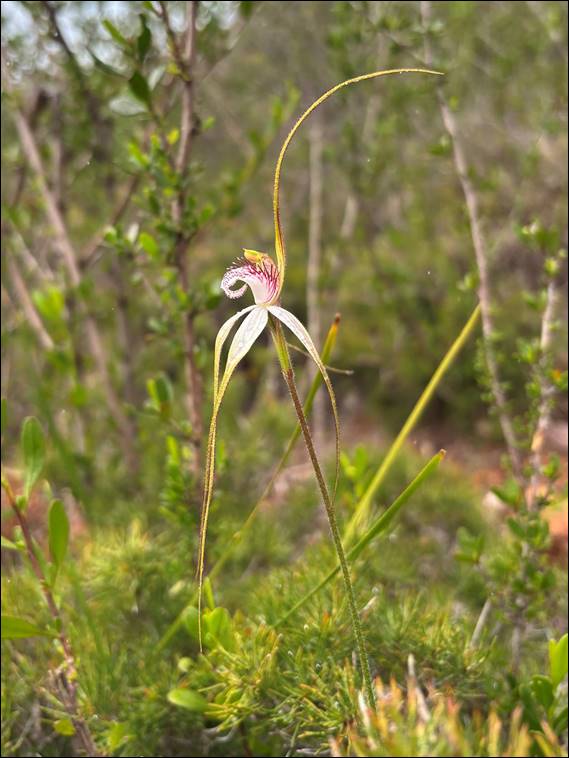
Now back to orchids, notable finds included just two King-in-his-carriage (Drakaea glyptodon) and a single Silky Blue Orchid (Caladenia sericea). It seems amazing that there could be so few specimens of a single species, yet germination still occurs successfully for them to come out the next year. Granted I would not have seen all of them, but with their stand out colour if there had been more on my path I would have spotted Silky Blue Orchids. Then there was a single Carbunup King Spider Orchid (Caladenia procera), above:
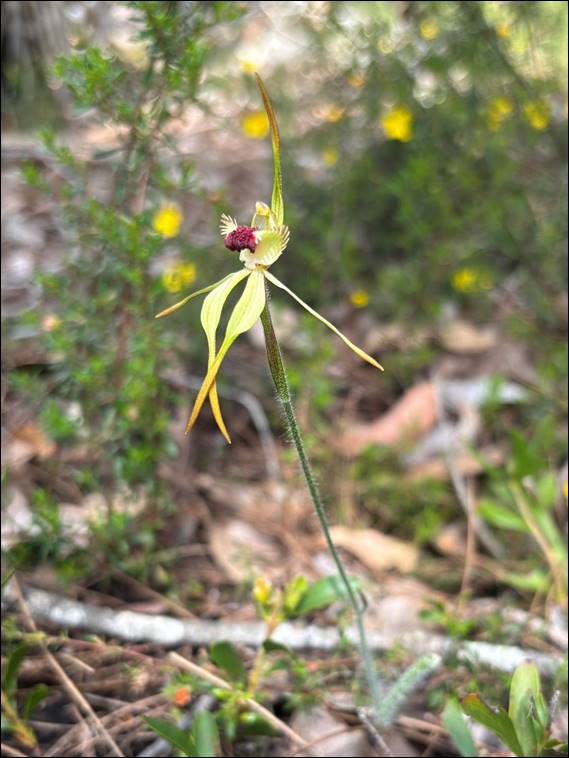
Despite the meaning of the species name procera, meaning tall, slender, or long in Latin, this specimen, unlike the only other one I have previously seen, wasn’t very high. It hit the bottom of the scale of the plants possible 350-900mm height range. Being only my second sighting made it a very good find of yet another nationally recognised critically endangered species. We sadly seem to have too many species that are at risk. But not the above single Forest Mantis Orchid (Caladenia attingens subsp. attingens) that I found, they are common:
As is the above Rattle Beak Orchid (Lyperanthus serratus), which I found on my way home as I popped into the Ambergate Reserve. Where there was even less on display, and hardly any orchid spikes waiting to flower. Hopefully as we roll into October there may be more late comers. The below Wood Hedgehog (Hydnum repandum) however made the pit stop extremely worthwhile, even though it is looking a bit old and decrepit. Being one of the toothed fungi species, the spine-like projections that produce the spores are still visible:
I can’t say that I have wondered before, but thinking how to start this post I thought I’d dig into where the term flotsam and jetsam came from. A term so often used to described the odds and sods that we find lying along the coast, and considered to generally refer to rubbish. There is however more to the term, which originated in the seventeenth century. Each has a specific definition under maritime law. Flotsam is matter that has been unintentionally lost at sea, whereas jetsam is matter that has been intentionally thrown overboard:
Jetsam does not refer to waste thrown overboard but when they had to lighten the load due to the vessel being in distress. The two phrases come from Anglo-French words of floteson and jettison. Digging deeper, there is a third maritime term being lagan. From another old French word of lagand, which means lying. Lagan are goods cast from a vessel in peril, which want to be retrieved later. A buoy or float is attached to them so when they are finally found ownership can be proven. For beachcombers this meant that finders did not mean keepers:
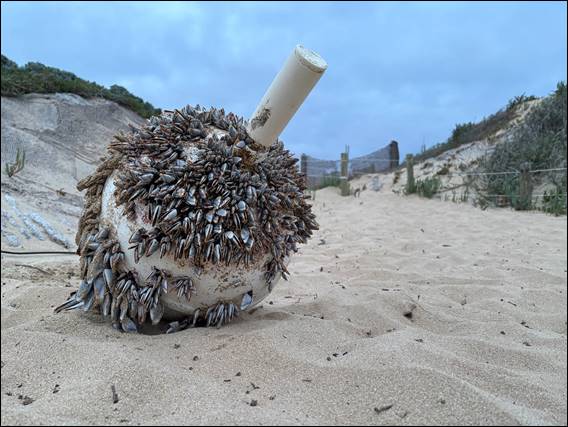
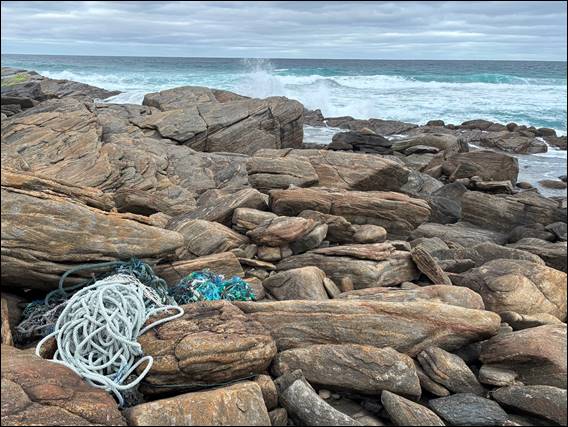
Finders keepers being an even older term traced back to the Romans. I will however refrain from talking about that this time, as I seem to be drifting off topic. My reason for starting in this direction was that I felt a nautical theme was appropriate. Josh was keen to head to Moses Rocks, and walking in we found bits of flotsam and likely lagan. The rope above no doubt accidentally lost but the buoy had a probe attached, suggesting it may have been some type of monitoring station. There were also lots of Goose Barnacle (Lepas anserifera) on it:
The origin of the name of these barnacles is quite interesting, a topic for another time I feel. I will however explain that barnacles have several earlier free-swimming life stages, which results in them being able to find a home on just about anything floating in the ocean, such as floatsam, jetsam, lagan, ocean going vessels, and even sea creatures, as well as static features. Once attached a long rubbery stalk keeps a tight hold. Despite choosing Moses Rocks, Josh was probably wishing he had the barnacles ability to cling onto smooth surfaces:
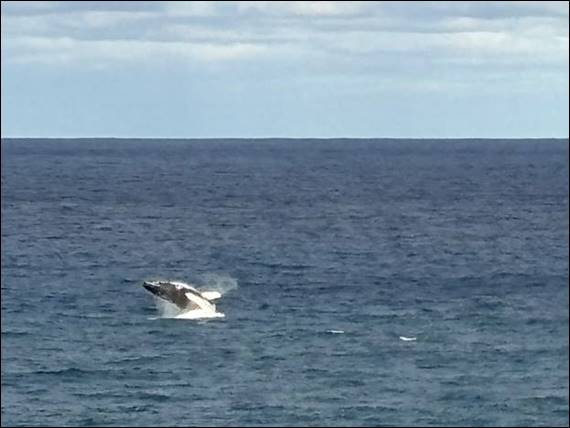
But before we get to the climbing, there is one more watery spectacle that we cannot go past. Four climbs in, Josh tells me to look out to sea and all I saw was a splash. Then for a solid ten minutes or more we both stared into the watery abyss intently. A mother and calf Humpback Whale (Megaptera novaeangliae) provided us with a wonderful show. Breaching countless times as they slowly moved south. This is the best known species for breaching, but not the only one. There are many reasons for breaching, one to remove barnacles from their skin:
Other reasons include removing parasites, which I say as Goose Barnacles are not parasites but other barnacles can be. They can also undertake this huge energy consuming activity for communication, showing prowess, and attracting a mate. This display was however likely the mother pushing her calf into the acrobatics to build muscle strength and skin health. The action also increases myoglobin levels in their muscles, which provides it with stamina. Again something Josh, as the morning wore on, may have wished he could have had more of:
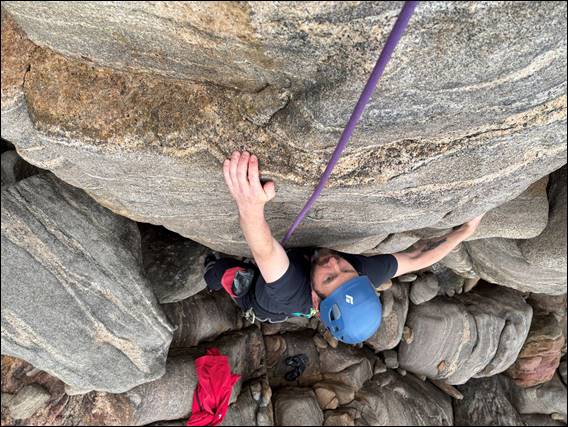
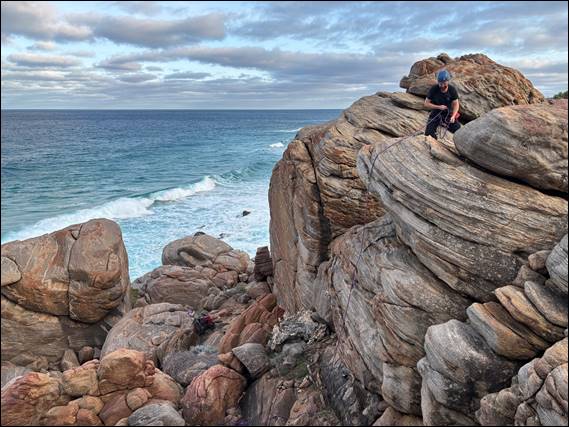
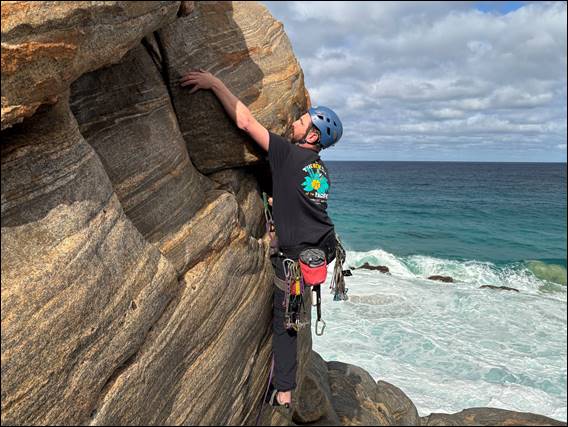
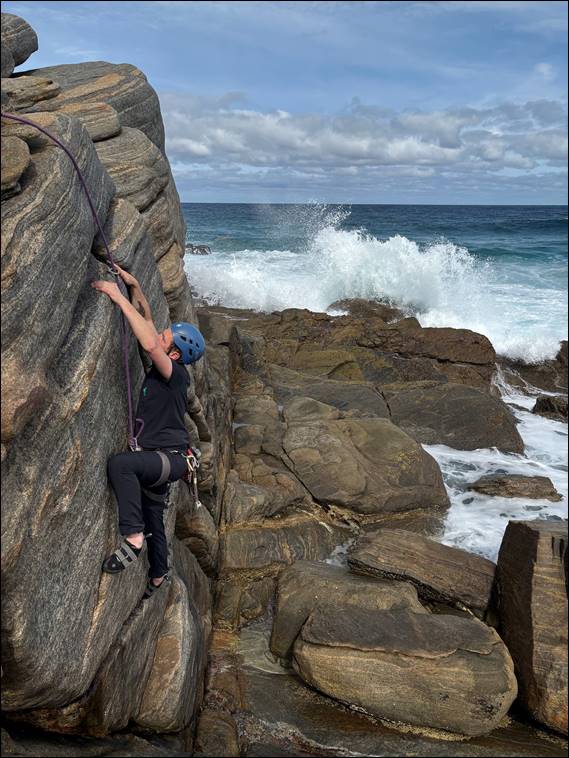
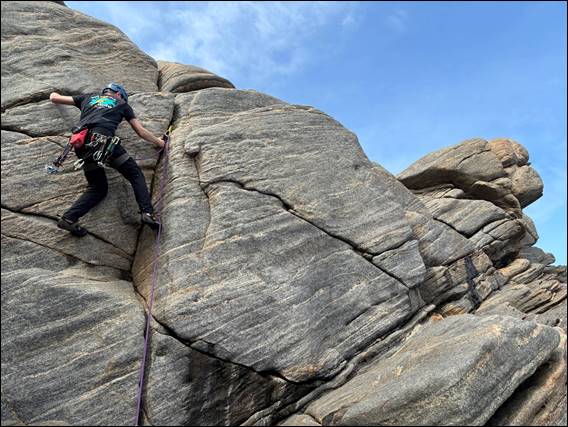
That is not to say he did not show barnacle like tendencies, as he held onto the often slopey granitic gneiss. With its smooth yet grippy texture and wonderful banded appearance. Created by quartz having formed layers when it recrystallized from the mix of minerals in the original granite, as the rock was transformed into a gneiss under intense heat and pressure. Today there was no pressure, we were picking fun lines. Mostly on the shorter side, and quite a few that may never have been climbed. I did however encourage Josh to lead some:
Craig will need to dig into his memory, as the last three images are of routes he and I did a long time ago. Back then we felt some were worthy of being recorded, others we didn’t. Not to say they weren’t fun, just a little short or obscure. Today they were a lot of fun, and Josh and I racked up ten lines. More impressively considering his relative absence from rock he led four routes. And since seeing the mother and calf breaching, we kept a keen eye on the water when we could. Rewarded by occasionally seeing breaching action by other whales:
Another glorious week but one I didn’t manage to make the most of, only getting out for one after work walk. I was hoping to nick out on Friday but not being one to leave things lying unattended to at least squirrelled away in my calendar, with the promise of getting to it by a certain date, it was too late for a wander by the time I shut my work computer and mind off. I guess it is a good job that we have a long weekend coming up so I can make up for the error of my ways. Back to Thursday when popped to my local and favourite spring time haunt:
I reckon word is spreading about this place, as I saw three or four cars come and go while I ambled through the rapidly drying bush. Last weekend there were some big pools of water and very boggy wetland sections, today it was nearly all gone. The white spider orchids were however not all gone, loads were left. Nothing particularly new from what I have already recorded, I did check each and every one to see if there were any variants about. A few but again nothing I could definitely pin down, or being sufficiently specky enough to include:
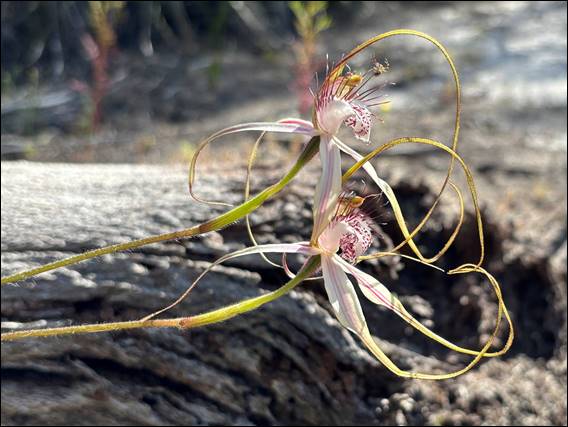
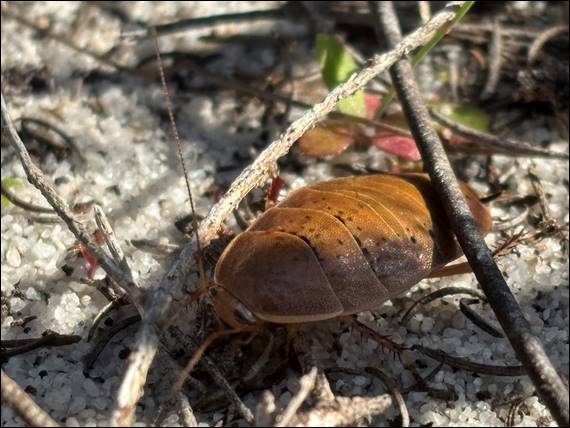
I of course had to include at least one image from all the white spiders. The one that won was of two Sandplain White Spider Orchid (Caladenia speciose). Almost artistically arranged with several petals and sepals being held together by the web of a tiny crab spider, which can also be seen if you look hard enough. With things warming up I was really hoping to see a scaly friend, with or without legs I really don’t mind. All I found however was a single Spotted Desert Cockroach (Zonioploca bicolor), or at least I am pretty sure that is what it is:
It certainly looks right and I’ve read this bush cockroach, one of nine known species of Zonioploca recorded in Australia, is found in the south-west of Western Australia. However, the Atlas of Laving Australia does not show any sighting in our neck of the woods. There are however lots of recorded observations of both the Flying Duck Orchid (Caleana nigrita) and Hort’s Duck Orchid (Caleana hortiorum) around here. With far more sightings of the former. The differences are subtle, mostly related to the labellum but also the basal leaf:
So fixated on the features of the labellum, I made a rookie mistake of not looking more closely at the basal leaf. The focus of my attention may indicate both species were present and accounted for with images provided being in order of the names given. That said I’m happy to be told otherwise. There was of course a heap of Chapman’s Spider Orchids (Caladenia chapmanii) in bloom, with quite a few more yet to flower. While I have included a few images of these in recent posts, this vibrantly coloured image is included for a reason:
The shorter length of the petals and sepals made it clear that I managed to find a Coastal Spider Orchid (Caladenia abbreviate). The species name of Abbreviata, a Latin word, directly referring to this aspect, meaning shortened. The overall height of the plant also aligned. A good find, and I only saw one, being classified Priority 3 in Western Australia meaning it is poorly known and only known in a few locations. I have also read it is a rare find, and while the site conditions are appropriate there have been no recorded sightings in this general area:
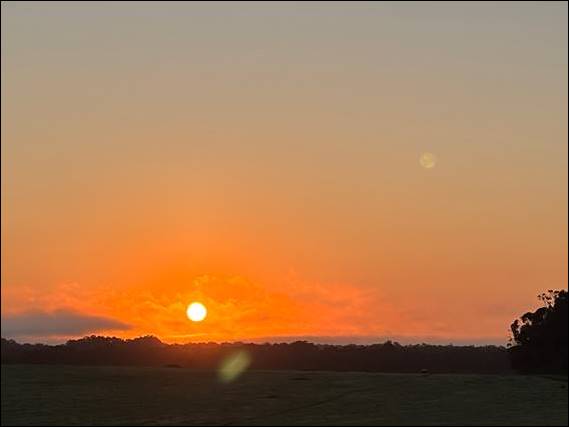
The timing was perfect. Allowing me to pull over onto the verge and watch the sunrise, just before turning onto Wilyabrup Road. This meant it would not be a first light start on rock. Adrian had already hinted at being happy with a cruisy day, having been climbing at Bobs Hollow yesterday. No prior plans were set but on arrival and as we talked about what he may be keen for, grades of 20 were being mentioned and possibly 21. Um, maybe it would not be quite as cruisy as I had thought. I guess the term cruisy is after all a relative term:
Wandering down there were quite a few plants in bloom. Despite being past their best, the mass of Cockies Tongue (Templetonia retusa) was however still very colourful and pretty. This only reinforced my thoughts that popping in at either the Carbunup or Ambergate Reserve on the way home, to check out what orchids may be on show, may be a good idea. Despite looking pretty hard over the years, most of the orchids I have seen at Wilyabrup have been the usual suspects. So far this season it hasn’t been any different, and that continued today:
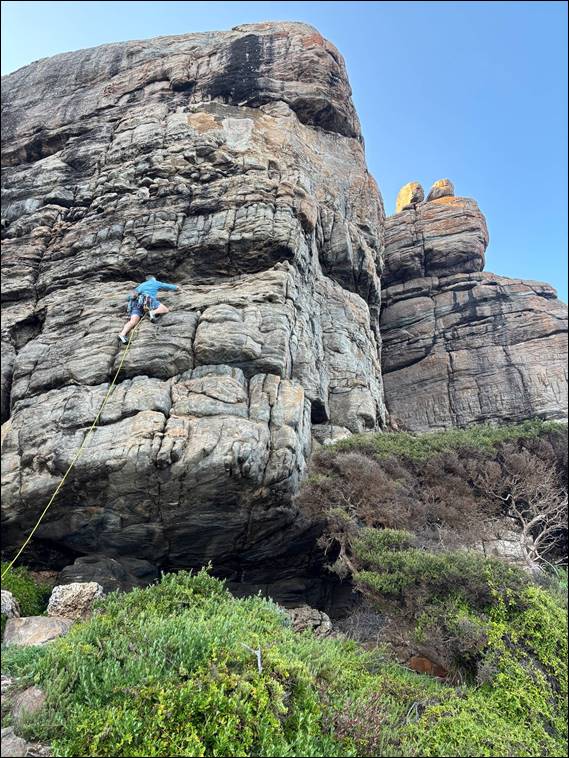
No matter, as we were here to climb. I’m normally chomping at the bit, egging people on to rack up and tie in. Today that wasn’t the case, and it is fair to say we eased into things at a very gentle pace. The lines that met the mid-grade level that had been alluded to earlier could wait, it was time for a warm up. Adrian was keen and, in my more mellow than usual state of mind, I was happy for him to get on the sharp end. I could hear him chatting to someone as I climbed, taking my time to look for our usual scaly friend:
Barely visible a Western Carpet Python (Morelia imbricata) was buried deep behind the flake. Maybe it would come out as the day warmed up. For now I left it alone and climbed on. Finding Adrian chatting with the first of what was to be many other climbers heading to the cliffs today. It seems there may be a surge of people keen to get out since a new boulder wall has opened up in Margaret River. Hopefully it won’t get too busy. Mind you if it does, we have plenty of other options along the coastline that are lesser known and frequented:
We chatted atop for a while. Allowing us to spy a pod of dolphins and one, or was it two, whales cruise past. It really is a top spot to hang out, and in my slower mood today I enjoyed taking it all in at a reduced pace. Adrian had hinted something around 16 would have been be a good warm up but I had struggled to recall any 16s, despite there being seven at the main crags. Then as we came back down I suggested the best trad route here with bucketful’s of exposure. Misleading him by one grade as it get 17, my mind really was drifting today:
Sat on top Adrian was beaming after a stellar lead on a route that gives many a climber the heebie-jeebies. Then Sarah, with a friend, turned up for a pit stop before going to Quinninup Falls. Hoping to find a reptile or two and as they headed off herping, I pointed out a possible new line I was considering to Adrian. It didn’t look anything too hard, but the gear may be a bit spaced. He suggested there was only one way to check it out but walking down it was my turn for a pit stop, to check out a few Murdoch Snail Orchids (Pterostylis ectypha):
At the base I tied in and racked up for the first time. Hoping my mind would be focused enough to bag the line. It is strange that when you jump on lead the mind sharpens up. Then for me this feeling is enhanced further when on a line that it highly likely a new route, so you have no idea what it may have install. I had read it right, nothing too hard although Adrian and I were at odds about the grade. And also right about the sparse gear especially in the mid-section. However, as I put the first ascent up my mind was crystal clear with no fogginess:
As I topped out Sarah and her friend waved goodbye, they had no luck on the scaly friend finding front and were now heading to the falls. Adrian followed up and confessed the runout would have put him on edge. He was sporting a dribble of blood from his forehead, the result of the no.4 cam hitting him when he took it out. It also happened to be the first time this piece of shiny gear had been placed. Which is why I decided on The Christening (14R, 25m), and it became doubly apt as it was as if Adrian’s no.4 cam had anointed him:
The question now of course is whether it is a sandbag route or not? I’ll send someone up it soon enough to see what they think. What with a bit of chitchat with the various parties, Adrian’s snack time between climbs, and other reasons the day was moving faster than we were climbing. We were both however of a view that we would be happy with just one more route, a line that Adrian had tried previously and backed off. This time it really was a 16, according to the guide, and this time there was no hesitation as he cruised his way up:
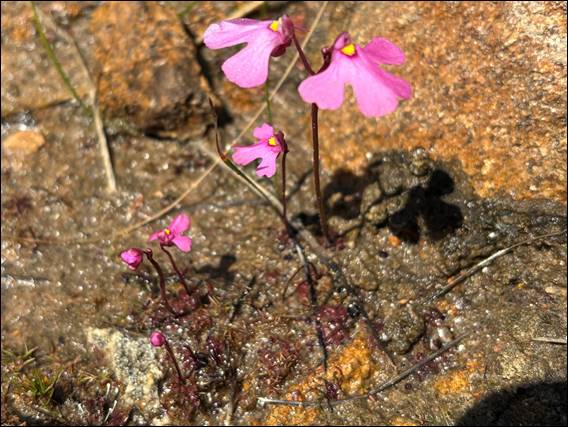
As we wandered down my phone started pinging. Sarah was sending me images of the orchids she had seen, asking what they were. Along with Mario, Rongy, and others at work I’m building up a good group of people giving me hints of where to head for my next orchid hunt. Sarah’s finds helped me make my mind up for the return journey. Deviating off the road home to walk the track leading to Quinninup Falls. Where I was taken by the above Pink Petticoats (Utricularia multifida) and rewarded with loads of Exotic Spider Orchids (Caladenia nivalis):
The Christening 25m 14R Tackle the face left of where A Pocket Full of Nothing starts, for best value avoid the crack. Head for the steep flared corner that offers no gear, keep right of the arête all the way up. Seewraj, Goldberg 21/09/25
With an extra day in hand to get into nature this working week, and considering I have not touched rock once in September, you may be surprised to hear that I opted not to climb today. I could be pleased with myself for showing restrain in not going too hard, to avoid the risk of aggravating the stupid self-inflicted injuries sustained this year. I may not have touched rock in three weeks, for various reasons, but I have been back on my boulder wall. Pulling on those plastic holds, which is way more intense than the climbing I do on real rock:
Even then I have been sensible. Not going too hard, even though it is so tempting to push that bit more. The flow of climbing, for me, is intoxicating drawing me in and making me yearn for more. Lisa will recall many an outdoor trip in the red centre where I have said ‘just one more climb’, even as the sun starts to belt down on us making things uncomfortably hot. Just one more lap on the boulder wall is more risky, being harsher on the tendons and muscles. So I have spaced my two sessions and also kept the pace and problem selections reasonable:
You could say I am endeavouring to tip the scale in my favour. We shall see if my approach pays off when I finally get to head out for a climb on Sunday, with Adrian. It has been a while since I have picked on a British idiom, and for this post ‘Tipping the Scales’ seems apt. It can be used to indicate two things, either to fiddle things to provide you with an advantage or to relate to a deciding factor. It is a subtle difference but comes down to whether the scales were tipped by something that was considered or included by intent or chance:
For my Friday outing I admit there was very much intent but it still wasn’t a done deal that I would be rewarded. Heading to the Meelup Regional Park. And knowing a few spots where good orchids may be from Lisa and my visit here last year, which was only two week later in the season. Not thinking I would walk too far, my tote bag only had a bit of fruit, muesli bar, and small bottle of water in it. I started walking it was clear my intended advantage may not pay off, being very different conditions with the soil in many places still completely soggy:
To be honest I wasn’t completely surprised. I did not however expect to be hit by the on and off showers. The cool, cloudy, and damp conditions did tip to my advantage when I came across a Quenda (Isoodon fusciventer). Usually foraging at dawn or dusk, these small marsupials are known to be active in the day especially during winter. Coming to a complete standstill as soon as I caught the movement out of the corner of my eye, a bit like playing statutes. It watched me, then decided it was safe to scamper in front of me across the path:
As the images show not all was lost on the orchid front. I had popped into the Blythe Reserve in Dunsborough, before the main event, where just one or two Sandplain Donkey Orchids (Diuris tinctoria) out. Better than nothing. Then starting on the track along the Meelup Regional Park coast the first stretch takes you down towards the coastline. Here a couple of Chapman’s Spider Orchids (Caladenia chapmanii), boosted my confidence. They may have appeared in my last post but as I said in that, I make no apology for including them (again):
Other than the Chapman’s Spider Orchids and wonderful Quenda, there was nothing. This resulted in my thinking that I wouldn’t walk too far changing. Setting my sights on Eagle Bay to walk the entire coastal track in the park, which would be close to a ten mile round trip. My pace had to pick up considerably. Having had a late start to allow me to get some housework in, and needing to get back for other household duties. Closing in on Eagle Bay I was rewarded with a single Hills White Spider Orchid (Caladenia longicauda subsp. Clivicola):
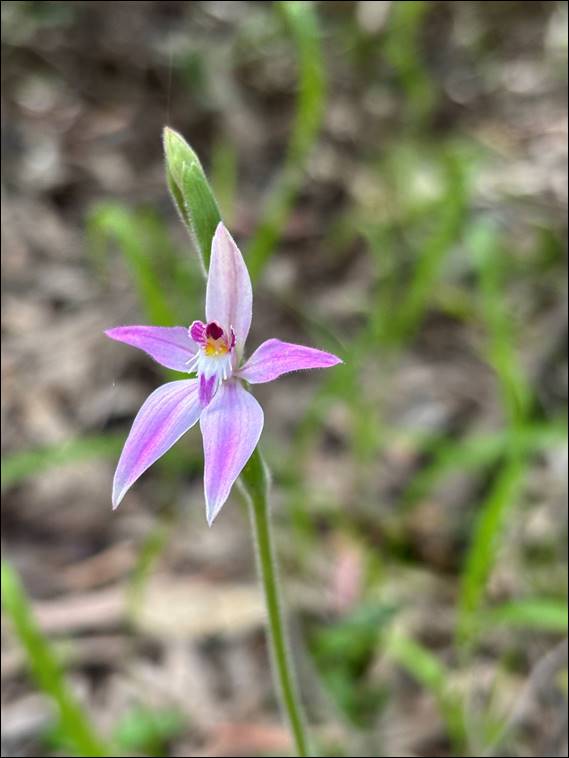
As I arrived at Eagle Bay a lonely Pink Fairy (Caladenia latifolia) was in the road reserve in the middle of the hamlet. Worth including because of the mix of its name sake colour, along with paler shades. There was no hanging about and it was straight back, continually scouring the sides to see if I had missed anything. I hadn’t, or at least not that I saw. Deciding to see if moving to higher ground may work in my favour, I threw the in Meelup Beach Lookout circuit. The path leading up the ridge was muddy in parts, and again there was nothing to see:
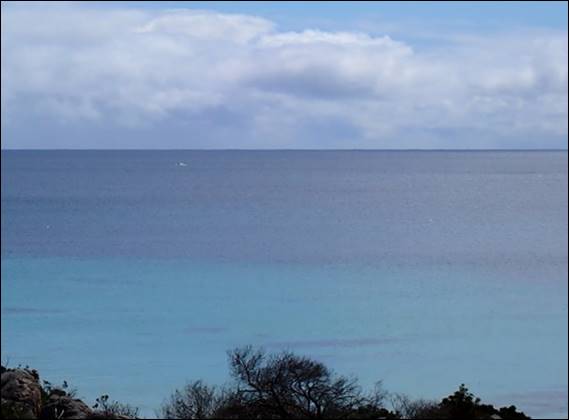
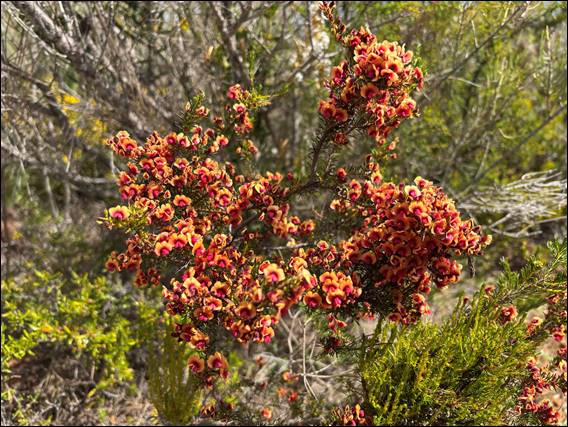
Although it gave a great vantage point to watch the ocean. It seemed calm enough for a snorkel. Whales were in the bay, and two images up there is a bit of tail action. It was here as I spent a few moments to soak in the view that I was missing Lisa and my traditional cuppa and cheese sandwich. Having severely miscalculated my provisions, and rather daftly also skipped breakfast. Walking across the top of the granite ridge the above cluster of colourful flowers of a Needle Leaved Chorizima (Chorizema aciculare subsp. aciculare) really stood out:
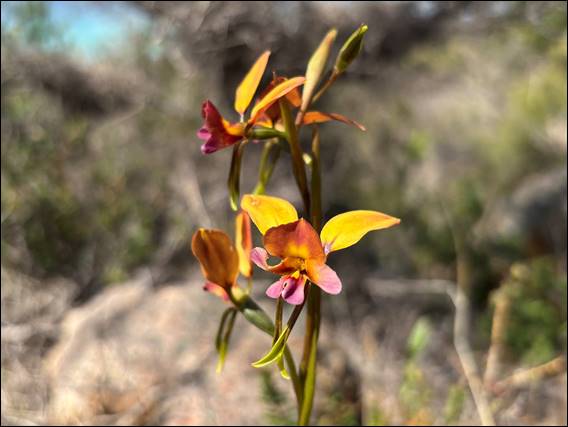
With their pink tinge, there were also a few Dunsborough Donkey Orchids (Diuris jonesii). Bringing my Donkey Orchid species tally to five this season. Just to prove I really was looking hard for orchids, despite my pace, I somehow spotted this single and oh so impressive Cape Mustard Orchid (Caladenia caesarea subsp. maritima). Even though it was almost hidden from view behind some scrub. While riding high from my Quenda encounter, this find tipped the hike into a new realm. Having only seen the critically endangered orchid once before:
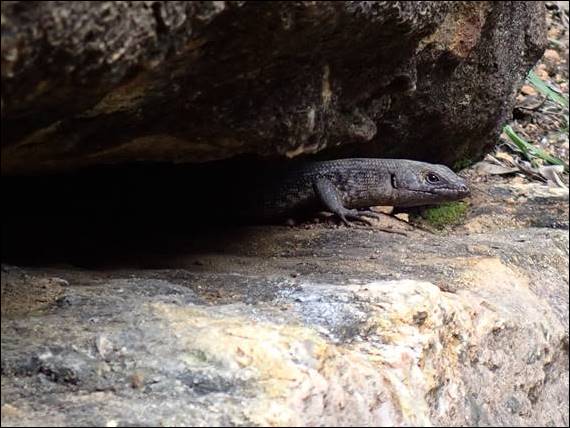
Having spent a bit of time atop, checking out a few finds and enjoying some whale watching. When I got back down to the coastal track it was time to pick up the pace again. No more orchids to report but as the day moved into the afternoon, the temperature had risen. Bringing out a few scaly friends, bit of an abstract link to the theme but I’ll take it. A female King’s Skink (Egernia kingii) saw me coming and scuttled into a crevice. Deciding to make the herpers out there jealous I took a minute or two to wait. Sure enough she popped out again:
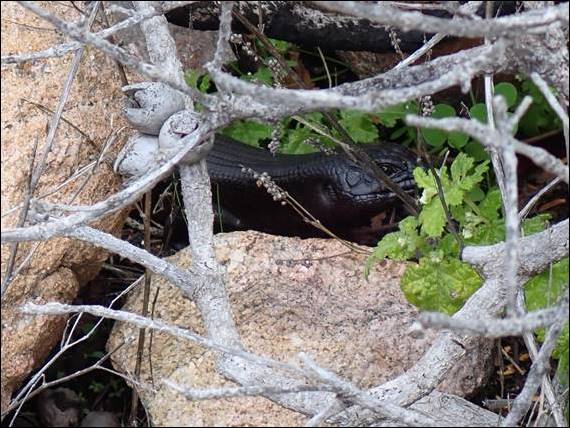
Part of the coastal track is currently under repairs, which forces a deviation along the beach and over some rocky sections. Working in my favour on the way back when it meant I stumbled across a male King’s Skink (Egernia kingii), who attempted to avoid my gaze by partially hiding in a bit of scrub. But not working in my favour when, by choice, I decided to continue the rock hopping a bit further than necessary. This turned out to be quite a long way, when there was no indication that a goat track would lead me back to the coastal path:
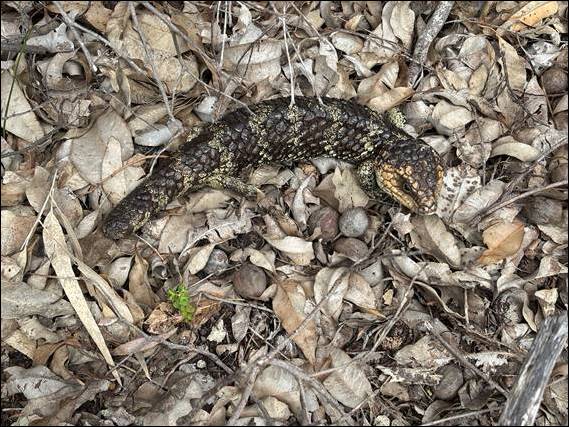
The rocks grew taller and steeper, requiring more effort to negotiate. Energy levels were heading in the wrong direction, not by chance but by my own doing. The provisions had been consumed some time back, and a weariness was coming over me. Stepping off a particularly high rock either a foot slipped or I had tipped too far over and lost my balance. After a forced few moments of rest to compose and check myself, I carried on battered and bruised. On the plus side on the last stretch one more scaly friend, a Bobtail (Tiliqua rugose), came out to say hello:
This post starts where it ends. The last find I have included made we go back in time, which like last week resulted in me uploading not one but two new but quite old posts. They go way back to 2010 and 2011. The reason being is that is where my orchid fascination started, fifteen years ago. It was our first camping trip to the magnificent Stirling Ranges that introduced me to the delights of these hugely varied and diverse plants. More specifically it was the Mount Trio Bush Camp that kicked it off, with all the images and information they had on display:
My write up of that first trip found here: https://sandbagged.blog/2010/10/18/a-striling-range-holiday/. If you dare to go through that you will notice a very different style applied to write up our adventures. Back then it was very much about keeping overseas family and friends up to date on what we had been up too. An image says a thousand words, and I leaned on that by including lots of pictures with just a short sentence for each. That posts also show how wrong I was with some of my early assumed identifications:
So enamoured by the location and campsites, in 2011 we went back for another spring break at the Mount Trio Bush Camp: https://sandbagged.blog/2011/10/24/glamping/. On our first trip, and as it had only recently been established, we had the place quite literally to ourselves. For the second visit we saw more people but not many, and today it has been completed transformed. Being deservedly popular, but with popularity the quiet charm that drew us there each spring time while Elseya was young diminished:
As I was fully expecting, I have neglected all the images in this post and relived fond memories of the past. That is after all one of the reasons for keeping a record of such treasured moments. First by images, then by emails, and now by these posts. The reason for including the second post is that was the first time that I saw what I very unexpectedly stumbled across at the end of my second walk this week. To understand that you will have to get to the end of this write up, which captures the walks that I squeezed in on Wednesday and Thursday:
The weather was not too bad all things considered, and the week ahead is looking like the winter fronts may be behind us. I’ve previously mentioned that Rongy and Sarah recently returned from their long travels. They have been inspired by my finds to start looking for orchids. Sending me a fair few images of what they have discovered. It was one of those finds that led me to head to the Dalyellup Tuart Forest on Wednesday. Having only walked through that bit of bush once before, late last season I haven’t really explored it:
This was a bit of an assisted find, having been given the coordinates of where to go. Rather than making a beeline for that spot I started some way off to explore what else may be about. It was pretty quiet on the orchid front. Granted I saw heaps of Cowslips and Donkey’s, but little else. I did however really like the Wild Violet (Hybanthus calycinus) in the first image, this plant has had a bit of a back and forth name change over time. Being switched between genera going from Hybanthus to Pigea, but still widely recognised as Hybanthus:
It goes to show how tricky this business of identify plants and their true names can be. Sometimes I really do wonder why I put myself through it! When I got to the special spot I hunted and hunted, but there was nothing to see. After a solid half an hour I decided to text Sarah and let her know I failed. A few minutes later the phone pinged and she replied to say she was heading into town soon and could stop by to show me where they were. This led to various pins being shared of where we were, which was a considerable distance apart:
You could say this was more than an assisted find seeing I was going to be led right to the spot. It was certainly not in keeping with how I like to find orchids, but this one was special. As I made my way towards Sarah, taking a straight line through the bush, I stumbled across two Sugar Candy Orchids (Caladenia hirtasubsp. hirta). Being the species I was after, and allowing me to get that great feeling of just stumbling across the find. The reason it was special find, is that I have not seen these before and didn’t realise they could be found here:
I have however seen one of the two subspecies at the Stirling Ranges. The subspecies being the Sugar Candy Orchids (Caladenia hirtasubsp. hirta) that is white, and Pink Candy Orchid (Caladenia hirta subsp. Rosea), which is obviously pink and the one I have seen before. This one is detailed as being a common subspecies that is found in Banksia, tuart and peppermint woodland. So I find is amazing that I have not come across it before here. I then caught up with Sarah and overall I got to see five of them making the trip out very worthwhile:
In the same area there were also quite a lot of Pink Fairies (Caladenia latifolia), being the third image. Common as anything but worthy of inclusion, and linking nicely to the rather grainy video of a male Splendid Fairywren (Malurus splendens). We stood and watched for what seemed like forever. Normally skittish and quick to hide in the bush this male didn’t care, putting on a great display that was hard to pull ourselves away from. But we did eventually, leaving him to carry on chirping away:
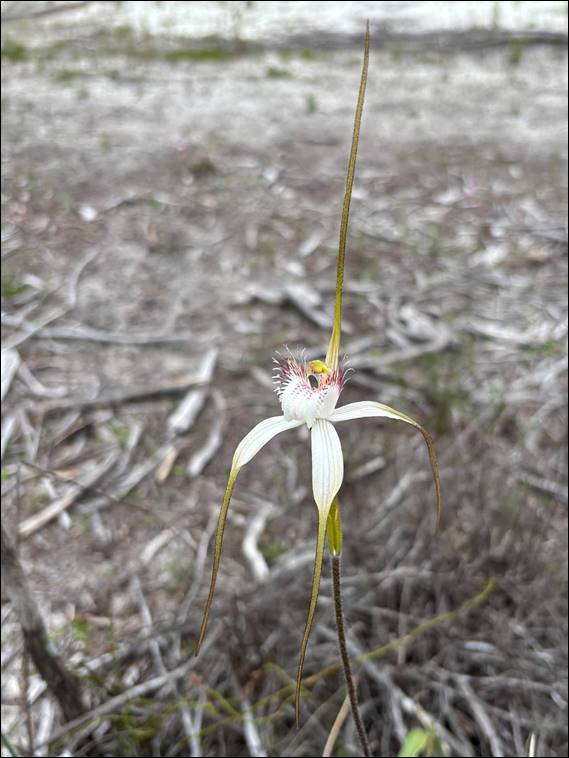
On Thursday I went to see how the spiders were going at the Capel Nature Reserve, and the images speak for themselves. It was hard to walk more than a few minutes without seeing another one, totally stunning. The first two images from this reserve being of clumps of White Spider Orchid (Caladenia longicauda subsp. longicauda). The third being the Sandplain White Spider Orchid (Caladenia speciosa), identifiable by the long tangled fringes. Like hair that is allowed to grow without trimming, these can be prone to splitting:
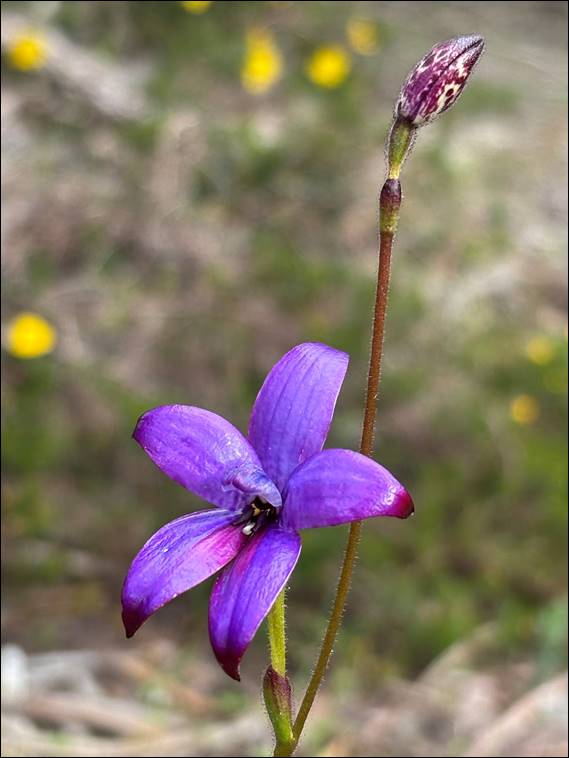
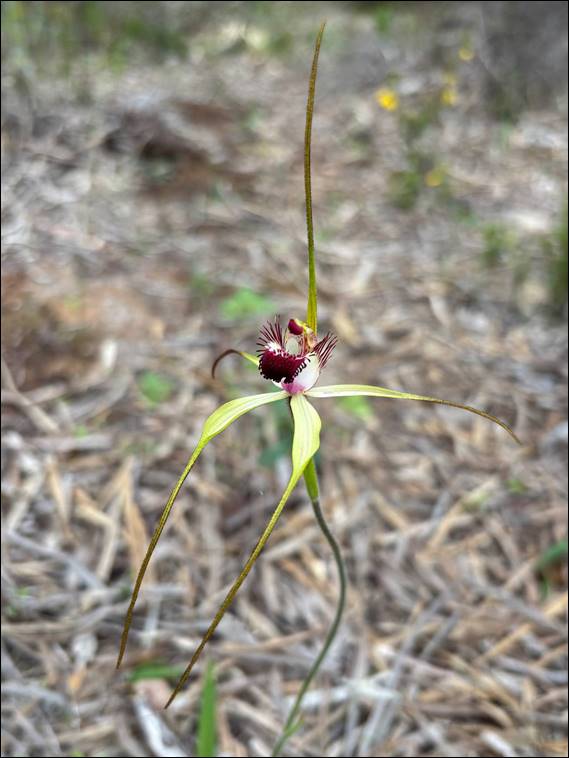
This was the species that I recently found to be listed as Priority 4, meaning they are considered rare or near threatened. I’ve broken the spiders up with a Purple Enamel Orchid (Elythranthera brunonis). I like the image included as it has a bud displaying the mottled pattern that resides on the back of the petals and sepals once the flow opens. I tell people to check this overlooked feature out, as it is quite beautiful. Capel was certainly on fire, and I also found a King Spider Orchid (Caladenia pectinata) with its deep red tip on the labellum:
This species of the king orchids spreads its sepals and petals elegantly. The next image is a cross between a King Spider and White Spider Orchid. Having the red tipped labellum and sepals and petals being coloured and displayed like the latter species. I have unapologetically included two images of some of the many Chapman’s Spider Orchids (Caladenia chapmanii). There are plenty more spikes that are yet to flower, and I can safely say I will never ‘tyre’ of seeing these magnificent spiders with their display of a multitude of stunning colours:
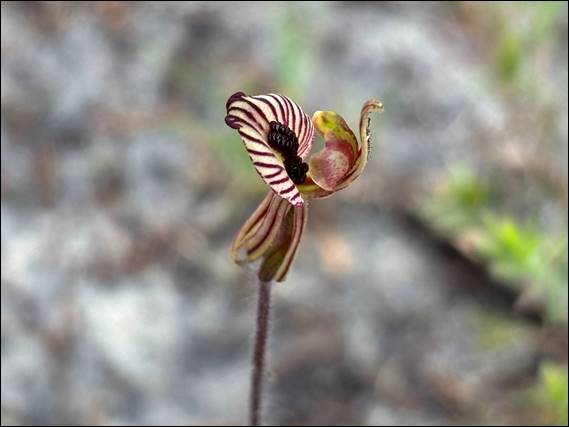
It feels like I have just raced to the finish line. Here, finally, are two images of a Zebra Orchid (Caladenia cairnsiana) that I almost didn’t see. These come from a underground tuber and are described as usually being found in scattered groups or sometimes in clumps of more than ten. I’ve only ever seen these, like the Sugar Candy Orchids, in the Stirling Ranges. Indeed this species was first described from a specimen collected in the Stirling Ranges. Finding them, as described, in groups and clumps. Tried as I might I did not see any more here:
In keeping up with our promise to each other for regular trips, Lisa and I had a night away booked for last weekend. It turned out to be a bit of a wash out in several ways. Regardless of that we still enjoyed being away, and a changed environment always helps to recharge the batteries. I slept through most of our time down in Pemberton, doing my best to shake whatever it was I went down with on Friday. While this may seem a wasted opportunity not to be wandering under the tall Karri Trees (Eucalyptus diversicolor), it was raining:
Not just a drizzle or passing shower. Over the course of Saturday a neat two inches fell. And Sunday morning was not shaping up any different. We have been known to go for a walk in the rain, but all things considered we agreed it wasn’t worth it this time. So we slobbed out instead. On the way back we did however stop in at Beedelup Falls, I was keen to stretch my legs before we hit the journey back in earnest. Plus with the great winter rainfall we have had I was keen to see how the falls were shaping up since the last time we saw it in 2017:
This made me search through my posts to see what it looked like back then. To my surprise the email with images from that trip had not been added to this blog. That has now been rectified. Like this visit it was wet, the difference being that time we did go out for a walk. Finding some great fungi making it definitely worthy adding. I can also now link it to this post for a contrast of how the waterfall was looking: https://sandbagged.blog/2017/07/16/a-few-nights-away-from-it-all/. Indeed this year it was pumping:
I have been through the monthly rainfall records and 2017 looked to be a decent rainfall year, not far off what we have been seeing this year for the Pemberton area. I’m going to guess that having gone there in July last time the streamflow had not risen to the rate we saw in September this year. Sounds obvious but on the drive back the soils on both sides of the road were saturated, to the point water was cascading into the roadside drains. A sight I have not seen, and long-time locals also say is a welcome sight harking back to a proper winter of old:
Certainly where we live, a mere 100km to the north as the crow flies, it has been a winter of old. At I have the ‘pleasure’ of dealing with enquiries from people complaining about wet properties, due to both groundwater coming to surface and creeks and drains overflowing. The people who have lived here for more than thirty years say it is a welcome sight; those with shorter memories are not so happy, looking for someone to blame. As to be expected the wetter conditions are however resulting in a slightly different orchid season:
Unlike the wet weekend just gone, the proceeding week was shaping to be quite nice. Sunny days with temperatures over twenty degrees. Of course I had recovered enough to head back to the office, maybe in part due to my moral compass and work ethics. I did however decide to not keep adding silly amounts of hours to increasing bank of leave. Blocking out my calendar from 2pm each day and making a conscious effort to get out for an afternoon wander to visit a few of the good spots we have, which worked on most days:
I was urged on even more to go for daily walks by the promise of, what a surprise, another wet weekend coming our way. One that looks likely to stretch into next week. It seems that rambling is the theme of this post, as I have babbled on while the images have been slipping past. With only one having been referenced. It is now time to make amends and play catch up. The first image is one that I really wished it had not been raining for, as I would have got down on the ground and spent more time getting shot from differing angles:
A simple Karri Snail Orchid (Pterostylis karri), and we didn’t too much more in flower during the short walk to and from the waterfall. However, this one is not in its usual form. To start with there is only a single lower sepal, or antenna, unusually located at the front of the galea or hood instead of two at either side. The hood, which is usually made fusion of the dorsal sepal and two lateral petals looks to have split. The lateral petals having separated and spread to the sides to form what looks like two floppy ears. It’s finds like this that I find so fun:
These are the only two images from our weekend away. After that and for my first weekday wander, on Tuesday, the images are from Crooked Brook. Here I was greater by a glorious floral carpet, with more coverage that I can recall before. Or is that just my short-term memory taking control? Mostly provided by Glow Wattle (Acacia lasiocarpa), and what I believe may be Beard Heath (Leucopogon pulchellus). I was going to add a close up image of the latter just because I loved the small fluffy petals of this flower:
This feature is where the genus name of Leucopogon comes from, being derived from two the Greek words of leuco (white) and pogon (beard). I’ve included a species from this genus in a previous post. This one is however in my humble opinion more beautiful and little, which is what the species name means in Latin. There are many species in this genus and I have read that the greatest diversity can be found in the south western of Australia, lucky us. I did think with all that shrubbery in bloom I would struggle to see much else:
It was hard to get the eyes to focus away from the colourful lower storey vegetation, and look closer at the ground. There were a few orchids out, mostly repeat finds and in low numbers. The one that was in greatest abundance was a first time find for this season. The wonderful Bird Orchid (Pterostylis barbata). It seems Crooked Brook is the place to find these, and on this one walk I found close to twenty. It did feel that the orchids were lacking, perhaps waiting for a longer period of drier conditions, so I started to look for other gems:
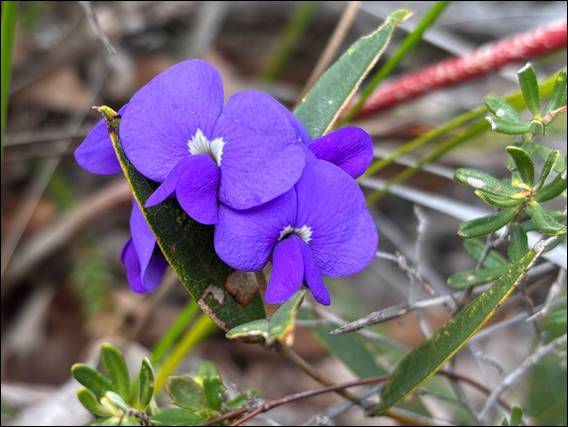
I’ll skip an image and jump to the sundew, it has taken some time to have the confidence to say it may be a Bridal Rainbow (Drosera marchantii). We have many species and it would be easier to identify if the flower had been out. Even without the pink flower the leaf blades with their tentacles are still a very pretty sight. For this species they occur singular along the stem and generally dangle downwards. I am also daring to venture into the enormous variety of pea flowers, and the purple ones I believe are Elliptic-Leaved Hovea (Hovea elliptica):
I personally like the other name it gets of Karri Blue Bush, and feel the shape of the leaves gives this one away. There is however an abundance of peas making it tricky business. It is time to move along, as the train driver would instruct us to do during the rush hour commute as we crammed into the London underground trains. Everyone trying to stay close to the doors, rather than getting packed in like sardines further away and risking not being able to get out at your stop. I really do not miss those days:
The cluster of brown bark resembling fungi has had me stumped, and the closest I can get is Coltricia cinnamomea. The fringe like edge, slightly radial pattern, and sponge like underside make me think I am close. But I am not overly convinced. And now I’ll go back to the lone fungus that is starting to emerge from the gravel. This one I have had absolutely no luck with, maybe it is still in the early stages of development. The spongy like stem and potential for a cap makes me wonder if it is the same genus of Coltricia:
Back into more familiar territory of orchids I have included the Reaching Spider Orchid (Caladenia arrecta). This is a very easy one to identify. I’ll confess that I know where this one is found at Crook Brook, and due to the lack of other first time seasonal finds I sought this one out. I did however also find one at Manea Park during another afternoon walk, the first time I have seen them there. It is one of my favourite spider orchids, taking pride of place as the background image on my phone:
Another orchid out, although I only found the one, was the Fringed Leek Orchid (Prasophyllum fimbria). A tall and elegant spike with seventy or more flowers arranged along the upper section of the spike. The images shows a weevil doing exactly what the plant has developed to encourage it to do, delving into the flower for pollen transfer. I have stopped short of trying to identify the weevil, and will instead speedily get to the Common Brown Pea (Bossiaea eriocarpa) and a random image of some tadpoles as I came to the end of the walk:
Wednesday afternoon it was time to visit Manea Park. A place renowned in Bunbury for being the place to go to see orchids in spring time. There were certainly heaps of donkeys and cowslips out. Other than that it was very thin. There are usually lots of white spider orchids here. Not only did I not see one, but I also saw very few spikes indicating that they were on their way. There was the old faithful Dancing Spider Orchid (Caladenia discoidea), again I know where to look but this year the patch had grown bigger and spread wider:
It was good to know that some species were liking the conditions this season. Due to the lack of orchids I again dipped into the peas. Finding the Skinner’s Pea (Pultenaea skinneri). The stem and leaf structure making this one a relatively easy one to work out. A good find for me, as it is listed as a Priority Four species, being considered rare or near threatened. I continued to wander through the park for near to two hours with little having been found. Yearning for some colour next up is a Brick Red Laccaria (Laccaria lateritia):
I’ve also included a repeat find of a Kemerton Donkey Orchid (Diuris cruenta), only due to the striking deep purple labellum of this specimen. I really was keen to see and include more colour. To wrap up the images for Manea Park is a plain green basal leaf, with a spike forming and silhouetted behind it. I saw these popping up everywhere, so maybe there is another species that is liking these wetter conditions. I guessed while waking, and was pleased to find I was correct in thinking, they were Leopard Sun-Orchids (Thelymitra benthamiana):
Thursday it was the Franklandia Nature Reserve, a place I only came across last year. Here I spent about the same length of time, scouring all over. A few usual suspects were out but you really had to look for them. The best finds being the two above images of wispy spider orchids. Known for their thin, thread-like sepals and petals. I believe they may be the Pendant Spider Orchid (Caladenia pendens) and Noble Spider Orchid (Caladenia nobilis). However, like so many similar species of spider orchids they are tricky to tell apart:
Before hitting the road to drive home the above female Wandering Percher Dragonfly (Diplacodes bipunctata) kindly posed for me for a considerable duration. Friday came and it was time for a local jaunt at the Capel Nature Reserve. Despite the varying number of images I have included for each place, I had spent one and half to two hours at each. You could say I had a healthy dose of nature this week, and feel all the better for it. Of all the places this one seemed to have the best abundance and variety, hinting a promise of more to come. And it was the same last year:
The ones that are tantalising close to coming out can wait for another time. And hopefully this next week of wet spring weather doesn’t impact their willingness to fully bloom. Above is a Pink Rainbow (Drosera menziesii), for me one of the more striking erect sundews. There were plenty of specimens out with pink flowers on display at the top of their stems but it was the deep red leaves that caught my attention. Among the promise of what is yet to come were way more spider orchid spikes than I had seen collectively in the other three locations:
Very few were out in bloom but a few were about. I believe the above is a White Spider Orchid (Caladenia longicauda subsp. longicauda) and below is a Hill’s White Spider Orchid (Caladenia longicauda subsp. Clivicola). As I mentioned before similar species of spider orchids get tricky, and the white spiders are no different. The latter of these two has a narrower labellum with shorter fringes, so it does look to fit the bill. And like the earlier weevil I am not going to try and identify the photo bombing Crab spider (Thomisidae):
I of course had to check the elusive Glossy-leafed Hammer Orchids (Drakaea elastica), and they are still looking like they will flower. They are one of the later flowering Drakaeas. Not due to come out until October. To wrap up this rather lengthy ramble is the Purple Enamel Orchid (Elythranthera brunonis). Lots and lots of these were scattered about with lot more looking to bloom. While I have a few reserves I can head to, a bit like a pick and mix selection there is usually a favourite. It’s pretty obvious which is mine and where I’ll head if I get a chance next week:
Was I hoping that now spring had arrived, I might get away without catching one of the many bugs that have been going round. I had done well despite people dropping like flies round me and Lisa’s best efforts by bringing bugs home for weeks on end. But no, although not taking hold till Friday allowing me a Thursday wander. While my current condition affords me a hoarse or raspy voice, I will still not be able to get away with mimicking the distinctive nasal delivery style of the singer who is the focus of the film that has the same title as this post:
Bob Dylan was given the title of “King of Folk Music” after his 1963 appearance at the Newport Folk Festival. A happy coincidence in that the only new seasonal find at the Ruabon Nature Reserve was the King-in-his-carriage (Drakaea glyptodon). Locally it seems to be the earliest of the hammer orchids to flower. I’m still waiting for those elusive endangered species at the Capel Nature Reserve to even form a full bud. The King-in-his-carriage is the most commonly seen species here, distinct from the others by the shorter and more swollen labellum:
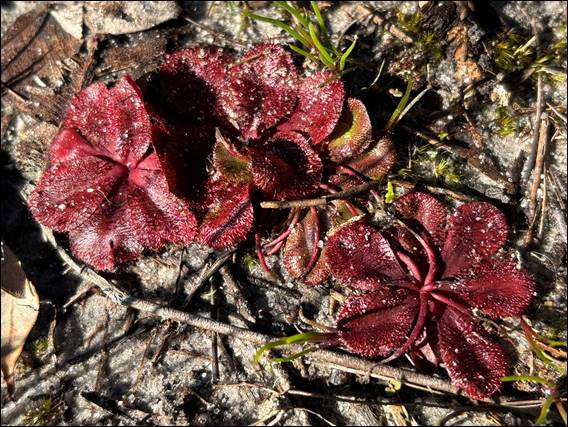
The above is also a common endemic species of the south west. It may not look like anything special. However, a work colleague that has taken to hitting the many tracks in the general area has been testing my ability to identify finds that stand out to him. The Red Leaved Sundew (Drosera bulbosa) can have as many as twelve leaves that start pale green to yellow in winter. When spring brings more intense sunlight anthocyanin, a water soluble pigment, is produced. Changing the leaves to this wonderful deep red, and providing a sort of sunscreen:
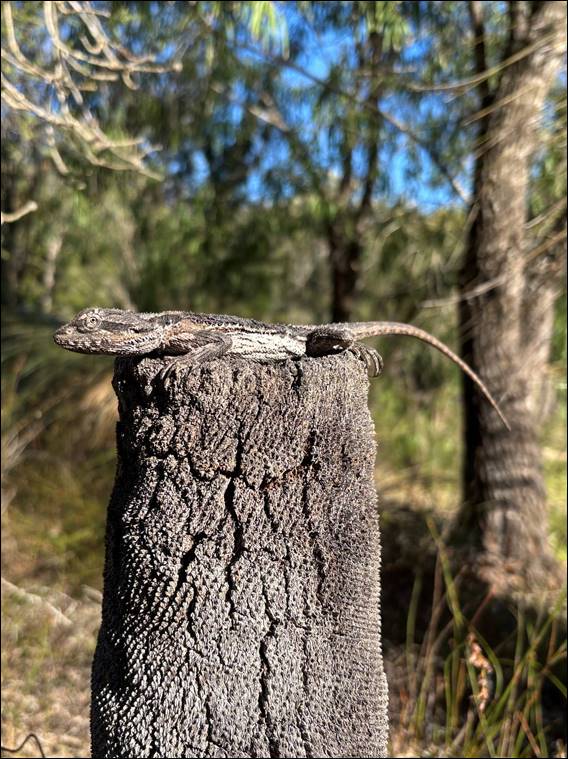
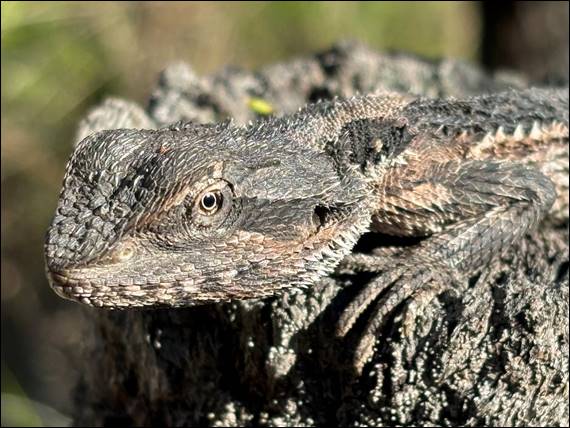
In the lowering sun of my later than usual wander the above Western Bearded Dragon (Pogona minor minor) was in no need of sun protection. Indeed soaking in and relishing its warmth. Not moving a muscle while I got really close and observed it for some time. Only it’s eye moved, following me carefully. It is the largest of three subspecies. But even with a body length of up to half a foot, it would still be an easy prey for overhead predators. If I could see it then they certainly could. This does not however stop them basking on fence posts or alike:
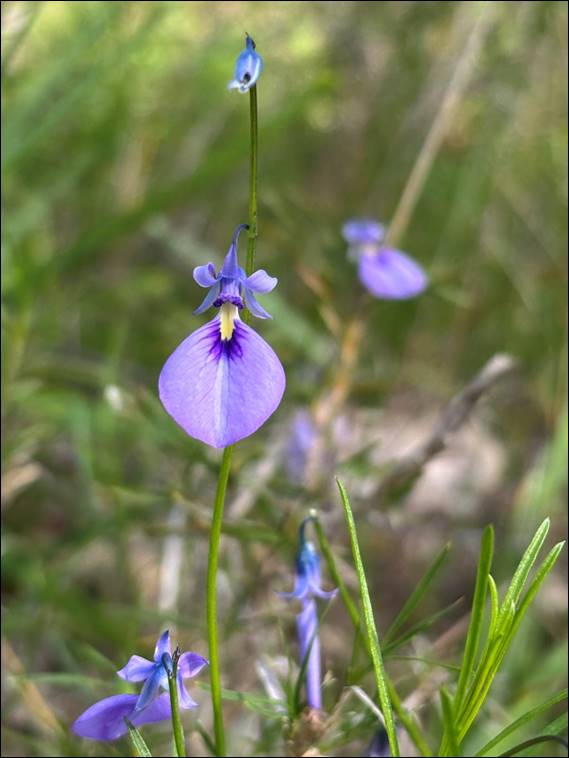
Walking back towards where I had parked, I stumbled across a few cages. Similar to those I found in the Capel Nature Reserve, which were protecting the endangered hammer orchids. There was a lonely spider orchid leaf in one that I will come back to check in a few weeks to see what species it may be. I assume it must be something unusual, unlike this Common Dampiera (Dampiera linearis). Yet another endemic floral species of this corner of Australia. So common that it seems no one has bothered to published any interesting facts about it:
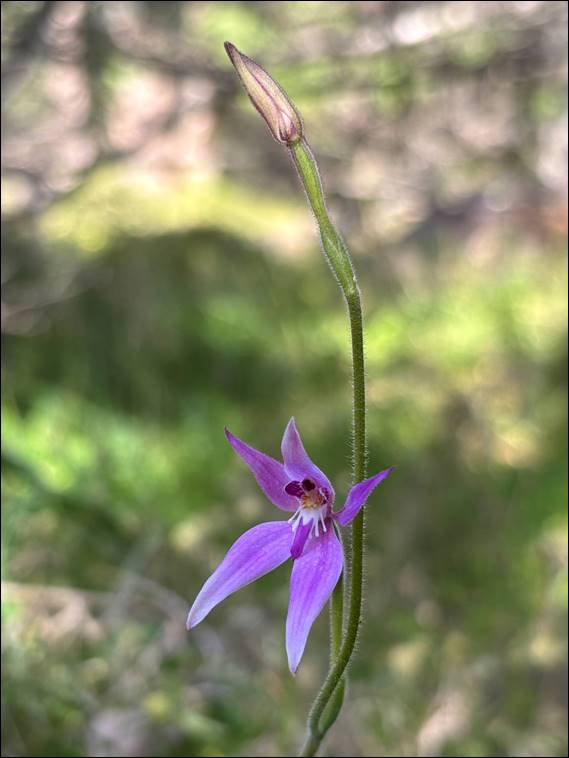
Very pretty and delicate nonetheless, so more than worthy of inclusion. I took the image at the Capel Nature Reserve. Being kinda on the way home I thought why not stop in. Secretly hoping to find my first ‘true’ spider orchid in flower. I say that as while I spotted the Cowslip Orchid (Caladenia flava) in full bloom, as well as Dwarf Pink Fairy (Caladenia reptans), it is the Caladenia species with the long petals and sepals that really stand out. This week Mario, having been on his lunchtime walks in Perth, sent me photos of some amazing specimens:
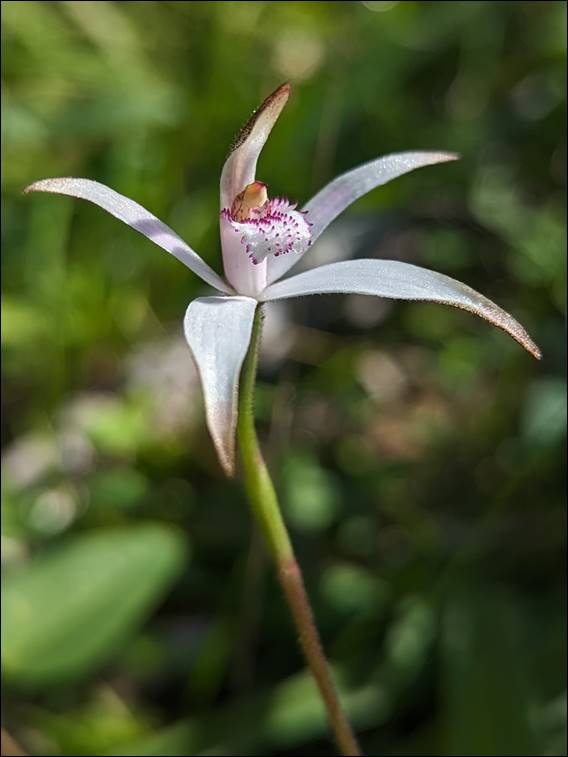
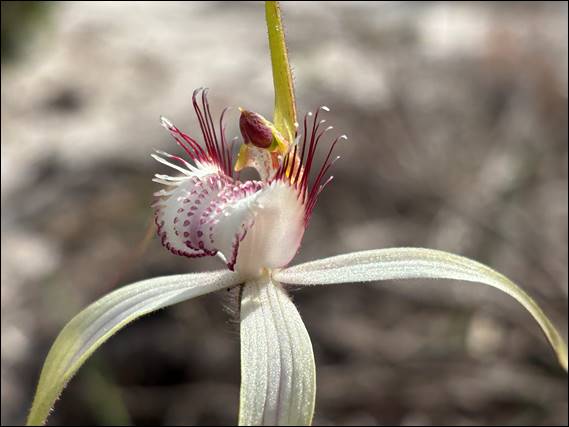
The orchids come out earlier in Perth. Where it warms up quicker than here, being further north. There are many species found there that do not extend to our area, and vice versa of course. So I will admit to having a bit of orchid envy, not enough however to make me drive the 400km round trip. I did not find any of the more dramatic spiders in bloom. Plenty were getting very close, such as the above Sandplain White Spider Orchid (Caladenia speciosa). The name speciosa meaning “beautiful”, “handsome”, “splendid”, or “showy” in Latin:
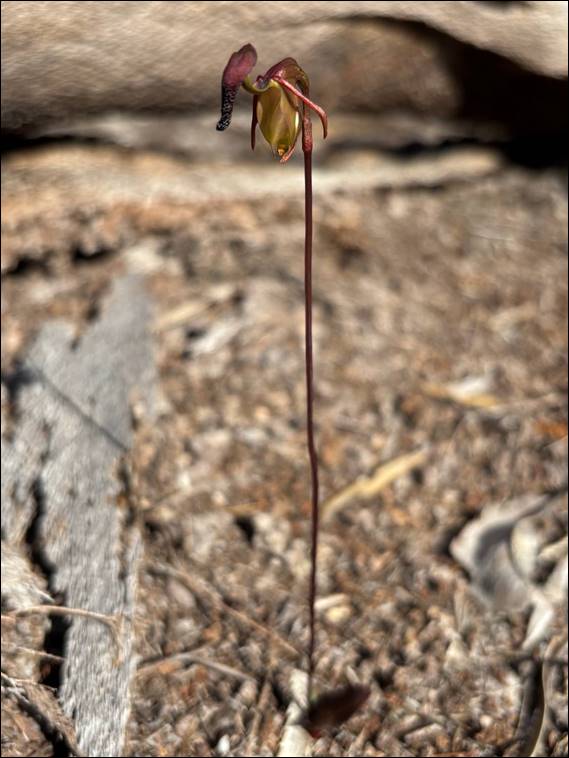
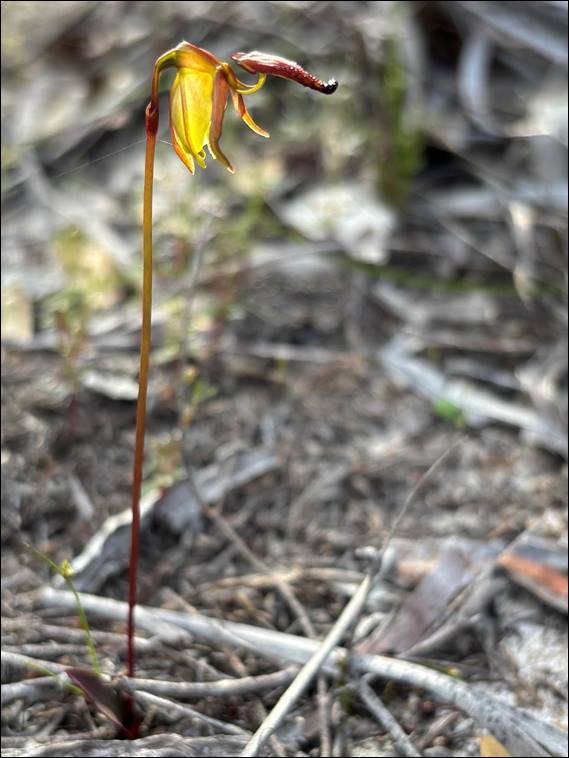
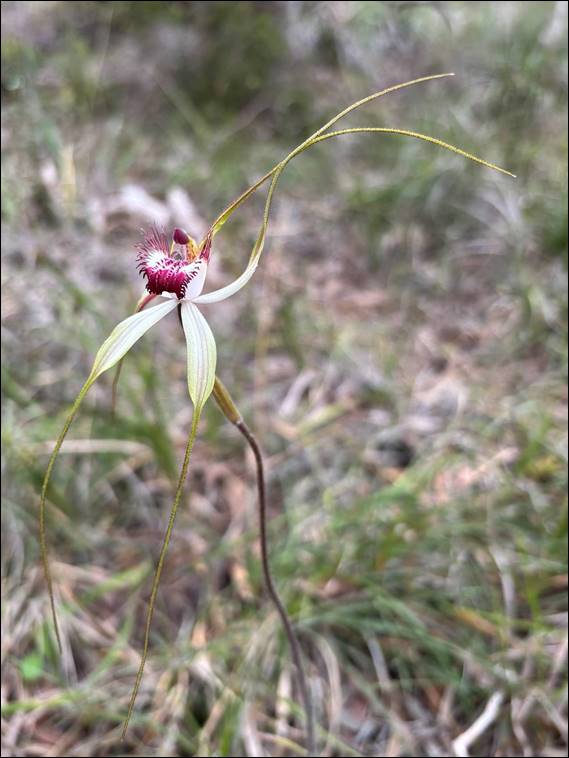
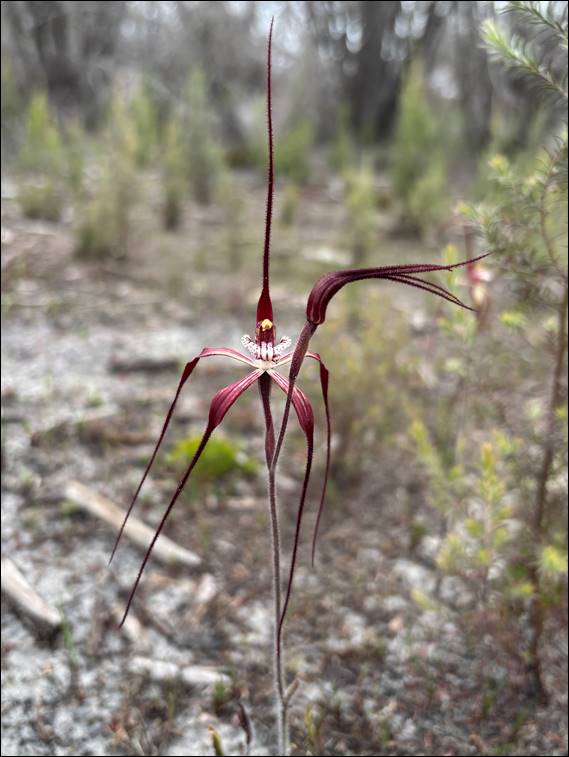
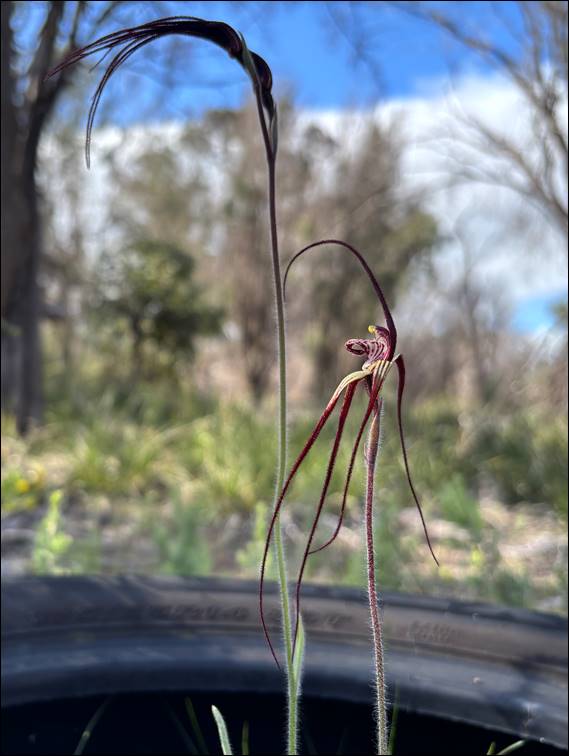
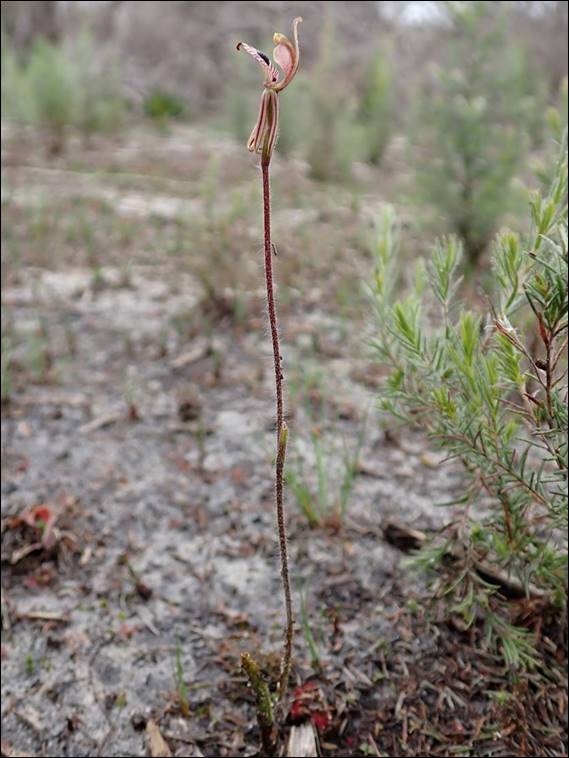
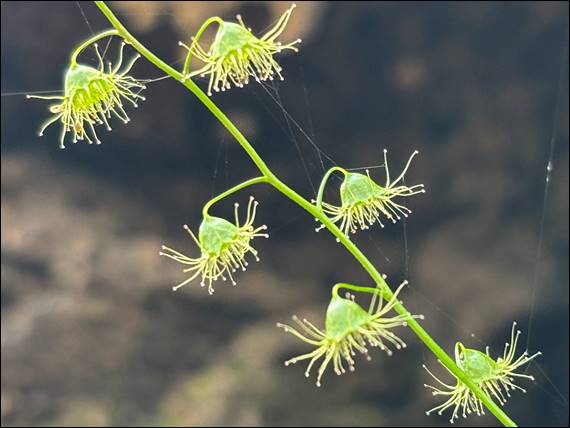
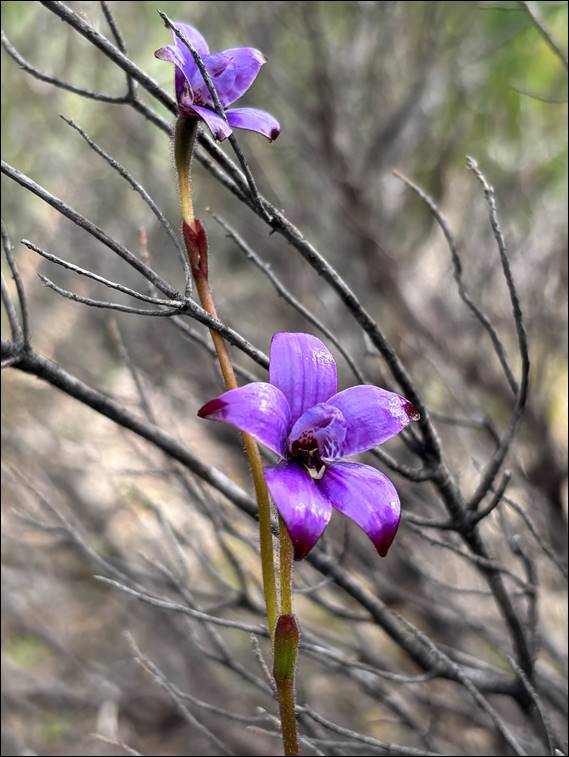
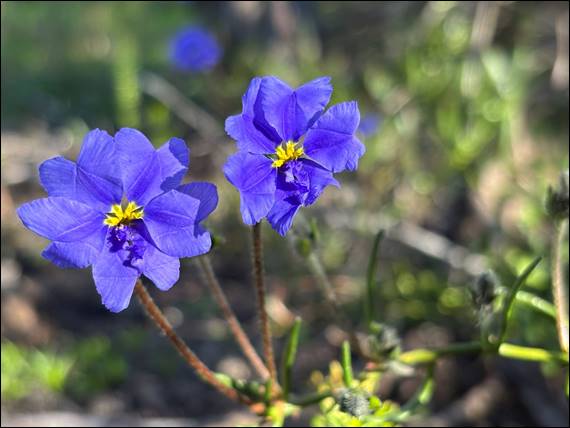
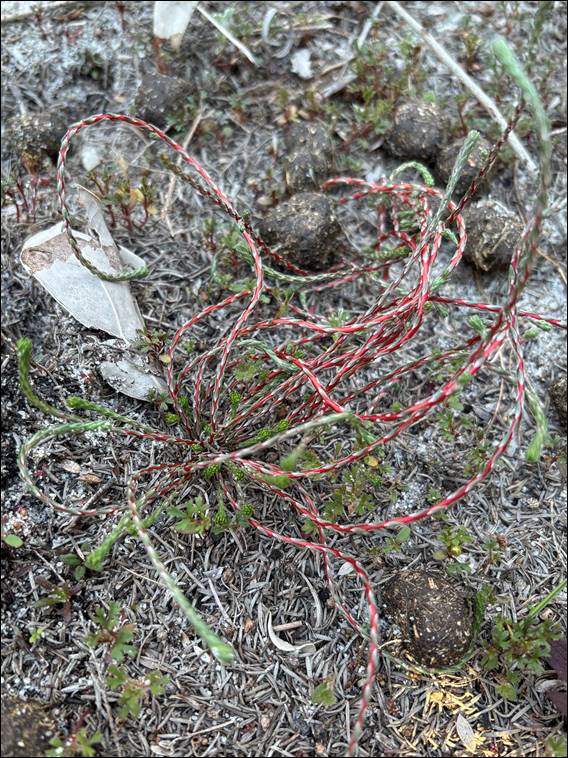
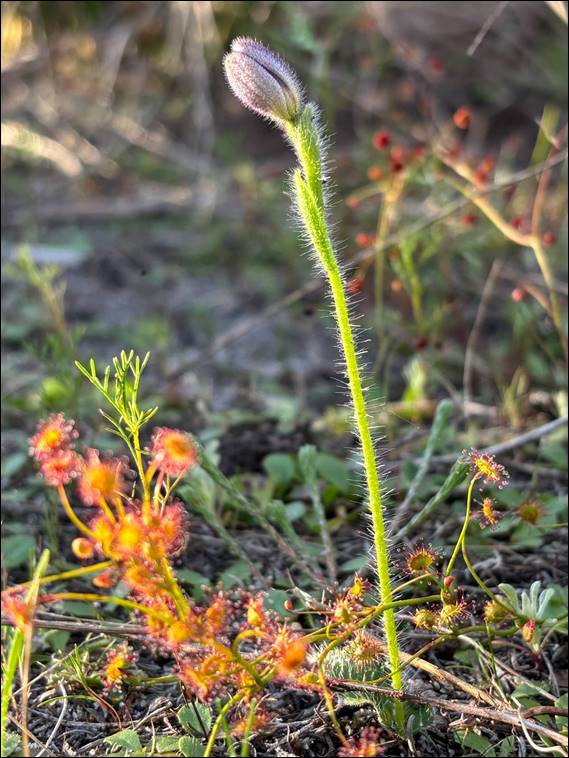
An apt name and one that makes me feel a bit more justified in distinguishing between the more attractive species of spider orchid. The Sandplain White Spider Orchid is a regular here, I have however only just realised that it is classified as rare or near threatened. So we are lucky to have it in relative abundance in our local nature reserve. This post ends as it started, with some complete unknowns. Even with Howsie’s help we have no idea what the above may be. The below has also alluded me, looking both orchidy and not orchidy:
















 Sandbagged