The beetles

Despite being the last day of a long weekend, we risked a walk at Cape Naturaliste.  Located at the northerly end of the Leeuwin-Naturaliste National Park this is where the Cape to Cape track, mentioned in my last post, starts or ends depending on whether you hike south to north or north to south.  Why was it risky, well to start with being a long weekend it could have been busy, as it is a very accessible area, and secondly as it was the last day of a long weekend the traffic heading home could have been hideous.  But I was wrong on both counts:
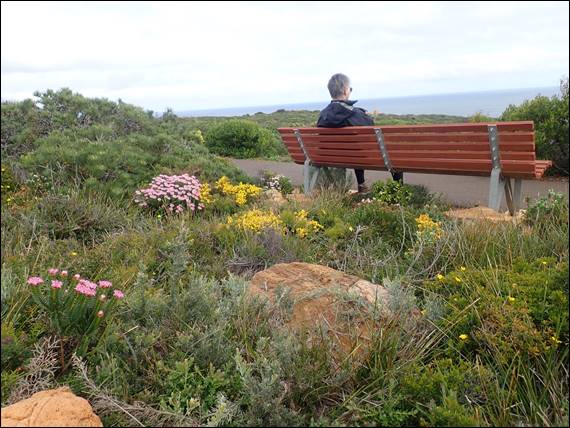
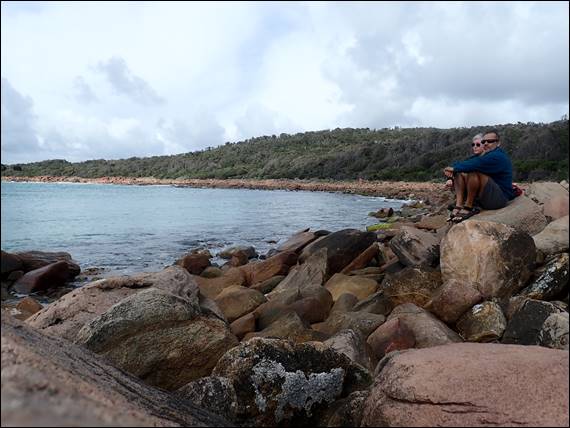
That was probably due to the long weekend being tacked onto the school holidays, so there wasn’t the mad rush when everyone has limited time to cram in their intended activities and journeys.  One reason Lisa was keen to come here was that with ocean views from most parts of the walk there would be the chance to look out for whales.  So, we took advantage of the numerous places to “park-your-bum” and watch the ocean.  Well, Lisa did and I used these times to scour the ground looking for anything that stood out:

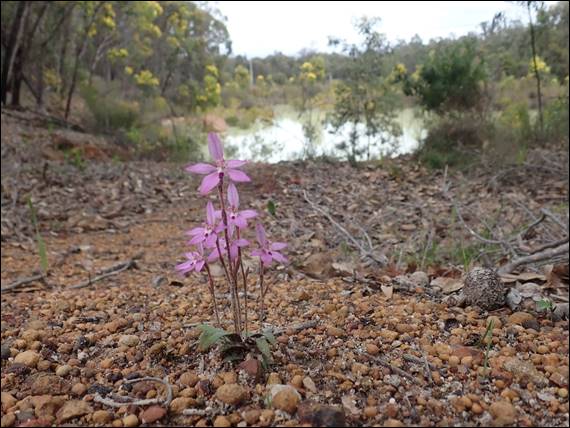
There were plenty of flowers out, and to change things a bit I took a few images of the non-orchid flowers that caught my eye.  Above was a small and delicate flower that I think may be False Boronia.  The one below I am more convinced of, and is a perennial herb called Milkmaid.  This species is Bruchardia congesta and found, amongst other places, on dunes and in coastal environments.  A similar species, Bruchardia umbellata, found in woodland and heath habitats, has a cluster of nondescript flavoured carrot like tubers that can be eaten raw or cooked.  Needless to say I didn’t pull up any plants to check if this was also true for the species we saw:

Lisa spotted a couple of beetles on the path so I moved them to safer ground, something I did in an area not too far from here last year (https://sandbagged.blog/2020/10/08/stuffed-jalapenos/).  It was a Cockchafer beetle and I’ve mentioned them before.  There are hundreds of varieties of these beetles, and they are difficult to tell apart.  But I was fascinated to read the only way to distinguish the various species belonging to the Heteronyx genus, which I think this one is, was by looking at the layout of hairs around the anus of the larvae:
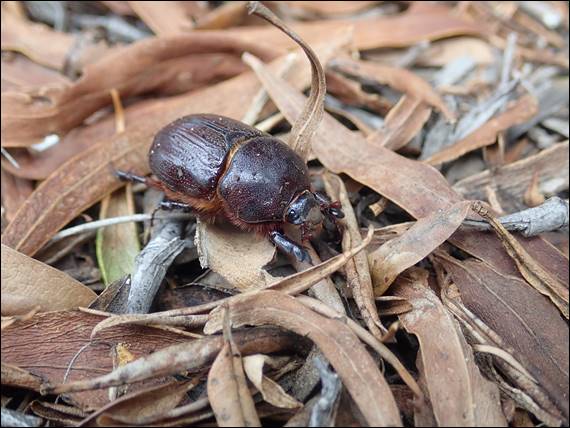
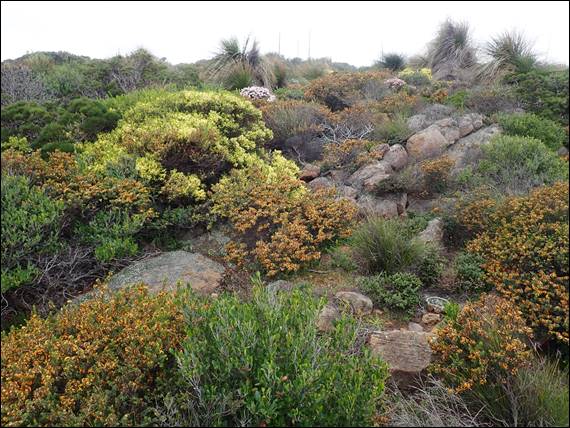
I have come across the larvae of a Cockchafer beetle once before but didn’t think to check that particular detail (https://sandbagged.blog/2020/08/14/stiff-as-a-board/).  Even though it was a cloudy day the colours of the low shrubs and herbs still shone out.  These seemed more prominent on the rocky and higher parts of the walk.  As the track dipped into lower ground it was more of a mass of greens, with occasional flowers.  I’m not sure why this may be and the only thing I can think of is that maybe the higher ground is drier, and the plants wait for drier conditions before they flower:
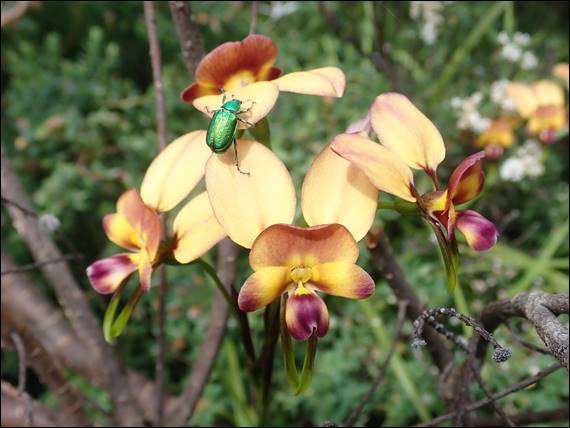
There were of course orchids about, including most of the ones we had seen at Mount Duckworth just yesterday.  So, while this is yet another Dunsborough Donkey Orchid, it is worth including due to the Jewel Beetle.  Called such, not only because of the brilliant colours but also as the wing case is textured and this helps create an appearance of cut precious stones.  Due to their amazing appearance insect collectors held them in high regard in the mid-1900s and the only insect that was more sought after for a period were tropical butterflies:
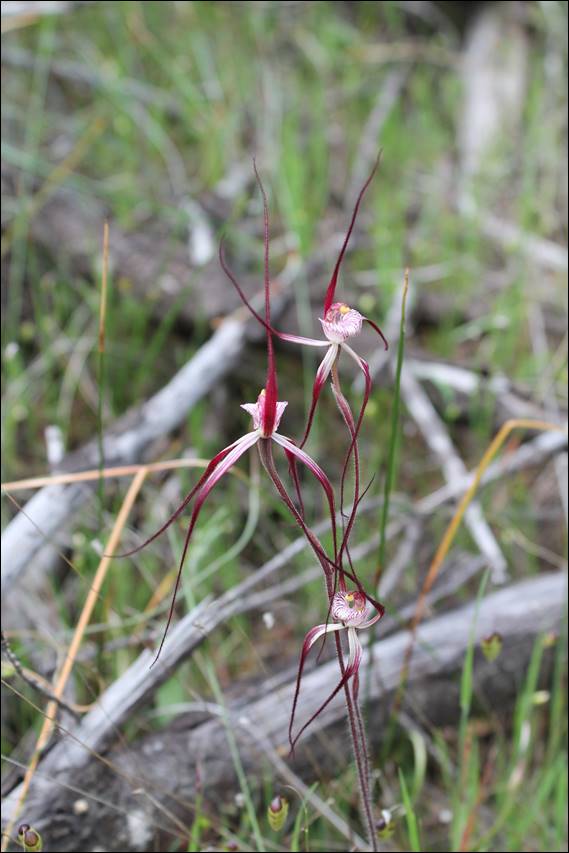
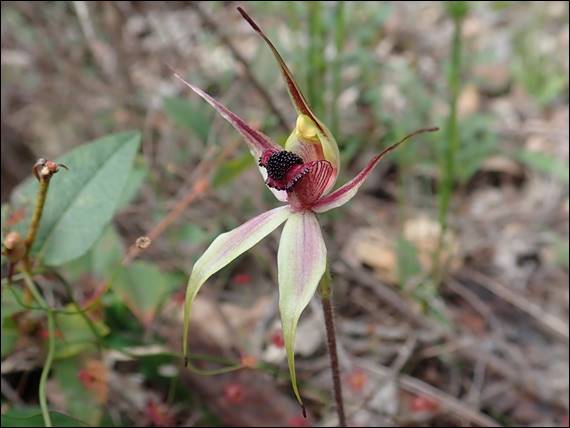
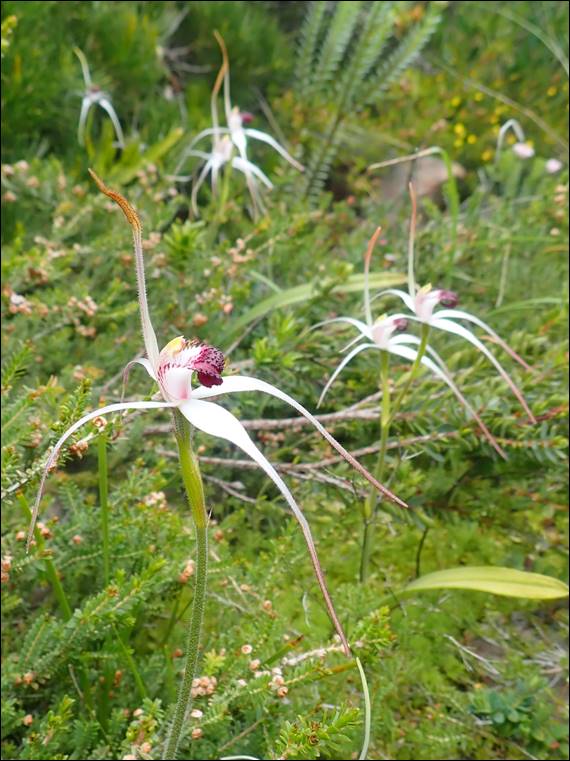
The appeal of jewel beetles was so high that they were exported from Australia at such a rate to make their existence become threatened.  For this reason, in 1978 the jewel beetles were listed under the WA Wildlife Conservation Act to help protect them and allow numbers to restore.  They were the first invertebrates in Australia to get this level of environmental protection.  We did come across one new orchid being the Exotic Spider Orchid, which Jaime and Alan had told me they had seen heaps of, so I was expecting to find them:
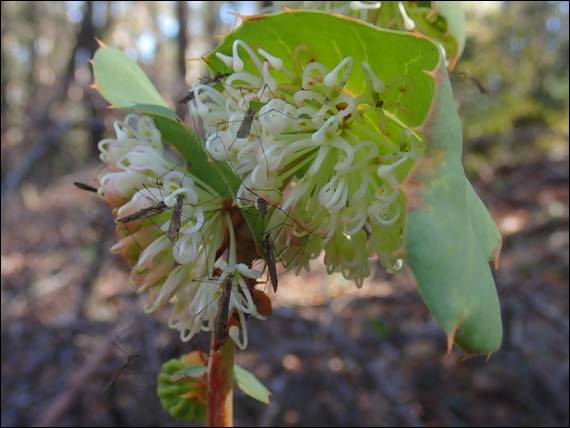
This next flower is endemic to Western Australia, found from Cape Leeuwin up to Fremantle in low heath, loamy soils, limestone and sand dunes.  It is known as Dampier’s rose, Diplolaena dampieri, and was one of several flowers that provided an additional sensory experience due to its strong aroma.  I’m sure you will have guessed that the main reason for taking the image was however the net-winged beetles, with their very distinctive antenna and ribbed wing case.  I’ll only go as far as to say they are in the Lycidae family, trying to work out their genus or species is a bit too hard:

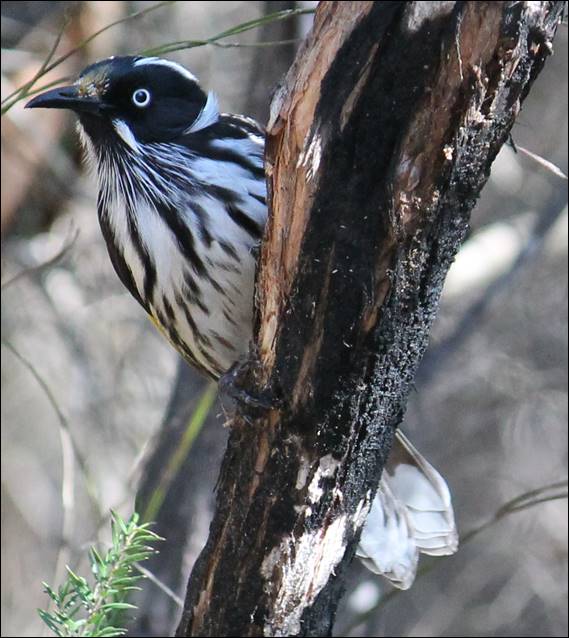
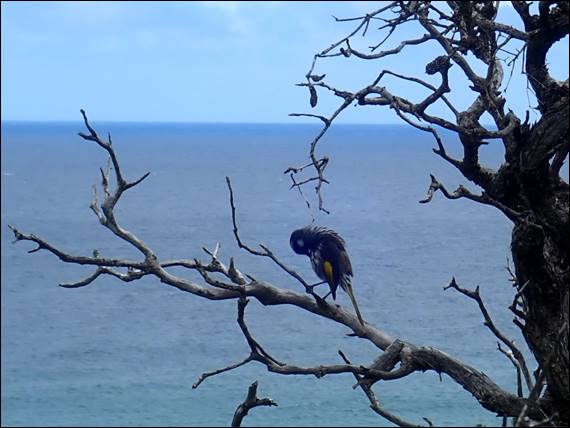
While the slower moving beetles were reasonably compliant when I wanted to capture some images the many birds we saw were not, as has been the case on most of our walks.  We did however stop several times as they flitted across the path hiding in the shrubs on either side, and of the smaller birds only the dependable New Holland Honeyeater ever sat still allowing us to observe them.  This one sat pruning itself for what felt like ages, and then there were others that bobbed about within the open space of the path catching a feed while on the wing, right in front of us:
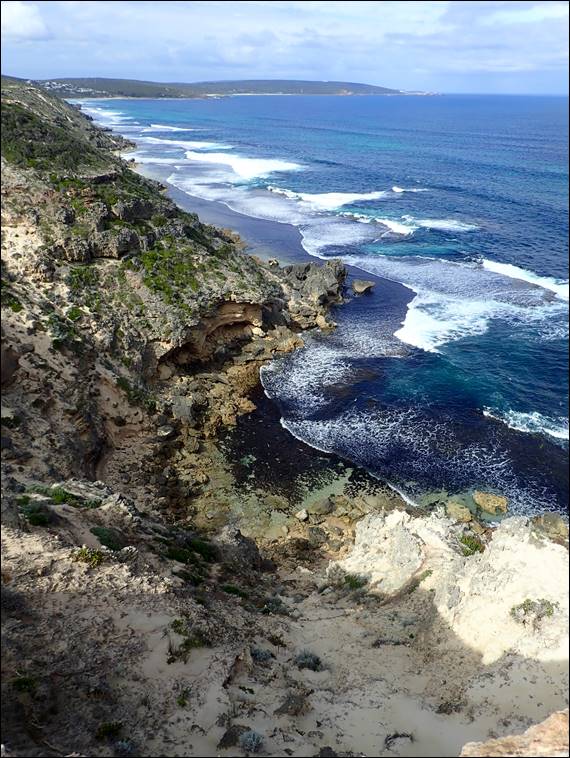
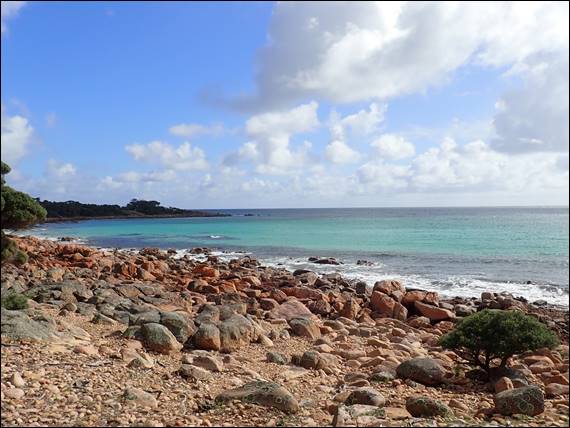
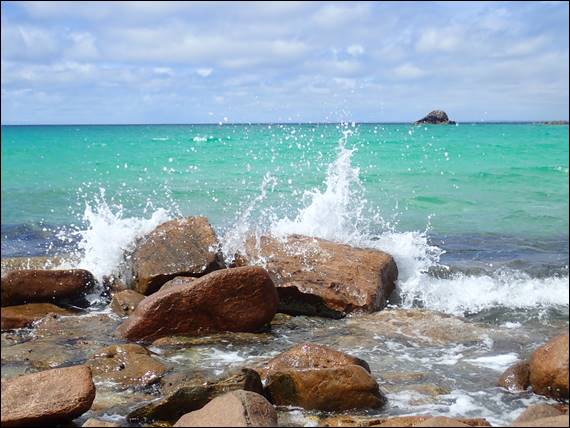
It was certainly busier than previous walks, but we still enjoyed being out again.  Something else that was different was that we didn’t shoulder the rucksack, even though Lisa had made up the flask along with snacks.  But it didn’t go to waste and after we finished the walk, we stopped somewhere quiet along the coast to enjoy a cuppa and feed.  Here we once again marvelled at the stunning aqua blue colour of the ocean on the eastern side of the cape, which was very contrasting to the darker blue green of the water on the west side of the cape where we had just been:
The South African pest

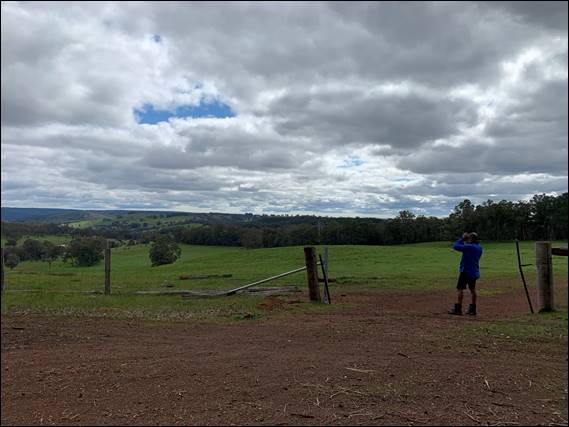
Lisa and I headed out for a local wander today.  The forecast was a tad iffy so we didn’t fancy going too far afield only to be rained on, as happened last weekend.  But we needn’t have worried and the precipitation never came and it even started to feel a bit too warm when the sun came out.  We picked a loop walk just north of Yallingup and started at Mount Duckworth. On the steep decent down towards the coast I spotted big patches full of Pink Fairy, Donkey and Cowslip orchids.  We were also serenaded by a large flock of White Tailed Cockatoos as the alighted after being scared by an eagle:

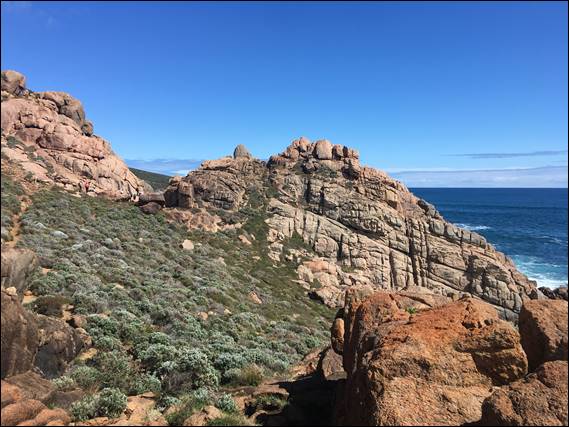
The coastal path was part of the Cape to Cape walk, a 250km coastal hike that takes you along the entire length of the Leeuwin-Naturaliste National Park.  It is a walk that we would one day be keen to hike end to end, but today we only joined it for a short four kilometres.  The track passes all of the climbing spots I frequent on the western coastline.  And in the image below, for those who know what to look for, it is possible to make out Smiths Beach Rocks.  Despite the great start to the walk, in terms of orchids, there were not many along this part of the track as sides of the path were covered in weeds:

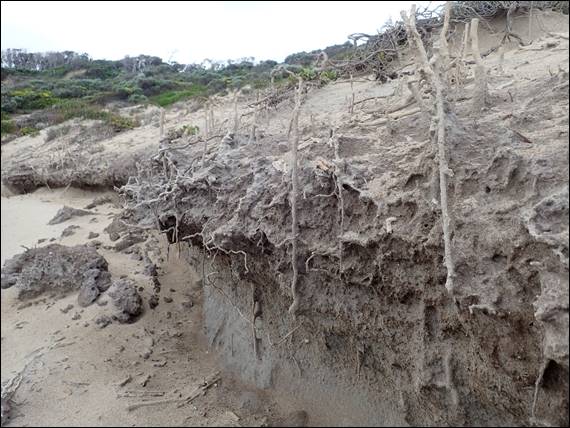
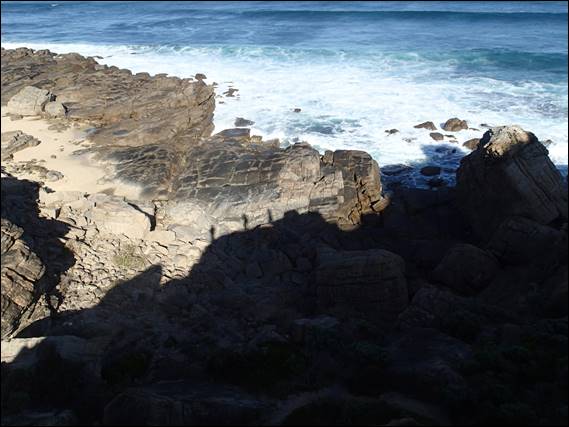
After a while we spotted an area that looked like a good place to have a cuppa, it was a little way off the path but there was a goat track to take us there.  The Cape to Cape path didn’t seem to truly skirt the coast.  Possibly to keep people away from the steep drop into the ocean.  The sandy dunes here are protected by interlaced beds or limestone, as can be seen above.  Much of the limestone comprises a fragile rock that comprises sand cemented by calcium carbonate that has percolated through the dunes with rainwater, over thousands of years.  At times, in a geological sense, this process was paused allowing plants to grow:

When it started up again the roots of these plants became encapsulated by the calcium carbonate.   Then as the organic matter broke down, it left solution pipes that provided a pathway for the water.  Overtime these pipes fill with calcium carbonate as it came out of solution.  And being more concentrated within the pipe it created a much harder formation.  The skeletal remains of these plants have now become exposed, as the softer calcified sand has been eroded away.  It was a fascinating landscape to see, and completely unexpected:

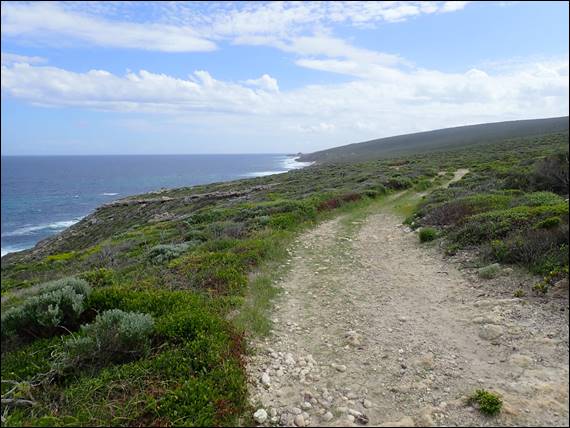
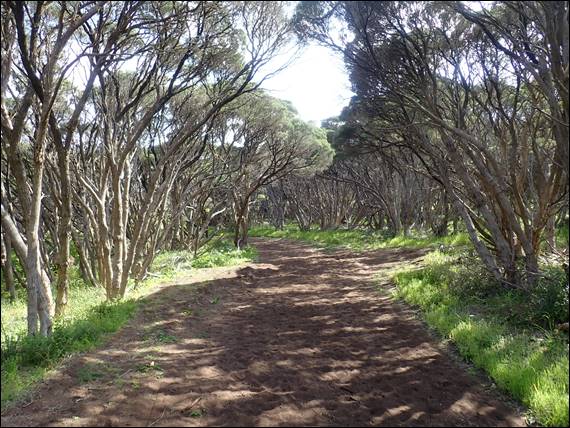
Once we hit the track again we didn’t dilly-dally and kept a steady pace, it was a wide and featureless path with low scrub on either side.  It seemed a shame that the track wasn’t closer to the ocean, to allow more of a view of the coastal formations.  We found out that the original track was closer to the coast but the markers have since been moved to this wider path, maybe due to increased usage.  With weeds once again smothering the vegetation on either side of the track there was little hope of finding any orchids.  We did however keep an eye on the ocean, and spotted a whale that breached several times for us:

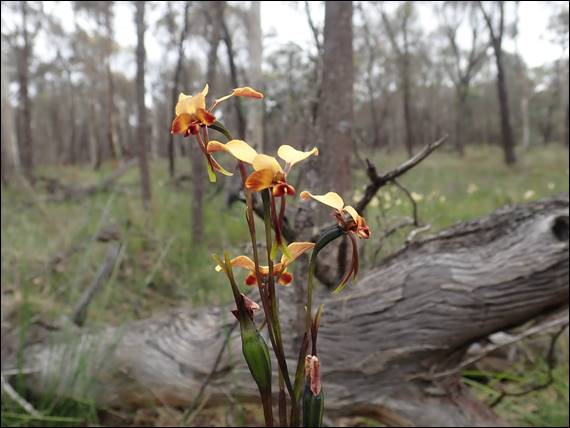
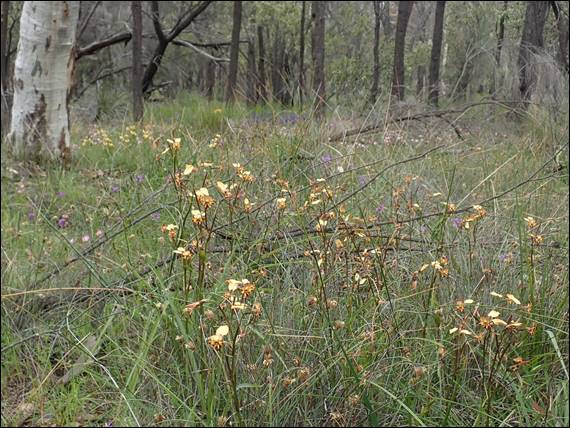
The next section of our walk took us along a four wheel drive track, as we hiked back up the soft sandy dune for several kilometres until we were back up on the ridgeline.  During this section numerous cars passed us.  But unlike last weekend, everyone that passed us slowed down and some even stopped to have a quick chat.  If felt like a slog going back up the dune, but we did spot more orchids as we got higher up.  I previously mentioned that we had seen donkey orchids at the start of the walk, and these were by far the most prolific orchids we saw:

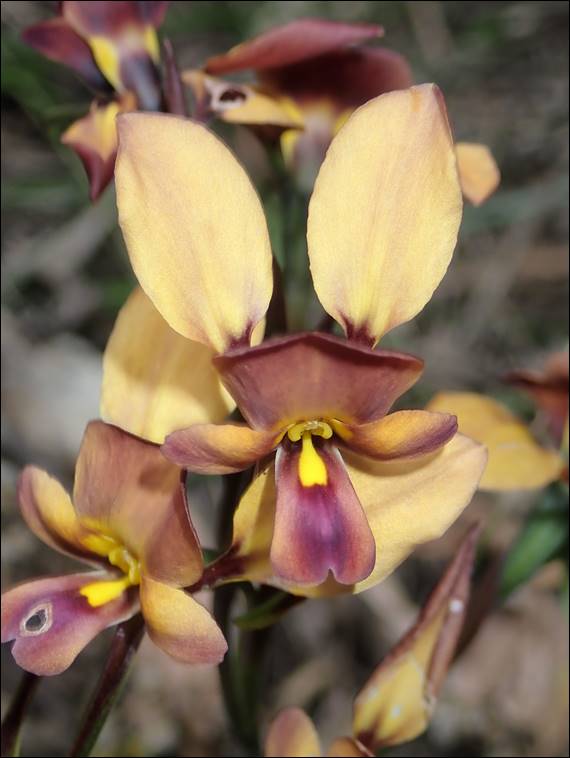
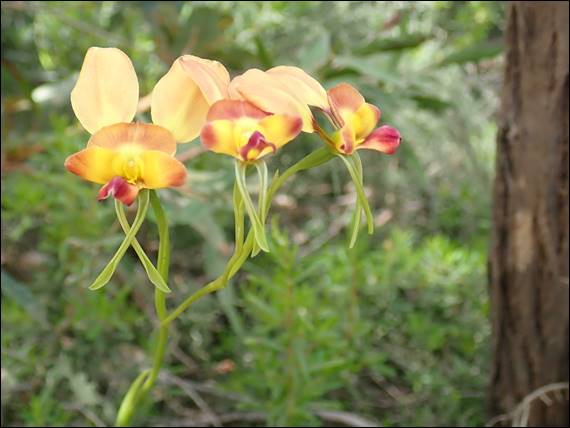
There were so many that I just couldn’t believe they were all the same, so I took a few more images than maybe necessary to allow me to check them out later.  I’m pretty sure that the ones we saw the most of were the Dunsborough Donkey Orchids.  They were a much taller plant and were up to half a meter in height.  The colours of the sepals and petals were a deep brown-purple, see two images above.  Then there was the above smaller, both in height and flower size, variety:

As the image shows it also had a more golden colour and had “ears” that were more rounded in shape, and I believe it was the Pansy Orchid.  This made me check our trip to Narrogin a few weeks back (https://sandbagged.blog/2021/09/11/itsy-bitsy-spider/), and looking at the features of our previous find in more detail I reckon they were the Western Wheatbelt Donkey Orchids.  It is very similar to the Common Donkey Orchid, which I first called it, but has slightly smaller flowers and looking back at donkey orchids I have found in previous years I now reckon my first guess was wrong:

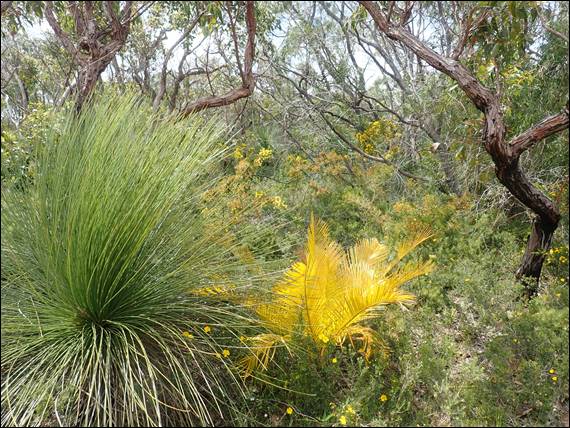
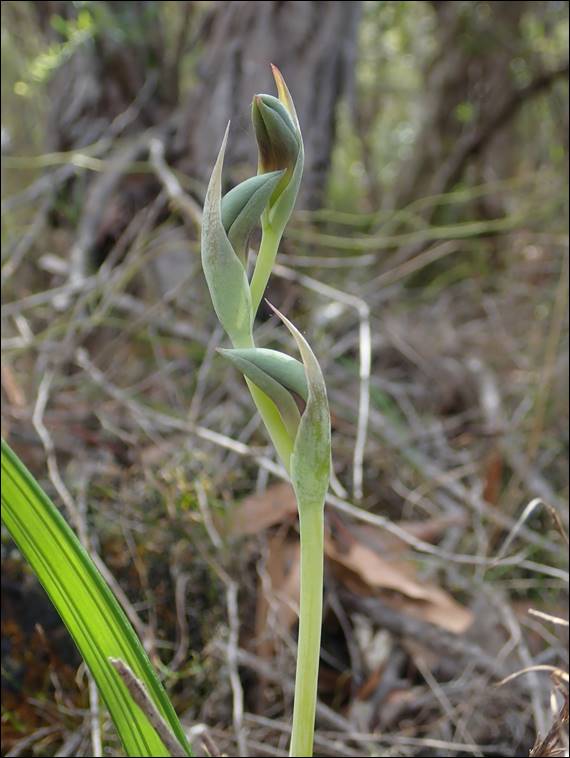
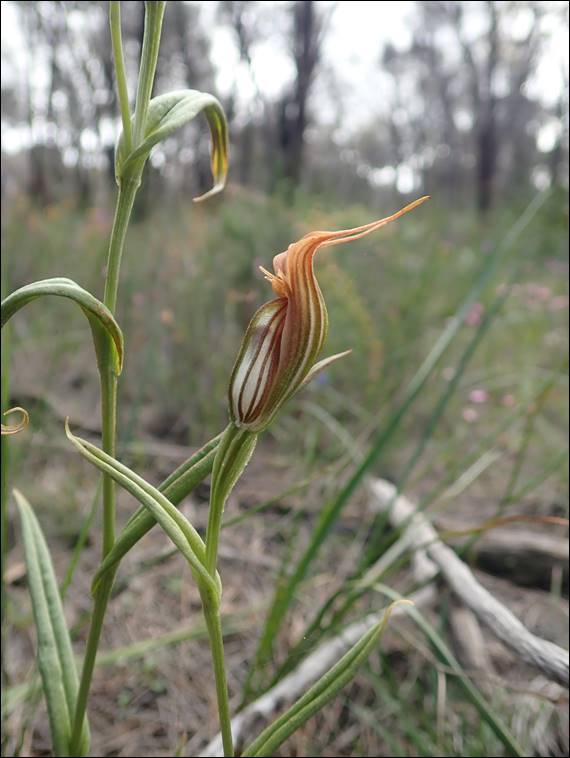
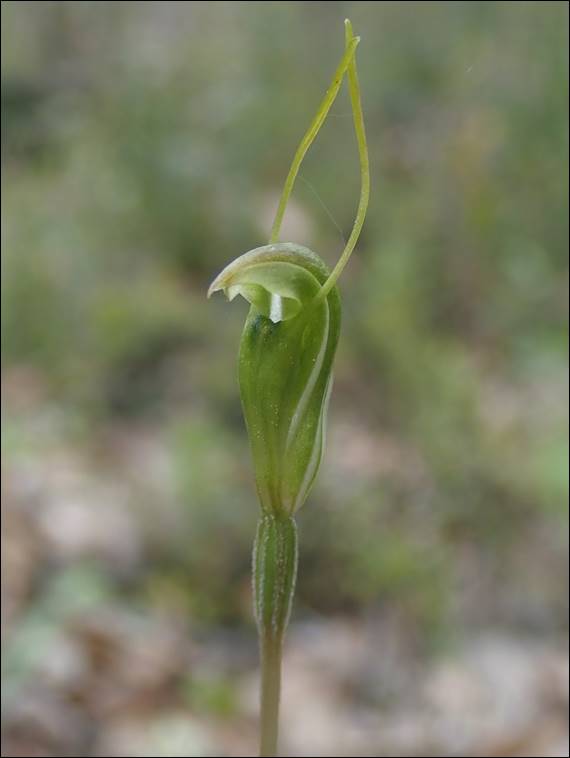
With all this talk of donkey orchids I’m getting behind.  After the four wheel drive track we followed a fire break.  As the images above show the vegetation included low trees and had thick understorey, and this section of the walk had the most flowers.  It was very beautiful, and hidden in the understorey I spotted the same three orchids I had already seen.  There were also a few greenhoods that were past their due by date, and the one below that was yet to open, which is a Beak Orchid:

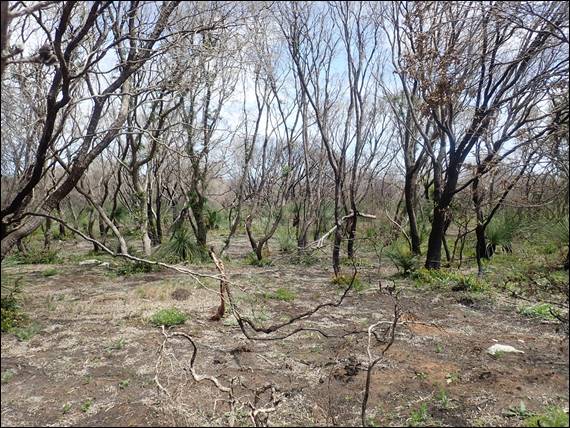
The fire break varied from a reasonable path to a bit of a bush bash, so it was obviously no longer maintained.  But it was a great section and we spotted heaps of cool flowers and also the odd fungi that was still hanging about.  The understorey seemed to change quite a lot and we saw areas dominated by acacia, banksia and sword grass.  There was also one section devoid of any understorey.  This recently burnt area seemed quite eerie but beautiful in its own way, the only probably being that it seemed the weed species were coming back first:

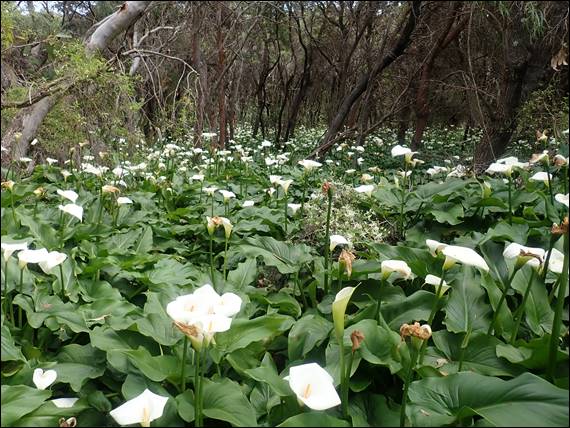
On the last stretch of the firebreak, before we popped out at the paddock we started from, the understorey was nothing but Arum Lilies.  This is a plant I have mentioned in previous posts and one that is a really invasive pest.  Yesterday Dan asked me if I knew where they had come from.  I was unable to tell him, but I can now advise they were brought over from South Africa in the mid-19th century, as an ornamental plant.  In South Africa the fleshy tubers when boiled provided a starchy food source but they are poisonous when eaten raw, a real risk for livestock:

Playing catch

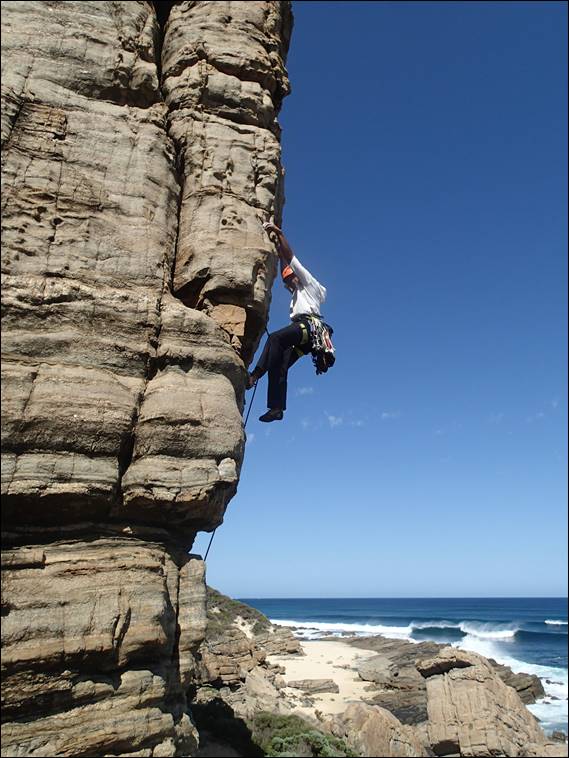
Another not so early start, and that can only mean I was climbing with Dan today.  The sun was well and truly up as I drove to Capel to meet him.  But to be fair, for me it is a short ten minute drive, while for Dan it is close to three quarters of an hour.  We had already decided that today was a good day for Wilyabrup, a week of sun was hopefully enough to dry the steep hand-jamming crack of Blondes Have More fun.  A thrutchy climb that starts up an overhung crack, which for some reason Dan would like to have a crack at:

I too had my eye on a route.  English Ethics, and in true British trad style it is sketchy and serious and of course should only be climbed ground up so you don’t know what to expect.  I’ve not had the gumption to lead it to date, having had several false starts on it over the years and always backing off due to lack of gear.  But with some serious trad leads at Smiths under my belt from recent trips there, I felt better prepared.  The question is who had the more crazy idea of what fun is.  But as is sensible we started on something very much within our abilities to warm up on:

Jaime also joined us this morning.  And the three of us wandered back down in full sun, after enjoying the more relaxed delights of an easy start to the days fun.  Despite it being a stunning day, a long weekend and a late start we were still the first people at the crag.  And as the day wore on, and we were there till well after midday, only two others climbers turned up.  There was of course the usual “wandering out yonder” tourists, who probably would never have come here if they were allowed to travel more freely out of Western Australia:

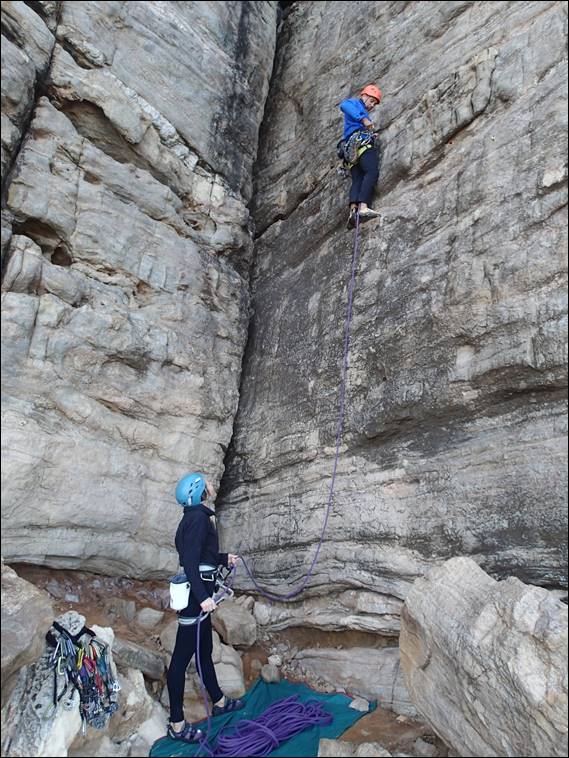
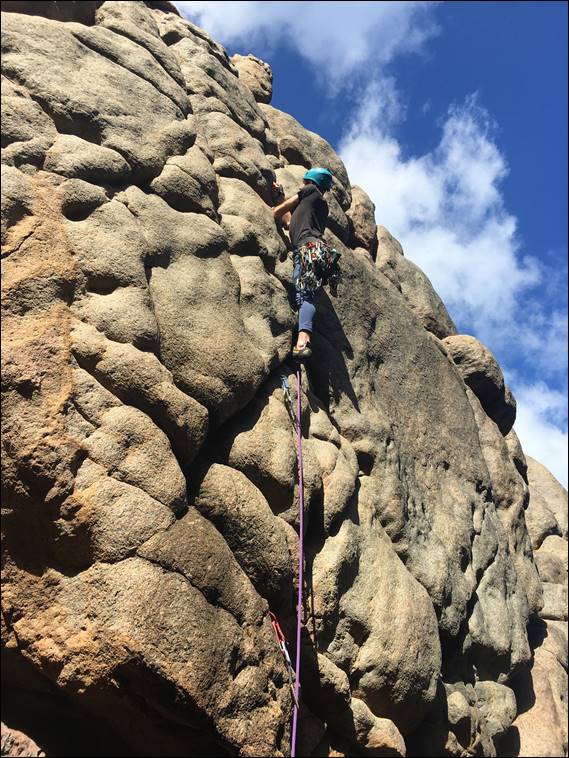
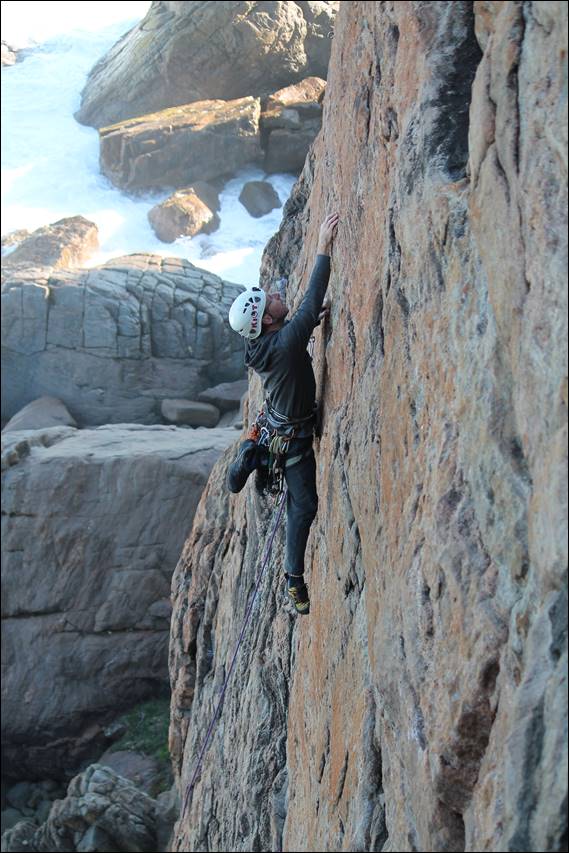
Jaime is still adamant that she will never lead.  Today I was willing to accept that, as she hasn’t climbed much of late.  For this reason the second line I picked was one that had two approaches.  A direct thinner and more delicate route for Dan and I, and easier line just a few meters to the left for Jaime.  While the image below may not be all that exciting, it is the only images with Jaime in to prove she really did join us.  Dan had some technical camera operation issues, which meant he managed to miss all the amazing poses I struck before I got to the stance where I could finally clip the first carrot:

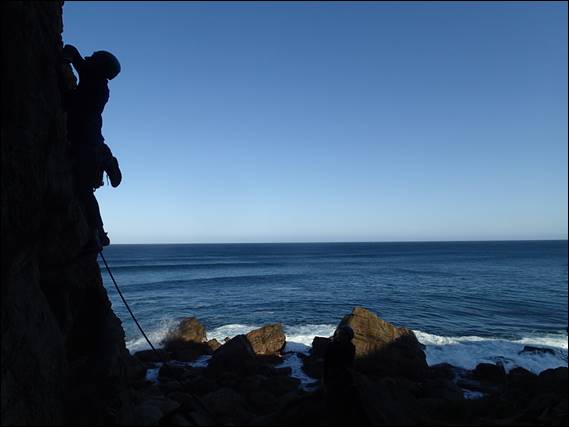
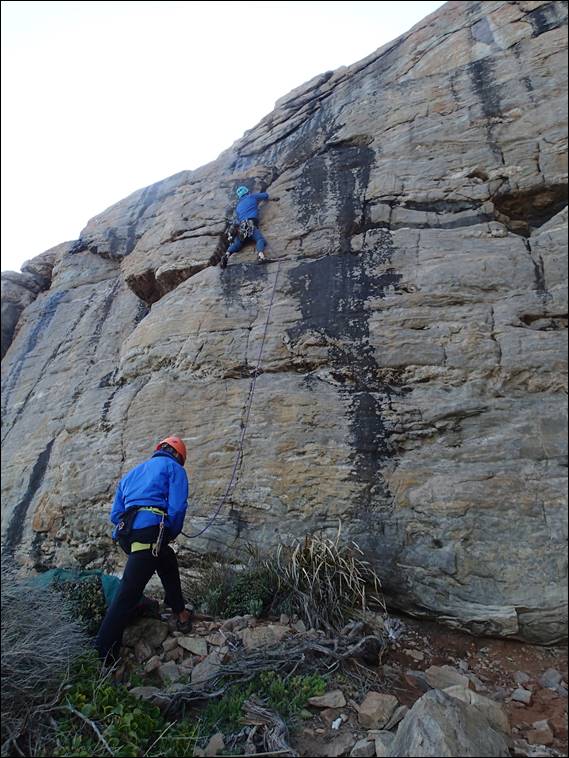
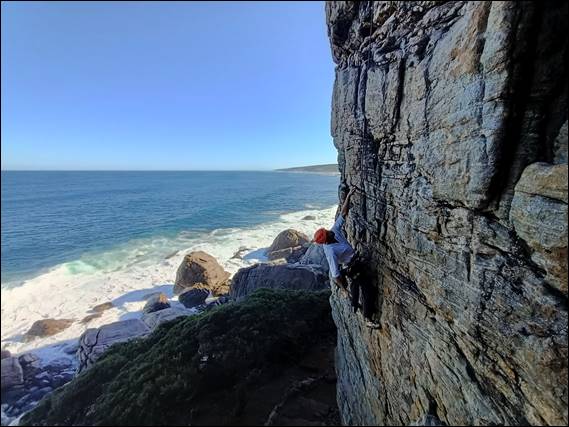
The reason for Jaime not being in many images is in part due to her having the camera while the exciting activity of leading was going on.  She didn’t intend to stay with us all morning, but while she was we picked routes that she could reasonably have a crack at.  This was however not the case for where I suggested Dan go next.  A wall at Wilyabrup that rarely gets much attention, maybe because the routes are broken by a huge picnic ledge.  But they are still good fun and offer a style of climbing that is quite different, another possible reason people don’t climb these routes.  Dan really enjoyed it but Jaime no so much, although while Dan was watching she did spot whales one of which fully breached numerous times so not all was lost:

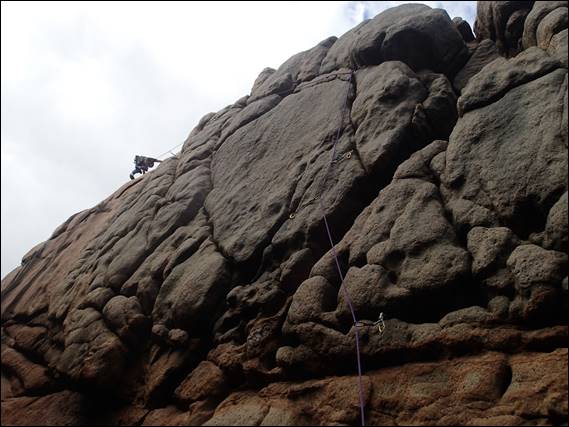
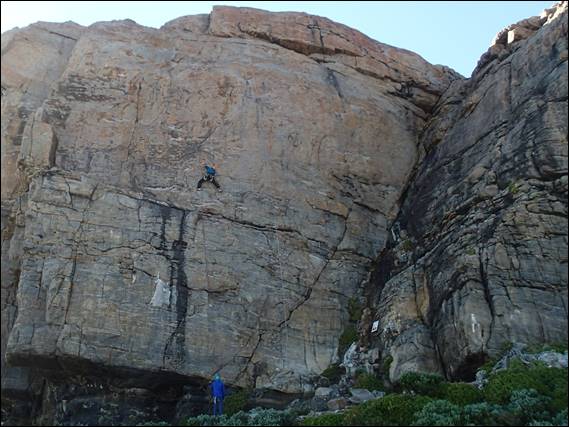
It was as Jaime was attempting to climb the above route that Oliver and Yohan turned up, neither having climbed for several years so they were keen for some fun easy routes to top rope to get back into it.  I pointed them to the obvious route, which happened to be right next to English Ethics.  So while I was super keen to jump on it for my next lead, it felt a little weird to climb on a route literally a few meters from them when there is no one else at the crag.  So instead I decided on a route that still feels bit gnarly but is also one I have led before.  Dan loved the look of way I started up the bouldery bottom section, but I’ll come back to that later:

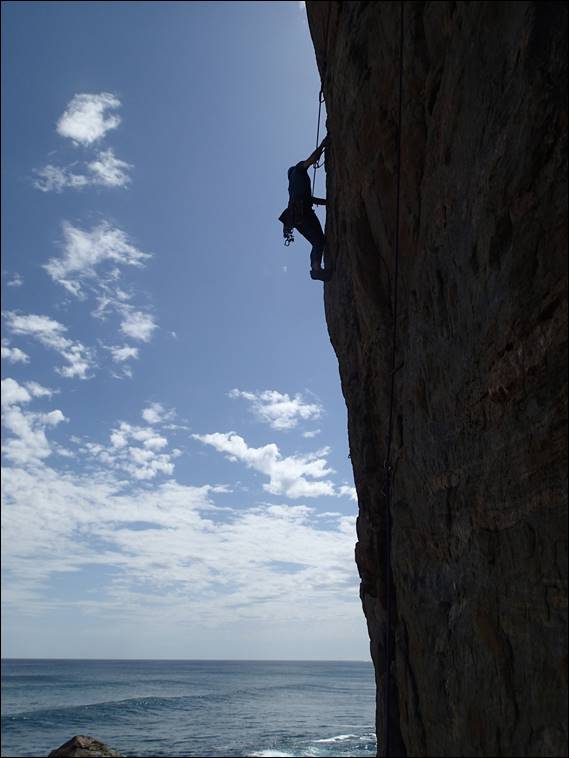
Jaime saw where the line went and decided it was worth hanging about to take images, and we are glad she did.  Not just because of the images, but also as I forgot to take bolt plates with me plus I didn’t have my wires as a substitute for bolt plates.  I hung about on the route while she raced to the gear, got all tangled up getting the plates of the carabiner, and then started to throw them up at me.  The first didn’t reach me, the second I missed but I was very happy to say third time lucky and I finally had a plate.  My arms were burning by now but I somehow completed the route without falling off, and I’m still not sure how:

As Dan topped out after following me, I declared that English Ethics was off the table for me.  He too said that he had felt pretty pumped on the route and wasn’t likely to tackle Blondes Have More fun.  So you’ll have to wait for another time to see how we go on those two routes, assuming we do eventually get onto them.  Jaime left us at this point, and despite Dan saying he was pretty pumped he then climbed the highest graded route of the day, Mid-Wall Crisis, with amazing grace and composure.  That was how it looked to me from below, however afterwards he told me he was seriously pumped on the route:

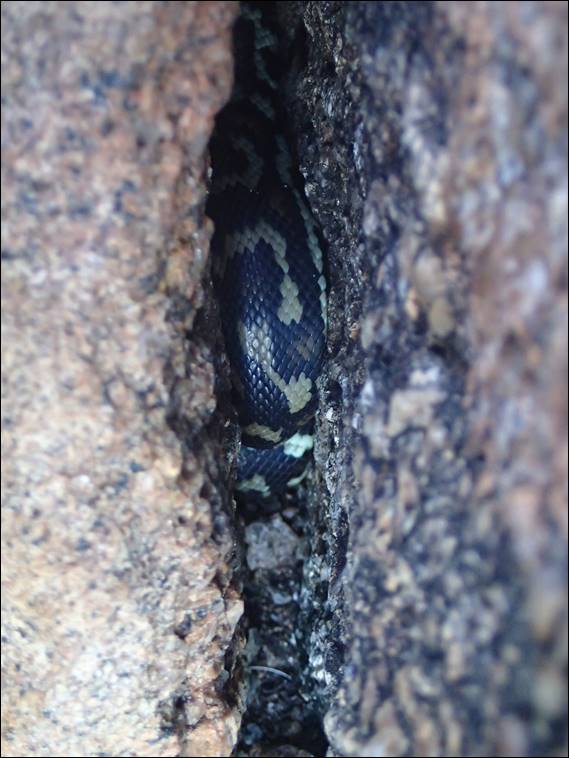
We again found that we had the crag to ourselves, but the sun felt too hot and we were gassed.  Although I’m not convinced Dan really was, as before the last climb he donned his crack gloves and practiced for Blondes Have More Fun by climbing the crack below the bouldery moves of my last route.  I videoed Dan, see below, and am glad he didn’t video me as I failed miserably when I tried.  For the final route of the day we climbed out with packs, hoping to see a Carpet Python sunbathing at the top of the flake where I have seen one so many times before, but it was not to be this time:

The Muppets

It was a week of possibilities as Sunday approached, and it could have ended up with six of us heading out for a climb.  A number that we have not managed for a long time, but as the day got closer, and even a mere hour before my departure from home, a few people dropped out leaving us with four.  Also for various reasons we headed out in three cars, but I won’t bore you with the details of why.  This resulted in me arriving first, and after Lisa and my wet walk yesterday it looked like today might have been a repeat event:

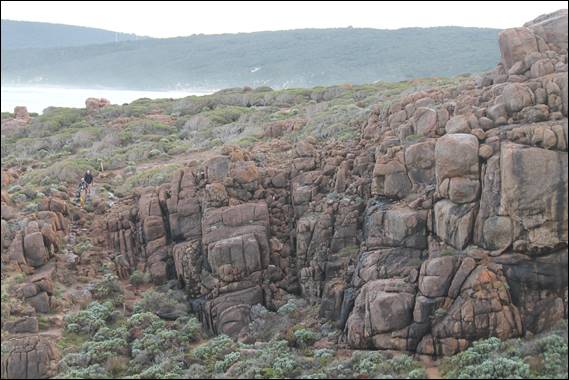
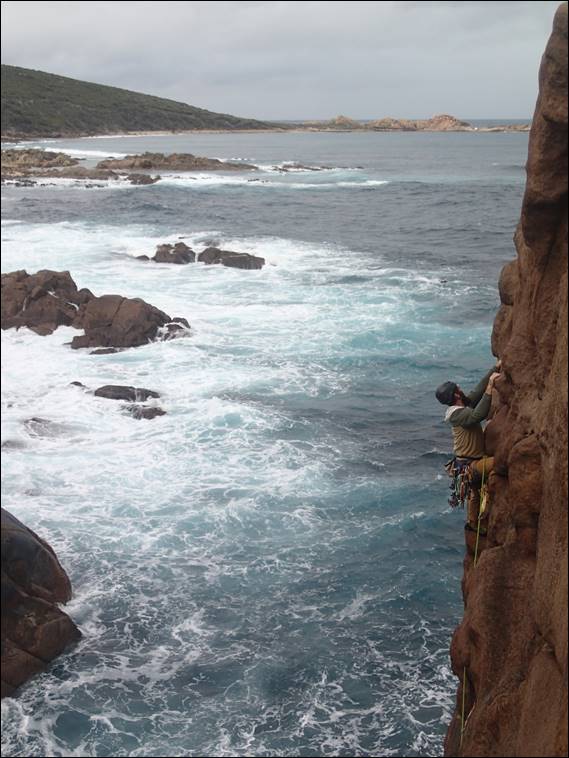
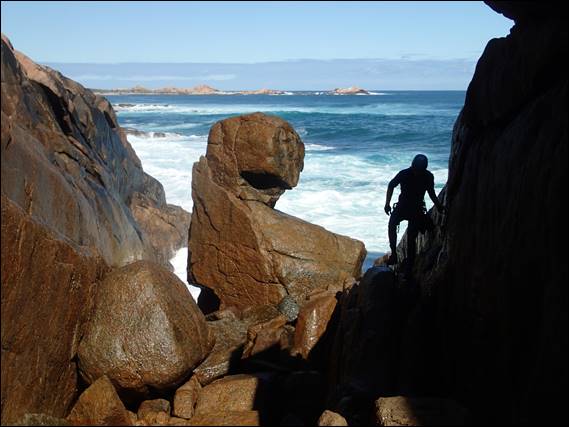
It rained on an off as I drove out, and as the boys strolled in after me I wondered what they would say about it.  The low rain-bearing clouds to the south were making their way towards us and the rock was wet.  But Smiths Beach friction won’t be beat by a bit of rain and they were not put off by the conditions.  So we descended into the Zawn.  Now you may think that I would have a Déjà-vu moment, seeing I had been here last week with Dan.  But no, last weekend my feeling was one of slight dread, an emotion that Smiths Beach rocks can bring on:

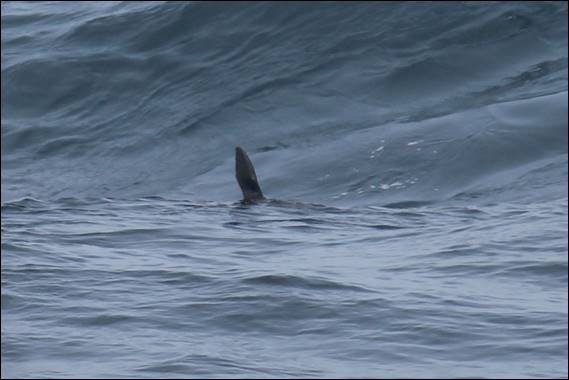
Today having had a recent visit here I felt more prepared for the place.  I also had plans for what I needed to tackle to prove to myself that I had overcome that feeling of fear that the place can create.  You may also be thinking here comes a post that will be a bit samey, but again think again.  I have not included much about the climbing, instead focusing on other aspects of this place.  For example this seal, which eagle-eyed Howsie spotted and that stayed with us for hours.  It also remained for most of the time in this strange position:

Howsie was again on point when we discussed why we were observing this behaviour.  The seal’s capillaries are close to the surface of its skin, and by putting the flipper it can catch whatever heat the sun might be able to provide.  If it was too hot the body would be underwater to cool down.  Fortunately for the seal, and us, the clouds slowly broke up and eventually stayed away, allowing the sun through.  What we could not understand was why the seal would not have just found a rock to purchase on and take in even more of the heat on offer from above:

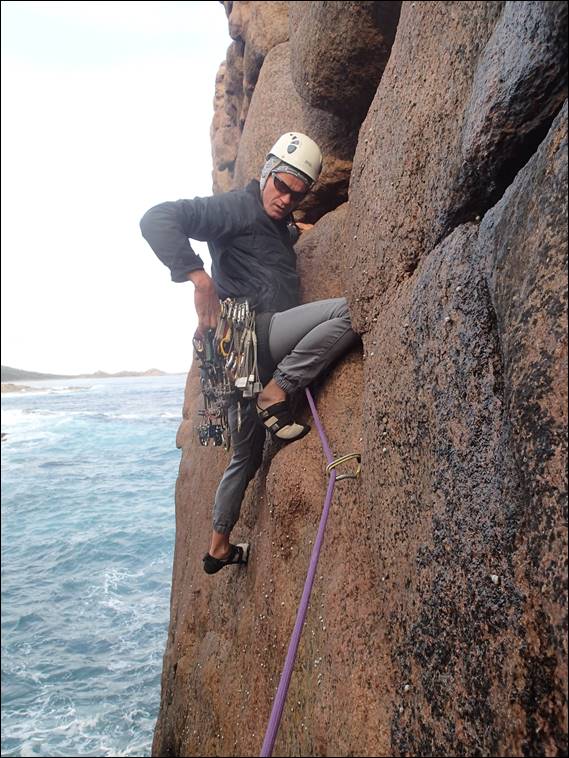
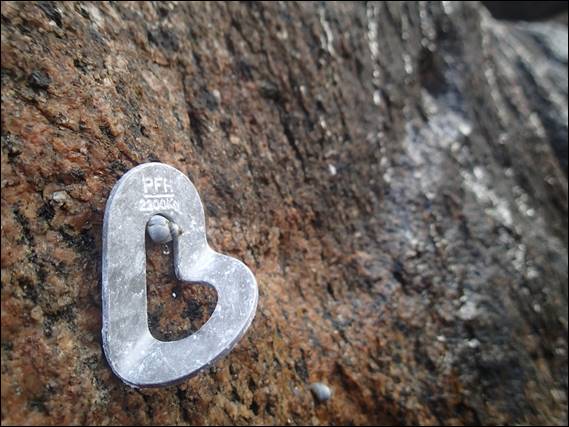
Today Craig and I had gate crashed Mikey and Howsie’s morning session.  If Dan had been able to get out we would have been headed to Moses Rocks.  But seeing he wasn’t able to join us, we decided to be social and join the boys.  Mikey, for a moment, forgot he was at a true trad crag.  No he didn’t try to clip this bolt plate but as he started to climb he did have the rope over his shoulder, ready for the first piece of gear.  Needless to say the trad patrol (i.e. me) put him right and he duly complied and went back to more traditional approaches:

The little snail seen above was one of probably millions, they were all over the walls and even on the rocks that were being relentlessly smashed by the waves.  Its name is quite simply Marine Snail, or for those more academic types Austrolittorina unifasciata.  They are the most abundant mollusc you will find on the rocky shores along Western and southern Australia as well as New Zealand.  They were sprawled across the rock platforms and faces, and were ready to feast on the lichens and algae.  Just waiting for them to be moistened by either the ocean or rain:

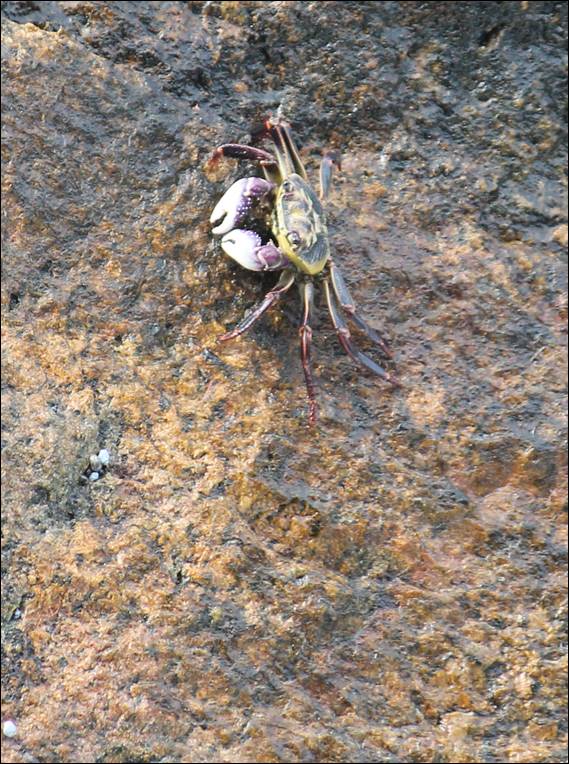
While we were scaling the cliffs, our best endeavours were completely outdone by the Purple Rock Crab or Leptograpsus variegatus.  These are found across the entire southern subtropical Indo-pacific Oceans, and are masterful climbers.  Clinging onto vertical and overhung faces, nimbly scuttling about while picking at the lichen and algae with their claws.  Being omnivores they are also known to prey on barnacles and limpets, and for the latter they wait patiently for the limpet to start moving before swiftly placing their claw under the shell and throwing the limpet upside down:

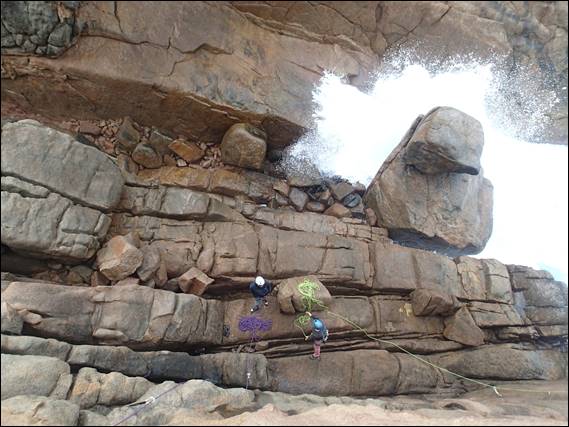
I named one of the routes here after these fellas, and I did attempt Crab Scuttle today.  But as can be seen below the waves were on occasion still reasonably big and the seaward wall this route was on was wet as.  Despite trying several times I just couldn’t commit to the unprotected moves up the initial blank looking wall.  A common thought going through my mind, did I under-grade every route here?  No matter, as I did climb the route I wanted too on Harbour Wall.  A route Howsie also led allowing me to include a short video of him topping out on Crow’s Nest:

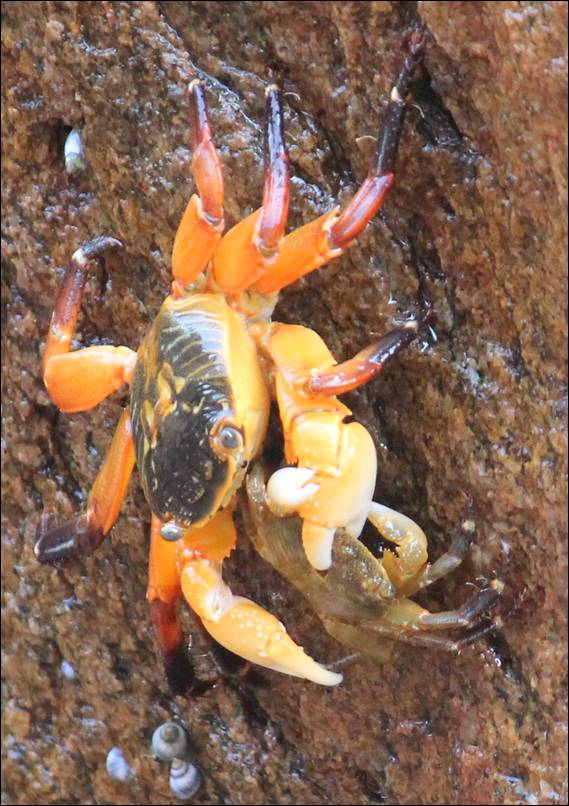
With two routes under each of our belts we left Harbour Wall and headed to our packs.  As we wandered back I spotted a bright orange crab and this is where I get a little confused.  While I am pretty sure it is the Swift Footed Crab, it seems to have the same Latin name as the Purple Rock Crab.  So I will wait to see if anyone out there can unravel this mystery for me.  I still included the image I captured, as you will see this one also has a tasty meat dish.  But I have had no success in working out what crab was on the menu:

Craig had done us proud today and brought not one but two flasks of tea, sorry Dan maybe next time!  We sat and supped on a welcome cuppa and chilled out for a bit.  Then it was back into action on the mighty face of Camelot Castle.  Craig indicated quite assertively that he was more than happy with his two leads for the morning and I could take the floppy end from here on in.  That was fine with me and we romped up a couple of routes finishing on the second line I had was keen to test my psych against, Lady of the Lake:

This wall is that bit further away from the ocean and there are no more interesting creatures or facts to share with you.  The seal was long gone; the crabs still scurried about; and the snails we hadn’t knocked off, as we had indulged in our pastime, were still clinging on.  While I had spent a fair bit of time watching these creatures and observing their behaviour, we too had been observed.  On numerous occasions we would look up to the top of the zawn and a party of walkers would be peering down at us.  I do wonder what Latin name they might give us:

Whatever it may be we had a blast today and thoroughly enjoyed ourselves, finishing the session with a second cuppa while sorting the gear in glorious sunshine.  My guess is insanus stultis or in English, crazy stupid people.  You may have been expecting that I was going to say people might have called us Muppets, thinking that was the connection with the title of this post.  However, this time the title is completely unconnected to the tail.  It is in honour of those TV legends, The Muppets, who graced our screens for the first time 45 years ago today.  Happy birthday Kermit and all your colleagues:

Nil point

Today we had an early start with every intention of enjoying an eighteen kilometre track in the forests near Dwellingup, the aim was for us to start the walk at 8am.  The forecast wasn’t great, but Lisa was prepared to risk it on the proviso that I didn’t stop too many times to take images of whatever I might find.  So we set off from home at 6am and drove through belts of miserable rain, which started to clear as we got closer to our destination.  The conditions were looking up, but that is when things started to go amiss:

Firstly it was hard to actually find out how to get to the start of our chosen walk.  All the information gave clear names for the locations, but there were no signs and the roads that we should in theory have taken off the main drag were gated or seemed to be private.  Then there was this strange feeling that we shouldn’t be here today.  Finally we came across a road safety crew, as they started to put signs out indicating road closures.  We eventually found out that the Dwellingup 100 was on today and that meant all the tracks were closed:

There were no signs anywhere to indicate this and the workers couldn’t give us much information, so Lisa did a web search and that is how we found out.  Bummer… So we began to work our way back south and towards the inclement weather.  As I drove, Lisa scrolled through possible options stumbling across the Lake Brockman Loop walk.  This was described as an eleven kilometre hike and great for wildflowers.  This place was well sign posted and easy to find, so we finally started walking and hour and half after we had intended:

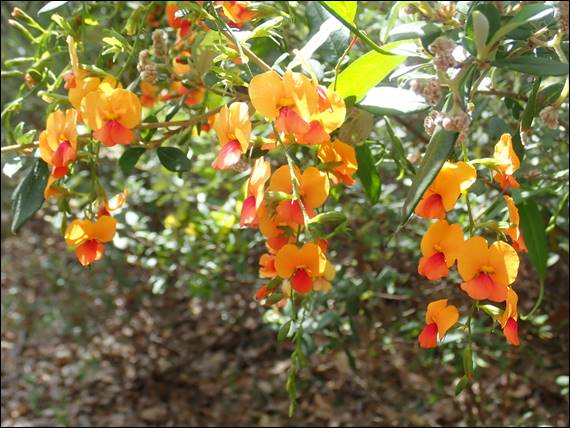
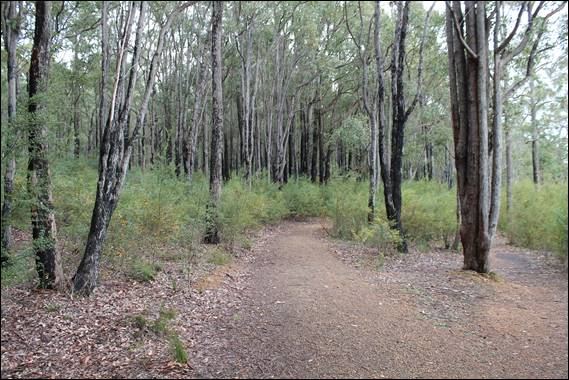
The start was promising, a lovely track that followed close to the side of the Logue Brook Dam reservoir.  Making me think it is a little strange as to why it is not called the Logue Brook Dam Loop walk.  The path wandered through trees and there were heaps of beautiful orange peas out in full bloom.  While I took note of all the floral delights in the mid-story, I also kept an eye on the ground adjacent to the path.  Early on I spotted a Short-eared Snail Orchid, and found a few more of them at various locations along the walk:

This find added to both my seasons and long term tally of orchids species found.  It was a good start, and even when the rain came in it didn’t dampen my spirits.  We had to cross over the crest of the dam, and as we did the rain became harder and the clouds descended.  I half expected Lisa to question whether we should go on or turn back.  But she never did and we continued onwards.  A few cars passed us as we crossed the dam and afterwards we had to follow the road, no problem with that as I found a few Leaping Spider Orchids next to it:

After a while we came across a shelter just off the road and where I rearranged things, as my SLR bag was getting a little soggy.  Putting the SLR in the rucksack would also help with me sticking to my agreement of not stopping too often or for too long.  From here there was no defined track and we had two options, follow the road or walk along the edge of the reservoir.  The dam wasn’t full, I can say that as we saw that it wasn’t flowing down the spillway, so there was enough exposed land to walk between the water’s edge and the vegetation:

Due to walking along the side of the reservoir there wasn’t much to see, the ground comprised gravel and there wasn’t a lot of vegetation.  But we carried on regardless, and it seemed that Lisa was taking more images than I was.  We came across a few patches of vegetation.  Nothing exciting, but we did spot a few Splendid Fairy Wrens and despite the rain we stood still and watched them for as long as they allowed us to.  Apologies for the blurry image and there may be a few more to come, but the damp conditions were not in my favour photography wise:

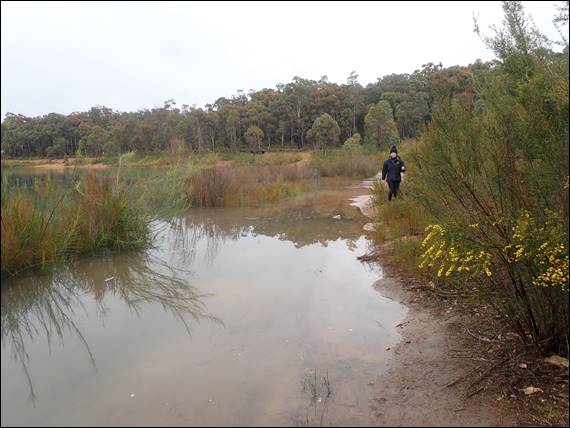
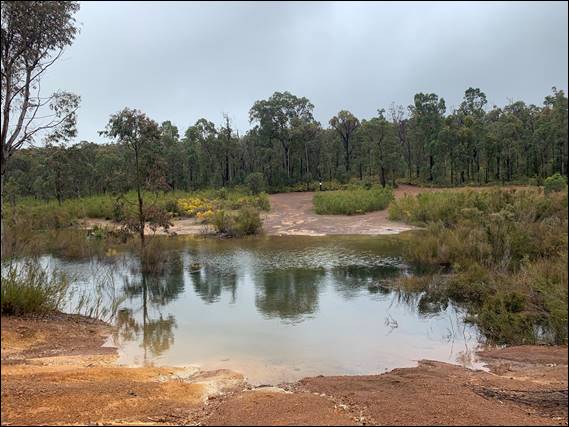
While the reservoir was not full, to avoid needing to walk along the road we did have to skirt along narrow edges where the water lapped the vegetation a couple of times.  These section added a bit of variety to an otherwise pretty plain walk.  They were few and far between and most of the land along the water’s edge was bare and barren.  There were also signs of water runnels eroding the exposed gravel down into the water.  I’ll explain another reason for the barren gravel later on, and it may not be what you were expecting:

We had of course packed a flask of tea and food to munch on.  However, since the shelter we passed early on we found no more.  There were some but they were accessed off the road, and as we had walked along the reservoir to keep away from the cars we had missed them.  We eventually stopped at the halfway mark, in part as there was a break in the weather and also a place that was reasonably quiet.  The hot cuppa and cheese roll went down a treat, and while I searched about there wasn’t anything to report:

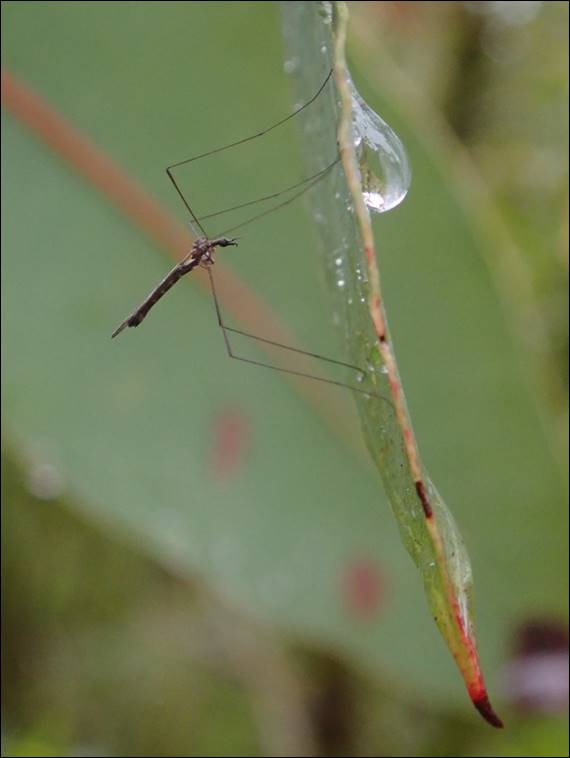
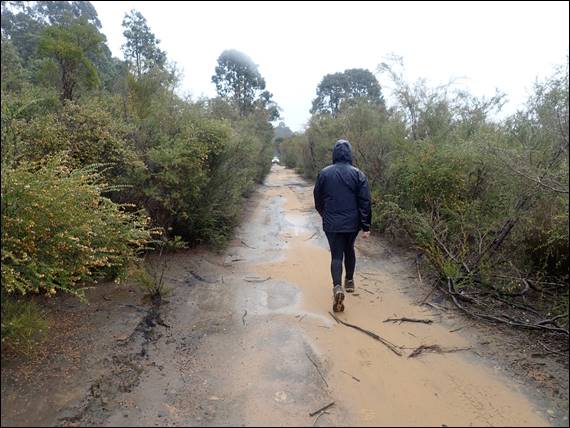
With the constant on and off again rain the mosquitoes, which were about, never really bothered us.  The proof that they were about is above, an image I captured while supping on my hot tea.  Lisa has an app, well she’s got stacks of them, but this one allows you to track your walks and also shows you the path as mapped by others who had been before.  The mapped path on this walk was in some sections, as below, flooded out.  Forcing us to take detours along the road and make use of the road crossings, located further up the creeks flowing into the reservoir: 

The longer walk didn’t worry us, and it turned out to be close to fourteen kilometres in the end.  It did however result in us being on the road for longer and had to keep an eye out for cars.  It was surprising just how many people were out and about, in their cars.  We saw no other walkers, and two people on their bikes.  Around the banks people had set up large campsites and walking past these took away the feeling of being out there in nature.  That might come across a bit harsh but read on:

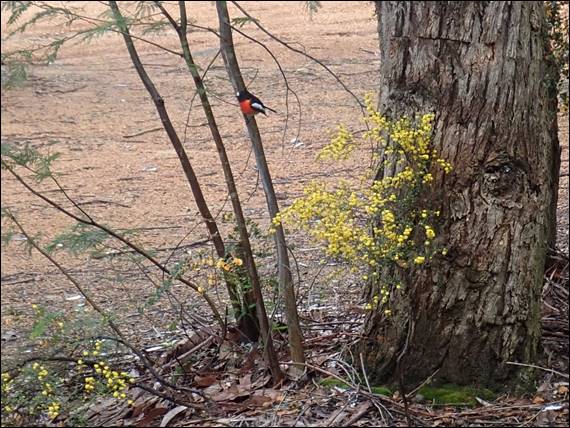
Before I explain further, above we spotted a couple of beautiful Scarlet Robins that we stopped and watched for ages.  That was until the rain came down hard again, and I must once more apologies for the blurry image.  There were several creeks that we had to walk further up the road to get over, and as soon as we could we looked for the smaller tracks that took us back towards the water’s edge.  This didn’t however get us away from all of the cars, as quite a lot of them seemed to have the same idea as us and we had to watch out:

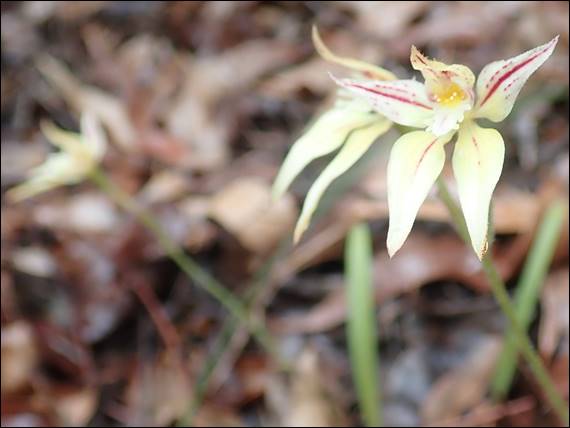
Several times people having fun in their four wheel drives came haring towards us, and we even spotted one person doing donuts on the gravel.  The sound of deep throaty engines could be heard for quite a lot of the time and the tracks of these vehicles were etched into the bare and barren gravel.  Both preventing vegetation growth and enhancing the risk of erosion.  On another note I have made up for my derogatory remark about a particular orchid in my post of our last walk, by including this image of a Karri Cowslip Orchid.  I also spotted a few seasonal repeats with the occasional Jug and Pink Fairy Orchids:

Overall the area was very pretty, however the track was non-descript and often bare gravel along the water’s edge.  Then on both the gravel areas and the tracks through the vegetation, we had to watch out for cars.  Not all of which were sympathetic to us drowned and bedraggled walkers.  Added to that the multiple campsites; sound of engines and also chainsaws; and all the beer bottles and can that were littered all over the place… we can safely say we gave this walk nil point. It is not a place we felt that we would come back to.  On the upside we got out, saw more orchids and some lovely birds:

The flapper

I’ll start with the reason for the title of this post, which is related to an incident during Alan and my indoor boulder session last Wednesday.  On the last sequence of the night, and feeling a little tired, I snatched for a small hold.  I didn’t catch the hold and my fingers slid over its edge taking the callus from my intermediate phalanges on the third digit clean off. Other than being held on by a bit of skin, hence the flapper.  Sorry for getting all technical and also a little gruesome, but fear not there are no images of that fateful incident lurking in this post to surprise or shock you:

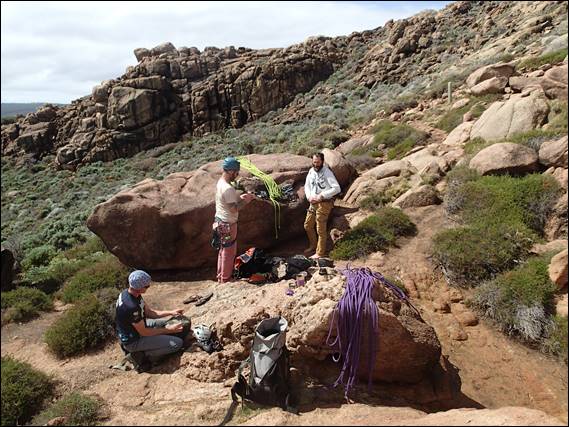
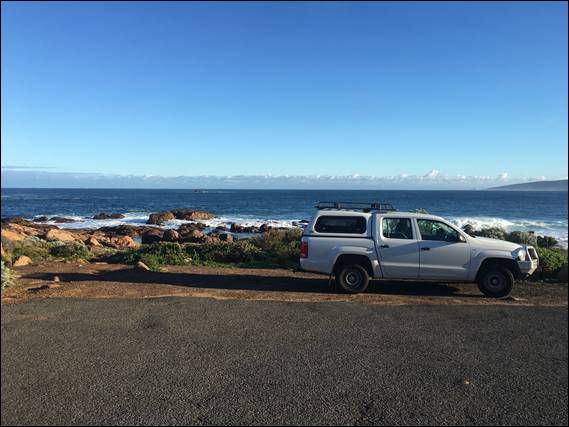
I had posted an image of the flapper on the local climbers WhatsApp group, and it was on there that the question was asked if I would be OK to climb outdoors on Sunday.  My response it was nothing that a pair of nail clippers would fix and I’d be fine.  And the proof is in this post, also I just couldn’t let Dan down as we were to head to a crag he had not climbed at before.  Back to this morning and the image above indicates it wasn’t the earliest of starts, and while the sun drew a long shadow of the car as we pulled up, it was still a tad chilly as we walked in:

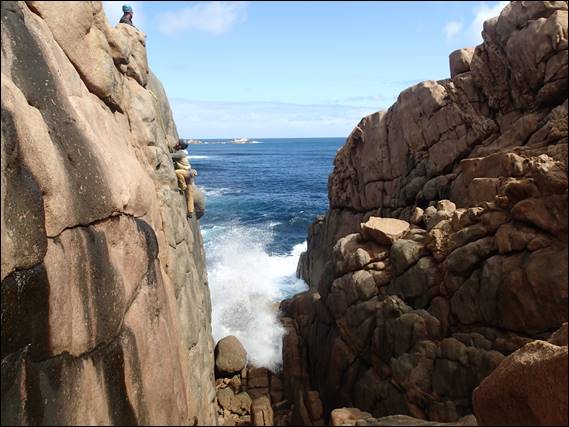
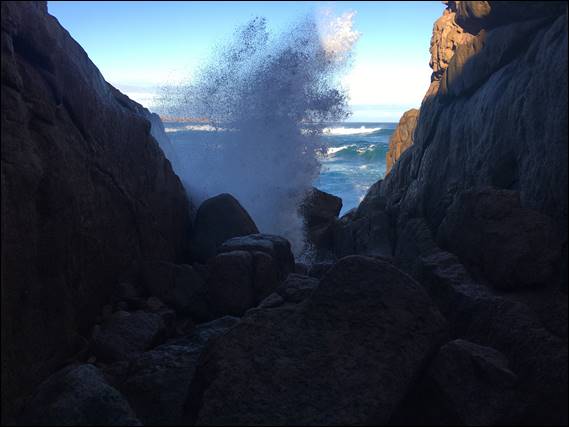
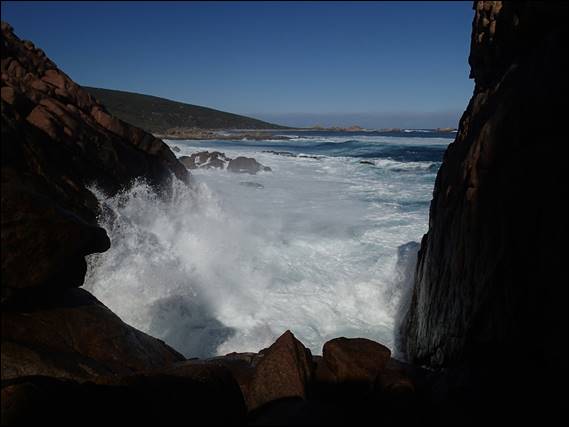
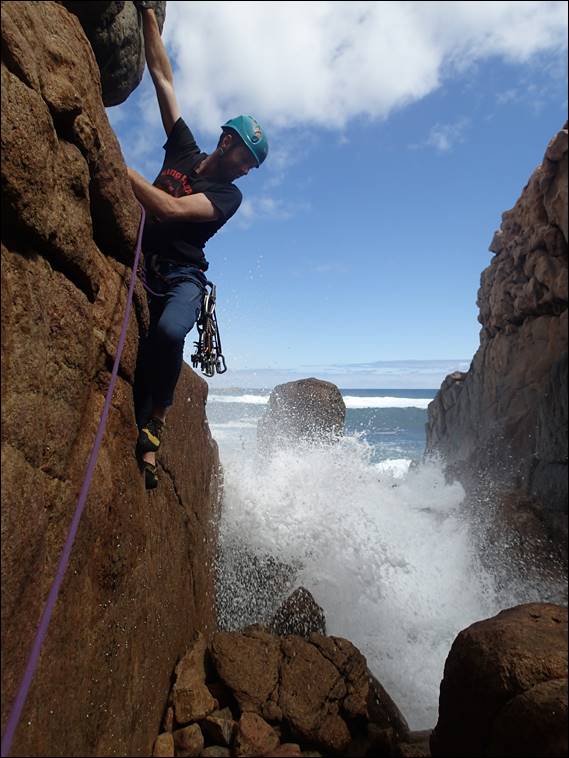
Smith’s Beach rocks was where we headed.  And seeing this place is right on the water’s edge, whenever we intend to climb here I check the tide and swell conditions.  After all safety first.  However, on arrival some of the walls were seeping and the ocean wasn’t as calm as I had expected.  While the image above may indicate we were not putting safety first; having been here many times and observed the conditions I knew that the end of the zawn was protected by a rock shelf.  This shelf takes out the brute force of the wave, but won’t stop the white water funnelling in:

We on Harbour Wall as it has the more moderate routes.  This was sensible both to allow Dan to get used to the rock and style of climbing, but also to allow both of us to settle into the place.  On arrival here the constant roaring of waves and rushing sound of white water streaming in can be unnerving, so it takes a little time to get used to it and allow it to become background noise.  That said we still keep a watchful eye on the bay, and it is pretty obvious when a particularly big wave is approaching.  If you manage to make it to the end of this post you’ll get an idea of what the atmosphere was like:

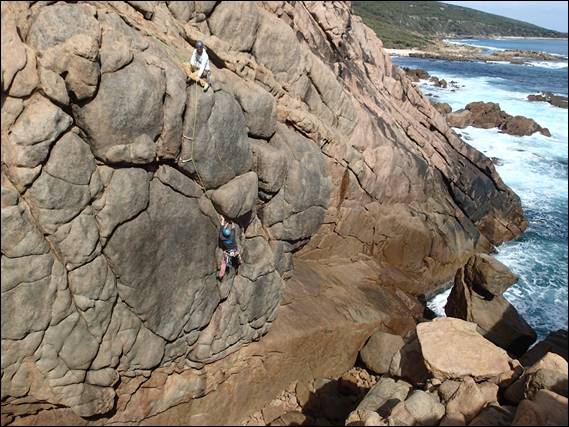
I threw Dan on the pointy end from the start.  He started OK but then It was fun watching him ponder how to attack the wide crack of The Drunken Sailor.  He seemed to be going for an underling approach, keeping his feet on the lower side of the crack and his hands under the upper side.  By pushing and pulling you can create the compression needed to keep you in balance, but it makes it impossible to place any gear in the crack.  After numerous false starts at this approach I hinted it may be worth wedging himself in and worm his way up, just like any chimney:

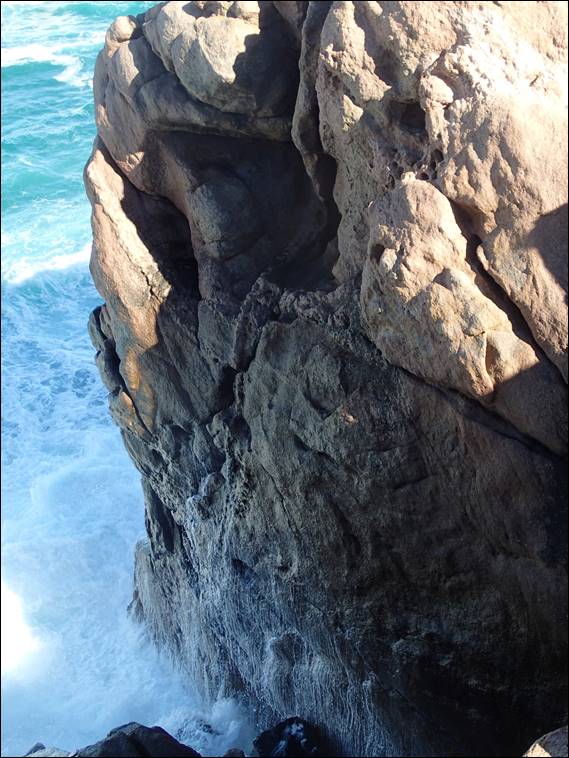
He didn’t sound convinced but it works and works well.  After this route and numerous other times I offered him the opportunity to lead as many routes as he wanted, seeing I had led them all before plenty of times.  But he instated we go lead for lead, so I picked Bulging Pockets which he enjoyed immensely, and more than squirming up the body-width crack of his first route.  We checked one of my favourite routes here, up the exposed arête of the Billowing Sails.  But today the waves on occasion swept halfway up the route and when it receded the entire wall and arête was a waterfall, and the belay ledge at the base was almost underwater:

This was obviously not  going to be possible today, so we went back to Harbour Wall where Dan had his eye on the crag classic Cape to Crack.  Not that he knew it was the classic of the area.  He made short work of this fine route.  He was armed with crack gloves, which provide a lovely rubbery backing to your hand to make jams both more secure and comfortable.  This helped him jam his way up in a much more efficient style than he had managed in the body-eating chimney.  By now the sun was creeping round in the sky, and the wall was in shade cooling the belay stance off a bit:

The orientation of the zawn is such that the sun hits it early on, and in summer it gets unbearably hot very quickly.  But on this lovely crisp start to another fine spring day, when the sun was shining on us it was a bonus.  As the morning wore on we started to shed the layers of clothing that had protected us from the cold morning.  And yes I am still missing my Buffalo jacket!  With the sun now fully on the ocean at the entrance of the zawn it was the perfect time to provide an image of the wild waters, it was not a day you would want to fall in:

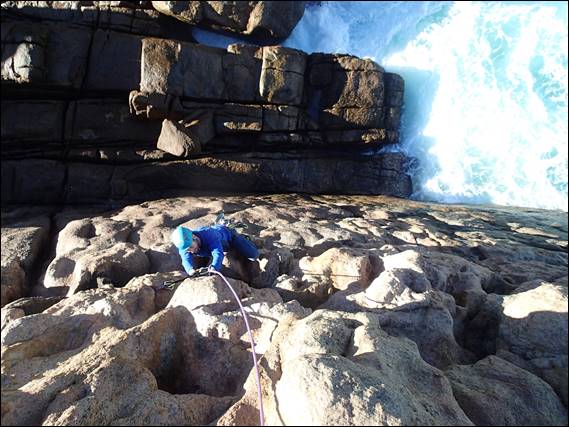
For my next lead I wanted to jump on a line that I had not been on for a while.  Before we had headed out, and as I usually do, I had already decided on a couple of routes I was keen to lead today.  Tacking into the Wind was one of them, just because it doesn’t get a lot of attention.  Like Dan who had sailed more smoothly up the rock on his second route I did the same.  After which it was time to move across to the main attraction of Smith’s Beach rocks, the impressive face of Camelot Castle.  We picked our timing to walk across the zawn, in-between the waves.  Then we were stood looking up at the steep and more imposing wall:

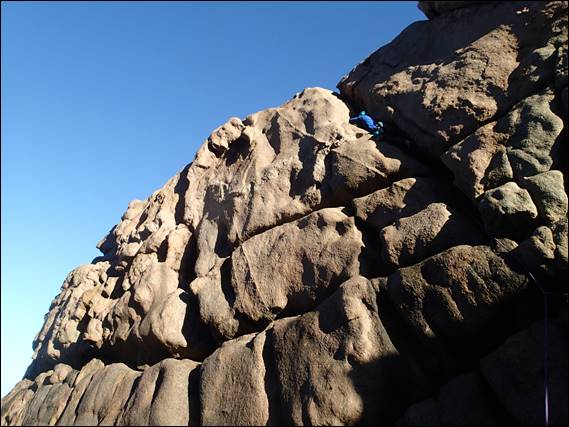
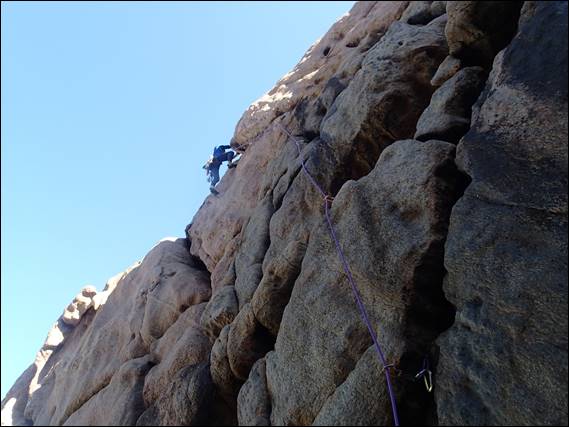
I talked through the lines here, and attempted to encourage Dan to hit the first route I had climbed here.  But he was strangely drawn to the line that splits the face from top to bottom.  Excalibur is mighty fine so I could understand the draw of the route, and it is probably the most climbed route on this wall.  That would no doubt be in part due to being visually obvious but also probably due to being the best protected route on the wall.  While it was a step up from the previous climbs of the morning Dan didn’t miss a beat, and took a steady pace to systematically work out the moves and place the gear.  Needless to say he loved it:

The route I had tried to steer him towards was the second route I had in mind to climb, and my rationale for getting him to lead it was that it scares me.  For me King Arthur is a pretty sustained line and keeps you on edge.  Today however the conditions were great, so there was no excuse.  Despite the seeping walls at the start of the day, and continual sea spray from the crashing waves the rock was remarkably dry.  So I set off and worked my way up, slowly and carefully.  At the crux section had to dig deep and just trust in myself.  Have to say I was happy Dan didn’t succumb to my earlier encouragement, as it was a very satisfying lead:

It was on this lead that the skin that had been growing where the flapper had once resided started to wear thin, so thin that it was cracking.  I hadn’t noticed it until I got to the top, but the timing was great as with that lead under my belt I was happy to call it a day.  Dan however was keen for one more, and wanted to climb a girdle across the wall of Camelot Castle.  Traversing from the bottom right to the top left, making use of what looked from afar to be an entertaining horizontal break that stretched across most of the face:

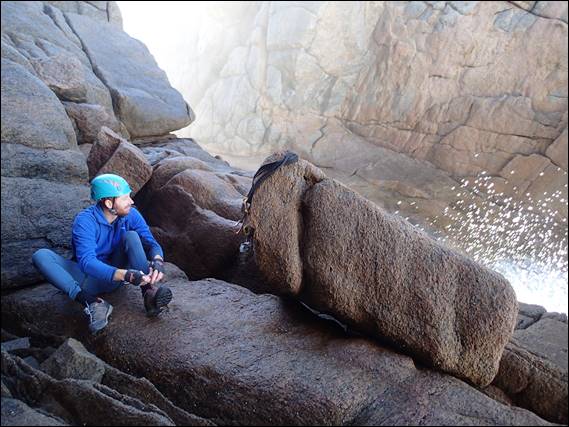
As he climbed I watched the waves, conscious that due to where he was starting from we were getting close to the splash zone.  If a truly big wave hit I would be soaked.  He mucked about at the start, trying to avoid using the start of existing lines but was unhappy with the gear.  Coming back down he ended up starting up Lady Guinevere to reach the break before making the leftward traverse.  At the end I could hear the disappointment in his voice; it had not been as good as he had hoped.  So much so that he wasn’t even keen for me to write it up as a new route:

But it’s too late now, as it has been immortalised in this post.  So became Dan’s new route which I suggested we name The Flapper.  Time had now caught up with us, and my body was saying it had climbed enough for today.  So we packed up just as another large group of walkers made their way towards the zawn, and we left them there to enjoy the place.  The whole morning people had been coming and going.  For those that had stopped to watch the waves crash into the zawn, we had provided them with an unexpected extra bit of entertainment as we scaled the walls.  Below are a couple of videos of the waves so you too can experience the amazing atmosphere Dan and I were lucky to have been immersed in all morning:

Itsy bitsy spider

Last weekend Howsie and his family had enjoyed a great few days out at Narrogin, exploring the local reserves and he sent me an image of a cluster of amazing looking orchids.  Upon asking him if he left it was worth the drive out there for a day trip, he hesitated.  Quite rightly to, as whether it was good enough was a matter of opinion and his might differ from mine.  But from the sounds of it they had seen quite a lot, which was enough for Lisa and I to agree it was worth the risk.  We headed out a bit earlier than usual, as it was a little over a two and half hour drive from home:

We stopped in Narrogin first with the intention to get a bite to eat.  As we sat munching on our food, and she whooped my arse at Yahtzee while watching the people milling about on the cold streets.  It was then time to drive out to a small reserve called Yilliminning Rock, to see if Howsie’s word would hold true.  We immediately found a few Donkey Orchids, the common species, but it was a great start.  I’ve seen a few before and always get excited when I do as I reckon they look very cool: 

While there are over twenty species found in Western Australia, I think I’ve only ever found the common species.  And today we found more of them than I have seen before, in some areas the ground was littered with them, in all stages of life.  It was quite staggering.  Sadly what was also present in vast numbers were mosquitoes, despite the cold wind.  It had rained shortly before we arrive, and just the slightest bit of moisture is enough to kick them off.  They were not very pleasant but we preserved and kept looking about:

Not in as many numbers were the Fringed Mantis Orchids, another relatively common orchid and one I have seen every year since I’ve been looking for these amazing flowers.   The longer we stayed out there the more of these I saw and while it was tempting to photograph every one of them, just in case there were any variants or different species the mosquitoes kept us moving:

Another orchid I have seen a fait bit in previous years was also present.  Here only a few Pink Candy Orchids were about, and they were looking like they were reaching the end of their life with the petals starting to brown up at the tips.  Still it was worth a quick snap to include in this post before moving on:

Then came the find I was hoping for, Howsie’s amazing image had been a cluster of Chapman Spider Orchids.  The only difference being that I only came across a few single flowers.  The labellum is a tinge of green with red stripes and only slightly fringed on the edges.  The other give away sign to give this species away was that the sepals and petals broaden out before narrowing down to slender tips, with that green near the flower before turning red:

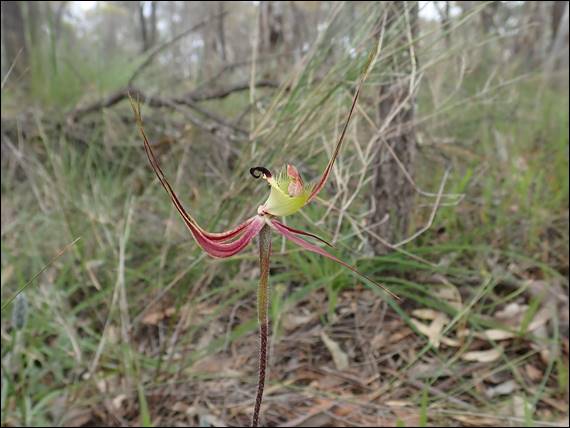
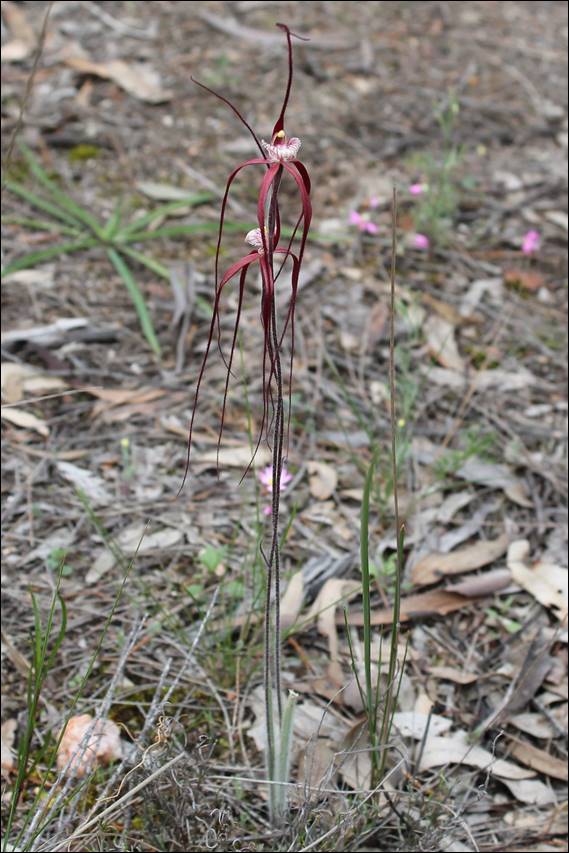
My reason for all the detail above was that I thought I saw them again when I snapped the next one. But with the luxury of being at home having both my orchid guide and the internet, and more importantly being free of mosquitos has allowed me to have the time to really look at the images. I feel pretty confident in saying this is either the Slender or Crimson Spider Orchid, with the key reasons being the completely deep red and narrow sepals and petals, and white labellum:

Lisa was getting munched.  Her leggings are great for walking in but today wasn’t really a walk.  We were wandering about in a small reserve, taking our time and going slowly.  This allowed the mosquitoes to land on us and her leggings provided no protection against their long and sharp proboscis.  So she headed back to the car to relax with her book away from the flying pests.  Meanwhile I continued my search and came across a small patch of these:

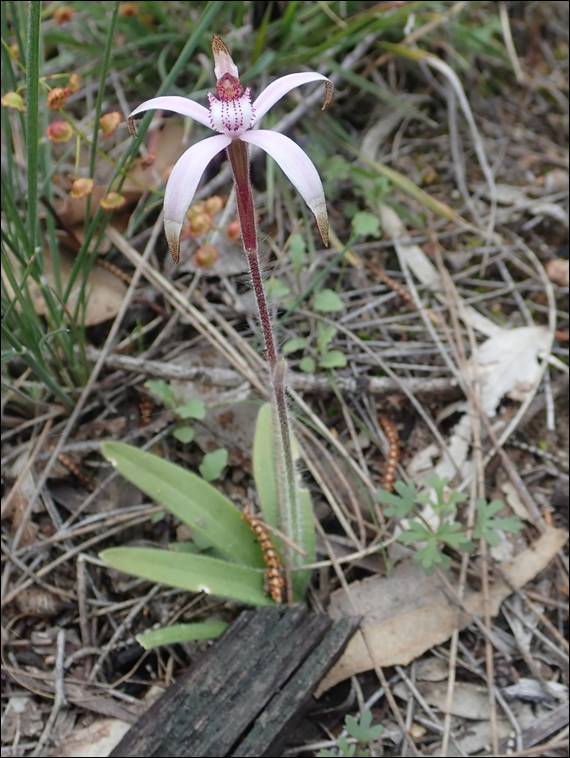
I have to admit that I was stumped with the above one and it took me a while before I felt safe in saying it is a Sugar Orchid.  I’m again pretty confident about this due to the sepal and petal configuration, white inner and a purple almost powdery looking outer surface.  Also the funnel like labellum and fringe is quite unique.  There was another lady out looking at the orchids and she was armed with the biggest camera lens I have seen, she was in the big league:

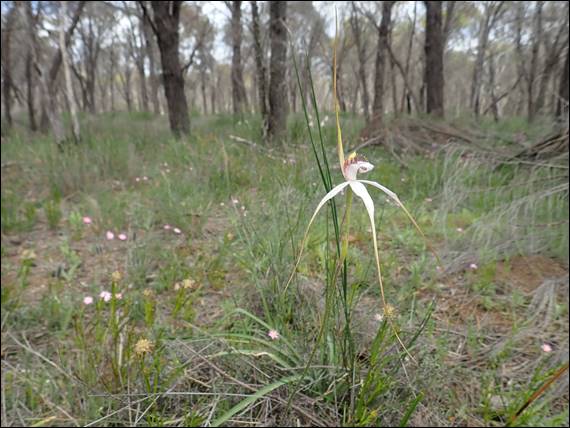
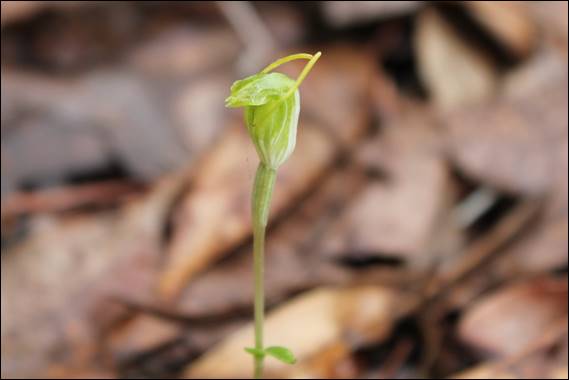
Gypsy, which she told me was her name, said she had found a single White Spider Orchid and pointed me in the general direction.  As you will see from the above I found it, but I also found a group of seven or more of them.  There are quite a few White Spider Orchids, but this is the common variety with a wider labellum and relatively long fringes.  While I prattle on about all these finds I should mention that there were heaps of Jug Orchids out, the one below was yet to fully open:
There were also stacks and stacks of Cowslip Orchids, and for some reason I consider these as the common cousin of orchids and as such haven’t included an image of any of them.  Lisa, later on in the day,  posed a good question of whether they are called cow-slip or cows-lip orchids… I started my way back towards the general direction of the car, not that I could see it.  And stumbled across another orchid that at the time I thought I had already seen

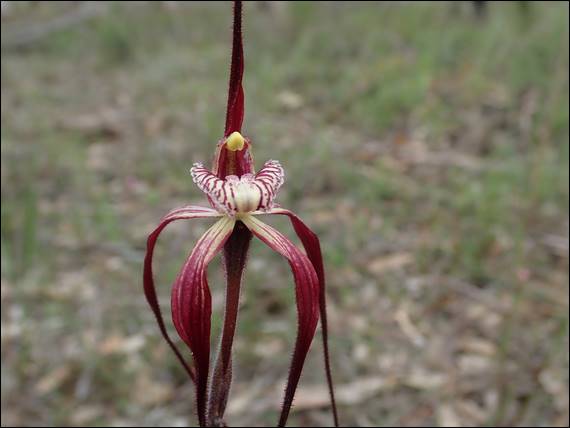
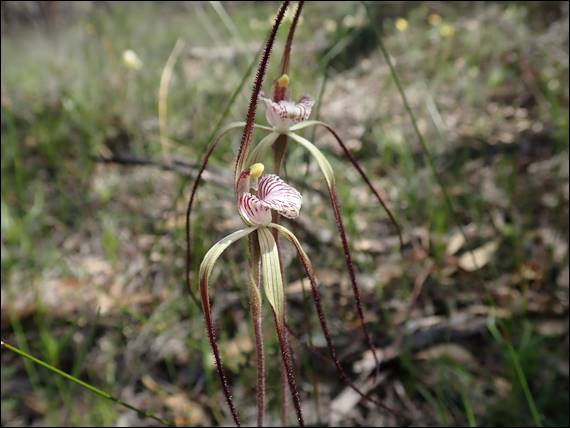
Indeed Gypsy indicated it was possibly a variant of the Chapman Spider Orchid, however the labellum is quite different being white with red stripes, and the sepals and petals again are very distinctive.  So I’ll stick my neck out and say these were Noble Spider Orchids.  Then there were these as shown below, and again I don’t think they are a variant.  I would guess due to the multiple flowers from one stem and other features they are probably the Common Spider Orchid:

I found Lisa lying down in the tray of the car, safe from the mosquitoes.   And due to the pillow she had brought, because of the early start, she was also quite comfortable and happy reading her book.  We hopped in the car to head out and I noticed my hands looked a bit munted from all the mosquito bites.  For this reason when back at Narrogin we got some antihistamines to help with the swelling and itching and some insect repellent, for the second reserve we aimed to visit:

Foxes Lair, is right on the edge of Narrogin up on a ridge and as such it was pretty dry.  We doused ourselves in repellent needlessly, as there were hardly any mosquitoes.  Also there were not many orchids and no new ones that required a more detailed look.  The place was however littered with flowers, with peas, banksia and dryandras in bloom all around and many other flowers scattered about.  It was certainly very beautiful but we didn’t stop much:

After a short couple of kilometres we were back at the carpark, so decided on walking round another loop.  This loop was really dry and much of it was devoid of any undergrowth, the leaves and bark of the eucalyptus trees had smothered the already dry and harsh ground to subdue any other plant growth.  The three locations we had walked in today were so different from one another, yet they were all relatively close:

We didn’t see too many flowers on the second walk at Foxes Lair, but it was still pretty in its own way. We did however spot four plants that looked out of place in the dry and barren landscape. I’m guessing they may be an exotic plant and likely weed species, which Howsie later confirmed as the South African Lachenalia. We have to say thank you to him for pointing us in this direction, as we have never seen such a variety and sheer number of orchids as we did at Yilliminning Rock:

The scatterbrain

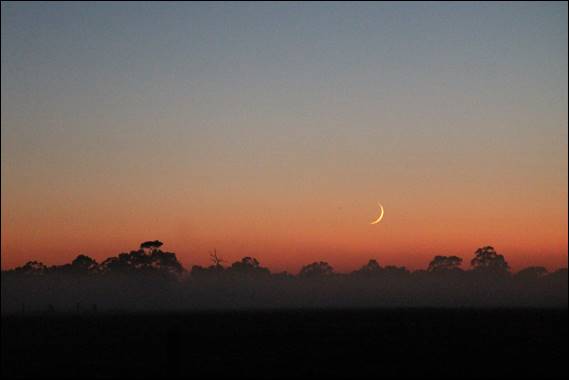
Dan is back in town.  He somehow managed to escape the clutches of a lockdown life in Melbourne to join us in Western Australia and the freedom we have been enjoying here.  With no work opportunities back home he made the decision to find work over here, which he did and after fourteen days of quarantining himself he was finally allowed out to play.  It was a crisp and cold morning as I drove towards our designated meeting spot of Capel and the morning sky was looking particularly lovey, so I stopped to capture what I was lucky enough to be seeing:

As I got out of the car with just a t-short on I was surprised at how comfortable I felt, even though it was only 5 degrees.  Maybe it wouldn’t be so bad down at the crag without my Buffalo jacket after all?  As we rolled into the carpark near the crag it was still only just over six degrees, so I loaded my layers on with a t-shirt, fleece and finally a wind shield.  I would normally only need to pull on my Buffalo and that would be that, geez how faffy all these clothes were.  I promise now to keep quiet about clothing and get down to why we had come here:

The reason being is that Dan had chosen it as the preferred location to climb.  More so he had indicated a few lines that he was keen to jump on, ones that he had previously not been on.  The scary thing being that a number of them were pretty stiff routes, and none were below grade 20.  Luckily Rongy had joined us and that meant we would have a bit more of a rest in-between each line, as it felt like we might need it.  We being myself and also Rongy, who had foolishly spent three hours trashing himself in a boulder gym in Perth just yesterday:

All of Dan’s keyboard bravado before this trip, about these lofty climbs, was soon dispelled.  He was keen to ease into the day with some more moderate routes.  This started with him taking the rope to lead Glory, almost ten grades less that what we were thinking.  But grades don’t really matter, it is being out here that counts.  That and the opportunity to meet old friends like this Carpet Python that was tucked behind one of the flakes on Glory, which neither Dan nor Rongy spotted.  Mind you they did get to spot the dolphins cruise past, which I missed:

Rongy came down off the first route indicating he could feel the results of his indoor plastic pulling session at the boulder gym.  So I was a little surprised when after a bit of procrastination he decided to lead Dolphins Smiles, which is not exactly a walk in the park.  With three of us out today I brought my SLR camera along, and it got more of a workout today than during yesterday’s hike.  I ran about the top of the cliff getting varied angles, and my legs were feeling the workout they got during yesterday’s hike:

Despite feeling weary Rongy managed a clean ascent, and then it was my turn to follow up the line.  My legs felt a little tree trunk like and my arms were also tired.  I blame Alan for the latter, due to him coming round on Wednesday last week for a boulder in the shed.  It had been the first time in some ten weeks that I had jumped on my wall at home, and I fear it will take a few more weeks before I can say I am feeling any benefit from the midweek training sessions.  That is assuming they will continue.  But what was on my mind more, was it would be my lead next: 

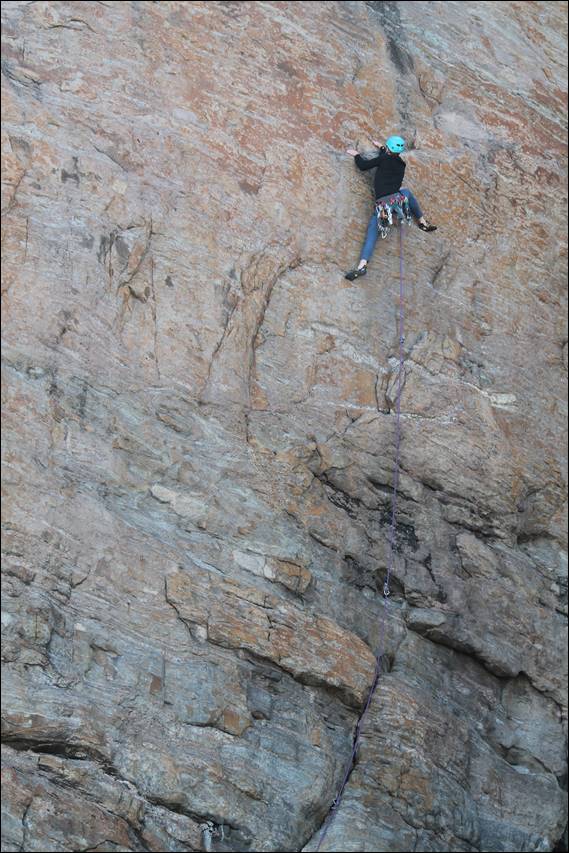
I had already decided what I would climb, and this was in part due to Rongy bumping it up a notch but mainly thinking I needed to make sure Dan was properly warmed up for whatever he might do next.  Just thinking about Simply Suicide made me nervous, and I was definitely rethinking my decision as I set off.  A pumpy bottom half followed by a fingery and runout second half.  Strangely however, as will often happen, when you get on the sharp end you become more focused and just get on with it.  This was exactly what I did, as Rongy laid back in the sun on the big boulders below:

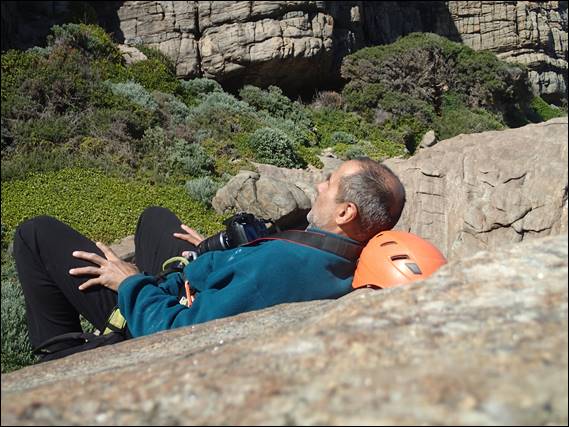
So once we were all atop the cliff and pondered what next, Dan plumped for Stainless Steel.  Not quite the lofty grade 23 we might have been up for, but still a solid route and after the last two it would be enough.  Opting not to be a mountain goat for a second time to get images, I took over Rongy’s position and lay on the boulders in the sun.  Geez it was lush, kicking back and almost feeling like I could have had a snooze.  In front of me Dan was strutting his stuff on the wall and behind me I could hear the crashing waves, it’s a good life for sure:

The last time Dan climbed this route would have been at the end of 2017, when he and Jo were over and we headed out (https://sandbagged.blog/2017/12/30/a-winters-day/).  On that occasion my words were that “he didn’t seem to stop and hesitate at any point, the gear was placed fluidly and he made every section look very smooth”.  I’d be interested to know if he felt it was the same today, the route certainly didn’t seem to worry him too much but with all the lockdowns they’ve had over east I don’t think his stamina was quite what it was back then:
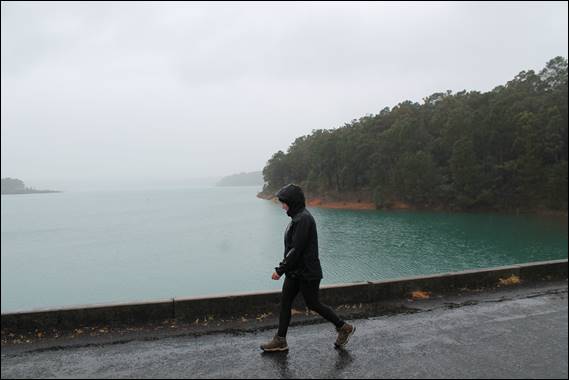
As Dan climbed I occasionally forced myself into a sitting position so I could also watch the waves.  And it wasn’t until Dan had finished the route and Rongy was close to the top, before I finally felt like I needed to break away from my perfect rock sunbed.  Rongy confessed to being toasted and not up for another lead, so it was up to me after that.  I was undecided about what to climb so Dan suggested I jump on Golden Buttress, and a proper and classic mid-grade trad climb to finish the session off.  It seemed good idea to me, and after that route we were all satisfied or incapable of climbing anymore, so we wandered out:
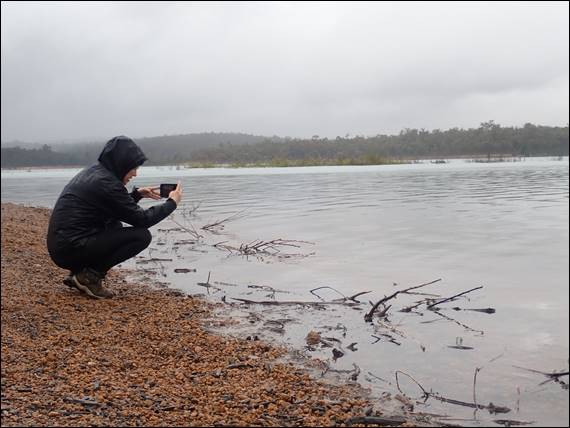
Dan’s here for a few months so hopefully a few climbing session and maybe trips will be had.  The way he went today I’ve no doubt that those more gnarly routes he had in mind will fall before he heads back.  At the car I had a mini-panic when my phone wasn’t in the car, which is where I thought it was, as it is something that is a bit more fuss to replace than a jacket.  It wasn’t until I had turned everything inside out that Dan found it on the bonnet of the car, no doubt where I had put it when we had first arrived.  Um, it’s been a bit of weekend for it but hopefully that will be the end of my scatter-brained moments for now:

Fairy lights

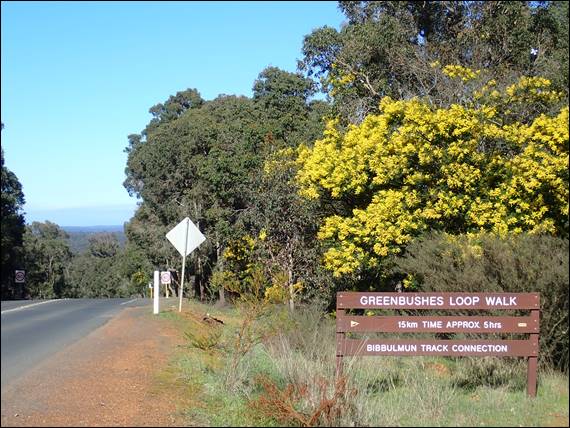
Lisa and I, encouraged by a lovely but short walk last weekend, headed out today for a longer hike inland.  Neither of us had been to Greenbushes before, and I have only ever know it as a lithium mine with a town site tacked on.  That’s a bit harsh as Greenbushes has been round since 1888, and has been a mining and timber town ever since.  But we hadn’t come here to wander round the streets of the town looking at the numerous information boards on many of the buildings telling us what they had been used for in years gone by:

We had come here to hike round the fifteen kilometre loop walk, which started right in the centre of the town.  Being a small place it didn’t take long before we got off the tarmac and headed into the forest.  This comprises both old growth and rehabilitated areas.  While signs of former mining were evident, which gave us a hint of areas that were probably rehabilitated, I have to say that we really couldn’t tell which was which.  One thing was however very clear and that was there were heaps of mosquitoes out:

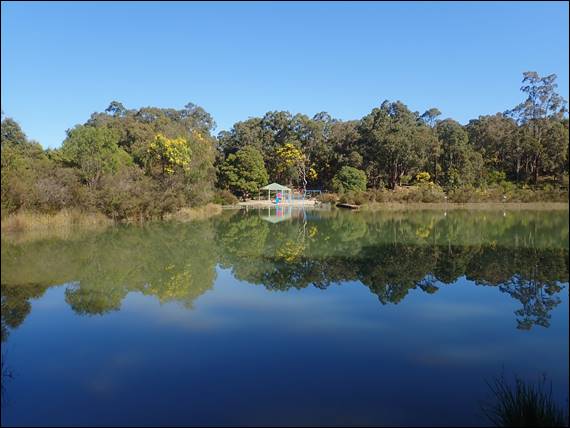
As a result Lisa was less keen to stop, as I found little treasures to capture.  This included many Pink Fairy Orchids that seemed to be scattered along the path almost from the very beginning.  I had also brought my SLR camera today, as this walk would take us past numerous dams of various sizes.  I had in mind that I would today spot a few birds and get some good shots of the numerous water birds that are reputed to be found here.  The first dam was Greenbushes Pool, and was a day use area equipped with play equipment and jetties:

With more regular use I wasn’t surprised that there were no waterbirds to see here, but it was still a lovely spot.  As we walked round the pool, and as a consolatory prize we spotted New Holland Honeyeaters flitting about in the bushes.  We managed to somehow get a bit side tracked and missed the signs resulting in us having a self-guided tour of the campsites here, before we got back on the track.  Leaving dam number one behind us we entered the forest once more:

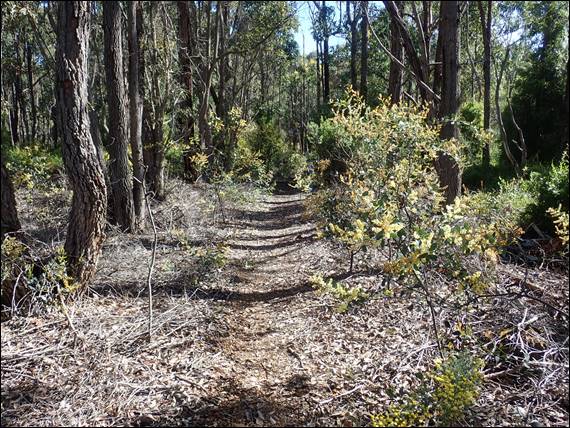
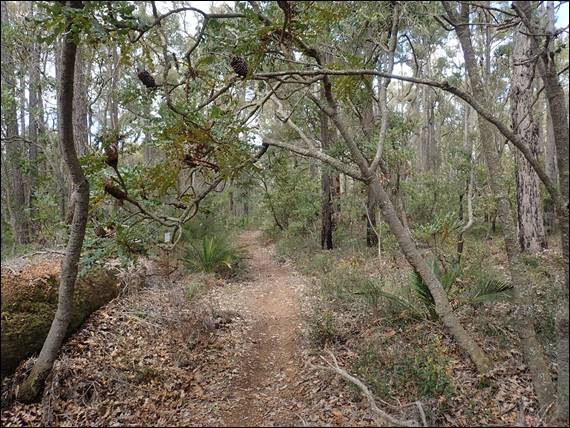
The track was lovely, a meandering path working its way through the trees.  Wattle bushes were in full bloom, and some had started to go past their due date.  They filled the air with a fragrance that is very distinctive, and so loved by many that it is used in oils and candles.  I’m not going to try and identify which wattles we saw.  Most had the familiar pompom type flowers, but others were more of an elongated cylinder shape.  I scoured both sides of the path as we went along and spotted the very occasional Banded Greenhood Orchid, as well as Pink Fairy Orchids:

For those that read every post, you may recall that when Lisa and hiked the Bridgetown Jarrah Park (https://sandbagged.blog/2021/07/25/bleedin-trees/) we came across a plant that looked exotic.  However, Howsie advised that it was probably the native Tassel Flower and also that the flowers, which were not out at the time, were supposed to be beautiful.  Well today we came across them again and this time they were in flower, and indeed they were amazing to see and very much not as I expected.  With many tendrils full of colourful flowers:

I continued to look intensely down at the sides of the path, remembering to occasionally also look up and take in the bigger picture of where we were lucky to be walking today.  At first I thought I spotted just another Banded Greenhood Orchid, but this one was solitary and only had one flower atop the stem.  Not being one I have come across before I took a punt and suggested to Lisa it was a Pitcher Orchid.  They don’t however seem to be native to Australia but I wasn’t far off with the idea, and can confirm it was a Jug Orchid:

I wasn’t only taken by the orchids that were out, in fact other than the Pick Fairy Orchids there seemed to be very few about. There were plenty of other flowers, but it was hard to capture the spectacle that we were seeing. Many of the flowers were small and spread out, so the photos just didn’t do them justice. And with the light of the day becoming steadily brighter, as the sun was getting higher in the sky, the background of greens and browns took over. I did like this flower, which was quite different to the others both in shape and colour and is the brown or scented Boronia:

Soon we were at the second dam, a much larger water body than the first.  This was one was called Schwenke’s Dam and was advertised as being a great bird spotting location.  As we looked over the still water all we saw were the dead trunks of the trees that had been flooded out when they built the dam.  Not a hint of movement and again there was no need to pull out my SLR camera, as no birds were to be seen.  The sound of frogs was however delightful.  But we know better than to try and find them, it would be a hopeless task:

We carried on back into the forest and here we came across what was probably the best shot I got to capture the colours.  The perfume of the wattles came and went as we walked through the forest and the Pink Fairy Orchids were still about along the side of the track.  Almost like a series of guiding lights showing us the way to go.  We did hear a few birds as we walked, the familiar Ring Necked Parrot and Red Tailed Cockatoo, but all too distant to be seen.  There were a few small birds, but they moved so fast that it was hard to make them out:

Soon we hit dam number three, this one being called Mount Jones Dam.  Before we got here we passed Flat Rock Falls, and the sound of the cascading water caught our attention and we stopped there for a bit.  Listening to the frogs and watching the water bubbling over the rocks. At the dam it was time to have a cuppa, this was the third-way mark of the walk and provided a lovely outlook.  Thankfully as the day warmed up the mosquitoes started to disappear, and as we sat drinking our tea we also pondered where all the birds had disappeared too:

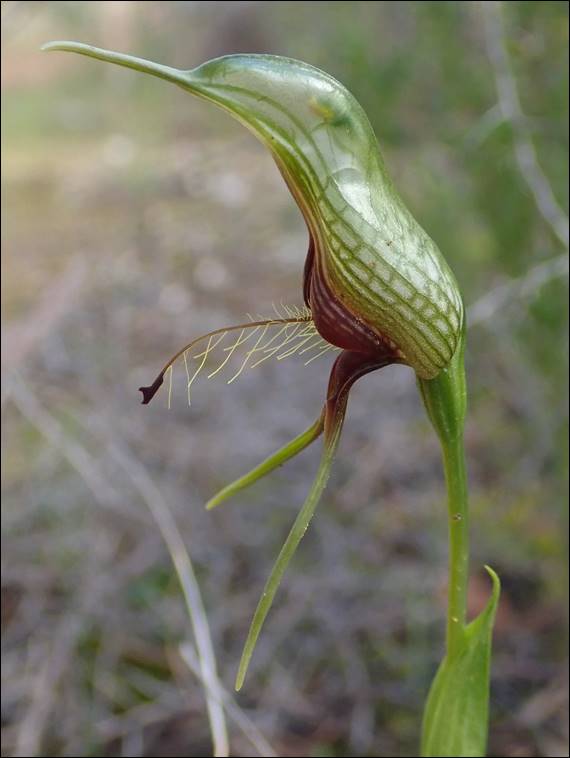
As we crossed the dam wall I finally found a bird worth stopping for and spending time to observe.  It is the first Bird Orchid I’ve come across and it was stunning, and looked to me just like a little humming bird.  Everything about it looked delicate and perfect, and I took heaps of images from all angles, as I doubt I’ll get to see one again for a long time.  Needless to say, having found this bird I wasn’t so worried about trying to find the real thing anymore, and wasn’t disappointed that we didn’t see any birds after this:

Passing the third dam the track joined up with the Bibbiblium trail, which goes from Albany on the south coast all the way to Perth.  I continued along this path with an ear to ear grin, and while we didn’t see any new flowers or orchids, other than Pink Fairy Orchids my mood could not be dampened.   The track remained small and meandering, but the soils changed from gravel to sand as we went over the ridges, and then returned to gravel as we came back down.  As the soils changed the vegetation also changed:

Through this section the wattles seemed to disappear, and the Banksia’s took over.  Overhanging the track with branches leaning heavily with cones that had already flowered, but still look amazing.  When we stood still the forest was almost silent, other than distant birds and it was a wonderfully peaceful place to be.  The amount of flowers in this section also seemed to reduce, but that didn’t worry us any.  And of course there was the occasional Pink Fairy Orchid, just to indicate we were still on the right path:

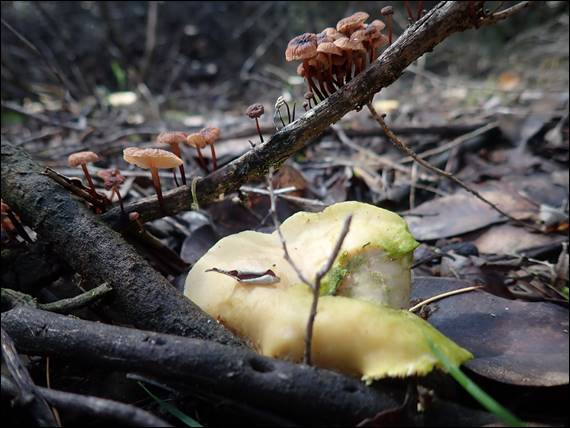
Something that was missing from this walk, which we had seen plenty of in our walks this year was fungi.  Despite all the dams and creeks here, the landscape through which we walked seemed reasonably dry underfoot.  I could count on my fingers how many times we came across fungi, and most of the species were similar to what we have seen before.  This little collection was however too nice to pass by, and might be my last fungi image for the year unless we come across some really spectacular:

Just before we left the Bibbiblium trail and got back on the Greenbushes Loop walk we came to the edge of the forest and had a great vista across the farmland.  This was the two-thirds mark of the hike and a bench had been strategically placed here, making it an ideal time for our second break.  Out came the flask proving us with another lovely cuppa, as we looked out across the lush green grass.  A sign that there was still plenty of water about, despite the lack of fungi on display:

As we hit the trail again I spotted a single orchid, one I wasn’t able to identify while out on the walk.  I knew it wouldn’t be too hard to work out due to the distinctive cluster of deep purple calii on the labellum, which looked a little like an overflowing plater of caviar.  The sepals and petals also had a distinct deep purple club at each of their ends.  This was the only orchid I found that wasn’t of the greenhood  genus, other than the Pink Fairies of course.  And it is a Leaping Spider Orchid, another new sighting for me to add to my list:

I mentioned the greenhood genus of orchids.  They are distinguishable by their mainly green colour, also the dorsal sepals and petals being joined and forming a hood.  This is true of the Greenhoods, Jug and Bird Orchids we had seen today and then also these Tall Snail Orchids, which we found soon after.  It was clearly the Tall Snail Orchid as the plants stood some 250mm or more high.  However, the flower itself is quite small, and to give an indication of size the flower above is approximately 70mm tip to tip, whereas this snail orchid flower is no more than 30mm high including the tall antenna:

Soon after leaving the Bibbiblium trail the meandering little path became a wide dirt road.  One that was under construction, and it looked like they may have been laying a water supply pipeline.  There were dieback spray stations for the vehicles, the track was wide and disturbed, survey pegs lined the side and the feel of the walk completely changed.  At this point it seemed we might need to wade through the water, until Lisa spotted the original path with a small wooden crossing:

The wide track continued for most of the way back into Greenbushes, and we sped up the pace.  It was harder to watch out for flowers on this really wide track with the sides all disturbed with gravel piled up.  But the ever present Pink Fairy Orchids stayed with us till the end, right up till when we popped out of the forest and back onto the tarmac.  As we approached the car the signs had proven right and it had taken us close to five hours to complete the loop.  And it had been five very well spent hours:

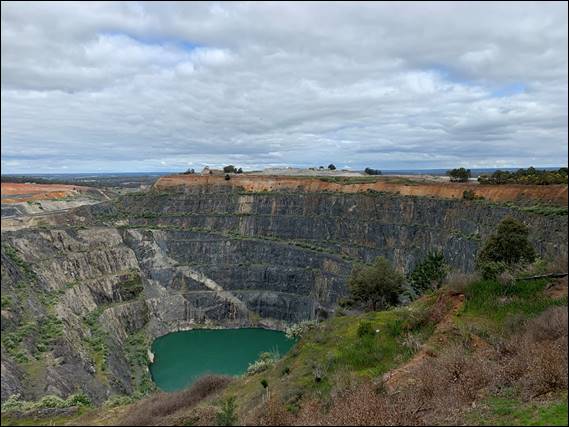
Before leaving Greenbushes we drove a short distance to take a look at one of the now disused lithium mines.  A deep pit of near vertical walls, making you wonder how they had managed to construct and mine from it.  It was then time to jump in the car and head home.  It wasn’t until we were back on the highway heading north that I realised I had left my buffalo jacket on the roof rack to dry out.  Sadly despite retracing our tracks it was nowhere to be found, but I wasn’t going to let that dampen another great day out:

Quietly hopeful

Lisa and I haven’t been out for a walks of late, and with each passing weekend there has been one reason or another as to why we didn’t get out.  But with each passing week it seems to be harder and harder to get motivated, and get back into the swing of heading out for a wander.  This morning however, while the motivation didn’t seem to be there, I suggested we nip out for a quick local wander.  With the hope that a short trip out to Meelup Beach would be just the kick start we needed to start getting out again:
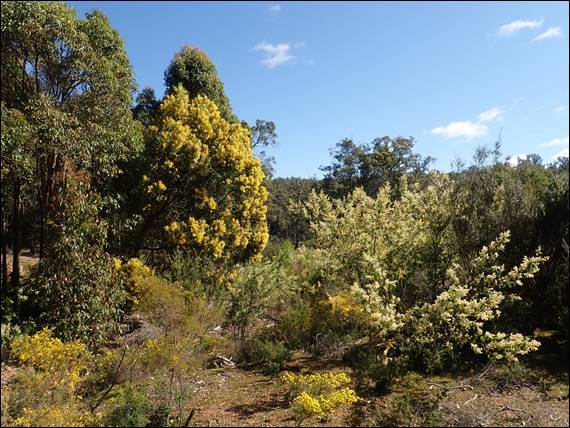
There was a limited window of opportunity today, due to other commitments for the afternoon and evening.  But enough time was available for a short loop walk we did last October.  When the sun was out, the relatively calm waters in the bay turned a beautiful aqua blue.  Our local beach has small patches that will turn this colour, but here it feel like the whole bay lights up and it is a stunning sight.  Not having had anything to eat before we left the house, we stopped after a short distance and parked ourselves on the rocks for a snack, as we looked out to sea:
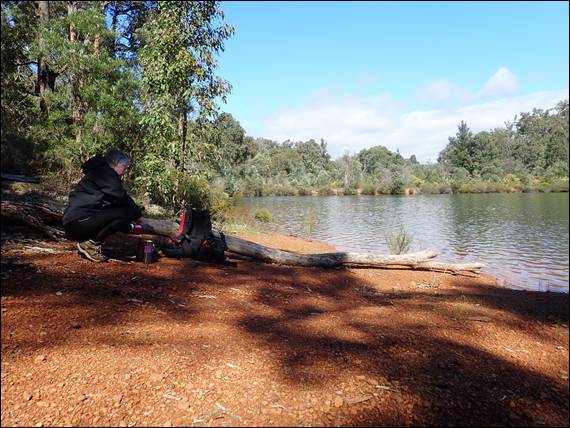
Our timing was great and within minutes we spotted a number of whales.  Far out to sea a couple were playing.  One was lifting its tail high out of the water and smashing it back down, the other swam one way fully breaching out of the water before going back towards the tail display and breaching again.  This seemed to continue for ages, as we sat there long after our snacks were consumed.  We also saw a third whale that swam past at a leisurely pace, much closer to shore, but all we ever saw was its rump:

Eventually, and only after the show had come to its natural end, we got back on the track to head up to the Meelup look out.  There were heaps of flowers out.  Small displays of purple, yellow, white, pink, blue, orange and more were scattered around in individual patches, and I could have taken numerous individual images of each of them.  However, I thought I would wait till the real wildflower display arrives.  With such a wet winter we might be in for a flower extravaganza, it is already happening up north and as the weeks go by we hope it will extend further south:   

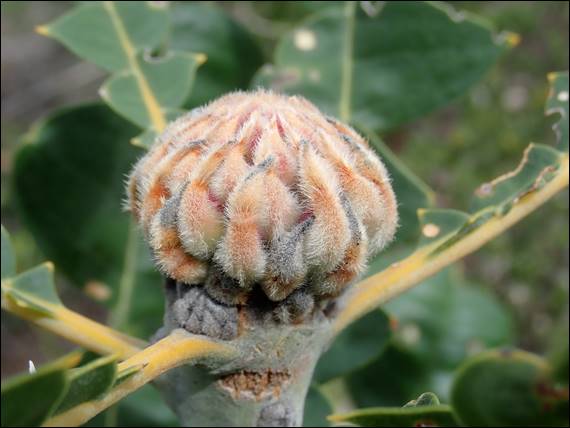
During our walk today we talked about the need to make sure we manage a trip or two out to see this year’s wild flower display.  It is starting to move southwards far enough to be worth a day trip, and will get closer as spring starts to arrive with its warmer weather.  I couldn’t however resist the above image of a Banksia bud.  I’m not going to try and identify what Banksia it is, but all the new growth was lovely to see.  Lots of shoots and leaves were popping out of the ground, with that fresh almost vibrant colour and vigour that new growth seems to bring in a plant:

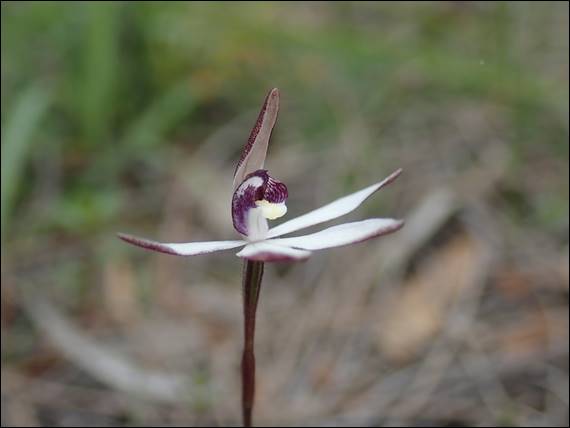
As we reached the top of the lookout it seemed rude not to take a load off and look out to sea, just in case the whale show was about to begin again.  After Lisa had caught up with me we munched on a mandarin, watched a couple of half-hearted breaches and then decided that the sudden drop in temperature was a sign we should keep moving.  Sure enough the drops started to fall, just as I spotted a small clump of Cape Spider Orchids.  This species is only found in the granite hills near Dunsborough and the Ludlow Tuart Forrest and was declared as rare flora in 1991:

Back then it was also listed as critically endangered with less than 250 identified mature individuals.  More mature plants have since been found and so it is no longer deemed critically endangered, but is still at the mercy of us humans with the key threats being recreational activities, weed invasion, inappropriate fire regimes and grazing.  I was pretty chuffed to find the orchid, as I’ve not seen this variety before.  I even checked my post from our walk here last year just to make sure, which was aptly call Creepy Crawlies:

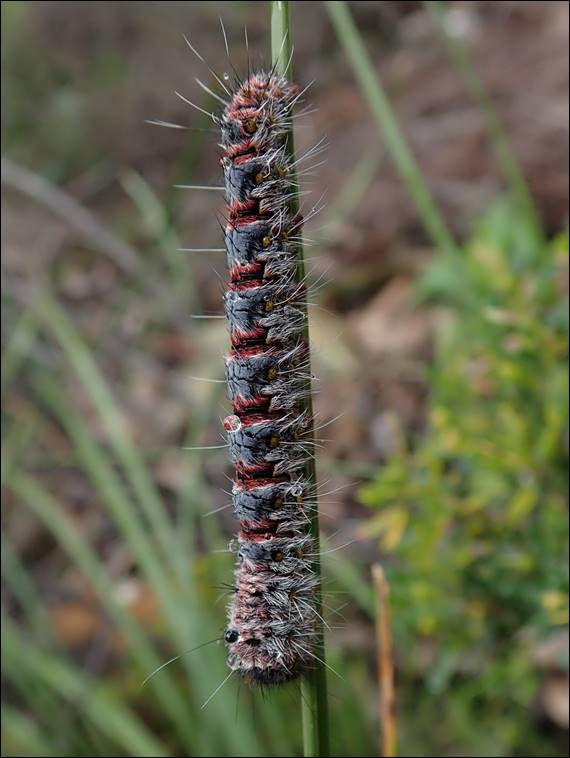
A bit uncanny as my next and last find, as we made our way back just in time to miss the biggest downpour, was this caterpillar.  It was showing evidence that the rain was falling with its matted hairs and being covered in droplets.  I’ve had a bash at figuring out what it is and the closest I can get to is maybe a Gum Moth caterpillar.  If I am right it was lucky that I kept my distance.  The hairs are both brittle and barbed, and can be extremely irritating and painful once embedded in your skin.  While I avoided this I’m hoping that this little hike has been enough to get the walking bug back under our skin: