While I managed a trip out on both days this weekend, which were equally fun, both were relatively short. So I have decided to roll them into one, not so long, post. Saturday was a doing day, as several domestic duties called including heading into town. Something I am not particularly keen on, but once in a blue moon it is an unavoidable necessity. However, heading into Bunbury meant I could pick up the new glasses, required to replace the ones I lost to some random bush (https://sandbagged.blog/2022/07/17/a-voice-in-my-head/). After hitting the shops we had the idea to go for a bit of a wander round Manea Park, somewhere Lisa had never heard of before let alone been to:
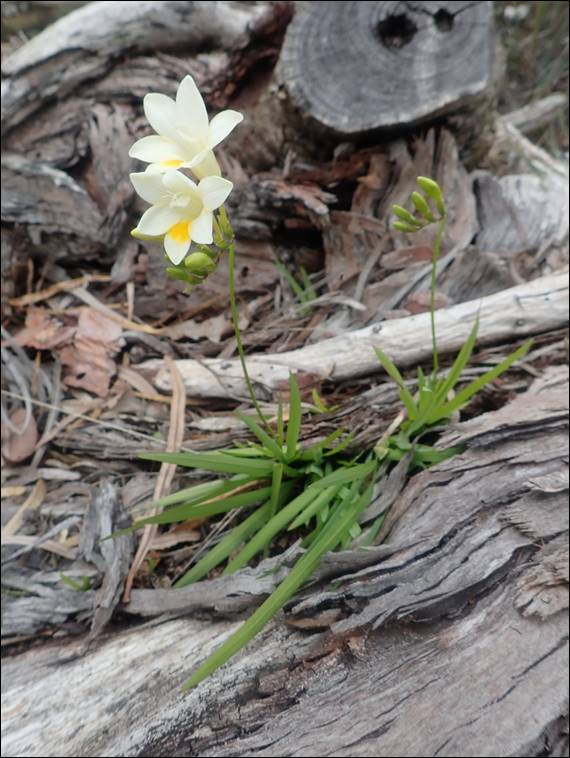
It was the obvious choice for today, close by and with a number of loop walks allowing us to make it as long or short as we wanted. Since my last visit here there were a few more flowers out, including the above Freesia (Freesia alba). An invasive species from South Africa originating from the Cape Provinces, which has escaped the confines of people’s gardens. Fortunately, it does not seem to have taken too strong a hold in Manea Park, but I have seen heaps of them in the Banksia woodlands alongside the highway I drive to work on. This perennial herb can form dense patches resulting in it competing with our local species, particularly orchids and grasses. Orchids were to be found, but other than the greenhood species they were still at that teasing pre-blooming phase:
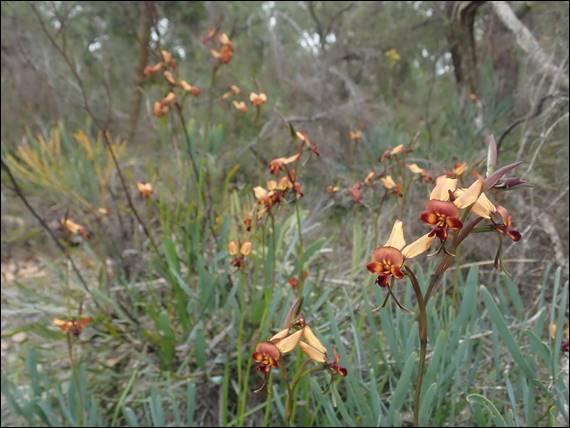
Other, that is, than the Yalgorup Donkey Orchid (Diuris porphyrochila). Two weeks back when I had spent three hours traipsing round the area I only found one of these, and I had been tickled pink about the find. Today there were hundreds in large droves; here, there, and everywhere. Sadly we had left the wander a little late in the morning day, and our stomachs were telling us it was time to start moseying back towards the car sooner than I would have liked. So before we left I attempted to redirect Lisa down another path, but she got wise and soon reined me back in. This place is however just round the corner from where I work, so I can envisage another trip here next week during the week:
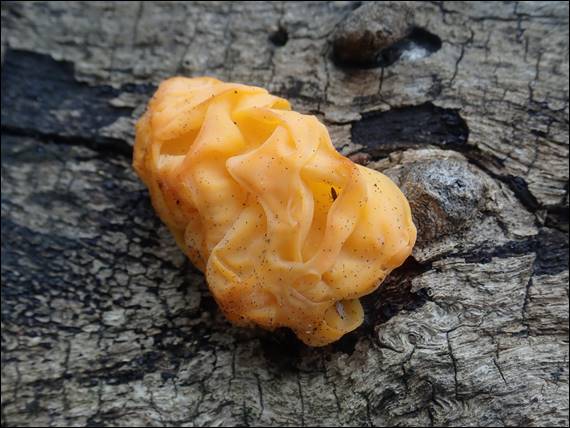
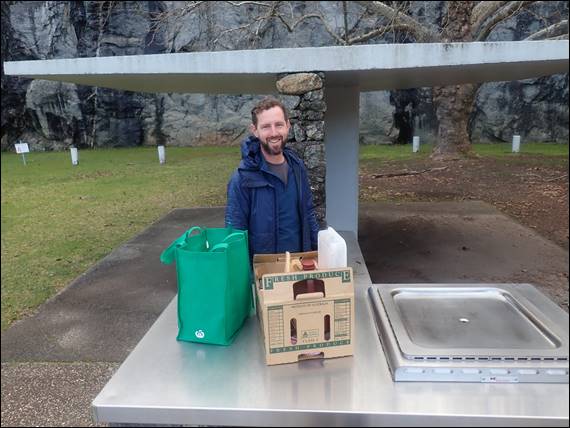
Before wrapping up about Saturday’s wander we did spy this cool looking fungus. I’m fairly sure it is Witches’ Butter (Tremella mesenterica), also known as Yellow Trembler, Yellow Brain, or Golden Jelly Fungus. I like the name Witches’ Butter more because of its Swedish folklore origins, whereby the witches helpers, which are beasts, is said to steal any food provision they can find and hoarding it by devouring it. Taking so much that they end up vomiting some back up and it comes out in a yellowy golden bile, which is what they called the witches butter. After the walk Lisa and I bought provisions to take home to eat at home, and I am glad to say we didn’t mimic the beasts regurgitation:
Sunday morning arrived and with the less than the normal time and amount of energy that Josh and Rongy would usually have, we planned a quick trip up to Welly Dam. Just like Manea Park, Welly Dam was the right choice being relatively close and with easy access. The climbing here is a bit on the hard side for Josh, but a great place to learn good technique. So despite his need to be out of there by 11am, we could still send him home feeling like he had worked hard. I was so confident of this that I suggested a not so early start allowing me to leave home in daylight. No one objected so I drove out from Peppy Beach as the last of the mist was lifting:
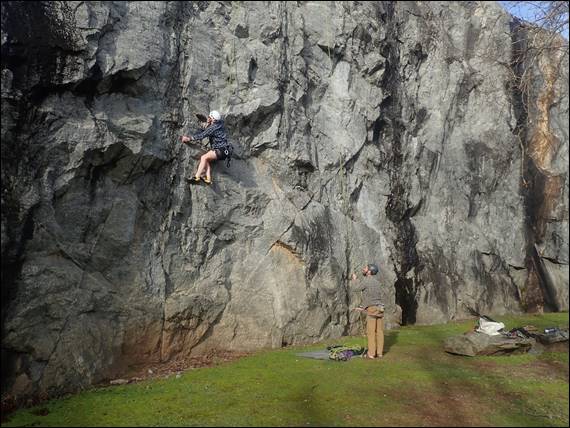
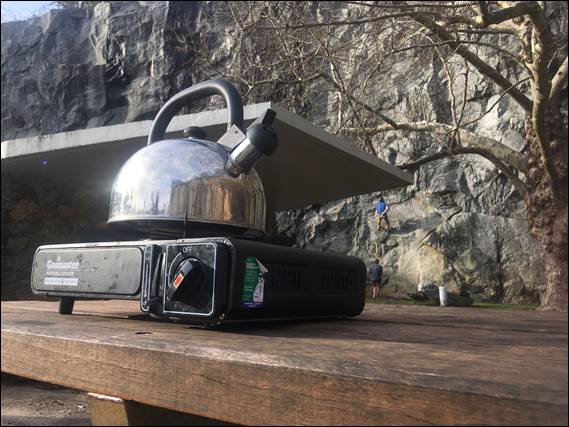
I decided the short session did not require the tea kit to accompany me, thinking time would be short. Josh however surprised us when he arrived with enough provisions to make not just tea but breakfast too, claiming he wouldn’t last too long with the routes here being a tad tricky. Before we could justify any tea or breakfast we had to get a few lines in. Rongy was quite happy to not go hard and slow things down, having had a big day out yesterday and not having been out on rock for quite some time. So we threw Josh at a couple of “easier” lines that were not running with water:
These “easier” lines were still relatively steep, sustained, and technical. So after three routes Josh was pretty spanked and decided to leave us to hit another line, while he got started with the cooking. Rongy and I eyed up a route that would require us to top out, which would mean walking along the top of the cliff to get back down. Near the top of this line I know there is a shelf where donkey and sun orchids grow, buds were forming but no flowers were out. These were the closest to flowering orchids we spied, with only the tale-tell leaves on display as we walked along the top of the cliff:
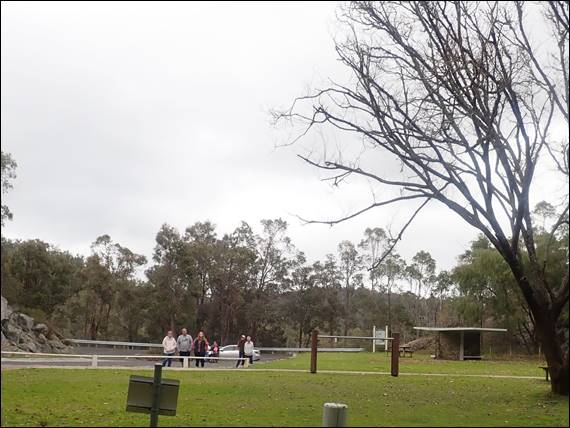
Despite the lack of flowers, we were treated with the smell of the food wafting upwards as it was being cooked below. And when back at ground level Josh was serving up a brioche bun bonanza, plus a piping hot cuppa to wash it down with. It felt like we had struck gold! Josh had to head off after we had our fill, and as predicted he was feeling suitably worked. Maybe both on the rock and in the kitchen. Despite Rongy and I feeling very satisfied, both with the climbing and food, I suggested one more route before we too hit the road. Which is what we did under the watchful eye of a small crowd that appeared, just as we started to climb, and then disappeared, when we were done:
With a sunny Sunday forecast Lisa and I headed to Nannup to repeat a walk we did last year on our wedding anniversary (https://sandbagged.blog/2021/10/31/21-again/). One we had talked about as a good place to take the poodles for a walk, for a test run. Being not too long and with a path that remains dry. Also being flat and easy, as it meanders through varied forests comprising Jarrah, Marri, Sheoak, and Balga. I did worry whether my continual stopping may not be tolerated by the poodles, but it is still a little early for orchid spotting so I was hopeful I could minimise the delays:
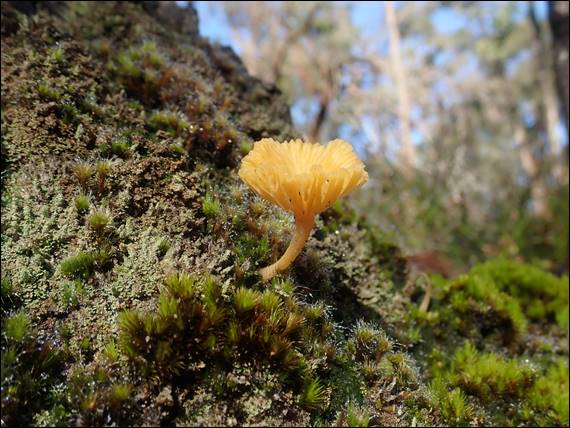
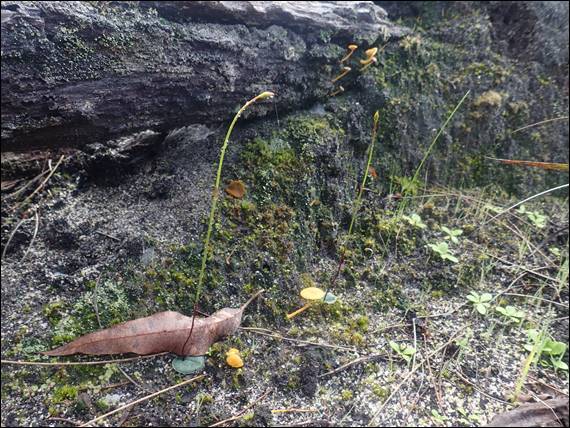
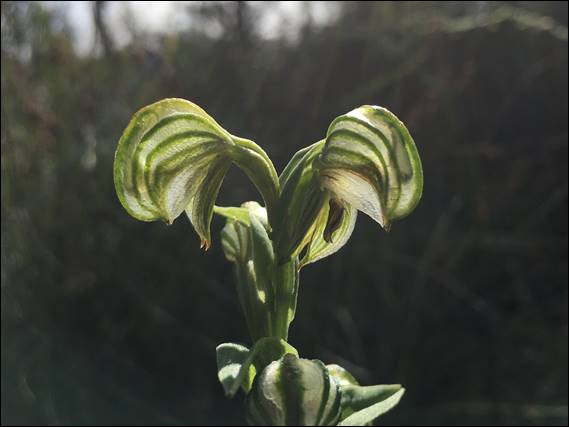
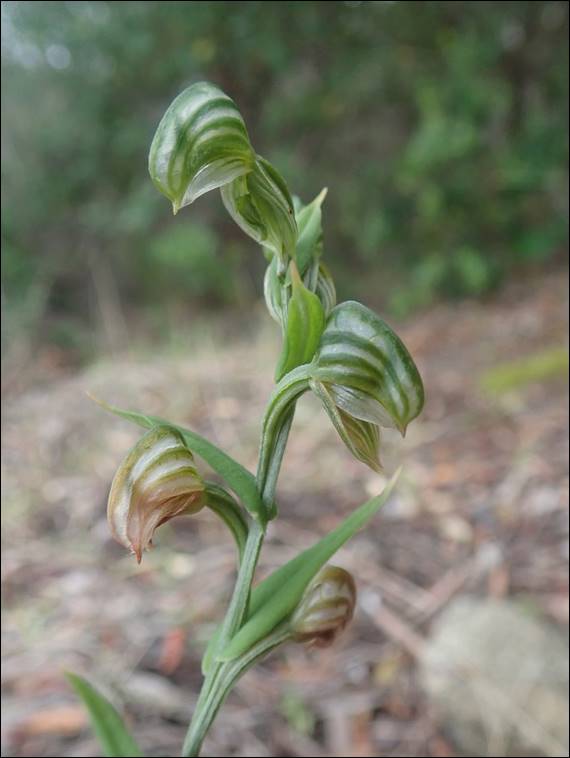
We saw lots and lots of Yellow Navel (Lichenomphalia chromacea), a bright yellow species of fungi shown above. This species is easily identified by the depressed cap that has a wavy and grooved outer edge, which is called the margin. It is a very common fungus and can grow in many environments ranging from forests, woodlands and coastal heaths across all southern parts of Australia. We also found the usual early flowering suspects from the greenhood family of orchids, including Banded, Jugs and Snails. All in abundant numbers:
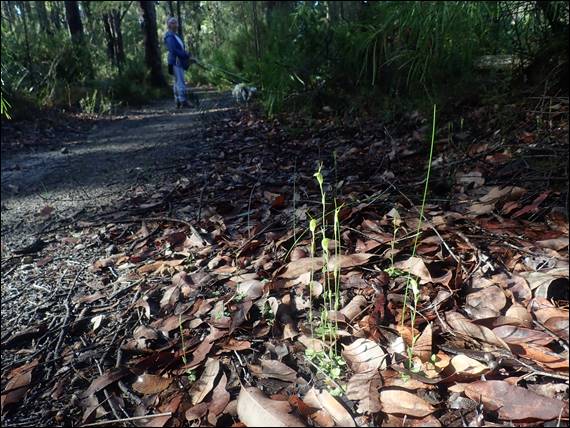
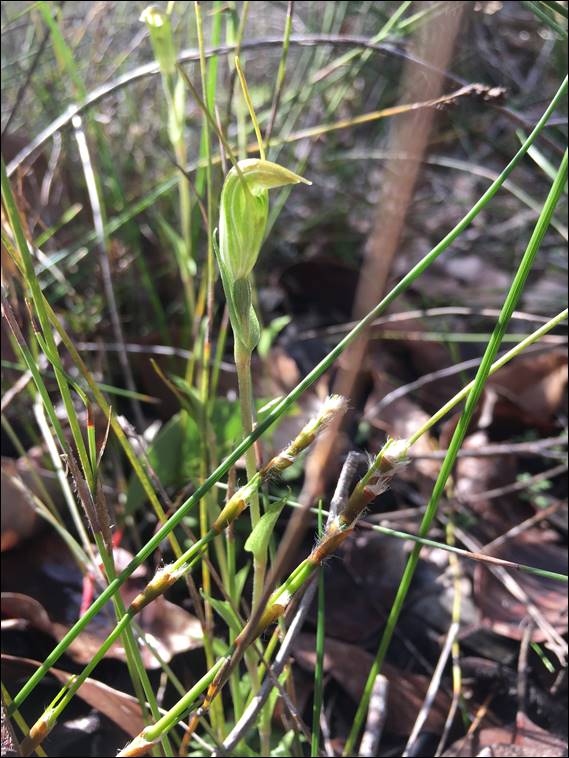
There are a quite few different types of snail orchids found in the south west of Western Australia, and I do wonder how many of them I have seen. Taking a few snaps and then trying to identify them when I get home just is not effective. To be certain I need to measure basal leafs, count leaves on the stems, check which parts were hairy, and measures respective body parts. Despite not having done that I think we may have spotted the two new ones today. The first being the Tall Snail Orchid (Pterostylis pyramidalis), which has a similar flower to the Slender Snail Orchid, previously spotted this season, but with a much taller stem:
As we walked Nicka’s tail and head down and as sniffed every inch of the path. Sooky on the other hand was tail and head up, and it seemed that she was the one walking both Nicka and Lisa. Each time I stopped to check out a find, Lisa would walk on with the poodles. Until that is Sooky realised I wasn’t with them, at which point she would come to a standstill and look round for me. As she and Lisa waited patiently, Nicka simply concentrated her sniffing to the one spot. The group did not continue until I caught up. So I didn’t make the observations, notes, measurements and images I needed:
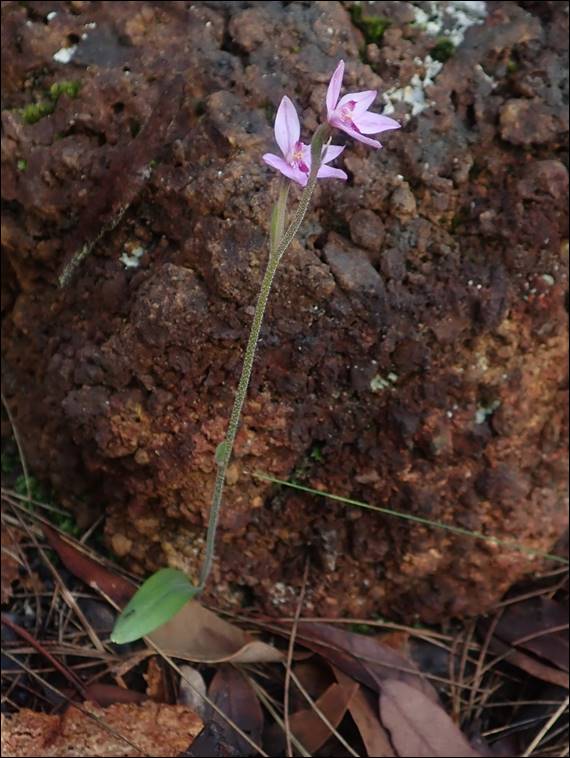
Despite that, and in truth I don’t think I would capture all that information each time, I am fairly confident with the above find being a Red-sepalled Snail Orchid (Pterostylis erubescens). Several aspects allowing me to be confident, such as the obvious pointed and broad splaying dorsal sepal at the front, long sepals pointing above the head, and the reddish-brown tinge that becomes more prominent with age. And despite the next find only just starting to flower this too was an easy one to identify. Named in 1810 from the Latin words latus and folia meaning broad/wide and leaves, respectively. The Pink Fairy Orchid (Caladenia latifolia):
In addition to keeping eyes on the ground, on occasion we both stopped to observe the treetops. Several times we gazed upwards to observe Red-tailed Black Cockatoos foraging on the gum nuts high in the trees, hoping to catch a glimpse of their red tails. Above us, they carried on oblivious of our gaze as they continually dropped nuts, twigs, and leaves to add to the accumulating litter the forest floor. I am going to guess that they were Forest Red Tailed Black Cockatoo (Calyptorhynchus banksii naso), which are only found in south west Western Australia:
They are one of the five subspecies of these majestic birds that are native to Australia, and this is the first time I can recall seeing them being called the Forest Red Tailed Black Cockatoo. As we continued we found a Pink Fairy Orchid in full bloom, the only one we spotted. Like the Yellow Navel fungi these too are widely found across all of southern areas of Australia. In most states they are mostly found in sandy areas nearer the coast. However, in Western Australia they can range all the way inland right up to the salt lakes in the Wheatbelt. A very common orchid that we will no doubt start to see a lot more of:
Heading out for a walk with Lisa, the flask of tea had come with us. And it makes sense that we then stop for a quick brew, when we also broke out the water bottle and bowl to give the poodles a drink. This stop gave me an opportunity to look in a bit more detail around the area, which is where I spotted a few more orchids getting ready to flower. Below the small basal leaves and long leafless stem with a dark red colour at the base makes me think they were hammer orchids, some species of which do flower as early as August. I guess we will just have to come back in a few weeks for another look to see if I am right:
As we walked the final stretch I popped off the track for a quick look at the wetland, resulting in Sooky again stopping and insisting Lisa and Nicka stand and wait for me. I didn’t hang about too long, and soon caught up with them so we could all walk back to the car. We’d spent two hours slowly checking out the area, and it was a successful test run with the poodles to see how they would fare and probably also how I would cope. Needless to say they managed the relatively short wander, which was no more than 5km, with ease:
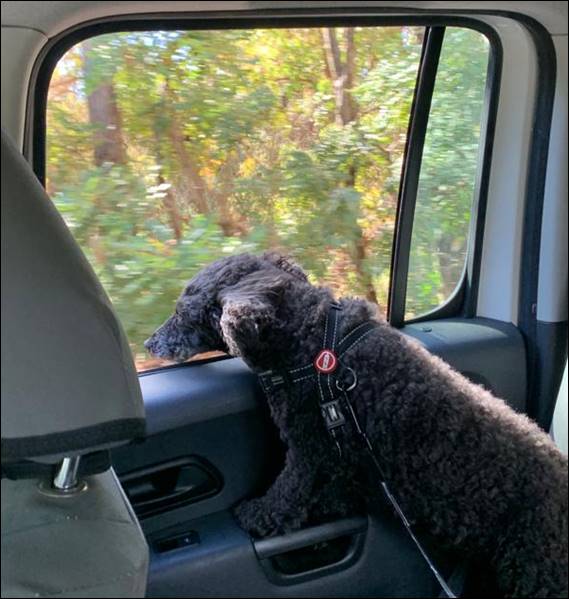
With plenty of tea in the flask we poured a cuppa for the road, and also poured another bowl of water for the dogs before loading them onto the back seat. To start with, they popped their heads out of the windows as dogs seem to love to, but soon after laid down for a well-earned rest. Rather than head straight home, we took a detour to pop in at Hippo Lakes to visit our old neighbours, and get a bite to eat at their café. Seeing Liz again was lovely, and the poodles were equally happy to say hello to her again. I have to admit it was OK going out for a wander with the poodles, so we will check out other locations where dogs are allowed:
Today Ash posed the question, where does the term sandbagged come from. Before looking at that I checked and found numerous definitions, discovering it can mean both “to thwart or cause to fail or be rejected” and “downplay or misrepresent one’s ability in a game or activity”. Thinking about my, not very good, pool playing days in England the latter definition was something we inferred when we called someone a “a shark”. Pretending to play badly, and then pulling out the moves when it matters to get a surprise win. However, in climbing the term sandbag is used in context of the first definition:
It seems the term has been used for various things through the centuries. Indeed way back in the 1500s it was used to describe filling a bag with sand, for use as a weapon. It is also claimed the noun didn’t come to fruition until the 1800s, when it was used to describe the person doing the attacking with said bag of sand. Then in the 1970s it started to get used as per the latter definition, to describe people who would conceal their real talents during a sporting event. So how does all this then relate to climbing? When Ash posed the question today I suggested it may relate to sandbags used in hot air ballooning, and according to some sites I may not be far off the mark:
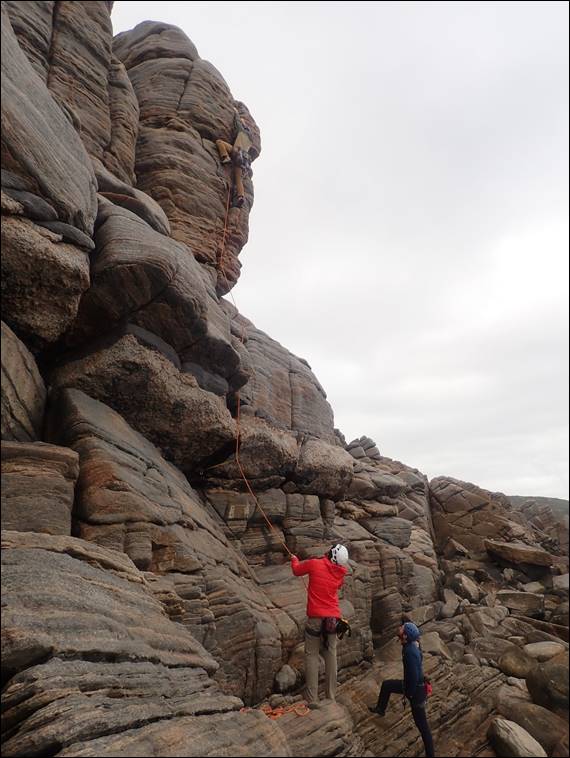
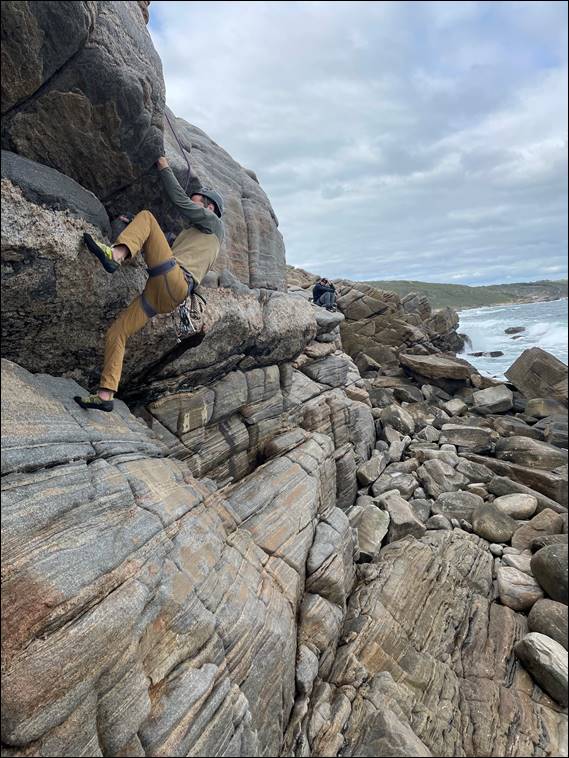
Climbers will know it is inferred to mean a route feels much harder than it should, when taking into account the grade the climb has been given. Several sites I found state the term indicates that these routes feel like you are climbing them with a bag of sand attached to your harness. Sandbagging is something I have been accused of several times, as highlighted by last weekend’s trip to Rumploes Rocks where the grades of routes I established were questioned. I occasionally check an online depository of climbing routes, called The Crag, and a number of routes I put up in Alice Springs have also been questioned, With their grades having since been bumped up several grades, by consensus of people who have tried these routes:
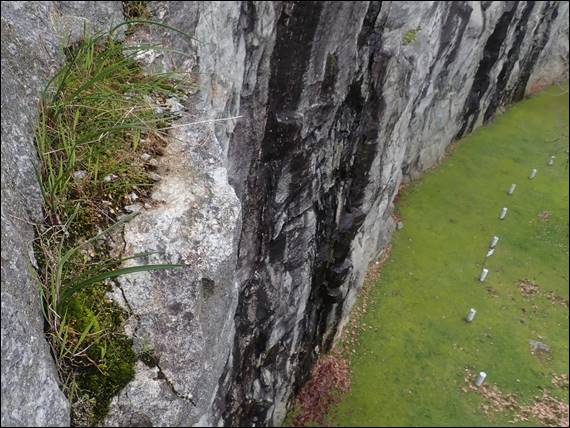
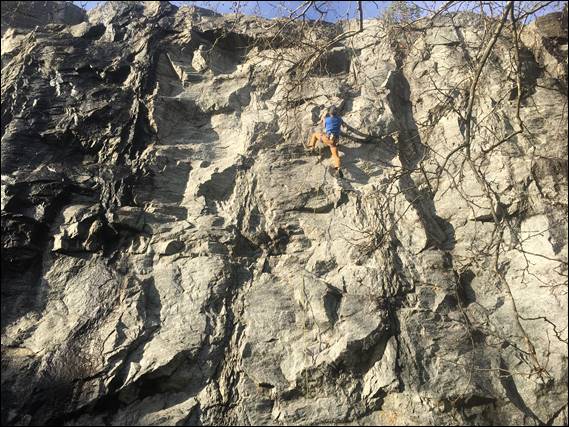
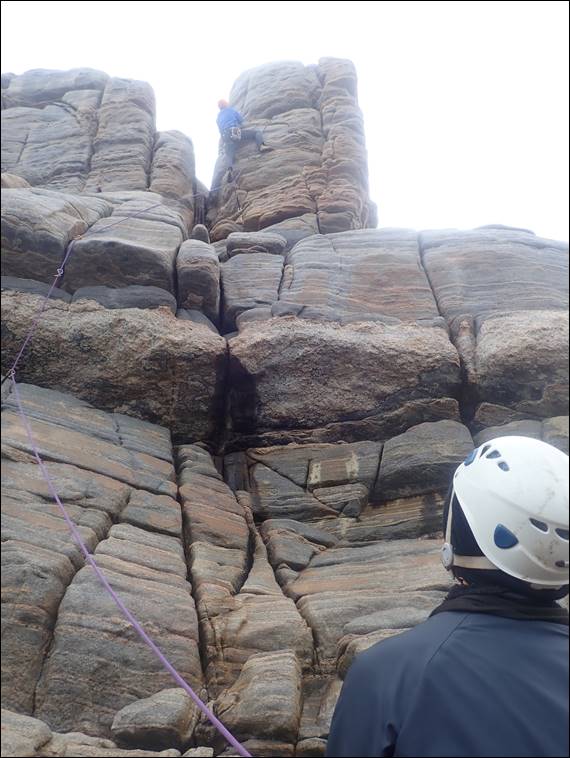
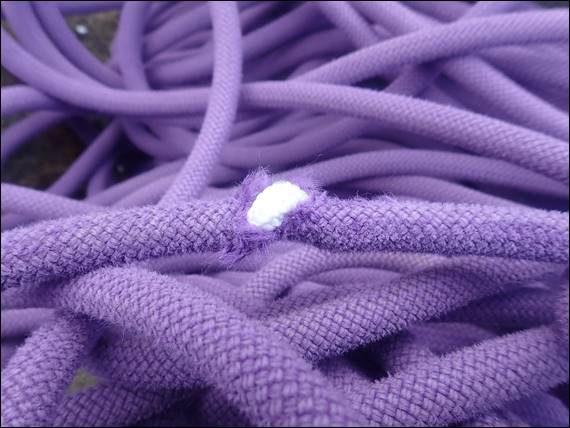
Another local place where sandbagging is a term often referred to is Welly Dam, which is where we were climbing. This was even more relevant today, as Mario, Howsie and I were introducing Andreas and Ash to the delights of this place. Whether they would measure up wasn’t the only thing under scrutiny today. You might recall that the sheaf of my rope was ripped open last week. So today was the moment of truth to see if the longer of the two short ropes I now have, after cutting the damaged section out, would be long enough for Welly Dam. The answer can be seen above, not quite for the longer routes here but today we made it work, taking into account rope stretch:
Rope stretch is quite simply how much a rope will stretch when put under load. This varies for climbing ropes designed for different uses, as well as how the load is applied. When I top rope solo I use what they call a static rope and they only stretch by about 10%, whereas a dynamic rope can stretch by as much as 40%. The reason for such a higher percentage for dynamic ropes, being that the stretch results in a falling climber coming to a more gentle stop as the rope is loaded. If it didn’t stretch it would be a very sudden stop and this could cause injuries, such as jarring of joints or worse:
While my new short rope didn’t quite measure up, it will still be very useful at numerous other crags in the area. And as for the two people being introduced to the climbing style here, well they soon came to realise why this place has a reputation. I am however very happy to report that this did not put them off one bit, and they were both very impressed and enthused by the style of climbing. This was even more impressive as they were both thrown in the deep end, following us up some of the stiffer lines. These routes being technical, hard to read and at times powerful while also needing very delicate movements. Resulting in the need for a controlled and precise approach to the climbing:
We hit a few harder lines in part due to the easier lines mostly running with water, but also because Mario, Howsie and I were keen to jump on these more challenging lines. Mario seeking some new projects to work on and Howsie with his 2022 challenge in mind. This didn’t seem to be putting neither Andreas nor Ash off, so everyone was happy. Being such a stiff place to climb, and when we are not on a tight time schedule, it makes sense to slow things down. To the point that this is the place my tea kit is most likely to make an appearance:
That and also because we park our cars practically at the base of the cliff so there is no need to haul the gear any distance. It felt very lucky and almost luxurious to be out on a Friday afternoon, climbing on a sunny day, and to boot have the place entirely to ourselves. No tourists came down to the quarry, although we could hear their voices above us. Although, there was something Howsie and I remarked on that we did not hear on this trip, which was a little disappointing. Neither of us heard a single call from the Red-Tailed Black Cockatoos, which is extremely rare and it is possible that it has never happened before:
Hopefully next time their familiar call will fill the air again. But for now the teas were poured and brewing, as the last of the climbing was being wrapped up. The last of our energy was being expelled, the sun lowered in the sky resulting in the shadows start to lengthen and the air temperature beginning to show signs of dropping. It was the perfect time for a hot cuppa that went down very well with a pack of Tam-tams. Another successful and social trip to Welly Dam, topped off as I got to watch the last of the supermoons, for 2022, rise above the horizon as I drove home:
Yesterday evening Josh messaged to ask if I had heard about the Queen of Sheba Orchid being spotted round Bunbury. He mentioned that the word on the street was that it had, but he didn’t have any more details. And nor did I. Why is all this relevant, well this orchid is only found in here in Western Australia and to boot is one of this State’s most protected species. While there are three variants, they are all equally rare and also all equally sought after by orchid enthusiast:
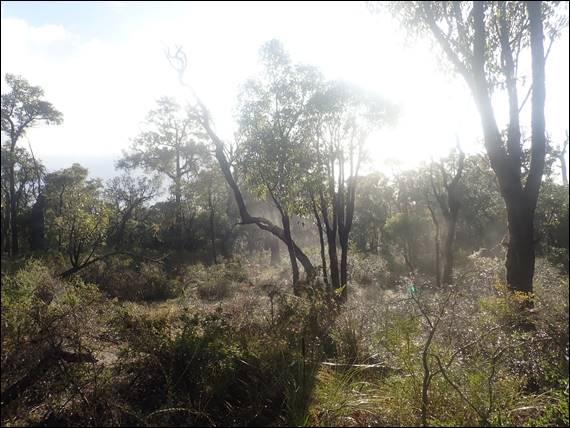
The thought of seeing one was enough for me to decide to head out this morning. Lisa sadly was still not right and was again laid up battling against another bug she had brought home from school. So went by myself on an unexpectedly clear and bright morning, which not at all what had been forecast. As I started my search the moisture from the rain of yesterday and over most of the night was creating a misty look, as it evaporated out of the bark of the trees. It was almost as if they were smouldering after a fire. I had come to the one place in Bunbury that I had heard this elusive orchid has previously been spotted in years gone by, Manea Park:
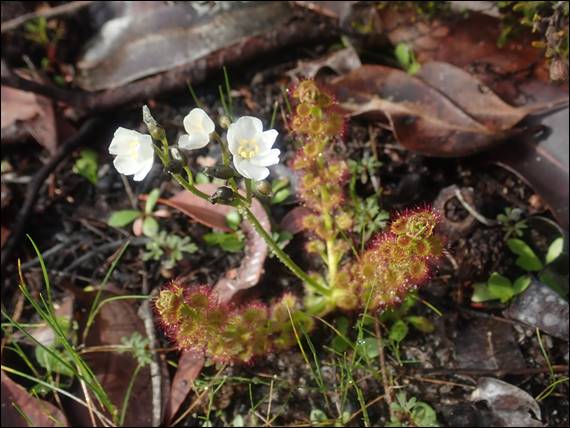
I hadn’t intended to be out too long, aiming for just a quick look round to stretch the legs. This park is the pretty large and my hopes were not high for success, but it wouldn’t hurt to have a go to find it. Needless to say I moved slowly and spent a lot of time just looking about, and there were two things that struck me. The first was just how many Sundews (Drosera) were about, both in numbers and variety. These carnivorous plants were studied by Charles Darwin in the 1870s. And with over 50% of the documented species of worlds sundews being in Australia, he was fascinated at how they could survive in such harsh environment and in such nutrient poor soils:
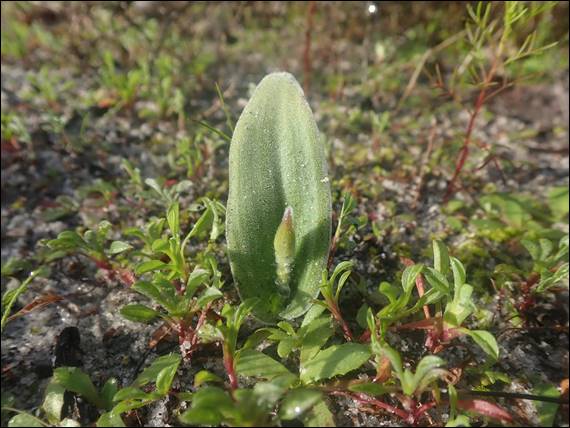
The second thing to strike me was that there were so many orchid basal leaves. A wide variety of sizes, shapes and patterns, with close to all of them yet to start to showing, let alone extending, its stem upwards. My knowledge does not extend to knowing the leaves of all the species, of which there are over thirty recorded in Manea park. I spotted the above leaf which did have a short stem just beginning the next stage of the plants life cycle, but even this didn’t give me enough information to take a stab at what it might be:
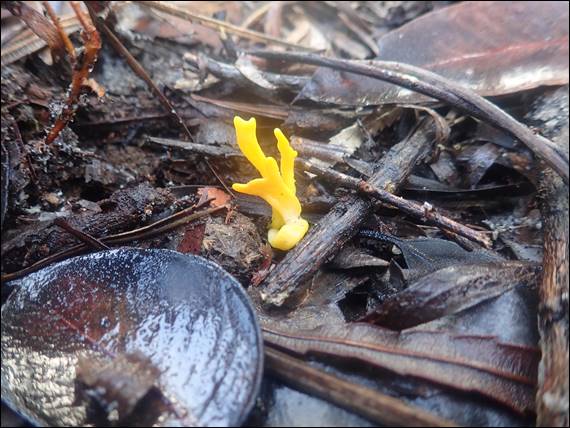
Most of the colours about were greens and browns, although there was the occasional small display of colour. Quite a few plants are starting to flower, often with concentrated clusters of small blue, purple, white, or yellow flowers. As such I thought I’d come back with mostly flower images. There where however many other interesting finds, and the above was by far the most brilliantly coloured one. A Yellow Stagshorn (Calocera viscosa), which I found starting pop up in a couple of locations. Shining so brightly that it looked fluorescent:
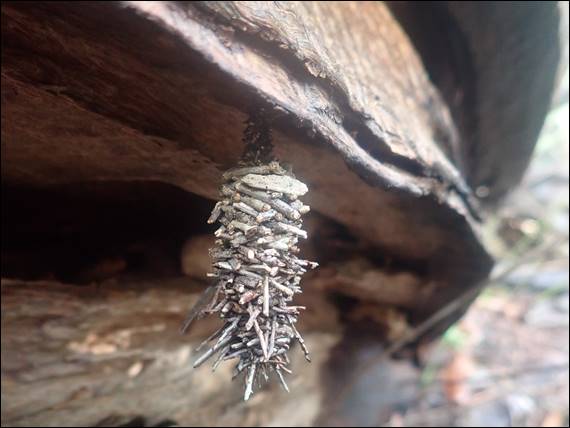
I was not moving fast both to look about and to make sure I trod very carefully. So far the only orchids I found in bloom were Banded Greenhood and Jug orchids. And on one such occasion the above cocoon also peek my interest, I see these every so often. They are associated with the larva and pupa stages of a Bagworm Moth life cycle, which is in the Psychidae family. The caterpillar makes this mobile home using silk to which it sticks the carefully cut up twigs. Based on the configuration of twigs this one is probably of the Plutorectis genus, which is quite common in Western Australia:
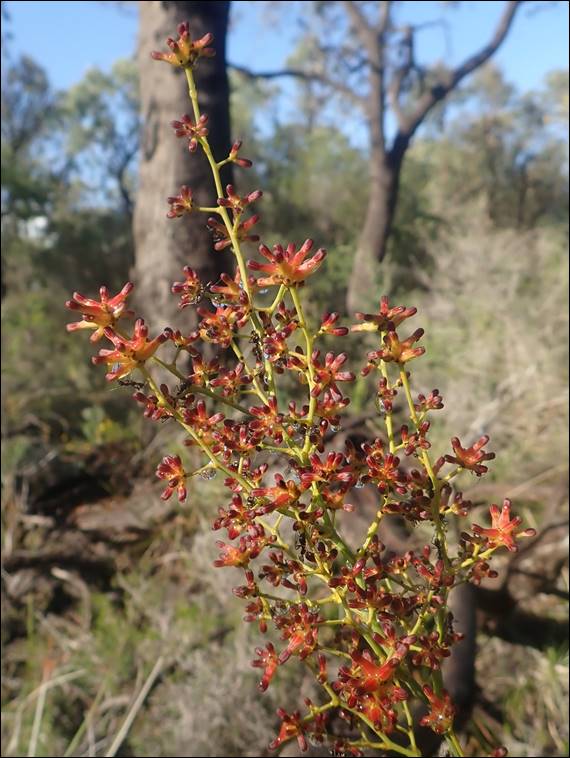
I’d hazard a, safe, guess that the caterpillar was now in its pupating phase. As the mobile home is hanging in a relative sheltered space with the end, where it would have had room to poke its head out of, now closed off. I have included the above image just because I enjoyed watching the ants busily going about life, and not in the least bit worried about me staring at them. Another plant that I was pleased to find in flower was this Sundew, it was the only one I spotted in flower but despite the additional detail I can still not narrow down which Sundew it is:
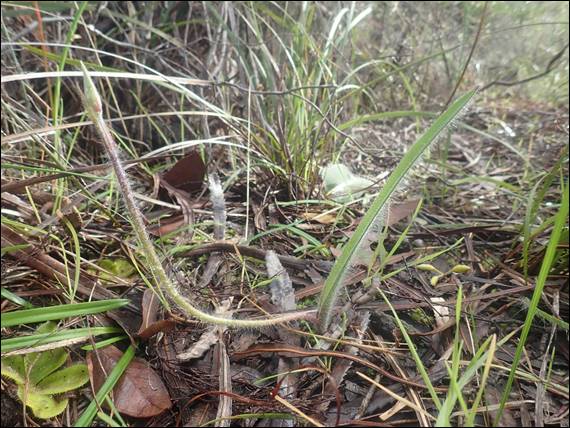
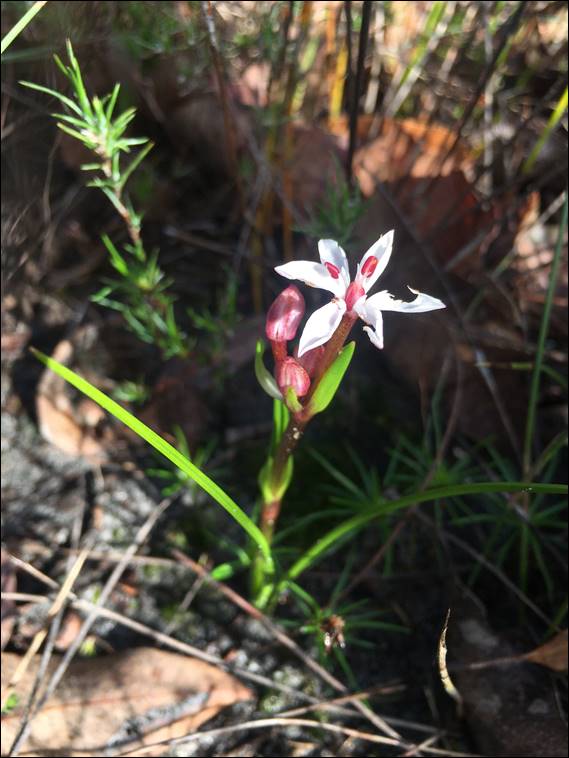
As I continued my journey through the bush, following one track after another, I had no idea of where I was. I also still had not found any orchids in bloom, which I have not previously spotted this season. On the side of the track I stumbled across an obvious stake, which I assume someone had placed to mark a find. It’s wasn’t a Queen of Sheba, or at least I didn’t see one, but I did find the following orchid with a very hairy leaf and stem. The bud was not open yet and without seeing the flower I’m not game to guess what it was. Quite a few orchid can have this hairy texture, so there are a few species it could be:
I thought with such a clear marker I could find it again another day after work so I could check the flower and identify it. But as I continued on my journey along the numerous criss-crossing tracks I again lost my bearings, and now have no idea where it was. I did however stumble across the following single Murdoch Snail Orchid (Pterostylis ectypha), which is quite different to the Slender Orchid that I found at Ambergate last week. These have very short sepals, the little ears poking up on either side of the main body, and they are also not as tall:
Time was slipping away from me and my expected “not so long” trip was getting longer and longer. But in fairness it is easy to loose time in Manea Park, being touted as Bunbury’s premier bush reserve and sporting quite a range of landscapes. This includes swamps filled with paperbarks, that at this time of the year come with the joyful sound of frogs. Through to dry sandy woodlands, on which a wide variety of Banksia grow. So I was quite happy pottering about despite my lack of success in finding the elusive orchid, although I was beginning to feel like I should head back soon:
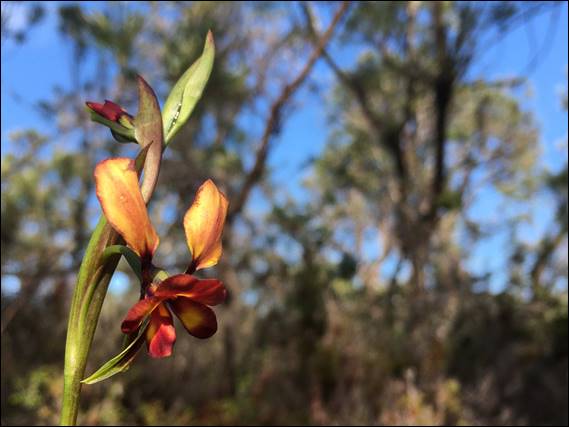
When I sussed out where I was I got ready to hoick back to the car, until I spotted this solitary Yalgorup Donkey Orchid (Diuris porphyrochila). It is the first time I have found this species, which is described as growing in sandy soils in Banskia woodlands. It looks similar to the Common Donkey Orchid, but has flowers with more purple and brown colouring. Donkey Orchids are probably the most well-known type of orchids in Western Australia, and there are approximately thirty named species in the state. I’ve seen a handful of these:
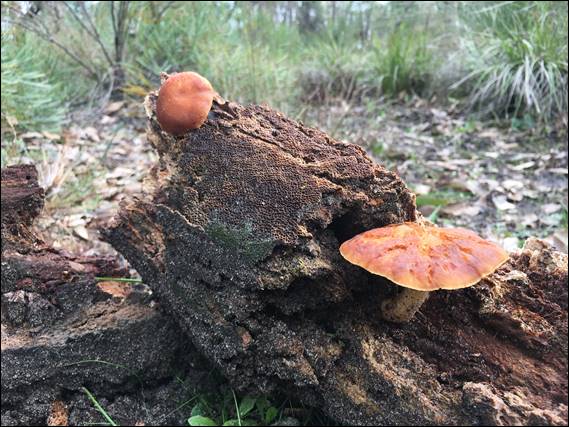
The above find got me all excited again and I decided to follow a few more tracks before getting back to the car. But being now really starting to be conscious of time I walked at a faster pace, which hopefully didn’t result in me missing any orchids. The track changed from a limestone to sandy path as it cut through the lower landscape, where there were swampy areas on both sides. Here there seemed to be more fungi popping up or maybe I just noticed them due to the clear ground. I thought this one might have been easy to identify but I was wrong, and as yet can’t work it out:
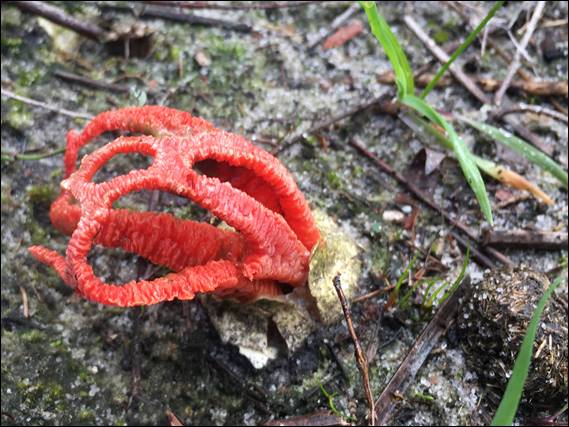
While I liked the above fungi, my next find had me just as excited as when I spotted the new Donkey Orchid. It is the first time that I have come across a Craypot Stinkhorn (Colus pusillus), which is quite an alien looking plant. It has very distinctive coloured and textured arms that resemble an open weave basket. These arms burst out of a gelatinous egg that is partially buried in the ground, and when it pops open it smells like faeces or rotten meat. And with very cool find, now it really was time for me to make a move. I was more than happy with what I had found today, but despite scouring the area for three hours I was unable to confirm the word on the street:
Before I left for the UK and after my last climb at Smiths Beach I had suggested I might not get back on rock until next weekend. But Lisa is very understanding and accommodating, or should I say tolerating, of my insatiable desire to climb. I think my drive to get out today was further fuelled by the opportunity I had in England to solo a few routes from the old days in the Peak District. Then, added to that a mottle crew were available and keen to see if we could nab a morning session, despite the continued wintery, wet and windy weather:
As the image above shows I was clearly very excited about today’s trip out. My last two sessions before going to the UK were solo sessions. And while they were a lot of fun, lead climbing is where it is at and I was itching to get on a particular route. Howsie had climbed at Moses Rocks a week back with Ash, when they managed a few routes before getting rained out. But they were both happy to return here and like me Howsie also had his eye on a specific route. Both of these were at the northern end, and both were a tad gnarly so not great warm up routes:
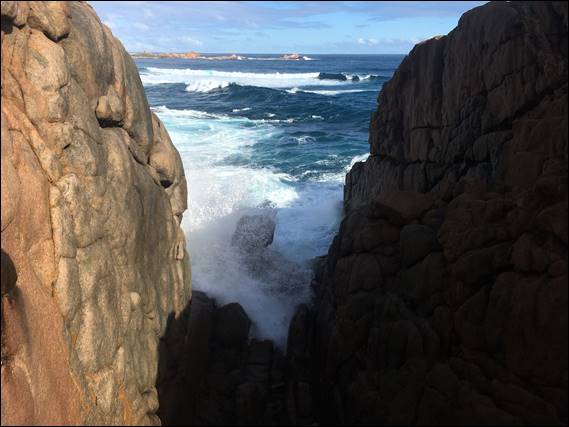
As we passed the northern section, Howsie was eyeing up Kami-kaze Catfish (20) and I was looking longingly at The Plough (18). The latter being on the lowest section of the crag, and as such the bottom part was subject to wave wash. Therefore, despite a strong will to climb The Plough, after having had a beer and meal in its namesake pub in Hathersage in the Peak District, we walked on by. As we did we checked out the cool selection of faces along the way, including of course the mighty zawn. But that too had waves tumbling in making it look pretty uninviting:
It was great to have a crowd out today, comprising Ash, Josh, Howsie, Craig and I. Craig has not cracked a mention in my posts for a long time, in fact it has been close to eleven months since he was last on rock. Something that surprised both of us, and was only realised after I had trawled through past posts to worked it out. And this lengthy stint between climbs is something that he is keen not to repeat. We trouped on, seemingly in no great rush, just enjoying being out and catching up. But we did have a plan in mind and eventually got to our destination:
Rumpoles Rocks is at the far southern end of Moses Rocks, and as soon as we arrived it was down to business. A great crag with what some might call broken or inconsistent lines. However, it has a lot of very cool routes that any true trad climber would have a lot of fun climbing. Plus I had a little project here that I was keen to test myself on. Before I got to that we were determined to warm up on some easier stuff. Howsie was sensible and took Ash and Josh up Yogurt (14), but Craig managed to sway me from my chosen line and instead try Chillies and Garlic (16):
It was a tad feistier than I had hoped for as a warm up, and I felt pretty tired and uncoordinated as I made my way up it. This was despite avoiding the direct start because it seemed a tad wet and slippery. The boys were still enjoying their more appropriate warm up amble, as Craig and I walked down. While he had not climbed for eleven month’ish he made surprisingly short work of the route I had led. So it was clear he was still capable and as such it made sense to throw him on the next lead, which he didn’t seem to mind:
I think he had decided to lead it from the start, as he had hinted that if I changed my first lead he would jump on what I was intending to warm up on. Which is exactly what he did, taking his time on Jugs Galore (14) to make sure his gear was good but other than that looking like he gets out on rock every weekend. The whole while there was banter going on between the two parties, it’s not a huge crag and were never too far away from each other. And as Josh took images of Craig, I was taking images of Howsie on lead:
Josh and Ash were not up for a lead yet, and they were in luck as it never takes too much encouragement to get Howsie back on the sharp end. The other two looked on as he struggled his way up the bottom wall of Olive Oil (16), and once he got past this section his description of the holds and moves were less than inspiring for them. Resulting in both of them being a bit nervous about following him up, so we gave them a bit of encouragement and when they went for it they both made it look so much easier. Probably as they used a very obvious, big and positive hold, one Howsie had somehow completely missed:
While they were making it look easy, it was time for me to get on my project. A sneaky line that I have not seen any record of anyone having climbed before. I’ve previously attempted the bottom part of this line, and try as I might I could not remember who that was with. And it will probably surprise Craig to find out that it was with him when we came here with Jamie early last year (https://sandbagged.blog/2021/02/20/the-power-of-positive-thinking/). Back then neither of us could manage it, and I had written ‘and so we will have to return to bag it another day. Preferable a dry day’, which today the rock was not:
I again had to try numerous approaches, and it paid off as I eventually unlocked the sequence. So the slightly damp conditions today didn’t matter and I pulled off a clean lead, with plenty of self emitted vocals when I felt it was getting sketchy. Ash, Howsie and Craig have all seen me go a bit harder and on new or unfamiliar stuff, so didn’t bat an eyelid. But it did surprise Josh who had not witnessed me needing to resort to such tactics. Afterwards Craig and Howsie both attempted the line with the rope above them, Craig finally working out a sequence that he could manage however Howsie was stumped:
During Craig’s attempts the abrasive nature of Moses Rocks, which makes it feel so much like Millstone Gritstone found in the Peak District of England, bit through the sheaf of the rope. The sheaf being the protective outer skin within which the brilliant white core of the rope, now fully exposed, shone through. As I had packed my bag for today’s trip I had been thinking that it may be a good idea to cut this rope, to make a smaller and more manageable length for the crags we have in this area. And it looks like I will be doing exactly that now:
Despite feeling a little spanked, there was talk of one more climb. Howsie and I considered heading back to jump on our respective lines of interest at the other end of Moses Rocks. But it was instead decided to bag two more lines here, Craig jumped on Olive Oil while Howsie decided to climb Hexed (15). I thought they might both struggle a bit after their battle following me up the new route, which after a discussion in the car on the way down I decided to call The Bunyip (19/20). And as they set off on their leads we got the first proper shower of the morning, just to make things more interesting for them:
Indeed, Howsie managed his line but was showing signs of getting weary. In part possibly due to the perplexing nature of the climb we had pointed him towards. I thought maybe Kym and I had under graded it. Although, having followed up the line afterwards I don’t think so. Craig however ran up his line without any hesitation, but with great joy and sealing a very successful reintroduction to rock. Just proving that he is an old hand at climbing, assisted no doubt by his ridiculous ape index and unnatural finger strength that never seems to wane, maybe due to his job as a mechanic:
I blame Mario for igniting my desire to see if two weeks has been enough to allow any more orchids to come out. He sent me an image of a Winter Donkey Orchid (Diuris brumalis), which are the first of the donkeys orchids to flower. They are however only found on the scarp, which comprises a low north–south running escarpment that separates the coastal plain and inland Wheatbelt. As such I was not likely to find them without trekking up to the scarp, which I didn’t fancy. Instead I drove the short distance to Ambergate Reserve, accepting I wouldn’t find the Winter Donkey Orchid today:
One reason for wanting a short distance is that the wild weather, while easing today, was still upon us. Belts of heavy rain and strong gusts were highly likely, and I was taking a chance going out. As I write this, and having just read up on the Ambergate Reserve I found it a little coincidental that the area was probably named, by the early settlers, after a village of the same name in the county of Derbyshire in England. Derbyshire county being where the Peak District and Hathersage are located, which is where I was just last week (https://sandbagged.blog/2022/08/01/time-to-head-back/),:
These settlers, which formed part of Settlement Group 44, lived on the reserve in tents for approx. two years in the early 1920s. There is no sign of where the tents sites were, with the only evidence being a collapsed well by the side of the walk track. The surrounding land was already being used for dairy farming, where they worked until they were given their own land to farm. As such this 75-hectare patch of remnant vegetation was already, back then, an island and sanctuary for flora and fauna, surrounded by farmland. The reserve is recognised as being rich in plants and animals, and houses an incredible diversity:
I have no idea what the shrub in the first image is, despite looking but I feel confident in saying the above image is a Dwarf Burchardia (Burchardia multiflora). The name multiflora coming from the Latin words multus and floris, meaning many and flower. The pinkish white flowers of this plant come out from July to October, but despite the meaning of its name I only found one. While walking in England I was able to smash out 12km in under three hours, and felt that I had been looking round a fair bit. But obviously not as much as I do over here:
Hunting for distinctive shapes and colours that might give away an orchid, amongst the ground cover, required a much slower pace. And this short 4km trail took me over an hour and half to get round, but I was rewarded and found two species of orchid in flower. The above Banded Greenhood (Pterostylis vittata), which I have previously spotted this season, and the below Slender Snail Orchid (Pterostylis crispula). I also came across spent rabbit and autumn leek orchids, and some distinctive basal leave hinting of what might be yet to come:
You can probably tell I get a sense of excitement looking for orchids and a rush when I find one, hoping it is something new and exciting. While this is true I also just like being outside, taking a slow pace so I can spot the smaller more hidden gems. I think my hastened pace in England was in part as there were very few plants in flower. Also the ground cover and understorey was way thicker than over here making it impossible to spot anything underneath it, and possibly also preventing anything else being able to get established:
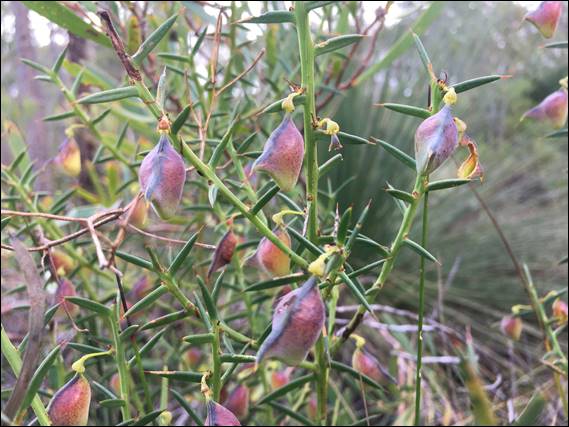
Fair to say the diversity in this reserve is amazing. Quite a few plants were starting to come into flower, and as mentioned above there were signs of more orchid species getting ready to come out. But the plants I found most fascinating today were those shown in the first image and the image below. Despite their very distinctive and unusual, I assume, seed pods I was unable to identify either of them. Some plants here have signs with their names on it, so next time I head this way I’ll have to check if I missed a sign for any of these two plants:
I was very lucky, and despite my dawdling it looked like I would remain dry. Several dark ominous clouds skirted round the reserve and for much of the time I was bathed in sun. That was until the last few hundred meters, when I must have been distracted looking at something. I didn’t noticed the sky become grey and then blacken, until it was too late. No matter, I came dressed for the occasion and was soon enough back in the car. Thanks for the encouragement to get out today Mario:
It has been over two and half years since I have been back to the UK. My last trip was cut short and I only stayed for three days, leaving on 27 Feb 2000 due to COVID wreaking havoc. The papers were giving daily reports of seemingly exponentially escalating cases in Italy, and the world hysteria was commencing with threats of boarder closures. As it was I could have stayed for the full week, as Australia didn’t close its boarders to non-residents until the 20 March, with a two week quarantine restriction for returning residents. But at the time and even now we all agreed it was a wise move:
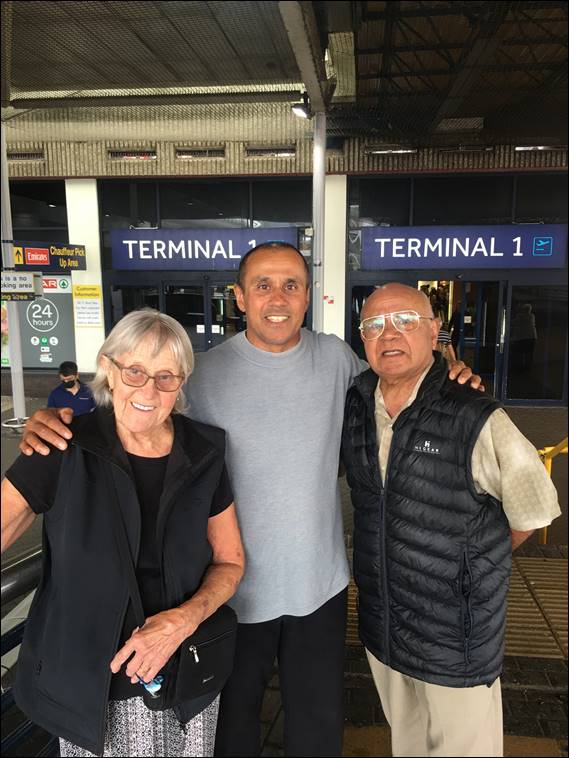
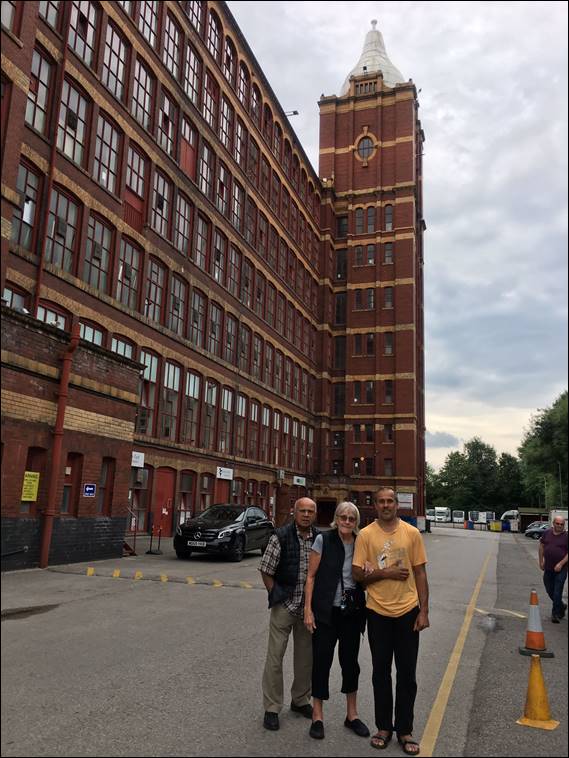
So my trip back to the homeland last week was long overdue, and I was happy to be able to once again see my mam and dad. I had forgotten just what the trip to the UK was like, a 26 hour plus door to door endeavour. With way too much time being stuck in a seat for extended periods. Seeta along with my folks greeted me at the airport, and before we made it back to the house we stopped in at Pear Mill in Stockport. This was an Edwardian cotton spinning mill and one of the last ones to be built, in 1912/3. Now it houses a vast range of businesses:
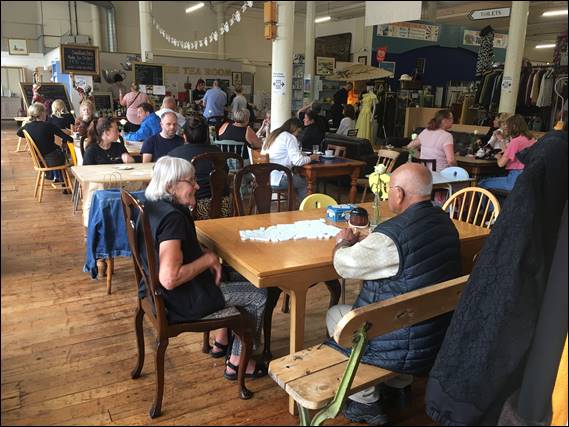
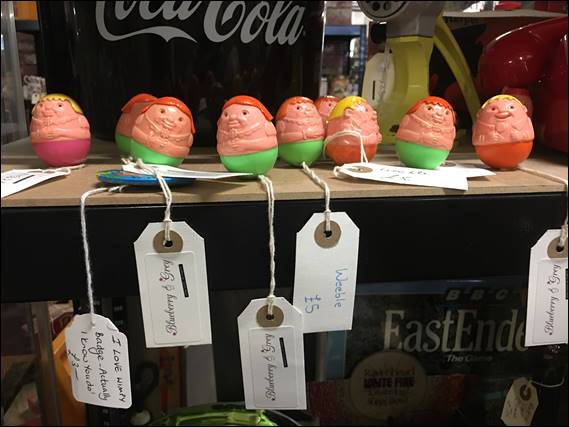
We however only went to the café and what I would call a bric-à-brac shop, full of all manner of antiquity and quirky items. It is easy to loose many hours in this place browsing the numerous nooks and carnies filled from floor to ceiling. But first it was time for a bite to eat, cuppa and game. Just about every table in the cafe has a game on it, and it has a wonderful relaxed, friendly and stay-as-long-as-you-like atmosphere. During our brief rummage through the many items on display I came across a bunch of toys from the 70s that we used to have called Weebles, which were promoted with the catchy phrase of “Weebles wobble but they don’t fall down”:
I wasn’t tempted to buy any Weebles, but did come across a 1956 Ordnance Survey map of the Peak District and had to get that. My sister and folks live in Romiley, which sits just outside the Peak District, a place that holds many fond memories for me and my early climbing days in the 90s. I was however here to spend time with the folks and Seeta assisted with that by managing her flexible working hours to fit in a trip out together each day. That said I quickly slipped into my 5am wake up time, and this left me with two to three hours in the morning before the folks were up and about:
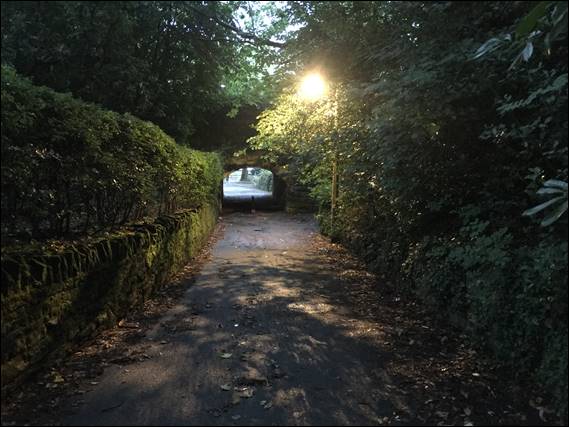
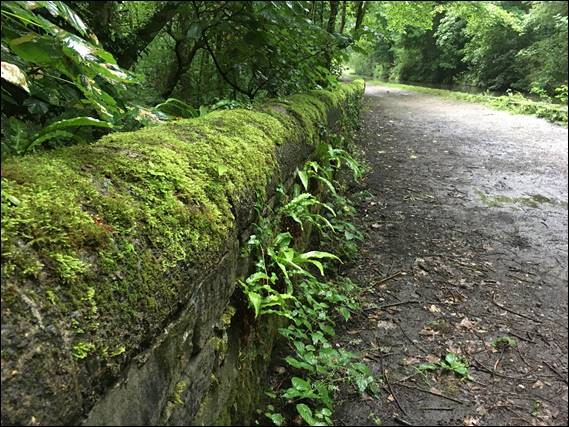
The first day was taken up with going with them to their Monday morning tea and lunch club. I attended this on my last trip and several of the volunteers and other elderly attendees recognised me from back then. Prior to going to there I walked about Romiley with my dad, and he showed me the small library box by the station. This is where I found the Friends of Romiley Station book, called walks from Romiley Station. So from Tuesday onwards I was up and out of the house at 5am heading on a walk, all carefully detailed in this little booklet, with the above and below images being from the first walk I did:
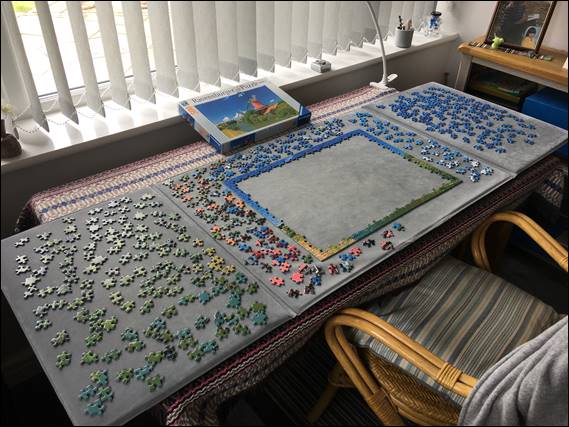
Seeta would generally come by late morning for a trip out. So even with fitting in a walk, which ranged from 8 to 12 km, I had time to catch up with the folks, get a few jobs done round the place, and of course help my mam with a few puzzles. Despite only coming over for a week we managed to cram a lot in, with daily trips out, completing 5 puzzles and completing a bunch of jobs mostly round the garden. Some might say it seems a bit crazy to come for only one week, but with both folks at 90’ish one busy week is enough before they need time to recuperate:
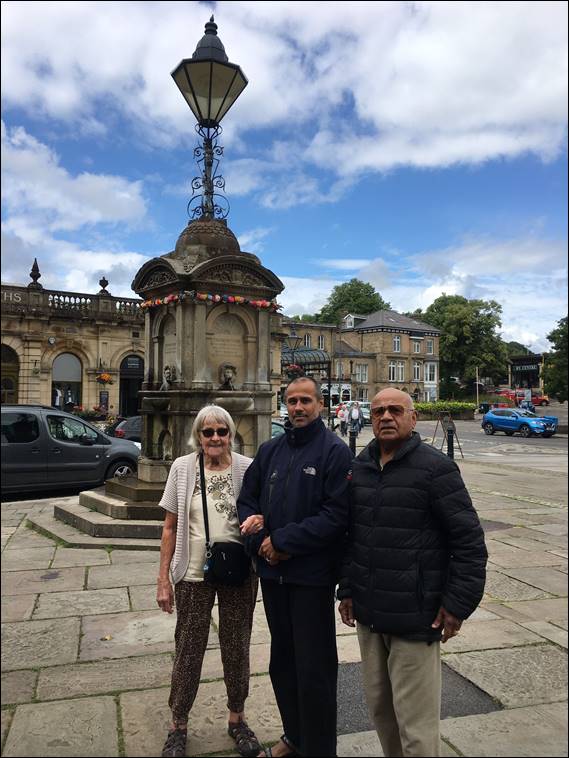
Our first trip out of town, was to Buxton. Located on the every edge of the Peak District and famous as a spa town. Also touted as being England’s highest market town, but it is the geothermal springs that draws the crowds. And in Victorian times the reputed healing qualities of this water, which come out of the ground at 28 degrees, was what attracted people. Like lots of towns in England there are many old buildings and lots of history for buffs to find out about. We were however here just to get out and about, and wandered through the streets:
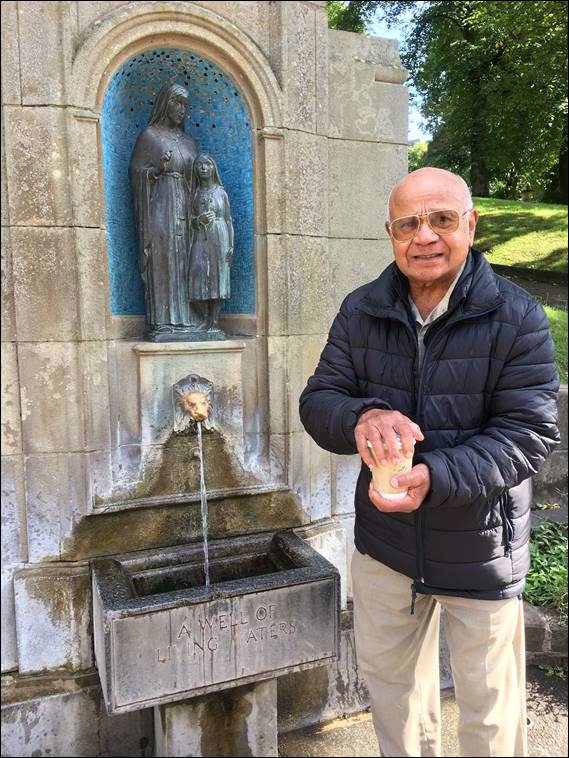
My dad was also keen to pick up some of the water, which you could strangely get for five pounds a bottle in a shop or literally a few yards away get for free at this water fountain. It is a semi-regular place for Seeta to take the folks too, and like today they have every other time forgotten to bring a few empty bottles. So my dad used a couple of disposable coffee cups to take some Buxton spring water home. The coffee cups being worth a mention, as during just about every trip out there is a pit-stop at a Costa coffee shop, not that I partook in that tradition:
I left Perth on a wintery day, rain was bucketing down as I drove to the airport and while I arrived in Manchester on a summers day that to greeted me with rain. The week before the temperatures were in the high thirties, way too hot for the buildings over here that are built to withstand the cold. This week for the northern part of England the forecast was mostly overcast with a chance of rain every day, all bar Wednesday. And that was the only day that we had some sun. Despite the forecast I was very jammy and managed my morning walks without getting drenched:
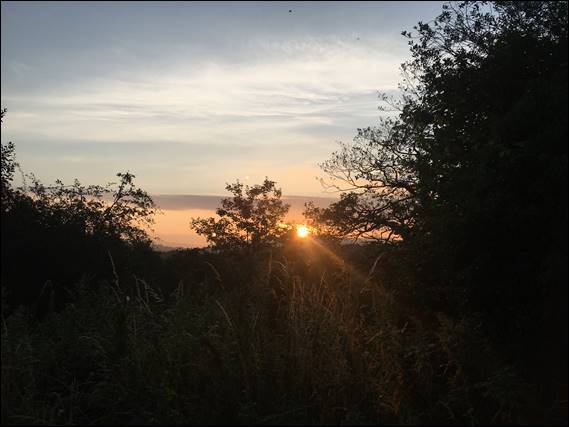
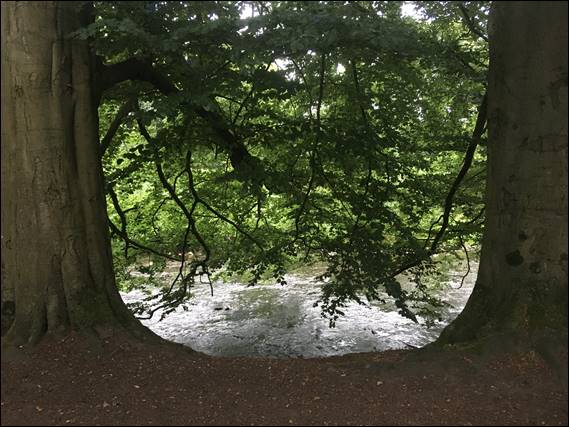
For my second walk I headed along the River Goyt, and was a little dismayed to find the riverside path was closed. So instead of following the diversion I scooted round the fencing and carried on along the river walk. The erosion was right up to and had taken parts of the path, but it was still passable with care. The sound of running water was so much nicer than walking through the open fields. As forecast I got to see the sunrise, after which I even started to get a bit too warm, which was the only time that happened:
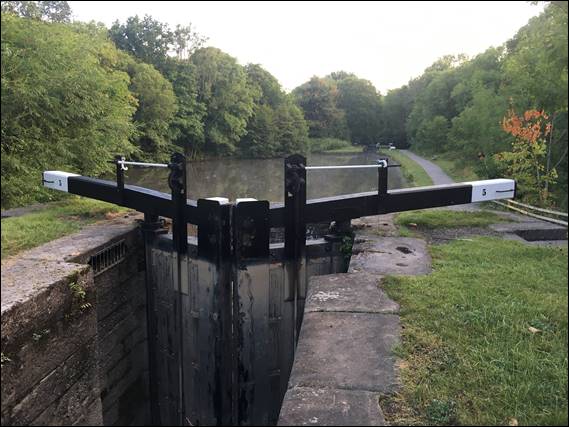
I kept an eye out for animals and plants, but other than a couple of nice fungi and several squirrels I didn’t see too much else. Although being morning time there was always the dawn chorus and I did spy quite a few birds from tiny wrens to larger birds of prey including one owl. The light was mostly dimpsy, which is an actual word if you care to look it up, and as such photography was often a little blurry or grainy. This didn’t stop me snapping away, as I relished all the lush greens. Romiley is also right next to the Peak Forest Canal, originally opened in 1800, and the now refurbished system is reputed to be one of the best canal routes in England:
Our trip out today was to go and pop over to Leeds to see my niece’s, Asha, digs. It is her final year of university, and being a student she was of course more than happy for us to drop in as a visit like this nearly always entails a meal out for lunch. Before I came over I was asked if there was anything I wanted to do, and I only had wo requests. The first was to have a few pub meals. You can’t beat a British pub meal and even more so if it is at one of the older country pubs. We did OK and managed to squeeze in four pub meals if my memory serves right. With the one in Leeds being the second one, and after a lovely few hours visit we left Asha to rest up after eating too much:
We had also overindulged but that didn’t stop the customary stop to pick up a Costa coffee on the way home. Thursday morning arrived and my walking destination would entail a fair amount of hill climbing, to ascend Werneth Low that is part of the Pennine Way. This series of hills is often referred to as the “backbone of England”, and this section is just shy of an elevation of 300m. High enough to give a great vista of the surrounding countryside, with the image below is looking westwards across to Manchester. The booklet was pretty spot on at giving directions and descriptions of the routes, which was good as there were many twists and turns on the way:
One of the things I really like about England is the 1930’s code of conduct developed by the Ramblers Association has been enshrined in various legislation and policy, including the current Country Code. This code does a few things, but its core objective is to protect the simple pleasure of walking in nature, and this includes maintaining public right of way. This maintains public access across freehold land, and at times it feels a little strange walking at times right next to and at times through private areas. But it does means these walks took me through very varied landscapes:
This allows you to get up close to many historic buildings, such as the above Grade II listed Old Barn of Springwood Farm. And as you can imagine right of way results in needing to cross many property boundaries, facilitated by a wide variety of permanent features. These include many types of gates and styles, some very old such as this stone one with stone handles protruding from the wall. These features were also a key descriptor for many of the junctions such as pass through the kissing gate, and yes this is a real name for a type of gate:
This was the day I probably did the most walking and I feel safe in saying Lisa would have been very proud of the number of steps her Fitbit would have recorded if she had been here. In addition to a reasonable walk in the morning we went to the Bridgewater Royal Horticulture Society Gardens. Steeped in history, as every place we went to seemed to be, the original house was built in the 1840’s and survived two world wars and a fire, only to be demolished in 1940 by a scrap merchant who bought the place or a meagre sum:
The remaining structures and grounds have since become protected and are now the biggest gardening project of the two hundred year old Royal Horticulture Society. The extensive gardens on display, were made more impressive by the fact the place had only been opened to the public for some fifteen months. Although they started work to rebuild the gardens five years back. Based on what they have achieved it is hard to imagine what it will eventually look like, as they have a thirty year plan to fully realise their masterplan of this sixty two hectare property:
You may notice my mam in a wheelchair, old age is catching up with her and her active life hasn’t helped. She simply couldn’t manage the distances we covered at this place. I was impressed that my dad did manage all the walking, although he looked pretty shattered by the end of the day. He was in part motivated to keep going due to all the great sights to see, not just ornate gardens but food, tropical, and oriental gardens, as well as open woodlands and lakes. Definitely a place for them to go back to, to see how it changes with the seasons:
On the way back we made a pit stop, not for a Costa Coffee, but at Pear Mill. This image should show you where it gets its name from, with the roof behind us being the original structure. Here we had a very deserved feed, washed down with more tea, all the while playing a few games. Each time I have been here I have been provided my tea in a different and quirky tea pot, this time in the shape of the dog with a raised paw that forms the spout. I’d have included an image but I feel this post is getting long enough with the images I have already chosen:
While Thursday had been filled with lots of walking, I was still determined to get out the next day for my morning walk. So Friday came and off I went again, with the distance increasing each day. I wasn’t sure how long these walks would take me, so started with the shortest and made my way toward the longer ones. This also meant that some sections of the walks overlapped and this speeded me up, as I didn’t need to keep referring to the book for landmarks at which I needed to change direction:
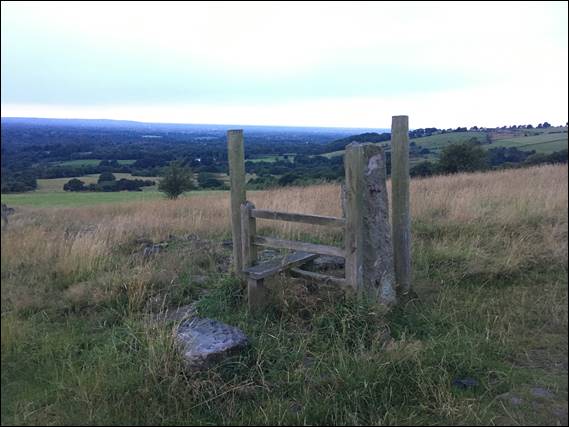
Such as the above style, stood all alone with no connected boundary fences. You might also note a very old gate post, carved out of the local rock called Millstone Gritstone. All the old buildings are built with blocks or bricks made from this locally available material. There are also a few mounting stones made from this rock to be found in Romiley, still in their original positions that could be considered trip hazards. These were a common eighteen century sight, when horses where the main mode of transport. And just in case it is not obvious mounting stones were there to assist people to get on their horse:
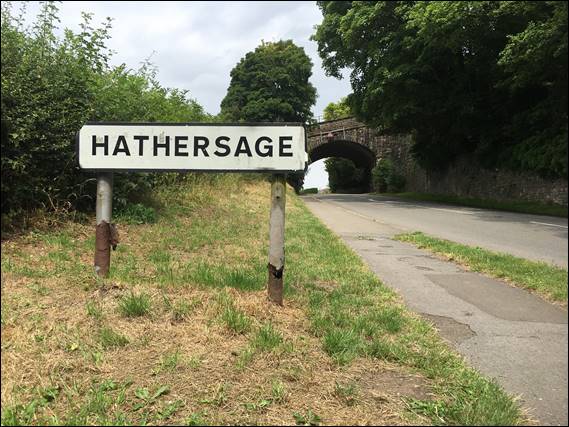
Millstone Gritstone is the reason I spent so much time in the Peak District, and Friday was the day that we planned to head to Hathersage, which was the second place I had suggested I would like to go to. While disputed, it is generally accepted that the name derives from an old English word of ecg, which means edge. This being apt, as Hathersage is surrounded by edges, or more specifically Millstone Gritstone edges. The longest being Stanage Edge at three and half miles, with rock faces up to 15m high along this entire length. It is a climber heaven, while not offering long routes it does offer an abnormally large amount of routes for such an area, at approx. twelve thousand:
Millstone Gritstone is affectionately known to climbers as grit, and offers a bold form of trad climbing due to at times spaced protection and a no bolting ethic. It had been over twenty years since I had been here, and there were two places that I wanted to visit. The first was the shop in town, called Outside. I wanted to try on some different climbing shoes, as my trusty brand that I have been using for ten plus years have changed the shoe style making them uncomfortable for me. Western Australian shops are pretty rubbish for providing a range of climbing shoes, so I wanted to take advantage of my chance to have a wide choice:
The second reason was to have a pub meal at The Plough. In my early years I climbed here a lot and the only decent camp site was out the back of this pub. On weekends this place was insanely busy, with an amazing atmosphere. But for the owners, Bob and Cynthia, this became too much and the camping stopped. This didn’t stop me from coming to the pub to have a drink and feed, and of course say hello. The place and owners even get a special mention in one of my previous posts (https://sandbagged.blog/2017/07/30/part-4-the-peak-district-learning-the-ropes/). I was amazed to find Bob still behind the bar and even better he remembered me, so we had a good ole chat to catch up:
After a brilliant visit to Hathersage, we hit the road but didn’t head straight back. Seeta decided to drive round the country roads to see a few of the edges. At one I went for a short walk with my dad to try and find a millstone, check put the previous linked post if you want to understand what I mean. He was still worn out from the previous day, so we didn’t go too far and failed to find any. Our next stop was Burbage Edge, which I was very happy about as it has the quickest and easiest access to the faces. This allowed me to scoot down the path for a little while, as Seeta and the folks soaked up the views:
Here I soloed a couple of lines on the short walls, and have include a video below. We all had such a lovely time at Hathersage and seeing the countryside, so much so that time ran away with us. We drove back as planned via Hope to get a brew, but all the cafes had already shut. We found this out as we wandered round the various streets, but were not too upset as the short walk in itself was worthwhile. Being a very beautiful place with great views of the surrounding hills. Jumping in the car, we drove over Winnats Pass that makes its way up the steep hills, which can become impassable in winter, with towering limestone cliffs on either side:
Being a Friday, that evening we headed to a local bar called Jakes Ale House on the main street of Romiley. For such a small place there seemed to be a huge amount of pubs all within a stone’s throw of each other. I don’t drink a huge amount anymore, but couldn’t resist a pint of a proper ale when I went to the pubs here. For me the true hand drawn ales in England are way better than any bottled, canned, or chilled beer. So much so that I’d hazard a guess that I would drink way more if I lived in the homelands, so it is probably a good job I don’t:
Saturday morning was to be my last walk, and I picked a route that took in several sections I had previously walked. It was however the first walk to take me under the aquaduct and viaduct, the former over which the canal passes and the latter which took the train line over the Goyt River. This area has a number of amazing structures, including one of the largest brick structures in the United Kingdom. I however preferred these viaducts made from the local Millstone Gritstone, as opposed to clay bricks, way back in the 1800s:
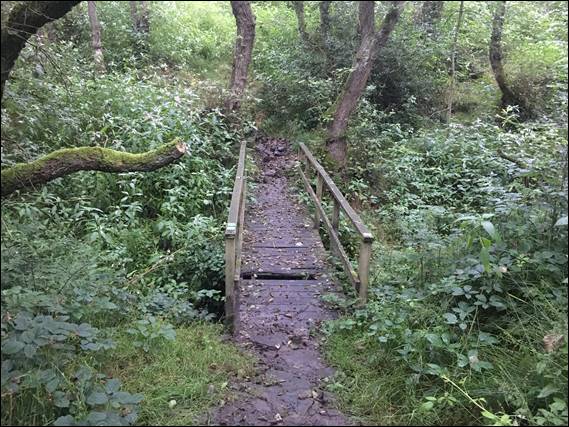
Not all of the structures I came across were in such a good state of repair. Many of the styles I had to climb over were wobbly, missing parts, and in some cases close to falling over. Then there was this bridge, and a few other walkways, on which each board flexed considerably under my weight. And as below the occasional board had given up the ghost and broken. In Western Australia, these structure would be subject to more than one liability claim, rendered unacceptable, and then closed due to the cost of repairs. It is great that here the sense of adventure and need to enjoy nature seems to override such contemporary risk adverse attitudes:
Today was my last full day of the visit, and as such the last chance to head out for an adventure. Seeta suggested a trip to The Roches and of course the Teahouse, a place I had introduced and addicted my whole family to. While I thought it was out be good, it was my mam that piped up and said yes that would be lovely. It is another place that I hold dear, being the first place I ever lead a climb and as such I have another post specifically dedicated to The Roaches (https://sandbagged.blog/2017/07/01/part-2-first-lead-the-roaches/). The reason this one was not on my wish list of getting too, being that the Teahouse owners have changed and it is a bit of a sad tale:
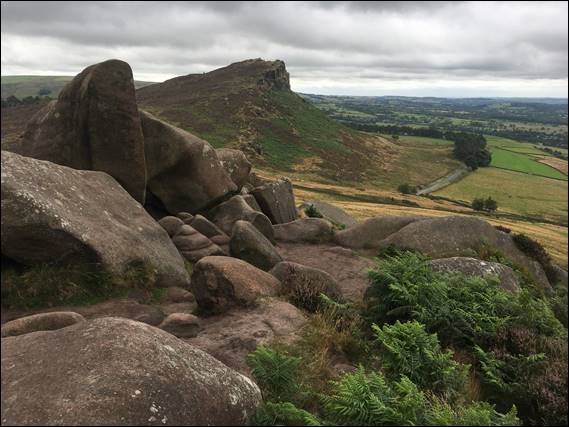
Putting that aside being given the opportunity to wander along The Roaches themselves was very welcome indeed. The rock is more coarse grained than the Millstone Gritstone, and is called Roaches Gritstone. And unlike the gritstone found on the edges that surround Hathersage, this rock wouldn’t be any good for making millstones due to being less durable and more prone to wear. It does however offer great climbing and I found quite a few parties at it, despite the on and off rain that fell. Being trad climbing on long and, at times, slightly meandering lines twins ropes were being used everywhere. This allows the climbers to keep the line straighter and minimise the risk of rope drag:
While I was wandering round the rocks, Seeta took the folks on a car trip to find the mushroom man, and a café to have a brew. We had arranged to meet up within two hours giving me plenty of time to wander about and get a couple of climbs in, including Mauds Garden which was my first ever lead. And of course I had to take and include a video of that. When I used to come here it was popular with climbers, but you didn’t see too many other people. Today however there were so many walkers about and it seems this place has become very popular for walkers and climbers alike, some say it is due to COVID making people explore and realise the beauty of their own “backyard”:
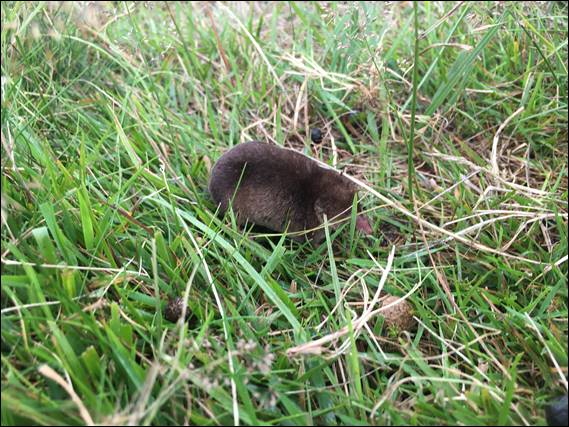
In the image above Hen Cloud sits proudly in the landscape, a steeper and generally harder face to climb. So not as frequented as much by climbers but attracting plenty of walkers, seeking the great 360 degree vistas on offer. Today I joined the path and walkers to make my walk up this peak. Along the way I spotted a creature dart across the path, small and dark coloured but too quick for me to identify. To my delight, as I went up the back of Hen Cloud, another one appeared and allowed me to sit and observe it for quite a while:
I got really close and it seemed oblivious to me, until I got within six inches of it when it scampered away. I didn’t get a good look at the feet but I am guessing it was a Mole (Talpa europaea), which might explain why I could get so close as they have poor eyesight. It seemed strange if I am right, as they normally live underground and rarely come to the surface. I continued my trudged on upwards, and from atop Hen Cloud I had a great view of the Teahouse, or at least the pine trees that obscured it from view:
That wasn’t where we had agreed to meet. Not that I wasn’t keen to see it again, but because it was closed for a private event. This also explained the multitude of tents set up in the adjoining field. We had therefore agreed to meet at the Rock Inn. Another pub, like The Plough, that I frequented during my many climbing weekends away. But not as much and I don’t have the same level of connection with this pub. It was still wonderful to be back, recalling many a happy evenings in this bar, and we had a great feed before finally saying good bye to The Roaches and heading back:
For our last meal that evening everyone gathered at my sister’s house for a Chinese feast. And the last morning was a quiet affair at my folks, no morning walk, and no jobs. So for a change I knocked up a scrummy breakfast and we played a few games, and watched the rain fall outside. It seemed I would leave in the manner I arrived, in the rain. And I would also arrive in Western Australia to similar conditions to what I had left behind, as a severe weather warning was in place. The last car journey we made together took us to the airport, after which I am sure the folks were happy to go home and rest up after a full-on but very good week:
Next week I’ll pick Lisa up from the airport. So with just me to get out the door I got an early start on another loop walk detailed in our Walking in Circles book. I rolled into a sleepy Gracetown as first light crept across the sky, and parked up as instructed in our trusty book. The loop today was to be a 17km trek that they reckon would take +5 hours, but I had 4 hours in my mind. It started with a short stroll back through Gracetown until Cowaramup Brook is reached:
I knew where I was going, it is a place where I have climbed before. There is a lovely track on the northern side of the brook, which leads to a granite outcrop. It has been many, many years since I have climbed here, in part as it doesn’t have a lot on offer and can feel a little scrappy in places. Looking at the lines today I felt I may have been a bit harsh and this place probably deserved another visit. It will however have to wait until we get through winter, and the places dries up:
I’ve not followed the brook beyond the outcrop, so from here on in I had to trust in the book. The brook was properly flowing and the cascading water sounded wonderful, accompanied with a variety of bird song coming from somewhere within the vegetation. The track stuck reasonably close and I couldn’t help myself and ducked down to the water’s edge to take a few images of a waterway that is in great condition. I say this as on Friday afternoon I was on a panel to discuss our waterways, which happened after the audience had watched a recently released film called River (https://www.abc.net.au/news/2022-03-24/river-documentary-willem-dafoe-jennifer-peedom/100932194):
The film had incredibly little relevance to our waterways, but during the Q&A session there was a lot of discussion about the poor and degraded state of our waterways. This is true for many waterways but not this reach of Cowaramup Brook, which I would say is near to pristine with only a few weeds here and there. I was having a little trouble identifying where I had to cross the brook, a path up the steep bank on the other side should have been clear. But I found none, so I just kept following the brook way further than I should have. To the point that the path disappeared and I had to start bush bashing:
I could hear Lisa’s voice in my head, maybe we should turn back. But I kept an eye on the opposite bank and where it seemed to clear, and then decided to cross the brook at the above location. Stepping gingerly on the rocks protruding from the water and covered in slime. And here Lisa would have insisted we turn back, but being alone I forged forward. The scramble up the opposite bank to reach the ridge looked harmless enough, but the higher I got the thicker the vegetation got and eventually it was anyone’s guess as to which way to go:
I popped over the ridge and spied an open area that I hoped would give me the chance to scan the landscape and land forms. But all that could be seen was vegetation, other than a couple of rooftops only just visible. No doubt someone’s secluded retreat. Pulling the book out I scanned the map, which has contours on it. The landform I was seeing was way more pronounced and varied that I expected, resulting in the ridges and valleys I was seeing not making a lot of sense:
By now Lisa would definitely not be happy, but she will be happy to hear I pulled out my phone and thankfully had reception. Normally I have a pretty good sense of direction and can work out roughly which way we need to go. However, somehow in making my way through the vegetation up onto the ridge I must have done a 360. The way I had intended to go would have taken me back down to the brook. So trusting in my phone and after a short couple of hundred meters I found the track:
The first couple of kilometres had chewed up close to an hour and half, which looking back didn’t surprise me. But being back on such an easy wide track to follow I was still confident I could make the time up. The track had quite a few junctions and I pulled out the book at each one to make sure I didn’t come a cropper a second time. I also reverted to using my phone a second time when the book simply said turn left (south) and follow a sandy track through peppermint, wattle and basket bush. This was that sandy track:
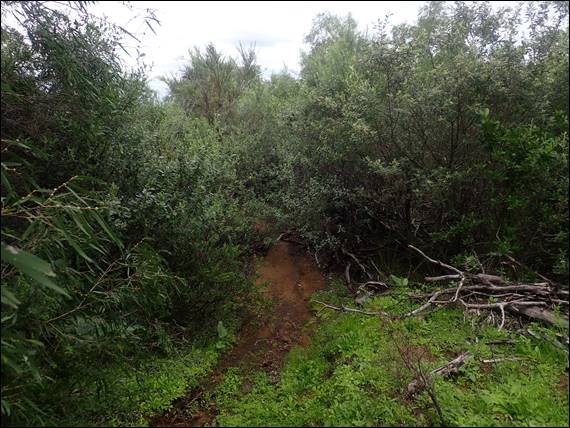
The above image, might look innocent but don’t be fooled. While the path at ground level could be seen, the surrounding bush has over the years taken hold. It was a real battle to force my way through, and at times needed to get low down to look for the way forward under the thick scrub. To avoid being completely smashed I also resorted to crawling on hands and knees through some sections. Again Lisa’s voice echoed, go back. When taking the above image, which was a mere 200 meters into this 1.5 kilometre stretch, it dawned on me I had lost my glasses:
I battled the same 200 meters of thick scrub a not once but twice, as I went there and back two times scouring the ground as best I could. But no luck my glasses were nowhere to be found, so I carried on. Several times the track was completely lost from sight, but I had entered my stubborn “I will not be defeated” mindset. Each time I eventually found the track but by the time this 1.5 kilometre stretch, plus an additional 0.8 kilometres searching for my glasses, was behind me I came out completely batter, bruised, scratched and speared:
Fortunately the path went back to a wide track, easy to follow and impossible to miss as long as you took the right direction at each junction which the booked helped me to do. The battles behind me were rewarded when I spotted a Cape Mosquito Orchid (Cyrtostylis sp. ‘Cape Naturaliste’), and as the name suggested it is only found on this stretch of coastline. I am not sure how I spotted it without my glasses, although the next two finds were a bit more obvious. Above, sadly just starting to wilt, is a Curled-tongue Shell Orchid (Pterostylis rogersii) of which there was a group all in the same state:
Not having previously sighted either of these orchids before, needless to say I was chuffed. Then as the track reached its peak and the ocean came into view for the first time I spotted a small group of Jug Orchid (Pterostylis recurve). Not only are the colours different, but the sepals point down, whereas for the shell orchid they go up. Lisa would have liked this section open views, easy path finding and a few good finds. Although she might hint we should keep moving. The book advised to keep a look out for a track on the left, which would be found soon after the main track started to descend:
I found it and stood there looking at it for a while. It was clearly a path, but with the scrub leaning well over the narrow path I was again reminded of what that previous section had been like. The book stated that this path should be followed for 1.5 kilometres, the same distance as that last horrendous, even by my standards, track had been. It was definitely the right way, and there was even some tape marking it so I imagine it does get used. That same voice suggested I find another way, but I resisted that temptation and was pleased to find it was not as thick or hard to negotiate as the last track:
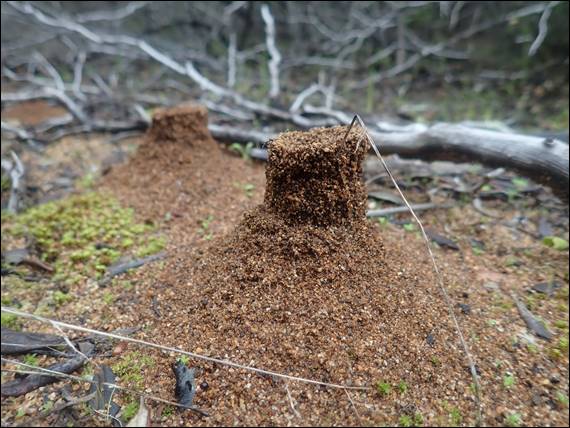
With the scrub easier to push through I kept an eye on the ground and spotted quite a few fungi. I did not stopped to take too many images of the fungi, I just didn’t want to squash them. In fact I didn’t see any squashed ones and also didn’t see any footprints, as I made my way down off the ridge. I also noted that all of the anthills, yes that is the name of these small structures, were intact. I did stop just once to watch one of them. The small ants went about their business unaware of the perilous location of the entrance to their underground home, being right on the marked path:
I feel like they were pretty safe, I honestly can’t see too many people ever making their way along that path. Indeed as I got to the valley floor the tape disappeared and I was left to find my own way the last few hundred meters to Ellensbrook Road. I was not so thrilled about walking on a road, but it wasn’t a huge distance and I knew that once I reached the coast I wouldn’t have to battle my way through any more scrub. Plus I spotted a couple of Banded Greenhoods (Pterostylis vittata), one of the more commonly found greenhoods but still great to see:
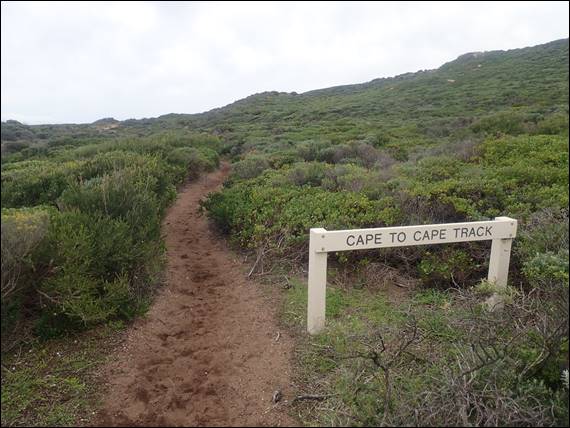
Finally I found myself on the Cape to Cape track, and from here it was just 5 kilometres back to the carpark. There was no way of getting lost now, just keep the ocean on my left. If I was with Lisa we would have stopped at the lookout, pulled the thermos out, and had a cuppa. Yes I had brought a thermos of tea with me today, and I am sure if Lisa had endured this walk up to this point the flask would have come out way before. But it had taken me four hours to get here, and I still had a little under a third of the walk left:
Not that I was watching the clock, but rain was forecast so I was keen to keep moving. Also if I was being completely truthful, the lookout had several people on it and I’m quite happy avoiding other people when out on these walks. I really had intended to have a cuppa when I got to the coast, but decided to go along the track for a bit to find a quiet spot. It took a while as I passed a couple of hikers, and of course once I started marching I didn’t seem to stop. At every bay I spotted surfers in the water, and I also came across them hiking along the track with boards under their arms:
I was a little surprised to come across a couple of carparks, which were all packed. Surfers preparing to head out, packing up, or just watching from on high. This explained why I saw so many surfers on the track, some of them must have walked a couple fo kilometres to get to the break they wanted. The only diversion I made from my mission was to check out a bunch of boulders between the two carparks, they offered some short but worthwhile looking lines for something different. I logged that in my memory for future consideration and marched onwards, ignoring Lisa’s voice suggesting a cuppa was long overdue and that it would be nice to stop and look out for whales:
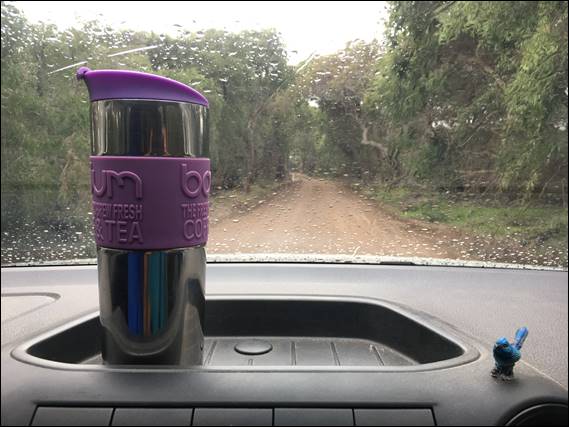
The track, outlook and vegetation didn’t change all that much and the presence of so many people detracted from this section a little for me. So I was pleased when I came over the final headland getting back to the car in 5 hours almost to the minute. I had really smashed the coastal stretch, and my legs were telling me so. All was forgiven as I pulled out the flask and poured a wonderful cuppa for the journey home, in fact I had three cups on the way home and every one of them went down a treat. Next time I pulled the walking in circles book out I hope there is a little voice in my head to say it is 12 years old, so a bit of caution is required:
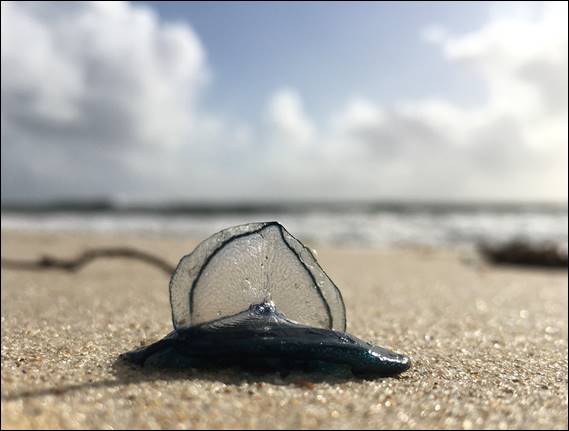
Staring down the barrel of a four week stint in which I am likely to abstain from touching rock, I felt like I really needed to get out this weekend. Sadly, as seems to be a bit more of a common occurrence, the stars just wouldn’t align for other folk and I again had to fly solo. But with such a long break from climbing coming up it was an easy decision. Not to say I have not been getting out heaps, not only weekend climbs and walks but also midweek walks on the beach. The other day, as I walked the poodles, the wave line was littered with By-the-Wind-Sailors (Velella vellela):
My rationale for including the above image in this post is both because I really like it and it shows the blue colour that they should exhibit. You may recall I found a completely transparent colourless one of these walking out of Moses Rocks recently (https://sandbagged.blog/2022/06/19/bubbles/). Today I was not going back to Moses, in fact I was pretty undecided where I would end up. As I drove westwards, far later than I would normally be on the road, I was guided by where the clearer skies were. That happened to be to the north, which meant I aimed for Smiths Beach:
I have never come across anyone else climbing here, in fact I don’t think many people have been and those that do, tend not to come back. Today I was hoping for a quiet day away from people, but I miscalculated the fact that it was still the school holidays. The carpark and surf break at the main bay were packed, and the coastal walking track was also getting a lot of traffic. Many walked right past were the climbing is, oblivious of the zawn and as such missing out on the stunning sight across the bay to Canal Rocks:
And of course on a day like today, with the recent full moon only just starting to wane and still pulling in a good tide, there is the splendour of the waves rolling in and crashing into the Zawn. And crash they did today, with one wave making it all the way to my rope as it hung at the base of the crag. For that wave I was high up enough to avoid being doused, and the risk reduced as the order of the climbs I had selected resulted in me moving leftwards away from the ocean. The walkers that did stop, I am pleased to say, quietly watched and then went on their way:
This allowed me to stay focused and not seem rude by ignoring them, and keeping focused is pretty important here. More than most climbing spot in the south west. Many of the routes are reasonably steep and for some reason you always seem to feel on edge. In part the rounded nature of the rock, but also the steepness fo the lines. Add that to the fact that it is a bolt free zone, meaning you have to fiddle trad gear in while feeling like you are only just hanging on. Probably why people tend not to come here a second time, there loss I say:
Above is the remains of a bolt anchor, one Kym had installed when he found this place shortly before I cheekily came along and established the majority of the new lines. We had a chat about the bolts and agreed there was enough gear both on the lines, but also for belays. So he, at the time did a really good job of concealing the few he had installed. However, over time they have become exposed again. Not that anyone but a climber would ever find them. Today I stuck to Camelot Castle which has six great lines, plus one variant which I didn’t jump on:
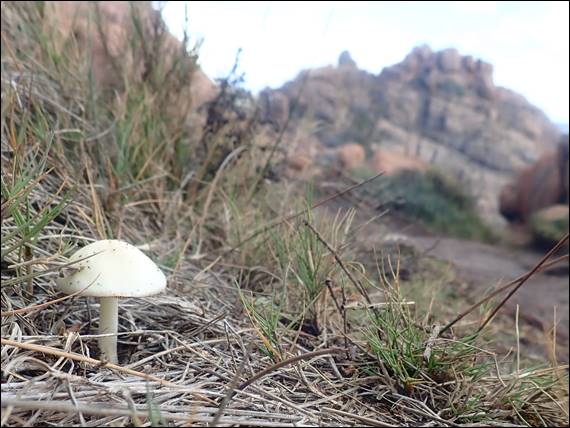
The other walls were in the shade and pretty soppy, plus this is the steepest wall so provides very engaging climbing. Despite the short nature of the wall, with mere 10m routes, this crag certainly doesn’t hold any punches and I certainly feel like I have worked myself. The whole time I was out I looked high and low for one of nature’s treasures, and finally as I walked out I found a solitary mushroom. But I have not been able to identify it. No matter it was a very fun trip out, and I feel like a great way to ease into the next four weeks away from rock.
Lying in bed I could hear the rain falling in the darkness outside. The usually local crew I would badger about heading out for a climb were all doing family stuff or feeling crook. This did make me wonder whether to head out or just watch the outdoors from inside today. After all if I felt the need I could stretch my legs and get some fresh air by taking the poodles to the beach. Something Lisa normally does, but in her absence I have had to step up to the plate. I could also stretch my fingers by pulling plastic on the climbing wall in our shed, which has sat idle for quite some time now:
Just yesterday Josh had been keen to head to Moses Rocks, but he is playing it safe. With an ominous tickly throat, which could be a sign of the virus that has ruled the world for several years taking hold. My indecision didn’t last long, and not surprisingly I plumped for heading out. Climbing indoors is ok, but that is as far as I would go in describing it when compared it being outdoors. It was forecast to be another blustery day along the western coast. Resulting in a good swell and strong landward wind. So even if it did rain, the rock would dry quickly:
Being a solo mission, I plumped for Wilyabrup. I was pleased with my choice from the very start of the walk, as I spied an Autumn Leak Orchid (Prasophyllum parvifolium). And like at Castle rock last week I could find just the one. My destination was based on several factors. First, I was thinking of places where I could set up the anchors and not have to phaff about changing them for each climb. Indecently, having needed to check my spelling of the word phaff I discovered can also be spelt faff, according to the Collins dictionary. With the urban dictionary claiming this spelling it is an acronym, for something I won’t type here:
My second reason for picking this location was it has a relatively easy walk-in. After the big hike yesterday this seemed a good idea and might be kinder on my legs. Not that I seemed to be feeling any delayed onset muscle soreness, or DOMS, yet. That will no doubt come tomorrow when I am back to work, and sat at a desk for eight hours straight. Thirdly, although probably the main reason, I recently had a very fun solo session at Moses Rocks so felt the need for something different. I arrived to a, not unexpected, empty carpark and crag:
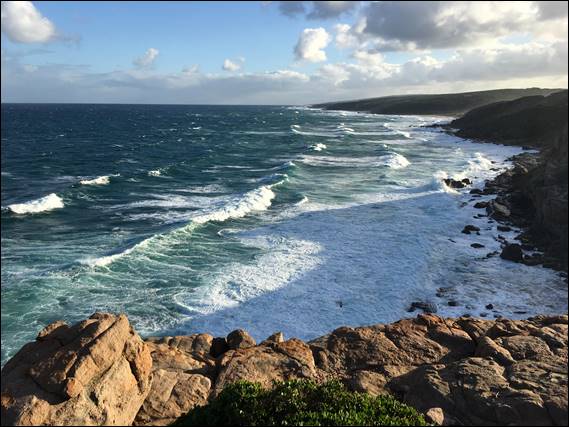
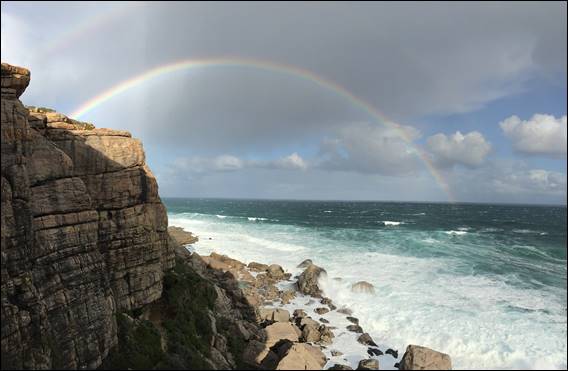
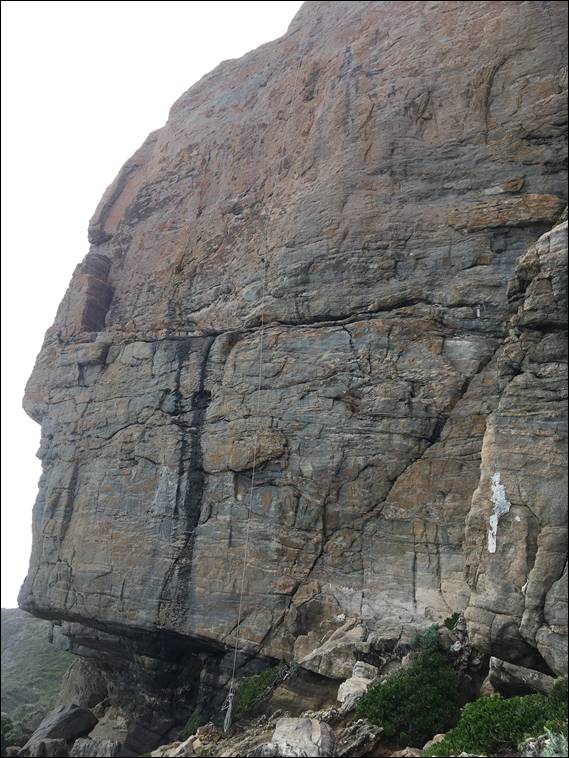
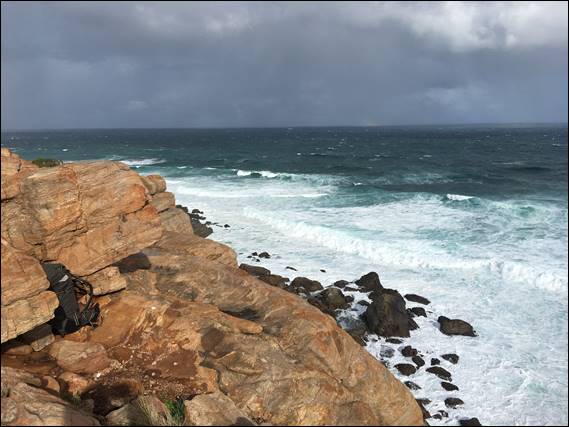
On arrival at the top of the crag I took a moment to soak in the great sound of the choppy swell and rush of the strong wind. The local crew should be able to pick from the above and below images that I had plumped for the picturesque wall, which deservedly adorns several coffee table climbing books. Steel Wall is a very fine geological feature, and when the evening sun sets on this sheer face the orange colours seem to leap out, it is quite spectacular. As with all solo session I came armed with an agenda:
Today this was to hit all the, reasonable, routes on the left side the wall. Starting from the left and making my way right to finish on the route in the centre of the wall, which is where the rope is hanging below. Unlike yesterday when I didn’t see anyone, today there were five separate family groups who came one at a time during my relatively short session. Each time making their way down the path that leads to where the left of the above rainbow ends. Giving them a great view of Steel Wall, and unfortunately me:
While each time they gave me a wave, I was pleased not to have any whooping or hollering or applause as I climbed, as can happen. Like me they were out to enjoy the place, and after watching me for a short while each group continued on their own journey. My choice of routes was indeed great and I enjoyed, the customary, six lines on a very fine wall, in a wonderful position, and surrounding by an invigorating atmosphere. As has occurred a few times with my outings of late, things slotted into place perfectly:
Despite a few rainbows coming and going they never resulted in rain falling where I was. Until all the gear was packed away and I was walking out, which is when it started but also set in. This meant I would not have to drape wet gear everywhere when I got home, which is always a plus. Another plus when I got to the car being that I had learnt from yesterday, and came prepared with provisions. Comprising a hot cup of tea to sip on the journey back. On my return the first thing I did was head down the beach with the poodles, resulting in one happy household:

















 Sandbagged