D Mob

In their wisdom Australia decided the day to pay respects for the passing of the Queen was Thursday this week.  It does seem an odd day seeing her funeral was on Monday and the school term, at least in Western Australia, ends on Friday.  But Thursday was chosen to suit just one state, Victoria.  That state already had a public holiday on Friday this week for the plain and simple reason that it is the Australian rules football grand final weekend.  This resulted in all the other states having a bit of an odd ball week, with having Thursday as a public holiday and then needing to go back to work for one day before the weekend:
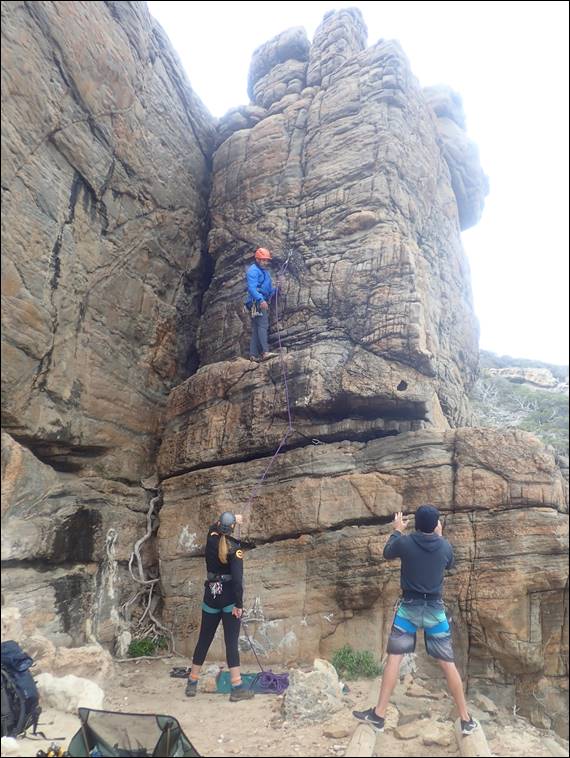
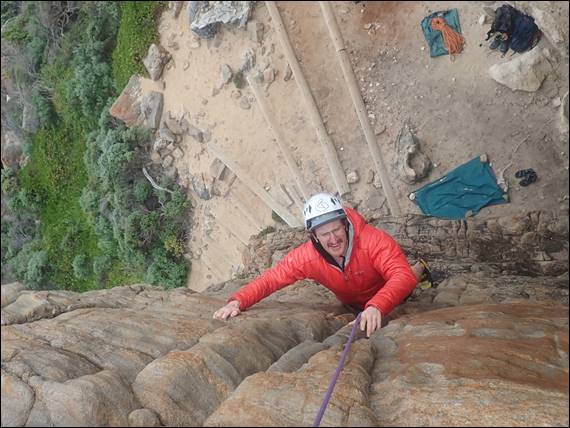
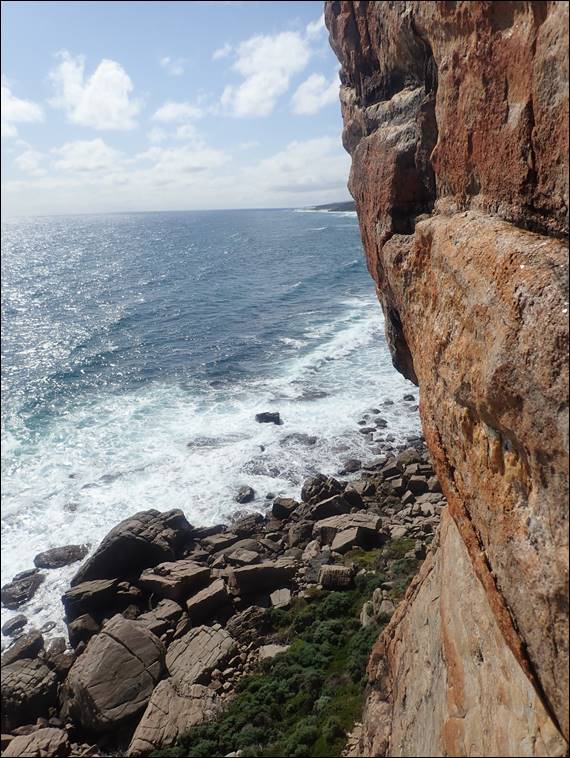
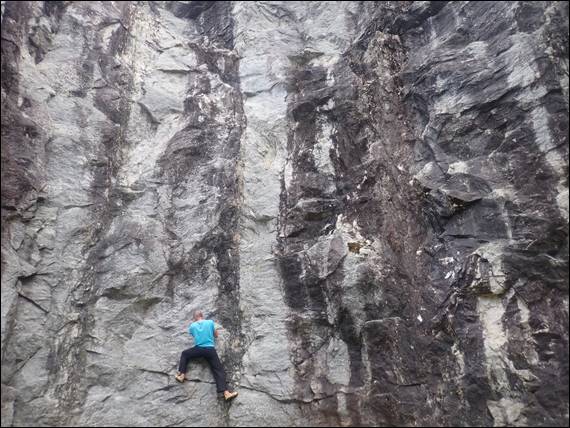
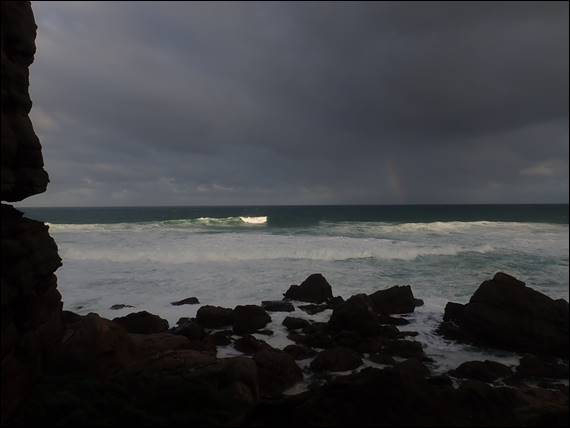
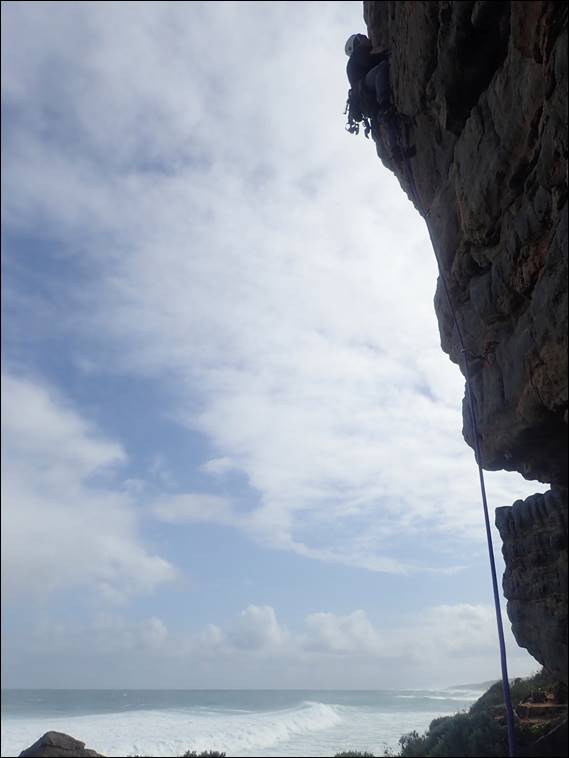
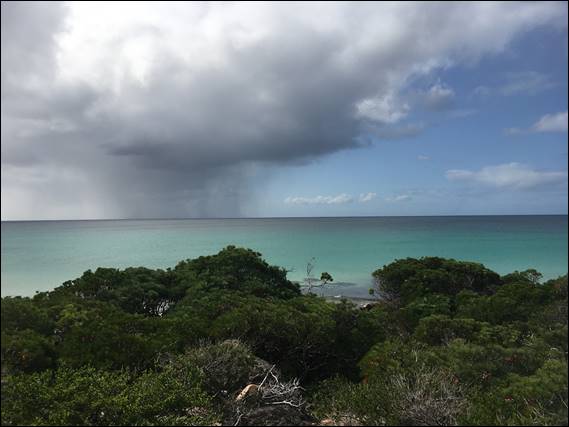
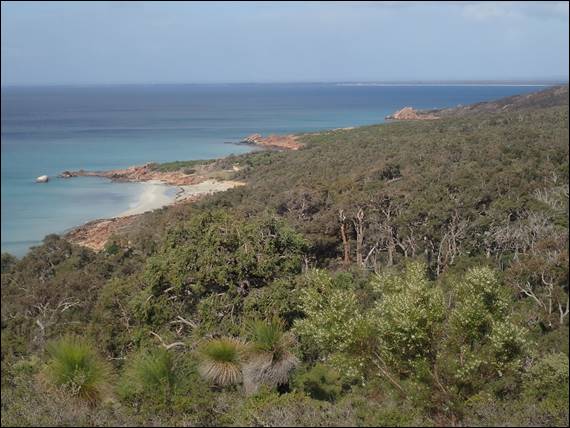
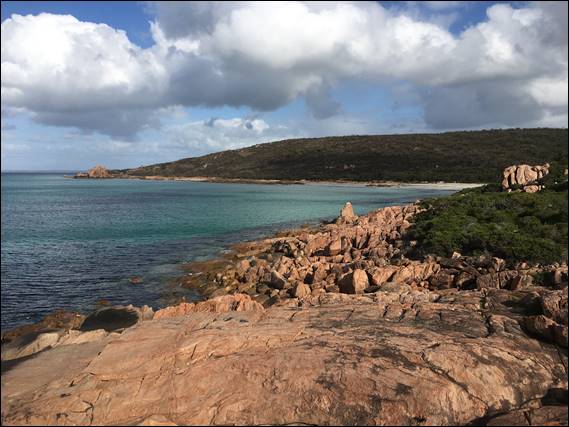
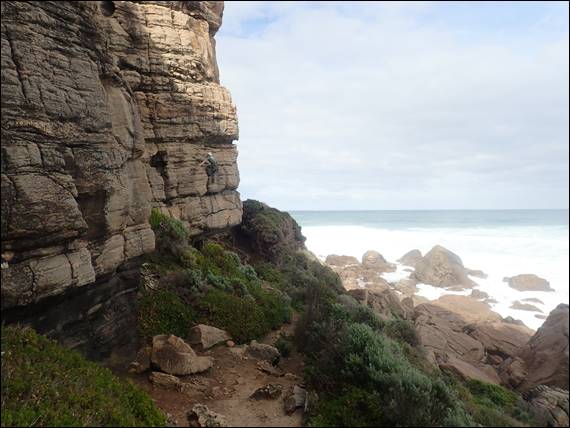
Reasons aside, whether right or wrong, it was a public holiday today so Rongy and I decided to head down to Wilyabrup.  The intention being to jump on a few of the longer climbs, and picking lines that would require us to focus.  Whether it was because they were sustained, lacking in protection, or just very delicate and balancy.  We were joined by Sarah, who had come down to search out for our scaly friends, as Rongy and I scaled the cliffs.  We were not too hopefully that she would see many reptiles, based on my recent trips here and the gloomy start to the day:

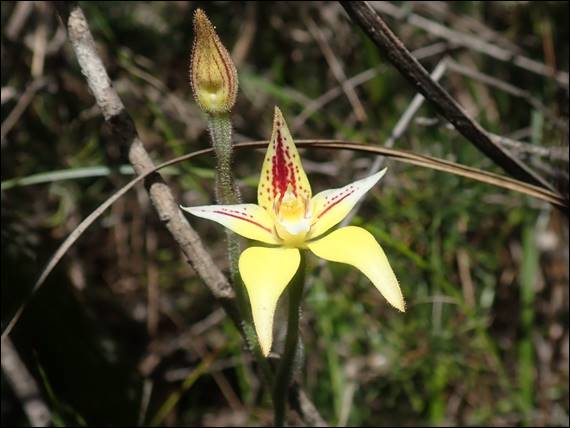
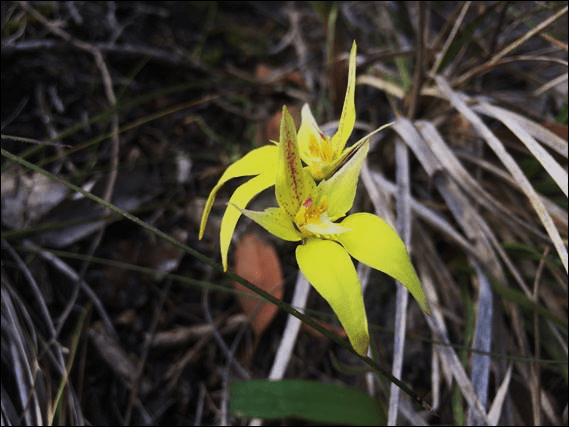
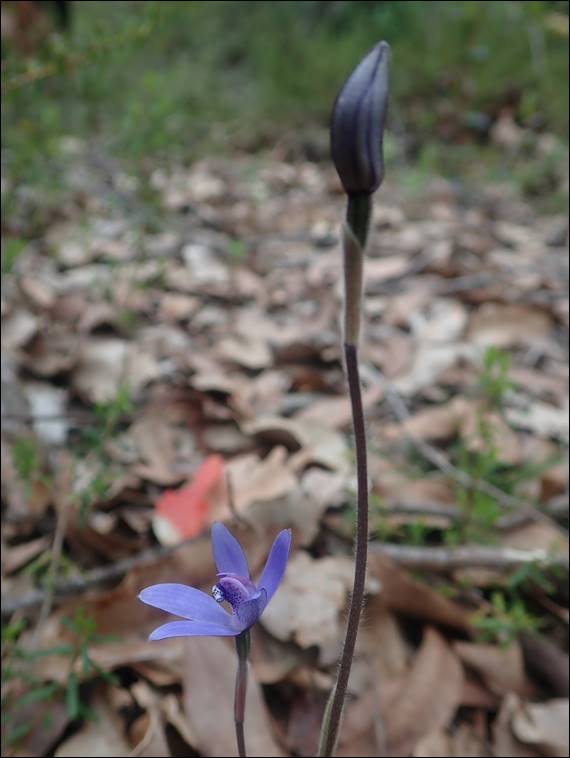
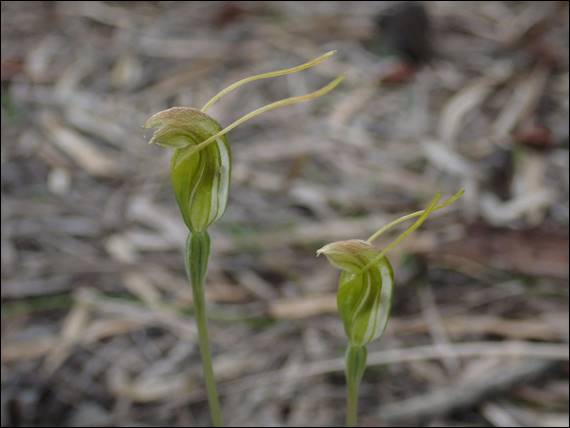
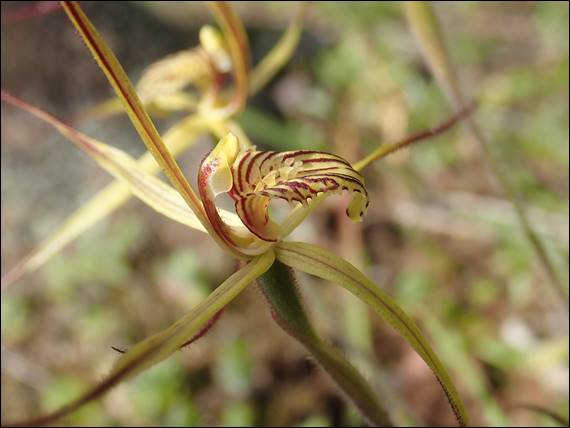
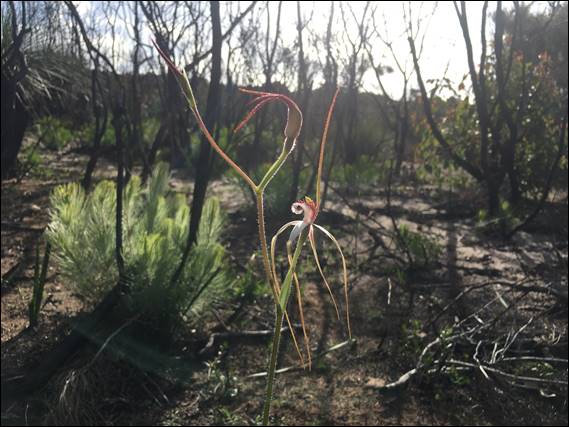
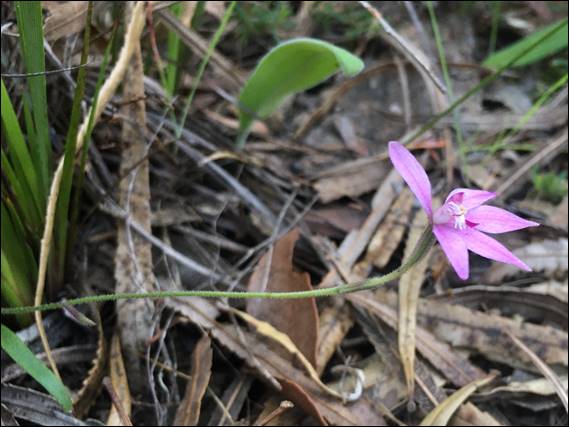
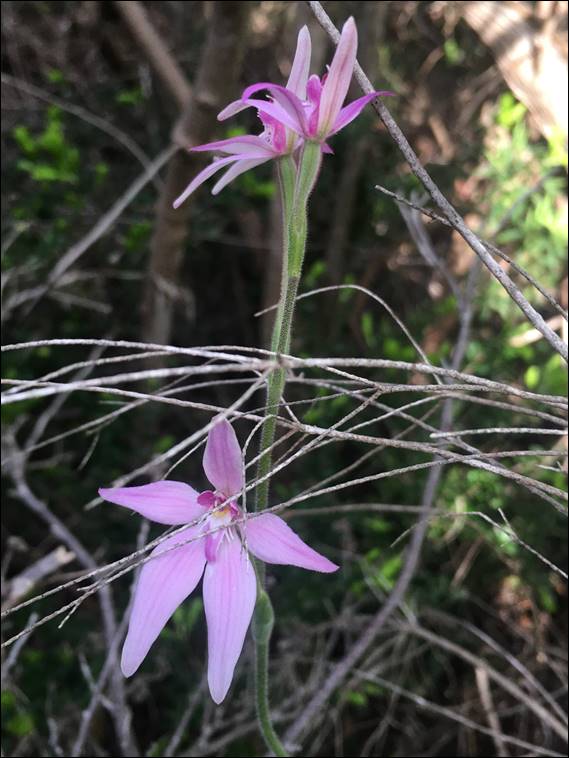
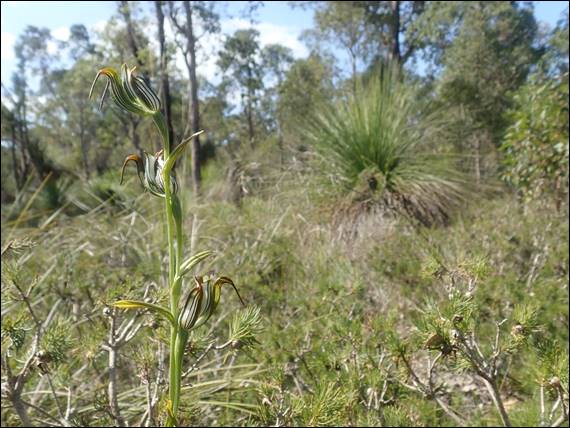
This obviously didn’t put Sarah off and as we were walking down I could see her eyes scouring the scrub on the side of the track, and then the crevices and nooks in the rocks as we got closer to the crag.  I mentioned that she might a python sunning on top of the exposed rocks just above the beach, to which she replied that they were probably also waiting for unsuspected sea birds to fall prey to them.  I hadn’t thought about this before, but it made sense.  As we walked down the path Rongy was also looking out and spotted the above Fairy Orchid (Caladenia latifolia) in the bush off the side of the walk track.  We also spied two tour guides, a sign that a group would be turning up:
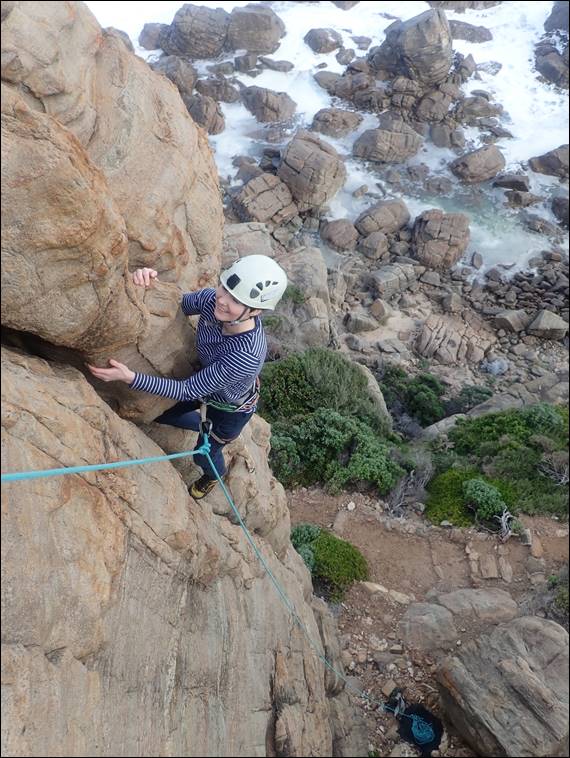
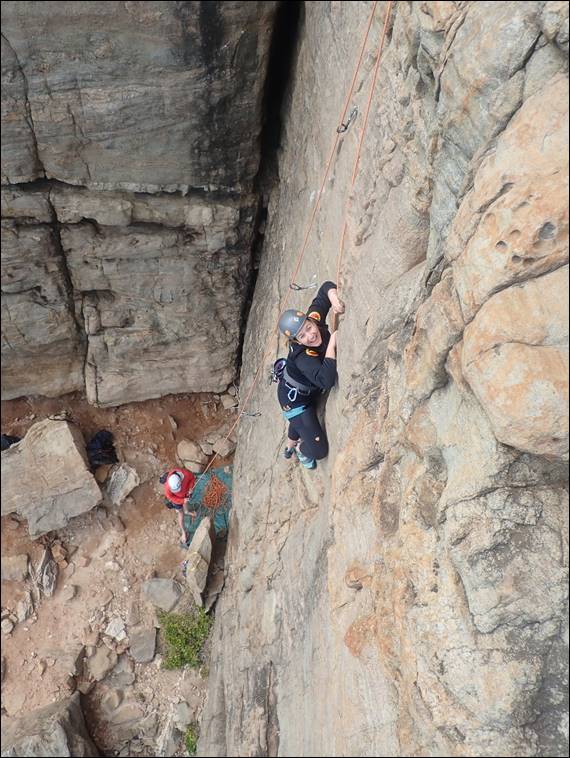
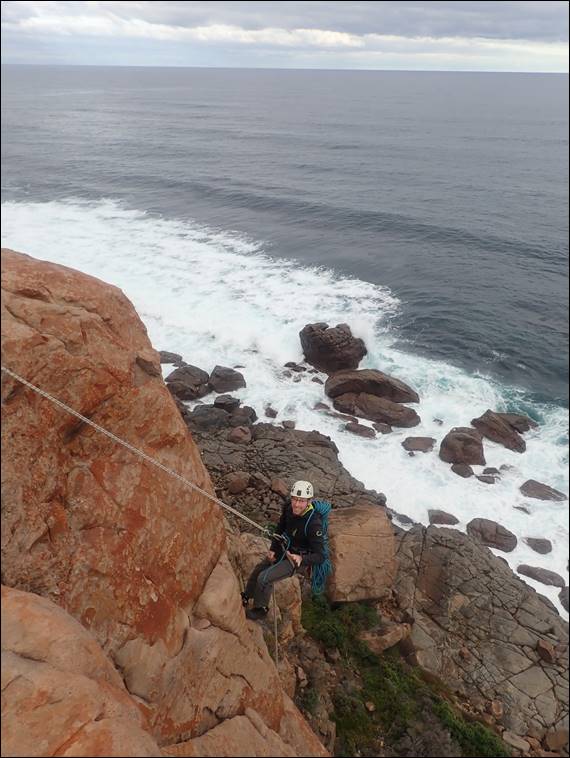
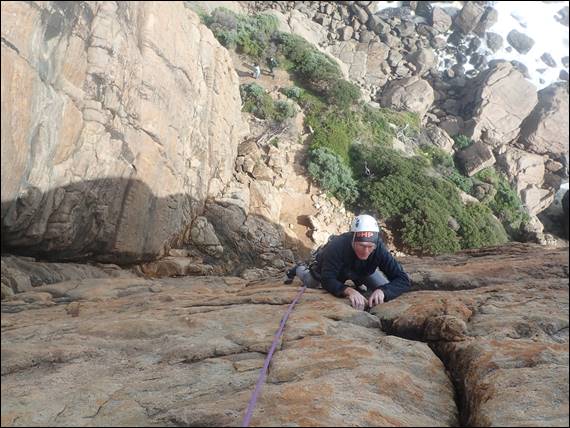
They advised that they would use three faces with two ropes on each, and these would not interfere with our plans.  Before heading off to check for reptiles, Sarah hinted at being keen to give the first climb a go.  Having climbed indoors a long time back, but never outdoors.  So we picked a route that you should by now recognise, and one I did last week.  She climbed slow and steady, and looked to be in control the whole time.  And it wasn’t until she was next to me, safe on the ledge, that she began to shake.  While she had really enjoyed it she admitted that it had been a scary experience.  Afterwards Rongy and I both agreed that we would never have guessed it considering how calm she stayed while climbing:
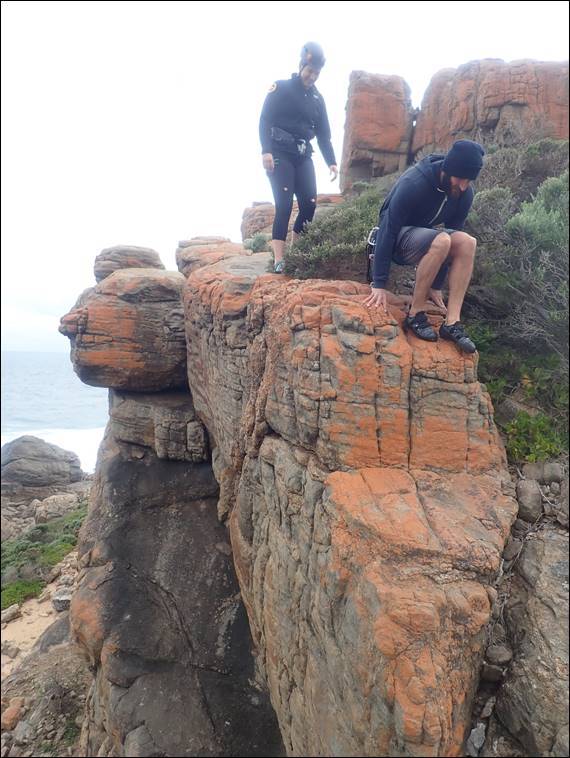
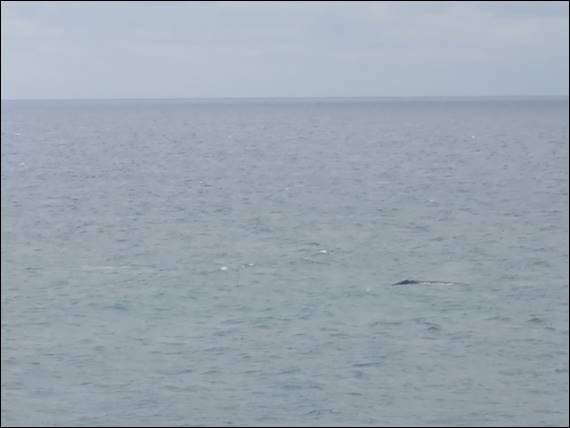
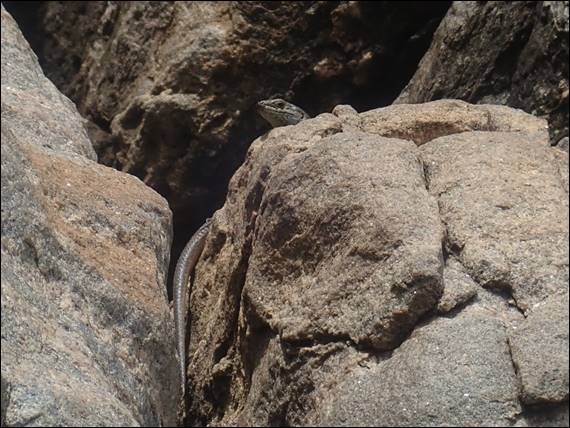
Happy with one climb under her belt, off she went to look for reptiles while Rongy jumped on Glory for his warm up.  As he climbed the flakes he looked deep behind them and shouted down to me.  He spotted not one but two juvenile Carpet Pythons (Morelia spilota), in two separate locations.  This amazed me as I have been checking these spots out on each trip here and not seen any for close to a year and half.  It is a great sign and I hope to see them more often, which might happen if it doesn’t get too busy like last year.  When Rongy topped out, Sarah happened to be sitting there looking out for dolphins.  She hadn’t got far with her walk when someone mentioned they had seen them playing in the waves:

So she had randomly picked that spot to sit and check out the waves, and while she didn’t see any dolphins she got a surprise when Rongy popped his head over the edge.  And an even better surprise when he told her that there were two snakes to be seen, although this would require abseiling back down the climb.  It is fair to say Sarah was even more scared by the abseiling, than the climbing, and really didn’t enjoy the experience.  However, she was determined to get a glimpse of the two snakes whatever it took.  Being very excited about the opportunity, as we all were, even though they were buried deep in the cracks:

Afterwards Sarah really did head off on her walk to see what she might see.  I feel like she was also heading off to get away from the crowds, as there was not just one group but at least two big school groups had turned up.  This was a little surprising seeing it was a public holiday, but I imagine these excursions take a lot of organising and I guess they didn’t want to change their plans.  It did result in lots and lots of ropes being placed on many of the faces, mostly for abseiling but some as top ropes for climbing and I lost count how many we saw.  This put a damper on Rongy and my planned routes, due to both the ropes hanging down and way too many people milling about at the base of the lines we had been keen to climb:
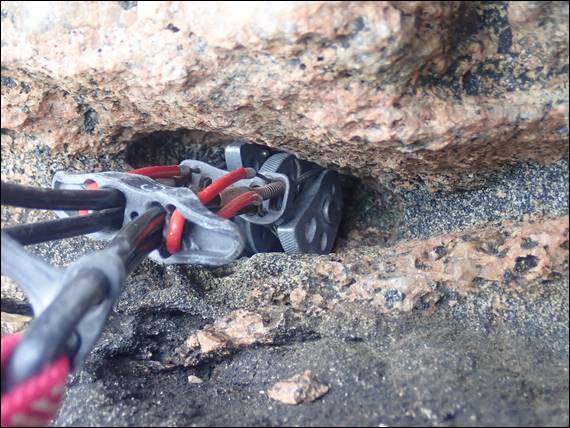
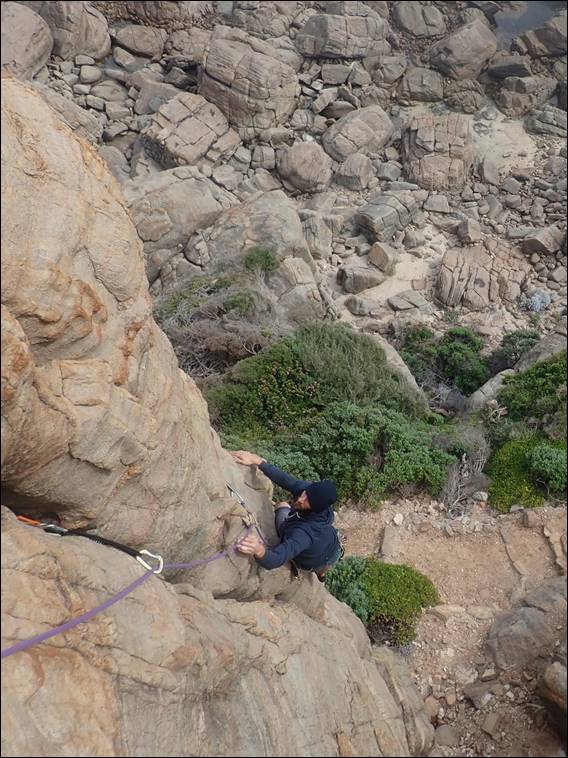
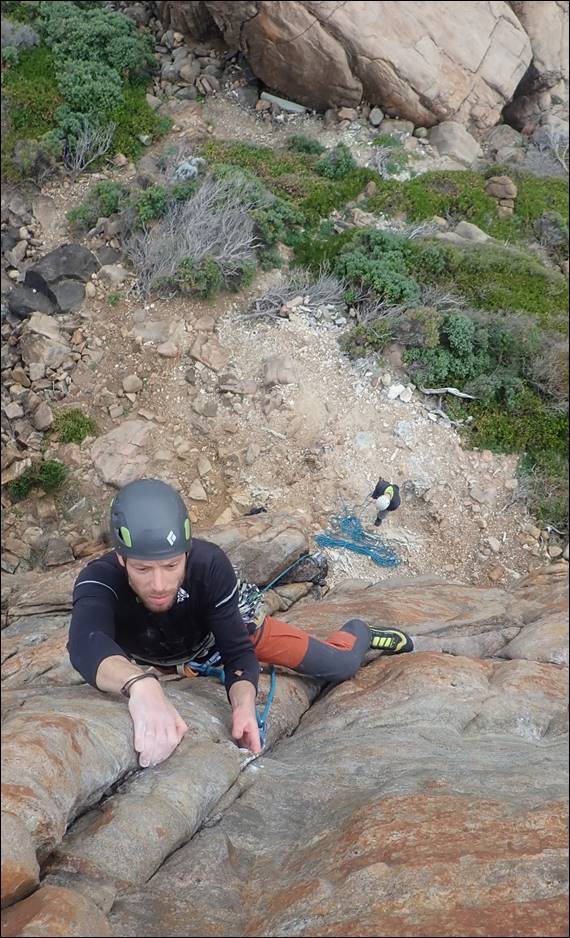
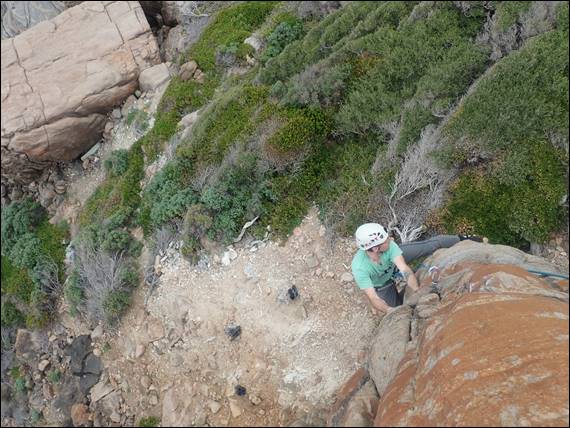
So I decided to jump on Fishing with Dynamite.  This is a bit of a controversial climb because at least half of it was recorded as a traditional climb, and someone had bolted the direct start and then bolted the upper section too.  This practice of placing bolts on existing lines is a bit of a no-no in the climbing world.  It is however a great climb, and I have tried to lead the route without clipping the bolts, a very long time back.  For the best part there is ample and very good traditional gear placements, such as the above bomber cam.  But there is one run out section that I got spooked on, and clipped one bolt for safety:
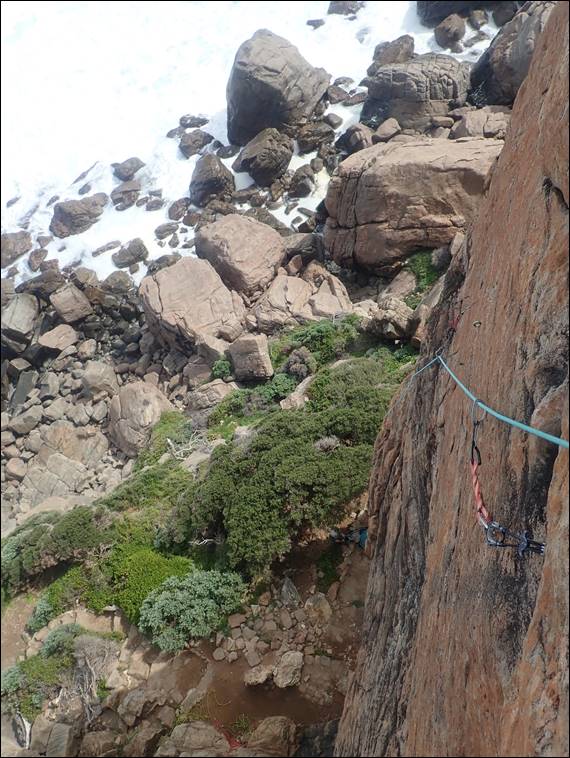
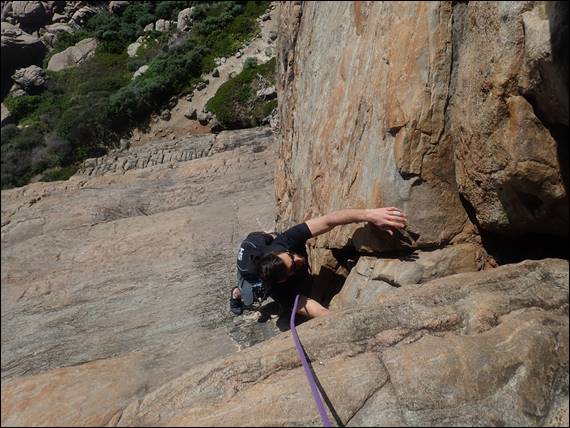
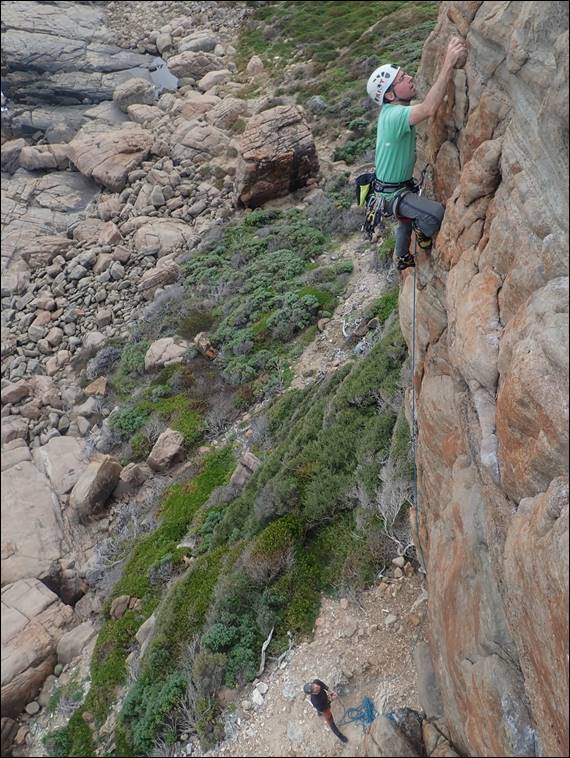
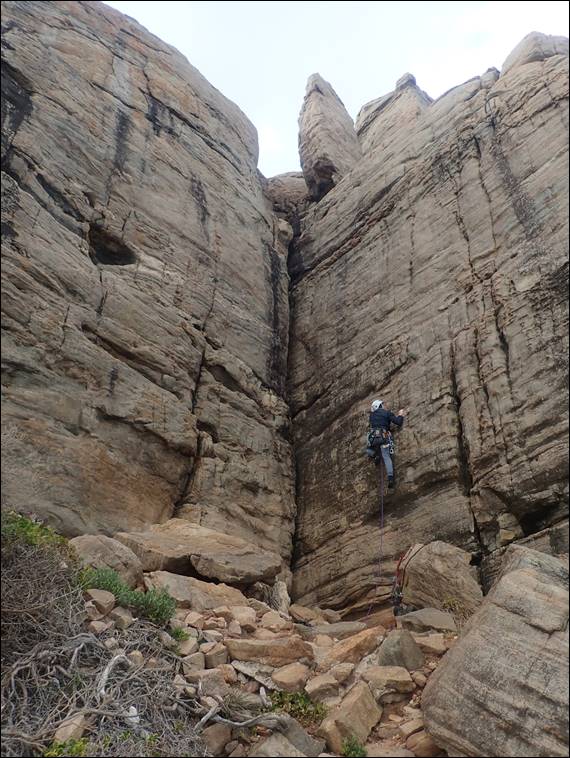
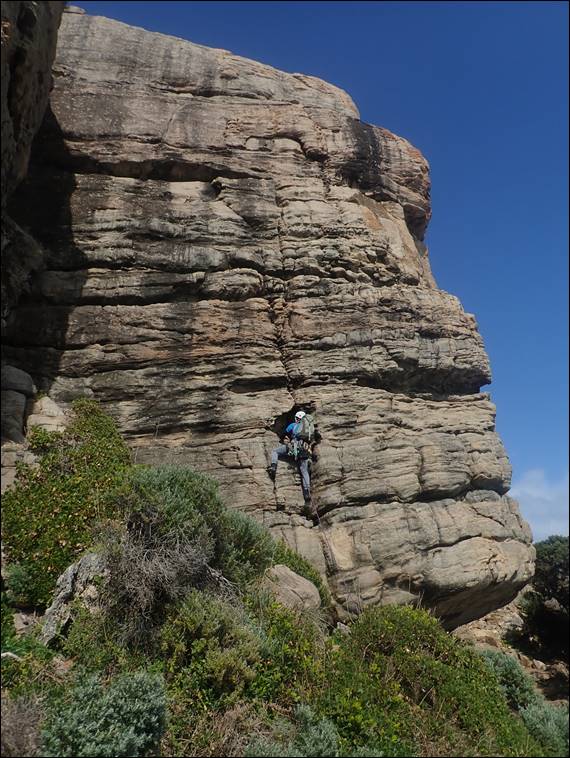
This time round I was armed with micro cams, which I didn’t have before, and this allowed me to unlocked the full traditional lead.  So with Sarah was super happy to have seen a couple of snakes and I too being extremely pleased with my lead, it was now time for Rongy to find his piece of gold for the day.  And that ended up being the first pitch of Mob Job, a climb that in part picked itself being on one of the very few faces along the entire crag without ropes and people crawling all over them.  It is also a climb he hasn’t been on for a long time, and he suggested it may have been eight years.  Then to boot it is one of the traditional climbs that is up there as the very best at Wilyabrup, and being pretty pumpy and tricky it also ticked the box of our original intention for today:

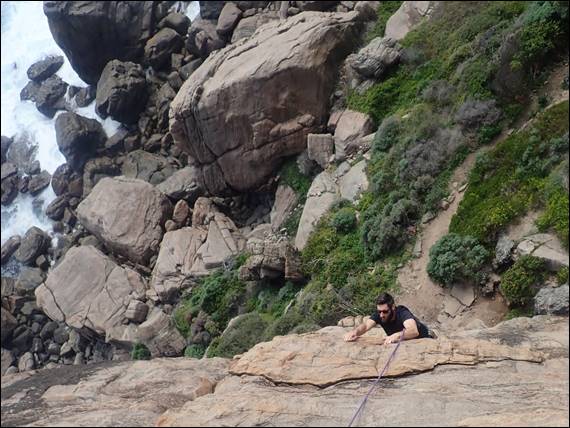
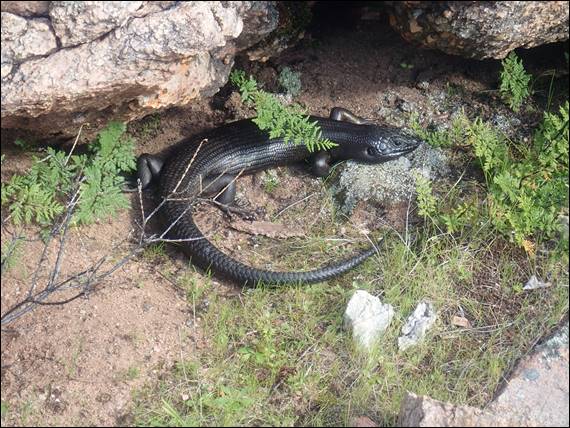
It was touch and go at one point, but he managed a clean ascent.  The bottom section packs a serious punch but he was able to absorb that and keep going, while the mob milling about just twenty meters away were out of sight and out of mind.  As he set up the belay, Sarah returned and told me she had been very successful in finding plenty of South-Western Crevice Skinks (Egernia napoleonis), https://sandbagged.blog/2022/08/28/training-day/, with one even running into her hand.  We both then went back up the cliff, she wandered up the track and me following Rongy’s very fine lead.  After I climbed the second pitch I met Sarah again and she had just spotted a couple of King Skinks (Egernia kingii), https://sandbagged.blog/2022/08/27/time-for-a-cuppa/, so she had a very successful day of spotting our scaly friends:
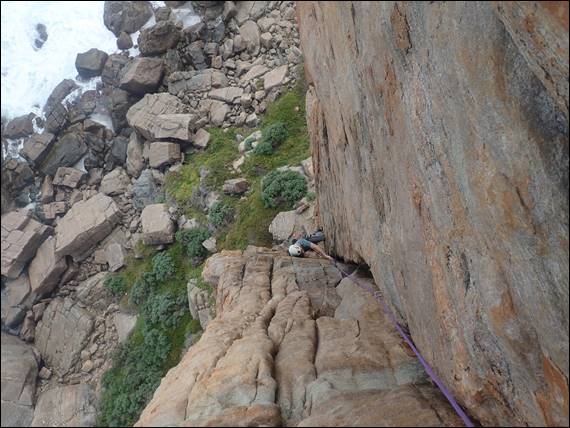
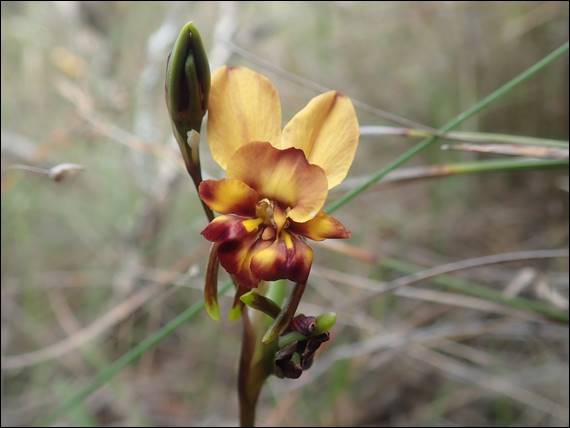
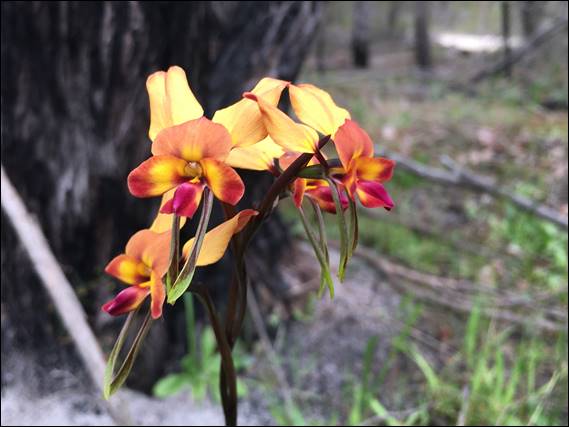
Rongy joined us, after thoroughly enjoying following up what ended up being the final pitch of the day.  We decided it was time to mosey, all of us ending on a high note and being very satisfied with our varied finds and experiences of the morning.  Despite the place being unexpectedly very busy, we had managed to put that to one side and just like D Mob’s only studio album enjoyed ‘a little bit of this, a little bit of that’.  The trip was topped off with a quick pit stop before we hit the tarmac of the main roads, to check out a patch of Dunsborough Donkey Orchids (Diuris jonesii).  Plus one more pit stop, at Rongy’s request, for some hot chips from the Carbunup Road House, which unlike the crag was unusually quiet:

The multi-coloured picture show

This week it didn’t look like I was going to get out for a single weekday wander, a stark contrast from the week before.  In part I had not received any images from ‘work’ Josh, as oppose to ‘climbing’ Josh, to get me all enthused; also the weather was a bit hit and miss; and to add to that lot I was a bit snowed under at work leading to longer days than usual.  Then came Friday and encouraged by the sun I seized the opportunity for a quick trip out to the Ambergate Nature Reserve.  A place where I have seen so much in previous years:

One reason for choosing this spot, is it has been a month and a half since I’d been here.  I was also curious as ‘work’ Josh had been here the week before and said there was nothing to see, which I found a little surprising.  It has in the last been a floral and orchid haven, so with things starting to appear in other locations I really expected to see something.  A few usual suspects were about, as above and below.  But sadly Josh was right and for the most part there was very little colour, and very few orchids to be seen.  Still it felt good to focus my eyes on something other than a computer screen for a while:

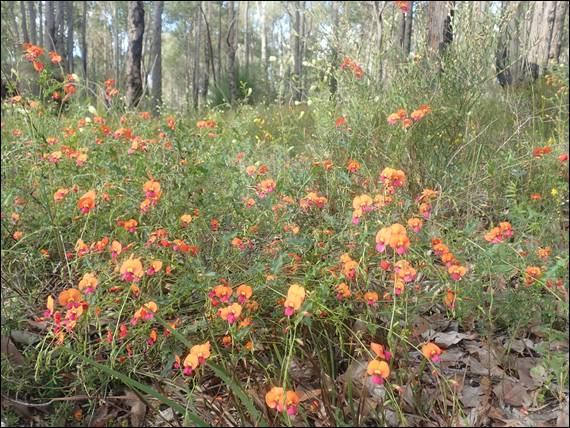
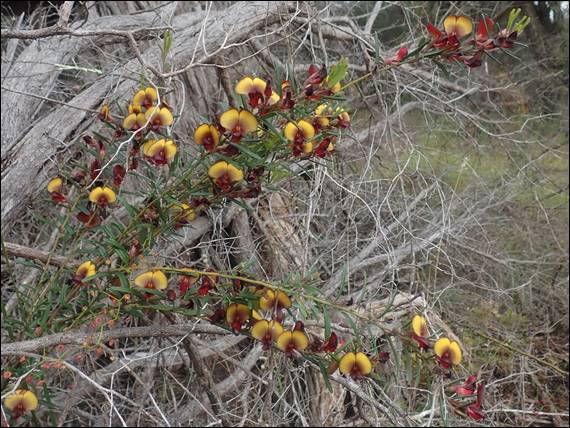
I only walked one for the four quadrants, taking my time and looking carefully.  Scouring the bush on both sides of the meandering path, willing for something to appear.  Which it didn’t, although there was at least one small area where there was a bit more colour.  Here one of the pea flowering plants was coming into bloom.  The family and sub-family classification of these plants being Fabaceae and Faboideae, with about 140 genera and 1,100 species to be found in Australia.  Not surprisingly trying to pin down these delicate flowers can be a huge timewasting exercise, but I took some close up images just in case:

The image have led me to narrow it down to the genus of Daviesia, a small to medium sized shrub mainly found Western Australian, and comprising approx. 120 species.  Digging a bit deeper it looked a lot like the Thorny Bitter-pea (Daviesia incrassata), of which the range and soils types it is found in matches quite well.  Also on my last trip here I found some cool looking seedpods (https://sandbagged.blog/2022/08/03/a-bit-of-encouragement/), and one of Howsie’s guesses had been Daviesia.  I have now confirmed that they do indeed look very much like the seedpods of the Thorny Bitter-pea:

While there were no new orchids to be spotted I did enjoy my time in the sun, and was also serenaded by the Carnaby’s Black Cockatoo (Calyptorhynchus latirostris).  Their song can carry a long way across the landscape, but today it was loud and clear as they were perched right above me munching on gumnuts.  And in the distance I could also make out the call of the Forest Red-tailed Black Cockatoo (Calyptorhynchus banksii).  The respective songs are quite distinct, with the former sounding like a drawn out and relatively high pitched ‘wa-EEE-lah’, and the later a deeper and more guttural ‘karak’:

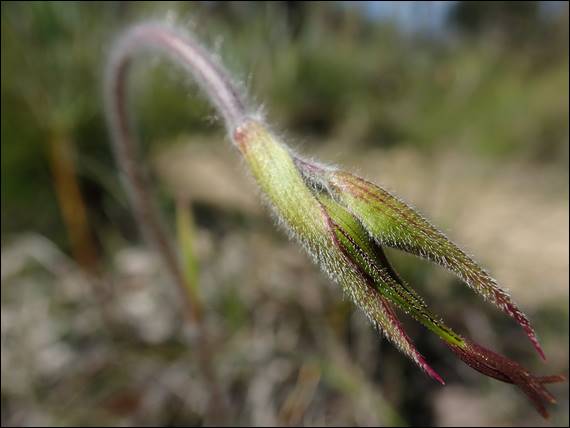
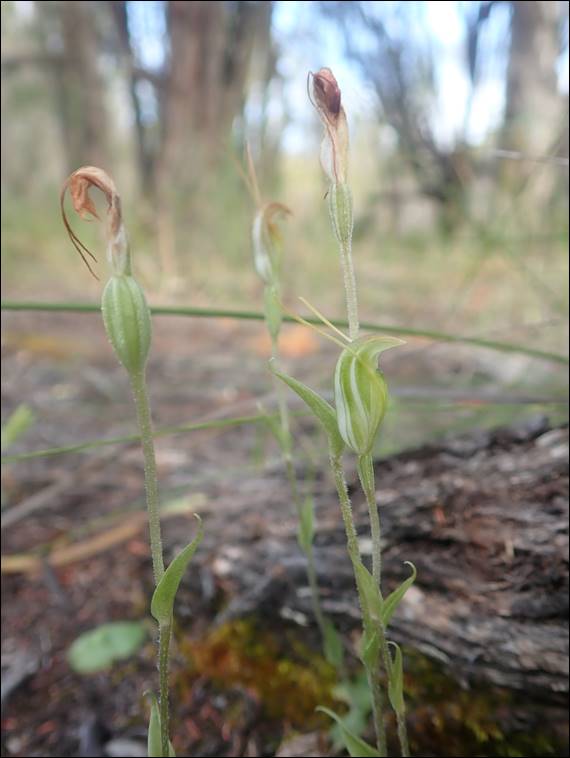
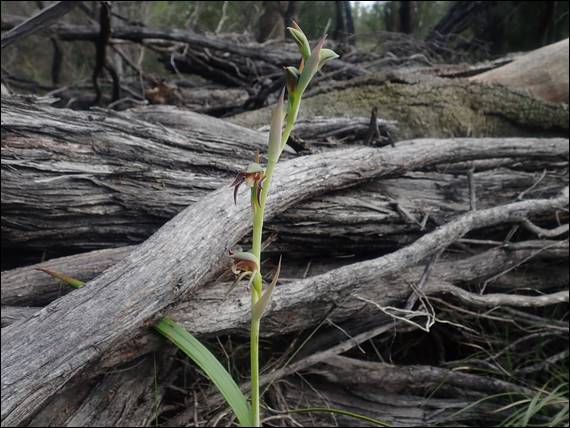
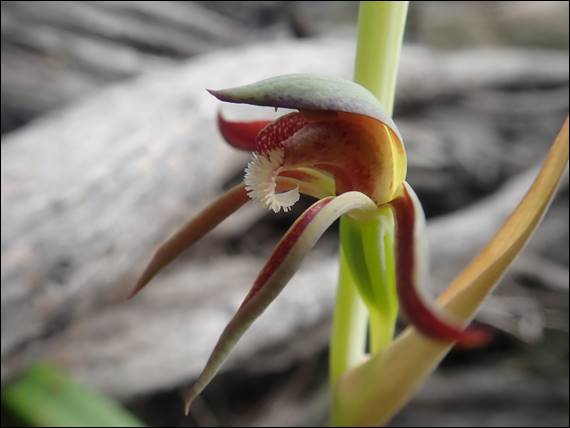
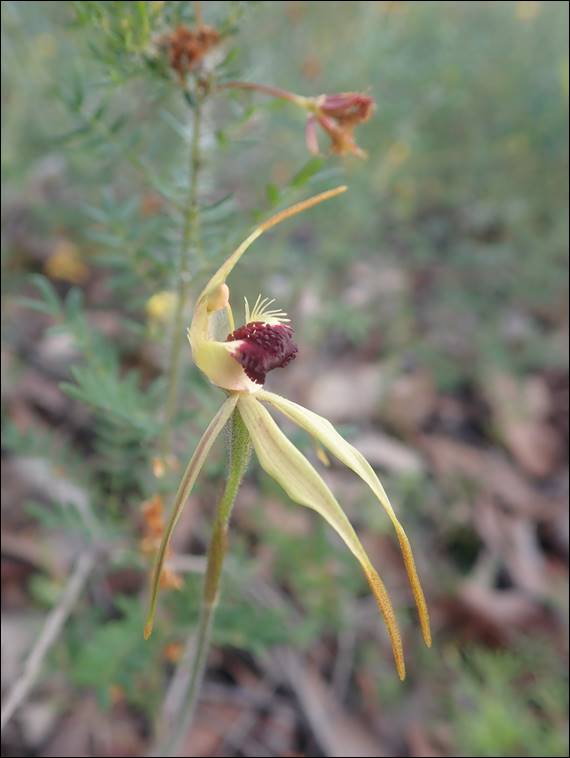
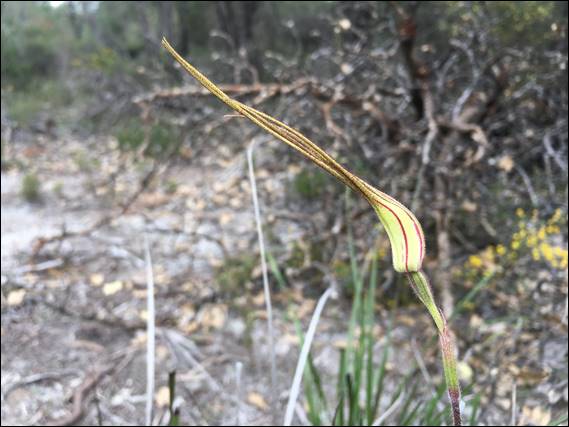
My last image from Ambergate Nature Reserve was the close up of the hairy green and maroon flower bud.  Due to the long looking nature of the petals, I’ll guess is a spider orchid and it is likely to be different to any I have seen this season.  It should come into flower within the week if not before, although I doubt I will remember where I found it and I only spotted one specimen.  It did at least give me hope that more is to be found at Ambergate in the coming months, and I’ll probably head back in a few weeks.  This morning, fancying a second trip out without too much of a drive, I popped out to the Capel Nature Reserve:

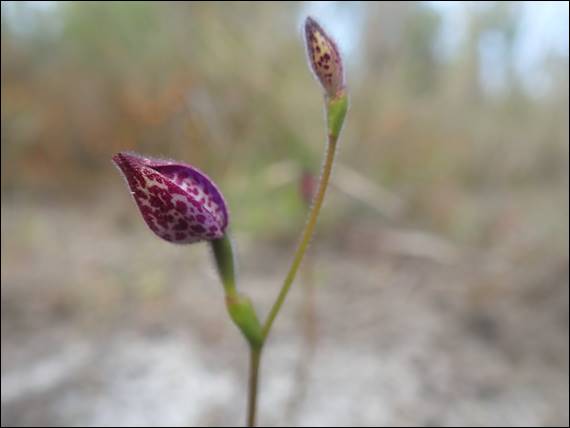
The first image from here being two flowers of a Purple Enamel Orchid (Elythranthera brunonis) both of which are yet to open.  There were load of these all over the place in full flower, and while these are beautiful to see I also feel, like the unknown spider orchid, the patterned bud is equally pretty.  Above is one of the Snail Orchids and the image also includes a specimen that is in seed formation stage of life, as proven by the engorged ovary at the top of the stem.  Insects pollinate the majority of Greenhood orchids, which are nearly always tiny flies or mosquitoes.  And like the Hammer and Duck orchids they use deception created by a chemical attractant:
However, once the fly or mosquito has been attracted to the flower there is a second stage of the process that uses entrapment to seal the deal.  The insect is encouraged to enter the flower to the point it loses balance and falls in, but in some Greenhoods the labellum will detect it’s presence and move forward to trapping the unsuspecting insect.  Just long enough for process of pollination to be more likely to be successful, before allowing the insect to be released.  Even though Capel Nature Reserve is less than 30km away from Ambergate, as the crow flies, the floor was littered with orchids including hammers, ducks, cowslips, enamels, greenhoods, and spiders:
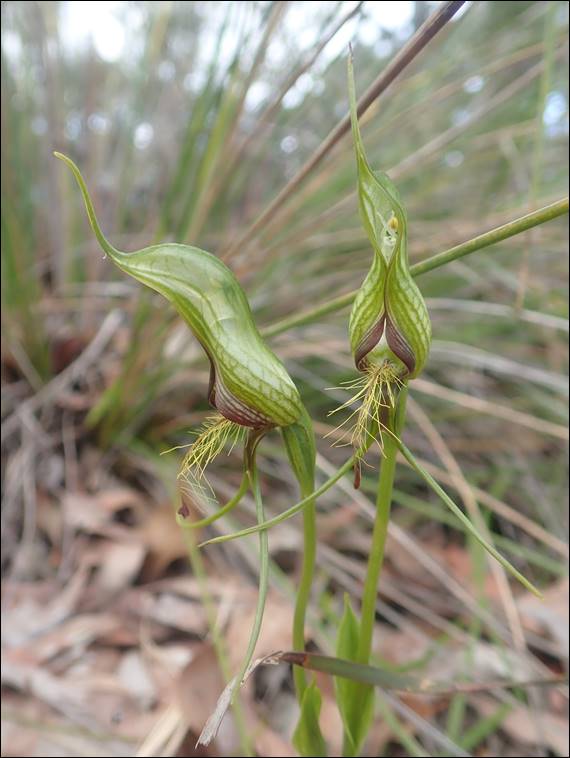
There were also, like at Ambergate lots of also the Rattle Beak Orchid (Lyperanthus serratus) yet to flower, but I did spot the above one that was ahead of all its colleagues.  Being dull green and brown some feel this orchid can be hard to spot, but to counter this they are relatively big; have a tall, upright and distinct base leaf; and have multiple flowers on a thick stem.  I haven’t tested the theory but the flowers are supposed to rattle if shaken, I am however unable to find out how or why this happens.  In looking into this I did find out the scientific name serratus is derived from the Latin word ‘to saw’, serrare.  This has been used to refer to the prominent white teeth like calli, spread on the end of the labellum:

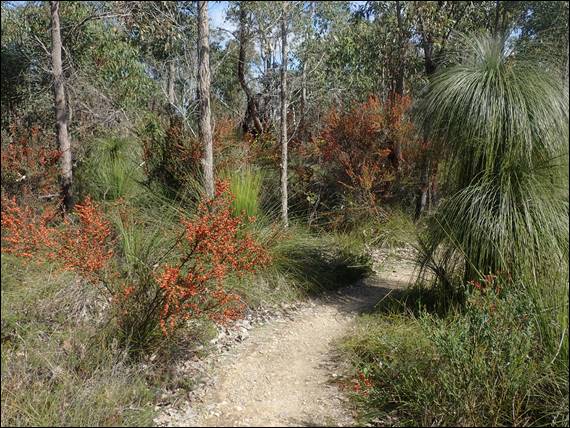
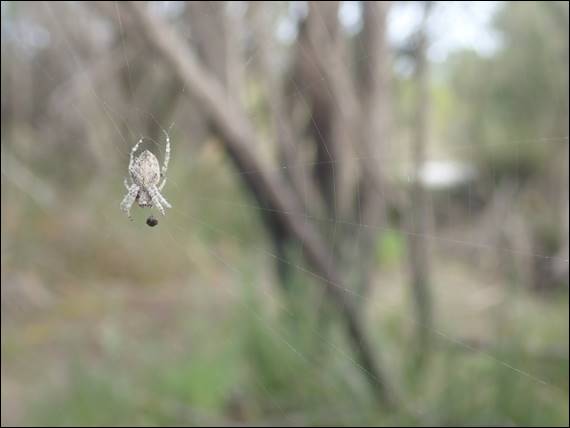
Unlike Ambergate, the Capel Nature Reserve has no formal paths.  There are wide sandy tracks that criss-cross each other, although vehicular access is also restricted so I am not sure how these have not become over grown.  At times they peter out and this leads to needing to tread carefully through the scrub, as above.  Looking both down for what may lie underfoot, as some orchids and other plants are very small and inconspicuous, but also looking up to make sure you don’t end up destroying a spiders web.  While you’d think the below spider would be easy to spot, the image is deceptive as it is a mere half a centimetre long:

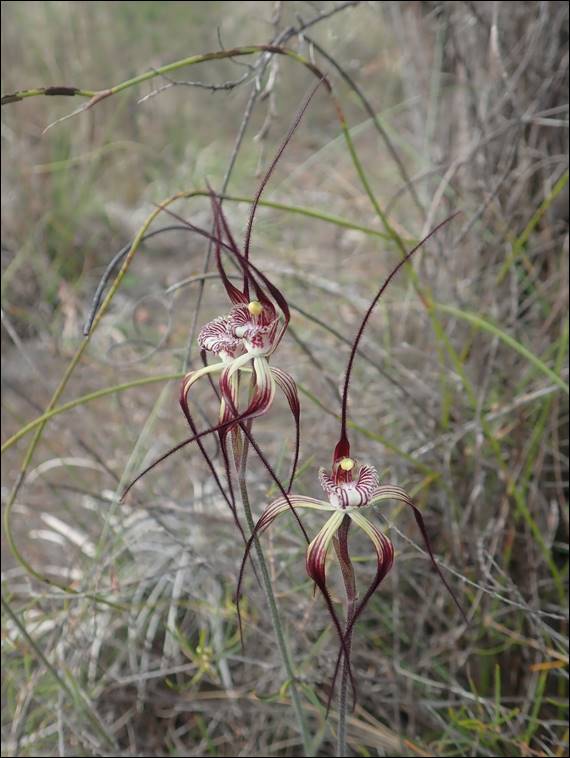
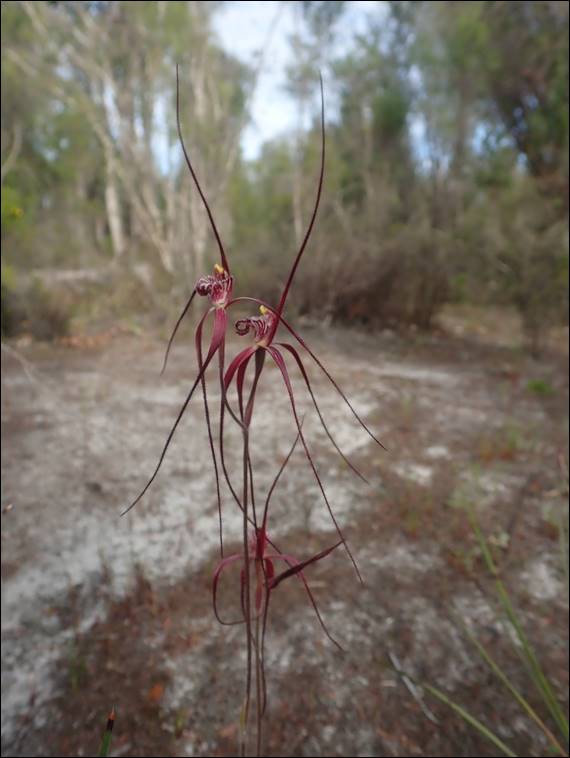
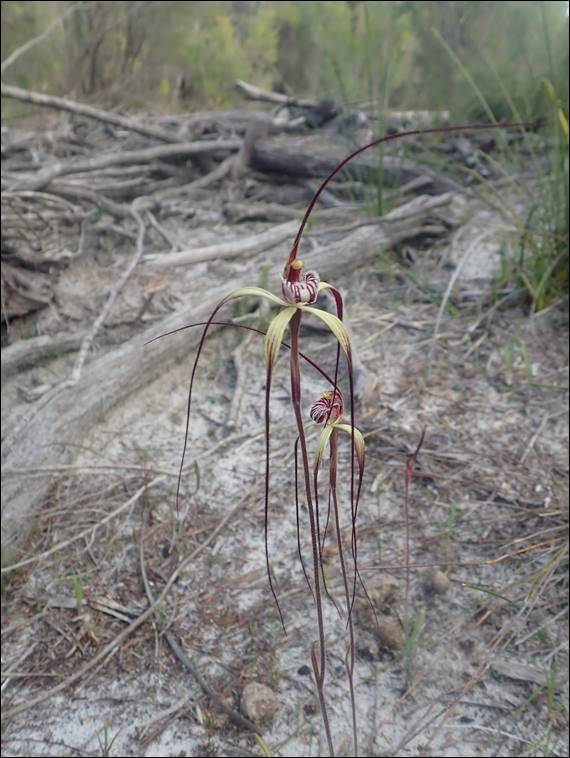
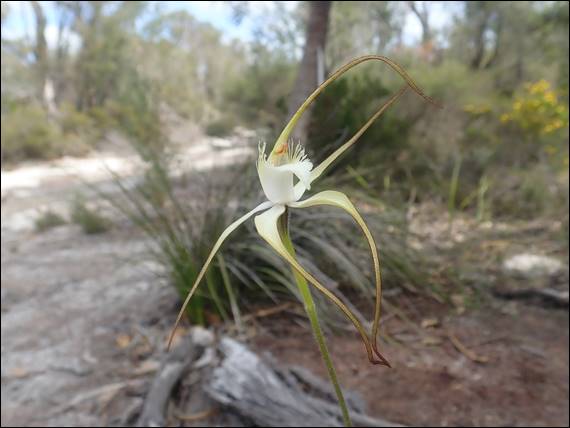
I found lots and lots of Splendid White Spider Orchids (Caladenia splendens), which were only just starting to come out here a week back.  But I also came across just as many if not more Chapman’s Spider Orchids (Caladenia chapmanii).  This is considered to be one of the most attractive of the Caladenia, i.e. spider, species and is commonly found with multiple flowers clumped together that enhances the visual display.  What strikes me about this species is the huge variety of colouring and patterning, including white, cream, pale green, red and deep maroon.  This is shown below and is why I have included four images, and I will leave them to do the talking:

Beginners luck

The rain fell as we walked down towards the main cliffs of Wilyabrup, not that it has ever put me off heading out for a climb before.  However, today I was joined by a work colleague, Sam, who had never climbed before, neither indoors or outdoors.  So it didn’t feel like it was the best conditions for his first introduction.  We’ve been attempting to organise a trip for well over a year, but he foolishly dabbled in mountain biking some time back.  This resulted in him coming a cropper and breaking bones, dashing our plans.  Today however was the day, and the weather had been looked pretty good until we walked in:

We also picked a friend of Ash’s up on the drive down.  Claudia has climbed before but not for a long time.  I was happy when neither of them batted an eyelid as the rain set in, and we continued onwards.  With one complete newbie and one with only distant memories of climbing, we spent a good length of time just talking through the basics.  This also allowed the weather pattern to run its course, with the shower passing over and the promise of better condition’s rolled in behind the clouds:

We spent so much time talking about the basics that before we even started climbing Ash appeared, indicating it was at least nine o’clock already.  He’d been out for a trail run this morning, which I was aware about, explaining his slightly tardy arrival time.  I also found out that there had been a bit of karaoke going on at his house last night.  So while it may look like he is in pain above he is in fact blasting out the songs that were lingering in his mind from the night before.  Whenever I have introduced anyone to rock, I’ve started sensibly to allow me to gauge how they are going:

Everyone got up the first route of Fairy Floss (grade 12).  It’s not a hard climb, but has a tricky mid-section where some delicate footwork is required.  A good test before we wandered round the corner to a slightly longer wall.  Here Ash was happy to lead Setting Sun (grade 15), which he did as Sam, Claudia and I watched a whale frolicking in the bay.  There was a bit of flipper action, but no breaching.  The slightly broader and less elongated flipper indicated to Claudia and Sam that it was likely to be a Southern Right Whale, and much to our delight it stuck about for several hours:

Ash intended to set up a top rope to allow others to jump on the climb.  But while he was sorting things out on top I asked Sam which of the climbs on this wall most appealed, purely from a visual inspection.  He reckoned Tom Thumb (grade 11), a fun looking chimney on the arête.  So after a quick bit of instruction I quite literally put my life in his hands, as he got to have his first go at belaying.  Next to us when Ash had set up the top rope Claudia didn’t like the look of the line he had led.  Instead she fancied the crack immediately to the right, which the top rope allowed her to try:

Below Ash was getting the last of the songs out of his head, as Claudia maybe started to regret picking Tom Thumb direct (grade 15).  Sam was however very happy with his choice and was making easy work of the line.  That was until I told him he also had to take the gear out, and I then made him down climb the route to the first bit of gear and start over.  Even this didn’t break his stride, or enthusiasm.  Beaming from ear to ear as he made his way back up to where he was and then all the way until he got to the top:

Seeing Claudia hadn’t cleaned the gear off Setting Sun, by going up the route to the right, Sam and I sorted that, which could only be done by us both climbing it.  And after that Claudia had to head off, so her and Ash departed just as the sun started to come out and bathe the crag and us in warmth.  Sam was keen for more, showing no signs of tiring despite three successful climbs.  So we shed some layers and cracked on, picking an even longer line and one that I thought may be a bit tough:

But I was mistaken, his footwork, body movement, and cool and steady approach belied the fact that he had never climbed before.  And while the crux of Hope (grade 14), which was the thinnest bit of climbing we had done yet, did make him stop and have to have a think.  It didn’t take him long to work out a sequence that suited him.  I was still not keen to keep bumping the grade, just to prove a point.  So when he was keen for more, for the next route I picked Thunder Thighs (grade 11).  Because like Tom Thumb the aesthetic of the line stand out:

Sam was still chomping at the bit, and this time we really did increase the difficulty.  We had looked at Waterfall Second Folly Direct Start (grade 17) earlier, and the upper flake is an imposing but very striking feature.  It just begs to be climbed, and had immediately drawn Sam’s attention.  At the time I felt it was dumb idea, but so far he had not only managed every route with a clean ascent, but done so with style and composure.  So we went for it, and finally he had to admit his forearms were pumped and a climb had been a real challenge:

Despite this he still managed to get up without a slip or rest on the rope, and was also up for one more route.  Not even put off when I suggested climbing with packs to we didn’t have to walk out afterwards.  We did however pick a more reasonable route to do this, First Climb (grade 11).  It was of course another clean climb, making it seven out of seven, which I have to say I am pretty impressed about.  Better still I reckon Sam may have caught the bug.  You could argue that it was beginners luck, but with climbing I really don’t think that argument holds an weight:

Kicking back

There was a chance that I would have been flying solo this weekend.  That was until late in the week, when both Mario and Rongy’s partners made plans that didn’t include them leaving them free to play.  Rongy decided on the Northern Blocks of Wilyabrup, which I was more than happy with.  Partly because we rarely see other climbers here, and never when we have been climbing ourselves.  Plus during Mario and my last trip here we spotted a possible new line, which I was keen to check out:

On arrival at the top of the cliff, we stopped for a while to check out the dolphins that were cruising past with young in tow.  We were also almost convinced we saw a whale, but due to the distance it was hard to be sure.  The Southern Right Whales are on their migration south and we were hoping to see some today, aided by a calm ocean that would make it easier to spot them.  But sadly, we didn’t spy any more confirmed or unconfirmed sightings.  We did however get to watch the dolphins for quite some time as they played in the bay just to the north of us, which was very cool:

In the words of Apollo Creed when he trained Rocky Balboa, I would say that I would say that of the three of us Mario is the one with the “eye of the tiger”.  So it wasn’t too hard for us to get him to take the first lead.  Both Rongy and I were thinking this was a good thing, as it would then be Mario that risked getting a flash pump on the first route, allowing us to chill out a bit more with the rope above us.  This is exactly what happened, but he also has sufficient experience keeping his cool and finding stances to rest up enough to avoid taking a fall:

The flash pump risk is heightened here as there really are no good warm up routes.  They are all a tad steep, a little bit pumpy, and fairly sustained.  So I was a little surprised Rongy picked this place for a climb considering his lack of consistent appearances on rock over winter.  He even jumped on the sharp end for the next route.  Taking on a line I climbed for the first time during my last visit here not that long ago.  Never really too hard, but thin and balancy in sections with the spaced gear making for some exposed sections, requiring Rongy to also draw on his experience and keep his cool:

Last night Lisa and I had headed up the road to see the neighbours, as it has been a long time since we have caught up.  Something that seems to happen over winter, as people bunker down that bit more.  It was intended to be a short hello, and as is usually the case with them it wasn’t so short and also resulted in me having a slightly woolly head this morning.  To the point I suggested to Mario and Rongy they might like to take the leads.  They however were having none of it, resulting in all my talk about the possible new line while organising the trip backfired on me:

Mick and his son appeared just as they were steering me towards the rock, so I left them chattering as I started.  The line links two routes but has a traverse of sufficient length to make it worth investigating.  The first route to get to the traverse I knew well, but I have never been on the second route that it finished up.  This was due to the lower section of that climb being harder than anything I would tackle.  The traverse got more overhung and pumpy as I moved leftwards, and I was almost off as I got myself into the corner of the second line that would take up upwards.  I’m really not sure how I held on but I did:

Both Mario and then Rongy followed up and agreed it was a great climb.  I suggested a solid pumpy grade 19, but as each of them joined me at the belay and without hesitation they both suggested it was worthy of grade 20.  Knowing my propensity to not want to over grade routes, which has led to people claiming a number of my climbs are sandbags, I’ll go with the grade 20.  It was my turn to catch up with Mick as Marion took the next lead and hopefully one day we might organise to climb together, as opposed to just randomly bumping into each other:

After following after Mario, Rongy, weary from a 45km mountain bike ride the day before and also admitting to not having the stamina to sustain climbing these steeper lines, decided to sit out the next two routes.  Content with laying down to close his eyes and soak up the warmth of the sun, scanning the ocean out to the horizon just in case a whale might appear, occasionally looking down the cliff to see how we were going, and also checking to see if the two boulderers below us managed to battle their way up the pebbles.  Despite just kicking back for the last part, we had all thoroughly enjoyed just being out:

Here, there, and everywhere

I feel like I’ve been wandering about a fair bit weeks… and in part blame Josh for it.  Not the Josh I climb with, but someone from work.  Unlike me his job takes him out in the field a fair bit, to secluded spots where we have stream flow and groundwater level measurement infrastructure.  For the sites that in areas of native vegetation, at this time of the year, they are conveniently also places that, as we say to each other, orchidy looking.  As such he has been sending me images of his finds, which in turn has enthused me to get out hunting:

Tuesday was my first trip out.  And seeing I practically drive past it on the way home, I stopped in at Manea Park.  I didn’t stay too long, and the only new find was a common orchid being the Cowslip Orchid (Caladenia flava).  As the season progresses this orchid will, like the Pink Fairy Orchid (Caladenia latifolia) and Dwarf Pink Fairy Orchid (Caladenia reptans), litter the ground.  I was however interested to learn more about where the rather dull common name of the poor old Cowslip Orchid came from, but have been unable to find anything:

I did however discover the genus name, Caladenia, originates from two Greek words, calos and aden, meaning beautiful and gland.  This large genus represents over 350 species of orchids.  And the scientific name of the plain old Cowslip species, flava, simply means yellow and is derived from the Latin word flavus.  Meanwhile the species name of the above Clubbed Spider Orchid (Caladenia longiclavata), which I found on my Wednesday after work trip to Crooked Brook, not surprisingly means long club based on the Latin words of longus and clavus:

It was the only species of spider orchid I found at Crooked Brook, and I was unable to locate the other one Josh had spotted.  But unlike Lisa and my hike in Wellington National Park last weekend there were plenty of other flowers out here.  One of the more striking ones being the above Heart-leaf Flame Pea (Chorizema cordatum).  This is a plant that helps gardeners due to its ability to extract nitrogen from air and ’fix’ is in nodules of their roots, making it a living fertiliser.  There were plenty of other orchids about, but only one other new one for this season:

I was very excited when I spotted a Bird Orchid (Pterostylis barbata), and better still I later found the above specimen.  These orchids generally will only have one flower, and it is rare to find a plant with two flowers as the above one had.  I haven’t narrowed down where the genus name of pterostylis originates, which covers some 300 species of greenhood orchids.  But the species name barbata is a Latin word meaning bearded, and what I didn’t know is that the Bird Orchid is also commonly known as a Western Bearded Greenhood:

Thursday and Friday arrived and these are great days for me as I work from home.  Being an early bird I usual start work at 6am and sometimes before that, meaning that I can wrap up a bit earlier than most.  So on Thursday I snuck out mid-afternoon to the Ruabon Nature Reserve, a place that Josh had put me onto last year.  Although last year I visited this area a little late in the season.  And this year I am hoping to find some cool spider orchids here, but it seems that it is still a bit early for them.  I did however find a couple of species I found last year:

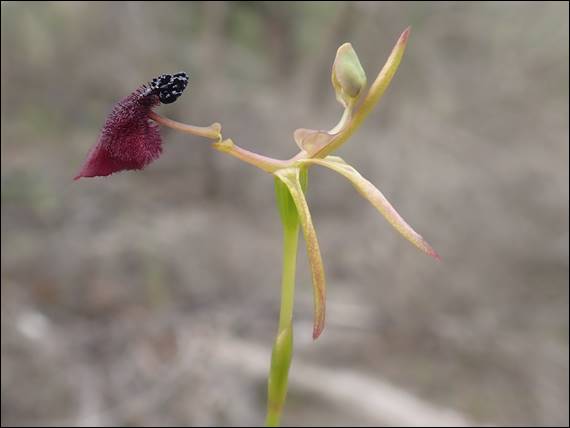
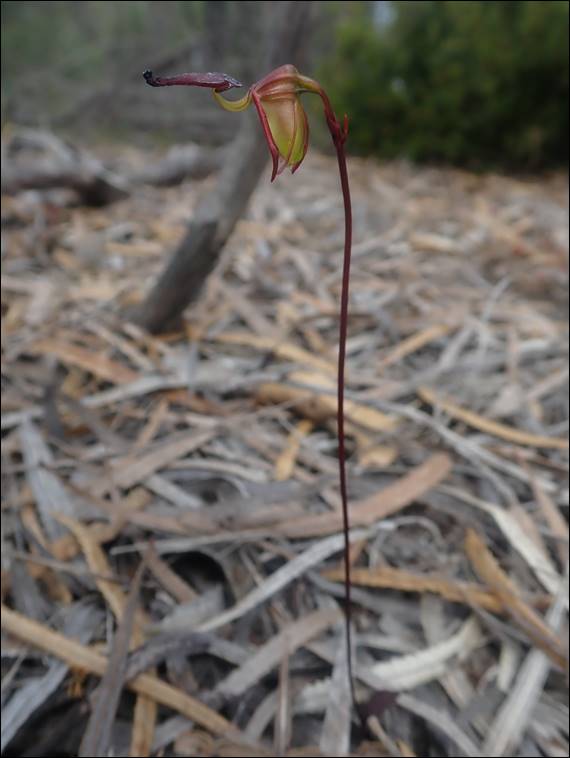
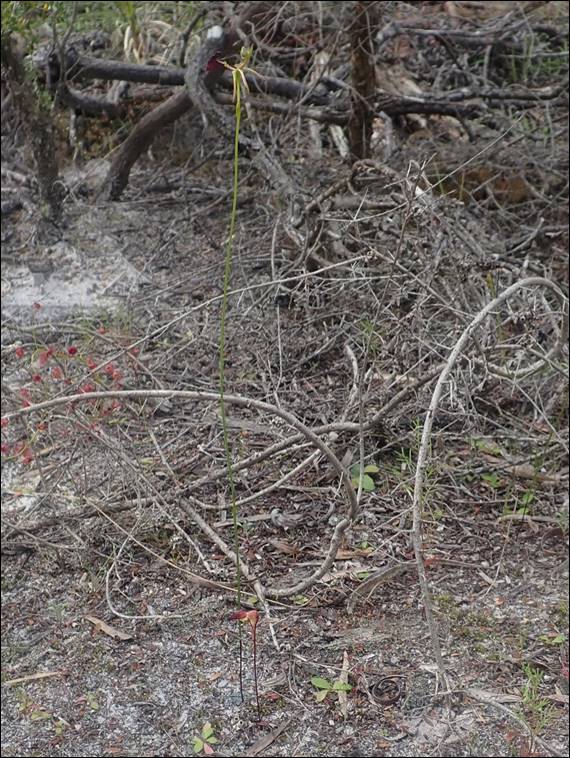
The taller and green stemmed King In-His-Carriage Orchid (Drakaea glyptodon), is approx. 350mm high.  It is the most common of the hammer orchids, and I’m yet to find any of the other ones.  The unusually shape of this orchid has a very specific purpose, which is to trick a single species of male thynnid wasp.  The dark red flower is both shaped like, and has a pheromone like scent that mimics, a female wasp.  The male wasp tries to carry the flower off but is pulled back hitting the top of the stem where the ovary is located:

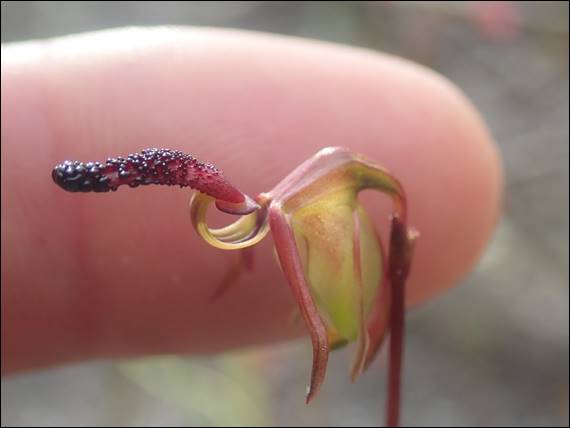
This process is repeated for each flower the male wasp is lured to, and this results in the flowers being pollinated.  It may sound unbelievable but here is a link to a BBC Green Planet Video to prove it: https://youtu.be/6yLnKfhmUzg.  The video is of a Warty Hammer Orchid, as opposed to a King In-His-Carriage Orchid, but the process is the same.  In the image of the full plant, you may have noticed another small orchid with a brown stem that is a mere 50mm high, being a Flying Duck Orchid (Paracaleana nigrita):

Both of the above orchids have tiny flowers, and the above image gives an indication of scale.  This will in part justify why some of my walks with Lisa have to be a bit slow.  Although it is amazing that once you tune your eye into what to look for, it becomes quite a bit easier to see even the smallest specimens.  Similar to the King In-His-Carriage Orchid the Flying Duck Orchid also uses deception to become fertilized, this one relying on the male sawfly.  Pollination results in the ovary forming a capsule that can contain as many as 500 seeds:

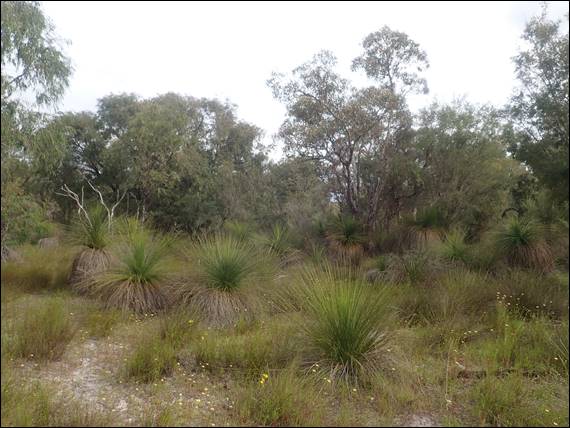
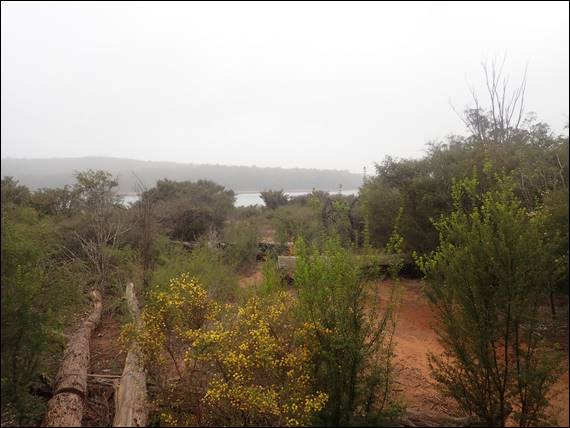
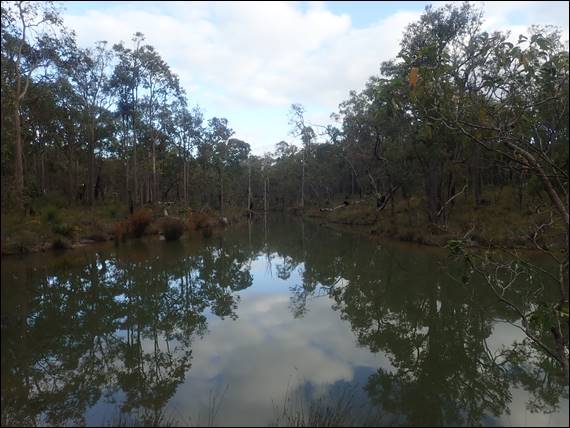
I included the above image to show the quite different landscape and vegetation makeup of the Ruabon Nature Reserve, as opposed to Crooked Brook that is shown in the image with the water.  Ruabon having sandy soils, while Crooked Brook is underlain by lateritic and granite deposits.  We have quite diverse soils and landscapes in close proximity, which provides an opportunity to find a wide variety of species of orchids as well as other plants.  The other orchid of note that I found, en masse, on this trip to Ruabon was the Common Donkey Orchid (Diuris corymbosa):

However, the above specimen is rather special as it has three labellums.  These look like the bottom lip of the flower.  If you check back through previous posts, every other Donkey Orchid, regardless of species, only has one labellum.  I checked this find with Noel Hoffman, one of the authors of Orchids of South-west Australia of which I have the fourth edition.  Bearing in mind he lives and breathes orchids, he advised me that he hadn’t come across this before for in a Donkey Orchid, but had seen a White Spider Orchid with 3 labellums some 15 years ago.  So I feel it is fair to say it was a very rare and lucky find:

I was quite taken by the above peas, but have been unable to identify this species.  It is worth including the image, as looking it and the image above it you can see why some people might confuse the two very different flowers.  Friday came and as I worked, a message popped up with more images from Josh.  This time he had the day off and was on a serious hunt.  So I decided on a fourth trip out making it four days of orchid hunting in a row.  This time it was to the closest spot to home the Capel Nature Reserve:

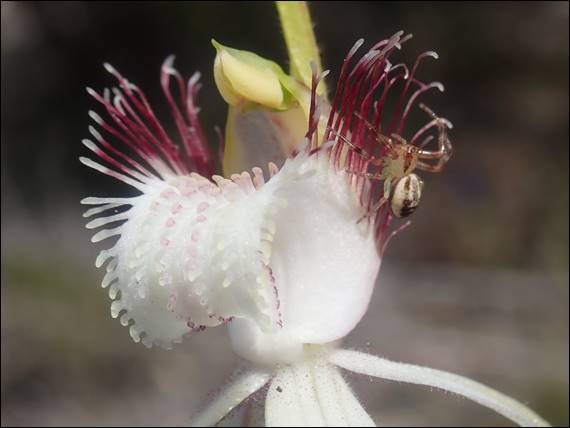
I think the above is a Splendid White Spider Orchid (Caladenia splendens), and you’ll see in the previous post that I have and will struggle with narrowing these down: https://sandbagged.blog/2022/08/27/time-for-a-cuppa/.  To add to my quandary the above specimen had no red or pink colouring in the flower, something you would normally expect as shown in the linked post and the below image.  It is possible that it is a pale form, similar to an albino, and after way too much time trying to figure it out if it is another species I have given up:

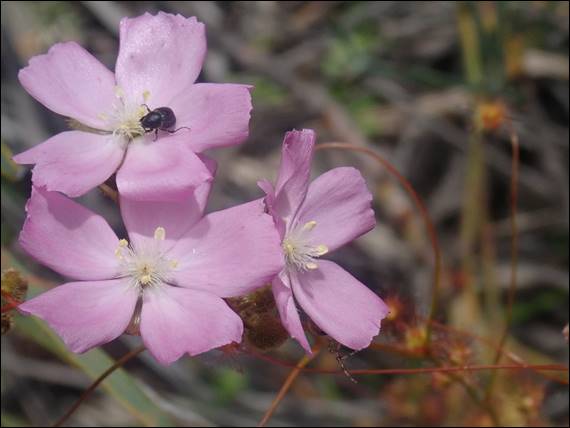
The reason for including the above image was to show the colouration variation, but also because I had a lot of fun watching the spider.  There was previously a beetle on the flower, but that flew away as the spider closed in.  I also found a similar beetle on the flower below.  Not on an orchid, but a Jewel Rainbow Sundew (Drosera neesii) that is easily distinguished by the pink flowers.  This can form both a free standing plant, but is also known to act like a vine using the sticky pads, usually used to trap insects, to attach itself to another plant or object:

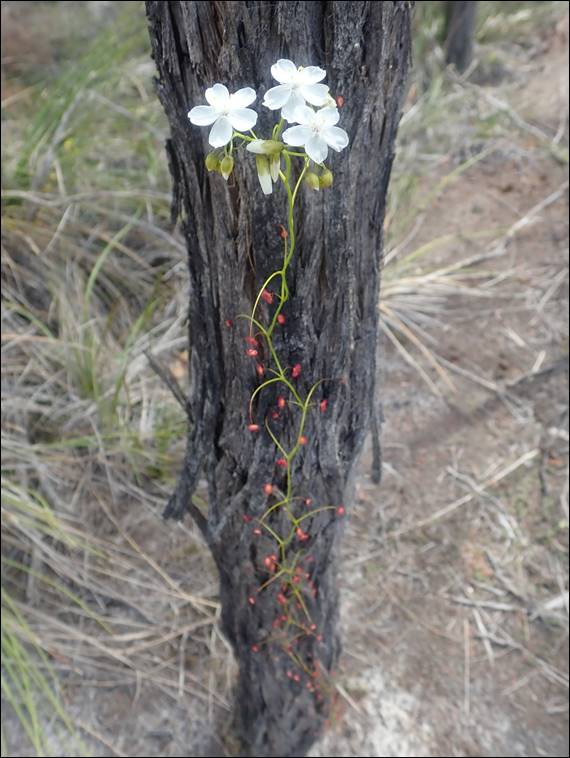
I was quite taken by the sundew flowers, which were out in force.  The other prominent one being the Pale Rainbow Creeper (Drosera pallida), this one having white flowers and the image below shows beautifully how it is making use of the tree trunk.  Both of these sundews are endemic to Western Australia, and can be found in a wide variety of land forms and soils types. From sandplains to heathlands, and deep sands or lateritic deposits, so I’m likely to see a lot more of them a bit like the Cowslip Orchids.  I wonder if I’ll be as well travelled next week:

In need of a recharge

It seems that there is always something on to stop us from dragging the camper trailer out of the shed.  Which is where it has been stashed since April this year, but this weekend the stars aligned and we finally got away.  The last time, despite it being glorious weather at home, we drove straight into some pretty bad weather that stayed with us for the two day trip.  It felt like this might become a bit of a trait, and again left home only to drive through the rain.  Fortunately, our destination was dry so we popped the trailer up straight away in case it changed:

It felt wintry and cold and was hard to read the sky.  So to warm up we took a gamble and headed out for a hike, which had been our original intention.  However, Lisa wasn’t feeling like she had much energy so put a limit of 5km on the walk.  We followed the Sika trail, a walk we have done before but neither of us could recall the length.  No matter, as Lisa would simply track our progress on her Fitbit and we would do a 180, heading back from where we came when we hit the magical 2.5km.  My recent walks looking for orchids have been through bush with flowers starting to burst into life:

And while there were some flowers out today the landscape, like the weather, had that wintry feel to it.  We mostly saw browns and greens, with the occasional splash of yellow that was predominantly a result of two plants.  The first being the below Yellow Buttercups (Hibbertia hypericoides), which is one of the most common understorey shrubs to be found both in Jarrah forest and coastal plain alike, all the way from Geraldton down to Albany.  But today it wasn’t these flowers that caught my eye as I took this image:

I was of course looking for orchids, and there is a Pink Fairy Orchid (Caladenia latifolia) nestled underneath the protective covering of this common shrub.  What with Lisa not having her usual energy, I could take advantage of the slightly slower pace and look about a bit more.  And whether to reduce the pace further or not Lisa was also on the hunt.  Unlike the banksia woodlands on the coastal plains, the orchids here look to be a little slower in making an appearance.  And we only spotted two other variety being the below Silky Blue Orchid (Caladenia sericea), and Slender Snail Orchid (Pterostylis crispula):

The other thing that slowed us down, was all the up slopes.  This became a bit of a joke as we walked round, and came about from a group of four not so serious mountain bikers.  They had just been round this loop, and the one at the tail end had said while it was a lovely trail it was marred by the fact that there was way too much uphill than downhill.  Despite the slower than normal pace, which was not due to the orchid hunting for a change, we both enjoyed being out and the need to check for the 2.5km mark was forgotten:

I’m sure Lisa was aware of this, but made no mention of it and I was more than happy to keep walking.  As a result we ended up completing double the nominated distance, by finishing the 10km circuit.  In addition to the wintery feel and lack of flowers, we also noticed that there wasn’t much chatter in the forest.  We only heard a solitary Red-tailed Black Cockatoo, and there were very few other birds out and about.  Maybe they were huddled away to keep warm.  We eventually caught sight of the reservoir, and then we knew we were close:

Our chosen campsite being Potters Gorge, on the edge of the Wellington Dam reservoir.  As we walked the last section the ground looked to be lit up once more by thousands of little light bulbs.  Being the bright yellow pompom flowers of an acacia, and the second yellow flower that seemed to be out in force.  With so many species of acacia, I am not game to narrow this one down.  Back at camp we had a snack and made a cuppa, but once the food was gone we started to feel cold and decided it was time to have a lie down in the camper:

We never came back out, and by the time we thought about it darkness had descended and neither of us were hungry enough to make the effort.  And instead stayed warm and cosy inside the trailer.  And in the morning, as light crept into the sky beyond the tops of the trees that towered above us, Lisa stayed continued to stay put.  Nothing new there from whenever we head out for a camp, and I made a brew for each of us before going on a solo wander as she read her book drifting in and out of sleep:

I walked a short couple of kilometres to the quarry.  Knowing that I would have a few hours to kill I the morning, I had brought my climbing shoes just in case the chance came up.  the lack of orchids out at the moment resulted in the opportunity indeed presenting itself.  Being by myself and only having my shoes, I endeavoured to boulder up to and back down from the first bolt on every line.  It may not sound like a lot but resulted in approx. 240m of climbing if I counted both going up and back down.  Arriving back at the campsite right on time Lisa had just finished her cuppa and was keen for a second:

The intention was to allow Lisa to continue stay in bed reading until she had finished the second cuppa, but sadly this didn’t happen.  It started to drizzle and the clouds were rolling in across the reservoir.  And rather than deal with a soggy trailer when we got home, we both agreed it was worth packing it away quickly.  Something that takes no more than a couple of minutes.  We could still make breakfast in the dry due to the camp shelter conveniently located next to our campsite, which we did before hitting the road.  And as we had the day before we drove in the rain.  I’m not sure the trip out energised Lisa’s batteries, but we both thoroughly enjoyed and felt better for the short getaway:

A picture paints a thousand words

I’ve stumbled across a new local spot to hunt orchids, and it is the closest one to where we live yet.  In fact it is an even shorter distance from where we lived for seven years, and we never checked it out.  That might be because it isn’t publicised, has no parking areas, and there are no formal walk paths.  There are however plenty of tracks that seem to crisscross through the Capel Nature reserve.  I’ve heard that not too many people head out here, so it is a great quiet spot to explore.  Working from home and being a mere 10-15min drive away, today was my first trip here to have a quick look to see if was any cop:

The reserve seemed to be mostly weed free.  A good sign as the orchids, as well as other native plants, wouldn’t be competing against faster growing and usually bigger invasive species.  There were immediately signs of orchids, and the first one to mention is the above Hort’s Duck Orchid (Paracaleana hortiorum).  I was super excited last year when I found my first Duck Orchid (https://sandbagged.blog/2021/10/15/the-tipoff/), but those were the Flying Duck Orchids (Paracaleana nigrita) making todays a first time sighting for me.  The difference is subtle but the labellum of this species, the bit that looks like the head, is flatter and the glands that look like purple bubbles don’t extend as far back on the labellum:

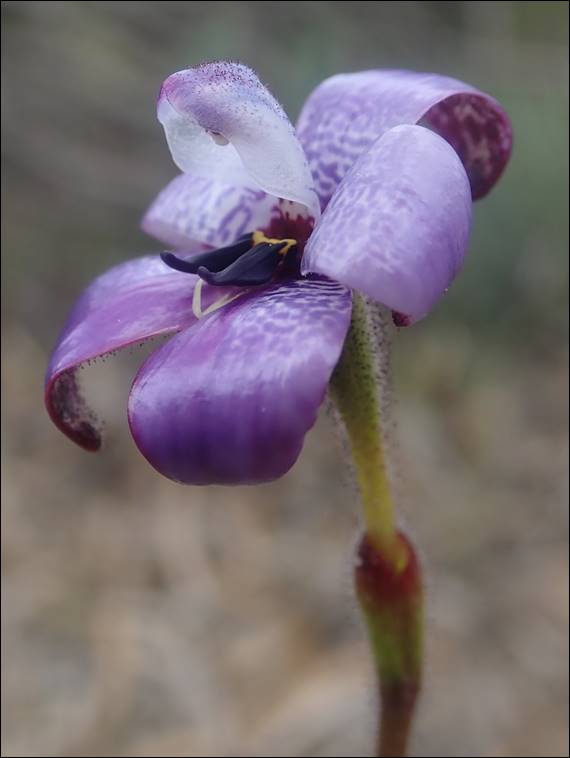
Next and above, I thought I had found an unusual orchid.  Possibly a hybrid of some sort due to the pale nature of the petals with the patterning showing through, and also the column wing almost looking white.  At best it may be a pale form, but is still “just” a Purple Enamel Orchid (Elythranthera brunonis).  To give you an idea of why I was getting a bit excited, the image below is a classic looking specimen.  It made me get up close and personal, capturing some reasonable images of the finer details.  This is relevant, as I have in previous years tried to convince myself that I have spotted the Pink Enamel Orchid (Elythranthera emarginata):

The above linked post being one example.  However, armed with my more detailed book, the images from today, and having checked past images it has dawned on me that I have never seen one.  The obvious sign, now that I am aware, being the centre of the flower.  Unlike the Duck Orchid in which the labellum is prominent; in Enamel Orchids it is small and almost inconspicuous being the white looking tongue between the two very dark calli.  This part is quite different between the purple and pink species, and should I ever come across the pink species I’ll include an image to show how:

There were lots of other orchids popping up, but yet to flower.  Such as the above spider orchid and I’ll have to head back next week to see if any are blooming.  I’m not brave enough to try and guess what species they are until they open up.  And even then it may be tricky especially if they are one of the white variety.  I also saw heaps of withering greenhoods as well as healthy jugs and snails.  Again maybe being overly hopeful of a new find, due to the long backward pointing sepals.  But there is nothing in my book to indicate I found a different species of Snail Orchids:

It was a reasonably quick visit, so there is only one more image and that is of course of a Donkey Orchid.  I’ll guess that I found three species, but I’ll only include this one because it is different to what I recently found at Manea Park.  If you are really keen to see if you agree with me check out the previous post: https://sandbagged.blog/2022/08/26/sitting-on-the-fence/.  The giveaway being the labellum.  A part that is yet again very different to that of both the Duck and Enamel Orchids.  For this orchid it is the noticeable pink part that looks like a bottom lip, indicating it is likely to be the Dunsborough Donkey Orchid (Diuris jonesii).  As for whether this place is worth coming back to, I think the images speak for themselves:

Training day

Another inclement day, and this time is was Craig who joined me to brave the elements, not walking and hunting for orchids but for a climb.  You may recall a few weeks back he joined us for a play at Moses Rocks, after a long absence from rock.  I think he may have caught the bug again, as not only did he jump at the chance to get out this weekend but we are also scheming a short trip away in October.  So today was both for fun, and also so he check where his stamina was at.  He is a little worried he may not keep up with Kym Rongy and I, and therefore I suggested we head to Wilyabrup and pack in eight lines:

I had asked if there were any lines he was particularly keen to have a bash at leading, as I was expecting him to lead four of the eight routes.  He only suggested one line, being Waterfall Second Folly direct start.  This was probably not the best route to jump on straight up, so we started the session on the north facing wall of the Fat Chance area.  Not only does this wall have some more sedate routes, but it also provided some welcome shelter.  It was biting cold, clouds hung ominously in the sky and a strong southerly wind cutting across the coastline:

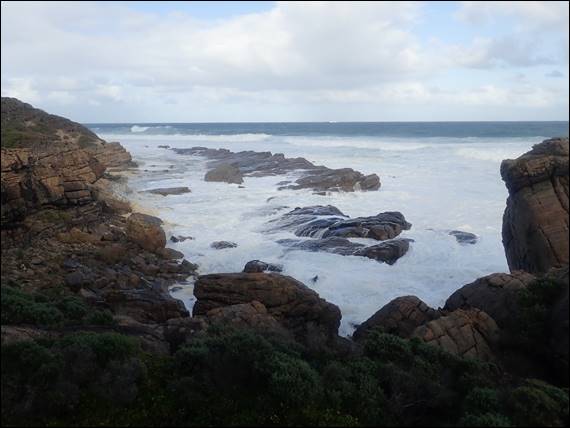
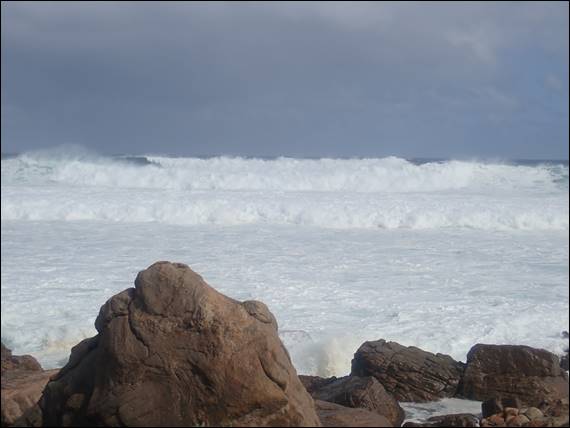
On the first route our fingertips were tingling from the cold, but the friction was great and we balanced our way up.  I took the first lead, so by the time Craig jumped on the sharp end he was at least a bit warmed up.  Today, in contrast to the view of a tranquil flat ocean that Lisa and I had seen yesterday, here on the exposed west coast the ocean was a mass of boiling white water.  Big thunderous waves came in quick succession, and even quite far out to sea they became an indistinct blur of white.  That was until they made land fall, sending spray high into the air:

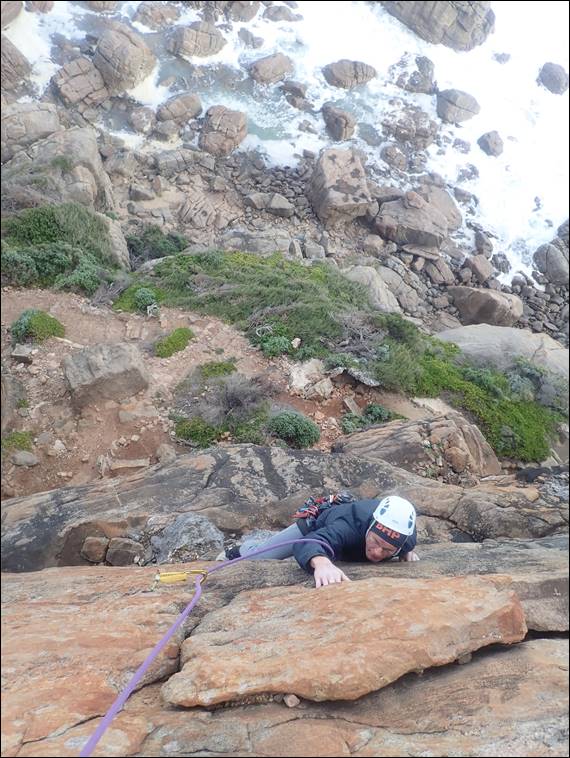
Due to the northerly wind the continuous salt spray, which was giving the ocean a hazy appearance, didn’t head our way and the rock was lovely and dry.  The tide and swell were such that the usually sandy beach, just to the south was just a mass of water.  I’ve just checked the swell and it peaked at 7am today, which is when we arrived, tipping in at just shy of seven meters.  Unlike yesterday’s ocean conditions today it didn’t make me think about snorkelling.  It’s a good job that loose flakes such at the one above doesn’t have that same impact on me with climbing:

It is interesting when I hear people who don’t climb, claim without any understanding that climbing is very risky.  Even if when they themselves partake in adventure sports, such as surfing or mountain biking, they still see climbing as having a higher risk level.  What is so often overlooked is the slow and controlled nature of climbing.  Making slow and deliberate decisions.  All the time looking at how we can reduce the risk, as opposed to having to make quick changes of tactics when an unexpected wave comes in or the bike track conditions suddenly change:

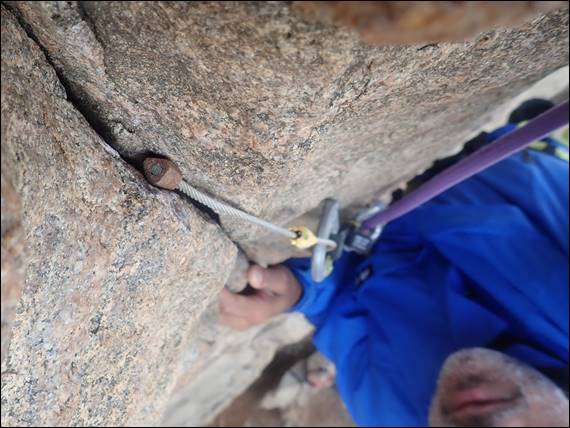
I guess there is also the need to understand the mechanics of protection.  Craig has these wonderful triangular wires and non-climbers, as well as some climbers, would struggle to appreciate just how good the above placement is.  Today Craig had his head in the game placing good and trusting in his gear, and showing control and technique.  We soon racked up four fine climbs meaning it was time to break out the thermos.  A cuppa being most welcome, as we were about to move to the west facing wall and would be right in the path of the wind that still had a cold bite to it:

The cuppa did a great job, and I fired up my next line before Craig then took on the one route he had put forward before our trip out.  I have to say that when he suggested the direct start to Waterfall Second Folly, I did wonder how much he might have remembered about this line.  As it turned out not as much as he thought, and after the more friendly routes round the corner this one caught him a little of guard.  But not so much as to not be able to get up it, and his stamina was certainly holding up well:

With the conditions as they were, we were not surprised to be the only people climbing today.  But there were quite a few groups out for a walk, both above and below the cliffs.  The second group arrived as we were on the penultimate route, and I gave them a bit of a start when I popped my head over the edge of the cliff while they were stood a healthy distance back from the edge admiring the view of the crashing waves.  They then made a beeline to the base and arrived below just in time to watch Craig as he neared the top:

Craig told me that the cliffs of Wilyabrup were on some Facebook group that has a bucket list of places to see in the South West, which explains the increasing numbers of walkers.  The walkers were however not the only observers of our antics today.  This Southwestern Crevice Skink (Egernia napoleonis) watched us carefully before scuttling away in a crevice, as we got ready to climb right past it.  These skinks are from the same genus as the King Skinks, and both are endemic to the South West of Western Australia and relatively common to see.  But as with all things nature based, it always gives me a buzz to catch sight of them:

I was quietly hoping to also see a different reptile, and the place to see it was going to be on the last line of the day.  Sadly despite the now blue sky and sun bringing out the skinks, there was no sign of any carpet pythons not even a discarded skin.  It was a great morning out, as it always is, and Craig can now rest assured that he still has the skills and stamina required.  Even leading us out on the last route, alpine style with a pack on.  Also what he hadn’t considered is that both Rongy and Kym have hardly climbed for months, so the October trip is highly likely to be a pretty chilled and relaxed event.  That said I have no issues with Craig dragging me out for a few more training days:

Time for a cuppa

Despite a not entirely favourable forecast and having driven through belts of rain to get here, Lisa and I were greeted to flat, vibrant, and aqua coloured water extending out into the distant ocean from Castle Rock Beach, which is located in the Meelup Regional Park.  Even better, as we stepped out of the car and looked towards the horizon whales could be seen launching themselves out of the water.  Crashing back down and sending walls of white water high into the air.  So even before we began our walk, we took a load off and sat to watch them play:

Today’s walk took us along a winding coastal path, which at times goes through tunnels capped by the branches of trees entwined above.  Where the vegetation receded on the coastal side the flat blue ocean stretched out, and stopped for a while looking out hoping to glimpse a whales or two.  Unlike at Manea Park just yesterday there didn’t seem to be too much in flower, and the most prominent flower I kept seeing was the Southern Tiurndin (Tribonanthes australis).  First described in 1839 and the scientific name comes from two Greek words of tribon and anthos, meaning cloak and flower respectively.  Possibly due to the frilly fabric texture of the petals:

I kept a beady eye out, but the coastal track was still quite damp, with seepages making the path muddy in places.  The cool and wet nature meant that it didn’t feel very “orchidy” to me, and as it was I didn’t spot any in flower.  With only a few tell-tale leaves scattered in isolated areas.  As such our pace was faster than normal.  Soon enough we were well past Meelup Beach, and at the point where it is possible to take a left and head up the lookout circuit.  Here the track rises up the rocky hill, which provides vistas but also means the land dries up.  Whether this was the reason or not there were more flowers to observe, but still no orchids:

While it was sunny, we had little protection from the wind and it had a chill.  So we didn’t hang about for too long, just enough time to spot a few whales far out to sea continuing to play.  After which we started the descent back towards Meelup Beach, from where we walked at a reasonable pace.  At one point Lisa asked if we had far to go, and I could see Copper Rocks not too far ahead.  So I guessed it was ten minutes tops, but if we didn’t muck about maybe five.  A few yards later I spotted a heap of promsing looking leaves sheltered under a granite boulder and the mucking about started:

As I stared intently at the leaves that had stems with tiny buds atop, almost willing one burst into flower, Lisa spotted the above Spider Orchid claiming her spider senses had told her it was there.  I might add, as an explanation, that we recently watched the latest Spiderman film.  In my post yesterday I mentioned how many Donkey Orchids there are, well there are even more Spider Orchids.  Close to 400 speices and over 130 of them are found in Western Australia.  This makes them the largest single genus of orchids, and therefore for me very tricky to identify.  That said it was obviously one of the White Spider Orchids, but which one:

I’m tossing up between the Splendid White Spider Orchid (Caladenia splendens) or the Hill’s White Spider Orchid (Caladenia longicauda ssp. clivicola).  Based on the known range of each species it makes sense to be the Hill’s White Spider Orchid.  Although, I noted a distinct maroon stripe on the underside of the sepals, which is a way to identify the Splendid White Spider Orchid.  Something tells me I’m going to struggle this season, as my new orchid book simply has too many subtly different looking species.  However, the next find shown above and below, which this time I spotted with my spider senses, was easier to identify:

The Cape Mustard Orchid (Caladenia caesarea ssp. maritima) is listed as Endangered under the Environment Protection and Biodiversity Conservation Act 1999.  The range of this species is a mere 3.6 square kilometres, and it was first identified in 1972.  So it is a relatively new find in botanical timeframes for Australia.  The flower on this species only opens for three to ten days.  This does not allow a long window of opportunity for pollination, which is assisted by the male Thynnid Wasp.  Although, which of the 2,000 species of this genus of wasp found in Australia, I have not been able to identify:

A short distance on we spotted a King skink (Egernia kingii) basking in the sun, and there was a young one next to it that quickly scurried back under the protection of the rocks.  Lisa didn’t think that these lizards looked after their young, but I have seen them with young several times.  And the proof is in the research, which I found in an Australian Zoologist article from 2003 that outlined a study in which a breeding pair was observed over ten years.  They discovered that the young stayed with the adults and basked with them for the first year before dispersing, but even then a single rock shelter could house up to three cohorts:

Before the final leg back to the car we looked out and again spotted a whale, but this one was only several hundred meters offshore.  Maybe the water was too shallow for it to jump out, or maybe it just wasn’t in the mood for play.  But the board and long back breached out of the water a number of times as it effortlessly cruised past us.  Finally back at the car, and due to a long week at work, Lisa was happy to sit back and have a cuppa while I scooted to Castle Rock.  Not to climb, but to check for any more orchids:

I had a theory, as I knew this end of the park has been more badly affected by the fires of January 2022, when approximately 190 hectares or 40% of the park was burnt.  Some species will come out after an area has been burnt, so I was keen to see if I could spot any and I did.  But just one and again a White Spider Orchid, which like the one Lisa found may be a Splendid White Spider Orchid (Caladenia splendens), or possibly or the Hill’s White Spider Orchid (Caladenia longicauda ssp. clivicola).  Either way I was happy with what we had seen during our walk, both plants and animals.  And now my cuppa was calling me:

Sitting on the fence

Friday afternoon I would normally be working from home, but due to unavoidable meetings I found myself in the office as the clock clicked towards the end of my working day and week.  Earlier in the week I was chatting to a couple of people at work, who also like to check out the flowers, and I mentioned that the orchids were starting to come out at Manea Park.  Both of them headed out there during the week and while they didn’t see heaps of variety, they were very happy with their finds.  Their enthusiasm encouraged me to head back there myself.  And for me, I couldn’t think of a better way to end the working week:

A couple of cars were already parked-up and as I wandered down the track, I came across three women eagerly scouring the bush.  I assume they were together as I got chatting to them, it seemed they had driven here from the Wheatbelt in hunt of different varieties of orchids, to what they find out their way.  They showed me a selection of the orchids that are flowering in the Wheatbelt, and I have to admit it made me very keen to head out there.  Heaps of amazing spider orchid species, along with numerous other species.  Sadly for them however, the orchids round our way flower a little later so they are probably two to four weeks too early to see the place in full bloom:

I left them to it, and started to walk a bit faster.  One of them however tagged along with me and I discovered Jo was in fact a local.  An elderly but spritely woman who over decades has been involved in looking after the land, volunteering with weed control and revegetation of areas such as this.  Nowadays, she can’t sustain such a level of involvement but she still gets out and was a mind of information pointing out plants and telling me the names of so many, not that I can recall many of them now as I type.  Despite having come out to spend some time alone to allow my mind to unwind, the company made a nice change especially seeing Jo was so interested and enthusiastic about nature:

With respect to orchids we spotted the obvious finds, and she told me she had also heard the recent rumours of the Queen of Sheba being spotted in the Bunbury area.  And I note now that this seems to be an rumour that pops up most years, and for most years in just that.  We did however spot a small cluster of Midge Orchid (Cyrtostylis huegelii), shown in the first image.  And of course there were lots and lots of donkey orchids, which next to Spider Orchids are probably one of the most well-known and easily recognisable genus of orchids.  Both have distinct, colourful flowers and being mostly tall they are easy to spot.  As we looked at them we wondered if there was more than one species out, and the penny dropped when we came across the small patch shown in second image:

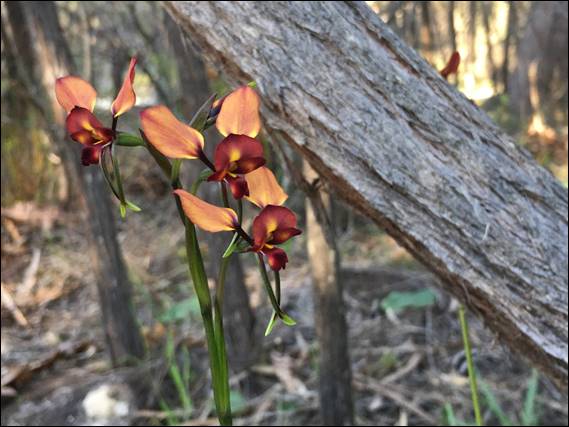
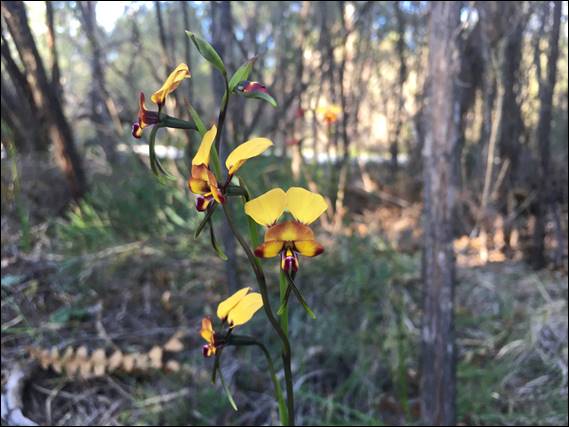
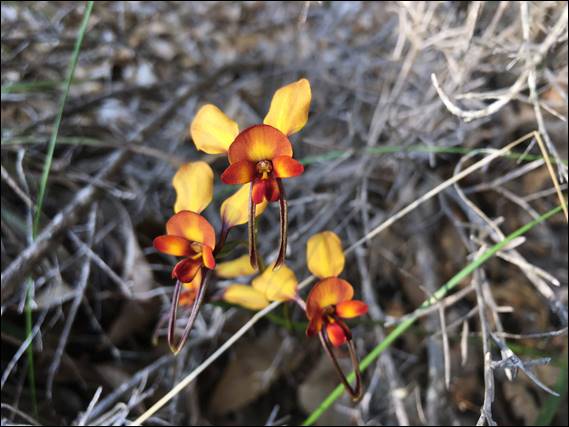
In that patch we found both the Yalgorup Donkey Orchid (Diuris porphyrochila) and Winter Donkey Orchid (Diuris brumalis), in the two images above.  The colouration being distinctly different.  The yellow and much brighter Winter Donkey Orchid is very similar to the Common Donkey Orchid (Diuris corymbosa), but the range of the latter tends not to extend as far south as Bunbury.  Then as I scrolled through the images preparing for this post, I spotted the one below.  Again a different colouration in the main flower, but also the two downward pointing sepals.  This one being the Kemerton Pansy Orchid (Diuris cruenta), the range of which extends along the coastal plains from Lake Clifton to Capel:

So that is now three species of Donkey orchids this season, but I have a long way to go.  There are approx. 120 species of them, of which 48 (so far) have been spotted in Western Australia.  These orchids can also be found for a long time, with the first species flowering in May and the last in February.  One of the last being the Heberle’s Donkey Orchid (Diuris heberlei), found along the Albany coastline, and which looks quite different to the Donkey orchids we find here.  I’ve not seen that one but I have spotted the Late Donkey Orchid (Diuris emarginata) that flowers until January, which is similar in appearance to the Heberle’s Donkey Orchid and an image of that can be found in this post https://sandbagged.blog/2021/11/28/a-most-unexpected-journey/:

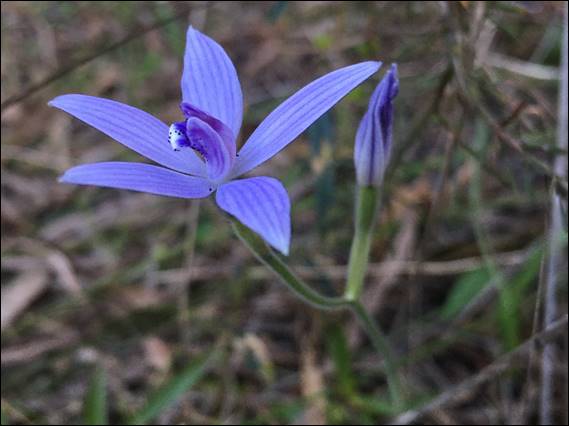
As Jo and I came to the end of our wander she told me of another species she had spotted before I had turned up.  It was just off the track and I had walked right past it, so we went to check out the above Silky Blue Orchid (Caladenia sericea).  This species prefers lateritic soils, which is rich in iron and aluminium, but can also found in the coastal banksia woodlands that are found on sandy soils.  And as we were admiring it, Jo spotted our final find shown below.  This may be a Little Pink Fairy Orchid (Caladenia reptans), as it has a relatively small flower and the arrangement has the lower four petals pointing downwards.  But the stem is mostly green, and the Little Pink Fairy Orchids are usually a purplish colour.  So I’m sitting on the fence about this one: