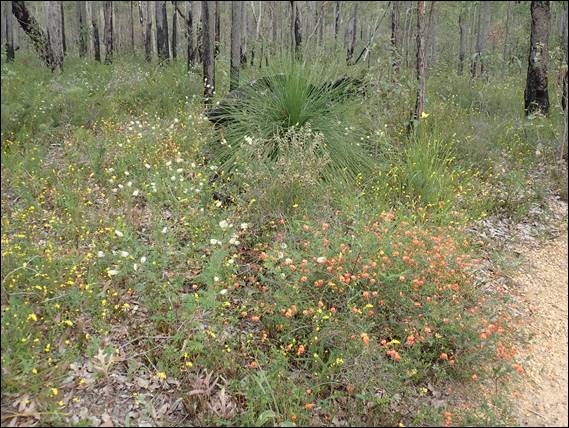
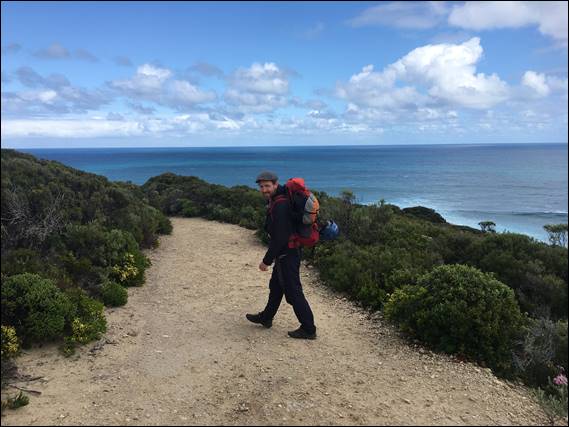
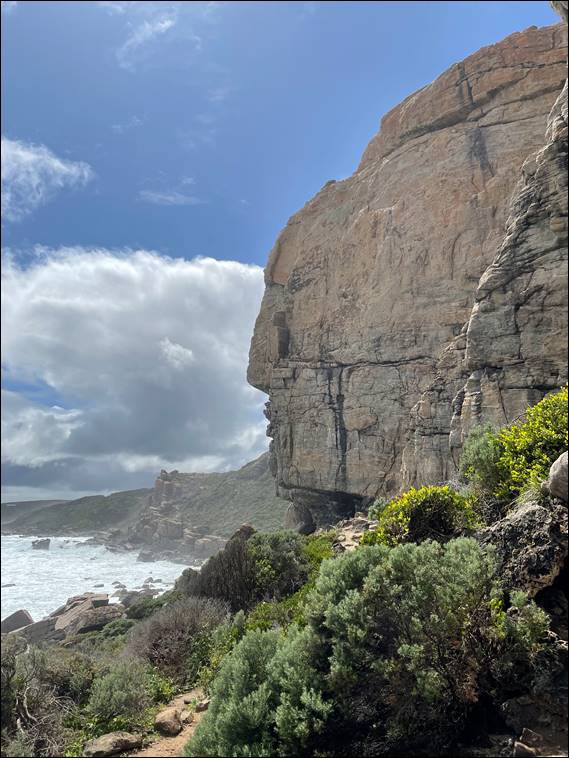
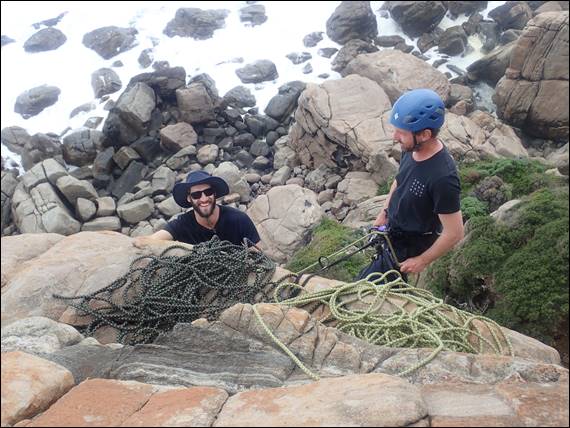
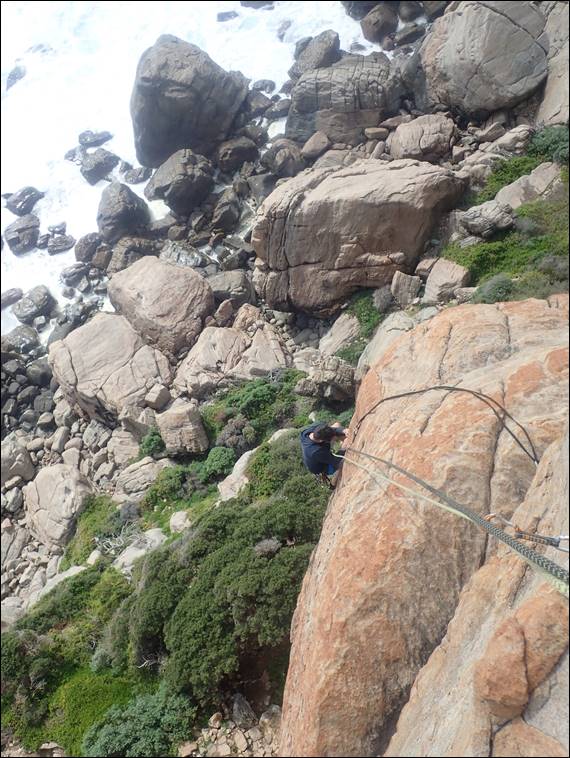
A curly question

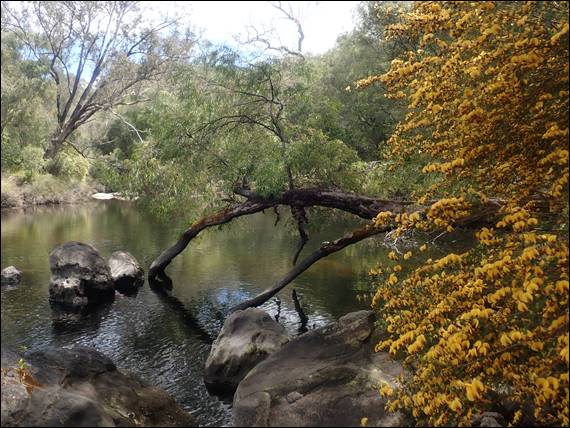
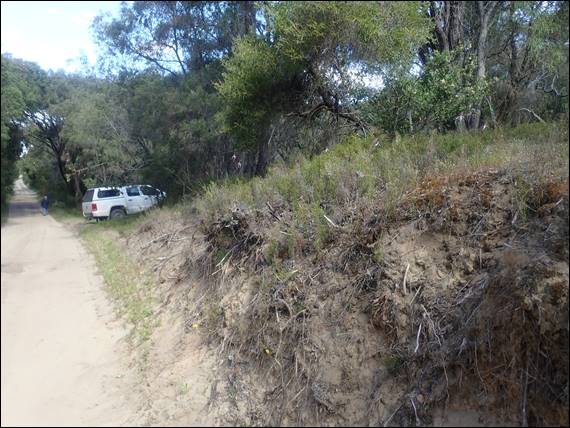
Even with the best of intentions and early planning, things can unravel.  We started planning several months back and the original plan for me to catch up with Kym and hit some south coast granite, picking the weekend such that it aligned with Rongy and Craig’s shifts.  Kym and then only a week out Rongy had to drop out.  Even on the day we were supposed to depart it was hit and miss as to whether Craig and I would actually get away.  But get away we did and as the afternoon was coming to a close on Friday, we rolled into the Mount Trio Bush Camp:
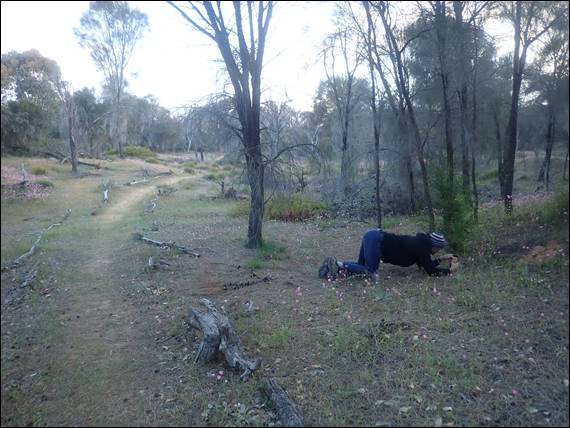
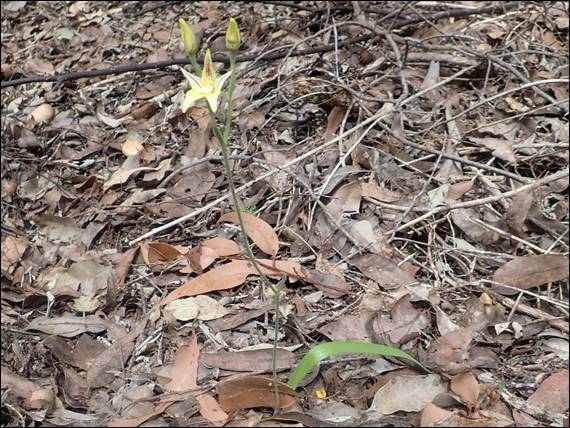
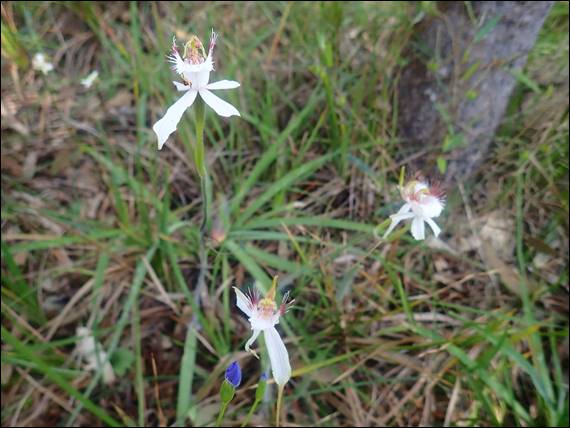
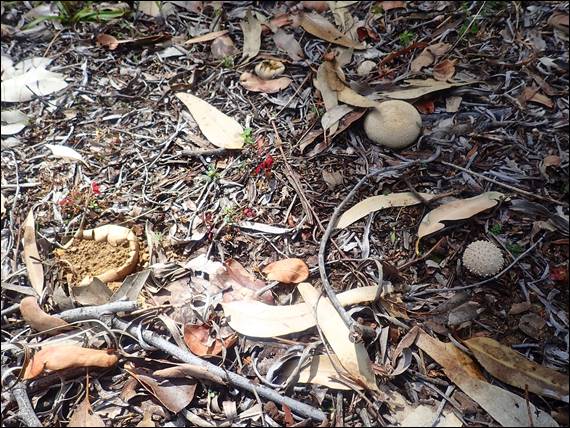
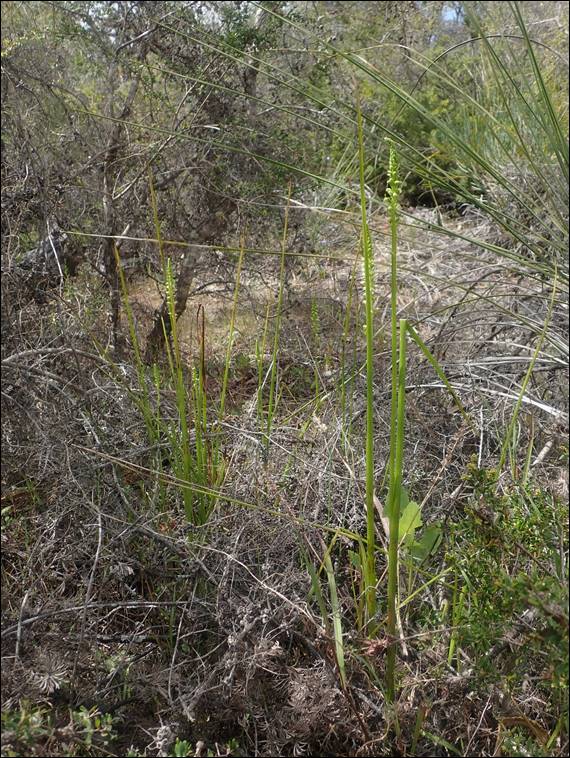
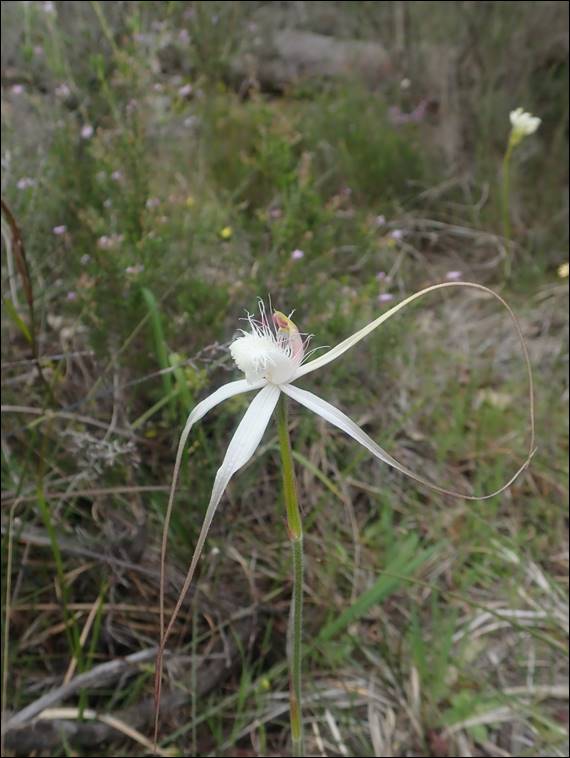
A new place for Craig but a familiar spot for me and one I will never get tired of coming back too.  I snuck up on the owner John to surprise him and say a quick hello, and was soon after told by the resident orchid specialist Jarrod that there was nothing to see.  Of course I didn’t believe him and was keen to have a quick walk round while there was still last half hour of light available, hoping to catch up with John and Margot the next evening.  I am not going to include images of the orchids I spotted until the end of this post, except for two:
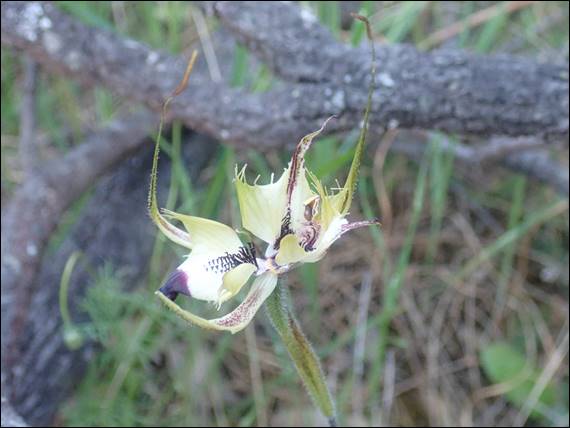
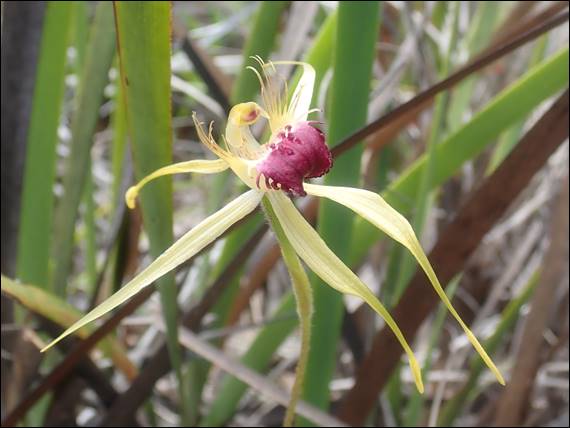
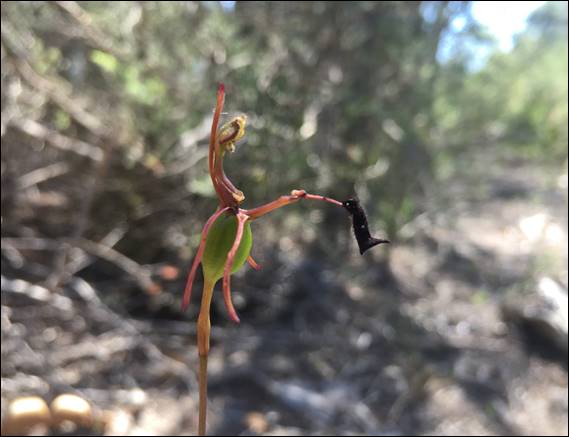
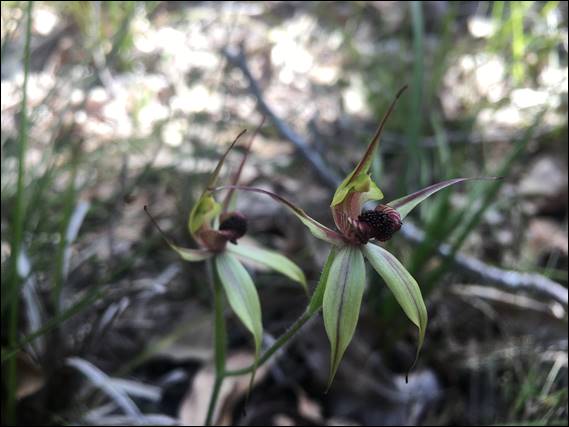
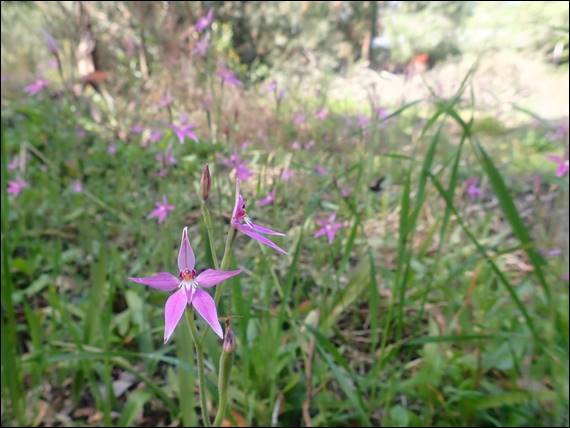
The above orchid simply has to be included now, and is yet another unusual find.  It is the second time I have found an orchid with three, instead of one, labellum.  This time being a Butterfly Orchid (Caladenia lobata).  So it was a double whammy for me, as it is also the first time I have spotted Butterfly Orchids.  You may ask why after mentioning that we were going to climb some south coast granite cliffs, that we found ourselves about 75km inland at the Stirling Ranges:
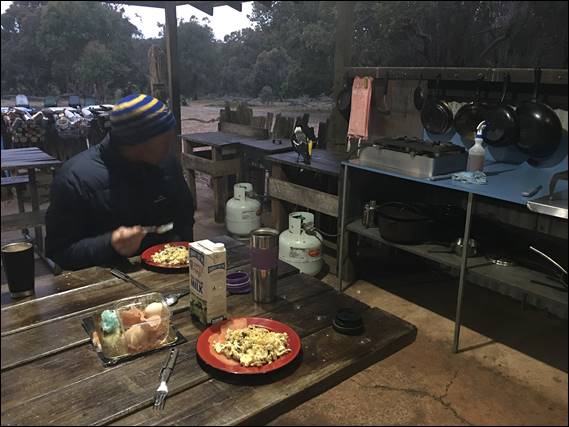
Some may feel that I steered the trip this way drawn by orchids, and while it would be a very plausible reason it is not the case.  Craig is not particularly climbing fit, and we were after some long mid-grade climbs.  Added to that and having tracked the weather it looked like the coast may not have been as dry as inland.  It was an early night, with the hope of an early start for a big day on Saturday that was forecast to be good.  In the morning and despite camping in the Stirling Ranges, we aimed to drive approximately half way towards the coast:
Getting up in the morning was easy.  I am a light sleeper and now that watching the sunrise from the top of Bluff Knoll is a bucket list thing for so many people, the campsite has quite a few very early risers.  Bluff Knoll is close to a half hour drive away and then there is a two hour hike, and with the sunrise being at 5:30 people were up and about from 2:30 getting ready.  Add to that sound seems to travel well, and almost feel like it is being enhanced, in the quiet darkness of night:
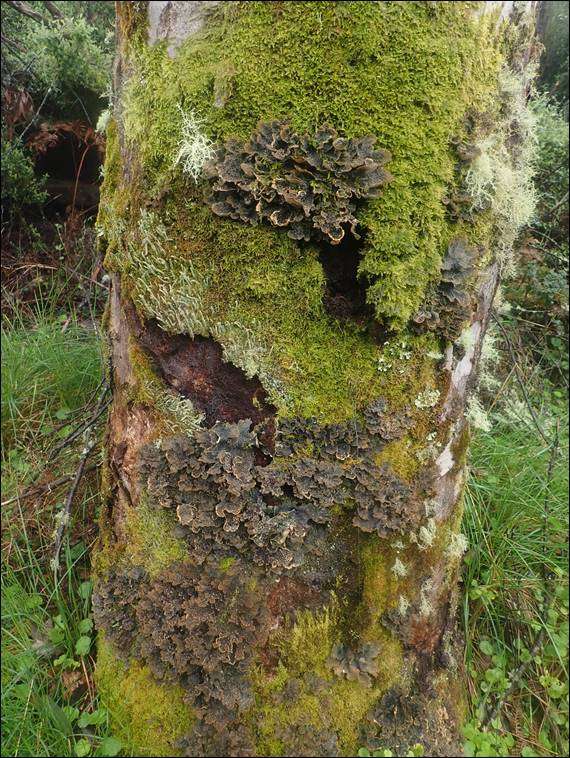
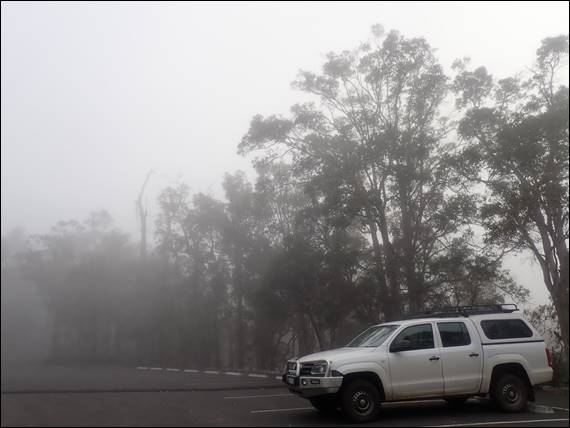
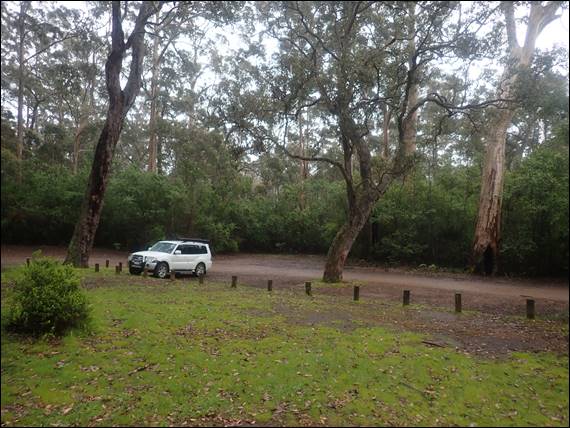
As such I could have been up at silly o’clock, but decided five o’clock was a more reasonable time for a cup of tea.  This timing got us to the tree in a rock car park in the Porongurup Ranges, ready to hike in at seven.  As it was this was well and truly early enough, as the Porongurup’s were completely obscured.  I pondered whether I should call it fog or mist, and was thinking mist but that would have been incorrect.  Now I known fog lasts longer and is denser, resulting in a reduced visibility compared to mist:
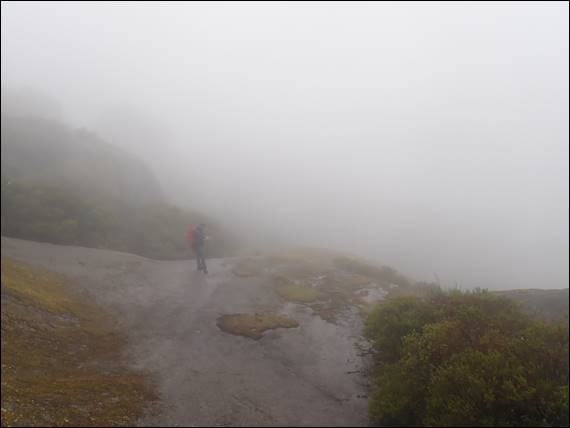
If you can see less than one kilometre it is fog, and at times we could barely see 100m.  Even as we made the turn off Wansbrough Walk to head steeply up to the tip of the Devils Slide, with ever increasing elevation, the fog continued engulf us.  It is well known that the Porongurup’s receive far more rainfall that the Stirling Ranges.  The southern side receives on average 800mm per year, with the northern side getting 600mm.  Compared to the Stirling Ranges southern and northern sides being dumped on by on average 575mm and 400mm:
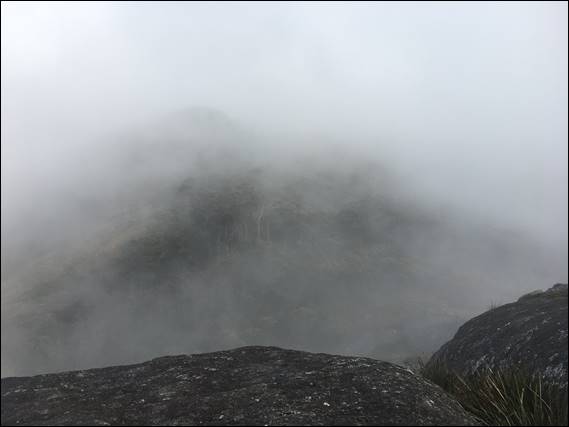
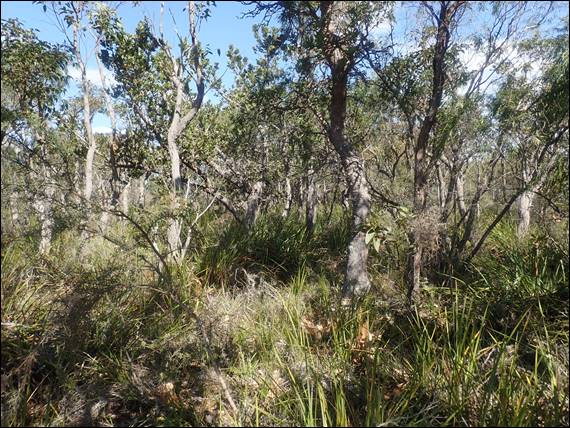
While there was a bit of rain, as we started the walk this soon stopped.  However, having rained overnight everything was dripping wet.  These conditions made it very interesting to find where we had to go.  We had no idea where the 150m high cliff was and there were gullies separating tall and at time steep granite boulders that we had to negotiate.  But taking things slowly we worked it out and eventually found ourselves atop Marmabup Rock, with ever so fleeting glimpses of the landscape below just starting to form:
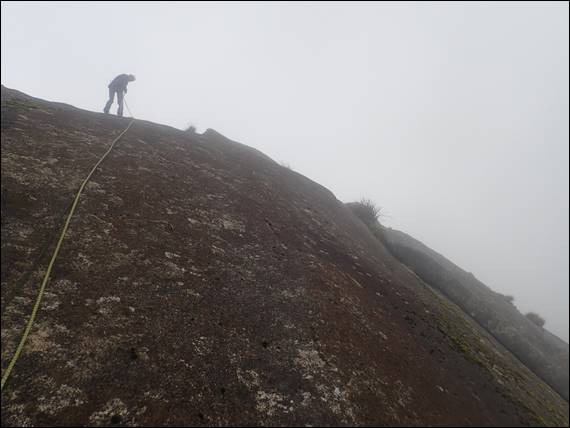
This is a place neither of us had been, so the conditions had made the hike up a real adventure.   Comprising approx. 4km walking with 250m of ascent, and lots of pondering.  Nothing too serious but with a pack full of trad gear my legs were feeling it on arrival.  You might even be asking why we carried on, as surely the prospect of climbing was low.  There is however one route on this crag that when developed was described as being an ideal climb for the not so usually misty and less than ideal conditions often experienced here:
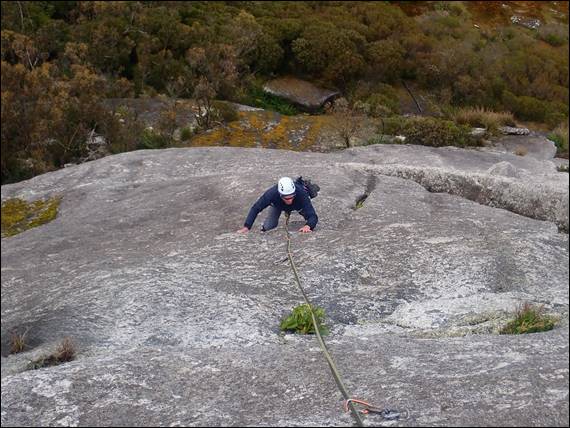
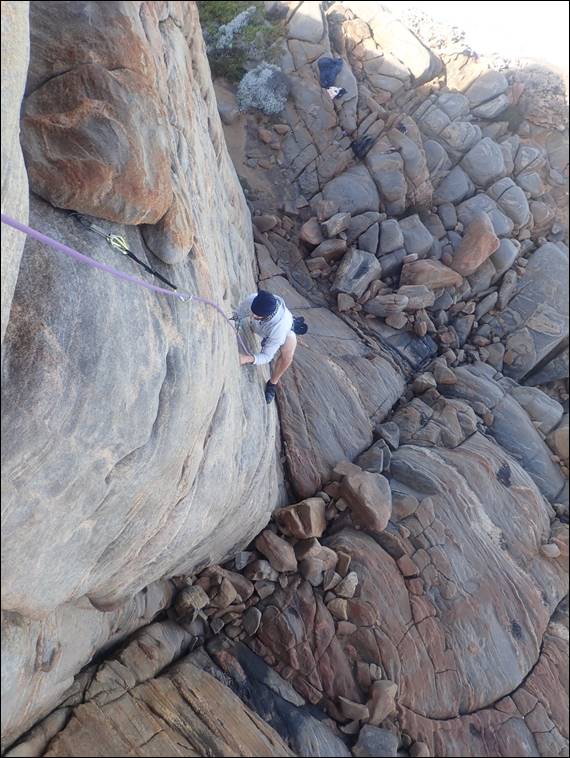
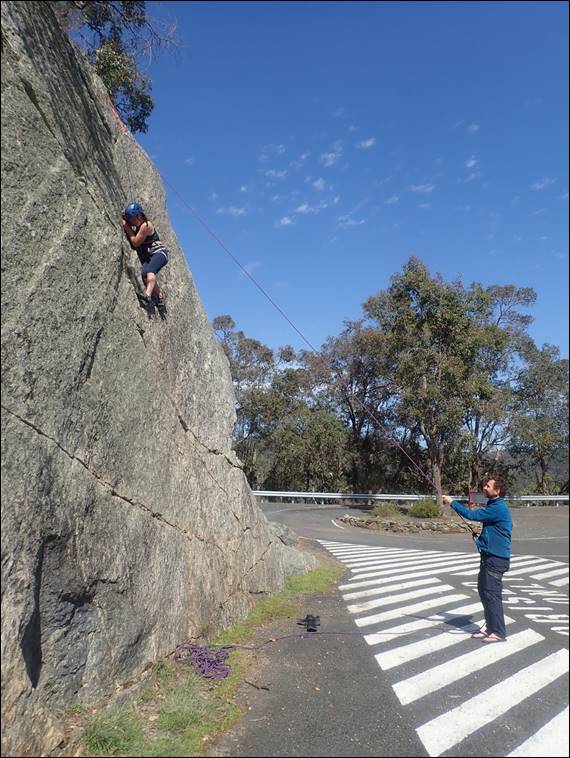
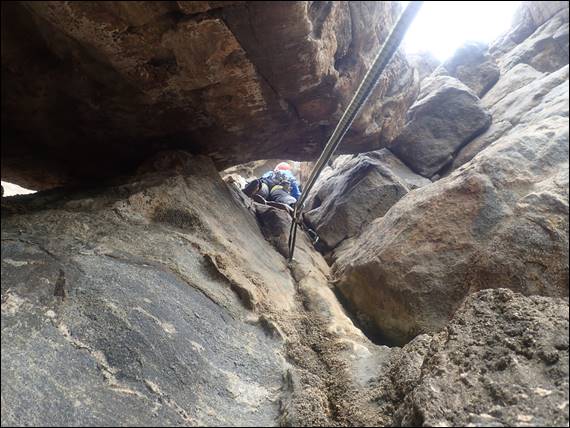
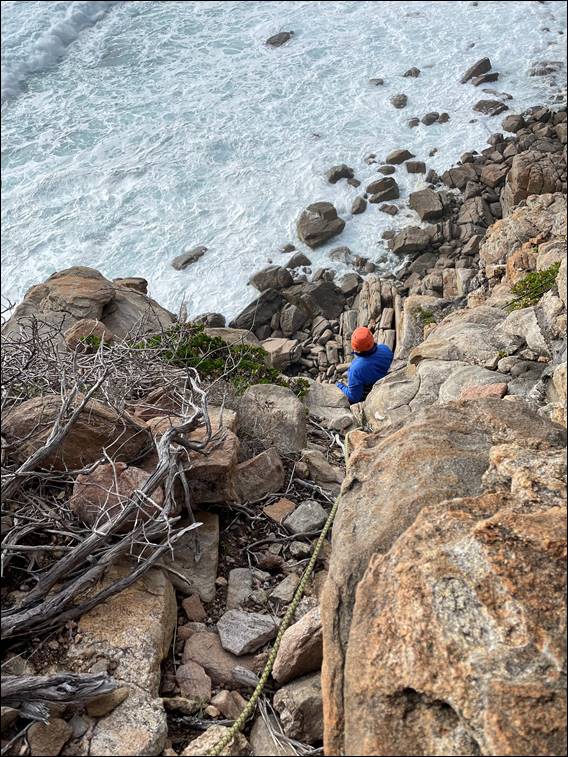
This route was a sport route, fully equipped with bolts.  So the trad gear stayed in the pack as we rapped down 100m to the start of the climb.  This line didn’t start from the base, which was a blessing as much of the base had dense vegetation right up to it and/or was covered in green moss, and it would have been a very soggy battle to get to it.  As we rapped down the fog began to turn to mist, and soon the mist began to rise as the day was warming up.  As I finished the first pitch we could finally see the landscape below, above, and to the side of us:
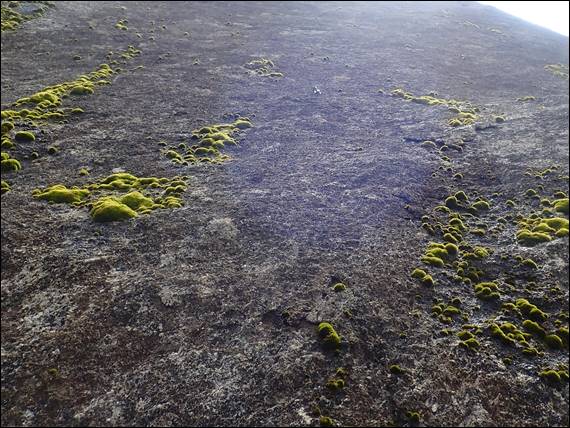
The views down the valley we had walked up, with Nancy Peak on the opposite side was spectacular.  The gentle granite slabs were covered in moss that seemed to be in hues of yellow through to green and then red.  A testament to the amount of rain this place has had, and continues to get despite spring being well and truly upon us.  The rock on which we climbed was like a cheese grater, all you needed was faith that the soft rubber soles of our climbing shoes would stick to it.  For much of the climbing there were no handholds, resulting in Craig not been too keen to lead:
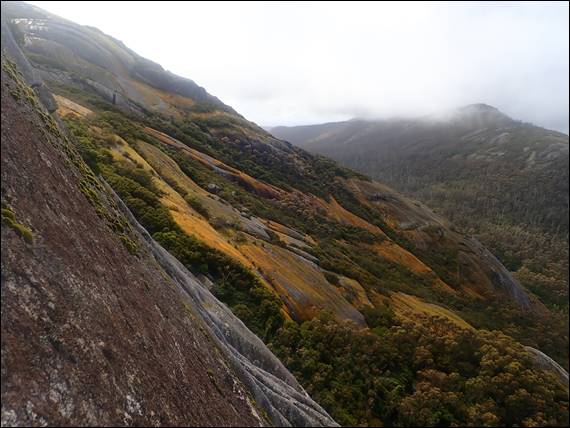
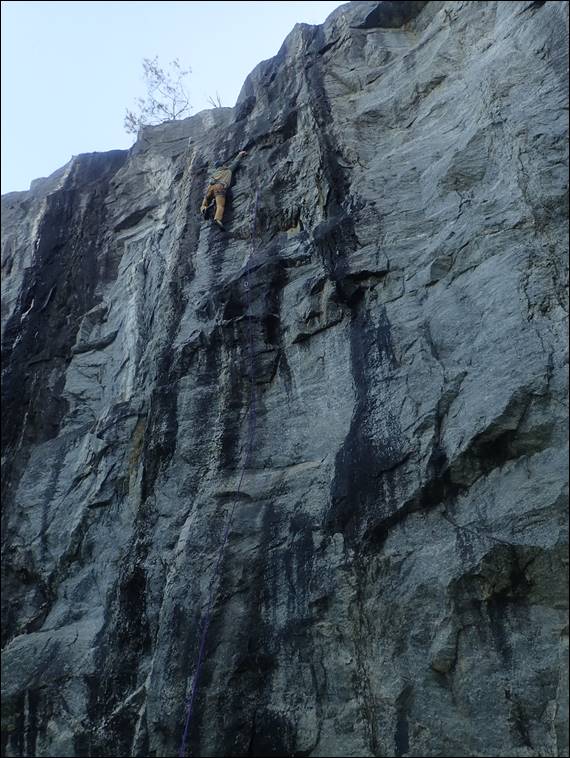
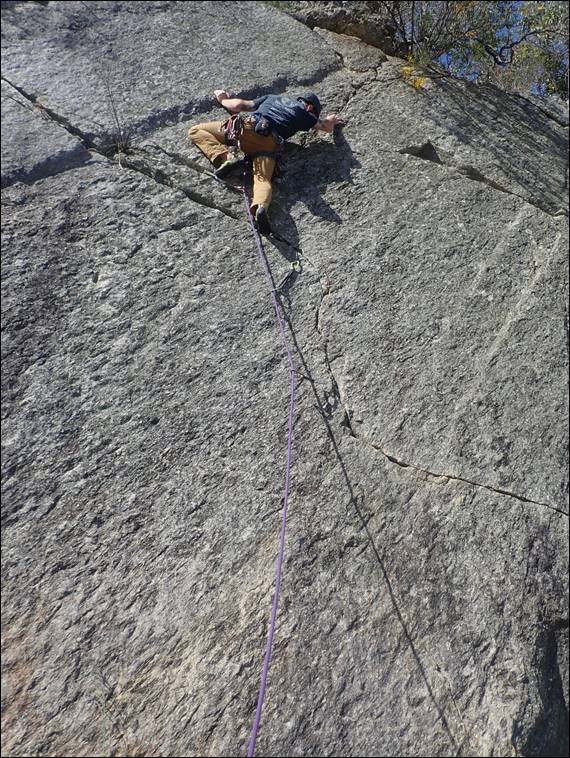
It didn’t worry me as I enjoyed leading all three, very fun pitches of Beckey-Gledhill-Swain.  A route that wove a line, which on occasion had mounds of bright green moss scattered on the rock either side of where we climbed.  A bit like landing lights on an airport runway, standing out when the sun hit them.  It was not the trad climbing we had come here for, but all things considered it was the perfect introduction to the place.  A place that was hard to navigate even when it was not shrouded in fog or mist, as there was no easy way to look at the faces from the top:
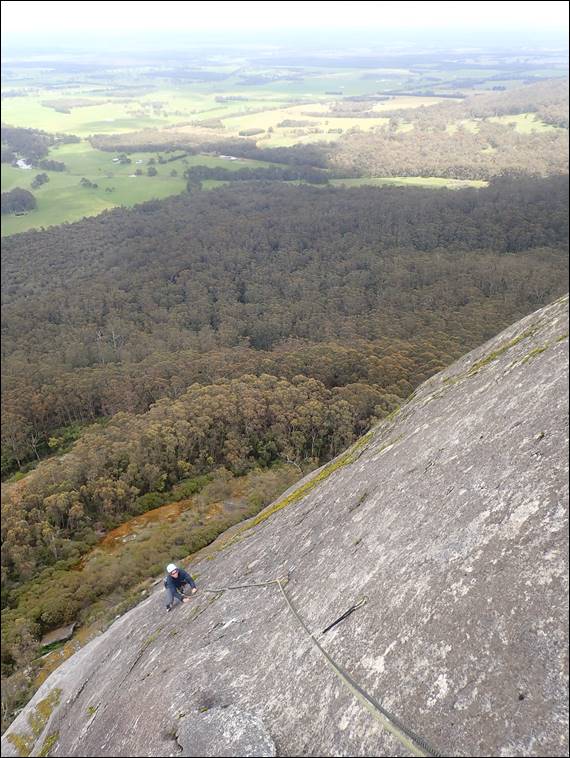
Before we decided what was to happen next it was time to have a spot of lunch.  The hike, careful navigation on top, rap down, and climb had well and truly chewed into the day and midday was upon us.  Sitting back and having a bite to eat allowed us some contemplation time, our only way down was to rap down the same line with no real idea of where any other routes were.  The available guides did not seem particularly helpful on that front, and not having seen the cliff as we had walked up made things even more difficult:
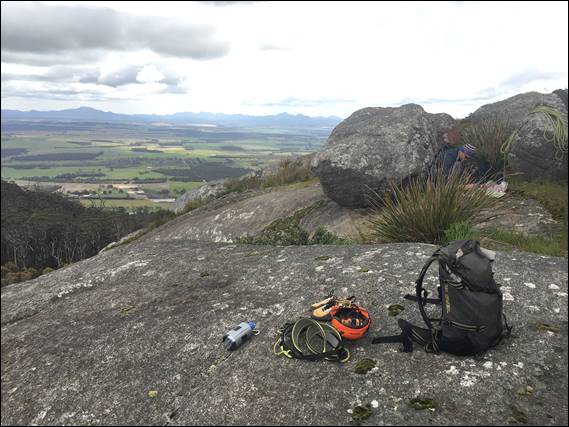
Craig had already hinted, as we prepared for the trip and drove down that he was after some good walks and a few fun long routes.  And faced with uncertainty of what lay below us, and the fact that the cracks and corners the trad lines would undoubtedly follow, likely holding onto the water and being covered in moss, there was an air of reluctance to go back down.  So it was decided that we would hike back out, but not down the same track.  Instead we would continue on the Nancy Peak loop, taking us over the ridge that can be seen below:
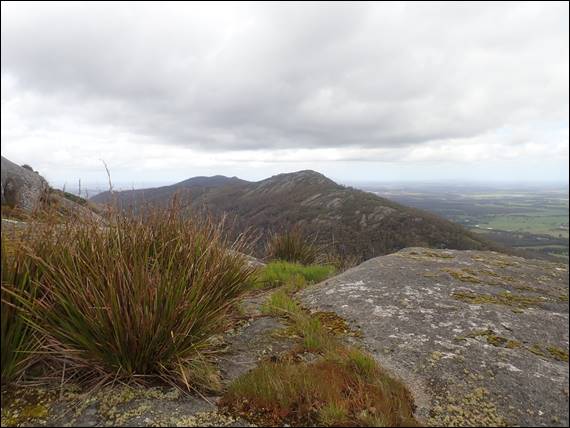
Nancy Peak is about the same height as Marmabup Rock, but we had to hike back down the valley between the two ridges and then all the way back up.  The hike up the other side felt like it went on for ever.  While I reckon I could easily have climbed another 150m route, hiking up the track with the full pack made my legs feel like they were going to burst.  But it was worthwhile and provided us with great views back towards where we had just been, which was the large dome on the left hand side in the image below:
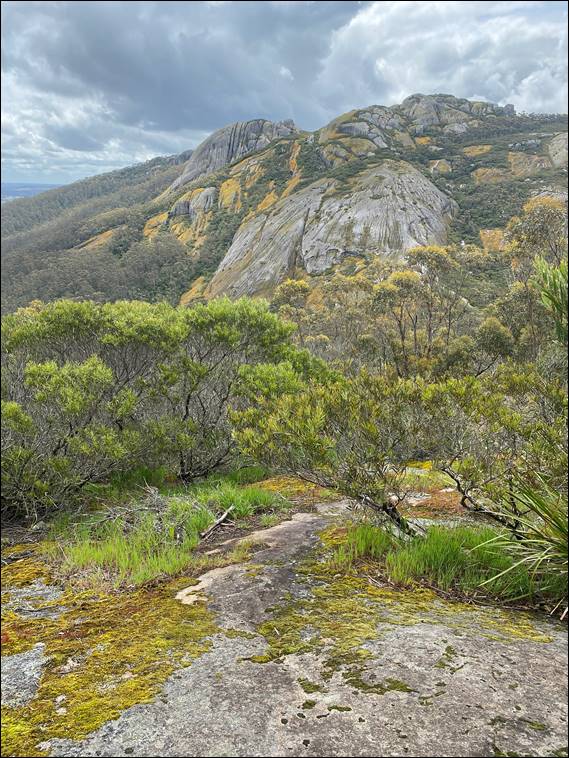
We could now see the features clearly and some of the other routes started to make more sense, something to put in the memory bank for the next trip out here.  It is the sort of place that won’t get much traffic, so being quiet and with long multi-pitch climbs and views like this it will definitely be worth coming back to.  It did surprise us that the ridge we had been on is flanked by Marmabup Rock on one side and Gibraltar Rock on the other.  I have been to the latter several times, and never considered investigating Marmabup Rock:
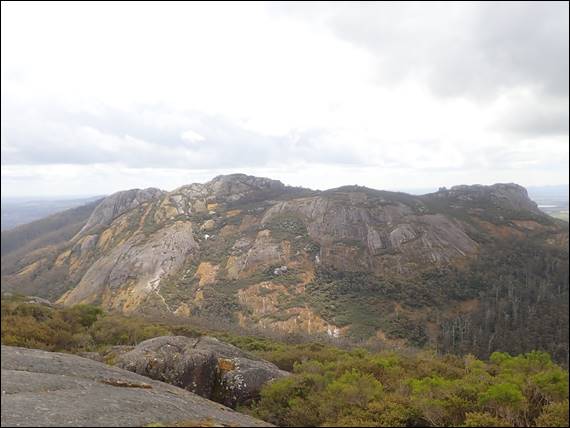
The other thing that surprised us, was that for all the talk about the Devils Slide it really wasn’t an obvious feature to be seen as you walked the Devil’s Slide spur.  Looking back we can only guess it was the long slab to the left in the image above, but this is not visible from the hike up, nor the top.  As we continued on the hike over Nancy’s Peak we saw a few orchids along the way, but only very few and nowhere near what I was expecting.  In fact there were generally very few flowers out, and had thought it would be more colourful:
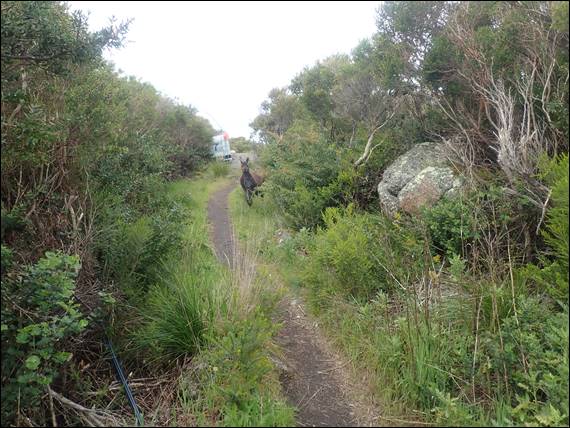
In past years when we have been here in spring time the Porongurup’s, with more rain, has had a lot more flowers than the Stirling Ranges.  But this year it seemed to be the opposite way round, and I wonder if this is because it has remained cooler and wetter for longer this year.  There were however plenty of small birds about in the dense vegetation, and when they all kicked off we knew to look about for a bird of prey.  That on most occasions ended up being a Nankeen Kestrel (Falco cenchroides):
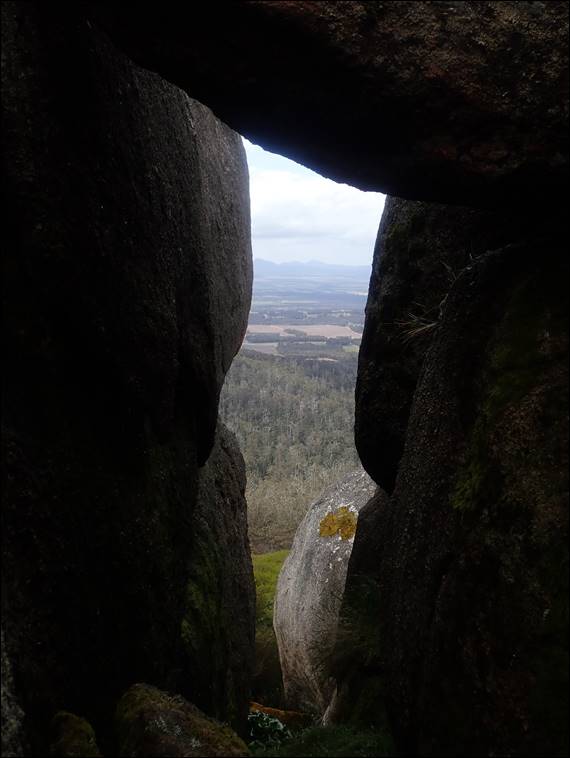
By the time we got back to the car we were very happy to take the packs off, and sit down for a bit.  And with a few hours up our sleeves before the sun would sink down, I suggested we hoick it back to the Stirling’s and hike up another peak.  This time without a pack on, which we thought might not be too bad.  However, we neglected to take into account the hundreds of steps to take us up our chosen peak of Mount Trio.  We picked it, as it is probably the quickest walk of the main peaks, plus there was one type of orchid I was keen to see:
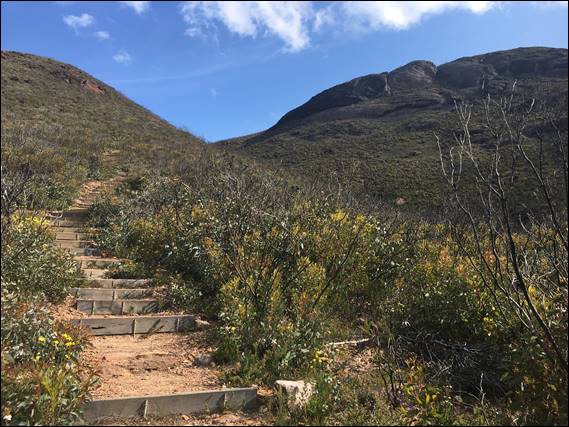
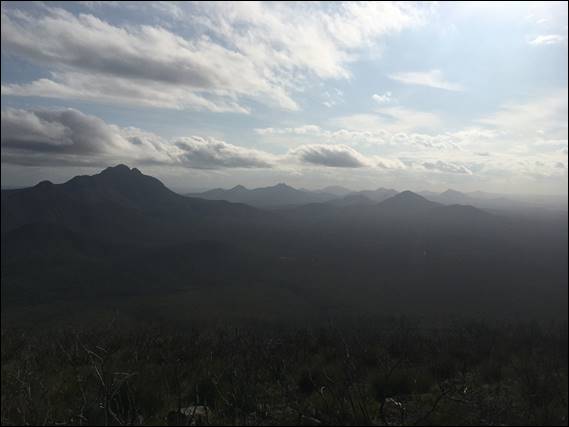
There seemed to be an abundance of flowers, and that included the one species of orchid I was keen to see here.  The same one that Lisa and I found up here a couple of years back, which was very soon after the place had been ravaged by fires: https://sandbagged.blog/2020/11/02/ten-years-on/.  Fair to say we were both pretty pleased to get to the top, enjoy the view of the many peaks stretching out west, and even better have the place with no one about.  We were also both happy that we didn’t have to go up any more:
Instead it was just a slow and steady pace back down, being mindful not to rush and do any damage.  While there was still a bit of light left at camp, we both had tea and food on the brain so we tended that need first.  And then watched the evening draw on as we wandered out to the National Park to bag a few more orchids to add to the list.  After which we had a well-deserved beer sat by the fire pit.   Sadly John and Margot were nowhere to be seen and I knew we would be up and out early again the next day, so I’ll have to catch up with them next time:
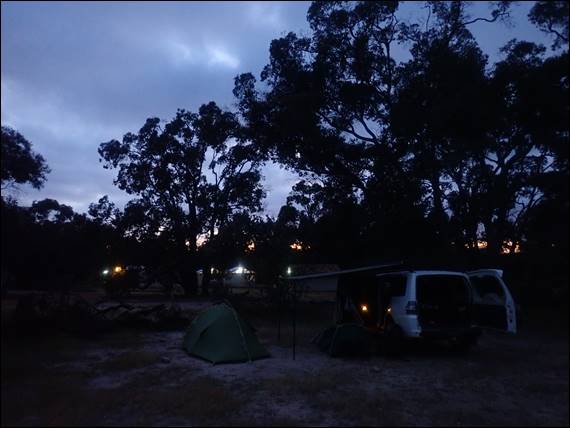
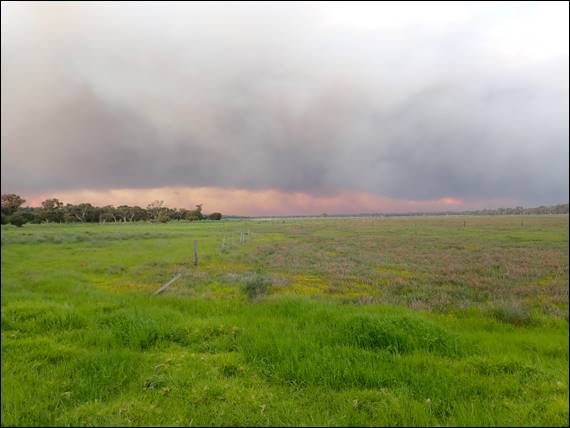
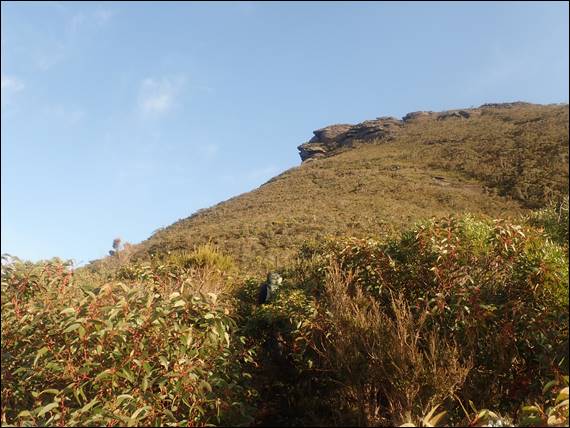
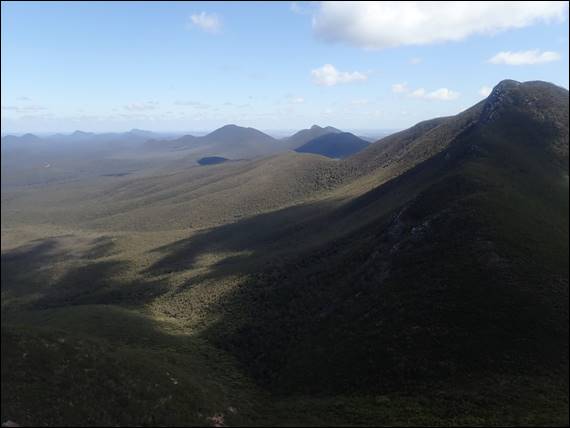
Sunday arrived and this time I opted for a cuppa at 4am.  We had already decided we would climb in the Stirling Ranges, and had three spots in mind.  First Mount Trio, but we decided against that as we had already walked up there and the routes were nearly all sports and hard.  Barnett Peak was very inviting but that would be a 2 hour hike each way, with no defined track and we were not sure our legs would cope with that.  Also the forecast indicated rain might be on its way by midday, and the thought of getting soaked walking out wasn’t too inviting:
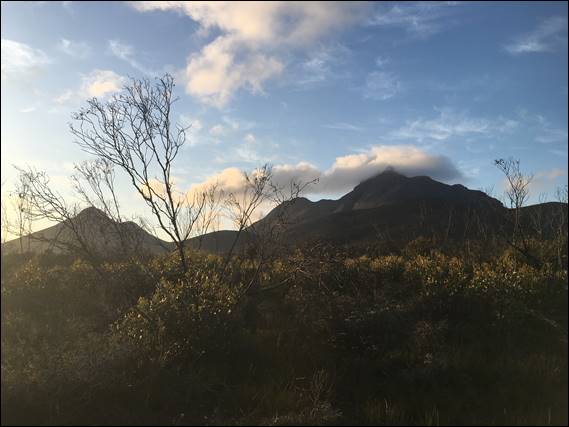
There were a few other contributing factors that resulted in us going back to the third place on our list, an old favourite.  We knew the walk in and the climbs, so it added a factor of comfort and safety.  You might be able to tell that this trip was not about going out on a limb, and it was more of a chilled trip.  As we drove out, as shown above, Mt Toolbrunup was capped with cloud.  I can still hear Elseya’s voice twelve years back saying “I want to walk up that hill and be in the clouds”.  But today our focus was on Talyuberlup:
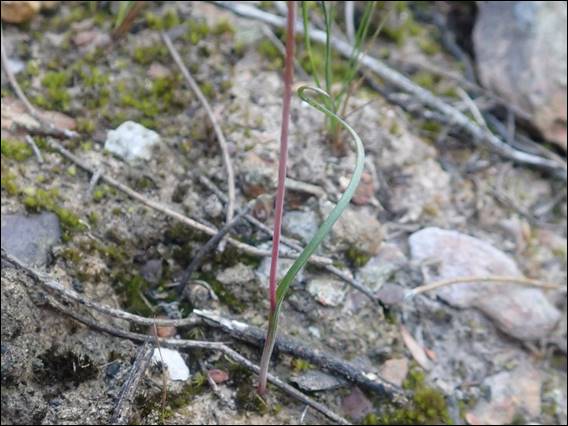
I’ve climbed here three times, and every time have done the same routes.   The last time was with Craig and Howsie: https://sandbagged.blog/2018/04/28/a-pot-of-gold/, and on that trip it had been wild weather and we knew Howsie would love being on the pointy end.  Today it was calm and clear, so I quietly hoped Craig might jump on lead.  Before that, however, we had to hike up the steep incline with packs on again.  It felt like a slog, but I did spot a few orchids in flower and also the above very interesting find, which I will come back too:
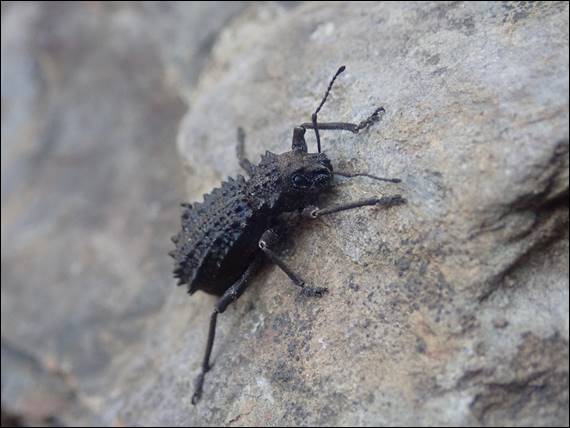
Craig also spotted this weevil, which I have not been able to identify with confidence.  I believe I have seen them before and did wonder if it was one of the Amycterini weevils, which are supposed to be an iconic Australian weevil.  It looked to be scaling its own cliffs, and like us as we observed it, it seemed to be having a rest from its upward journey.  We left the weevil it to its own devices and continued on the final leg of our trek to the cliffs.  Today at least the trad gear that we had hauled up would be used:
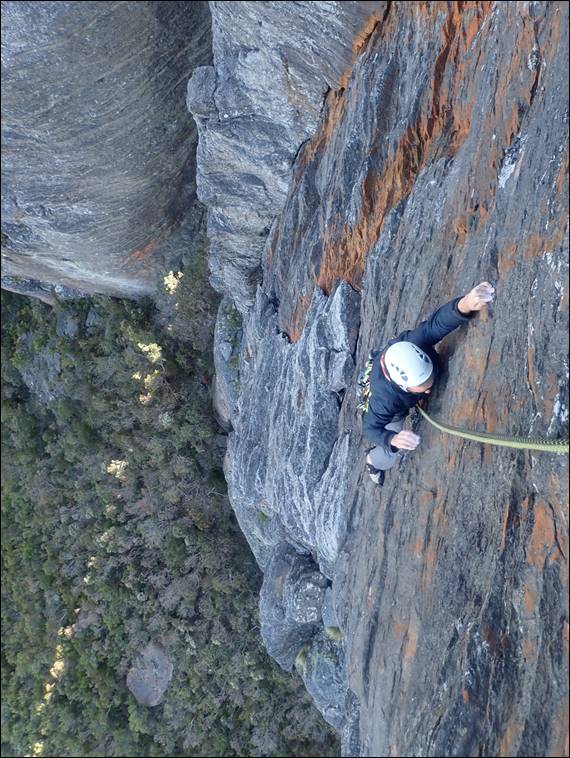
The two climbs we were aiming for are both recorded as multi-pitch routes, but I knew we could stretch the 50m rope and do each of them in a single pitch.  Last time we came the conditions would have made the steeper, harder, and more exposed Nailbite a very scary proposition.  But today was perfect, and so I set off up that, hoping to warm Craig up and get his mind straight for a lead on the second easier line.  It was glorious, there is nothing better than a true rope stretching pitch:

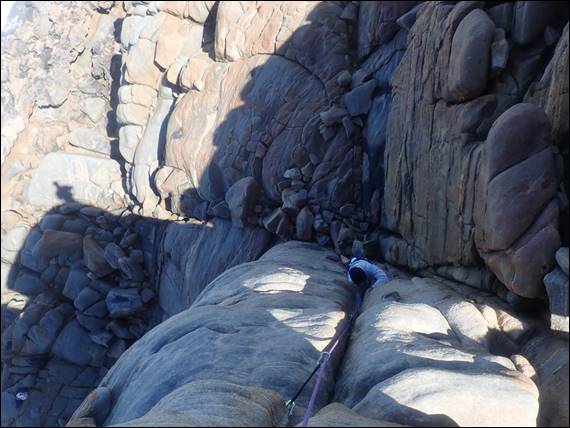
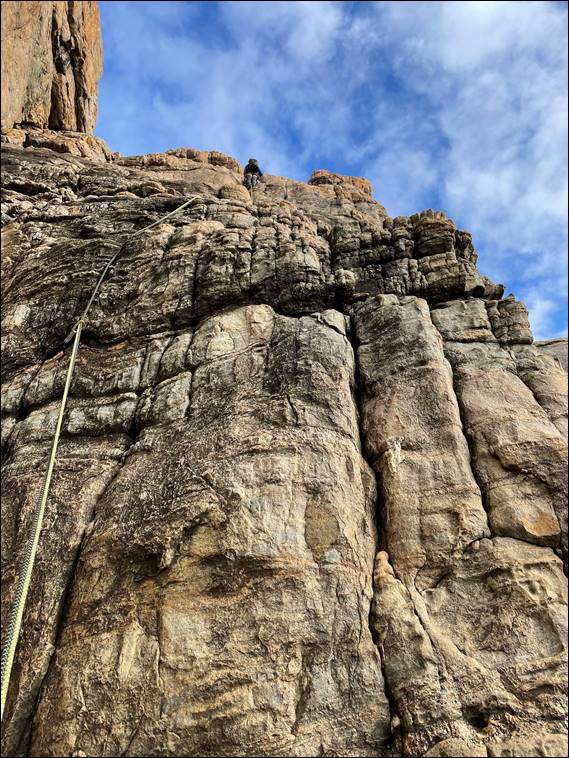
I topped out as the rope ran out, but the belay ledge is perfect and has great gear close to hand.  And better still it provides an eagle eyed view of the cliff below, allowing me to watch Craig’s progression up the towering face.  There are heaps of climbs here, many of them are a very easy grades and a bit on the rambling side, but these two lines are clean and direct.  With classy climbing from top to bottom, in a stunning position.  And while I could see Craig was loving it, I could also tell he wasn’t in the right headspace to lead:
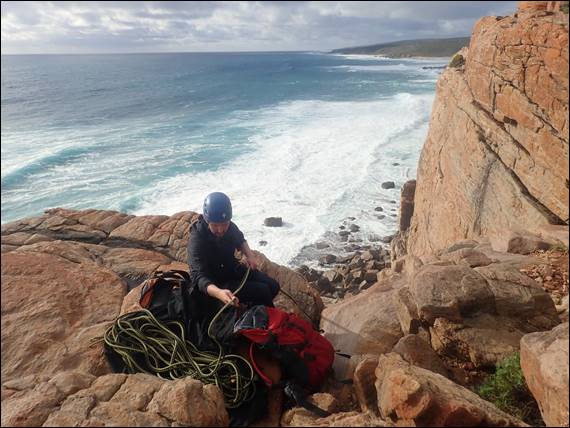
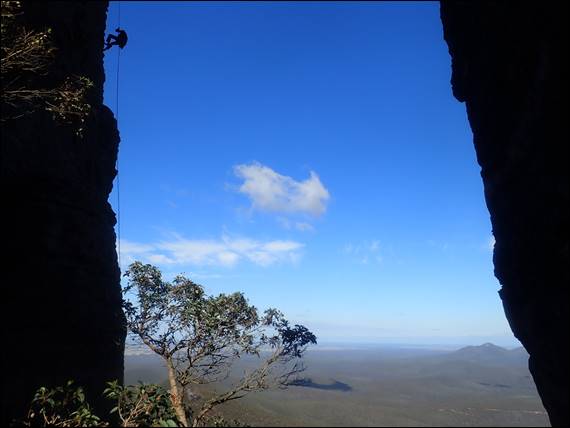
We sat atop for a while before setting up a rap anchor.  I do not like abseiling at the best of times but will use it for access and ease.  And in this case we could avoid a long scramble down, plus it provided a great photo opportunity as Craig came down second.  The stunning blue sky above indicated that like yesterday the high peaks were once again going to make a fool of those brave enough to forecast what the weather would do here.  So we didn’t need to rush into jumping on the second line:
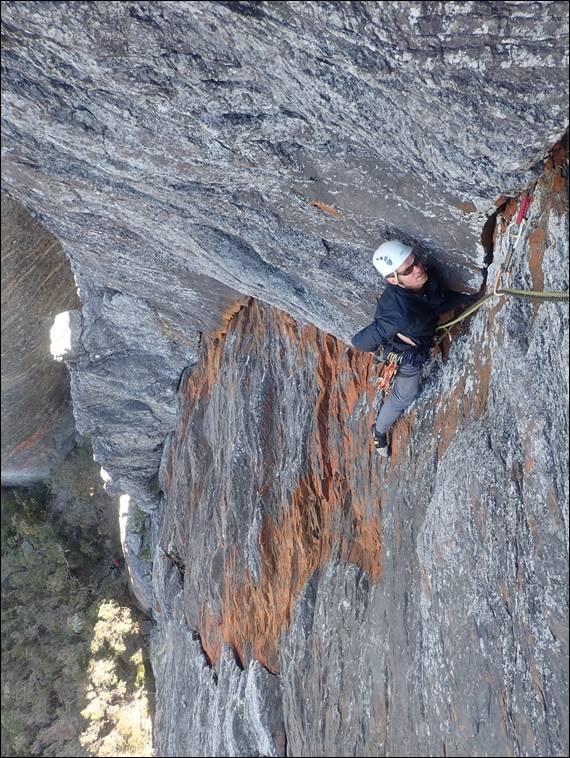
While Manicure ends up at the same belay ledge, it follows the corner and as such feels completely different and bears no resemblance to the first climb.  What with the ability to keep one foot on either side of the corner it does make for easier climbing, three grades easier, but just as good fun and again is in a great position.  The only risk being that it is possible to put so much gear in, and run out of protection as you approach the final and steepest part of the corner:
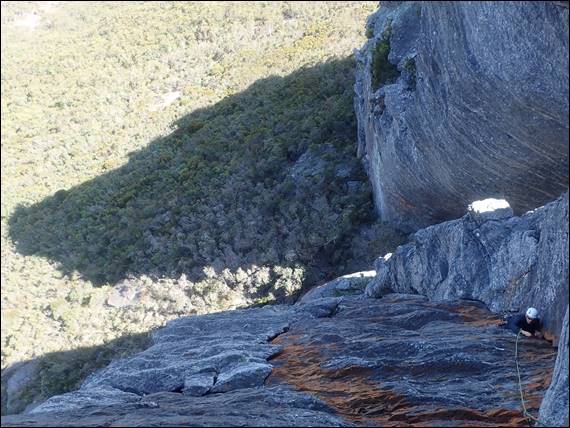
Howsie had almost fallen foul of that, but what with the conditions he had to deal with it was not surprising he put more gear in.  Today in these conditions I was happy to run sections out a fair bit and half way up the climb I had only put my second piece in.  Craig was looking very comfortable following up, and while he wasn’t kicking himself that he hadn’t led it he did commit to leading it if we came back.  Scrambling down the back of the cliff, we came across two new bolted lines.  We looked at them but compared to the awesome natural features we had just climbed they didn’t look too inspiring:
Needless to say we walked on by, and back to the packs.  While I’m sure they may be fun they will have to wait for another day, our target of bagging the two classics was met and time was ticking.  And we had definitely met Craig’s intention of getting some good hiking in and hitting a few great long climbs.  So even though the weather was holding out, we still had to get a mosey on and head home at a reasonable time.  There was still time for a quick snack, while taking in the views from up on high for one last time:
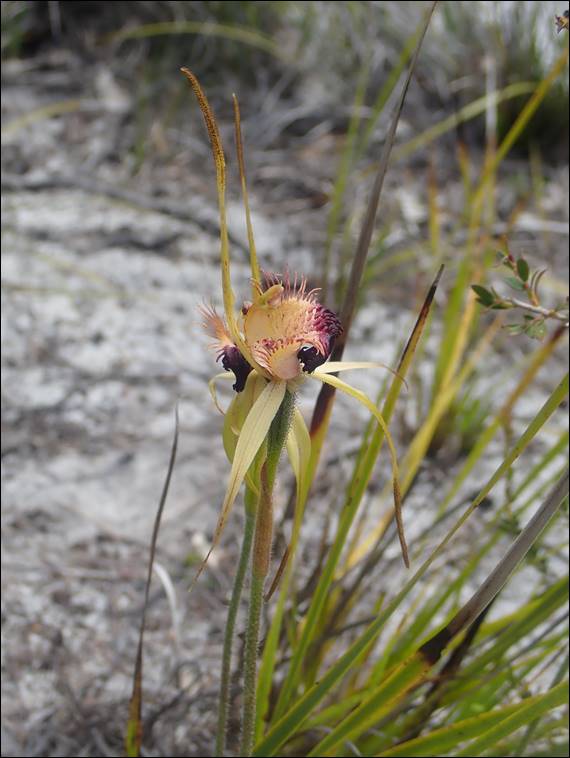
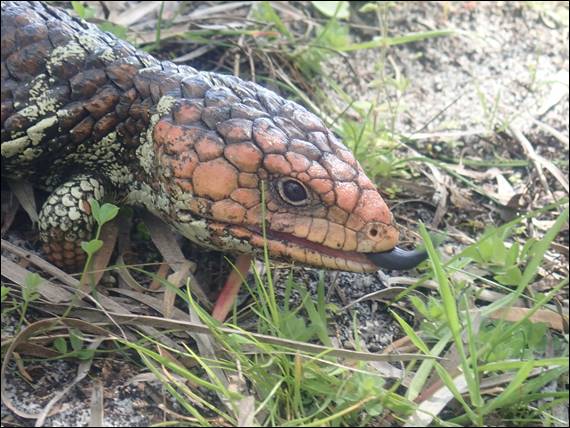
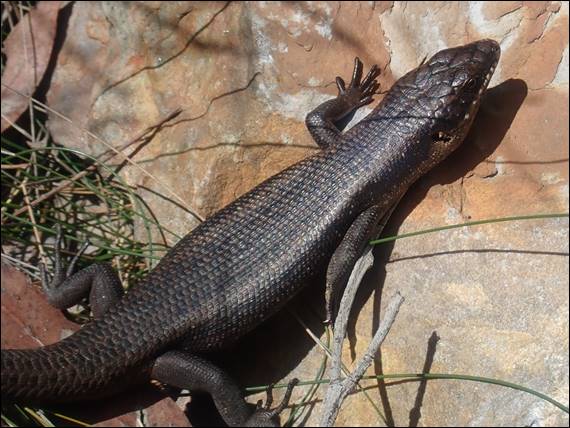
The sun was well and truly out and above us making for a warm walk down.  As such the Southwestern Crevice Skink (Egernia napoleonis) were out and about again, but unlike yesterday when the broken cloud had made it feel a little cool at times, today they were warmed up enough to scamper away as we got too close.  All bar this one that sat still just long enough for me to take a snap.  I was also hoping that the sun would have activated something else, and on the way up we had purposely marked the spot to check:
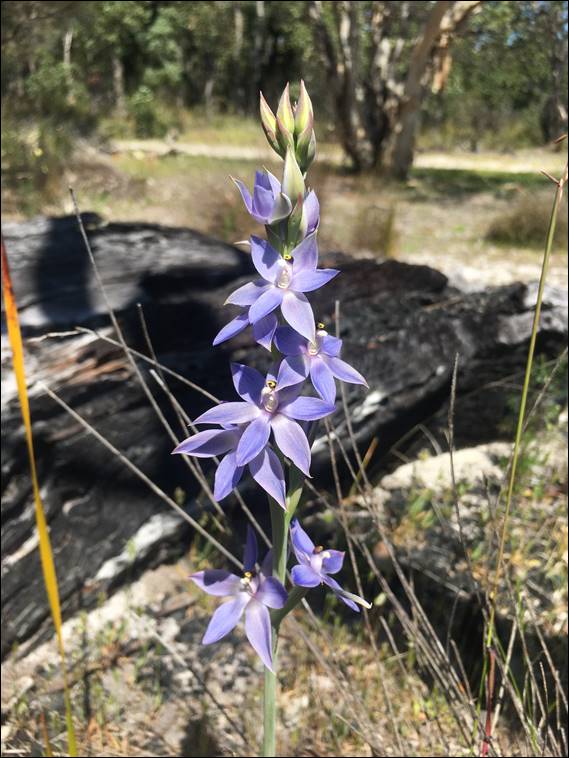
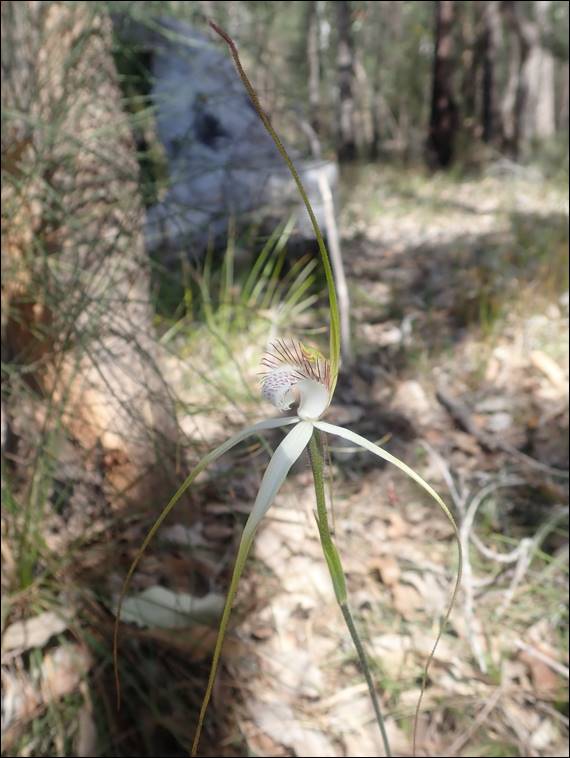
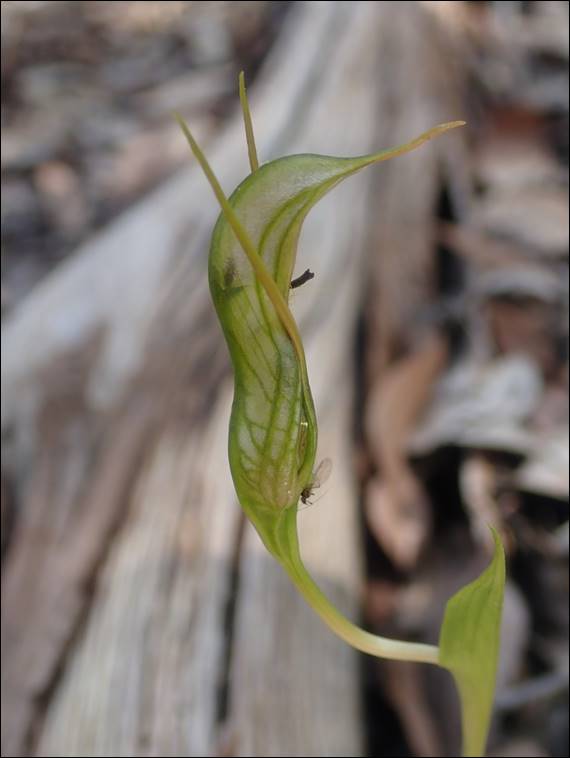
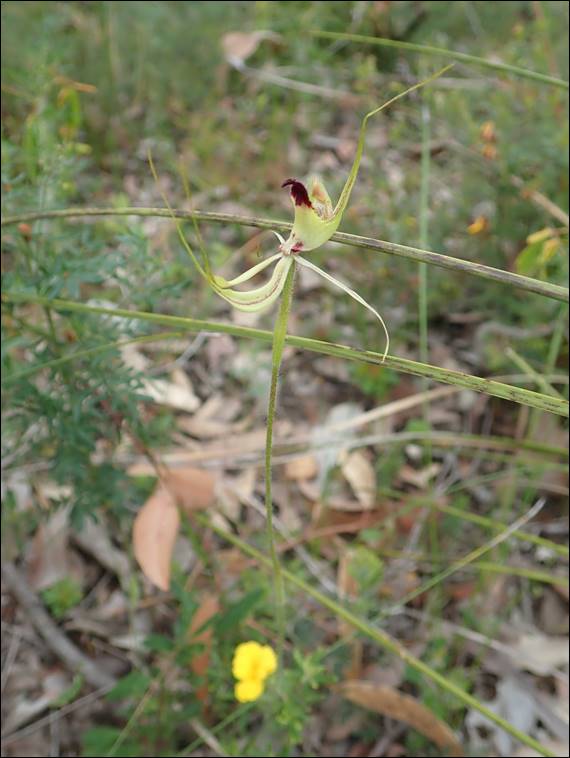
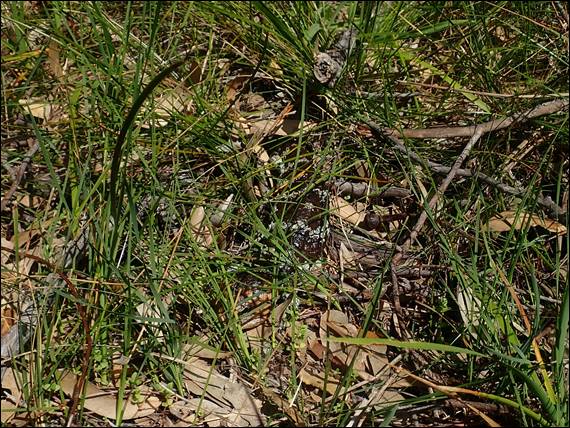
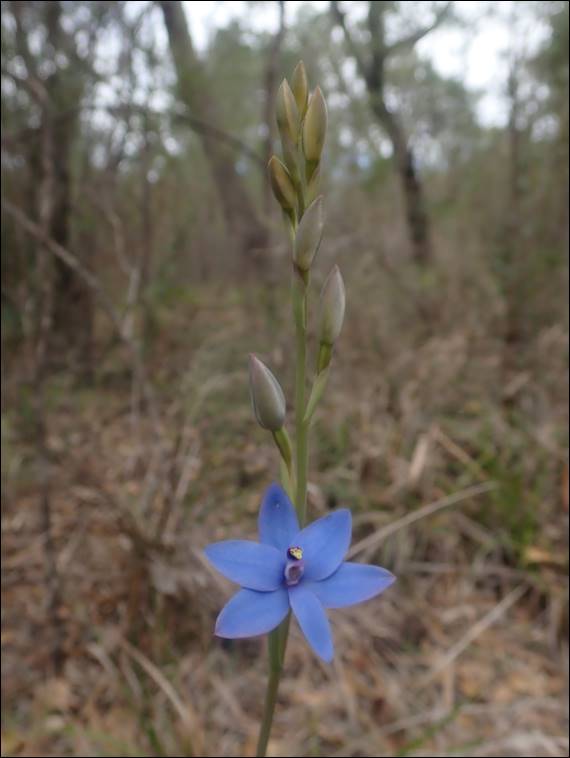
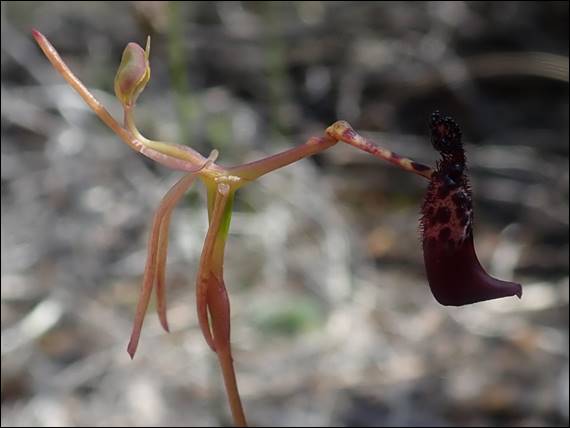
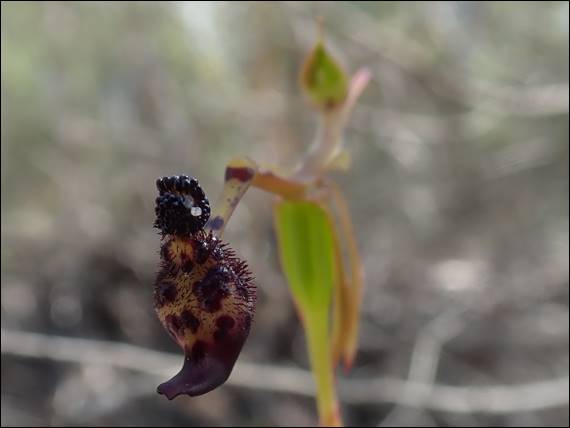
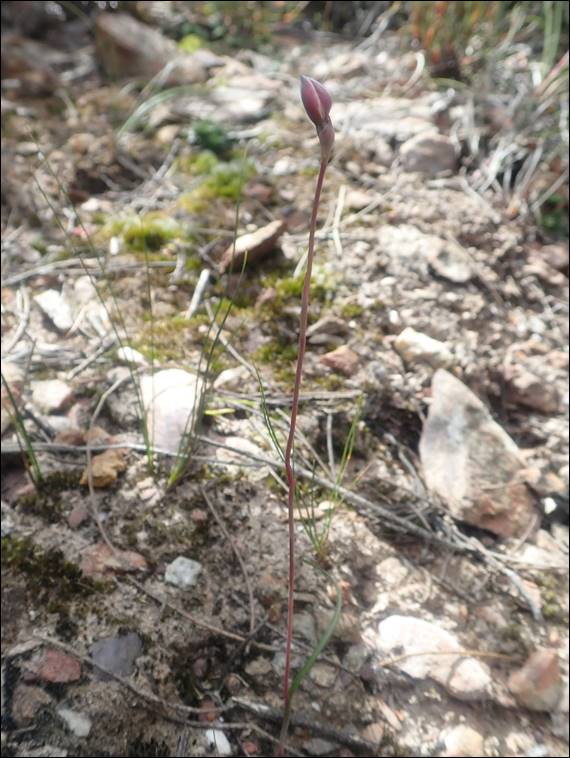
Unfortunately the sun orchid with that a single curly leaf, shown in the image before, was not giving any signs of opening up.  I researched it when I got home and thought it could have been a Curly Locks Sun Orchid (Thelymitra spiralis), but the usual habitat of that orchid is near winter swampy land and this one was half way up a peak.  I have sought some assistance from Noel, and while it is not certain until the flower opens he feels it may have been a Curly Locks Sun Orchid, making it a rare find in the Stirling Ranges:
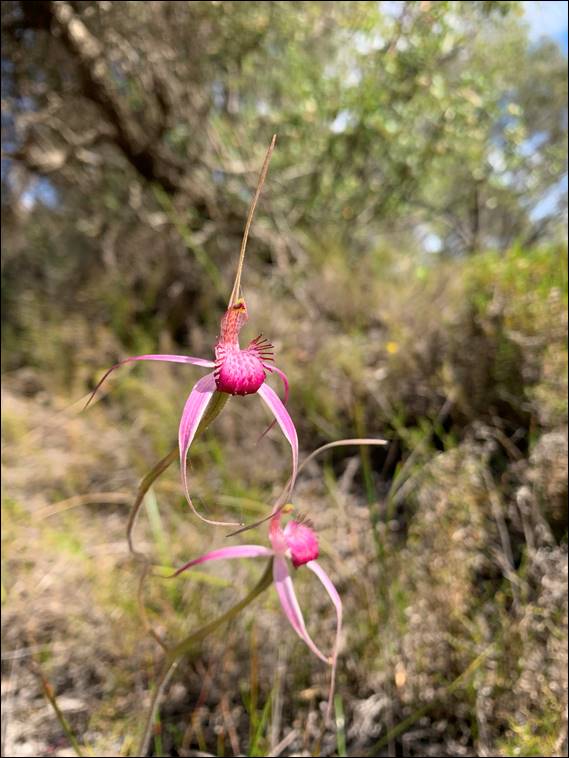
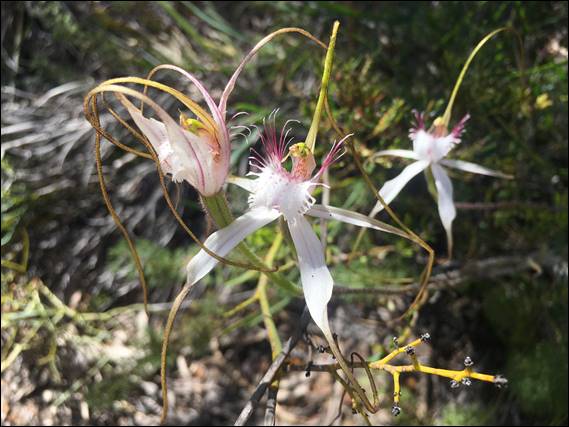
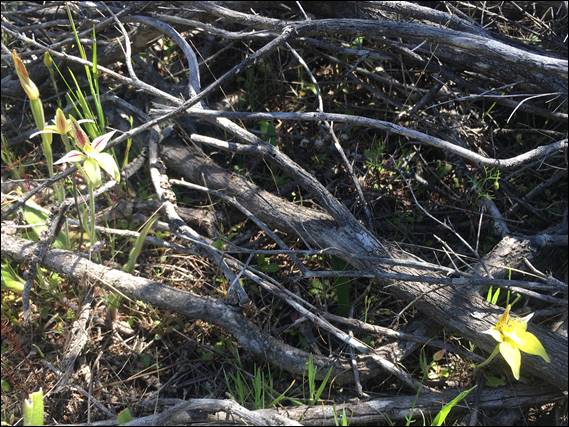
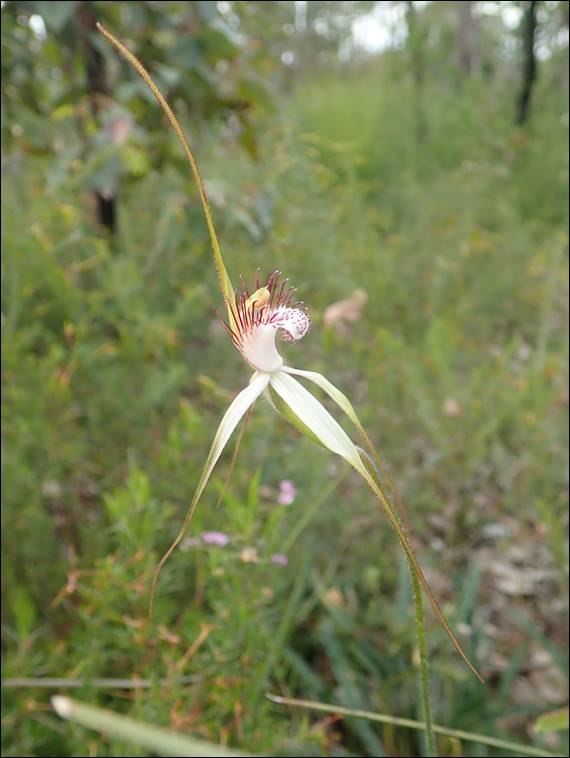
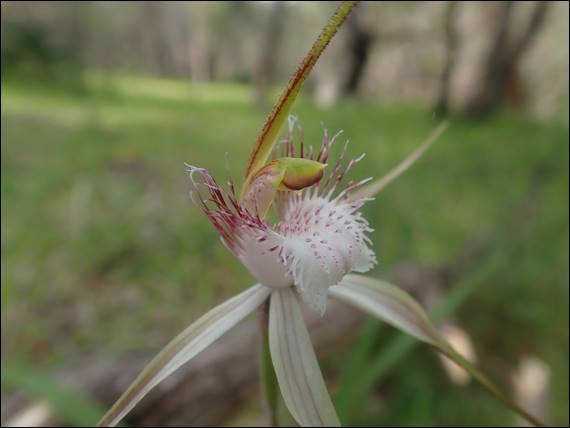
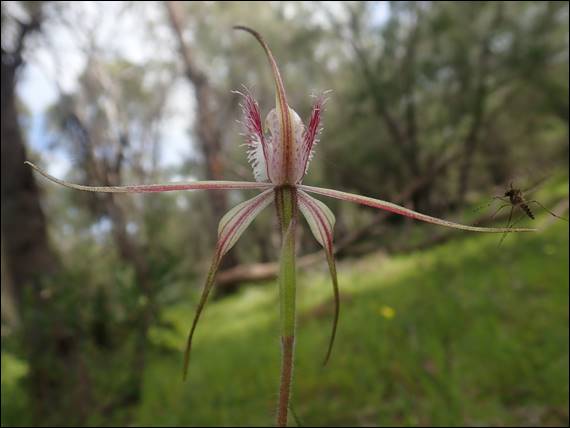
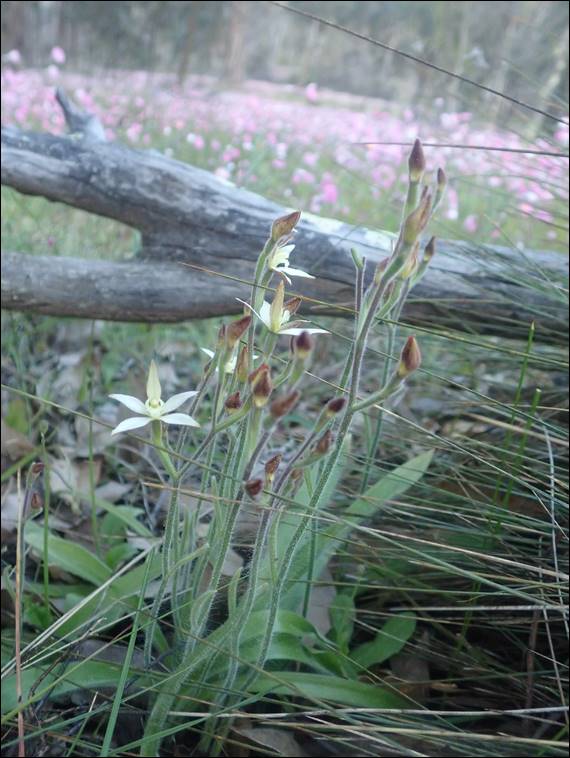
And as promised for those floristic nerds (like me) I will leave you with images of the fourteen species of orchids we spotted that were in flower, and of which I took an image.  We also spotted the ever present Cowslip Orchid (Caladenia flava), which I refrained from taking any more images of, but it does make it a nice round fifteen species.  Not a bad tally considering the brief opportunities to take the time to look about.  And I’ll start you off with the below Sugar Orchid (Caladenia saccharata), and then leave you to enjoy the rest with limited words from me:
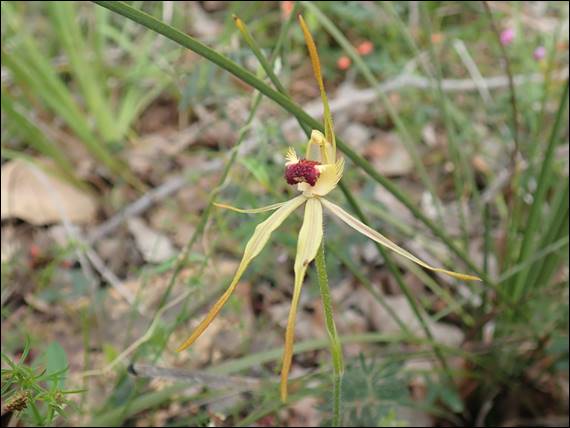
Fringed Mantis Orchid (Caladenia falcata):
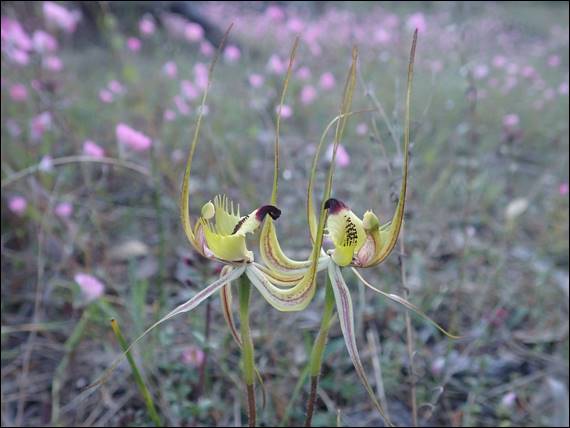
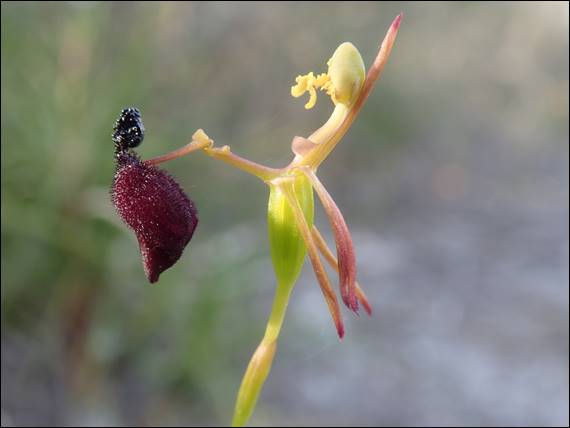
Dragon Orchid (Caladenia barbarossa):
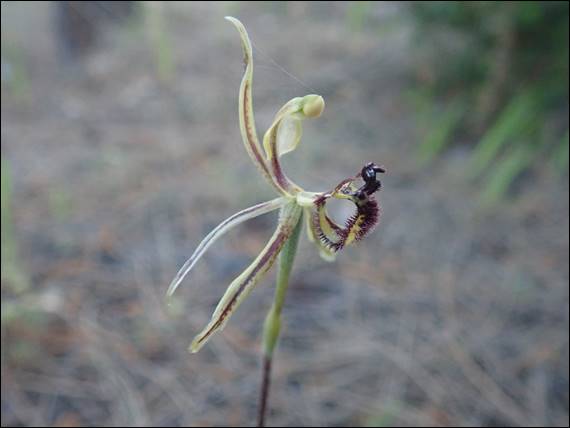
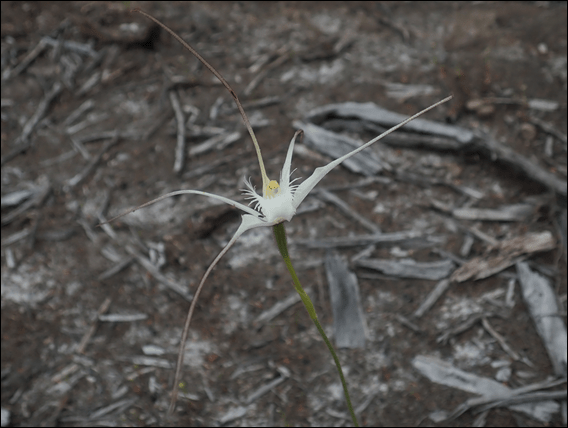
Zebra Orchid (Caladenia cairnsiana):

Cowslip-Sugar Orchid hybrid (Caladenia flava / saccharata):
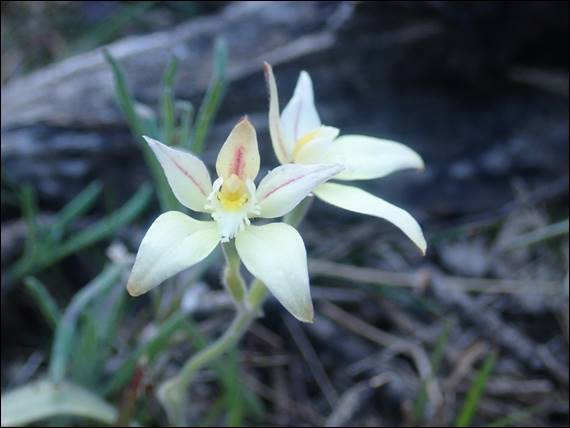
Butterfly Orchid (Caladenia lobata):
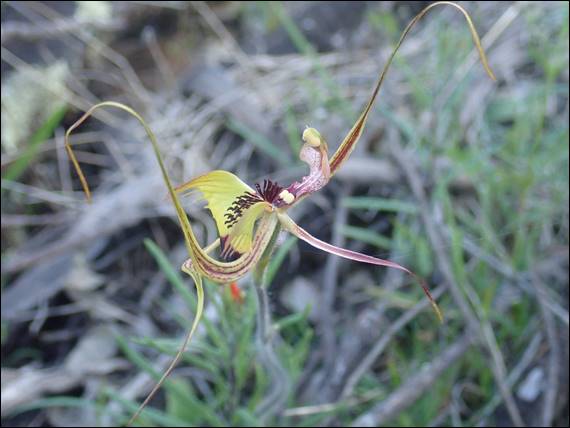
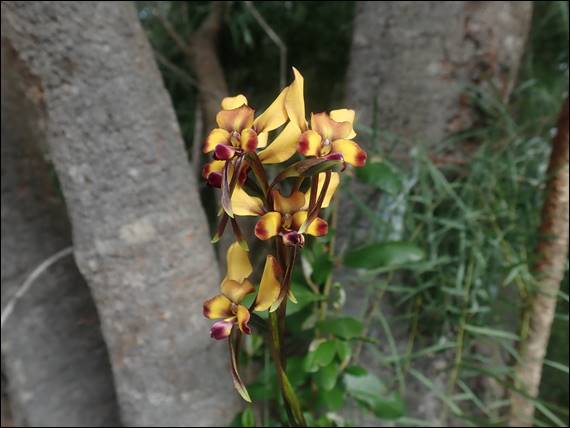
Purple Pansy Orchid (Diuris longifolia):
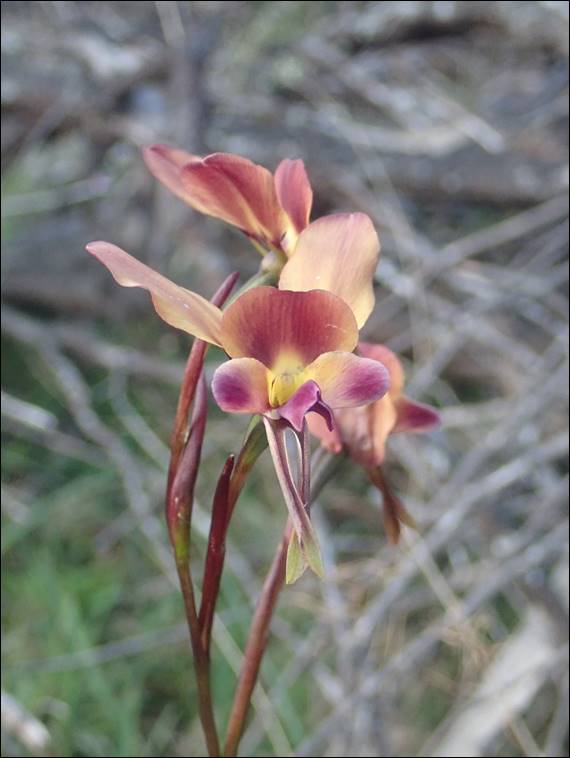
Joseph’s Spider Orchid (Caladenia polychroma):
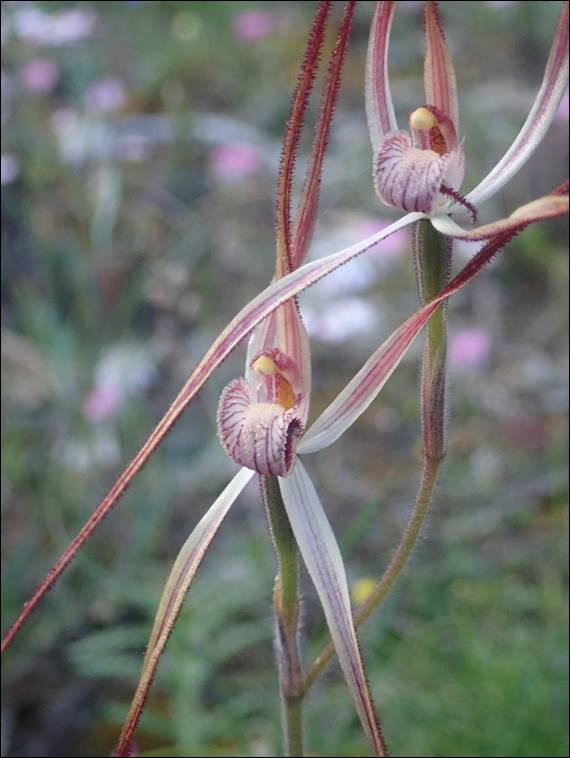
Redbeak Orchid (Pyrorchis nigricans):

Rabbit Orchid (Leptoceras menziesii):
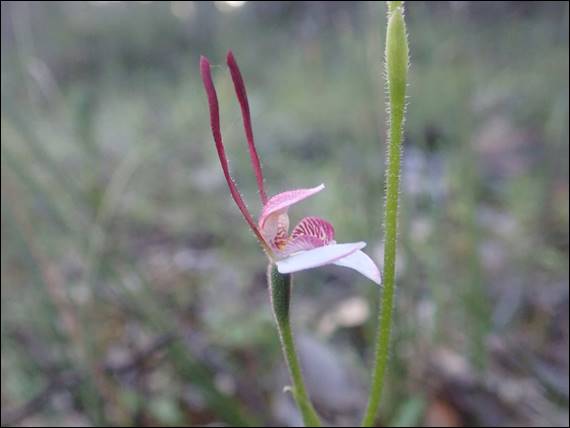
Little Pink Fan Orchid (Caladenia nana):
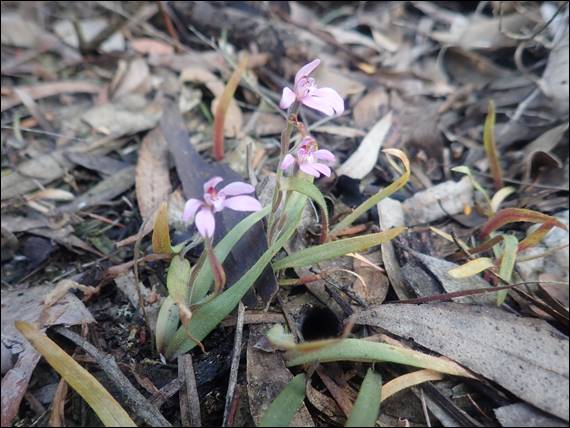
The next three I’m not completely confident with, but I have done my best to identify them.

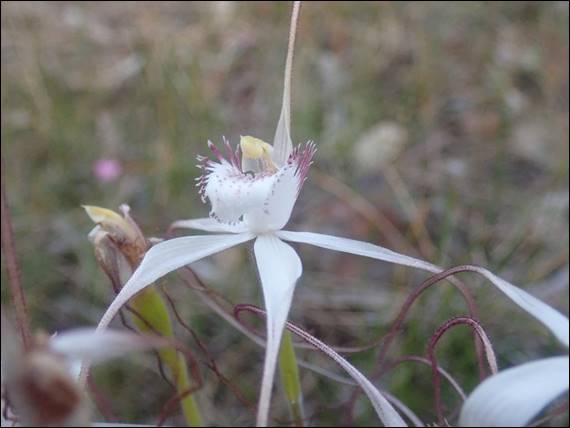
Common Spider Orchid (Caladenia vulgate):
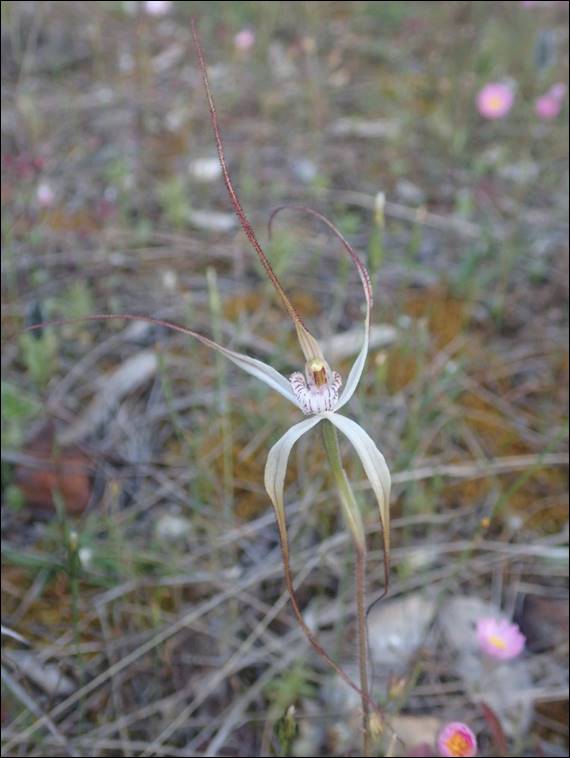
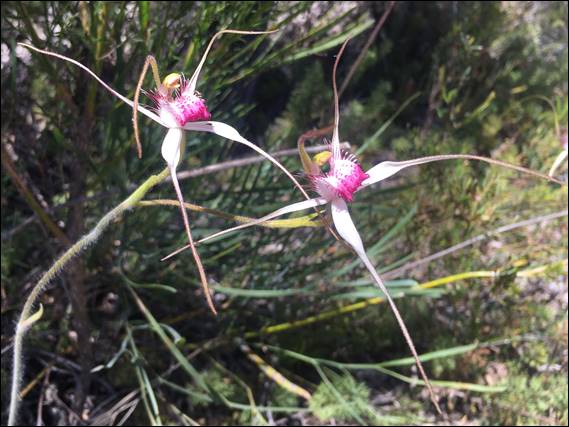
Christine’s Spider Orchid (Caladenia christineae):
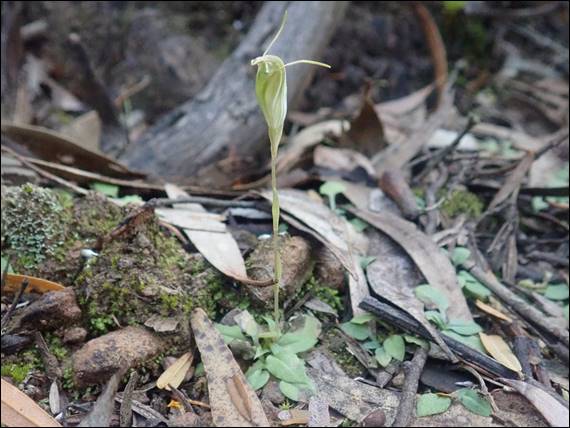
Robust Snail Orchid (Pterostylis dilatata):
Thar she blows

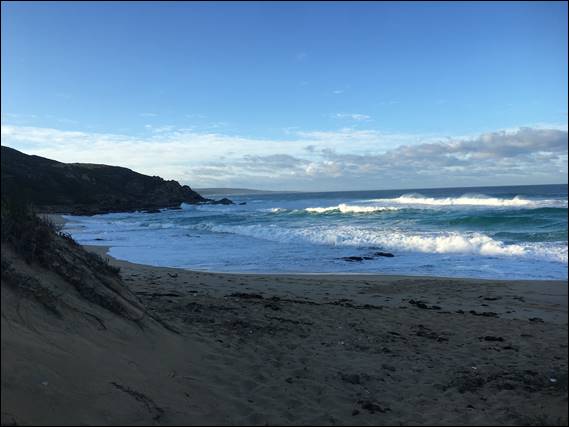
Driving out today, like yesterday, the electronics in my car notified me that it was only 4 degree Celsius, the rationale for the warning no doubt being that there could be ice about.  However, unlike yesterday there was no hiding in the fog with the morning arriving crisp, cold, and clear.  It is hard to believe that the image below is taken at the same time of the day, as the first image from my last post.  Sam and I were not the first to arrive at our destination although I suspect the surfers, some of which were already in the water, had camped out overnight:

For Sam’s third trip out for a climb I suggested Moses Rocks.  In part as it is a favourite spot of mine but also I have to admit that was also keen to have a quick sticky beak for a particular orchid that is only found these parts.  However, other than briefly scouring the scrub as we walked in we didn’t spend any time looking, and as such were not successful.  In addition to my own selfish reasons I also feel it would be good for him to sample the climbing style required on a different rock formation Moses offers:

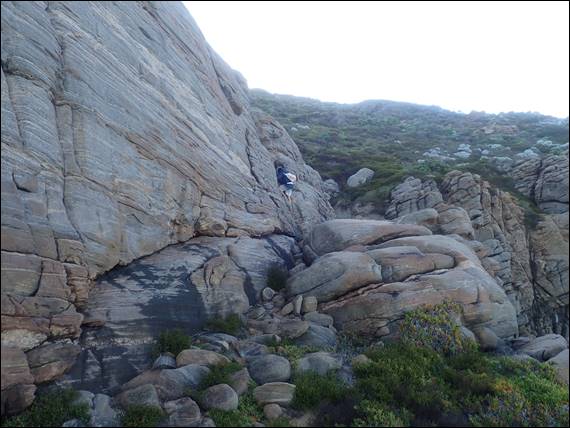
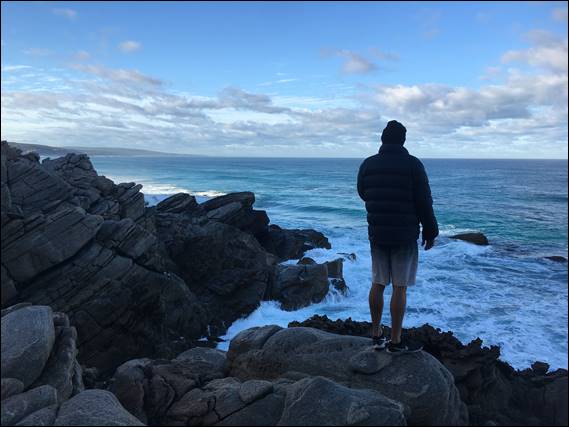
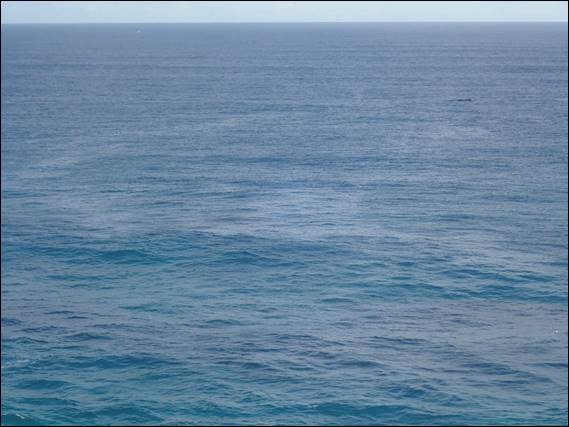
Being his first visit here we headed to Hands Up Wall, with generally longer lines.  And I was pleased to observe that while the rock beckoned, Sam took a moment to soak in the setting.  Cleaning rolling waves out to sea, crashing white water below, a picturesque rocky landscape, and he even spied a couple of ‘whale blows’.  Something that is a technical term in the whale watching world, defined as ‘a cloud or column of moist air forcefully expelled through the blowhole when the whale surfaces to breath’:

I’ve also heard it called a spout, and this term is referenced in the glossary of whale watching language.  They discourage the use of the term spout, as it indicates mostly water is being expelled, which is not the case.  The blowhole is the whales nostril, but unlike other mammals it is not connected with their esophagus.  As such whales can only breathe through their blowhole, or nose, and not being fish they do not have gills so immediately after the blow they take an enormous inhale.  I’ve also read that each species has a distinctive blow:

The above image is the best I managed to capture, failing to get the blow.  So from memory and based on what I have found out I think we saw two humpback whales.  My assessment was made a bit easier by the fact that we generally only get humpback and southern right whales along this coastline, although there is a slight chance of spotting blue whales.  So today I learnt all about whale blows, and have more facts stored in my memory for another time, while Sam was being introduced to the joys of the rock at Moses:

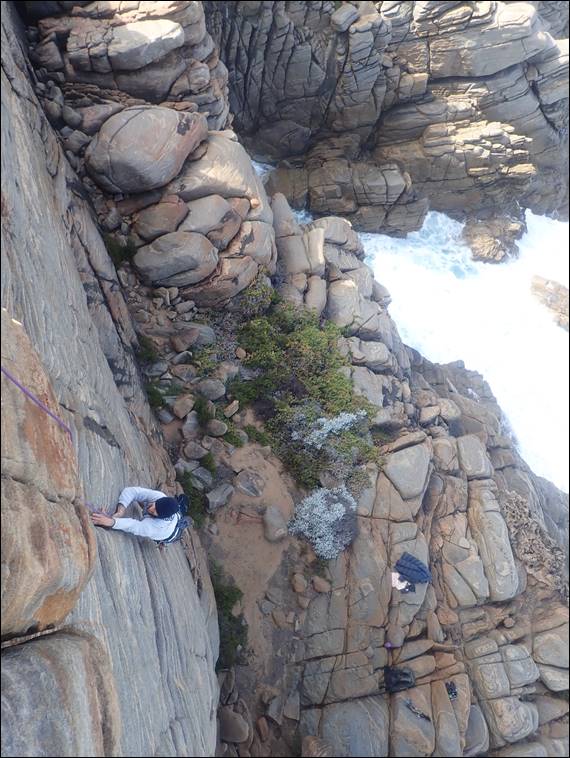
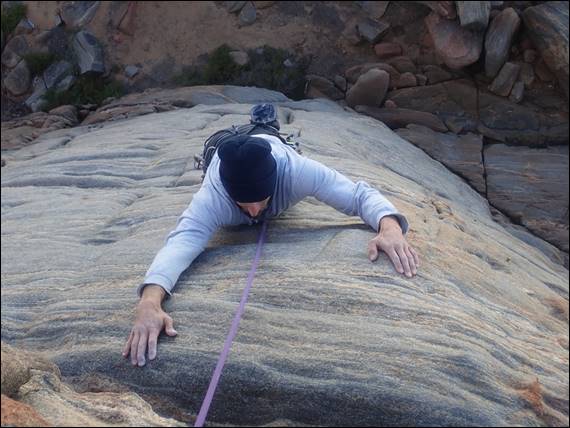
The rock is generally rounded and smooth, but the fine grained granite provides amazing friction.  If it didn’t the climbing here would be extremely difficult.  That said this is how it can feel until you fully trust that climbing shoes and fingers will stick to the slightest of ripples on the rock.  On occasion, as below, there may be no holds of note and you have to have faith in nothing but friction for all four points of contact, which is created by body tension.  It can be a very disconcerting feeling, and one that requires a slow and steady approach, and a cool head:

Over stretching to find a better hand hold, that invariable is not there, can lead to becoming unbalanced and losing the required body tension to maintain that precious friction.  Sam did remarkably well and only slipped once.  Mind you that was on the hardest climb he has attempted to date at grade 18 (E1 5a/b), so he could be forgiven for that.  On the second attempt, after lowering him back down, he got up it clean by using and trusting his feet more.  It wasn’t all slabs today and there are a few steeper faces, and even a couple of great cracks:

The cracks allowed for jamming, which is probably the most secure and least energy expending type of climbing style.  If you do it right.  And it is something Sam seems to have a knack for, and as a result he found the slabs way harder than the cracks.  The last few climbs today felt a little harder than usual for me, and I put that down to being at Welly Dam yesterday in addition to leading every climb today.  So next time Sam tags along I might need to get him to take a lead or two:

Only one way to know

For those familiar with the place this may seem a little unlikely that there may be new route opportunities at Well Dam, with so many bolted climbs packed on a relatively small rock face.  But I reckon I have found a few, and in the climbing community developing new areas and even routes can be a very secretive business for some.  As if they are afraid that someone might sneak in and beat them to bagging the lines.  So it may have been considered perfect this morning to arrive cloaked in fog, as if my activities today would remain undetected:

While I’m not too worried about people finding out, I can’t imagine anyone will be that interested.  After all Welly Dam is not on many people’s list of favourite places to climb.  Also mucking about to try new sport climbs can be a time consuming business, checking where the route goes, whether the line can be escaped, if it is worth the effort, and where to place the bolts.  New trad climbs are easier, and if you have the gumption you just jump on the line and climb it.  Hoping the climb will go and there is sufficient protection:

There are four lines I had in mind.  One spotted by Steve, which Rongy and I have climbed before and knew was worthwhile, and one attempted by Aaron.  Both are still waiting to be equipped, so today I threw a rope down Aaron’s to see what it was like.  It was fun and had some great moves, but it was a little contrived with the best technical climbing being easy to avoid.  I therefore need a second opinion before I decide if it is worth pursuing.  Next I attempted what I thought would be the better of the two lines I had spotted, and from which as shown above I pulled off a holds as I tried it:

The loose rock didn’t worry me, as cleaning the line would be part of developing it.  What put me off was that sections of the climb got a bit too close to the routes on the left and right so it was not independent enough.  It seems that past climbers had also spotted this possible route, and had gone a step further by drilling a few holes for bolts.  And like them I too will not pursue it any further.  Looking at my last possible climb from the deck it seemed it might be too easy, but I was wrong and it was great.  Better still it was completely independent, inescapable, and had no signs of prior interest:

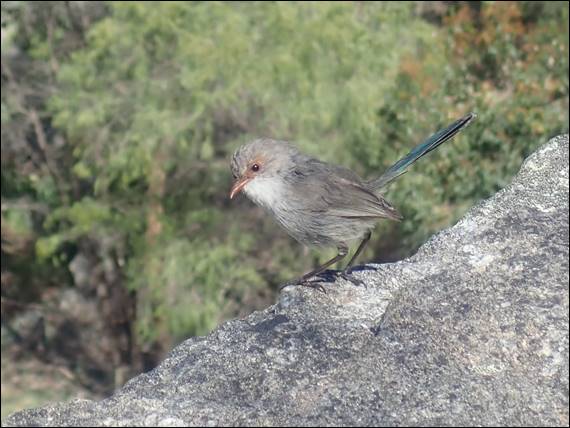
So I’ll be back sometime with a willing assistant, to get a second opinion on Aaron’s find, and clean and decide on bolt placements for the two that I feel are worthy.  From what I have described it may not sound like I did a lot of climbing.  That was however never the intention, it was about knowing what was worthwhile and what wasn’t.  That said it still took a fair chunk of time and the fog was well and truly gone, as I got ready to pack up.  While sorting the gear a male and female Splendid Fairywren (Malurus splendens) started to work their way towards me.  The above female was the brave one, while the stunning blue male kept his distance:

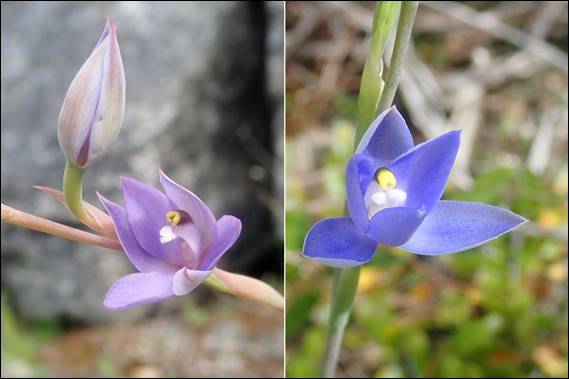
There were also other signs of life at the top of the crag, and I spotted a few orchids including the above two Sun Orchids getting ready to open up for the day.  I didn’t pay too much attention, but checking them out on my return I feel like I should have.  The orchid book indicates there are quite a few species round these parts, so I’m going to have to collect more detailed images and information next time.  The sign of several orchids at the quarry gave me hope for the second part of my morning out, which was a stroll along the Collie River:

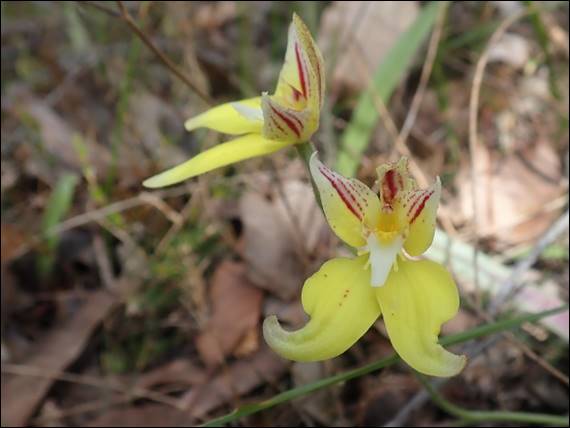
I was feeling hopeful, as I have found heaps of species on this walk in past years.  Plus I saw loads of Acacia and Peas, see above, as I started the walk.  Scouring the area as I strolled I spotted heaps of Cowslip Orchids, which may seem a bit unexciting.  There are however a few sub-species, and this one is the Karri Cowslip Orchid (Caladenia flava subsp. sylvestris).  Being later flowering and taller, with narrower petals and generally a paler yellow than the Cowslip Orchid (Caladenia flava).  But there was not too much else to see:

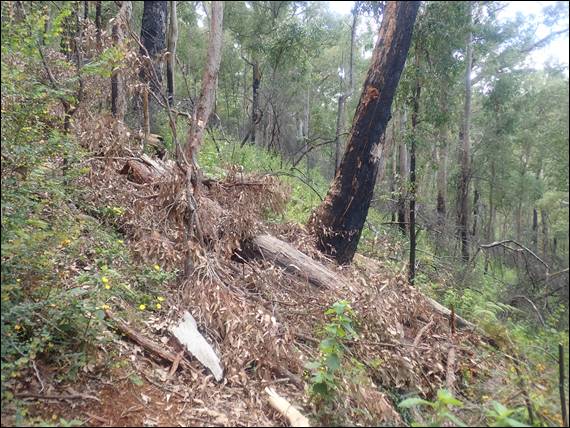
I came across the odd Snail and Donkey Orchid but event they were few and far between.  Certainty not the plethora of finds I was hoping for, so like the climbs I’ll just need to come back another time to check again.  It was still a lovely walk, and again like the climbing my intention was a not to get heaps in.  I wasn’t intending to complete the river walk or any of the loops, but when I saw the spur track that leads up the ridge closed off with a danger sign I simply had to have a look:

There were several fallen trees, all with evidence that others had managed to safely negotiate the new obstacles.  So I carried on with the thought to make it to the look out, and with the higher and drier country hoping my luck would change.  It didn’t, although like my walk up this path in early July I did spy some Midge Orchids in flower.  My legs felt like they had worked enough when I made it to the lookout, so back down I went happy with having tried the potential new routes and also checking out the orchid situation on the river walk:

True to its name

Being the spring school holiday, which coincides with Lisa’s birthday, we would normally head away somewhere.  The plan had been to take the camper trailer down to the Stirling Ranges, but several things resulted in that not happening.  The first being the uncertainty of the outcome from Nicka having to get her sebaceous adenomas checked out, which only resulting in the need for antibiotics and fortunately not surgery.  Another reason being the need to allow the trial run of Elseya taking on cat:

Working one day a week in the Bunbury pound was always going to be dangerous for Elseya, and indeed she soon came across an adorable, her and Lisa’s words, cat.  The big issue being my allergies, and of course how the poodles would react.  So we all had to be home for the weekend, to see how it may go.  The result being no cat, but Elseya is glad she at least gave it a go.  So with all that behind us, I suggested we could still cram in a couple of nights away, based on a recommendation from work Josh:

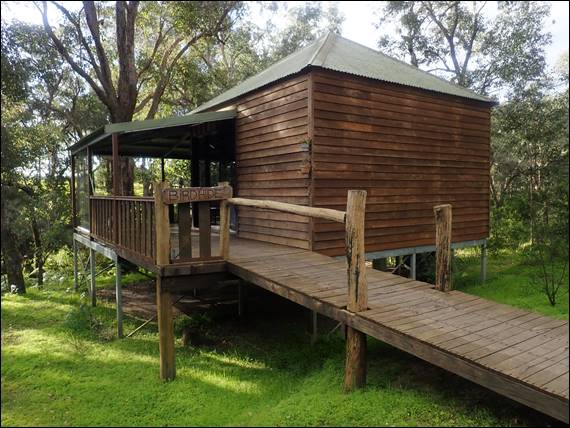
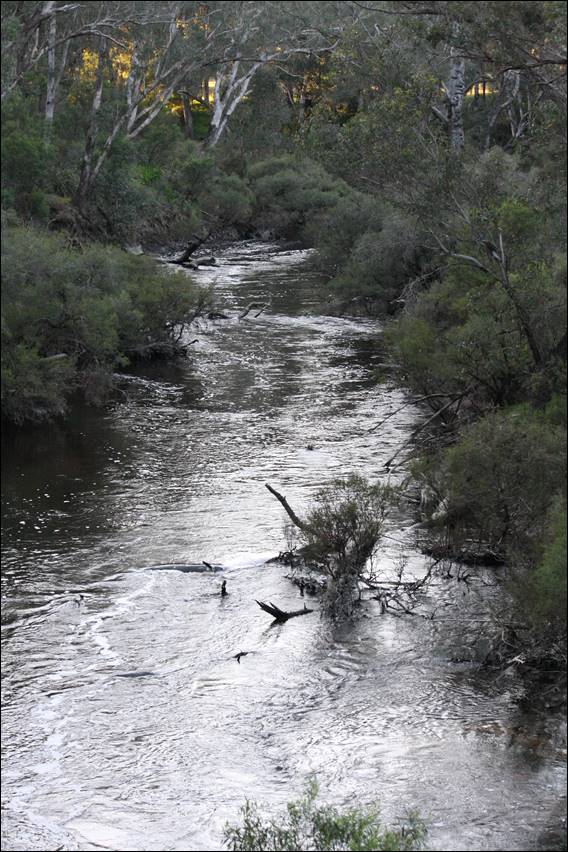
This year Lisa is keen to enjoy her birthday at home, so we only had a couple of nights to play with.  Due to the distance heading to the Stirling Ranges with the camper trailer wasn’t viable, plus the weather was due to come in Tuesday night.  So we went for the Bird Hide, which provides basic accommodation that may not be everyone’s cup of tea.  But it has the essentials, is neat as a pin and has an amazing outlook.  Being fairly isolated and purposely built to overlook the Blackwood River, resulting in a very relaxing place:

It is not too far out of Nannup, so just over an hour’s drive.  But it might as well have been a world away.  There is only very scant mobile reception and no technology provided in the accommodation.  So it really is a break from the rat race of life, that is all too often made all the more stressful by technology.  The views across the water and into the trees is idyllic, and on the first morning birds were everywhere.  While Lisa enjoyed a good book all warm and cosy in bed, I went for a couple of walks and watched the birds:

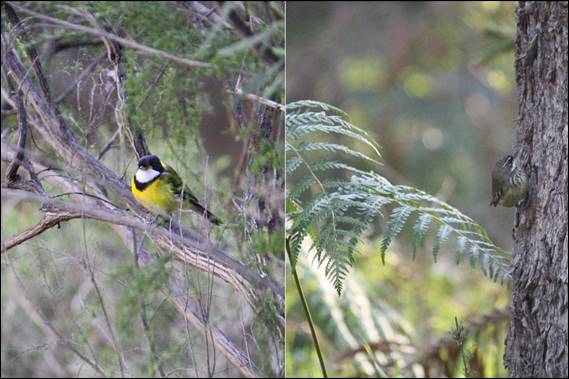
The two birds I have included are a Golden Whistler (Pachycephala pectoralis) & White-Browed Scrubwren (Sericornis frontalis), but there were many more I spotted.  The bird song was lovely, made all the more relaxing with the soothing babbling sound of the water flowing over a riffle in the river.  Being close to Nannup I was also able to easily get to the wildflower walks we have recently visited.  Being by myself I took a few new tracks and kicked myself when I came across the above Red-beak orchid (Lyperanthus nigricans):

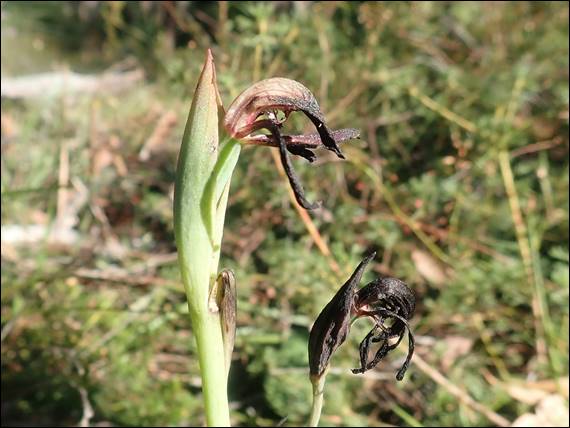
These orchids will burst into flower after fire, but the occasional one may be found flowering even when a fire has not been through.  They have large fleshy leaves, and these can be seen scattered in large colonies.  Most times lying dormant, but this one plant had decided to flower and I had missed it being in all its splendour, by probably a week or two.  Mid-September next year I’ll have to take this track to check the colony I found.  It was a lovely walk and by the time I got back it was time for a second cuppa:

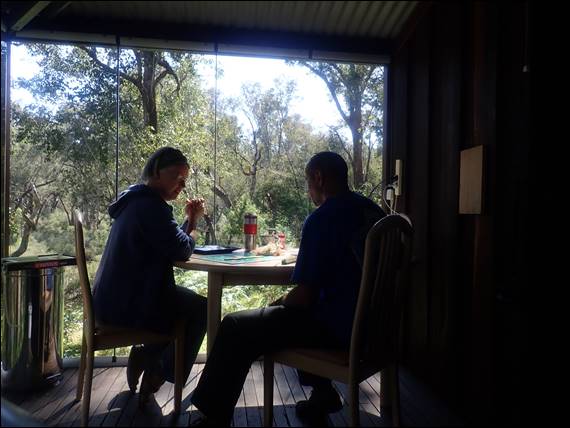
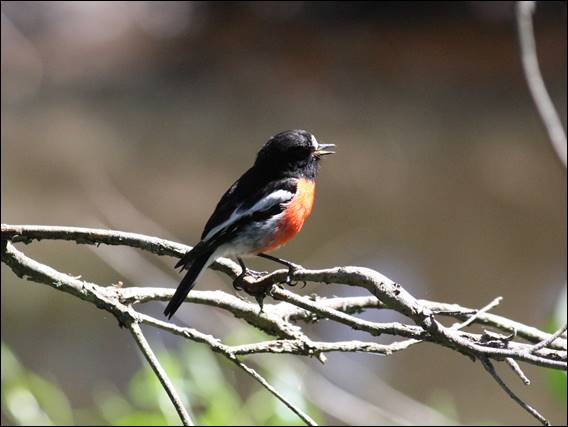
On these trips we tend to take a few games with us and in the evening and mornings we pulled them out.  Spending our time the old fashion way.  The decking was enclosed on two sides with glass, kept spotless so you had a great view whilst being protected from any rain or wind.  This helped make the decking a great place to hang out in any conditions.  On the first morning we ate breakfast, played scrabble, enjoyed the warmth of the sun, and were serenaded by the above Scarlet Robin (Petroica boodang):

I would guess that the male we saw viewed this as his territory, and he was out there singing his heart out most times.  His way of both advertising and defending his territory.  I even got  a great up-close and personal view of birds doing acrobatics in the air, as they caught insects on the wing.  I’ve seen several robins found in this part of Australia numerous times, and I have to say it was seeing the Golden Whistler that I was really pleased about.  Even more so when I managed to get a good image of this more skittish and less bold bird:

After a very slow, chilled, and enjoyable morning, we eventually decided to head out.  You may have guessed that seeing work Josh had mentioned this place, there was another part to his tale of this place.  The Scott River National Park less than an hour’s drive away, and that is where we were heading too.  Neither of us had been there, and I don’t think there are any walk trails to have previously drawn us that way.  We drove through the one and only road that dissects the park and on both sides it was a swamp:

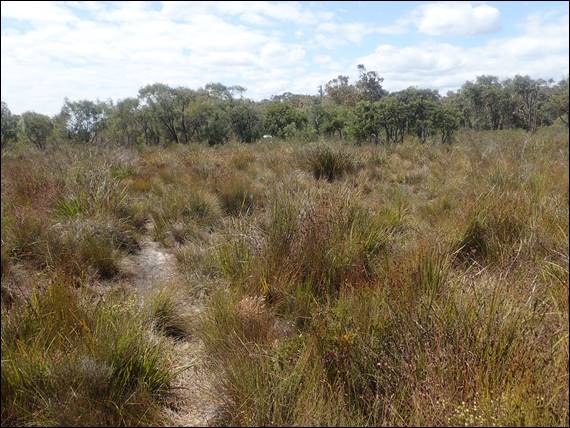
There were some higher areas, which is where we focus our attention as this place is known for its wildflowers, as well as water birds.  Several images back you can see the sedge covered land that we started on, after which we drifted to the low sandy dunes.  I was also kind of hoping to find a reptile or two, as I stepped carefully through the landscape.  As shown by the two images above we spotted a Stumpy Spider Orchid (Caladenia ensata) and Scott River Spider Orchid (Caladenia thinicola), new finds for me:

There were heaps of the “standard” orchids and everywhere we looked Purple Enamels were popping out of the ground.  Being one of Lisa’s favourite orchids as it is so colourful and cheerful.  At one point she got all excited thinking she found a duck or bird orchid of some sort, and if you check out the above image you can understand why she thought this.  However, the hammer had simply being blown or knocked up.  And when put in the normal lower position she had actually found a Narrow-lipped Hammer Orchid (Drakaea thynniphila):
You will just have to try and imagine the orchid with the hammer in the downward position, as the finds kept coming so I can’t include a second image.  Above is a Pale-China Orchid (Cyanicula gertrudiae), and as is often the case once we spotted one we seemed to find more and more.  Both the above two again being new finds.  We also spotted some very beautiful Donkey Orchids, most likely the Dunsborough Donkey Orchid (Diuris jonesii) and in the morning back at Nannup I also spotted the Purple Pansy Donkey Orchid (Diuris longifolia):
The above spider is a mystery, and I collared the assistance of Noel and even he is stumped with this one.  It is possible that it is a hybrid or maybe a partial pale form, as most of the flower is yellow green.  It is however different to the other two spiders we found in this location.  Before we left this spot I was pleased to see one Bobtail Lizard, allowing me to watch it for some time, before it slowly slunk away into the bush.  There were sadly no snakes to be seen, although Lisa was probably quite pleased with that:
On the higher sandy rises the vegetation changed with several species of trees, no taller than 5m, and an understorey of Sword Grass (Lepidosperma effusum).  I thought I might find a few different species of orchids within this complex, but was mistaken.  Lisa was happy not to follow me into these spots, maybe due to having less visibility of what might be lurking under the scrub.  I did however spot several Forest Mantis Orchids (Caladenia attingens), to add to what was a growing tally for the day:

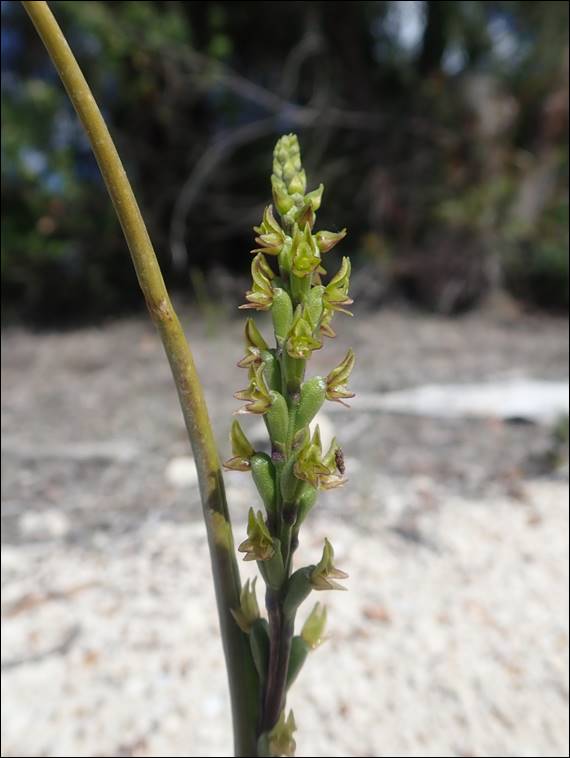
As I got back to the car I spotted the familiar shape of a Leek Orchid on the side of the road, and I found two plants in separate locations.  This one, like the unknown spider, is a bit of a puzzle.  The individual flower heads look on appearance to be the Little Laughing Leek Orchid (Prasophyllum gracile), but that is not found here plus the whole plant structure is too chunky.  Noel is also a little confused with this one, and has suggested it may be a stocky form of the Limestone Leek Orchid (Prasophyllum calcicola):

It was quite amazing how time passed us by.  Like being back at the Bird Hide, strolling round the bush spotting orchids was very relaxing and we were both enjoying the time.  We had however not come very prepared, only bring snacks and Lisa was starting to get hungry.  So it was time to hit the road, this time driving along the backroads.  At one spot we simply had to stop, to observe the masses of Pink Fairy Orchids(Caladenia latifolia).  We looked about and found many other species of orchids in the bush here:

It was however the above Pink Fairy I was most taken by.  It had two flowers and both had the same colour graduation.  Like identical twins, the pinks and whites were distributed to precision on both flowers, across the petals and the intricate middle components of the flower.  As we drove on, and with a little intel from Josh, I kept an eye out for one more find before I would have to focus on the need for food.  I thought I was keeping an eye out for a sun orchid, but was pleased to find that this was not the case:

If you look above you can see a cluster of white looking flowers on the bank to the right, with a very convenient spot to pull into just past this spot.  This is where we found eleven flowering Cherry Spider Orchids (Caladenia gardneri), which were extremely colourful and pretty.  This time when we got into the car we did not stop until we got back, although I nearly did as we spotted a Tiger Snake slithering across the road.  It shot away and by the time I had turned round it was nowhere to be seen, and I could feel Lisa relax a bit when that happened:

Back at the Bird Hide we got the snacks out, as the hunger needed to be tended as a matter of urgency so there was no time to cook.  The snacks went down a treat, as we played another game and looked out over the river checking for birds.  And when the snacks were all gone and the game was done, we cooked dinner and pulled out yet another game this time watching the light disappear.  It had been a wonderful day, and as the darkness came we continued to get our fix of board games with one that came with the Bird Hide:

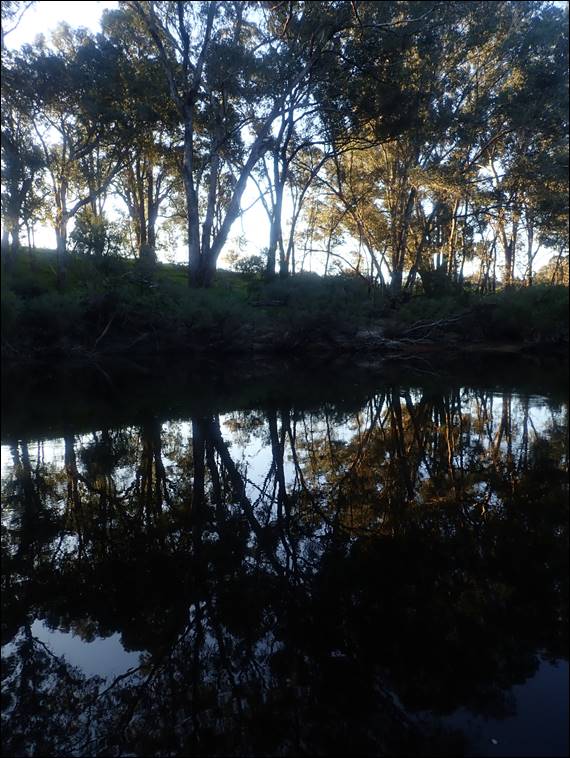
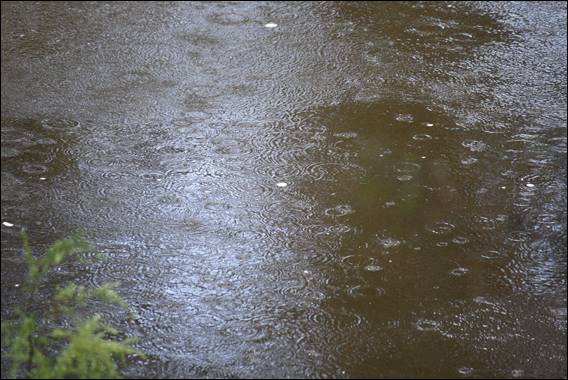
Overnight, and as forecast, the heavens opened.  The drops fell heavily on the tin roof and the hut became a bit of an echo chamber.  Reminding us of our previous house in Capel, which was also plagued with the same issue when it rained.  Fortunately, the morning was dry enough for me to get one final walk in, as Lisa again enjoyed reading her book possibly at times through her eyelids.  This time I didn’t find anything new, but enjoyed being out in the forest nonetheless.  Timing things well and getting back before the rain fell, and in time to make Lisa another cuppa:

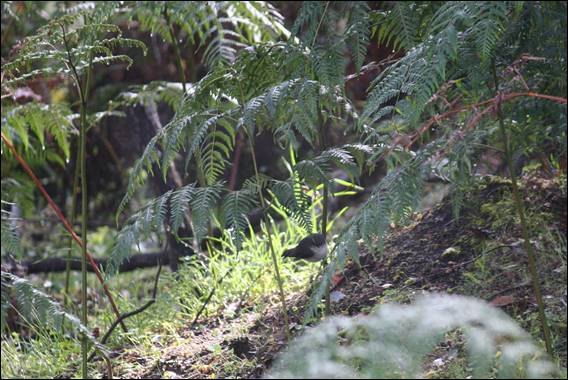
We decided on breakfast out this time allowing for a slower paced morning, not that we had heaps to pack up.  It did however allow a few more cups of tea and a bit more bird spotting, although it seemed the rain was keeping them at bay more so that the day before.  The Scarlet Robin sat on the branch right in front of the veranda, looking me in the eye and brazenly singing away.  But this morning it was this White-breasted Robin (Eopsaltria georgiana) that caught my attention, and I can safely say the Bird Hide really lived up to its name:

Partners in crime

There are now three of us at work discussing our orchid adventures, and we have set up a chat group on which to share our finds.  Unlike some orchid enthusiast, who may keep the location of their finds secretive, we also divulge those.  That said with Josh’s more distant travels, it is not always likely that we will follow in his footsteps.  Through these chats on Thursday Elspeth, during her lunch time stroll, attempted to find the Warty Hammer Orchids Lisa and I had recently spotted at Manea Park.  Sadly without success:

Next week I have the week off, and when that happens I am usually pretty prepared with my workload to avoid any last day rushes.  And so on Friday I took the unprecedented step of actually taking a lunch break, and accompanied Elspeth on a second stroll at Manea Park.  This time we had success, and in the nick of time too as some of them were starting to go to seed.  The engorged green ovary and shrivelling dark purple labellum indicating this.  We also spotted, not unexpectedly, heaps of the above Sandplain White Spider Orchid (Caladenia speciose):

While observing one patch of the Sandplain White Spider Orchids we also found the distinctly different spider orchid below, with a bright pink tip on the labellum.  This is a hybrid orchid, something that is not uncommon in the orchid world.  It can however be a tricky task to work out which two orchids have cross bred.  The closest my trusty book can direct me is that it may be a Protruding Spider Orchid (Caladenia × exserta), a cross between a Common White Spider Orchid (Caladenia longicauda) and Darting Spider Orchid (Caladenia uliginosa):

However, the Protruding Spider Orchid should have a deep red tipped labellum.  So I thought this may be a cross between a Sandplain White Spider Orchid (Caladenia speciose) & Darting Spider Orchid (Caladenia uliginosa), for which I can find no name.  This request for assistance was a tad too tricky for Noel, who confessed to not being that up to speed with hybrids.  He has however referred my enquiry onto one of the other authors of the book, Justin.  As yet I have not had a response but it seems my circle of support is growing:

The above may seem like a small clump of the humble Cowslip Orchid.  However, if you look closely the petals of the flower on the right and left are quite different.  The flower on the left being one of the more frequently encountered hybrids, resulting from the cross breeding of the Pink Fairy Orchid (Caladenia latifolia) & Cowslip Orchid (Caladenia flava).  Below is one final image from Elspeth and my walk round Manea Park, not all but several Scented Sun Orchids (Thelymitra macrophylla) are just starting to come into, almost, full flower:

As we were coming to the end of our walk some people coming the other way warned us that they had just spotted a large snake just off the path, but unfortunately we saw no sight of it.  While I have talked extensively about orchids in my more recent ‘going walkabout’ posts, that is purely due to being that time of year when they are most prolific.  I am however enamoured by all of nature’s treasures, and would love to see more reptiles.  It does not happen as much as I would like partly because they will often and unseen move away, way before we would get the chance to see them:

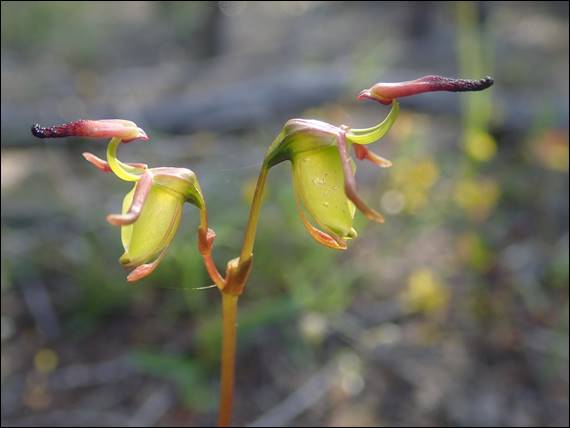
There is however only one way to see these things and that is to get out, which is what I did once more on Saturday afternoon.  A quick trip to my local Capel Nature Reserve where I went off track and lost myself for an hour, ambling round areas that looked interesting.  I like the above Hort’s Duck Orchid (Paracaleana hortiorum), if only due to having two flowers which is not often seen for this species.  I have pondered whether it may be the Flying Duck Orchid (Paracaleana nigrita), due to the slight hump in the labellum but this is not as defined as I have found in others.  And the more telling sign for me is that the calli, purple bubbles, are not so pronounced and also do not extend far enough back:

Above is yet another image of King-in-His-Carriage (Drakaea glyptodon), the big distinctly shaped labellum a clear give away.  Each time I see this flower now I cannot get the image of an giant avocado out of my head, which is explained in the linked post (https://sandbagged.blog/2022/09/24/let-the-hammer-fall/).  That is not my reason for including yet another image of this species.  It is due to the flower was displaying something I have not seen before in a hammer orchid.  The head of the ‘king’, which is the stigma, would normally open to release pollen.  But in this case something is extending out of the stigma, and I have not found any information to explain this.  So all I can do is liken it to a special effect of an alien breaking free from its host, just like in some science fiction horror film:

Above is one last image from the Capel Nature Reserve, an albino form of the Sandplain White Spider Orchid (Caladenia speciosa).  I have seen a pale form of this orchid in Capel already but that is a little different from a true albino.  The pale form of spider orchids generally exhibits light green colours, which my previous find did as shown in the linked post (https://sandbagged.blog/2022/09/09/here-there-and-everywhere/).  As I left the sky was starting to darken, although not from being out late.  Controlled burns are underway, a safe 17km away from where I was, and the smoke was drifting towards the coast.  Making for an eerie looking sky as I was driving home:

History repeating itself

I can’t recall when I last had a crack-of-dawn start.  While getting up in darkness isn’t all that fun, driving out and watching the hues of the sky change is very cool.  I had to pick Howsie up, which meant driving along back beach in Bunbury.  As the sky was waking up the distant lights on the containerships out to sea came in and out of view, in rhythm with the swell of the ocean.  Too dark to capture the image I drove on, and on arrival Howsie was waiting outside ready to jump in the car and head up to Welly Dam:

The last part of watching the world wake up is the sunrise.  Today as we crested the highest part of the Coalfield Highway, heading east, the sun took on the image of a big red ball of fire in a cloudless sky.  Sunrises and sunsets here are fast and it feels like if you blink you’ll miss them.  But the display of colours just before the sun comes up or after it goes down, will linger to extend the visual display.  Soon after the sun rose it was turning yellow and was too bright to look at.  The timing was good as were at the right turn into Wellington National Park, with the sun now behind us:

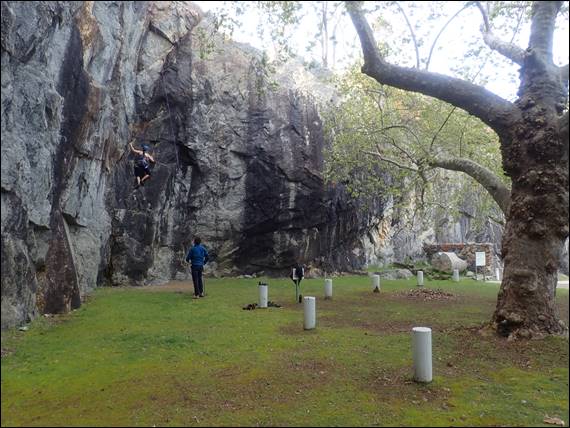
Mid-week the seasons had taken a turn and the temperatures had shot up to the mid to high twenties.  Nothing compared to summer, but after the coldness of winter it felt like there was once again a bite to the sun.  As expected there was no sign seepage on the black and grey streaked walls of the quarry.  The warmer temperatures and dry rock were not the reason for the early start nor coming here.  It was that Howsie was only able to squeeze in a quick session.  Although I have to say it was nice to jump on a couple of the lines that had been running with water all winter, a bit like saying hello to an old friend:

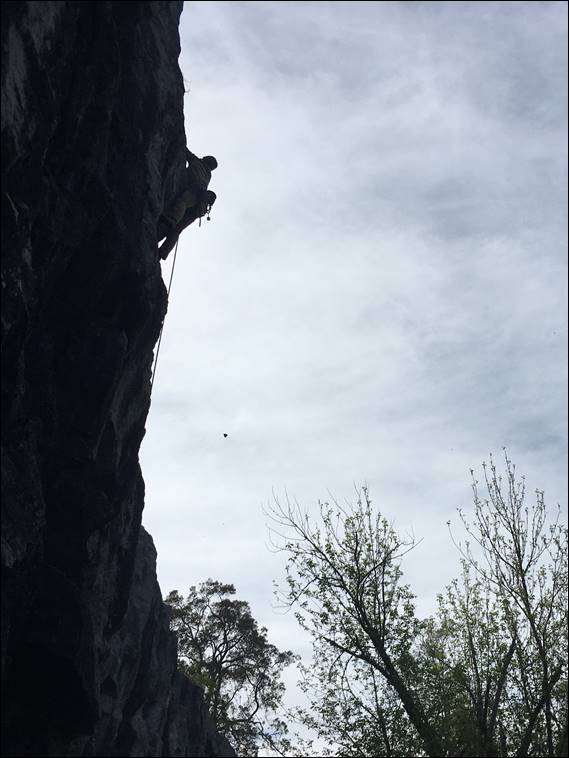
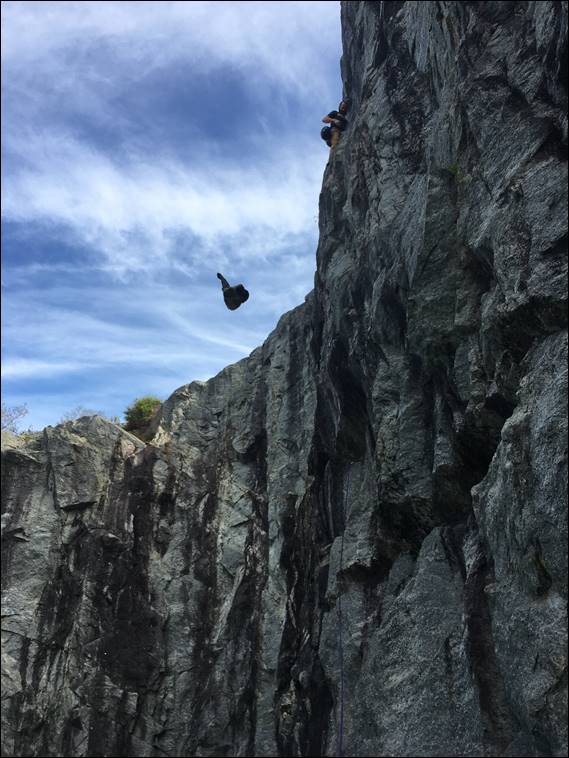
Being a quarry the artificial walls here were created as they blasted out the granite for construction works.  Most of the walls now comprise solid granite, although there are patches of rock that is quite fractured, usually round the old blast holes..  The vast temperature ranges we experience here, at times on a daily basis, don’t really help with the stability of the more fractured rock.  And especially after winter, when the moisture has been seeping into the weaknesses, it is not uncommon for the odd bit to fall off.  As captured in the image below, not that Howsie nor I were aware of the rock falling when it happened:

We were however both well aware of the next falling item, the morning was creeping along and the temperature was rising so it was time to shed some clothing.  In addition we were already five routes in and had both led each climb, and we were starting to have to pay the heavy toll that the climbing at Welly Dam demands.  Tiring arms, tingling fingertips, and a general lethargy inching its way through our bodies.  Before we stopped I got one more line in to even up the score, after which both of us were very pleased that we were not alone today:

Josh and Kellie rocked up a bit after us, maybe to avoid getting up in the dark, and Kellie almost immediately headed off for a 10km trail run before having a crack at climbing.  Prepared for their arrival Howsie and I had warmed up on a one of the more reasonable routes, and left a top rope in place for them.  Josh is still at a stage that this place is pretty challenging for him, and Kellie had not climbed in many years.  And as she explained, enough years to make it feel like it was her first time of climbing.  In fact you could suggest it was a bit mean of Josh to bring here to have a bash:

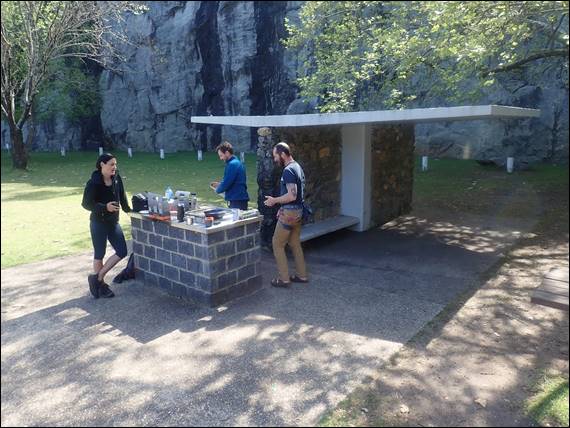
The reason we were pleased they were here, was not that Josh nor Kellie had slowed our pace.  They had however given us a reason to stop for a bit.  Josh had, like my last trip here, brought half the kitchen with him, resulting in not just a tea break but a full on breakfast break.  And after the very welcome feed, to polish the morning off, we set up a second top rope for them to make use of, while I suggest Howsie have one more lead.  He claimed I had set things up, having come armed with sufficient trad equipment including some essential pieces for one particular climb:

The Roman Nose to my knowledge has never had a second ascent.  Back in 2013 my recollection is that Steve attempted to lead it but found the gear too sketchy, so I completed the climb although the guide would indicate I still allowed him the honour of the first ascent.  Weary from the rapid back to back climbs on the steeper walls, and weighed down by both the trad gear and a yummy breakfast courtesy of Josh, it seemed history was going to repeat itself.  The micro wires and sketchy moves did not inspire Howsie enough to top out, instead coming back down to hand me the rope:

Unlucky for some

Monday arrived and it was time to go hunting again.  Lisa is convinced we can train the poodles to sniff out orchids, but I am not so sure.  They certainly seemed way too distracted with all the other aromas, as we once again wandered round the wildflower walks near Nannup.  Our rationale for this location was to avoid any highway traffic, being the last day of an extra-long weekend.  Plus it is of course a lovely spot, and if you recall our last visit here I spotted some orchids yet to flower that I was keen to check out:

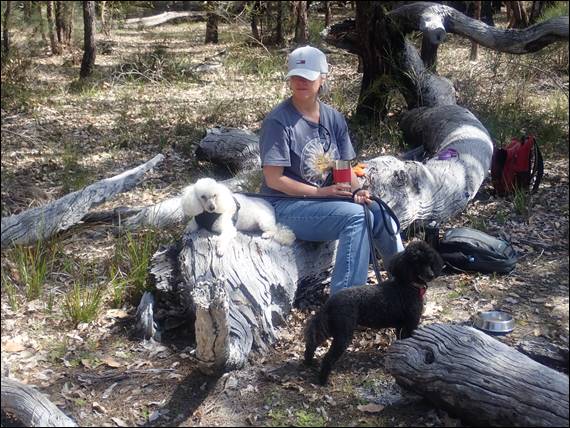
Lisa is quite happy to head out for a wander wherever.  The only requirements being: not too early a start; somewhere nice, which is hard not to find; nothing off track or too adventurous; and if the poodle can come along that is an added bonus.  Today they did, as did a flask of tea even though we would walk no more than 4 km’ish.  It may seem a little boring heading to the same spot several times, but the vegetation at this time of year changes a fair bit, and quite quickly, so there is always something to peak my interest:

The walk started off quietly, other than bumping into others out for power, dog, or kiddie walks.  We spotted orchids here and there, but nothing in numbers or new until we were about to stop for a cuppa.  We picked almost exactly the same spot as last time for our refreshments, just moving into a spot where we could take advantage of some dappled light to avoid the heat of the sun.  Approaching this area I spotted a few Duck Orchids, which Lisa had not seen before.  And then we saw more, and more, and more so many that if they could fly they would have taken the ground up with them:

I also found the orchids I spotted last time, which were not in flower back then.  They were today and happened to be Warty Hammer Orchids, so after all my childish excitement of finding this orchid for the first time at Manea Park last week I was now in a place that had more of them than I could poke a stick at.  Between the Duck and Warty Hammer Orchids we had to be very careful with our footfalls.  And it wasn’t till we settled down that I then spotted the Merritt’s White Spider Orchid (Caladenia longicauda), shown two images above:

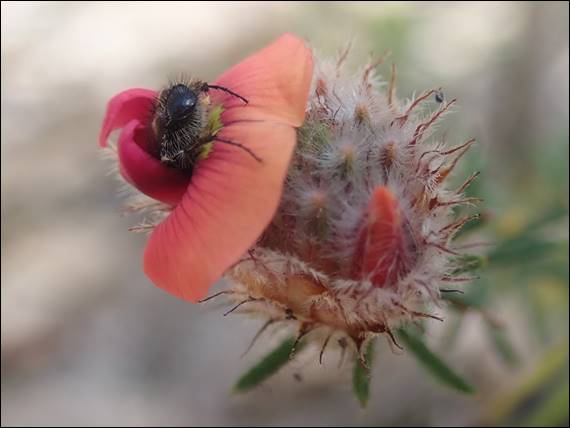
This spider orchid is found mostly between Augusta, Margaret River and Nannup in the Jarrah forests, which is where we were.  A very elegant orchid recognisable by the slender and long petals.  As I was taking the image and almost within arm’s reach I then spotted the Leaping Spider Orchid (Caladenia macrostylis), again two images up.  Resulting in childish excitement starting to re-emerge.  It wasn’t just the orchids that caught my attention, but also the many other small but pretty flowers starting to come out.  And after all my research and talk about pollination methods, I couldn’t resist the above image of a beetle buried deep into a Pea flower:

We continued out walk and as we made our way along I tallied how many orchid species we had seen today, which I was more than happy with.  As we walked on nothing new jumped out.  It doesn’t however always have to be new to be interesting, for example the above distorted Cowslip Orchid that caught my eye.  It does not seem to be a hybrid flower, just having an unusually and quirky petal shape.  I also seem to be spotting more Bird Orchids, and this one I have since found out has finished flowering and is going to seed.  I noticed there is no colouration, and I cannot find any information that indicates they lose their purplish colour after pollination, but without the labellum on display I can’t tell if it is another species:

I checked the facts about the Bird Orchid with Noel, and I do wonder if he will consider me a pest.  But each time I send him about request, along with images of our finds he politely responds.  And I have just now sent another email to him, this time about a couple of my finds from the Crooked Brook wildflower walk.  After work on Wednesday, my head was woolly and overloaded so rather than head straight home I decided a wander in the bush would help.  So this time I was by myself, as I strolled the short 3km circuit to see what was on display and clear my head:

As seen above patches of the groundcover had come to life, speckles of bright and cheerful colours made it hard not to feel happy and smile.  A corner has definitely turned, with temperatures heading into the high twenties later this week.  And it is as if the warmth is drawing out the orchid buds, along with the flowers of many other plants.  There were lots of orchids just about to flower but not being quite ready, I did however spot my first Forest Mantis Orchid (Caladenia attingens) of the season, the word “attingens” meaning “reaching out”:

This is kind of relevant as it was October 2010 that we first camped at the Mount Trio Bushcamp in the Stirling Ranges.  This was where I was first introduced to orchids.  And indeed it was, what I thought back then, to be a Mantis Orchid that reached out and drew me into this obsessive pastime.  Checking my images from back then what I had seen was the Green Spider Orchid (Caladenia falcata), also named in earlier guides as the Fringed Mantis Orchid.  It is very similar to, but generally larger than the, Forest Mantis Orchid.  The word “falcata” meaning “hooked”, so equally apt:

My early years were more fascination and simply enjoying what I saw, but in more recent years I have certainty become more hooked.  In part egged on by having a blog on which to post all my finds.  So much so that I am now pestering people like Noel when I am not totally sure, such as for both above and below finds.  My best, and reasonably confident, guess for these two are a Diamond Spider Orchid (Caladenia rhomboidiformis) and a Rusty Spider (Caladenia ferruginea), two more firsts for me.  Time will tell as to whether Noel will once again reply, and then if I am on the money:

Having now discovered the diversity of Spider Orchids in this area I am very tempted to head back in two weeks, when more will hopefully be out in flower.  My new’ish orchid guide, which I only received last Christmas has certainly opened my eyes to this diversity and has started a worrying trend.  I have however given up on the below Spider Orchid, no doubt one of the White variety of which there are simply too many with only very subtle differences.  As I had on Monday I tallied up the species count, and once again I had found what some might consider an unlucky number, equal to a baker’s dozen:

The weather makers

Despite the sunny image below, it had unexpectedly been drizzling and raining till mid-morning today.  Whether by desire or chance Josh wasn’t able to head out till ten, which worked out well all things considered.  Even at that late hour of the morning, and as we drove towards the crag the windscreen wipers were swishing back and forth as the dark clouds above unleashed the moisture they held.  It was not until we parked up that it stopped raining, and then as we walked down the track the sky to the west opened up:

Yesterday as we organised times, with Sam also joining but arriving separately due to time constraints, Josh had asked if I thought it would be busy.  Based on it being a long weekend and the not bad looking forecasts, I definitely thought it would be busy.  No matter I had a couple of lines in mind, on a wall just north of the mighty Steel Wall that stands proud in the image below.  It is very rare to see any climbers walk past this iconic wall, so even when it is busy this is a place it is possible to escape too:

Despite the poor start to the day we were surprised to find approx. ten cars parked up.  And at the crag there was a reasonable sized group of ten or more climbers down from Perth.  Huddled and looking cold under one of the overhangs.  They had been out for a while but had as yet not managed to climb anything, due to the rain that kept coming in.  I doubt it was our presences, but our arrival seemed to signify the departure of the rain, and with a stiff south westerly wind much of the rock quickly dry up:

We warmed up on the relaxing Road Trip, but Josh looked clunky following me up, and admitted he had made hard work of it.  That happens, so to calm his nerves what better than make him hang over the edge and belay Sam up, who had arrived in the nick of time to also follow up.  I’d decided to bring my twin ropes today, also called half ropes as you should climb with two of them, as they do not having the same strength rating as a single (thicker diameter) rope.  Using the twin ropes makes climbing with three easier, as the second and third climber can use one line each:

That is not the only reason I brought my twin ropes.  I was eyeing up one of the longest route at Wilyabrup as a potential candidate for today, and a single 60m rope would not be long enough for three climbers.  But before we got to that line, we needed a second warm up climb to get Josh moving a bit more smoothly.  He did not disappoint and got up Tom Thumb Direct so well that I change my mind.  And decided we should climb one of the routes here that lends itself to twin ropes.  Having two ropes makes it easier to keep the ropes running smoothly, by using one for gear on the left and the other for gear of the right, perfect for a climb that weaves a devious line up the cliff:

This line was also harder and I was maybe being a tad optimistic, as the bottom traverse of Golden Buttress spat Josh off with forearms burning up.  Sam managed to get up, making use of his longer reach on the traverse to reach higher and better holds.  Then at the point shown in the image above he almost fell, and asked me if he could hold onto the rope as his arms to start to fail.  I of course said no, which he later recalled this as being a stern no and he therefore didn’t grab the rope.  He did however pull off the last few moves to get a clean ascent.  Once up it was clear that Popeye had nothing on him, and he looked to be feeling the pump big time:

Back down and I decided to pick off one of the lines past Steel Wall, one which was on my original list for the day.  I decided against the long route, only because the bottom corner is feisty and with both Josh and Sam having pumped out on the last route I knew that would just be asking for trouble.  So we instead took a fun line that goes through a hole at the top of the Stormcock boulder, and then continues up a fun crack.  Sombre is a completely over graded so I didn’t tell the boys what it was:

Even with tired arms they both got through the triangle window and up the crack, thoroughly enjoying the unusual features the rock on this section of the cliff offers.  I mentioned that this area gets very little attention, which is proven by the tops that are littered with loose rocks.  Care is required not to knock off any rocks, which can be pebble through to toaster sized.  Having a sensible belay set up certainly helps, one that is right on the edge to avoid the ropes dragging over and potentially dislodging any of the lose rubble:

This belay position gives the added benefit of a great spot to look out at the views and watch the next person coming up.  Sadly with four climbs under our belt Sam’s time limit was coming to an end, so he departed. Although I also wonder if his arms were too cooked for him to contemplate just one more route.  This was all I was hinting at and Josh was keen, deciding on an easy slab to get us, and our bags, out.  Peanut Crumble provided us the perfect climb, although Josh was a little bemused with me only placing one piece of gear:

Not that it is an excuse for my lack of gear, but the climb was a bit like a staircase.  At the top of which the ropes were packed away for the last time.  We had not been the first to the crag but we were the last to leave it.  And it seems that maybe today we were the weather makers, as while we packed the bags we could feel a sprinkle from above.  And looking up the south westerlies were blowing darker clouds overhead, which thankfully did not fully open up as we walked out:

Let the hammer fall

I was trying to tell myself not to send another post of my orchid hunting this weekend, but as you can tell I didn’t listen to myself.  Today I went to two spots, the first being a small patch of bush called the Katherine Chauhan Reserve.  No more than 10 acres (4 hectares), surrounded by suburbia in Bunbury, and managed by the local community.  Rongy cycles past this place and has often told me he has seen a fair few orchids here, so after dropping Lisa off for her Pilates class I went for a wander to check it out.  And I was not disappointed finding areas of the land covered in hundreds of Pink Fairy Orchid (Caladenia latifolia), Sandplain White Spider Orchid (Caladenia speciosa), Sandplain Donkey Orchid (Diuris tinctoria), and Cowslip Orchid (Caladenia flava):

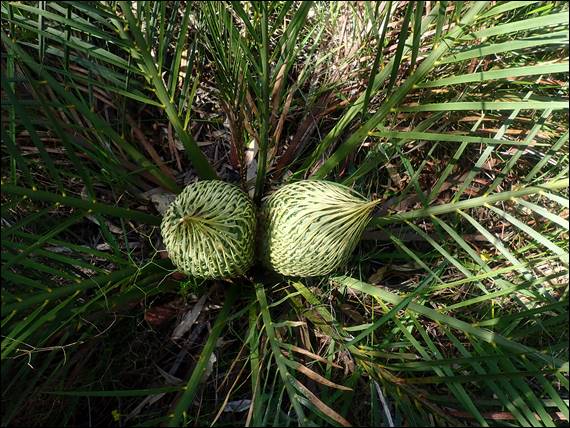
I also stumbled across a Zamia Palm (Macrozamia riedlei) a true prehistoric plant from the division Cycadophyta, from which some plants existed 250 to 60 odd million years ago.  This species is endemic to southwest Australia, and like some orchids has an interesting relationship with a specific insect.  Similar to some orchids it uses deception by releasing an aroma, this time to attract the male Cycad Weevil (Rhopalotria mollis).  However, it goes step further, and once the weevil’s job is done the plant then changes its scent to one that results in the male weevil feeling unwelcome.  Resulting it leaving before it can start to do any real damage:

The large cones of this palm have edible seeds.  However, for human consumption they need to be prepared correctly, as the plant has bacteria in it that both fixes nitrogen and creates a toxin.  There are tales from 1829 of passing sailors eating the seeds and likening the taste to roast potatoes.  Waking the next morning with symptoms of poisoning, but also recovering within a day or two.  While I saw no sailors there was something in this reserve that was hungry, with lots of the Sandplain White Spider Orchids having been nibbled.  In all cases it was just the long white petals that had been taken with the main flower remaining:

With so many orchids about, I was treading extra carefully and only just in time spotted this Bobtail Lizard (Tiliqua rugose) hidden under the grass.  Bobtail Lizards have a head and tail of a similar shape, no doubt to confuse predators who will then have a 50-50 chance of attacking the head.  However, unlike many other lizards this one cannot escape by shedding its tail should a predator takes hold of it.  As I did a bit of research into these lizards I also found that the females are in charge of mating choices, and are attracted to more attentive males:

The males are made to follow the female round for a few weeks to prove their attentiveness, before sealing the deal.  And while I’ve read that they are monogamous, research has also suggested that if a male becomes to inattentive the female will find another more “new-age” guy.  It seemed that the Earth Balls, like the orchids here, also seemed to believe in safety in numbers.  My wander in this small reserve was on a time limit.  And it was now my turn to be attentive and get back in time to pick Lisa up, after which we had to hit a few shops:

Once the town stuff was done we went to Manea Park to see what might be out.  I can confirm that, just like at the small reserve today, the mosquitoes were not out.  At least not in force like I had experienced on Friday.  Not too far down the track I spotted a single flower of a Blue Lady Orchid (Thelymitra crinita).  The name of the genus comes from two Greek words, thelys and mitra meaning “belonging to women” and “headdress” or “turban”.  This reference was chosen to describe the hooded column in the middle of the flower, which will often have wings or glands atop.  And it is this feature that can be used to identify the different species:

The Blue Lady is the most common of some 130 species of Sun Orchids, and like others it can have up to fifteen brightly coloured flowers providing a spectacular show.  However, individually the flowers tend to be rather plain compared to other orchids.  Not being as intricate, nor having a labellum that is at times the spectacular centre piece of orchid flowers.  Also unlike other orchids they also will close up in cloudy weather and at night.  Another common orchid is also starting to make an appearance, being the Common Mignonette Orchid (Microtis media):

The Common Mignonette Orchid is extremely widespread, so much so that it is not unusual to see them forming colonies in urban areas.  I have even seen the odd one or two in our garden beds.  We of course saw many other orchids, which I have over the last week been spotting in a number of other locations.  One of them being the Sandplain White Spider Orchid, but for the one below you may notice the brilliant white appearance that is lacking much of any other colour.  I was intrigued by this so contacted Noel Hoffman to check it out:

He confirmed my identification was correct, and the lack of colour was due to it being an albino form.  I also told him about my next find, which I was very excited about.  This is the first time I have seen a Warty Hammer Orchid (Drakaea livida), of the same genus that includes the King-in-his-Carriage (Drakaea glyptodon) that I have seen a bit this season.  While I am still very chuffed Noel outdid me in style, as he had just found a Hairy Warty Hammer Orchid (Drakaea andrewsiae).  A species that has not been seen for some forty years, and being so rare he had not even included it his book:

The King-in-his-Carriage is the most common of the Hammer Orchids, while the Warty Hammer Orchid is the more regularly found from the remaining species of Hammer Orchids.  I was intrigued by the scientific names of these two, with livida coming from a Latin word meaning “bluish” or “black and blue”.  This resembles the blotchiness of the labellum or hammer.  While the name glyptodon is due to the likeness, of the hammer of the King-in-his-Carriage, to the head of the namesake extinct giant mammal that is related to the modern armadillo.  This cattle sized creature roamed the earth as recently as approx. 12,000 year ago:

Keep moving

This post is short and sweet, a bit like my quick scoot round a community managed reserve found just off the highway on the way to Bunbury.  The reason for the dash to this spot, which I had previously never been too, will be revealed later.  But what drew my attention was again receiving images while working.  Josh had been out and about having, like the majority of the population of Australia, taken today off to make it a five day weekend.  And seeing I was up and working bright and early I was able to go for a quick look mid-afternoon.  As I drove towards Bunbury I could see the traffic on the other side of the highway, coming down from Perth, was already building up:

The southerly migration of caravans, trailers, and cars packed to the roof with holiday gear had begun.  The aim being to enjoy getting away for the long weekend, or possibly a week or two of school holidays.  But before they can do that and for a short window of time the road becomes unbearable with impatient drivers, made all the worse with perfectly timed roadworks that would result in queues kilometres long.  Something I didn’t want to get caught up in, even for the short trip I had to get home.  That too wasn’t the reason for making this wander through the bush a bit like a speed hunt.  Keeping a relatively brisk pace and when spotting what I was looking for not hanging about too long.  For the sharp eyed below you’ll spot a Cowslip Orchid or two, of which I saw hundreds:

But what I was after was a slight and slender orchid with relatively small petals, and in the above image they look a bit like a very small horseshoes.  It can  flower in large colonies, but today I never saw more than five or so plants in any one cluster.  I’ve only seen Rabbit Orchids (Leptoceras menziesii) once before, so when I was told they were at this location I couldn’t resist and had to see them.  These orchids are a little special for several reasons.  They are one of the first species described and named in Western Australia by Archibald Menzies in 1791, who originally called them Caladenia menziesii.  Then in 1840 for reasons unbeknown to me the name was changed to Leptoceras menziesii by John Lindley, which seems to have stuck:

Another reason they are a little unusual is that they are the only species in the genus Leptoceras.  Most other orchid genus have several if not many species, such as the White Spider Orchid of which I only spotted one today on my rather fast walk.  Having inspected the images with care, I am coming to the conclusion that down at Meelup Regional Park and probably at the Capel Nature Reserve I had indeed spotted the Splendid Spider Orchid (Caladenia splendens).  This one however I feel is a Sandplain White Spider Orchids (Caladenia speciosa).  Overall a shorter plant and notably smaller flower, although the labellum is larger relative to the overall flower:

Also a key distinguishing feature, as I read more about them, is the fringes of the labellum that are more pink’ish, ragged, and often have spilt ends.  Plus it is also the most common white spider orchid between Mandurah and the Bunbury region, indicating it does not extend any further southwards, i.e. to Capel and certainly not the Meelup Regional Park.  The angle of the image below is one I should take of all orchids when I am unsure of what it is, as it does provide that bit more detail to interrogate.  However, the reason for including it today was more due to the unfriendly photo-bomber.  Within seconds of standing still I was surrounded by a cloud of mosquitos:

Even as I walked I would feel them, piercing any skin that was foolishly exposed which included my hands, feet, and head.  I can normally tolerate mosquitos but today in this reserve it was truly horrendous.  As such I didn’t take the normal care with images, nor inspecting my finds.  Walking quickly, stopping briefly, on occasion cursing loudly, and being very relieved when I got back in the car.  Just before I did get back to the car I stumbled across large patches of a familiar looing orchid, so only took a couple of hasty snaps of what I feel may be Sandplain Donkey Orchids (Diuris tinctoria).  I then drove home observing the multiple welts on the back of my hands: