Despite how I ended my post yesterday, Howsie and I kept messaging each other with ideas of how we may be able to retrieve our gear. Unfortunately, we didn’t know anyone close enough to ask them to pop out. There were however two other possibilities. Howsie said he may head down with the family on Sunday. While I was waiting to hear whether Sam would be keen to get out. That would be Sam from work, as opposed to Sam who has headed to the east coast. He decided on a surf instead of a climb, leaving my Saturday morning a bit in limbo:
Lisa is up and out early with the Peppy Plungers on Saturdays. The routine normal results in her not being free to do anything else until nine or a bit later. This afforded me a window of opportunity, and to make it worthwhile I planned to throw in a walk to The Playground for a boulder. I left early, when there were hardly any other cars on the road. There was however plenty of life. Keeping a careful eye out I managed not to hit any of the mobs of kangaroos, unidentified rodent that scampered across the road, bunch of rabbits, or two foxes I saw:
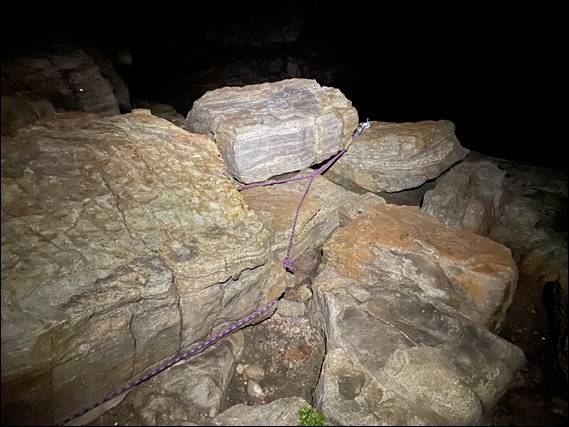
I also avoided the second owl I spotted, as it floated just above the roof of the car. Sadly however I was not so lucky with the first. That one flew up from the road side as I rounded a corner, clipping the top of the windscreen. While it is a strong word, I really do hate it when I hit animals. I went back to check on the road and verges, but didn’t find a body nor any feathers. Continuing my journey, all I could do was hope it had survived. On arrival I walked to the top of the cliff in darkness, where I found our gear still where we had left it:
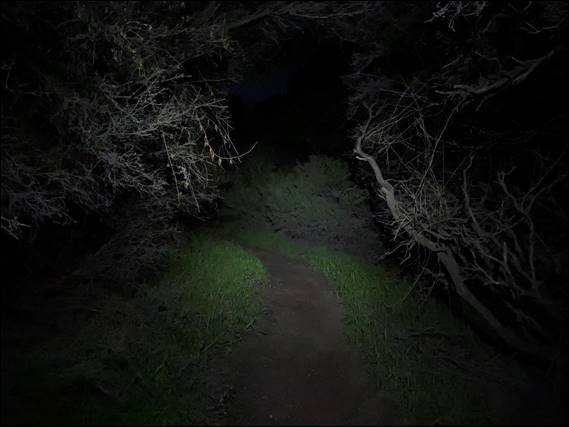
Packing the gear I headed to The Playground, and would normally head along the coast. But still being sensible, even if it doesn’t sound like it, I followed the Cape to Cape track. A more even and well-trodden path that traversed relatively high on the ridgeline, and offered less obstacles on which to ‘come a cropper’. I had to rely on torchlight for the mile long hike, so it felt like a good move. First light still hadn’t appeared when I got to the crag, only starting to creep in as I started scaling lines. Keeping myself in check and avoiding the harder problems:
This was because I was not keen take a fall. The small buttress has a soft, sandy landing making it perfect for pushing yourself in a relatively safe environment. But today was not the day for that. Plus it offers plenty of fun lines to play on that I was confident of not taking a tumble. Added to that there is a great and reasonably long, low level traverse. The wall is undercut and this results in the traverse really working your arms. With your feet never being more than a foot above the ground, for the entire line:
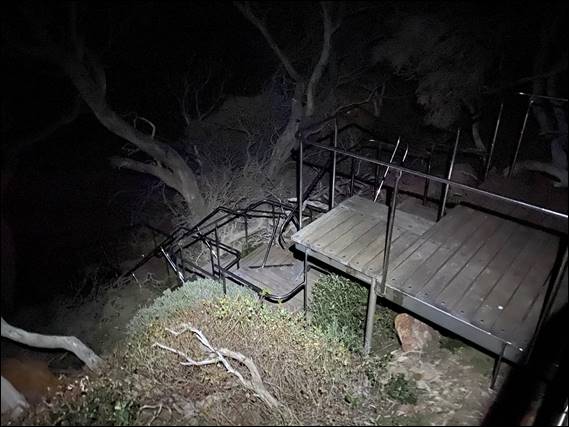
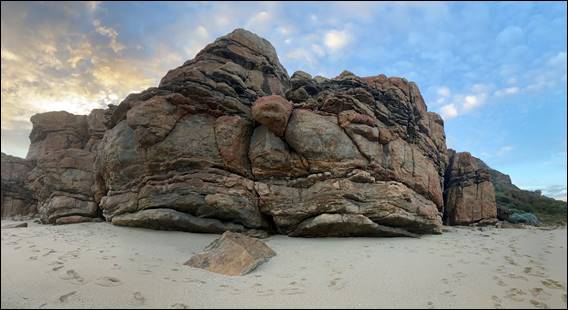
I surprised myself a bit with how much I managed to do. All good things must however come to an end. After close to an hour and a half of bouldering it was time to leave. The return trip was along coast, heading south towards the mighty Northern Blocks. Maybe next time Howsie and I get out, he’ll be more psyched for a few tougher climbs there. For now I was content to just look at the cliffs being light up by the early morning sun, as were the stairs at the left hand end that I had descended in darkness just a few hours back. With the mornings fun stuff over, on the drive home it was time to go shopping:
There’s no avoiding it, some weeks life just gets hectic. This was one of those for Howsie. Planting season in the natural resource management sector is very much at the mercy of the weather. As a result of the way the seasons have been this year, it has been hard to prepare sites and now things are really kicking off at his work. Added to that several of his extracurricular activities have chewed up his evenings. With commitments made it was not possible to avoid these. This morning’s climbing session was however questionable in that regard:
As we drove he unravelled his thoughts, which were still a jumbled mess in his head, into speech. It was clear his mind was still in a state of flux over the quandary about heading out today. Still thinking that just maybe he should have stayed home to get some quality family time in. I fully get where he was coming from, and told him it would be absolutely fine if we turned back to allow that to happen. He was a little torn. With each minute we drove, the call of the rock grew stronger and eventually won out:
That said we reached a compromise to ease his conflicting thoughts. Agreeing to make it a short session, which would allow him to get back in a timely manner. His state of indecision was in keeping with ours about where we would climb. The weather has been a bit unsettled, and as we were not sure what we would do I had thrown in my twin ropes, a 60m and 30m single rope, and abseil rope. If it was wet we would have hit the shorter Moses Rocks. If it looked, and we felt, good I had suggested Howsie push himself a bit on a few lines his not been on at the Northern Blocks for which twin ropes are advisable:
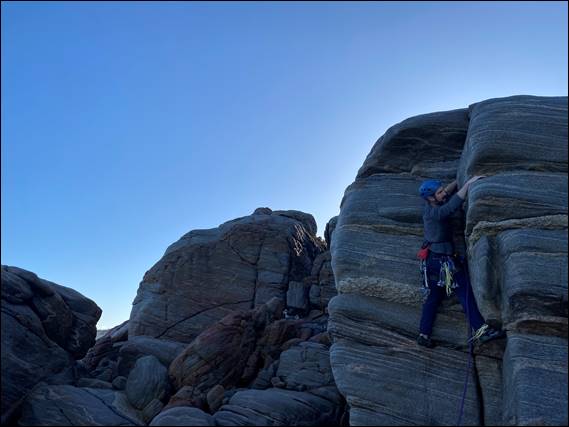
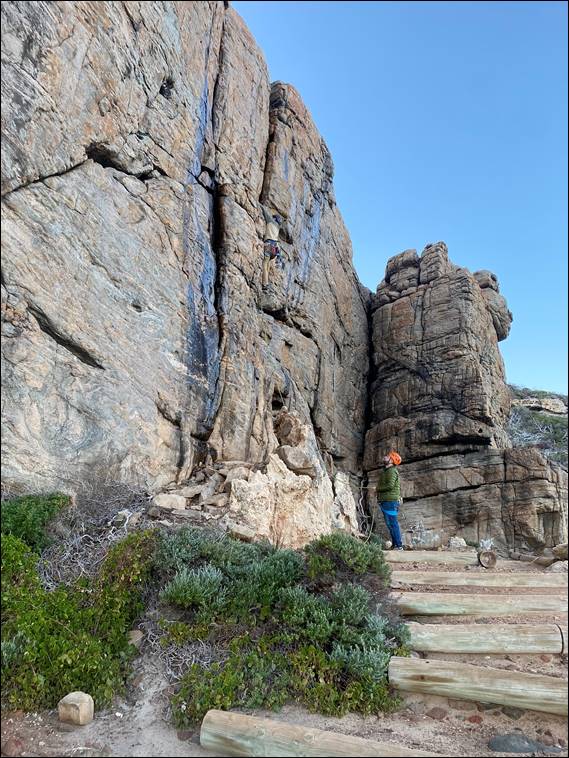
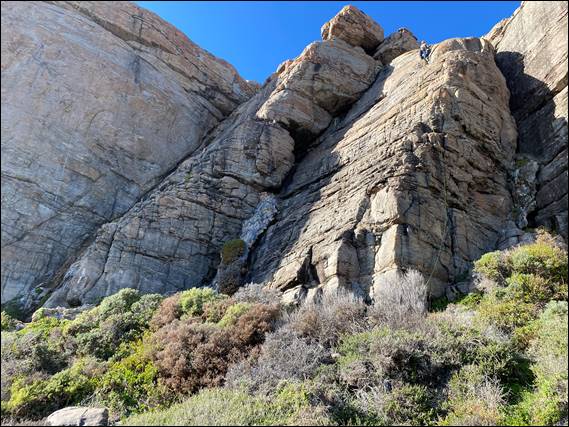
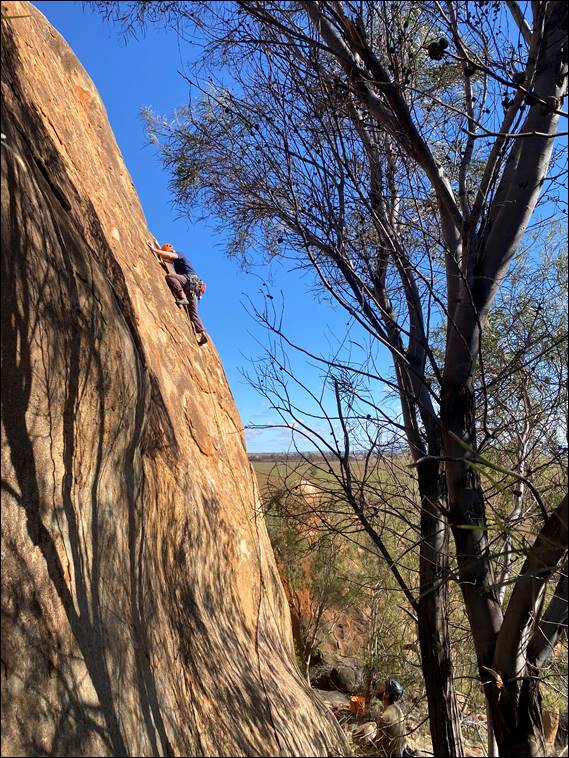
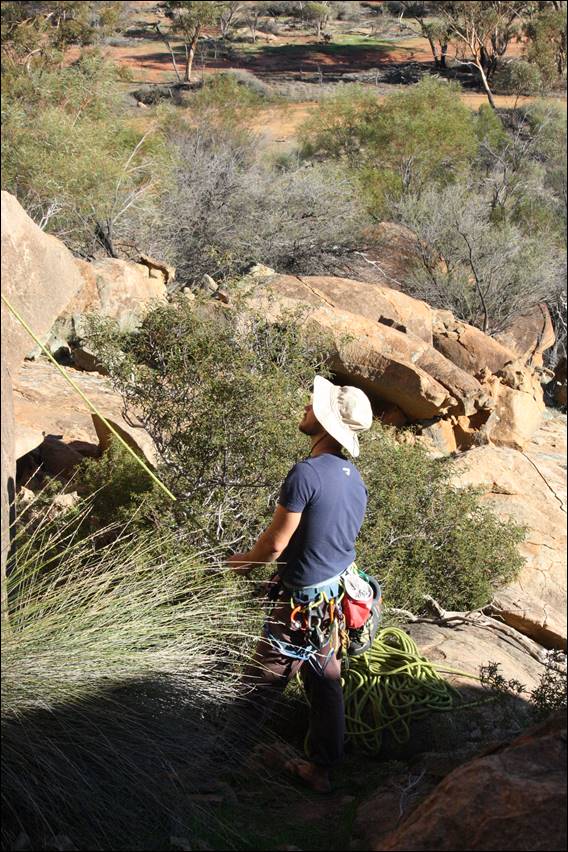
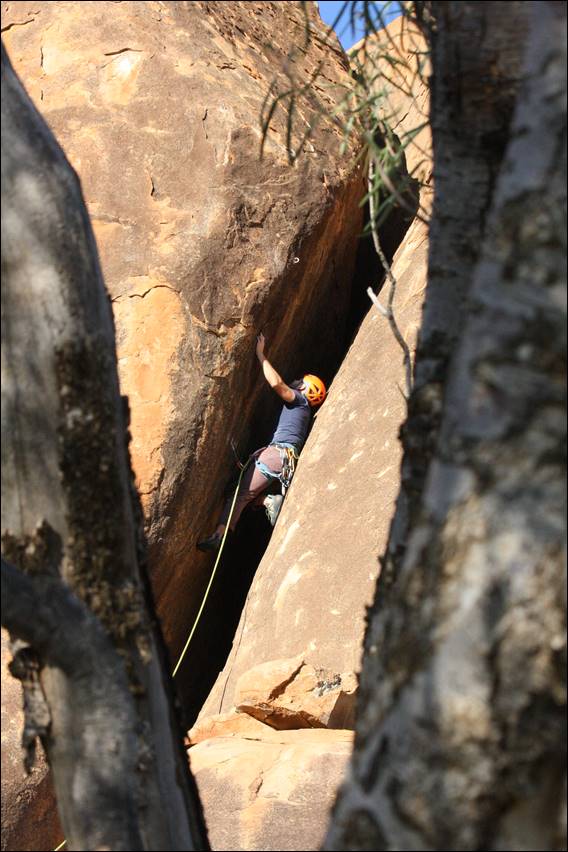
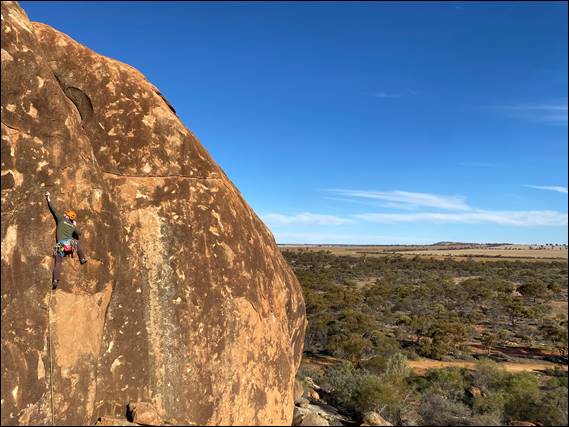
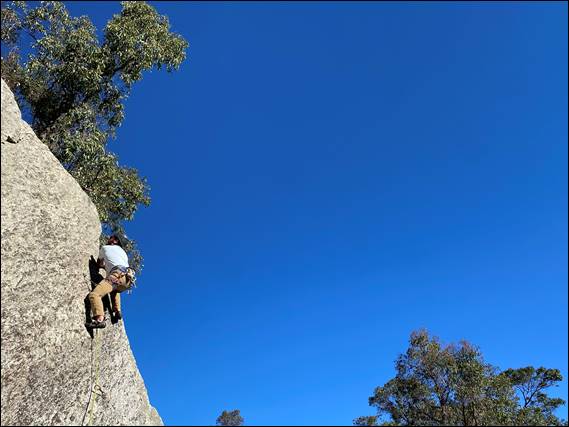
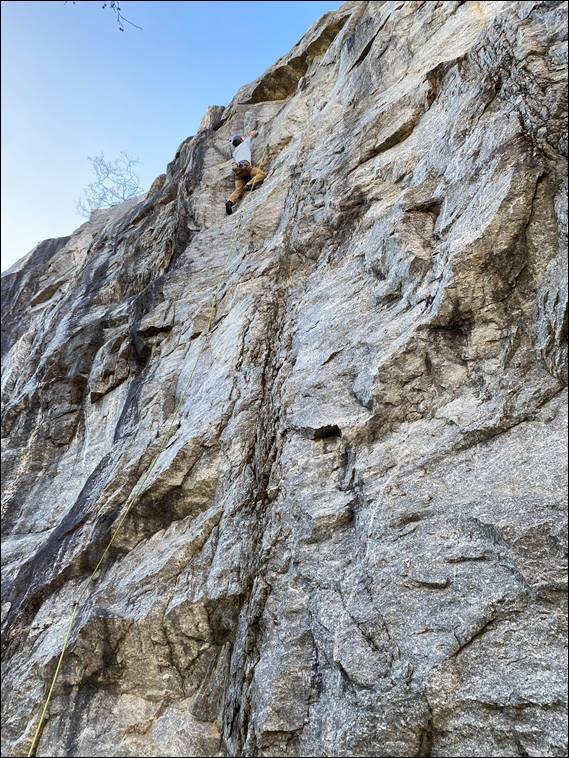
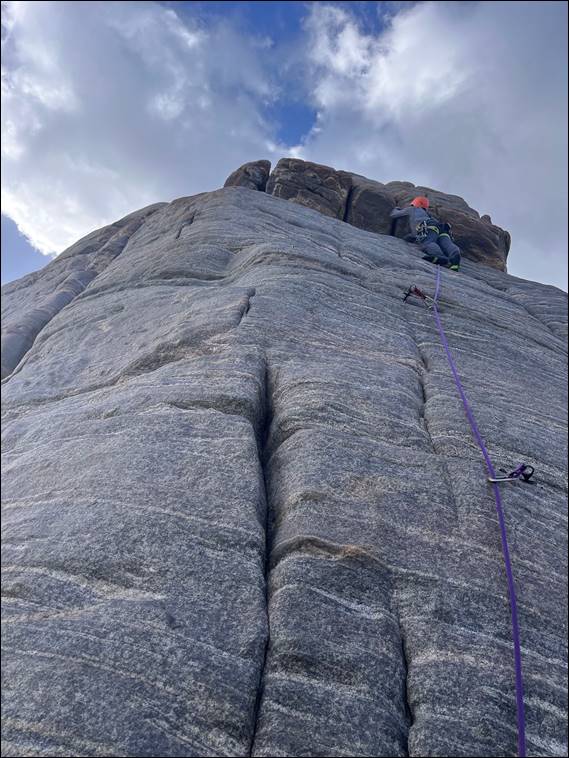
We plumped for the good ole main cliffs of Wilyabrup. With nothing too serious in mind, the short single rope was the go. His brain was still a bit all over the place, and mentally would not have been prepared for harder stuff. I took first lead, I very quickly realised that I would have not been physically prepared for tricky routes. We were therefore both happy with our choice. There are several reasons I found the first climb so pumpy. This included being the first climb; the rock being a little greasy; and holding on tighter than required, because I really didn’t want to take a fall and aggravate my steadily improving injuries:
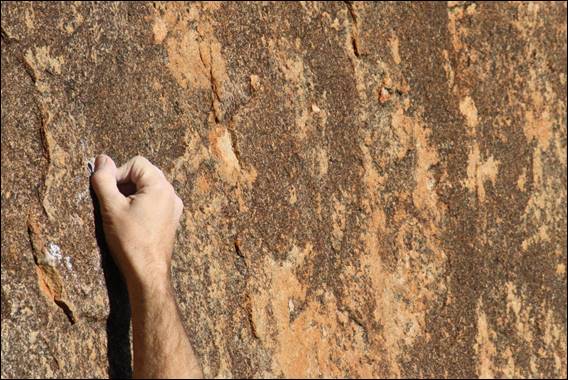
Sam, who has recently headed over east, was also somehow to blame. When he left there was some stuff he did not intend to take, and offered them out. I jumped at the chance to grab his hangboard. Not being able to use my climbing wall at the moment, a hangboard would allow me to maintain my upper body and finger strength. So I have been doing a ten minute hangboard session, after my stretch routine, each morning. It may not sound like a lot, but it certainly works you. I knew it was a gamble, and today I could really feel the cumulative impact of the sessions:
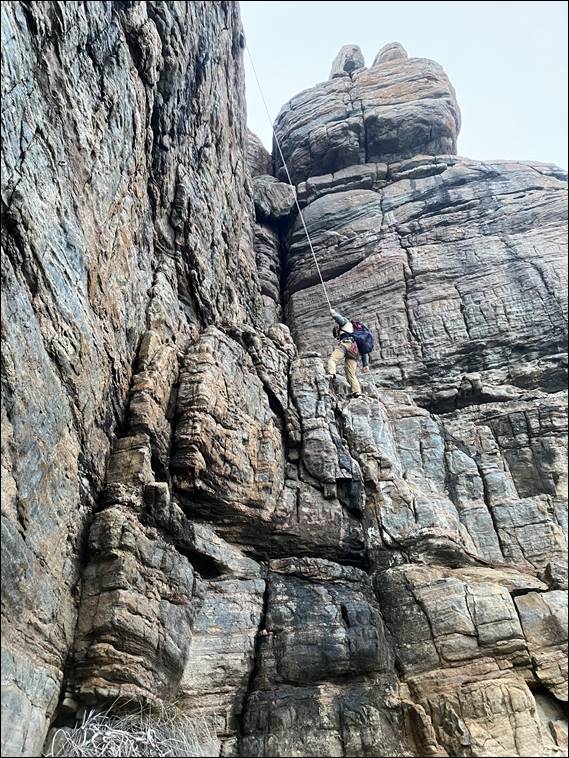
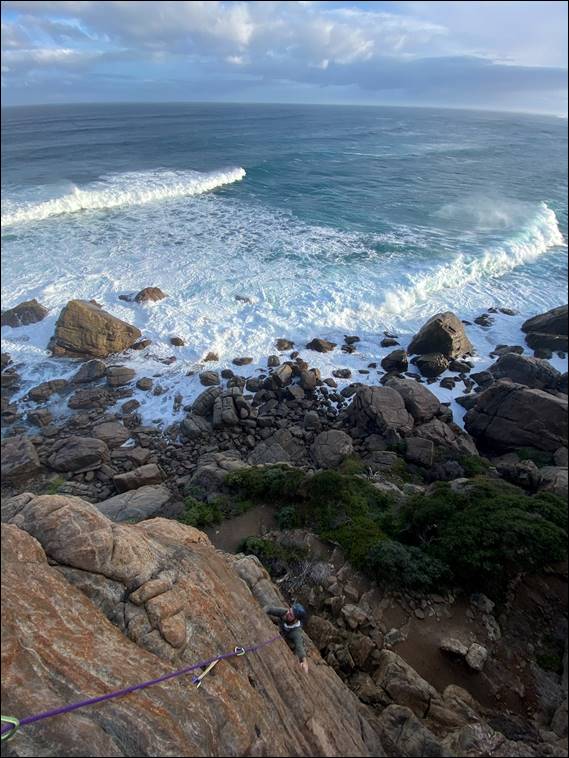
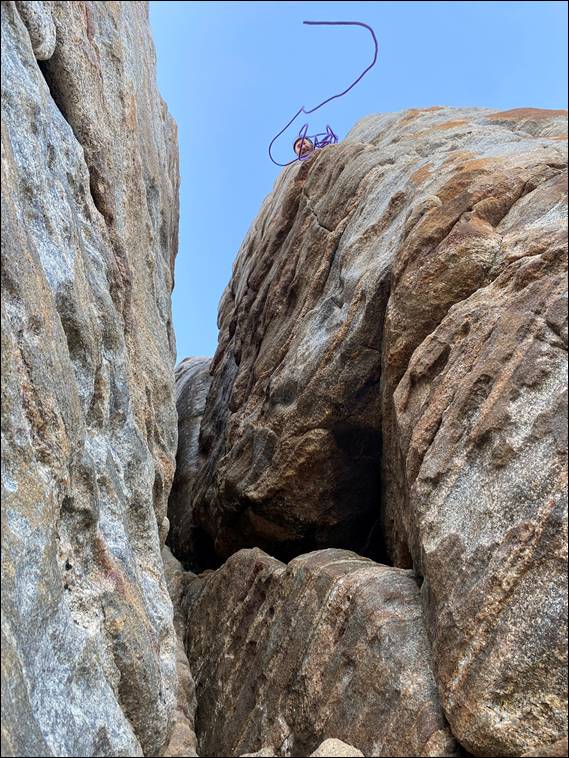
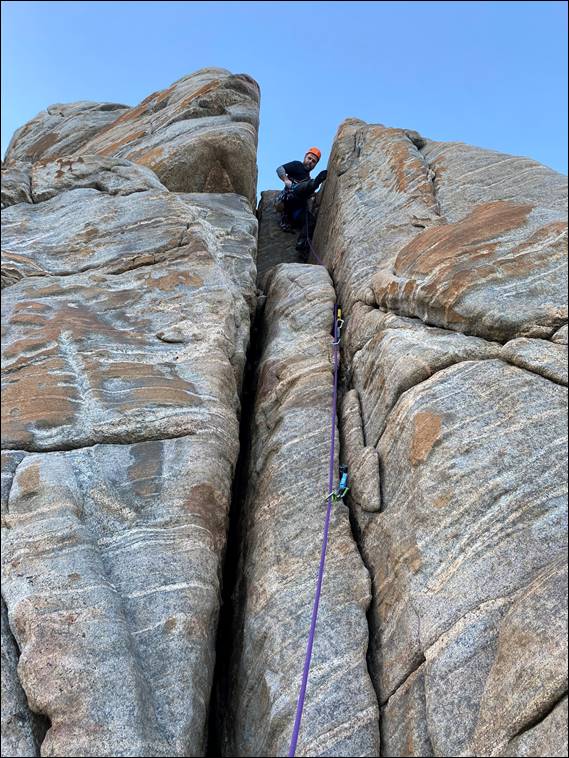
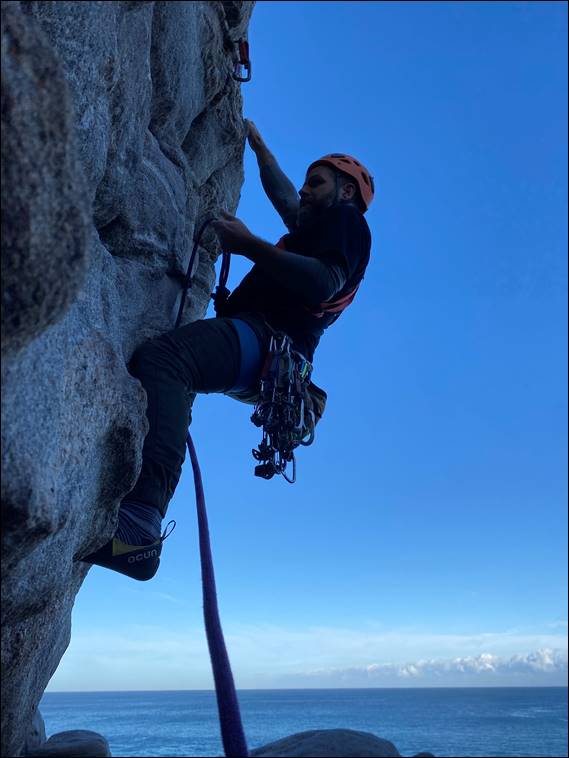
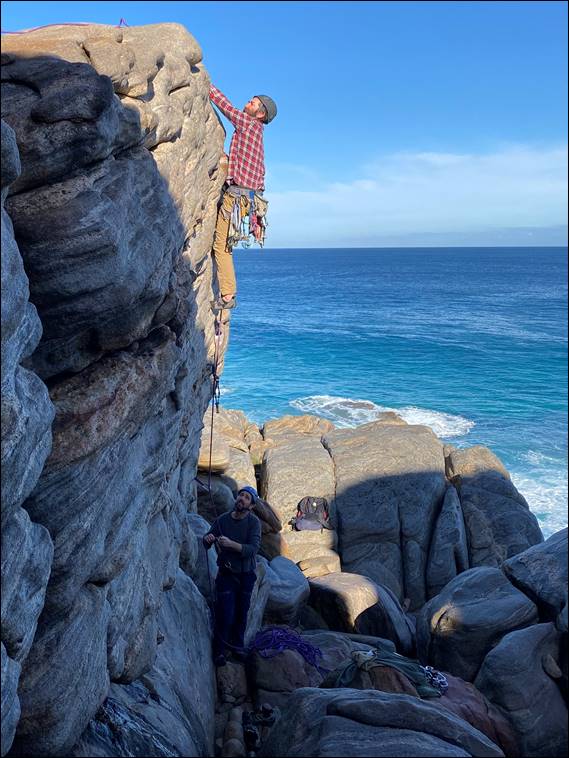
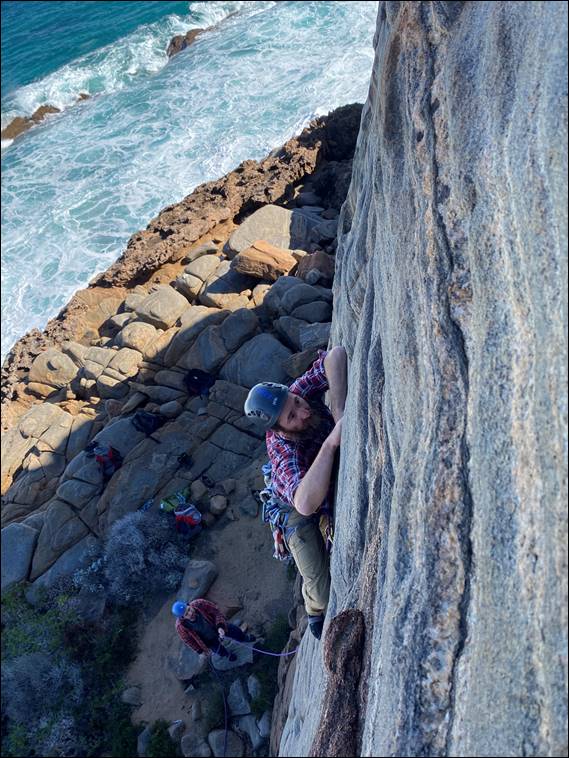
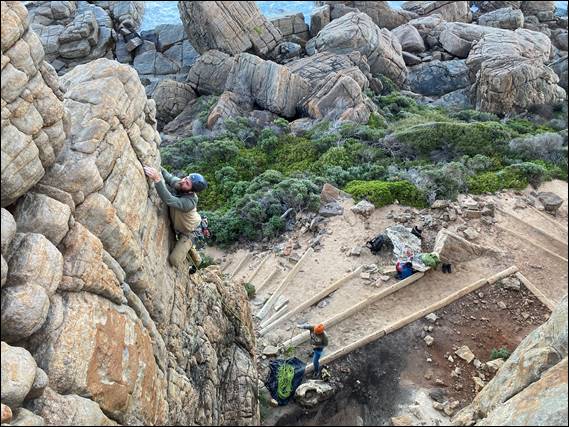
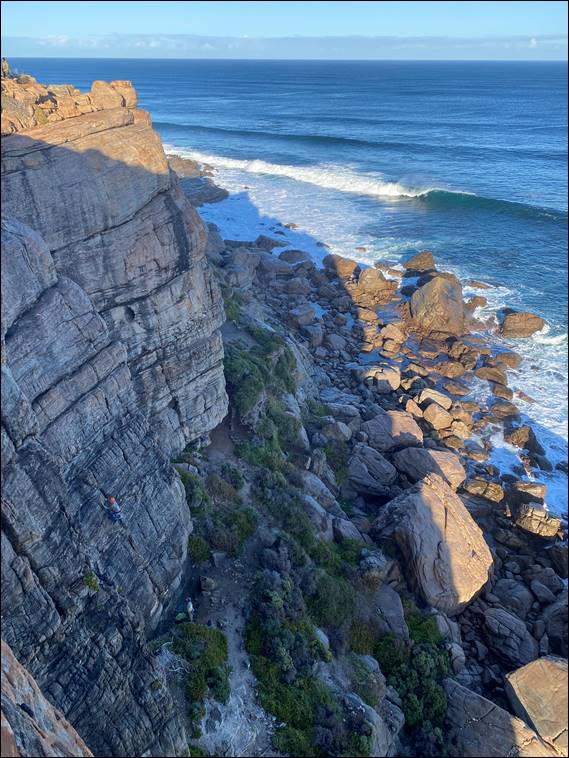
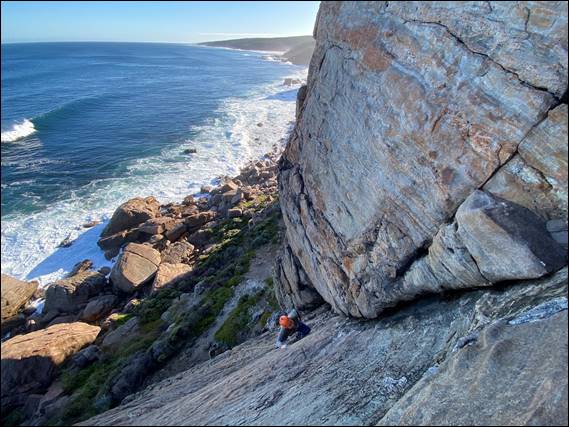
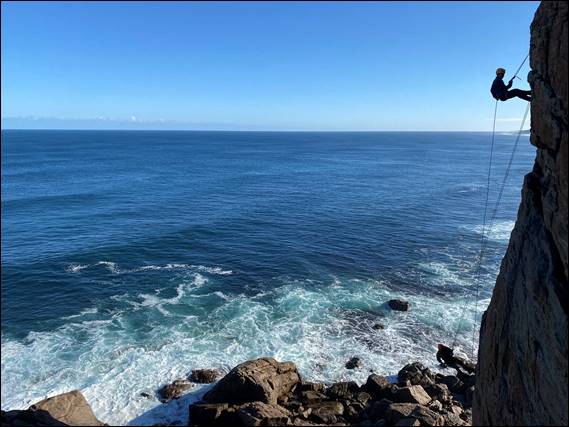
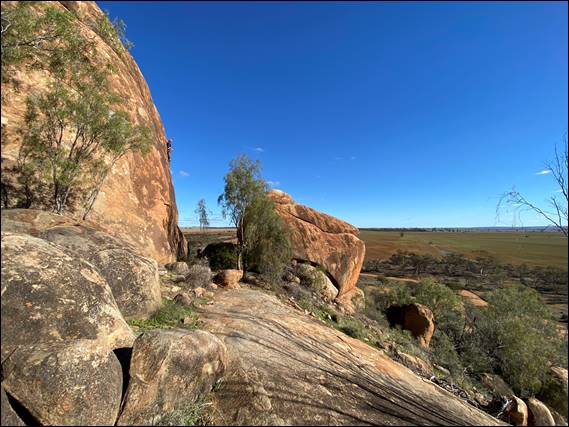
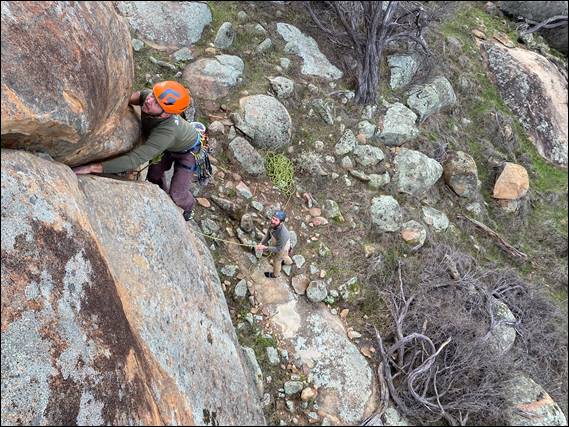
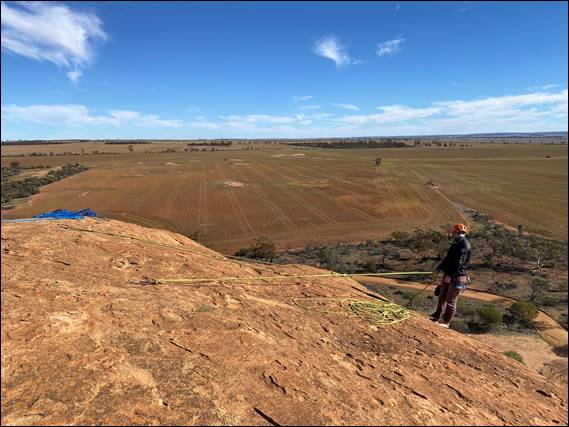
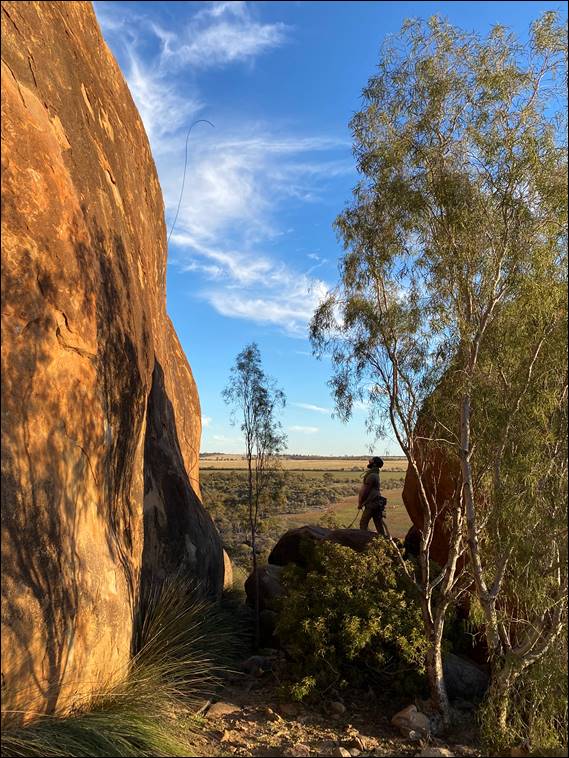
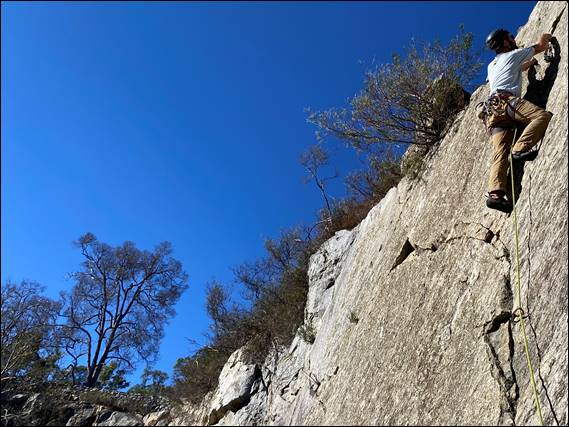
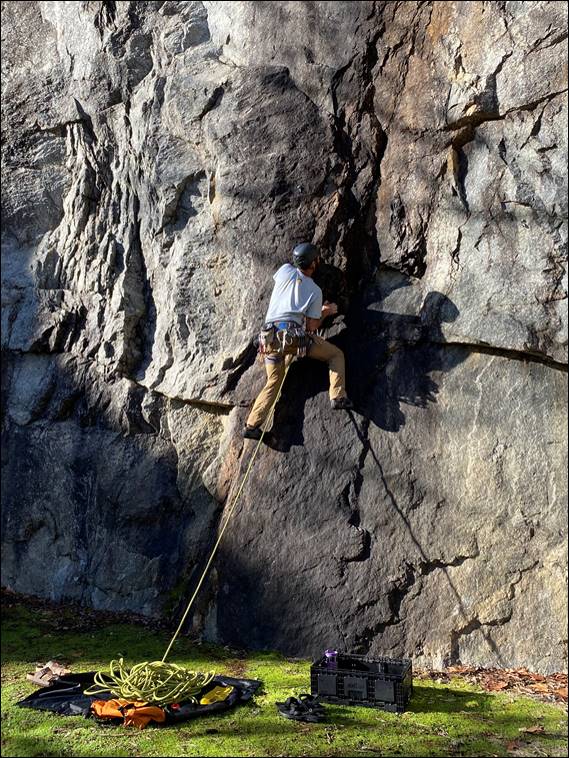
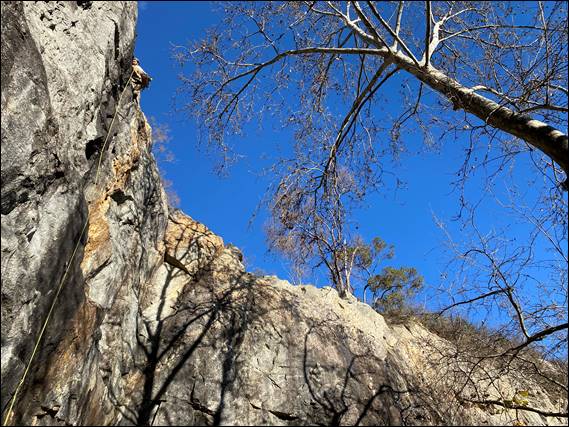
I’m pleased to say that as I warmed up, and we hit a few more lines, things improved. Helped by the fact that neither of us were motivated to jump on stuff too crazy. We did however keep the pace going, enjoying what we picked. Sam had also left a heap of static rope, and we used one of the longer lengths to set up a rap line. Allowing us to use the time we had more efficiently. The only issue being that the rope was a little short for the face we were going down, as you may notice in the second image. We made it work, and it still saved us a heap of time, so thanks Sam:
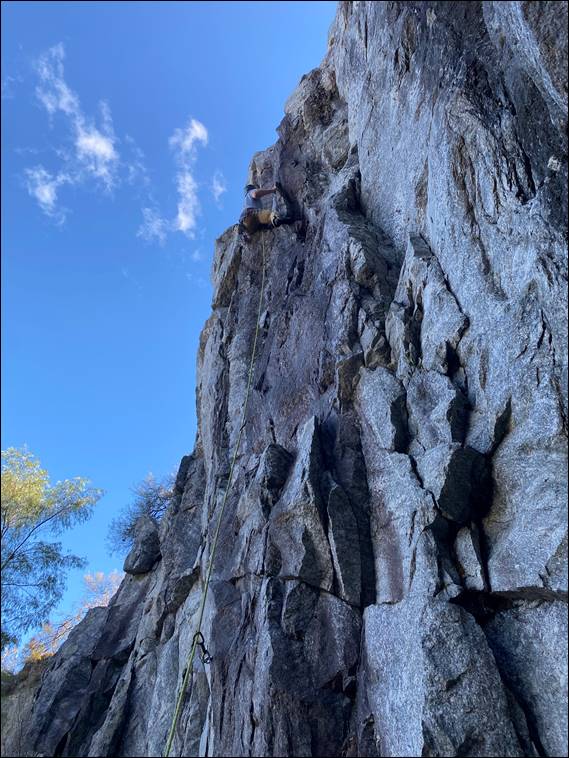
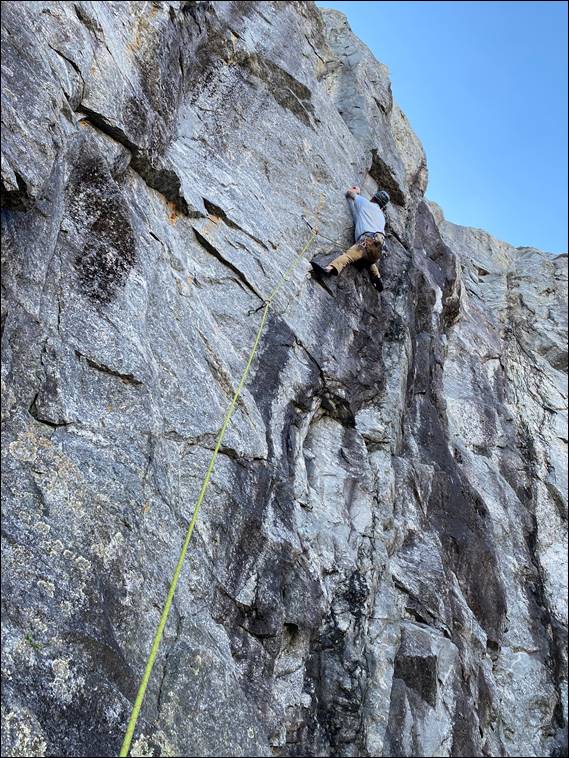
I’d suggest my knee is probably 90% there and my foot 75%. It’s week four since the fall, and I had been advised six to eight weeks for a full recovery. Certainly a lead fall with a heavy landing on my foot at this stage would set me back considerably. But I couldn’t resist having a lead today. Picking three traditional lines all of which get a little runout, meaning the risk of a setback if I fell was reasonable. I do however need to also work on my mental state, and ensure I don’t lose my nerve as the gear gets further away. I didn’t, and with each lead I could sense I was also shaking the desire to hold on tighter than necessary:
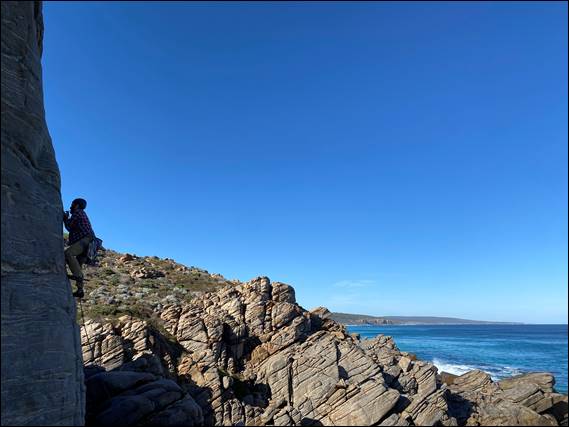
With expediency on our mind we wrapped the session up by scrambling to the top of the cliff. After the last route we even dumped the gear at the top of this scramble, so the packs would be a bit lighter. It all seemed to be working like clockwork, but we had completely forgotten one thing. The rap line was still dangling down the cliff, a little way away at the location we had been climbing. Not realising until I was home. The fuel to go back would cost more than the two thirty year old locking carabiners, a free second hand static rope that is a little too short, and two cordelettes one of which I had got for free as crag booty anyway. Weighing it all up I didn’t go back to retrieve it:
Another cool and crisp morning greeted Howsie, David, Josh, and myself. There was hardly a breeze and stunning morning hues, as we wandered along the beach towards Moses Rocks. It was time to for me claw back some hours, and a Friday morning out seemed like the perfect way to use those hours. Josh has been absent for three months. A bit like our reptile friends and that last trip of Josh’s was also the last time this year that I have come across a reptile https://sandbagged.blog/2024/03/30/the-easter-bunny/, not counting my scaly Carpet Python friend at Wilyabrup:
Despite the recent spell of lovely days, such as this one, I wasn’t hopeful that the warm sun would encourage any reptiles to come out of brumation for us to see. Not to say that there would not be any out somewhere along this rocky coastline, but I have never seen a reptile at Moses Rocks. A couple of days back I had to scrape ice of the windscreen. Today however the temperature was just hovering below double digits. This may have helped the rock feel fine to touch and we were not getting that tingly, at times painful, feeling in our fingers:
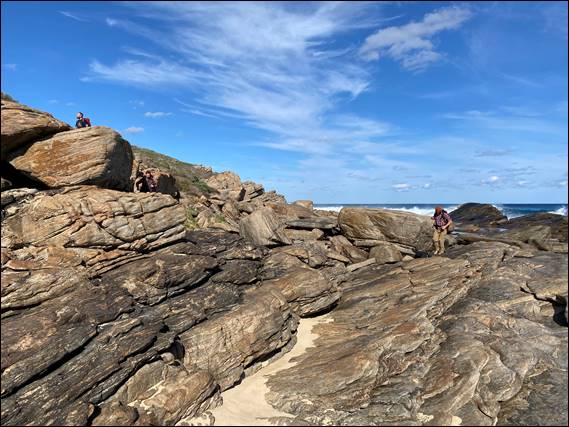
We started on the Northern Blocks. The area that would get the sun when it finally creeps over the landscape, which would be approximately an hour after our arrival. Not so we could to climb in the sun, but due to offering good introductory climbs. On which the gear is that bit easier to place. David has climbed at many of the great locations in the British Isles, which I used to frequent in the nineties. This included the Peak District, home of the infamous gritstone https://sandbagged.blog/2017/07/30/part-4-the-peak-district-learning-the-ropes/:
Climbing on this type of rock will expose weaknesses in your technique, and at Moses Rocks this is especially true of smearing. Geologically speaking Moses Rocks is different to gritstone, being a Gneiss. It does however have many of the same endearing qualities. At times a lack of gear placements or options that are less than desirable, a rough but not harsh texture that provides awesome friction, and rounded features resulting in the need to trust that friction to the maximum. David enjoyed climbing on gritstone, so I was hopeful he would enjoy it here:
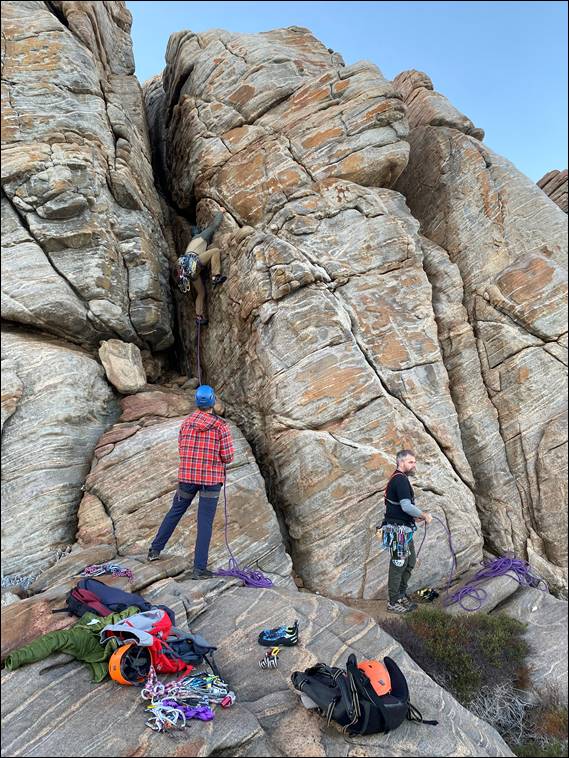
It was only his second time of getting on the sharp end, for a long time. Hence the need for good confidence building routes, offering easier to find placements and rest points. This worked a treat and he gobbled up two very fun and aesthetically pleasing lines. Meanwhile, Howsie and Josh played on a couple of slightly harder lines. Both to engage Howsie and make Josh work that little bit harder, maybe it was penance for being absent for as long as he has. Unlike last weekend I was feeling more confident on my feet, and hence coordinated on rock:
Certainly not healed, although after another week of resting up things have improved. As a result I cheekily got Howsie to throw me the line, so I could climb the routes both he and David had led. It does mean I am entering that period where it is enticing to go harder, but in reality I still have to be sensible. Otherwise I will risk prolonging the time it will take for a full recovery. The sun finally made an appearance as we played on our second climbs of the morning. After which David soaked in the sun, while taking a moment or two to take in the scenery:
I’ve always rated the landscape here, just that little bit more than the other local crags. During our climbing sessions, this is the place I tend to spend more time simply looking out and soaking it all in. Josh did well on the two lines and indicated, as he had on our last trip out, that he was keen to have a lead. There was an obvious route to point him towards, and this small buttress also had some good options for David. Albeit a little steeper, but still not silly grades and within the level he had indicated he was keen to push things to today:
Josh enjoyed the security of a very fun corner, David was however needing to hang on to a reasonably steep wall. Starting well, but the next move was committing. He struggled with his brain. At one point making the move. His hand hovered over the next jug but never touched it. His thoughts played games, and he reversed the move. This occurred several times before he finally got the jug, and with each time his arms grew more and more weary. The nail in the coffin for him was the next fiddly gear placement, it just didn’t inspire him:
When David came down, there was only one option. That was for me to break a rule I had set myself for my recovery period, and jump on lead. Truth be told there were other options, but my desire to have the rope below me pushed those to the back of my mind. It felt good, but also sustained and pumpy, way more so than it should have at the grade I had told David it was. Afterwards he pulled out his phone to check, and this line was not in the mini-guide available on line. Just to make sure we were not being soft, Howsie then gave it a go on lead:
He agreed the route was worthy of a higher grade than the existing lines on this wall. And just to make absolutely sure it has not been recorded before, I’ve checked my 2016 South West Rock and the previous 1996 Margaret River Rock guide, as well as The Crag. There is no record of it anywhere. I’ve led it several times over the last decade and half, and more recently Rongy has too. The mini-guide has now been updated to include this and other recent new lines. It has been sent it off, so will hopefully replace the outdated guide online:
I’ve called the climb Rolling Thunder, which works in nicely with the names of the other lines on this wall. It is also reflective the climb itself. We decided on grade 16, HVS 4c/a, which was two to three grades harder than David had indicated he was keen to try on lead. This resulted in him being a little weary. His brain had also been pushed to the limit. Sadly resulting in the harder to protect routes on Hands Up Wall not looking inviting for him to try on lead. But we had to get to this wall. Firstly to show him the Zawn, which he immediately liked the look of:
But also because Howsie was keen to attempt my latest creation. Only a grade 13, HS 4b, but with questionable protection (https://sandbagged.blog/2024/06/03/sometimes-adequate-is-good-enough/). Howsie took some time, as I had, to find how to best place the second piece of gear. Before running it out considerable. The gear and runout making the final move to get to the top of the slab very nervous. This is definitely a route that has that a true gritstone ‘don’t fall off’ feeling. While not overly hard, it requires absolutely 100% commitment:
Josh and David climbed it with the rope above them, claiming Howsie was mad. I doubt anyone else will be game to lead this one, but was very happy to see Howsie go for it. I got the feeling he would relish the experience, and sure enough he was buzzing when he topped out. I am however not sure he would do it again. After seeing that placement and just how flared the cracks can be, David was quite happy not to lead anything else. So Howsie and I wrapped the session up by leading side by side lines:
This morning Howsie had pushed it into the danger zone, and I had probably pushed things a little further than I should have. That said both of us relished the final routes, which rounded off the session nicely. Just a grade above Howsie’s last lead, but with better protection. They still however required ultimate faith in friction. Something Josh and David had to dig deep for, when they got to those moves. A result of the morning having also pushed them out of their comfort zones, in terms of technical difficulty and mental focus:
Today we welcomed a newcomer to our local climbing crew. David arrived from Ireland a few months back, and as yet had not had much success in meeting climbers. It is however small world, and he happened to be working with Ash’s partner. And while Ash has not been out climbing with us for what seems like an age, the dots were joined. David came out ready for his first lead in Australia, but it was not his first time visiting Wilyabrup. A bit like I do when I can’t find a climbing buddy, he had explored Wilyabrup a couple of times and top rope soloed:
Howsie joined us for today’s chilled session, which I was grateful for. I did indeed head to the physio on Monday and was told what I expected. Dr Google had served me well on this occasion, and my self-diagnosis was on the money. The physio did however add that the knee and foot may take 2-3 and 4-6 weeks to heal, respectively. And in addition that for my right foot it was possible that I may have a hairline fracture in my distal 5th metatarsal, in addition to the bruising. So you may be wondering why I was heading back out so soon:
Well regardless of whether or not there is a fracture, the management would be the same. And I got the feeling that the physio picked up on my enthusiasm for climbing, which may have been what got me across the line for her to say I could climb. With the proviso that I endeavoured to only apply flat and even foot loading. I had pre-warned David and Howsie of the need for me to take it easy, hence why it would be a chilled session. This suited David too. Despite having some twenty years of trad climbing experience, he hadn’t climbed much of late:
He also had not led anything for a while. Hence, Howsie bagged a couple leads on nothing too serious. Both for David and my benefit. I did suggested he try one of my lines that I thought no one else had led it. But I was wrong. It has had at least one more ascent. And I am not the only one to have forgotten, as back then Howsie led it https://sandbagged.blog/2021/12/27/cooling-off-time/! So for a second time he relished Grotesque. And as Nadia noticed last time, David also remarked on the lack of gear and long runout towards the top:
David was up next for a lead. While he wanted to start gentle, the problem with Wilyabrup being lower grade climbs tend to be a little sparse on protection. And after his mention of Howsie’s runout, I wondered how he would go. The pace was slow and steady, and you could tell he was still familiarising himself with the rock. It can take time to learn to trust a new type of rock, and even more so when you have to climb a considerable distance above your last piece of gear. I needn’t have worried, and he managed to work his way up:
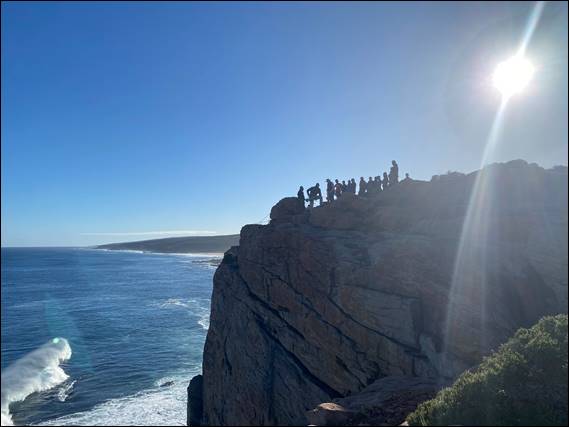
Thoroughly enjoying his first lead on an Australian climb. And he wasn’t the only one having new experiences on Australian rock. We were surprised when we rolled into the carpark not too long after first light to find several cars already there. And there was a familiar face, Pete a local adventure tour operator. He was getting the gear ready for a group that was due to arrive a bit later in the morning. The group comprised some thirty plus army personnel from, I thought he said, Singapore. And it was their first taste of abseiling and climbing:
Despite the language barrier, they were very approachable and friendly. And I found myself watching and taking some happy snaps of them, while Howsie and David continued to climb. Then airdropping the images onto their phones, which I had taken from angles with great backdrops that they wouldn’t have managed to get. This did mean I was moving about a fair bit, probably a bit more than I should have. I did at least have my hiking boots on, providing my foot with that bit more support than they normally get in my sandals:
While I was socialising, Howsie ran up one more route that I of course couldn’t resist climbing. Despite noticing my foot on this route, David was keen to bag a second lead, which he again really enjoyed. It was another gentle climb, so felt I could manage it and even suggested Howsie and I climb with packs. By the time I got to the top my foot was a tad tender, a sign that enough was enough. Luckily David and Howsie were also happy to call it. I’m guessing I’ll need to rest up next week, and if I put my feet up enough I might be able to give my body another test next weekend:
You may be wondering why I may be writing about a climbing trip, in view that the last time I went climbing I took a fall, injuring myself. I’ll start by saying we have not climbed with Pontus for some time, due to him being stuck in Perth for work. Some weeks back he mentioned his time in Western Australia was coming to an end. He was moving over east for another job, after which his travels would take him to other continents. Several weeks, or more, prior to that I had briefly been in touch when he hinted he wouldn’t mind a trip to Kalbarri:
A place I have only climbed once, but knew enough about to be able to advise the grades of the better climbs there were probably not for him. I should preface that by saying the grades of the climbs for which information has been made publicly available. There are other climbs but that information has been withheld by those in the know. Instead I suggested a place I have been to five times before. While I have climbed nearly everything here that I am likely to multiple times, it is a beautiful place to experience and so I really didn’t mind coming back:
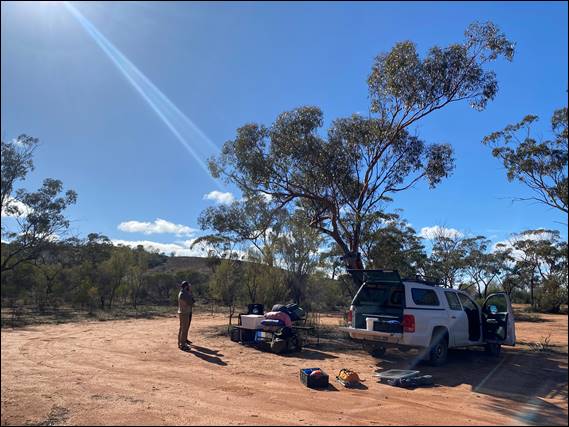
As such the trip dates had been set for some time now, and it was the last opportunity to catch up with Pontus before he left Western Australia. Therefore, regardless of my ability to climb, I felt compelled to stick to the plan. Plus Howsie was joining us, so even if I was unable to climb the two of them could. I was trying to convince myself that I would be equally content to just be there. It is a reasonable drive, which started at 5am and ended some six and half hours later, due to going via Perth, when we arrived at Eaglestone Rock:
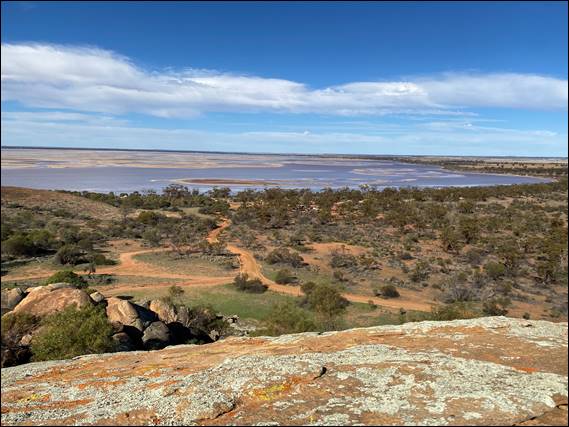
While it is locally known as Eaglestone Rock, presumably because the information online promoting the place says if you are lucky you will see a Wedge-tailed Eagle (Aquila audax) perched on top of it. It certainly seem plausible, as it provides the best perch to get a 360 degree vista of the surrounding landscape. And indeed, after setting up camp and having lunch, while we walked to the rock, Howsie spied a Wedge-tailed Eagle fly off. However, I’ve read the first nation people know it by another name being Turtle Rock:
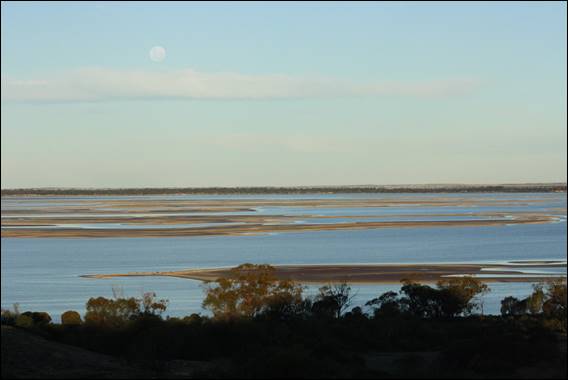
While it has a kind of shell like appearance, turtles tend to have a flatter shell and this rock looked more like a tortoise shell. Pickiness aside, it is located next to Lake Brown justifying the use of the aquatic species. Lake Brown is the biggest collection of intermittent lakes in the area, and just to confuse you even more Lake Brown is located in 610 hectare Lake Campion Nature Reserve. Furthermore, the geographical locality, used to define postcodes, of Lake Brown is north west of this area and doesn’t even touch Lake Campion Nature Reserve:
I hope I didn’t confuse you with all of that. In some ways I could suggest over complicating things is a bit of a Western Australian trait. In my line of work I often hear ‘it’s different in Western Australia’. Effectively suggesting approaches used elsewhere, to resolve or manage issues, won’t work here. I accept there are some differences, but have also found this argument is often flawed and used to make things seem more complicated than they need to be. Used in part to either fleece the system or resist changing practises:
Overcomplicating things is something we were not doing on this trip. Sticking to reasonable grades. In part due to wanting to ensure Pontus had a great time and didn’t feel completely beaten, but also because I was keen to have a bash at following. We joked that he would be leading everything, as we had both climbed everything here before. I wasn’t sure if he believed me, but that afternoon he led three routes. Enjoying his first two before Howsie attempted one. Howsie tried, and tried, and tried but never managed to clip the second bolt:
Needless to say, Pontus nor I attempted to beat Howsie’s high point. Instead, feeling rested, Pontus led his third and final route of the day, and as with the other two he thoroughly enjoyed it. As for me, my knee held up surprisingly well. No doubt due to the support brace. I did however squeal on the first climb, when I used my right foot in a way it really didn’t like. Being stubborn, I continued, carefully and gingerly testing each foothold before committing. My approach allowed me to follow all three of the lines Pontus led, with only two squeals:
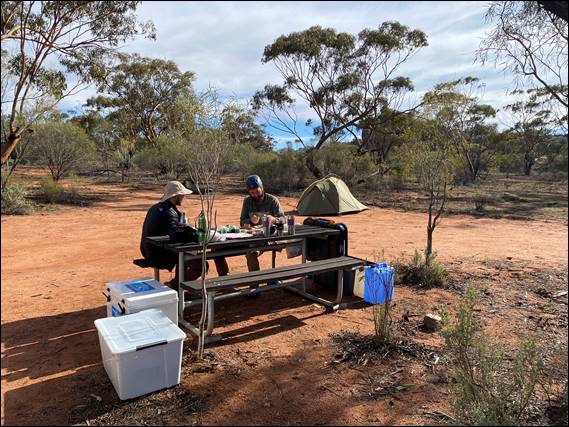
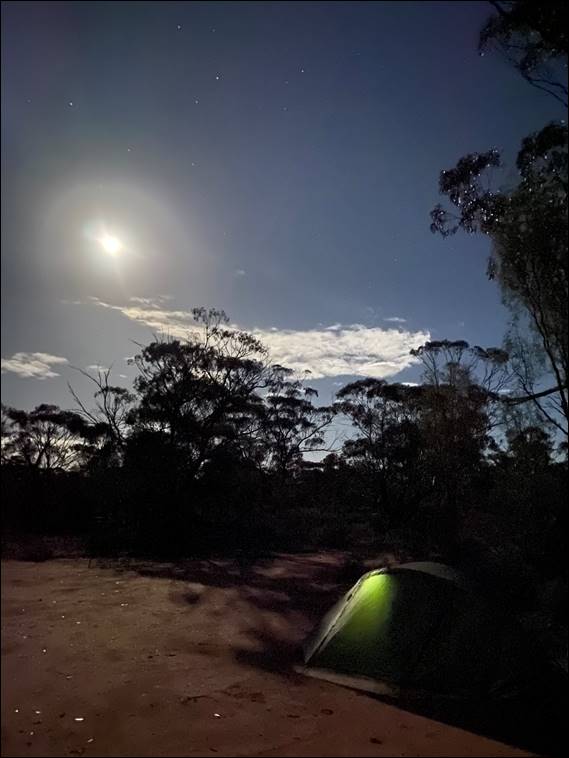
It was probably not the smartest move, and after each climb I had to sit down to take the weight of the foot. Hobbling back to the campsite I felt it was bad enough for me to message Lisa and ask her to book me a physio appointment for Monday. The next important thing was to get a brew on, while Howsie started to prepare dinner. The timing was good and as the light faded we were tucking into a big bowl of yummy pasta. Despite daylight having left us, the moon was incredibly bright. It was also way too early to hit the sack:
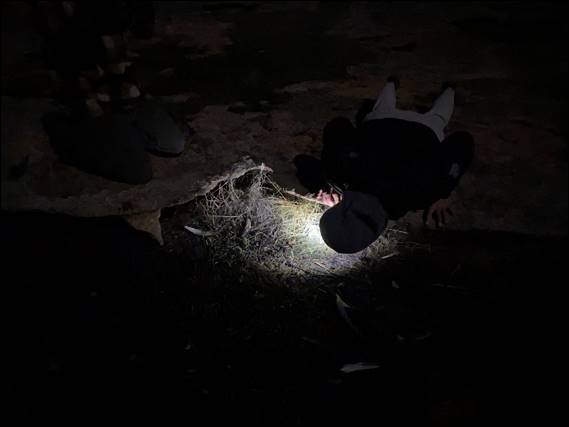
I suggested a wander, which after having rested my foot for an hour or so didn’t feel too bad. We walked to the granite slabs, and immediately started to look for the froglets in the gnamma holes. These are naturally formed holes created by chemical weathering processes. Research has shown these rainwater fed pools, which fully dry out in summer, can provide a habitat for up to 230 aquatic invertebrates of which at least 50 are endemic to these formations. These pools are also a water source to many other inhabitants and visitors:
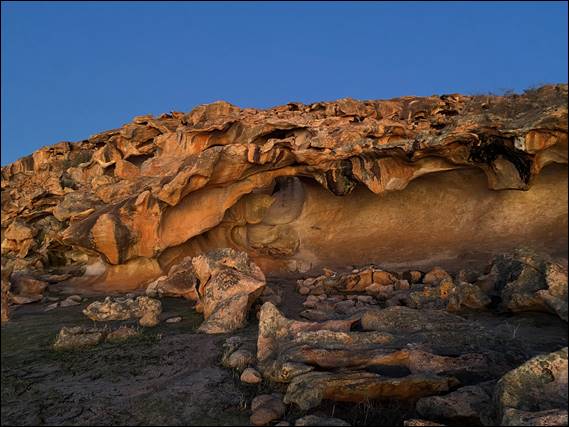
We never managed to see the froglets, despite their sound indicating we were looking right at them. Howsie, described how they often create a dish in the soil to help amplify their call. Resulting in the sound being unnaturally loud for such a small creature, being less than 1cm in length. We didn’t see any other fauna on our walk, but on the way back along the lake edge we found a series of amazing caves carved out of the granite. Back at the camp I was well and truly ready to lay down, and the other two were not far behind me:
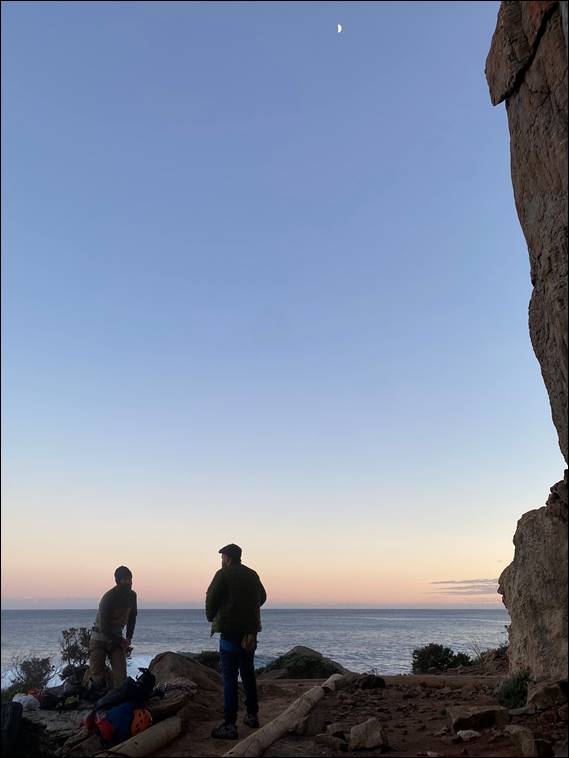
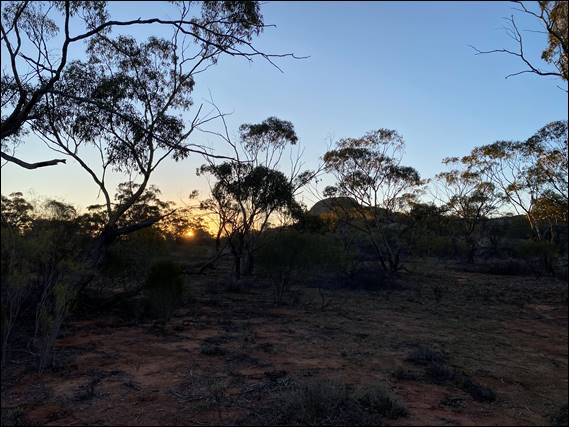
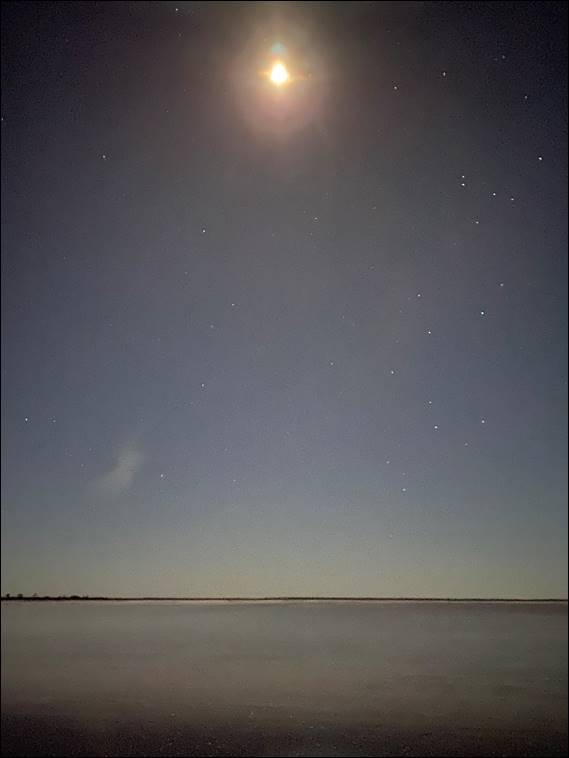
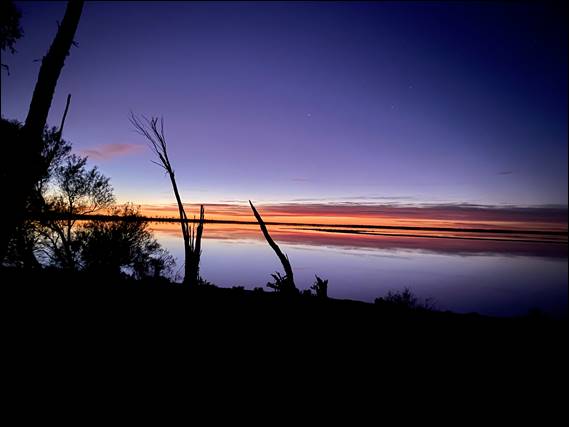
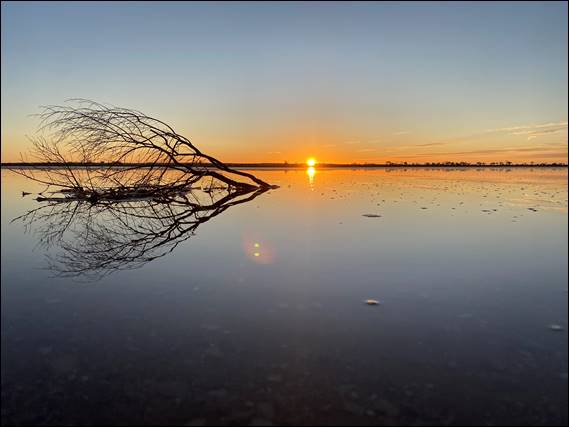
This area has a cold semi-arid climate, and this morning the empathises was on cold. Pontus said it was the coldest he has been since being in Australia. The closest weather station indicates it dropped to three degrees that night, and there was a heavy dew on everything. We woke up to the shortest day of the year, the winter solstice was upon us. When I say we, I should say I. Getting up a full forty five minutes before first light. That said the moon had been like a streetlight all night and even now, as it was hovering on the horizon, it was bright:
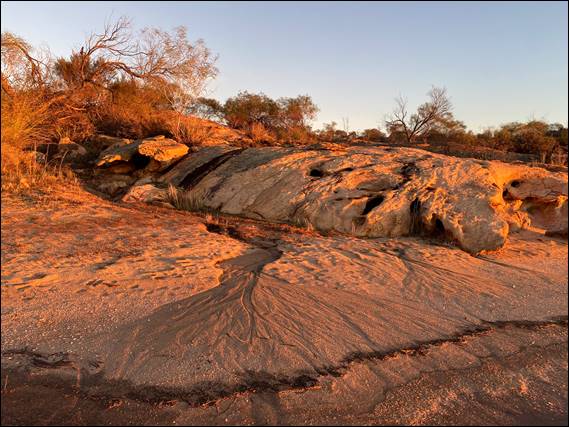
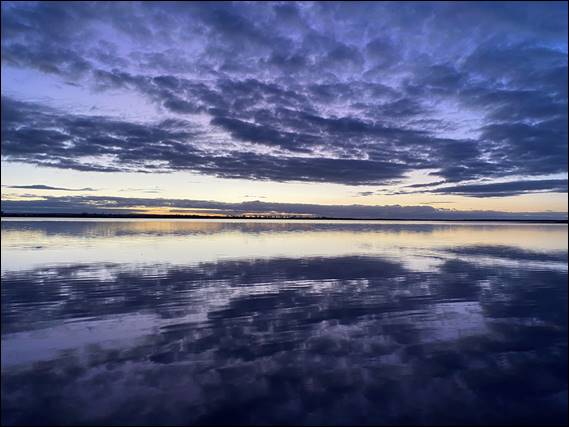
The kettle went on, and once the brews were made I roused the troupes. Despite first light being reported to be at 6:40’ish, the beautiful morning colours were starting to show in the east as soon as the moon dropped below the horizon. It was only ten past six when I took the picture two images up, a full half an hour before first light was due. So while it was cold Pontus nor Howsie minded getting up to a very welcome steaming hot brew, and a kaleidoscope of colour best observed from the waters edge:
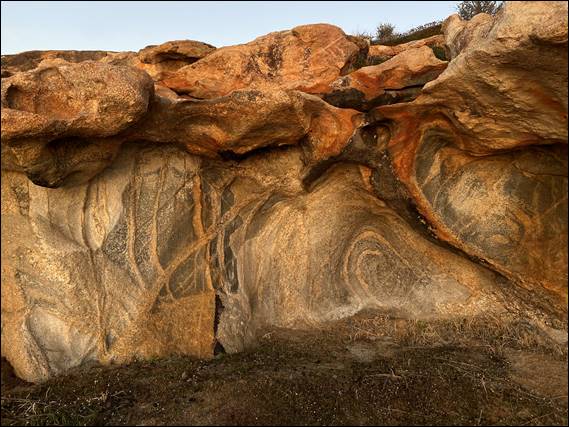
We wandered along the lakes edge to the caves we had seen the night before, looking even more spectacular in the morning light. Someone else at the camp stated the lake was alkaline. They had been told this was due to the chemical weathering processes that created not just gnamma holes, but amazing architectural features including caves you could walk in. This was true in a way, the area is part of the Yilgarn Craton. A huge basin formed 3,000 to 2,600 million years ago, with a base of granitic and gneissic rock with dolerite dykes intrusions:
The soils have resulted from insitu weathering from the base rocks over geological periods, creating ‘alkaline grey shallow loamy and sandy duplex soils, calcareous loamy earths and saline wet soils occur on the valley floors’. So the alkalinity originally came from the base rock, but occurred long before the rock features we now see at the surface. During the week prior to our arrival approx. 20mm of rain had fallen, which is half the June medium rainfall for this area. Evidence of this rainfall could be seen in the sand between the rock and lake:
When the Lake is full it is used for water skiing. This is not uncommon for the salt lakes of the Wheatbelt, however the water body looked very shallow for as far as we could see. So it seemed a bit unrealistic to think it would ever be deep enough. There are probably deeper parts, which is entirely possible considering the lake is five kilometre long and five kilometres across at its widest point. We could only see a very small part of the water body. Then in complete contrast during long dry periods these watery features can turn into dry salt lakes:
The flat salt crusted lakes are enticing for four wheel drivers, but are very fragile environments. Buried below the surface seeds and eggs lie dormant, waiting for the right conditions to come to life. Similarly the granite features rising out of the landscape provide ecosystem havens for many species. Not just aquatic fauna and flora in gnamma holes, but also reptiles and insects. I have only seen the Ornate Crevice-Dragon (Ctenophorus ornatus) on my first visit here, which has discrete colonies on each outcrop across the Wheatbelt:
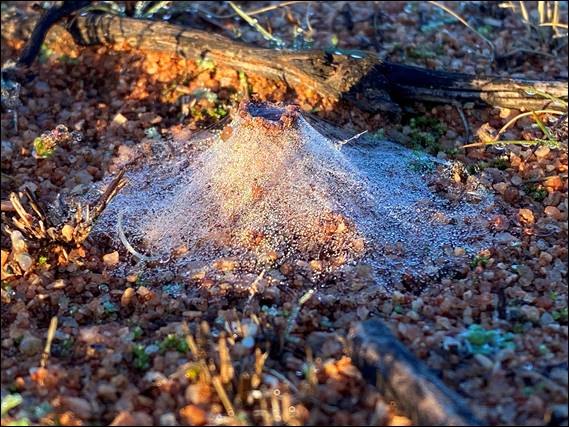
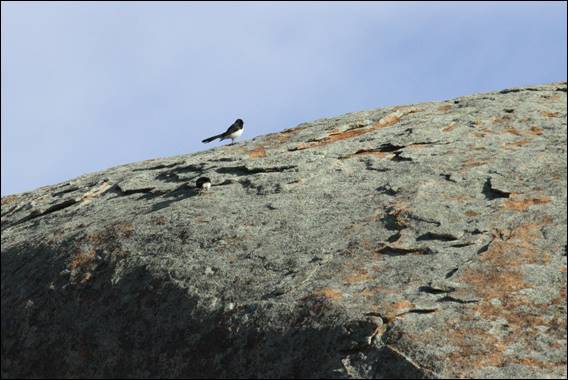
From an insect perspective I have had no luck in trying to find out about the web structure covering a small soil tower two images up. The soil structure being different to the ones ants create, to prevent water running into their burrows, in that they were considerably thinner. We also didn’t see many birds, the only positive identifications being the Wedge-tailed Eagle, Australian Ringneck (Barnardius zonarius), Australian Magpie (Gymnorhina tibicen), Galah (Eolophus roseicapilla), and the above Willie-wagtail (Rhipidura leucophrys):
Howsie said that the small birds are notoriously hard to identify, which I completely agree with as they rarely sit still. When they are doing bird counts these are often referred to as LBBs, meaning little brown bush birds. We saw heaps of LBBs, but I do not think we can add them to our tally. Therefore, we really did not do too well when compared to the 43 species that have been observed and recorded on eBird at the Lake Campion Nature Reserve. Regardless of what we didn’t see, we did really enjoy the morning stroll:
I could sense a distinct lake of urgency to get on rock. The fingers were still tingling from the cold, so it was back to camp for another cuppa and breakfast. Eventually making our way to the rock at a lazy time of nine. While Eaglestone rock is a blip on the landscape it is high enough to catch any breeze, and as we arrived we really noticed the icy wind. Definitely time to climb in the sun, on the west face. Pontus hinting that Howsie could start the day, but we somehow managed to convince him to jump on lead:
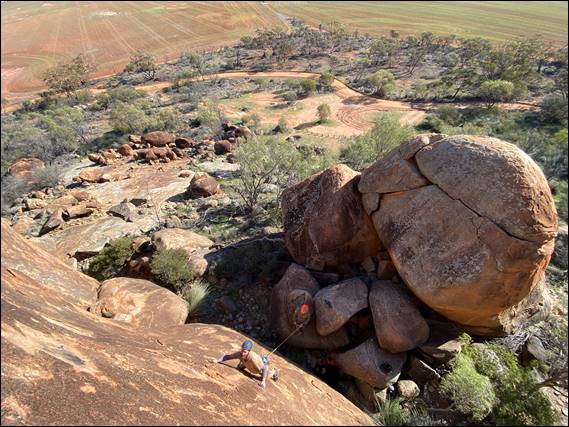
This he did and as you’ll see two images up, he was pretty happy that he did. He then took a liking to the easier of two traditional crack climbs. It didn’t take any convincing to get him to lead that and I was hoping to get a few images from above on this line. He was climbing too fast, so by the time I was set up I missed all the action. He enjoyed the jamming and three-dimensional climbing, in contracts to the faces we had mostly been on. Resulting in him be tempted by the harder crack. This time it took longer, allowing me to get a few images:
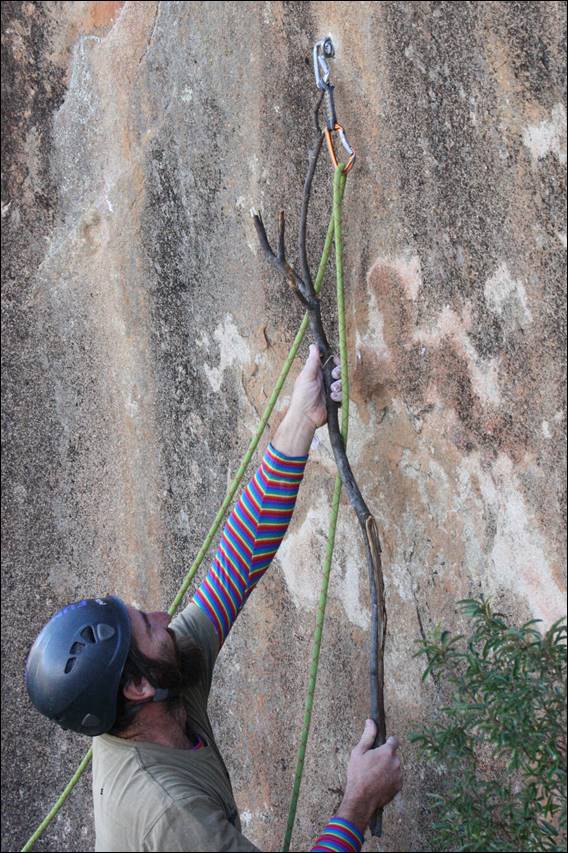
Three leads in and it was Howsie’s turn. And like yesterday he set his heights a bit higher. You could tell he was in two minds about it. Standing there looking at the route, trying to mentally climb it before he was even tied into the rope. He even opted to stick clip the first bolt, a clear sign that his nerves were getting the better of him. For the non-climbers, to stick clip a bolt means to put it in from the ground. There are purpose designed poles called a stick clip, but we don’t have one so reverted to the old school technique of using a branch as shown above:
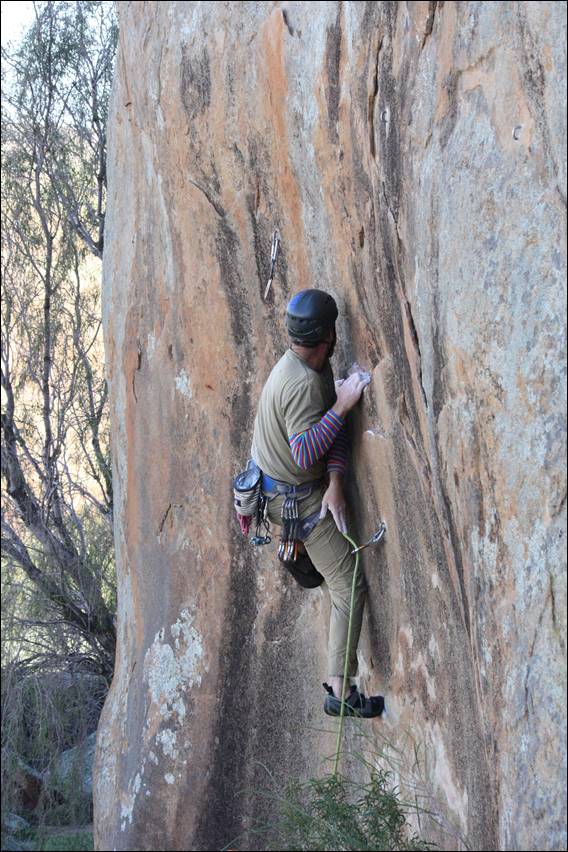
If you look at the draw that has been placed on the second bolt, to his left, you will see how it hangs away from the rock. This shows that the start of this climb is off vertical. Not only is it steep but it is a technical and a tricky start. Followed by a very big move to a huge jug of a hold, a foot or so past the second bolt. It took a few goes to get it, but he eventually got there. Then managed to get up the rest of the climb clean. Pontus straight away said he would be happy to have the rope above him for this one:
I on the other hand was being completely sensible and didn’t do any climbs. It took an awful lot of self-control to not jump on the rope. But common sense prevailed, primarily as all four climbs required more varied climbing than vertical faces. Four climbs in and it was lunch time, it certainly was a very relaxed pace today. No one was complaining about that. On walk we spotted the above trapdoor spider burrow, with the silken door unusually open. Using a little stick we checked but no spider jumped out, so it may have been abandoned:
There are over 200 named trapdoor spider species in Western Australia, with two new species named in 2023. Those two are open-holed trapdoor spider species, so do not have the silken door. Each species will use a certain type of leaf litter to build its burrow. Most living in the burrow their entire life, which can be up to 43 years. Many species are endemic to very localised areas, and as such I checked to see what had been observed here. The only one I found being the Tree-Stem Trapdoor Spider (Aganippe castellum):
They only occasionally make tubular silk nests in tree trunks. Therefore, despite the name it may be although I won’t put money on it. Based on the way this post is going it may seem like we only occasionally were on rock, but we were here to climb. So after a welcome hot brew and some lunch we wandered back to the crag. This time we went to the east face, chasing the sun. Despite the mostly blue skies the temperature never got too high, peaking at about sixteen degrees. Making climbing in the sun very pleasant:
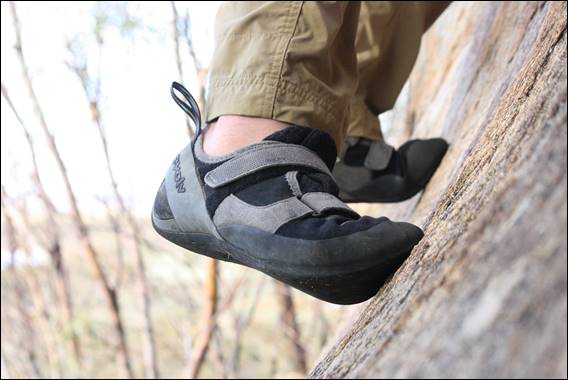
This side meant it was vertical face climbing. A style I was feeling a bit more comfortable about trying without aggravating my foot, too much. I tied my climbing shoe that bit tighter. As it felt like the blood flow was being restricted, I hoped it would provide that bit more support. Pontus went first relishing the fine climbing, but then happy to let Howsie take the next lead. He could feel himself tiring. With me also climbing this slowed the proceedings down that bit, providing them with a bit longer rests:
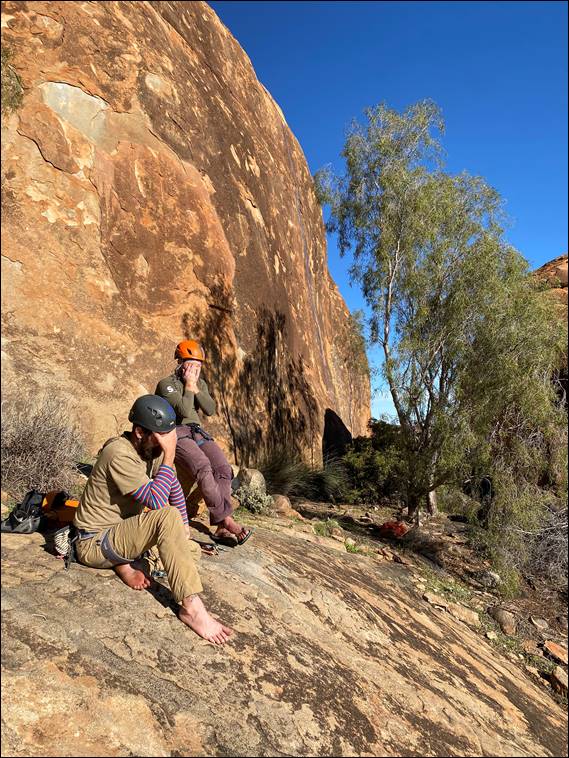
This was clearly required, as after the two routes, they were looking weary. The following image definitely wasn’t mocked, they were tired. Pontus hasn’t been climbing heaps recently, and Howsie had burnt himself out a bit on a couple of harder lines. Maybe the weariness was also because they hadn’t slept well during the cold night, or because I got them out of bed so early. So many reasons. It was however certainly was not from a lack of energy. We’d eaten well, and had taken snacks with us for every session:
I joked that they were luck I wasn’t climbing fit, but didn’t push the pace. Pontus was up next and picked his hardest lead yet, a mighty vertical and sustained route. As I sat back on my perch, resting my foot still tightly contained in the climbing shoe, as Pontus started. Right from the start it challenged him. When you feel weary, the challenge is both mental and physical. All his other leads were managed quite efficiently and quickly. This time it was Howsie’s turn to be patient while belaying, as Pontus had to figure out his way up:
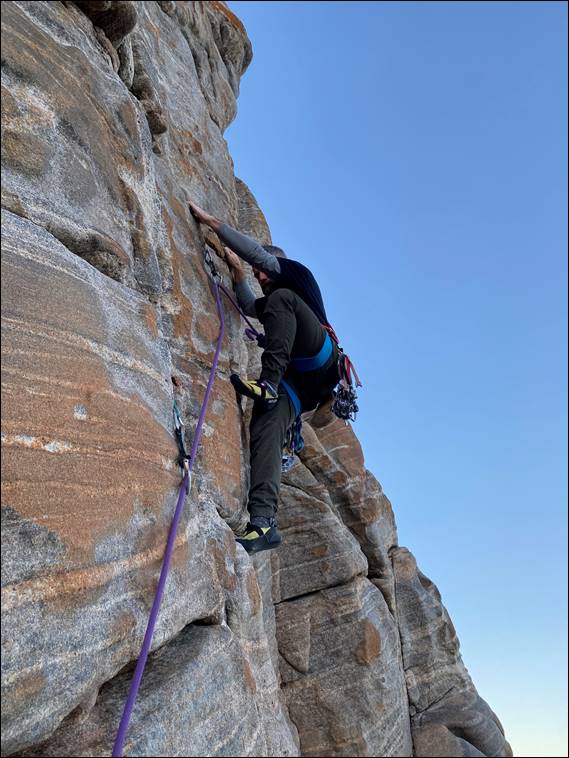
He dug deep and pushed through, eventually topping out and I think he may have been somewhat relieved to have got up the climb. Despite the higher grade, I decided to go up this one too. I didn’t have much feeling in my right foot now, but was still being careful with each placement. Testing it before fully pushing down, and on this line I had no choice but to put that bit more pressure on it. As a result of my changed focus I was holding on with my fingers that bit harder. I could feel it in my forearms, and have no doubt Pontus also did:
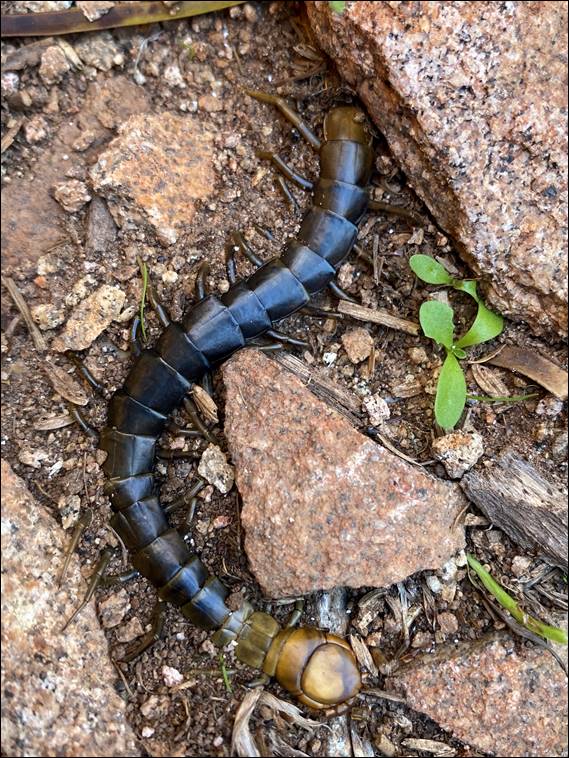
That he did, and he hinted he didn’t have enough gas left for any more leading. Regardless of that I reckon he should be pretty chuffed with the routes he led. He had enough energy to jump on second, so fared better than this Centipede (Cormocephalus) that was at the base of the climb he had just done. Sadly deceased, but in view of the lack of live creatures we spotted I have included it. It may have been an Orange-footed Centipede (Cormocephalus aurantiipes), which is a commonly found species, although I’m not completely convinced:
The two of them had another sit down and snack before taking on the next climb, Howsie was up and there was a little indecision as to which route he would do. Plumping for the route next to the climb Pontus had started us on yesterday. It was also the last climb Howsie and I did on our first visit here eleven years back. At that time he on-sighted it, but today the start had him foxed. As it did me, even though I had the rope above me. We could suggest the very small start holds have become a bit more polished, from all fingers that have used them:
However, we both put it down to a lack of climbing fitness. With recent illnesses and injuries, while we have been getting out our general climbing fitness has suffered. Strangely, and injuries aside, my drive to train by getting on my wall is distinctly lacking. Pontus too found the start hard, so all three of us had to pull on the first draw. After that we managed to get up unassisted, but it was clearly a sign that the climbing for this trip was over. The rope was pulled for the last time, and we packed up:
Howsie’s body had switched off, but his mind hadn’t. Looking at another line contemplating it, then another one, and one more. Pontus was a little harder to read, not pushing for it he may have been game to follow up one more. There was only an hour of daylight left, and common sense prevailed. We wandered back down admiring the moon, and we all remarked at how it had been so much brighter than usual. It also looked like it was a full moon, being very hard to see anything missing from its spherical shape:
The only reason I knew it wasn’t a full moon is that it had come up too early. A full moon occurs when the moon is on the opposite side of the earth to the sun. The sun sets at the same time that the moon rises. We only missed it by one day, with the full moon due on Saturday night. The reason it looked so bright on this trip can be put down to two reasons. The first being that the earth is closer to the sun during winter months. The second is both the air quality and dryness here, both of which result in the light not diffusing as much:
We managed to time dinner right again, and like the first night went for a walk before hitting the sack. This time heading further round the lake, taking in the rock sculptures along the way. It didn’t feel as cold a night, and amazingly in the morning there was no dew. A stroke of luck seeing we had to pack up the tents. I was up at 5 this time doing my usual of getting a brew ready, Howsie heard me and was up soon after and eventually Pontus joined us. The morning lights were not as specky as the first morning, but still great to see:
Seeing we were up so early, there was the chance to sneak a route in. There was no enthusiasm. Instead we hit the road at 7, before anyone else had even stirred in the campsite. The open roads heading west back to the City provided easy and relaxing driving, even when we drove through the rain belt that was forecast to reach Eaglestone Rock today. That changed as we got closer to Perth. It felt like the serenity of where we had been was smothered by the hustle and bustle of the City. Being one reason for writing these post, allowing me to rewind back to the good times and bring them back to the fore:
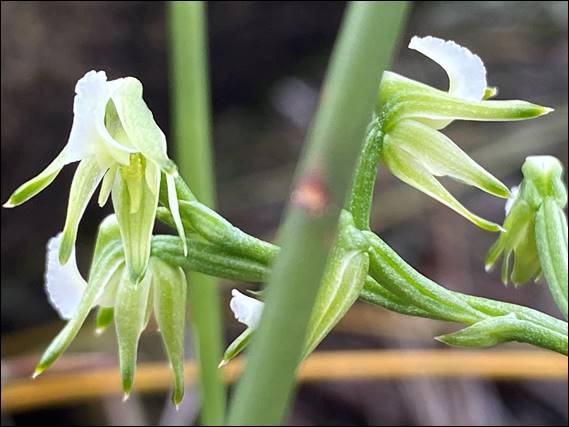
Closing my laptop on Thursday and not being motivated to drive anywhere, I looked at my orchid guide to see what other species flower early. There are a couple of shell orchids that are known to flower about this time, and better still are found in dense heath, Peppermint, and Tuart woodlands. The A class reserve out the back is a Peppermint woodlands, but sadly heavily weed infested. But you will never know if you don’t try, so I wandered round the wide limestone fire break dipping into the bush here and there, and found nothing:
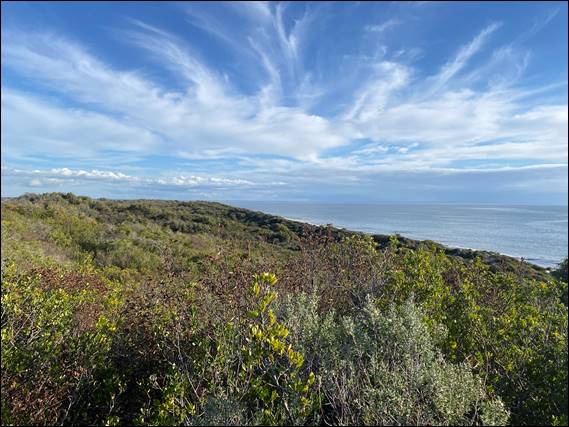
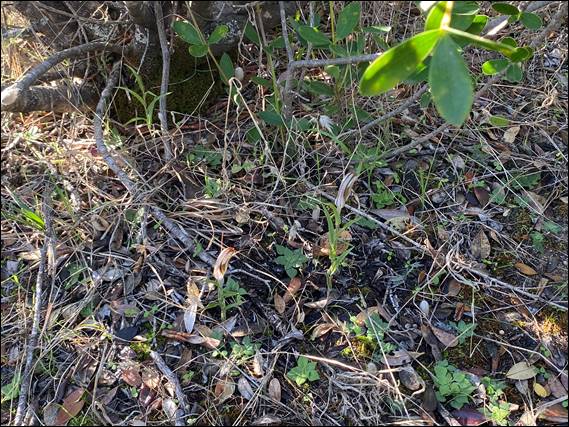
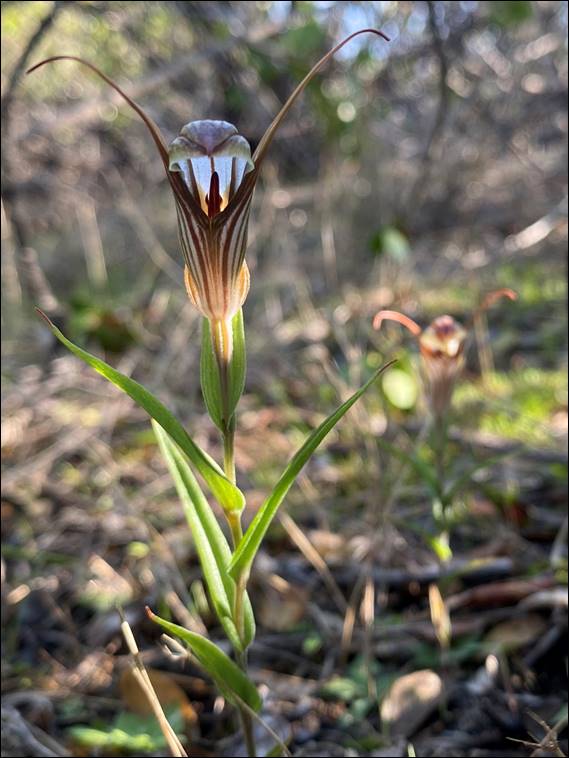
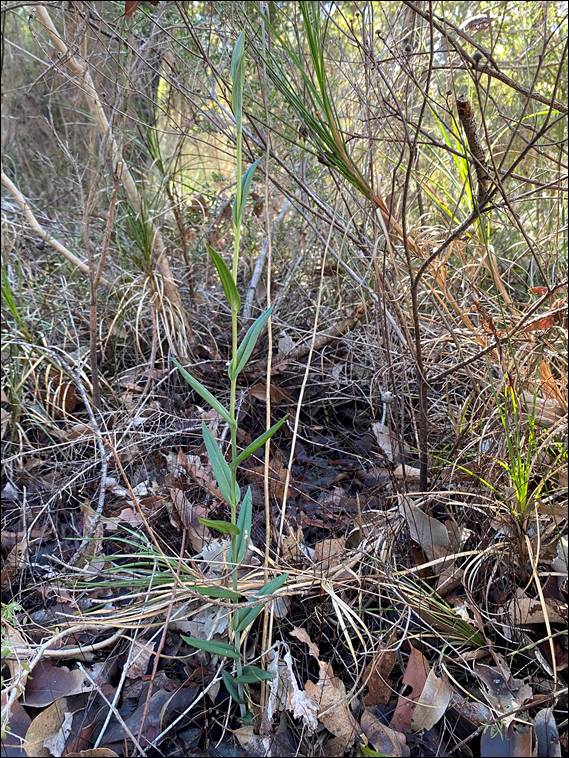
Enjoying a bit of fresh air I wandered further round the fire break, and up to the top of the dune. The weeds hadn’t managed to get hold quite as voraciously this far, yet. So after taking in the ocean views I glanced at the ground, and spotted a heap of basal rosette of leaves. Standing proudly amongst them were two Brown-Veined Shell Orchid (Pterostylis aspera). I was a little excited when I noticed the flowering plants didn’t have a rosette of leaves at their base, thinking that another species would come up:
But also no, the rosette of leaves are from non-flowering plants. Flowering plants only have leaves up the stem, and none at the base. It was previously considered to be a form of an Eastern states species called Sharp-leaf Greenhood (Pterostylis robusta). This resulted in it not being formally described and named until relatively recently, in 1989. It is also referred to as a Rough Shell Orchid, due to the hairs on the labellum. This is where the specific epithet aspera is derived meaning rough, harsh, or uneven in Latin:
After my rather aspera tumble off the rock on Friday afternoon (https://sandbagged.blog/2024/06/14/brain-power/), it was touch and go as to whether Lisa and I would manage to get out for a wander on Saturday. Seeing we had missed out last week because she wasn’t feeling great, I really didn’t want to bail on a walk for a second weekend on the trot. Despite not having the most comfortable of nights, I could tell I had not broken anything in my fall, and was pretty sure I hadn’t torn any ligaments or tendons:
With a bit of Dr Google support I reckon I may have sustained a grade 1 sprain of the medial collateral ligament in my right knee; a bone contusion (bruise) on the bottom of my left calcaneous or heel bone; and the most annoying being the bruising along the outer edge of my right foot. This all added up to the need for me to be sensible if we were to head out. Donning my hiking boots, in lieu of my sandals, for better protection and stability. Even though the Knodil Wildflower Walk, just out of Nannup, has easy paths that are mostly level:
We picked this place to avoid the risk of rain along the coast, which never eventuated. But also because the pooches could join us, and a walk in the woods has been very long overdue for them. This resulted in the first half of the short three and half kilometre walk being pretty slow. Needing to stop very regularly to allow them to check out the next scent. This suited me as I was trying to avoid the marri tree fruit that littered the path, called honkey nuts. It was impossible to completely avoid them, and I made the occasional wince when I caught one underfoot:
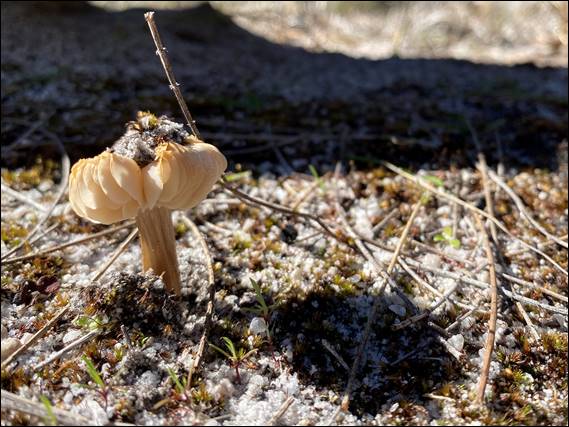
Needless to say I was torn between watching the path and the scrub, and I did a bit of both. Lisa on the other hand had to focus on frequently untangling herself from the two poodles, as they went this way and that seemingly rarely in unison. On the orchid front, and despite finding gazillions of basal leaves, only the Banded Greenhoods were in flower. I did however spy another the distinctive and tall greenhood that will soon bloom. Shown a couple of images up and being the Jug Orchid (Pterostylis recurva). There were also some nice fungi coming up:
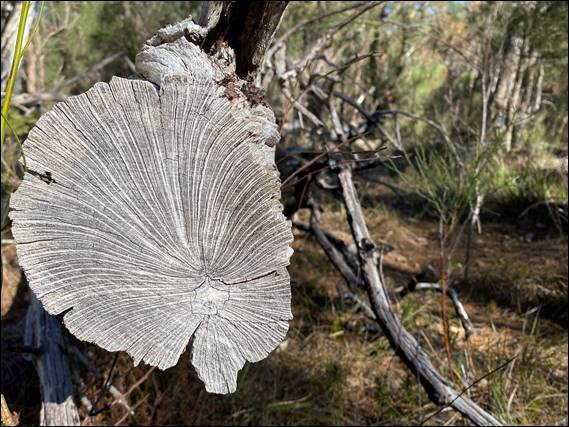
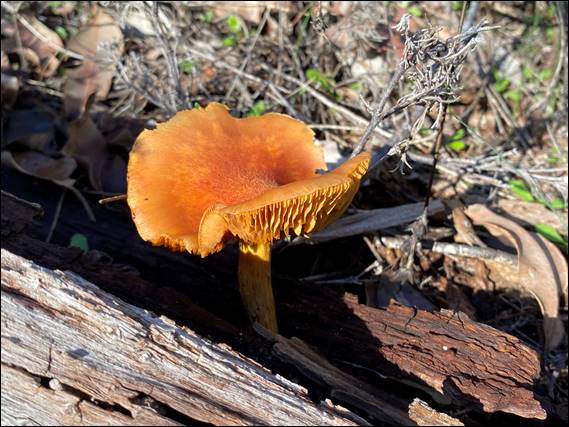
After an hour of checking the creamy white one two images up has me stumped, and I have decided to say the one below is potentially a Scurfy Deceiver Mushroom (Laccaria proxima). This is based on the shape, colour, deep gills, and striated stem. Striated meaning having long, thin lines, marks, or stripes. I was a little surprised with the above large branch, or maybe a trunk, that had been cut to clear the path. Not displaying annual or growth rings, but instead having radial stripes. A mystery for another time, as I hobbled along to catch up with Lisa:
With a near full (office) work day under my belt, I was able to slip out the house at 11am. The drive to Howsie’s was way busier compared to the earlier times we normally head out. And it was also that way when we drove out of Bunbury and up the hill towards Collie. However, the journey only took fifteen minutes longer today, at an hour and half. The brain is a strange beast, and the psychology of driving can make trips seem longer and/or shorter for a variety of reasons. One trigger can be how much traffic is on the road. So even when the cars are flowing, it can feel much slower than it actually is. It felt that way today. Another strange fact being that driving to get somewhere, can feel shorter when afterwards you come home the same way:
There are even published papers on what they call the Return Trip Effect or perceptual phenomenon, whereby getting home feels the quicker of the two journeys. There are many factors to this, which I won’t dwell on. We had reached our destination and typically on arrival both Howsie and my brains would clear and focus on the rock. This took a little longer today, we were both feeling weary and not quite sure which battle we were prepared to take on. It was only when we got out the car that we pondered our options. We would normally think about this on the journey, but not today. You could say I had a premonition of this occurring, and uncharacteristically had thrown in a small trad rack:
My thinking when pulling my gear together back at home being that we might play on the small carpark crag. This has routes of a lower length and grade, than the more serious undertakings on steeper walls on offer. With the big walls in shade I wonder whether we were also drawn to climbing in the sun. This part of the country was greeted with chilly zero degrees at first light. This drop in temperature coming about due to the skies being devoid of clouds overnight, which if present would have acted like a duvet to keep some of the warmth. It may have been much later in the day, but it still felt a little cool so we opted for the sunny option. Jumping on nothing too hard felt like a good idea to both of us:
As we started, and despite the lower grades, neither of us were climbing well today. It felt awkward and nervous. Our brains playing on many factors such as: not having climbed these routes for some time, needing to switch to a different climbing style of slab climbing; the small and slick feel of the holds; a bit of moss being about making some of the holds feel even less secure; after each route we were feeling the heat of the sun that bit more; or was it that we were feeding of each other’s state of mind. There are five routes on the small carpark crag, which we knocked off from right to left. I purposely let Howsie take the first lead, so he could attempt the fifth climb. Although, when the time came he really wasn’t looking keen:
After what felt like an eternity of procrastination I offered to take the lead. This would result in me, most likely, still being the only person to have led the Roman Nose at grade 17. This is despite what the guide book says, and would be the third time I’ve led it. Today was in some ways similar to the last time when Howsie started it but then backed off, https://sandbagged.blog/2022/10/01/history-repeating-itself/. It was different today in that he didn’t even get of the deck. It is by far the feistiest and most nervous of the five leads on the small crag, and I do wonder about the grade. To add to the fear factor the gear in the upper section is a little dubious, mind you there is a bomber and deep cam placement 6m up on this 10m wall:
I teetered my way past this ‘thank god’ placement trying this way and that. Eventually committing to the rising rightward traverse on small mossy footholds and not much better fingertip holds. I thought I was solid and through the worse when my right foot slipped, and I flew to the right. Then as the rope started to tighten I pendulum back to the left, heading downwards. Finally coming to rest a mere meter of the ground, having fallen some six or seven meters and unfortunately twisting my knee on the final impact. After being lowered down the last meter, I just lay on the ground and looked up. I thought I should get Howsie to take an image of my predicament, but didn’t:
Instead I lay there allowing my body to recognise what had just happened. Trying to work out where I might be sore. However, in reality with a fall like that the body takes a different path. I’ve been through it before, and should have recognised the signs. A part of the brain called the amygdala kicks into action, activating another part called the hypothalamus. That part then releases stress hormones, like adrenaline and cortisol. These prepare the body through a number of physical responses, and this can lead to a false realisation of the situation you are in or indeed the damage sustained. As such I jumped back on and finished the climb off, and then we hit the big walls:
Not wanting to risk another fall I offered Howsie all the leads. He lapped up four more lines, climbing much more confidently. The familiarity of these harder lines helping, along with far more positive holds. I managed to follow up with the safety of the rope above me, but was noticeably trying to avoid using my right foot and knee too much. With each climb the effect of the stress hormones was reducing, and realisation was hitting me. On the last climb it was impossible to avoid big moves on the right leg, which I simply wasn’t able to do. Instead I pulled on the draws to get past the lower section. It was certainly a great session and glorious day to be out, although maybe I should have called it quits after my fall and just belayed Howsie. My brain is however wired to be a bit stubborn when it comes to climbing:
Needing to rectify the error of my ways, after I dunked my phone in the ocean or should I say the ocean dunked my phone and me, I scored a five series upgrade. Being lucky to avoid the expense of buying a new one, as Elseya still had her old phone. It was somewhat of a palaver setting up, having to start from scratch, but it is done now. The replacement camera will however have to wait a few weeks. Until then my technological options for taking images will be reduced. Reduced but not hindered, and here is a selection of finds at the Capel Nature Reserve:
The early flowering bunnies were done, and there wasn’t much else in bloom. I did however luck upon two Scented Autumn Leek Orchids (Prasophyllum sp. ‘early’), one being shown above and the other one not having opened yet. The two plants helped confirm I was correct with my identification of the unopened specimen last week at the Ambergate Reserve. The light green flowers being one of the few differences that can be used, by an amateur such as myself, to distinguish it from the Autumn Leek Orchid (Prasophyllum parvifolium):
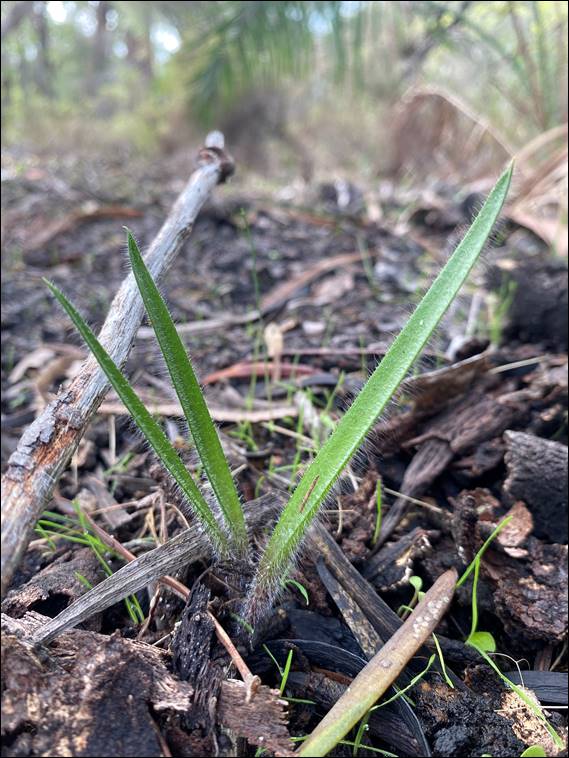
The flower of both species are about 10mm long, but the later blooming Autumn Leek Orchid has more colour, including a longitudinal stripe on the dorsal sepals and petals. This detail is however invisible until the flower opens. As is often the case there were lots and lots of basal leaves, and I have given up hoping that this is a sign of a bumper orchid season. Although the above hairy leaves, with a tinge of purple at the base did make me smile. Being one of the most spectacular spiders, the Chapman’s Spider Orchid (Caladenia chapmanii):
It was also hard not to smile at the many beautiful Painted Sundews(Drosera zonaria), shown above. An endemic carnivorous plant of the south-west Western Australia. It is a perennial tuber found in open woodland or coastal heathland with deep silica sands. I’ve read it only blooms after a bushfire. The tuber was first identified in 1848, but it took 106 years before the first flowering specimen was recorded in 1954. The soil it grows in has also been extensively mined in this area, making me wonder how rare a treat it was to see so many today:
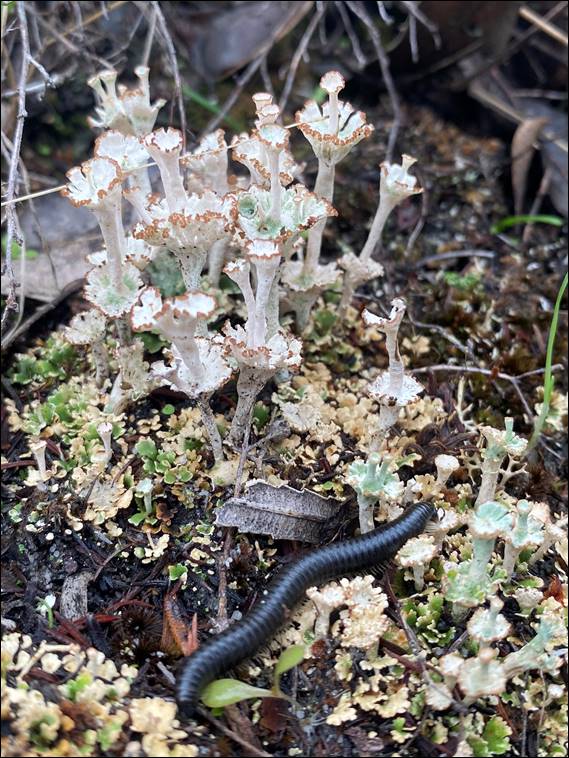
A less uncommon, but equally nice, find was the above Ladder Lichen (Cladonia verticillata) with a Portuguese Millipede (Ommatoiulus moreletii) carefully navigating through them. And today I too had to navigate a bit more carefully through the bush. Avoiding the orchid basal leaves as usual, but also the many fungi starting to push up through the soil. They are likely to be decomposer or mycorrhizal fungi, both of which live in harmony with their environment. The third main type being disease fungi, which extract the energy and nutrients from their living hosts:
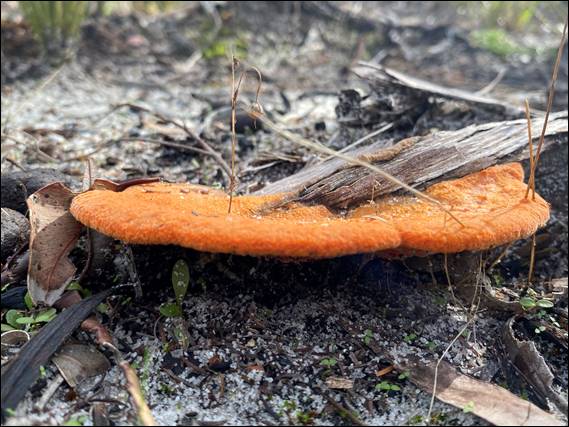
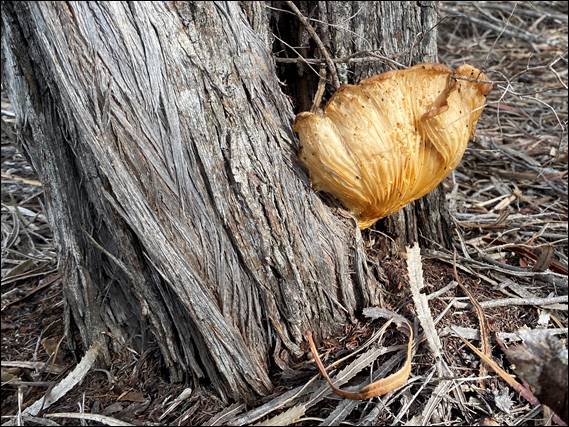
The disease fungi already out included the above Southern Cinnabar Polypore (Trametes coccinea), and also the specimen below. It has several features that resemble the Ghost Fungus (Omphalotus nidiformis). They are found on dead or dying trees, have caps with varying shades of colour, and have deep and well defined white or cream gills. One way to be sure is to go back at night to see if it glows, but I’m not convinced. As such I got Verity to help out once more and it is more likely to be a Brown Oyster Mushroom (Pleurotus australis). So as we might say to someone who tells us they saw a ghost, I am just seeing things:
The term ‘lost at sea’ is a bit of a misunderstood saying. It was linked to Davy Jones’ locker in 1791, when an article in the newspaper called the Chester Chronicle said ‘to be within Davy Jones’s locker was to be lost at sea’. It was originally used to refer to the final resting place of drowned sailors and travellers. However, these days the term is more commonly used to infer a sense, rather than physicality, of being lost. Someone referred to as being ‘lost at sea’ is considered completely discombobulated, or more plainly put confused:
There should however be no confusion as to where I was today, and not by my own choosing. Needing to take a break from studying, I offered Craig the opportunity to get out on rock. It has been proven that disconnecting your brain, and body, from study will result in enhancing your ability to focus. The research I have found suggested breaks of up to an hour are good, but when I was studying I was a firm believer in taking a day out to truly reset the grey matter. Before he disconnected his brain I did however give Craig the choice of where we should go:
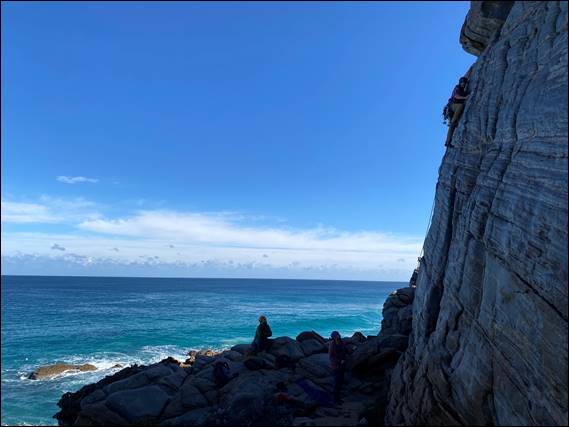
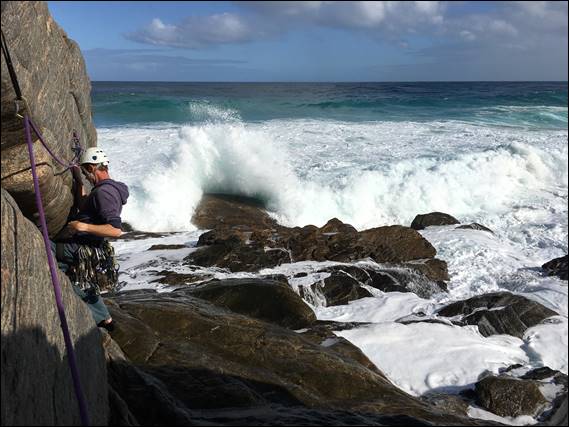
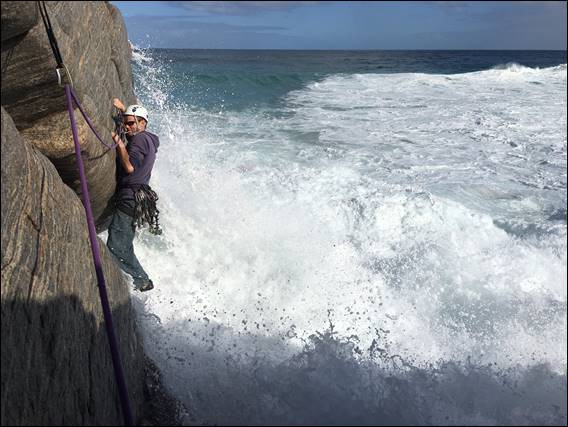
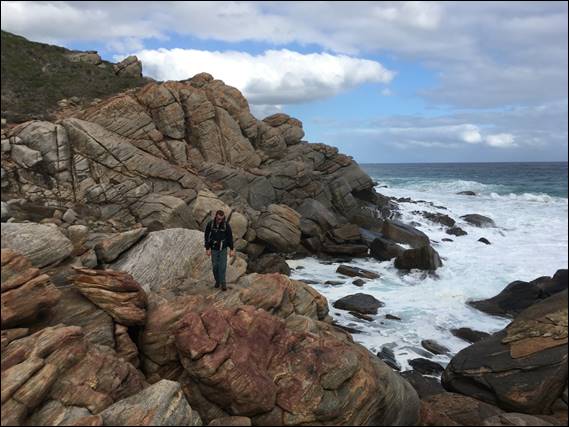
He picked Moses Rocks. Seeing I had unfinished business here, I was more than happy to come back so soon. After a couple of warm up routes I suggested he might want to jump on Nothing too Serious, a short but fun traverse that makes you feel like you are right over the ocean. There are however some big rock steps that take the energy out of the waves, and all you are left with is wash and spray. That doesn’t mean you shouldn’t be careful, and we watched for ages to check the wave patterns. Even then tying in when he went for it:
Craig understandably was taking his time, as I relished watching from my secure and importantly dry perch. Snapping images and taking videos of the dramatic situation. Seeing a good set come in I started the next video, and then it hit. Seemingly from nowhere a huge wave appeared lifting me a full meter into the air, and as it dropped me back down I felt the rope tighten. As I looked about Craig was still in the same position as before, and had watched my predicament. The wave had only glanced him, but fully took me out:
Fair to say I was a little discombobulated. But soon realised my camera and phone, both of which I had been using, were gone. With Craig secure I did a quick search, keeping a careful eye on the ocean. Somehow that one freak wave had taken the phone out of my hand, placing it on the rock where my camera had been. And taken the camera, which we assume is now lost at sea, or as I like to think swimming with the fish by itself. It took Craig a while to finish the climb, and then for me to follow:
The whole time it took to finish up we didn’t see another wave like it. This may seem like enough to put anyone off, such that they would pack up and head home. Not us, while what we do may seem a bit daft, we are safety conscious as we know that things can and do on occasion not go to plan. Yes, I may have lost a camera but neither of us were hurt, so we climbed on. How could I not, as I still had to have a bash at my new route. The one with the ‘adequate’ gear, which upon checking Craig said looked sketchy but was in fact reasonable:
Trying to think of a good name for the new route we decided on Hung out to Dry, with a play on words in a couple of ways. The route is a bit runout, so if anyone is game to try it they may feel like they have been put in a difficult situation. Hence I decided to give the climb what we call an R rating. This means you could get seriously hurt if you fall, but this would only happen if didn’t know how to place gear in tricky places. And of course I was thoroughly drenched when I climbed it, not that I was anywhere near drying after I finished the route:
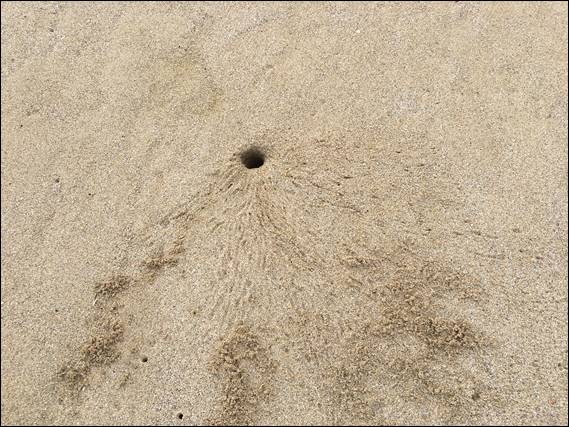
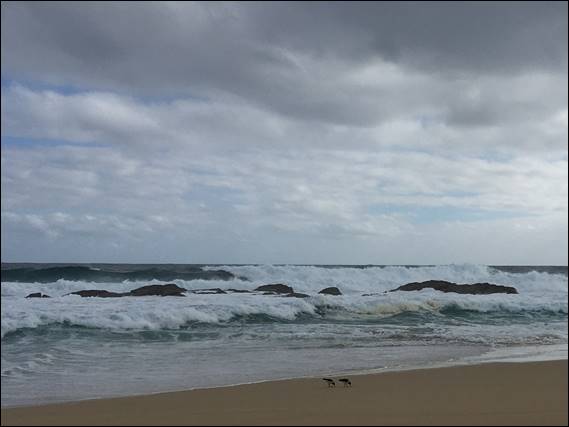
Craig wrapped the session up with one more lead, before we returned to the scene of the crime. We poured a cuppa, sorted the sodden gear, and scanned the waters. Still no waves matched the beast. Back on the beach we spotted holes in the sand, likely to be the homes of Ghost Crabs (Ocypode), and a couple of Australian Pied Oystercatchers (Haematopus longirostris). These were the last photos I took on my phone. The wave may not have taken it, with the camera, to Davy Jones’ locker; but had inflicted water damage to seal its fate:
Continuing my theory that fresh air is currently even better for me than usual, and because it is a public holiday I headed and out again. Or was it more because regardless of how I feel, and as long as I am able too, I will always prefer being outdoors rather than indoors. Truth be told, the reason I haven’t been hit anywhere near as hard as Lisa and Elseya have, is almost certainly due to having had the most recent vaccination of the three of us. A precaution I took just a bit before I headed back to the homelands, and I am so grateful that I did:
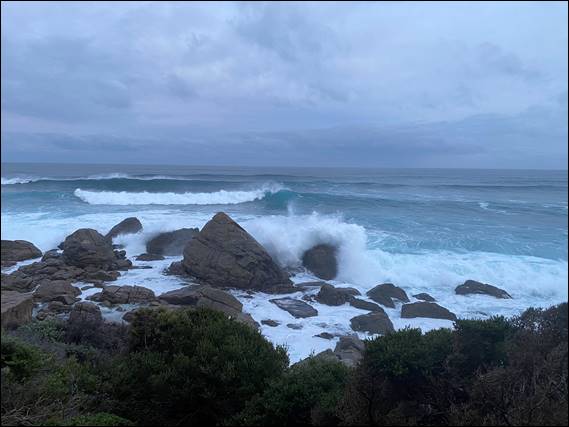
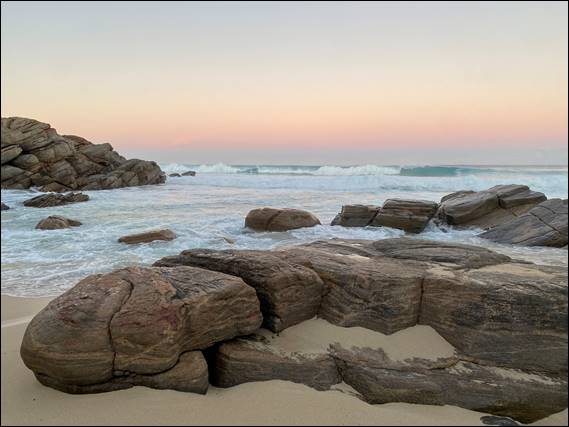
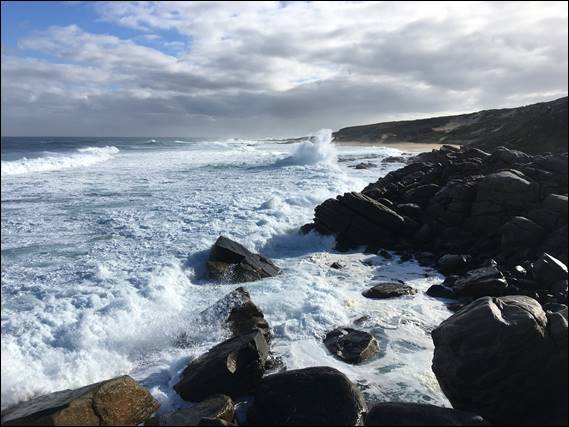
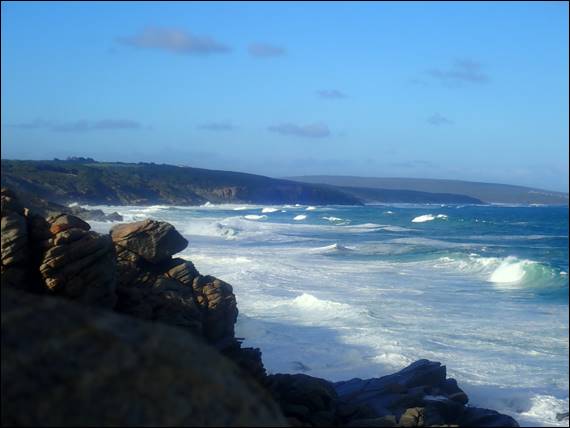
I fancied a first light walk in, and arrived right on cue. The early start was also because the swell was still up at six meters, despite the cold fronts having moved east. This was forecast to reduce as the morning wore on. While the main beach was a awash it still had plenty of sand. However, after rock hoping along the boulders to reach the second small beach, this looked like it was deep into winter. The sand was gone and the area was covered in creamy colour foam. With each set the foam oozed it’s way this way and that, looking very uninviting:
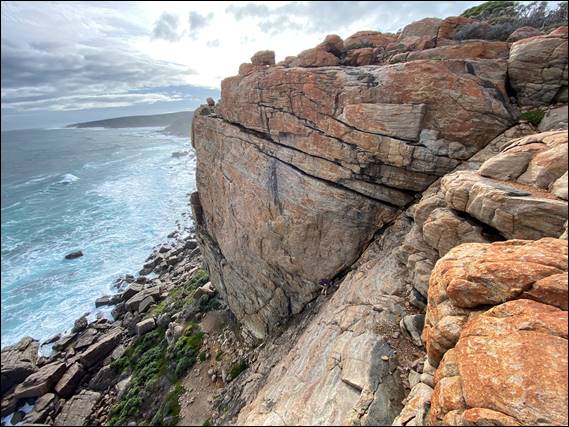
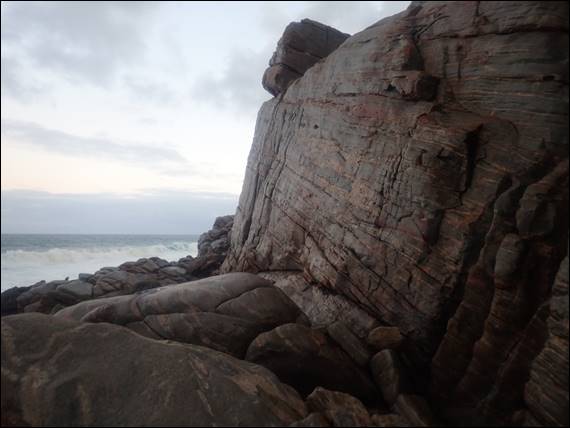
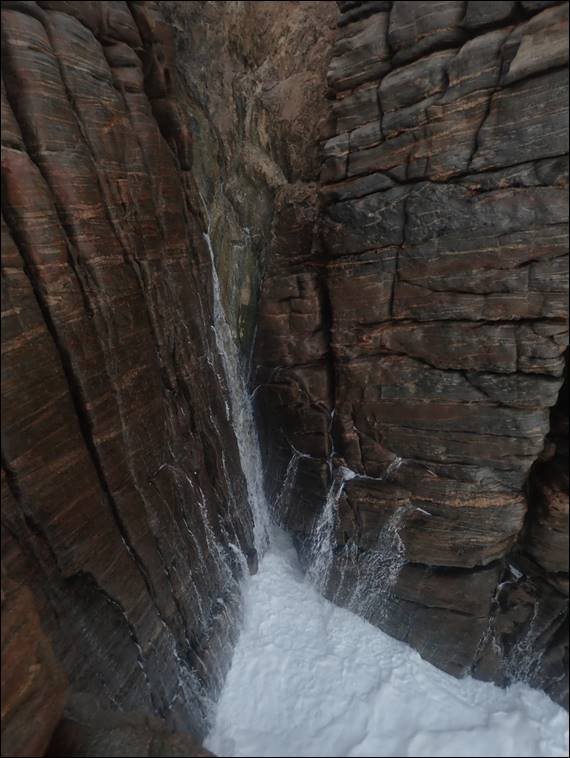
A light drizzle started to fall as I reached the crags. Ensuring every bit of rock glistened when the morning light hit it. This of course did not worry me. Unlike Howsie and my visit to Welly Dam, the friction at Moses Rocks remains good in wet conditions including when water is running down it. Also I wasn’t in a rush to get on the rock, spending a good three quarters of an hour watching the waves. It was hard to draw myself away from hypnotic movements. Set after set roll in, barrelling, roaring, crashing, and spraying all over the place. The water streaming down this face showing how high the wave went:
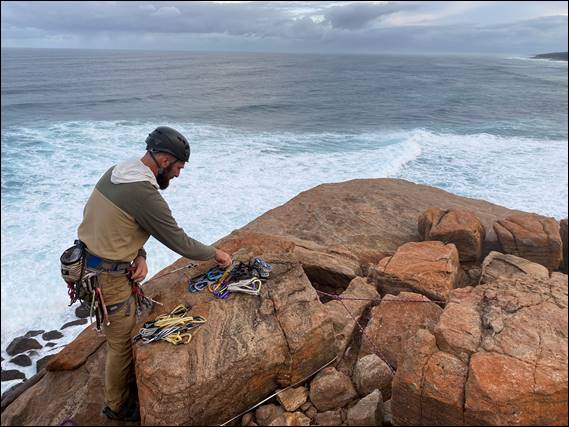
Eventually I started to rig up the anchors for the top rope. Even then going slower than normal, as I kept an eye out for when the bigger sets were coming in. Once set up I knew I could knock the climbs off reasonably quickly. They are close enough to avoid the need to keep moving the placements too often. In fact I managed ten lines with three setups. And for each setup, when I shifted the rope a few meter across to the next route, all it took was a simple adjustment of the rope work. Making sure the placements were all under even load:
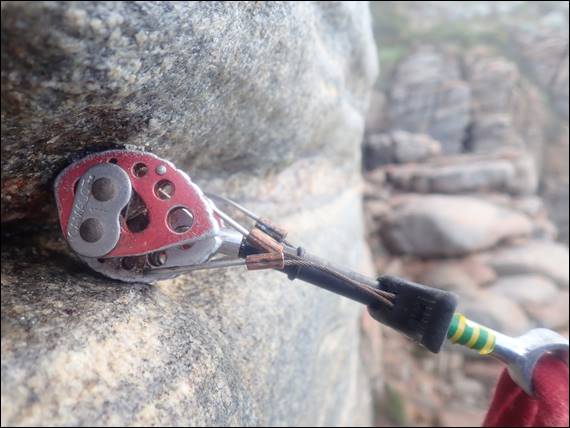
Howsie, told me that he had been reading a book about setting up anchors for belays, and it said there is no perfect set up. Stating it is always possible to find a different way. What is important is understanding whether it is fit for purpose, and as safe as possible. I was completely confident with the anchors I had used, placed deep in the cracks that spilt the top of the crag, unlike this example. While I was out by myself I looked at a line, which I thought might yield an independent climb. The question being whether it could be safely protected:
As with belay setups, when climbing it may not be possible to find placements that are inspiring. It comes down to your confidence in your own ability, a knowledge of the mechanics of how gear works, understanding how the gear gets loaded during a fall, how far you have to run it out to the next piece, and most importantly assessing the consequence of getting it wrong. The next size down of camming device might sit better in the above placement, but that was being used in the anchors at the top so I couldn’t check that:
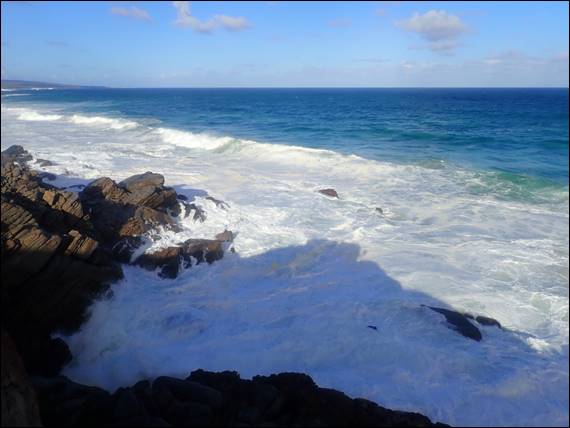
Guess I’ll have to check if the next size down is the better option on the next trip, when I attempt to lead it. Others may not come to the same conclusion, but weighing up all the considerations I’m pretty comfortable that the line can be adequately protected. Rapping down for the last lap on the last route on Hands-up Wall, I stopped for a moment to watch the waves. Yet another reasonable set thundered towards the narrowing zawn. It was hard to see if the swell had dropped, but my shadow was clear as day in the white water:
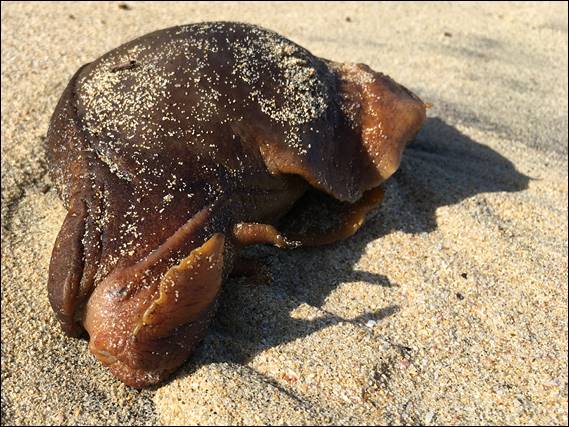
There were two more lines to hit on a separate wall. The first beat me at the crux move on both laps, my arms were getting weary. Not so much as to stop me from getting two clean laps on the second. A route I have done easily fifty times before, yet today I discovered a direct way to climb it. Quite possibly the original way it was intended to be climbed. Something else to aim for on my next trip here. Hopefully when I jump on those two leads next time, I will fare better than this Reticulated Sea Hare (Aplysia dactylomela) did today:








 Sandbagged