Soon after getting home on Friday the wind started to pick up, reaching gale force overnight rattling the roof. Lisa with her ear plugs in slept through it. Meanwhile the unrelenting noise meant I saw several of the wee hours slowly pass by. The front resulted in a big swell being forecast, 6m at Busselton and 7m on the west coast. Not surprisingly the Peppy Plungers had already decided an ocean bob was off the table. One of them however has a pool, so they instead went for a much safer and calmer inland dip. I too had plans to head out:
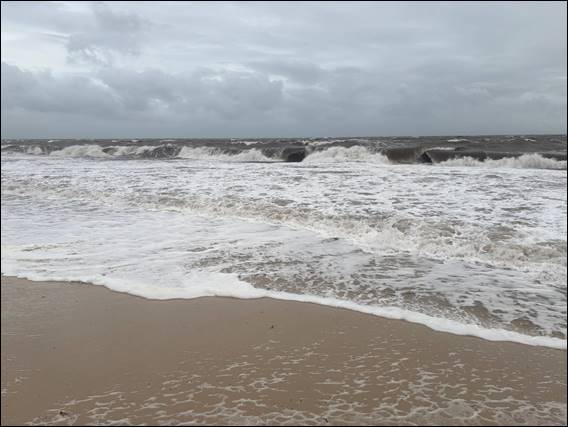
The wild stuff was going to ease with the potentially for a reasonable afternoon. Instead of waiting I went out early. In part to make the most of the scenes that awaited me. But maybe more so because, if you hadn’t realised, I’m a get things done in the morning sort of person. I contemplated taking my top role solo gear with me. Feeling somewhat achy from the session at Welly Dam, the gear didn’t even get out of the cupboard. Before leaving Peppy I went to the beach to see if the plungers had made the right choice. As shown above they certainly had:
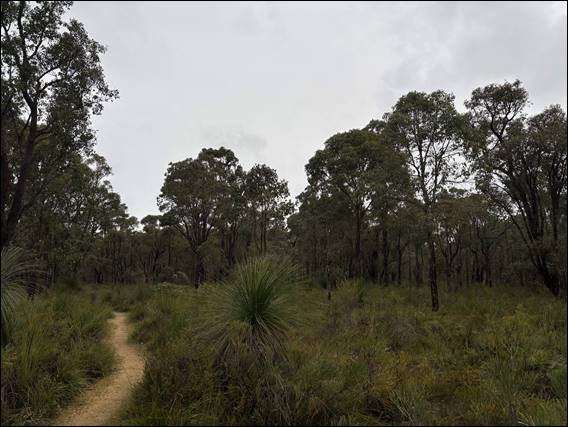
A bit of a circuit was on my mind, four areas with both old and new spots. First being the Ambergate Nature Reserve. A place that the people I came across out at Kojonup said wasn’t that good. They just so happened to be from Busselton, a stones through away from here. I disagree and think it’s great, even though it has been a little lean in the last few years. The good news is it only sprinkled a bit as I wandered round, while the wind whistled through the trees non-stop. Better still the Rusty Spider Orchids (Caladenia ferruginea) were popping up:
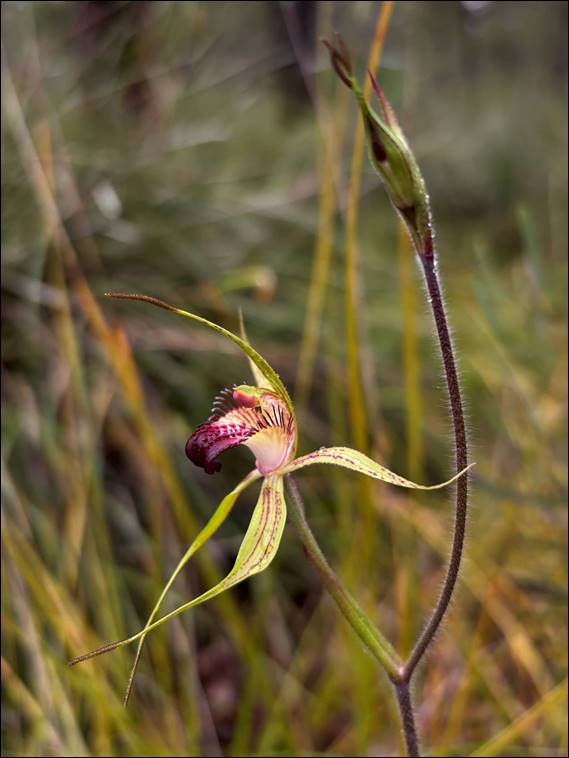
Lots of spikes were yet to flower, which if we are lucky will be from a different species of two. I won’t confess to be able to identify an orchid from a spike. I may have seemingly done this once or twice in my writings, they were however from orchids I had seen flower in previous years as opposed to me working out the details from the spike itself. I shouldn’t need to explain what the species name means for this one, coming this time from classical Latin. A language that has evolved over time from old, classical, vulgar and then new Latin:
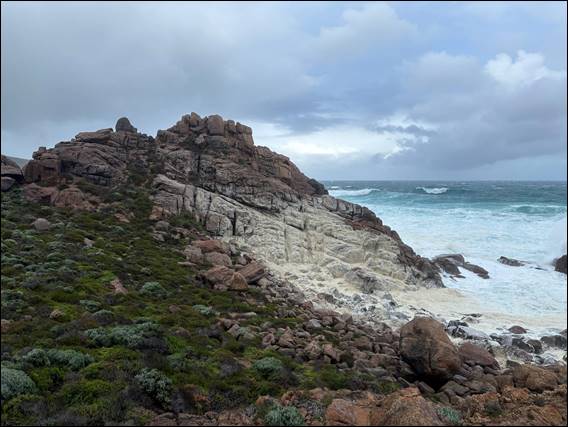
I’ve yet to find a name that came from vulgar Latin. It is common species name used for plants, animals, and fungi. Also used in medical science, in neuroanatomy, describing a deeply pigmented patch of nerve cells in the brainstem. Ambergate hadn’t woken up properly yet with not much else to see. Onwards, or more so westwards. To Smiths Beach, where I had considered having a climb. Walking in to check the zawn the rock was coated in creamy sea foam from the messy sea and strong winds, an indication of what the zawn might be like:
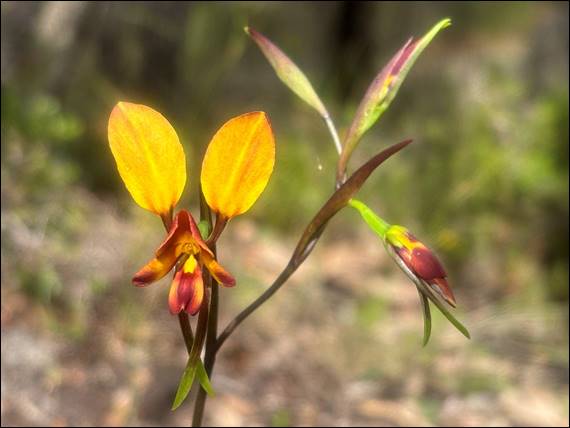
I’m conscious that I am slipping behind as the images get ahead of me. I do however have to say the zawn was wild, I didn’t go into it and just stood at the top. The waves were crashing in from the side as opposed to front on, but at times still engulfed the base where we normally place our packs. One wave was lifted by the shape of the ocean facing rocks to the height of the walls, which are approx. 15m high. The strong winds then funnelled the spray the whole length of the zawn, hitting me full on despite standing some 30m back from the ocean:
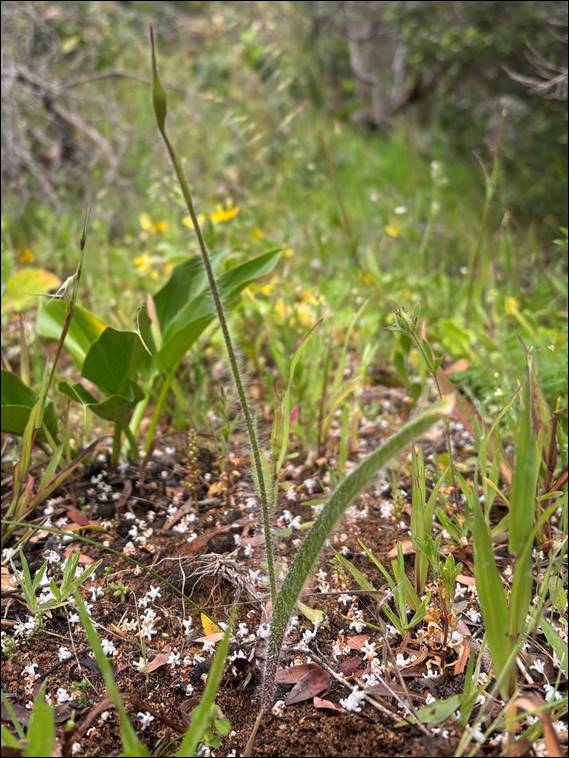
In one foul swoop I was soaked, and it was a good job my phone is in a waterproof case. With the air filled with spray as the big waves hit, the images were rubbish other than when there was a bit of lull. Hence none are included. Now back to why I really came to Smiths Beach, and that was to hunt one particular orchid. Although before I get to that one, I found what I believe to be a Sandplain Donkey Orchid (Diuris tinctoria) two images up. I say seem, as it is out of range. It has happened with other species I’ve seen and had verified by the experts:
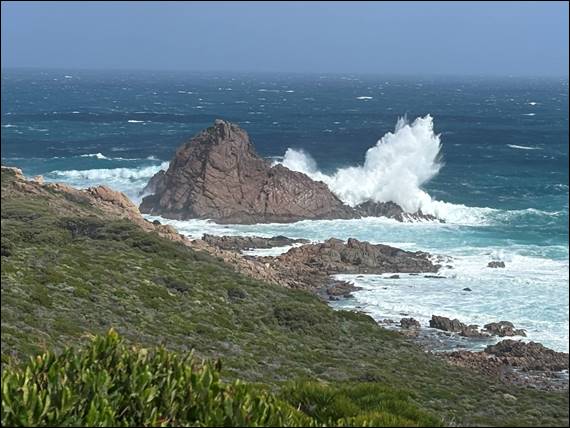
I need to get a jimmy on now. It was the spike that really got me going. Despite my earlier comments about how hard these are to identify, this is a Limestone Spider Orchid (Caladenia bicalliata). These only grow to 6 to 15 centimetres tall, and have a large hairy leaf that looks big compared to the stem. Note the leaf of this specimen has been munched. I know this species resides here, but have never seen it before. And having read up I wonder if I will get to see it bloom, as the flowers may rarely open fully or stay open for more than a day or two:
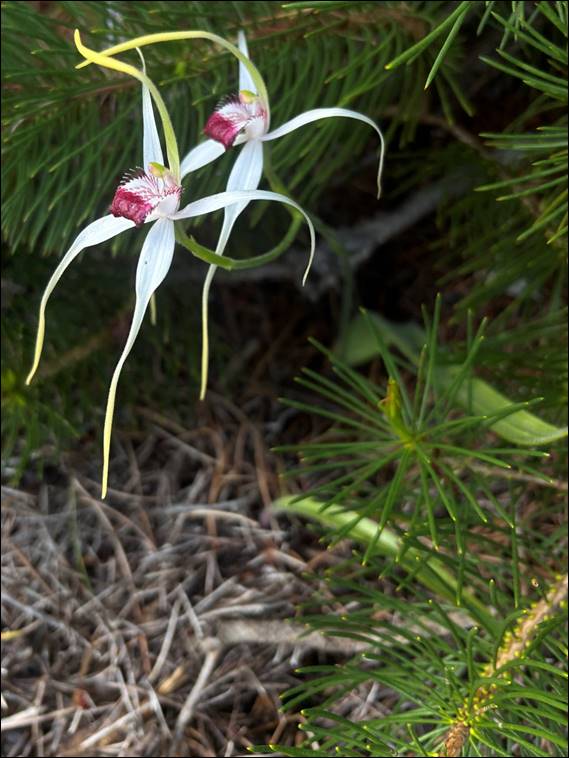
This is because it is partially or sub-cleistogamous. The flower of a cleistogamous plant never opens, and they self-pollinate completely hidden inside the unopened bud. However, I have also read this all depends on which subspecies is found here of which there are two. The subspecies that shows this trait is called, not surprisingly, cleistogama. Whereas the other called bicalliata will flower for a longer period. Both range across the same area so I will have to wait and see what gives. Hopefully conditions improve so I can climb here next week:
For now I left that wild place and stopped in at the Big Rock Nature Reserve for a short while. Where there was nothing new to see. Then onto Sugarloaf Rock. The person who told me about Kojonup also mentioned this was a good spot at the moment. Stating the orchids were in the bush on the approach road. This road is however 2.7km long and that is a lot of scrub to walk through. As I turned onto the approach road I saw someone emerging from the bush with a camera in hand, taking note I drove onwards to first look at the mighty Sugarloaf Rock:
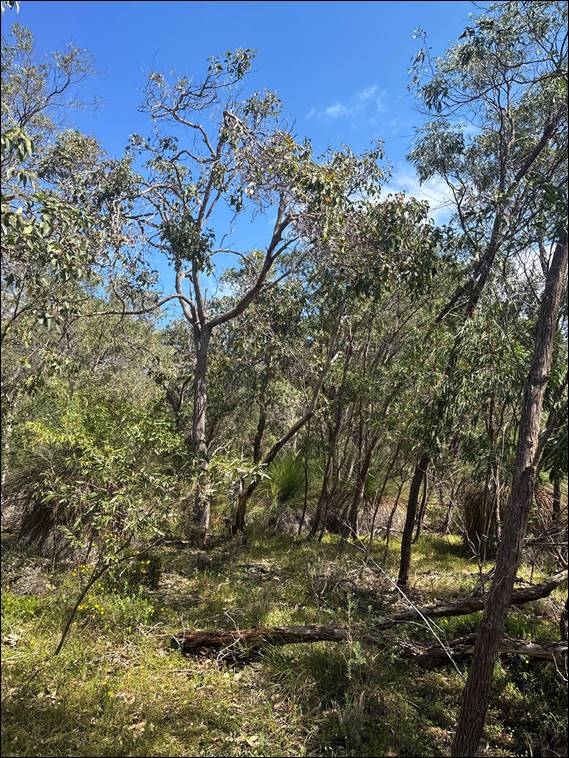
Another spectacular display awaited, from a safer distance. The right wave sent water higher that the 50m tall rock. Named due to resembling the cone shaped block of refined sugar from back in the late 19th century and earlier. A rock I would love to be able to climb on, but has since 1972 been a protected nature reserve. It is a crucial nesting habitat for seabirds, most notably the geographically restricted Red-tailed Tropicbird (Phaethon rubricauda). I was however not indulging in ornithology today and hit the path leading up the cape… hoping:
Sure enough I found the Exotic Spider Orchid (Caladenia nivalis). It can have both brown or yellow clubbing, and as you will see I saw both. The species name comes from a classical Latin word niv combined with an adjective-forming suffix –ālis. Put together it means pertaining to snow. This orchid has a very restricted geographic range but is locally common, being found in good sized clumps that really stand out against coastal scrub. Today there were heaps of them out. I then jumped in the car again stopping at a few parking bays on the approach road:
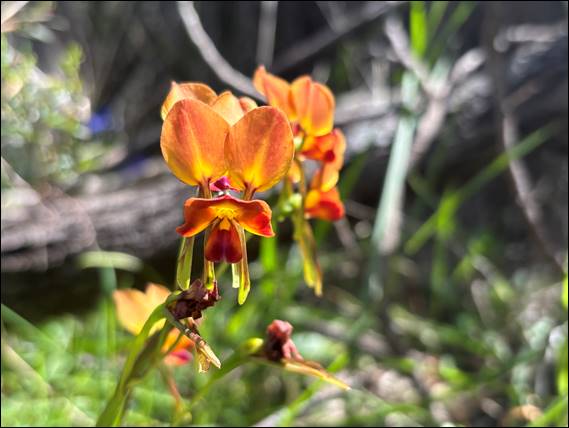
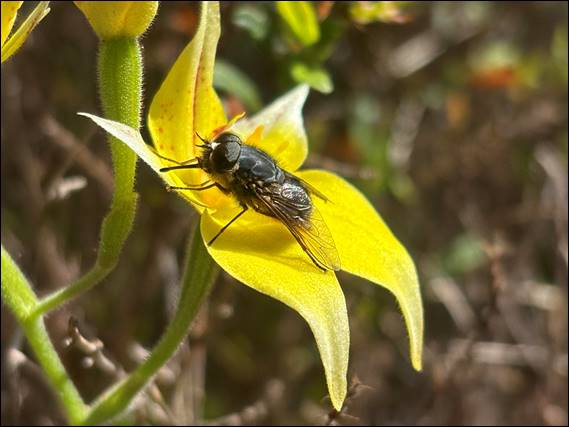
Three pit stops, all bush bashing. Funnily, I found a bounty of species with the biggest variety and numbers being at the place I saw someone coming out of. The first picture of a Cowslip Orchid (Caladenia flava) is included due to the Bush Fly (Musca vetustissima), which must have had enough of battling the wind. Allowing me to get really close up for an image. Next up a repeat find of a Dunsborough Donkey Orchid (Diuris jonesii), included to show the difference between that and the below Purple Pansy Orchid (Diuris longifolia):
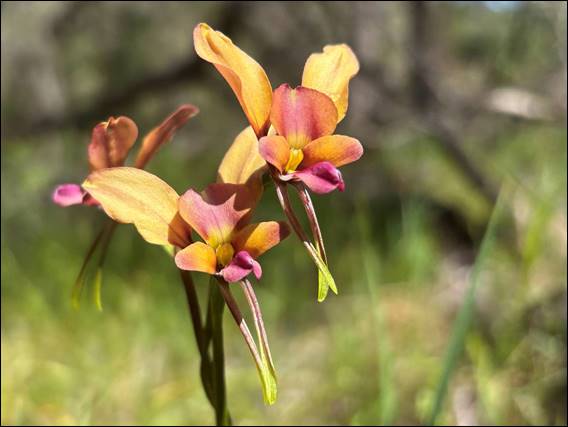
The latter being described as having rich dusky purple or mauve overlay on the petals. The colours seem pastel like to me, and more consistently and evenly distributed. Somehow providing both a very subtle yet powerful appearance. The next image of a Chapman’s Spider Orchid (Caladenia chapmanii) is another filler, as it was the image after that which is what drew me to come here. The Dunsborough Spider Orchid (Caladenia viridescens), which is a declared as Rare Flora under the Western Australian Wildlife Conservation Act 1950:
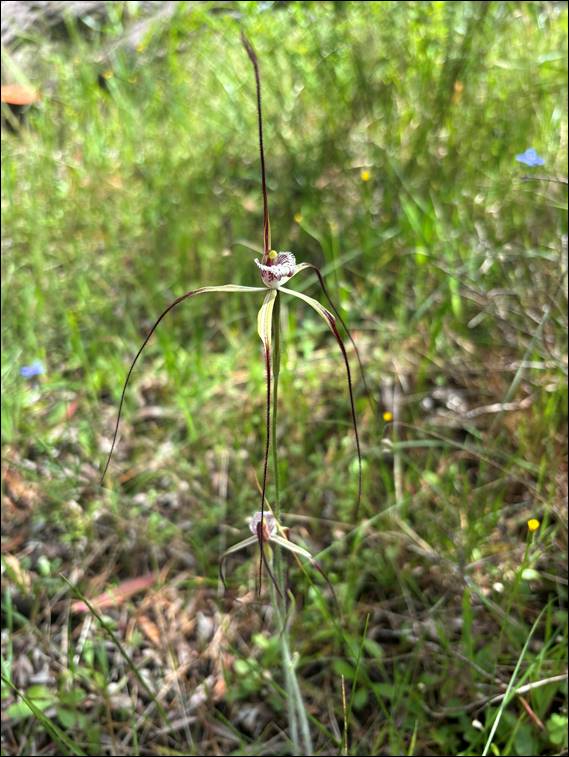
It is also listed as Endangered under Australia’s Commonwealth Environment Protection and Biodiversity Conservation Act 1999. Finally being ranked Critically Endangered under World Conservation Union. The varying and seemingly conflicting terminology and listings is somewhat confusing in my opinion. Regardless it is an orchid with limited distribution and severe fragmentation of the known populations. At least the population I stumbled across was looking pretty good with lots of specimens. A spot to commit to memory for next year:
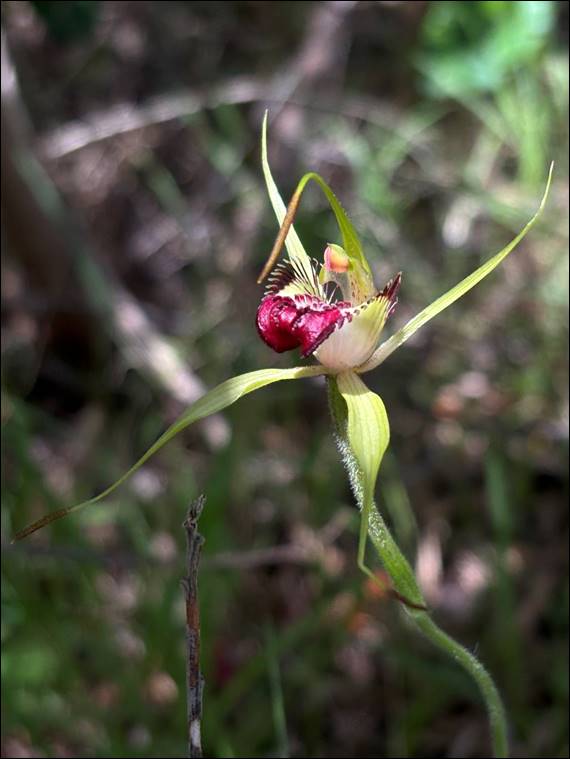
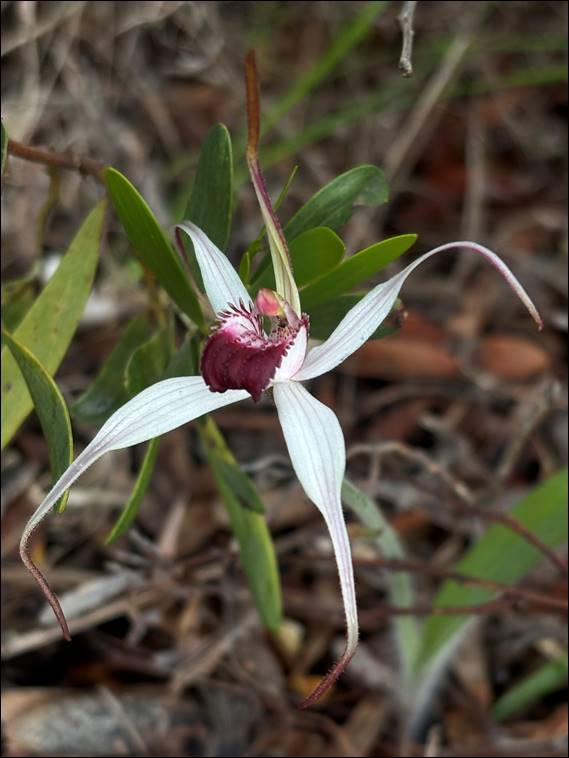
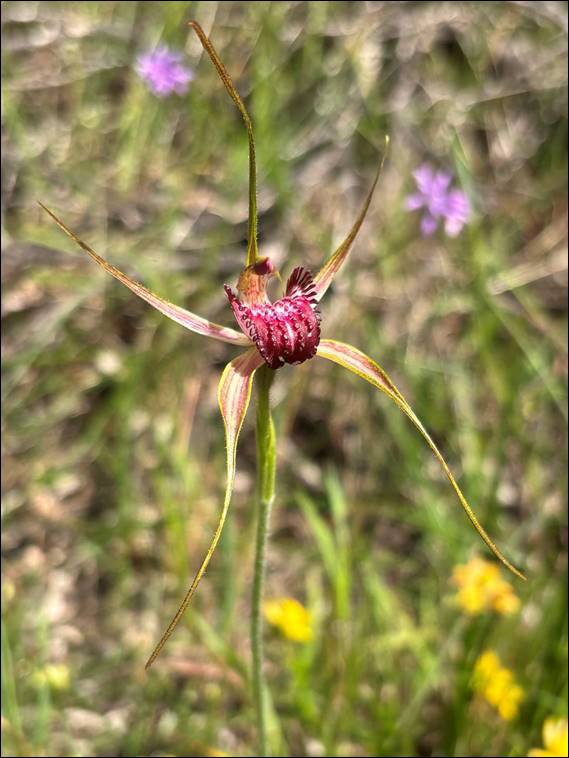
One final image, of a Broad-Lipped Spider Orchid (Caladenia applanata). I thought I had seen this species in 2024. That is despite it having a wide range across along the Leeuwin–Naturaliste Ridge, as well as the coastal areas out towards Albany. Identified by its wide, flattened, and distinctively broad labellum with a dark maroon or red tip and short stubby fringed edges. I was however wrong and badly so, checking the images it was obviously a Swamp Spider Orchid (Caladenia paludosa). So this time I can safely say this is a first time sighting:
 Sandbagged