‘This is the way’. Another wet weekend is looming. Meanwhile the week was glorious, even onset summer like, with a couple of days creeping into the high twenties. Having had a short week due to my inland trip I only managed one quicker than usual wander. Ducking out of work for a twenty minute stroll round the bush at the end of the road. Weed infested but with a few orchids out, such as these Common Mignonette Orchids (Microtis media), with a single Murdoch Snail Orchid (Pterostylis ectypha) in front. All finding a home in a log:
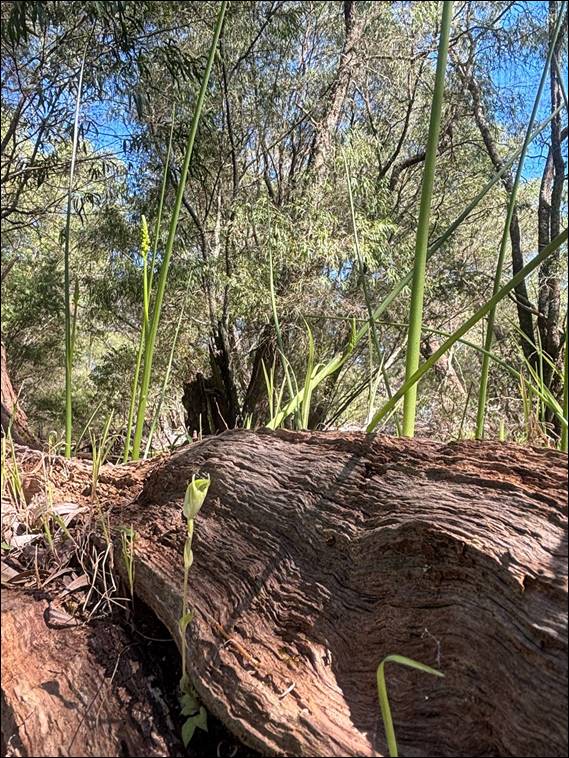
Mignonette Orchids can have up to 150 flowers packed into the top portion of the spike. The only way to fit that many buds in is if there are very small, which they are. This sort of earns the genus the name Microtis. Coming from the Greek words micros and otos translating to small ear. This is in fact a literal nod to the microscopic, ear-like appendages found on both sides of each of the tiny flowers. These orchids produce thousands of microscopic dust seeds that are easily dispersed far and wide by the wind, making them rapid colonizers:
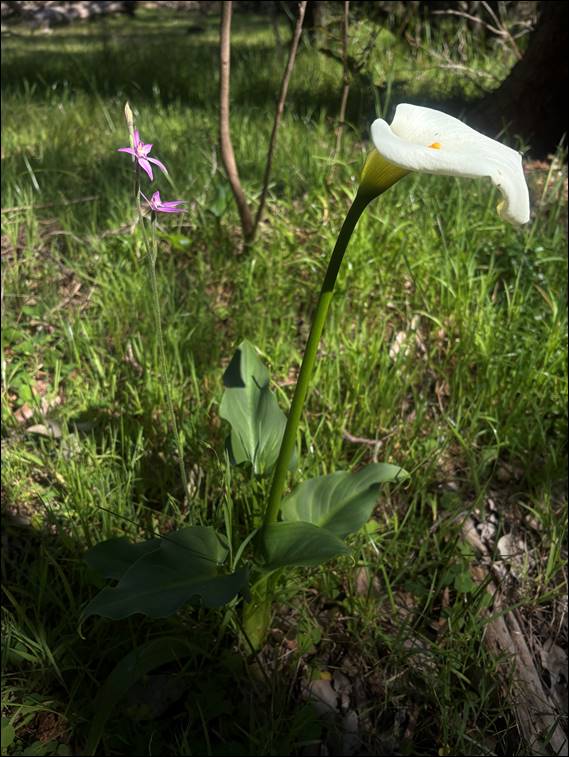
Added to that they are autogamy, meaning self-pollinating. While they can be fertilized by insects and do produce a little nectar, they are able to maintain reproduction even when pollinators are completely absent. Another aspect that makes them very resilient is that they can produce multiple plants from one underground root tuber, which results in local colonies that can be exact genetic clones of the original single parent plant. With all these advantages these orchids pop up everywhere, we even have a self-seeded colony in a plant pot at home:
Having got bogged down in the minutia of this small orchid, I’ve skipped a few images and have also move on from that reserve. If you have been following my orchid hunting season the second image needs no explanation. Then above, after a three week break, Howsie and I returned to Welly Dam. A longer than intended break for various reasons. It was also touch and go if we were going to make it here this time. But we did, making a dash up the hill for a mid-afternoon session. Hopefully before the brooding weather descended:
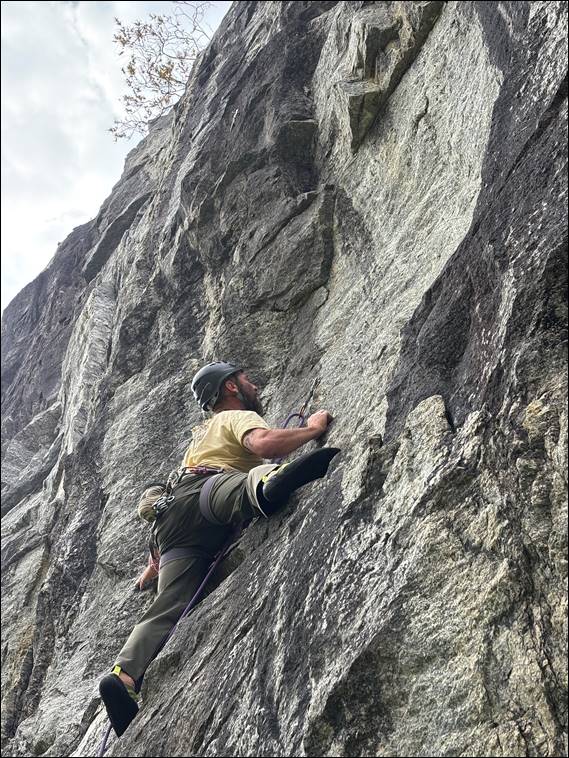
I picked the above first line, a route that has been sopping wet for months now. But today while the ground was covered in lush green grass, and the cracks just above the ground were damp, every route was in condition. We both managed a clean ascent, but it felt like the body was working way too hard. Two images up there was a reward waiting for us when we got to the top, which I’ll get to in a bit. But first below are some insects that were making the most of the moist ground conditions. Often mistaken for mosquitoes, but completely harmless:
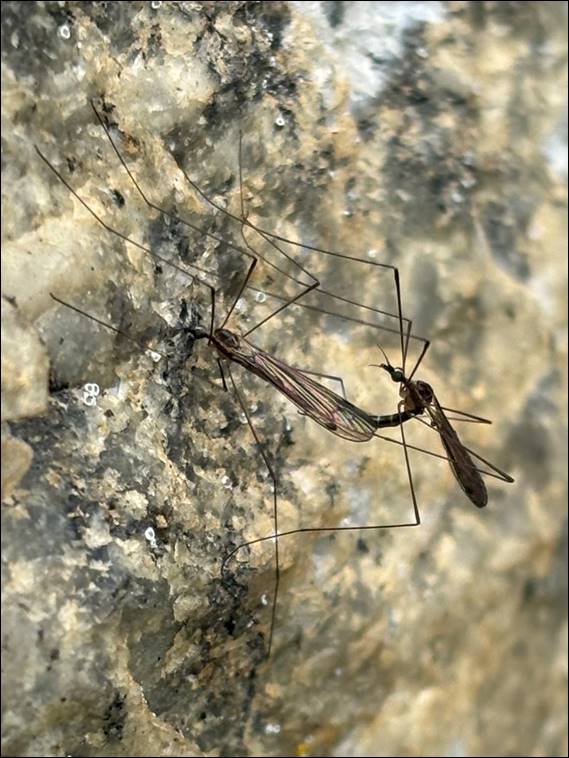
There were loads of them, and they are Bottle-brush Splay (Symplecta (Trimicra) pilipes). A common small to medium sized crane fly with a wing span of no more than 15mm. They like and make the most of damp conditions. And they have to be quick. They only have an adult phase of a few days to a couple of weeks, so their primary purpose at this stage is to reproduce. For a change the species name pilipes comes from new, not old, Latin words. The combination of pilus and pes giving them a name of hairy foot or hairy leg. A nod to the males:
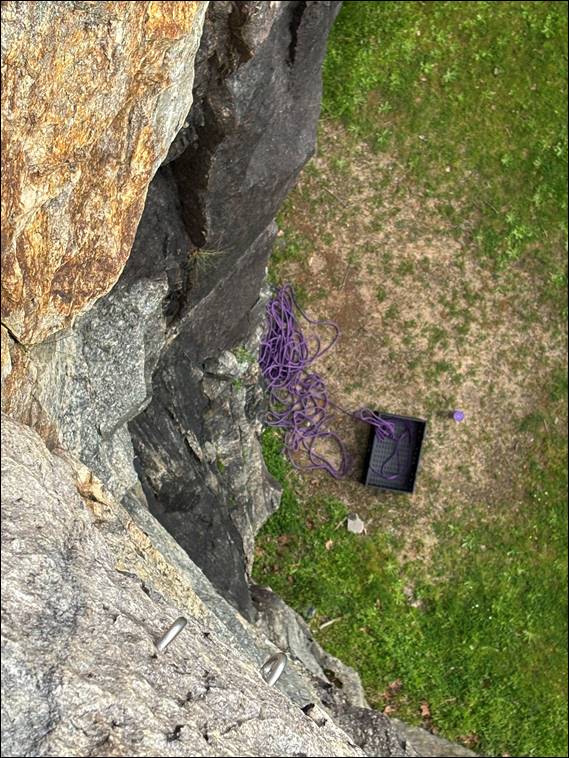
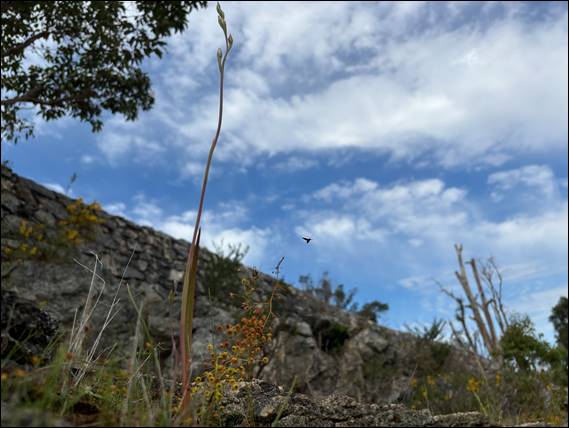
Howsie fared worse than me on that first line so was keen for and picked a more gentle climb. Another route that has been too wet to get on for months, so it made a nice change. It was a good choice as it allowed us to top out, after which we spent a bit of time checking out the ledge at the top of the amphitheatre. In hunt for the Sun Orchids. Most likely the Scented Sun Orchid (Thelymitra macrophylla) being one of the early flowering Sun Orchids compared to many of its relatives. Although none of the buds were open to allow a thorough check:
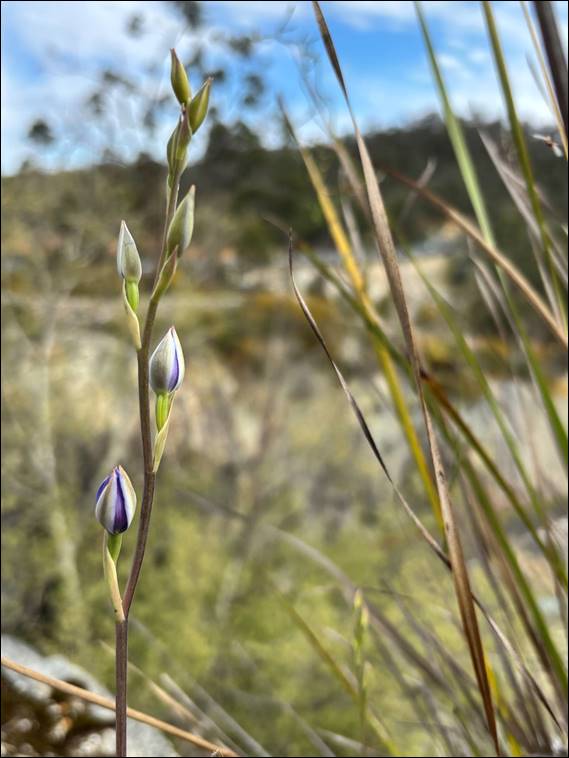
When open the sepal and petal shapes and patterns help to identify these, as does the column configuration. The column is what gives this genus its name of female cap or female turban, taken from Greek words thelys and mitra giving us Thelymitra. This species specific name of macrophylla means large leafed in Greek referring to its relatively long basal leaf. There were also heaps of Small-Flowered Donkey Orchid (Diuris porrifolia), these love granite outcrops and can be confused with the Common Donkey Orchid (Diuris corymbosa):
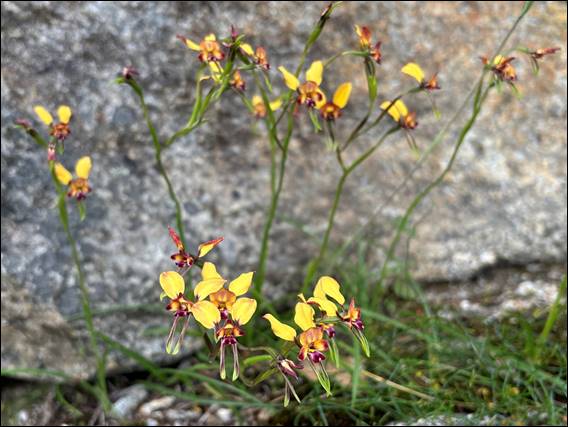
One indicator to tell them apart being the flower size, which for the former are approx. 15 to 25mm while the latter are bigger at 25 to 35mm. The climbing continued and we racked up six lines, feeling completely stuff after that. During Howsie’s ascent of the penultimate route I suggested, maybe unfairly, that this Humped Silver Orb Spider (Leucauge dromedaria) had been climbing faster than him. It was however amazing at how fast it could climb both the rock and its thread. I want to suggest this is a male, as with many spiders they are smaller:
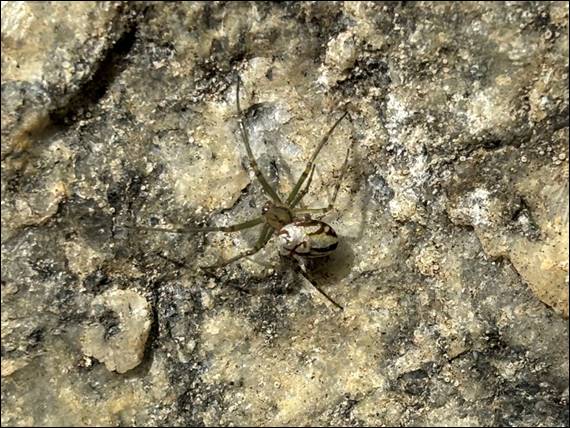
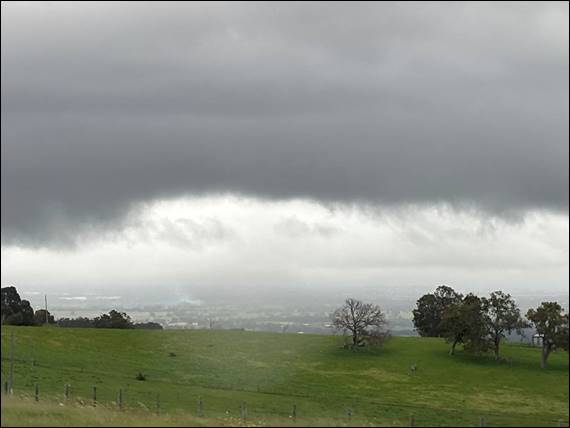
At one point I watched a Bottle-brush Splay seemingly knock the spider from its perch. It is possible the spider was in fact auto-responding to a potential attack. One of their known predators are wasps of the family Sphecidae. These will land on the web to lure the spider out. Then then snatching, paralysing, and storing it as live food for their young. On that depressing note I’ll finish up. Heading back down the hill the blue sky we had driven out under now had clouds, which eerily hung in the sky below us. Then came the rain:
 Sandbagged