Now that the ball has started to roll it has gathered pace, so not wanting to miss out it’s been another week of squeezing in a bit of time to check out my local spots. A long walk round Manea Park early in the week wasn’t very promising with very little to show for it. Other than loads of Cowslips (Caladenia flava) finally appearing. During my six kilometres circuit I only stumbling across two White Spider Orchids. Both being Sandplain White Spider Orchids (Caladenia speciosa), and one was already starting to wilt:
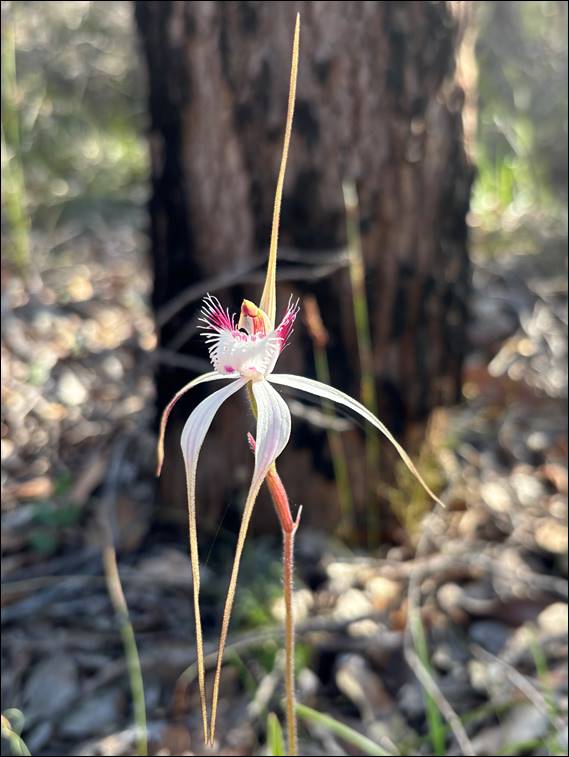
My book has fourteen geographical races of this species. This one has two distinct features that should make it easy to spot. Although at times I still struggle. Having a pink tinge in the petals and sepals, and the fringes along the edge of the labellum being very exaggerated and ragged. Growing as long as 15mm and a bit like unkempt hair the ends of them can at times split. The first Forest Mantis Orchid (Caladenia attingens subsp. attingens) of the season was also out, and during this week’s trips it was the only one I saw:
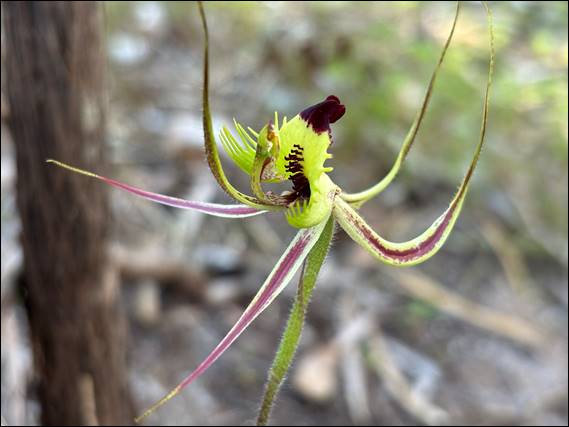
It is the largest of three subspecies, and only one found locally. I stayed on path this time, but when I am scouring a smaller area, as opposed to pounding the track, I will head into the bush. When this happens here is one of the many prickly shrubs needed to be negotiated, a Phoenix Bitter-Pea (Daviesia physodes). The species names come from two Greek words translating into bellow like or fire like. The first translation was used as the fruit or seed-pods are inflated and bladdery, but the second aptly describes the long stems of bright flowers:
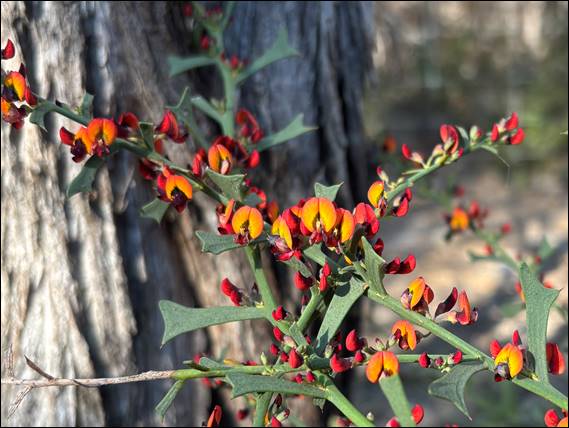
As per the common name it has a bitter taste; a deterrent against herbivores. What look like unusual leafs are not. And are in fact the modified stalk of what was a leaf. As such this plant is leafless, with the stalks taking on the primary job of photosynthesis. Called phyllodes they have been flattened and extended, with sharp points that makes brushing past or walking through these shrubs a tad unpleasant. Later in the week I dashed out to the Ruabon Nature Reserve, where I covered way less distance, but had one goal in mind:
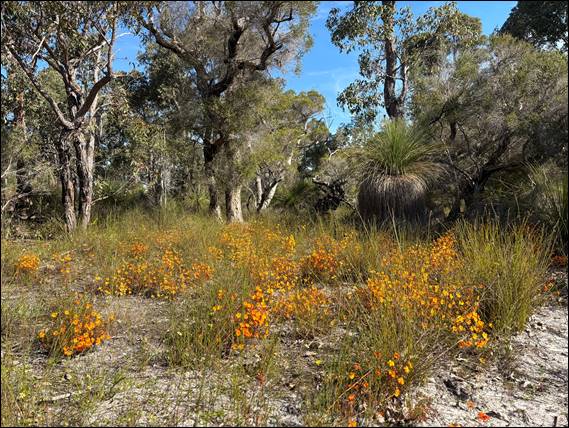
Not the above Orange Star (Hibbertia stellaris) that was lighting up the floor. These are however a good plant to see. Being extremely sensitive to dieback, or Phytophthora, that attacks and rots roots. The plants presence indicates this area it dieback free, for now. In previous seasons I have spotted a cage here, with nothing in it. Last week that same cage had a spider stem growing, and this week it was in bloom. My first new orchid species of the season and a very good one, being the Grand Spider Orchid (Caladenia huegelii):
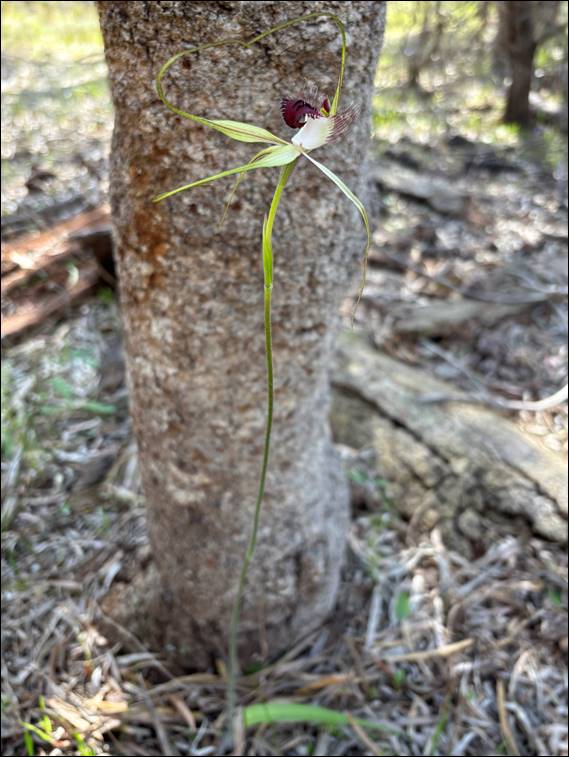
I have referenced this species before, as based on an experts advice I received a few years back it may have been the other half of a hybrid I found in the Capel Nature Reserve. The other half of that hybrid being one of the White Spider Orchids. The Grand Spider Orchid is referenced as only being pollinated by the male thynnid flower wasp species Macrothynnus insignis. Research goes further and identified that a specific and smaller population of this species had uniquely adapted to be its exclusive pollinator. In what way I have not found out:
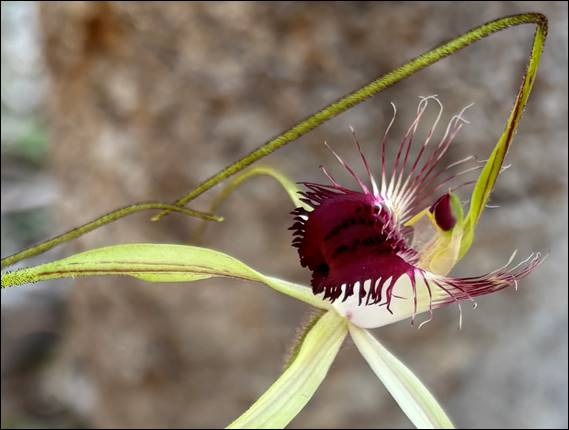
The find, even if it was assisted by a pretty prominent land mark of the cage, was so good because this species does not bloom every year. Not only that it is a rare find, having a raft of classifications over it. Listed as Threatened Flora by our state government, Endangered by the Australian government, and Critically Endangered under the World Conservation Union. It is interesting that its ranking gets watered down from the global perspective, as a more local lens is applied. A telling tale of where each jurisdictions priorities lie some may suggest:
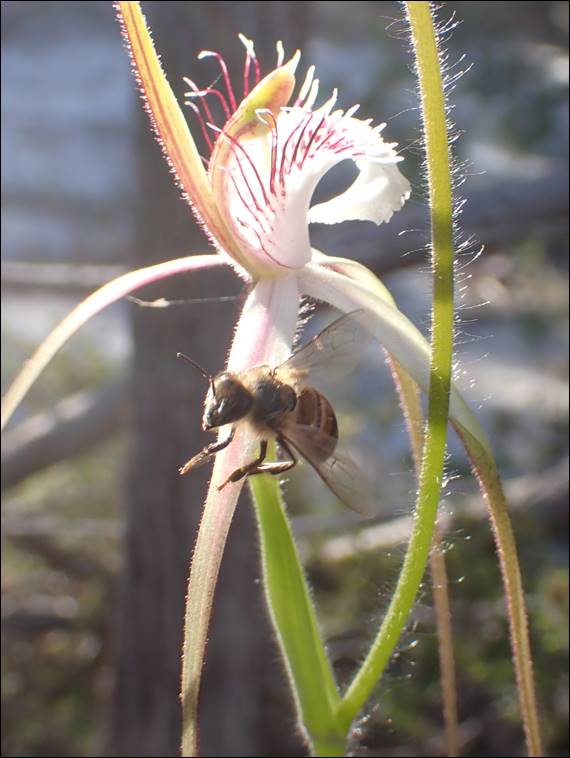
Leaving that topic, hastily. After not finding anything else new out at Ruabon I drove to the Capel Nature Reserve. My first image from here is of a Sandplain White Spider Orchid (Caladenia speciosa) with a Western Honey Bee (Apis mellifera) flying by. Being the most common of the eight recognised true honey bee species worldwide. With the perfect species name mellifera; Latin for ‘honey-bearing’ or ‘honey-carrying’. This species was introduced to Australia way back in 1846 both for honey production and to support agricultural:
On the plus side, and in the name of economic growth, the Western Honey Bee is said to help pollinate 35% of agricultural crops across Australia and the honey production is also a billion dollar industry. The downside however is that they outcompete over 1,700 species of native Australian bees; compete with many native birds, mammals, and reptiles for natural nesting and shelter, which in itself is declining due to clearing for economic growth; and have rapidly and negatively changed native plant-pollinator interactions evolved over a very long time:
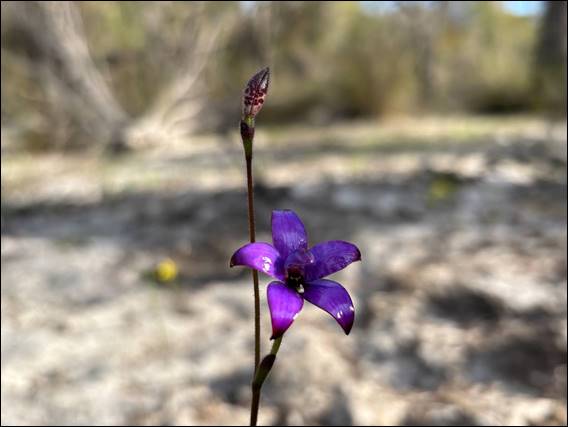
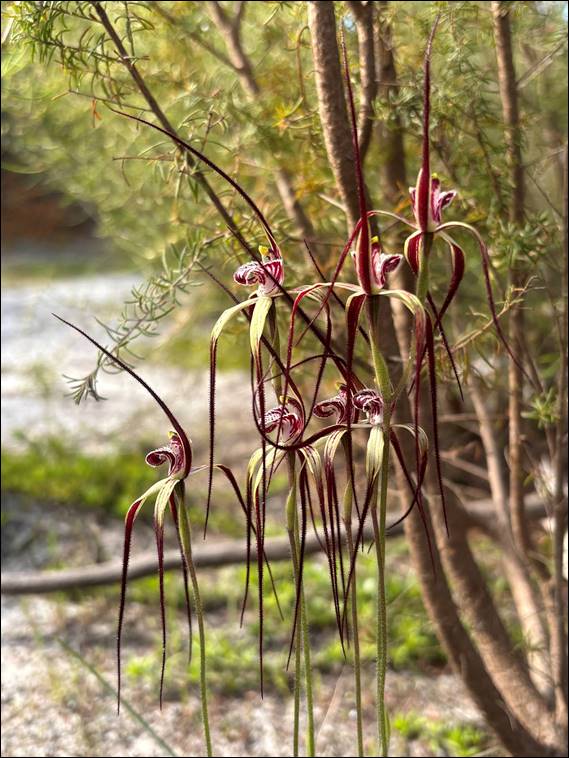
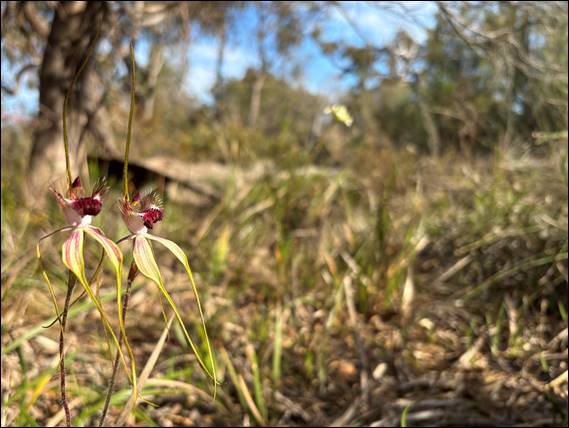
Time to leave that topic too! It did however help me slip in an image of the Chapman’s Spider Orchids (Caladenia chapmanii) and a Purple Enamel Orchid (Elythranthera brunonis), which were out in good numbers along with at least two species of White Spider Orchids. Plus two Tuart Spider Orchids (Caladenia georgei), below. With plenty more spiders looking like they are preparing to come out. Hopefully these will provide a few more species and hybrids over the coming weeks. And then I found something I have not been lucky to see here before:
Having come at various times of the day in the hope to find a snake, this is the first I’ve seen here. Tiger Snakes (Notechis scutatus), like all snakes in Australia and most globally, are natural shy and prefer to flee. There are some that will however stand their ground if confronted, and this is one of them. In the open ground it was happy to slither away. I however wanted to see more, so keeping a healthy distance made the most of the encounter. Being cautious, as a bite could cause rapid paralysis and severe internal bleeding:
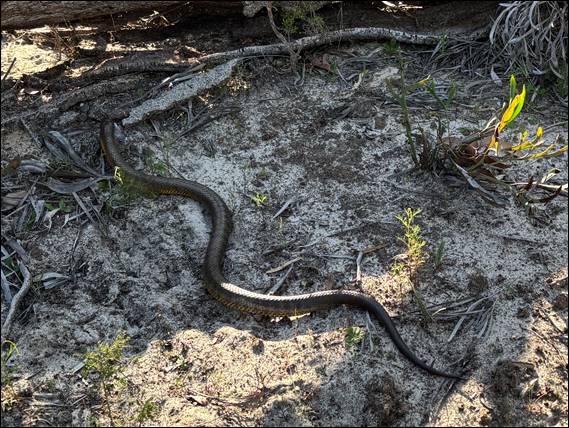
Depending on the list you look at these are ranked fourth or fifth on the global scale of most potent land snakes. The placement depends on specific toxicological testing index used. The LD50 toxicity testing, which means Lethal Dose 50% and measures how much venom is needed to kill, places it fourth. A good reason to be careful. But not a good reason to not admire and respect these reptiles. It is one of approximately 15 to 20 species of viviparous or live-bearing land snakes found in Western Australia:
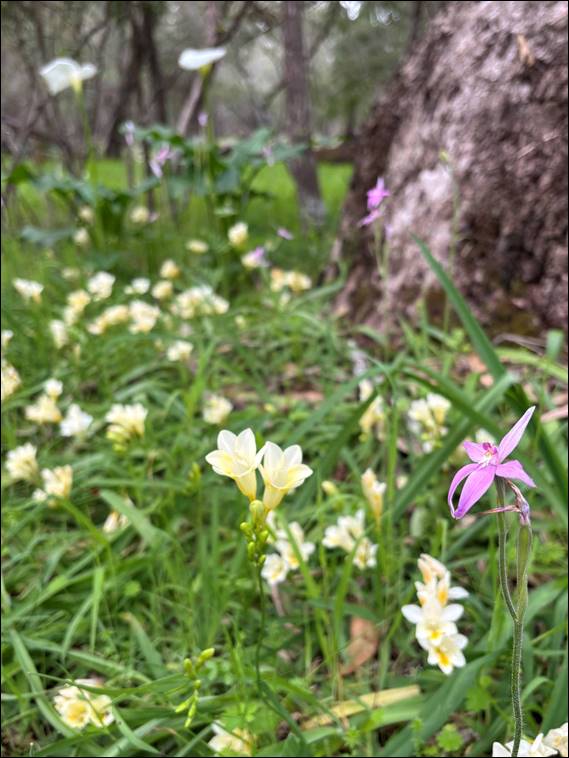
Lastly today I went to the Minninup Tuart Woodland, where finally I came across the Pink Fairy Orchid (Caladenia latifolia). There were hundreds of them. Doing well to thrive amongst many weeds including two invasive species both from South Africa that have been out in massive numbers for weeks now. The tall white flowered Arum lily (Zantedeschia aethiopica), and dense patches of Freesias, although I didn’t take the time to work out if they were the White Freesia (Freesia alba) or White Coastal Freesia (Freesia leichtlinii):
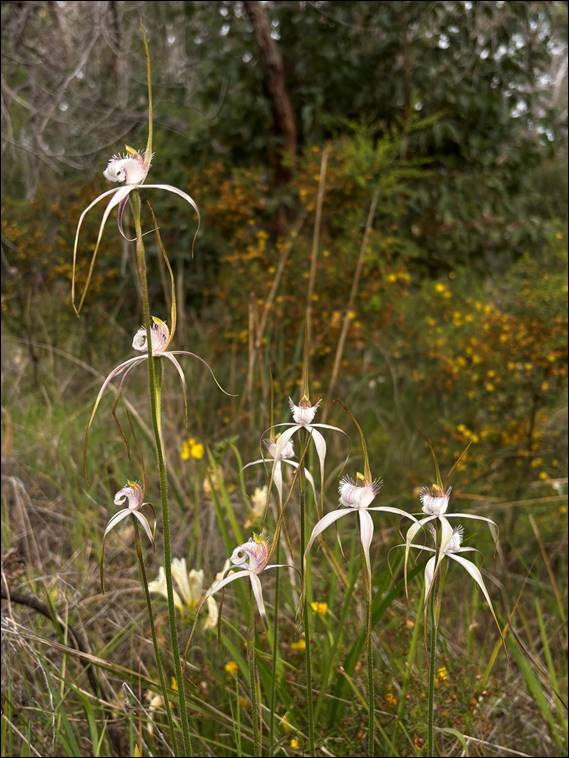
The Coastal White Spider Orchids (Caladenia longicauda subsp. calcigena) were also going crazy. These have a relatively narrow labellum on which there are usually four rows of pale red calli, being raised glands. Unlike other White Spider Orchids the rows do not remain parallel, instead starting to merge at the tip of the labellum where they become arranged in a messy way. A couple of plants looked to have been a hybrid of the Coastal White Spider Orchid and Tuart Spider Orchid (Caladenia georgei), which I have seen here before:
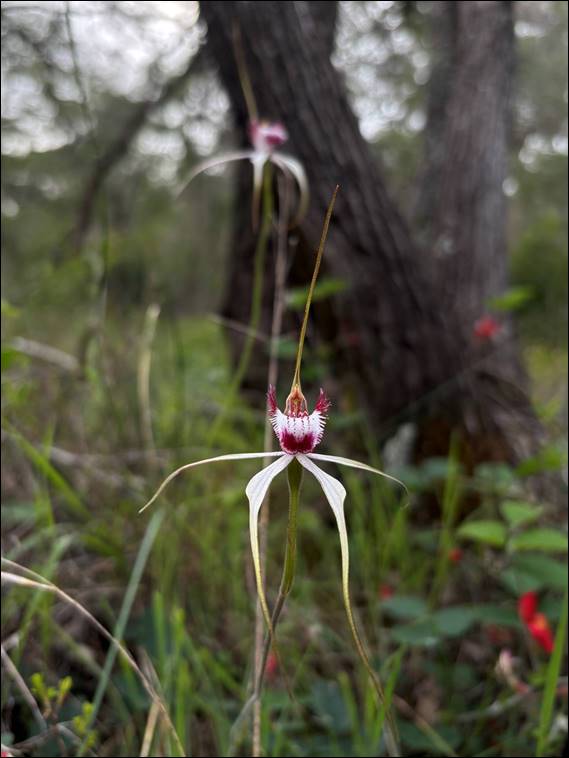
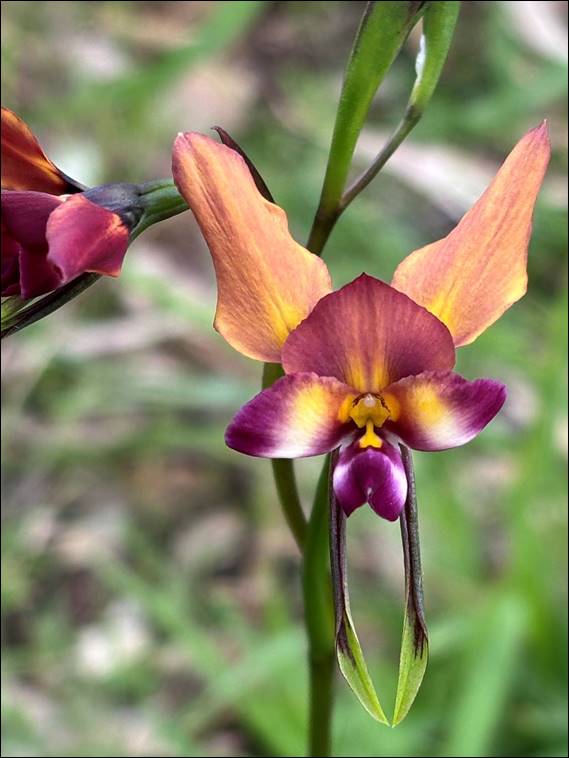
There may have been another White Spider Orchid species out, but in truth with the amount out it was a bit of sensory overload. As was the onslaught of mosquitoes. Being by far the worse place I have visited for them. They could almost have carried me away. It was however worth braving the flying pests to see what was on display, which also included lots of repeat finds. One of which I simply have to end on, because of the glorious colours on display. The Yalgorup Donkey Orchid (Diuris porphyrochila):
 Sandbagged