On Tuesday we officially welcomed spring. To celebrate I popped out after work to check if its arrival had resulted in a flurry of orchids suddenly popping up. With, of course, a spring in my step. Not that I really thought they would magically appear, I had a shock when I stopped in at the Franklandia Nature Reserve. Not wandering to the side of the road with the good bush, but going to the heavily weed infested side. This may seem strange, but past experience had told me there could be gems to be found in between the abundance of weeds:
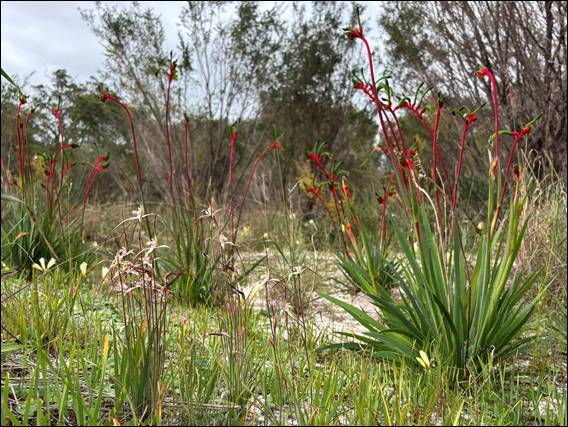
Even from a distance the Red and Green Kangaroo Paw (Anigozanthos manglesii) stood out, and are probably what will draw your eye in the first image. For those that are not so keen on spring due to allergies, these flowers have an extremely low airborne pollen count. Relying instead on nectar-feeding birds and small marsupials to disperse their relatively large, heavy, and sticky pollen grains. If you look at the above image again you will also see a several clumps of Common Spider Orchid (Caladenia vulgata):
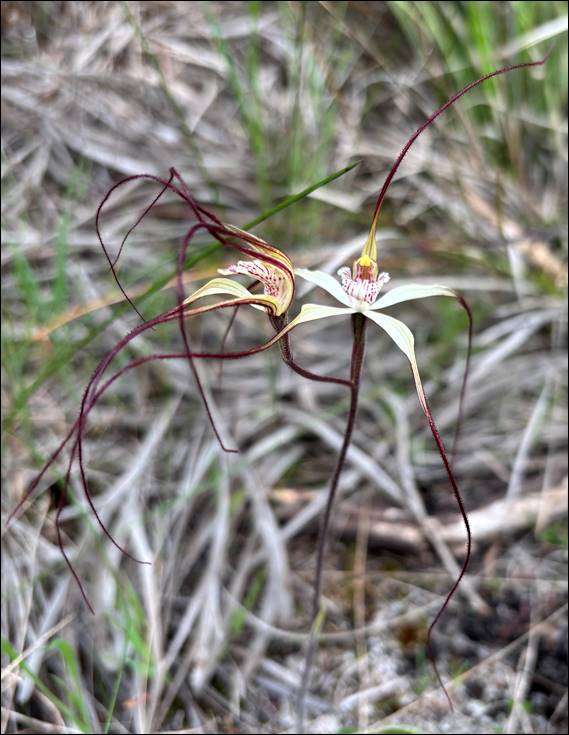
Endemic to the south-west of Western Australia, it has an extensive range across varying landforms and climates. While they can be found as individual plants in some areas, this particular spider orchid more than most has a greater tendency to clump. Since first finding out about them occurring here, I have seen them come up in large clumps every year. Despite its name this is strangely the only place I have seen them. I have also read that there are views that the species, more than likely, contains several geographical races:
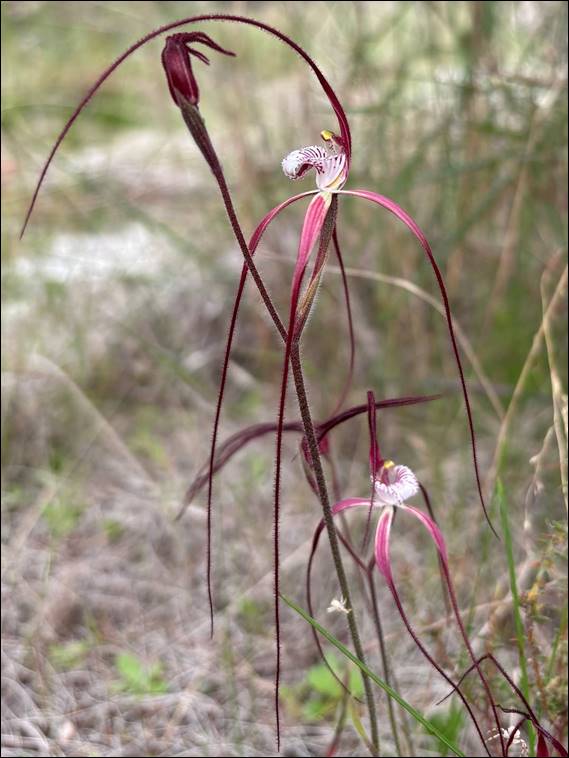
With their more vibrant colours, compared to the Common Spider Orchid the above Chapman’s Spider Orchid (Caladenia chapmanii) had to try harder to hide, with just a few amongst understorey. These are also known to clump. All the flowers in a clump will have the some colouration, as they grow from the same underground tuber. However, the flowers of adjacent clumps frequently have an entirely different colour. Locally the Capel Nature Reserve is the place where this is most evident, where many clumps can be found:
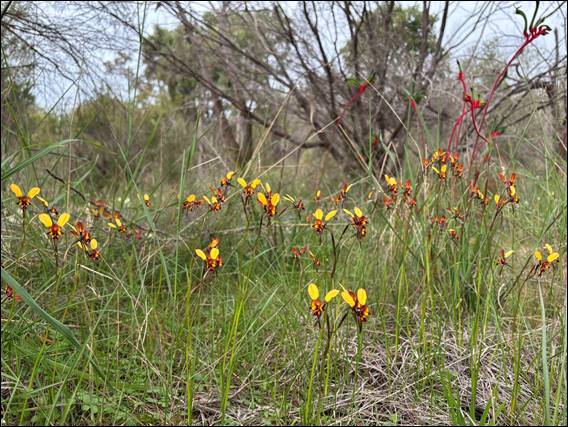
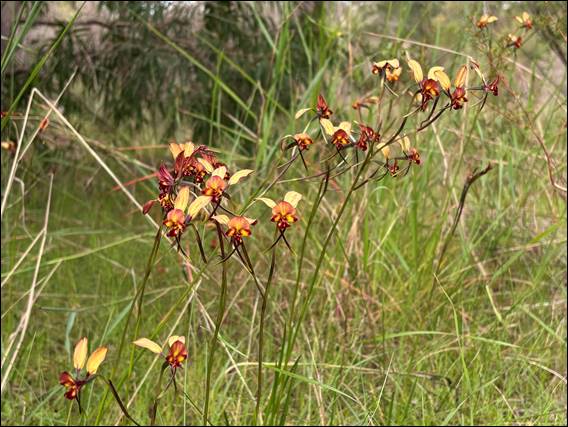
I went there on Wednesday hoping to see the vast range of colours, from striking red or maroon to bright yellow or cream, but found none in bloom yet. In fact there was nothing of note there at all. Whereas the Franklandia Nature Reserve continued to amaze, with the above Kemerton Donkey Orchid (Diuris cruenta) and below Yalgorup Donkey Orchid (Diuris porphyrochila) both on display in relatively large colonies. More collective flowers than other areas I have been visiting recently. Then there was one other orchid I spotted here:
Finally getting to see a Cowslip Orchid (Caladenia flava), but just the one. This orchid normally litters the floor of all the places I visit. This week I went to six spots, and found the below single flower here and plants in the numbers I would normally expect at one other location, which I am yet to get too. Cowslip Orchids share pollinators with several other local species, resulting in a variety of cross-breeds. Creating at times rare and multi-coloured hybrids like the Spectacular Spider Orchid (Caladenia × spectabilis), which we spotted in Kalbarri:
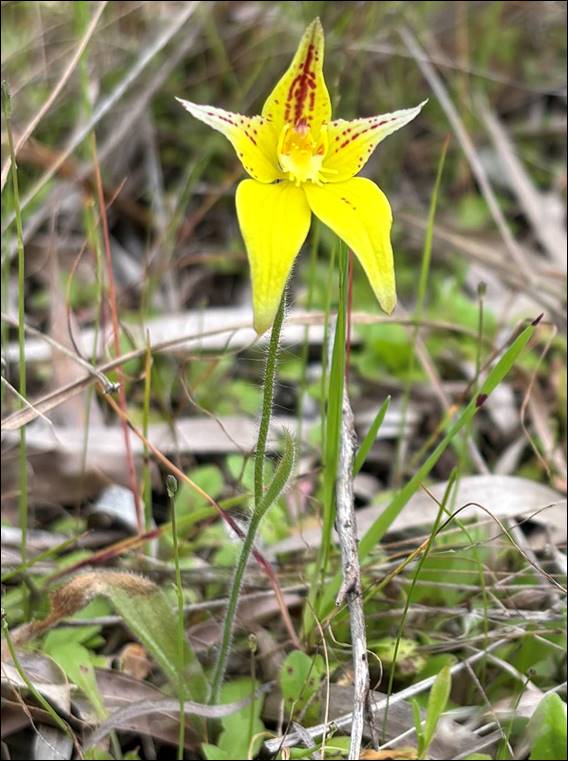
Being a cross between the Cowslip Orchid and any of the species of Pink Fairy Orchids. There is a lack of the latter in our patch this year. I am still yet to see the any Pink Fairy Orchids (Caladenia latifolia), despite them usually being as common as the Cowslip Orchid. In Europe there is a plant that is also called a Cowslip (Primula veris). It too is yellow but that is where the similarities stop. I did however have to giggle when I read the name comes from an Old English word, cūslyppe, that means ‘cow slop’ or ‘cowpat’:
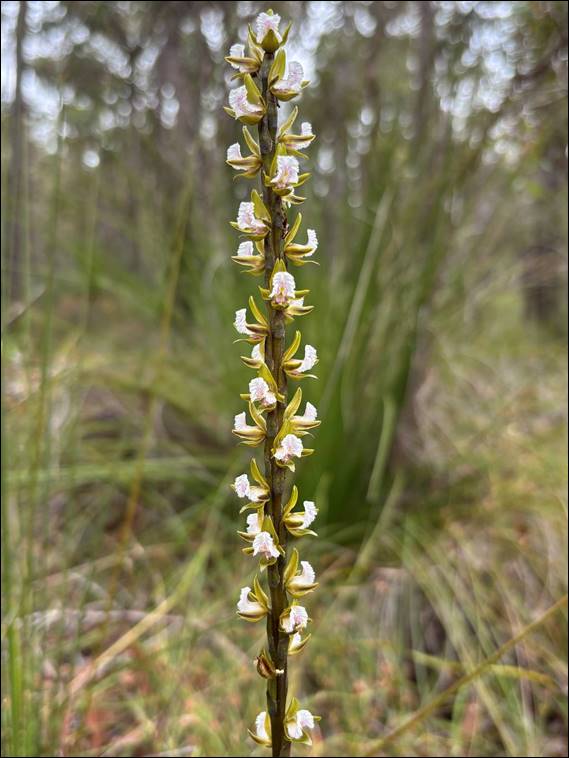
This is because the European Cowslip were often found growing in pastures near where cows had done their business. The same cannot be said for Cowslip Orchids, and the reason for their common name still remains a mystery. Above the single Fringed Leek Orchid (Prasophyllum fimbria), which I spotted during my last trip to Crooked Brook, was now out in flower. But it was still the only plant of this species I saw. Below I also found just a single Warty Hammer Orchid (Drakaea livida), whose thin wiry stem seems to defy gravity:
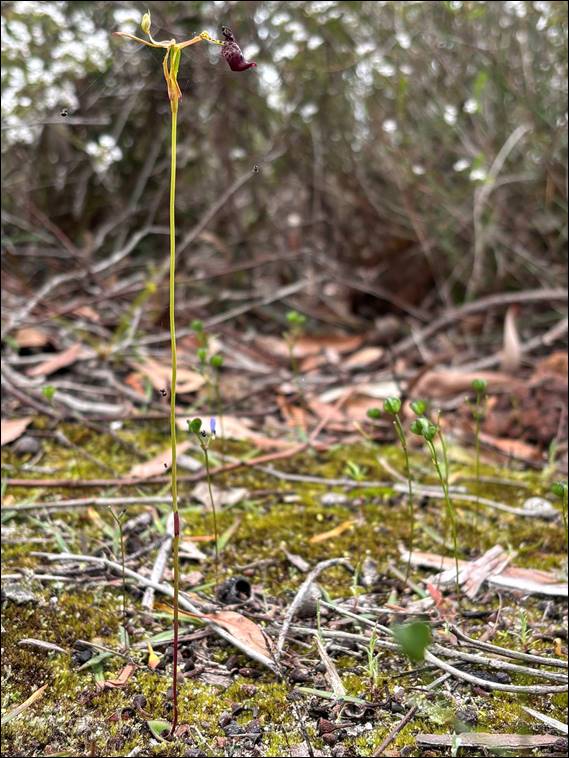
The labellum of this species of hammer orchid looks a bit like the flightless female thynnid wasp from the genus Catocheilus. Matching the shape, colour, and texture. It also releases chemical pheromones smelling identical to the real female wasp’s sex scents. Using this to lure mates from far away, to aid their pollination. The orchid has one other trick up its sleeve to further attract eager males into an embrace. Blooming before the real female wasps emerge from their underground burrows, avoiding the need to compete with the real thing:
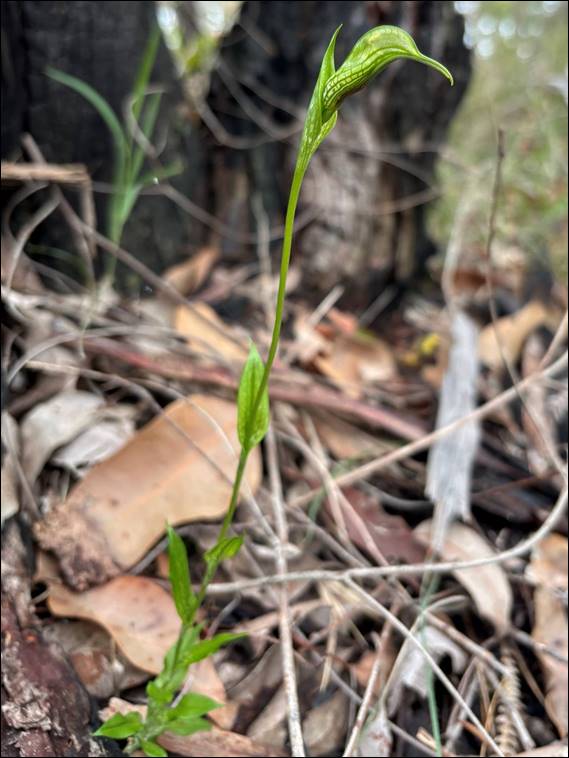
Crook Brook was a place of single finds. Just one Bird Orchid (Pterostylis barbata), not quite out in full bloom, catching my eye. Neither the wispy, feather-like labellum nor downward pointing lateral sepals, which resemble the legs of the bird, were out yet. Meanwhile high above in the canopy of the highest trees, whether dead or alive, the screeching of the Forest Red-tailed Black-Cockatoo (Calyptorhynchus banksii naso) were unmistakable. Due to the high parental investment they typically only produce a single young every second year:
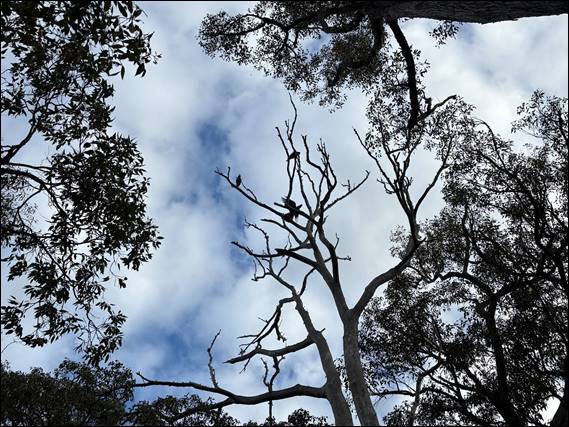
Primarily because of the long duration required for the chick to fledge and become independent. This along with the loss of habitat and high competition for tree hollows, large enough to nest in, is making the population recovery of this vulnerable species very slow and difficult. Meanwhile the following orchid is certainly not looking to be struggling, when on Friday after a walk round the Ambergate Nature Reserve yielded absolutely nothing, I found these in huge numbers at the Ruabon Nature Reserve. Another species of Hammer Orchid:
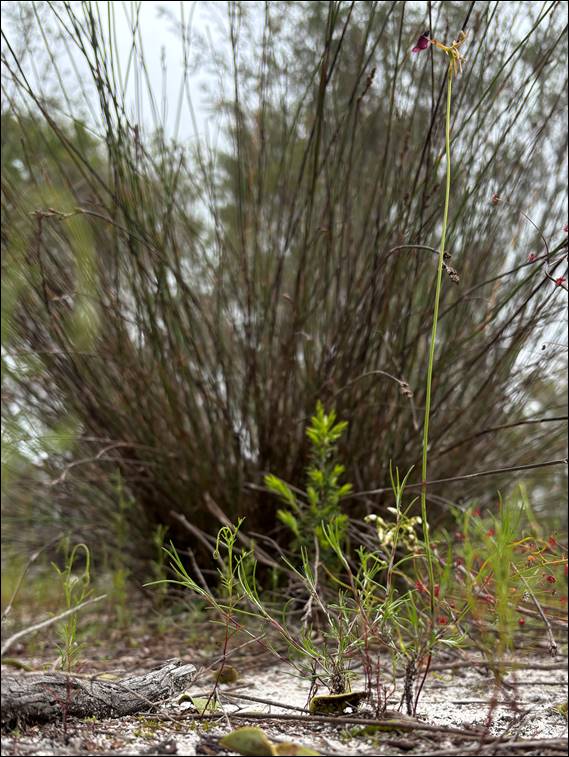
The King-in-his-carriage (Drakaea glyptodon) also makes use of an amorous male wasp. This time from the subfamily thynnine and specifically the Zaspilothynnus trilobatus. Studies have shown the male is not quite so dumb. If there is a choice he will pick a real female over the fake one hanging off the orchid, another good reason for flowering several weeks before the females come out. This is where the Cowslip Orchids were taking over, but I also found a few Flying Duck Orchid (Caleana nigrita) popping up aiming to deceive yet another male wasp:
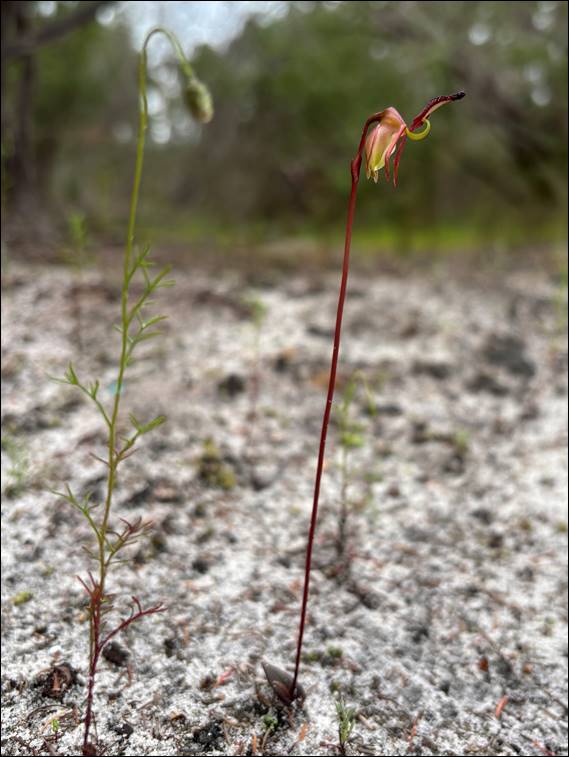
This time being the thynnid wasp of the Erione genus. Flying Duck Orchids are non-resupinate flowers, which means that none of the plant organs twist or rotate during its development. The majority of orchids in Western Australia are resupinate. Down our way the Ducks are joined by the many species of Leek and single species of Slippers and Pygmy orchids. One of the many resupinate species, whose flowers undergo a 180-degree twist during development, was also starting to appear and is very close to blooming:
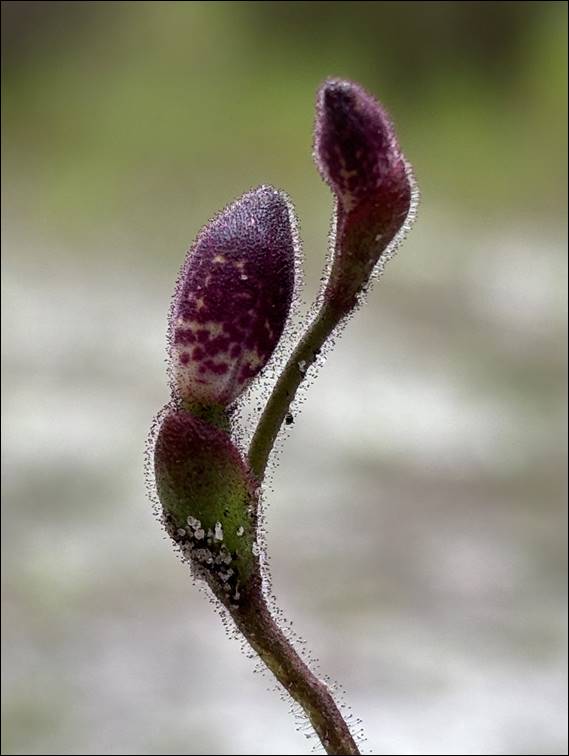
I have mentioned before that while the Purple Enamel Orchid (Elythranthera brunonis) has very striking glossy flowers, the back of the flowers are equally stunning. As are the bud as they get ready to open. Not just the dark pink to reddish-purple spots and mottling that covers them but also mass of fine fuzzy hairs. These secrete tiny amounts of moisture or chemical compounds. This helps its survival rate by both creating a microclimate to protect the vulnerable young flower buds from drying winds, and put off early insect predators:
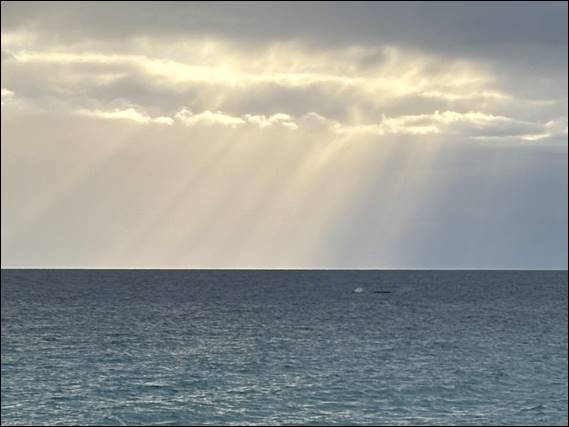
As can be seen above, I have moved on again. This morning I headed off early to the Meelup Nature Reserve. Not to visit Castle Rock for a climb. Instead to have a hike and test how my knee rehab is going, aiming to hike approx. 12km. Not amble or ramble, so with limited time to look for goodies. When the ocean came to view I got to see many Humpback Whale’s (Megaptera novaeangliae), mostly moving on but some having a little play. While I was on a mission and walked on, I am pretty good at spotting the colours and shapes of likely orchids:
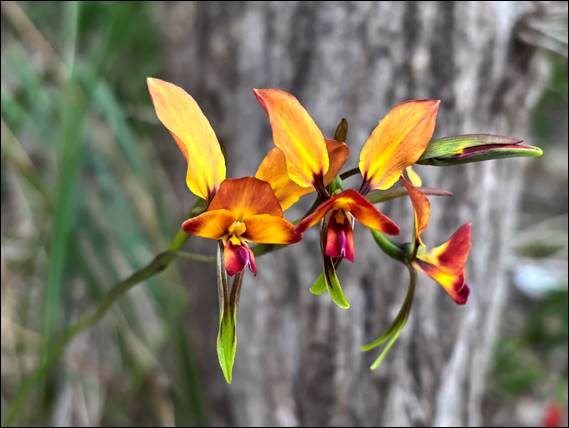
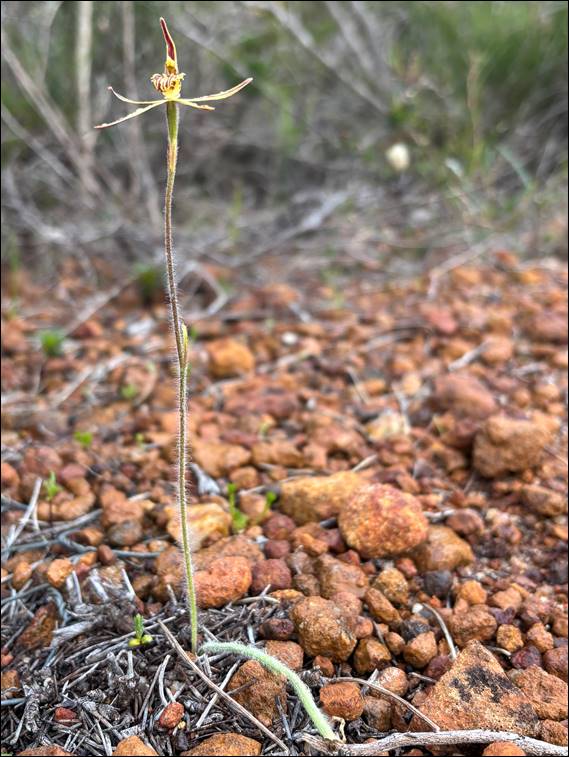
It was extremely light on and I only found three plants. Above is my second sighting of the season of a Dunsborough Donkey Orchid (Diuris jonesii). And below is a Cape Mustard Spider Orchid (Caladenia caesarea subsp. maritima). This is about half the size of its mainland counterpart that I’ve not yet seen, the Mustard Orchid (Caladenia caesarea subsp. caesarea). The species name, caesarea, means ‘emperor’ or ‘ruler’ in Latin. Chosen due to its stately and attractive look. And this one still had it despite the petals and sepals having been nipped:
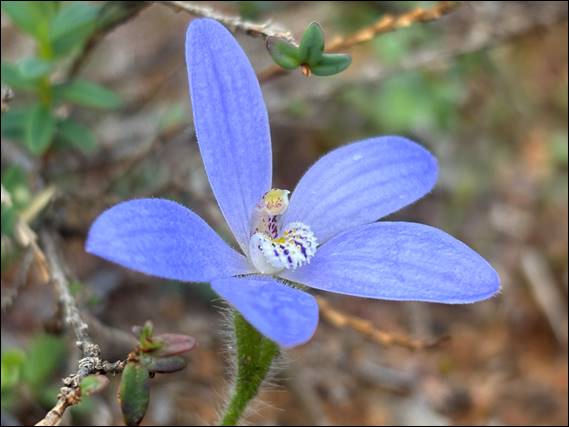
The last orchid I spotted was this delightful Blue China Orchid (Cyanicula gemmata). These are small in stature, growing close the ground with a height of between 1.5 to 6 inches. I have seen very few of these over the years. This is only the second one locally with the last time being two years back on Lisa’s birthday, which is not too far away now. A few quick snaps and it was back to the hike. Keeping a pace that just tipped me into the power walking category, with the knee holding up well and only giving me a few minor complaints:
 Sandbagged