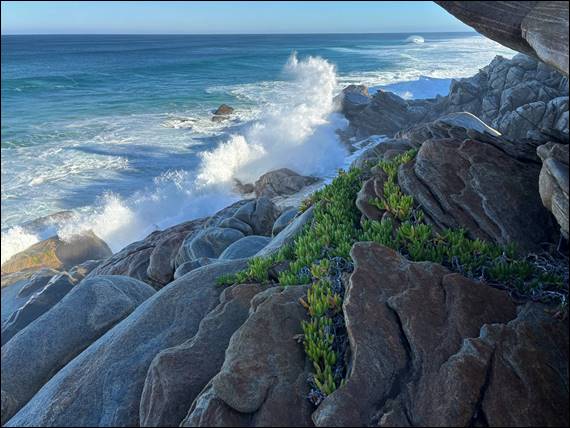
The well sculptured and rounded granitic gneiss so close to big rolling waves can only mean one thing. I was back at Moses Rocks. Today it was Josh’s turn to pick the location, and it looked to be another corker of a day. Arriving a bit after first light allowed us to enjoy, as Lisa had yesterday, the morning hues as we walked along the beach and hopped across the boulders. A familiar path that leads to three distinct climbing areas. Unlike my last trip here with Mario and Craig we probably wouldn’t be bashing out the climbs at such a rapid pace:
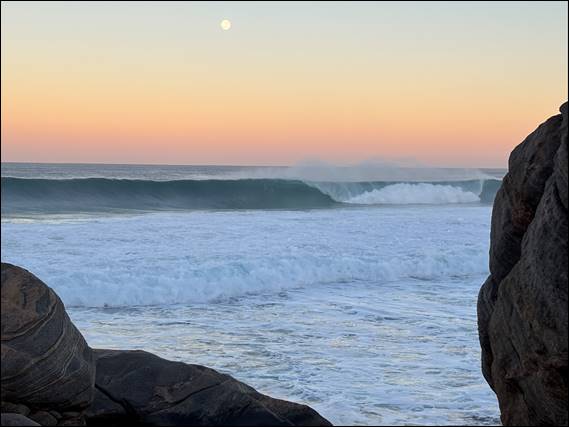
It has been a while since Josh has been out. Full of good intent and motivation he had declared 2026 would be the year that he gets up a grade 20 clean. I first heard of this goal back in April when he gate crashed a before work session. Since then he has only touched rock once, and that was way back in May. Needless to say his progress towards this self-imposed goal has not exactly been on track. Today was all about kicking back, soaking up the atmosphere, and sneaking in a few quality lines. But nothing too hard:
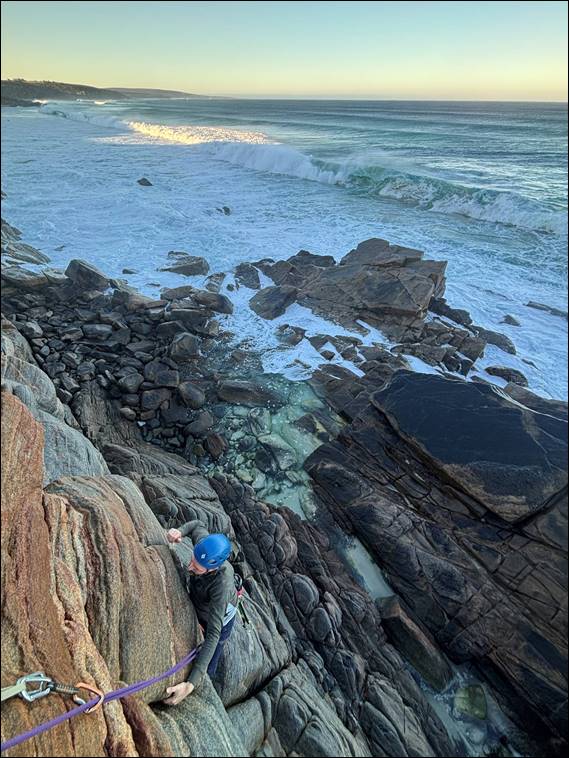
With the conditions on display today, and also not wanting to repeat the routes that Mario had scampered up just a few weeks back, we wandered across to Rumpoles Rocks. Fully aware that the rough swell would mean the pool below the wall would intermittently be awash as the waves broke through the gap in the rock bar. Not that this would worry me too much. Today it would be me on the sharp end for all the lines. Leaving Josh at near water level to enjoy watching it at times gush in and lap at his feet:
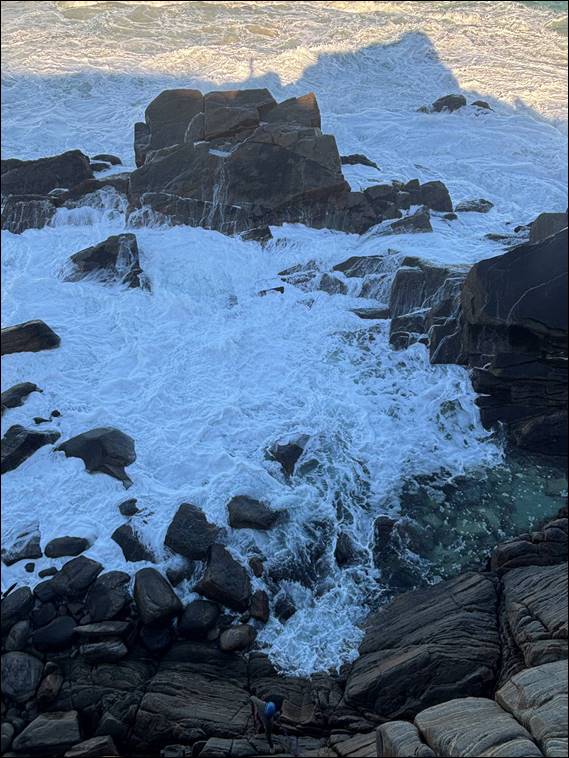
If you look carefully you’ll see both of us in the above image. And just as quickly as the pool was a mass of white water it can settle down and look like a lovely clear and calm rock pool to go exploring in. These constant changing conditions can put some on edge, but we have been coming here long enough to know it is safe enough. Added to the continuous sensory bashing we were receiving, the rock was heavily glistening. Our hands were wet as we topped out on each route, but the underlying friction never faltered:
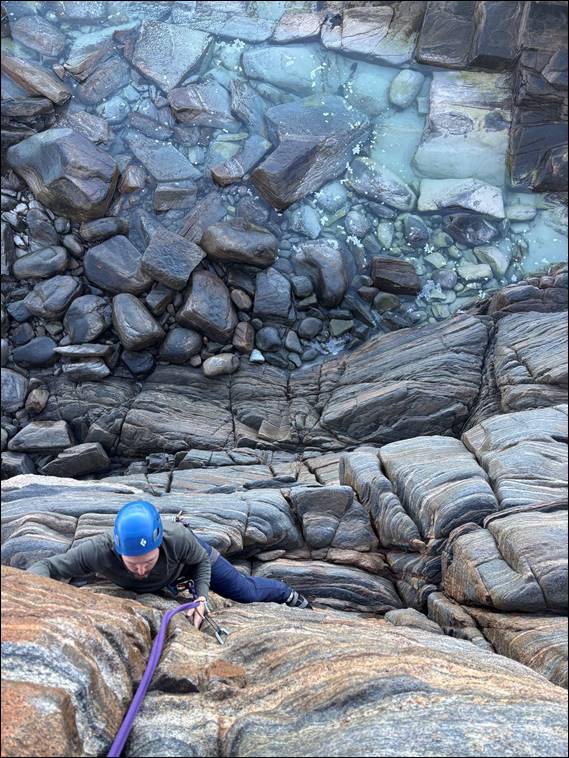
While Josh may have been absent for several months, he did himself proud today especially on the above route. A roof followed by steep headwall that keep you on your arms, as you continually wonder which hold to go for next. The line nastily leaves the perplexing crux sequence till the top. Here for several moves the holds seem to suddenly shrink in comparison to what was on offer up until that point. It’s certainly not his preferred type of route, but managed a clean ascent in good style:
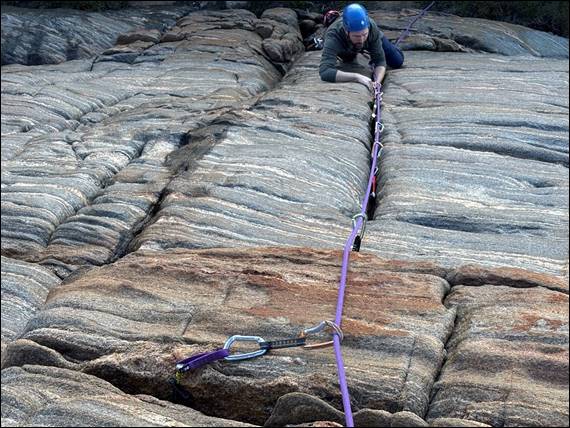
That was to hardest route, by grade, that we climbed. He only needs to add four grades to reach his goal. Three fun but pretty damp lines down and we decided to move away from the most southern area to the middle area. Despite being a bit further away and more elevated from the ocean, it made no difference. With not a dry patch to be found this line, with a super rounded blind crack, it felt a tad more nervous than usual. This saw me stitch it up with more gear than I have before. Despite the conditions we both still enjoyed the experience:
Half a dozen routes were in the bag, interspersed with lots of wave watching. We were very satisfied. Unlike the last trip here, we were lucky and got to see the Hooded Plover (Thinornis cucullatus) in the area cordoned off on the beach, both on the walk in and out. One on arrival and two as we were leaving, if you can spot them. We did not however manage to identify where their nest may have been. Finding it can be complicated by the fact that these birds display false brooding, which a trait characteristic of ground-nesting shorebirds:
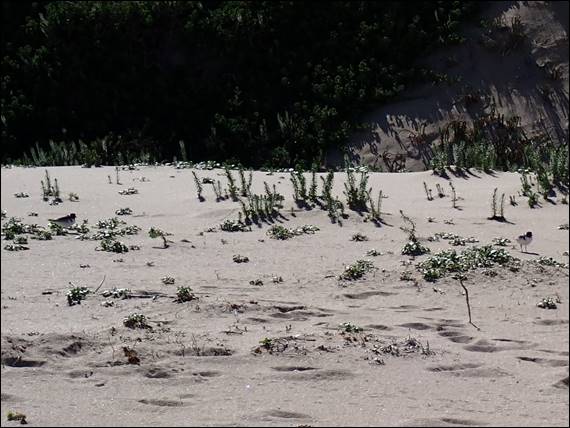
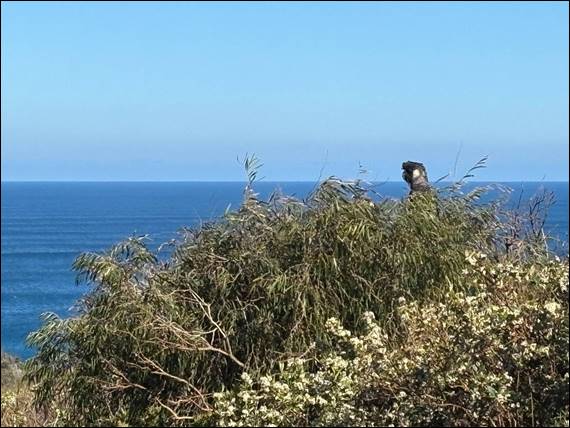
Species within the Plover and Lapwing family (Charadriidae) are well known to use this technique to trick predators, by faking incubating a nest in a completely wrong location. Hopefully this pair will successful rear their young, which may give the species a better chance of survival, as the avian influenza is starting to take hold across Australia. Driving out we also spotted a Baudin’s Black-Cockatoo (Zanda baudinii), which are one of some thirty plus species for which they are trailing preventative vaccination trials. The Hooded Plover is not one:
 Sandbagged