Most of us are lucky and the ups and downs of life, which cycle in response to so many factors, do not generally interfere with our ability to crack on with life. This week however the behaviour of one particular individual at work, who should know better, got my blood boiling. An overreaction some may consider, but those I know who are aware of the situation thought not. Regardless of whether it was or was not, I needed a circuit breaker. My work ethics making me find a day clear of prior commitments, and that happened to be today:
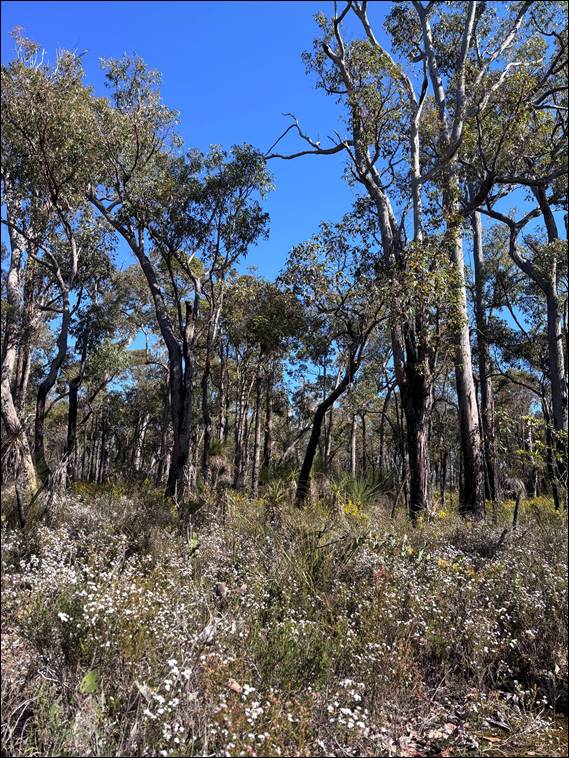
It’s not like I’m short of leave. With a nice pot of hours, which later next year I am hoping to start making use of to tip the life-work balance more towards life. Back to today because as someone wise once quoted ‘yesterday is history, tomorrow is a mystery, but today is a gift; that is why it is called the present’. Today was indeed a gift. Offering a wonderful day to go for a walk at Crooked Brook, where there were plenty of flowers popping up in the ground cover. The orchids were a little sparse, but a few were about:
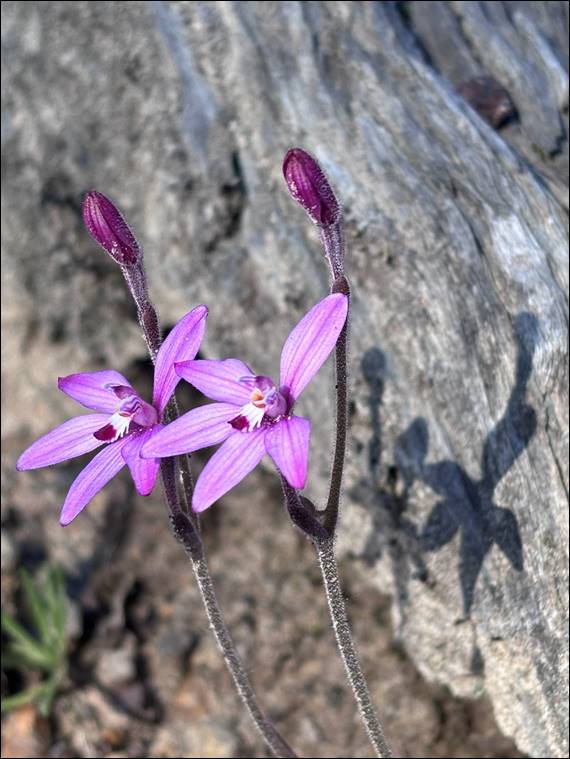
The ones in greatest abundance being the above Little Pink Fairy Orchid (Caladenia reptans subsp. reptans). This subspecies can’t make its mind up about fire. In some areas it will only bloom following summer fires, while in others it flowers every year. This brings me back to one of the topics I left lingering in my last post. Orchids that rely on fire, may do so for several reasons. Dormant plants under the soil can be stimulated by chemicals in the smoke from a fire, a signal to say the ground cover is gone allowing direct sunlight to easily reach the shoots:
In addition the minerals from burnt wood enter into soil, which provides additional food for new growth. Then once grown, the more open area brings two other benefits. Insects can more easily detect the plants, and tiny dust-like orchid seeds can disperse more readily and travel longer distances. Offering enhanced conditions for reproduction. That said fire is not always good, and several studies have reported that unseasonal or cool-season burns can destroy orchids when they begin to emerge and break dormancy, potentially killing the plant:
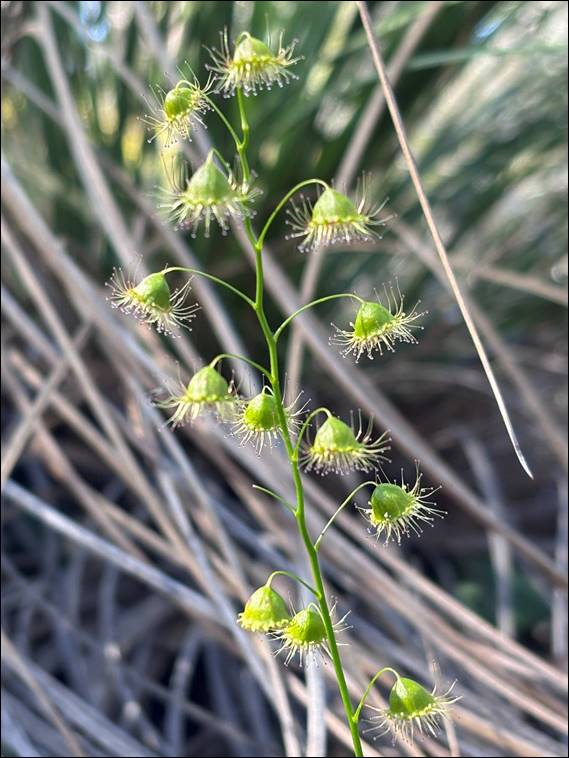
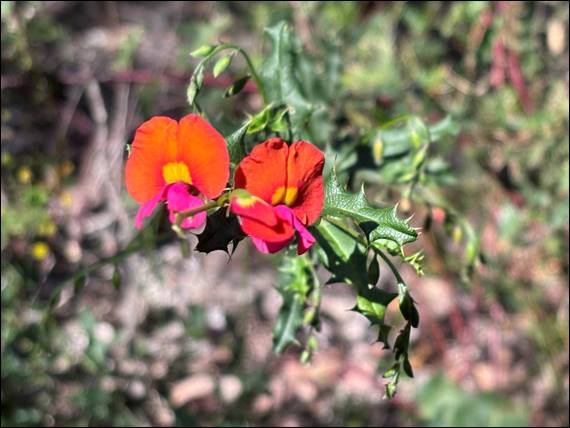
Such fires can occur due to human intervention when controlled burns are undertaken to reduce fire hazards, or more naturally as a result of a drying climate. And while I have raged on about that I have passed the very colourful an aptly named Holly Flame Pea (Chorizema ilicifolium), and Bold Sundew (Drosera huegelii). The Bold Sundew caught my eye with its distinctive stem able to stand upright without the aid of another plant or structure, and the bell-shaped leaves dangling downward. Looking like a bloom of jellyfish:
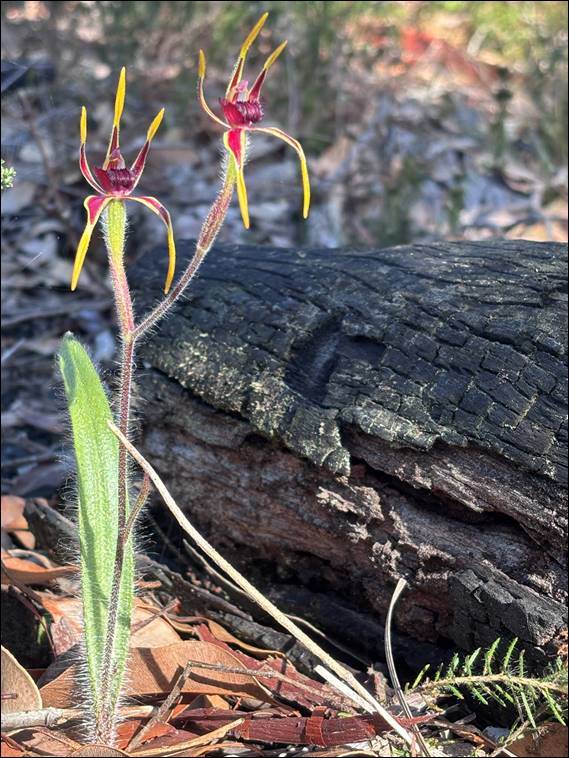
Above is one of my favourite orchids, the Reaching Spider Orchid (Caladenia arrecta). The light is catching the stunning colours beautifully. Unlike the Dancing Spider Orchid the common name for this one is very appropriate and obvious, with its lateral petals and sepals sweeping upward towards the sky. In addition the species name is a Latin word meaning upright, set upright, or raised. While it is next to a fallen charred log this area has not had any recent burns. Being another species not reliant on a summer fire, which can flower each year:
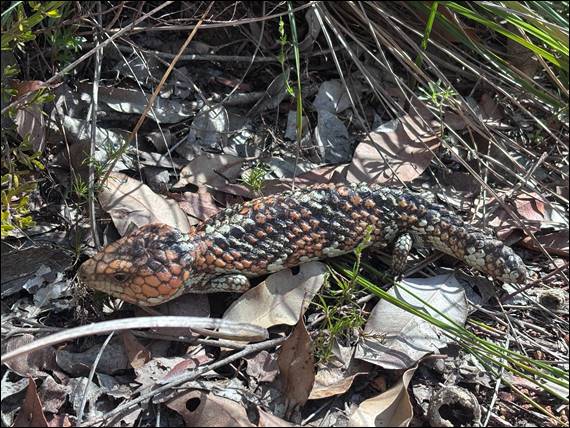
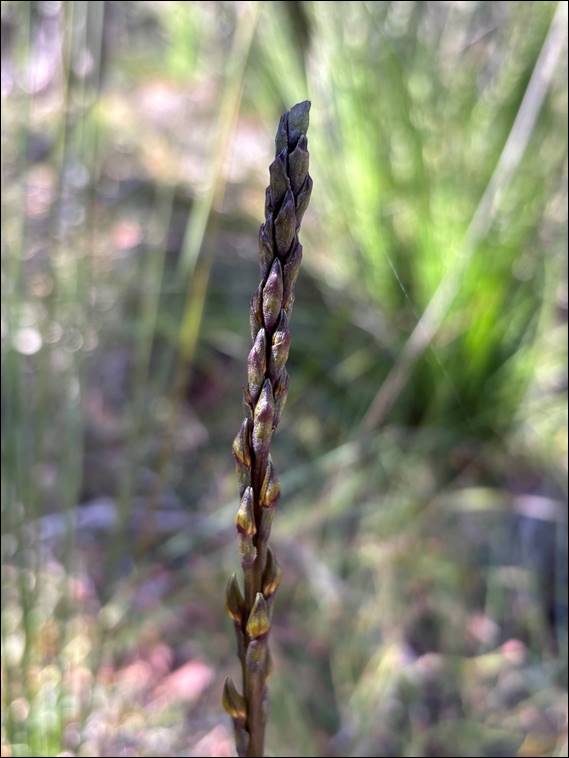
It was a bit warm today, bringing out a scaly friend. A fairly regular find, but it still feels like a privilege whenever I get to see a Bobtail Lizard (Tiliqua rugose subsp. rugose). Displaying the bright colour variations of creams, yellows, and oranges that this subspecies is known for. And for my lucky last present today, below is a Fringed Leek Orchid (Prasophyllum fimbria). The buds clamed shut like the shutters of a closed shop, not quite ready to put on a floral display. But the time will soon be right:
 Sandbagged