They say a positive attitude drives success. So after work rather than pound the streets of Peppy Beach, and with a spring in my step, I went for a walk round Manea Park. The circuit I took involved moments of wandering, connected by periods of pounding. With a view of getting the benefit of slightly more vigorous activity while also hoping to enjoy a few finds. The first splash of colour to hit my eye was this Smooth or Onion Earthball (Scleroderma cepa). These, like orchids, are mycorrhizal. Meaning they make use of a helpful partnership:
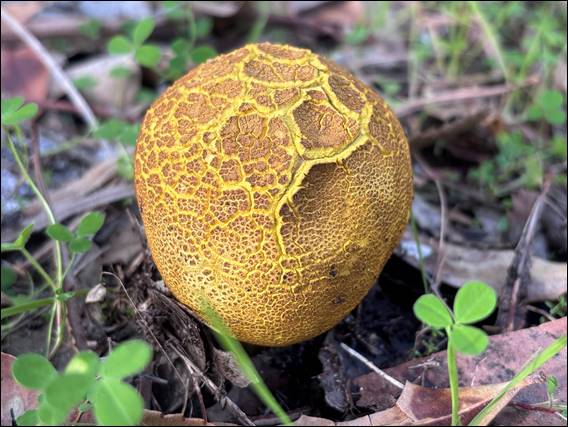
A partnership between fungi and plant roots. It is extremely common, found in approx. 90% of all plant species. In this case the Smooth Earthball is the fungi, which has an ectomycorrhizae partnership. This term comes from three Ancient Greek words of ektós, múkēs, and rhíza meaning outside, fungus, and root. This type of partnership is where the fungus mostly stays outside of the, usually woody, plants roots. It occurs for 5-10% of plant species. The other type of partnership is called endomycorrhizae, which orchids benefit from:
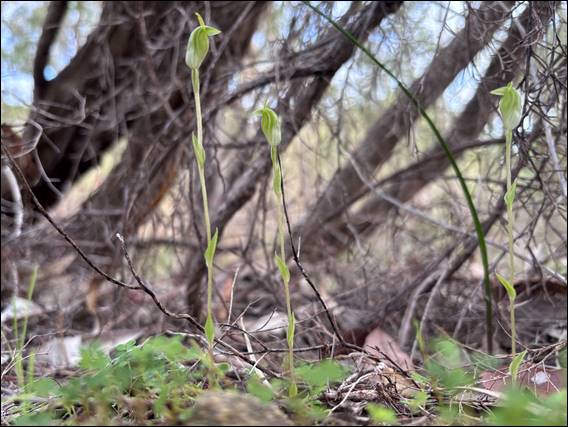
The start of the term coming from endon meaning within or inside, and in this case the fungi penetrates the plants roots. If you have done the maths you will realise this is the more common form of mycorrhizal, with 80-85% of plant species making use of it. Orchids fall in this large group, but have also adapted a specialized form. A topic for another time, as I now need to stop wandering and start pounding to catch up. Above is the Murdoch Snail Orchid (Pterostylis ectypha), also known as the Thick-Sepaled Snail Orchid, due to chunky ears:
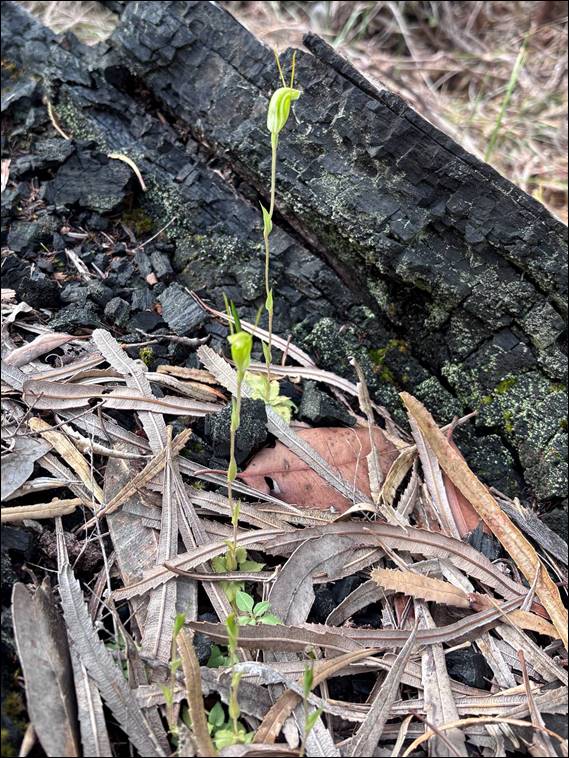
The species is often confused with the Short-Eared Snail Orchid (Pterostylis brevisepala). For me however this never occurs as this alternate species is restricted to Perth and Lancelin, hence not found where I regularly go hunting. Above are Red-Sepaled Snail Orchids (Pterostylis erubescens). When they bloom these have a large green flower, which gradually transitions to deep reddish-brown tones as it ages. This colour change can result due to an accumulation or shifting of water-soluble plant pigments in the outer parts of a flower:
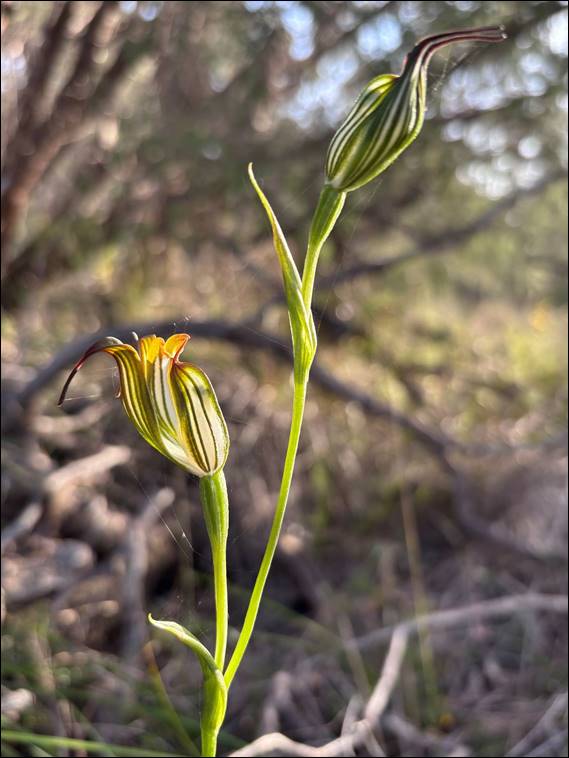
This includes the sepals and the petals, and occurs as the chlorophyll in these parts break down. The speed and intensity of the process is influenced by exposure to both sunlight and temperature, and what with our sunnier winter I wonder if it will be enhanced. I only saw a few Snail Orchids, whereas the above Jug Orchid (Pterostylis recurve) was coming out in big numbers. The flowers burst out with crisp green and white stripes, and being another orchid species that changes colour with age they also turn into deep reddish-brown tones:
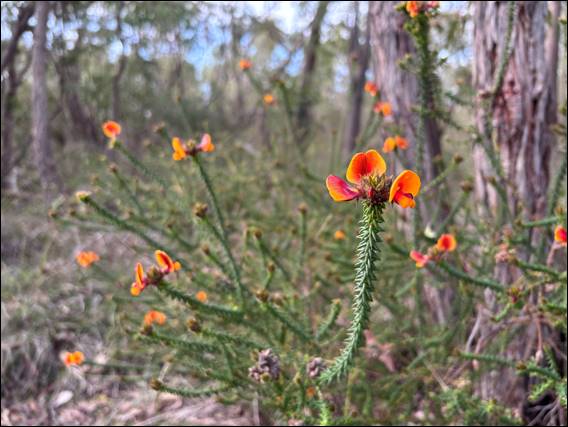
Above is a Skinner’s Pea (Loricobbia skinneri) not an orchid, obviously from the name. It’s beautiful and colourful flowers were however hard to walk past. These particularly like low-lying, winter-wet swampy areas and seasonal depressions. Local populations are often found in conservation lands or secure reserves, but can be sparse. As such it is classified as Priority Four, by the Department of Biodiversity, Conservation and Attractions, indicating it is rare or near threatened. Another colourful find was the below Silky Blue Orchid (Cyanicula sericea):
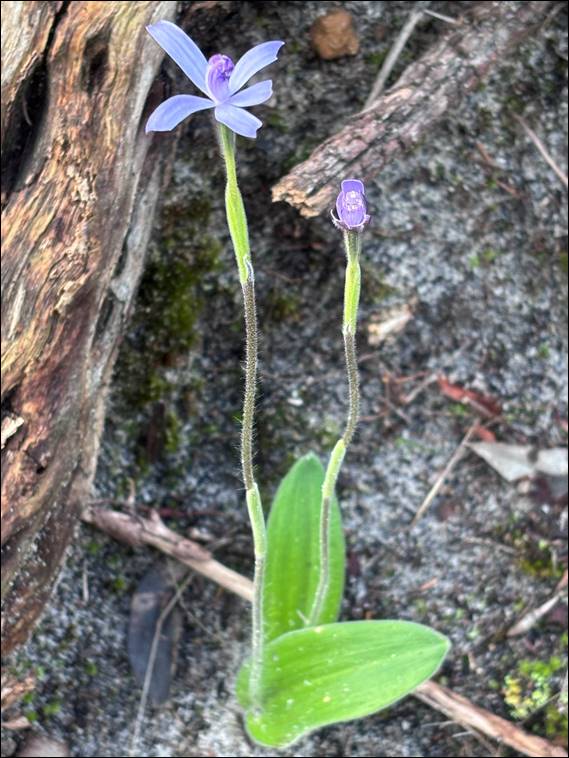
Their stand out colour makes them highly visible and easy targets for passing herbivores. As a result the soft and succulent petals and buds are frequently grazed by wildlife, and pests alike. A common misconception is that all orchids require fire to flower, however it is only a small group of local species that do. The Silky Blue Orchid is one that benefits from fire and will be much more prolific after a summer bushfire. Orchids and fire is yet another interesting topic I have no room for in this post, as I once more need to pick up my pace:
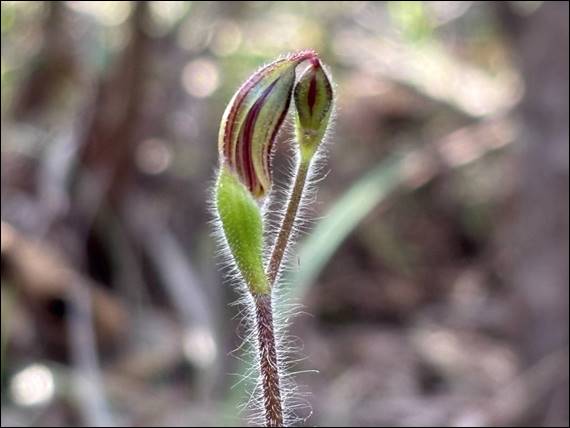
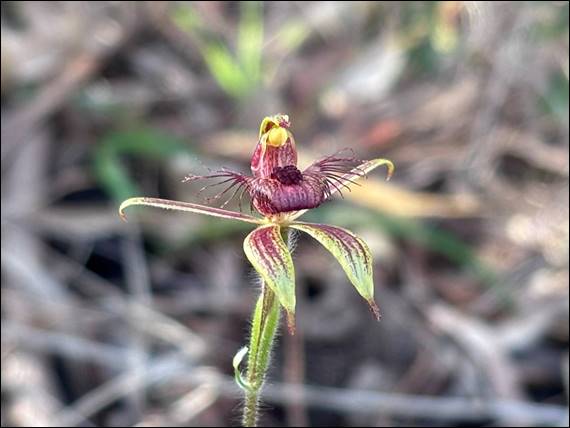
Above is a bud of a Dancing Spider Orchid (Caladenia discoidea) about to open, and below I found just one in bloom. This species is a little unusual, with an almost entirely horizontal flower. Not a form that shouts out to me as looking like a dancer, and I have wondered why it is so called. The species name of discoidea comes from two Latin words of discus and oideus meaning a throwing disc, platter, or round plate and resembling or like. Referring to the labellum shape, and this doesn’t help. The common name is in fact quite simply a playful linguistic link to the word disco in the species name:
 Sandbagged