After all the hiking and climbing last weekend, my body was telling me that a quiet time was in order. Saturday was whiled away with housework and finishing off yet another puzzle, and not much else to be honest. By Sunday however my body decided it needed a stretch. Or was it just me wanting to see how our local orchids were faring, after having found such an amazing bounty up north. I was fully aware we have just had the second driest July on record in our local area, the waterways are low and dams are not filling. Everything is a tad dry:
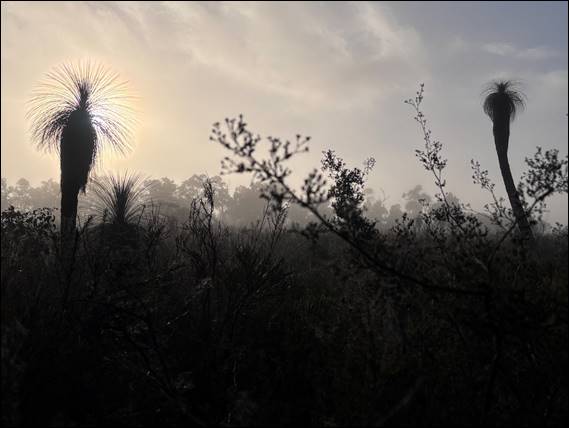
The morning came in misty, allowing the sun to create an eerie feel. While I looked around for orchids I really didn’t have much success. Maybe due to the dry spell the early winter species have decided not to appear. Maybe they will appear a little later, but I’m not convinced. I did stumble across quite a few Western Grey Kangaroos (Macropus fuliginosus). These two were not fussed by my presence allowing me to get quite close. The males of this species, unlike others, emit a strong smell remarkably like curry, earning it the nickname ‘stinker’:
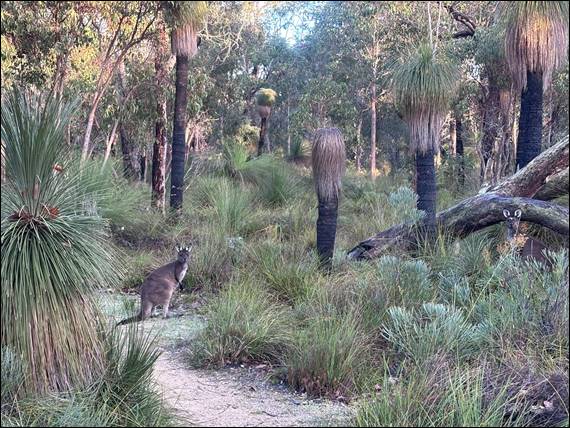
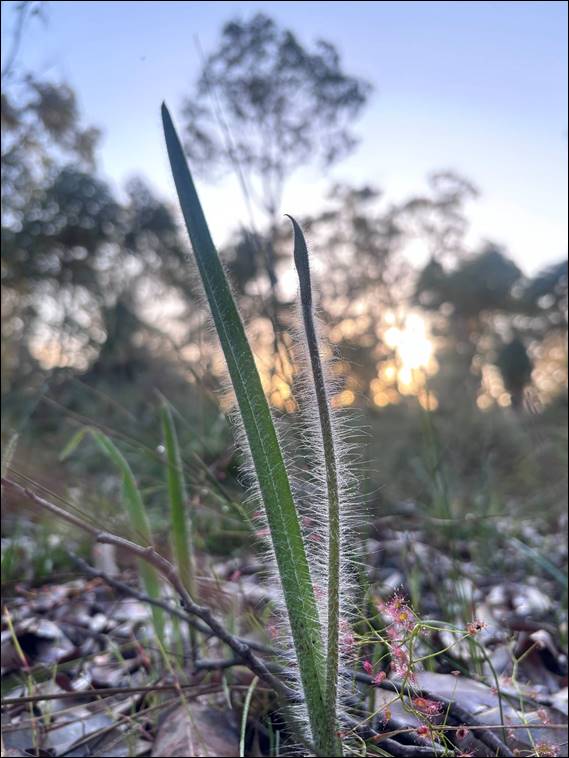
There were no males about for me to test this fact, but I also feel that if there had been they would have hopped off a lot quicker. The winter orchids may not be out, but the spikes of several up and coming spring species are on the way. I won’t confess to knowing all the species by their leaf. It can be confusing as all true Spider Orchids feature a single, upright, hairy basal leaf and a visibly hairy flowering stem. But I do know this one is from the Rusty Spider Orchids (Caladenia ferruginea), which is a regular arrival at Ambergate:
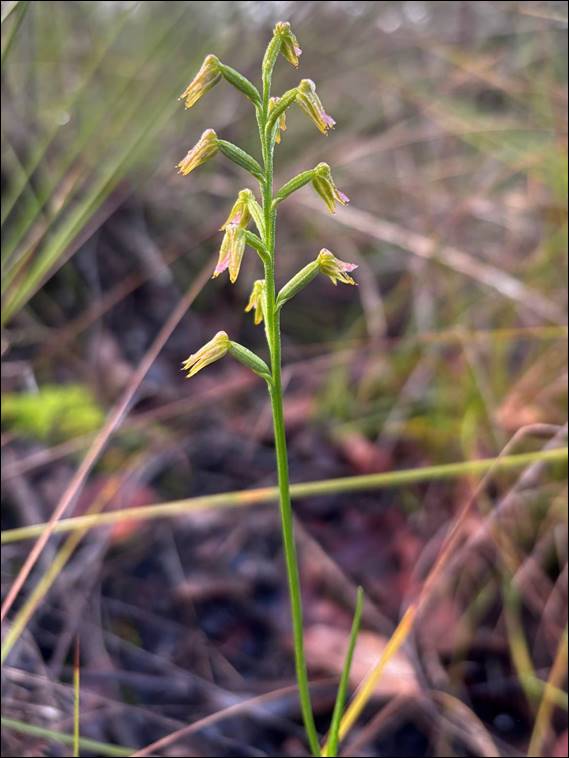
I kinda lied. There were Banded Greenhoods flowering, which I have seen several times already this season. I also found an Autumn Leek Orchid (Prasophyllum parvifolium), but just one. While not open the hint of pink differentiates it from the Scented Autumn Leek Orchid (Prasophyllum sp. ‘early’). Called ‘early’ because it flowers between April and June, and I have already found them in early June. Whereas the Autumn Leek Orchid flowers between June and August, so it this one has arrived right at the end of its normal period of blooming:
My next find, which is why I have decided to tap up another post, is not from my walk but when I got home. This Long Green Crab Spider (Cetratus rubropunctatus) was on the handle of the side door to our shed. They would normally blend seamlessly into green leaves and foliage, but on the silvery handle it clearly stood out. The species name rubropunctatus comes from the Latin words ruber and punctatus, meaning red and spotted. This relates to the spots near the rear of the abdomen, not as I thought the colouration at the head:
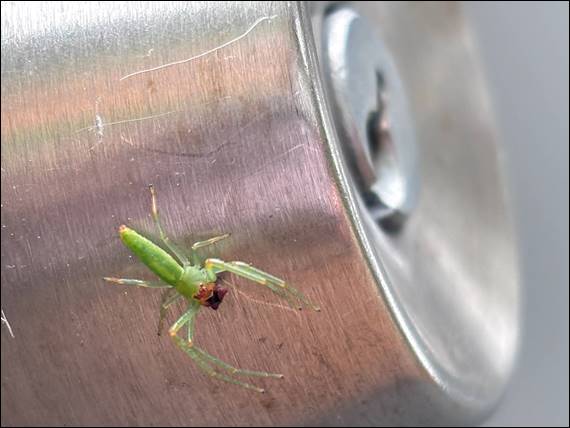
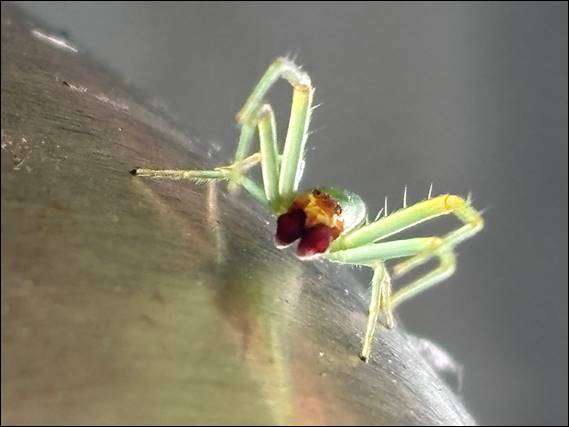
The rear spots can be dark green, brown, or missing entirely. Females and males grow up to 7mm and 5mm in length, this one being a mature male. Distinguished by the enlarged deep red pedipalps. These form a pair of appendages that are right next to the mouth, between the fangs and the front legs. Being used for several functions. They enhance three of the spiders senses being feel, taste, and smell; are used to hold and crush prey, while injecting them with digestive fluids; and during mating the tips are used to transfer sperm to females:
 Sandbagged