It was just under nine years back that I made the eight hour journey north to Kalbarri (https://sandbagged.blog/2017/11/10/the-proclaimers/). Back then it was with Mark. A buddy from my Alice Springs days, who climbed like an unforgiving machine. The nine day adventure resulted in a crazy and long list of unrelenting hard routes. Proving too much for me and my body, and I came away from that trip a wreck. The experience wasn’t helped by the mercury tipping over thirty five most days, and at times hitting forty and above:
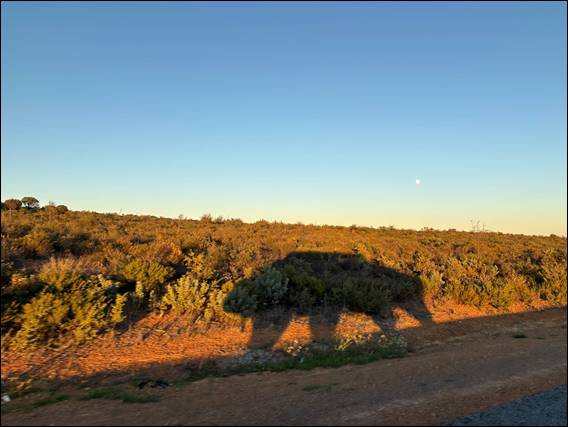
This time round, being three months earlier, cooler climes were expected. Rongy will confess to being out of shape, and not having the head space that he would have liked coming here. Then there was me. Carrying injuries for way to long now, and having mostly bumble climbed this, and much of last, year. As such way more relaxed climbs were on the agenda. We only had four days for the there-and-back again mission, so started early. I left home at three with clear skies above. And am sure I saw a shooting star as I drove out of Peppy Beach:
I had. Finding out afterwards that a rare double meteor shower was gracing Western Australia. One peaking on the very morning that I was driving out. While the Southern Delta Aquariids and the Alpha Capricornids could have offered an opportunity to see up to 25 shooting stars each hour, the display was dampened by the sun’s reflection off the near full moon. By the time I got to Rongy’s clouds obscured the sky, so there were no more stars to be seen, shooting or not. However, over the trip I did spot quite a few more:
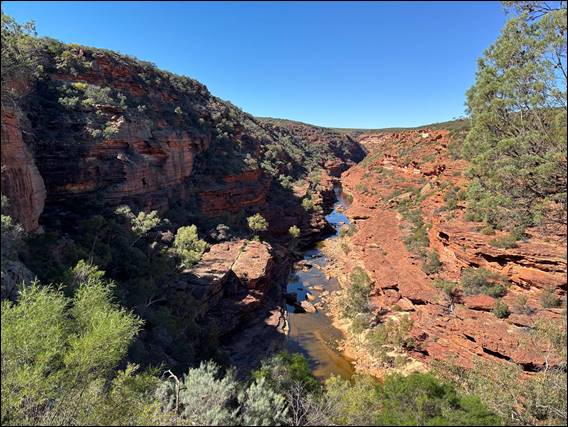
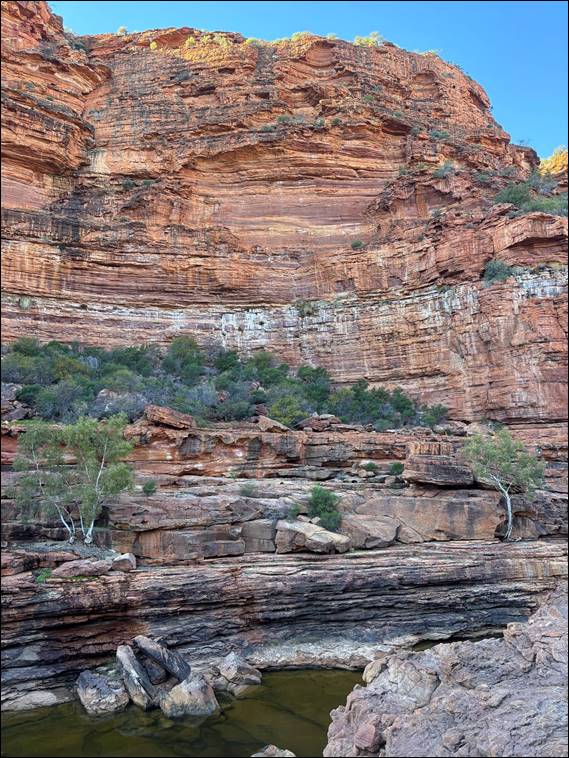
The early start resulted in Rongy and I walking in for our first sample of rock a bit before midday. A glorious blue sky above, hardly a breeze, and a warm temperature. All around the red rocks in the landscape brought back great memories of Alice Springs (https://sandbagged.blog/2017/11/03/part-11-alice-springs-rock-rock-and-more-rock/). Unlike the Red Centre of Australia, this part of the continent does not comprised Heavy Tree Quartzite. The rock here is Tumblagooda Sandstone, which provides a variety of visually exciting views:
Some areas, as will be seen later, comprise wonderful layered cakes. Alternate deposits of red and white sandstone. Then there are the areas where iron has stained the rock, which has resulted in a coating that makes it very smooth to touch and gives it a slick look. The sandstone comprises deposits laid in shallow basins, which in some areas has resulted in great textures varying from ripple beds, mass worm castings, and fossils. The geology alone provides a variable feast for the eyes, but we were here to climb it too:
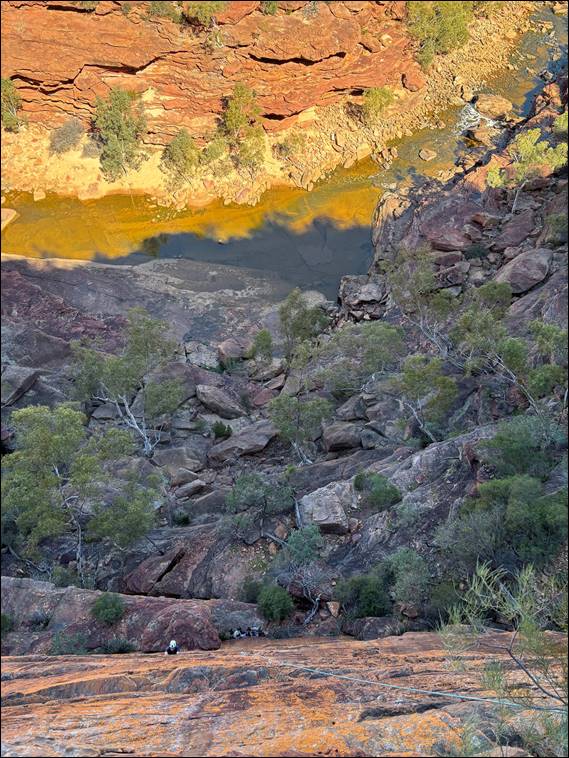
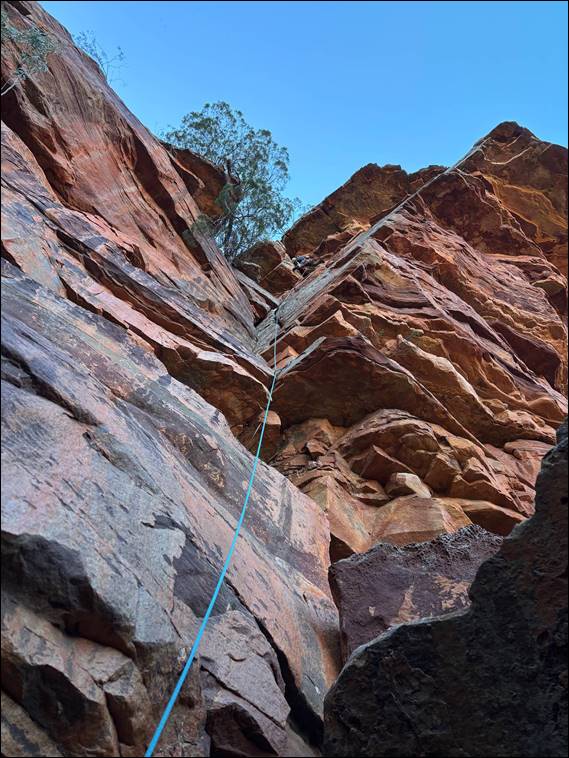
Starting on the very same route that Mark and I had. Back then it was getting dark and I was weary from the drive. But I still managed to cruise up the line and wonder what all the fuss was about. This time I was refreshed and wasn’t fighting against a fading light. It did however feel way trickier than it should have, at the grade. Even thought-provoking. All in a very good way, and I loved it. Even if I was nervous at times. This changed Rongy and my thoughts on the routes next to it, quite a few grades harder and described as run out:
We played on one more before heading upstream to another spot. Allowing Rongy a stint on the sharp end, and I was very pleased as he ate it up and thoroughly enjoyed it. Not feeling like we had anything to prove we called it after three lines and headed to the campsite. Unfortunately, the spot just off the Z-Bends carpark had been booked by a school group forcing us to stay at a homestead. This meant it was a 30km drive each way, but there was little we could do about it. The homestead was lovely, the camping spots not so much:
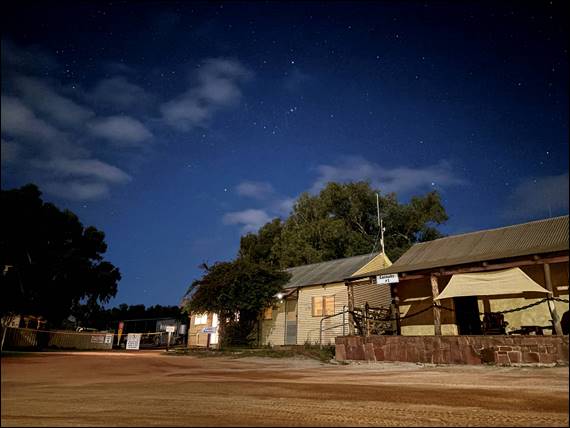
We made use of the camp kitchen before hitting the sack. Next morning my body clock saw me getting up shortly after four. Creeping out of my tent as quietly as possible, before heading back to the camp kitchen. This can be seen three images up with a blanket of stars above. Several cups of tea later and after seeing a shooting star or two I went for a wander on the track alongside the Murchison River. The very same river that has carved out the gorges in the national park that we were climbing on during the day:
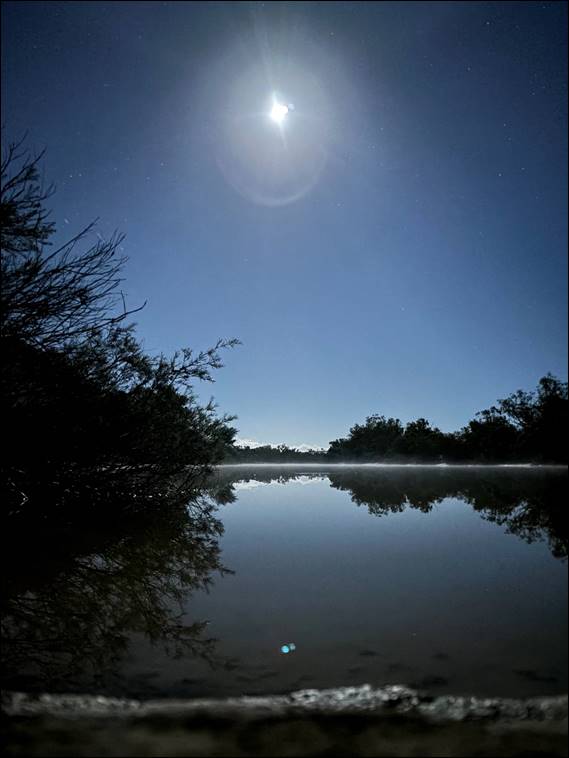
At the homestead there were no gorges, allowing me to easily make my way in the relative darkness to a spot where I took the image of the moon above the still waters. Shining so very brightly, and clearly showing why the shooting star display was being outshone. I headed back to fill Rongy and my sippy mugs before tapping on his tent, two and half hours after I had got up. Neither of us were particularly keen on spending time making breakfast at the homestead, so decided to head straight to the gorge and make breakfast at the carpark:
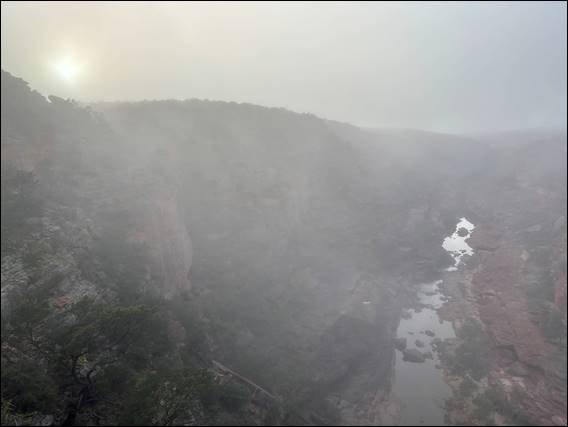
During the drive in mist came and went, being quite thick in places. It provided a great sight and seeing we were not here to crank hard or pack the routes in, we made a diversion to the skywalk lookout. Experiencing the place with not a soul about, before heading back to the Z-Bend carpark. First walked to the gorge to see it filled in mist. Then wandering back up to make breakfast, while watching the mist slowly lift as the sun crept higher in the sky. It was a great place to kick back, munch on our food, and then pack the bags for the hike in:
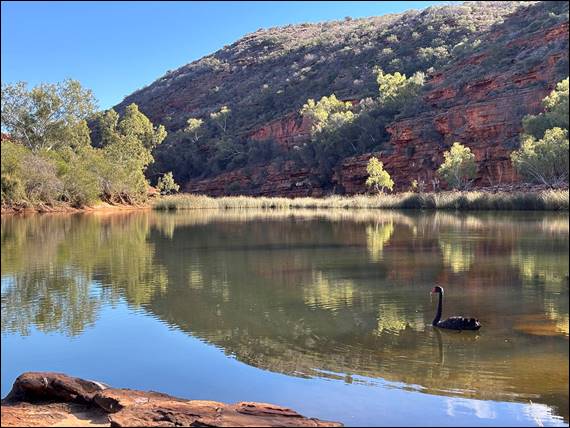
Today we were going to Four Ways. Two images up and after the three kilometre hike from the car park we got to the magical expansive pool at the centre of where four distinct gorges and watercourses meet. The official bird emblem of Western Australia, A Black Swan (Cygnus atratus), was having a feed of weed. Not too fussed by our presence. We took in the breathtaking views before carrying on, heading upstream in search of a wall that had alluded Mark and I. Information on the location several spots were not publicly available back then:
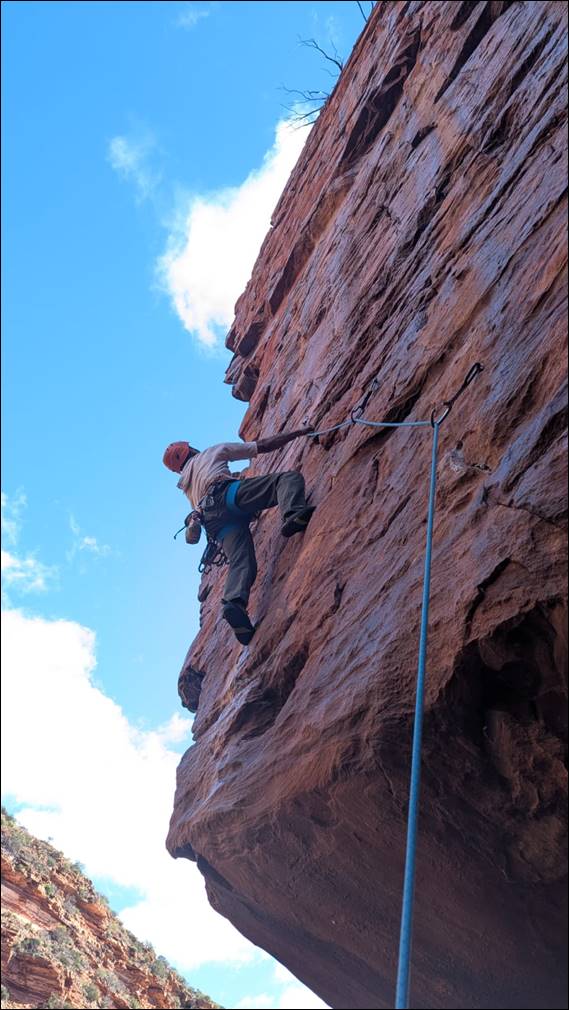
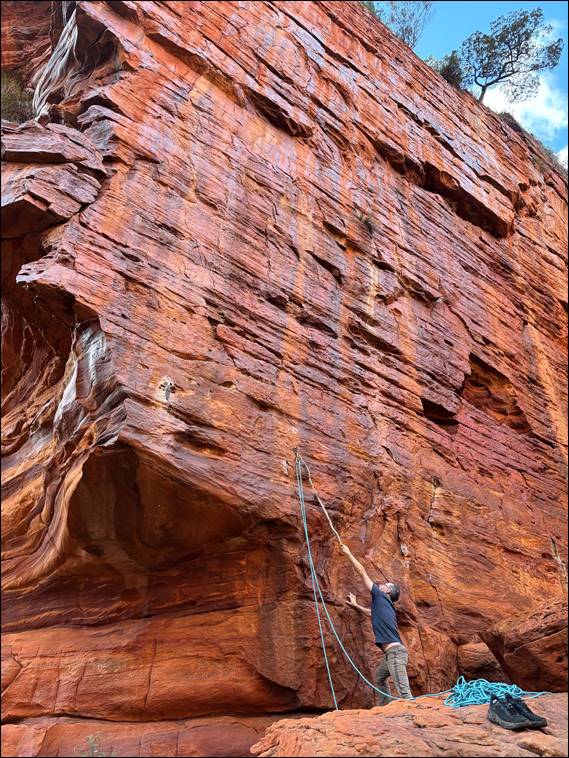
Seeing it this time round it is hard to understand how we missed it, mind you there is such an expanse of rock here that I can also kind of see how we did. I am sure we would have lapped up all the routes on this wall back then, they were certainly within my grade range. This time however most were stretching the friendship. Not only that but the wall was seeping, and not just a little bit either. I still jumped on the ‘easiest’ line, which proved amazingly good. I would love to build a bit of stamina for the other lines on this wall, maybe next time:
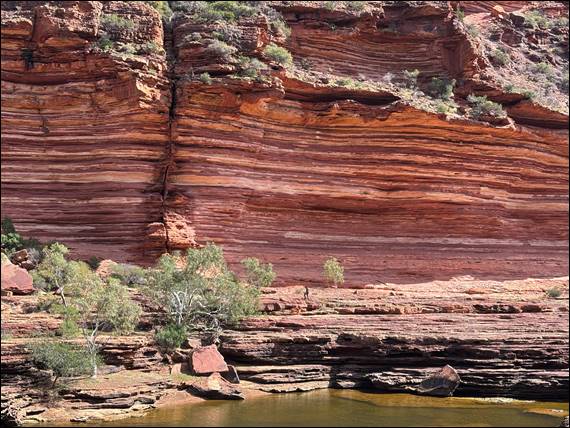
The other routes were harder and wetter, which put us off jumping on them. Not that it bothered us as there was a line on the other side of the river we had in mind. Providing a perfect example of the layered cake sight I mentioned earlier. Rongy was keen to bag this one, and after having had two laps on the steep sport route my arms were happy for him to take it on. It had very cool features and positions, making it an equally memorable line. The pace today was slow, we lazed about, nibbled on food, and did quite a bit of exploring:
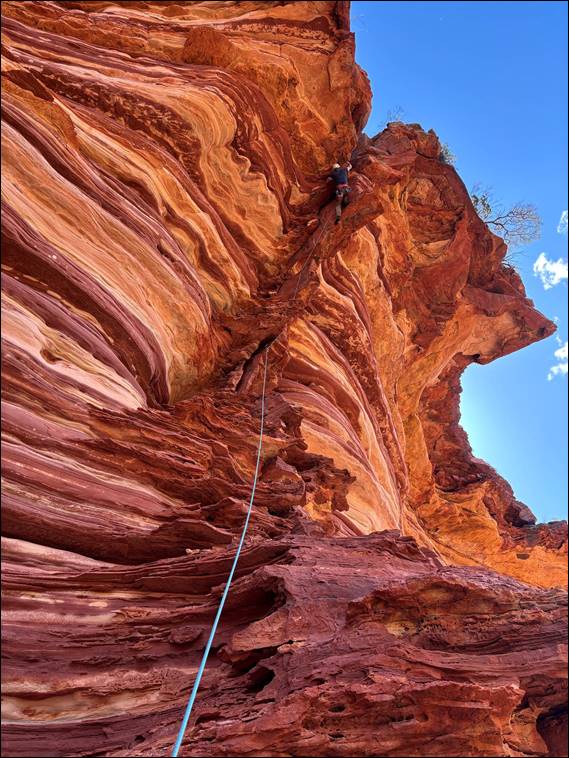
In fact we saw some of nature’s great treasures but they are not included in this post. I have decided to separate that pot of gold out and you can find out about them in another post, aptly called Kalbarri Gold (https://sandbagged.blog/2026/08/03/kalbarri-gold/). This post being named after the above route. It would seem there is no Kalbarri Silver, but I would say this place has stacks of silver linings. A place you can lose yourself in and, if you come with the right attitude, it is impossible not to thoroughly enjoy what is on offer. If you hadn’t guessed, the climbing at all grades is very cool here:
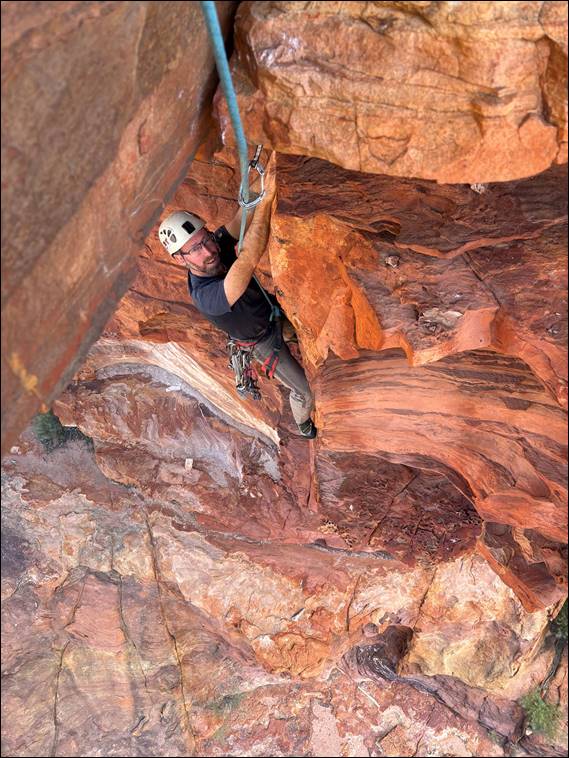
We both felt the above line looked a bit meh, but were glad we decided to jump on it. Having loads of character, with one very confusing section that made us both second guess what we were supposed to do. Time in the gorge seemed to slip by, so we decided to start the leisurely hike out. Giving us just enough daylight to make and have dinner at the car park. You can tell the campsite really didn’t grab us. With twenty five sites crammed side by side, as they say goes ‘you can choose your home, but you can’t choose your neighbours’:
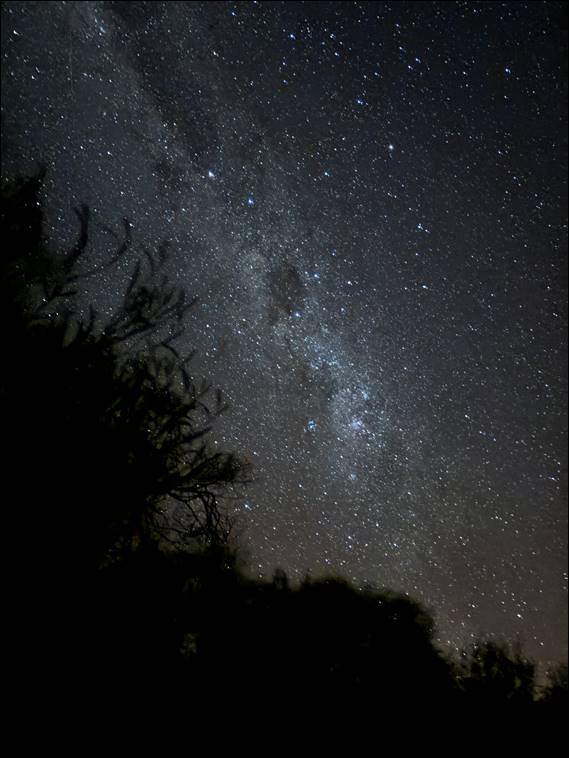
Before hitting the sack, and while the moon was hidden below the horizon, we wandered along the riverside track. Finding a spot where the lights of the campsites did not disturb our view of the amazing night sky. It really is crazy what phone cameras can capture, such as the core of the Milky Way above. Rongy has a different phone with a camera that has night sky settings. He managed to capture quite a few shooting stars that we couldn’t see with our naked eyes, although looking more closely maybe that is one in the top left of my image:
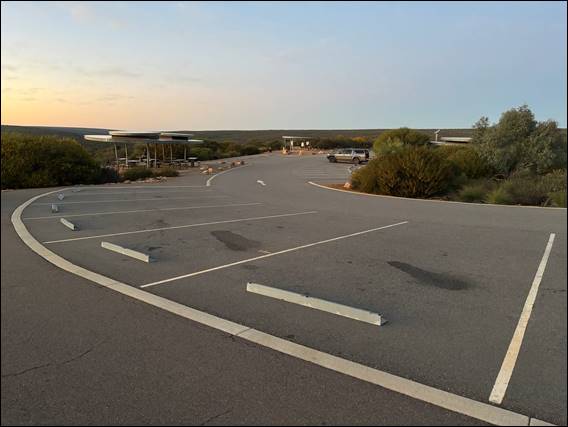
Next morning I was up early again, and we had agreed to head out at six. Leaving before first light crept into the sky and anyone else had roused. We went back to the Z-Bend carpark to have breakfast. Nine years back this carpark was an open space with gravel, and the only facility was a bush-shack like long-drop toilet. It feels so much more swish now, but they have done a great job of making the structures feel like they fit in and do not stand out too much. Like yesterday there was not a soul in sight, but unlike yesterday there was no mist:
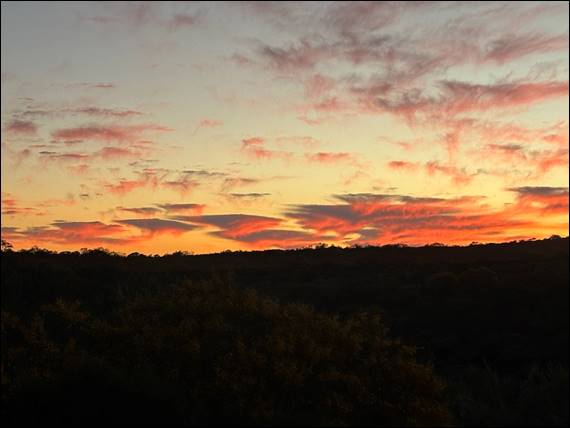
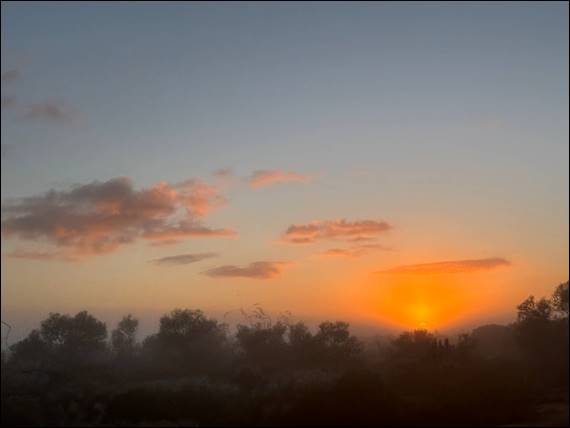
Instead our view comprised the above lenticular clouds (stratocumulus lenticularis), being gloriously lit up as the sun started to rise. Their unique shape catching the light in spectacular fashion. We certainly were not complaining. Breakfast made and eaten, cooking gear cleared away, packs sorted and shouldered it was time to walk back into the main Z-Bend gorge. We were the first to get to the look out, not surprisingly. Or were we. Approaching the dew covered bridge to the lookout, there were prints from another early riser:
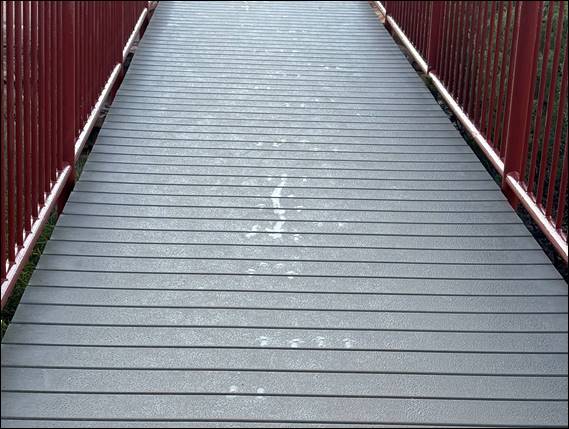
We like to think it was from a Black-Flanked Rock-Wallaby (Petrogale lateralis). This endangered species was last seen in these gorges in 1995, and were thought to have been displaced by foxes and goats. That was until 2015, when climbers, yes climbers, spotted and photographed a pair with a joey! This led to translocation efforts, taking a few Black-Flanked Rock-Wallabies from the Western Australian Wheatbelt. Resulting in building a self-sustaining population. The best part is that despite this find climbing is still allowed:
In fact the efforts of one particular climber, resulted in very good relationships being built with the rangers of this National Park. Nine years back we were very lucky to have spotted a Black-Flanked Rock-Wallaby, not this time. As a side note Lisa and I have seen loads of these in Central Australia, although that local population belongs to a distinct subspecies called the Central Australian Rock-wallaby (Petrogale lateralis centralis). Again, nine years back we saw one movement camera watching out for these wallabies, which is where we saw one:
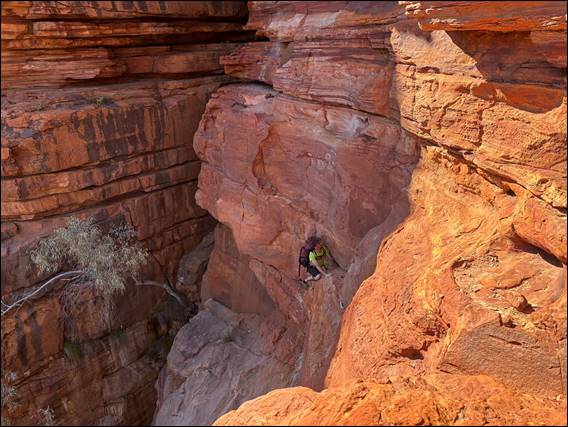
This time round we spotted heaps of movement cameras, dotted along the way to the more frequented climbing spots. So while climbing is tolerated, and not impacting on the self-sustaining wallaby population, we are being monitored more heavily. The climbing is quite unique and stunning, and has become extremely popular mainly due to one crag. We passed that crag on the way to our chosen place. I do hope it’s popularity doesn’t result in poor behaviour restricting future access. Climbing here is and should be treated as a privilege:
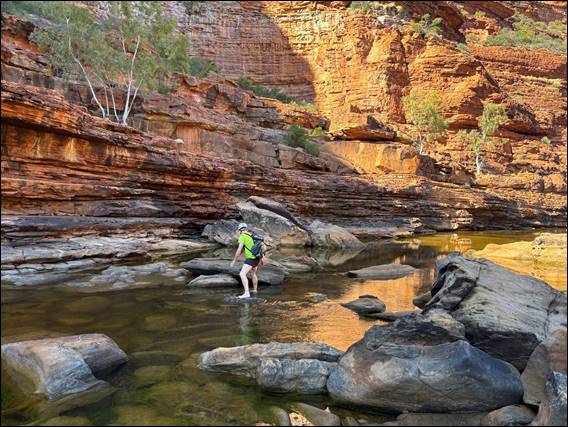
Today we were aiming to get to the might amphitheatre, three images up. Unlike any other spot here, it offers multi pitch routes. The guidebook suggests a 40mnin walk in time from the carpark. I would suggest that is a little misleading to say the least. Admittedly we were guilty of blindly following pink tape, that unknowingly took us to the top of an abseil wall used by school groups. That did not however add too much time, it was a wayward cairn and the guidebook description that led us astray. Two images up we are having to backtrack:
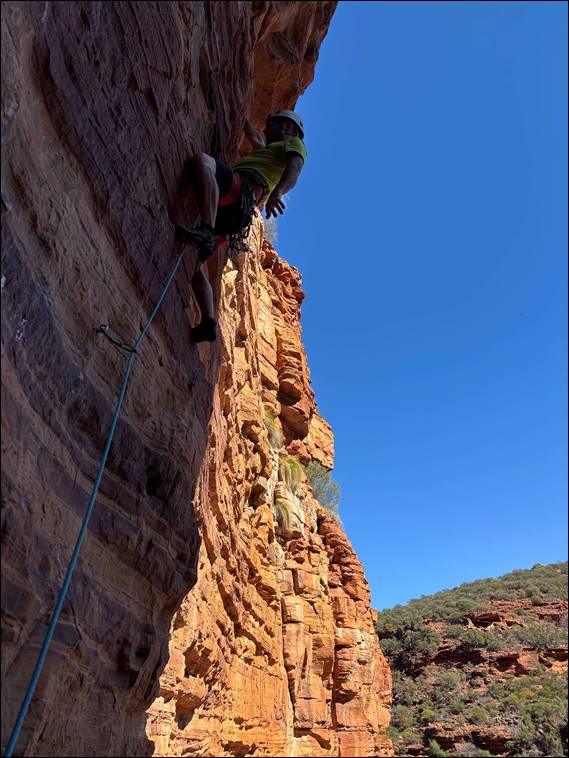
It had some nervous scrambling moments making us um and ah about what to do. Finally we found a super simple river crossing. Getting into the amphitheatre with its towering walls after three hours. It was a great adventure, but by then we had the wind knocked out of us. The tall faces gave more of a Stirling Range feeling, with possible loose rock and vegetated sections on rarely if ever climbed lines. Luckily there were a couple of bolted sport routes, one being in our range. Above Rongy is having the first bash, before his head gave in:
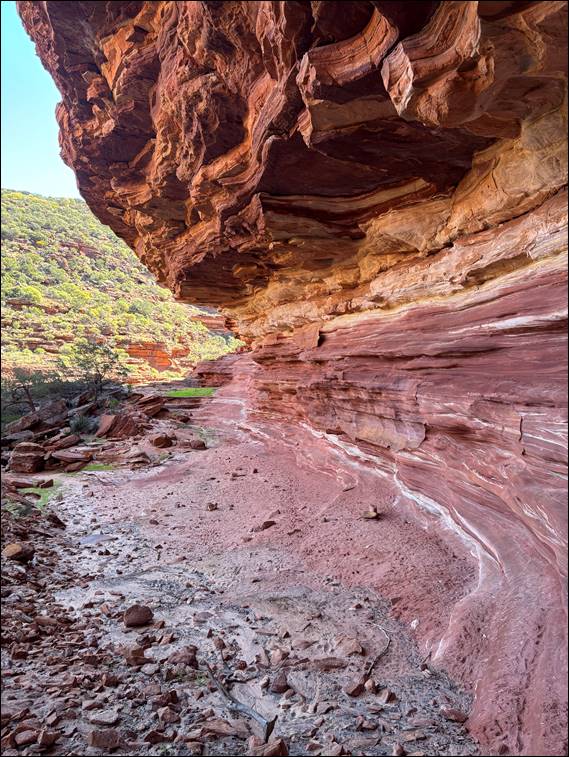
It was awesome, but as with many routes here it was steep and pumpy. Very different from the more technical, balancy routes we climb down our way. After two laps on it the sun crept round and it felt hot. Deciding on a bit of exploring before heading out, only to find what is reported as the hardest climb in Western Australia. An epic rising traverse up the above very steep roof, and it is a full trad climb. Much of the climbing at Kalbarri is of that nature, on great features, exposed, and feeling a bit full on. The awesome ravine below was no different:
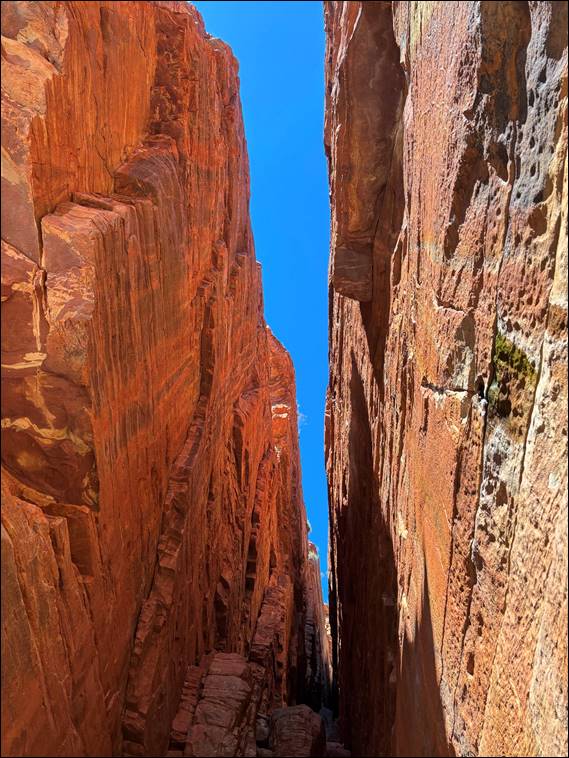
We bouldered our way along the waterline into the above narrow cleft, the walls on the left falling to trad routes of grade 23 upwards. In my Alice Springs days I would have been game, this time I just lay below them in awe. The Ravine provided a great home for a colony that kept us here for quite some time, but of what you’ll have to dig into the other post. After much exploring and munching on food, we started to wander back. Rongy was keen for me to sample the routes on the appropriately named Coriander Wall:
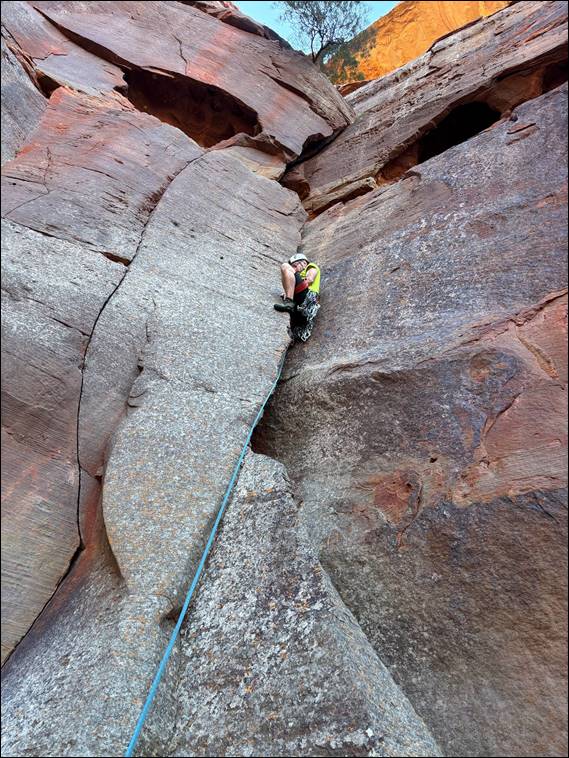
Depending on your genes, coriander can either have a fresh, bright citrus flavour or a sharp, unpleasant taste of bath soap or dirt. Equally, the routes on this wall could be said to be ones you’ll love or hate. All trad, but very grungy and bold, with little gear and/or loose rock. I let Rongy take the lead on the above, before we both got completely shut down on a bolted line to the immediate left. At a grade that we should have been able to see and work the moves. Neither of us could see how it went. It was a bit demoralising and not the way to end the day:
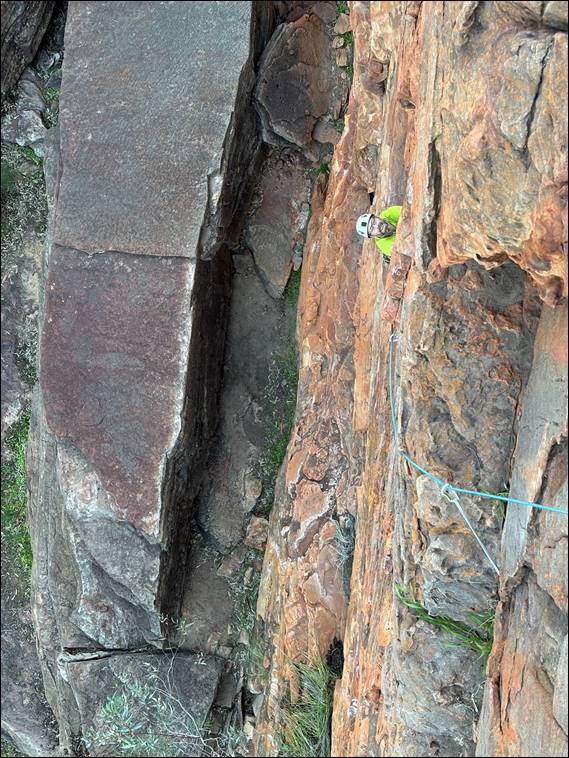
As such while walking back, and despite having packed everything up, I decided to run up a trad line that looked to have some fun features. It was indeed fun, but felt very oomph at the end of what had been a tiring day. We had no idea of what the route was, but reading up on the crag during the drive home the description said it had less than ideal placements on bad rock, climb it only if you have to. Well we did climb it because we wanted to end on a high note, and it certainly provided that. Finally heading back I suggested the low level way:
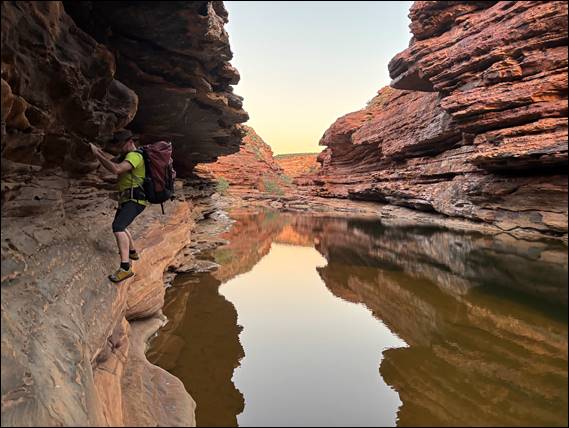
This included several scrambles, just above the waterline making for a very cool way to finish up. And no we didn’t fall in the water, we did however only just manage to get back to the main lookout track before darkness descended. Needless to say we didn’t cook dinner at the carpark this time, opting to make use of the camp kitchen for only the second time. We had packed a lot into the day, and when I finally got to lay in a prone position in my sleeping bag it felt lush. Sleep took me relatively easily, despite the noisy neighbours:
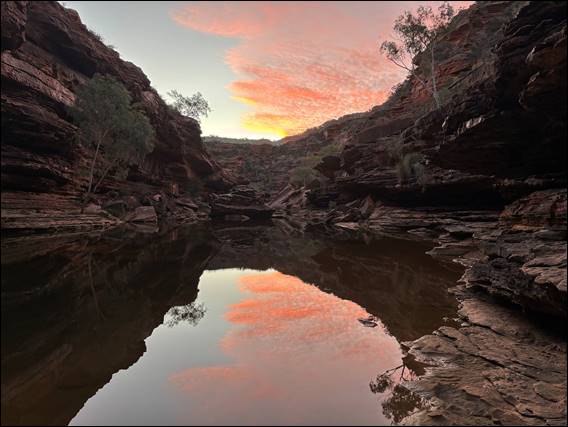
Next morning as I sipped my cuppa, looking up at the morning stars Rongy wandered along. Having heard me get up and deciding that what with the long drive home, an early start may be a good idea. Before that drive started in earnest we were however going to a spot neither of us had been to before. On the drive into Hawks Head, we had to stop for the first time. Two Western Brush Wallabies (Notamacropus irma) sat there looking at us. Also known as black-gloved wallabies due to the black paws:
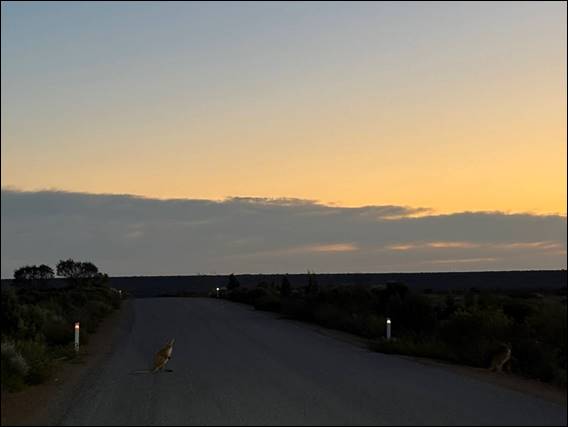
They also have a unique running technique. When escaping from danger, they keep their heads low and stretch their long tails straight out behind them instead of bouncing upright. This morning they did not sense danger as we slowly approached. Instead lazily hopping off into the scrub. This short wall had a bunch of lines on it, but didn’t look to get much attention. A bit like the lookout, and unlike the others in the park we only saw a few cars roll in and out of here. Good news for us, as we were in full view of the lookout platform:
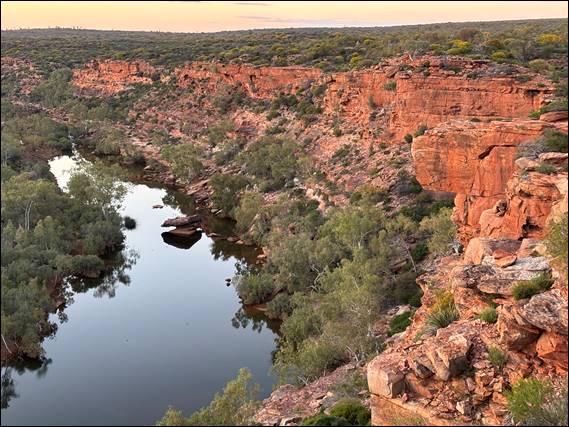
While short in stature, this little wall provided very fun routes. In keeping with the rest of the climbing in Kalbarri it felt a tad steep. Mind you this may have been enhanced due to my body being general weary from all the hiking, and arms tiring from three days of great routes. I also somehow happened to start on the line with the trickiest gear placements, of the five routes we romped up here. It was good to get that one out of the way first, and I started to feel more comfy with each line we hit even though the grades were going up:
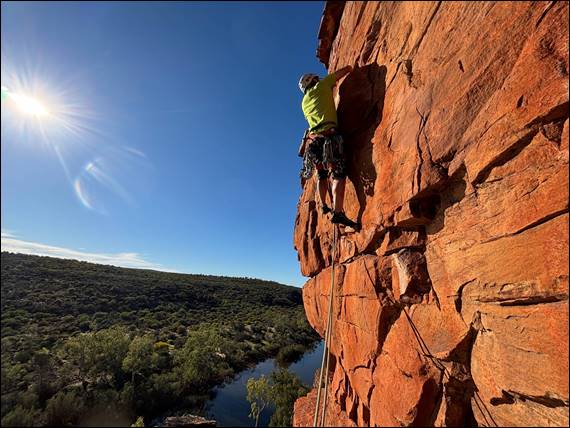
The wall was in full unrelenting sun, and as had been the case for most of our time here there was very little breeze. It was heating up, we also had in mind that there was still the drive home. Packing up we had an early lunch at the car park with hardly a soul about. Of the two cars that did roll in, one lot didn’t get out and the others stayed no more than five minutes. Their loss in my opinion, this is a place to slow down. And I have to say I really enjoyed not having such a heavy focus on the climbing, being able to soak up the area in other ways:
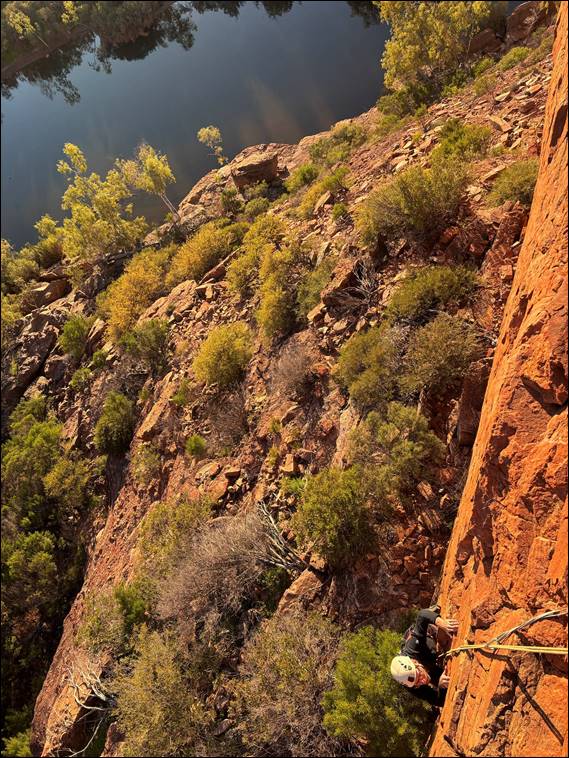
 Sandbagged