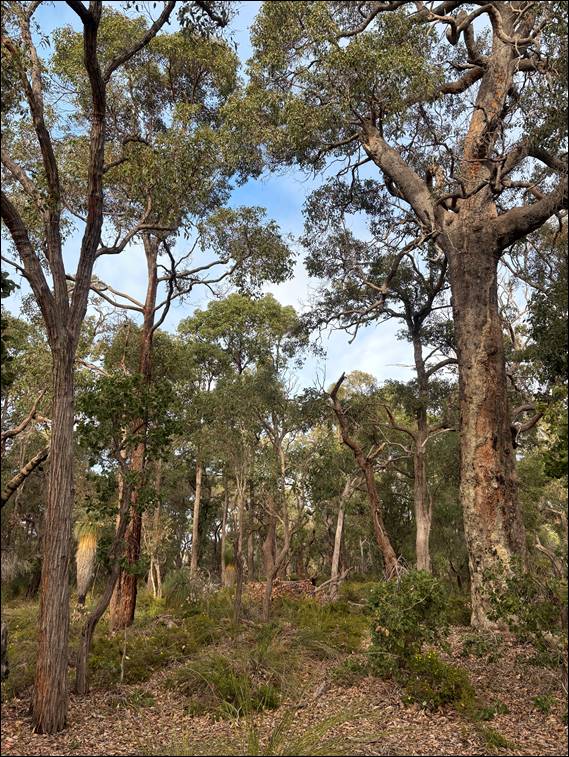
Due to other commitments, there was limited time to get out and about today. While Lisa was bobbing in the ocean I was in need of a dose of nature to help me make it through the social conventions that lay ahead. A quick walk round the Capel Nature Reserve was just the ticket. Considering we are in the heart of winter, the weather has been unusually dry and warm. My hopes of finding another orchid species or fun fungi were low, and proven correct. No doubt they too are confused about what the climate is doing, and whether to come out:
This was good as I needed to make it a short in and out visit. A month or so back I mentioned how a Quenda (Isoodon obesulus subsp. fusciventer) could dig nearly 4 metric tons of dirt in a single year, while foraging. There were not surprisingly cone shaped holes dotted about, as below, where they had hunted for food. But it was the third image that really made me decide to write this post. If you look closely there is a burrow on the right-hand side. A small maybe 5-10mm opening. With a comparative mountain of sand that has been excavated:
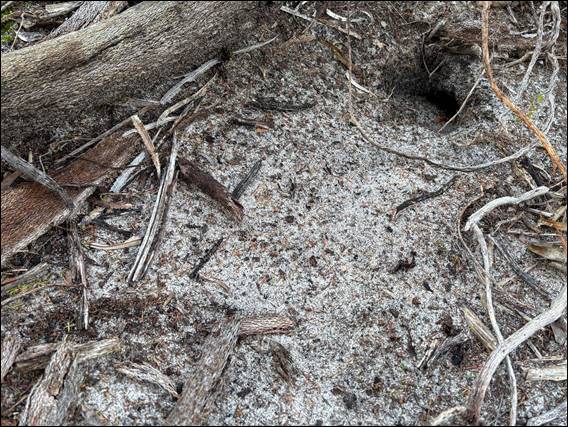
This led me down a rabbit hole of trying to identify what may have undertaken this mammoth earth moving task. Looking at the entrance angle and diameter it is possibly a sand wasp, and after trawling through many information sources I feel it could have been a Small Sand Wasp (Bembix variabilis). This along with Bembix littoralis are the most abundant and widespread species in Australia, with the one I have plumped for being the more commonly encountered. I’ve read that they normally do not leave the mound but scatter the dirt to level the area:
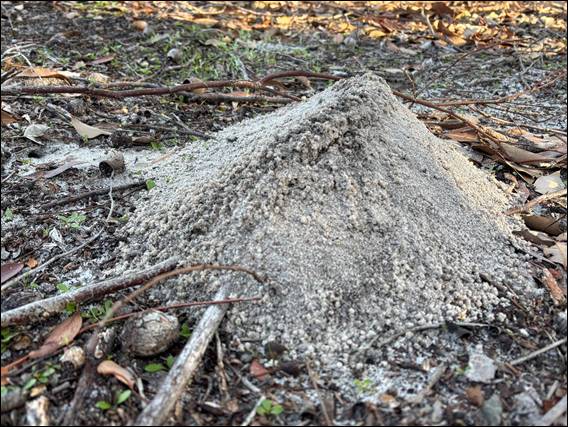
That said, this all looked very fresh. It may have been a working progress, but I didn’t have the time to sit and watch if I was on the money. A bit like my space in this post being limited. Hence, while I have dug out many amazing facts about these insects I’ll leave that for when I am lucky enough to capture an image of one. Next are the workings of more than one earth mover. Being the air conditioning unit of the home of Snouted Termites (Nasutitermes exitiosus), who dig underground tunnels that can extend up to 60m from the mound:
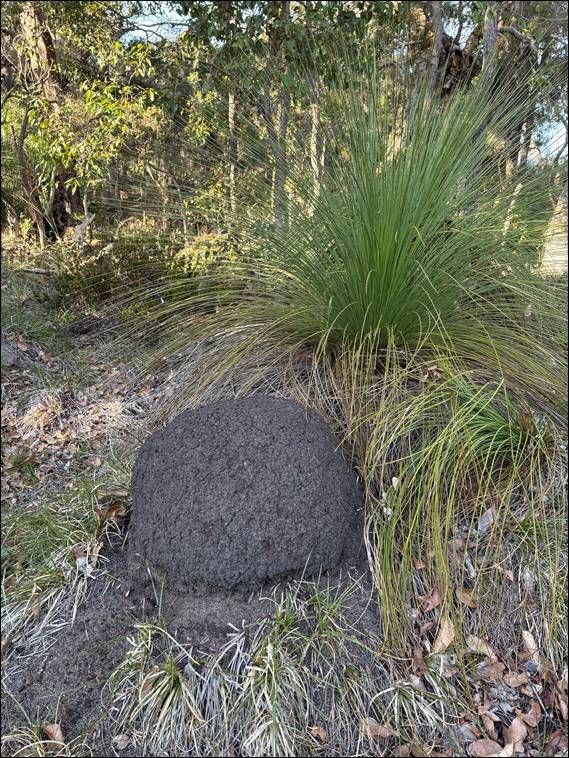
Rather than discard the excavated material they make use of it by binding it with their salvia to create these mounds that are usually no more than 75m high. At the base there are distinct marks, along with debris, from where a predator has been endeavouring to get a feed on some of the up to 2.5 million termites that can form a single colony. A Quenda or Short-Beaked Echidna (Tachyglossus aculeatus) are the likely unwanted evening visitors, who came scratching at the door. Below is the sign of another digger, a Funnel Ant (Aphaenogaster):
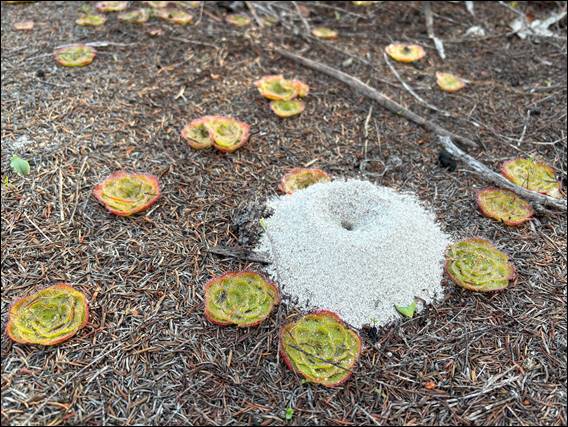
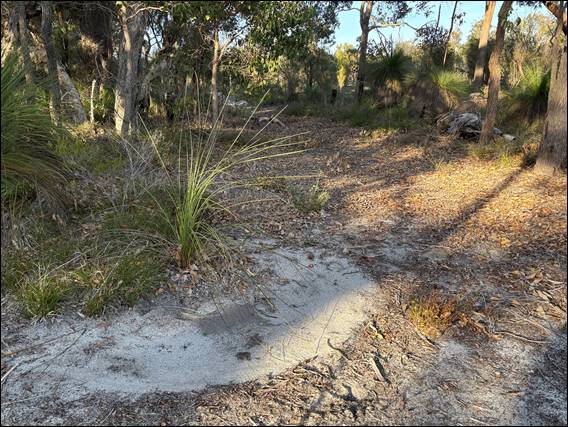
Likely to be Aphaenogaster poultoni, they are known for creating a symmetrical cone-shaped mound from the sand they excavate while creating their underground labyrinth. The network of tunnels help drain the soil. Creating ideal highly drained sandy conditions that Sundews thrive on, in this case Painted Sundews(Drosera zonaria). The last earth mover is a juvenile stage Western Australian Grass Tree (Xanthorrhoea preissii). This sweeping action has an intended purpose of reducing fire risk, preventing excess moisture, and deterring pests:
 Sandbagged