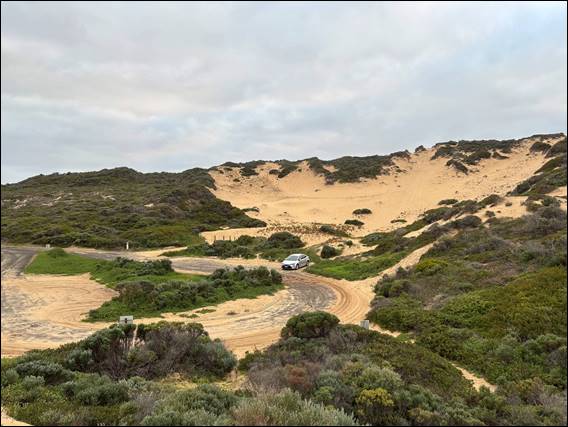
I can’t say my motivation was very high today. Blame the winter blues, no one being available, needing to be mindful of my dodgy joints, or possibly the imaginary tickle in the back of my throat courtesy of Lisa. She is weary, so much so she didn’t even go down to watch the Peppy Plungers, well plunge. At least I was not feeling weary, but I did leave a little later than usual. Waiting till she stirred, before deciding to go for it, so I could check in to see how she was going. Heading somewhere cruisy, where the final bit of the drive can be rough:
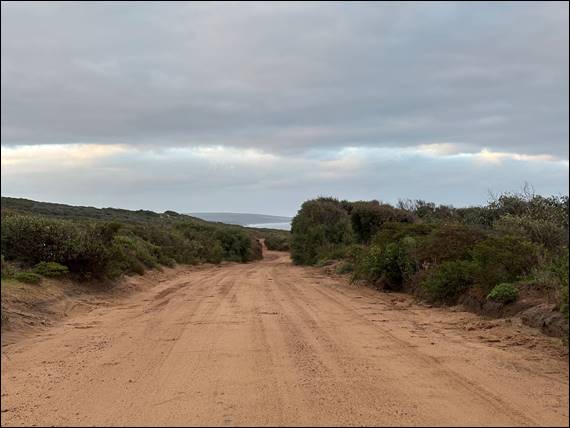
This would normally be no problem in my big rig. However, we recently sold that and I now drive a ‘normal’ car. One in which I would feel every bump of a rough corrugated dirt road. Fortunately, they must have graded it recently and it felt pretty good. I went slow anyway, as I had a nagging feeling. Sure enough, over three separate stretches, five Western Grey Kangaroos (Macropus fuliginosus) did their level best to put a dent in my car. The first of which can be seen cheekily looking at me, after safely making it across my path and into the scrub:

While now focused I had been a little distracted, in part due to the 12”single mix playing. A form of vinyl I always thought had been invented purely to make money. Encouraging avid fans to part with even more cash, as they keenly collected every bit of vinyl released by the artists they revered. But I was wrong, the magical 12” single came from a mistake. In 1975 a disco DJ named Tom Moulton used a blank of this larger disc for a test press, by accident. Singles up until then were pressed on the 7”disc, or as we knew them the good ole 45:
The name 45 coming from the revolutions per minute that it was played at, and being a smaller disc song lengths were limited to 5min. A 12”disc, played at 33 revolutions per minute, and enabled the grooves to be cut deeper and wider while allowing for a 12min song. This gave a louder sound with a punchier bass, which was perfect for the era of disco. It also meant the spacing between lull points in a track were more clearly visible. Making it easier to merge and/or mix songs, which revolutionized the DJ dance music genre:
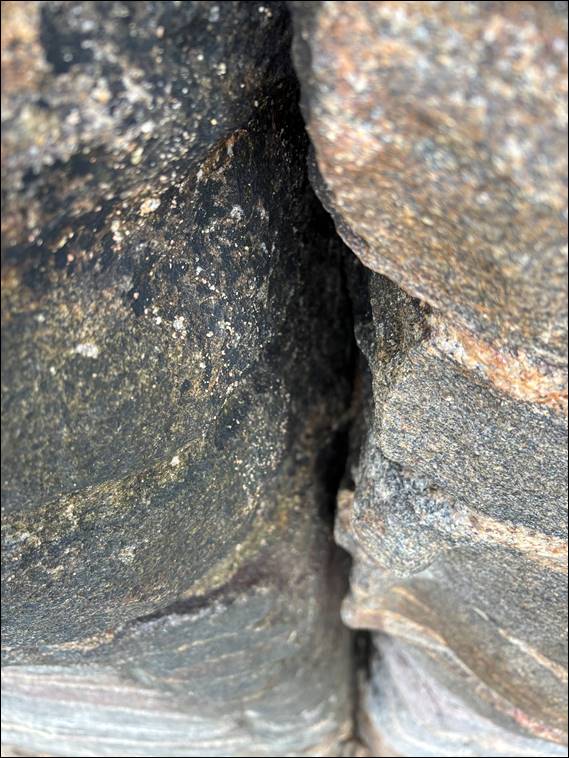
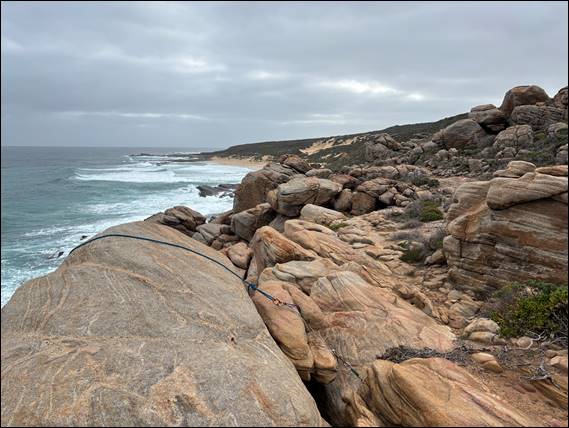
Having safely arrived at my destination, with no dings in the car, during the walk in my joints did not complain. I was then greeted by an unexpectedly dry crag, with only a hint of where water had been running down a day or so before. It was my turn to get into the groove and start lapping up line after line. A bit like the songs on a vinyl LP it was a smooth transition from one route to the next. And just like a 12” LP that can generally fit 4-6 songs on each side before being flipped over, I had to change the belay anchors every 4-6 laps:
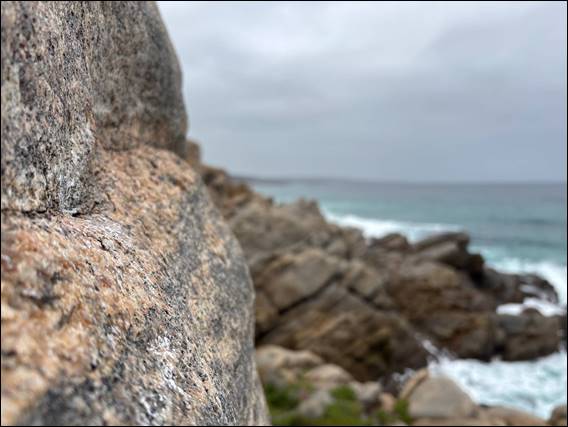
You may wonder why a 12”single can only have a track up to 12min long, when a 12” LP can hold 4-6 songs that would require twice the duration. It again comes down to the width and depth of the grooves, and the same as used in the humble 45 is applied to a 12” LP. And as you may have guessed from above, this results in a quieter sound and less punchy bass. While I never jumped on anything too punchy today, it all felt good and the body, for the most part, didn’t complain. So I climbed quietly, not needing any vocal encouragement today:
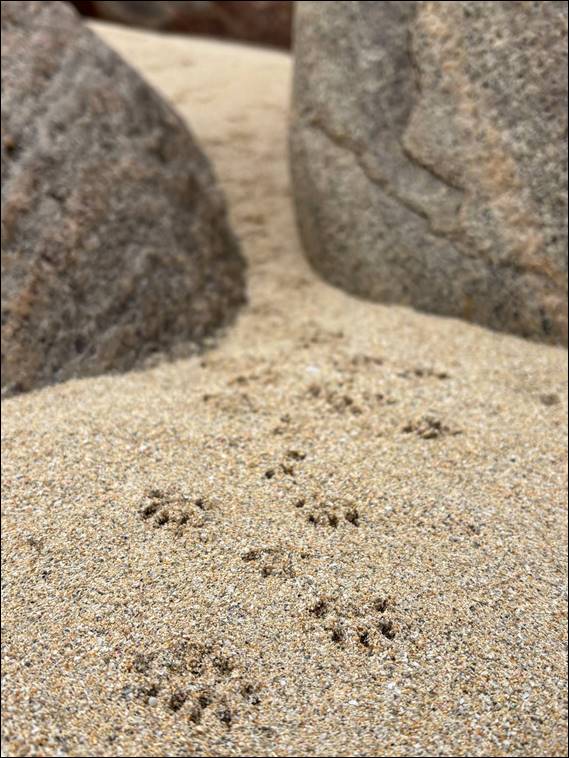
I only broke out the chalk on one route, and then just for two holds on a short sequence. Talking of short periods, the music cassette and CD, only lasted for a relatively short duration of approx. 30 and 20 years respectively. And while there may have been a lull between the mid-80s to mid-2000s, it is fair to say that the humble vinyl has lasted the test of time since it made its first appearance in 1948, with its resurgence lasting to present day. The last track to play in this post is from a Southern Brown Bandicoot (Isoodon obesulus subsp. fusciventer):
 Sandbagged