Not that there are any orchids I was particular looking for, a wander in the Capel Nature Reserve was in order today if only to stretch the legs. Quite a few Globe Heath (Brachyloma preissii) were in flower. Normally blooming in autumn, they are however highly adaptable to unseasonal rains and have been found to flower anytime from February to September. Endemic to Western Australia, it is one of a staggering 200,000 specimens collected in Western Australia over four years from 1838 by Johann August Ludwig Preiss, who it is named after:
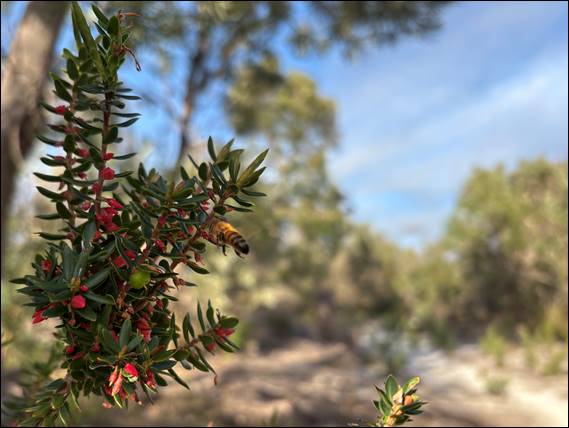
They may be small , but the nectar-rich flowers are shaped perfectly for native Australian honeyeater birds. While it may not be needed for honeyeater bird species, a term in ornithology is LBB standing for “Little Brown Bird”. By coincidence the common name of a bird called a Dunnock (Prunella modularis) loosely means “little brown bird” in Old English. This term is used for hard to identify species without a close up inspection, and today I came across a similar term used in mycology or mushroom science:
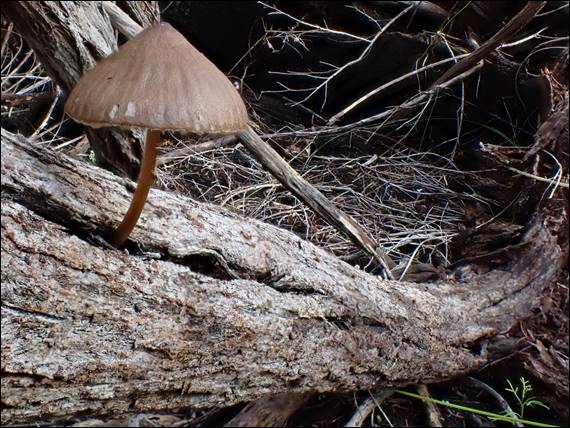
LBMs, and you may have guessed meaning “little brown mushrooms”, is often used. There are hundreds of small, dull-brown mushrooms that look almost identical. Without a spore print or microscopic analysis, a true identification can be near impossible. However, I’m quite confident the above LBM is highly likely to be a Common Bonnet (Mycena subgalericulata). They are often found in colonies but can fruit singly as this one is. The next two may not fit the term LBM, but I am still not too confident I have identified them correctly:
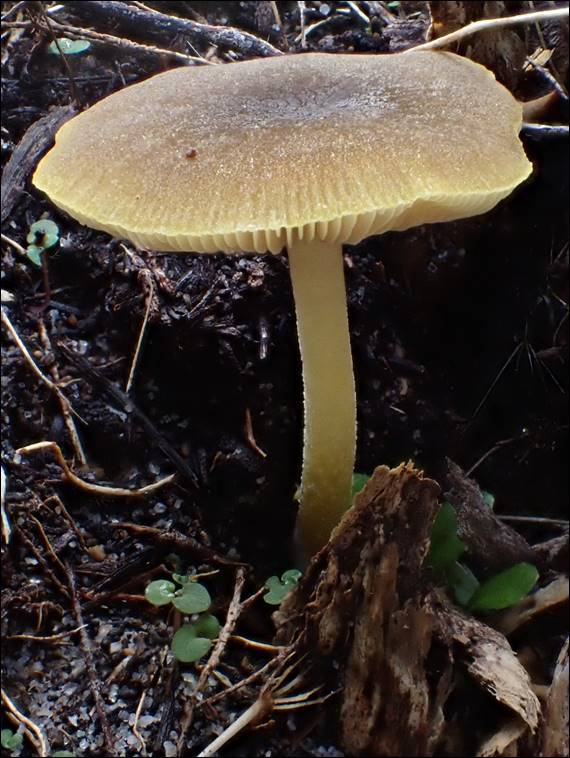
The above could be a Yellow Fieldcap (Bolbitius titubans), being a widespread species found on every continent excluding Antarctica. And is one of the shortest-lived mushrooms, sprouting in the morning dew and can be completely withered or faded by the afternoon sun. And below I may have come across some Plums-and-Custard (Tricholomopsis rutilans). Non-native to Australia, it usually prefers dead pines of the Northern Hemisphere but has grown to enjoy various native hardwood trees in Western Australia:
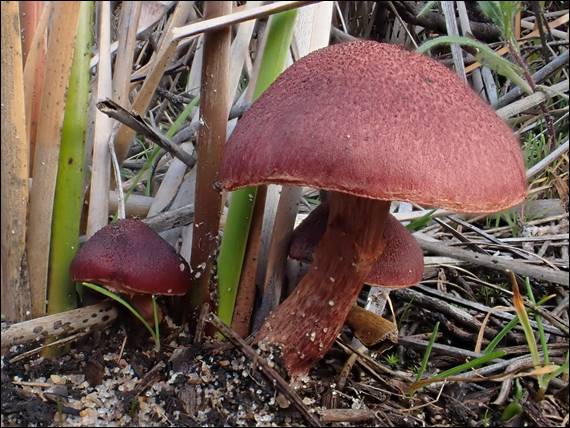
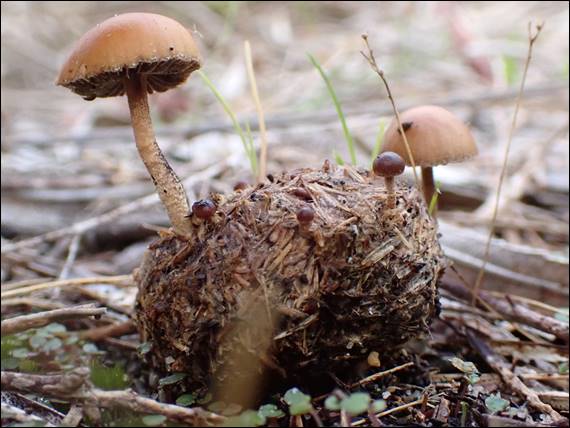
It may look like it is growing out of the sandy soil, but if I am right it will be feasting on the rotting wood buried underneath. Next up is an easy one, the Dung-loving Deconica (Psilocybe coprophila). I really like the image, and while you may not want to look at dung, the more you do the more mushrooms you’ll see. They only grow on the dung of herbivores, as dung from carnivores contains too much protein and lacks the right plant fibres this mushroom needs. It gets even more fussy, and only grows on dung that is not too fresh and not too old:
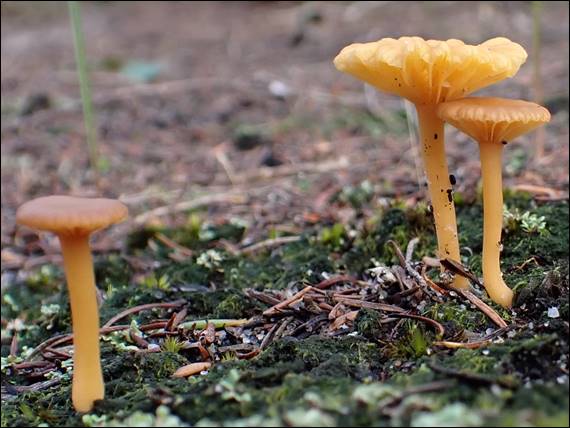
Another easy one to get right is the Yellow Navel (Lichenomphalia chromacea). These pop up in groups of varying sizes during autumn, and always in association with a green algal mat. In fact without this lush spongy garden bed it cannot survive. The algae makes sugar from water and carbon dioxide, which the mushroom uses as food. And in return the caps provides an umbrella so the algae is at less risk of drying out. This teamwork allows the pair to grow in poor soil where neither could survive alone:
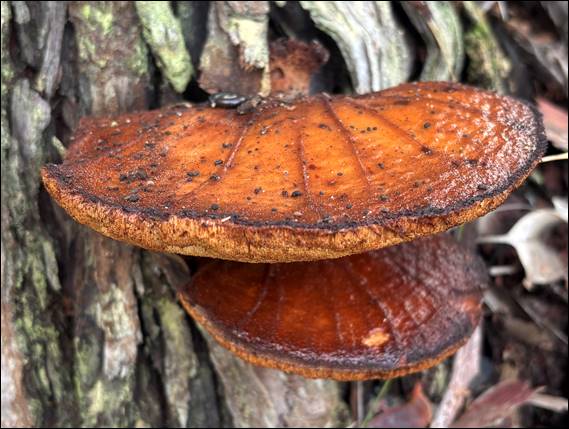
One last easy identification, a Beefsteak Fungus (Fistulina spiculifera). This specimen has a really cool patterned upper side. Underneath there are millions of tiny, tightly packed tubes instead of gills. The genus name of Fistulina comes from Latin meaning “small tube or pipe”. Tiny Fungus Gnats (Mycetophilidae) lay their eggs in-between these tubes so when their larvae hatch they have a safe, food-filled home. Mind you they are not too fussy what mushrooms they make use of, so are not only attracted to ones with tube like structures:
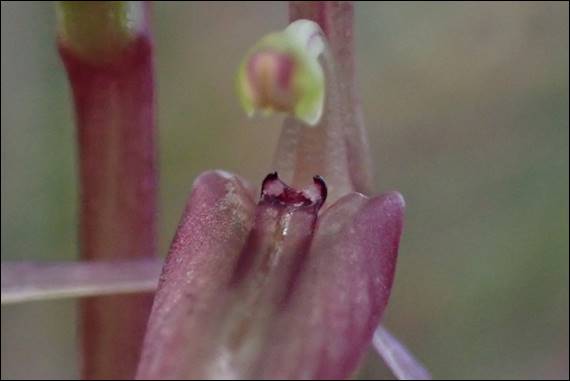
Fungus Gnats (Mycetophilidae) don’t only visit mushrooms. They are also the primary pollinator of Mosquito Orchids (Cyrtostylis robusta). I came across a patch of leaves near the car with a few in flower, and after my research last weekend took the time to take a close up look. As with other Cyrtostylis species it has a unique labellum, which acts as a landing pad for the Fungus Gnats. They are attracted by a tiny puddle of nectar held in a small pool at the base of the labellum, which is secreted by the two Calli that arch over the pool:
 Sandbagged