It seems to be becoming a bit of a broken record when I say I headed out with Mario during his road to recovery. With a succession of injuries having plagued him during 2021, his New Year wish should be pretty obvious. Today was his first roped climb since we headed out to Mount Cuthbert, just shy of six month back. As such the session was always intended to be a chilled, slow paced outing, with nothing too serious. We pondered whether the low grade trad lines of the Organ Pipes or Driftwood Bay were calling us:
We opted for the shorter lines at the Organ Pipes, and as I looked across I was amazed at how low the tide was. The namesake bay of Driftwood Bay no longer looking like a bay, more of a rock pool. The last time I climbed at Driftwood, with Andrew, this rock pool was completely immersed and waves crashed right into the bay: https://sandbagged.blog/2021/07/11/taking-a-break/. For both locations we had pondered, the best access is to rap in and as I went down I got a second shock. It seemed, on first inspection, that someone has been working my age old project, Reaper Man. Chalk was plastered on the familiar slopey holds:
After seven plus years I still haven’t led it, and in truth today would have been a good day to do it. The friction needs to be good, and as the morning wore on it was getting better. But I didn’t and it is possible that I may have missed my chance before someone comes along and places a line of bolts. It reminds me a bit when Mark and I put up a new route in Alice Springs days before the bolts were going to be placed. We led it on trad and called it the Fight to be Free https://sandbagged.blog/2017/11/03/part-11-alice-springs-rock-rock-and-more-rock/. Admittedly this time the bolt positions, as indicated by the tell-tale crosses, follow the arête, not the face that Reaper Man follows. But, the way the two lines climb only the middle section differs:
I ticked off the first easy lead on Dry Reach, and then Mario picked Heaven Calling. This route spooked him a bit because of the last piece of protection. The same last piece that Reaper Man uses, which was when he began to understand why I had not yet led it. While taking the above image of him on this route I thought the camera lens needed a clean, but sadly not. Neither of us could figure out when it had happened, but after years and years of swinging off my harness and being bashed around the lens of the camera had taken a fatal knock. It is finally time to put my trusty camera to rest:
It was a good job I had my phone allowing me to capture some of the fun of the morning. While the camera is damaged beyond (worthwhile) repair, Mario was going well and may be salvageable. We knocked up line after a line alternating leads and not really going slow, as intended. But the lines were never too hard, picking off lines that will bring good memories to others. Such as Knocking on Heavens Door that Wiggins and I put up https://sandbagged.blog/2018/08/26/the-new-kid-on-the-block/. It felt as nervous as it has the last two times I’ve led it, but based on the technical moves Mario reckoned the grade was fair. It’s just the sparse protection that makes it a heady lead, so he was glad to have the rope above him:
Mario then enjoyed running up Spraying. Following him up I spied, and put into my memory bank, another possible line to squeeze into this crag. It’s amazing how many lines I have managed to find at this little overlooked crag, which I have never seen anyone else climb at. This is another reason I was a little surprised to see someone looking at bolting here. The last trip here was with Rongy and even then we put up three new routes, and my next lead was one that Rongy bagged after I failed on it https://sandbagged.blog/2020/05/14/stretching-the-vocal-cords/. I got a clean lead of The Honest Box, and no I didn’t use the side walls or arêtes:
It may be a contrived line by saying you can’t use the features that are so close. Still despite that stipulation Mario rated it as the best line of the day. The next few lines might bring back some memories for Glen and Lou, https://sandbagged.blog/2016/08/21/breaking-in/. When I sent Glen up English Summer, many years back, I was a little scared he would come a cropper, and in his usual fashion injure himself. But he thankfully got up it and placed bomber gear, which he did test. Mario really enjoyed the initial feisty crack, which had forced Glen to test his gear, and this made my mind up as to where I would send him next:
But before that it was my lead, which Lou may remember. The New Kid on the Block is in my mind Lou’s crowning glory of the times I’ve climbed with her. An on-sight first ascent of an unknown line, something I think she doubts she will ever do again. That said she told me she has a six months break for study so was keen to get out on rock again, so you never know what might happen. During this ascent I somehow managed to allow my wires to cascade down the line, as I was placing a piece of gear. While they scattered about we fortunately found all of them, and I also fortunately had plenty of gear to get me up the rest of the line:
For Mario’s’ last lead I was keen to send him up Short and Sharp, the only other route on this wall. Since Steve and I put this up in 2014, the same time I attempted Reaper Man for the first time, I only know of one person who has climbed it. That was Mikey during his 10km challenge, https://sandbagged.blog/2017/12/21/sprint-finish/. I have always thought it was a pretty solid line, and like Mikey back then it took Mario a while to find some gear to trust and get going. This time however, in addition to the loose blocks at the top there was also a loose flake half way up. And there was no other option but to use it, very gingerly. Despite the loose rock Mario thoroughly enjoyed himself on what may be just the third ascent of this one:
To round the morning off we set up a top rope to try the Reaper Man and also the new line that is yet to be bolted. I calmly climbed the first, and based on the way I climbed it I’m again kicking myself I didn’t lead it. And the new line had me foxed in the upper section until I realised that based on the chalked up holds they had moved back onto the face, away from the arête. Maybe on my next trip here the bolts will be in place and I can led the new route, my project finally and maybe the other new line I spotted today. I know Howsie has yet to climb here, which is quite surprising, so I might try and convince about a trip here soon:
Christmas Day crept up on us. The household no longer explodes into feverish excitement at the first sign of light, eager to see if the big man had been. So I was hoping to have a morning dip. Although, after a quick walk over the dunes to check the conditions, it was clear that it was probably not going to be worth it. In addition to the searing temperatures we have been experiencing, there have also been strong easterly winds. The orientation of the coastline results in these winds churning up the water enough to mobilise the fine sand:
Instead of a snorkel Lisa and I headed down with the poodles. Taking them for an early run on the beach to avoid the crowds and, more importantly, unfamiliar and potentially unfriendly dogs who come down with the holiday makers. The water looks clear behind us in the above image, but the waves while small were effective at stirring things up. Later in the day Lisa and Elseya ventured back down to watch the sunset and have a dip to cool off, which is when another visitor that arrives during the summer holiday struck:
The South Western Stingers were back almost to the day that they arrived two years back, https://sandbagged.blog/2019/12/23/right-on-cue/. Lisa copped a couple of them and had the evidence to prove it. This didn’t however put me off heading down early on Boxing Day, determined to have a snorkel regardless of the conditions. As I walked down I could see a pod of dolphins lazily heading northwards. Eager to see them I didn’t think about stingers, and jumped in managing to get out just in time to watch them cruise past really close:
The image above shows just how poor the visibility was, but I couldn’t resist taking a quick video all the same. I was out now, beyond the reach of the stingers that seemed to be lurking in the shallows along the shoreline, so I continued. The only other find was a baby squid, no more than an inch long and so small that my attempts to photograph it were all in vain. Eventually it had enough and squirted to jets of ink at me, as it sped away. I took it as a sign and headed out myself managing to avoid being hit, as hard as Lisa had been, by the stingers:
Boxing day was even hotter so in the evening Lisa and I went down for a dip, and I chanced the waters again. This time the stingers were not confined to the shallows and were instead hunting in the top 10cm of the water column wherever I went. The water was still cloudy, and there was nothing to see. In fact I spent most my time looking forward instead of downward, checking for signs of tentacles so I could avoid my forehead getting smashed. I would normally preserve with these conditions and suck it up, because I really enjoy heading out:
For now however I’m applying a different approach. For those familiar with the hierarchy of controls; I can’t remove the hazard, the stingers are here to stay for now; I also couldn’t replace the hazard, unless I could release a creature who voraciously predates on the stingers; so I am down to the third ranked preference of an engineering control to isolate myself from the hazard. For those clever clogs out there who suggest I should go straight for the fifth ranked hazard control of using PPE, or personal protective equipment. Putting on a wetsuit, hood and gloves is simply too much phaffing about:
For that reason, and at least until the wind conditions allow the waters to properly clear up again, I’ve therefore decided to try other locations. Granted this means jumping in the car, but I had to try it first before I could decide if it was worth it. So today I drove to Bunbury’s Back Beach, which is approximately 25km along the coast to the north east’ish. The coast here starts to veer northwards and the land mass is considerably higher, as the previous image shows. This means the water is not affected by the easterlies, as much as our local beach is. While it wasn’t super clear the bigger positive was that there wasn’t a stinger in sight:
It felt lush to be in the water and not need to continually look up to check for stingers. While the cloudy water made it hard to see much I did come across a couple of baby squid and I again unashamedly pestered them. To the point that they eventually shot away leaving a few droplets of ink dispersing in the water. Nothing that a small square of blotting paper wouldn’t be able to clear up, but it seemed so much compared to their tiny bodies. I was however rewarded with one in focus image. The ground here looked interesting and I went down multiple times, finding protected areas where schools of fish were hiding from the swell:
I also saw lots of Finger Zoanthid (Zoanthus praelongus), which I have only seen off our local beach a couple of times, https://sandbagged.blog/2021/03/14/barren-ground/. These are distantly related to sea anemone, and similar to them have a mutualistic relationship with microscopic algae, which makes a home within its soft fleshy tissue. The Finger Zoanthid feed at night, when the fingers stand upright and tentacles come out to capture plankton. Then in the daytime their bodies usually flop down. Maximising the surface area that sunlight can reach, and hence enhance how much energy it can obtain from the algae through photosynthesis:
The temperatures have been soaring in the south west of Western Australia over Christmas, and with a week of hot days forecast some might question the sense in heading out for a climb. It was already 26 degrees when I left the house at 4:30, making me think that a 5:30 meet at the carpark of Wilyabrup was probably a bit of a late start. But today was, like my last trip out, going to be a cruisy one. Howsie and Nadia were taking a friend who hadn’t been outdoors much, so we were not aiming to do anything hard:
We drove in separately today, as I was meeting Lisa afterwards in Busselton, needing to keep an eye out for roos on the track in. Today we set ourselves up at the southern end of the crag and spent the whole morning mostly having fun on a number of the shorter and easier lines. Normally this end would have a group or two playing on these lines, but today we had it to ourselves. Maybe the promises of another hot day had kept everyone at bay. We started in a route Andrew and I had established way back, Grotesque:
I doubt many people have ever been on it, as the gear is a little sparse and questionable. But the climbing is never too hard so I knew Howsie would be fine on it. I did however notice Nadia pickup on the brief mention of the gear, but she didn’t say anything. Sometimes it is best not to know. You may be wondering where the name of the route came from, well an existing line just to the right is called Gargoyle. A gargoyle is a decorative stone carving that you find on old buildings:
They are usually shaped like the head of a strange and ugly creature or human, and are spouts funnelling the water that comes off the building during a shower. Grotesques are also stone carvings of strange and ugly creatures on old buildings, but they are purely decorative and do not have the same function of controlling the water. So I named it for no other reason other than I felt like the two routes made a good pair, literarily and historically speaking. Even before we were finished on the first line, the sun was coming over the horizon and it had a sting to it:
So we were pleased to be setting the belay up as a top rope after each route had been led. We moved leftwards, next up was Candy Floss and then Brepus. I was curious and checked what brepus meant, and felt it is probably best not to include that on this post. While short these routes are fun and allowed Josh the chance to try an arête, face and then crack-chimney climb. Each requiring a different climbing technique. It was also a chance for Josh to check out the protection we were placing, admittedly the first route didn’t have much on it and in fact when Howsie led the chimney he put equally few pieces in:
It was not a day to be moving too fast and over exerting ourselves, not that this was an excuse for placing less gear. Howsie also went into complete laid back mode with his belaying, as Josh went up the next route. The only thing that didn’t make the lounging around in the shade below the crag pleasant were the flies, more than I have ever seen at Wilyabrup. Relentlessly seeking out any moisture, and capitalizing on any broken skin. We had moved across to Twenty Questions, and both Josh and then Nadia asked themselves at least that many, as they pondered the crux move:
This probably included “why am I doing this”, “surely this is not the right way”, “I wonder if they will let me down if I ask” and of course we wouldn’t, which was proven when Nadia asked. It was pleasing to see them not give up and they both made it up, and persevered even when they both were close to coming off at the midway point. This route has a bit of face, crack and arête climbing, as well as other styles. So they needed to make use of the techniques the last three climbs had required, all in one route:
After four fun routes it was time for Howsie to have a little self-indulgence. We had talked about this before today, and while there was a route I was keen to play on the heat was putting me off. Howsie was however keen and picked Rockfish Dreaming. A feisty and steep line, one he had never been on before so it was going to be fun to watch. I did suggest a few times where the route headed, as he started to look up vaguely. It’s not the most obvious, due to a large flake having fallen off from low down:
This resulted in the route weaving a bit to the right, then left before heading back up right to the centre stage of the steep headwall. After the monkeying around below the arms start to get pumped, and the headwall starts on small crimpy holds, ready to make your forearms pop. I led it a few months back and could still remember how they felt, but Howsie made it look easy. Practically running up the final wall, as a few fat drops of rain fell. Just for a while the air temperature dropped and it felt lovely:
Needless to say Nadia was definitely not keen to run up this one, Josh indicated he’d like to try but was sure he’d fail at the roof that you have to get over straight off the deck. So it was only me following up and while the first half flowed well, the headwall felt hard. The rain was enough to raise the humidity and I sweated myself up the line, and felt exhausted at the top. But before we hoicked our way out I led Tom Thumb Direct, which Nadia was keen to try but felt too tired and Josh seemed to run up without needing to stop and think:
We might need to through Josh at a harder line or two next time. But for today it was time for a sweaty walk out, but there was a much appreciated cool breeze. We passed a couple who had just arrived and were setting up a top rope above where we were climbing. There was also a group abseiling on Steel Wall, and seeing no one had walked past where we had been all day we were surprised at how many cars were at the carpark. We were however happy to leave them to it, and hit the road and enjoy a bit of air-conditioning:
With the summer solstice having passed a couple of days ago it’s all downhill from here, with regards to our days getting shorter. Not that this will affect our Friday mornings for a while. It is already bright way before we arrive. And the sun is already tipping over the horizon, bathing the treetops in that glorious morning glow. People might say we are mad getting up before 4am, but with sights like this it is well and truly worth it. Any negative thoughts we may have had, as we get up and drive out, are dispelled not just for now but for the whole day:
On arrival this morning we were greeted by a campsite. Several tents lay silent, as we drove in one after the other. We chatted and got ready, as we normally do. But not a sound could be heard from those in the tents, as they were no doubt still observing the inside of their eyelids. More by design than intention we stayed on the opposite side of the quarry to the tents, warming up on Murky Corner. Some may question the lowly grade of this route and why we might do this, which is in part due to the special time of year:
I had suggested after last weekend’s rock antics that we should maybe pick one tricky line each. A route that we know would be at our limits, but one we always enjoy and would consider a great gift if we got it clean. This was said , maybe in jest, with the hope that Santa will be feeling in a giving mood the day before Christmas. So before we had even got here we had lined up Chasing Mason for Rongy, Flight Simulator for Howsie and Attack of the March Flies for myself. Three lofty aspirations, we knew, but it was Christmas Eve so why not dream:
So Murky Corner seemed a good limb to get the body moving and shake any lethargy or lack of focus that might be lurking within. And also of course to warm up and get the blood flowing, without wearing us down too much. It is also why I brought a selection of cameras, feeling that I would have more time for some photography. Rongy felt the best after our warm up and was straight onto Chasing Mason. And then straight off it. So it started, on it, of it, on it, of it… you get the picture. It was hard, we already knew that:
We all got up it, eventually, and thoroughly enjoyed the battle. Howsie, was however left questioning his chosen line. Clipping that scary third bolt was on his mind, hanging heavy and eating away at his confidence. So instead he went for a very worthy alternative, at the same grade. Taj vs The World, fingery, technical, sustained and steep. The perfect choice allowing me to hang off the anchors of Rongy’s route and have a perfect view of every move he made. He was looking good. First clip, second clip and only one to go before the jugs come:
Like Rongy, he had a battle on his hand with the crux. The small and slopey fingertip holds just didn’t seem to be enough, as he climbed, fell, climbed, fell, climbed, fell, and again you probably catch my drift. Despite all the hard work and tiring arms, like Rongy, he persevered and was smiling broadly when he was rewarded with reaching the lower offs. We followed up loving the challenge of the line. As we climbed with total and unrelenting focus on the task before us, behind us there was finally movement from the tents:
I stuck to my line of choice. And like both Rongy and Howsie, once I got to the crux the rope started loose, then went tight as I fell. This continued with the rope being loose, tight, loose, tight. One thing was for sure today we were all trusting and pushing ourselves, right to our limits. Unafraid of coming off, which might seem a strange thing to say. But that fear of falling will restrain many a climber from attempting, let along getting up, lines above their comfort zone:
While it was another very enjoyable morning, thanks to Rongy and Howsie. The reason I decided to write today up and share it was because of the images I captured, which I get as much enjoyment out of as I do the climbing itself. And for this morning even more so due to the moon obligingly hanging in the morning sky. Also it gives me a chance to say have a very Merry Christmas and here’s hoping for a New Year full of magical adventure and encounters:
I guess it goes without saying that if you’ve been throwing up all morning the last thing you want to do is cling off a rock face. So when I was a mere ten minutes away from picking Ash up, and he messaged me to say that was how his morning had been, it was of course absolutely fine for him to bail. Ash was also considerate enough to check if I still needed his rope, on the assumption that I would still be meeting Matthew. But it was all good, once a scout always a scout, and I had come prepared. Something had told me this morning, as I left the house, to throw a rope in just in case:
I wished Ash well, hoping he would come good soon. I’ve not heard from him yet. So I guess he is resting up, and if so it was a good thing he didn’t join us and make things worse. I was indeed still meeting Matthew, but whose he you might ask. I have a bunch of images that my desktop at work scroll through, and at a recent meeting one of my climbing images popped up and this started a conversation about, well climbing. That’s when I found out that Matthew, who was in the same meeting, had been known to play on rock in the home country:
Today Ash was going to continue his journey in building up trad leading experience. We had therefore picked a crag that had a few milder climbs. This also suited Matthew, as he had openly said after I had first talked to him about going for a climb that he would be rusty, and may not even get off the ground. I found out that it had in fact been over a decade since he had climbed outdoors, but he had, since then, very occasional visited an indoor gym. I though my last trip here had been with Mario, when a rock came away in his hand and he took a healthy fall. I was surprised to see that was over two years back, https://sandbagged.blog/2019/10/19/two-out-of-two/:
I was kinda right with my guess about that being the last time I climbed here. Although a mob of us, including Lisa, did siege The Playground (https://sandbagged.blog/2020/01/18/theres-gold-in-them-there-hills/). That was a very social day indeed, but we didn’t make it to Lost Buttress. Matthew and I left the carpark, which was empty, at about 6 and I expected that no one would be about for hours yet. My rationale being that yesterday had been a bit of a manky day, so the Perth crew were probably still in Perth. However, after a quick visit to the wonderful Wilyabrup toilet, and as we were walking back up towards the cape to cape track the next bunch of climbers were already walking in:
They were however heading to the main cliffs, and we left then behind as we followed the cape to cape track until we got to the Northern Blocks. From here there is a fun rock hop along the coast. Granted we could have driven to nearly the top for the crag, which Steve would have loved doing. But I like the walk, and Matthew had said he too was looking forward to the walk in. I expected the rock to be a tad damp, not only from the rain but also the salt spray that was blowing up from the waves. But it was fine, and after a quick run through of belaying and tying in, just in case, I was off:
My intention had never been to go hard today. Not only because I was hoping Ash would have been on the sharp end most of the time, but also because Friday’s early morning session at Welly Dam had been once again pretty tough. During that session I had been well and truly humbled by Flight Simulator, resulting in both myself and Rongy, who was belaying me, to experience air time several times. Today we started, as we intended to carry on, going easy. No Nuts Required was the first line and indeed I didn’t place any nuts, only using cams:
My rationale being that Matthew would be testing himself enough without needing to fiddle out any passive such as wires, tricams or hexes. While he admitted his flexibility let him down on some moves, he still pulled off the climb. I could see that his muscle memory from a decade back, wasn’t vanquished it had just lay dormant waiting until it was needed again. The first line, including his first contact with the good old Australian carrot bolt, hadn’t put him off. Next up was Baby Shower, at a similar grade, that was approx. equivalent to the British grade of HS 4a/4b:
We were taking our time and while the two routes hadn’t put Matthew off, he wasn’t too keen to go much harder on the first trip out. He was however keen to wandered across to The Playground. Here the rope and rack stayed on the deck, as we played about bouldering. It was a lot of fun and I even jumped on Slimeball, which I had given a grade of 19 when we first recorded it. On The Crag those who have since repeated it reckon it is V3, which is about grade 24. I really don’t think so, even today it all felt not too bad and 19 is more than fair:
As I continued snapping images of the morning Matthew said I guess I might get a mention in your blog now. I’m not sure if he was hinting at anything, but my rapid reply was quite simply. It goes without saying, and that it was an unwritten rule of anyone I head out climbing with. That’s not really true, but no one has to date objected to being included. Despite not bagging too many routes the morning went by way too quickly. Maybe it was in part due to all the reminiscing and talking about the great climbing places in the home country. But, eventually Matthew’s arms could take no more, which only left us the fun hike out:
Over the last two weeks I have not posted anything about my climbing antics, but that is not to say I haven’t been getting out. The early morning Friday climbs at Welly Dam have occurred, start at 5am which has allowed for a solid session before work calls us. Two weeks back Howsie and I packed in an impressive eight routes, albeit the lower grade lines on offer there. Then this week Rongy was back and we climbed six lines, this time however we bumped up the grades hitting a couple of 22s and only climbing one route that was less than grade 20. It was a solid session:
So solid that all three of us could feel that satisfying ache during the working day that proceeded. The three of us then hit Wilyabrup on Sunday, as the effects of the rapid fire harder climbs at Welly Dam were finally starting to subside. The western coastline has been ravaged by bushfires this past week, a huge one to the south and one to the north. Luckily for us a safe distance away from where we were today, the smoke did however hang heavily in the air as we drove in and walked the crag:
The smoke haze lifted as the day went on, and the clouds also drifting away. It had rained here last night. And as the firefighters battled to get the fires under control, I am sure they would have welcomed the cooler weather and light sprinkle that came with it. All of these factors gave me hope that the crag may be quiet. With luck the climbers from Perth were less likely to make the trip down during uncertain conditions. Of course, with us getting to the crag for 5:30, there was no one about at the start. The rock was damp from the rain and also had that salty feel:
Not the best conditions to get us going, but that’s fine. Rongy and then I led us up a couple of rambling lines that took in easier ground on an area of rock that we rarely climb. It was nice to go up some unfamiliar territory, not knowing what to expect. Yesterday I had yet another early start. Having headed to Perth by train, as Lisa and I were picking up a new car. This required getting up about 4:30, so this was my third day on the trot of being up and out before light had crept into the sky:
While I can manage early starts. Three days on the trot is probably not very sensible and I could feel the effects, as I led the route of my choice. I wondered how I’d go with what was to come next, as I knew what Howsie had in mind next. It is 2021 and that of course means he was keen to bag a few grade 21 climbs. For those that will remember, 2020 had got hectic. He set himself a target of cleanly leading every grade 20 in the South West. Towards the end of 2020, that all changed as the challenge had taken the fun out of climbing:
Being 2021, he was now looking at the grade 21s but he no longer felt that he had to get on every one of them. And there are still quite a few that he hasn’t. It is great to see that this isn’t stressing him out, and he is only hitting them when he feels up to it. Today I knew he had his eye on one at the northern end of the main cliffs of Wilyabrup. I’d only ever seconded Craig up this line, many years back, and neither Howsie nor Rongy had ever been on it. So again it was a route that all three of us were unfamiliar with, which added to the excitment:
Welcome to Arapiles has what some might call a sketchy start, so Rongy watched closely ready to assist if Howsie should slip before he got any gear in. After a certain height is reached by the climber, the aim would be to protect the head. Broken bones may occur if you are unlucky but the head is all important. Howsie was however being careful and methodical and soon popped in a cam, allowing Rongy to relax. Then as he got higher I dashed to my next vantage point. To show the extent I go, to get images, above you will see what I climbed in my sandals:
With a 10m scramble below me I found a great spot that out me as the same height as Howsie. He was perched below the roof, looming ominously above him, that he had to get over. After getting in some good gear from his relatively relaxed position, he then proceeded to go up checking the holds and gear options before climbing back down to his perch. This he did quite a lot of time, not once getting any more gear in but at least becoming more familiar with the sequence and holds. Below is a video of one of these times. These repeated ascents and descents also resulted in him becoming more tired:
When he eventually went for it, he found another piece of gear and then as he started for the final roof his arms began to really to complain. Fortunately for him the final roof was avoidable and he snuck off right before his hands could no longer hold on. It was an impressive lead and as Rongy and then I followed we found him grinning like a Cheshire cat unable to hide his excitement of what he had just done. In theory Rongy was up next, but as we came back down he indicated he wasn’t feeling it, and would happily allow me to jump on lead next:
I didn’t think about it, and immediately racked up heading back to the area that I had such fun with Jamie and Rongy a while back and then more recently Steve. It’s an area that I have rarely climbed and I’ve never led The Great Temptress, supposedly a grade 19 that works its way up through four roofs. It was brilliant, both exciting and scary and with each roof It felt more and more pumpy. Or was I just getting tired. At the fourth roof the sting came, and like Howsie it was my turn to go up and down like a yo-yo. The final hold was less than a foot away from my hands on each ascent, but the insecure position and lack of feet resulted in me just not being able to get to it:
I was shattered. After, was it five, six, seven or more attempts, where I climbed up and then back down never resting on the rope my forearms were screaming. Eventually I snuck left, and set myself up so I could get a great view of the other two coming up to see how they fared. Rongy managed the final hold but only just, which were his words. Snatching for a, not so great, pinch and then barely managing to use it. By the time Howsie got to the last roof he was toasted, but gave it his all and eventually managed to haul himself up:
It was a solid and fantastic line, as had Welcome to Arapiles been. Howsie and I were really tired now, so we looked to Rongy to take the next lead. He too wasn’t up for anything hard or even moderately challenging. Instead looking for a fun route that he hadn’t been on before. Like me, until earlier this year, he also hadn’t climbed many of the big corners here. Decision made, and he romped up Chockstone Chimney placing less gear than Howsie or I felt was required. But it did mean that as we followed up, with packs on our back, there was only one piece to take out:
Yes you read right, one piece only! Rongy did admit it was maybe not the smartest of moves, even though it was only a grade 9 climb and the rock was now in great condition. Sat in the sun at the top of the crag we sorted the gear ready to leave, and still we had the place to ourselves. Like the good ole days, when I first started climbing in this area sixteen years ago. With Howsie and my final rooves, and Rongy’s almost solo it is fair to say we all had a good dose of Xcitement:
Over the last week I was hoping to dip in and out of the ocean after work, but as it was I only managed two snorkels. The first was in crystal clear waters, as the image below shows. Sadly the easterlies then started to come in, and when I went for the second dip the visibility was being affected. This continued and by the time the weekend came the increasing murkiness was evident by just looking at the water from the beach. Still it is early on in the season and I am confident things will return to the conditions that I experienced during this dip on Monday:
Calm, clear and warm waters. It was also my first dive without a wetsuit on. I had limited time so went down in my boardies and jumped in expecting to last only a short time before I got cold. I was wrong, and it felt lovely. Next time however, I need to remember to bring my weight belt with just one lead weight. This post will not have any scientific names and I won’t be able to supply you with any educational facts. I’ve drawn a blank on the finds of interest, and all my sources have failed to help me:
I do know that the above are eggs from the southern calamari or the southern reef squid, and have seen three of these clusters already. This one seemed to be drifting back and forth in the low swell, like tumble weed blowing through a deserted town. These are usually attached to something to no doubt prevent them getting damaged in higher swells, or worse storms. So I don’t hold out a lot of hope for this clusters, and even less for the single egg that had detached from it:
While the water was wonderful in every way, there wasn’t a lot happening on the marine creature front. I was bobbing up and down checking out as many ledges and caves as I could find, but there was nothing of note. That is other than the many interesting algae, weed and corals that I came across. The above is quite common and distinctive, looking like a brain, but I have not identified it yet. Then the was the weird looking one that I found under a shelf. It looks like the pulp of a passionfruit, and again I have not found anything out about it:
I’ve even resorted to sending a few finds to some marine biologists who have previously helped me. After close to a week I have not heard back, and if I do and it includes anything particularly interesting I’ll mentioned them again another time. You may recall during the first snorkel of the season I came across an amazing underwater garden: https://sandbagged.blog/2021/11/13/the-star-attraction/. I still do not know anything about the main attraction of that floral display, but did come across them again this time:
These filter feeders, which I can only assume are tube worms, were not looking so good this time. In fact I would go so far as to say they looked positively bedraggled. I managed a couple of reasonable close up images of the remaining specimens. They remind me of a cone flower, with the central ball and extensions protruding outwards: https://sandbagged.blog/2020/09/28/flower-power/. My next find was the following strange fluorescent plant, which resembles a mass of maggots crossed with strings of fairy lights. Again something so distinctive, but that hasn’t helped me narrow down what they may be:
I then continued along the bare rocky ground, because you never know what you see. This is where I came across a Brittle Star, which was a really lucky find. They are usually hiding under rocks, and while I dive down a lot I do not shift the rocks about to look for things. They normally hide during the day and come out at night to scavenge. I’ve watched the eleven armed sea star moving, at what seems an impressive rate. Relatively speaking this star was however sprinting across the rocky terrain. I battled against my buoyancy but managed to get a short video:
Early Friday morning I woke just a few minutes before the alarm went off. It was dark, as I quietly crept round the kitchen making a cup of tea. After last week’s break in our Friday morning routine, due to the amazing hike in the Stirling Ranges, the ritual was restored. This week only Howsie and myself headed to Welly Dam to start the last day of our working week with a climb. We were both feeling a bit weary. Maybe from the big weekend away, the heat that had stayed up, and/or the hay fever that had suddenly come on again. Regardless we were keen, and smashed out eight fun routes and still got to work for 8am:
Saturday came and it was not such an early start, although I do find it hard to stay in bed much past 5am. Especially when it is light an hour before that and the dawn chorus, which often rouses me from my slumber, starts half an hour earlier than that. At 8am today it wasn’t time to start work, but to be picked up by Eski and head out for a snorkel. The conditions were great, an extremely low tide, minimal swell and hardly a breeze. The Capel River is still flowing so we weren’t able to head past the point, but that same reef extends a long way eastwards so we accessed it via The Huts near Stratham:
I’ve been down this way once before, and had an amazing dive when I swam with a cuttlefish for what felt like ages. Today we were driving past where I had previously gone in. Past the mob of cars parked up at the first point, at the end of the bay of the main Stratham beach, from where the divers had put their boats in. We counted a neat line of fifteen boat trailers, and at least 20 cars. And also past the location where the commercial fishing crew had built their huts, in days gone by. It was busy on the water. But driving that bit further we came to an area of reef that both Eski had been keen to check out and was completely empty and away from the crowds:
The cray pots had all been emptied much earlier in the morning, and were now set ready for the next night to trap unsuspecting crays, which are really rock lobsters. The reef here was varied and interesting, lots of caves, crevices and swim throughs. We saw lots of life, even if most of it was skittish and didn’t hang about for too long. I even spotted a pair of Zebrafish (Girella zebra), which I don’t recall seeing on this reef that stretches for 7km from Stratham to Peppermint Grove Beach. With the conditions being as they were, visibility was brilliant. Not that I needed to see far when a Batwing Slug (Sagaminopteron ornatum) swam right in front of me:
I’ve seen these a few times now and have even videoed them swimming, https://sandbagged.blog/2021/02/14/deja-vu/. These are a opisthobranch that quite literally meaning “gills behind”, and they sit behind and to the right of the heart. They are often called sea slugs or sea hares. This stunning species was first see and identified in Sagami Bay, Japan, which is where it got its scientific name from. They fall in the gastropoda class and are normally found on the sea bed or on a surface, being benthic crawlers. If they are disturbed they can vigorously flap the enlarged parapodia like wings. Calling them wings is however a bit demeaning, as they can also be used by some creatures for sensation and/or respiration:
Above in a sandy clearing I spotted an old friend, a Gloomy Octopus (Octopus tetricus) and had to take a quick video of his bobbing head. He’d collected a few shells and stones to try to and conceal himself, but it really wasn’t very successful, and I was a little surprised at just how exposed a location he was in considering all the reef around him. My next find was under a ledge and I had to duck dive and go upside down to see it. The light wasn’t great, and nor was my breathe holding capabilities, so I sadly didn’t get any really clear images. But I was so excited that I simply had to include an image:
The oddly named Pustulose Wart Slug (Phyllidiella pustulosa) is a nudibranch, which means something like “naked gills”. However, this species doesn’t have the external gills seen on most nudibranchs, which will look like a collection of feathers at rear of the body. Instead the wart slug family has it’s gills hidden, or more likely being protected, on their ventral or underside area. Sea slugs are the most common nudibranchs in the tropical Indo-West Pacific waters, yet I have seen very few and have to date not been able to get a great images of one. This particular one is also one of the few monochrome species, with most having a splash or more of vibrant colour:
I saw heaps of fish but not many big shoals, other than the Western Pomfred (Schuettea woodwardi), with the mob above drifting lazily about in a narrow crevice. I went down to see them but didn’t dare following them, as they moved to a narrower area with a roof looming overhead. Today I also spotted quite a few Sea Fans (Gorgonia), but with some 500 species I wasn’t game to narrow them down. These soft corals will usually be oriented to allow the prevailing water current to flow through them. This will maximise the opportunity for the polyps to collet any small food particles from the water. It would be great to see them when the polyps are not hidden away under the leathery tissue of the coral, as they were today:
My last image from The Huts is a male Brown-spotted Wrasse (Notolabrus parilus), or also known as an Orange-spotted wrasse. A fish I have often seen and included but today I came across one in the shallows that was happy for me to get really close image. This occurred both as I swam out and then again as I came back in. There are some 600 species of Wrasse and I do see other species, but this is the only one that tends to sit round long enough for me to photograph. While it is a relatively large species of wrasse, at up to a foot long, the largest is the Maori Wrasse, which can be as much as 2m long. I was lucky to swim with one of these gentle giants way back in the mid-90s when I dove on the Great Barrier Reef:
We were in the water for over an hour and it was a great dive, Eski’s catch bag came out of the water empty. But that wasn’t a huge surprise, the crays were there but with such deep hiding holes there was little hope of catching any at that time of the day. As we drove out we came across a commercial fisherman who was pulling his net from the rear of his boat, still on the trailer of his ute. He’d spied a small shoal of fish that could be seen swimming in the shallows near the beach, and was slowly walking out and round them to trap them. It reminded me when Elseya first saw this type of drag net fishing in 2008 near Albany, admittedly on a much bigger scale. She was devastated as she watched the process unfold. We drove on, past where all the cars were still lined up and headed home:
On Sunday I had been invited by Ash to head out to Wilyabrup with him and his mates for a climb. Some may be surprised to hear that I declined, and this was for several reasons. First I was feeling a tad weary from last weekend’s big hike, Friday morning’s climb at Welly Dam and a busy four days of playing catch-up at work. In addition there were going to be road closures resulting in the need to take the long road out during which I would have to battle with roadworks. Lastly it was going to be hot and my hay-fever has been blowing up recently. With all those thoughts rattling round in my brain, the idea of a cool dip in the ocean seemed more appealing. So for the second day as 8am arrived, Eski and I headed out:
On the way home on Saturday we had driven to a few places including a spot of Peppy Beach that he was keen to check out. So that is where we headed today, neither of us knew the area so just went for it. The bottom soon disappeared below us, 6m or more. It was a long swim over mostly sand followed by level broken and lifeless ground, a little disappointing. But we were in the water now so preserved. Tracking eastwards, with the direction of the swell, the depth gradually decreased and eventually the reef took on a bit more form. We also started to see signs of life with fish darting about here and there. The first significant sighting being a small cave with a small shoal of Rough Bullseye (Pempheris klunzingeri) lurking inside:
We were aiming for a place where I knew the reef was reasonable and hopefully had more life in it. Wave Walk’s reef has always come across as a bit of a nursery, shallow waters with plenty of ledges, crevices and weed. Sure enough as we got closer fish popped up all over the place and I captured a heap of them on camera. As I crossed a particular wide crevices I noticed a movement out of the side of my eye. A Samson fish (Seriola hippos) lazily swam in the opposite direction to me, sadly at a healthy distance only allowing me to catch a silhouette image:
To give you an indication of size, I guessed it was a good meter long. These fish grow very fast, reaching 60cm within the first two years of its life. They can grow to approx. 180cm in length, weighing in at a healthy55kg and living for up to 32 years. They are powerful predatory fish and called Samson fish based on, well, Samson who was given superhuman strength. I also came across quite a few Western Smooth Boxfish (Anoplocapros amygdaloides) and love seeing these clumsy looking fish awkwardly swim with their whole body seemingly wobbling, as they try to go faster. But this box fish had me baffled:
I’ve now discovered that this is the male Western Smooth Boxfish, and it has a very different pattern to the white with brown spots I expect with them. In fact I do not recall seeing one like this before and it seems that only large males will have this pattern that changes from spots to brown blotches, lines and spots. If you look closely in the image above you will see that there is a small fish following alongside it. This fish, which I have not been able to identify, latched onto me and followed me for the rest of my dive which was another 20 minutes or more. Hanging round my flippers every time I looked back:
My next find also had me very excited. The above Western Rock Octopus (Octopus djinda) was completely in the open. Unlike the smooth scaly looking pale to dark blue, grey skin of the one in the video clip from Saturday, this one was beautifully camouflaged against its background. Not only by its colouration, but also the skin texture making it look more rocky like. Whilst I saw lots of other fish including Garfish, Herring, White Bait, Trigger Fish, Herring Cale, Wrasse, Sweeps, and more. I thought I would include this image of what is either a female or small male Western Smoot Boxfish, so you can see just how varied the pattern is between this and the large male:
The swim back towards where we came in was approx. 500m and we were going against the swell, which was fortunately not very strong. After close to an hour and half in the water my legs were tiring, but I kept seeing more life that was worth diving down for. That included this young Giant Cuttlefish (Sepia apama), which are sometimes referred to as ‘chameleons of the sea’. This one swam across various ground including weed, sand and reef and put an amazing display of changing colours and skin textures as the environment changed. They can grow to 50cm, and that is measured just for the mantle so not including the tentacles, this one was a small one with a mantle of probably no more than 20cm but no less impressive to see:
I was finally a mere 20m from shore and the final stretch was a sandy bottom broken up only by a few small bare rocky outcrops. I really didn’t expect to see anything else, which is when I spotted a juvenile Port Jackson Shark (Heterodontus portusjacksoni). No more than 30cm long. They pose no threat to humans despite growing up to just shy of 2m in length, using their unique flat grinding teeth to pulverise crustaceans and molluscs. That said their the dorsal-fin spines are venomous so care is required. I felt extremely lucky to find this nocturnal fish out at this time of the day, and it was yet another first for me during what turned out to be a very successful dive:
Friday last week, as I did the finishing moves on the last lap on the final route of Rongy, Howsie and my before work climb at Welly Dam, Howsie said he had some exciting news. He and his best mate, Daz, were going to trek the Stirling Range Ridge walk. And whether it was the tone of my response or maybe Howsie was just putting it out there to test the water, either way I seemed to get invited to join them. On arrival at work less than an hour later, I checked my calendar and there was nothing I couldn’t shuffle about to make it work. Next I texted Lisa and she, as always, encouraged me to say yes:
I’m not sure if Daz knew anything about me joining before then, but Howsie checked in with him and he was fine with me tagging along. For which I was super grateful, and then it dawned on me that I needed to do some rapid thinking about what to take. We were to leave Thursday morning, giving me five days to sort my stuff out. And this hike is pretty serious and you need to carry everything including water. Being a ridge walk you don’t cross any creeks to fill up your water bottles, and while there is a barrel you might be able to fill up from you can’t depend on it having any water in it:
I’m pretty well kitted out for sleeping gear, but my rucksack is relative small at 45 litres and I would have struggled to fit everything in it. Luckily another person I told of my trip was Alan, who I knew had done the hike before and his first response was whether I needed to borrow any gear. All his belonging are in storage and as it happened, it was located at his mates work place and it was someone I actually knew. So Monday after work I was rummaging through his storage unit and pulled out his rucksack and a 10 litre water bladder:
He had suggested that I take his hiking poles, but I couldn’t find them and felt I would be alright without them. He said he wouldn’t hike without them, having been converted after one trip when he finally had a go at trying them. Lisa said I was dumb not to get some. Still I now had all I needed, although a friend at work who recently hiked the cape to cape track also offered me any gear I needed. So on Tuesday Clint brought in another 4 litre bladder and some electrolytes, I didn’t end up using his bladder as with 12 litres already I felt I had enough:
I did however take the army surplus electrolyte sachets, which were very welcome after a long day’s hiking. In addition to all of this organising I had numerous text chats with Howsie and Alan about multiple other things to check. This included essentials and who was bring them, such as a first aid kit, compass, etc. We didn’t want to be carrying extra items or doubling up, as with 12 litres of water in my pack was already 22kg and as it was all three of us had about equal weight on our backs:
Alan was a wealth of knowledge and I picked his brain about bits and pieces. I get the feeling he was as excited as me about the trip. He also sent me a copy of the ridge walk bible called Mountain Walks in the Stirling Ranges, which is a 1996 publication that is out of print and sold out. Someone really should print more copies, they would make a killing as this hike is getting very popular. He also provided me with a very handy map that was very useful and is worth looking at http://www.torridonbooks.com.au/ridgewalk_map.pdf. With all these offers of gear and a bit of knowledge I felt I was ready for this, other than fitness:
Seeing I was tagging along I went along with the plans that Daz and Howsie had made. This included staying at the Stirling Retreat Caravan Park, who were to provide our lift into the start and pick up at the end of the hike. One of the concerns I had was that the drop off time for the start of our hike was not till 8:30 or so, as a group had snuck in before us. They were starting from Bluff Knoll and heading east to Ellen Peak, whereas we were going westwards. So we couldn’t join their drop off and had to wait till later:
This was concerning to me as the temperatures were on the rise and Friday was forecast to be 27 and from then on it was supposed to rise by three degrees each day. In those conditions you really want to set off early in the morning when it is cool. I wasn’t sure whether to broach the topic with Howsie, not wanting to meddle with their plans. But he was happy for me to do so and he and Daz had already talked about hitting someone up from the campsite to give them an earlier lift. My first thought was to check in with Lisa and my friends, John and Margot:
Admittedly they ran the other campsite in the area but I know that us staying at the competition on this trip wouldn’t phase them. Sadly however, they were going to be away at that time, but wished us well saying it would be a glorious weekend for it. My next option was a very cheeky one. When Clint had found out what I was doing, he said his mate who he had hiked the cape to cape with was also going to be at the same campsite as us and intended to do some hiking in the Stirling too. As such he introduced us for a brief ten minutes on Tuesday morning:
When I met him Simon had come across as a very genuine guy, what you see is what you get and very approachable. So I sent him a text Wednesday evening asking if he could help us out. I thought I was out of luck as I didn’t get a quick reply, as Clint had said he was very techno savvy. Then in the morning there was a message not only saying he would be happy to help us out, but also apologising for the late reply. To boot, like me he is an early riser so an early lift was no problem at all:
I have to say that I am so grateful for the amazingly kind and generous people I know and continue to meet. So it was Thursday morning arrived, and after Elseya and Lisa had gone to work I waited eagerly to be picked up. Daz was driving down and offered to detour via Peppy Beach to pick me up, the last time I had met him was at Howsie’s wedding a long time back. Back then he had picked up and brought down a box of the South West Climbing Guides I had written, from the publisher in Perth, way back in 2015:
I was nervous about this trip for three reasons. First was that Howsie and Daz are like soul mates and have known each other forever, and it was hard to say how if at all my presence would change the dynamics. Fair to say it didn’t one bit and things went like clockwork and ran amazingly smoothly, and we all had the same attitude and thoughts in all decisions made. Second was the temperatures, and for those that know me this will come as no surprise. I will normally hide from the sun and for much of the ridge there is no hiding:
The forecast was admittedly based on the surrounding terrain, and these stunning peaks that tower from an otherwise flat landscape can and do make their own weather system. So much so that you can get caught out with unseen clouds or at times storms suddenly descending on you. I’ve experienced this before elsewhere in similar terrains and become very serious and sensible when it happens (https://sandbagged.blog/2017/08/27/part-6-scotland-the-long-road/). The forecast had however been stable and mostly clear skies were expected. Hence, while up high the air temperatures would be lower, it would be impossible to escape the full force of the sun on a cloudless sky:
As per concern one, all went well and we had plenty of water to keep hydrated. My final concern, and probably the biggest, was my fitness and the weight of the pack. I’m used to carrying a climbing pack that can weight up to 15kg, but an extra 7kg is a big increase and added to that the terrain we were to encounter would often comprised long steep ascents. When Simon came by to give us a lift, at soon after 5am on Friday morning, he picked up my pack and groaned at the weight. But when I said I was nervous about my ability he made a very astute comment that anxiety can manifest from excitement, and when it does you just need to think about why it is exciting and focus on that:
So it was that at 6am on Friday morning, Simon dropped us off at the eastern end of the mighty Stirling Range Ridge walk that would take us from Ellen’s Peak through to Bluff Knoll. He wished us well and as we started, and said he would be heading to Mount Trio to have his first sample of what the Stirling Ranges has to offer in the form of bushwalking. I need to check in with him as to how he went with the high steps up that peak. On our trek the first 5km was along a fire break, and it was the first time any of us had shouldered our packs and walked:
I might add here that on Thursday afternoon I spotted that the campsite sold hiking poles so I made a last minute decision and bought a pair, as did Howsie. Despite the poles the rucksack still felt heavy, very heavy, and my legs were feeling it from the start. Positive thinking was needed, but knowing they hurt on the flat made me more worried about the slopes. After the firebreak we found the trail that headed into the heart of the National Park and made a beeline for Ellen Peak. We couldn’t see any of the peaks as the cloud hung heavy across the ridge, and you’ll have to scroll back several images to see this. The path started flat and then gently inclined, which is where Howsie spotted an orchid:
I hadn’t expected to see any, but here was one that I had not seen before. It was a Late Donkey or Diuris emarginata, and very different from the other Donkey orchids I have seen. Kneeling down with the pack on my back was not easy and when getting back up I decided I would now focus on walking and not photographing flowers. Fortunately we didn’t see any more orchids until the next day. Shortly after this find the track went steeply up to Ellen Peak, and as this happened the cloud lifted giving us out first glimpse of what lay ahead:
When we got to the base of Ellen Peak the tracked skirted round the base of the west side, where there was wonderful and very welcome shade in amongst the Sheoak trees. Here the bags were dumped, and the boys were keen to bag Ellen Peak. I however had to be sensible and left them to it, and lay there resting up in the shade. When they came back all buzzing it was time for lunch, while we still had shade. They later told me they had signed the summit book, the only one we found on the trip, and included my name saying I was sleeping at the base. I had no regrets about staying down and found it hilarious:
They also said a hiker had already been up there before us today. Shouldering the pack again after a rest was not much fun and the legs were soon groaning as we left Ellen Peak behind us. The next peak is Pyungoorup, which at 1,061m is second highest peak in the Stirling Ranges but is rarely ascended. Maybe it’s remoteness or maybe due to being a big rounded hill so not seeming so impressive? We didn’t go to the top, but followed the track that skirts the southern face blissfully in shade. Some way above there are two images, one showing Me scrambling down the “exposed corner” to access the south face, which was very fun:
The next images was of us walking through the sword grass, for which some people take gloves to avoid getting cut up. But it really wasn’t that bad, and the level ground was a relief, other than the hidden holds in which we on occasion lost our footing. If you go back to that image and look at the sheer cliffs, behind you might spot some ropes and a climber. Here we came across Jonas and a friend of his. I’ve been in touch with Jonas years back and he has invited to take me climbing in the Stirling Ranges, which is where he seems to spend most of his free time. But this was the first time that I have met him, so it was great to meet him and even better to meet him here:
They were camping out for a week, and have been developing climbing routes up the very impressive south face of Pyungoorup. It’s a very big effort to even get there, let alone thinking of scaling those high steep cliffs. Maybe one day I’ll venture there when I’m more hiking fit, for today however there was not even a thought in my mind about climbing. After That peak we popped back onto the main ridge and into the sun. Heading for the Bakers Knob, a large rounded dome that resembles a bread knob. The hike up was a steady pace but going down the western side was a steep scramble, and there is an image above of the boys heading down:
The image after that is of one of the many flowers that were out, there may have been very limited orchids but there were plenty of other blooms about. The image after that is looking back at the Bakers Knob and the seemingly impossible path that we had descended is lost in the sheer size of the feature. Strangely however, when we got to this section where there was a lot more scrambling involved the weight of the pack didn’t worry me as much and I really enjoyed this section. And even more the next, being Mirlpunda (The Three Arrows), which offered heaps of scrambling:
Three amazing peaks (arrows) with clefts between them making for very fun hiking, scrambling and even climbing. But today we were only going as far as the third arrow, which was the most easterly one. On the northern side is the biggest and best camping cave on the ridge. The person who had signed the book on Ellen Peak was here, so we shared this brilliant camp cave with Michael. There was plenty of room for all, but I am glad that the seven people who were also starting from Ellen Peak on the same day as us didn’t also turn up. We didn’t know they were behind us and never saw them, only finding out after we had completed the hike:
We had a great vista from the cave, which was 12km into the 24.5km walk. It had been a very big and spectacular day, but we were glad to rest up now and didn’t leave the cave till morning. From here we watched clouds start to form initially over Pyungoorup to the east, blowing in from the south. And then slowly engulf the entire view, before the wind started to howl above as we were sheltered in our cave. Dinner came at 5pm and I was in bed at 6pm, soon after the boys were getting cold and they too hit the sack. Next morning I could just make out the morning light through my bivvy bag and looked out to see the clouds this time below us:
I gently knocked on the tent that Howsie and Daz were sharing, suggesting they may want to get up to see the sight, even thought it was 4am. Daz had been hoping to be above the clouds and was stoked when he saw what greeted him, and many images were taken. In fact I’ve now come across someone who takes more images than I do. With such a spectacle unfolding before our eyes, we took our time to have breakfast and pack up. Michael left before us and was going home today, so would be heading off the ridge just after The Three Arrows. I was packed up and ready before the boys and knowing I would be slower going I got a head start:
The pack was some 3kg lighter, as a result of what I had drunk and eaten, and it felt better. My legs were feeling tired but up for the challenge. We left the third arrow via central gully, and as I went through it our destination of Bluff Knoll could be seen way off in the distance. I purposely kept going and started up the back of the second arrow so I could get a silhouette image of the boys as they came through the gully, and once they caught up with me the three of us made our way up and over the second arrow:
The second arrow was the easiest to traverse, and from our reading we knew that the first arrow was the one that may provide more challenging route finding and also required steeper scrambling. Some people are even known to lower packs so they don’t need to scramble down with them on. But we all managed it fine, other than going off track at one point. The excitement of the terrain got the better of me, and maybe all of us, and we ploughed onwards instead of going sideways. We realised this when we came across a huge drop that can be seen behind Howsie in the above image:
All three of us were buzzing after the amazing camping cave and three arrows. It was a stunning section of the ridge with variation, dramatic scenery and exposed sections. Exactly what made all three of us froth, but now we knew that there would be a long mild sloped ridge walk ahead. Here we would hit the open ground, with no sheer rock walls to hide behind or find shelter. Rounded hills and ridges being belted by the full fury of the sun. At this early hour it wasn’t too bad, but as the morning wore on we knew it would get a lot worse as we could feel it starting to sting already:
We made our way up the north peak of Isongerup, and from here we got to see the view of the western end of the Stirling Ranges stretching out beyond the unmistakeable 300m plus sheer face of the north face of Bluff Knoll. Way off in the distance familiar peaks of Toolbrunup, Mount Trio, Mount Hassel and others lay. While a very different landscape to what we had just come from, we equally enjoyed the change in pace and views. Everywhere we looked was a feast for our eyes:
On these more gentle slopes the weight of the pack didn’t seem to hang so heavy and I kept pace and we even swapped leads, as we moved on from the north peak to the true summit and then towards the south peak. Each peak being separated by a small saddle requiring a decent and ascent. Daz was feeling his knees on the descents. This was in part due to old injuries from a reckless youth spent on skateboards, but we also pondered whether his decision not to take up the offer of hiking poles may have been his undoing. Howsie and I had, like Alan, been converted they were very effective and useful:
Above and from the top of the third and last peak of Isongerup we took our last close view of the rocky terrain of Ellen Peak, Pyungoorup, Bakers Knob and the three arrows. Still buzzing and all excited about where we had just come from. We then hiked down the western side of the south peak. A 200m decent on relatively steep ground, and Daz’s knees really felt it. Not only did his knees start to burn, but he also started to feel the sun more than we were. Both Howsie and I were well covered up, but Daz only had a T-shirt and despite lathering up with sun cream his arms were getting red:
Approx. two years back the park was ravaged by a massive bushfire, which I have mentioned in previous posts. On this walk we had passed a few cols, another word for saddle or the lowest point on a mountain ridge between two peaks. Some of these are marked up as good camping spots with higher vegetation that provide a degree of protection both from the sun and wind. The Sheoak col at the end of the arrows had faired quite well and here we found a couple of Irish guys who hadn’t even broken camp when we passed them, they were heading east and said their first day had been brutal. But like us they had covered almost half the distance in the first day:
Sadly much of the vegetation had not fared so well. While, the dead looking trees and shrubs were coming back, and it has been a great winter for their recovery, they were growing back for the base and the foliage was at best shoulder height in most places. We were currently aiming for the Eucalypt col that lay just passed the slight bump in the ridge. This bump is the most undefined, and as such, smallest peak of the ridge but with the longest name of Moongoongoonderup. It was on the hike up this that I spotted the second and only flowering orchid I saw, a Scented Sun Orchid. Our plans were to rest up here, have lunch and take advantage of the whatever shade may have been on offer:
There was however very little shade. The sun was directly above us, being just past 11am, resulting in what little foliage there was being ineffective. Howsie used his tent to rig up some shade, while Daz opted for his sleeping bag. I found a suitable shrub and wormed my way in preferring to use nature to shade me, with just my feet sticking out. We had lunch and drank water, it was really hot and none of us were keen to continue on in the heat of the day. In fact this was the campsite we had initially considered aiming for today:
While we were here, a solo day walker came past having hiked from Bluff Knoll and continued past us after a brief chat. We all thought he was doing really well as he bounded off, but also recognised he only had a small 5kg day pack. Next up came a group of four, they were also heading eastwards and like us were eager for some shade. There had been none for them all day, and they looked hot and exhausted made all the worse with full packs being their first day. So our makeshift campsite grew, but for the most part everyone was quiet. The main talking point was that one of their party had blown a hiking shoe and their thong (flip-flop for non-Australians!):
Daz pulled out his cable ties and gaff tape, which he offered and was very grateful received to allow some essential shoe repairs to be made. The guy seemed confident they were fixed enough to keep moving onwards. The day walker came back as all six of us were in our make shift shelters, he was looking as spritely as he had the first time despite the heat. The group of four quizzed him and us about what lay ahead, and then after a good two hours of resting up they continued. As they walked off under hot sun heading for the Sheoak col, we wondered how the repairs would hold up on the rocky sections:
We hung about for maybe another hour. I had lain inside the vegetation for about four hours, snacking, sipping water and snoozing. It is a rare thing for me to stay still for such a long time, but the time seemed to go relatively quickly and none of us became fidgety. Other than when Daz jumped out of his shady spot due to a goanna deciding to snuggle up to him. Finally the heat seemed to die down and a breeze came in. We decided it was time to move on, aiming to get closer to the East Peak where we knew a 400m ascent awaited us. Something we wanted to tackle in first thing in the morning while our legs felt fresh and before it got hot:
Interestingly the crew of four had indicated Sunday would be cooler, maybe the forecast had changed since we had started our hike. But we were not chancing it, today was hot enough and if it got worse the 400m ascent in full sun would feel horrendous even in the morning. The maps and book doesn’t indicate there are any other campsites before the end, and neither the day walker nor the group of four said they saw anywhere to camp between where we were and the East Peak. But it would save an hour to an hour and half hiking up and down more slopes before the big hill, so all three of us were in agreeance that we should just do it:
Walking in the late afternoon, with a lighter pack after all the water we drank and cooler air was lovely. And we were rewarded with a choice of two campsites, big enough for the tent and my bivvy bag. We settled or a small cleared, flat and sandy patch nestled in a small area of vegetation. For this camp we didn’t see anyone else, and that made it feel that bit more special. While it was nice to see others out and about, enjoying this amazing hike, part of the thrill for us comes from being isolated. So having such a cool second campsite all to ourselves felt great:
Once camp was set up we tucked into dinner, and there was still time to watch the sunset behind Bluff Knoll. Then as the darkness drew it’s cloak over us we settled in for the night. Unlike the night before there was not a cloud in sight and while the wind kicked up, we had just enough shelter to keep it at bay. With no cave roof above us, the wanning crescent moon was bright enough to make it had to determine when morning had truly arrived. I peeked out at some early hour to see a blanket of stars above, before zipping back up and snoozing until morning was really here. We were all up in time to watch the sunrise, and with no clouds about we knew the party of four had been misinformed and it would be a hot day:
Even though we set off at 5:30 it already felt warm, but fortunately it was a short ten to fifteen minutes to get to the base of the mighty ridge that takes you up to the East Peak. We had come up this far yesterday, but the second closer campsite option was rocky and probably more exposed with less vegetation. This short hike was however just enough to get the legs warmed up, ready for the main event. Also in our favour today we had rationalised water. We hadn’t thrown any away, but had drunk more and shared what remained between us. We were each only carrying 3 litres:
I estimated my pack had gone from 22kg to 13kg, no more than a climbing pack. And with such a light pack on my back I was ready for what looked like a typical scree slope ascent in the Lake District, one that Bob and I would have chewed up in an after work evening foray to some classic remote climb (https://sandbagged.blog/2017/08/13/part-5-the-lake-district-a-place-to-live/). In fact all three of us were excited by this climb, which probably says a lot about us and why everything between us just seemed easy on this trip:
One step at a time, and we all kept pace. A third of the way up I laughed out loud as I found the perfect shelf to camp on. We all stood there in disbelief at what we saw and even more so that none of the people from yesterday had noticed it. If someone had mentioned this place we would definitely have climbed up here just to experience camping on it. If we come back again this will definitely be a place I would consider camping at just for the pure exhilaration of the view and setting. Onwards we went and what the book indicated may take an hour and half, took us 45min. While the legs felt liked they had worked hard we were not huffing and puffing anywhere as much as previously:
That was probably a good thing, as from the East Peak looking across to the East Bluff we could see the downs and ups were far from over. A great chasm splits the East Peak and Bluff and we had to make our way back away from the cliff faces into the top of a gully and then climb once more steeply up. Bluff Knoll stood there tantalising close, but still far enough away that we had to pace ourselves. As we descended off East Peak the wind really picked up and buffeted up through the chasm and at times we struggled to stay on our feet:
Battling the wind and slopes was almost comical, but none of us fell over although I’m not entirely sure how we managed to avoid it. Climbing up the others side it felt like this may have been the last real hurdle of steep ascents. We could tell we were getting back to more accessible terrain here, as we started to spot fenced off areas and in places individual plants were being protected by guards. But we didn’t spot to really inspect them. Despite the signs that indicated more people came this way the heat from above forced us to take our time, after all it only takes one silly slip for things to go south:
Just set back from the East Bluff is a large natural feature that looks just like a rock cairn or some may say a stack of pancakes. Two images above you may be able to make it out set on the downward slope of the ridge ahead. We had seen this way back on the hike and wondered what it was, a strange rock feature that possibly only nature will truly know why it is there. And probably just like everyone who comes to see it we couldn’t resist the ridge to climb up it:
I keep saying that Bluff Knoll was our destination, but in truth it was 3.5km from where we would be picked up. That lay 630m below the summit at the carpark, the biggest piece of infrastructure in the Stirling ranges. In fact most of this National Park is relatively untouched and still wilderness making it quite unique. Unencumbered by the safety requirements of modern day life that creep into many of these natural places, because people just can’t be trusted to be sensible:
We made it to the summit of the highest peak in the Stirling Ranges in a little under two and a half hours after leaving camp. Standing at a lofty 1,099m but a mere 38m higher than the little known Pyungoorup. From the unfettered edge of the sheer 300m plus drop down the north face of Bluff Knoll we could see Pyungoorup. It’s towering height obscured any sight of Ellen Peak but we still had a spectacular view of almost the entire ridge walk. While the images still indicate we had the place to ourselves, we were now well and truly on the tourist track:
We snacked and drank, as people came and went. Eventually however the sand blasting we got, as the strong gusts of wind whistled up and over the vertical north face, made our minds up for us and we started the long descent. Being the tourist track it came with steps, the last thing our knees wanted. That said they are so important to control the erosion that some days will see literally thousands of footfalls. It was really hot now and as we came down still more people came up, most were dripping in sweat and it was hard to know if they were all enjoying themselves:
We later found out that today the forecast was 38 degrees, and it felt like it. We felt for those up on the ridge today, including two young guys we had met as they were walking up to start the ridge. Especially knowing they would have no shade all day. On the final stages we came across a Rosenberg’s Guanna (Varanus rosenbergi) and I seem to remember that Daz said it was one of these fellas that wanted to get all cosy with him at our lunchtime stop yesterday. We were a little surprised that on the whole trip we had only see two of these and two Bobtail Lizards (Tiliqua rugosa) and not one snake, which was a shame:
We sweltered into the shelter at the carpark at 9:30, and with such an early finish resulted in talk of getting back to the campsite freshening up and heading home today instead of tomorrow. Again, like it had been since the trip started, we were all on the same page. We glugged water waiting for our lift and watched more people only just starting their 3 to 4hr hike up and down Bluff Knoll in what I thought were silly conditions. Bully the driver rolled into the carpark, and on the drive back down we got talking orchids and he pointed to spots on the road where we might find particular species:
Needless to say we didn’t do back to check them out, instead when we got back we weighed our packs, showered, drank, ate, reorganised gear and got ready to head home. After the final leg during which we drank heaps of water, Daz and my pack came in about 10.5kg. Howsie’s was however still close to 12kg, not that it ever seemed to slow him down as he was ahead for most of the hike. Our last job before driving off was to head back to the National Park to sign out in the visitors book, and it was only then we realised that we had seven people on our tail that had also started from Ellen Peak on the same day. But even looking at the images we took I can’t find any trace of them. A humongous thanks to Howsie and Daz for allowing me to tag along, and also to Alan, Clint and Simon for the loan of gear and the lift:
I mention in my last post that I was hoping to get to a location I’ve not yet explored. This was planned with Esky, who today was instead heading out for a scuba in search of crays. So I put that idea aside and reached out to Geoff and Nana, and they were keen to head out. The Capel River hasn’t completely stopped flowing yet, meaning there was still a vague channel connecting the river and ocean. While there wasn’t much depth of water in it most people were not risking taking their cars across it, instead launching their boats right near the beach access:
Esky’s car was there too, and we also didn’t risk the river crossing. Like last weekend the initial plunge left cool as the water started to seep into the wetsuit, but that soon passed. Despite being early it felt like the wind was already starting turn. We swam out and westwards going against the current, not that there was much of it to compete against. The reef here isn’t all that good, but it improves as you go west. However, like last weekend it felt like the ocean hadn’t fully responded to the changing season and everything seemed a bit quiet:
Some fish were about, but it was mostly the sea stars that once again caught my attention. The above I believe is a type of Bat star (patiria pectinifera), even though it looks quite different to the one I saw last week. A key reason for thinking it is a Bat star being the scale-like roughening on the upper body, which I have found out is called the aboral surface. These usually have five arms but can occasionally be found with four or six, and on rare occasions even seven. There are some sea stars that can have up to twenty limbs:
The above is a close up of a sea star that despite it’s very distinct patterning I have not been able to identify. The image does however show very clearly the small tubes, or papule, protruding from the aboral surface. I mentioned these last season and their thin walls allow an exchange of gasses, both to allow the sea star to breathe oxygen in and exhale carbon dioxide, as well as other waste gasses, out. The oxygen rich fluid within its body is then moved round a cavity inside the body over its organs, by hairs, or cilia, that line the walls of the cavity:
As a result of the way they breathe they cannot breathe if taken out of the water, and most species can only hold their breath for half a minute. A bit like how long I seem to be able to, at the moment, when I duck dive down. This is a good reason for not taking them out of the water to inspect, when you find them. I was also a bit surprised to find out that on average they can live for 35 years. This next skin coloured one, Pale Mosaic Seastar (Echinaster arcystatus), I have found a few times. I always love seeing these as their arms being rounder in cross-section and flabby make them quite different:
Next up, I am more certain of this Mosaic Sea Star or Vermillion Biscuit Star (Pentagonaster dubeni). They look really colourful and pretty as a whole, so I have not before bothered to take any close up images, which again shows the protruding papule. In the animal kingdom bright colours will often indicate danger, but some edible species have taken on the bright colours of poisonous species to deceive their predators. While they are in the Animalia kingdom, sea stars are echinoderms, which means “spiny skin”. And as such are related to sea urchins and sea cucumbers, which is why the term starfish is being replaced with sea star:
The next image is of a Red Sea Star or Cushion Star (Petricia vernicina), probably the most common species I see off our beach. One of about 1,800 identified species of sea stars that can be found in the world’s oceans. They live in depths of up to 6.00 meters and can be found in tropical and cold waters, including polar waters. There is one last fact, which follows on from my last post and that is how they feed. There are two methods. The detritivore species that collect and take decomposing organic matter in via their mouth, but the second is more common:
I detailed before how they cover the food source with their stomach. Well to do this scavenging or carnivorous species actually turn their stomach inside out, ejecting it from their body. The soft tissue parts of the prey are covered and then partially digested, and the rest is dissolved and the soup like substance is then drawn back into the body. It’s a slow process and can take up to ten hours to complete, and allows sea stars to prey and feed on creatures bigger than them. Thinking about this their cuteness factor is somewhat reduced:
Nana, Geoff and I looked about a lot today but it was not until we were getting cold that we started to come across ground with more marine life. Shoals of grunters, bullseye, sweeps, herring and quite a few other species in fewer numbers. Including a large flathead hiding in the weed that was way too quick and darted off as I approached it. This very colourful Horseshoe Leatherjacket did however keep coming back for a look, but our time was up by then. Or should I say our body temperatures were getting low, and we started our swim back to shore:
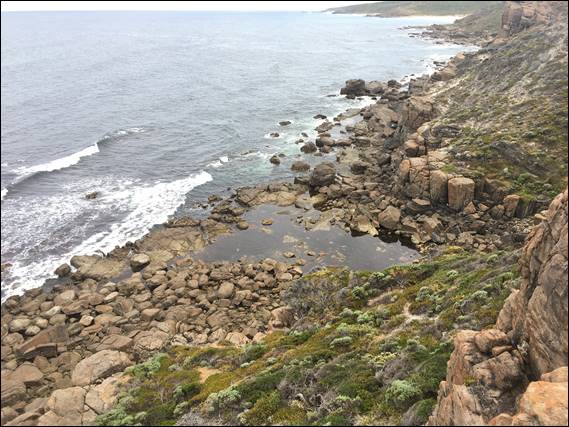
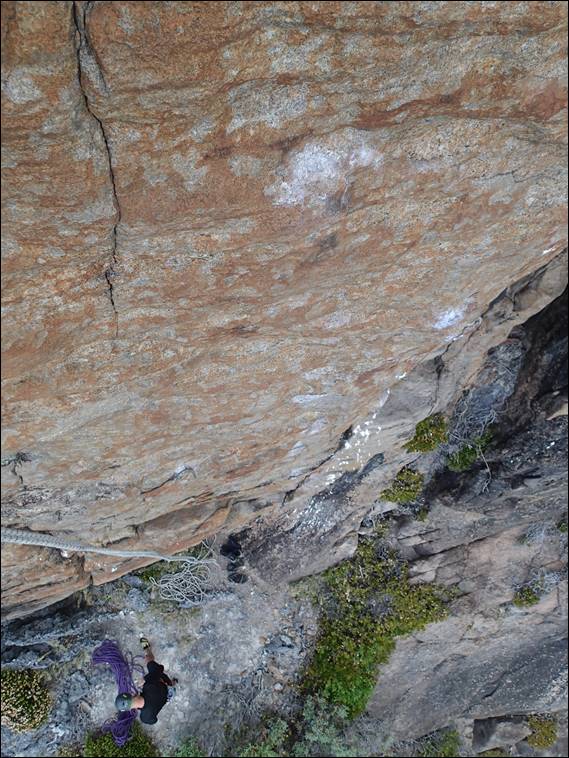
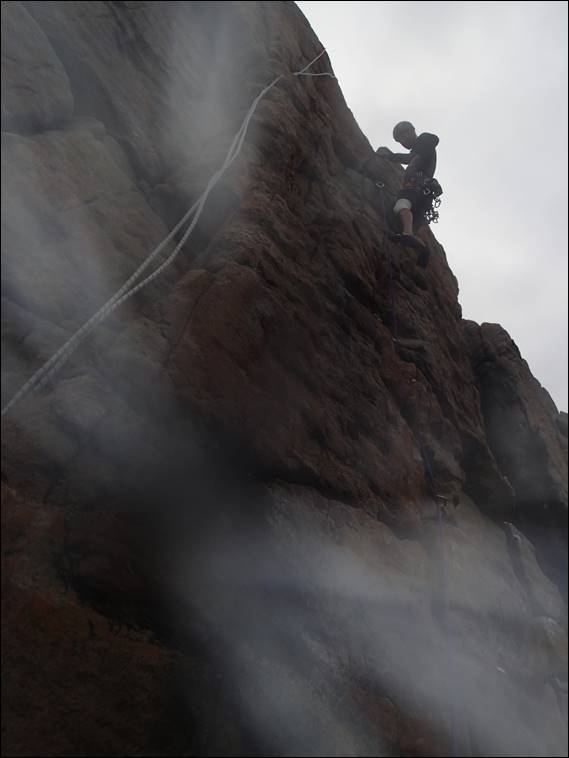
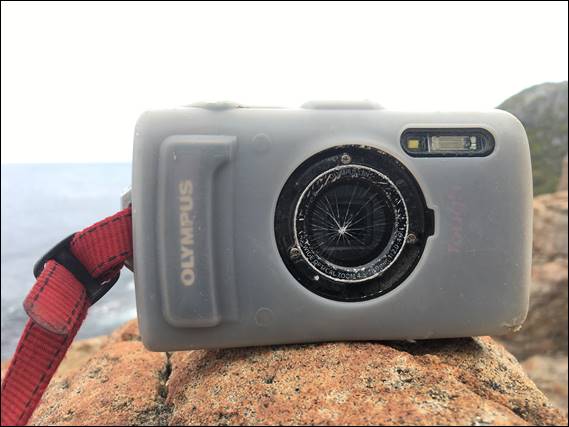
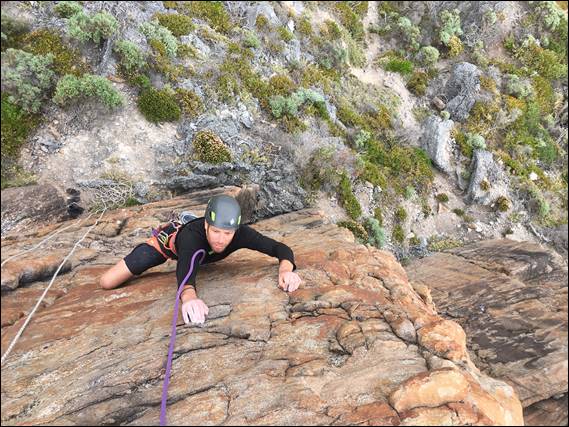
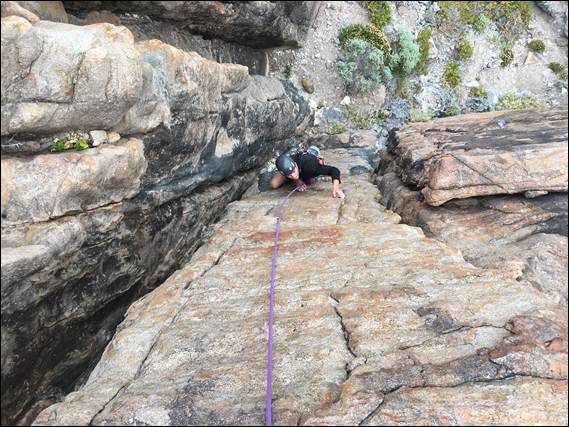
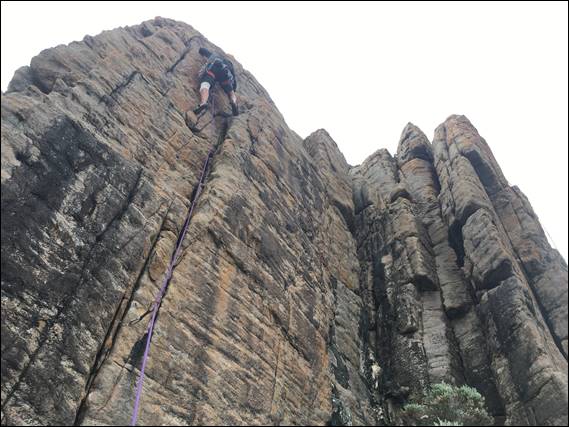
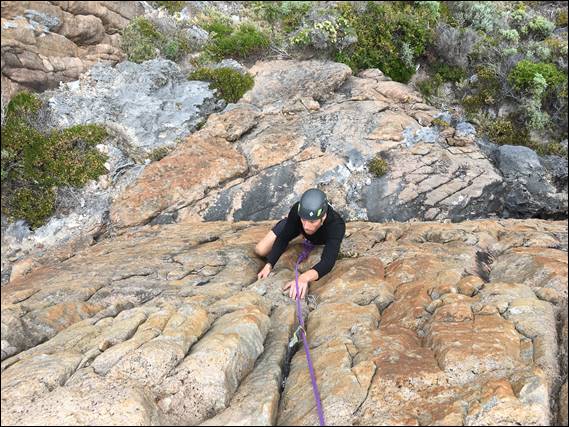
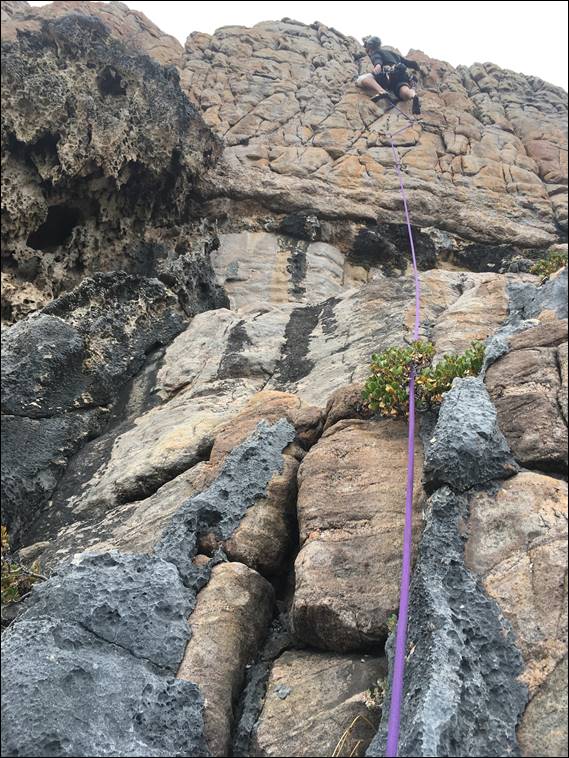
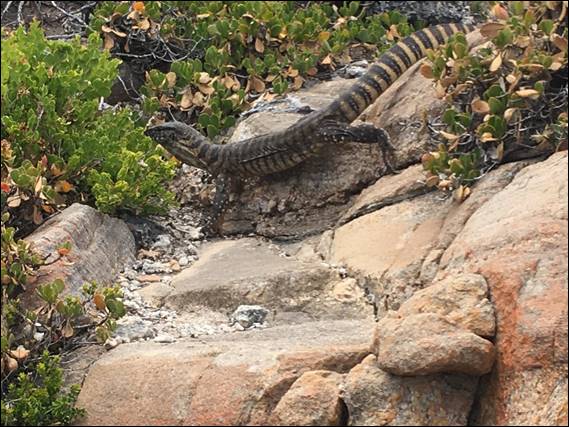
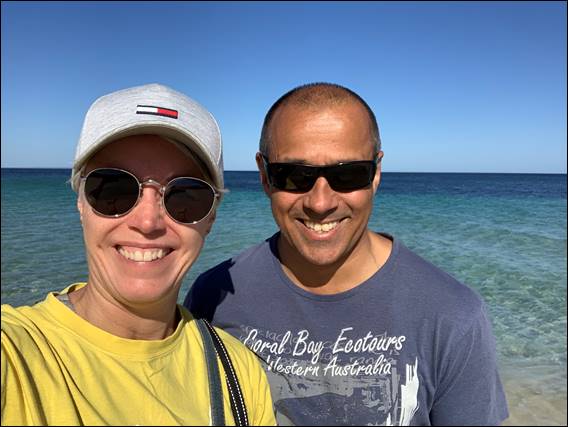
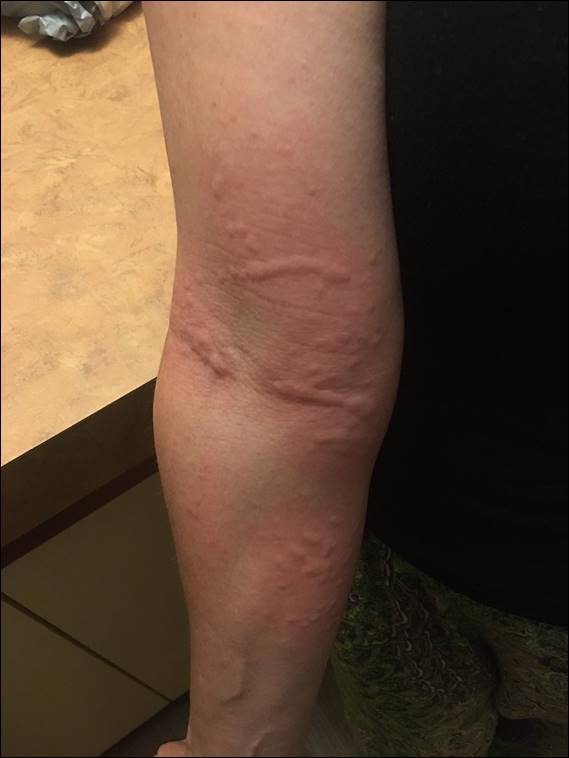

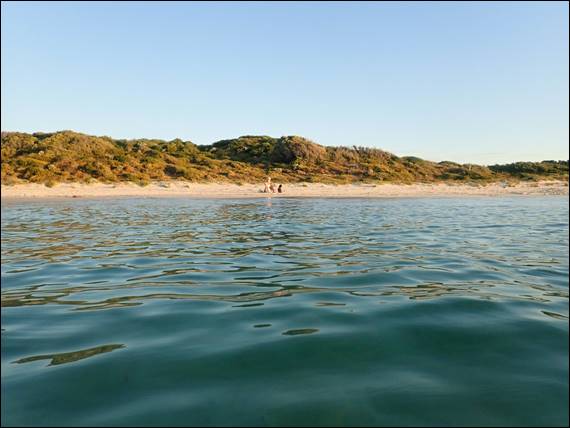
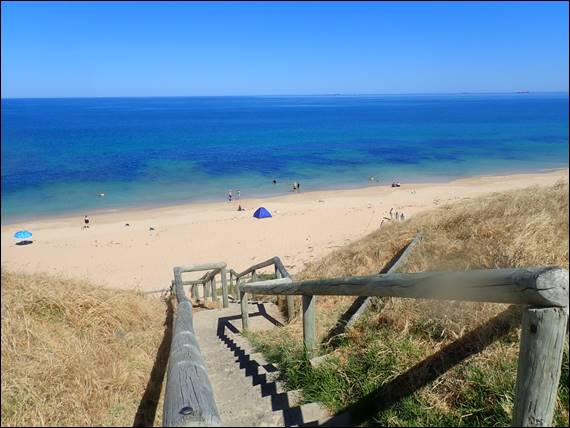
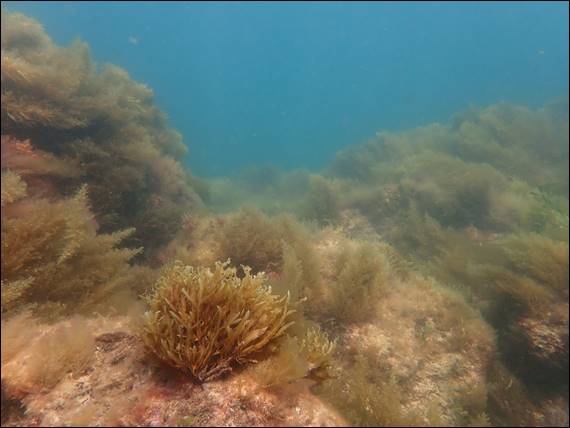
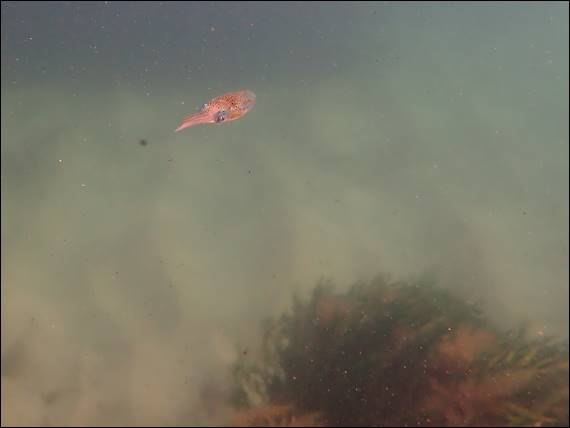
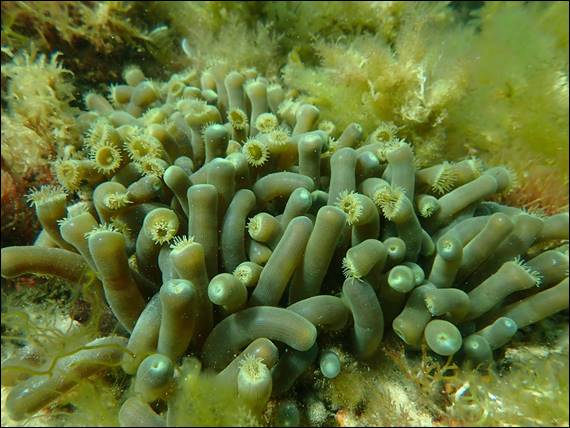
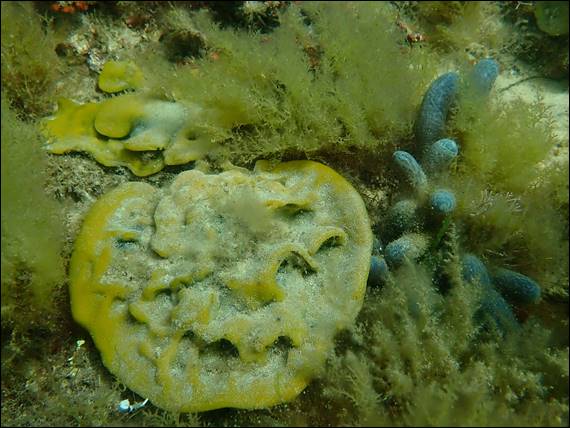
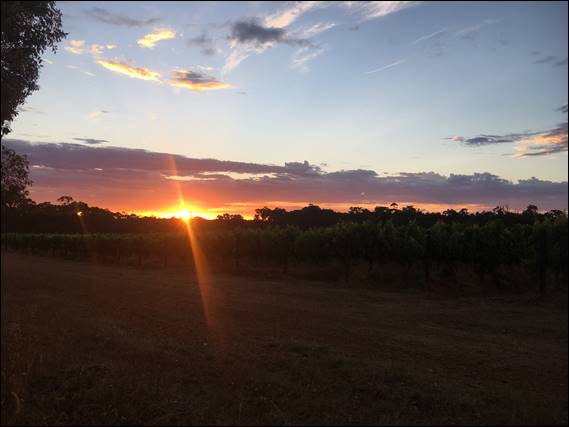
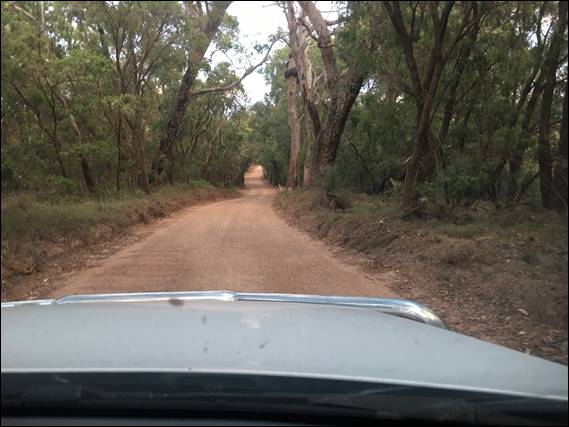
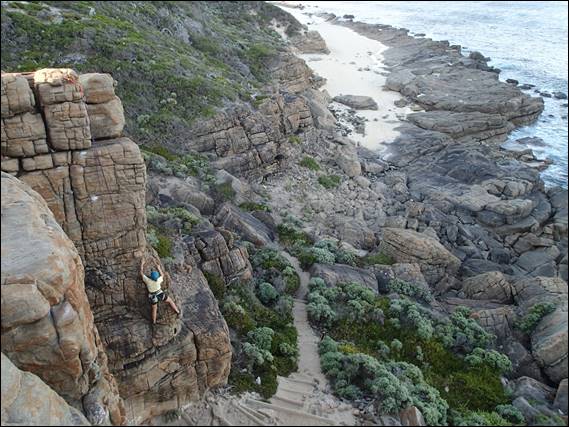
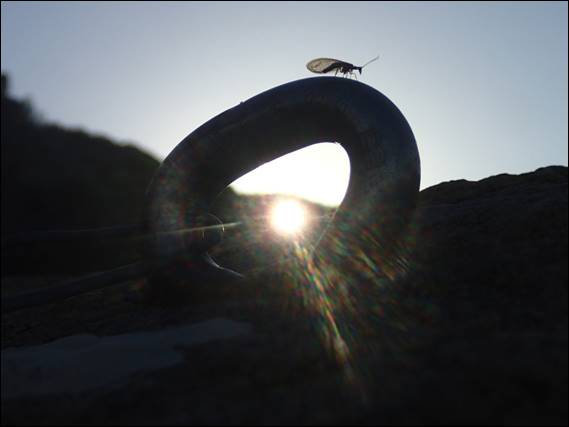
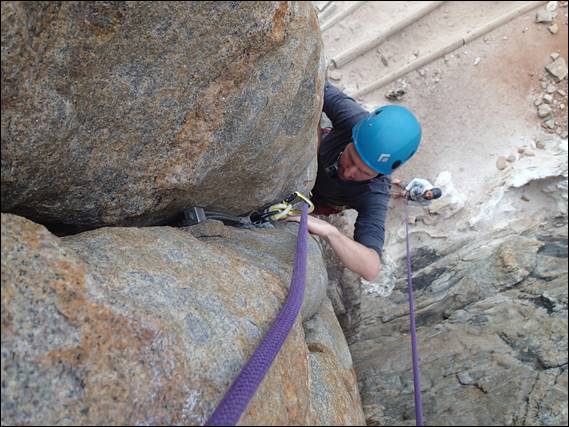
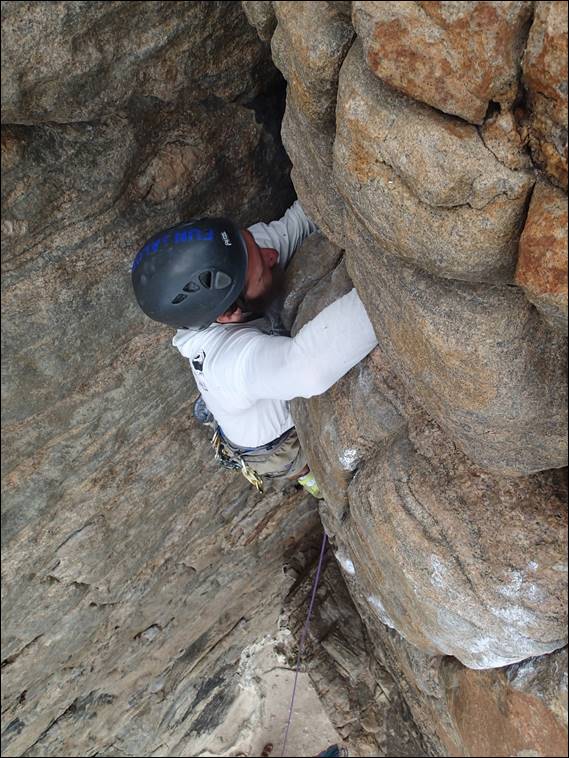
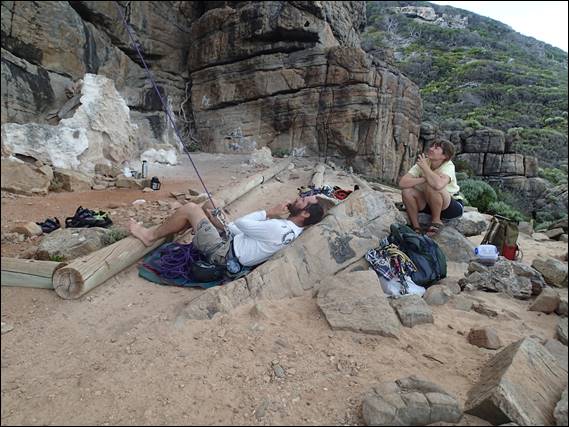
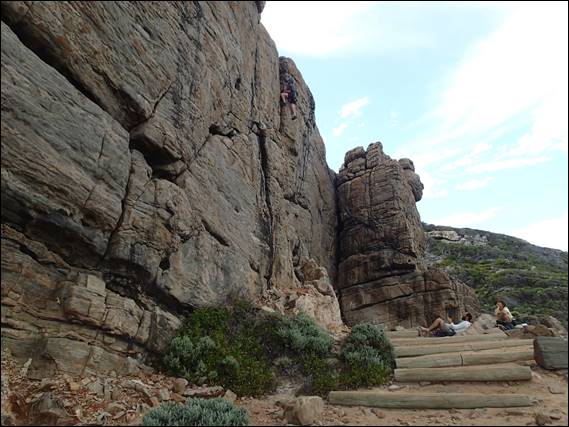

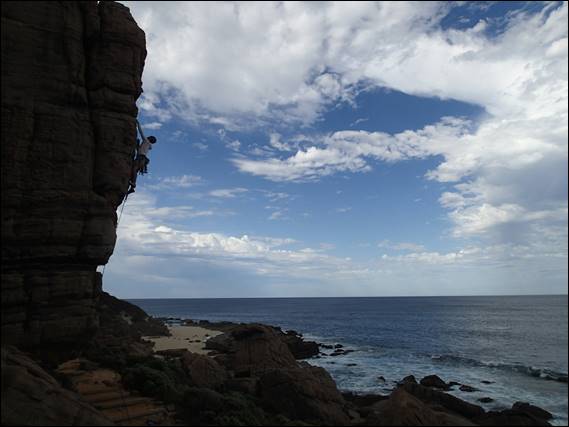
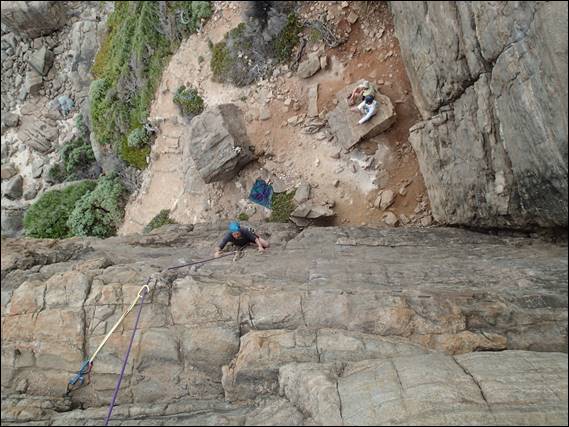
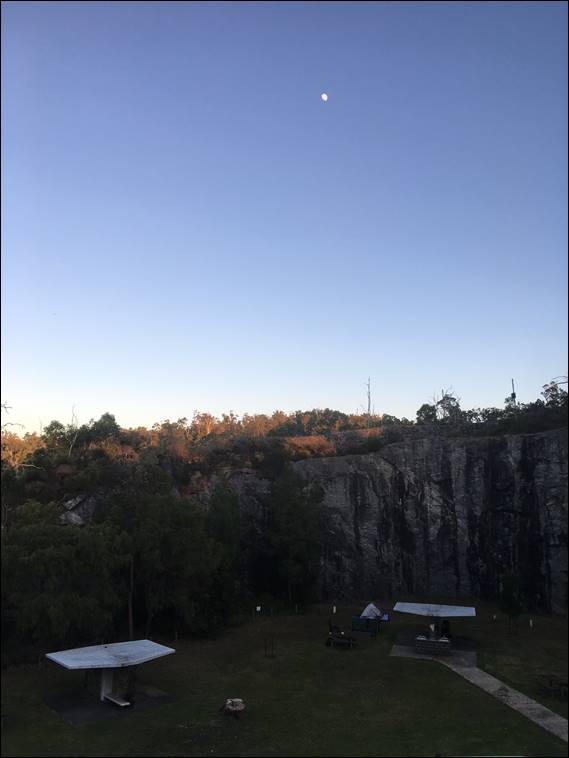
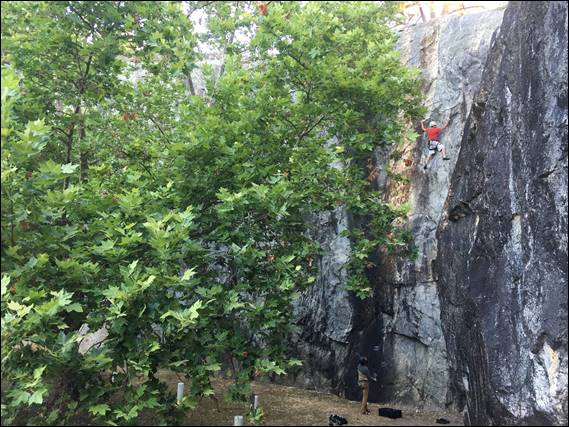
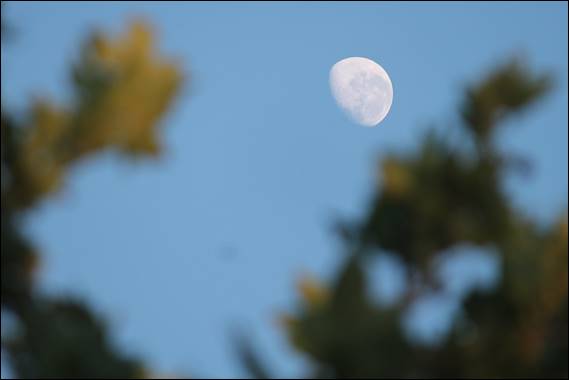
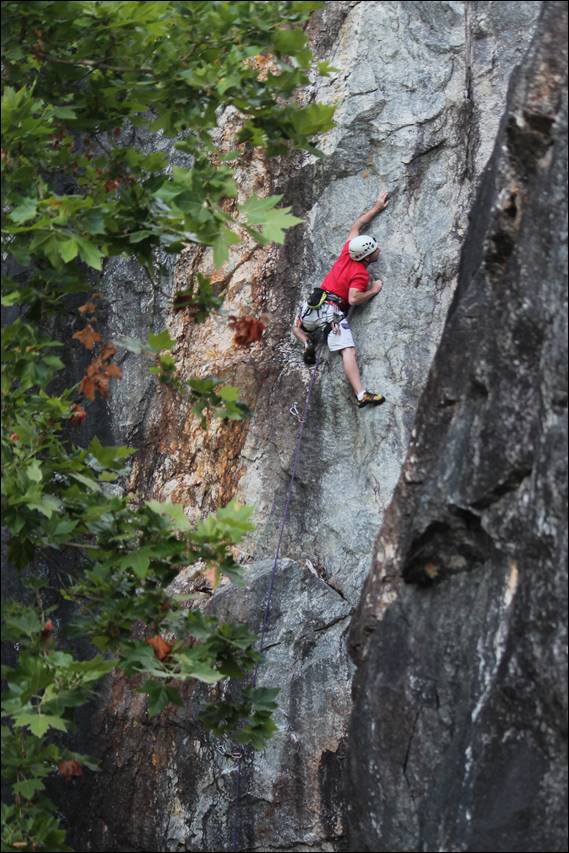
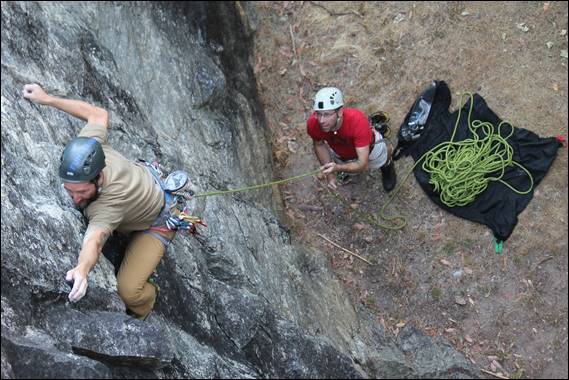
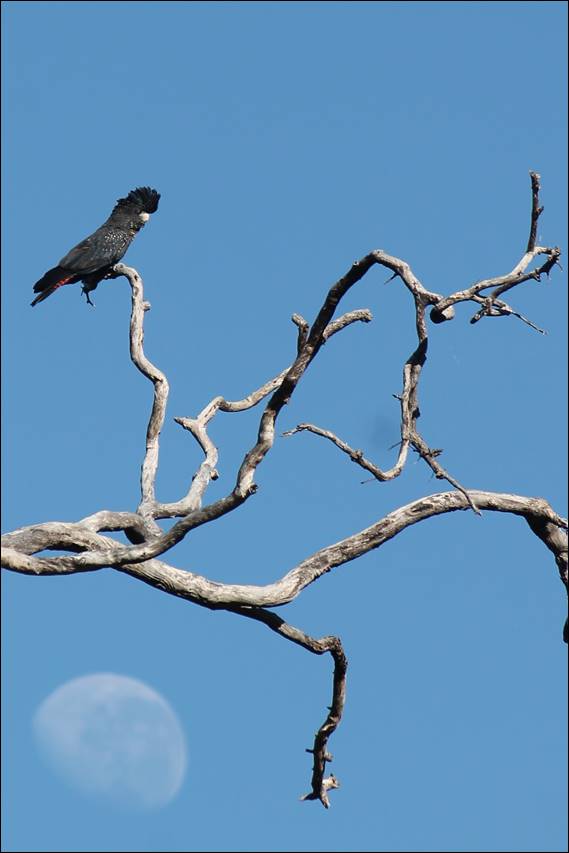
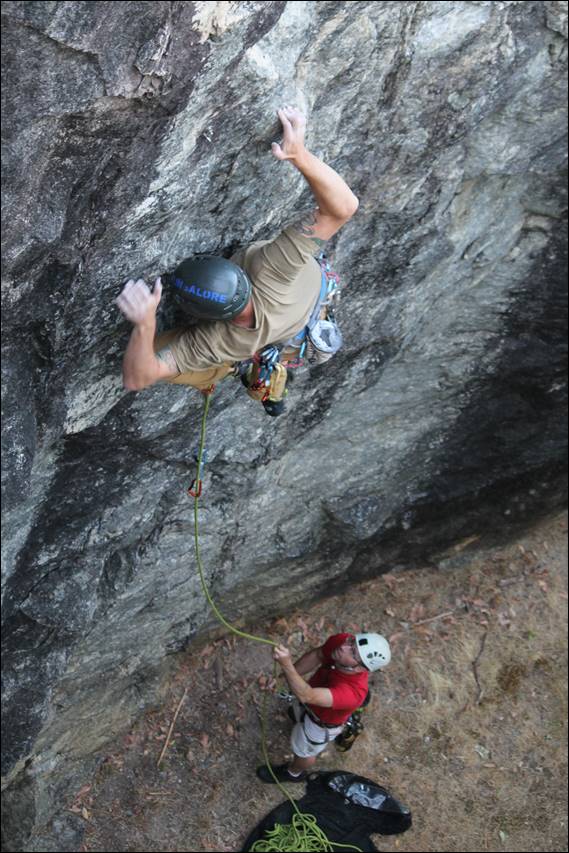
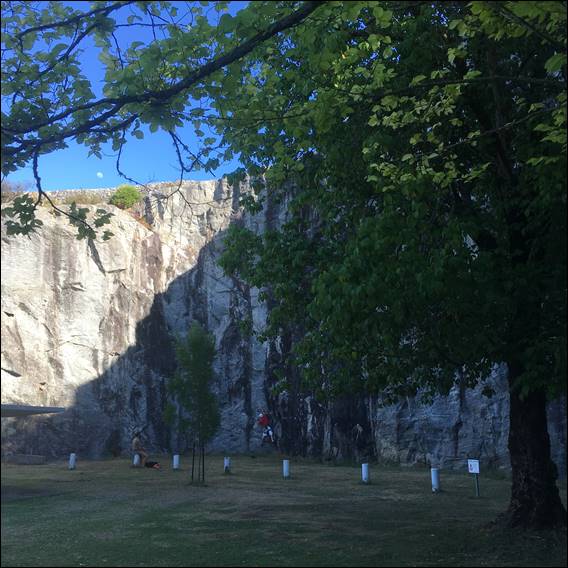
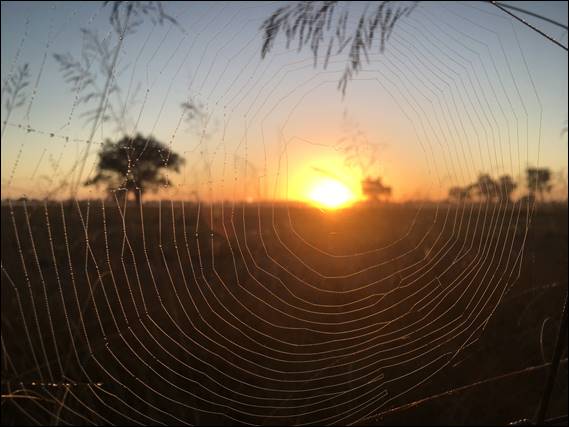
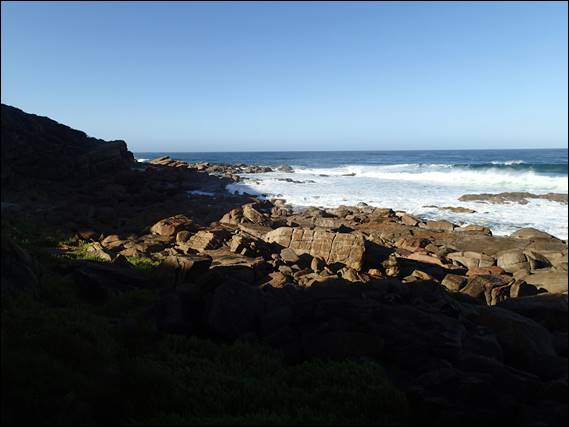
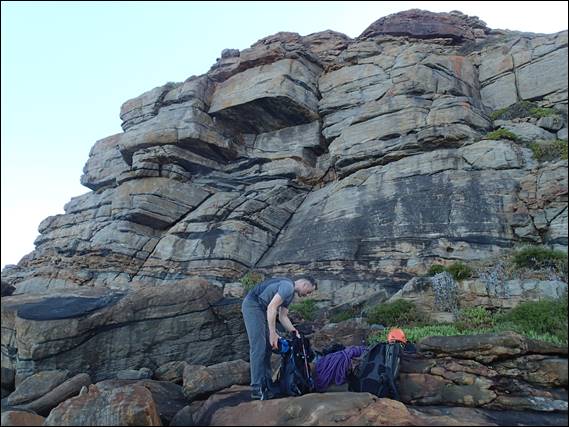
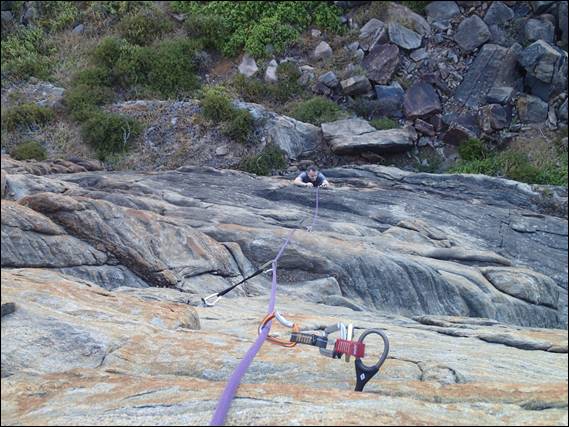
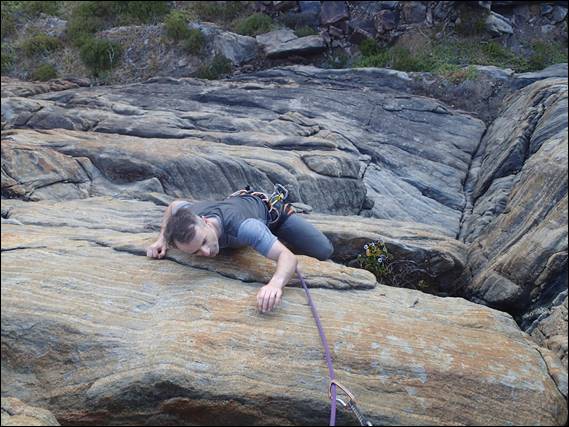
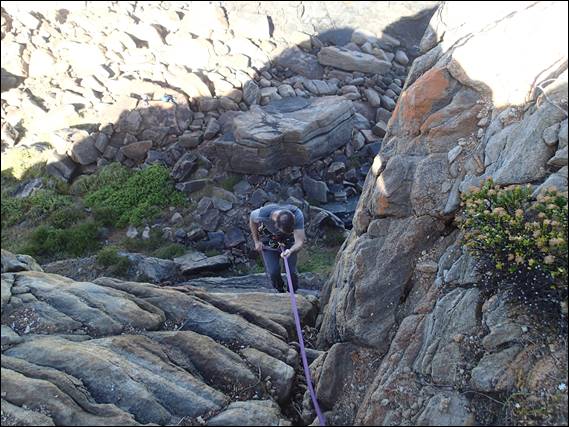
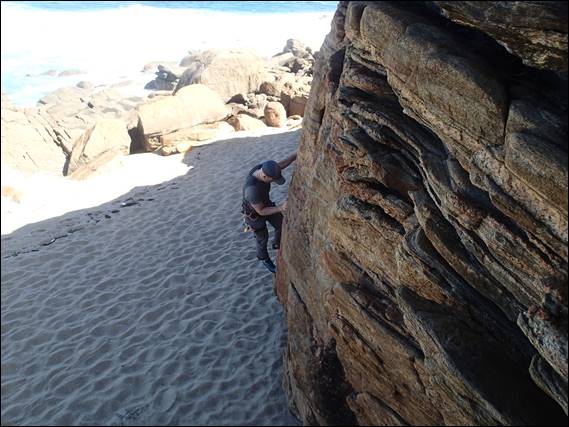
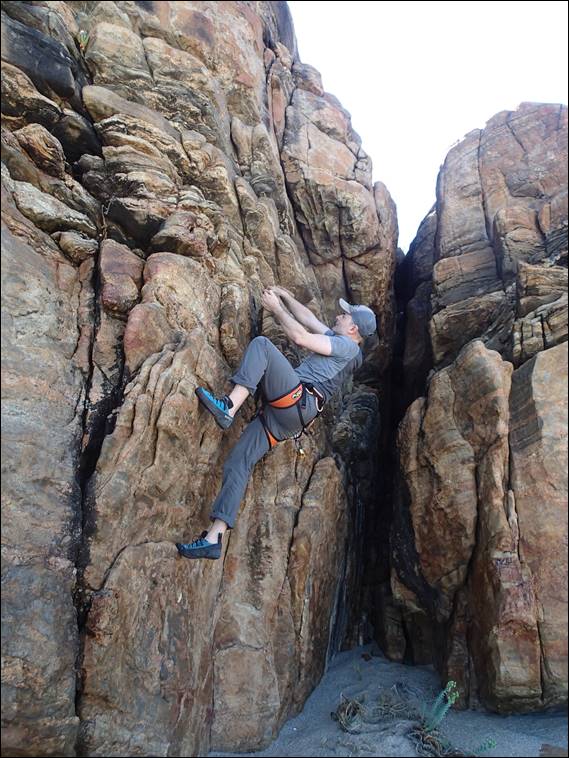
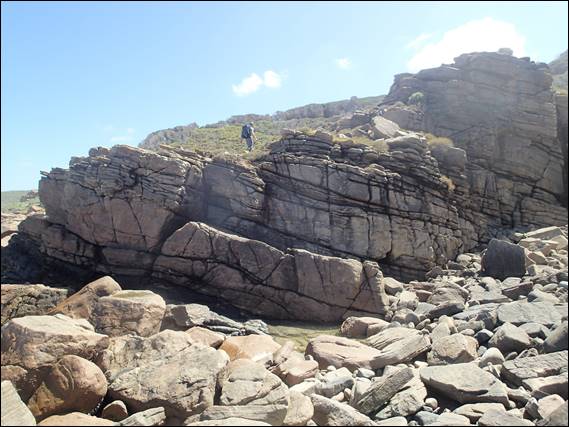
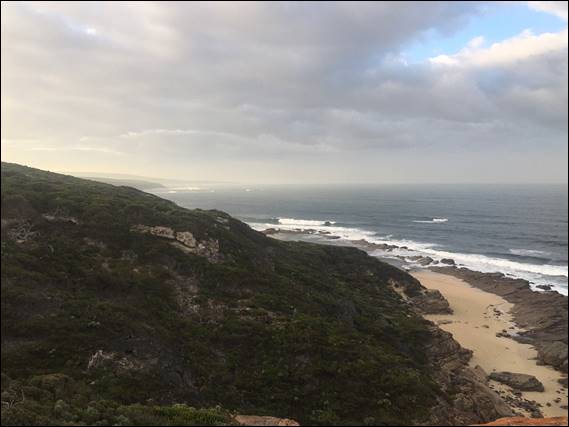
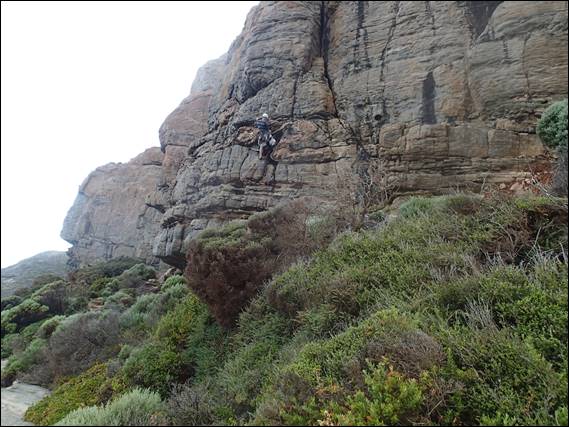
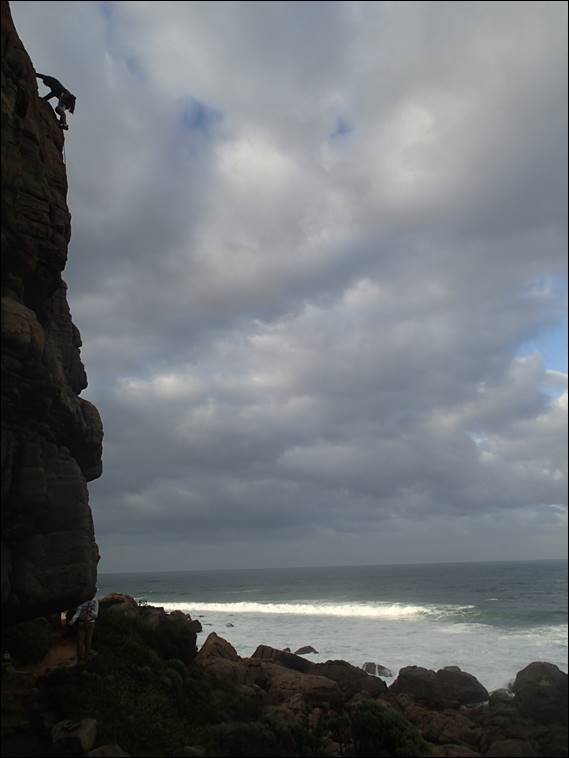
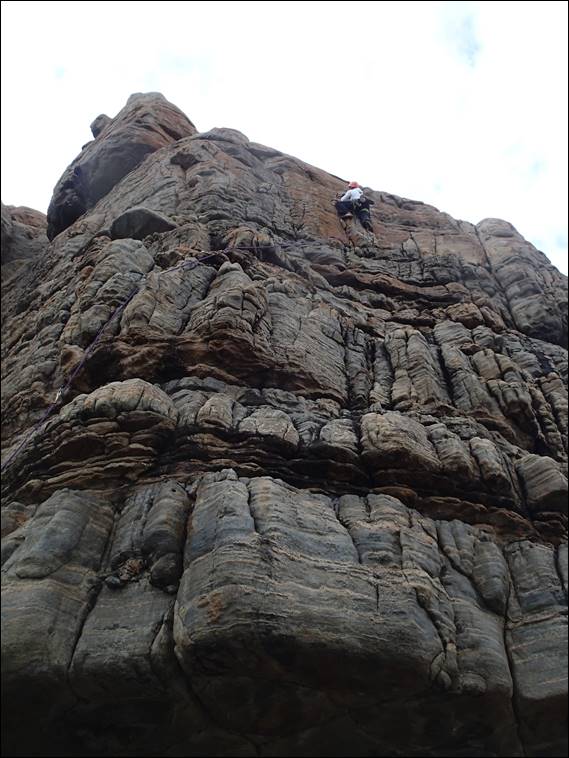
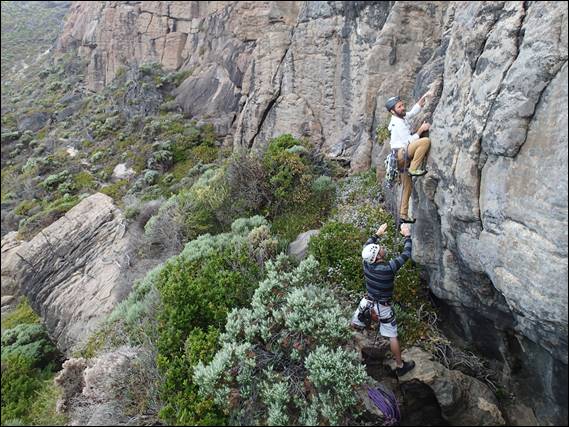
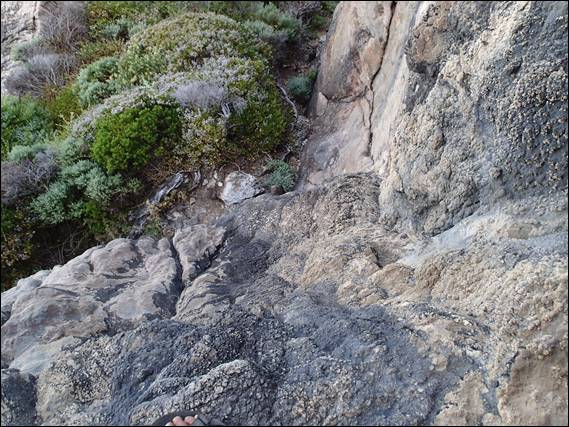
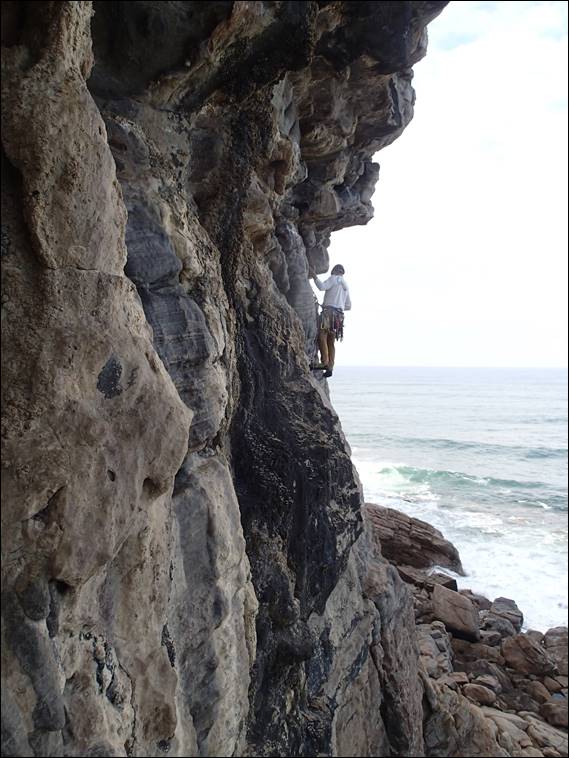
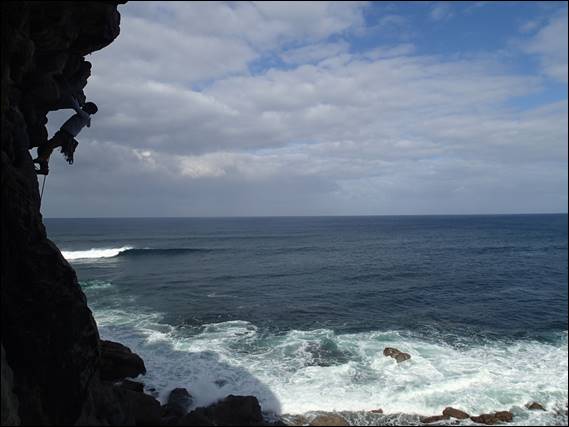
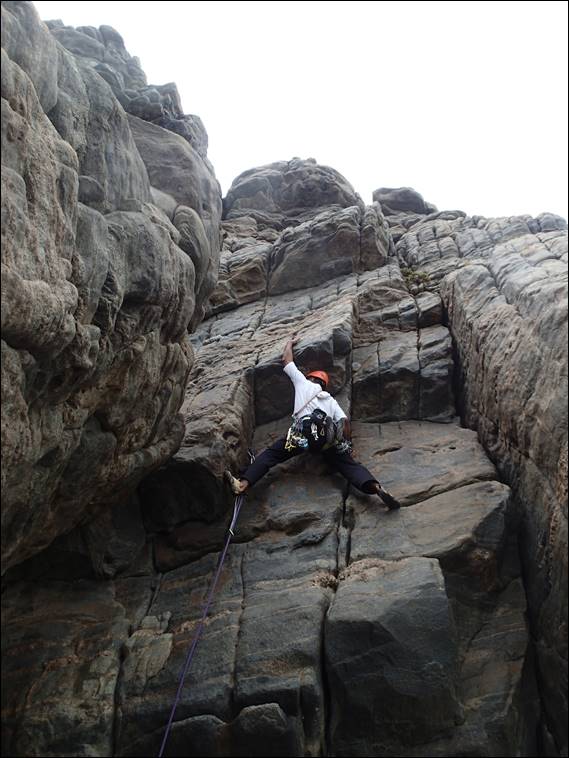
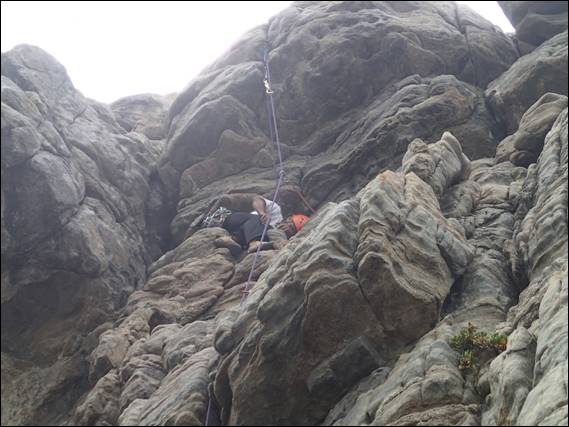
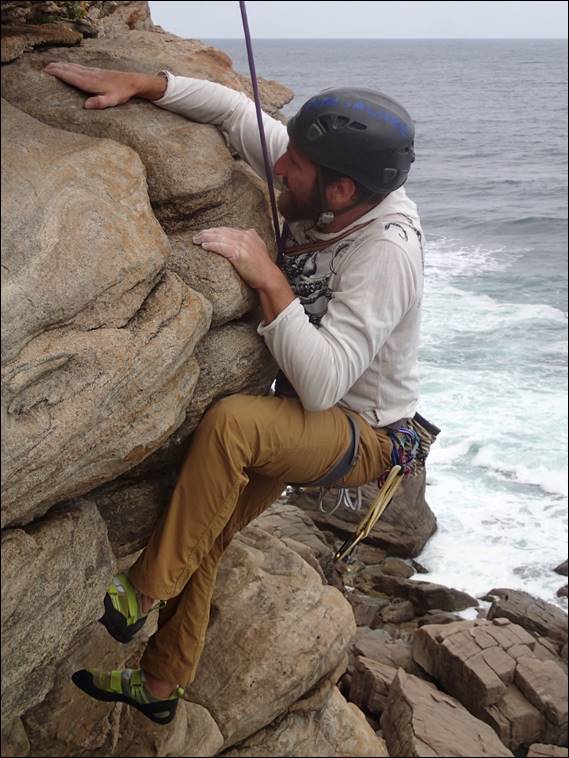
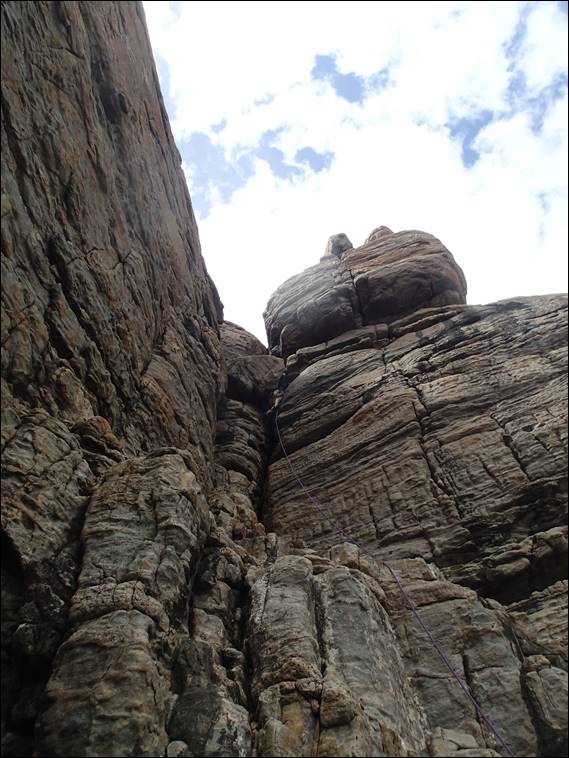
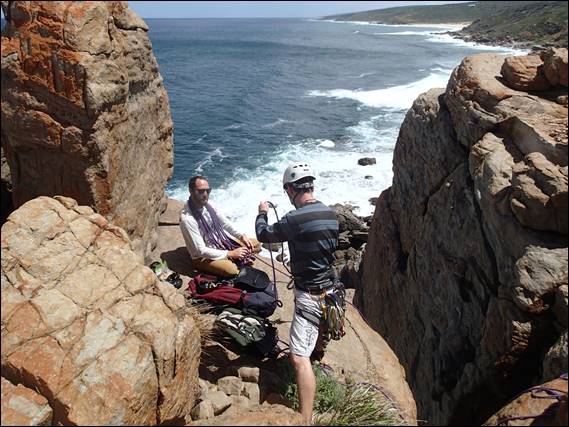
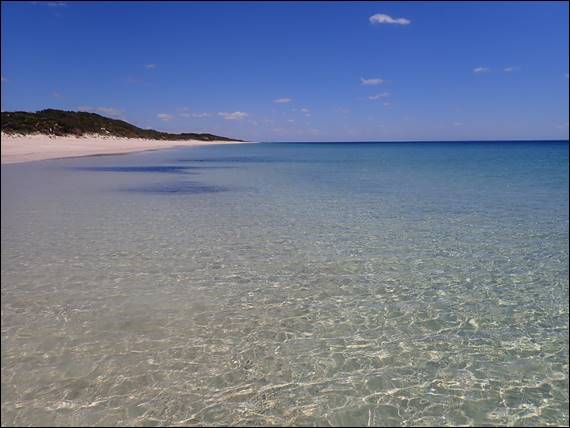
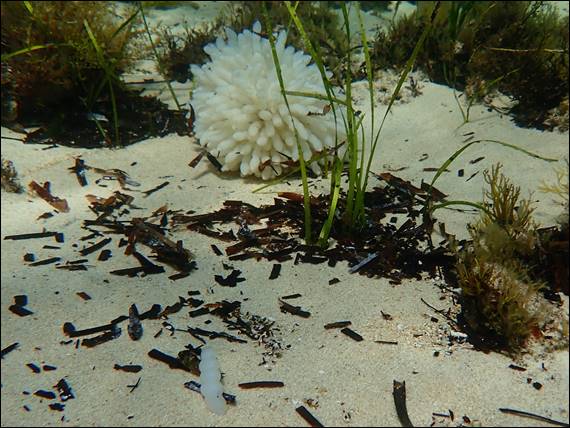
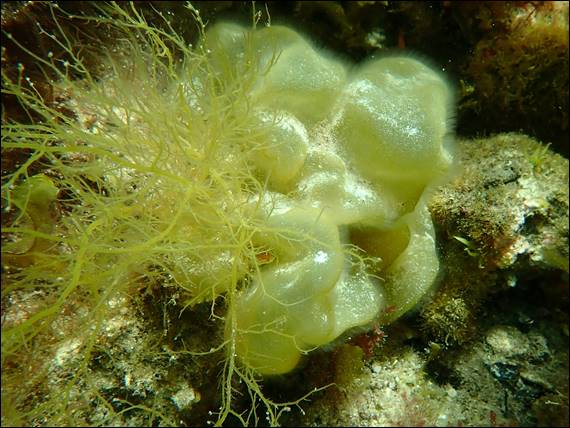
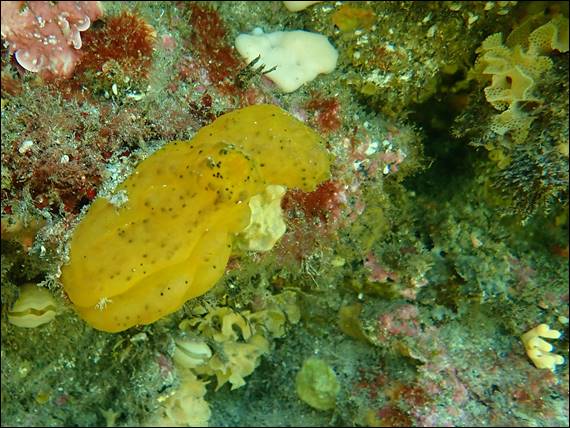
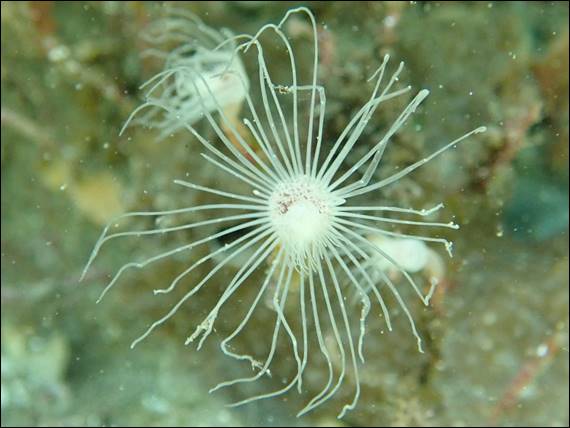
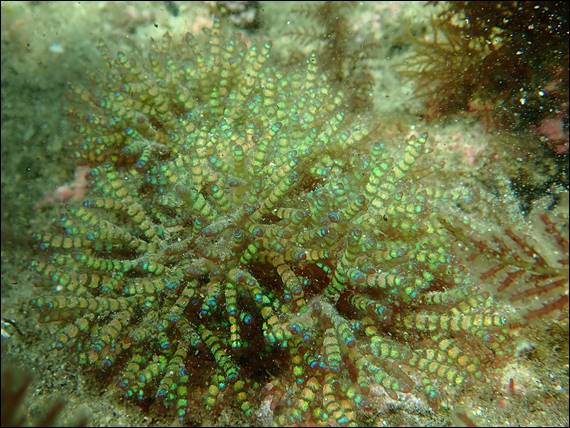
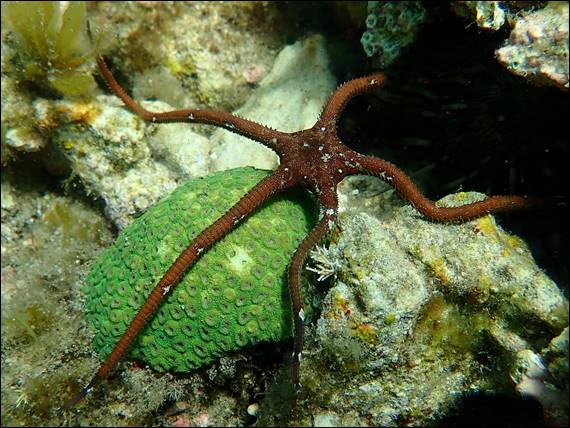
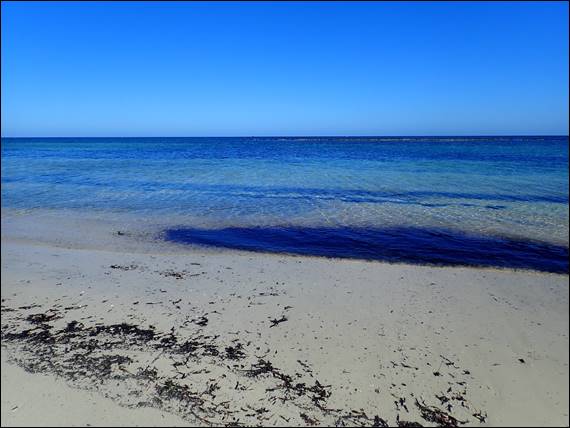
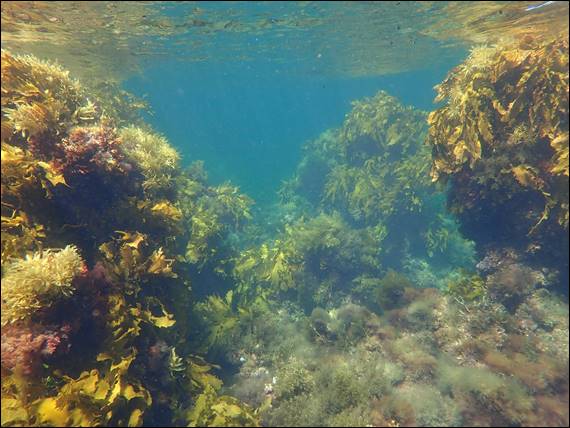

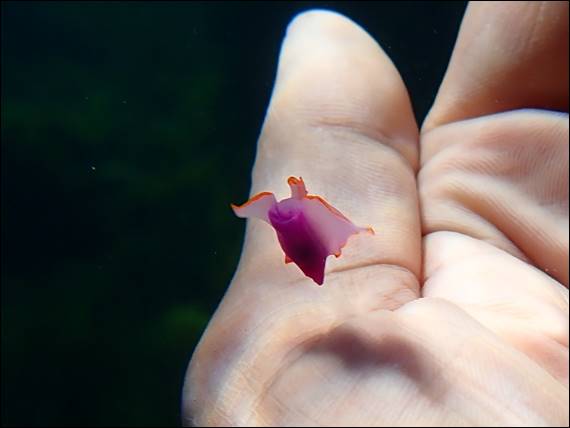
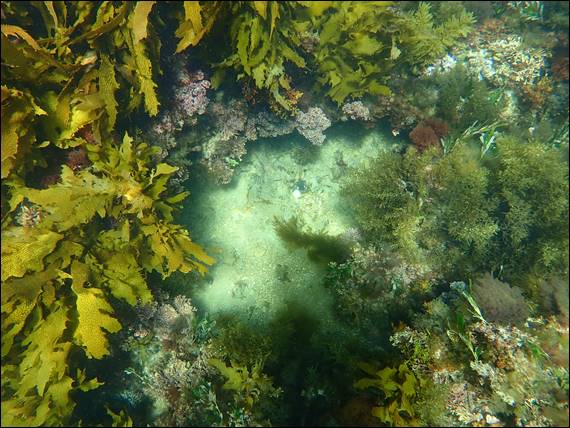
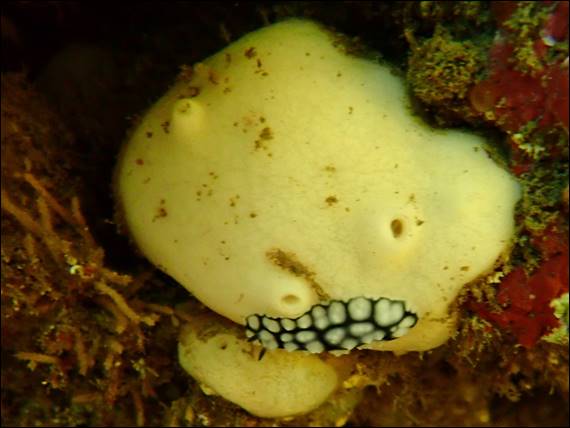
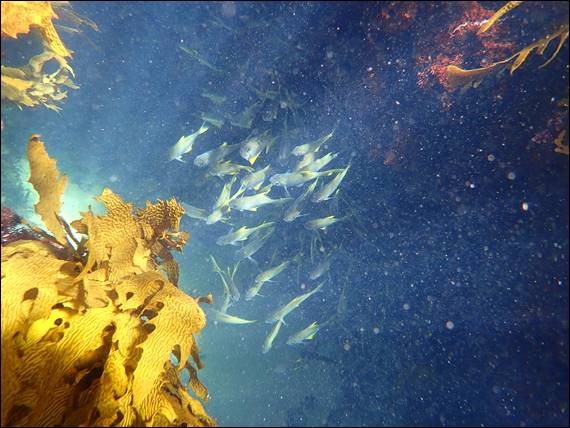
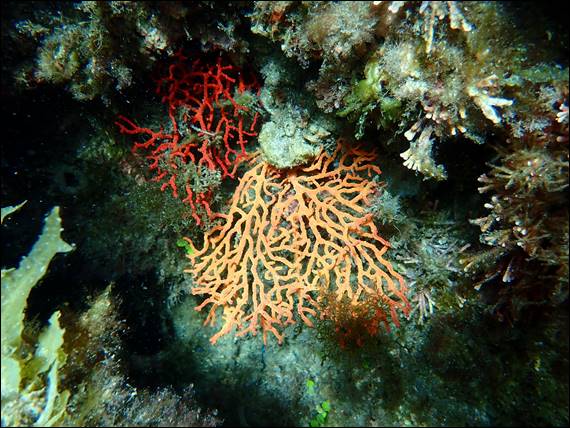
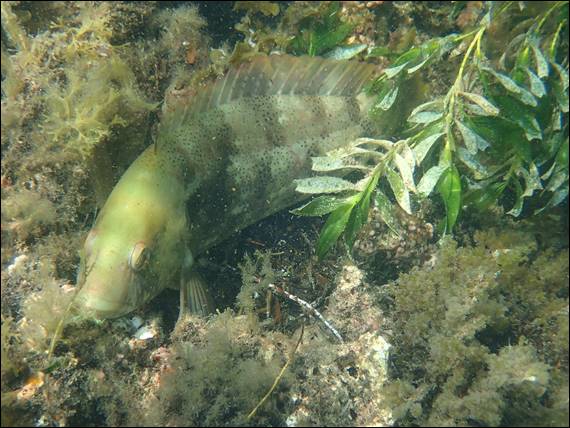

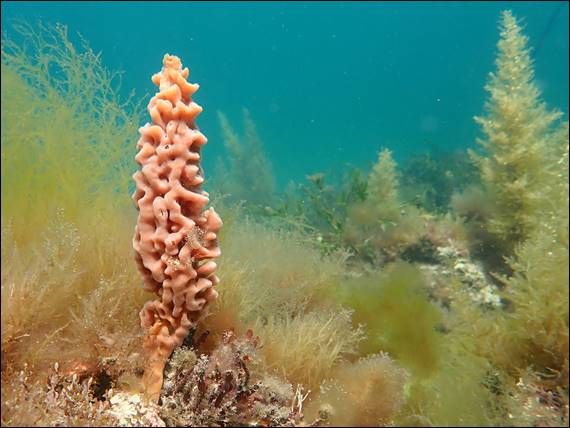
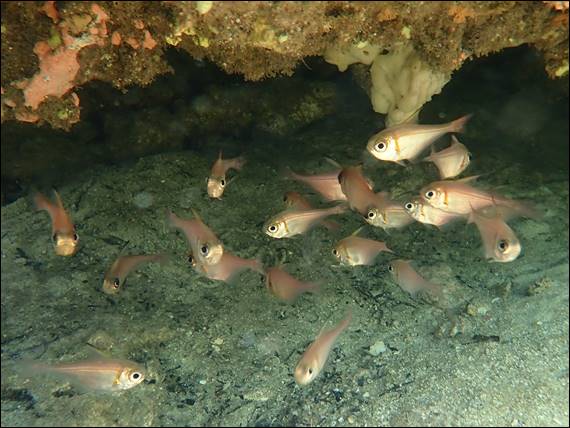
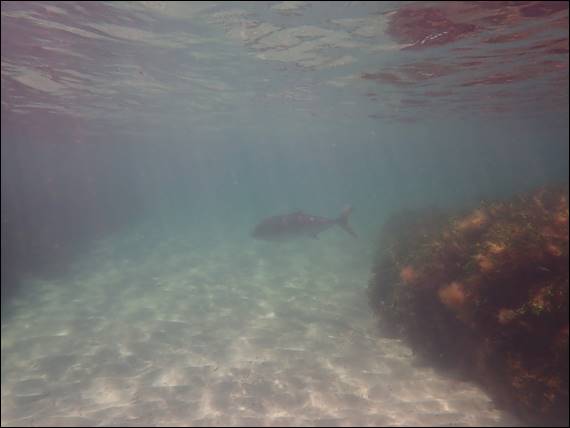
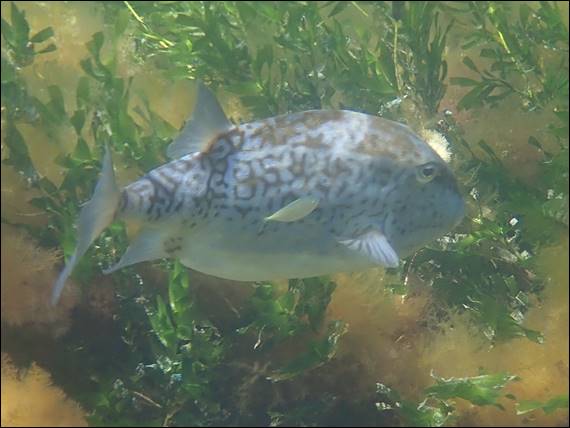
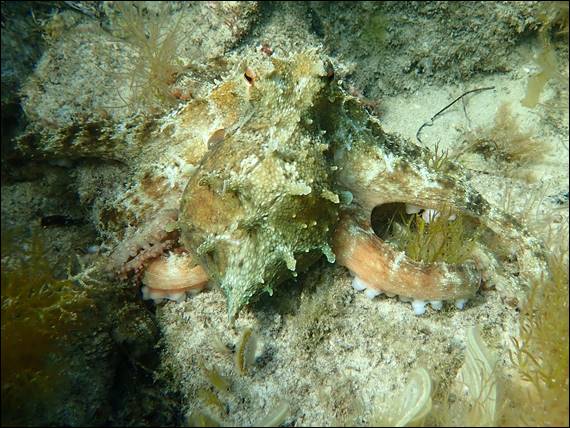
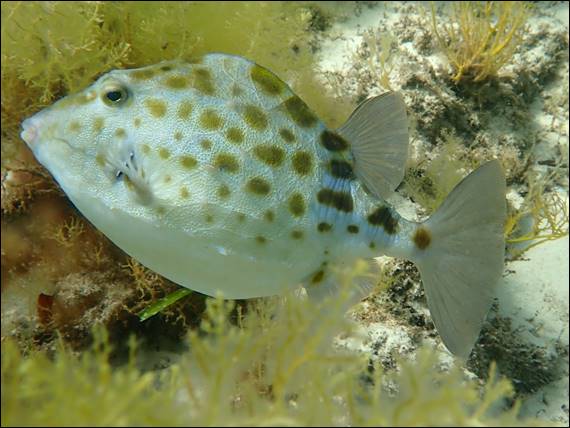
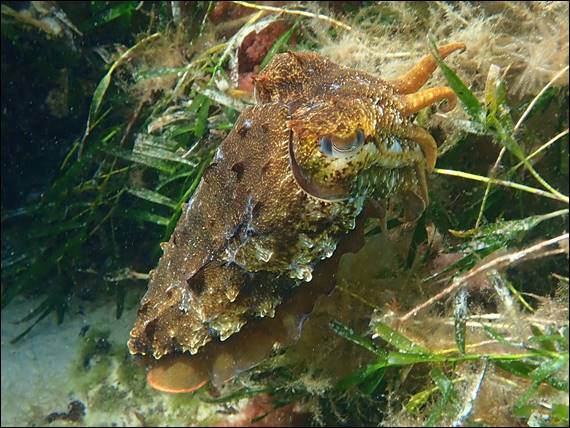
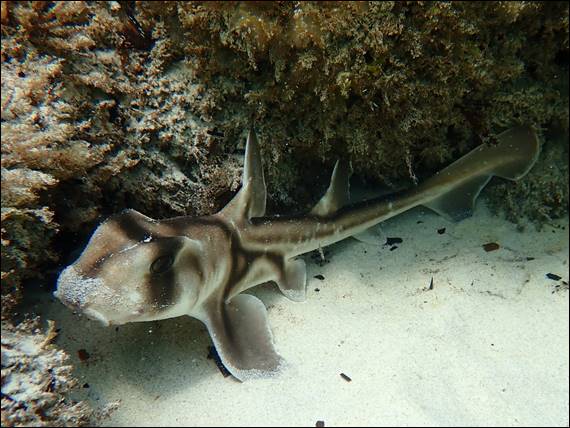
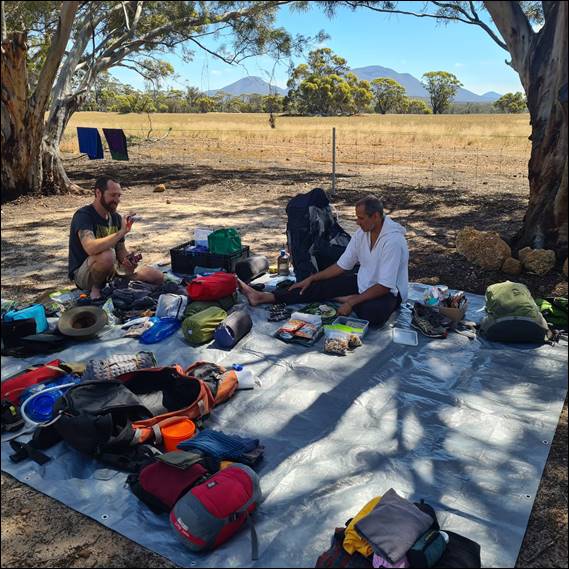
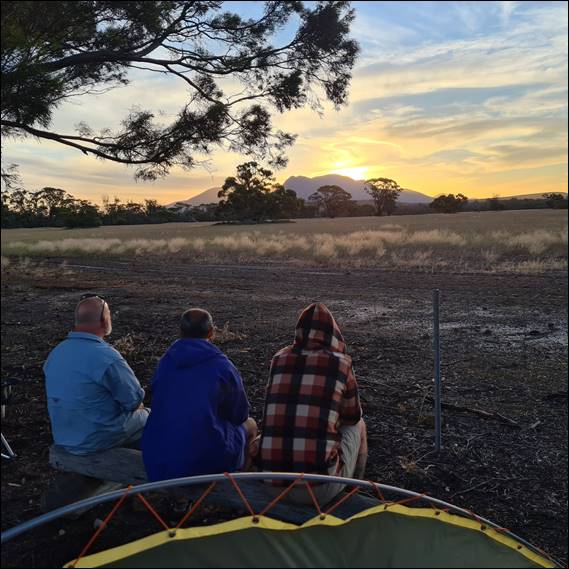
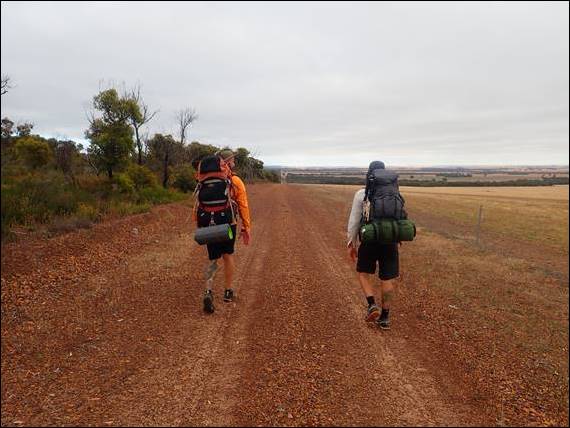
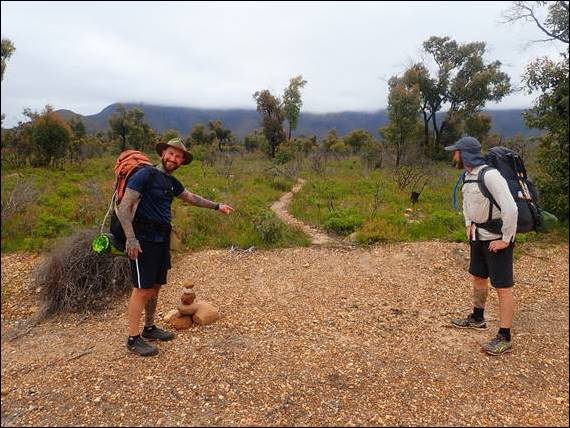
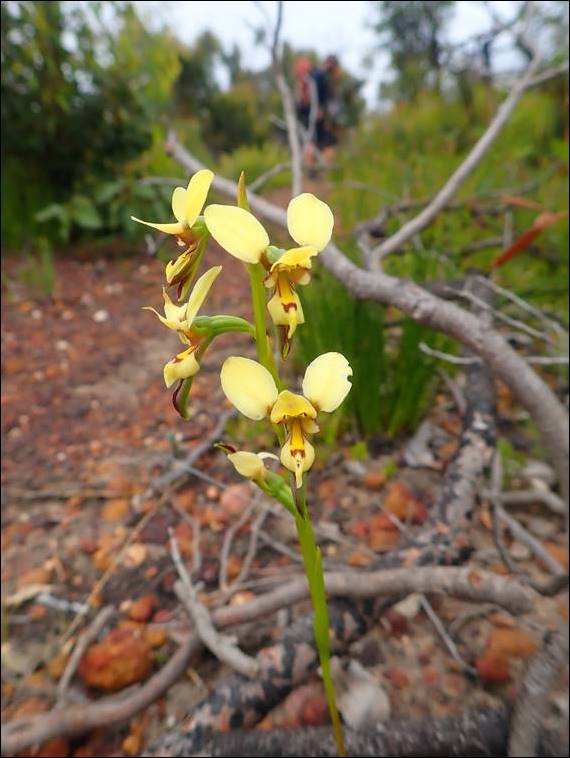
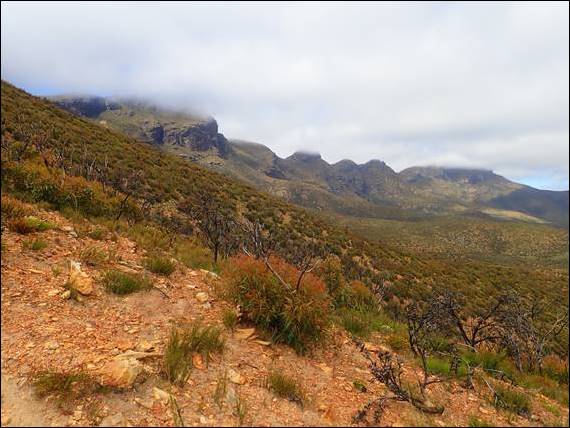
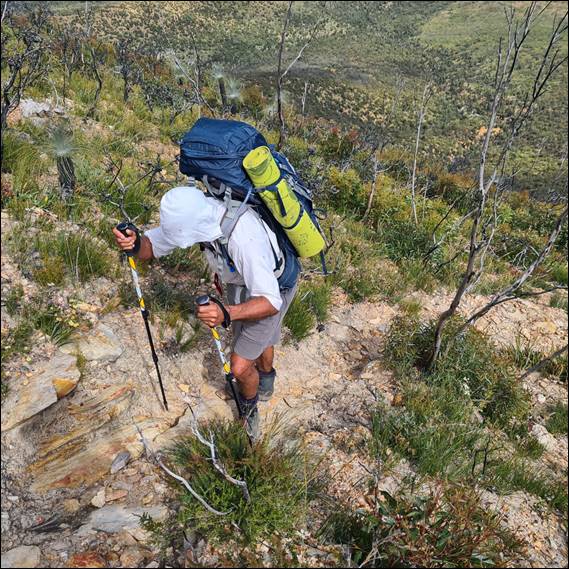

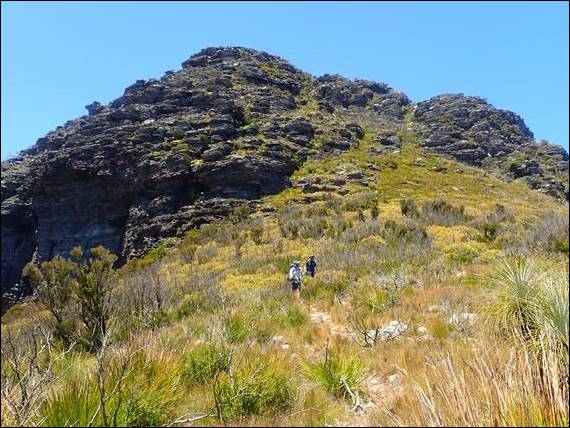


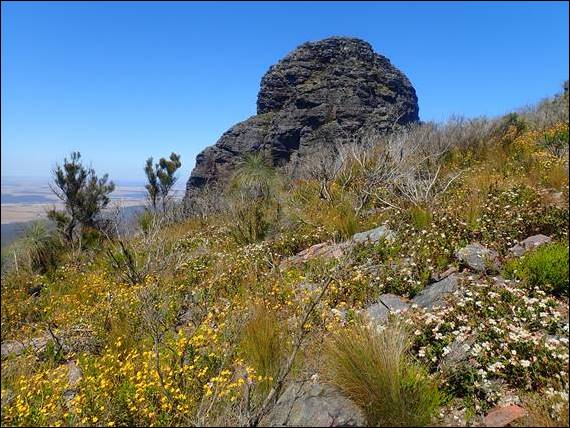
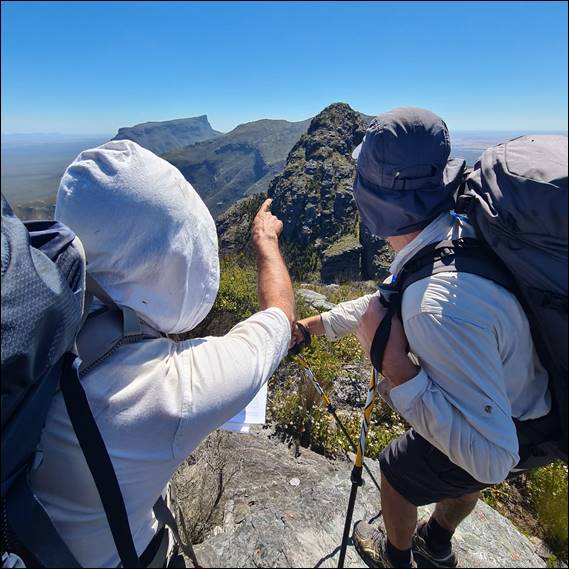

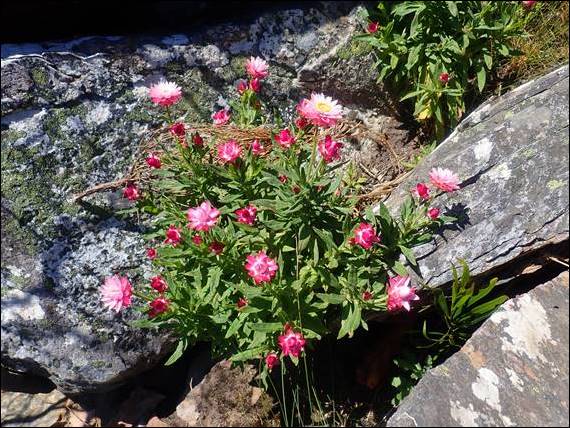
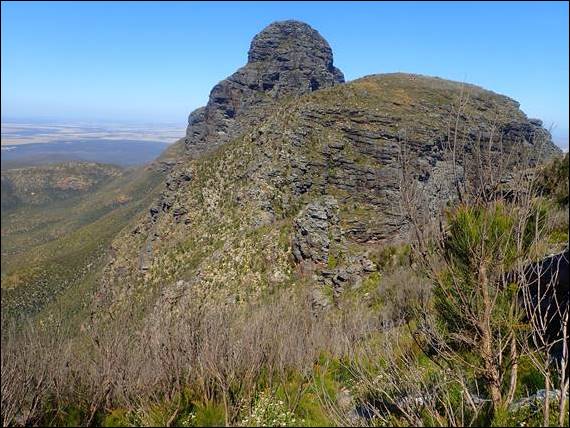
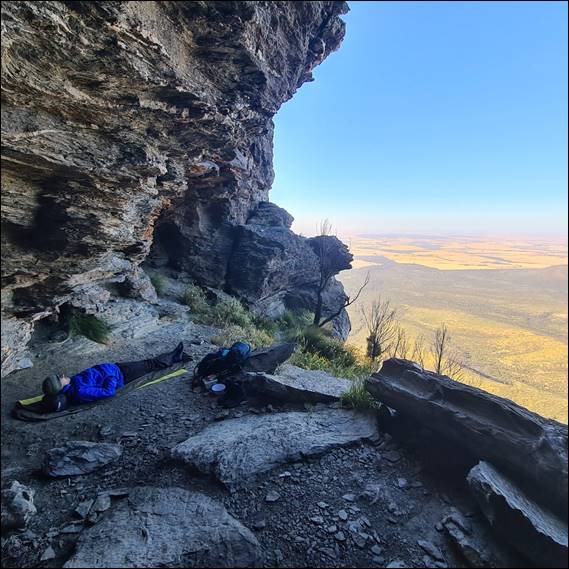

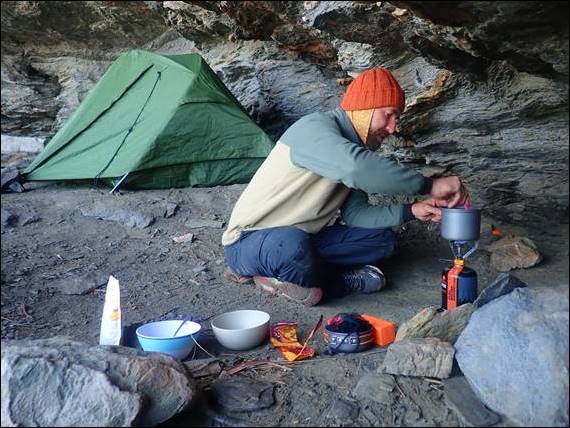


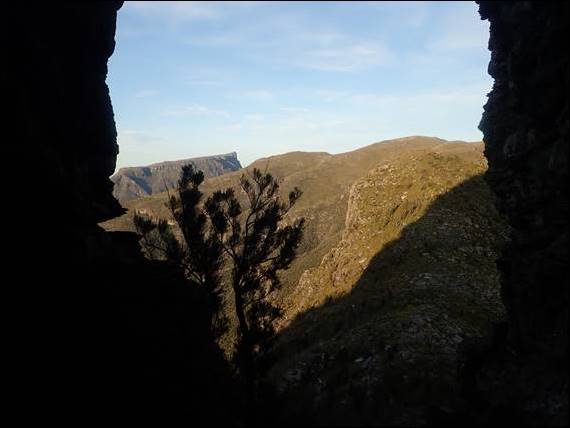
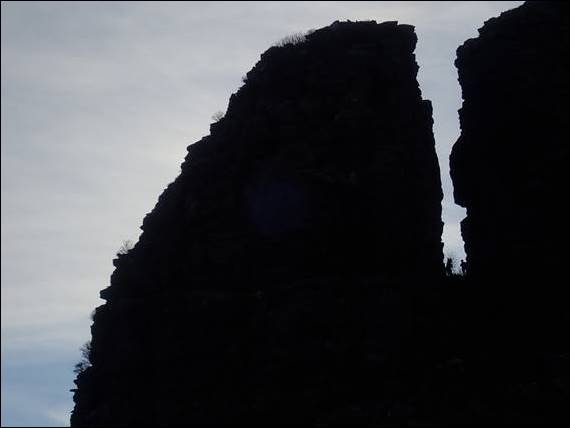
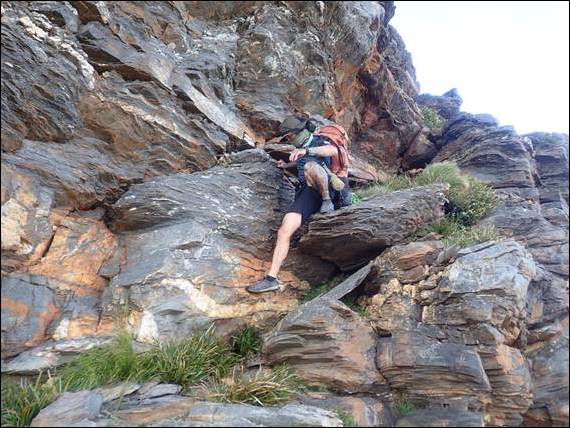


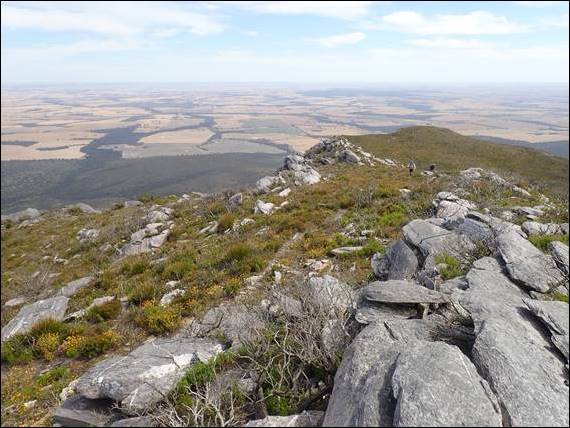
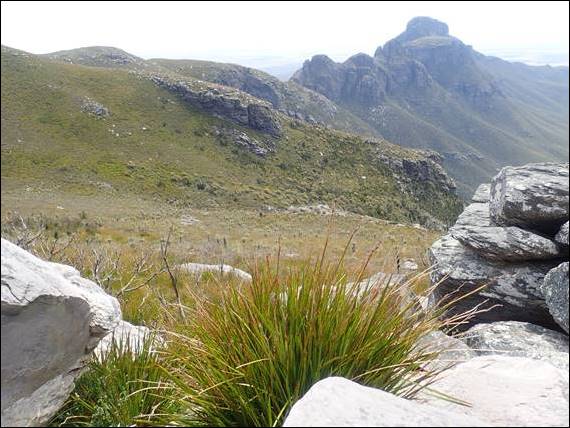
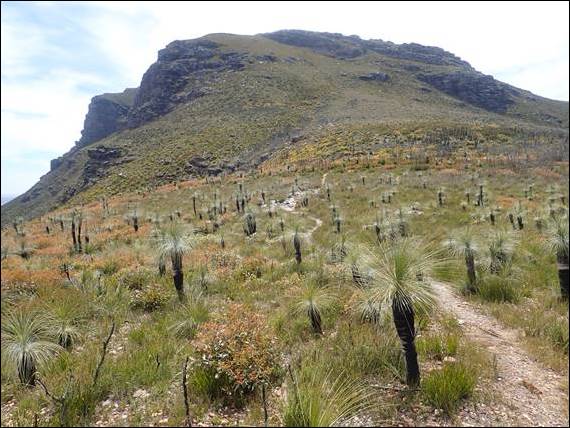
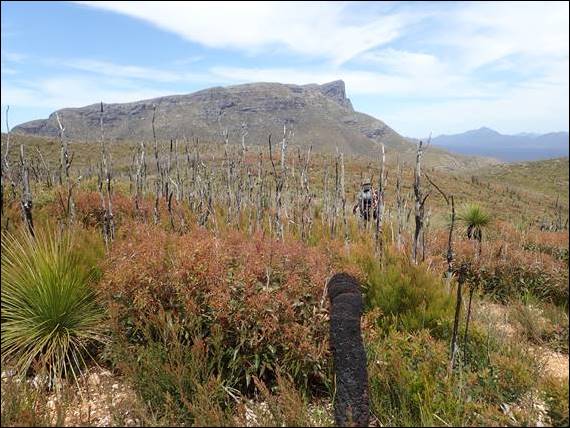
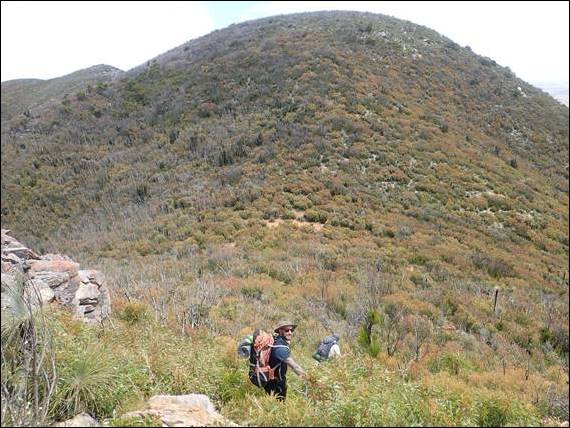
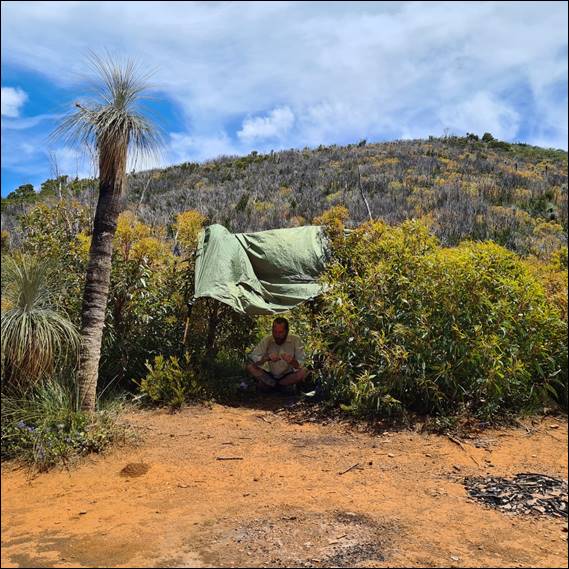
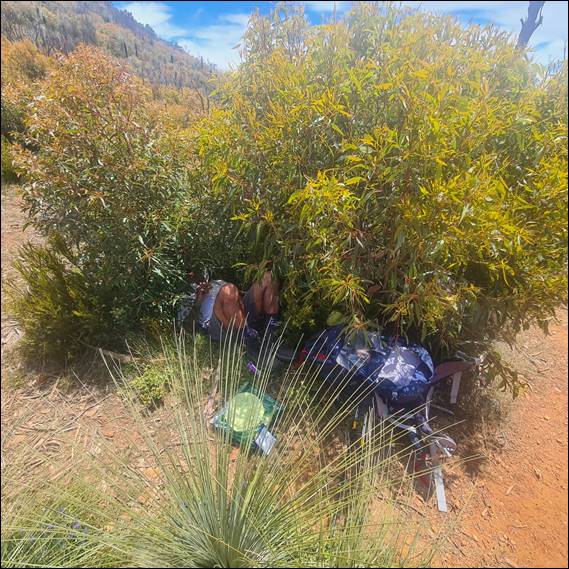
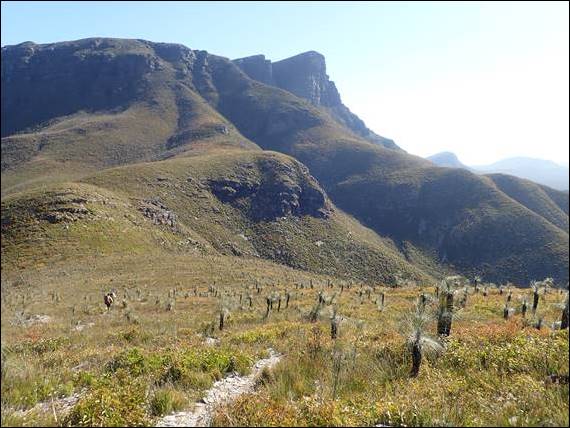
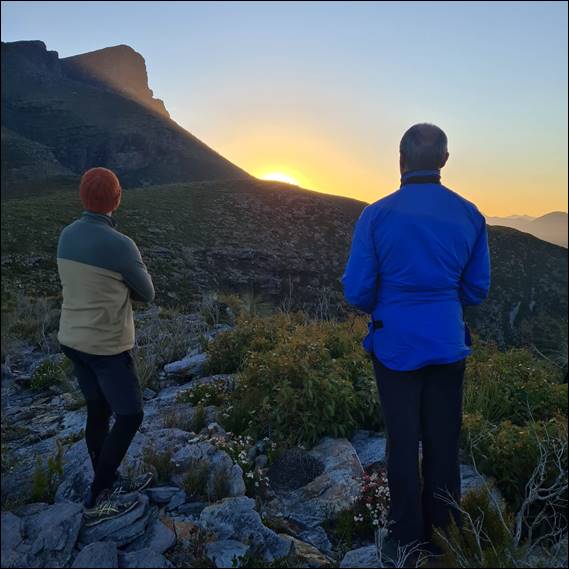
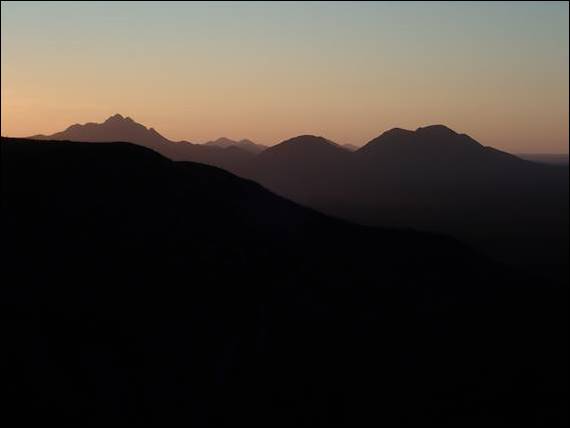
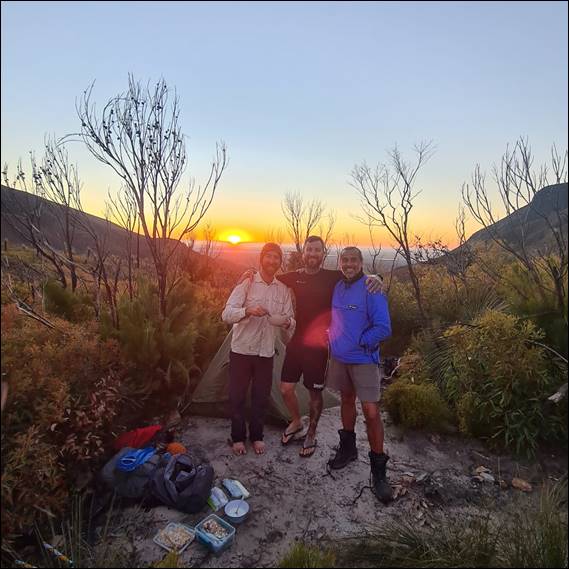
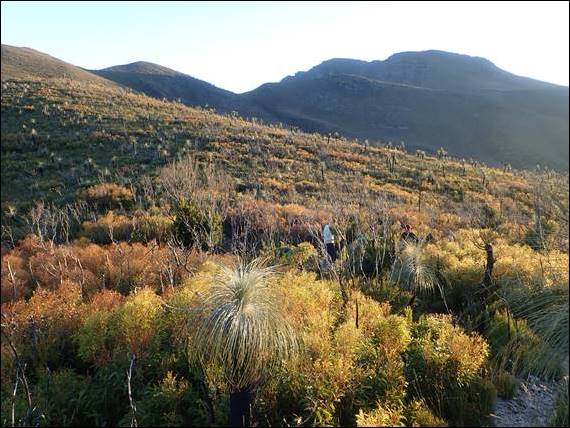
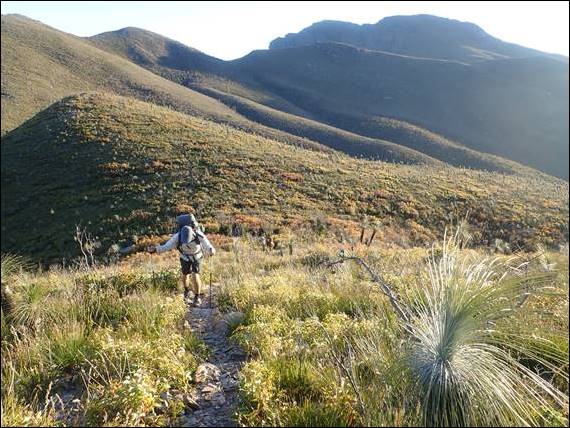
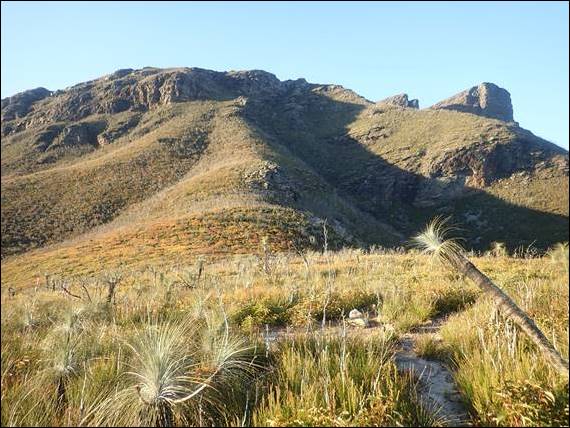

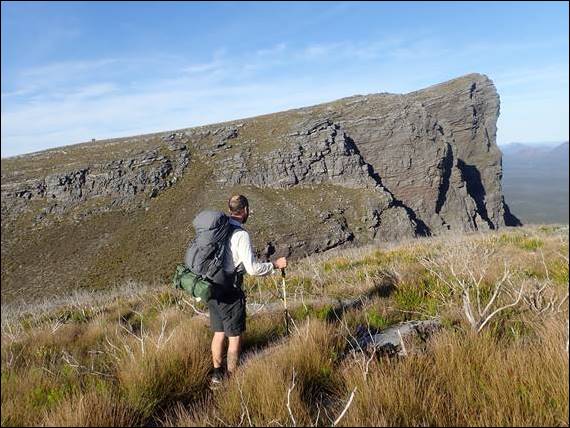
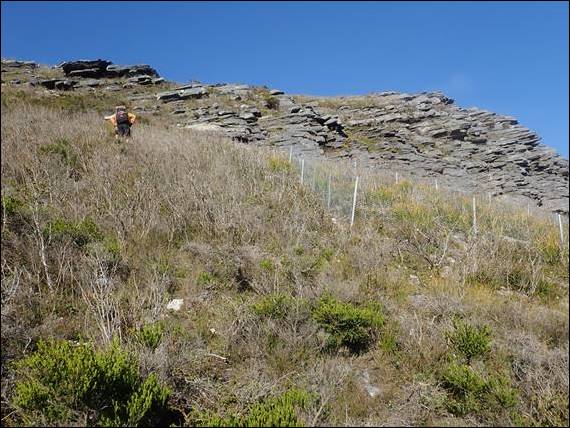

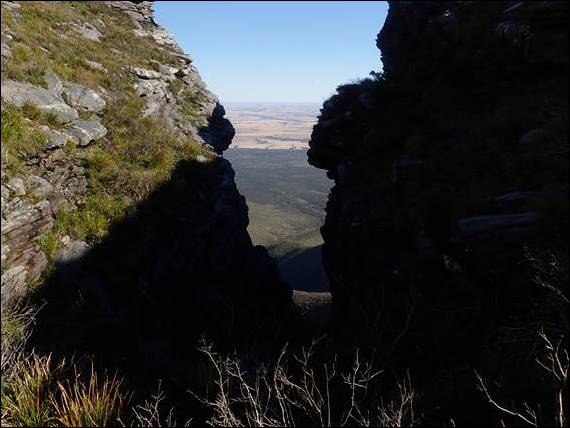
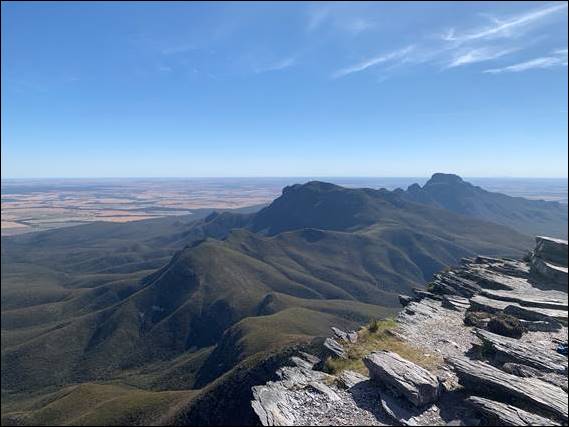

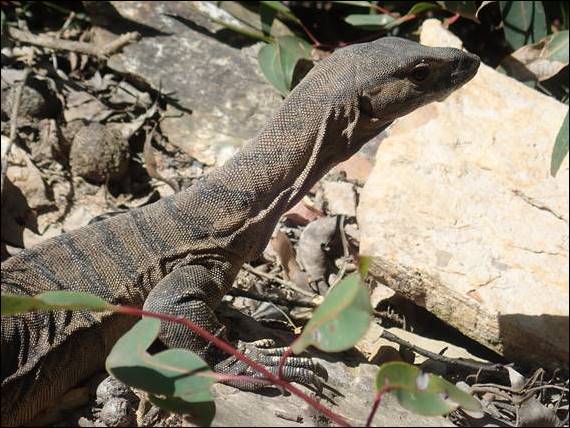
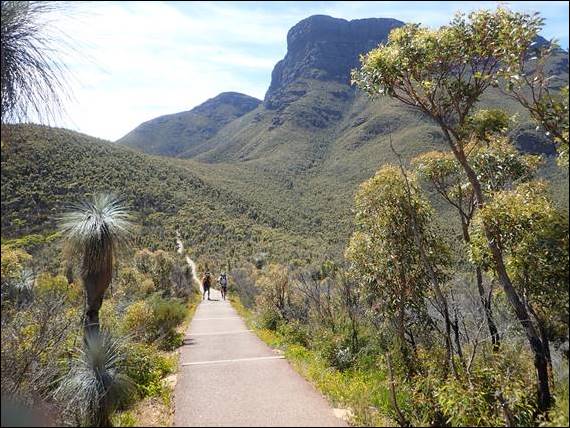

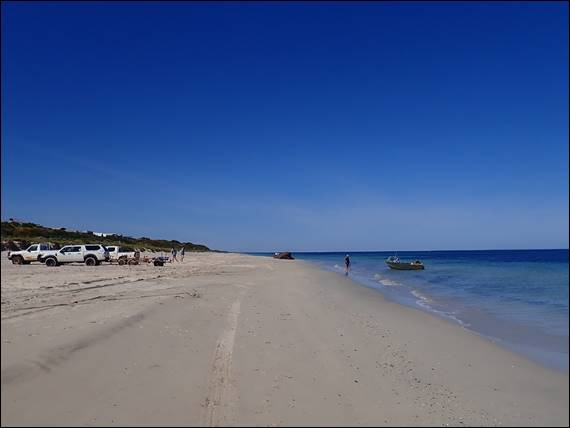


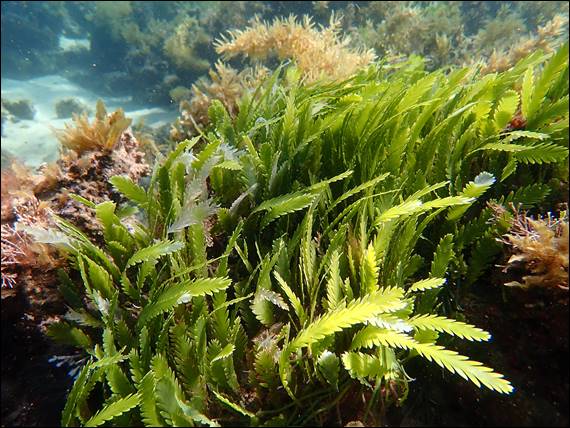
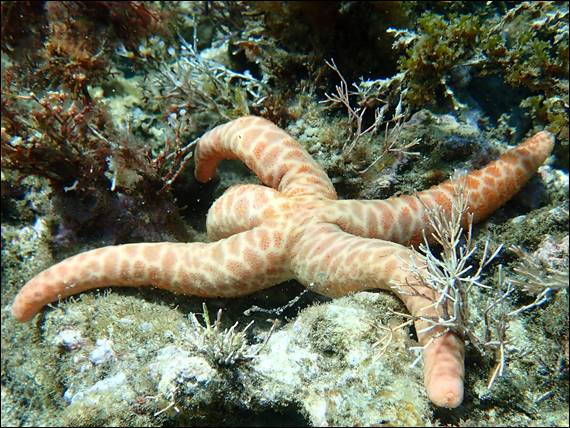

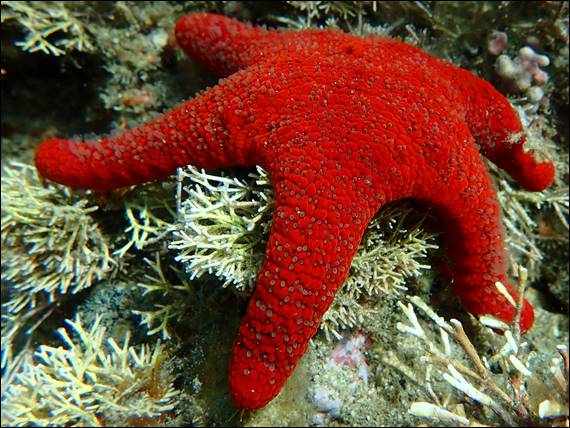
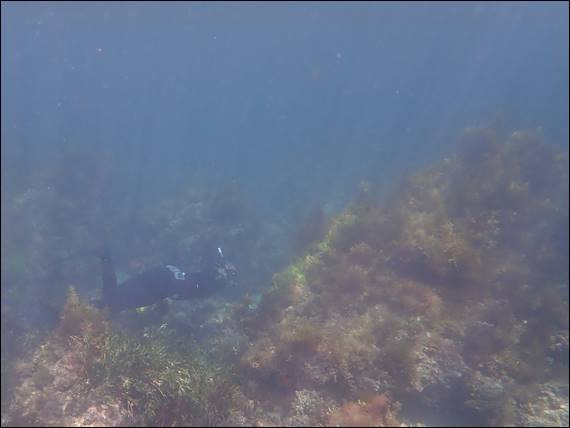
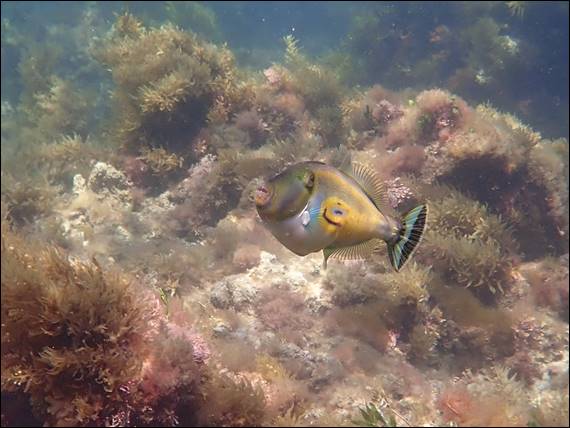
 Sandbagged