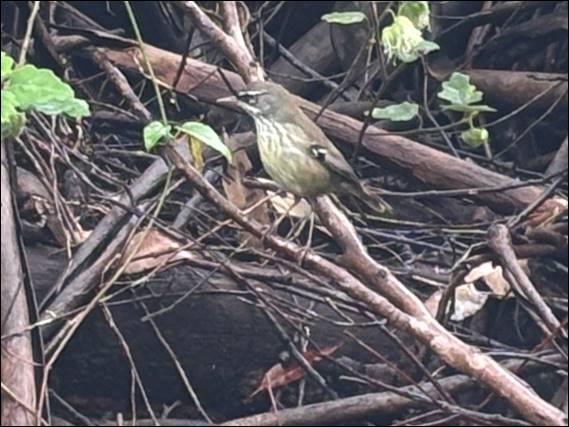
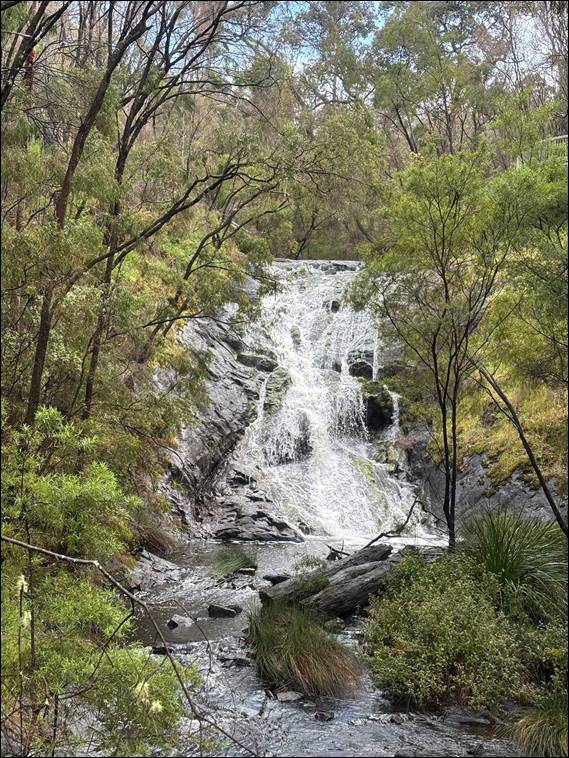
Attractive qualities

Things might be drying up at Welly Dam but the Capel Nature Reserve is still full of water.  In mid-October I would not usually have too much of an issue wandering round, wherever the fancy takes me.  Not today, while I had in mind to visit some of the lesser frequented places it was a mission to try and get to them.  Often I had to turn back, thwarted and needing to work my way through at times thick bush.  The promise I made, as I walked out the door, that I’d only be an hour was dashed.  It turned into a lot longer walk both in distance and time:

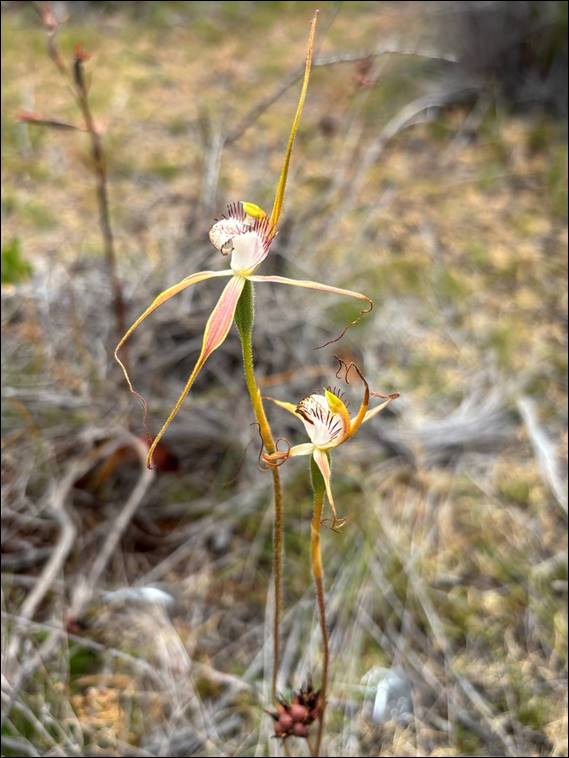
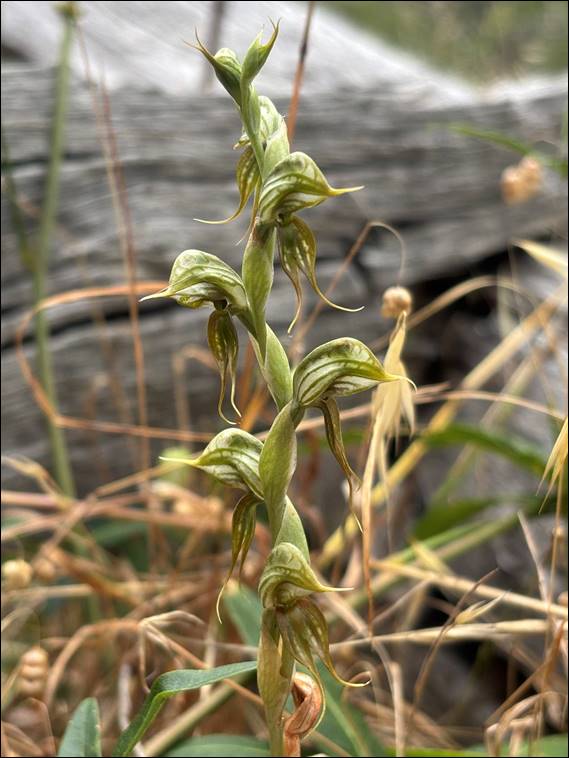
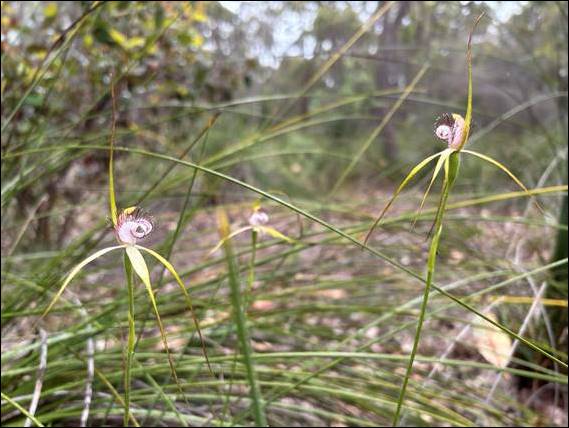
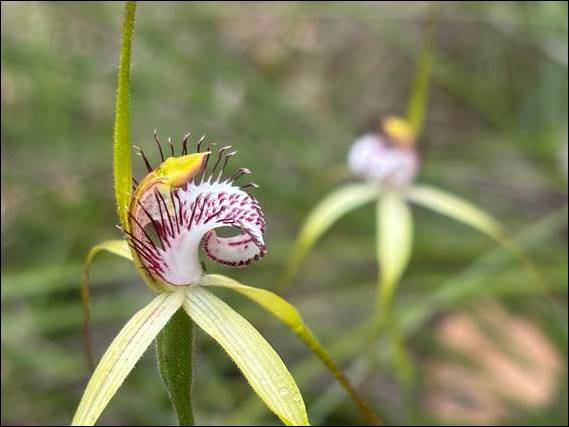
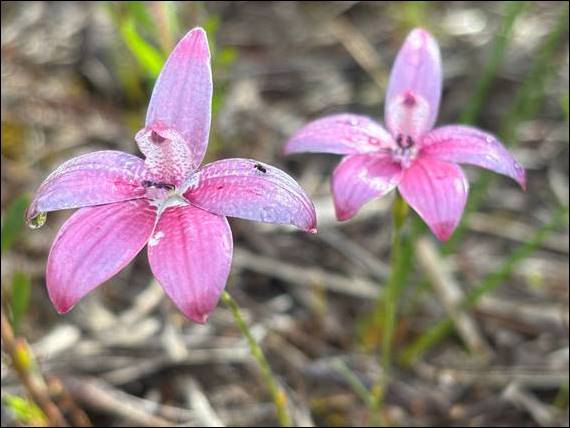
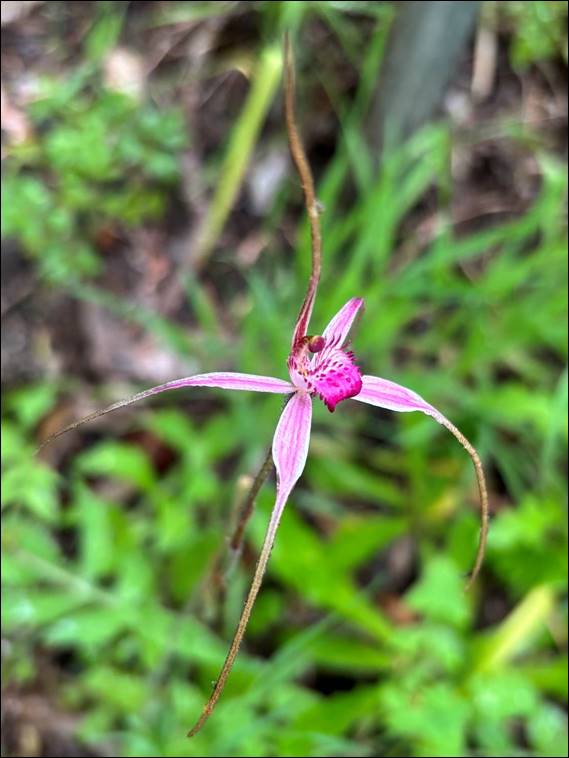
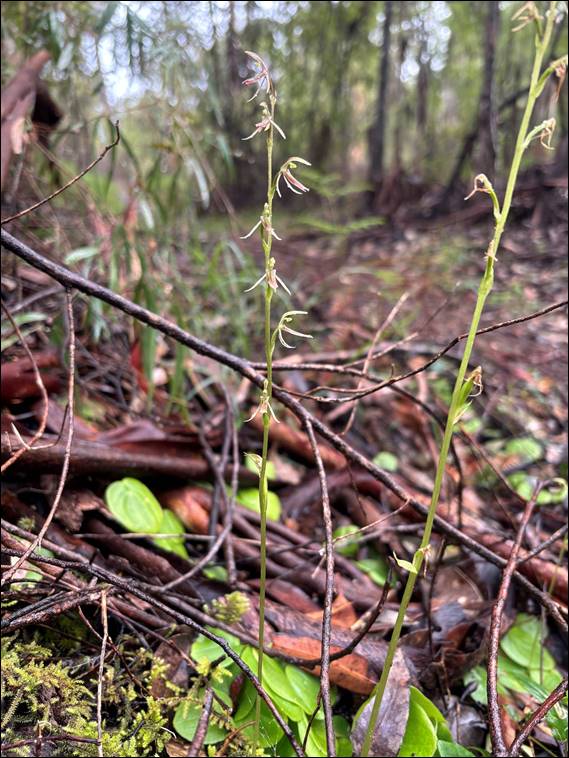
I was keen for some wet areas, just not as severe as they were.  My rationale being that I may spot something unusual due to the wet soils persisting as long as they have.  Working my way along the edge of the water, being careful not to sink in sodden soils, I only found two orchids.  A Rusty Spider Orchid (Caladenia ferruginea) and soon after what might be considered an aptly named Swamp Spider Orchid (Caladenia paludosa).  The former can grow in a wide range of habitats, the latter however likes thick scrubland that is swampy in winter:

Not only is the common name appropriate the species name of paludosa also is, being a Latin word for swampy or marshy.  It is stated to be one of the last of the similar spider orchids to flower.  That said it has a long flowering period of over three months, from September to early December.  Most of the others have a flowering window of two months finishing in October, with a few stretching into three and still about in November.  This species is pretty easy to identify, as the fringes and calli are both heavily clubbed:

Calli is derived from a Greek word kallos, which means beauty.  It is often used as a prefix for words that relate to something beautiful whether letters, exercise, singing, poems, etc.  In the world of plants however it is used as a word in its own right.  Mostly however for orchids.  Not to be confused with a callus, which is used to described a hardened and thickened area of plant tissue that is often a result of a wound or pathogen infection.  In orchids calli are a natural part of the plant and they have a specific and important role in pollination:

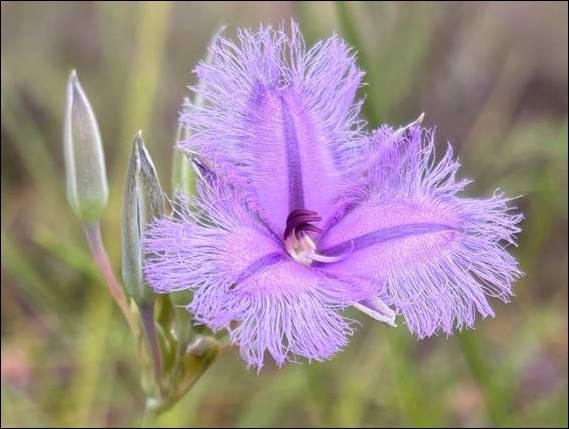
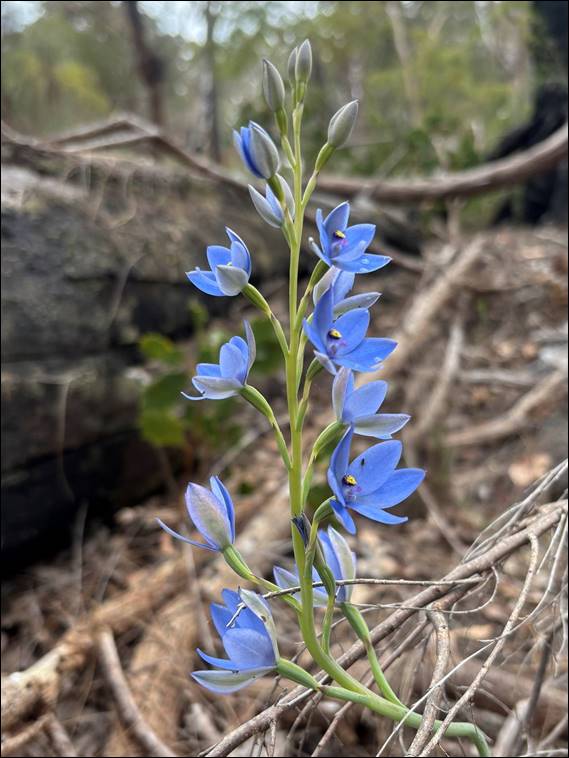
In the Swamp Spider Orchid, they are the raised red bits on the labellum.  Looking like upside down shoehorns all neatly lined up in rows.  The next image is of a Blue Lady Orchid (Thelymitra crinita), for which the calli are the mauve tuffs that look hairlike.  Followed by a Hort’s Duck Orchid (Caleana hortiorum), hosting a spider, on which they present as deep purple glands or balls along the ‘beak’.  Finally the Glossy-leaved Hammer Orchid (Drakaea elastica) below on which they are at the top of the labellum again deep purple glands or balls but with fine hairs:

All of the above images are fortunate finds from today, and help to show the range of forms calli can appear in.  The way they achieve their purpose can also vary.  At times used to attract pollinators, their colour, texture, and/or shape designed to trick the pollinator.  Both into thinking the plant may be a mate or a food source.  In other orchid species they can be strategically placed and sized.  Helping to manoeuver the pollinator to a specific area or part of the flower such as the parts to pick up or spread pollen, i.e. the anther and stigma:

I did not get an image of the calli for the above Twisted Sun-Orchid (Thelymitra flexuosa).  Unlike the other orchids I have included in this post, this one is self-pollinating.  Yesterday at Welly Dam I saw hundreds of plants, here I saw just two and only one had a flower open.  The flowers can grow up to 15mm wide, are short-lived, and open slowly on hot humid days.  Today was feeling stickier than yesterday, working in my favour.  Not that I would like to climb at Welly Dam in these conditions, I hope I don’t miss the spectacle of seeing them open:

I couldn’t resist an image of the above Pimpernel Sundew (Drosera glanduligera) but didn’t hang about.  The combination of bush bashing and being humid meant I was a bit sweaty.  Staying still for too long taking images was not wise.  The smell of lactic acid and ammonia was the perfect attractant for mosquitoes.  There were plenty of them about, although I did stop for a while to listen to and watch the Forest Red-Tailed Black-Cockatoo (Calyptorhynchus banksii naso).  Hoping to catch a glimpse of their namesake tail flash its colour:

Bashed about

This post overlaps with the last one.  I ran out of my self-imposed text allocation per image to include details about the specific epithet, which basically mean species name, of the Water Bush (Bossiaea aquifolium).  This is derived from two Latin words of acus and folium meaning needle and leaf, and the whole word is said to suggest sharp-leafed.  This name is most often used for plants in the holly family, and if you check the leaves of the Water Bush they do have a holly leaf shape.  As I read on aquifolium was stated to be the pre-Linnaean name for holly:

This led me down a rabbit warren into finding out about what ‘pre-Linnaean’ meant.  Taking me back to the 18th century, when a Swedish biologist developed what is called the binomial nomenclature.  In plain language this means a two-term naming system, and relates to the genus and specific epithet.  The scientific names of these two components are usually derived from Latin, but other languages have been known to creep in.  The biologist responsible for setting this up being Carl Linnaeus, known as the father of modern taxonomy:

I did find it interesting that taxonomy itself is in fact derived from two Greek words taxis and νομία (pronounced nomia), meaning arrangement and method.  And while on this fact finding mission I thought I would check out the word I use the most, species.  This does come directly from a Latin word that means kind, sort, or appearance, which in itself is derived from the verb specere meaning to look at.  As such the eminent and more well-known Charles Darwin did use the right term for his 19th century book The Origin of Species.  Of course he did:

The full title of his work was ‘On the origin of species by means of natural selection, or the preservation of favoured races in the struggle for life’.  One of the modern day definitions of species is ‘a group of living organisms consisting of similar individuals capable of exchanging genes or interbreeding’.  Something that I guess could occur as part of preservation.  And this would suggest the term specific epithet and species are not interchangeable.  As I have found in trying to identify my finds, many orchids regularly exchange genes or interbreed:

When two different specific epithet orchids do this they are said to hybridise, but should they be one species?  Hybridise comes from a Latin word hybrid, translating to mongrel or offspring of parents of different species.  This however now indicates they may be interchangeable.  Confused yet, because I am.  You can probably see why I ran out of room, and after all that I think I will stick with species rather that the mouthful of specific epithet.  Especially seeing in the classification breakdown on the Atlas of Living Australia, they use the term species:

It felt like I was going round in circles with all that, which is what I did at Crook Brook.  Two circuits in fact, on a relatively quiet day here.  This may be surprising considering the lovely day it was for a walk, not a climb at Welly Dam.  The crowds were instead being drawn to the nearby Dardanup for the annual Bull & Barrel Festival, something we have still not been to.  I’d rather be out here than in amongst throngs of people.  And while it was a very pleasant gentle stroll, despite not seeing many orchids I now have to speed things up:

This will now be a quick fire list of what I found being: a spectacular looking Scented Banjine (Pimelea suaveolens); a lonely Leaping Spider Orchid (Caladenia macrostylis) with the maximum number of three flowers; one of several Scented Sun Orchids (Thelymitra macrophylla) that unlike those at Welly Dam had a few flowers open; all I can work out is it is one of the Flame Peas(Chorizema); and an elegant Blue Lady Orchid (Thelymitra crinite) from which I was going to get into detail about the role of calli but that can wait for another day:
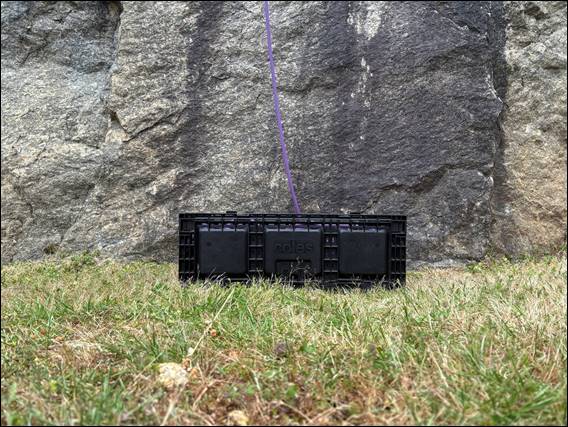
The next image being one of the thirty one species of Thomasia, thirty of which are endemic to the south-west of Australia.  My guess is it maybe the Large Flowered Thomasia (Thomasia grandiflora).  The last two images are of a Clubbed Spider Orchid (Caladenia longiclavata), I only found one.  Said to be common and widespread yet this is just the second I have ever come across.  Part of the species name comes from clavus meaning “club” or “cudgel” in Latin, appropriate as my brain feels a bit like it has been bashed in from researching these posts:

A sensory overload

I saw things had changed when I checked my phone at 4:15am, which was my designated time to get up and ready for a proposed cruisy climb on the coast with Rongy.  His body clock had been thrown out by shift work and prevented him from managing to get much sleep, so he decided it was best to bail.  I was torn.  The idea of a cruisy morning out was still appealing.  However, I was also keen to check out what may have changed at Crook Brook seeing I hadn’t been there for some time.  That meant heading to Welly Dam, which would be far from cruisy:

I still hadn’t made my mind up as I started to drive out.  And it wasn’t until I hit the T-junction at the end of the only road out of Peppy Beach that the decision was made.  It was the sky that assisted in swaying my indecision.  Grey and overcast to the west, while clear skies lay to the east.  My thinking was that clear skies would hopefully mean relatively low humidity levels, which is kinda important at Welly Dam.  Plus Crooked Brook was still at the back of my mind.  Gently urging me to turn left to a more serious session, which is what I did:

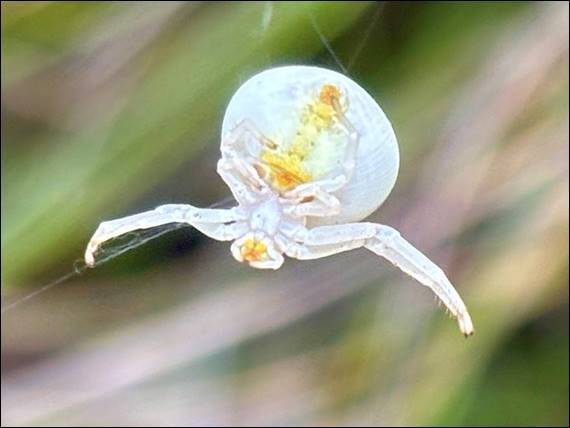
Before we get to the rock I better mention the Crane Fly (Leptotarsus) in the first image.  The only living thing I saw after I had set up on the first route of the day.  This genus is one of several in the Tipulidae family, commonly known as large crane flies, found in Western Australia.  Further, it is suggested there are approx. thirty species in Western Australia, and despite this relatively low number I have not been able to narrow it down to a species.  Seeing Rongy was, hopefully, catching up on sleep, I was flying solo.  Flying being the operative word:

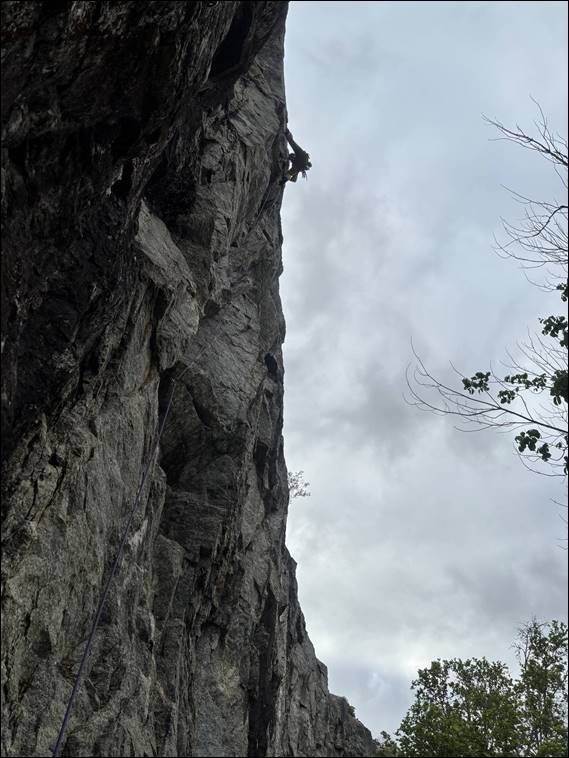
I did a fair bit of that today even though I picked sensible lines.  It felt like I needed a crane to lift me up the climbs, as at times even when I felt in a secure position I slipped.  It was in complete contrast to how I performed here a week back, and for that trip I picked harder routes.  The second image might give a hint as to one issue.  It may be difficult to make out but I have left a sweaty palm print just below the sloper.  By the time I arrived the clear skies were gone and grey clouds hung above.  The rock felt a little ‘off’ and the skin a tad clammy:

On the plus the seepages that were still evident a week back on many of the lines was mostly gone, with only two routes still sporting water on them.  The above climb, which I slip-slided my way up, didn’t have any water but was still splattered with debris that had been dribbled down the rock from above.  This was the last line, four climbs was defiantly enough today.  Eight laps at the dam is respectable, the main cue to wrap thing up was however the people that had started to appear.  But before I left I wanted to check out the top of the crag:

The water at the top of the crag that had been evident in relatively large pools had also mostly gone.  It had however already worked it’s magic of giving life, and I found hundreds of Twisted Sun Orchid (Thelymitra flexuosa) buds, all tightly still clamped shut.  In addition there were stacks of Plain Sun Orchids (Thelymitra paludosa), also firmly closed except one or two that had started to crack open a touch.  The below pink variety being the one I really like.  If I waited around for the temperature to warm up some may have opened:

That was not going to happen today.  Crooked Brook was calling.  I was also put off staying much longer, when a couple of the groups of people who had started to appear almost shouted out in excitement ‘look there’s a climber!’  To put the final nail in the coffin, an abseil group was about to turn up.  Back at the carpark the tour operator was pulling the gear out, as I was putting mine away.  On the road out I pulled over for a positive sensory overload, provided by swaths of fragrant Water Bush (Bossiaea aquifolium):

Lots to celebrate

Some may consider that just thinking about heading out for a wander at the Capel Nature Reserve was not appropriate, on today of all days.  Lisa was however heading to F45, her usual workout class, for the first time in several weeks.  She’s been figuring out a back injury, and is just starting to get to grips with what does and does not trigger it and how to manage it.  As such, and under instruction from her physio, she has been given the green light to head back.  Leaving me an hour and half or more to sneak out by myself, where I was hit with colour:

Where I began my walk White Myrtle (Hypocalymma angustifolium) and Orange Stars (Hibbertia stellaris) carpeted the area.  Continuing on, it was hard not to get distracted by all the orchids species.  All mentioned in recent posts, and while I couldn’t help myself and took lots of images I will refrain from including them here.  Just like Lisa was this morning, I was on a mission so had to keep going.  All season I’ve been banging on about a particular endangered species of orchid.  I spotted the leaves in April and I have been eagerly awaiting the flowers:

Not wanting to miss out on seeing the Glossy-leaved Hammer Orchid (Drakaea elastica) in all its glory was the main driving factor for this morning’s visit.  Since April, each time I have come back I have seen more plants.  Despite seeing so many leaves very few have formed spikes, and some of those have since been damaged.  Above is a clump I have been observing most regularly, with one bud just opening.  Even at the area with the greatest abundance of leaves, where someone has been placing cages to protect them, only a few look like they will flower:

One was however out, and looked stunning in the early morning light.  Needless to say I was one happy bunny.  In total I’ve been lucky enough to have found four species of the hammer orchid.  One back in 2022 during an overnight trip further to the south, and this season I’ve bagged the three species whose range extends into our local area.  Images taken this season of the other two are shown below, for comparison sake.  Being the Warty Hammer Orchid (Drakaea livida) and King-in-his-carriage (Drakaea glyptodon):

Back home after my success I was greeted by Lisa hobbling round the corner.  It seemed she had not been successful and done herself in again, until she smirked and gave her ruse away.  The cheeky bugger.  This meant our plans to head out for breakfast at the South West Bottega to celebrate today was still on.  A relaxed munch with a game of king cribbage was on the cards, after which we felt the need to walk the food down.  Ambergate Nature Reserve is just down the road, offering the perfect destination with a level path to avoid any back issues:

The walk is neatly spilt into four sections, and as if knowing what day it was the Rusty Spider Orchids (Caladenia ferruginea) were shooting up all over the place.  A bit like party poppers firing confetti into the air.  We lost count of how many we saw, which really surprised me as I saw no trace of even their spikes on my last visit.  Lisa was very happy to see them but felt I was barking up the wrong tree when I showed her at least two Carbunup King Spider Orchids (Caladenia procera) in the party mix.  One shown above with a Rusty Spider Orchid behind it:

With all the spinal references above, you may be wondering how Lisa managed our walk yesterday.  In answer, a little painfully.  During that walk she did however suss out how to release the tension whenever it came on.  By more frequently applying the technique, todays wander was way more enjoyable.  Each time she felt the need to take on the squat pose, it also allowed my eyes to drift a bit longer.  This meant I found the above Common Mignonette Orchid (Microtis media) for which both the common and genus names mean small:

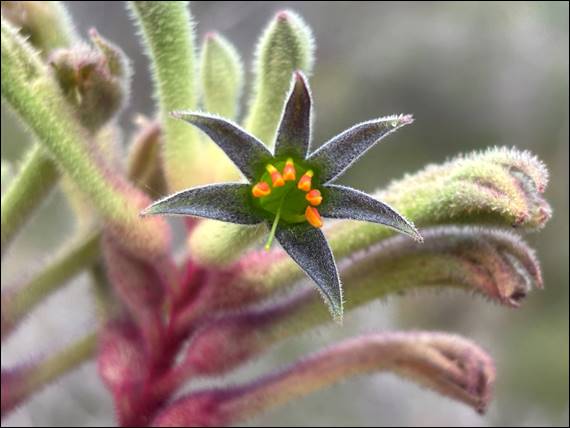
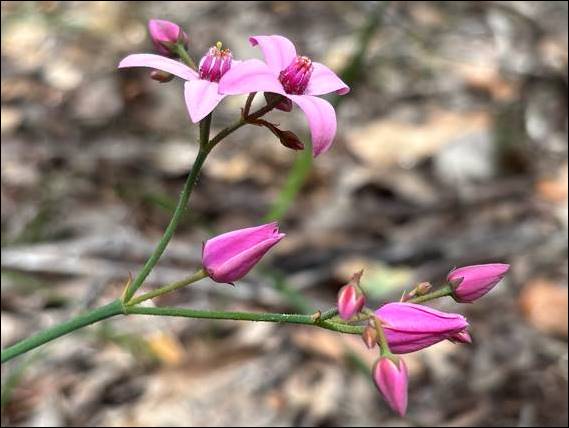
This was spotted in the second quarter of the walk, as well as the above Green Kangaroo Paw (Anigozanthos viridi).  Despite being native to south western coastal regions it is the first time we have seen the green variety in the wild.  The Red-and-Green Kangaroo Paw (Anigozanthos manglesii) is the one that is the most prolifically found.  The flowers that tickled Lisa’s fancy the most on this section, which we didn’t see in the others, were the Pink Fairies (Caladenia latifolia).  Looking like pretty bows used to top a ribbon on a present:

As there had been during this morning’s wander we saw lots in flower, so I’ve sneakily doubled up a few images.  Crossing the road into the third quarter, the vegetation changed again.  In this section it was the Donkey Orchids time to stand out.  Like the Pink Fairies they were only in a small area, it is funny how that happens.  However, the two most colourful species were out, being the Dunsborough Donkey Orchid (Diuris jonesii) and Purple Pansy Orchid (Diuris longifolia).  On display like a bowl of candy’s, a sweet treat on a special day:

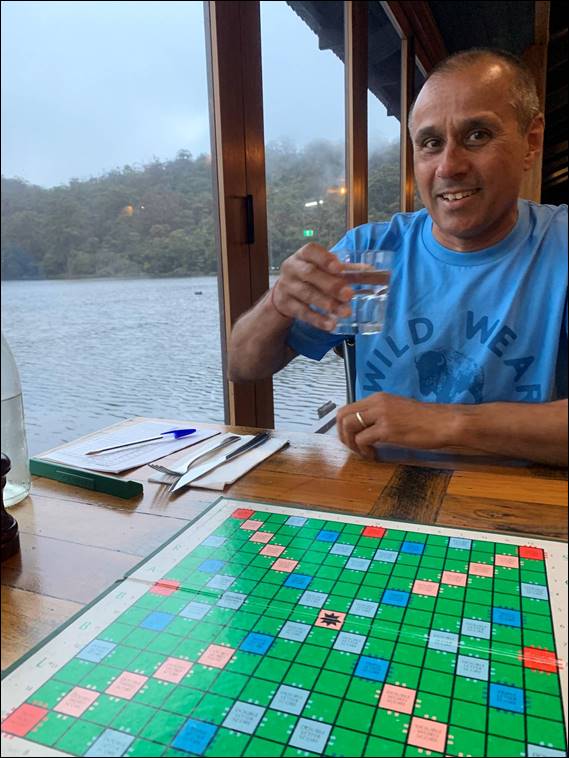
The last leg can at times feel a little lame in comparison, when it comes to finding orchids.  Today was no exception.  Then Lisa stopped dead in her tracks.  Not because her back spasmed.  Ahead of us was a Quenda (Isoodon fusciventer), happily nibbling the grass on the side of the track.  We stood quietly for what felt like ages watching it until it had enough and headed off.  Seeing it felt like a real gift.  Finishing the walk it was back to the South West Bottega for lunch and game of scrabble.  If you hadn’t guessed by now, happy birthday Lisa:

It’s a dog’s life

An English manuscript in the 16th century, about what I cannot find, reportedly referred to the not so pleasant life of a dog.  A life of subservience, fed scraps, kept out in the cold, and only kept alive while it could undertake the works forced upon it by its owners.  The phrase coined was not intended to create images of what you would consider a good life.  Shakespeare also used this intent in the seventieth century, 1606 to be precise, when in Timon of Athens he used the insult ‘Thou was’t whelpt a Dogge, and thou shalt famish-a Dogges death!’:

In much more recent times and in stark contrast, in western society at least, for many a dog the idiom ‘It’s a dog’s life’ has been completely flipped on its head.  Now being very much in their favour, as these pampered pooches have become part of the family.  Many given as good, and some are even given better treatment than our fellow humans.  No longer thrown out and abandoned when they are no longer useful, indeed some strive to keep them in the best health possible to extend their life span:

At fifteen years old Nicka, shown hanging out the window, is certainly going well.  But her and Sooky’s, who is two years younger, good condition comes down to the basics in life.  A balanced diet, healthy living, and of course a dose of luck in terms of not having been afflicted by the many ailments that can impact us despite our best efforts to look after ourselves.  Miniature poodles are said to start to lose that youthful puppy personality at around 3 to 4 years of age, but not our two.  At their very much mature years, they are still very playful:

The basics of life and maintaining a youthful attitude, as much as possible because there are times you do need to act your age, is high on Lisa and my agenda.  For me that includes getting out in nature as much as possible, which is why here is yet another post of the great outdoors.  Visiting a place we have been to three times before, twice in spring and once in winter.  Today as we wandered round the Kondil Wildflower circuit just outside of Nannup, it felt a little more like a winter walk despite being spring time.  As were others out, we were rugged up:

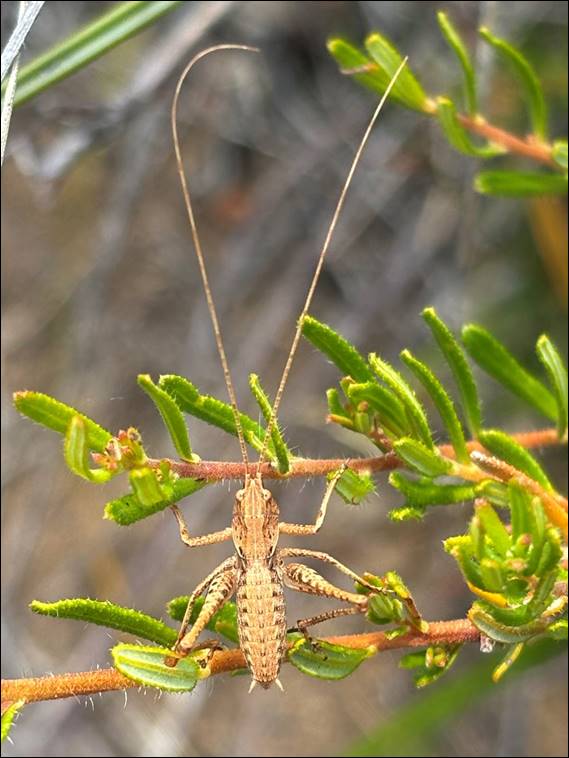
A circuit of contrasts.  The start was damp, vegetation thick and green, and one section of the path was completely underwater.  Then from about the halfway point it became dry and barren, the vegetation looking like it was just hanging on.  With the poodles in tow, the pace was dictated more by them than me, as I looked for orchids.  It wasn’t fast but not as slow as the Sluggish Katydid (Pachysaga australis) we spotted as soon as we stepped out of the car.  There are approx. 1,000 katydids in Australia but only six species in the Pachysaga genus:

The markings make the identification indisputable.  The recorded observations however hint otherwise, most being round the Perth Region and just one sighting near Bunbury.  Halfway round Lisa and I ducked off the circuit onto another track, where I knew we would find some perfect logs to rest against for a cuppa and cheese butty.  I also hoped for some orchids but in comparison to our previous spring walks it was incredibly light on.  This particular spot has previously been abound with ducks and hammers, today I spotted just one or two of each:

Unlike the Hooded Lily (Johnsonia lupulina) a few images up, all the greenhoods we saw were wilting and on their way out.  The only orchids in abundance were the karri cowslips and rattle beaks.  That said not all was lost and I did clock up another subspecies of the white spider orchids, with the above Merritt’s White Spider Orchid (Caladenia longicauda subsp. merrittii).  This subspecies are found mostly in a narrow corridor that stretches from Karridale to Nannup, another large flowered plant of which we only spotted the one:

There were quite a few people out, not that we saw them during the walk.  This included two locals geared up with cameras, obviously looking for orchids.  They too said it had been very light on today, so I do not think we missed anything of note.  To wrap up the walk there was a single Leaping Spider Orchid (Caladenia macrostylis) very close to the car.  The species name macrostylis comprises two words for which the meaning should be obvious, being big style.  The poodles showed none of this, flopped on the back seat asleep for most of the trip home:

The big one

Yesterday was a great day to catch up with general stuff.  The things that need sorting but you seem to put off just one more day.  In my mind while it was a wet rainy day I did think a quick trip down to Iron Gully Fall might be nice.  That is a not too far away, but first I focused on the other bits.  Doing pretty well until my phone, which I really do not use too much other than organising climbing trips, started suggesting a bunch of messages dropped.  It was Josh, climbing Josh this time.  He sent me a load of images of orchids that Kellie had spotted:

One of the species was still on my tick list for this season, and I had to ask where she had been.  Yallingup Siding was the spot.  Funnily enough a short three to four kilometre drive north of the place I checked out last weekend for the first time, Yelverton National Park.  It is not part of this park but sits alongside it, and is part of the same continuous bit of bush.  I had noticed this area last weekend, because from the aerial imagery it looked to be more open.  So while connected it was likely to have a different vegetation complex:

Lisa was having a lazy day and more than happy to have the house to herself.  Especially seeing it was peeing it down outside, and had been all morning.  This meant I went prepared with rain gear, thoroughly expecting to get thoroughly wet.  Not put off by the dampness and being geed up by the chance of another species to add to the tally.  It rained the whole way down, and it was not until I got closer to my destination that the windscreen wipers could be turned off.  I timed it perfectly not even needing a Granny’s Bonnets (Isotropis cuneifolia):

This particular pea was very pretty, as they all are, but seemed more so.  The structure of the broad petals being visible on the back of the flower was extremely striking.  I didn’t find a cluster of flowers that allowed me get a front and back shot at the same time.  Although the above starts to give an idea of what the back looks like.  So you get the best of both worlds, so to speak.  There is always a risk of going somewhere with a preconceived idea of what you will see, and I tried to push those thoughts of what Kelly had seen to the back of my mind:

It was a bit of a slow start as I shuffled along scouring the ground.  Pleased the rain looked to have finished, with only the lightest of sprinkles when I first arrived.  My first spot was diverted by the an Australian darkling beetle, Ecnolagria aeneoviolacea that I can find no specific name for.  Darkling beetle is the general name given to beetles in the Tenebrionidae family.  It is not surprising they do not all have common names.  There are over 30,000 known species worldwide of which 1,500 have been observed so far in Australia:

I’m getting side-tracked but will mention that there are currently over 400,000 described species of beetles, which makes up a quarter of all known animal species.  This makes me wonder how they can allude me considering all the time I spend in nature.  Above is another specimen of the orchid that the Darkling Beetle had drew my attention from.  This really is a Flying Duck Orchid (Caleana nigrita), and unlike my rookie error a few weeks back the image includes the basal leaf.  A wider leaf than the Hort’s Duck Orchid (Paracaleana hortiorum):

The hump in the labellum is also more pronounced in the Flying Duck Orchid.  Making me think that at the Capel Nature Reserve I have only seen the Hort’s Duck Orchid.  While there are plenty of images online to check these details out, it is not until you see things for yourself that some of these subtle differences really start to stand out.  Another orchid that Kelly spotted, which is known for not standing out is the above Zebra Orchid (Caladenia cairnsiana).  While its range extends from Bunbury and Esperance it is not often seen here:

I saw it a few weeks back for the first time in our local area, so when she had spotted one I was keen to come down and check out how many I might find.  They can easily be missed, being such a small and compact flower with colours that blend in with its surrounds.  So while there may have been more I only spotted one.  As I did with the above Warty Hammer Orchid (Drakaea livida), which was the species that made me decide to come down this way today.  The ovary at the top of the stem is starting to swell indicating it has been pollinated:

As such I was pleased I had made the effort to come down today.  In a matter of days some species of orchids can wither and disappear.  The above Bird Orchids (Pterostylis barbata) had also been pollinated, and were starting to recede with the lateral sepals already pointing upwards.  Kelly had found one still flourishing, and despite finding five specimens today they were all on the way out.  It was only after my visit that I asked Josh when Kelly had come down, and it was only four days back.  It was still very worthwhile, with one more find:

Just as I was about to head off, I spotted a single Karri Spider Orchid (Caladenia brownii).  Making me even happier about having made the trip down, if that was possible.  You may recall in my post from a few days back, this is the species that had been claimed to be found at Minninup Tuart Woodland https://sandbagged.blog/2025/10/02/a-sticky-ending/.  Flicking between posts you can see what I meant about the calli on the labellum, in addition the underside of the labellum has a green tinge in the above.  Thanks Josh and Kelly for the info:

On the way home I decided a quick stop in at Iron Gull Falls was worthwhile.  It is our closest waterfall, and in twenty years this was only my second time here.  The catchment was already saturated and I hoped the overnight and morning rain would result in more flow cascading over the lateritic rocks, which give the falls their name.  It was very overgrown and seemed weedy.  We last came here in 2017 and those images suggest it has become more overgrown. Indeed it took a bit of effort to get to the base of the falls to take the above picture:

The last image I wanted to include is another species to add to the list this season.  As such the above Dyeball (Pisolithus arhizus) is just a filler because I seemed to have prattled on too long.  I spied a heap of Splendid Spider Orchids (Caladenia splendens) in a patch of weed free bush on the side of the road, just a short distance on the way home.  Alongside the Giant Spider Orchid (Caladenia excelsa) it is the largest of the spider orchids.  The flowers can reach just shy of 300mm, which this one did with wonderfully long drooping sepals and petals:

Making an ass of myself

With a wet weekend ahead and being unable to take Friday off, the option of an early morning before work climb was back on the cards.  Having the entire day off, Rongy who initiated the discussions decided to use his full day for more leisurely activities.  Howsie was still chomping at the bit, and there is only one place to head for such a short fire session that allows us to get back in time for work.  Much as we relish the climbing style here, it is a place where the origins of the phrase ‘chomping at the bit’ does not spring to mind:

Originating from a horse grinding its teeth on the metal bit in its mouth, as it eagerly awaits the start a race or ride.  Whereas we suddenly feeling less confident, weaker, and not so keen to take the first lead on arrival, and after looking blankly at the sheer looking walls.  Not wanting to be the one to be hit with the realisation that we have not been here for too long and that it is hard climbing, as we more clumsily make our way up.  I would not go as far as to say that we would make an ass of ourselves, but the phrase is probably closer to the mark:

A phrase with a much older history, having been first used in a book I recall from my days sat in a classroom being forced to learn about English literature.  Reading Shakespeare’s ‘A Midsummer Night’s Dream’, which has the first known written use of the term.  The actually wording being ‘This is to make an asse of mee, to fright me, if they could’, when fairy Puck magically transforms Nick Bottom’s head into a donkey.  Not that I can recalled that level detail from my classroom days, I had to look that up.  Today was however different:

I had come with a plan, already set my mind and prepared myself mentally for what was to come.  Being physically prepared is a whole other matter, but we know the routes well enough and with that advantage the mental game can help a lot.  Not hanging of small holds too long, if we know a better stance is above.  Howsie was surprised when I racked up and placed the crate at the base of the first route.  Today with this positive attitude the grass was greener, also in reality as the grass was greener at the base of the wall than I can ever recall:

I won’t say it was easy.  But I held on for every route, faring much better than my last trip here over six weeks back when I had to take a rest in the harness when following Rongy on the only route we did on the big walls.  This time I had a few nervous moments requiring some loud vocal queues to push through.  Not quite the ‘hee-haw’ sounds of a donkey but it may have made other people wonder if we were OK.  Maybe they didn’t hear as no one came to check on us, which I am pleased about as it would have been a tad embarrassing:
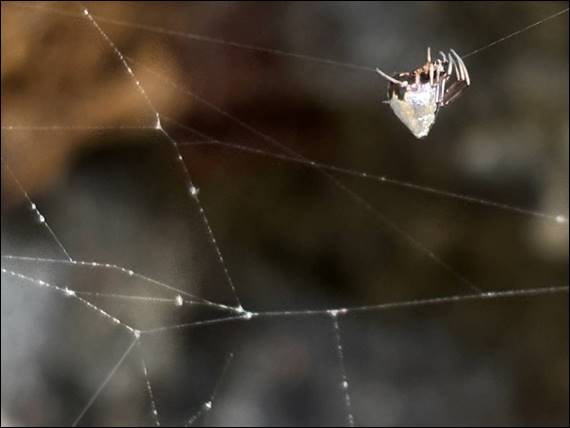
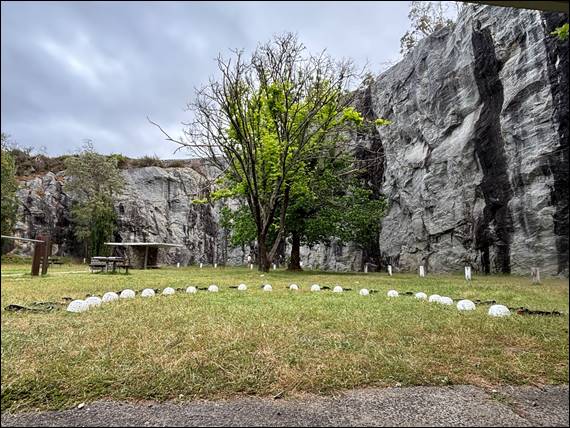
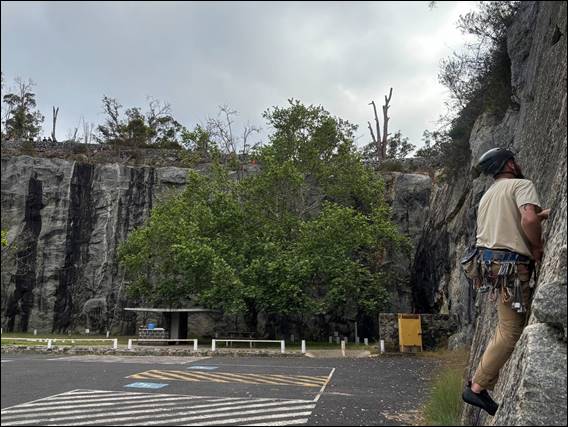
As the above image shows there was an event occurring, so there were a lot of people milling about.  Fortunately they stayed at the top carpark.  Leaving us alone in the quarry where we had a great time racking up six fine routes before our attention was diverted elsewhere.  I’ve since read it was the AusCycling Enduro National and Oceania Championships, which started a few days back and goes till Sunday.  In a way Howsie and I were lucky the road to the quarry wasn’t closed, which did occur the last time there was a national mounting biking event here:

We purposely topped out on our last route, rather than lowering off the anchors to get back down.  This allowed us to wander along the top, where there was still plenty of water lying about so late into spring.  The narrow strip of granite with its thin veneer of mossy soil amazes me with the variety of orchids we see.  Above we came across the Small-flowered Donkey Orchid (Diuris porrifolia), the leaves giving it away.  The name porrifolia comes from Latin words porrum and folium meaning ‘a leek’ and ‘leaf’ referring to the shape of the leaves:

We saw these a year ago, almost to the day https://sandbagged.blog/2024/10/11/packing-it-in/.  You could say I made an ass of myself by mistaking a donkey for a bee.  Back then I incorrectly suggested they may have been a Dark Bee Orchid (Diuris insignis).  This was due to the more ‘tunnel’ like appearance of the shape when you look at them side on, as above.  I have decided not to jump at shadows this time, and will stick to identifying the below as Forest Mantis Orchid (Caladenia attingens).  Despite what seems an unusually wide labellum:

A sticky ending

Over the last few weeks I’ve been sent images by Howsie and work Josh of their finds at more southerly places.  Coincidently they happen to have been from two of the places Lisa and I have visited this year, during our short weekend getaways.  The images were of course of orchids, and species that are not found in our patch.  One location is a potential day trip, but it is at a distance that requires more commitment.  Instead I have committed to Lisa and I endeavouring to aligning our southerly getaway destinations with the orchid season:

While this means they will have to wait till next year, there is fortunately still more to be found in our area.  I almost missed out on another opportunity this time a local one, which came up through work.  However, in reaching out the community member who had set up the original opportunity offered to take me for a look through a bit of bush that they have spent decades looking after.  Seeing it was work initiated I reached out to likeminded work colleagues, and the group grew a bit.  It certainly was not like my usual solitude type wander:

It was regardless of the numbers still very worthwhile and a place I may revisit by myself one day.  Especially seeing the Minninup Tuart Woodland is a mere ten minute drive from home.  Unlike the Tuart Woodland that is right on our doorstep, this one is a bit further north and separated by the Capel River and farmland.  What struck me was that unlike the rest of the Tuart Forest National Park, this area has somehow managed to avoid being overrun by the dreaded, highly invasive, and toxic Arum lily (Zantedeschia aethiopica):

This was more of a guided tour, but it still comes down to keeping a sharp eye out and knowing what to look for.  Quite a few of the usual species were out, but the stars were most definitely the spiders.  It was clear that the community member knew this area and much of the flora really well.  They have however expanded their knowledge across all flora, and the Orchids family was not their strong point.  I pointed out a couple of unusual aspects of some of the finds but mostly took images to do my own investigation later:

This lead me down a rabbit hole, to the point that I decided to call in the experts.  I have not been in touch with Noel Hoffman for a year, one of the co-authors of one of the main Orchids books for western Australia.  He replied in as lovely and personable a manner as ever, and I was pleased when he confirmed my thinking.  So going all the way back to the beginning we start with the Sandplain White Spider Orchid (Caladenia speciosa), it was the next image however that started to make me doubt despite being advised it was the same species:

The fringes are straighter, shorter, and generally neater, and the petals shorter in overall length and with darker, slightly heavier clubbing.  This led me to suggest it may be the Coastal White Spider Orchid (Caladenia longicauda subsp. calcigena).  However, while the habitat is correct it seemed to be out of recorded range.  Records suggest it is found from Bunbury northwards but the various public databases show no recorded observations south of Lake Clifton, which is seventy kilometre to the north as the crow flies:

Noel confirmed my identification, although also admitting that the white spiders are a tricky bunch.  He also confirmed the next image as being a Tuart Spider Orchid (Caladenia georgei), not a Karri Spider Orchid (Caladenia brownii) as had been suggested by our guide.  The calli extending over the red tip of the labellum being the giveaway feature to distinguish between them.  And even better the following image is a cross between the Coastal White and Tuart Spider Orchid, a commonly found hybrid two hundred kilometre to the north at Joondalup:

The last spider has both Noel and I stumped, it is clearing a hybrid of a Sandplain White Spider Orchid but with which other species?  The way the petals and sepals are being held and the distinct pale clubbing has not helped us one bit, so it remains a mystery.  The next image is of someone else who joined the trip being Brendan who used to work with us, and is now gainfully retired.  It was lovely to catch up with him and his partner Sharon, and I get the feeling that he will enjoy seeing his mug in this post:

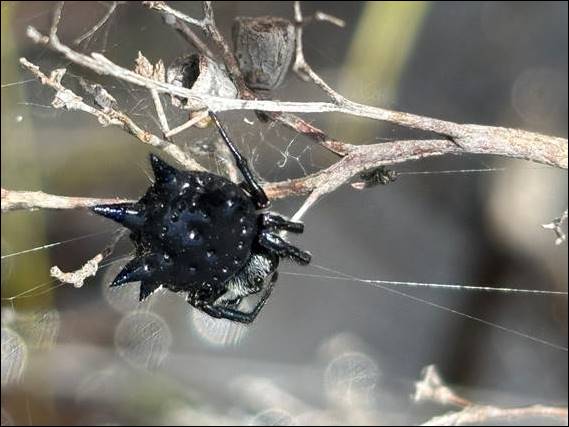
The last three images are from the Capel Nature Reserve, a short trip on Thursday and the only midweek trip I managed.  The Karri Cowslip Orchid (Caladenia flava subsp. sylvestris) flowers later than the Cowslip Orchid (Caladenia flava), is generally taller and has pale tipped petals and sepals.  With narrower petals and sepals the second one may be a hybrid with a Pink Fairy Orchid (Caladenia latifolia), which is a common find.  For my last image I found a predator becoming the prey, being a Common Western Scorpionfly (Harpobittacus similis):

Long in the tooth

After an amazing morning at Moses Rocks I intended to go for a wander to look for some orchids.  Not sure that I could top the mornings sights, I went anyway thinking the afternoons time in nature would be stunning in its own way.  In part urged to go being keen to head to a place I was told about by an elderly couple some years back, orchid enthusiasts I had bumped into in another patch of bush.  There is very little information about the Yelverton National Park. Managed by the state government even their website doesn’t give much away:

It has a single track, which is part of a near ten kilometre one way walk trail that gets good reviews.  Other than that this seven square kilometres of bush has no other facilities.  In 2004 a timber reserve was put aside to create the national park, there is no detail as to why this occurred.  However, the current website describes the park as a ‘native forest containing a particularly diverse range of vegetation types and a high concentration of declared rare and priority flora species’.  My hopes were raised as I parked up and wander up the track:

Not far along the track, which also gets vehicle traffic, I spotted a Rusty Spider Orchid (Caladenia ferruginea) and on finding this I went off track to wander through the bush proper.  The first find was not the one above, as that was a more bedraggled specimen unlike the one I have included that is looking in great shape.  A relatively commonly found spider orchid, found across much of the South West both coastal and inland.  I saw a few of these dotted about, mostly along the side of the track when I eventually re-joined it on my return:

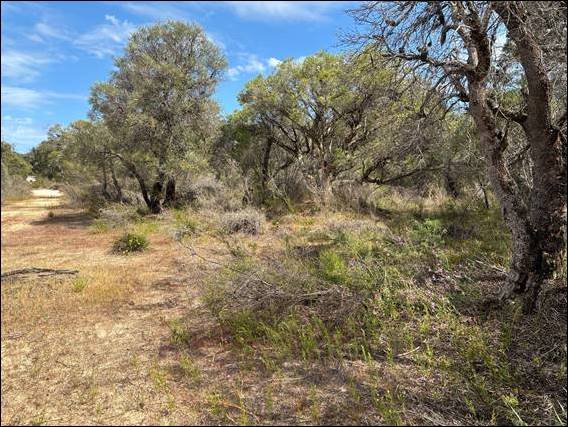
The condition of the park was great, being mostly weed free and having a wide range of plants.  What I liked even more was that on the insect front there were no mosquitoes.  This was noticeable, as when looking for orchids and moving slowly these pesky insects can be very irritating.  Even more so when you stop to take images.  It is the first patch of bush I have wandered through this season where I have not been hounded by them.  There is a creekline in the lower areas that would have had water in it.  Even close to that I didn’t notice any:

It could be the healthy biodiversity, with natural predators keeping them at bay.  Or possibly some of the plants species contain essential oils that repel them but I am not skilled up enough to identify those.  Regardless it made a very pleasant change.  Sticking with insects for just a moment, because like the park I found it in there seems to be a lack of information about the species.  The Redlegged Weevil (Catasarcus impressipennis) is found across southern Western Australia although there not a huge amount of recorded observations:

Now back to orchids, notable finds included just two King-in-his-carriage (Drakaea glyptodon) and a single Silky Blue Orchid (Caladenia sericea).  It seems amazing that there could be so few specimens of a single species, yet germination still occurs successfully for them to come out the next year.  Granted I would not have seen all of them, but with their stand out colour if there had been more on my path I would have spotted Silky Blue Orchids.  Then there was a single Carbunup King Spider Orchid (Caladenia procera), above:

Despite the meaning of the species name procera, meaning tall, slender, or long in Latin, this specimen, unlike the only other one I have previously seen, wasn’t very high.  It hit the bottom of the scale of the plants possible 350-900mm height range.  Being only my second sighting made it a very good find of yet another nationally recognised critically endangered species.  We sadly seem to have too many species that are at risk.  But not the above single Forest Mantis Orchid (Caladenia attingens subsp. attingens) that I found, they are common:

As is the above Rattle Beak Orchid (Lyperanthus serratus), which I found on my way home as I popped into the Ambergate Reserve.  Where there was even less on display, and hardly any orchid spikes waiting to flower.  Hopefully as we roll into October there may be more late comers.  The below Wood Hedgehog (Hydnum repandum) however made the pit stop extremely worthwhile, even though it is looking a bit old and decrepit.  Being one of the toothed fungi species, the spine-like projections that produce the spores are still visible:

A day by the breach

I can’t say that I have wondered before, but thinking how to start this post I thought I’d dig into where the term flotsam and jetsam came from.  A term so often used to described the odds and sods that we find lying along the coast, and considered to generally refer to rubbish.  There is however more to the term, which originated in the seventeenth century.  Each has a specific definition under maritime law.  Flotsam is matter that has been unintentionally lost at sea, whereas jetsam is matter that has been intentionally thrown overboard:

Jetsam does not refer to waste thrown overboard but when they had to lighten the load due to the vessel being in distress.  The two phrases come from Anglo-French words of floteson and jettison.  Digging deeper, there is a third maritime term being lagan.  From another old French word of lagand, which means lying.  Lagan are goods cast from a vessel in peril, which want to be retrieved later.  A buoy or float is attached to them so when they are finally found ownership can be proven.  For beachcombers this meant that finders did not mean keepers:

Finders keepers being an even older term traced back to the Romans.  I will however refrain from talking about that this time, as I seem to be drifting off topic.  My reason for starting in this direction was that I felt a nautical theme was appropriate.  Josh was keen to head to Moses Rocks, and walking in we found bits of flotsam and likely lagan.  The rope above no doubt accidentally lost but the buoy had a probe attached, suggesting it may have been some type of monitoring station.  There were also lots of Goose Barnacle (Lepas anserifera) on it:

The origin of the name of these barnacles is quite interesting, a topic for another time I feel.  I will however explain that barnacles have several earlier free-swimming life stages, which results in them being able to find a home on just about anything floating in the ocean, such as floatsam, jetsam, lagan, ocean going vessels, and even sea creatures, as well as static features.  Once attached a long rubbery stalk keeps a tight hold.  Despite choosing Moses Rocks, Josh was probably wishing he had the barnacles ability to cling onto smooth surfaces:

But before we get to the climbing, there is one more watery spectacle that we cannot go past.  Four climbs in, Josh tells me to look out to sea and all I saw was a splash.  Then for a solid ten minutes or more we both stared into the watery abyss intently.  A mother and calf Humpback Whale (Megaptera novaeangliae) provided us with a wonderful show.  Breaching countless times as they slowly moved south.  This is the best known species for breaching, but not the only one.  There are many reasons for breaching, one to remove barnacles from their skin:

Other reasons include removing parasites, which I say as Goose Barnacles are not parasites but other barnacles can be.  They can also undertake this huge energy consuming activity for communication, showing prowess, and attracting a mate.  This display was however likely the mother pushing her calf into the acrobatics to build muscle strength and skin health.  The action also increases myoglobin levels in their muscles, which provides it with stamina.  Again something Josh, as the morning wore on, may have wished he could have had more of:

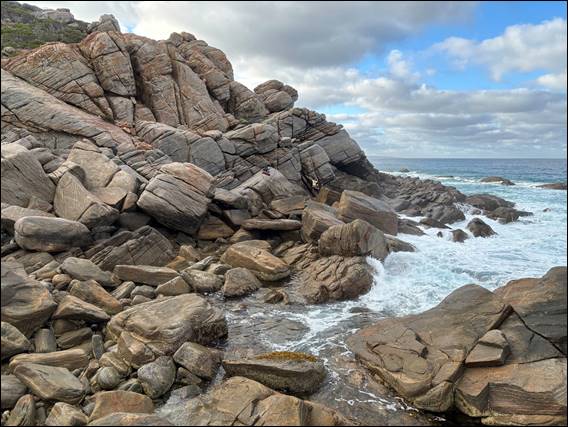
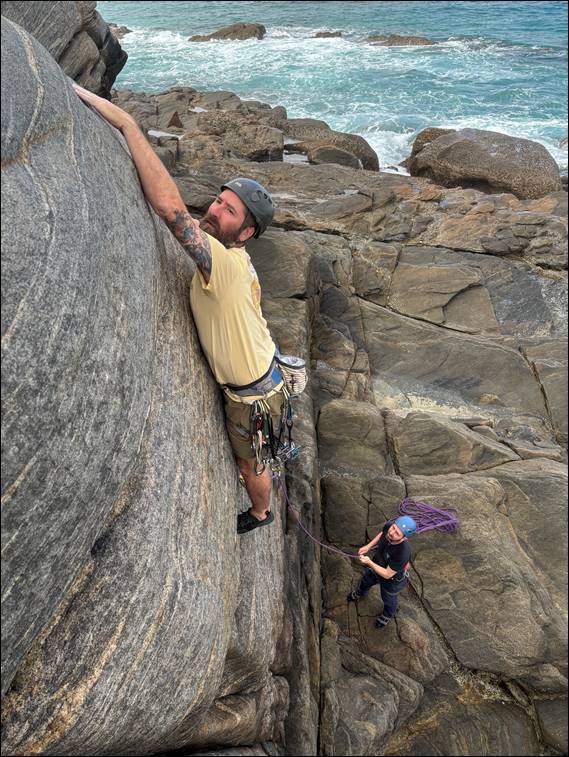
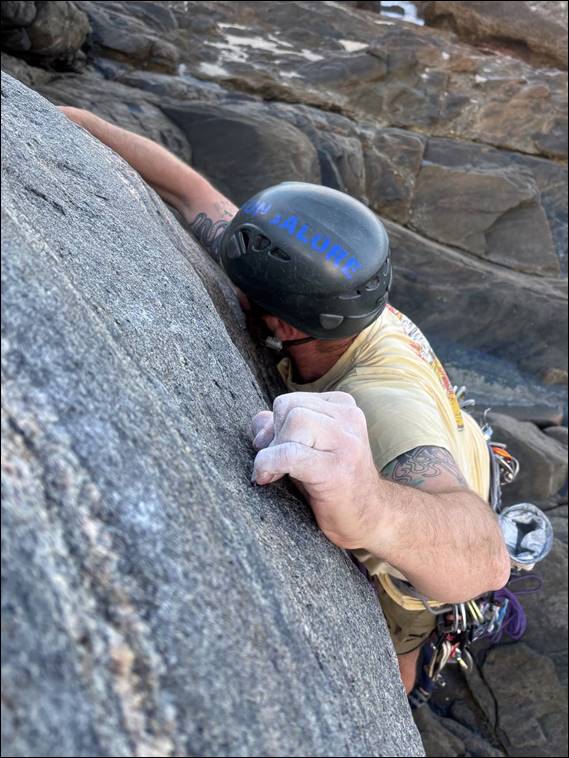
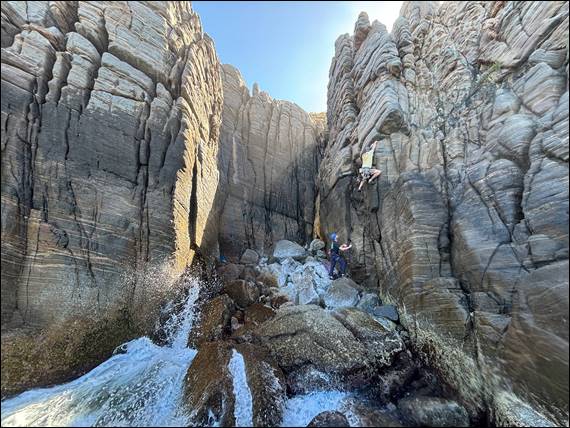
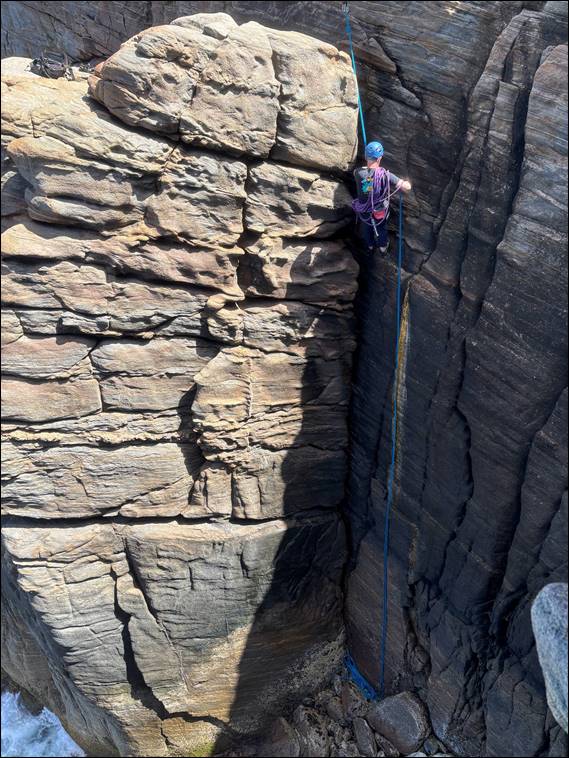
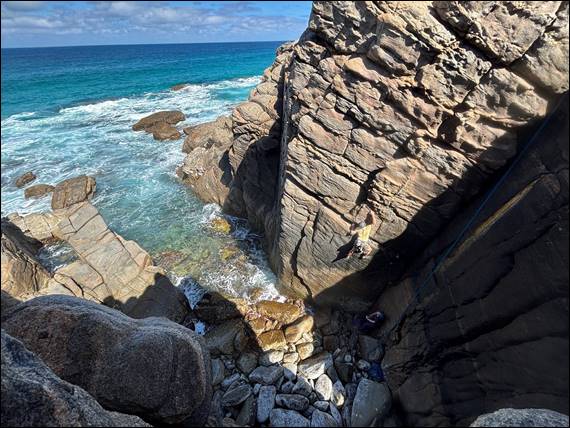
That is not to say he did not show barnacle like tendencies, as he held onto the often slopey granitic gneiss.  With its smooth yet grippy texture and wonderful banded appearance.  Created by quartz having formed layers when it recrystallized from the mix of minerals in the original granite, as the rock was transformed into a gneiss under intense heat and pressure.  Today there was no pressure, we were picking fun lines.  Mostly on the shorter side, and quite a few that may never have been climbed.  I did however encourage Josh to lead some:

Craig will need to dig into his memory, as the last three images are of routes he and I did a long time ago.  Back then we felt some were worthy of being recorded, others we didn’t.  Not to say they weren’t fun, just a little short or obscure.  Today they were a lot of fun, and Josh and I racked up ten lines.  More impressively considering his relative absence from rock he led four routes.  And since seeing the mother and calf breaching, we kept a keen eye on the water when we could.  Rewarded by occasionally seeing breaching action by other whales: