I should have known that I wouldn’t survive the whole weekend with a desire and need to get outdoors. Maybe I could have, but today I really needed to empty my head of all the thoughts rattling round inside and bumbling about at home just was not going to help me achieve that. Lisa’s head was also filled, but sadly hers was brimming over with the numbing ache of a migraine. As such the idea of Lisa getting out for a walk was well and truly off the cards, and so I was committed to heading out by myself whether for a walk or climb:
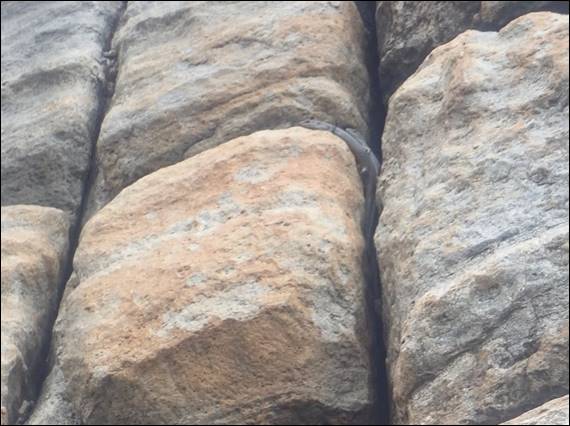
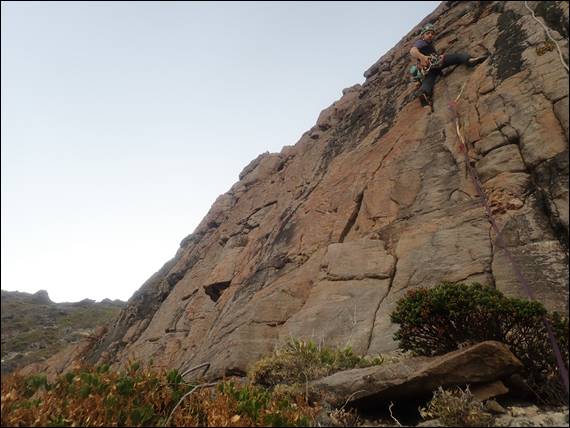
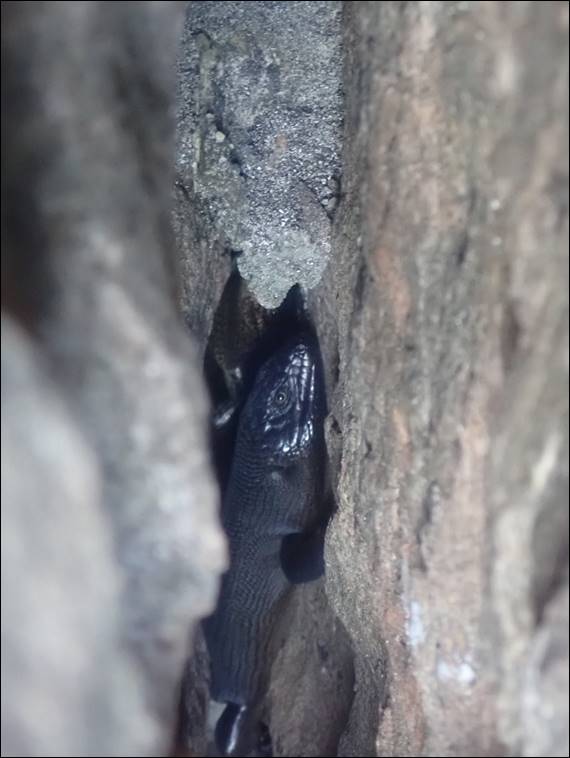
Yesterday afternoon Sarah sent me some great images of the resident Carpet Python that we so often see on two particular climbs that are next to each other at Wilyabrup. This time it was out in full and not, as we normally spot it, hiding in the flakes and cracks. She had snuck in a midday climb with Rongy, and with the warm sun on the crag the python had ventured out. This resulted in messages flying about, and my solo mission was being swayed towards a solo climb on the lines they had been climbing in the hope of seeing the python out and about:
Then Rongy hinted that he was free in the morning and could be encouraged to get out. We plumped for Castle Rock, and as the water there stays clear for much longer than at my local beach I considered suggesting to take snorkel gear. In the end I decided against that, and while the water looked very clear we both agreed it probably would have felt a tad chilly. It seemed that fish were taunting us and suggesting we had made the wrong decision, as they schooled just off the rocks and in the image below one is even jumping out of the water:
We instead focused on the climbing, picking off the easier routes one by one. And even some of those physically and mentally challenged us. Leading me to question whether some of my routes here were sandbags, or was it simply that I was weary today. You may be thinking that I should be from my two days out during the week. However, the weariness was more emotional and a result of having been out last night in what, for me, was an uncomfortable social setting for longer than I would normally cope with:
I’m definitely comfortable in my own skin, and initially this can come across as suggesting I am a pretty social person. However, I’d suggest and it probably fair to say that I have a degree of social phobia and sensory processing limitations. As such it doesn’t take long before my social bucket fills up, and when it starts overflowing it can take some time to reset myself. So despite being a relatively short and sharp trip, I was very grateful for the morning out and it definitely helped to blow the tangled cobwebs from my head:
A morning beach walk with Lisa and poodles was in order today. Lisa takes the pooches to our beach most days before she heads off to school, which is quite some time after I have already left for work. And on days I am working from home my head is filled with work thoughts from the moment I get up, so the idea of joining them for ocean ritual just isn’t on my radar. However, today I wasn’t working and was still waiting on a message to let me know what time and where I would be catching up with the crew from Alice Springs:
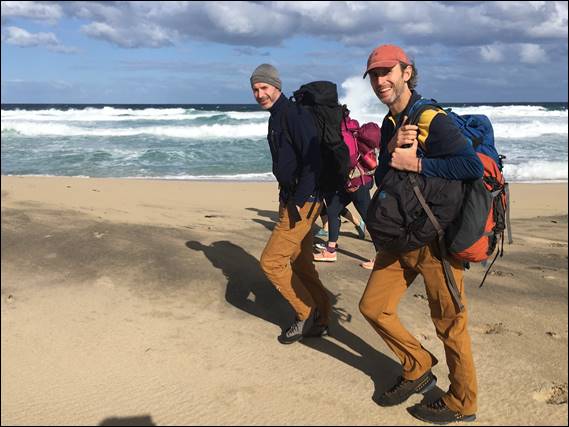
Being their packing up day, as they would have to drive to Perth today, it took a little more organising before they were out the door. I was also hoping to catch up with Ash at the same time, but ailments got the better of him so he had to bail. These two things resulted in not meeting up at the carpark until a time that is generally unheard of for me. And also just six of us heading out at mid-morning for a beach walk to get to today’s crag, but on another beach. Having observed the pace and routes that had been picked off at Wilyabrup yesterday, I had suggested last night that Moses Rocks could be a good alternative:
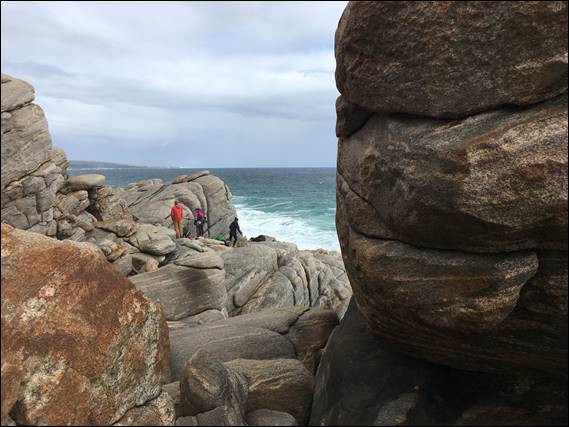
A place that divides the local climbers I hang about with. Some loving it and other not so much. I was hoping the guys today would feel the love, and the indications from the get go were promising. This included noticing the texture and patterns of the rock and proximity to the ocean. And as we walked along the base, I provided a quick tour guide description of each wall and pointed out some of the routes. All the while allowing our audio senses to became accustomed to the ocean:
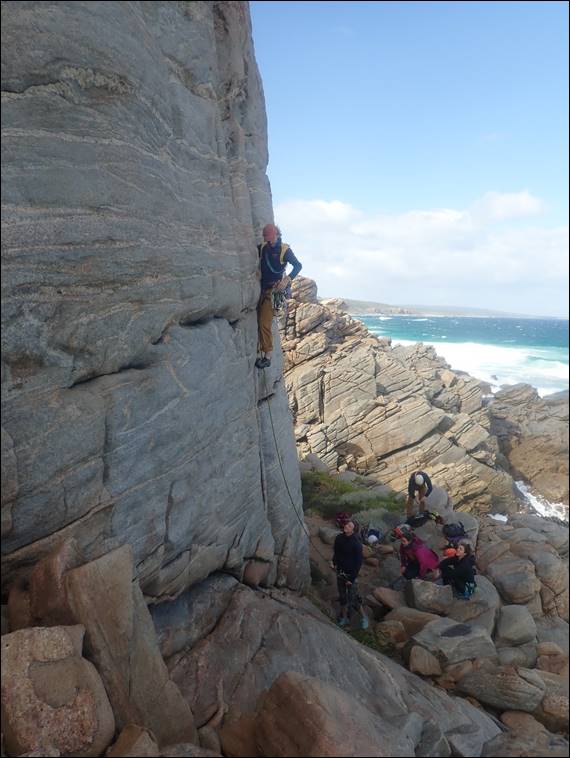
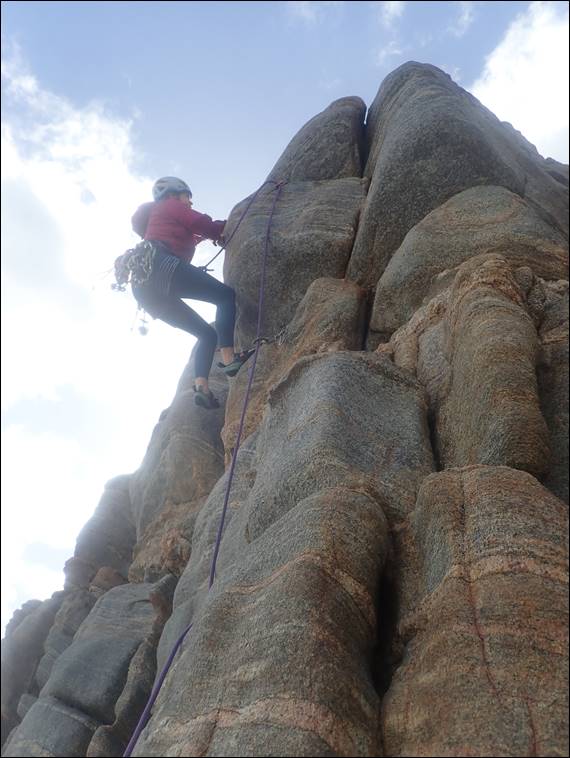
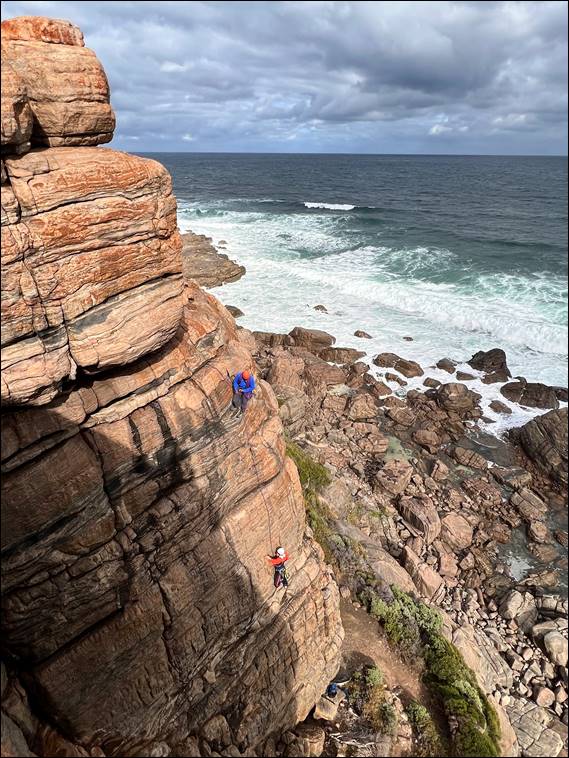
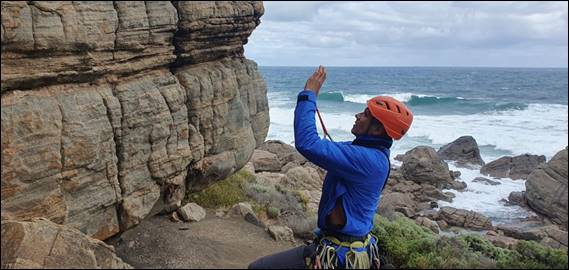
Unlike Wilyabrup, you feel like you are right in the ocean here. Today’s 4m swell and stiff southerly resulted in good sized waves that helping to add to the sensations. This didn’t put them off and it was soon down to business, and not surprisingly it was Pete who was first to jump on a lead. Drawn to the irresistible hand sized crack of the crag classic, which also provided the above picture perfect opportunity. One that can be seen replicated on the cover of the min-guide for this crag, inside the South West Rock Climbing guide, and also in the recent article I wrote for Vertical Life, Australia’s climbing magazine:
Ryan was also keen to have a lead, and I offered to belay. Unbeknown to him was my approach to belaying, and not actually putting him on belay until his first piece of gear was in. This practise, which is frowned upon by some, didn’t faze him and neither did anyone else seem to even notice what was happening. The climb also introduced him to the rounded and flared nature of the holds here, which is what puts some other climbers off this place. Again this didn’t worry him as he worked his way up, as besides us a few lines were being top-roped by the others after Pete had run up them first of course:
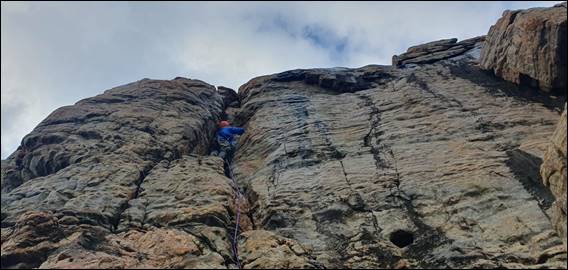
Moses in my opinion is a great place to bring beginners, having short easy to moderate grade routes and if chosen wisely with ample gear opportunities. And as we first wandered along they spied the natural and appealing line of Mini Thor, a route I have sent a few people up for their first trad lead. So partway through the proceedings Hannah and Pete wandered back that way, to allow Hannah to have a bash at trad on lead. Enjoying it so much that she bagged two more leads during the day. She wasn’t alone and Laura, who admitted to being a little rusty and then Ads also had a lead or two:
Watching all the leading going on and seeing how comfortable everyone was at Moses, I like to think I had picked the right location for today. And once again this place has proven to be worthy of the title I have adorned it, being “the friendly crag”. During a period of not much activity, as people were watching, coaching, and/or just encouraging someone on the rock, Laura was keen for a different route to have another trad lead. We wandered across to Tweedle Dee and Tweedle Dum, being rarely climbed routes I was keen to see how she’d go. Picking Tweedle Dumb, she gave it a red hot go and even took a lead fall:
Eventually she resided to choosing the escape route to the right called Dee Dumb. Now this may seem like a lot of detail about one of the many routes climbed today, but there is a reason. When Craig and I first established these climbs, he was too chicken to finish Tweedle Dumb and rather than go for it, as Laura had today, he instead piked out and established Dee Dumb. So I have to say I was impressed with Laura, despite being rusty, giving it several serious attempts before following the easier line. Back at the main area the enthusiasm for climbing seemed to be waning, and there was talk of the need for coffee:
These guys however come prepared and that didn’t mean finding a café, they came prepared with a stove and all the provisions for what looked like a gourmet lunch. I stuck about until the break time was over, which allowed for a bit more chatting and finding out even more uncanny similarities, such as were we have climbed and people that we knew. Having felt like I had climbed enough over the last two days, and as the provisions were being packed away and there was talk of a climb or two still to be bagged, I did as I am so often guilty of in social situations snuck off. But not before saying farewell, as I left them to enjoy a bit more time at “the friendly crag”:
It would seem that some people have very long memories. It has been over seventeen years since we left Alice Springs and we have not been in touch with Garn all that time. However, when his friends were planning a trip to Western Australia he suggested they should touch base with me. That they did, and I found out they had plans to spend four days climbing in the South West at the end of their two week trip. While I couldn’t swing four days to climb, I did take Wednesday and Thursday off to meet up and have a climb with Pete, Hannah, Laura, Ryan, and Ads. The timing also worked well to finally get out with Wiggins:
He has been climbing very little for a few years now. But while his focus has shifted onto other fitness regimes, he still likes the idea of getting out on rock. We aimed to take things steady, in part due to the time it has been since his last venture outdoors but also partly due to the place been a tad damp on arrival. Unfortunately, the timing for the four days on our local crags coincided with a rainy Monday, and even wetter Tuesday. At least this places dries up quick enough, and so while showers were forecast today we knew we’d get a line or two in:
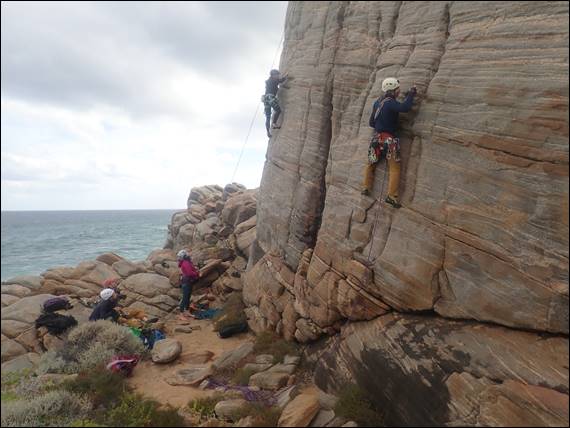
The way things worked we didn’t climb with the Alice crew, but did stay in the same vicinity allowing a chat between routes and also when required providing a bit of local knowledge. It was clear that Pete was the keenest climber, jumping on a line immediately on arrival and you could see his eyes scanning the crag for the next line. It seemed he did not spending much time on the deck at all, something that I’ve certainly been accused of many a time. And I have to say guilty as charged. But today Wiggins and I were taking a slightly slower pace, and we didn’t even have a game plan, so in-between climbs we had to ponder what we would go up next:
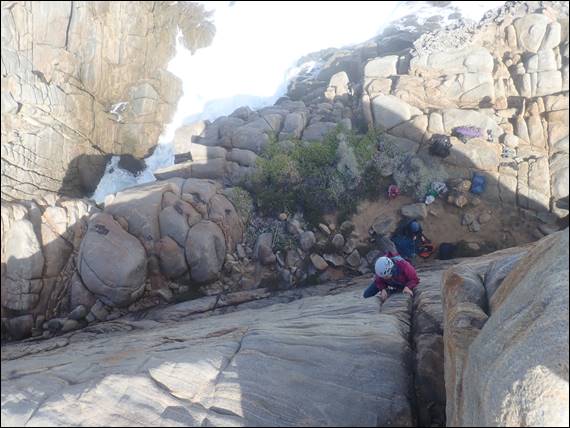
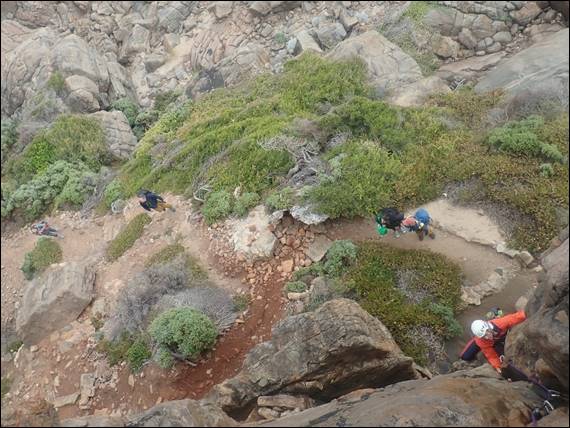
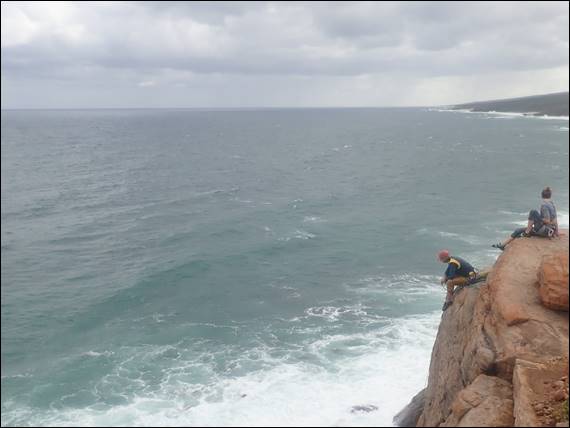
Below Pete is belaying Laura, while Hannah having just followed up the route was now just sat atop soaking in the watery views. The waterholes and rivers, when they flow, in Central Australia are pretty special, but the ocean outlook from this landscape are obviously very different. As such and wanting to make the most of the views, the crew were keen to stick to coastal crags, which is fortunately where most are located. Appreciating and respecting where we climb is an important ethic of true trad climbers, and it was good to see today that everyone was of like mind on that point:
As such just watching the ocean is as much a part of the joy of coming here, as the climbing itself. That said, and regular readers will no doubt be fully aware, spotting the critters that live here is also a big part of coming out. On our second route Wiggins and I stumbled across a family of Southwestern Crevice-Skink (Egernia napoleonis). These creatures have had quite a few mentions in recent posts, so you may be wondering why I would bring them up again. Well firstly, it was the first time I have seen a family of four, or possibly more, all hiding in one crack system:
But also because we later spotted the below special sight of an adult with a juvenile clutching onto its back, which I was taking the below image of above. Only 20% of skinks are viviparous, meaning that they bear live young. But all Egernia species are viviparous, producing young in late summer or early autumn. Some research suggests reptiles which bear live young create stronger bonds with their offspring, and this can lead to more stable family groups. This aligns with other research I have mentioned on the Southwestern Crevice-Skink, which form monogamous relationships and are capable of identifying individual relatives:
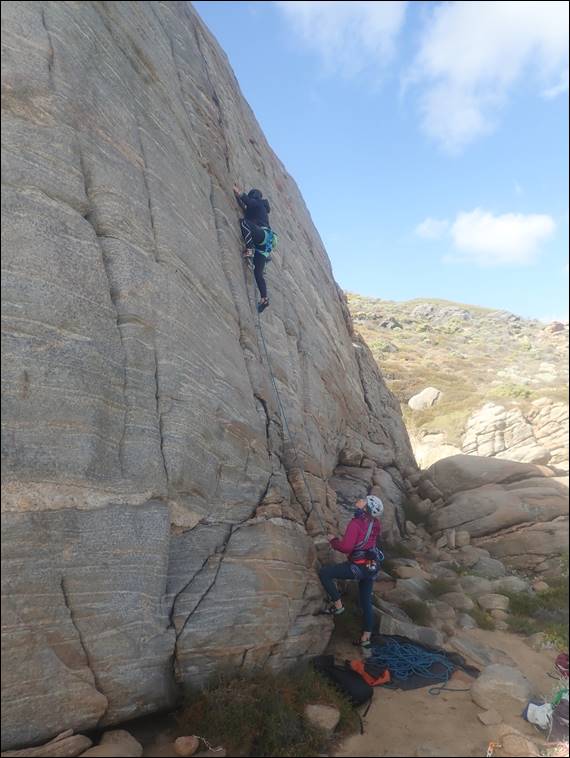
Not wanting to disturb the above sight, I deviated off line a bit to keep my distance. Not that it helped and the pair slunk back onto the depth of the cracks. After that second encounter with the Southwestern Crevice-Skinks we didn’t see any more scaly friends, and so instead focused on scaling the rock. Some of the Alice Springs crew were relatively new to trad climbing so like us were taking it easy. This place has some very fun and worthwhile lower grade routes. Perfect for cutting your trad teeth on, as well as honing your trad leading skills, such as the line Ads is enjoying below after Ryan had led it:
You could say that, like the Southwestern Crevice-Skink most climbers will generally look out for, and help each other out. And when Wiggins and I spotted a couple of climbers looking a tad nervous, as they started up a route on Steel Wall, it only seemed right to check in with them. Sure enough the first bolt felt a tad sketchy for Ash to clip, so after checking with her and Becky they were happy for me to help out, that’s what I did. It is of course not always the case, and on occasion there will be those that would rather be left to their own devices:
We then went back to bagging a few lines, while the rains that had been threatening never really came to be. That is not until our time was up, and Wiggins and I jumped on our last route, climbing out with packs. We then walked out leaving the others to continue enjoying themselves. Hearing later that the pace reduced, and even Pete had to slow down. Jumping onto lines in-between the showers, and being grateful that the rock here is very quick to dry. Hopefully, there will be some dry spells for tomorrows fun:
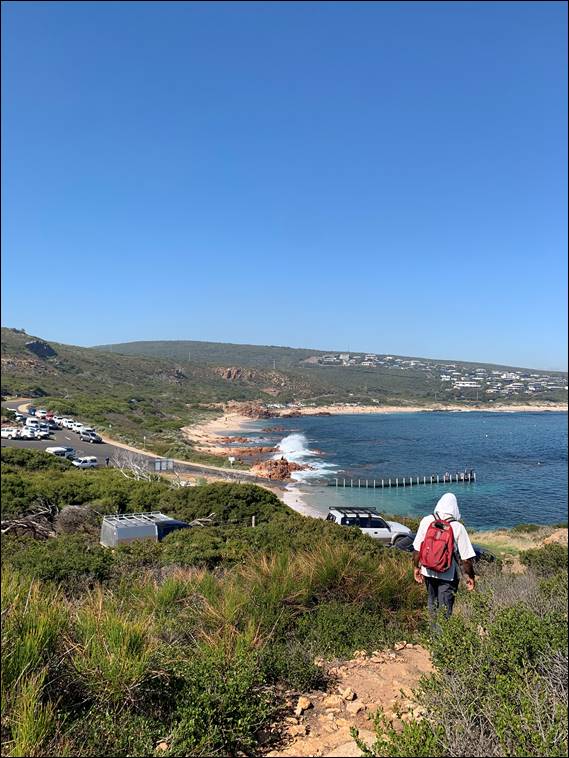
Today we went on yesterday’s walk. Taking in the stretch of coastline that I was going to wander along before Rongy had diverted my attention and time to a climbing trip. Yesterday I would have been by myself, but Lisa was starting to bounce back after not feeling the best and lacking energy over the last few days, so was keen to join me. We set off from Gracetown, which was relatively quiet except for in the water, where surfers jostled for positions hoping to catch a wave as they rolled into the bay. We were heading north this time, and the landform was more rocky than we had expected:
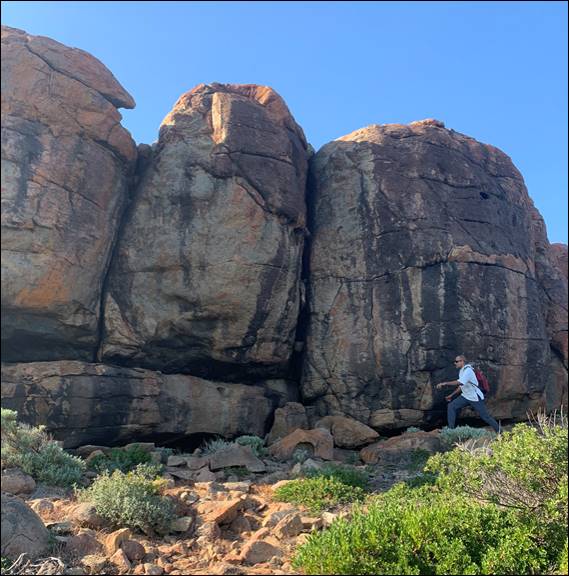
When Lisa had shown an interest in coming I had shown her the path on Google maps, and it had looked relatively flat and easy, which was what was needed today. Fortunately, the initial unexpected scrambly section didn’t last too long and we were soon on a more level and sedate path, more akin to what we had expected. While checking the satellite imagery I had also noticed a rock formation next to the track that looked like it may have been an outcrop climbing Josh had recently shared. He and Kellie had spent a few days hiking along the Cape to Cape trail, and the outcrop had peeked his interest as a possible place to have a climb:
Sure enough it was the same place, and initially I could see why it had interested Josh. As shown above, with me excitedly scampering around the base, there was enough height to make it a possible place to climb. However, while in my mind I was spying potential lines up the faces between the wider cracks, there was only one thing missing. I couldn’t see much in the way of opportunities to place any gear. And being as steep and tricky as they looked, soloing them was probably not a good idea. Sadly, or should I say sensibly, my climbing shoes, which I had taken with me today just in case there were some moderate lines to bag, stayed in my pack:
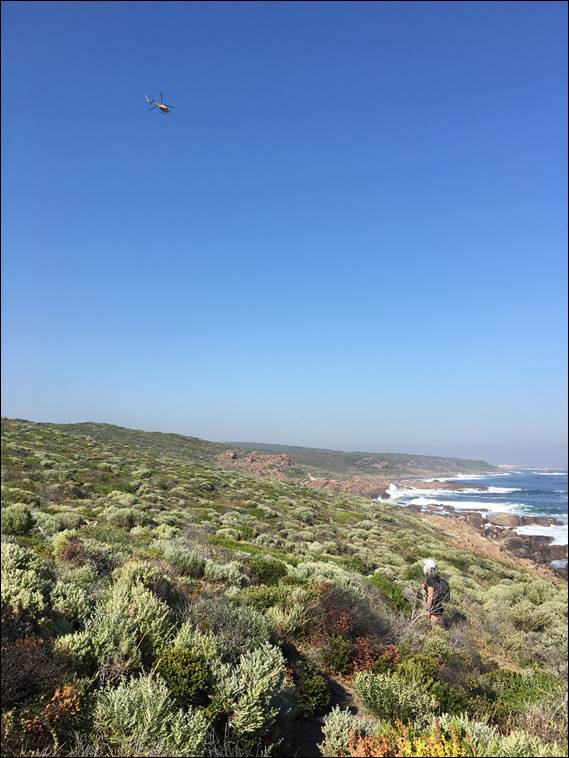
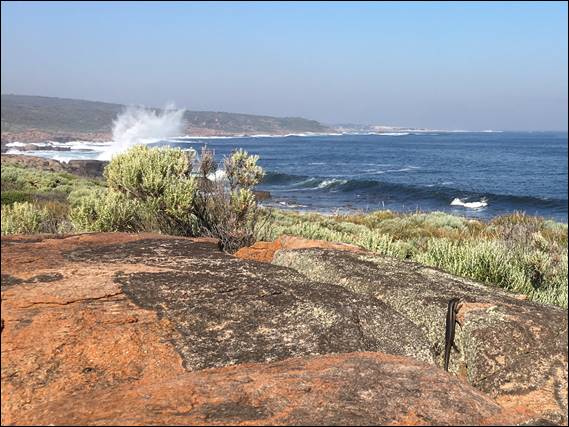
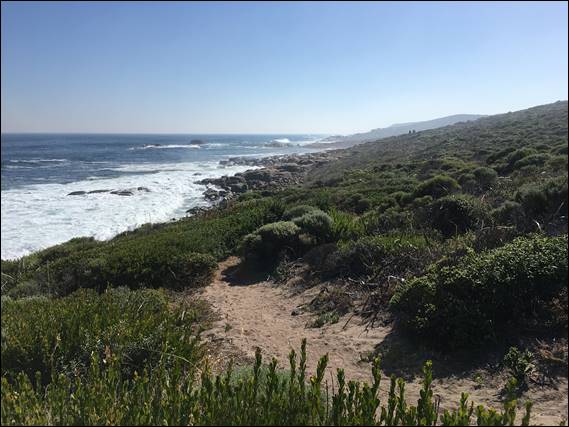
The track never strayed too far from the coast, allowing us to see and hear the crashing waves all the time. There wasn’t much else to see, and distract us from the continuous battle between the waves and the rocky coastline. At one point the Surf Life Saving WA’s rescue helicopter, flew overhead and for some reason circled back for a second pass. There was no one in the water where we were, so we are a little unsure why they did that. I’m used to seeing the sight of the helicopter during my climbing trips, but it was a bit of a novelty for Lisa so the second pass was welcome if just to allow her a second look. During the school holidays the helicopter makes daily passes along the coast, checking for anyone having trouble in the water and also looking for sharks near popular beaches. We didn’t see any sharks, but fleetingly saw the same small skinks we saw last weekend:
This time we also saw their larger and commonly seen relative, being the South-Western Crevice Skink (Egernia napoleonis). Skinks of the genus Egernia, which includes the King Skink (Egernia kingii) which we also spotted today, include species that are reputed to be the most intelligent Squamates. Meaning scaled reptiles and includes lizards, snakes, and amphisbaenians. The term lizards contains dragons and skinks, and amphisbaenians look like a snake but are more commonly called worm lizards. The habitat of the South-Western Crevice Skink comprises arboreal (or in layman terms trees) and rocky areas, which mean they are not only one of the more intelligent species but they also have great climbing abilities, as shown above as this one like us peered out to sea:
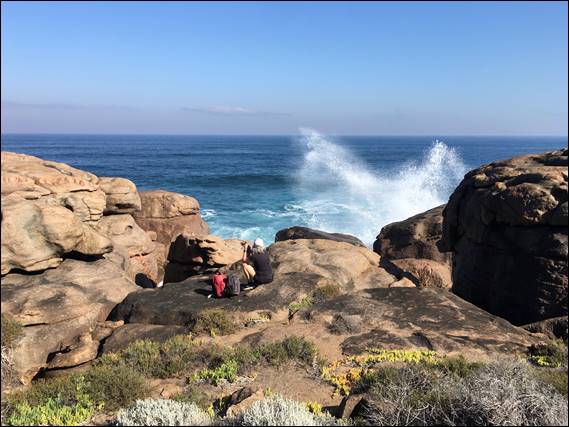
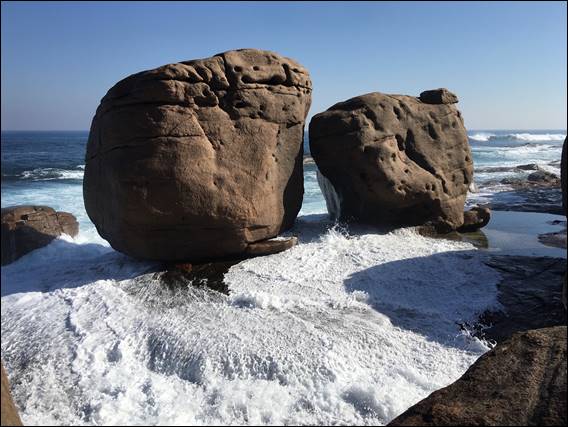
It didn’t take us long to reach our destination, it was only a short seven kilometre there and back again walk. It’s not always about packing in the distance and today for me it was about visiting Whaleback Boulders, a place I have climbed at twice before. Lisa was happy to sit and watch the waves smash into the bigger boulders from a safe elevated stance, while I went for an explore. It is worth clarifying that by climb I mean boulder, which means there are no ropes involved and we only use mats to cushion any falls. If you check out the following post you’ll see an image of Kym scaling the boulder on the left of the image below (https://sandbagged.blog/2016/01/17/whaleback-boulders/). Bouldering could be a climbing style for the rocks Josh had spotted, but due to their height it can get dicey:
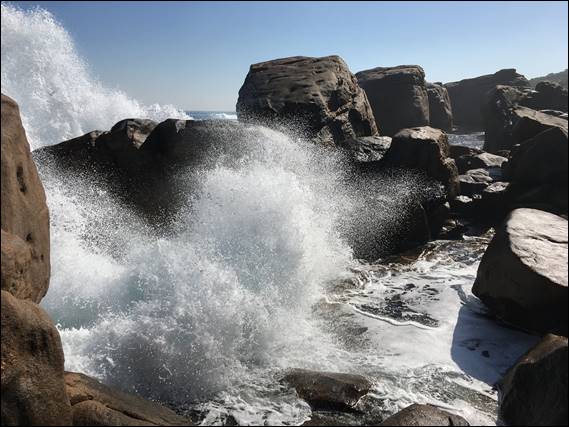
With today’s conditions there was obviously no chance of a boulder, not that I had lugged any mats along with us anyway. Once again the climbing shoes stayed in my pack, as I went to explore the boulders. On occasion just sitting to watch the waves find entry points between the rocks to send white water in all directions. It was an exciting position to be in, but there was a need to watch the sets of waves very careful to avoid being caught out, or worse pulled out. Lisa would never have liked it, but these places really make me feel alive. So I spent some time there and took lots of angry water images. Eventually I wandered back to Lisa, as it was time to break out the tea and cheese sandwiches, which I am sure you were expecting to hear about:
We sat safely up on high, continuing to watch the waves for quite a while longer. Today we saw heaps of hikers, ladened down with heavy packs, and trail runners carrying very little other than hydration packs. It was a busy day on this stretch of the Cape and Cape, and several groups passed as we sat and watched the waves. All seemingly oblivious of, and missing out on the amazing labyrinth of boulders that lay just a short distance from the path. Or maybe they were focused on what they had set as the end point for the day, and instead put their mind to continuing to place one foot in front of the other. After soaking the atmosphere and views in, that is how Lisa and I hoicked it back to Gracetown:
It did make me wonder if we ever walked the entire Cape to Cape trail in one go, how we would tackle it. Go slow and take it all in, or move faster and risk missing what lays just a short distance off the track. Lisa joked that it would take me a month to walk it, whereas most people take a week. Unlike the outward trip we walked at a quicker pace and with more purpose, in part as it felt like it was heating up and in part as we were walking along the same track we had already walked. When we arrived back to a much busier Gracetown, with people still surfing but now also fishing, swimming, and just sitting on the beaches, I’m sure we halved the time it had taken us to walk out:
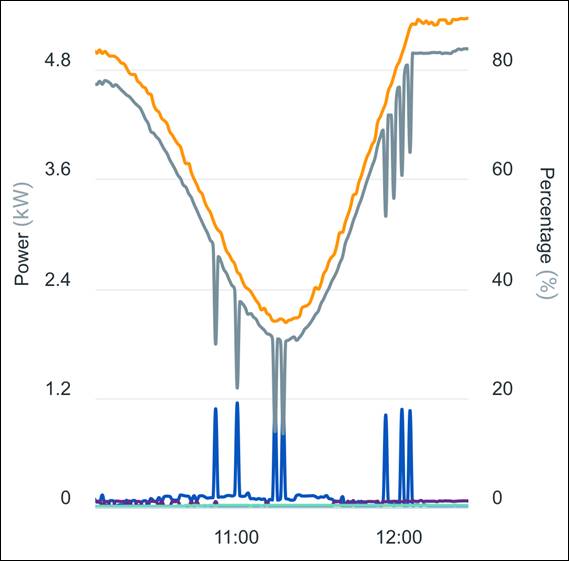
With a total solar eclipse skimming the edge of Western Australia I sat at work on Thursday wondering why I hadn’t thought about heading out for a climb on such a special day. However, as we approached 11:18am when the maximum coverage was due to occur for where I work, there was approx. 68% coverage of the sun. So not surprisingly, while the day darkened a little it wasn’t by much so in a way I feel my decision to be in the office was right. At our house the solar system recorded the gradual reduction, and then rise, of solar radiation hitting our panels on the cloudless day. Indicating just a little over a 50% reduction:
I recall in 1999 standing outside the office in Bishop’s Stortford, in England, watching a partial solar eclipse that reached approx. 95% coverage. Even then it still remained relatively light. You would think there may be a simple chart that provided an indication of the relationship between the percentage of coverage of the sun to the reduction in light radiation that reaches the surface of earth, assuming a clear sky. But I was not to be able to find one, at least anything that made sense in layman terms:
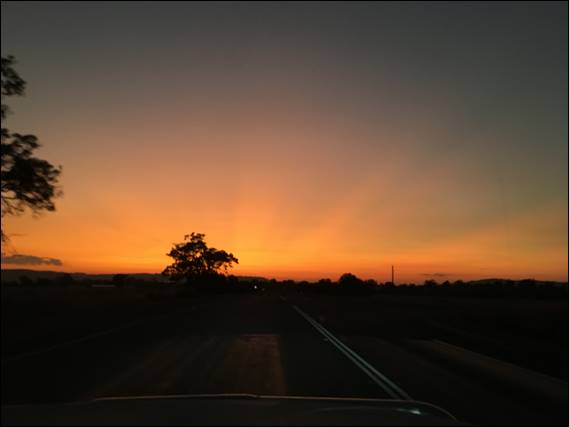
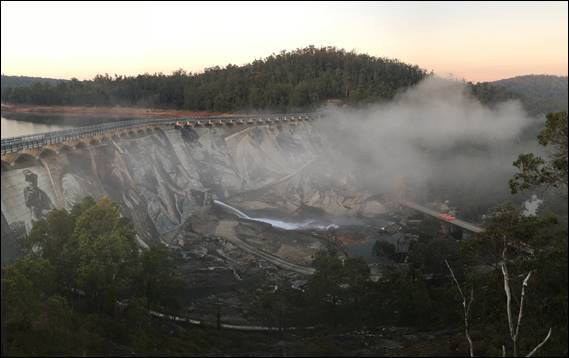
This morning with all intentions of heading back out on the Cape to Cape track, for a hike that would lead me past some rock formations I was keen to see, my plans were changed when Rongy asked if I would be up for a quick Welly Dam sessions. We both have shoulder niggles, so it may not have been the most sensible of destinations. It is however convenient when time is limited, plus heading east allowed us to time our outward journey so we could enjoy the light display that the increasing solar radiation of day break provided:
On arrival cloud hung in the valley below the dam so we headed to the lookout for a peek. Knowing the sight before us would not last too much longer, as the sun could be seen tipping over the horizon. As we climbed we could see the sunlight flood across the valley, but due to the orientation of this place we resided to staying in the shadows. Moving into autumn, the leaves of the trees were falling and the grass was damp underfoot from the night-time dew. And with the generally cooling temperatures the rock also felt slightly damp and cold to touch, adding to the wonder of how we might fare today:
No matter, we had no expectations, and were just out to catch-up, clear our heads, and enjoy a few climbs during the process. I did however suggest that maybe it was time for Rongy to attempt the new climbs here, a tall order based on how often he climbs and also that we needed to be at least a little bit sensible. He had a successful bash A Storm in a Teacup, which I have to say felt a lot harder today. And I was even more elated when he had a crack at Peanut Brittle, which no one else has attempted other than myself. It lived up to its name and rained brittle bits of rock, something that will reduce with time and more ascents:
It was also a little too tough for Rongy to finish, with the top sequence flummoxing him. Maybe in part due to his level of climbing fitness. This meant I had to jump on the pointy end, which was the third time I’ve lead it. For some reason, each time it has felt slightly harder and I know it is not due to holds falling off. So much so that I wasn’t able to get a clean lead today, thwarted by the final crux moves. There is however no need to remain dark about such experiences, and we both felt so much better for the short but very enjoyable morning out:
It was time for a change of pace for my adventures this weekends. I could blame the damn indoor wall I built in our shed; the cold spell that hit on Monday last week making niggles feel that bit worse; the aging process resulting in the body being more susceptible to injuries; a string of back to back days of climbing; or a lack of self-discipline and climbing a bit harder than I should have on some recent trips. But when all is said and done blame is like hindsight, pretty pointless. So this weekend my shoulders were telling me a rest from climbing was needed:
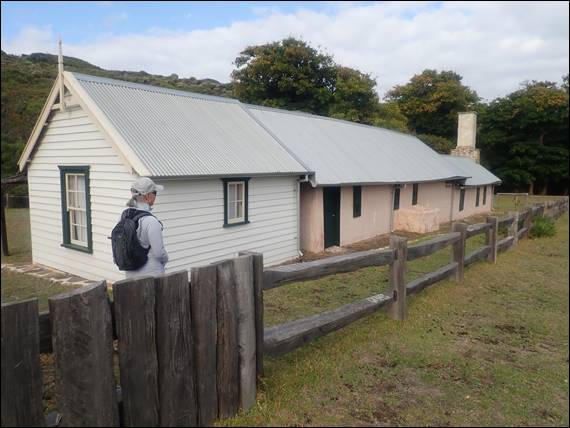
While I accepted I needed a rest from climbing, having a five day a week desk job, I still had to get outdoors and opted to head out for a walk with Lisa. It took a bit of negotiations, during which we went from adventurous rock hopping along the coast to a well-trodden circular path. So it went from hopping across coastal on pebbles, which was never going to fly with Lisa, to a hike starting and finishing at the heritage-listed Ellensbrook House in Yebble. A property managed by the National Trust of Western Australia, and which is on the Cape to Cape trail:
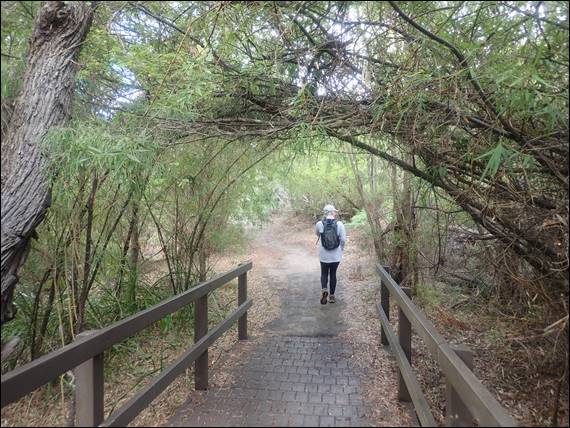
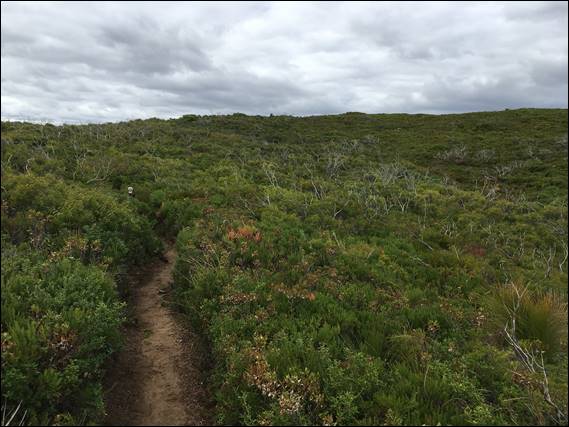
A home built in 1857 by, and for, Ellen and Alfred Bussell with the assistance of labour from the local custodians, convicts, and deserting sailors. After a quick look round we left the bricks, mortar, and paved path behind and headed south on the Cape to Cape trail. Unlike my solo hike in July last year (https://sandbagged.blog/2022/07/17/a-voice-in-my-head/), which comprised a circular loop immediately north of Ellensbrook, I was pretty sure this trail would be an easy one to follow. It certainly started that way, as we wandered through a tree lined path:
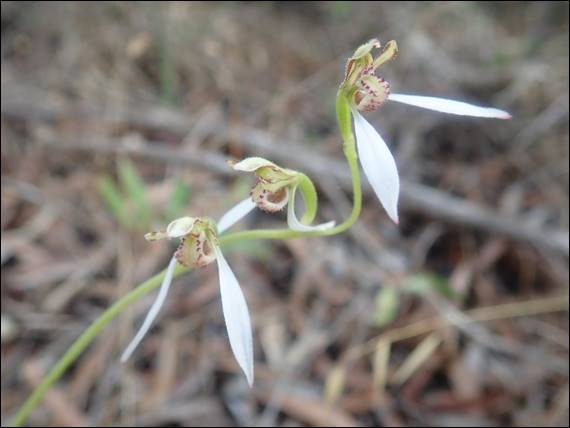
I wasn’t looking for orchids but couldn’t miss the above and numerous other Common Bunny Orchids (Eriochilus dilatatus ssp multiflorus). Last year the first one of these we spotted was in late April at Jarrahdene, some 20km to the south. An early flowering, widespread, and commonly found orchid along the coastal strip. The scientific name comes from a mixture of Greek and Latin words that mean enlarged wool lip, the reason becoming evident when you take a closer look. This find heralds the start of my hunt for orchids this year, but it will be a slow start with not too many early starters in the South West:
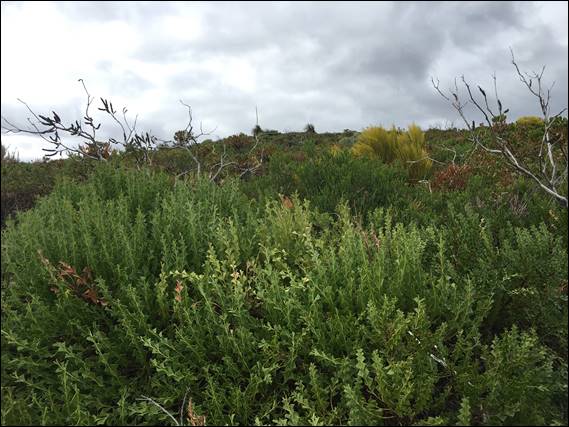
Reading some peoples reviews of this section of the Cape to Cape trail, a few people indicated the high vegetation resulted in long sections with no vistas. But when you start to look in more detail there are plenty of interesting aspects. For example the huge variation in foliage as shown above, with different hues, shapes, and textures. Birds can be heard but are not often seen in the low shrubs, but checking the ground the more you look the more you see. As Lisa walked ahead of me I spotted something jump off the path as she passed, so I got on my knees and searched under the scrub:
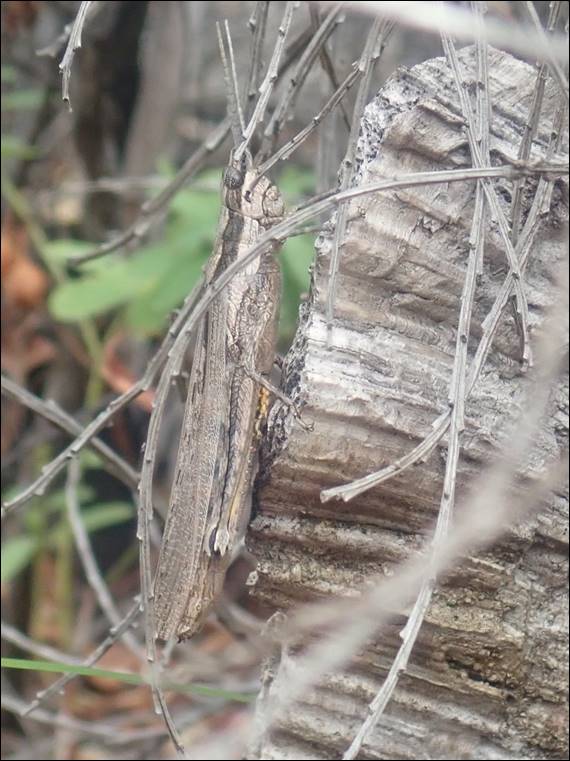
It took a while to spot what it was, a Bark-mimicking Grasshopper (Coryphistes ruricola). I’ve checked out what I could find of this creature, and all there was that they are found throughout Australia except Tasmania, and the textured grey-brown patterns result in them being very well camouflaged. I can contest to this and it took me a while to spot it, and then a while longer for Lisa to also see it. Looking at the images in more detail I noticed under its body there were some yellow egg shaped objects attached to it, but grasshoppers lay their eggs under the soil so they can’t be that:
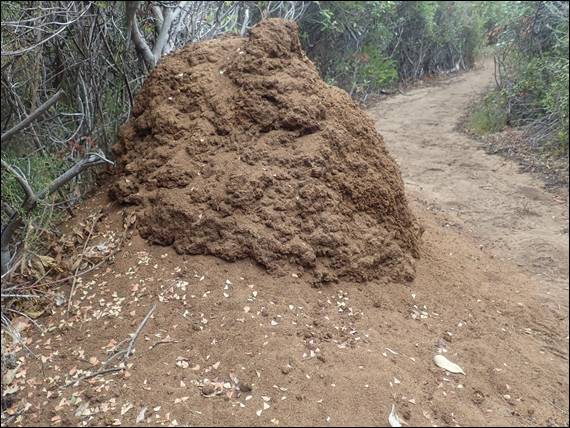
We wove our way along the meandering path; up and down the secondary dunal system, with occasional glimpses across the landscape as the vegetation height receded before coming back up. Lisa spotted the below termite mound, which in itself may not seem too special unlike the more spectacular mounds of Cathedral or Magnetic termites found in other parts of Australia. But such mounds, regardless of stature, are an important pat of the landscape. This was probably a mound built by Amitermes obeuntis, the more common species in the south west:
Being one of just over 150 termite species found in Western Australia, according to a 2015 study. Of the identified species approx. 14% were found to build mounds, and all of the mounds checked out contained more than just termites. Also being a home to a myriad of vertebrate. The average number of additional inhabitants was 30 with the maximum being 150. This included predators of termites, as well as other creatures. The bigger numbers were found in the more arid and northern areas of Western Australia. Where the environment is more hostile, and the mounds likely provided the best and safest habitat:
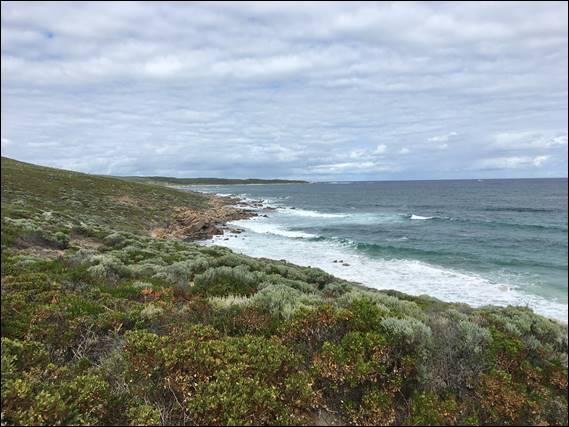
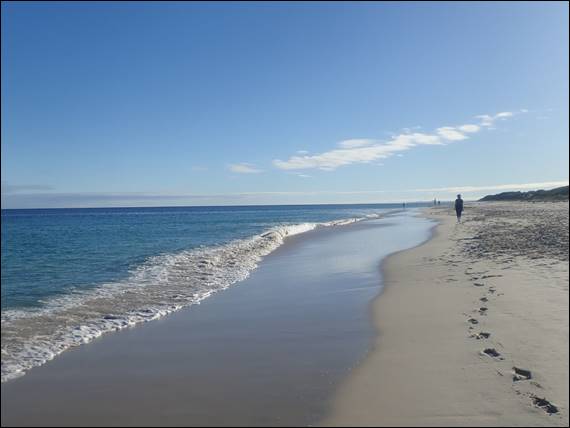
I’m starting to get off track. Something I am pleased to say we were not doing as we left the Cape to Cape trail. Following a 4WD track towards the coast before it hooked right to take us back northwards. This took us to a stretch where we had to walk along beach, but before we got to that there was the need for a half way pit stop. During which the customary flask of tea and cheese butties came out, providing a spot of very welcome refuelling. Once we hit the coastal stretch of the walk, which isn’t part of the Cape to Cape, the views never left us:
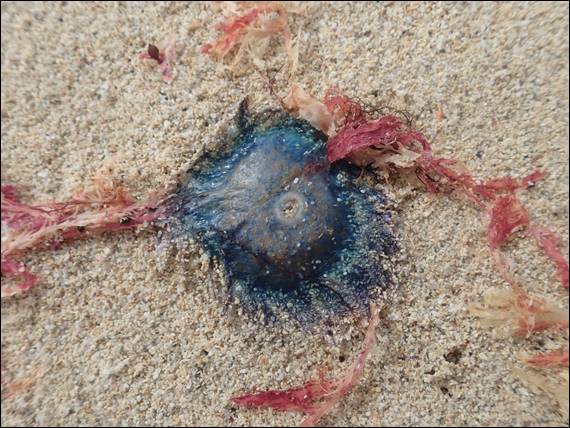
There was a fair bit of beachcombing happening on the beach stretch, the sand was patterned with red weed that had been washed ashore. Scattered amongst the weed we found Portuguese Man O’ War (Physalia physalis), not unlike our local beach. More interestingly, there were also the above Blue Button (Porpita pacifica) that like the Man O’ War is a colonial organism. Comprising a float, being the button that is up to 30mm in diameter, under which a colony of hydroids hang like tentacles. These collecting prey and move them up to the underside of the float where the mouth is located:
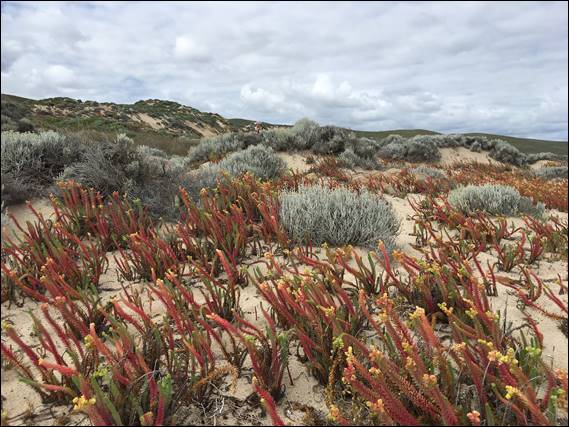
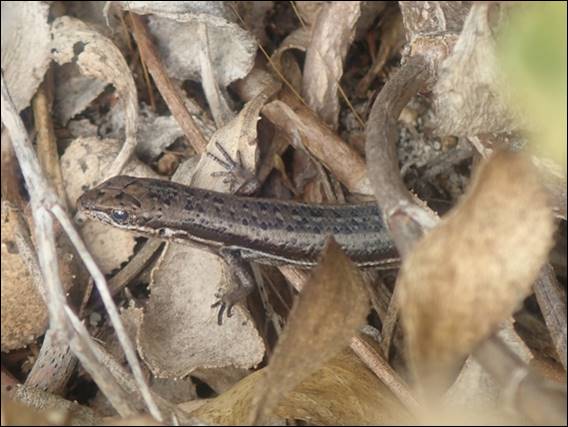
After the beach walk, we found a faint path that led up the primary dune for a short distance before following the top of that for the remainder of our day out. The sun was on occasion poking out, and it felt a nice warm temperature. Not just for us but also the skinks that were now out, and we only saw fleetingly as they dashed for cover when we approached. Most disappeared before we could see them, although we managed to get close to a couple of them that I have identified as the Buchanan’s Snake-eyed Skinks (Cryptoblepharus buchananii) below, and I also spotted one Western Three-Lined Skink (Acritoscincus trilineatus):
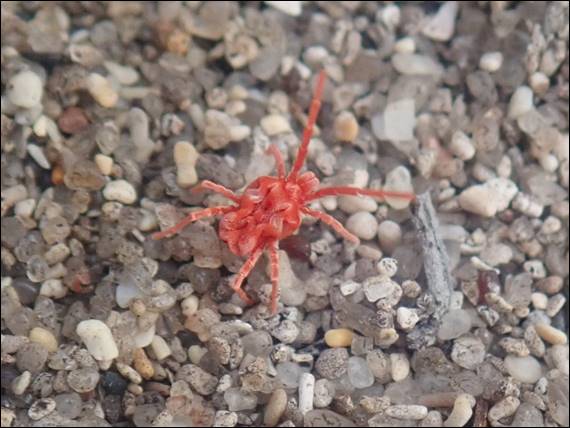
I have only seen the latter skink once before, at Wilyabrup. Rather than include an image here I have provided a link to that post (https://sandbagged.blog/2022/11/19/a-cool-find/). It was hard to know whether to look at the waves of the ocean; the scrub, which hid birds that we could only hear; or the path below our feet. No doubt we missed loads, but not this and one other Red Velvet Mite (TrombidiumFabricius). Adults are typically 4mm, so I am not sure how we spotted them. Mites are arachnids, having eight legs and mostly prey on the eggs of whatever small insects they can find:
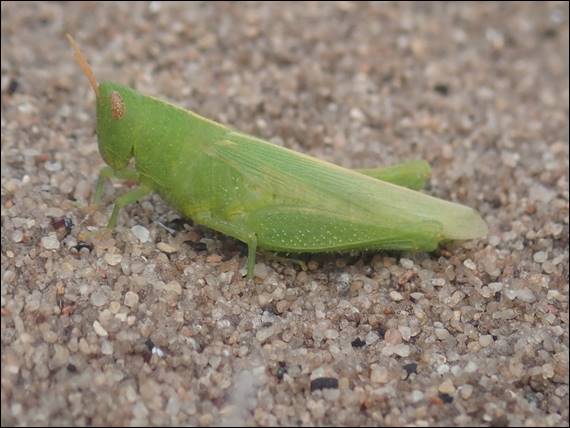
The larvae of these mites are external parasites, finding a prey that they can clutch hold of while they suck the juices of their living host. This made me wonder if what I had seen on the Bark-mimicking Grasshopper were mites. It is possible, but being yellow in colour I assume they were not the larvae of the Red Velvet Mite. Another find that I am also not sure of, is the following green grasshopper. I have searched many sites but despite the yellow antenna, fleck patterned eyes, banded hind legs, and body shape, I cannot find a match:
Lisa and I were now at the tail end of our first walk of the year, a very pleasant and varied 10km’ish loop that we would highly recommend. Before we got to the last stretch to take us a short distance inland back to the car, there was one more obstacle of the Ellen Brook crossing. I had read that in high flow periods you’ll get wet feet. Being Autumn I guessed we would not be at risk, so hadn’t mentioned it to Lisa so she wouldn’t worry about it during the walk. I was fortunately right, and as such Lisa gave the walk five stars on AllTrails, as it ticked all the boxes:
There was a slim possibility of bagging three mornings of climbing on the trot, but Rongy had other plans for today so it was not to be. Instead, and seeing the conditions had looked not too bad yesterday afternoon, I decided on a dip. Truth be told I could drive an hour and find some clear waters with good visibility. My motivation to spend several hours driving to get out for a climb, does not however extend to going for a dip. As such I have to suck up the conditions that the convenience of my three minute walk to the beach offers:
To my surprise, and for the first time I have seen it, several people were fishing off the beach right on the spot where I normally head in. It’s the area with the best bit of reef, and normally people fish in the open sandy bay away from this area. The open sandy areas also being the place I have seen the most shoals of herring, so my guess is that the people fishing were not local and didn’t have that knowledge. To avoid their lines and upsetting them I went in the open areas and swam further out to the reef:
The visibility was ‘ish at best, and while there was a bit of life about it was hard to see well. The low angle of the sunlight was not helping my cause. As such rather than chase fish I decided to just soak up the feeling of being in the water, only going down for a closer inspection on occasion. I did like the above Lace Coral Bryozoan (Triphyllozoan moniliferum), which being a coral you may realise is actually a cluster of animals. These are less than a millimetre in size and called a zooid:
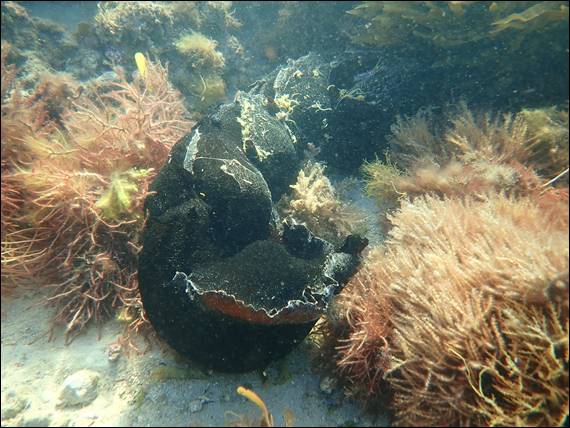
Like many marine creatures they are calcifying animals, and can make structures out of calcium carbonate, such as shells. The difference being that they create a far more diverse mineral composition, resulting in an enormous range of shapes and sizes. My next find is one I have included several times before being the Giant Sea Hare (Aplysia gigantean). Growing up to sixty centimetres in length it is the biggest sea hare in Australian waters, but this one looked way bigger than that so deserved a closer inspection:
It took me a while to figure it out, but there were six or more in a row. These creatures are hermaphrodites and often mate in numbers, with as many as twenty having been recorded at one time. Forming a line with some using both female and male reproductive organs, while others only use female or male. Mating mostly commonly occurs during January and March, but can occur into early autumn. The resulting spawn is long and stringy clumps of orange coloured eggs, something I have as yet not come across:
I left the amorous procession alone, and wandered back towards the sandy bay, not seeing too much more but enjoying being followed for a bit by a small school of juvenile Western Pomfred (Schuettea woodwardi). These fish would normally spend their day hidden in caves away from the eyes of predators, coming out at night to feed on tiny planktonic crustaceans. But today they were quite content to swim with me in the open water. Leaving the water I got home to rinse my snorkel gear for the last time this hopeless season before packing it away:
As hinted yesterday, today was Rob’s day. He was keen to tick a few lines and continue to get his head back into the leading game. As Sam has been finding out, climbing is so much more than physical ability. The best indoor climber can come unstuck on the easiest of outdoor routes when put on the pointy end with a trad rack and no bolts to clip. I didn’t realise, but when I bumped into Rob at Moses on Christmas eve last year, that was just his second excursion out since he had decided to get back into climbing:
It had been a fair time since he had touched rock and he didn’t know any other local climbers, and so it was a fortunate encounter for him. Resulting in giving him access to a few people to get out with to help him on his journey. Today we visited Driftwood Bay, a place with some ghosts for him in particular his chosen first climb. Having come to climb here with a mate and his wife some years back, the day didn’t turn out quite as expected. In part due to not knowing where the crag was and rapping into the wrong outcrop, being The Organ Pipes:
But probably more so due to the lack of flexibility of his mate, who got a tad grumpy about it all. When they rapped down the right outcrop his mate spat the dummy, scrambled out, and left them too it. It is interesting and at times baffling what can tick off some people. This resulted in Rob setting off, not in the best frame of minds, up what they thought was Crab Slab. Placing a wire soon after which a hand hold came away. Not only did he fall but the wire popped and he and his wife then tumbled down the vegetated slope below. Lucky not to have done any more damage to themselves, that was the end of that day out:
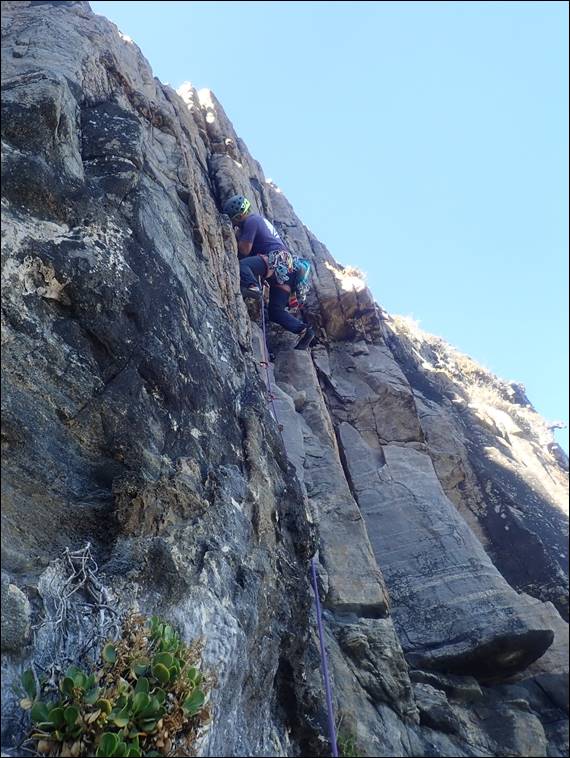
So in a way today was about working on his leading head and a bit of redemption. It started well, a clean lead on Crab Slab, that included the use of several well placed tricams and being on the actual climb this time, no holds came off. Although I really should have taken an image of the occasional loose rock that he unknowingly dislodged, sending it down the direct line at me. This crag has quite a few ledges and there is loose stuff on them, so care is required. I’m fully aware of this so kept an eye out for this precise risk:
I could also sense his mindset was not at total ease, as he inched his way up. But up he went and he enjoyed it. I’d even go so far as to say there was as sense of relief in addition to the joy of having that route under his belt. We went lead for lead, and as my head came level with a horizontal break on Turkish Delight I noticed a tail slip down behind a big flake. Here I found two King Skinks (Egernia kingii), you’ll have to look closely in the above image to see the second. Sadly no other reptiles showed their scale today, and Rob seemed quite happy about that:
He then picked off Pick Pocket and was visibly more at ease, moving that bit smoother on sharp end. Another successful climb with the tricams getting more use; I think he likes them. I thought I undid the flow of the day when I decided Sure Footed would be a good idea, the bottom crack is a bit stubborn and had Rob a tad perplexed. After several attempts he worked round it, quite literally, and then relished the very fine upper name sake slab. Admitting he was a bit pumped, as he arrived at the belay, I ignored this and asked if he was up for Old Crate:
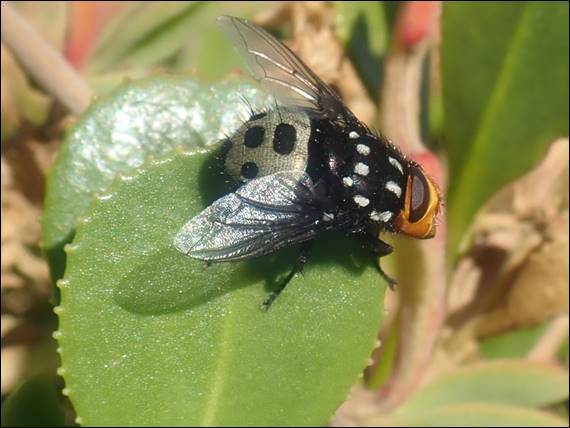
Later he told me that in his mind he was thinking not, until I asked him. And I’m pleased he changed his mind, as he certainly looked to be thoroughly enjoyed the third lead and seemed way more comfortable. As he climbed, the sun came further over the ridge hitting the vegetation at the base of the crag. Bringing to life the only other animals we found at the crag, flies. I have seen this type before, back then finding a web identification indicating it is a Snail Parasitic Blowfly (Amenia imperialis):
I am now not so convinced, as other sites suggest the body is supposed to have a metallic colour. So it might just be a Spotted Blowfly (Amenia leonine), but even then the silvery abdomen doesn’t fit in with the identifications I have found of that species. As is often the best approach with multiple choice exams, if we assume my first answer was correct, I have discovered that the Snail Parasitic Blowfly lay larvae as opposed to eggs. This is quite unusual, and these larvae are reasonably well advanced so when they are placed on snails they are ready to feats on their living host. Meanwhile above me Rob ticked off a third successful lead:
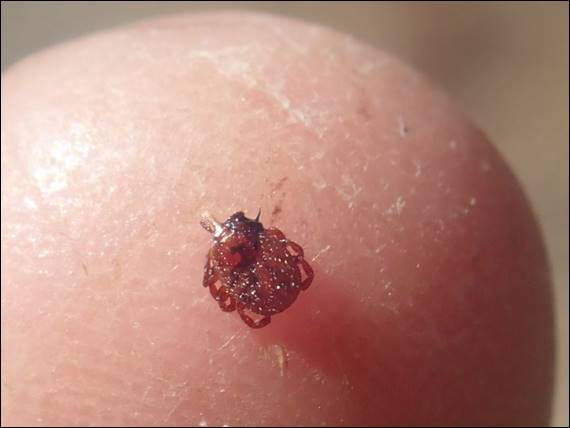
As we walked out I found another parasite, a tick. Howsie is a self-confessed tick magnate, but I rarely get them and this was a first for me at the cliffs of Wilyabrup. It had latched onto my wrist, and was yet to start feeding on my blood. There are two main types of ticks in Australia being hard ticks (Ixodidae) and soft ticks (Argasidae), the latter not often attaching themselves to humans. So by deduction, and based on the most common hard ticks found in Western Australia, I am guessing this was either an Ornate Kangaroo Tick (Amblyomma triguttatum) or Brown Dog Tick (Rhipicephalus sanguineus), probably the latter:
Apologies to Rob, but I’ll make it up to him tomorrow. He had asked if Howsie was keen for a session up at Welly Dam this morning, but with everything that Howsie had to organise before the big off on Sunday he declined. I wasn’t aware of that when I also suggested to Howsie that if he was keen we could squeeze a quick trip up to the quarry. Suggesting that we could hit two lines, allowing us to be in an out within an hour’ish. That and an early start would therefore not eat too badly into his and Nadia’s preparation schedule:
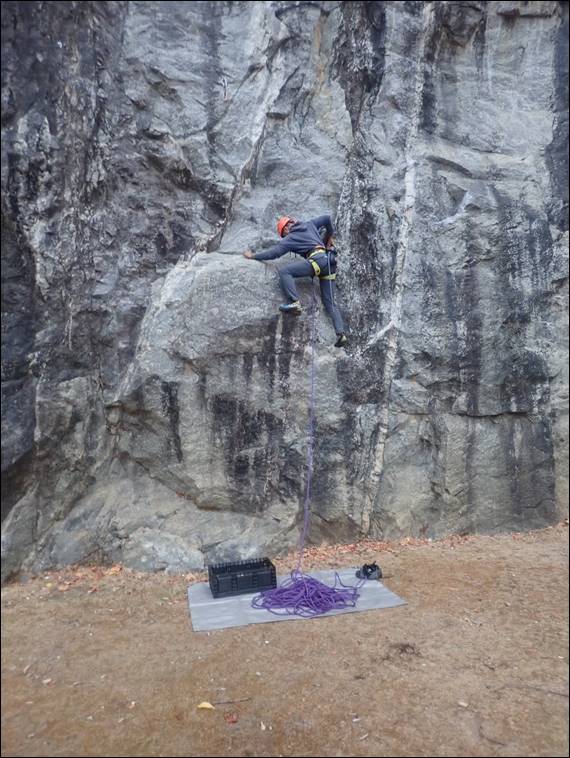
To my surprise he was tempted, and upon checking with Nadia she was also OK with it. With the plan set I asked if he had a particular climb in mind, which he did. And then promptly swayed his decision, with very little resistance, by suggesting he should attempt a grade 23. Due to the higher grade of the second line, the warm up had to be a reasonable grade. So we started on Savage Sausage Sniffer. And when it was my turn Howsie repaid my belay style by walking away as I started, and didn’t put me on belay until I clipped the first bolt:
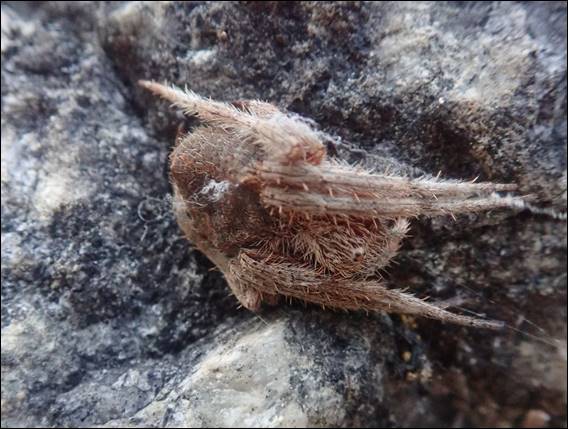
I really didn’t mind, after all if I am prepared to do that to him, and others, then I have to be prepared to accept the same treatment. With the camera in his hand I’m not sure how much he was watching me and, like I do, his eyes may have been drifting. This meant he saw, and took the following image of what is probably a Garden Orb Weaver (Eriophora transmarina), based on the hairy nature and triangular body. Huddled tightly against the rock, no doubt making use of the heat that the rock still held:
The mornings are feeling a little cooler now, but we didn’t have the time to ease into the climbing to allow our bodies to warm up as we would normally. Although I confess we snuck a third line in by jumping on Murky Corner, which didn’t take more than ten minutes between the two of us. Our rationale being that the first climb had worked Howsie a bit harder than was probably ideal before attempting a grade 23. So to keep the body moving, while allow the muscles to recover and relax a bit, an easy lead to focus the mind wasn’t a bad idea:
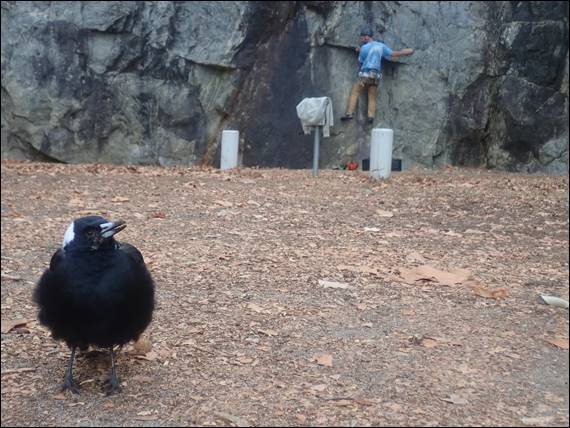
Now it was the business end. Howsie prepared himself and set off, while I sat with a friendly juvenile Australian magpie (Gymnorhina tibicen). Magpies are very social animals forming tribes of up to 50 individuals, however the start for young magpies can be tough. When they are kicked out of the nest, it is not uncommon for them to be ousted from the tribe and this leads to them needing to figure out how to survive. Like the youth of today, juveniles can be found hanging about in gangs, although this one seemed to be all by itself:
Finding a good habitat, partner, and eventually new tribe can be dicey business. Added to that existing tribes can be ruthless to newcomers. Unsurprisingly, not all young survive this harsh stage of their life, and being alone we did wonder if this one would make it. My focus had to then shift onto Howsie and whether he would make it, unlike the grade 23 a week back. I’m pleased to say he completed Chasing Mason, and was very chuffed. But there was no time to celebrate, and it was time to dash back:
The Monadnocks Conservation Park, covering approx. 20,000ha, stretches a considerable length along the Albany Highway that runs to the south east of Perth. A place I have been to before, but just not realising what the name of the area was. The term monadnock is defined as an “isolated hill of bedrock standing conspicuously above the general level of the surrounding area”, and I wondered how this differs from a term I am more used to hearing being monolith. The large granite domes of places in England, such as Bodmin Moor and Dartmoor, being referred to as monoliths:
The word monolith has quite a few meanings, one of which is “a geological feature consisting of a single massive stone or rock”. So regardless of which term you prefer, the result is the same. A park with very hard and solid igneous or metamorphic rock formations that have been exposed by erosion, and which stand proud above the lower lying landscape. With this park getting its name from three distinct granite peaks, being Mount Vincent, Mount Cooke and Mount Cuthbert:
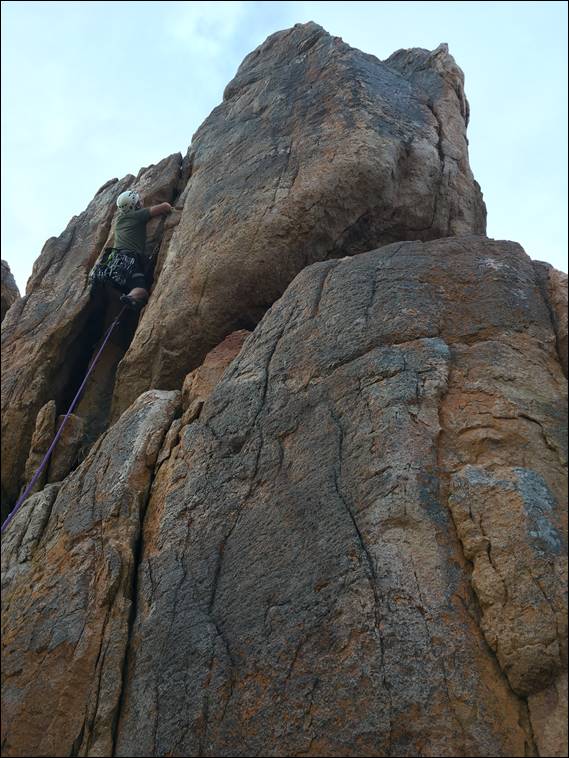
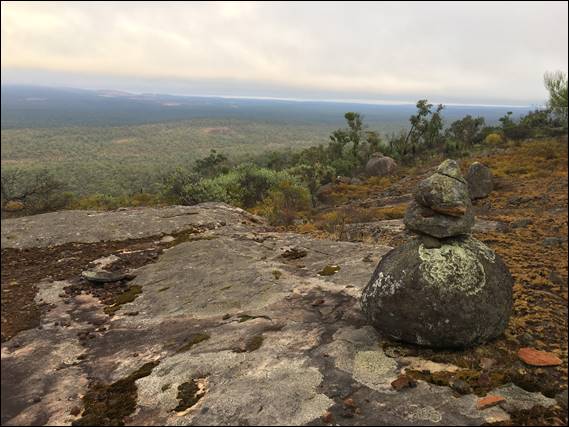
The latter of the three peaks is where I went last time with Mario, who was again my climbing buddy for this trip. A relatively short hours’ drive for him, and two and half hours for me meaning I had a “well before crack of dawn” start. Our destination was not to the peak of one of the three monadnocks, but a relatively small slabby section that was named Over the Hill by the people that developed the climbing here. The name should have given me a hint of what to expect on the approach, and to some degree it did as I came armed with approach shoes instead of sandals:
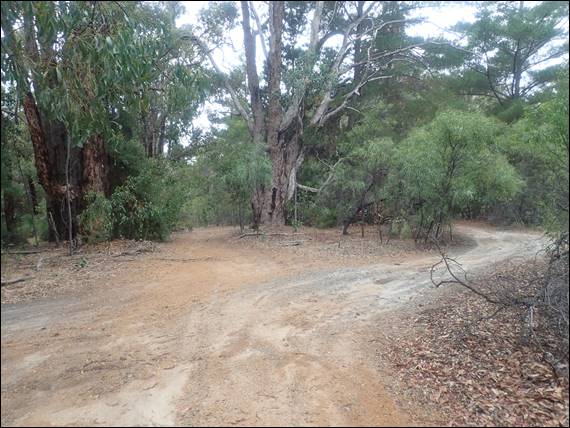
Arriving with five minutes of each other and parking off the Albany Highway, we walked west. A mere 1.4km, as the crow flies, but needing to cross over a smaller monadnocks. One that had no name attributed to it, and stood at approx. 480m above sea level. It was about 100m lower than the highest peak of the park, Mount Cook. The highest peak was not visible on our approach, despite only being 4km to the north, as it was cloaked in cloud. Our hike took us 140m’ish uphill and then 90m’ish down the other side. Typing this it does not seem too bad, but it felt like hard work:
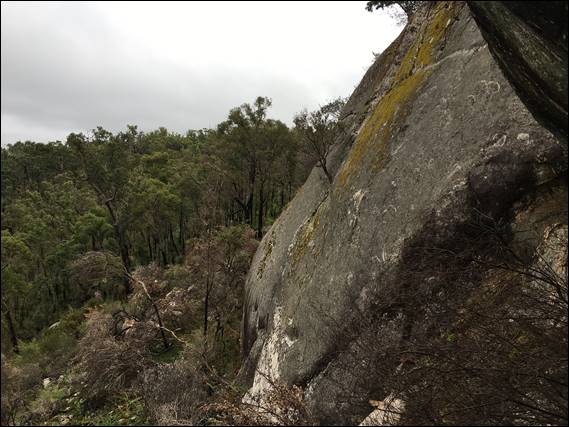
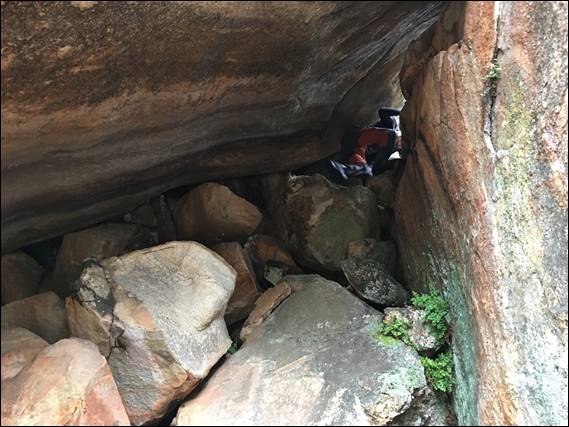
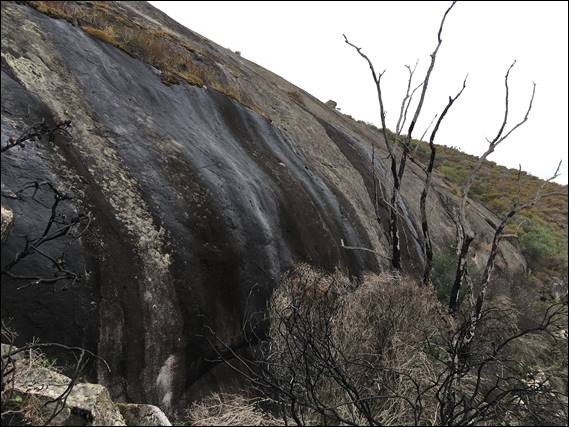
Mario, somewhat fitter then I am, took it in his stride and eventually after a bit of mucking about we managed to find the climbing area. Comprising two sections, split by a large boulder that you can scramble under to get to the two spots. On arrival we approached from the north so looked at the left hand section first. This looked in reasonable condition, as show two images above. But the right hand area was seeping sufficiently to render much of the steep slabby walls unclimbable. The area had received a couple of inches of rain a few days back, enough to soak the vegetation and soil above and keep the seepages flowing:
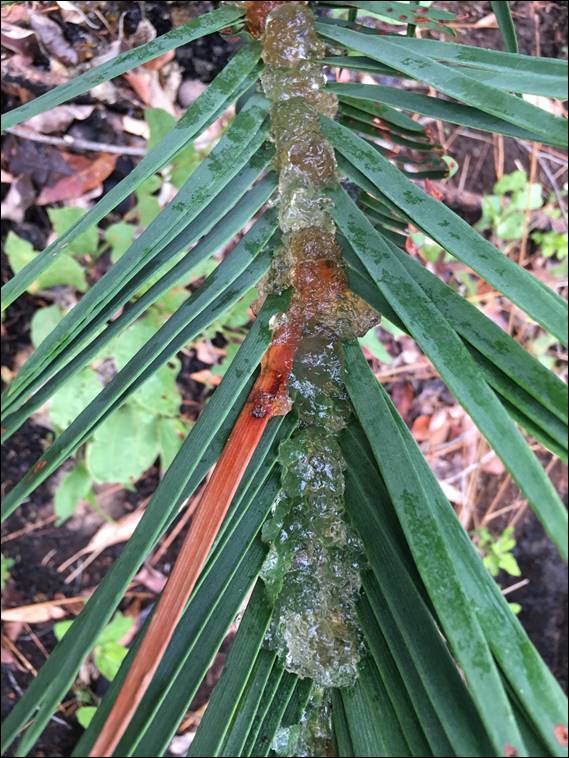
Before I go too much further I need to quickly go back to the second image of one leaf from a Zamia Palm (Macrozamia riedlei). We came across these on the hike in, but only a few in one spot were liberally coated in the clear looking gelatinous sap shown in the image. Something I had not seen before, and my initial thought was that sap dropped from the Jarrah trees could have dropped down, but their sap is usually a deep red colour. So with Howsie’s assistance, all that we have been able to identify is that this sap can be exuded as a defence against insect attack:
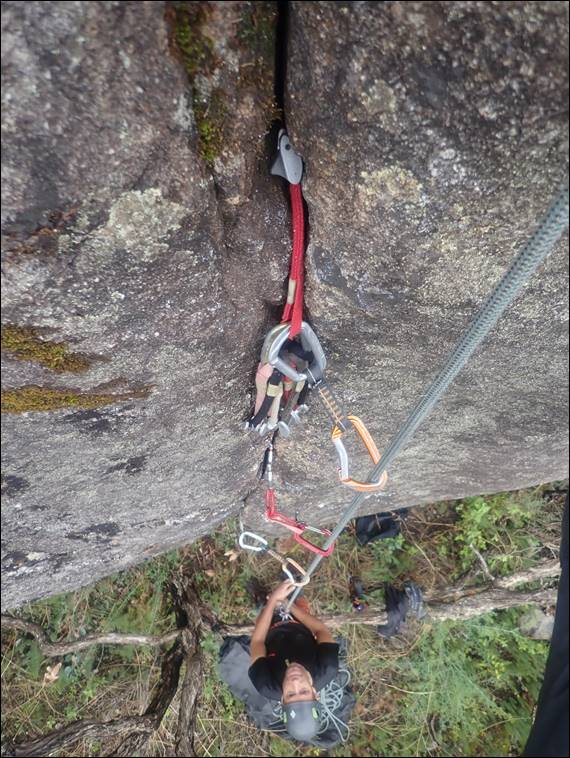
When Mario had initially got in touch to see if I was keen for another adventure on a Perth crag, he had three locations in mind. I had only been too one of them before, and of the other two the first was a collection of largish boulders that would yield relatively short routes, and then there was this place that on the face of it based on the descriptions would offer 15m plus routes. As such the choice, for me, was easy. The conditions dictated that we should started our climbing for the day on the left hand end. Here the rock was mostly dry, although in the above crack there was a bit of moisture and this made the finger locks somewhat insecure. The routes were fun, with two glory lines that stood out:
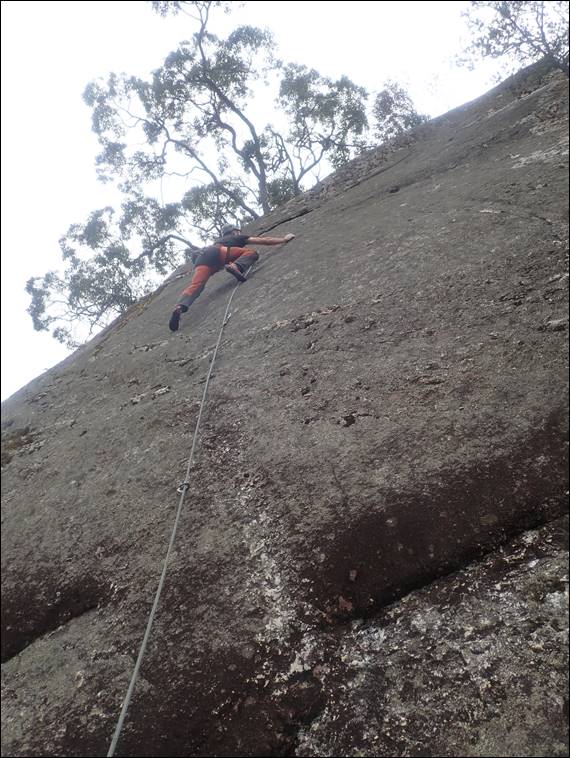
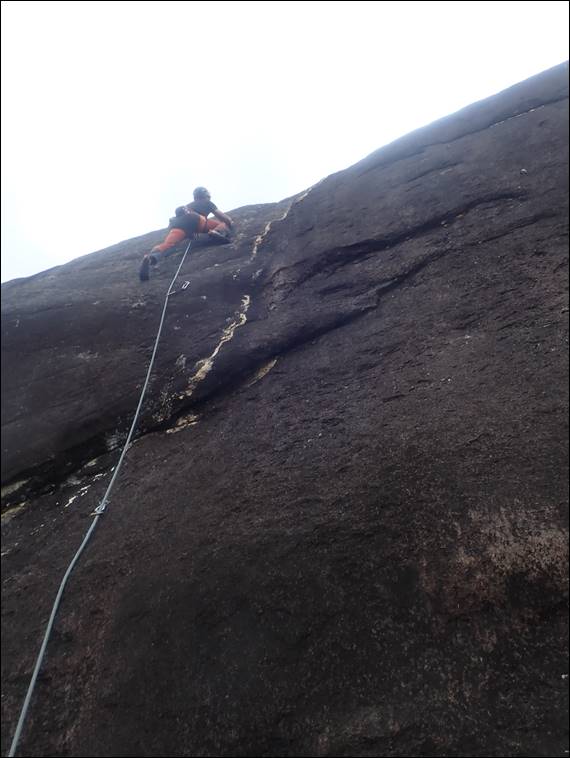
Both slabs, providing sustained grade 21 and 22 routes. The first shown above was amazing, but felt a little tough when compared to similarly graded slabs at Mount Frankland. The second however had me completely baffled, Mario looked smooth and controlled for the first third. Then he slipped and found it tricky to get focused enough to continue the ascent in the same style coming across one section near the top that had him completely perplexed. When I attempted that line I pulled on draws several times and had to finish it off by aiding up with the help of a sling to stand in. It has to be one of, if not, the most ungraceful ascent I can recall:
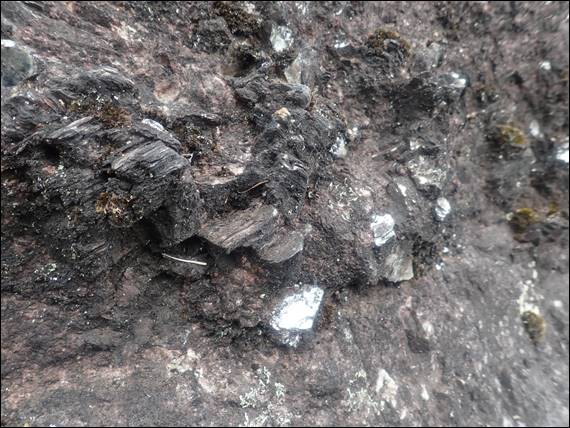
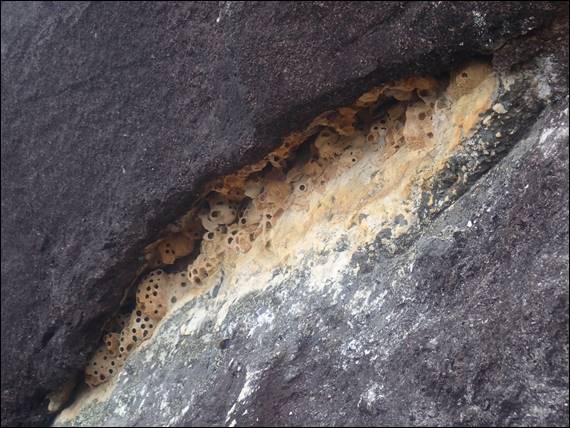
We both considered it was very hard at the grade. Other factors may also have been at play, but even at grade 22 to have a section that had us both completely at a loss was very strange. That said at times it is good to be handed a good spanking, and it certainly felt like I had. With five routes under our belt, if I can count that last one, we moved across to the right hand area. Truth be told the whole area felt a little scrappy, and image wise it was hard to get many climbing shots worthy of including. On the plus side the rock had some great unusual features, shown above and which I had not seen before. Called pegmatite, these formations comprise of quartz, feldspar, and mica just like granite:
Unlike granite, and what makes them standout is the size of interlocking crystals, which are individual usually greater than 1cm. These provided interesting viewing and also some very unique and at times strange holds. Despite the initial wet looking nature of the area we managed to find a few dry lines to play on, and the climbing was technical and interesting. In addition to the pegmatite holds there were fun underclings with the above one, which we thankfully didn’t have to make sue of, providing a great habitat for what I assume are wasp nests:
It was a weird spot to have invested as much effort as had been. Generally the climbing was less than 10m followed by at times a 15m runout to the anchors on an easy slab to the lower offs. Plus a number of the routes were so close you could clip the bolts of multiple routes, as you climbed. But that said it was great to come to yet another location I hadn’t been to before. And after nine routes at an average grade of 19 I was feeling it, plus Mario’s stomach was starting to grumble, so we called it a day and started to ready ourselves for the hike out:
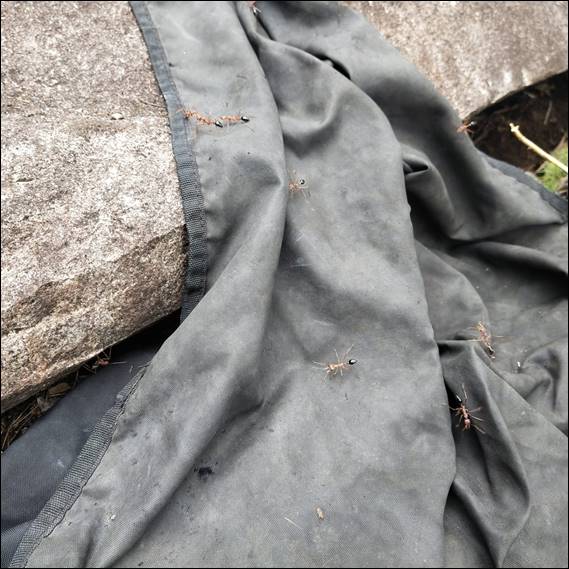
But we had one more battle on our hands. While I could not locate any nearby nests, the resident bull ants had taken offence to the rope bag. They were not interested in our shoes, rucksacks, or other climbing gear that was strewn across the base of the rocks. So we abandoned the rope bag until the final moment, and when we came back to it we found the usually solitary ants scrambling all over it in double figures. Watching them for a while they acted aggressively to one another when their paths crossed, but they were seemingly not too worried about us:
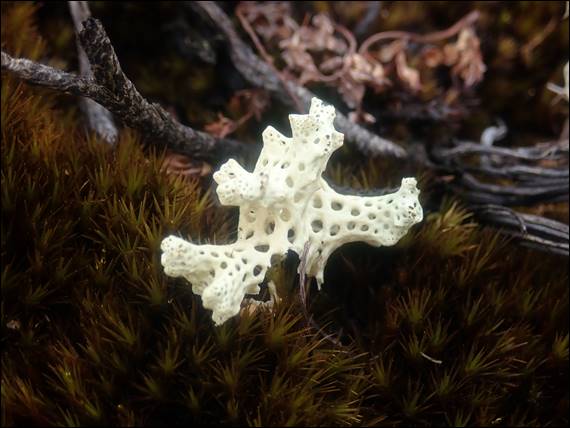
The walk seemed longer on the way out, especially the downhill section back to the Albany Highway. Weariness was probably a key factor for that. We took a different path to the way we had approached the crag, and came across what I believe were Lacy Coral Lichen (Cladia ferdinandii). Shown above, we only saw a few of them being relatively small and incredibly delicate looking. The colour was more yellow than the image shows, having being bleached out by contrast on a cloudy day. While it was another successful and fun trip out, with some interesting finds I’m not sure the climbing was of a quality that would entice me to head back over the hill:




 Sandbagged