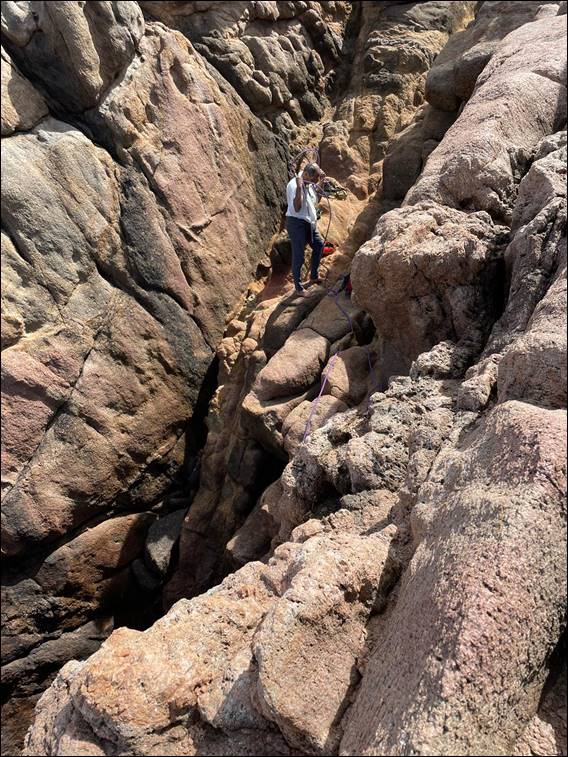
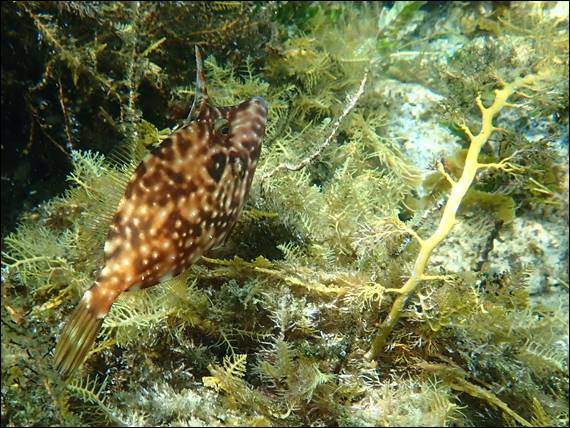
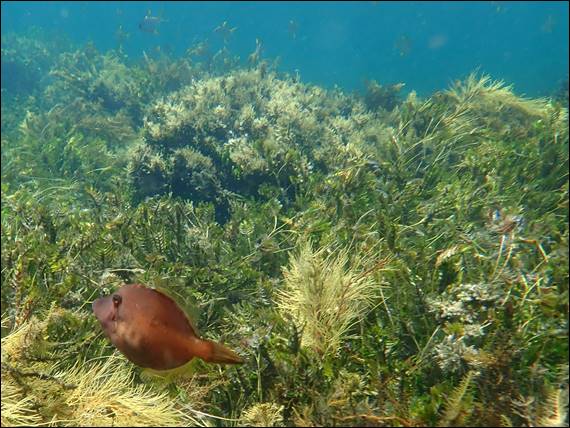
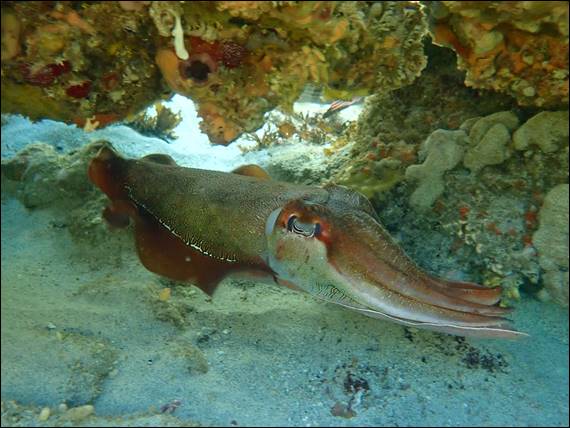
The fifth elephant

In the fictional world created by Terry Pratchett, the Discworld is held up by four giant elephants that in turn stand on top of the giant star turtle, as it travels through space.  The fifth elephant is said to have crashed into the Discworld at the beginning of time, leaving a wealth of treasures.  This may all seem very abstract, but I used to love reading the Discworld books of which there are forty one.  They conjured up a magical  world filled with wonder and awe, and in truth that is not too far from our world if we care to take the time to look about:

Coincidently this happened to be my fifth trip to our destination, but this time we had agreed that we would take in a few stops along the way there and back.  After all orchid season is upon us and this offered a rare opportunity to look round somewhere quite different to all the local spots I frequent.  Also with three of us heading out there would be more time to look about as we climbed, and as such I came home with a bounty of images.  While I didn’t capture everything I saw there was enough to make me spilt this post into two halves:

This first half is about the trip in general, and the second half contains a good selection of the flowers, birds, reptiles, and insects.  We didn’t need to have an early start and I left home on Friday at 7:30, picking up Rongy and then heading over to get Howsie.  From there a three hour’ish north-north-easterly direction took us to Nonalling Nature Reserve.  Here we had a bite to eat and popped the kettle on.  The reserve, shown in the first image covers some 490 hectares and contains the lakes of White Water and Brown Lakes:

While we only scratched the surface of the first reserve, but what we saw didn’t strike us as being in particular good condition and we failed to find much of interest.  But it was a lovely spot to stretch the legs, and once fed with a fresh cuppa ready for the next leg we drove to Totadgin Rock Nature Reserve.  A sweltering 32 degrees, but we still walked the approx. 1km circuit that took us atop the granite outcrop.  Here we found dragons scampering about and the gnamma holes, which still held water, providing thriving mini ecosystems:

Gnamma holes are natural depressions or rock-holes, which are formed by chemical weathering.  These hold water for prolonged periods in areas where rainfall is low and sporadic, and were important sources of fresh water for Aboriginal people.  The reserve was really worth spending time at.  In addition to the dragons, we found quite a few orchids as we marvelled at other shrubs in bloom and of course the rock features.  After an hour an half we hit the road again for the last leg that took us to Lake Campion Nature Reserve:

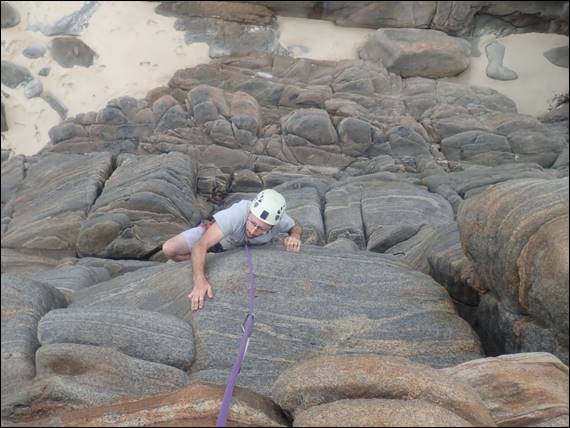
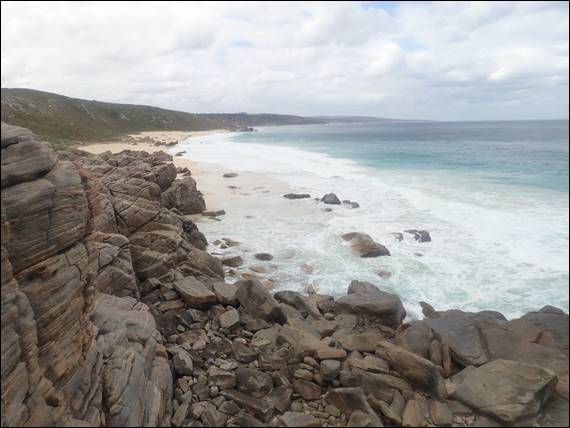
I have always considered this place to be called Lake Brown, but that is the name of the area to the north west.  The, at times salt lake, that we have always stayed near is in fact called Lake Campion.  On this trip, maybe a third of the lakes area looked to be underwater, and it is next to this lake that Eaglestone Rock sits.  We arrived some seven hours after leaving Bunbury, giving us time to set up camp and head to the rock to get a few routes in.  As I said, I have been here five times, and Rongy and Howsie have also been a few times:

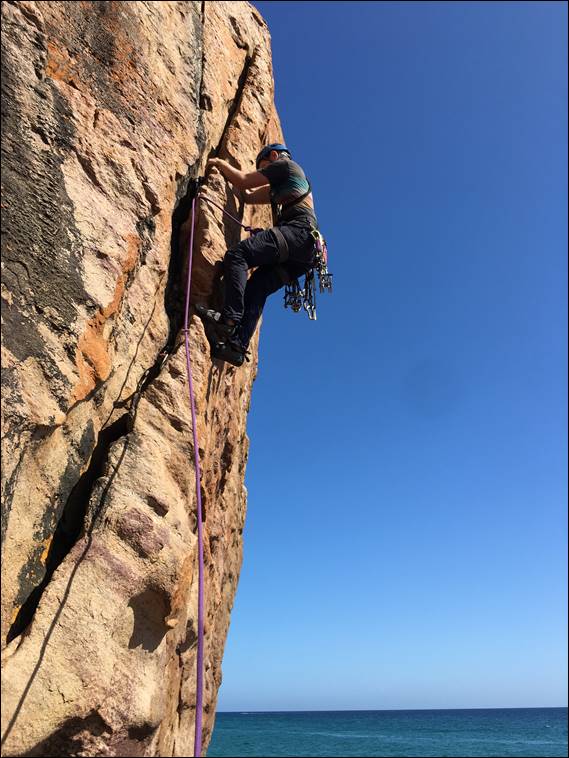
We have probably climbed all the routes here that we are likely to, unless we had the inclination to train and go for the harder lines.  At this point in time however, none of us had that inclination besides the climbing is different to anything else we have close by and there are enough routes to keep us interested for the few days.  The last line was finished as the light faded, and we headed back to camp grateful for the meals that we, or in my case Lisa, had pre-prepared.  Saving a lot of phaff time before we settled down, content after a great day:

Feeling a bit too early to hit the sack we decided to check the granite outcrop to see if we could find anything.  With a bit of luck there would be a snake looking about for a feed, but as it was despite carefully lifting rocks and looking under ledges and boulders not a critter was about, other than spiders.  We instead started to look at the gnamma holes, which had some aquatic bugs that magically come to life when water appears.  As there is no connection with any permanent water bodies, there must be just enough soil for buried eggs to lie and wait:

Howsie spotted the above tiny leaf, being the fleshy leaf of an Elbow Orchid (Spiculaea ciliata) that is found in small pockets of shallow soil on granite outcrops.  It is the only flower, bird, reptile, or insect image that made it into the first part of this post.  That is because it is special find, being very different from all other orchids.  The small leaf usually withers by the time the plant flowers in October to January, when the temperature can reach the high thirties.  And despite the unbearable conditions I am pondering going back to see it in flower:

Back at camp we slid into our tents for the night.  When camping I do enjoy watching the day wake up, and could be heard quietly pottering about to make a cuppa in the dark.  Taking the welcome brew down to the edge of the lake to watch the sky fill with colours.  Rongy joined me to watch a very spectacular sunrise, and it is possible that in order to capture the perfect moment I took just as many images of sunrises and sunsets as I did flowers, birds, reptiles, and insects.  I have however culled them more heavily and also refrained from including too many:

We knew it would be another hot day, so breakfast was soon cooked and eaten.  Then a quick walk up to the rocks to crack on and get some routes under our belt before it got too hot.  Something that has changed here is that the free camping has been limited to one area.  We used to camp at the base of the rock, but that is no longer permitted.  Mind you it really is not too far to walk, and controlling the camping here is probably not a bad thing.  You may be able to make out the caravans nestled under the trees at the edge of the lake in the above image:

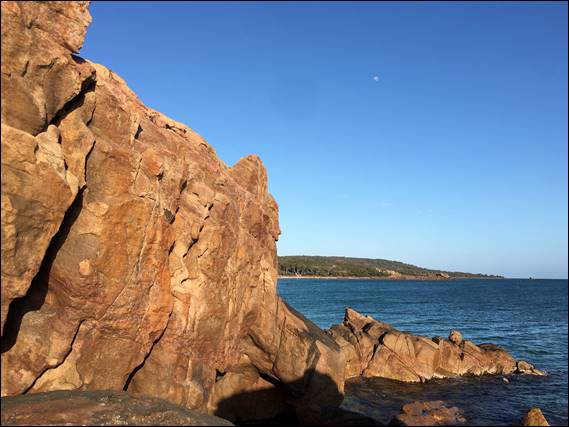
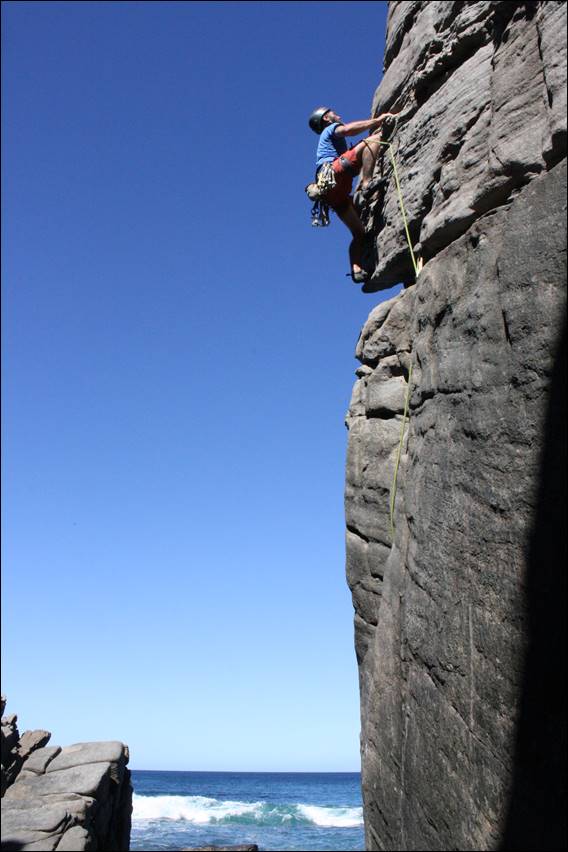
While there were quite a few staying at the campground, we were the only climbers and it was nice to have the place to ourselves.  While it may be called Eaglestone Rock, I do feel that looking at the images again it could conceivably be an elephant with its body, head, and trunk laying down.  And maybe this is where the fifth elephant was laid to rest, it certainly is a wonderful place.  The landscape seems harsh and barren but we saw quite a few birds and insects, while the reptiles were a rare spot they were certainly about:

After packing in seven lines we were getting both hot and sore, so it was time to head back to camp for lunch and a cuppa.  There seem to be a whisper of a breeze at camp and the shade was dappled at best, so it felt pretty stifling.  Instead of enduring that, we went back to the rock where the shade it afforded, along with the breeze from being higher in the landscape made for a much cooler place.  We got side-tracked and walked to the above isolated lake to check it out, but there wasn’t much to see so went back to rest in the shade of the fifth elephant:

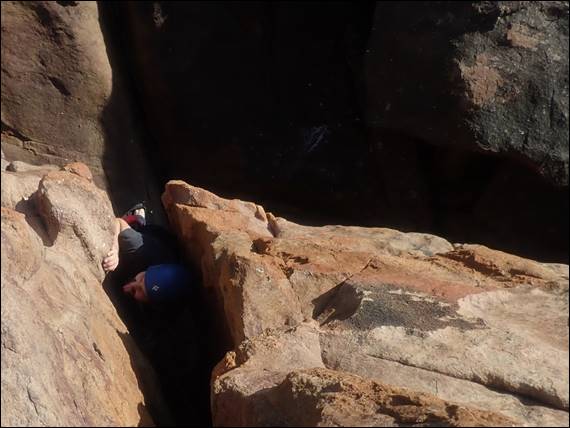
As things started to cool down we kicked things off again, Howsie had drawn the short straw and had to climb the chimney in full sun while Rongy and I snuck in shorter lines on the shady side.  It was sweaty work and the rough granite was starting to wear down the skin on our fingers.  The granite here is not as hard as that found at Welly Dam or round the Perth Hills, and you could see the texture starting to smooth off on quite a few holds.  They were however still coarse enough to bite into the ever thinning layer of skin on our fingertips:

Three climbs in and we were ready to throw the towel in, plus none of the other routes were in any way inviting what with the still hot rock, sore bodies, and tender fingertips.  The temperature finally started to dip as the sun lowered closer to the horizon, so we took a protracted route back to camp up and over the granite outcrops.  The occasional dragon fled from our path, but not much else was to be seen.  Another quick and easy reheat meal went down well, after which we ventured back to the isolated lake in the dark hoping to find frogs:

While we heard a few croaking they remained hidden, and we ambled back to lie down for the night.  I was up earlier than the first morning and discovered a setting on my camera that I hadn’t played with before.  So set it up and left it for half an hour to track the stars as the light once more crept into the sky.  The camera did its thing, and I got the kettle on for the first brew of the morning.  This time all three of us took a brew down and watched the light show at the edge of Champion Lake.  As we broke camp no one was prepared to commit as to whether to squeeze a climb in:

So I made an executive decision.  We packed the car and drove to the base of the rock, agreeing to one route each.  Repeating lines form the previous day, but they are very good and each of us led a line we had not led the day before.  One each was sufficient, the fingertips didn’t feel like they had recovered enough and the bodies seemed happy not to have to endure anymore.  Besides we had the long journey home today, during which we aimed to stop in at one more nature reserve requiring a reasonable detour.  Heading off we let the fifth elephant rest in peace:

On the way to Kokerbin Nature Reserve we saw several big outcrops that yearned for us to stop and hike up to them, but I kept driving and all was forgiven when we saw the third largest monolith in Australia.  Coming in after Mount Wudinna in South Australia and of course Uluru in the Northern Territory, as the largest.   This claim is hotly contended, as is the second spot, so it may or may not be the third largest.  Regardless, interesting natural architecture and boulders strewn round the base with shrubs in flower made for a magnificent sight:

We walked up the 122m it rises above the surrounds, watching out for movement and orchids.  Taking in the view once on top, while enjoying the aerial combat of butterflies aggressively protecting their patch.  We didn’t stay as long as the reserve deserved, but it was pretty hot again and we still had four hours in the car ahead of us.  I did however, after being impressed with a couple of the reserves we had visited, make a mental note to suggest to Lisa we consider a Wheatbelt road trip sometime to check out a few more reserves:

The next section is for the nature enthusiast to read, or if you just want a stickybeak you can flick through the images of just some of the treasures we spotted in this small but magical slice of the world. And while I have the chance I’ll pop in another sunrise image:

I’m pretty sure that we spotted both the Little Laughing Leek Orchid (Prasophyllum gracile) and Laughing Leek Orchid (Prasophyllum macrostachyum), with this being the Laughing Leek Orchid based on the darker flowers.  These leek orchids don’t grow very tall and are found all over, but in drier places are limited to areas where water pools, such as the gnamma holes on granite outcrops.  These were only noticed at the Totadgin Rock Nature Reserve:

While a common orchid in Western Australia, South Australia, and Victoria this next species is considered endangered in Tasmania due to the isolated and small areas it can be found.  Despite generally being common, I do not recall seeing the Lemon-Scented Sun Orchid (Thelymitra antennifera) before but I could be wrong.  On this trip we found this cheerful looking orchid at both the Totadgin Rock & Kokerbin Nature Reserve:

The Yellow Granite Donkey Orchid (Diuris hazeliae) was found in numbers both in the wet gnamma holes of Totadgin Rock Nature Reserve & Eaglestone Rock, and also along the base of the former granite dome in the surrounding wet soils.  I’m confident in identifying this one based on the descriptions I’ve found, being a species that it is almost exclusively found on granite outcrops:

Another first time find for me is this Mallee Banded Greenhood (Pterostylis arbuscula).  I’ve based this on the plant height, and singular nature and colour of the flower, which was sadly on its way out.  This aligns with its flowering period of June to early September, and we found a second specimen with two flowers that was even further gone.  It is also a bit of a giveaway that we found it in amongst Mallee shrubland at the Totadgin Rock Nature Reserve:

While I have seen plenty of Blue Fairy Orchids (Pheladenia deformis) I have generally only observed the pale blue variety, so this more purple tinged specimen at Totadgin Rock Nature Reserve was a great find.  Again close to the end of its flowering period, so the flower was a little wilted.  It is the only species of the Pheladenia genus that is endemic to Australia, being found all over the country other than in Queensland and the Northern Territory:

The final orchid find was a small scattering of dainty Sugar Orchids (Ericksonella saccharata) at the Kokerbin Nature Reserve.  This orchid was previously included with the Caladenia genus, which includes the Sugar Candy Orchid that I have seen before.  But has since been given its own genus with this being the only species.  It is smaller than the Sugar Candy Orchid and found throughout the Wheatbelt, whereas the Sugar Candy Orchid does not extend as far inland, preferring moist and swampy locations:

Of all the birds I spotted this was by far my favourite, despite being the most common of the four pardalote species and the least colourful.  As I watched the climbing action or inaction on Emu Walking at Eaglestone Rock, sorry Rongy and Howsie, this Striated Pardalote (Pardalotus striatus) landed within meters of me and sang its heart out.  After several minutes it flew off, but it returned again during the morning and that time it seemed content to just sit near me with no song:

As we climbed at Eaglestone Rock it only seemed appropriate to have a Wedge-Tailed Eagle (Aquila audax) soaring high above us, with the unmistakable shape of its tail.  We also spotted one sat in a tree as we approached the Kokerbin Nature Reserve but didn’t stop and try and take an image.  Generally they are happy to sit and watch you drive past, but as soon as you stop they will often fly off, so we let is rest:

The Australian Ringneck Parrot may seem like an unlikely one to include here, but as we watched this one at Eaglestone Rock the different pattern of this sub-species was pointed out to me.  There are four subspecies, and this one is the one Lisa and I used to see so often in Alice Springs, being the Port Lincoln Parrot (Barnardius zonarius zonarius) and distinguished by the yellow belly.  In the South West of Western Australia we generally see the Twenty-eight Parrot (Barnardius zonarius semitorquatus), which does not have the yellow belly:

Another familiar and commonly seen bird of prey that watched, as we climbed on Eaglestone Rock, was the Nankeen Kestrel (Falco cenchroides).  So common in fact we saw it pretty well everywhere we went and also as we drove.  Often hovering in one spot looking down for prey, and as the name suggest it is from the Falco Genus, or Falcons.  Found both here in Australia and New Guinea, and being one of the smallest Falcon species:

Walking back to the car at the Kokerbin Nature Reserve this Singing Honeyeater (Gavicalis virescens) landed just of the path and seemed to want me to taken an image.  At first I just watched it, but it stayed close and after I eventually reached for my camera and took a few shots it only stayed for a moment longer.  With some 55 genera and 186 species of honeyeaters, the Singing Honeyeater is found across the widest range covering most of Australia:

There were of course many, many Bobtails (Tiliqua rugose) mostly on the road as we drove along, with a few as roadkill due to unobservant or uninterested drivers. I sent a picture of one of the two we spotted in the Totadgin Rock and Kokerbin Nature Reserves to Chris, my uncle in Holland, and the name Bobtail had him perplexed.  So he researched it and sent me some details about them including another of their common names the Blue-Tongued Skink, and this images clearly shows where that comes from:

We saw many Ornate Crevice Dragons (Ctenophorus ornatus) at both the Totadgin Rock and Kokerbin Nature Reserve.  We had to keep a sharp eye out as they are very well camouflaged, and it only when they move that you spot them.  Often they started to bob their head before they ran to a narrow crevice to hide in.  They inhabit granite outcrops, rarely leaving these landforms other than to give birth.  Due to all the clearing newborns do not move between outcrops as much anymore resulting in a reduction in genetic diversity, which increases the risk of eventual extinction:

When we got to the Nonalling Nature Reserve it was not looking all that promising, but due to the lake there was a hive of activity in and about the fringing vegetation.  Sitting there for a while I manage to snap pictures of three different damselflies.  Dragonflies hold their wings out to the side, and damselflies hold theirs along their bodies when resting.  Damselflies are also generally slimier and both wings are of the same size.  This means that unlike dragonflies, which have smaller back wings, they can’t fly backwards:

You’ll notice I have skirted round saying what damselfly is in the above image, which is because I have really struggled to work it out.  I was also intrigued by the way the abdomen is at ninety degrees to the prothorax, which I have not noticed while trawling hundreds of images while trying to identify it.   All the online images show the body straight, like the two below that I think are a male and female Western Ringtail (Austrolestes aleison):

This species is endemic to South West Australia, extending as far north as we were heading on our trip.  The male is blue and black, above, and the female is a duller colour, but with similar patterning.  If I really wanted to be sure of this identification I would need to check the top of the second segment of the abdomen, which has a goblet-shaped pattern.  This is where the species name aleison is from, derived from a Greek word meaning a goblet:

On arrival at the campsite at Eaglestone Rock this Velvet Ant (Bothriomutilla rugicollis) was spotted in the scrub.  It is in fact not an ant at all, being a wingless female wasp.  Only the males have wings, and like any wasp they can deliver a painful sting.  They are parasitoid, meaning its young develop on or within another organism.  They lay their eggs near the eggs or larva of a host, and when the velvet ant larvae hatches a meal is ready and waiting:

With all the blossoms out and having time to sit about and look round at Eaglestone Rock there were lots of insects about, this one really caught my eye.  A female Gasteruptiid Wasp (Gasteruption sp), another parasitoid.  I’ve not managed to narrow it down to a species of which there are many.  This one lays its eggs inside the another wasp and solitary bee, which are bees that live alone but at times nest close together.  Only the female has the distinctive white-tipped ovipositor, and as you may guess that is used drill into the host to inject eggs:

As we walked up the granite dome of Kokerbin Nature Reserve if you kept a sharp eye out you’d see movement on the rock near your feet.  In all cases I spotted movement it was a Red Tiger Assassin Bug (Havinthus rufovarius).  While small if threatened they might bite.  They use venom to paralyse and liquefy prey, and it can also be very painful for people.  They watched as I approached and backed off always facing me down, as opposed to turning and running:

Finally, there are six common mosquito species in Western Australia.  This one is likely to be Aedes vigilax, based on where it hitched a ride and that it was extremely active in the day.  This species has by far the highest ability to travel from its breading site, at up to 100km.  It became engorged with blood from one of us, along with two others that entered the car at the Kokerbin Nature Reserve, before the final four hour stretch of the homeward journey. I might even dig out The Fifth Elephant and read it again:

Looking down

On Saturday Lisa and I headed out for the morning, but that had been a town visit and as such did not satisfied my desire to be outdoors.  Orchid season could be considered a little early, but regardless of that I headed to the Capel Nature Reserve later the same day.  Before I got there, and to avoid it being squashed, I stopped and encouraged this South Western Bobtail (Tiliqua rugose) off the road.  The thick plates of the heavily armoured body, can vary considerably in colour from dark brown to cream.  If you check the one we recently saw at Wilyabrup that had an almost entirely orange head https://sandbagged.blog/2023/08/05/blurred-vision/, a colour that was completely absent from this one:

Once parked up and on foot proper, I spotted heaps of orchids.  Some still yet to sprout, some with buds, and several in flower.  The pick of the flowering ones was this Bird Orchid (Pterostylis barbata), the species name of barbata being a Latin word meaning “bearded”.  There are twelve species of what are sometimes called bearded greenhoods.  And to date I have only come across this one, which is the most common species and was first formally described in 1840.  The bearded nature of the labellum is not only used to name this species.  It also plays a very special role to ensure pollination occurs:

The labellum is very sensitive to touch.  When a gnat, having been attracted by a scent the orchid releases lands on it, it springs up.  This pushes the unsuspecting gnat into the cavity formed by the fused petals and dorsal sepal, which forms the bird’s body.  The labellum stays there blocking any exit and forcing the gnat to crawl up through the body so it can escape via the opening at the birds throat.  On this journey it passes the sticky stigma (female organs) that take any pollen the gnat may be carrying, before then having to pass the anthers (male organs) and as it brushes past them fresh pollen sticks to its body:

I also spotted a few of the above small black disks in the sand.  I believe they are Flat Black Cup Fungus (Plicaria cf. alveolata), which is mycorrhizal.  This term derives from two Greek words of mýkēs and rhiza, which mean fungus and root.  These words are apt as mycorrhiza is the name for a fungus that has a symbiotic relationship with the roots of a plant.  The fungus colonizes the root tissue of its host, from which it takes carbohydrate.  And in return the fungus provides the host with nutrients, which it has absorbed from the soil.  This particular fungus is quite fragile and easily broken, so needed to be careful and look down as I walked along the open tracks:
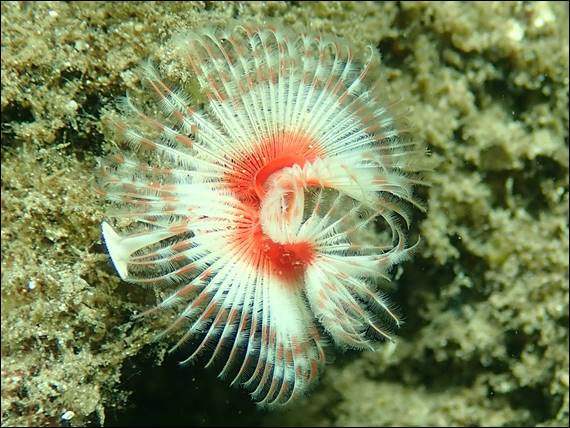
Seeing I mentioned the Slender Snail Orchid (Pterostylis crispula), in my last post I thought I would include an image of one I found at the Capel Nature reserve.  Being easily identified by the long sepals that look like the snail’s antenna.  I managed to get another trip outdoors on Sunday.  Seeing no one was available, I decided a solo top-roping climbing mission was in order thinking I might sneak a visit to another reserve for more orchid hunting on the way home.  I was tossing up between going a bit harder or just kicking back on more moderate routes, and opted for the latter:

Fortune was on my side as a big rain band passed to the north and no more than a few drops fell where I was.  The cloudy sky and stiff westerly wind kept the temperatures down, so I wasn’t really expecting to see any scaly friends.  Although, that didn’t stop me checking every crevice with no joy.  Partly due to opting for more moderate routes, but also due to the chosen crag, I quickly clocked up my normal six routes and was feeling good.  So I kept going and eventually doubled my usually tally, and Bob you’ll be happy to hear I bagged close to 1,200ft.  Better still, as I rapped down the last route of the day I had a lucky find:

Looking about, it was hard to miss this South-western Carpet Python (Morelia imbricata).  These snakes can grow up to four meters long over their fifteen to thirty year lifespan, but most only grow to a little over two meters.  It was hard to say how long this one was.  I’d say it was easily one and a half meters, but I’m tempted to say it was closer to two meters.  The thickest part of the body looked to be almost as thick as my wrist, and it is easily the biggest specimen I have seen.  It was a great way to finish up the session, and it didn’t end there because I spotted quite a few snail orchids on the side of the track on the walk out:

Upon closer inspection of one I noticed these Sandhill Helmet Orchids (Corybas despectans), which is a first time find for me.  They are known to flower between June to September, and sadly they looked to have only recently passed their flowering period.  I have walked this track literally hundreds and hundreds of times, and have never spotted these before.  Maybe in part because I don’t wear my glasses when I come here, whereas this time I was.  Mind you these were tiny, the basal leaf being no more than 15mm across and the flower was half the size of that.  If the flower had been in full bloom you would have noticed that it faces downward, which is why the Latin word despectans has been used for this species meaning “look down upon”:

Time to come out

When given a challenge Howsie is always keen to give it a go.  So after a lunchtime walk on Wednesday, with Josh and Mark, I sent him the following image.  We were of course primarily orchid hunting and found a few, including the first Pink Fairy (Caladenia latifolia) and Slender Snail Orchid (Pterostylis crispula) sighting of the season.  But it was this seedling, looking a little like a butterfly as it was just starting to germinate that we really liked.  Being at such an early stage made it hard, and Howsie came back with three possible genus:
This was narrowed down to one genus and two species, after I told him where we had found it.  Being the Candlestick Banksia (Banksia attenuata) or Bull Banksia (Banksia grandis).  Banksia trees are highly susceptible to Phytophthora dieback, which is found in some areas around Manea Park.  And what with all the visitors this place attracts there are shoe cleaning stations to prevent the spread of infected soils between areas.  Hopefully, lots of the seedlings we spotted will flourish and over time replace the, too many, mature trees that have been struck down:
It has been a good week.  Kym was up from Albany and he popped over for a catch-up and feed on Monday evening, after which he headed to the west coast to visit friends.  Sadly the rest of his family did not make the trip, for one reason or another.  However, we agreed that a weekend adventure down his way was long overdue.  We pencilled in October to rectify that, when I’ll hopefully catch up with the whole crew.  Seeing he was up our way I suggested he may want to venture out for a climb with Howsie on Friday morning, after which he was due to head back:

I had assumed he was staying in Dardanup with family, so Welly Dam would have been ideal and close.  It also happened to be Craig’s birthday this week, and he was home from his FIFO job.  This allowed the opportunity to get him out on Friday for his usual present of a climb.  And as you can no doubt tell I once again took advantage of my flexible working arrangements.  Opting to join the motley crew on Friday morning, before heading back home to work for the afternoon.  As is sometimes the way, not everything pans out as planned and Kym didn’t make it:

Partly down to my assumption of where he would be staying on Thursday night, and we all know what assuming things can lead to.  As it happened Craig had also assumed he would not be leading anything at the fearful dam.  A thought that was more deeply embedded in his mind when he saw the conditions, with the black streaks running with water.  And like my assumption his was also wrong.  With surprisingly little persuasion we steered him to some of the more gentle and shorter, but still worthy and heady, routes at the dam:

Having three allowed time to find a few different angles for photos, making a brew, and checking out the wetter parts of the crag to marvel at the small habitats, like the one shown several images above.  Hoping to find some critters of interest, which finally paid off with this Australian Emperor Dragonfly (Anax papuensis).  Being as cold as it was, I was able to get close up and personal to have a really good look.  The dragonfly didn’t even flinch.  Howsie and I pondered how long it would live for and got it very wrong:

Generally moths will live for a few days, butterflies for two to three weeks, but dragonflies can live anywhere from a week to six months.  They are one of the first winged insects to have evolved.  Being around almost 300 million years, which is a thousand times longer than humans.  There are some 5,000 species found all over the globe except Antarctica, with +300 species in Australia.  The Australian Emperor Dragonfly is found all over the country, and at up to 70mm long is one of the larger species.  Living, in its adult stage of life as a dragonfly, for two to three months.  As for us at Welly Dam, we lasted about four hours:

The pace was relaxed, interspersed with drinking tea, and hanging about during some relatively slow ascents.  But the steep walls, as usually happens here, didn’t take long to sap our strength.  So even with the rests between our individual battles on the cold hard granite we were all very satisfied with the time we spent here.  And as the last lap on the last line was being completed the temperature had seemingly risen enough for the insects to finally come out.  And this drew out a mob of hungry male and female Splendid Fairywrens (Malurus splendens), who hopped about right under Howsie’s’ feet dressed in their eclipse plumage.  But there are no images to share as I was too busy enjoying just observing:

Jewel in the crown

After a lazy start to the day I got itchy feet and convinced Lisa it would be nice to take the poodles out for a walk, or should I say sniff, round Manea Park.  From the start I was not expecting to see much, and certainly not thinking that I would see enough to write up a post.  That changed within the first hundred metres, but I’ll keep this post brief.  My main reason for it is this beautiful Dancing Spider Orchid (Caladenia discoidea).  A first time find for me, and being easily distinguished by quite a few features including the way the short petals are held horizontal:

Soon after we stumbled across the below lovely Silky Blue Orchid (Caladenia sericea), the term sericea meaning “silken” or “silky” in Latin.  But not referring to the flower or its petals but the leaf.  While there has not been a year that I have not seen this orchid the first time I spot it each season, it still feel special.  I was surprised at how many species were in bloom, and we also saw the Robust Snail (Pterostylis dilatata), Jug (Pterostylis recurve), Hare (Leporella fimbriata), Midge (Cyrtostylis huegelii), and Banded Greenhood (Pterostylis vittata):

I don’t think I will see too many really cool fungi this year, as we really have not had a wet winter despite some big storms that brought isolated heavy rainfall events.  And I can’t add this next one to my list, as it is not a fungi.  Strawberry Slime Mould (Tubifera ferruginosa), is often found on wood and may look like a fungi but it does not send a mass of hyphae (a bit like roots) into the surface below it.  Rather comprising a structure made from something called plasmodia, which have no cell walls and as they are not fixed to the surface, it can move:

This movement is used to engulf whatever may be considered food such as bacteria and spores, a bit like the way a single celled amoeba feeds.  As we headed back towards the car with the dogs all sniffed out we spotted orchid species number seven, the Kemerton Donkey Orchid (Diuris cruenta).  I had seen the stems previously but was not sure what flower it was or indeed whether they were an orchid.  However, the deep colours of the flower of this species gives it away.  It is also where it gets its name with cruenta meaning “stained or spotted with blood” in Latin:

Before we got back to the car Lisa found a small acacia bush with a heap of Jewel Beetle (Stigmodera gratiosa) feeding off the flowers.  There are seven Australian species in the genus Stigmodera but it is the native Western Australian species that were particularly sought after.  In 1978 this resulted in these beetles being the first invertebrates in Australia to be protection under the Western Australia Wildlife Conservation Act 1950.  The reason being that their carapace were highly sought after by collectors and used for jewellery:

The fear factor

Having a degree of arachnophobia makes Lisa a little jumpy when she see’s things moving on the wall, and what with poor eyesight anything on the wall can look blobby and could be a spider.  The other day this is what she found on the wall at the foot of the bed.  The House Centipede (Scutigera coleoptrata) definitely looks creepy, but they are harmless to humans, don’t invade food supplies, being nocturnal tend not to be noticed, and are in fact a predator of the less desirable creatures that may inhabit the house such as cockroaches and spiders:

That said once she had seen it I had to take it outdoors, allowing her to have a good bug free night’s sleep.  Speaking of which to get my quota I hit the sack early last night, as Howsie and I were heading outdoors bright and early.  We opened the gate to Spring Grove Farm, just north of Pinjarra as the day woke up.  Unlike the landowner on whose land the nearby Boobyer Boulders sit, which we’ve not been permitted to go to, after a short and polite exchange of text messages with Maurice, who owns this land, we were granted access:

Howsie was on a timeframe, which was in part why we headed out early.  And this place was chosen as you can park quite literally at the base of the crag.  While climbing next to a road may seem unpleasant, as it is a private road it has very little if any traffic.  So the only noises we heard were those we made, as we battled the climbs, and the birds in the trees and sky.  My last trip here was with Mario when we climbed on the more natural granite boulders across the road, while the trip before was with Rongy and Steve when we stuck to this manmade crag:

During that visit I added two new routes that followed the blast holes, which were protected using cams in a very unorthodox way.  And as described by Howsie, not in a way that the manufacturer was likely to want to promote.  Most would find the placements uninspiring and they require a lot of trust.  I took a video of Rongy, who normally climbs confidently and at a fair pace, as he inched his way up one of my new climbs at approx. one metre per minute https://sandbagged.blog/2021/06/19/the-george-michael-effect/.  Since that visit I noticed on The Crag that two more routes had been added to the arsenal of this little crag:

As such there were plenty of lines for the picking.  Although on arrival water was running down the left-hand side of the face.  This put the route that had made Rongy so nervous and the old bolted route next to it, which is the hardest line here, both out of contention.  Before I introduced Howsie to the delights of placing and trusting cams in the blast holes, we warmed up on a few easier lines.  The whole time needing to dodge the many Portuguese millipedes (Ommatoiulus moreletii), which were scattered all over the place:

I climbed one of the new lines and Howsie jumped on the easiest route, which also has double the amount of bolts of any of the other climbs.  These lines drew our attention to the right-hand side of the crag, where we spotted more possible first ascents.  Two blast holes looked like they may yield fun lines.  I tried one but would have had to solo at least a third of the crag, on what felt like sketchy holds, before I could get to where the blast hole was whole enough to get a cam placement:

Needless to say fear took hold sufficiently and I backed off.  The blast hole to the right was more forgiving, and it was on this route that Howsie placed his first, second, third, and then fourth cam.  I couldn’t tell if he was convinced of the way they sat and looked, but he climbed on and bagged a first ascent.  A route he aptly named Comeback Kid, seeing he has just come back from a three month road trip and based on how he climbed today he is also back to climbing with the same cool head he had before he went travelling:

We moved from right to left picking of one line after another, and half way along the sun started to peak over the opposite hillside.  As it rose higher in the sky it seemed to banish the shadows back into the depths of the earth, and we relished the warmth that came with the transition.  The sun also started to dry the left-hand end of the crag, and by the time we got to the routes at that end there was but a mere dribble of water to be found on the face.  Howsie was starting to show signs of tiring, but he had obviously enjoyed the thrill of the cams:

And for his penultimate route be bagged another blast hole route, with his arms only just managing to get him to the top.  I was then left with the option of climbing the hardest bolted route, or my scary blast hole line that had put Rongy on edge and which after a quick look Howsie politely declined to give a go.  I opted for the bolted line and it felt hard, which only enhanced the fear factor of the idea of taking on the scary blast hole.  This resulted in both us being content with climbing an even ten lines and neither of us fancying that final route.  Maybe next time:

Blurred vision

Today we almost had a guest appearance by one of the old crew, but sadly their Saturday morning became double booked.  To climb or to help their mum by chopping firewood was an easy choice, and so the axe fell on Glen’s guest appearance.  But he still remains “famous” for being the only one of the South West climbing crew that didn’t provide me with a write up on his thoughts about me.  This was back when COVID was rife and I idled time away writing about people I climbed with, and they could in return say what they wanted about me (https://sandbagged.blog/2020/04/21/south-west-climbers/):

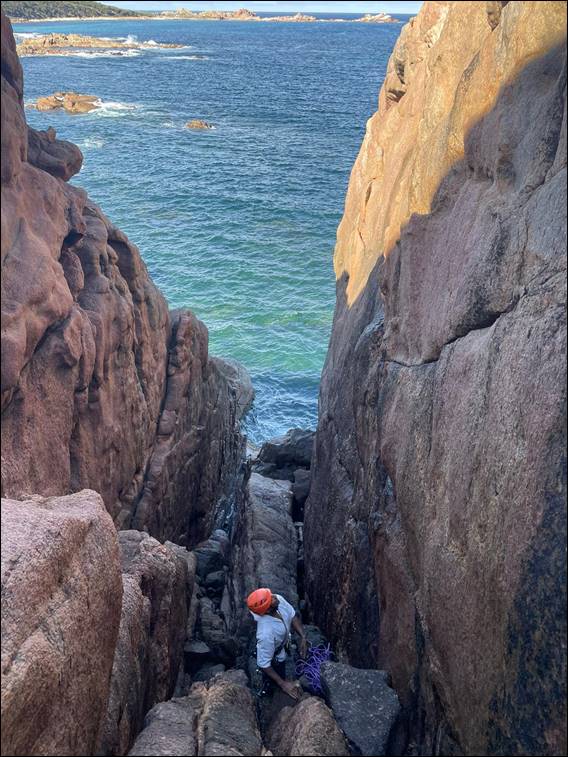
The climbing scene in the South West has changed somewhat since that time, when there were plenty of people keen to get out for a climb and we also had semi-regular social gatherings.  Not that I am ever short of someone to tap on the shoulder for a climb, and today it was Rongy and I that headed out.  And due to Glen was not joining us we changed our plans.  Instead of a relaxed and easy paced climb at the ever friendly Moses Rocks we headed to steeper, more fingery, and somewhat more intimidating terrain.  The Terrace at the Northern End of Wilyabrup is not a place that sees too many visitors:

Not that everyone logs their antics on the online climbing guide, called The Crag, there are only two crew that have reported any action at this crag over the last two years.  It is tucked out of the way and you need to abseil into it, which might put some off.  The routes are also pretty steep and sustained, and Rongy and I were feeling it today despite starting on the “easy” stuff.  Admittedly, the first route or two can feel harder than it should because the body has not yet warmed up and the mind not yet being prepared for the location, conditions, and/or type of climbing:

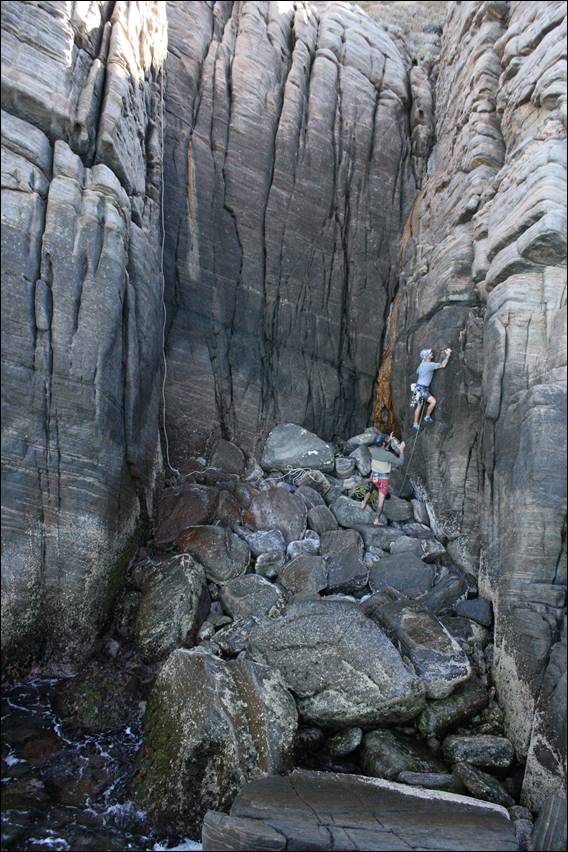
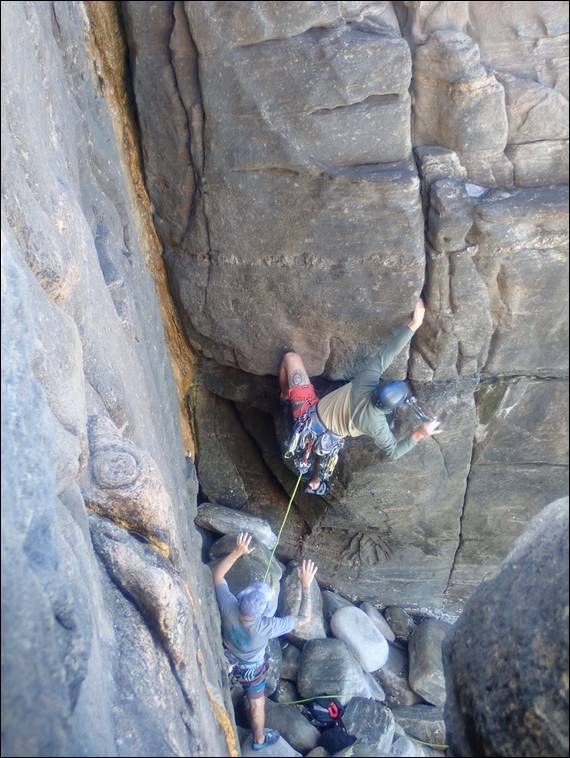
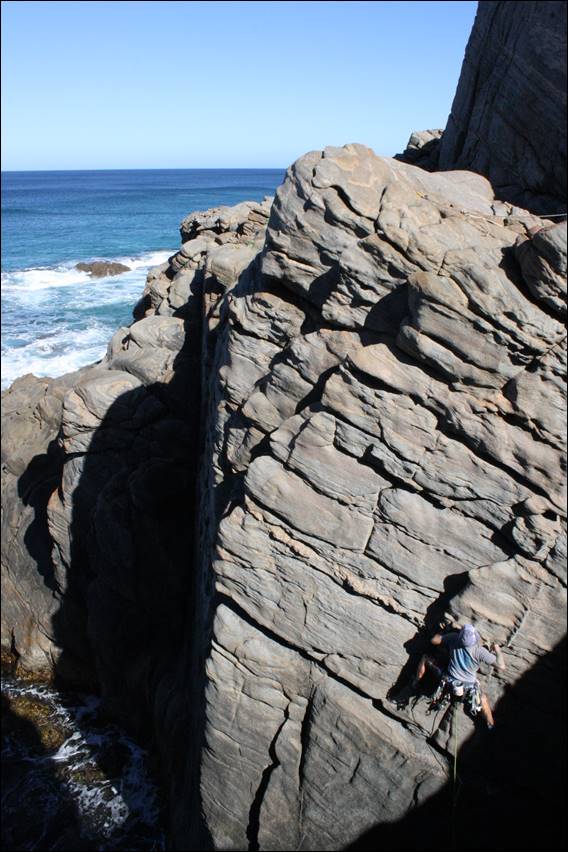
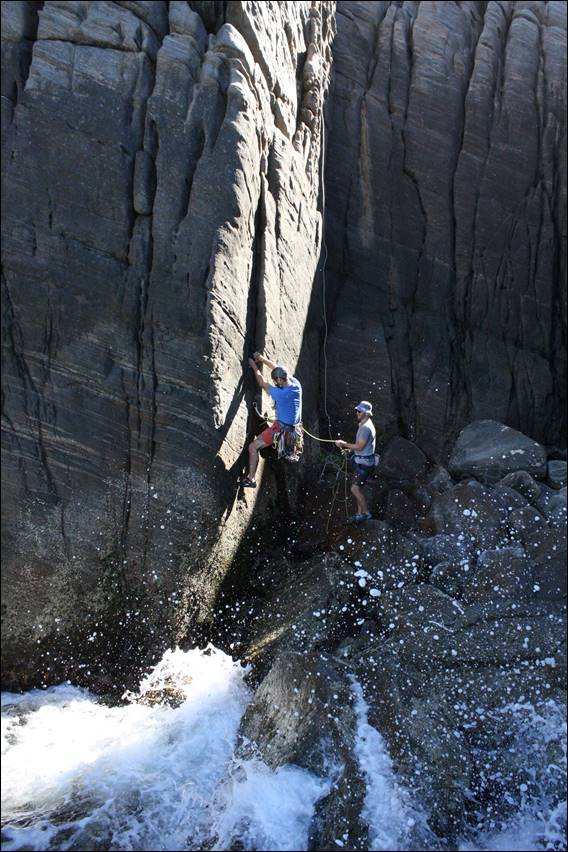
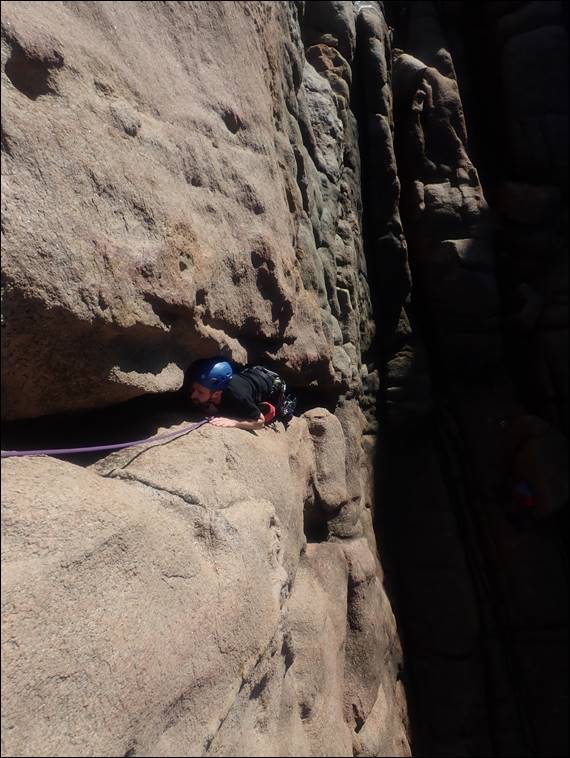
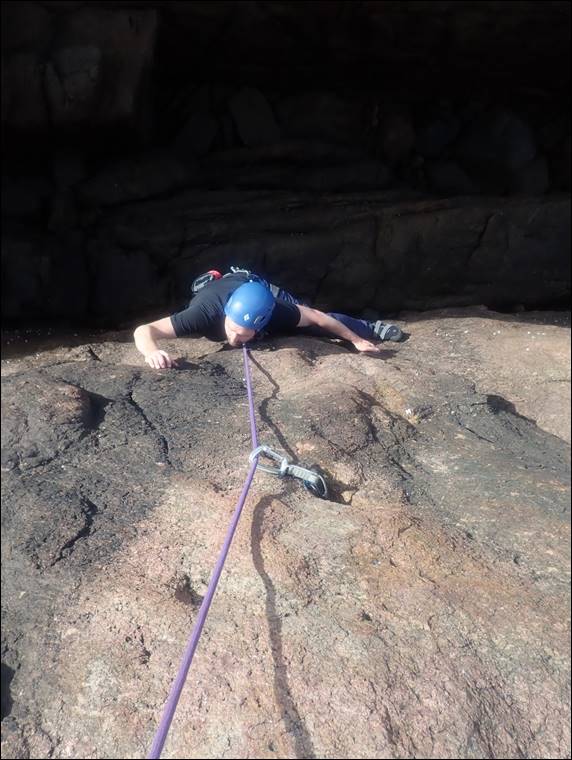
That said in order of what we hit: Thin Crack felt a tad stiff for grade 14; while Thrice Bitten in the second image felt right at grade 17 it was solid and sustained, which Rongy’s arms were almost not ready for; and then Metamorphic Sausage in the above image definitely didn’t seem to match up with its given grade 13, in fact we both felt it wasn’t a standard breakfast sausage and had metamorphosed into one of those spicy variety.  All three routes are graded such that we should have been able to waltz up them.  It didn’t feel that way today, and now we had to concede to the fact that our options for easier routes was dwindling and we had to bump it up:

Kym will be happy to hear that his creation of Time and Space got another lap, and after that I jumped on Silver.  The latter being shown above, is a climb with more recorded ascents than any other route here.  Both were grade 19, both are amazing, and both made us work hard and to the point that we almost came off on lead.  Rongy dealt with the pain as his forearms burned and his mind suppressed thoughts of falling in his usual silent manner, while I resorted to a power scream to push through.  Success came for both of us on our respective routes, but neither of us had any motivation to raise the bar any further:

Instead we went back down for one last route and Rongy ticked Golden Smiles shown above at grade 14, and it felt like the easiest route of the morning by a long way.  In fact it was such a breeze that we both felt like we could take on a couple more routes, but not at The Terrace.  Instead we wandered to another wall of the Northern End, called Banana Wall.  Aiming to bag a line each, but after we had managed to work our way up the very aptly named Digital Delecti at grade 18 shown below, we felt our fingers, forearms, and minds had been worked well and truly enough and called it a day:

Despite things feeling that bit harder today, we still thoroughly enjoyed being outdoors.  Having avoided the crowds we assumed would be over at the main cliffs of Wilyabrup on such a lovely day, and while every route made us work physically and mentally they were all great fun.  Rongy also spotted a couple of whales playing about, although they were admittedly a long way out so due to my myopia (short-sightedness) I really didn’t see much.  But then on the walk out, I couldn’t blame blurred vision when I walked right past one of the most well-known skinks in Australia, being this Western Bobtail (Tiliqua rugosa):

Down the road

We’ve moved office, all of 700m down the road from where we were before.  This might seem a little odd but the old building was well, old.  Things were falling apart, the technology was a bit dated, and the office design didn’t match the so called “modern style”.  So in May of this year we moved into our swanky new office.  For me an office is an office, although I am not entirely convinced the “modern style” suits the way I’m wired.  So I look forward to working from home on Thursday and Friday that little bit more now:

That said mid-afternoon today I found myself driving into Bunbury and parking near the office.  Another keen orchid hunter from work, Josh, had checked out a small patch of bush a short walk down the road.  He’d mentioned the myriad of basal leaves littering the floor, and he was not wrong.  At the time he also shared an image of something I pondered for a while, thinking it could be the common Midge Orchid (Cyrtostylis huegelii), or possibly the less common Mosquito Orchid (Cyrtostylis robusta):

The key way to tell these apart is the labellum, with the Midge Orchid’s being narrower by a mere 1mm and a darker shade.  I’m fairly sure based on what I saw today, along with the height and number of flowers on some stems that it may be the less often seen Mosquito Orchid.  But that was not why I drove here today.  During a second visit here Josh had, just a few hours earlier, shared an image of something far more exciting.  The Helmet Orchid (Corybas recurvus), a genus I have had on my wish list for a while now:

These have similar but smaller leaves to the Mosquito Orchid and the two orchids are often found together.  The Mosquito Orchid can often flower in great numbers and it was today, and while the Helmet Orchid forms large colonies of leaves only a few will usually flower.  The name of the Helmet Orchid comes from the way the flower is held, with the Latin word recurvus meaning “recurved” or “curved backwards”.  The first formally described specimen was coincidentally found at my favourite peak in the Stirling Ranges, Toolbrunup, in 1991:

As I wandered about I spotted a few spider orchid leaves, so this will be a place to head to over the coming months and see what pops up.  Also while we are having a wet spell there are other colourful finds that impressed me.  Small sprouts of Orange Coral (Ramaria anziana) were pushing their way through the leaf litter, above.  Distinguished by their thick upright orange branches that split into tips, which start to turn yellow.  Quite a few were close together, which aligns with this species that is known to be gregarious or growing in clusters:

Unlike the above Yellow Brain (Tremella mesenterica), which is a true parasitic fungus that feeds on wood-rotting fungi of the Peniophora genus.  The Yellow Brain is a sign of the recent wet weather.  Appearing during wet spells and then becoming a thin film or shrivelled mass within a few dry days with no rain.  Not dying but patiently waiting for the next rains when it once again takes the above brightly coloured fleshy fungus eating form.  We’ve had a lot of rain this week, mostly from one big front and that has drawn out big numbers of frogs:

I didn’t see any frogs, but did spot the above spider skating across the water.  I thought it may have been a species of Water Spider (Dolomedes), but the configuration of the eyes did not match up.  Water Spiders have the two rows of four eyes, whereas this spider had a bottom row of four with two rows of two above.  This configuration is akin to Wolf Spiders (Lycosidae) and the body pattern also matches this family, which gains its name from an Ancient Greek word “lycosa” that means wolf.  An apt name because this spider stalks its prey, like a wolf:

As occurs when I get lost in nature time had slipped away from me, and it was time to leave the frog chorus and head back to the car as I had a few errands to run in town.  Like the above caterpillar, which I have not even tried to identify, I kept a beady eye out on all the leaves.  Stumbling across one particular patch of Helmet Orchids that was ablaze with flowers, a sight that based on all my readings of this species is not something that is usually witnessed.  And to think all these wonders are a mere stroll down the road:

Getting my fix

Of all the birds I see the one that seems to allow me to get the closest on a regular basis is the Grey Fantail (Rhipidura albiscapa preissi).  Whether it was due to the slightly later start this morning or not, a variety of small birds were busily hopping about in the bushes but moved away as I approached.  The Grey Fantail however stuck close to me in an inquisitive manner.  It is a insectivorous bird and likes to catch its meals on the wing, so was taking advantage of the insects I disturbed as I brushed past the vegetation.  :

The Grey Fantail has learnt that where there are people there is likely to be an easily picked  meal.  To the point that when they spot us, they will fly to a handy perch near where we are and if required fly very close to us in order to get a fed.  There are five subpopulations of this bird in southern Australia, and each of these subspecies shows the same characteristics and lack of fear of humans.  On a less joyous note the fantail in Māori mythology, being a different species that is found in New Zealand, is said to indicate the presence of death:

Heading down to the coast away from the scrub that covers the hills, I left the birds behind.  Their chattering replaced by the crashing of the waves, as I took my usual path to get to Lost Buttress.  This takes me rock hopping along the edge of the coast at the same level as the ocean, and being high tide with a four meter swell several sections I normally take were awash.  Sometimes careful timing allowed me to pass, and other times it was just too dodgy to try and scoot across the wet boulders in-between the sets of waves:

Being a little more cautious today because I was going solo, plus having no phone service along this stretch of the coast meant I really didn’t want to risk a fall.  While the waves were impressive to watch, and watch them I did so as not to get caught out, all the signs were about of the recent six meter swells.  And I am sure I wouldn’t have even considered this approach if it was that high today.  In contrast to Friday when it was blowing a hooley, and yesterday when it seemed to drizzle for much of the day, today was bliss:

I’d risked the drizzle yesterday and headed out for a wander, managing to avoid most of the rain.  But like Friday I didn’t spot anything of interest and there seemed to be very little out and about.  Today however the birds were out in force early on, small skinks were bathing themselves in the sun, insects were buzzing and hopping about, and on top of the crag I found heaps of small jumping spiders.  There were so many of them, and as I watched them they seemed to be playing chasee with each other more than hunting for food:

These ones were different to the species I spotted a few weeks back at Bobs Hollow: https://sandbagged.blog/2023/07/08/window-of-opportunity/.  The size, colouration, and patterning, including the pale cross on the top of the head, indicate that the one I photographed is a juvenile Bronze Rockhopper (Euophyrine).  Referenced as being undescribed meaning it has not yet been formally described and named.  After each climb I sat there watching the spiders madly hopping about, and now wish I had checked if there was more than one species:

After two laps of each of my chosen six climbs, and more jumping spiders than I care to count, my body was telling me that I had done enough for today.  But as I move pretty quickly when I’m out by myself, there was time sit back, watch the waves, and have a bite to eat before packing up.  For the return trip I opted for the inland route following the Cape to Cape track, hoping to spot something fun on the way back but it was not to be.  After three days of getting a fix of the great outdoors, I feel refreshed, recharged and ready for the week ahead:

The danger of assuming

We came across the same hairy caterpillar, which I spotted at Bob Hollow a few weeks back, on the path into Wilyabrup.  Sadly Howsie was not able to assist with identifying it, as I told him of my struggles the last time when I spent well over an hour trying to research it.  That said one thing I am fairly sure of, is that despite the intricate and colourful patterns it does not mean that it will necessarily transform into a beautiful butterfly.  As with many things in life, making assumptions can lead to the wrong conclusions:

Butterflies like their less endeared relatives, moths, belong in the insect order Lepidoptera, which means “scaly winged” in Greek.  Unlike the adult stage of life, when in their larva stage the features of a butterfly and moth caterpillars seem to be interchangeable.  In Australia out of the hundred odd families in this order only about half a dozen are butterflies, and the rest are moths.  And while not relying on these statistics to reach my conclusion, from the species I did find during my research I’d hedge my bets and suggest it is likely to be a moth caterpillar:

Of course once an adult there are a number of easy ways to identify a moth from a butterfly. The most obvious visual cue being the way if holds its wings in the resting position, but also the fact that butterflies are diurnal (active during the day) and moths are generally nocturnal (active at night). On a similar theme, because I climb people often feel I should be able to rattle off a heap of pull-ups without breaking a sweat, and that is another incorrect assumption. This week Lisa managed to convince me to join her for what she calls a shed session:

This incorporates lifting weights and doing body resistance training, working our legs, core and upper body.  Now while I can do a few pull-ups, as I have always called them, I can certainly not do heaps.  And of all the exercises we did, this was the one that hit me the hardest.  I change my grip when I do sets of pull-ups and it was not until I started this post that I found out the different grips provide two different exercises, called of pull-ups and chin-ups.  For the first your palms face away from you and for the second they face towards you:

While I didn’t know the name changed, I was certainly aware of the different muscles groups each works.  Something I believe is important to be conscious of as you do weights or resistance training, allowing you to focus on the right muscles and sense how they feel to avoid going too far.  But you may be asking why, with all the climbing I do, am I not able to do more.  Quite simple really.  I don’t do much really steep climbing, such as the overhanging limestone cliffs of Bobs Hollow, and I use a lot of core and footwork allowing me to transfer the weight to my legs:

Something Craig is illustrating quite well in the above video, however as I started to form this post in my mind that wasn’t going to the reason for including the video.  My original intention was to give you an idea of just how noisy the wind was.  We took a punt today and it paid off, while the wind was up we watched the bands of rain hitting the coast to the north and south of us as we enjoyed dry rock, and the sun when it did pop out.  Below Craig is huddling not because he is cold but due to his forearms being in pain after following up the line I led:

Both Craig and Howsie don’t get out as much as I do, so it was to be expected that their arms would tire before mine.  As such I let them tell me which lines to climb, allowing them to enjoy routes they wanted to do with the safety of a rope above them.  My first climb was a ripper with great exposure, being the video, that they both thoroughly enjoyed.  My second was a more sustained and harder route.  And it was that one that resulted in Craig cradling his arms, and Howsie cursing himself as his arms gave way part way up the route:

I suggested Howsie find a comfortable armchair and kick back, and once Craig’s arms had recovered enough I belayed him on the last line of the day.  And as we have so often before we finished up Hope with packs on.  It was lucky three of us were out.  The wind made it impossible to use audible cues to advise key safety messages.  And on some climbs when you reached the top the belayer was not visible.  Today the third person helped in that regard by being able to move away from the base of the cliff and use visual cues to communicate.  And when it comes to safety in climbing, that is something you really should not make assumptions about:

Under the hood

With the second day of the weekend being glorious, it was a shame to waste it being inside all day so we went for a wander.  The last couple of trips out with the poodles have been north to Manea Park in Bunbury, only 25km away but being just round the corner from the office it feels a little bit like I am heading to work.  Another option we have that is only 30km away is to head east to Crooked Brook, the trip however takes us right past Lisa’s school so the journey there makes it feel like a school day for her.  So instead we went 70km south to Nannup:

Wandering through the near silent forest with hardly a whisper of a wind in the air, was a stark contrast to yesterday’s experience with the incessant noise of the crashing waves.  Lisa corralled the poodles, whose noses were to the ground most of the time.  Following the scent of most interest every so often suddenly stopping, resulting in nearly falling over them.  I meanwhile ambled along with my eyes fixed on the vegetation along the side of the path.  The first item that caught my interest being a small cluster of Cup Lichen (Cladonia):

Despite the obvious fringed cup I can’t identify the species, noting Australia has approx. 3,500 species of lichen.  They are classified as a fungus but are in fact unlike any other organism on earth.  Being a creation of a mutually beneficial relationship between a fungus and an alga or cyanobacterium.  The fungus is the protector of the alga or cyanobacterium, anchoring it to whatever it is attached to.  Through this anchoring the fungus absorbs water and nutrients, while the cyanobacteria or algal uses photosynthesis to change these elements into energy in the form of carbohydrates for the fungus:

This partnership allows lichens to live in the harshest of environments, including the dry arid interior of Australia.  Where despite searing temperatures and low rainfalls they form large and amazing patterns on the surface of rocks, which have often drawn my attention.  Moving on, the less impressive and simple striped pattern of the Banded Greenhood (Pterostylis vittata) is what gives this species of orchid its name.  Quite simply the Latin word of vittata means “striped” or “banded”.  My reason for including the above image is that this common orchid is normally described as having 2 to 25 flowers, but the above specimen had in excess of 30:

The Greenhood genus Pterostylis has approx. 300 species, and like many other genera of orchids they have an underground tuber and are terrestrial herbs.  However, what distinguishes Greenhoods from other orchids is the hood-like “galea”, which is the botanical name for a structure shaped like a helmet.  The dorsal sepal and two lateral petals of the flower are fused together to form this hood, and it is a common feature of all Greenhoods.  Although the hood of Jug Orchid (Pterostylis recurva), which is yet to flower in the above image with the end of its two distinct brown sepals poking out, sits more to the rear of the flower than on top of it:

The silence of the forest was broken by the occasional bird song, heard but unseen.  But at one location where was a clattering of a dozen of more small birds as they flew back and forth across the path.  I believe they were Western Yellow Robin (Eopsaltria griseogularis), which gets its species name from two Latin words of griseus and gula meaning “grey” and “throat”.  These birds were included in the first collection of local fauna assembled for the newly founded Zoological Society of London in the 1830s.  What made me question my identification was they are not commonly found in small groups, although in autumn and winter they are known to join hunting flocks as they prey on insects:

The colour yellow theme continued with these Yellow Navel (Lichenomphalia chromacea).  Small fungi that are no more than 20mm high with caps that spread to a diameter of 30mm.  The deep and delicate gills under the caps being clearly visible, due to their caps forming an “innie” belly button a bit like the Cup Lichen I had found earlier.  The caps also seemed translucent, so looking from above the pattern of the gills could be seen.  Whenever I saw them their colour sprung to life against the mat of green algae or as below bryophytes, on which they are often found:

The last image is of another Greenhood, and the third orchid we spotted during the walk.  I find snail orchids a tad tricky to identify, but I’m learning and took account more notice of a few features such as the basal rosette of leaves which gave this one away. We found Slender Snail Orchid (Pterostylis crispula) at a couple of spots, but this was the best find.  A heap of the plants were growing in the detritus at the end of a fallen trunk, and their green contrasted nicely against the burnt blackened wood or it would have if the sun wasn’t in the wrong position.  The hood of these orchids are clearly visible, covering the top of the plant and looking a bit like a peaky cap: