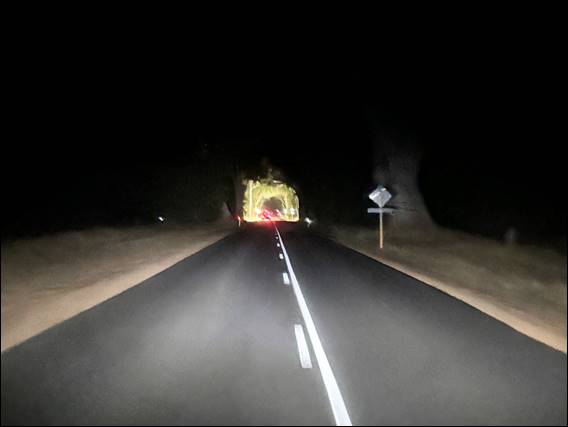
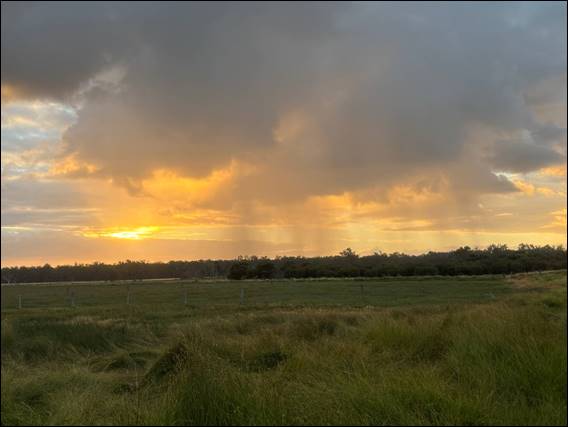
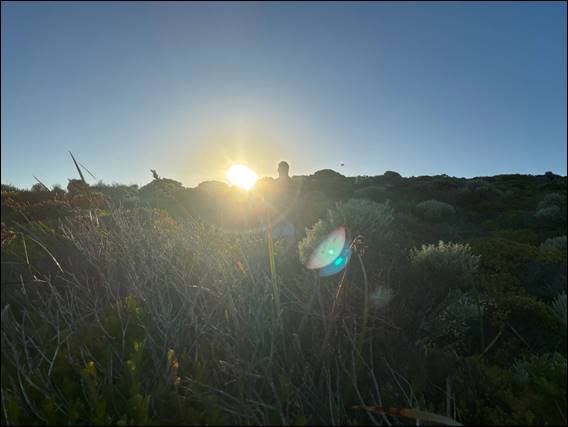
Timing is everything and today I didn’t quite get it right. Driving out on the eve of a full moon, three quarters of an hour or so before first light. Someone had snuck ahead of me, as we drove out of Peppy Beach through the at times kangaroo infested road. Not surprisingly it was dark and this resulted in the people in front having the luxury of using their full beams and spotlights to light their way. Whereas I, being considerate, was left with just my main beams. Luck was on my side in that there was not a kangaroo in sight, at least none that I saw:
I can’t recall the last start that has been in darkness like that. Today however it felt the right thing to do, as it was supposed to get pretty warm. Making an early start on rock worthwhile. Just before new year’s while Josh and I were down at Wilyabrup, we bumped into Darby. I’ve met him a few times at Willyabrup, and this time after a little chat I discovered he had bought himself a new trad rack. Asking what line and which crag he may scratch it up for the first lead, it transpired he wasn’t aware of the lesser visited climbing spots along the coastline:
As such we kept in touch, as I advised that I would soon be releasing a whole bunch of mini-guides for the area, which would help him discover more of the area. Word has spread about them and the page is the most visited on my blog over the past year. The guides have also been downloaded a bunch of times. That said we still had Moses Rocks all to ourselves today, and despite being a mere ten minutes from where Darby lives has never been here. Not even for stickybeak. As such I handed him the floppy end to sample the place the best way:
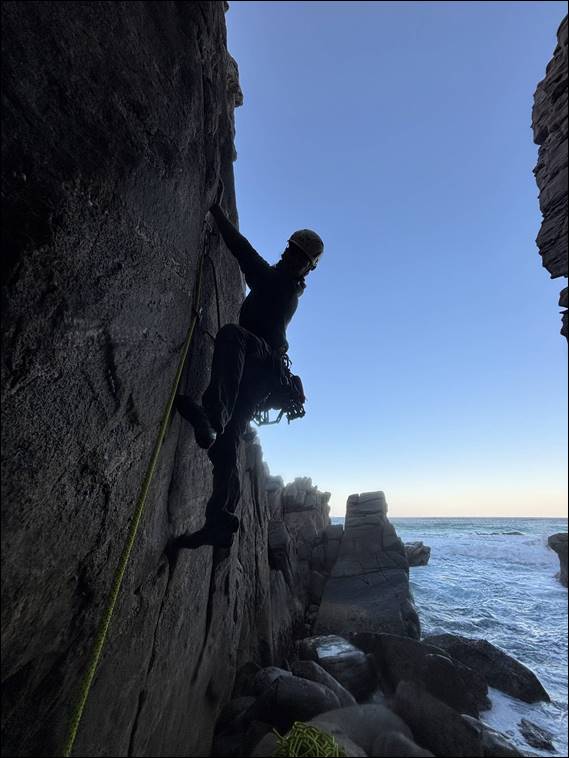
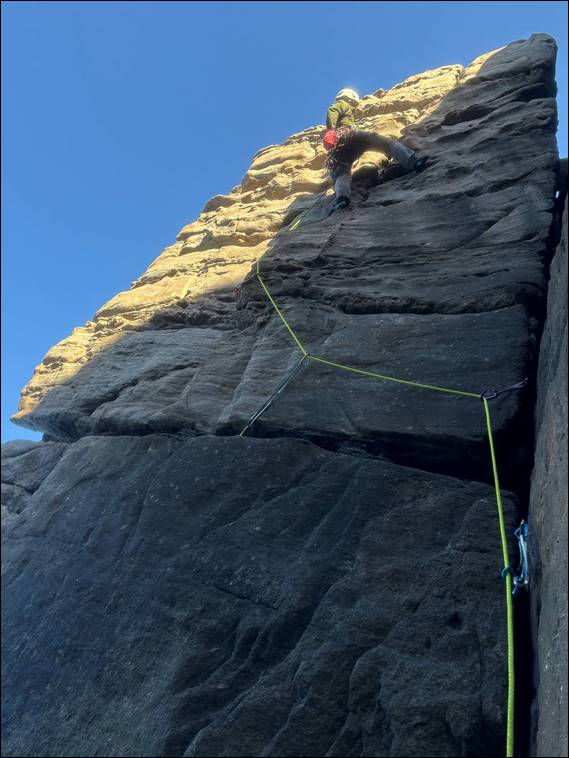
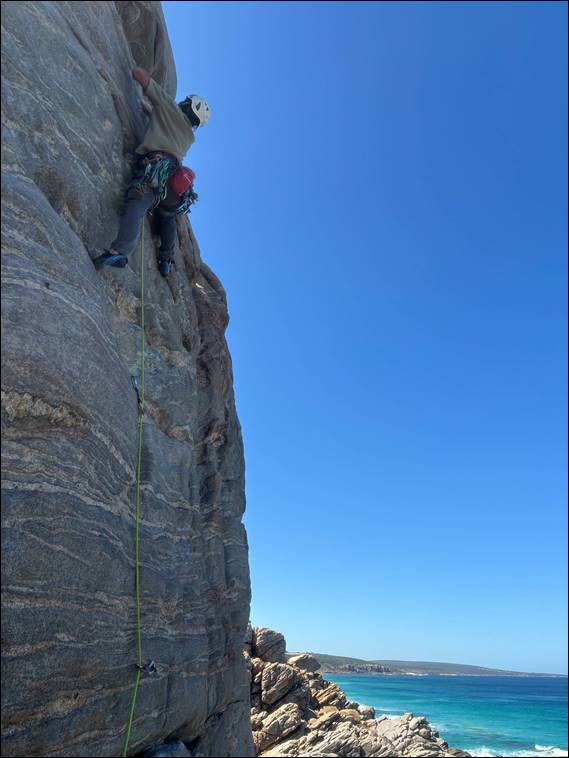
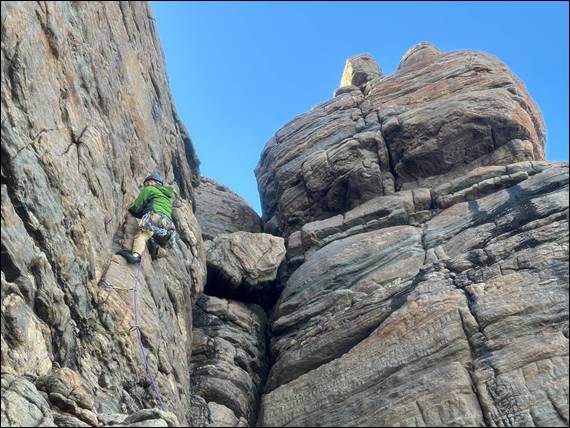
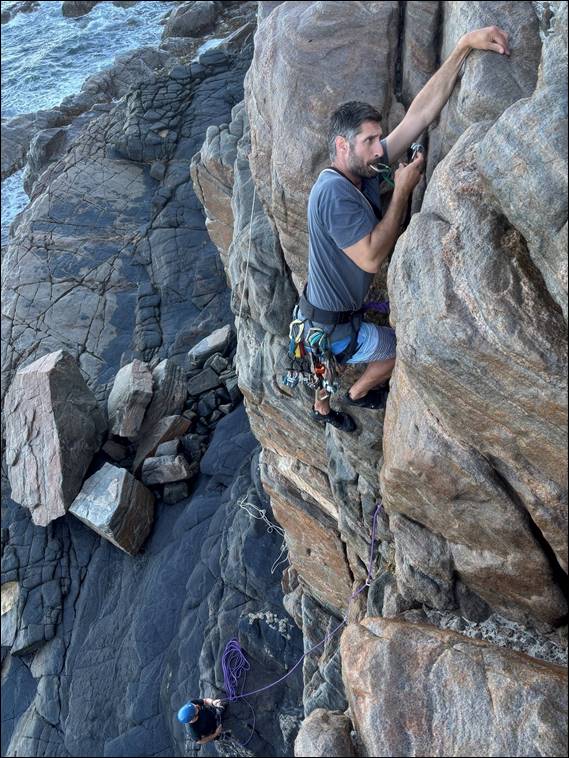
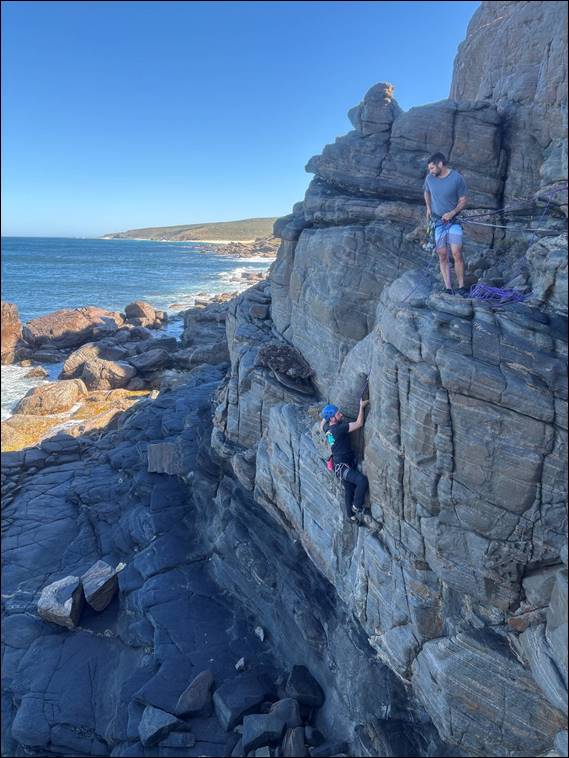
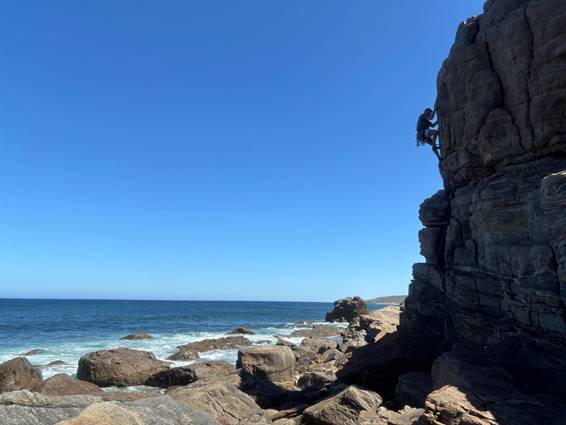
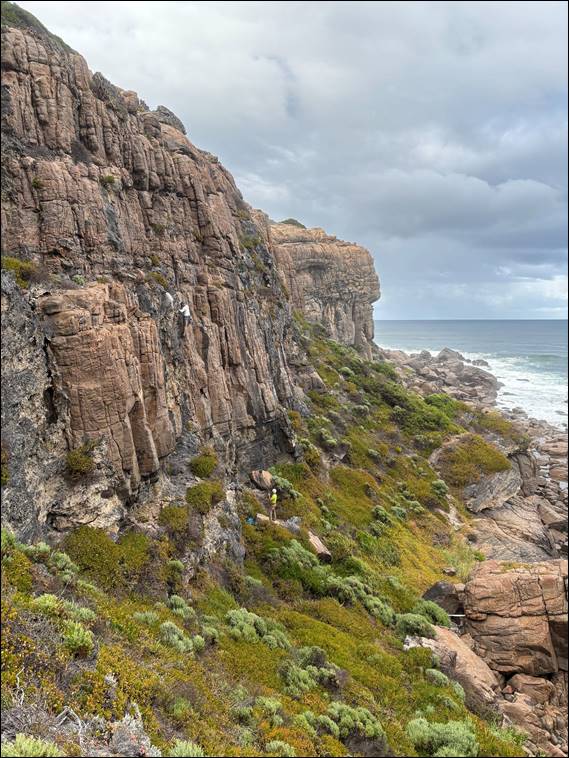
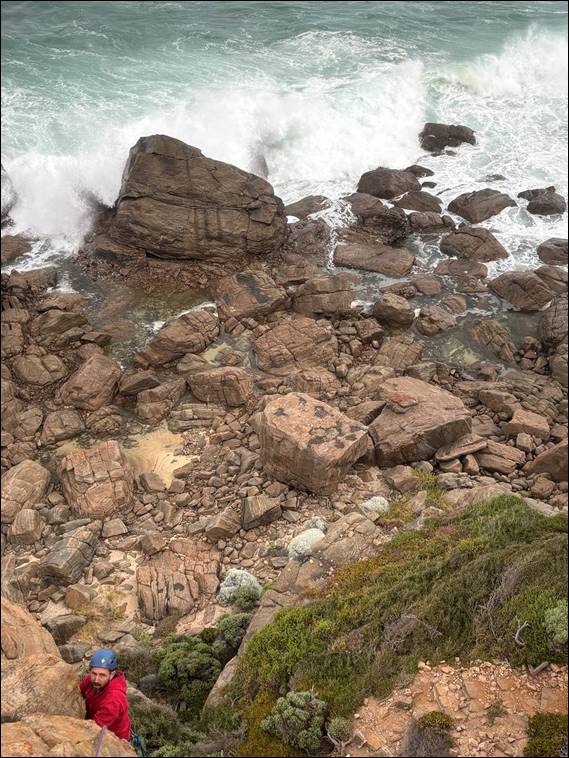
Being on lead. Several times he offered me the chance to get on the sharp end, but I was more than happy to follow up these well-rehearsed routes. As can be seen, for those familiar with the place, we went into the zawn. The full moon would be out tonight, and that meant the moon was the closest it gets to earth. A mere 225,000’ish miles. That is 14,000’ish miles closer than its average distance during the a synodic month. Being how long it takes the moon to complete a cycle from new moon to new moon, some 29’ish days:
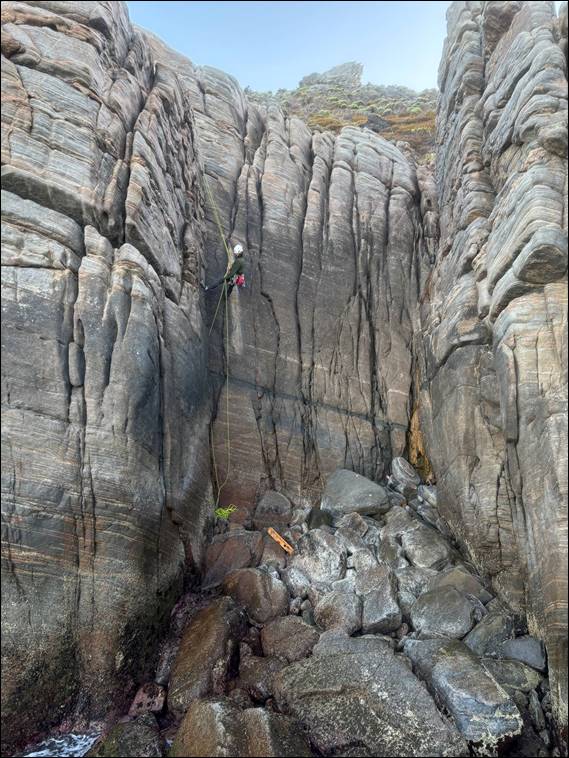
Why is all this relevant, well the combined gravitational pull of the sun and moon is at its greatest. Resulting in higher high tides and lower low tides. Today low tide was at six in the morning. Added to this there was only a moderate swell. You could suggest that not just the sun and moon, but the very stars had aligned. The base of most routes were dry, and the risk of being wave washed was low. Making the most of this window of opportunity, four lines were gobbled up including the one below that in early December sent me to the physio:
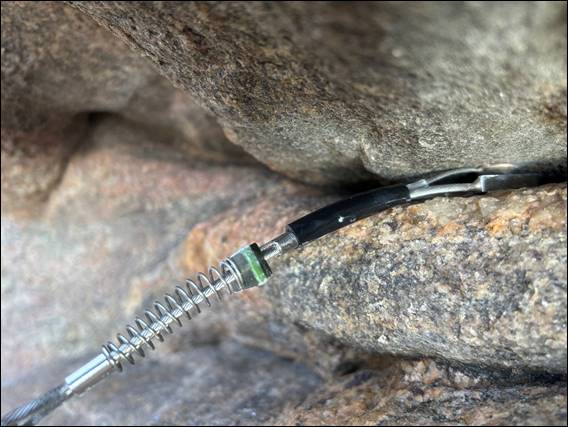
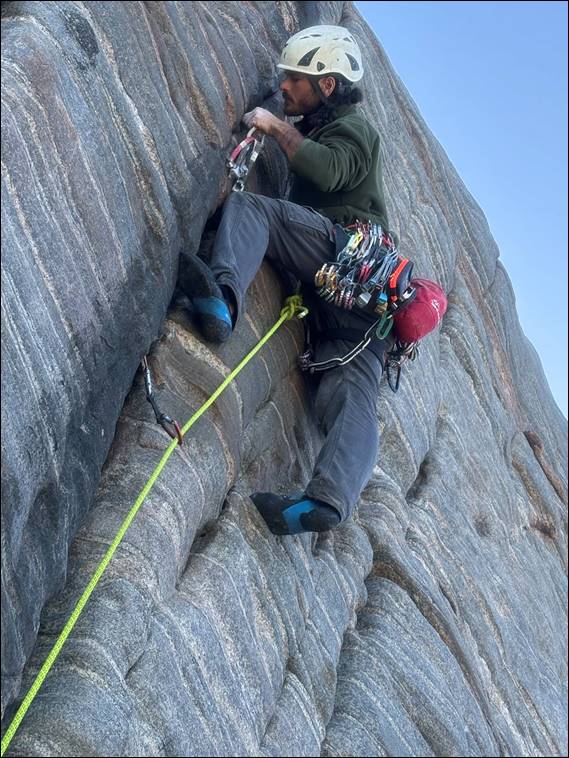
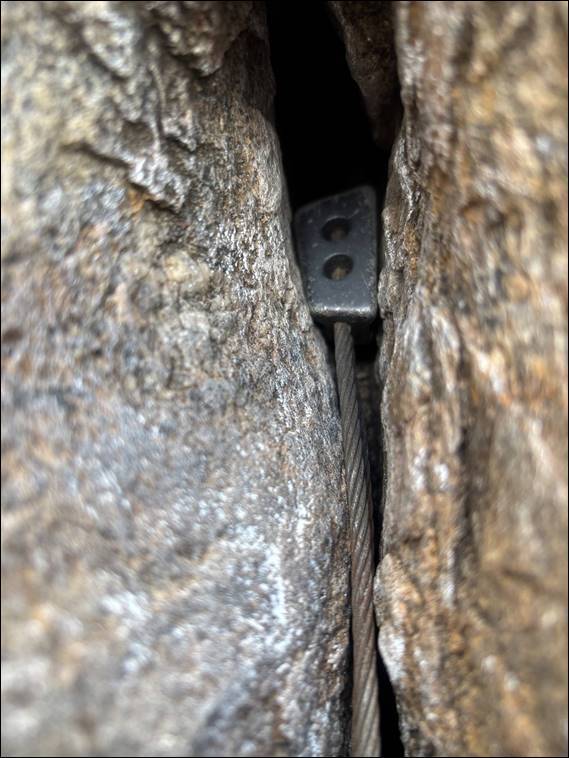
Today I am pleased to say there were no slips, the dry rock certainly assisted. Seeing we climbed with Darby’s gear, two images up is picture of one of his recent acquisition. A slider nut. It is a piece of gear that I do not have in my arsenal but have at times pondered. They certainly got a work out today in the zawn. Next time we head out, assuming I will lead something, I might use them myself to see if I will be tempted to splash out. Some of my gear did come along today, and below I think Darby has been converted into the way of the tricam:
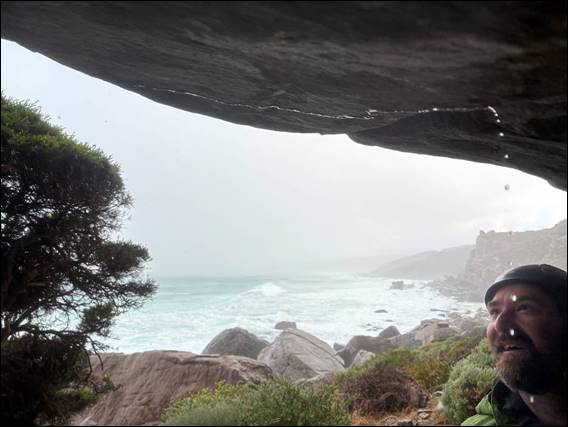
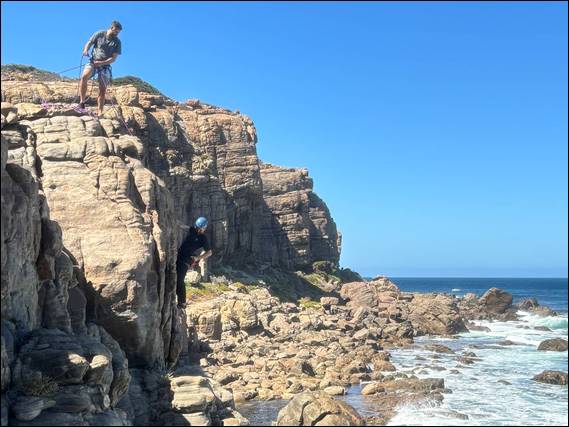
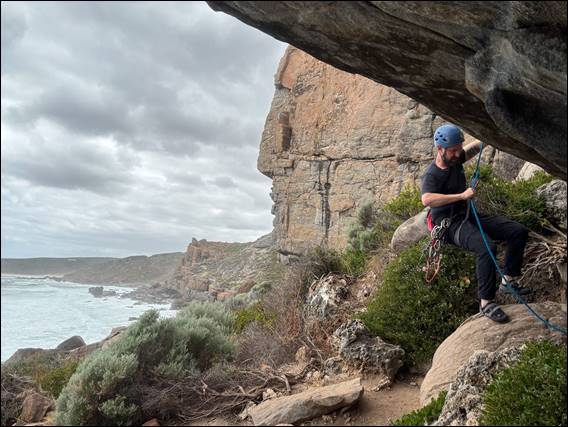
As he was just about to start the fourth route in the zawn, a surprise set of waves came in and we did get a little wet. A sign that it was time to move to Hands Up wall, which is high and dry. While the slider nuts got a workout in the zawn, the tricams took over as the most used gear on this wall. Their versatility and use in difficult to protect flared cracks won him over, and he suggested he will seriously look into getting some. As it started to warm up and I suggested that I would be keen to head out soon. But not before four more lines could be ticked:
For the last line, Darby’s eyes went back to the line that had piqued his interest when we first walked past this part of Moses Rocks. A feisty grade 21, that Howsie will be pleased to hear he went for. It is certainly by far the hardest line I have been on since my regular visits to the physio started three months back. The physio had however told me last week that based on how I was going with the rehab, I should be ok to test myself a bit more on rock. And thanks to Darby test it I did, and I’m pleased to say it felt pretty good:
You gotta love public holidays, especially when they result in a long weekend. Rolling out later than I normally head to work, the sky was a mixed bag of not knowing what it wanted to do. Howsie and I were however prepared to take the gamble, but didn’t feel it was necessary to have an early start on days like these. We were aiming for Wilyabrup, where roofs would provide us with a bit of shelter if things turned. On arrival it would have been easy to have had false hope, as there was lots of blue sky and glorious bone dry rock:
Out to sea the clouds told a different story, and a moderate to fresh westerly was blowing it right towards us at a rapid rate. Managing to get to our usual spot to dump the bags and rack up, before it dumped on us. The worse of it skimmed just north of our location concealing the coast, but we got enough of it to make most people second guess their next move. Seeing I all geared up, and had already resided to hitting a few low grade lines the decision was made. Climbing Hope as the rain just started to ease off, with water streaming down the rock:
Howsie came up with no rain falling on him, and by the time we wandered back down the clouds were mostly gone and the sun was back out. The winds dried the rock quickly, allowing him to have a dry run up Thunder Thighs. He was feeling a little weary today, so was also happy with a chilled pace. Having had a few big days in Perth with the family, during which he managed to sneak in a ‘power’ session at one of the bouldering gyms. The reason for visiting the gym was not all selfish, as he also picked up a new climbing guide for me:
The guide is for the Stirling Ranges, and provides a wealth of information that is making it very enticing to consider heading to the proper big hills. I have not climbed there anywhere as much as I would like, in part as is a much bigger commitment to head there. It is a place where the weather can close in, and unlike here where we can hide under a roof when you are up on a multi-pitch route you need to be prepared. For today however, and as I geared up for my next lead we were able to wait for the next belt to ease off:
You’d never have guessed that we are in summer and just a few days back it was a toasty near 40 degrees. Today we were rugged up in winter gear and for my second lead I climbed Sirius in one big pitch, in wetter conditions than my first lead. Whether it was because the water washed the rock clean of all the chalk, salt, and other minerals deposited by the spray, or just my mental state I’m not sure, but the rock felt good and secure. Watching as water ran behind the wires, as I fiddled them into cracks, I lapped up the conditions:
The cycle continued as before, with Howsie again seconding up as things were drying out and then he got another dry run up the wonderful Verbosity. Partly encouraged to hit this line, the longest here, after my big single pitch adventure. Sat atop after this glorious line we pondered how it had been a bit of a stop starty morning, and sure enough being my lead again there was another cloud bank heading our way. Having thoroughly enjoyed our morning and the mixed bag of conditions, we decided to hop out of there with dry gear:
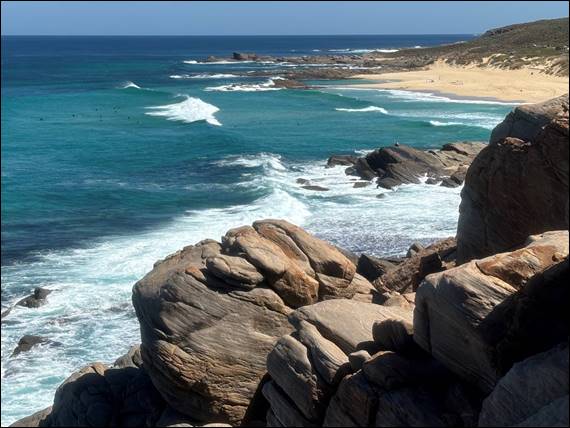
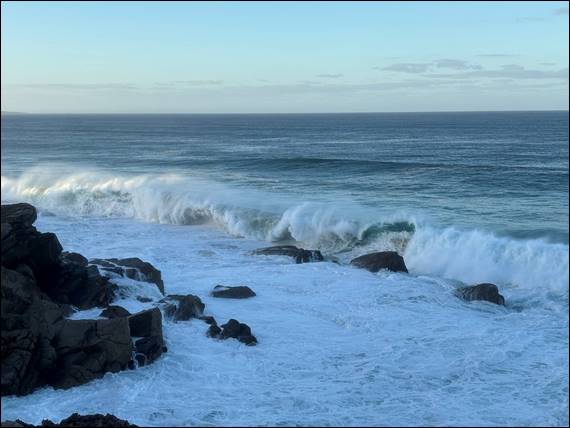
Barrelling waves greeted us on arrival, at what is locally known as Honeycombs Beach. Promoted on tourist sites for various features, including being a ‘fantastic surfing spot’. The surfing sites however don’t ham the place up as much, simply saying it has ‘quite reliable surf’ adding it is an ‘often challenging surf’ spot. Looking at the waves I feel I can tell if they are surfable or not, but I really have no idea what I am looking for or talking about. Howsie has a better idea, as he surfs whereas I do not. No surprises we didn’t come here to surf:
Today I did increase my understanding of what makes a good surf break, and also why this particular beach can be a challenging surf spot. As a climber I know the place as Moses Rocks Beach, but the real beach of that name is approx. 1km to the north. Where there is a more consistent and forgiving surf break being better, they say, for beginners. Not that any of this makes me want to take up surfing. With the rocks we were aiming for being so close to the ocean, big barrelling waves can result in challenging conditions for climbing in two ways:
The first being access. Fortunately while the waves were impressive, the tide was low resulting in the mass of water hitting a rock bar well before they got close to the rocky headland. With the energy taken out of what looked like power waves, we were able to boulder hop without the fear of waves crashing in. The second is the spray. As the water evaporates from the spray on the rock it can make the surface feel greasy. This reduces the friction and makes the climbing much more insecure. This can occur for one of two reasons:
Pure salt, is dry in nature. However, left on the rock is becomes hygroscopic, which describes a substance that can absorb moisture from the air. It is the moisture and not the salt that can make the rock feel slippery. Then there are the other minerals in the ocean, which can also contribute to this unfavourable outcome. Amongst other minerals, seawater contains magnesium, calcium, and potassium. Again as the water evaporates, the build-up of these can result in a slickness forming. You could say it’s a double whammy:
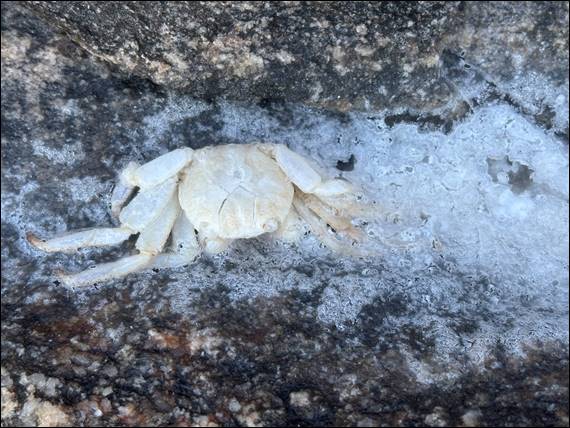
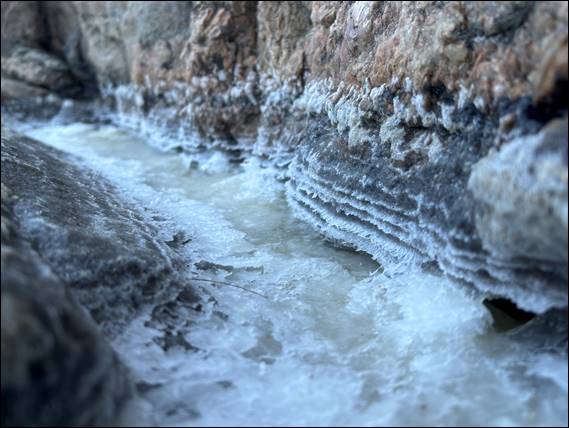
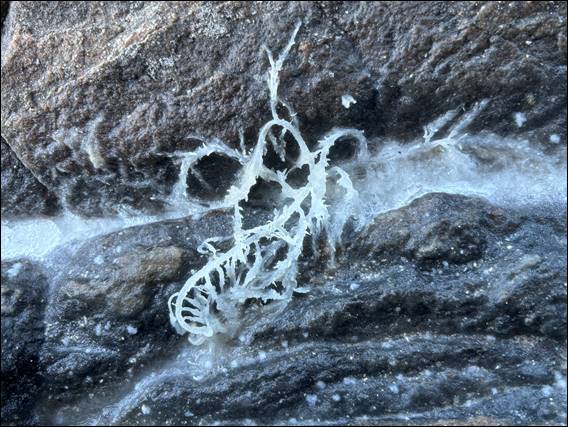
Being early morning, the land was cooler than the ocean and with no major atmospheric lows or highs to interfere, the wind did what we expect. Coming off the land and out to the ocean. Combined with the waves of today, this resulted in long streaming manes coming off the white stallions, as they galloped towards the coastline. Taking with it, the spray back out to sea. Salt residue could be found in small low down pockets, at times providing intricate patterns. Not from the spray but pools left to dry out, after the tides and swells receded:
We can also bring our own moisture, to reduce the friction. This will generally occur on humid days and/or when climbing in the sun. In an effort to cool down our bodies naturally release sweat. Our fingers have a very high concentration of glands that produce the sweat, more than armpits. Added to that fingertips have the highest density of sweat pores on the entire body, which are the holes through which the sweat is exuded. For climbers as we wear skin off our fingertips, this can interfere with this process and release more sweat:
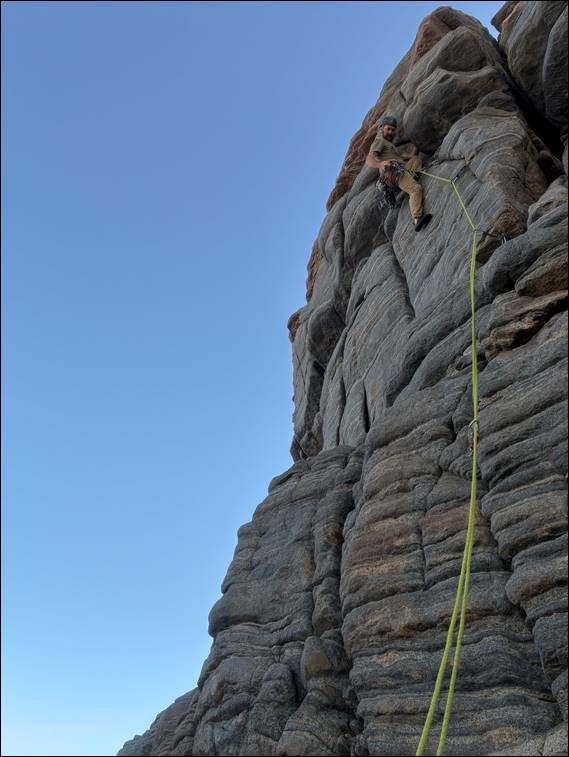
Today however the humidity was low, we were climbing in the cool of the morning, and the face was shrouded in shade. In short the rock was dry and the friction was great. The at times flared and rounded holds were feeling great, resulting in building our confidence to trust them and go for it even when the gear in the same flared features were not so inspiring. All of this lead to one route after another falling, and we worked our way through a healthy number of quality lines. Nothing too serious, of course. I’m still being sensible:
That said this area does have a few good puzzles that are not straightforward to unlock, requiring focus and a bit of grit. The fingertips never wore down so much as to bring on extra sweat, but the arms started to wear out just as we took on a couple of the real brainteasers. Getting to them just in time to be able to pull the moves, after which we knew we were done. I guess just like surfing, climbing is a bit of a balance act. A whole bunch of things need to come together for it to work, which it did today for another splendid morning out:
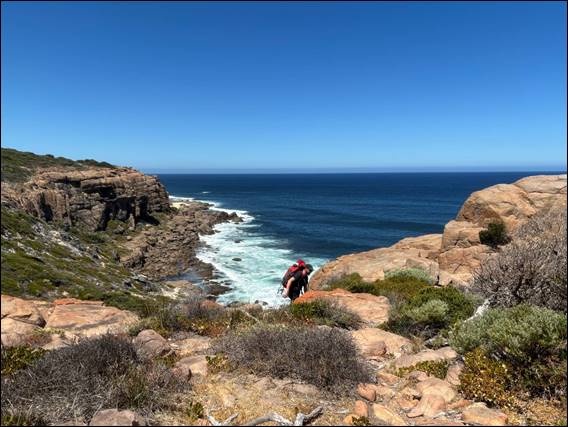
Keeping things sensible while still trying to shake things up, I can see all the lesser frequented and smaller crags along our coastline will get a visit over the next few months. Today, Howsie and I headed out today to Lost Buttress. A place I am particularly fond of, not just because of the climbing but also the lovely approach. Walking out along the coast he told me how his ‘app-led’ training program had reached the 9km mark, with the goal of being ready for a half marathon in April. Suddenly the longer approach didn’t seem like the best idea:
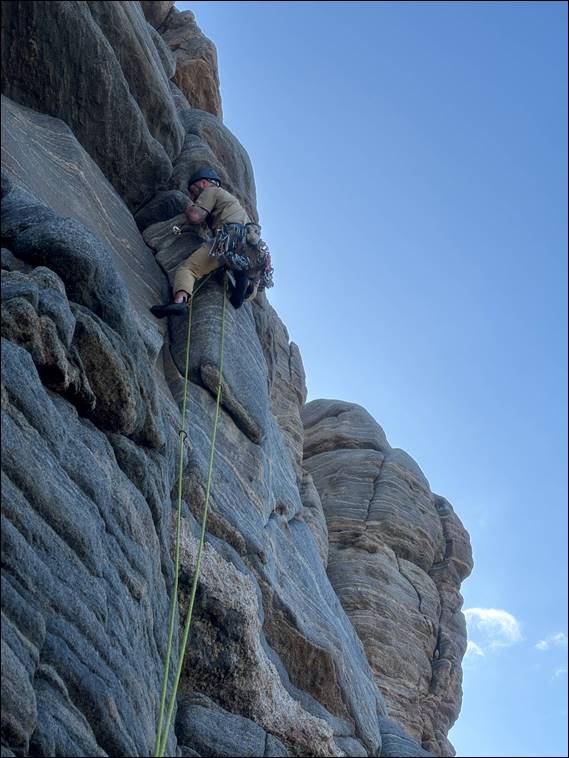
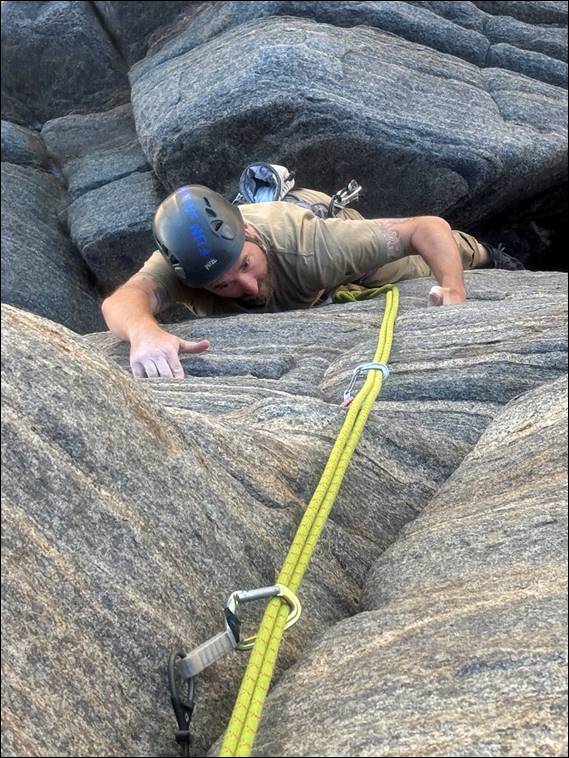
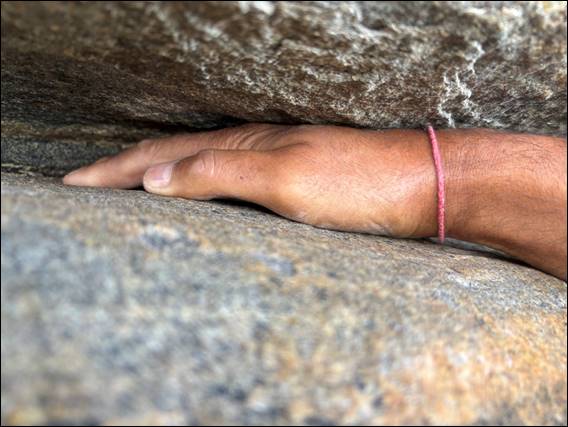
Even more so when he said things had been ‘niggled’ by yesterday’s 9km run. With the ever increasing distances the technology will instruct him to complete the niggles are a bit of a worry. It seems that it is not just me that has to make some sensible decisions. Fortunately the rock hopping did not aggravate his niggles, and we soon arrived at our destination. Here I started the proceedings on a route that has, in my opinion, one of the most comfortable jams of any route. With a perfectly sized crack, for my hand, that has smooth yet grippy rock:
Being rationale I left Howsie to tackle the harder of the moderate routes here. Allowing him to enjoy the exposure that seems so out of balance for such a relatively small crag. Then before my second lead I was maybe not so wise. Prior to today the far northern wall, which is even shorter, only had one line on it. A significant back story about that climb is detailed in this past post https://sandbagged.blog/2015/10/09/no-longer-scarred-for-life/. Much to my joy the tide and swell defied today’s forecast, and the normally wave washed wall was dry:
Not only that but the boulders at the base were also dry, allowing easy and safe access. This lead to a flurry of four new lines being put up. All solo’s, meaning neither of us were being entirely sensible. While the routes were nothing too hard, should we slip the landings were not particularly inviting. However, when conditions like this come along they are not to be sniffed at. We simply got carried away with the excitement, feasting on the opportunity. Having developed all the mini-guides it is now easy for me to update these with new climbs as we establish them:
As such you’ll need to head to that post and look at the guide for Lost Buttress to see what new lines we did https://sandbagged.blog/2025/12/29/mini-guides-for-crags-of-the-south-west-of-western-australia/. Not seeing anything else worth bagging on the short wall, it was back to the main and taller area. Here we gobbled up another four splendid routes, with Howsie again keen to take on the slightly stiffer opposition, before we called it a day. Whether it was the morning’s activities or the building heat of the day, the legs felt more lethargic walking out:
Passing The Playground, and despite the great bouldering on offer, our shoes stayed in our packs. Our arms were satisfied with the morning’s adventures. We did however briefly stop to inspect the highway of activity under the wall. Trying to make out what had been shuffling about, looking likely to have been visited by crabs and reptiles, as well as a Southern Brown Bandicoot (Isoodon obesulus). I mentioned how surprised I was that we do not see more reptiles, during these morning trips out. Especially considering time we are out and the lesser frequented areas we visit:
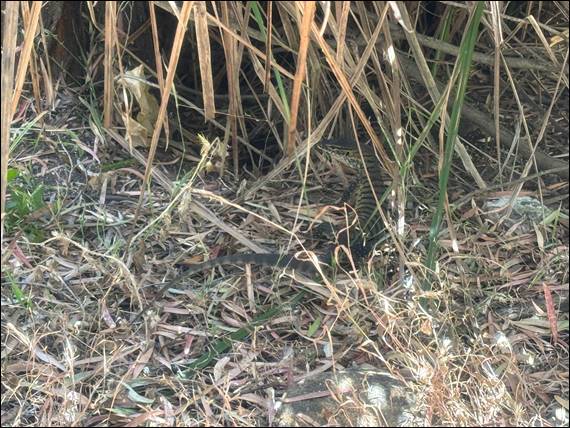
Someone must have been listening, as when we were nearing the carpark we came across a juvenile Southern Heath Monitor (Varanus rosenbergi). So well camouflaged we nearly didn’t see it. This one being approx. a foot long, just a fifth of what they can grow to. I’ve read the eggs are laid in active termite mounds, which have sophisticated passive ventilation. This provides the warmth and humidity required for incubation. Once hatched the young monitor can then feast on their host, and will continue to make use of the mound for shelter for several months:
All good things must come to an end, and the shutdown at work finished last week meaning tomorrow it’ll be back to the grind. Before that happens there was time today for another dive, this time with Geoff and his usual partner in crime Benny. They tend to head out to fish or hunt crays, but this time he advised the dive would be just to cool off. That said they still came armed with spear guns and catch bags. Rongy and Sarah also joined us, as we drove a fair way past the point. The reef stretches all the way to Stratham, approx. 7km away:
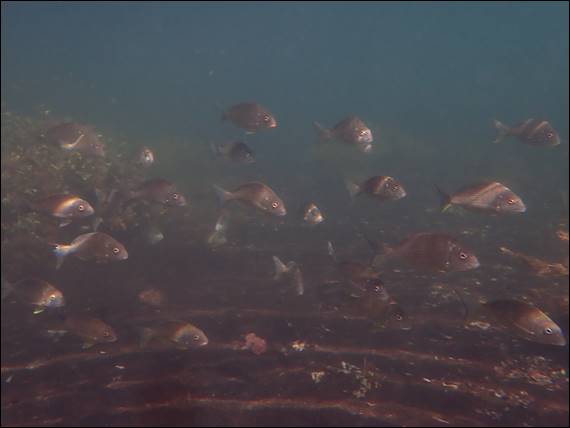
You can stop pretty well anywhere along this part of Geographe Bay, and find great ground to search. Our dive spot was approx. 4km away from the beach access at Peppy Beach. Starting with a very shallow swim passing a school of Tarwhine (Rhabdosargus sarba) hugging the ocean floor, while Southern Garfish (Hyporhamphus melanochir) seemed to be hovering above, as they skimmed just below the ocean’s surface and kept a safe distance from me. Once we reached the reef the water got deeper and the clarity improved greatly:
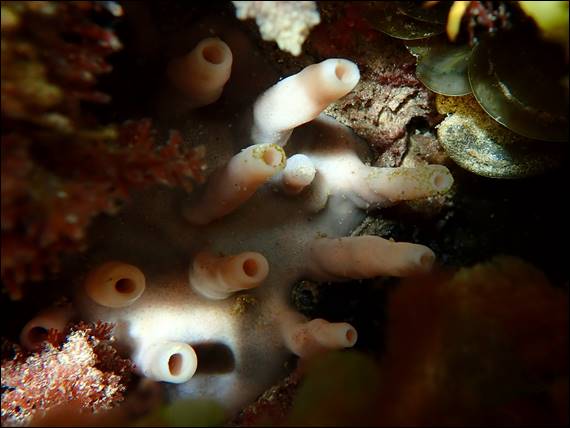
Quite a few different fish, schooling and solitary, were about but I initially kept my focus on the nooks and crannies. Looking for anything unusual, without too much success. This sponge, hidden in a hollow was however a pretty cool. Sponges, once considered plants, are the simplest animals on the planet. However, with at least 10,000 species globally and close to 20% of those found round Australia, they are also infuriatingly difficult to try and identify. You have probably guessed where this is going, and no I had no success with this specimen:
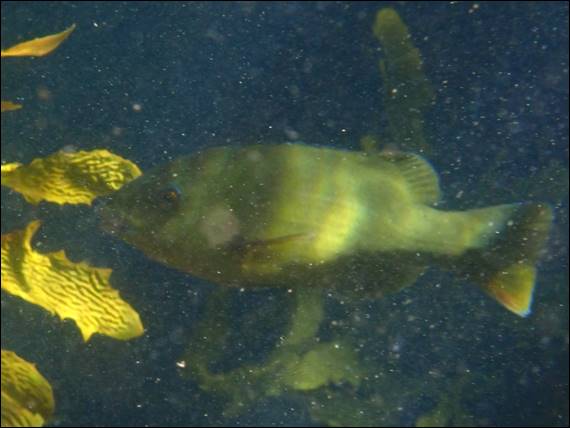
Moving onto fish the below is likely a female Western Blue Groper (Achoerodus gouldii). I say likely as these fish grow very slowly, and it is suggested that a fish of 40cm and 80cm is likely to be 8 and 25 years old respectively. Like the Southern Garfish, this one also kept a safe distance hence the poor image quality but it clearly wasn’t showing the expected markings of a juvenile. Being a little under two foot long it may be about to reach the initial phase of sexually mature as a female. This happens on average at about 15-20 years of age, and length of about 65cm:
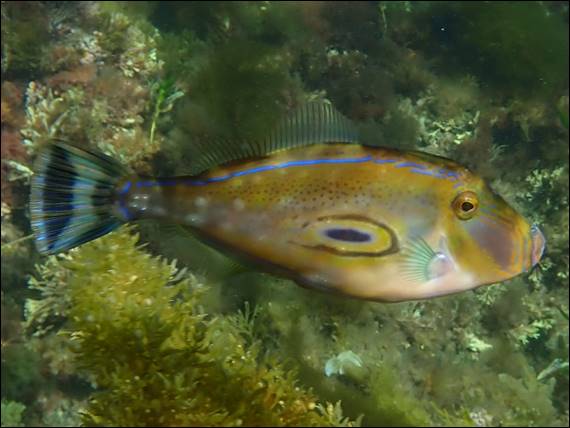
Once they reach 30 years of age their length does not increase much more. Living one of the longest life spans for a wrasse, reaching a ripe ole age of 70 and growing to a maximum length of 175cm. These fish home-range, meaning they live within a certain area, and as such can be more susceptible to overfishing. I do not recall seeing a Western Blue Groper before, but had heard they can be found here. While my next image is of a fish I have seen many a time, it is worth including due to the amazing patterns and vivid colours:
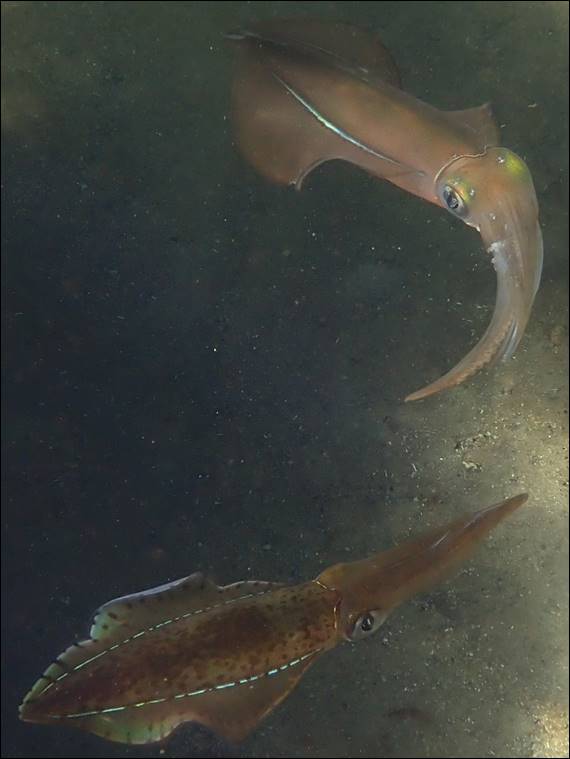
Easily being recognised as a male Horseshoe Leatherjacket (Meuschenia hippocrepis), another popular recreational fish. And the final image is also of a popular catch, being two from a small shoal of Southern Calamari Squid (Sepioteuthis australis). Identifying males from females externally is tricky, even the differing size and patterning shown in the image doesn’t help. Unlike the long lifespan of the Western Blue Groper, these cephalopods have a lifespan of about a year living as an adult for a mere 4 month. Seeing the others exit with empty catch bags, my finds get to live for another day:
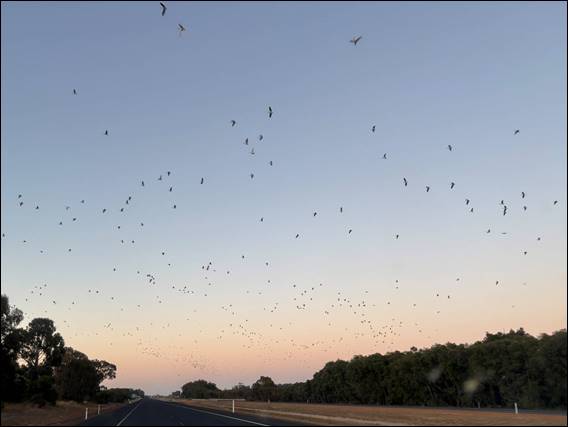
The Australian White Ibis (Threskiornis molucca) is by no means an uncommon bird. Once a wetland bird, it has learned to live in our urban jungles by scavenging food from our rubbish tips and bins. Thriving on what we throw away. This changed foraging approach, purely driven by our wasteful lifestyle, has earned it a number of unkind names including the dumpster diver, tip turkey, and most commonly known the bin chicken. That aside to see a flock of the size we saw driving out today was an unusual and impressive sight:
Admittedly the flock included the Straw-Necked Ibis (Threskiornis spinicollis), another of the three species of ibis native to Australia. Another quite a common bird to see, but unlike the Australian White Ibis they have not adapted to a wider variety of food and are only rarely opportunistic scavengers of our refuse. Despite a forecast of a hot day, we were not heading out early. The sun beat on our backs as we walked towards the coast. Aiming for a crag that like the Australian White Ibis does not get a particular good rap:
It is however something different, and as with every little crag we have along our coastline there are a few gems if you are prepared to give it a go. Today Sam, along with Josh, were prepared to do just that. Sam hadn’t been here before, but with the new mini-guides out he was able to get a feel for the place before we arrived. Nothing too tall and mostly straight forward climbing, has earnt the crag the name of Beginners Wall. A good place for those who are learning and those who don’t get out too often:
Having learnt better than to suggest he goes on second, while he gets his head back into things, Sam took the pointy end. Easing into it on a couple of the lower grade routes. Josh meanwhile seemed more than content to have a rope above him, hinting he may change his mind as the morning wore on. It didn’t. Not that Sam complained. He has a hankering for enjoying the added intensity of being in control of your own safety and having the rope below you. This is probably the crag I have come to the least, so needed to reacquaint myself with it:
There are several routes I have put up with the likes of Steve and Lou, and looking up at them I questioned the grades we gave them. Neither Sam nor Josh seemed inspired to jump on these, and as I am in sensible mode at least for another couple of months we passed them by. However, as we checked them out another possible line came to view, and so became Sam’s cherry popping first ascent shown above. Done in the best fashion possible, on-sight. Having no knowledge of what lay ahead as he climbed, so became Rope Cutter (11):
Just as he was about to get started, Josh bouldered up a scrambly line to get a bird’s eye view of the line Sam was about to attempt. Dislodging some rather large blocks that tumbled downwards. They missed Sam and me but nicked the rope enough to open up a small hole in the sheath. Not so much we couldn’t use it, but enough to encourage me to finally decide to retire it. After all it has seen a lot of action over a quite a few years. In fact, while I feel it is fine, I am surprised no one has suggested that maybe we shouldn’t use it anymore:
Unperturbed Sam lapped up line after line, as the routes I suggested progressively got trickier. We did however make sure we gave him the end of the rope that hadn’t been nicked. Seven lines down, and his arms gave way. By now all of us were happy to wrap it up. Although maybe not quite so happy to leave the sea breeze behind, as we started to bake the further inland we wandered. Another grand day out, and on my return I added some refuse to our bins but not the sort that would be of interest to any bin chickens:
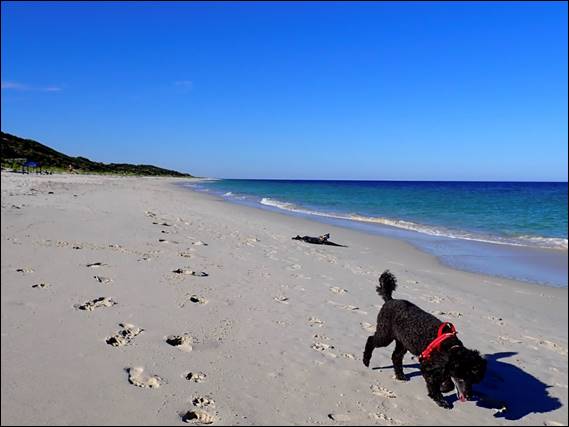
Our mornings on the big day have certainly changed over time, the manic excitement when Elseya was young has long gone. Now it is more likely the house will be quiet until way after my usual wake up time. So before the rituals of the day, which still hold fast, began Lisa and I took advantage of the changed routine, quiet before the ‘other mad rush’, and a promising looking ocean to head to the beach. We had it practically to ourselves, being Christmas Day the ‘other mad rush’ of the holiday makers would not descend on us until Boxing Day:
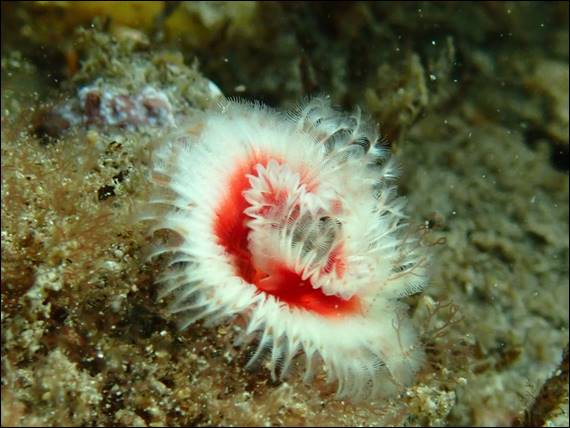
Lisa set up camp with her shelter, and being still in the relative cool of the morning the poodles joined us. This also allowed them to say hello to all the other dogs that wandered up and down the beach with their owners in tow, as I immersed myself in the water. It was indeed good, better than expected and I stayed out for a good while. A lovely way to start the day, not that there was too much that really caught my attention. But just because it was the big day I did like this Red Tube Worm (Protula sp), that was imitating a Christmas tree:
There is a Christmas Tree Worm (Spirobranchus giganteus). They have a conical Conifer (Pinophyta) tree shape, like the form a classic Christmas tree. But are found in tropical waters, not here. I’ve previously suggested this was a Red Fanworm (Protula bispiralis). However, digging deeper I feel that was definitely a stretch. Not that I have managed to narrow it down to a species, and nor have several others whose research I use as my reference tools. That is despite it being relative common in the general area:
The only other image I’ve included from that dive is a Blue Swimmer Crab (Portunus pelagicus). They have earned a few common names due to their behaviour and appearance, one being Sand Crab because they bury themselves in sand or mud during the daytime and winter. I spotted the antenna and eyes poking out of the sand. Not managing to get an image of just these, as when I started to get too close it pulled itself out ready for defence. Due to conditions and climbing I did not return to the water until the eve of New Year’s Eve:
Going in off our local beach again. The image above clearing showing the dusting of detritus coating everything, referred to as marine snow. Even the water movement created from my flippers being enough to remobilise this into the water column. For our beach much of this is a result of the nutrients and organic matter washed into Geographe Bay, from the Capel River. While a groundwater fed river that receives inflow year round, the river flows are only strong enough to breach the beach and enter the ocean in winter:
Winter is also when the prevailing ocean current of this area are the strongest. The Leeuwin Current flows from the north along Western Australia, bringing with it warmer waters. This keeps the local water temperature up a bit in winter, however because the strength of the current subsides over summer the waters do not reach tropical temperatures. During 2025 the Leeuwin Current was stronger than average, likely due to ongoing La Niña conditions. This has resulted in water temperatures down our way being some 3-4 degree above average:
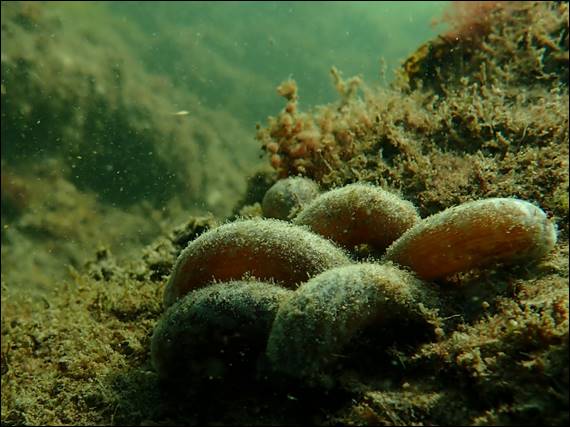
I seem to have drifted through this post faster than expected, so will now get back on topic. The dusty image shows a small collection of Cliftons Zoanthid (Isaurus Cliftoni). I have identified Finger Zoanthid (Zoanthus praelongus) in three previous posts, and stand by those identifications. The key difference between the two varieties are the pattern and shape. Cliftons Zoanthid tend to be shorter and chubbier, so are also sometimes called Sausage Zoanthids. These creatures are related to anemones, of which I have included two species:
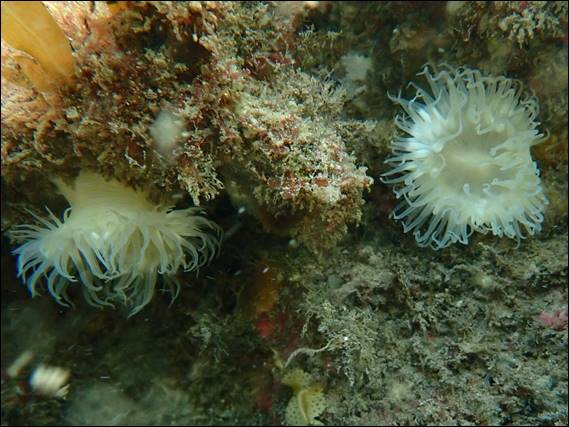
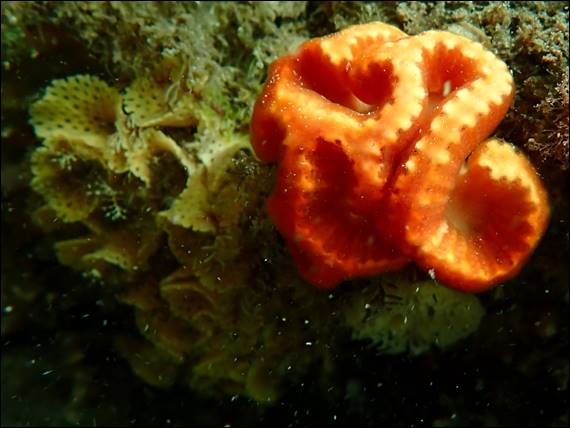
I’ve really struggled to identify either. The first may be White Anemone (Actinothoe glandulosa). I have related the scientific name with a different common name in a previous post, and can no longer find a reference that relates to the detail I provided back then. Drawing a blank with the second, addling my brain in the process. This neatly takes me to the Brain Ascidian (Sycozoa cerebriformis) above. One of the many types of sea squirts, and something I have accurately provided details of before. Although this specimen is much more colourful:
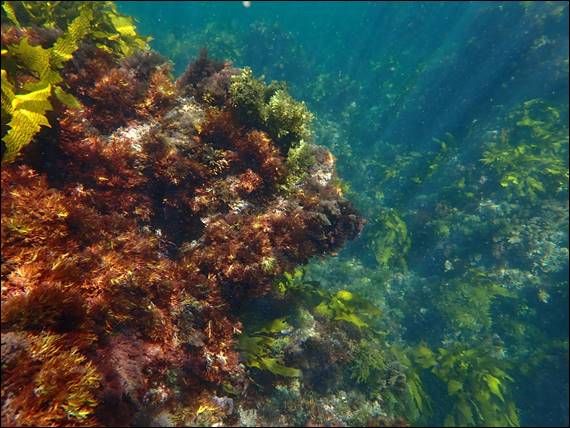
You may be wondering why the anemones and ascidian were not coated in marine snow, like the zoanthid. This is primarily because the latter was laying on the open ground while the former were found on vertical section of reef and at times under ledges. And then there is the above image with beautifully clear water, and clean unaffected weed. This was taken on the actual New Year’s Eve. When the swell having finally dropped below a meter inspired me to walk past the point, which is north of where the Capel River spills into the sea during winter:
I find that a swell of less than a meter is when the water clarity really improves off our local beach. That said being north of where the river comes in, this area isn’t as affected by what the Capel River pours in. There are also no other waterways that flow into the bay to the north. As such it generally has better conditions, plus it has a far bigger reef. You may wonder why I don’t head there all the time. Simply because our local beach is so convenient, I can walk to it in a few minutes, and have had great success there over the years so it is still good:
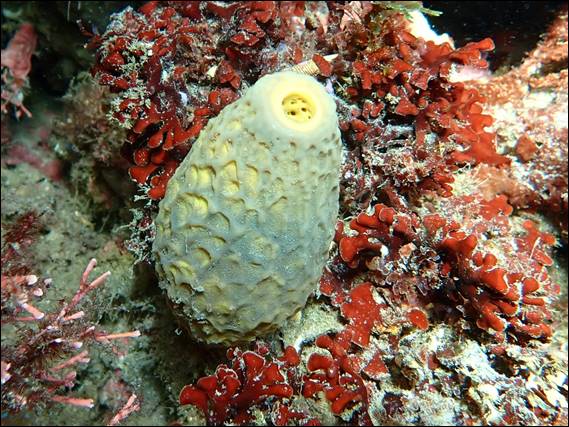
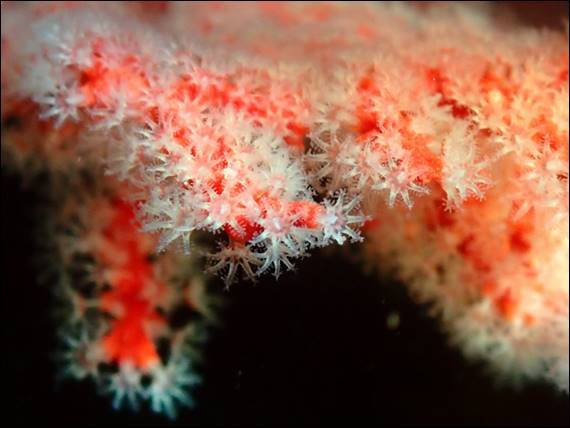
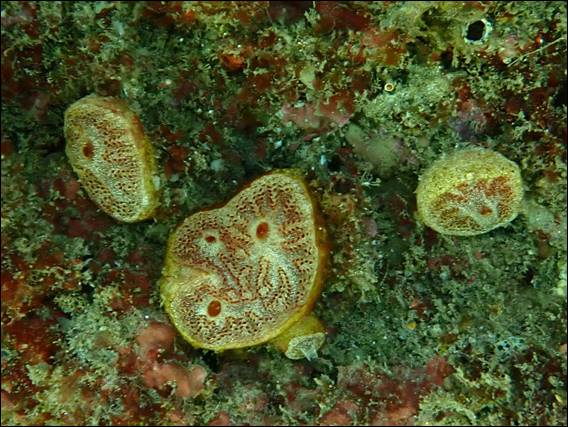
I’ve skipped past a sponge. They come in a huge array of shapes, sizes, and colours and I did find a single image online that looked similar. Sadly there were no details that accompanied the image to help with an identification. As such onto the above, a close up of a Zimmers Sea Fan (Mopsella Zimmeri). Previous posts have images of whole fans, which look pretty stunning. This time I’m showing the tiny anemone-like polyps each with their eight arms out. They filter food particles to provide energy for the fan, which is a colony of animals not a plant:
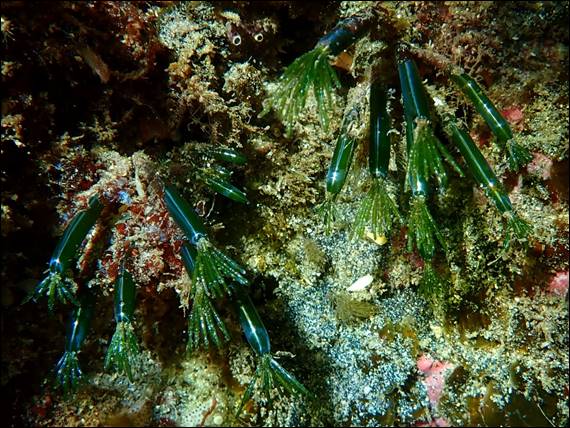
The best way to explore the reef is to spend time under water, checking the caves and ledges. In one the light was reflecting off something that resembled glass, being the above. I’m really pleased with this find, as it has only two sightings recorded in Western Australia. This sighting was of an early stage of Palm Tree Alga (Apjohnia laetevirens). The young plants are described as having a metallic sheen, which is what had attracted my attention. There are only two species worldwide, and this one only exists along the southern coast of Australia:
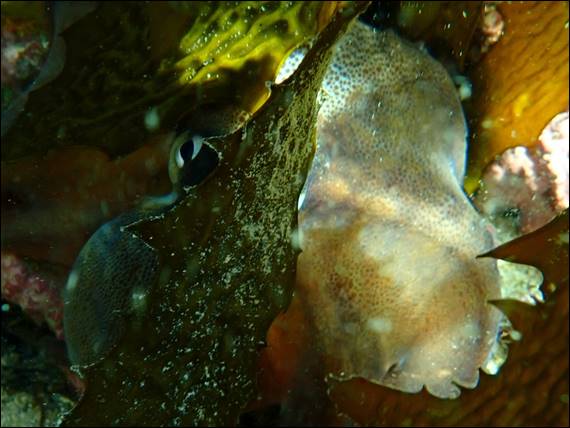
In terms of fish, crustaceans, and cephalopods all was quiet other than the above octopus. By the time I got down, it had hidden behind some weed and as I approached in a flash it was gone. I have always referred to these as the Gloomy Octopus (Octopus Tetricus), and for the first sighting recorded in my blog from 2020 hinted that I was not sure. Researching more it is in fact a Western Rock Octopus (Octopus djinda). This separate species was not identified until 2021, and before that it was considered to be the same as eastern states Gloomy Octopus:
I’ve now gone back and corrected all my posts so they refer to our local octopus, other than the original sighting as technically I was correct back then. Rolling into the New Year and I was up and out in the water early. For some different territory I went out directly from where the Capel River breaches the beach in winter time. Another near ninety minutes of bliss exploring all the nooks and crannies, this time with more fish. The above fishy image being of the ever curious Banded Sweeps (Scorpis georgiana), with a single Moonlighter (Tilodon sexfasciatus):
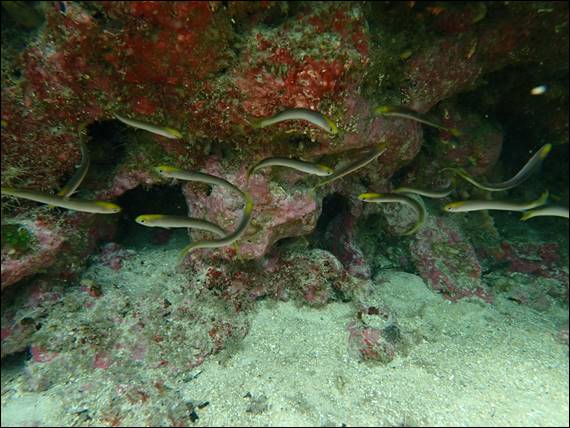
Banded Sweeps are schooling fish, while Moonlighters are generally solitary or in pairs. Both inhabit similar environments, and as such they can be seen together not that I see it too often. Above is a school of Yellowhead Hulafish (Trachinops noarlungae), their bodies are slim and long. Until you look close they seem more eel like than fish. This is due to their caudal, dorsal, and pectoral fins being respectively pointed, low, and small. The body shape seems to me to enhance their dance like swimming motion, which is kinda captured above:
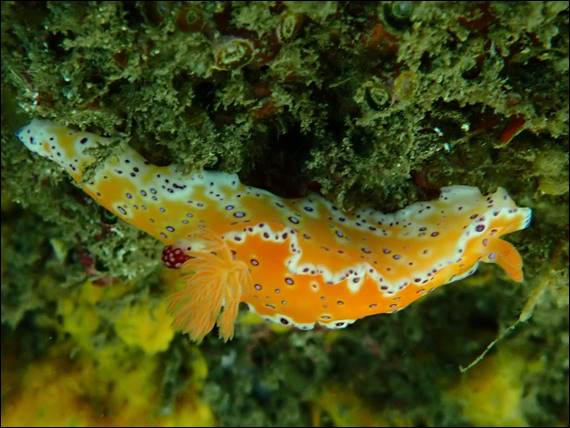
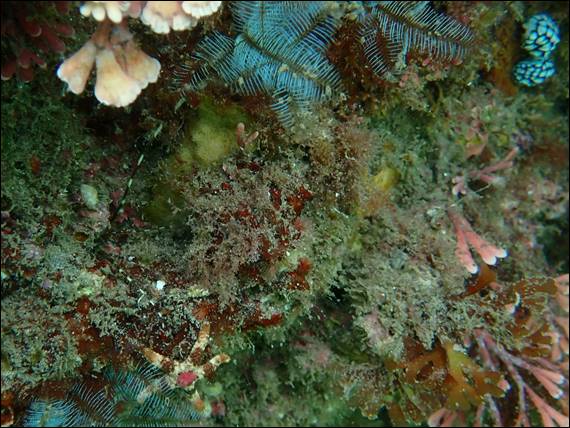
Checking out all the ledges I came across my second species of nudibranch of the season, a Short-tailed Nudibranch (Ceratosoma brevicaudatum). Despite the name this is the largest of over 100 described species of nudibranchs in the family Chromodoridae. The tail for this species referring to the strawberry like protrusion behind the gills. Next is likely a sea squirt, while very unquie in appearance I have not been able to narrow it down. My last image shows two Pustulose Wart Slug (Phyllidiella pustulosa) mating, and a juvenile sea star I can’t identify:
But what really caught my eye were the brown and white striped feelers sticking out of a hole above the sea star. I watched them for some time, as they waved about in the water. I think they are antennule, the smelling organs of shrimp and lobsters. Based on all the species I have checked the patterning suggest it may be a Juvenile Ornate Spiny Lobster (Panulirus ornatus). There are no observations on record for this area and only rare sightings in Perth. However, due to the warmer waters pushing further south this year I could be on the money:
A Guide to Rock Climbing in WA’s South West was published in January 2016, and has for some years been out of print. As with most things these days, records of what has been going on are now more often than not loaded online. The main repository used being an online forum called The Crag. Certainly the more popular places round here are well represented on this publicly available website. Not surprisingly the Main Area and Northern Blocks, including The Terrace, of Wilyabrup are well documented. These locations provide a vast array of trad, mixed, and a few sport lines of all grades up to 26. The ultra-popular Bob’s Hollow also has information easily accessible online, being regarded by some as one of the premiere limestone sports crags in Australia. This seems quite an achievement considering it only has thirty five accessible routes.
There are of course many other places of note in our local area. A few were mentioned in an article I wrote for the magazine Vertical Life a couple of years back, called Quiet getaway areas of the Western Australia’s South West. Some of these lesser frequented places get a bit more attention than others, but they all tend to live in the shadows of the key popular areas I mentioned above. This has resulted in the detail being logged on The Crag at times being scant, incomplete, and at times incorrect. I have explored these lesser visited places over the last twenty years. Allowing me, along with others, to experience the joy of establishing new routes. Many of which have not made it onto The Crag.
It therefore, seems fitting that on the eve of the tenth anniversary of the release of the, now out of print, guide for the South West of Western Australia, that these magical spots are recaptured in a series of mini guides. You may ask why I don’t just log into and update The Crag. Partly because I don’t want to get sucked into a forum where I would end up spending many, many days updating not just details for here but also Central Australia. Also producing mini guides allowed me to browse my 13,000 strong image library, to pick out and use photos that will bring a smile to many a person that I have climbed with.
There are ten locations and I have provided a mini guide for each. Below to give you a taster before you download, I have provided a brief introduction to highlight the charms and unique aspects of each.
Wellington Dam Quarry: A place to be humbled by. Some will say it is no good but I would retort with saying they simply do not have the technique this place demands you use, nor the metal for bolt placements that keep you safe but do not allow you to dog a route.
Castle Rock: A small place with a huge range in grades and also a great variation in style of climbing. The prefect place to climb and then dive into the crystal clear waters, which I like to think forms a moat on the ocean side, to snorkel with fish all around you.
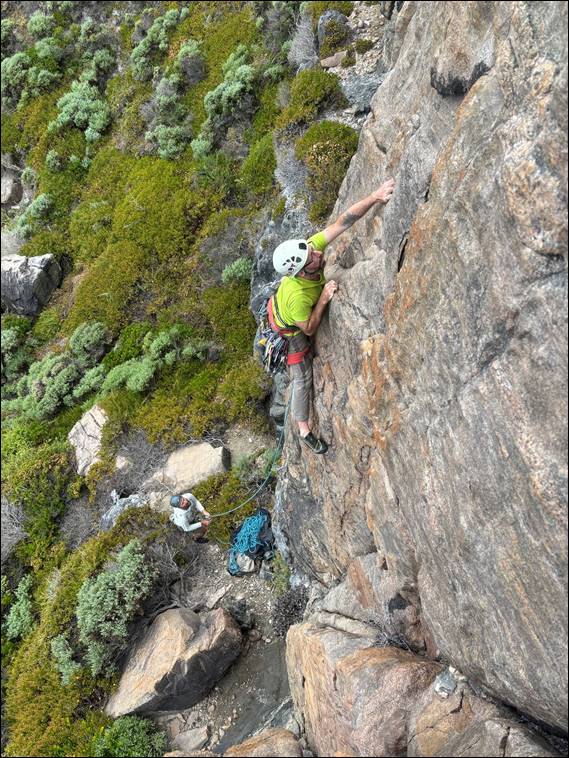
Smiths Beach: A serious trad place, the flared cracks and slopers feeling even less secure due to the steepness of the walls. At times the holds look a long way apart and your body will tell you there are very few rests on the routes. This place will prove how committed you really are to trad.
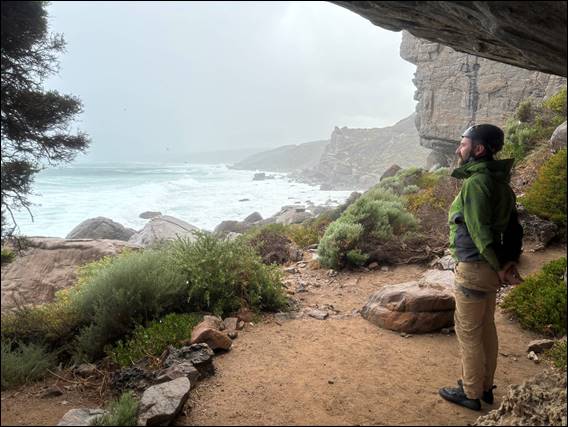
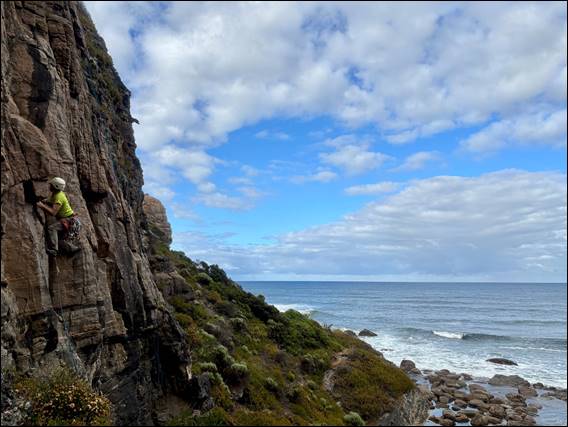
Moses Rocks: The friendly crag, mostly slabby routes on a rock that feels good to hold and has great friction that seems to hold even in wet conditions. There is nothing to serious here but the Zawn, in which you can have the water lapping round your feet if you time it badly, is epic.
Cosy Corner: A place of contrast, a steep powerful inland crag but for me it is the moderate routes on the coastal face that appeals. Safety comes first here, as you abseil in and have to climb out. The lines are awesome, nicely consistent and in a brilliant position.
The next five areas are part of the Wilyabrup area, being the outlier crags. Each has its own and differing appeal that I have tried to draw out in the brief introductions.
Organ Pipes: This small crag is within a stones throw of the main area but rarely visited. A fine selection of low to moderate grade lines. But be warned some routes have longer than you may like runouts as you near the top. It is certainly a place you can test how your head is feeling.
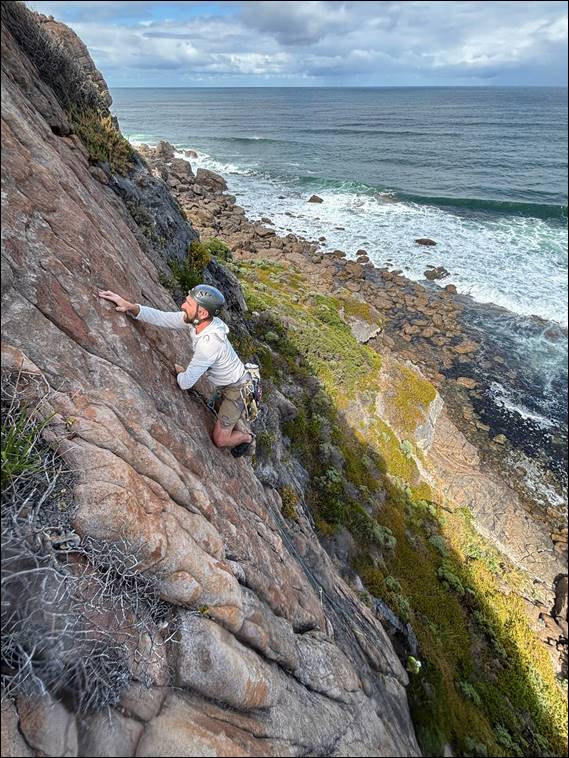
Driftwood Bay: Nice 20m routes, which is long for the South West of Western Australia, on a broken crag that offers a rare mountaineering style of climbing. Rambling lines, variable rock quality, at times spaced gear. While it has low grades it is not the place to learn trad but true old school trad aficionados will love it.
Beginners Wall: This is the place to learn trad. Lots of placements on comfortable routes that are the sort of length that your belayer can observe and still provide advice. But check the ocean conditions first, as the water laps the bottom of some routes even on calm days.
The Bookshelf: As the name suggest it is like walking through a library, route after route neatly stacked. They are short but hidden on the shelf are some real gems. Another place to check the ocean conditions, but it also offers a beginners paradise where you can pack in the routes and hone your belay setups.
The Playground and Lost Buttress: The Playground is where to go for a boulder with a wonderful soft sandy landing. If you have someone to give you a catch, Lost Buttress is a short walk away and offers quality moderate climbs with just a hint of adventure, some of which have a disproportionate amount of exposure for their length.
Just after 5am a message popped on my phone. Rongy asked if I could make a second cuppa for the journey to the crag, as long as it was not too much bother. Not long after, Howsie had picked Rongy up and I got as second message to say he was also keen for a brew. It’s a good job Lisa and I make big pots of tea, using a coffee filter machine but popping tea leafs in rather than coffee grounds. As such it really is no bother, and when the two of them rolled into the carpark in Capel, at the designated 5:30 meeting time, three hot mugs of tea were awaiting:
Forewarning them of my need to be sensible, we picked a crag with nothing too serious on it. A scrappy place, that most would look at briefly and then move away from. As mentioned yesterday I am in the process of writing mini-guides for these lesser visited places. While I do this I am thinking about how each has its own flavour, so to speak. Considering they are all relatively close and most are formed of the same base rock formation, it is amazing how different they feel. This place, in my opinion, provides a mountaineering style of climbing:
It’s not that the place is huge, only stretching about 20m from top to bottom. But it does provide meandering lines, varied terrain and features, more questionable rock than any other crag, and at times runout sections. As such I would suggest it is an acquired taste, and while the grades are low it is not the place to send someone keen to learn trad. You will hardly be surprised to hear that I love it here, and have had many a memorable day out. Howsie and Rongy also enjoy shaking things up with differing styles, so were also happy to revisit it:
Rongy has only been here a few times, and on each occasion it has rained. Unlike yesterday the cloudy sky showed signs of breaking up, allowing the sun to come out. This time Rongy would hopefully be able to enjoy the place with dry rock. A good job too, as when it rains this is not the place to climb. The reduction in friction makes the routes way more nervous, and with the runouts it can really mess with your head. Taking turns in leading, we picked off lines of our choosing other than one route that both Howsie and I have previously led:
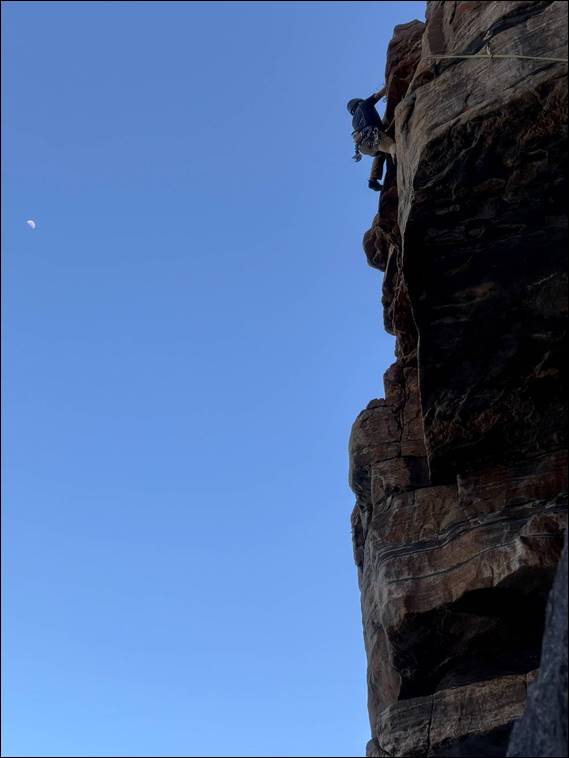
It is highly likely that, other than Howsie and my ascents, no one else has been brave or mad enough to climb it. Being runout, steep, and having a rock appearance that suggests loose holds may abound. All of this piqued Rongy’s interest, and as soon as he touched the rock it started to drizzle. Just a light sprinkle and not for long, meaning the rock remained dry enough not to worry him. Good job, as the one piece of gear on the lower wall got further away. He looked very focused as he entered the no fall zone, there was no backing off now:
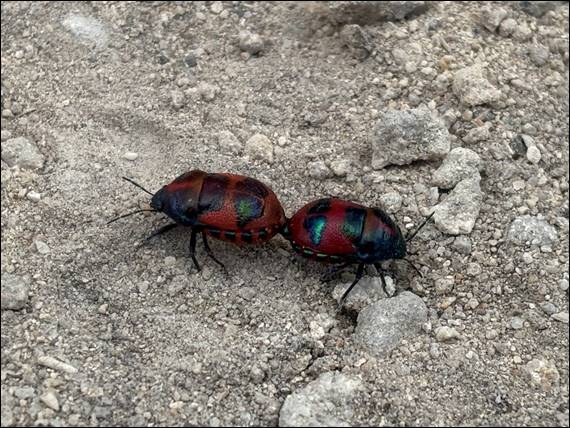
We managed one more thoroughly enjoyable and more relaxed climb. On the walk out Red Jewel Bugs (Choerocoris paganus) were scattered across the path. They exhibit an unusual behaviour in the insect world of sub-social parenting, and the females protect their eggs and young nymphs from predators. It takes 6-9 weeks to reach adulthood after hatching, and the male and female die within 5-6 and 6-10 weeks of mating respectively. As such their entire adult life is fully committed to reproduction, maternal care, and death:
After sweating through a near forty degree Christmas day it felt strange, when just two days later I was stood atop Wilyabrup looking out at a broody ocean with a stiff and chilly breeze cutting across the coast. Last night sat on the sofa doing my very best at being a couch potato, I wasn’t sure if I could be bothered to make the effort to get here for some solo adventures. Then the phone pinged and Josh hinted that he had an opportunity to get out and was keen. Being a time for being with family he had to get back for lunchtime:
That gave us enough time, in view that I needed to be sensible and not do too much. This saw us stick to a few fun grade 15 and under climbs, which are so familiar that I can almost rely on muscle memory to make the moves. The first few lines saw us rugged up against the cold, with Josh choosing his attire to do his very best at impersonating the big man in the red coat. Someone who should deservedly be slobbing on a couch somewhere about now. After a few climbs we shedded layers, not that we got to see even a glimpse of the sun:
Christmas time, brings the tourists out and also we also see the fair-weather climbers emerge. Being, in theory, the more reliably dry and warm time of year we tend to see more people head out for a play on real rock. Fresh from climbing indoors, where loading up their hands with chalk, as they pull on plastic, is the done thing. To the point that it becomes a natural reflex action to dip your hands into the magic white powder, regardless of actually needing it or not. This results in a light dusting on the rock providing a festive snow like appearance:
It felt great to be back on rock, popping wires into snug placements. It’s only been three weeks since my last climb, but it certainly feels a lot longer. Maybe because of work, at which I tend to find the build up to Christmas can feel like it is dragging somewhat. People hanging out for a bit of a break, but at the same time being in a bit of a frenzy to finish off or off load their inboxes. The end of year rush at work was made a bit more of a balancing act with twice weekly physio sessions; more medical appointments in a month than I can ever recall before:
There was no frenzy or mad rushing today. To start with we had the place to ourselves despite not getting here super early. This allowed us to pick and choose our lines, and I of course had a bit of a game plan. A few shorter routes to test how things felt, before jumping on a couple of the longer climbs. Picking off three beauties that Josh relished and climbed well despite, unlike me, having no memory about the climbs he may have been on before. It was not until we had finished these that other climbers appeared:
In our favour they set up on the area we had just finished with. When we moved along to the next spot it again felt like we had the place to ourselves. Here we looked for our scaly friends. Due to the relatively cold day and sun being hidden away, we were not overly hopefully of seeing them out but it seems they too may have moved on. With just a tiny bit of shed, or moulted skin, to be found behind the flake that we so often get to see them buried behind on cool days. Maybe they too have relocated to avoid the growing number of people on rock:
The feeling of solitude that we got today, was in part also because we brought a rap line with us. Resulting in not needing to wander past the other groups after we knocked off each line. The primary aim being to reduce the time required to walk back down between climbs. As such it was not that we were intentionally trying to be anti-social, it was more that today we needed to watch the clock a bit more than usual. If we really wanted to stay away from the crowds, there are a heap of small crags here that rarely get visited:
After we had wrapped up our session, and again not to avoid walking out past others, we climbed out with packs. There are however times when in the words of Charlie Brown, it is sometimes ‘too peopley out there’ for me. On days like that I would make a conscious effort to drag people to these more isolated crags. As such it may as such seem a little strange that I have decided to use my downtime this festive period to write up a bunch of mini-guides about these spots. I doubt it will change anything, but I’ll have fun writing them:









 Sandbagged