Taking it in

After our failed attempt to get to Cosy Corner, Howsie and I decided we would try again.  Last week we changed our plans at the last minute and went to Bob’s Hollow.  This was due to a front heading south.  Possibly being driven by a tropical low forming off the coast of northern Western Australia, over the Indian Ocean.  During the week the front continued to strengthen, resulting in Tropical Cyclone Sean.  While it never made landfall, a few days back it wreaked havoc along the Pilbara coast and inland.  And our usual summer weather in the south west took a dive:

Every day this week has felt hot and heavy.  I leave for work at 5:30, by which time the temperate had already reached the mid to high twenties.  Then on the way home around mid-afternoon the mercury hit the mid-thirties, and at times tippled over forty.  Having lived in Alice Springs for quite a few years, I can tolerate these temperatures.  However, the relative humidity has also been driven up and has sat round 70-90% all week.  And this is something I really struggle to deal with, and I am not alone with this:

It is claimed the majority of people can manage a relative humidity level of 30% to 50%.  Anything above will start to get uncomfortable.  Relative humidity is a measure of the percentage of moisture air can retain without condensation forming.  Therefore, at higher humidity levels the ability for our sweat to evaporate reduces.  This is the key way our bodies cool us down and when it does not work it results in us feeling hot, even if the temperature may not be considered high.  However, relative humidity does not take account of temperature or pressure:

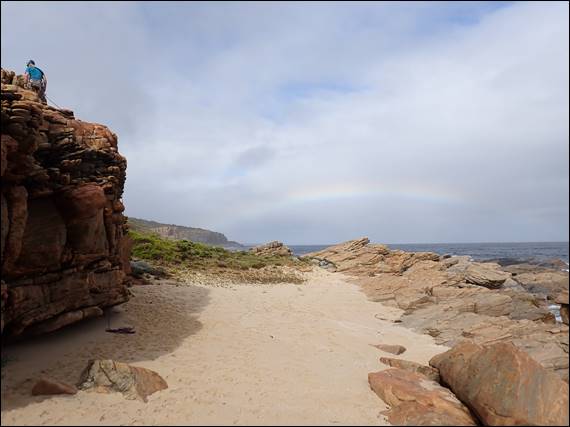
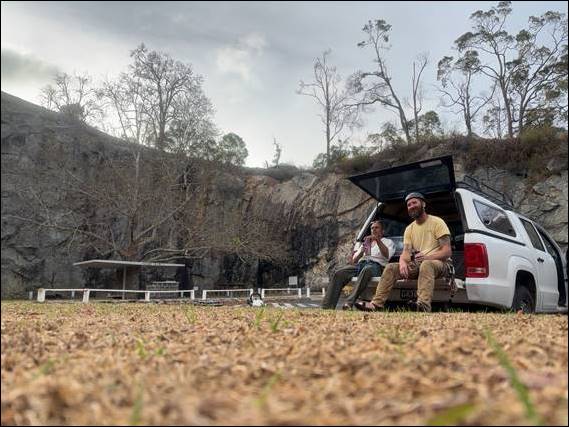
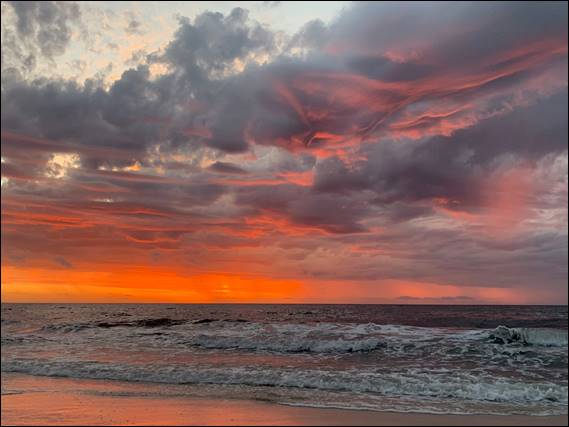
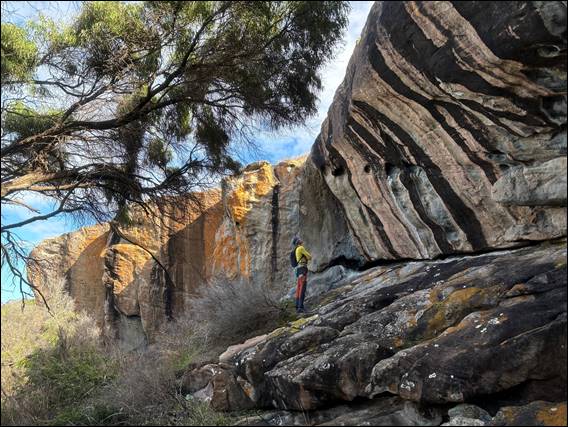
Therefore, and because temperature and pressure can affect the ability of air to hold moisture, relative humidity can be misleading.  A more accurate metric, which does take account of temperature and pressure, is the dew point.  Interestingly, it is not a value that most weather apps will provide.  Regardless of the metric you use, and don’t be fooled by the clear looking skies in the images so far, today was muggy.  Very muggy.  In addition to sweat not evaporating this led to damp conditions, making the holds on the permeable rock we were climbing on today feel very slick:

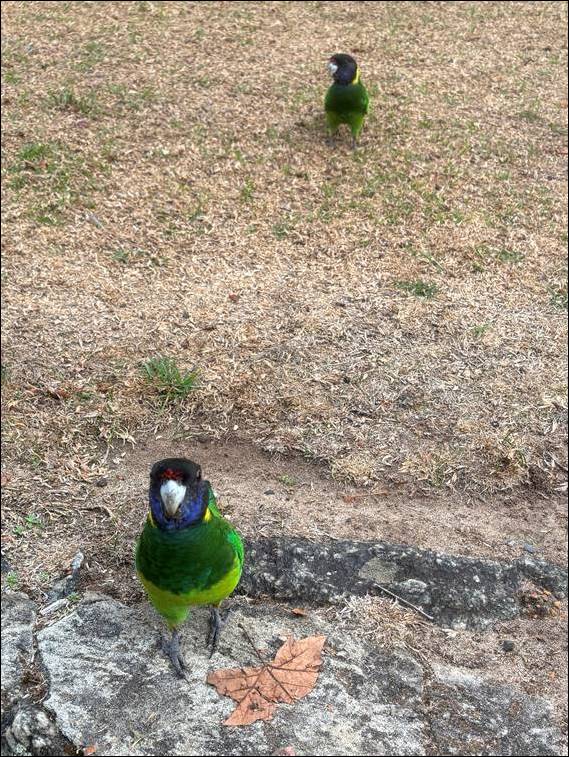
As we walked to the first route we spied a pair of Rock Parrots (Neophema petrophila), two images up.  These birds favour rocky islands and coastal dune areas, and unlike other grass parrots they nest in burrows or rocky crevices mostly on offshore islands.  The name petrophila comes from two Ancient Greek words of petros and philos meaning ‘rock’ and ‘loving’.  It would be a good name for Howsie and I.  Despite the mugginess, we were stoked to be out climbing once more.  And it is a good job, as the first climb proved to be very challenging in the conditions:

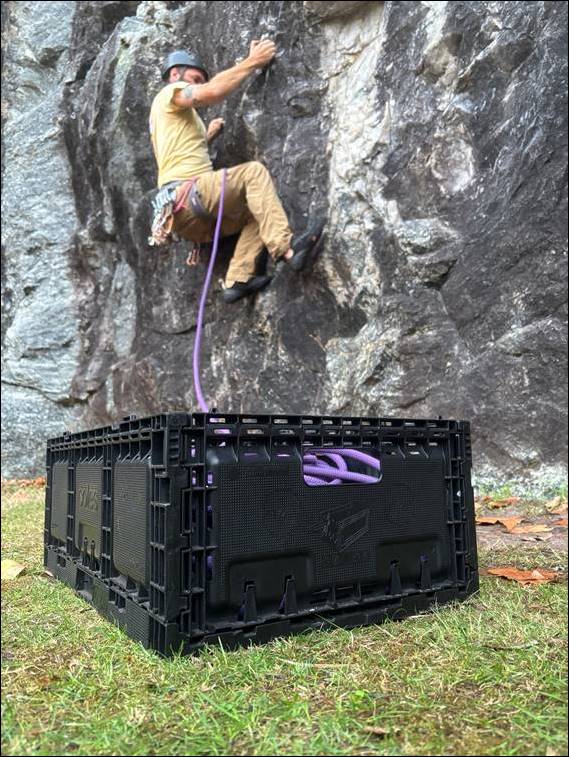
Sink and Swim is a climb that Craig put up just over eighteen years back.  I feel confident to say I have climbed it more than anyone else, but every time the person I have been out with has been frothing to lead the route.  As such I’ve always been on second.  It may be reasonable to say that on a traverse the second is at just as much at risk, due to the rope not being above you but to the side.  However, on this route there are a couple of higher placements that protect the second.  Plus the energy required to find and place the gear makes the lead more demanding:

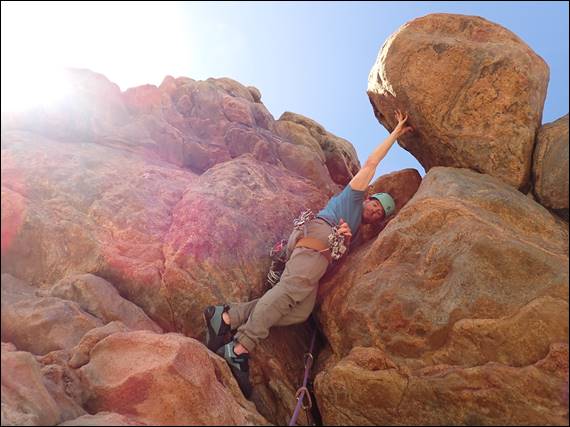
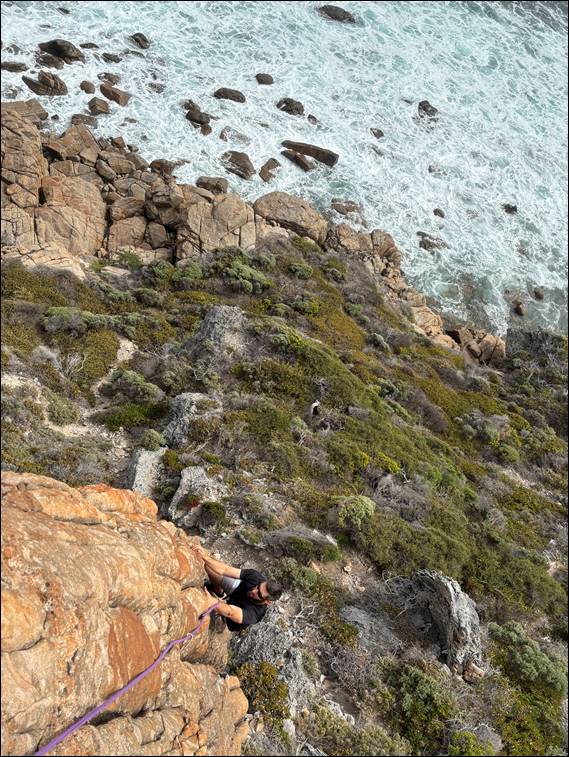
Today I was keen to get on the sharp end, as Howsie has lead it before with me on second.  This 15m horizontal traverse has lots of slopey hand holds and smeary foot holds, and today they were very insecure.  This played with my head, and the sweat seeping out of my palms just added to the insecurity of the already insecure feeling holds.  I wasn’t going to give up and pushed on, but did concede to needing to have a rest along the way.  Both to sort my head out and let my forearms recover.  It was by far the worse conditions I’ve been on it:

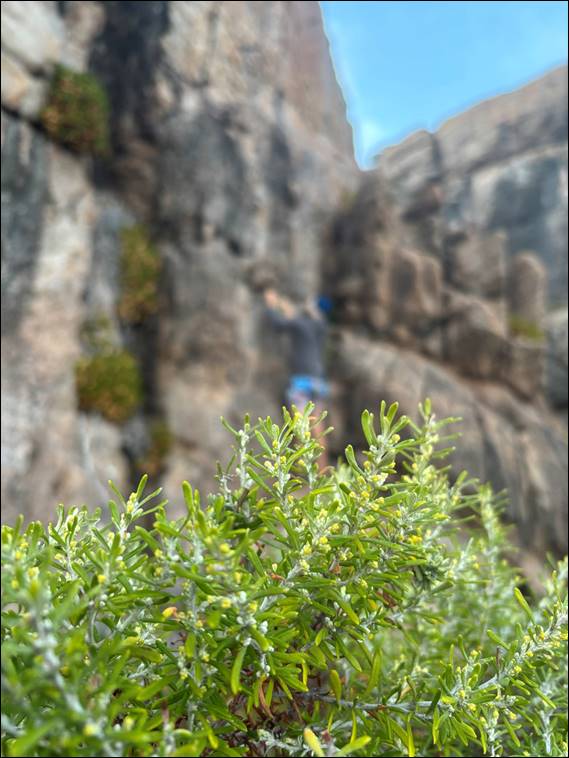
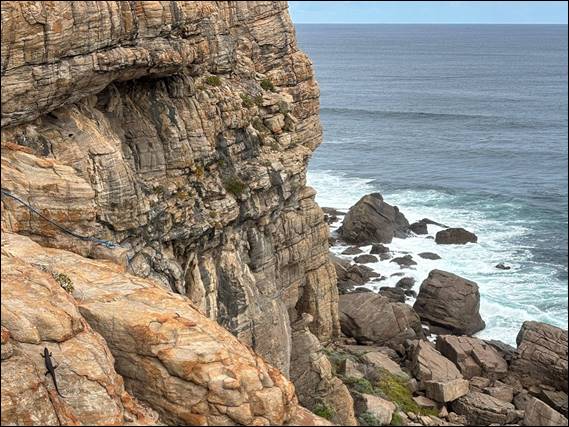
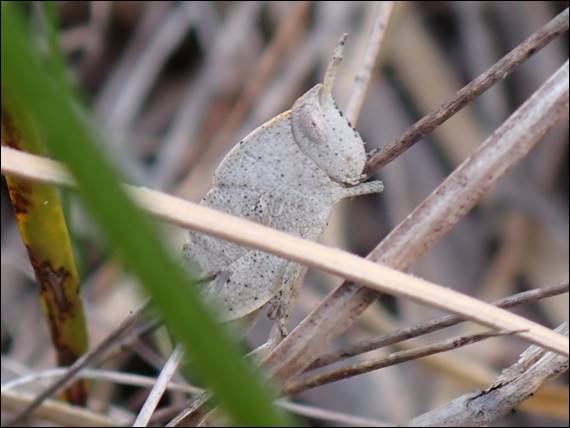
As such I’m keen to jump on it again when the air is drier.  The conditions today dictated what we did, and as the day wore on the grades of the lines we did dropped.  No matter as we really are both petrophila.  The routes were great fun and the positions were epic.  The extra damp air did however draw out a few more insects, being attracted by the moisture.  In the first image, and as we walked in, we came across a Mallee Grass Mantis (Archimantis sobrina).  It watched us carefully, as it stood its ground while swaying gently back and forth:

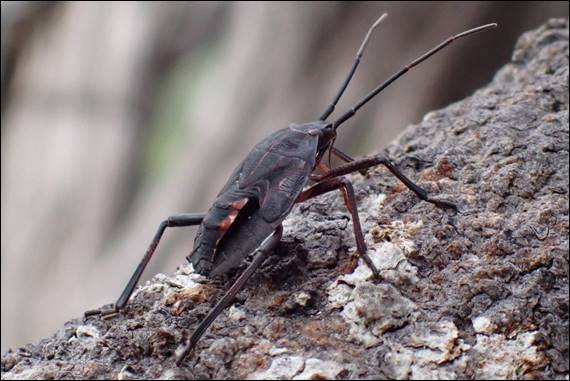
The next bug is an Orange-spotted Ladybird (Orcus australasiae).  Distinguished by what looks black, but is in fact a dark green wing covers with six orange dots.  The cover acts like a helmet, should predators come along such as ants.  Pulling its legs and antenna under the protective cover, and dropping its body to the ground.  The final insect being a Shield Bug (Ocirrhoe unimaculata), these are also known as Stink Bugs.  This name is given to them due to the unpleasant odour they can emit from glands in their abdomen should they feel threatened:

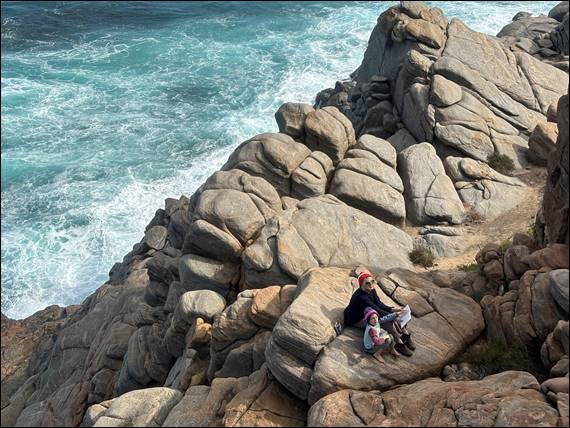
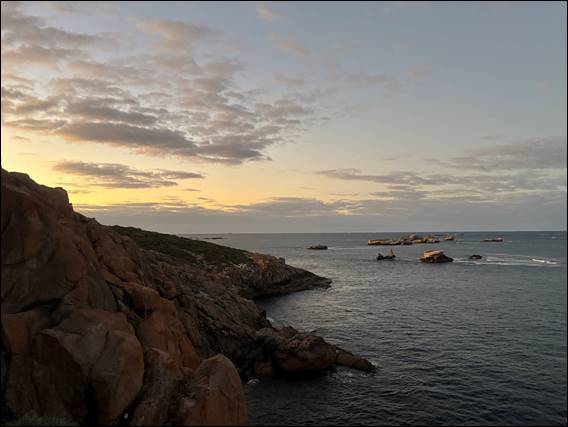
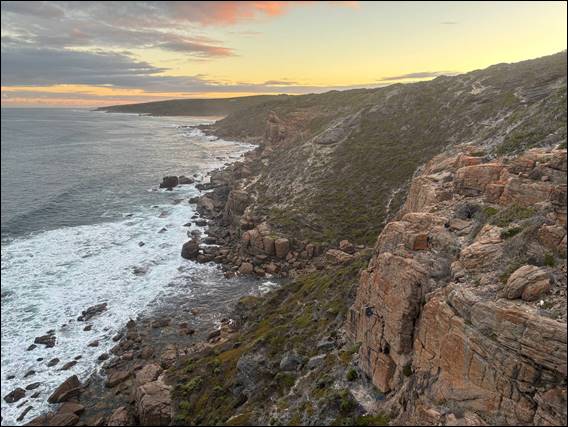
Clouds rolled in and with them came the occasional shower, and while we didn’t feel threatened by this we did seek shelter at one time.  Hiding under a capping rock with our feet dangled over the edge.  Just to the side a Silver Gull (Chroicocephalus novaehollandiae) perched and watched, maybe wondering what we are up too.  A good question as with the swell, occasional showers, and water hanging in the air we were going to, and did, get wet.  Our perch did however provide us with a wonderful view, and a moment to take it in:

The second play date

A few weeks back one of my camming devices fell afoul of all the climbing I do along the coast.    Or more truthfully it fell afoul of my lack of washing off the salt residue, which is nearly always present after having climbed on the ocean’s doorstep.  The trigger wire, which is used to pull the opposing camming lobs together, snapped.  So mechanically it was still sound for holding a fall, but it made it impossible to close the cam up when retrieving the piece after using it.  As a result I hit upon the idea of possibly buying some gear of someone who no longer uses theirs:

It has been many years since Lou has been out on rock.  In part as she is still scarred by a nasty fall, but to be fair she is also extremely busy with life and other pursuits.  When I popped over to check out her gear, she was ‘yeah you can buy the lot’.  Then after several days of mulling over the idea, and having once more got her hands on the hardware she started to have second thoughts.  Over the years I have offered to take her out, and seeing the Stormtrooper’s interest had been rekindled I took advantage of the situation:

To understand the Star Wars reference you’ll have to read a past post https://sandbagged.blog/2023/02/19/ice-creams-all-round/.  We hatched a plan for a very cruisy day out at Castle Rock, to ease her back into the idea of being out on rock once more.  I knew this would be more of a mental than physical challenge for Lou, and patience was the key.  She isn’t the only person I know keen for a reintroduction to climbing.  I liaise with Jo heaps through work.  Sometime back it came up that I climbed, and she said she would be keen to get back into it:

There is a bit more to this.  Because I build up a fair chunk of flexi time, I have become accustomed to taking a few Fridays off to allow a climb with Howsie as well as the occasional weekend away.  This has resulted in the illusion that I’m always taking holidays, or so Jo and her work colleagues have hinted at.  Whereas, I am merely managing my hours to the advantage of my outdoor activities.  Seeing Lou and my visit to Castle Rock was a non-work day, not that I am trying to make a point, Jo happened to be available and was keen:

The last person to join us today, was Lisa.  Lou is not an early starter and in view that we would only do a few easy climbs I was happy to accept a slightly later start.  This allowed Lisa a more reasonable morning before we had to be out of the house.  Lisa however was not joining us to climb.  Armed with her backpack beach chair she followed us round finding comfy spots to kick back and watch the action.  She was a complete armchair warrior, and at one point took advantage of where we were to sneak off for a 20min run along the coastal track:

As indicated above Jo has climbed previously, but this was mostly indoors with only a bit of outdoor top roping.  So we started with a few top ropes on some easy scrambly routes.  These are not recorded lines and people are very rarely, if ever, likely to go up them.  This meant loose rock could be present.  And was indeed encountered on just about the first move of the first route, when a flake Jo was standing on came away.  I felt really bad about this, and while it rattled her nerves to her credit she pressed on regardless:

I was pleased Lou was also there, as she provided pointers and assisted Jo when things felt a bit on the tricky side.  Needless to say for Lou the lines proved straight forward, and she scampered up in a flash with ease.  Not a hint of her head holding her back, which was great to see.  Our numbers dropped from four to three when Jo had to head off to do some kid wrangling.  It may have been a short session for her, but on the plus side she had a great time and with luck I can get her back out.  Next time it will hopefully for a bit longer:

This left Lou and myself to climb, with Lisa watching on from the comfort of her chair after her run.  We managed two more routes, this time on the sunny side of the little castle.  By which time things left like they were warming up a bit too much.  I led the two routes of Lou’s choice, which she followed up with relative ease from a climbing perspective.  Better still her head stayed on straight.  A very encouraging sign for more trips out.  In fact we already talked about where we will go next, and with luck Jo can join us:

Before we headed off, I was keen to see if the Western Rock Octopus (Octopus djinda) was up for a second playdate.  The visibility was sadly worse than our last encounter, although not so bad that I couldn’t see the bottom.  There it was in the same spot as before, pulling in the shells from its last feed round it for camouflage.  Other than one tentacle reaching out to say hello, there was no further interaction to be had today.  So after a few dives to make sure it really didn’t want to come out, I started swam back to shore.  Spotting a few fun fish along the way:

The above is a Blackthroat Threefin (Helcogramma decurrens).  If you look carefully you will see this cheeky fella was hanging out with two females, which being of a much more drab colour are very well camouflaged.  And following on with the green theme, I have had no luck in identifying the below fish.  Likely to be Triggerfish or Filefish, and maybe a juvenile.  Back on dry land, Lou, Lisa, and I packed up and headed to an aptly named café called Occy’s for a feed.  Here Lisa spied the grilled octopus, and after my brief playdate I’m glad she didn’t order that:

Nick Lowe

My slumber was disturbed by the sound of the pitter-patter of rain falling on the veranda, well before the alarm was due to go off.  Peter, Howsie, I were heading out and while this sound may not be a good start, it was expected.  I’d been storm tracking.  A front was to bear down on us from the north, and the forecast for this one had remained relatively stable all week.  Meaning we were likely to be in for a sprinkle, so we had to pick our location wisely, based both on when it might hit and how it would feel on rock when it arrived:

Systems from the north at this time of the year are usually driven by the remnants of tropical cyclones.  Western Australia, particularly the northern half, is more prone to cyclones than the rest of Australia.  The long term averages suggest Australia experiences 11 cyclones per year, with approximately half of the these being in Western Australia.  My reference to cyclones may bring fearful images of howling winds and torrential rain.  While this can be experienced when they make landfall.  In the south west we are only getting the tail end:

These are much weaker, but can bring unseasonal rainfall.  We are however blessed with a variety of geological formations. Some are better suited to damper conditions.  Moses Rocks is the obvious one, and I have often mentioned the friction is still reasonable when the rock is wet.  Smith’s Beach is also good.  However, the way the front was tracking the further south we aimed for the better.  Added to that after Peter’s delight of climbing at the more broken and adventurous traditional style crag of Lost Buttress, the obvious choice was Cosy Corner:

This is the furthest crag to the south, so a bit more of a drive.  But a short walk, and lower grades so it might make it work.  One of our tin pot crags, meaning a helmet is essential.  It is rarely visited, and with less traffic on the routes there is a higher risk of loose rock.  Plus being right on the coast with abseil access, an accident can result in the need for a serious rescue mission.  The rain had woken me up at three, and I had a quick peek at the radar.  It seemed to be doing what was expected just a bit early, so I tried to close my eyes for the next hour:

A little after four, driving out I watched the drops sparkling in the headlights as they seemed to dance when they hit the road.  I was also trying to avoid the small frogs hopping across the road, which had been encouraged out of their burrows by the wet conditions.  The thought of how damp I might get and need to meet Howsie, made me think twice about stopping and trying to get a picture of one to identify them.  At the carpark I quickly checked the forecast, and the front was now predicated to track south a bit quicker than previously indicated:

Howsie and I drove on and didn’t even talk about the conditions, even as the rain persisted for more of our journey than desirable.  It wasn’t until we got close to picking Peter up in Margaret River that we conceded a change of plan may be required.  The other option being Bobs Hollow.  Hoping the steep overhung cliffs would allow us more climbing time, even when the rain came.  So it was that we changed our plan.  Before the walk in we reorganised our packs for bolt clipping, as opposed to trad climbing, as the clouds looked to be were brewing:

Despite the low pressure bringing rain our way, it wasn’t a cool morning.  Half an hour later we were walking along the top of the cliffs, just as the first drops of rain fell.  Warm air and rain can only mean one thing, humid conditions.  Making Howsie and I think of Pontus, a friend that recently shared some images of his climbing holiday in Thailand.  Enjoying the spectacular scenery and limestone cliffs, in a true humid tropical climate.  Our brief mini tropical period had also brought the White Italian Snails (Theba pisana) out of their aestivate state:

You’ll have to read last week’s post to find out more about the snails.  We did however make like a snail and start the session slowly.  Picking a few lower grade lines to see how the weather, rock, and we would fare.  As I have fallen way behind the images on show, it was clear that the weather fared really well.  Other than the drops that fell during our final approach, there was no more rain.  The system tracked further inland and we were left with high broken clouds and a reasonable breeze.  Opening up the chance to climb for longer:

The rock in places was wet.  Certainly not from rain.  We only encountered this on the routes where there were calcite formations of stalactites, columns, and flowstone.  As such it was seepage, an essential part of their formation.  Taking advantage of three of us being out, I ran about and take images from here, there, and everywhere.  I watched drops form and let loose from several stalactites, but was not able to capture the moment the drops fell.  It was still a little surprising, as I thought these seepages would have ceased this far into summer:

The seepage areas were fortunately relatively isolated on the routes we picked, so it all came down to how we were going.  On our trip out last week Peter said he was not climbing too strong.  And true to his word we didn’t hit as many higher graded routes as we did the last time he and I came here.  However, like that time we hit eight routes and doing the sums it seems our grade average was only down by one from 20 to 19.  Peter climbed in his usual slow and steady way, hanging on holds with seeming ease as he scoped the next moves:

We pulled the rope each time, and I managed to clean all the lines.  The others commented that I looked to climb in a controlled and smooth way.  However, during the leads my mind would not have agreed with them.  Battling with my thoughts of wanting to let go and rest on the rope, with forearms pumping.  It was certainly a physical and mental challenge, but not as much as it was for Howsie.  The steep and powerful climbing here gives him a sense of forbidding, putting him on the back foot before he even ties in.  And it showed:

When it looked like he wanted to falter we encouraged him to keep going.  He started well.  Until we encouraged, and ‘gently’ nudged, him into being the first to jump on the only grade 22 of the day.  A route he had not been on before, and it worked him hard.  To his credit he got to the top, slipping and falling his way up.  Coming down shattered, and content to climb with a rope above him after that.  It was a good move as Peter’s next choice had some spicy sections that Howsie’s forearms were simply too far gone to able to manage:

You may think that would have been it, but the increasingly clearing blue sky above us resulted in some sections of the crag still having a bit of shade felt.  And Peter, of course, was keen to make use of it.  Accepting that we should probably dial back the grades, which we did.  Howsie managed the next line, and then tried to avoid the last route.  That was however something that he wasn’t going to get away with on my watch.  So being cruel to be kind we forced his hand, which he was grateful for when we he manage a clean ascent, but only just:

A ‘kid’ in a candy store

‘Two days’ is a phrase I learnt and used in Ghana way back.  Meaning it has been a while since we have been in touch.  Peter is someone that I do not get to climb with all that often, so I could have used the phrase when I received his message.  Although he isn’t Ghanaian, so it probably would have been confusing for him.  Instead the way things went, as we messaged each other on Friday I used a different phrase of ‘tomorrow next’.  Just to make sure we had a common understanding of which Sunday we were talking about getting out:

Another Ghanaian term, so it took a bit more messaging to allow Peter to understand what I meant.  It was worth the extra explanation required, being nice to pull the phrases out of my memory bank and use them.  Peter said he was happy for a morning of moderate routes, then suggesting the Northern Blocks at Wilyabrup.  The routes there are pretty sustained.  This brought back memories of the last time we went out.  He said he wasn’t climbing strong, and we then proceeded to hit multiple routes at Bob’s Hollow that were far from moderate:

As such I threw in a curveball and suggested if he really wanted an easier day we could head to Lost Buttress.  This tickled his fancy because he had not been there before.  We made the right choice.  There was a forecast of a late shower today, making for a cool change that brought moisture in the air.  Walking in, the boulders we were rock hopping along looked a little damp, clouds hung in the sky, and the air had a slightly heavy feel to it.  The routes at the Northern Blocks would have felt even harder in these conditions:

Added to the humidity, we had a westerly wind that was blowing the salt spray our way.  The gear soon became salty, and the rope felt damp after just one route.  Both Peter and I have had our fair time of climbing in less than ideal conditions, so none of this stopped us.  Mind you like Friday’s trip out I offered up the leads, and today I didn’t even lead a single route.  So Peter was the one that had to tackle the greasy gneiss rock on the sharp end, for which at times chalk didn’t assist in making the friction feel any better:

I wasn’t sure how he would find this place.  It is not what some people would regard as a nice clean crag with sustain lines.  I had purposely sold it as more of an old school trad crag, and a little bit adventurous despite its short height.  It does however have plenty of good gear, and this is something Peter is particularly keen on.  There were also lots of White Italian Snails (Theba pisana).  I have seen them plenty of times before but have never checked them out.  Unlike a bomber bit of protection, these snails are an unwanted invasive pest:

They arrived on Australian shores from the Mediterranean region in the 1926.  Bringing with them a trait similar to one that comes from one of the Mediterranean countries.  Hatching in autumn and spring they aestivate through the following summer, meaning they go into a state of dormancy similar to hibernation.  A bit like a siesta people take during the hottest part of the day.  They just take it to the next level by doing it for the hot part of the year, not just the day.  While the snails snoozed Peter kept moving:

I suggested the routes in a particular order.  Advising the grades, as we moved from one to the next, were increasing mostly in increments of one.  At least that was what I recalled.  Peter didn’t seem to disagree with what I told him, after he completed each line.  Better still he was pleasantly surprised, finding all of the climbs interesting and fun.  Not everyone I bring here would agree, but that may be a result of what they want to get from climbing.  If you treat it as a sport, this place isn’t for you:

If you treat it as a way of experiencing the great outdoors, this place really should not disappoint.  As the morning wore on the routes got harder and the greasiness got worse.  Not the best combination.  Peter however pulled on his climbing skills to work round the additional difficulties presented by the conditions.  Climbing that bit more cautiously, and possibly placing a tad more gear than he would have on a drier day, when the friction would have been better.  Maybe that is why he didn’t question the grades I said each route was:

We hit the best six lines at a grade he was comfortable to lead.  After that neither of us were game to try the hardest, but very cool, route here on the floppy end.  But it did draw his interest, so we threw a top rope on it.  Howsie was not able to get up the climb in 2022, when it popped up on his list as part of his challenge, and when it was in perfect dry condition https://sandbagged.blog/2022/06/25/as-the-crow-flies/.  Today was no different for us, with no amount of chalk helping to make the very smeary holds useable.  We kept slipping off:

Packing up the gear we were not quite finished.  Peter had his eye on one more route at The Playground.  Being the last route Mikie climbed to complete his 10,000m challenge.  This time I belayed from below, you’ll have to look at the previous post to see what I did back then https://sandbagged.blog/2018/01/12/new-shoes/.  Today I wanted to shelter from the sun.  Peter was however still not done.  Wanting to taste a bit more, he tackled a couple of boulder problems before finally accepting it was getting uncomfortable hot and was time to walk out:

Riding high

Being summer in the southern hemisphere, Lisa gets to chillax and recharge her batteries with a decent break before the new school year kicks in, when February arrives.  This changes my work life routine.  Working out of the office, so as to allow Lisa to have the house to herself, and not feel like she has to tiptoe about just because I’m stuck in the study working.  Over the years I’ve also adopted a go-slow January approach, working a four day week by taking Fridays off.  Allowing me a bit of time off with Lisa, and after all leave is there to be taken:

While I say spend time with Lisa, the extra day off also allows me to further indulge in my guilty pleasures.  A guilty pleasure is generally something that is not held in high regard, which is true for climbing due to peoples lack of understanding of the high level of risk management that we apply.  So I use the phrase lightly, as the active outdoor lifestyle we manage to maintain is nothing but good for us.  Just like taking leave and truly disconnecting from work by not dipping into technology to check emails and messages, without feeling guilty about it:

Today’s play was at Wilyabrup.  Requiring a wee bit more coordination than most trips.  I thought there may be four of us, and we needed to do some car wrangling.  I’d get a lift down with Seb, and head back with Howsie.  Seb only had the morning free, after which he intended to head further south to go diving.  Tying in nicely with our usual morning sessions to avoid the sun.  He was super keen to get to Wilyabrup and do some more trad climbing.  As such I had to pick a few sensible lines for him to further cut his teeth:

Howsie was only picking Mikie up on the way down, or so I thought until three people rocked up.  They arrived to see Seb high up on his second lead.  Mikie’s mates from back in Queensland happened to be over, and as such Ben tagged along.  Howsie and Mikie had something a little more serious in mind, and Ben was out to enjoy the great outdoors and capture some footage.  Travelling round Australia he’s got a contract to supply footage of the places he gets too, which is used in social media:

This meant that he was armed with not just a decent SLR camera but also a drone.  I am eagerly awaiting a selection of images to include, but can’t stop myself from starting the post now.  I’m not waiting for the images in part due to my slight, although some people may say it’s more than slight, OCD nature.  Compelling me to crack on with it now.  I am however conscious that I’ll be out on Sunday, and do not like to have things piling up.  Um again a trait of my OCDness.  As such my word may not tie in with the images, but I’ll make it work:

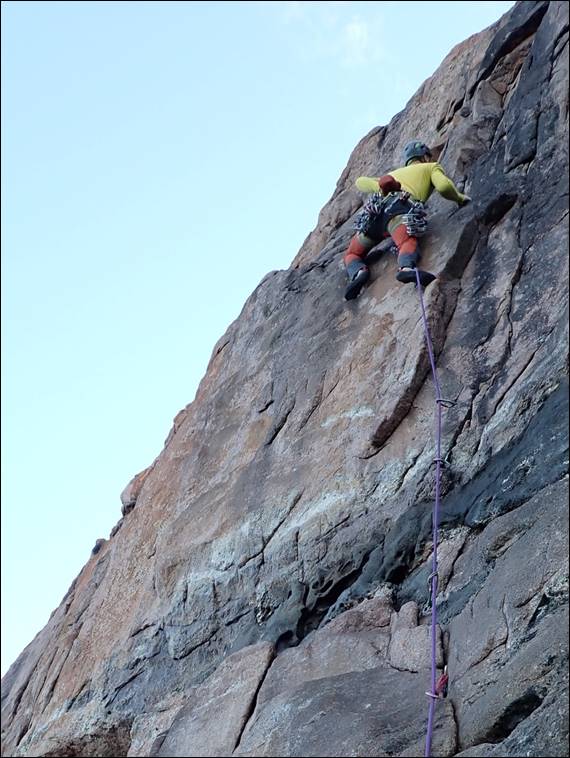
I started Seb off on some of the shorter lines.  Easing into the morning with a line on ring bolts, then carrot bolts, and for the third route throwing him onto a full trad line.  A feisty grade 16 crack, but one it is easy to stuff good gear into.  As such as he climbed I kept prompting him to place a piece of gear, on occasion getting him to do so when he was working hard to stay in the awkward crack.  He managed a safe and clean lead, feeling pretty pumped by the time he topped out.  So much so he overlooked something:

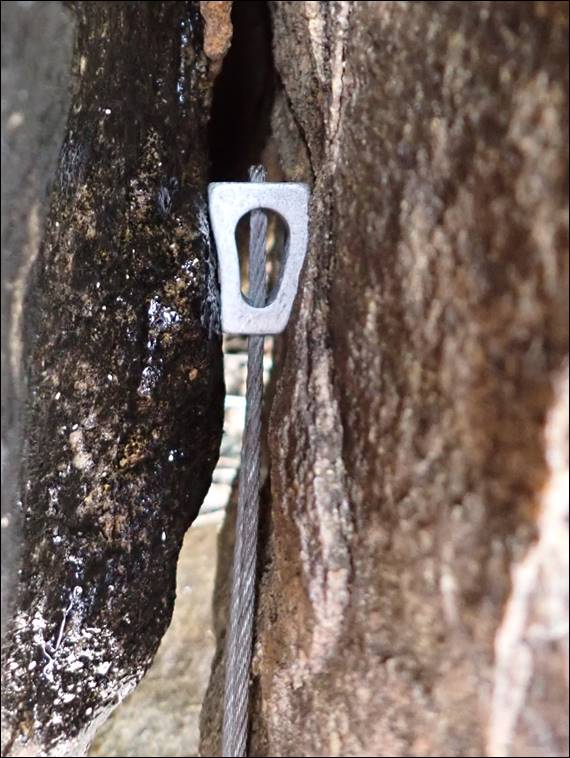
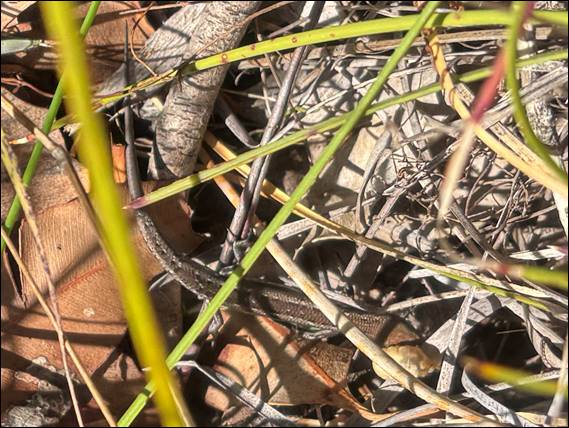
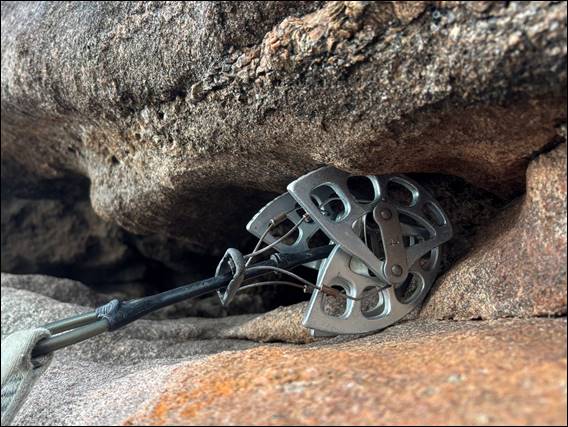
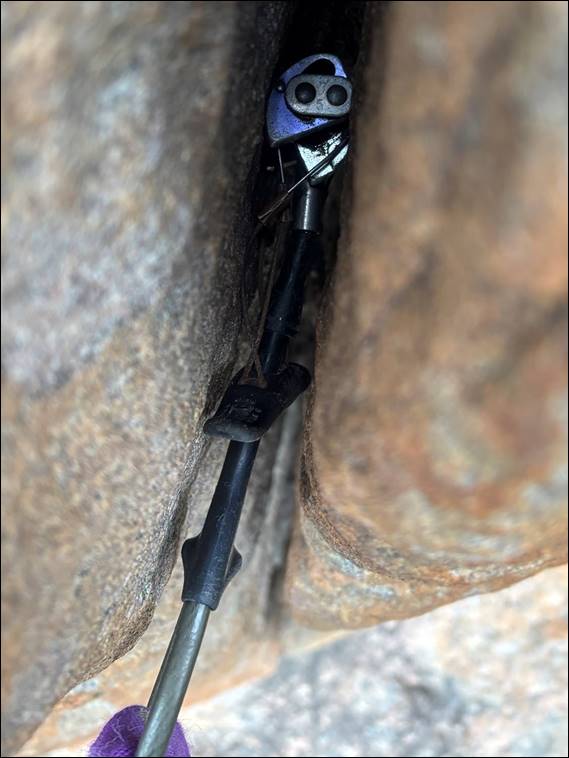
Completely missing the Southwestern Crevice-Skink (Egernia napoleonis) that was tucked behind the cam placement in the fourth image.  We wandered along the crag after his successful battle to find Howsie high on Steel Wall, nearing the top of another trad crack.  This one being sparse on gear, so while not physical feisty it is mentally demanding.  Ben had his drone out, while taking images with his SLR from the safety of the ground.  Watching as they rapped back down, so Mikie could ascend a fingery bolted line to complete their warm up:

As Mikie climbed the sport line, Seb was also went back to clipping bolts.  On a route that was nearing his upper grade limit, and it certainly tested him but he’s not afraid to take a fall.  Just like the main event for the Howe brothers was likely to result in.  Their sights were set on the first grade 24 route Howsie had attempted in 2024, just over a year ago (https://sandbagged.blog/2024/01/05/partners-in-climb/).  Back then they did not manage to complete it, but the attempt had provided them with some intel that could prove useful this time round:

I wasn’t able to watch their battle but could tell from the length of time the drone hovered above them that it wasn’t a complete walk in the park.  My focus was however on Seb, who after having pumped out on the stiffer bolted route was then keen to hit the longest route at Wilyabrup.  A very traditional style route that many people consider a complete and utter sandbag.  As such I didn’t walk about as much as I can be guilty of doing while belaying, which I do to get better images.  Being happy not to need to catch a fall on this route, as was Seb:

There were however a few falls by Howsie on the other route, but it ended with success.  He worked all the moves and topped out, being justifiably happy about it. Due to the relatively short time it took there was still an hour or so to play.  Keen for more I sent Seb up another nice long trad line, which he ate up.  Before he started on the route we all managed to convince Mikie to jump on something a bit testy, despite his obvious hesitations about it.  This resulted in a role reversal, and time Howsie had to catch the falls:

The morning was coming to a close. Howise was however still fired up after working his project, so was keen to squeeze one more climb in.  Too tired to climb with packs, Ben kindly offered to be a Sherpa and carried their bags up.  Seb would no doubt have also been keen for another route on the sharp end, but I snuck in to get a lead in.  Picking a route I wasn’t comfortable climbing with a pack on my back, meaning we had to head back down to get our gear.  Instead of walking back down we opted for a fun scramble down and back up, while the others started to sort the gear out:

Another successful day on rock was had by all.  Sadly Mikie would be heading off soon, so I won’t get to climb with him again during this visit.  But Howsie’s sights are now set on getting the grade 24 clean, and being 2025 he is also starting to eye off a few grade 25 climbs.  This makes me think there will be a few pretty tough sessions this year.  Hitting climbs equal to the hardest I’ve previously climbed, which was way back when I was in Alice Springs.  I’m not sure how I’ll go but if we attack them with the right attitude of just having fun, it’ll be fine:

Complete opposites

One of the simplest forms of life on earth are sponges, which come is all shapes, sizes, and colours.  Fossil records of some species go back approximately 600 million years, and there are over 8,500 identified species with many more yet to be identified.  While sponges seem to have retained their simple form with no tissues or organs, they play a valuable role in managing water quality.  As filter feeders they process waste products discarded into the ocean, such as nutrient.  The by-product of this process being a substance other organisms feed on:

The above is a demosponge (Demospongiae), one of the most commonly seen classes of sponge that make up some 95% of all species.  And as with just about everything else during my local dive on Saturday, it was coated in fine sediments that have been washed into the marine environment via the Capel River.  The swell has hardly dropped below four foot this season, resulting in detritus being continuously mobilised in the water column.  There are no river systems of note that drop into the bay at Meelup Regional Park, so I kept my fingers crossed:

Sunday morning Josh needed to be somewhere with guaranteed phone reception, as he was on call.  We decided on Castle Rock, with the view of a climb and I was hoping a snorkel afterwards.  Something that also appealed to Seb, who tagged along.  Despite having grown up here, he confessed to having only seen Castle Rock from a boat.  Never having approached it via land.  Not that he would have been any the wiser about the climbs it offered, as he has only gotten into climbing in recent times while living overseas:

Living in Thailand his experience extended to the art of bolt clipping.  Today’s location was to offer a mix of some bolts and some trad, but mostly trad.  Offering an opportunity to expand his repertoire of climbing styles.  Of all the forms of climbing, trad probably requires the most knowledge transfer.  This meant a fair bit of time with me talking through this and that, and assessing how we was climbing.  While not formal training, the consequences of getting it wrong are life threatening even on small crag like Castle Rock:

So teaching someone it is not something I take lightly.  We started, as we should, with a couple of simple routes.  Allowing me to place heaps of gear for Seb to inspect, but for his first lead other than a sling he was first introduced to the iconic Australian carrot bolt.  Making short work of that route he then eyed off stiffer opposition.  The harder climbing being protected by bolts, after which you need to place trad gear.  It was the hanging about to fiddle the trad gear that worked him the most, despite being on the bigger holds:
This didn’t put him off and he was keen for more, so we went full trad for the next two lines.  Dropping the grade and this allowed him more time to work the gear placements.  Both Josh and I following up inspecting what he had put in and provided advice as required.  These two lines were on the northern face, which was in very welcome shade.  You may also notice the water to the north was looking much calmer and cleared.  A moderate southerly wind was whipping up the water, and so keeping my fingers crossed hadn’t really helped:

As for the gear placements, it was a little mean to introduce Seb to it at this place.  The cracks can often be shallow and flared, making solid placements at times that bit harder to find.  It did however make him think more, and for the most parts the gear he placed was bomber.  It was good to see that he really took his time, trying different options until he found something that he was comfortable with.  And not just crossing his fingers and hoping his first choice was alright.  One of the many things I watch for, as I introduce people to this form of climbing:

Josh seemed to be content to follow up with the rope above him.  Although, as can be seen a few images up we encouraged him to push himself, even getting him to try the hardest route of the day.  And I think he surprised himself with the last route below.  Having started the difficulties by yo-yoing the move, talking himself out of pushing through each time.  Resulting in gradually becoming more and more weary, forming a mental block that get increasingly harder to push past.  But with encouragement from Seb above and me below he pushed through:

It was then time for Seb to bite off more than he could chew, with another bolted line.  Not making it very far at all, admitting defeat and then being happy to follow Josh’s lead.  Who had decided he’d happily sit this one out, and was already in the water.  Despite the water being a little choppy all three of us went in, and it felt lush.  The visibility was better than my local beach, but deteriorated as we swam round to the southern side.  As such there was nothing new to see or report on, but the morning was rounded off perfectly during my return swim:

I recognised the eyes of the Western Rock Octopus (Octopus djinda) immediately.  Expecting it to slide further into the crevice as I approached, but glad to be proven wrong.  Initially reaching one tentacle out as if to test the situation, and then swimming out into the open water for a play.  Suckering onto my hand, arm, and covering the camera.  So it was that my underwater adventures, which started with the one of the simplest forms of life ended with one of the smartest creatures in the sea:

The namesake

The summer holidays can result in what I would have a called a blow-in or two coming back to town.  However, before I call Mikie a blow-in I thought I better check the meaning of the phrase.  It originated from Ireland, referring to visitors not born in the local area.  No matter how long you may have lived there.  Making me the blow-in, not Mikie.  Australia more recently adopted the phrase putting a less friendly slant on it.  Suggesting the person is an unwelcome newcomer or stranger, something that is fair to say doesn’t apply to Mikie or me:

You’ve probably guessed Mikie and his family are back for a while.  A visit by them would not be complete without a catch-up or two on rock.  We last caught up just over three months back, when Howsie and I flew over to stay with them in Queensland.  Since that time Mikie has only been climbing on rock and with ropes once.  Having an appreciation of where we were climbing today, He was very aware that today’s foray would be challenging.  In addition to his lack of climbing fitness, the climbing style would pile on extra helpings of difficulties:
He started cautiously scoping the start of first climb.  Moving his arms and hands with purpose in the air, as if to mimic climbing the route before he had even left the ground.  A technique that people may be more familiar with since climbing has been included in the Olympics.  There are three disciplines of climbing in Olympics.  Bouldering, something Mikie has been doing occasionally on his own wall.  Short explosive problems, but not great for building stamina.  Lead climbing, which is what we were doing today and requires stamina:
The last being speed climbing.  Even as I say it I can feel a bad taste in my mouth.  I do not really considering it climbing, being a discipline only devised to make it more appealing as a spectator sport.  And in the climbing world, I’m not alone with this thought.  However, as I was about the meaning of blow-ins I may also be wrong about speed climbing.  Record’s go back over two thousand years.  During a siege of Sogdan Rock, Alexander the Great offered a grand reward for the first soldiers to scale the fortress located north of Bactria in Sogdiana:

In more recent times, but still approx. sixty years back, Russia used speed as a measure of climbing ability.  By 1955, they had a clear set of consistent rules for engagement, and by 1976 they opened up the ‘sport’ to the rest of the climbing world.  I was therefore wrong to assume it was created as a spectator sport.  But speed is one thing that Mikie has on his side, he climbs fast and when your stamina is not up to par speed can be a worthy ally.  The first two climbs flew by, and above he kept the pace right up till the last bolt on the third line:

A line that his brother Howsie has pontificated on for rather a long time, just a few weeks back.  With no guarantee siblings will be similar, for these brothers their climbing styles are very different.  David and Seb also joined us, the latter who again can’t be called a blow-in under the less abrasive Irish definition.  And while not new to the area he is relatively new to climbing.  Not that this stopped him giving several routes a red hot go on lead.  While they spent a little while perched on the handy posts being spectators, it wasn’t for too long:

By Welly Dam standards the place was busy today and a third crew arrived.  Having climbed here for close to two decades, as happens every so often, the other climbers recognised me.  This time I recognised them too.  Dan established some quality lines a decade back.  Three were named after his children, only the youngest of which had taken to climbing.  The climb named after him being Chasing Mason, and based on how he climbed today if he sticks at it there’s a good chance he’ll live up to the climb’s name and will be ahead of us in ability:

Lost and found

In view that I have been off work for four days, it may be surprising I haven’t posted anything until today.  In part due to the ocean conditions not being great for swimming with the fish off our local beach.  But also due to yet another little mishap, which will get a mention later.  I feel I have had more than my fair share of incidents this year.  There have been several big falls, and a few encounters with the ocean that resulted in technology failing.  I guess it is the price you pay if you get out as much as I do, but here’s hoping it eases off next year:

Today Adrian was keen to climb.  Having driven down the night before to allow for an early start for which he didn’t have to get up to early.  I found him pulling down his tent at 5am, and despite the extra hour in a prone position he looked just as bleary eyed as I felt.  Our destination had changed several times.  Starting with Bob’s Hollow, which he had a taster of with David last week and was keen for more.  Then he changed it to Moses Rocks, where he and I had climbed recently, and finally I suggested Wilyabrup would be the better option:

The three places are very contrasting in terms of the climbing style, due to the varying geology and rock features and formations.  I certainly feel very lucky to have such a broad range of rock types all within approx. one hours drive.  I suggested Wilyabrup for today because it has the best range of grades and plenty of longer routes.  The idea being to allow Adrian to crank and for me to kick back on any leads I might take.  He’s only been to each location once, so there were plenty of classic lines I could point him towards for on-sight glory:

A gentle warm up was in order, as his head wasn’t on quite right.  Feeling a little groggy from a restless night.  The climb he managed fine, but he forgot his belay device.  Resulting in there being a bit of faffing about, as indicated above.  I won’t bore you with the full recount of all the ins and outs of why our first and easiest route took by far the longest.  I feel that I cannot however go past yet another great word.  To ‘faff’ about is suggested to have originated from the word faffle, the first recorded use being in 1570 and meaning to stammer or mummur:

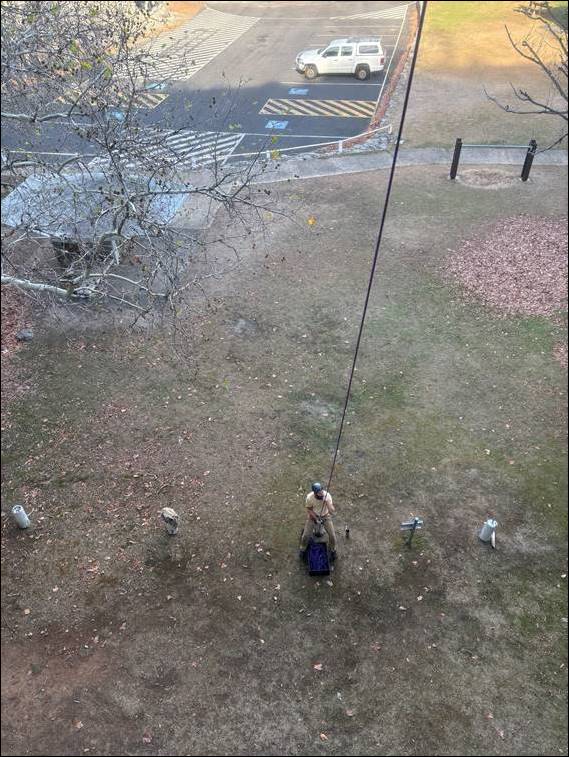
In more recent times it has been used to describe something flapping about in the wind.  This seems very apt in view of the image of the rope being hurled through the air.  Not making it to the ground on the first nor a few other attempts, if you catch my drift.  References indicate this use of the word is found in England and Australia during the 1870s.  It’s use in Australia being a result of the convicts shipped over from England, with over 162,000 brought over between 1788 and 1868.  This equates to approx. 10% of the population of Australia in 1868:

It would be reasonable to say that after the first route, Adrian was no longer trapped in a groggy head.  This freedom resulted in him hitting, and very successfully on-sighting, progressively harder lines.  On-sighting meaning to climb a route, without any prior knowledge or advice about the line and not taking a fall or rest on the rope.  I was happy to point him toward line after line, and would only offer up advice about the route if he asked for it.  A couple of times it sounded like he asked, but it sounded conversational to me:

My response each time was something like ‘whichever way looks best’ or ‘look about and you’ll find something’.  Allowing him to figure it out for himself, which based on not being badgered for information seems to have been the right approach.  And with each climb in the bag he was keen to try something a little more testy.  Leading us to Steel Wall, a rock face in many climbing books, and one that justifiably attracts many climbers here.  It was mid-morning and I was surprised not to have seen anyone drop a rope down this mighty wall yet:

There were a few other people who had turned up about 9am, they were however at the far southern end.  When we first walked past them, one group assumed we had just arrived and asked if the car park was filling up yet.  Not that we had any idea, but when we finally left it wasn’t even half full.  This worked in our favour, but I was surprised not to have seen more people out.  Needless to say Adrian was impressed with Steel Wall, and even happier to have got a clean ascent on the route he chose because he was starting to get a little weary:

Not overly surprising.  In my usual fashion we kept moving.  Plus having taken all the leads, his morning was physically and mentally more challenging than mine.  But before we were done he was keen to sample one more line on Steel Wall, just not keen to push the grade.  As such I offered to take a lead allowing us to access the big ledge half way up, from there he took on a mighty fine face climb that took us to the top.  And just as the day had started a rope was thrown into the air.  This time it was someone else, setting up a top rope:

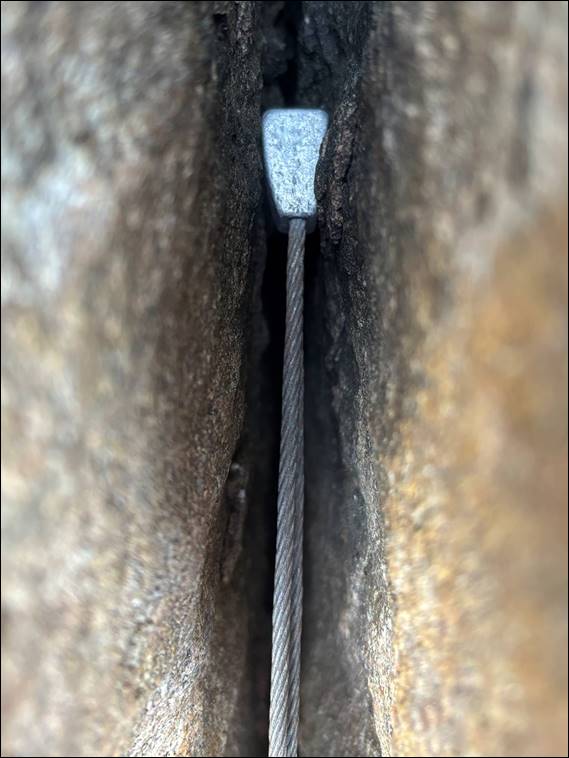
And finally why we ended up here.  Having realised a set of wires were left at Moses Rocks after our last visit, he suggested we go back there.  I could visualise where they may be, so went back on Boxing Day.  And managed to take a tumble when trying to capture a specky image.  My phone flew out of my hand, slipped down the rock, dropped into a crack, landed in the sink, and died.  Hence I have no images of that trip, and sadly that makes it two phones I’ve killed in one year.  On the plus side I found the wires, as below, but was a little weary from the climbing I got in.  Rather than revert back to Bob’s Hollow, I suggested Wilyabrup:

A nasty pasty

The water hasn’t been playing nice at our local beach this week, resulting in me not going in for a morning snorkel on Saturday.  Instead suggesting to Lisa after she returned from her plunge, which is not reliant on needing clear waters, that we could have a trip into town.  There were a few bits that we still had to get for the festivities next week.  This all seemed like a fine idea.  breakfast on the foreshore with a game was indeed very lovely.  Then I had to brace myself for the shops and that, even more so at this time of the year, was not so great:

So much so that by the time we got home, and after we had unpacked everything I risked the local waters to declutter my head.  Needless to say while the temperature was lush, and did the job intended, the visibility was rubbish.  I was however lucky enough to stumble across my first ray of the season.  What with the murkiness and dusting of sand across its body, I’m not game to try and identify this one.  The next morning I was back out looking at sand, liking the ripples.  This time above the water line, as Adrian and I walked into Moses Rocks:

He came down for a few days and aimed to squeeze a couple of mornings climbing in.  After having recently been spoilt when he climbed on the big walls over in Tasmania, he suggested Wilyabrup instead of Moses.  Maybe because it offers the longest routes along the south west coast, and higher grades.  I was personally glad to have veered his interest to this smaller crag, which he had not been to before.  He noted the shortness of the crags as we walked past the different sections, but soon understood the appeal of the place:

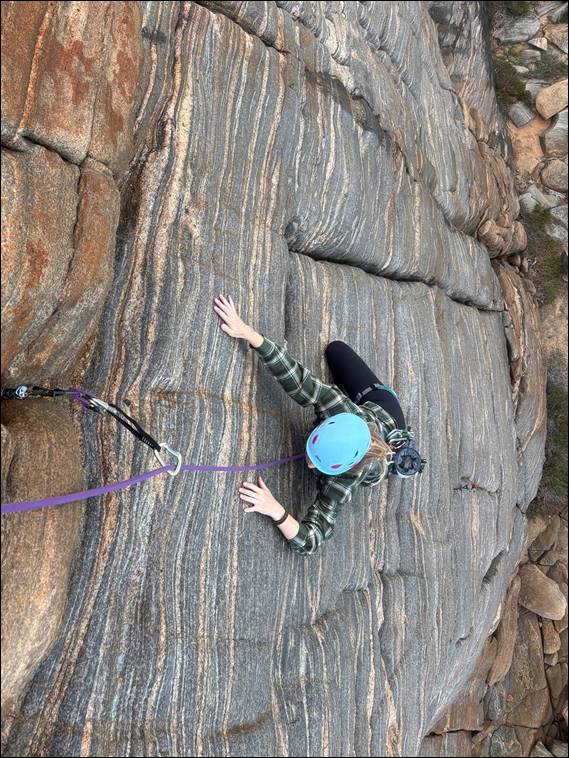
The big attraction being so close the ocean, which provides a great atmosphere.  Today the swell was doing a good job of putting on a show for us.  So much that any idea of heading into the Zawn was quickly put to bed.  Instead we played on the centrepiece of Moses Rocks, Hands Up Wall with its longer lines.  While short in nature this place makes up for that, in my opinion, in style.  The fine textured gneiss has striking bands of feldspar and quartz alternating with darker bands made of other types of mineral layers:

These were formed under very high temperatures and pressures, resulting in a smooth and rounded rock formation.  Friction is key, and this means good technique is essential.  Hence, this place requires a technical and focused style of climbing.  This in itself can make even a short route feel long.  Adrian’s focus was, like mine not all about climbing, and he found the rock fascinating.  Spotting the garnet crystals peppered throughout to the rock.  Suggesting it may have been something called augen gneiss, where augen means eyes in German:

After a quick bit of research we found that this was not the case.  This was a shame as I liked the idea of the pockets of garnets being eyes… watching always watching.  Three climbs in, for which we alternated leads, it was my turn to always watch.  Adrian used the first few lines to get accustomed to the place.  And when looking to be really enjoying the rock and climbing it offered, I gave him the chance to lead everything after that.  After all I’ve led them all countless times.  Plus I was a little weary after Howsie and my big session on Friday:

At times he pondered the gear placements, another trademark of Moses Rocks.  Hinting he would have been somewhat nervous if he had led the second route I took on, despite it only being a grade 15.  But as he took on lead after lead, he even started to get used to placing and trusting placements in, at times, less that desirable looking flared cracks.  Any notion that Moses Rock may not be worth the time was long gone, and he gobbled up line after line.  With only brief stops between tying into the rope for a snack to keep the energy levels up:

We had started at the right end of the crag and worked our way leftwards.  The grades started to creep up as we moved round, but it was interesting that he found some of the trad lines a stiffer opposition than the bolted sections of the harder lines.  That wasn’t however the case on the crag classic, a very fine jamming crack.  Very different to the other lines, in that it has a nice deep crack you can wedge your hand and feet in.  A climbing style that Adrian confessed to really enjoying:

We were however soon back on the less secure feeling slopers, but he kept ticking off the lines.  These were made a little less comfortable as it was warming up.  The heat also triggered hordes of Red Bandit Cicada (Pyropsalta melete) to take to the wing.  Their name Pyropsalta coming from Latin words ‘pyro‘ and ‘psalta‘ meaning fire and psalm.  This refers to fiery band on their abdomen, and the song they sing that was also filling the air.  Competing with the sound of the waves.  Our minds blocked out both noises at the trickier parts of the routes:

The last route of the morning was the one Adrian found the trickiest.  While it wasn’t the highest graded route of the morning, this one was trad and had a flared crack.  Working his way up he placed three solid pieces.  Above he could only reach a placement he wasn’t happy with.  But before he could adjust it, he slipped.  The last piece came out of the crack with him, releasing additional rope.  Coming down his leg caught behind the rope.  Leaving him with mark on the back of his leg, one that matched the fiery band of the Red Bandit Cicadas:

I’m happy to report that while we wrapped things up after finishing off the route, the fall didn’t mar the morning enough for Adrian not to want to come back to see what else Moses Rocks has on offer.  For today however we were both very happy with the routes we had bagged:
· Many Hands (14)**
· Gothic Streak (15)*
· Hands Up (15)*
· Johnny Fartpants (18)*
· Fat Slags (19)**
· Wheely Things (15)**
· Victor and His Boa Constrictor (17)*
· Twist Till You Lock (21)**
· Cornish Nasty (18)**

Swings and roundabouts

Repeating last Friday’s early start, getting up at 3:30 felt strangely much more acceptable this week.  It was not just me that thought it, Howsie also said it felt more bearable for him too.  Despite leaving the house with only the garden solar lights breaking through the darkness, by the time we met at the office carpark just half an hour later there was plenty of light.  We joked that considering how easy it felt, maybe we could make it a weekly trip.  There are however other plans for January, which means this is unlikely to happen:

This may come as a relief to some.  The thought of being subjected to déjà vu images of the black and grey streaked walls of the quarry at Welly Dam may not be so appealing.  Much as we never tire of climbing here, and every trip has something a little different for us, it has to be questioned how often I can write up about a visit here without just repeating myself.  Last week I had craftily left the quickdraws on the tray of the car.  A subtle suggestion that I was not keen to kick the morning off by taking the first lead.  I wasn’t feeling ready for the rock:

As it was I climbed with more confidence, despite my sluggish start.  This week I didn’t hesitate.  Popping the quickdraws on my harness and walking to the base of the first climb, before Howsie had even got his harness on.  I had pre-formulated a plan for the session, and had high expectations for the morning.  Other things also flipped, and as it turned out this week was my turn to be in the backseat.  Howsie being the one on fire.  There was no procrastinations when he climbed, and he moved with purpose and without hesitation:

This switching of performance is not uncommon, and we both have our better days.  As we prattled on about how the tables had turned, I threw in another metaphor to say it is ‘swings and roundabouts’.  Many people have referenced this term back to a 1912 poem by Patrick Chalmers called Roundabouts and Swings.  The running of a gypsy travelling show is explained with ‘mostly they goes up and down or else goes round and round’, and ‘losses on the roundabouts means profits on the swings’.  Resulting in a balanced outcome:

The phrase was however used before this time.  The line ‘What we lose on the swings, we make up on the roundabouts’ was used in a novel written by Sir Pelham Wodehouse in 1906.  Used alongside a similar phrase that I quite like, and will need to remember, being ‘We learn in suffering what we teach in song’.  Something that that you could say has been embraced in country music, much of which has a melancholic tone drawing on the struggles of everyday life.  I digress, and Howsie will know why, but it doesn’t end there:

There is an earlier reference I found from the 30 May 1895 British parliamentary debate on the Civil Service and Revenue Department expenditure.  The allocation of funds for the upkeep of lawn tennis and cricket pitches, which had been offset by charges for a boat hiring contractor, was summed up with ‘What we gain on the swings we lose on the roundabouts’.  There ends my investigation into this Briticism.  And as we ended today’s three hour session with an eighth route, while feeling justly weary, we both narrowly managed to avoid a swing: