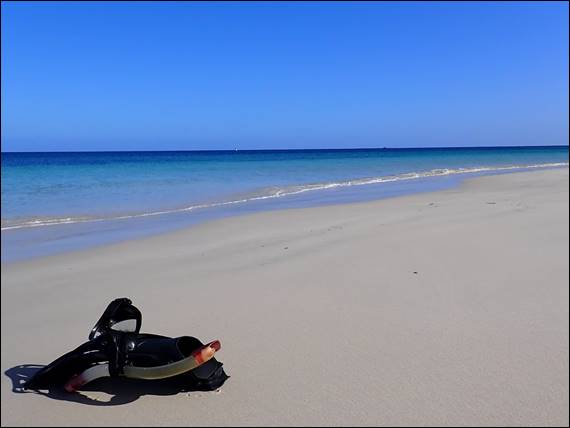
Walking into Bob’s Hollow yesterday with David I sent an image of the ocean to Lisa, knowing she would be up. In return, as she wandered along the beach to meet the Peppy Plungers, I received an image of glassy calm conditions. One of the other plungers mentioned the water was starting to clearing up locally, although they had experienced that during an offshore boat dive. Whereas I know the waters off the beach take a while longer to clear up. Despite my doubt, and seeing the swell had been relatively low for a few days, I gave it a go:
I was also encouraged to go in when I saw the very low tide, which conveniently coincided with the morning. When the winds are general lighter, and the sun is sufficiently high enough to allow its rays to penetrate the water. The very low tide was courtesy of the position of the moon. Friday night’s supermoon resulted in a stronger gravitational pull creating a larger tidal range. Lisa and a few of the plungers were meeting up for a second morning today, this time to go for a swim, so Lisa and I walked down together and then went our separate ways:
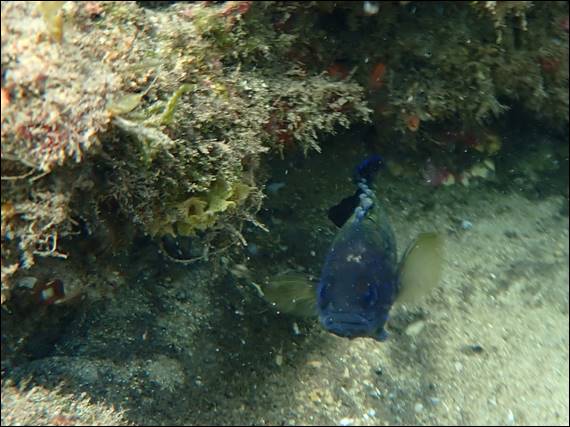
The water was indeed pretty clear. After my dip round the bay, in waters teaming with fish, the local reef seemed very quiet and a little drab. But knowing the better areas to check the fish started to appear, even if they weren’t in the same kind of numbers. This included a single Western Blue Devil (Paraplesiops sinclairi). Not the best image, but the only one I got. I’ve not seen this fish before, which is not surprising because it is known to be shy and is rarely encountered. The large eyes almost give an impression of its surprise to see me:
It is often confused with the Southern Blue Devil (Paraplesiops meleagris). Despite the very brief encounter and slightly blurry image, the distinguishing features of the endemic Western Blue Devil were clear enough. Having yellowish pectoral fins, blue edged caudal fin, and significantly reduced number of blue spotting over the face and body. Also in contrast the Southern Blue Devil, has been observed to shows little fear of divers. Allowing them to get relatively close, and only when they get too close does it slowly retreat into a refuge:
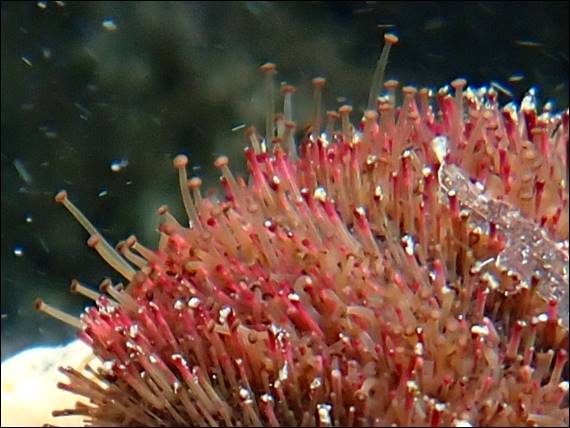
The other fish I saw were all familiar, so I started to take images of the many different coloured sponges. However, as is often the case when I duck dive down more treasures come into view. The above is something I have only seen once before underwater, approx. five years back. I say that as this type of urchin is often seen washed up on the beach during winter. Five years back I didn’t spend as much time identify my finds. Naively calling it a collector urchin, which is it not and is in fact a Short-spined Urchin (Holopneustes porosissimus):
There are over a thousand species of sea urchin globally, many are round in shape but about a quarter of them have evolved into differing shapes. One such type has a flattened body and burrows into and moved below the sand. Now I have an idea of what to look for I‘ll keep an eye out. While the Short-spined Urchin is common and has vivid red tips on its primary spines and purple heads on its tube feet, it is not often seen. It has a habit of hiding away by wrapping itself in algae, something the last one I found was attempting not very successfully:
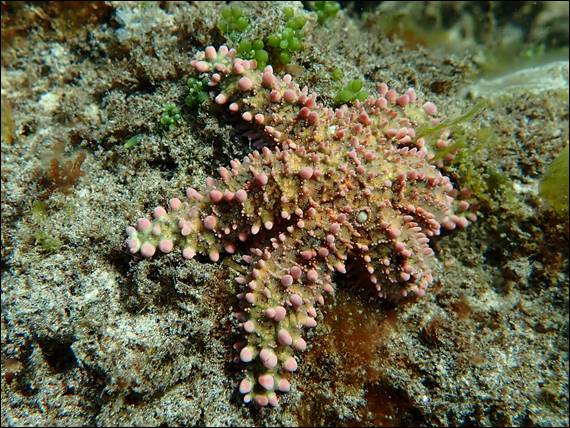
I mentioned tube feet. These have suckers on the ends that are used to move the urchin about. Controlling the feet by varying the hydraulic pressure of water moving in and out of them, all done with no brain. I’ve included a close up image of the main picture to show these feet extending beyond the spines. The Short-spined Urchin also uses the suckers to pull the algae round itself. There were plenty of sea stars out, which I have included before. The above one however stood out as being distinctly different, and took me ages to identify:
The Five-Armed Seastar (Uniophora granifera) comes in a multitude of colours. The surface can also vary from smooth to being covered in blunt spines or rounded tubercles, as this one is. The range is so vast that the differences have resulted in some being incorrectly described as different species. The Atlas of Living Australia, which pulls on data from various sources, has just over 900 sightings recorded. Only one of those observations was in Western Australia, at the Busselton Jetty, with the rest being in waters off south-eastern Australia:
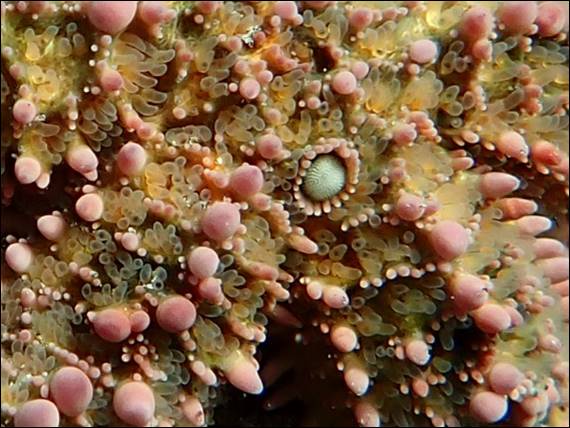
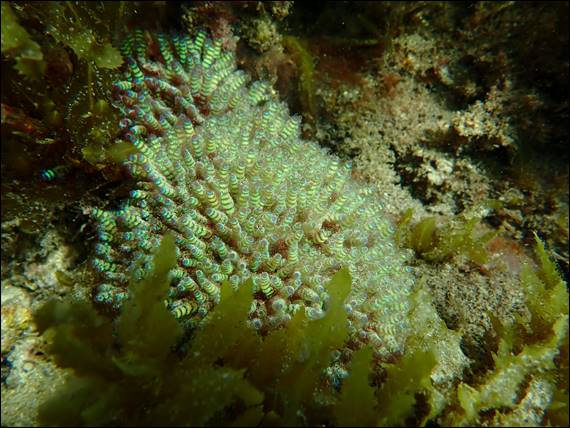
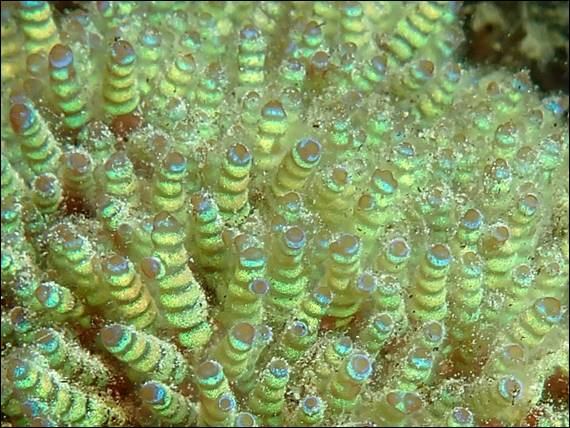
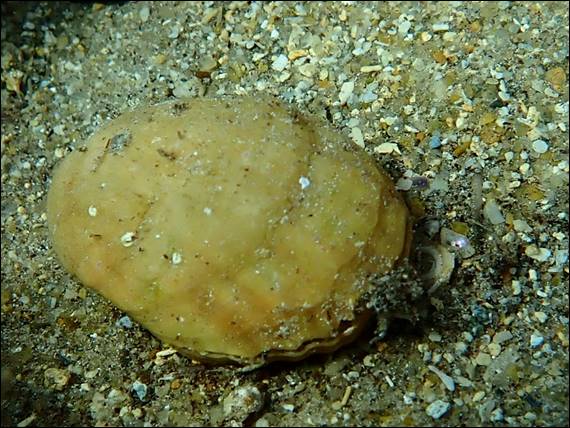
As such I’m pretty chuffed with this find. The other thing that intrigued me about this species was the prominent madreporite. I have again provided a close up of the main picture, to highlight the feature. Usually light in colour, it forms a calcareous pressure-equalizing valve. Filtering water before it is drawn into the vascular system, and also being where water is ejected from. For this species the calcareous surface almost looks like a brain. For my next two images I have also got a close up to allow the amazing detail to again shine through:
This time however I have not been able to work out what I have found. The fleshy tentacles made me think it may be an anemone, which is what Rongy also thought. This did not assist when I tried to narrow down my research. So for now I’ll have to wait and see if anyone replies Rongy’s request for an identification, from the South West diving community. My final image is of a bivalve I often see. What caught my attention about this picture is it looks to be munching on something. While bivalves are generally filter feeders, some are scavengers and others predators. I’ll have to continue to try and identify this one, to work out it diet:
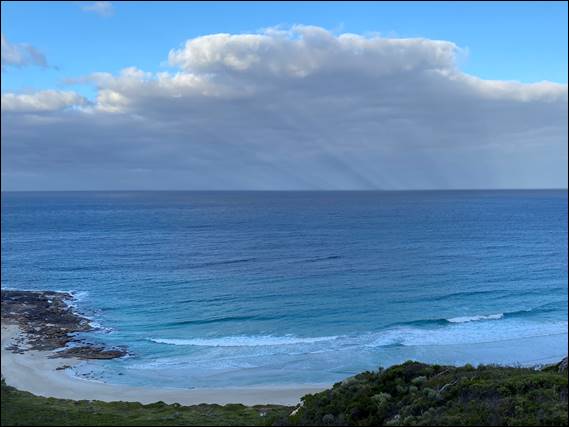
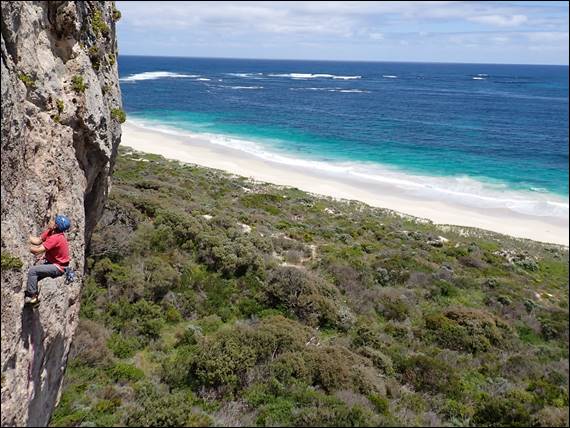
The moon looked extra special this morning. Unfortunately the view didn’t last, as it slipped below a doona made of clouds. A bit like Lisa’s face did after I had popped a sippy mug of tea on her bedside table, and said goodbye. I’ve just read that the moon’s orbit last night had brought it as close to earth as it comes, meaning it was a super moon explaining why it was so stunning. No less beautiful was the walk into David’s chosen destination for today. With a magical visit over the aqua blue ocean and the morning light forming streaks against the clouds on the horizon:
We were serenaded, as we walked in. The Carnaby’s Black Cockatoo (Zanda latirostris) is not a bird I normally associate with this location, but small flocks flew back and forth along the coast for the entire time we were out. At one point they got really close, before deftly adjusting their wings to veer off in a different direction. Being one of the five black cockatoos found in Australia, the Carnaby’s Black-Cockatoos are also known as the ‘rain bird’ due to moving to higher rainfall areas in their range, for summer. It was mostly cloudy today, so the chance of rain was minimal:
You may recall David is still getting back into lead climbing, and he will confess his head space on the sharp end is a major obstacle. The last time he led was at The Playground and Lost Buttress, where the easier climbing allowed him to lead every route. Today we were at Bob’s Hollow and there isn’t a crag in our little slice of the South West of Western Australia that isn’t more contrasting. Well maybe Welly Dam is up there too, which is where he last climbed with Adrian and myself. He didn’t lead there, and it didn’t take many lines before he was shattered. I therefore wondered how we would go at Bob’s:
David had checked Bob’s Hollow out online in a fair bit of detail, so had a fair idea of what was to come. He also told me that he had been dreaming about the session here. And in his dreamland he was concerned I was getting disappointed, because we didn’t bag many lines. From my perspective, each time I head out I adjust my expectations of how many and what routes we may get up based on who I am going with. Not in a bad way, but there is no point in being overly optimistic from the outset. And as a result I can’t recall ever losing patience with someone when out on rock, but am happy to be told otherwise:
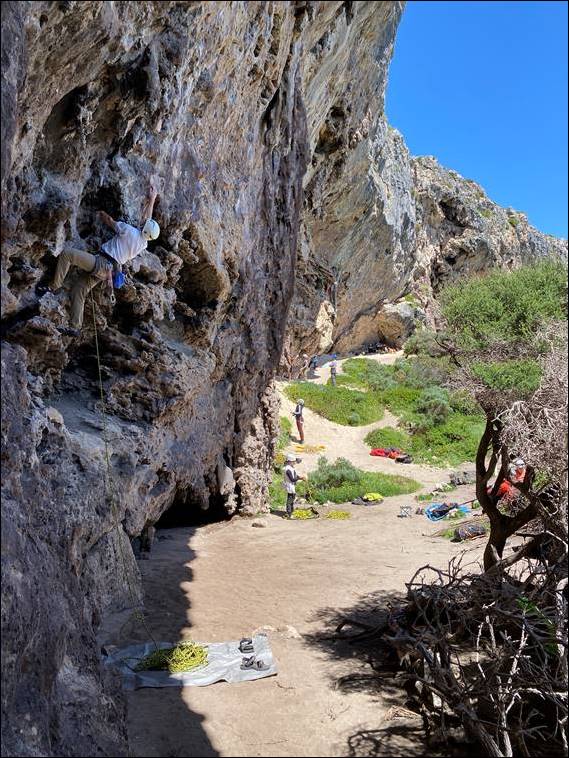
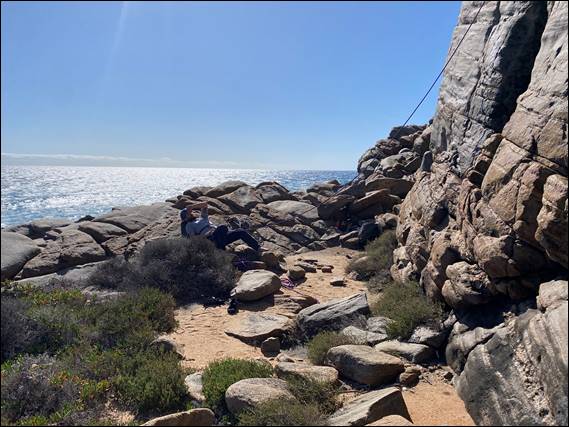
Climbing for me, after all, is about the experience and not what we achieve. Unlike what seemed like most of the near twenty other people that rolled into the crag during the morning. Several large groups, of true sport climbers, bringing their chairs to watch the action from, some of those above blasphemed whenever a move proved too hard for them. Ropes hung from almost every line at the northern end of the crag, so we stuck to the southern end. Having it to ourselves until the last route, when a couple also looking to avoid crowds came over. It is of course good to celebrate what we do get done, and what we see:
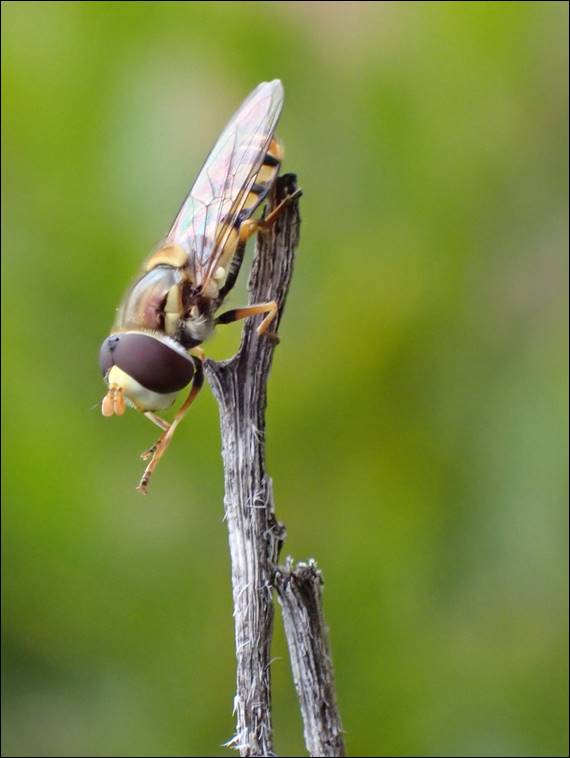
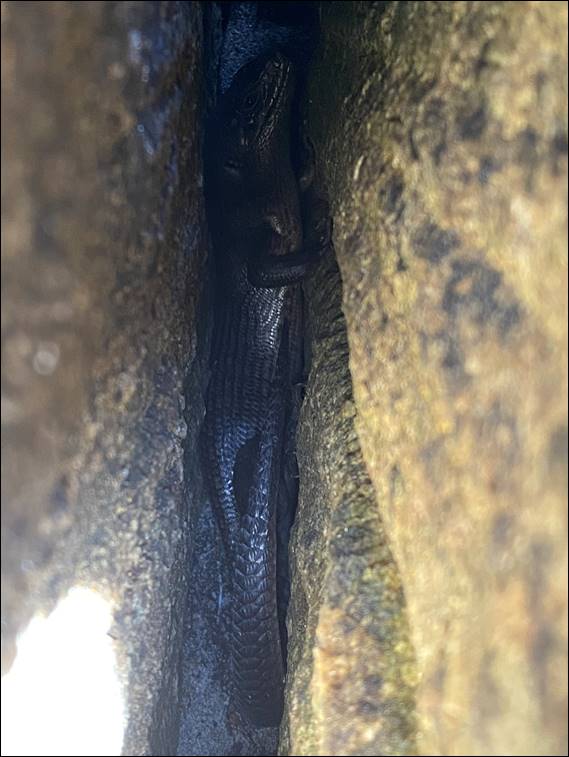
With the clouds about, and a reasonably blustery and cool wind the chances of seeing a reptile were low. I also wonder if due to increasing popularity of this place, being like an outdoor indoor wall, I may see less snakes here now. I did however spot one Southwestern Crevice Skink (Egernia napoleonis), which was quick to scuttle away. So instead, above is an image of a Yellow-shouldered Stout Hover Fly (Simosyrphus grandicornis), which I watched delicately using its front legs to wipe down its face. This is one of the two most common hover fly species found in Australia, of which there are some 160:
Hover flies, not unexpectedly are often found hovering in the one spot. And can suddenly move forwards or sideways and then just as quickly come back to a stationary position. The wind seemed to be making this a little more difficult today, which may also be the reason why at one point a pair of Carnaby’s Black Cockatoo had got so close to us. We were also lucky to see a pair of Australasian Osprey (Pandion haliaetus subsp cristatus), which hung about for a while moving between the cliffs and ocean. There are four subspecies found round the globe, with the Australasian Osprey being the smallest in size:
By now you may be wondering how the climbing went. We started on the two easiest routes here, which really don’t get too steep. When first established the holds were very sharp, but having become very popular I noticed the sharpness had significantly reduced. David ate up the first line, but as the second one steepened up his head started to play games with him. It was definitely his head that was the issue and once there was a rope above, he walked up it. We then moved to the most heavily bolted line, which is steeper and more akin to the style here. He was happy to go second again:
The steepness hit him, but he got up it. Then we did something a fair bit harder. The crag classic, a route everyone comes here to climb. It felt sustained and pumpy on lead, so once at the top I looked down and asked if he was game. To which he said yes. This meant the draws stayed in, and he had no choice but to get up it. All I’ll say is that he made a piecemeal ascent, and by the end of it I was feeling pretty chilly. It really wasn’t surprising. The route is pretty stiff, and the hardest thing he has climbed in our time of getting out together. But he was not put off, so we picked a route that doesn’t get much attention so still has razor sharp holds:
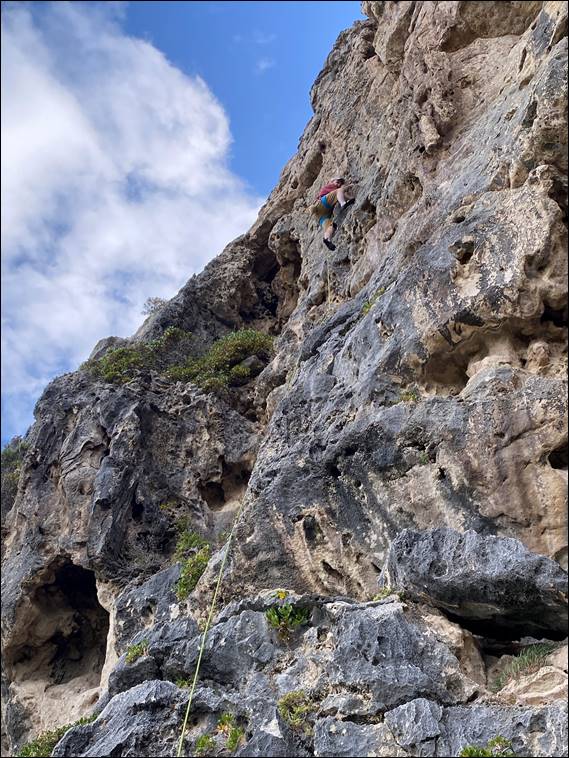
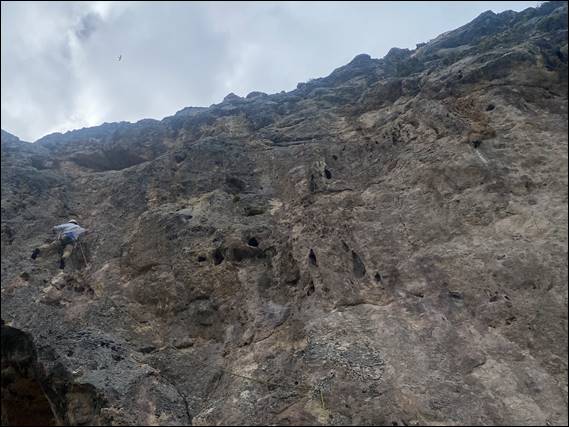
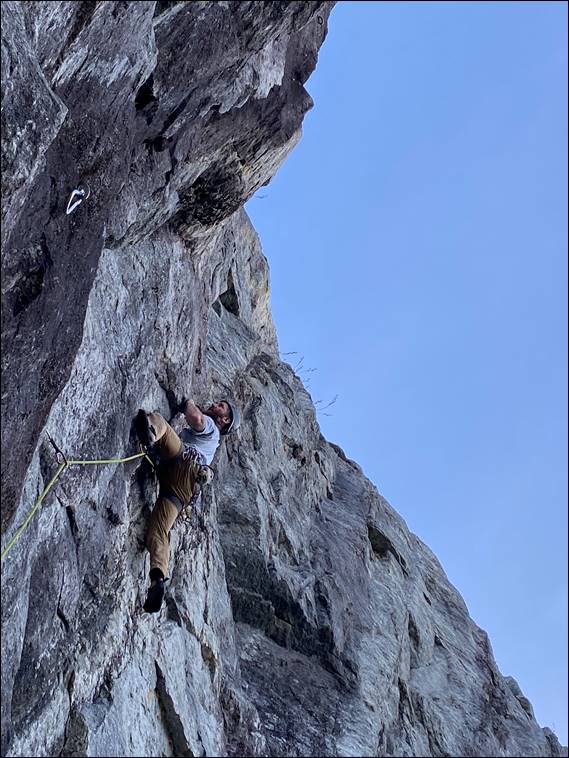
Chosen due to being restricted to the southern area, but also despite the vertical finale it has a relatively gentle rising traverse. It was a great choice and he loved it, as did I. So much so, that with eye’s bigger than his belly he wanted one more. The best choice left was a line devoid of bolts in the bottom half, so I had to pull out my slings. Making for a long adventure and traditional style route, which goes up some very impressive and steep looking terrain. David made it to the point above, which is when his body started to agree with his head. So after I cleaned the route we wrapped the session up, both being very satisfied:
My body clock seems to be getting into the swing of 4:30am wakeup times. This may be in part due to the earlier start time of the dawn chorus. Something I consider a welcome natural alarm clock, while others may view it as a rude awakening. Depending on the species of bird this can begin anywhere from half to one and half hours before sunrise. Meaning it can start well before first light. When the poor, or absent light, means foraging isn’t practical and the males use the time to reconfirming their territories and let females know where they are:
My alarm on Friday was set for just after 4am. Funnily enough with the ring tone set to ‘birds’. However, the real life birds had already done their job. I was already stirring before the alarm had the chance to also wake Lisa up. Hopping into the pre-packed car as the minute hand reached the bottom of the clock face. The agreed meeting time, not by design, worked well to align with first light. As such I was rewarded with the changing colours of the morning sky. Something I assume Howsie was also admiring as he was driving out:
Our meeting place this time was not Capel, but Boyanup as we were heading south to the big stuff. Some months back I had reached out to Kym and suggested a catch-up was long overdue. A weekend was set, which aligned with what Howsie and my calendars foretold would work. Kym’s life is unfortunately somewhat more erratic and unpredictable. Things were looking good until several weeks out. Kym was still getting out and about in nature, enjoying a camping trip with the family. It did however mean he would not be able to join us:
The south coast and it’s inland crags offer a plethora of opportunities that are in stark contrast to our local crags. I have often said to Kym he is spoilt for choice when it comes to rock, and he knows it. Intimidating boulders right in town, looming cliff faces that drop straight into the ocean, through to huge granite domes that rise up from the landscape. All within an hour or less drive from Kym’s house. With such variety it can be a conundrum working out where to spend the time, but this trip was guided by some images Mario had recently shared with us:
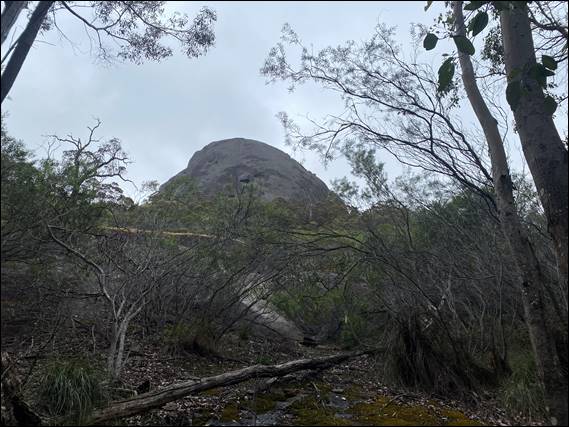
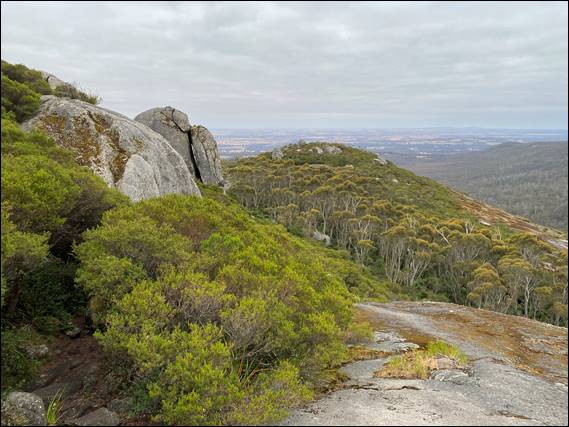
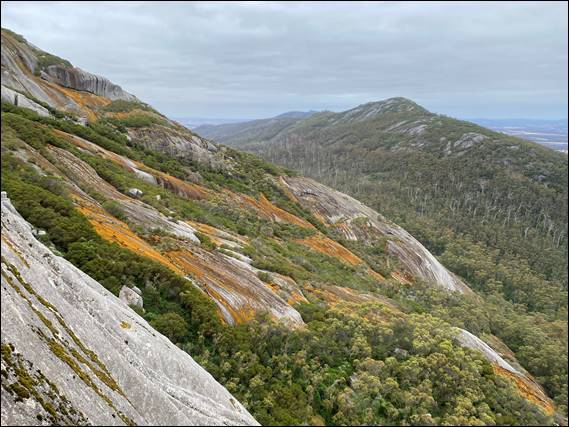
Four hours after leaving home, we were parked up and shouldering our packs for the walk into Gibraltar Rock. Kym you will be pleased to know that this time we found the star-picket that marks the track that leads off the firebreak. We were aiming for one of the many mighty monoliths of the Porongurup Range National Park. Erosion over geological timeframes having removed the material from round these hard igneous rock formations. Now looking like heads watching over the landscape:
Aboriginal beliefs are that this place harbours the spirits of the dead. Jarnaks, which are ghosts or evil spirits, reside here and it was a place to tread carefully and not to stay in after dark. I have come across a similar situation when I lived in Ghana for a couple of years. John, a fellow volunteer and climber, and I were soloing the granite domes. Not as tall as these, but equally impressive in an otherwise flat landscape. The local villagers started to congregate in big numbers and we were asked to come to the village to meet with the elders:
We were led into a dark, musty, and smoke filled mud hut. A small fire emitted barely enough light to see. It took time for our eyes to adjust, and when they did we found ourselves surrounded by solemn looking elderly men. Age and wisdom etched in their faces, and with all eyes on us. It was an ominous situation to find ourselves in. We talked for some time in low quite voices, which seemed to added to the uncertain atmosphere. But they had our interests in mind. Worried about our safety, as the granite hills were a place of bad juju:
Juju is a belief system that can harbour good and bad, and is practised across much of West Africa. Recent statistics from census data suggests a small percentage of Ghanaians hold with traditional beliefs. I was there in the mid to late nineties, when it was suggested that 95% of the population held them. Many of the Muslim and Christian population also maintained some connection or belief in juju. Having lived, hiked, and climbed in several countries and areas with ancient cultures, I have certainly been to locations I have not wanted to stay in:
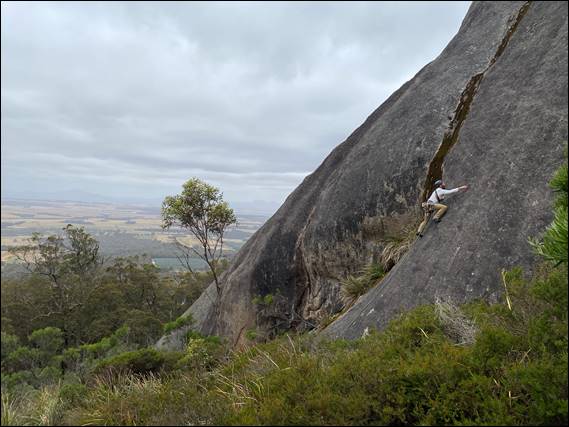
They simply felt ‘wrong’, my skin crawled and I felt like I was being watched. The sooner I moved on the better, and as soon as I did that dark foreboding feeling lifted. With having had such experiences, for me at least there is something in all of this. However, the Porongurup’s emits a good feeling to me, making me feel welcome so I was happy to be here. We scampered further round from the main face in search of a couple of lines on a wall that I had not been too before. My images show the wall, but not too much of the climbing:
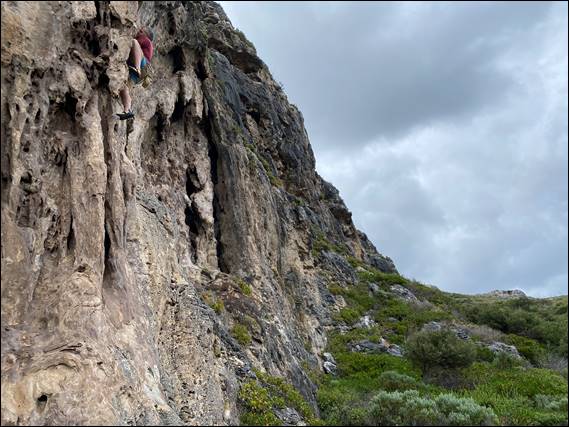
With just two of us on these tall, steep, and direct lines it was very hard to get any images of worth. Unlike the two climbs we picked, which in contrast were stunning. Both had been established in the mid 2000’s, and were protected with old school based in carrots. The often bent bolts didn’t inspire, but we used them regardless. Needing on two occasions to test them. Both times being when a hold came away from the rock mass. Due to the steepness of the lines, with often marginal holds at best when this happened it is hard to avoid the fall:
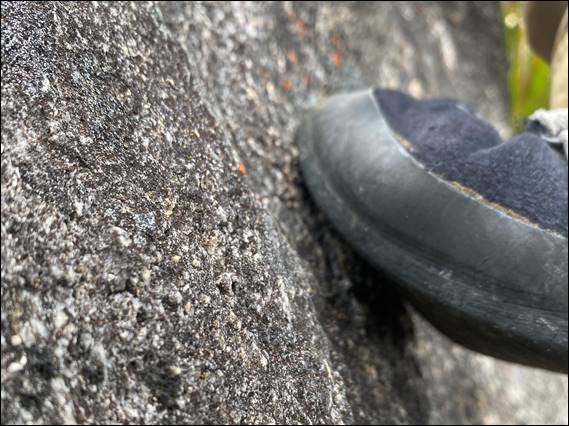
The climbing was epic. We had to get used to smearing and trusting friction, in a way our local crags don’t require us to. It is a strange feeling to push the mid sole to toe of your shoes against a near vertical rock, and trust the friction between the rubber and rock. Often we could hear the crystals of the granite crumble under the stress. Needing to brush the sole off on the other leg, before pushing it back onto the wall. Holds for hands were spaced, instead weighting our fingertips on small crystals and indentation. It was very focused climbing:
After the two lines, I was keen to send Howsie up what used to be regarded as one of the better protected routes here when it was put up in 1999. I climbed Sucked in Ben ten years after then. It felt run out and sketchy, but great. However, we had to watch the clock and get to the campsite by 6pm. So decided on a route I had not been on, which we coincidently happened to climb ten years after that one was established And being a more recent route it was a bolt ladder. Only having 50m ropes with us they were not long enough for two pitches:
To overcome this on those pitches once all of the rope had been fed out, we adopted the alpine approach of simul-climbing. Where we both climb at the same time, the grades on this line were way easier so this felt fine to do this. And not intentionally we climbed the 200 plus meter route in three quarters of an hour. After 340m of climbing we didn’t really feel the need to jump on another route. Leaving us heaps of time to wander round the top to take in the vista and look for anything interesting. Then rapping down where we had a relaxing late lunch, lying under the trees and chilling out before the walk back to the car:
The campsite was a quiet place, perfect for an early night after a long day. Getting back at a reasonable time we were able to set up camp, freshen up, and have dinner all before darkness came in. When in theory it was time for everyone to avoid being in the hills. The owners had made an effort to plant a variety of grevilleas, which were all in flower. Red, pink, and yellow blossoms abound. Reported to be the jewels of the Australian flora, for avid gardeners round the globe. Attracting heaps of birds, and maybe enhancing the dawn chorus:
It was another early start, as we only had one night away and wanted to be on the road home at a reasonable time. Before making the first brew, my gear was packed and tent upended to allow the ground sheet to dry. Not that I needed to do this. Despite the cloudy days, with moisture hanging in the air, there was no a hint of a dew and everything was bone dry. This didn’t make much sense to either of us, but we were grateful to be able to pack away our dry tents just before we rolled out. When only a handful of other campers were starting to stir:
Today we were heading to a place Howsie had not been to before, which had piqued his interest when Mario popped an image of it on our local climbing chat group. Having only been to Marmabup Rock once with Craig a couple of years back I was happy to come here again to explore it a bit more (https://sandbagged.blog/2022/10/16/a-curly-question/). In relation to climbing it is a bit of a hidden gem in the Porongurup’s. Not receiving anywhere near as much attention as Gibraltar Rock, but being equally worthy. One difference being the approach:
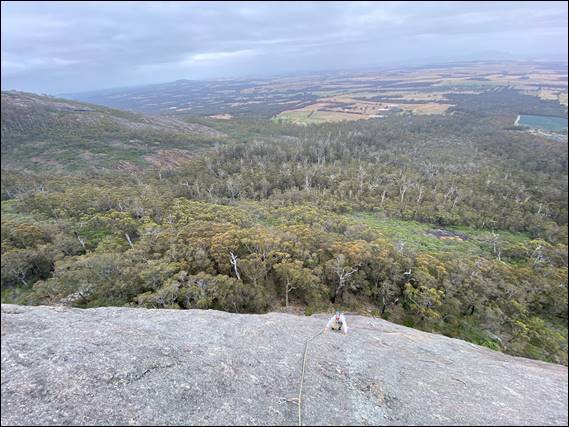
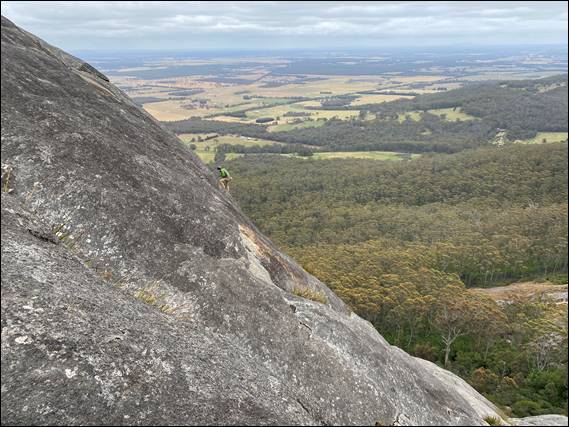
Yesterday we walked to the base of the granite dome, today we had to hike to the top and rap back down. This required getting to the top of the peak called the Devil’s Slide, which sits some 30m higher than our chosen peak. Here a sign tells you the trail ends, but not for us. We still had to descend to and cross the saddle that linked the two peaks. Marmabup Rock is the same elevation as Gibraltar Rock, and provides equally impressive slabs and walls. But it is harder to orientate yourself from the top, as opposed to when you look up from the base:
Craig and I had struggled to identify where the climbs were, mind you that was a very claggy day making visibility poor. Visibility was great today but it was just as cold as that previous visit. The air temperature didn’t break fifteen degrees on this trip, and for today especially there was no escaping the wind chill factor. We had a quick look round at the top but the route locations didn’t feel any clearer. One issue being there is no topo and the routes are not described in order. We did however know how to get to our first route:
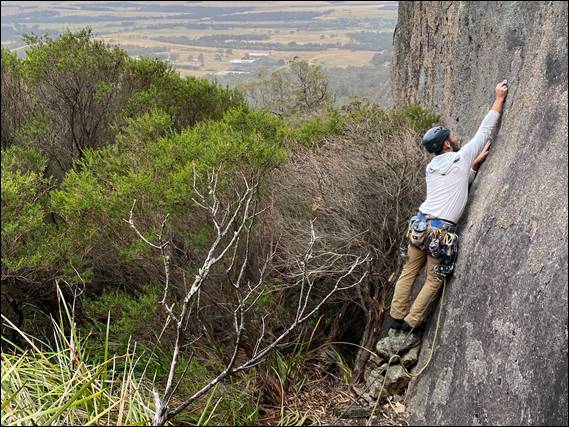
I was keen to hit one of the older lines. But was not keen on taking on the likely bush bash to get round the base of the cliff. Instead we rapped in on the line Craig and I had done. Getting us to the top of the second pitch, which I didn’t mind as the first two are supposed to be a relatively easy scramble. From here I took on the leaning flake, which is the reason we had hauled the trad gear up here. Old school lay-backing. Hands holding onto the back of the often rounded flake, while pushing our feet again the slab to create an opposing force:
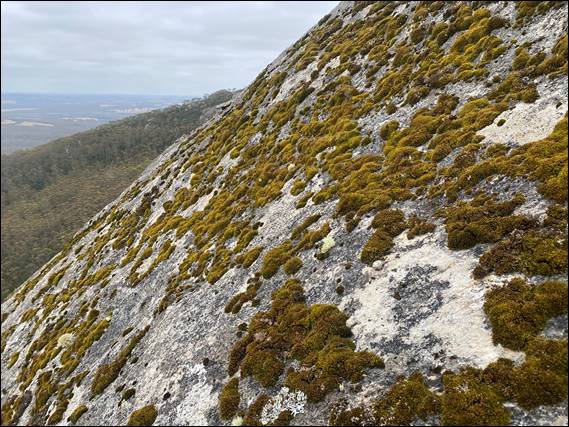
The slab was in places mossy making for a nervous lead, and in true old school style it was bold climbing. With that under-graded feeling due to the boldness, but the moves were about right. It was after all a Truscott and Rosser route, and I have said before that I find their climbs can feel tough. Howsie took on pitch two, being an amazing steep slab pitch. The hard granite not yielding any features or cracks for traditional protection. As such this pitch, like the first two routes yesterday, was of an era when they were created with bashed in carrots:
At times the small machine bolt head was hard to find due to the moss, as shown below. Fortunately, the moss was generally only present when the angle of the slab eased. On the steeper territory this allowed Howsie to more easily to see where his next protection was. So he could put all his focus on the delicate slab techniques required. It was a sustained and engaging pitch, a very impressive lead. After which I soloed the last 30m pitch, as in good old school style due to the lower grade there were no bolts that either of us could find:
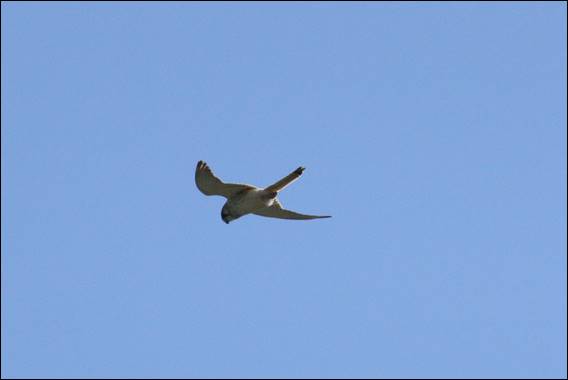
In order for us to rap down we had to leave some gear on the line Craig and I had previously done. Seeing Howsie hadn’t been on the line before I was more than happy to climb it again, which we did with a Nankeen Kestrel (Falco cenchroides) circling and watching from above. This route was established 13 years after, and is given the same grade, as our first old school climb of the day. Grading is a hard thing, but we both agreed that it was easier in comparison. We had also thought the newer route yesterday was also a bit over-graded:
So is it that modern day climbers are going soft, and we are grading things harder than they should be. This is evident in other places too, for example in Scotland the older climbs given lowly grades can be desperate. Maybe this is akin to the modern age of being, to some degree, overly safety conscious and less willing to take risks. Certainly quite a few of the routes I have established have been suggested to be under-graded, and I wonder if that is really the case. This is not to say that it is true that all newer routes are soft, as we found out:
Grading is a fickle matter, so you should never believe what you read. Much can change from the first ascentist experience to your own. Including your mental state, technical preferences and skill set, ability to find and importantly trust protection, the weather conditions, and of course the rock due to holds falling off. After two very fine and contrasting climbs, we kicked back and had an early lunch pondering our next move. Fortunately we had phone reception and read and reread the details provided, giving us a hint of where to look next:
After much looking, we spotted a bolt some way down from the top. Identifying a 40m wall that topped out on the summit and had two climbs. Developed in the ‘modern’ era, which was good as it meant they were not protected by hard to find bashed in carrots. Having fixed hangers. The wall had some blank vertical sections near the top and I could feel my fingers tingle and muscles ach as I rapped down. This led me to picking the lower graded of the two lines. Very funky climbing up some features low down led to an improbable looking finale:
Working the moves I eventually unlocked the sequence. Then just started to curl my fingertips over what was the first reasonable hold for some time, that familiar and very unwelcome crumbling sound came from under one foot. Resulting in finding myself free falling. The on-sight was lost, and while it stung a bit that is climbing. On the plus side we both felt this was a climb for which the modern verses old school grading thinking didn’t apply. The climbing was nails, and we wondered what the next route would feel like:
Being a grade harder it felt an ominous undertaking, luckily for me one that Howsie would tackle. Watching intently it was clear it was pushing him, so my camera stayed in my pocket. At times he looked to struggle to work the moves, in positions and on holds that didn’t allow for a mistake. To his credit he held it together, and pulled off a great lead. Following up afterwards, I was pleased to have the rope above me as at times the holds seemed to disappear. Neither of the lines gets stars but they definitely deserve them:
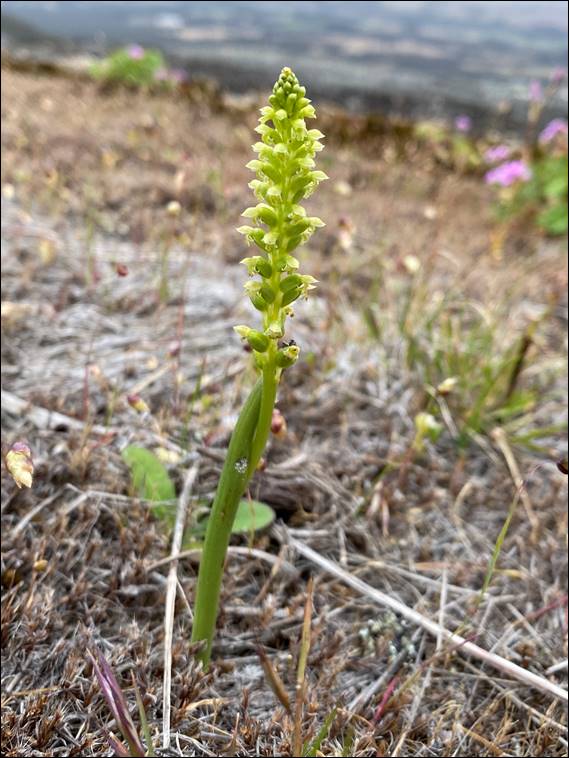
More than happy with our lot, we sorted the gear and had a snack before escaping the biting wind. It had even been too cold for the Sun Orchids. They somehow survive in very thin soils held in place by moss, over the granite outcrops. We saw hundreds if not thousands of them on the walk to and all over Marmabup Rock. However, with not one opening up all day it is hard to pin the species down. Unlike the obvious Common Mignonette Orchid (Microtis media) shown in an earlier image, which was also about but not in such large numbers:
The hike out, being downhill, was always going to feel that much easier despite us being weary after two early starts and long days. The taller Karri (Eucalyptus diversicolor) trees, towering up to a 100m above us, seemed to be watching over us like sentinels. Making sure we got back safe. Keen to come back and find a few of the other routes, which despite our best efforts alluded us today. For now it felt good to take the packs off for the last time. Although before resting up, it was time to prepare some food and the all-important brew for the road:
Route list: Gibraltar Rock Dance of the Slab Spiders 65m 19** The Real A.L Pedro 55 20** Made in Australia, from Local and Imported Ingredients 220 15* Marmabup Rock Rehearsing The Fate of Absalom 110m 17*** Beckey-Gledhill-Swain 110m 17** Custardly 40m 18 Excess Grip 40m 19
Lisa and I headed to Gnarabup for a night away, sticking to our agreement to make an effort and have a minibreak once in a while. Being relatively close it allowed her to partake in the local plunge before we left. Our destination was the number one surfing location in Margaret River, with accessible, reliable, and spectacular breaks. Not being familiar with the coastline here, and after my experience in a 1.4m swell at Wilyabrup, I decided that with forecast of a 2.6m swell on Saturday and Sunday I’d best leave the snorkel gear behind:
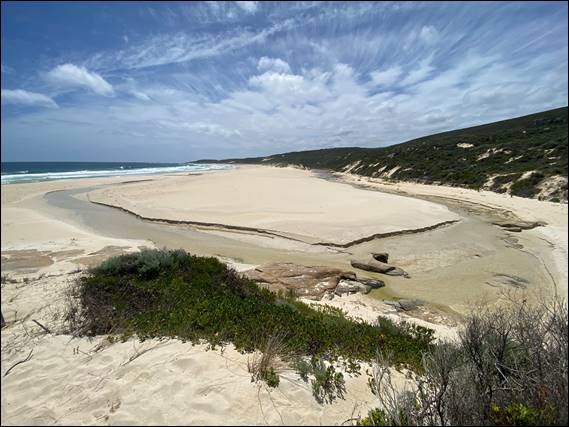
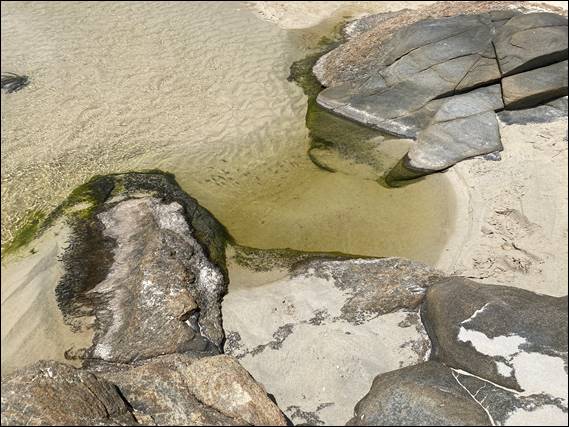
This was also in part due to our thoughts, when we first looked at this place, including hiking along the Cape to Cape track. Our familiarity about the track, like the coast here, was very low. Resulting is us walking south along the beach. Lisa however like to have a bit more certainty about where we are going, and what it might entail. Making the start of the walk less relaxing than it should have been. Next time we’ll make a bit more effort to investigate our plans. After following the beach for a couple of kilometres we reached Boodjidup Creek:
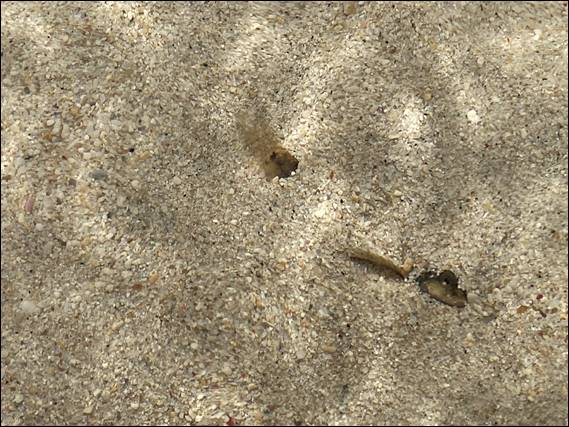
A piggyback for Lisa, over the creek as it flowed into the ocean, along with having reached where the Cape to Cape track met the beach, lightened our mood. Here Lisa chilled out on a rock, as I explored the creek line. My attention was drawn to some small fish, above you can see two of them looking back to me. I believe from their heads and snouts to be South-Western Goby (Pseudogobius suppositus). An benthic fish that exhibits a behaviour of burrowing. Found most commonly in slow-flowing brackish estuaries, coastal lakes and rivers:
Wandering up the creek line as it meandered its way up the beach and behind the dunes, there were hundreds of small fish. But these didn’t behave in the same way. Not burrowing to hide, but moving in schools and looking for shelter. With longer and more slender bodies, leading me to think they were Common Jollytail (Galaxias maculatus). This species has the largest natural distribution of any freshwater fish species in Australia. And while I said freshwater, they are more commonly found in still or slow-flowing waters within a short distance of the sea:
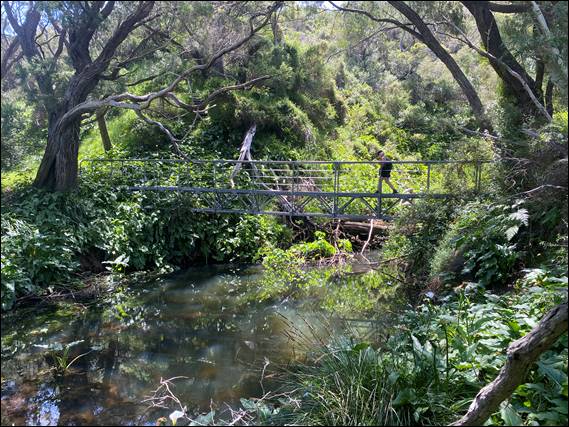
It was time to mosey. While I had been exploring, Lisa had been checking out our route back. Despite having only gone a short distance on the beach, the Cape to Cape track would take us back by going some way inland. Popping out on the coast north of Prevelly, which is a couple of kilometres north of where we started. This meant we had only completed a fifth of the entire circuit, taking up over an hour. It was time to pick up the pace, which started when we followed the weaving creek line until a bridge allowed us to cross it for the second time:
As we reached the bridge, the banks were covered in Arum Lily (Zantedeschia aethiopica) a declared pest in Western Australia. Someone had cut a heap of flower stems off these, and piled them up. Maybe in an attempt to help remove them. However, they have extensive tubers, and can regenerate from just a fragment of the tuber. As such if mechanical removal is not possible, which would require scappling the area and taking every out, then chemical control is required to kill of the tubers. As such their efforts may have been misled:
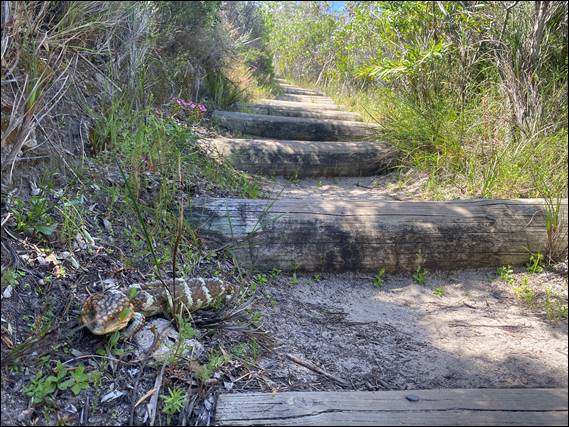
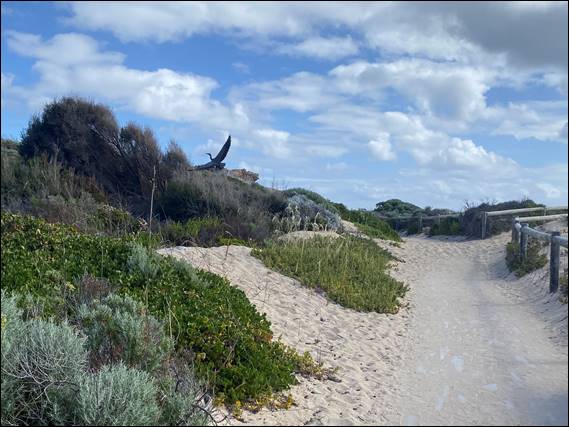
After the bridge a very long series of pine log steps led us up the dunes and inland, leaving the ocean behind us. The wind died down and the bite of the sun could be felt, the heat that came down also brought out several Bobtail Lizards (Tiliqua rugosa). And I quietly hoped there may be a snake or two basking on the path, but it was not to be. Once the sound of the waves were out of earshot, the path took on a familiar form. Several landforms brought back memories to me, but Lisa was not so sure:
On that last trip we had seen a snake, and we had also come across the Leopard Sun Orchid (Thelymitra benthamiana) for the first time: https://sandbagged.blog/2020/10/18/creepy-crawlies/. Since then I’ve seen heaps of these, and today there were quite a few out, along with several other repeat finds for this season. Lisa’s shoes had filled with sand on the soft track, so while she emptied them I looked about. Spotting a small clump of Coastal Spider Orchids (Caladenia abbreviata). These flower later in the season than most, when their basal leaf often looks a bit withered:
They have been given a Priority Three conservation status by the Western Australian government. This does not mean they are under immediate threat, but they are poorly known and only found in a few locations. Having been first formally described in 2001, by Stephen Hopper and Andrew Brown. The latter of the two being the person who recently helped identify some of my finds at the Capel Nature Reserve. The name, a Latin word, abbreviata means shortened, and refers to the relatively short petals and lateral sepals:
I’ve checked a number of other features that all point to my identification being correct. Sometimes however the most distinct features can be missing, a bit like may be the case with the above Leopard Sun Orchid. With no spots. That said the yellowish green flowers can have brownish spots, blotches, and/or patterns. With all the unexpected finds the approx. next ten kilometres went by pretty quickly. And after that we felt like we could reward ourselves with a snack at a café in Prevelly overlooking the bay, which went down very well:
There was still a few kilometre left before we got back, most of which took us on a limestone track just about the beach. Here we saw what we think is likely to have been a juvenile Dugite (Pseudonaja affinis), but it slithered away too fast to be able to catch a picture and check it. And as we looked down hoping to see another, we would have walked past this White-faced Heron (Egretta novaehollandiae) if it hadn’t given its location away by flying away. Being the most common of the herons in Australia, found everywhere water is found:
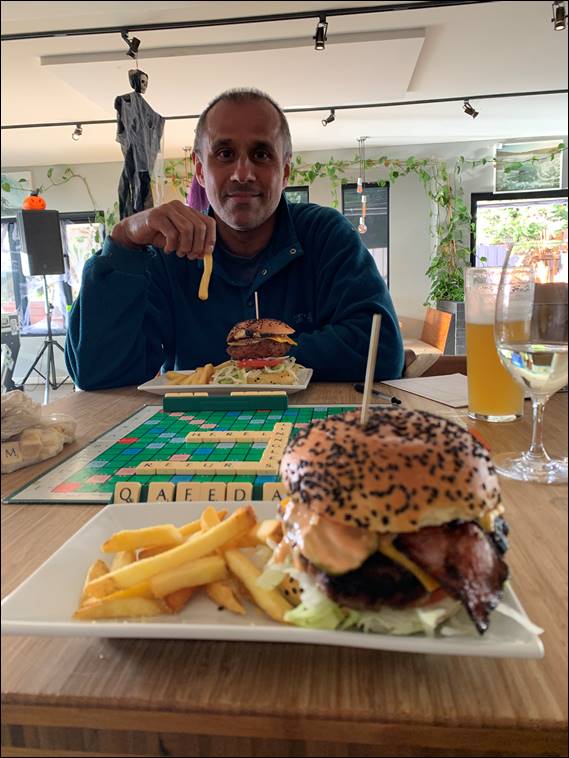
Despite the dodgy start, the walk was a lot of fun and we got to see heaps along the way. And I won’t lie I did enjoy unexpectedly finding orchids, and am quietly hoping now to find more. We felt that fifteen kilometres later it was now time to settle into the room, have a brew or two, and put our feet up for a bit. For dinner the hotel had a bar on site, serving good ole pub food and a decent pint. All of which went down well, as we pulled out the scrabble. Managing to polish off our food, drinks, and game before the Halloween party kicked off:
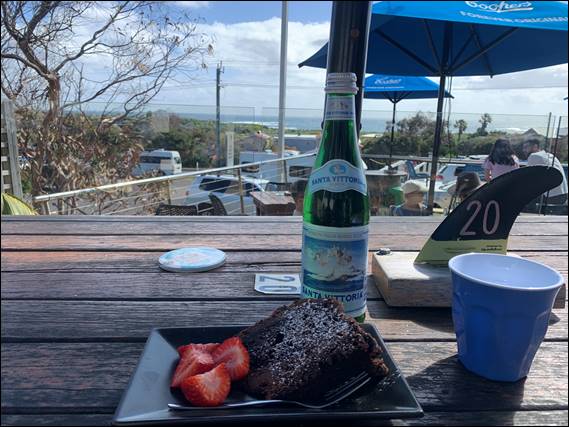
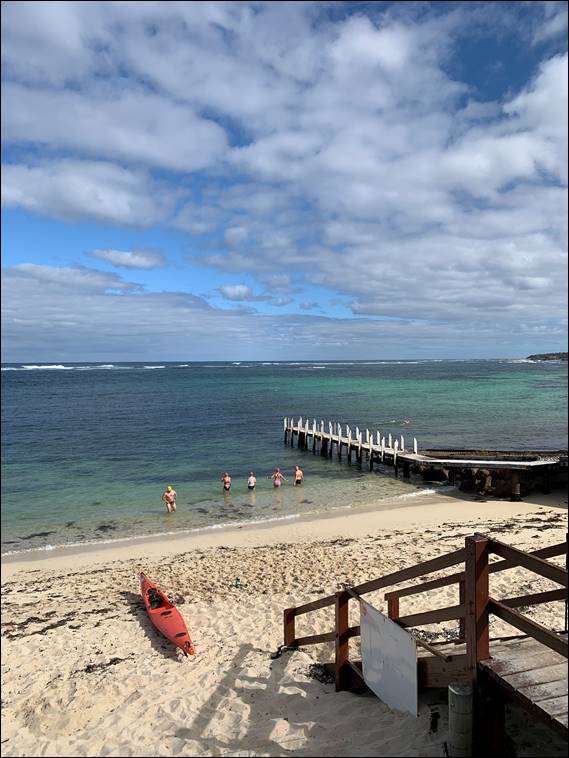
It was a slow start on Sunday, we did however wander down the road to a small café right of the beach. More food was consumed, as Lisa watched people get in off the beach and swim various distances across the bay before returning. Suggesting it is something she will never be brave enough to do, but I am not so sure. I would however prefer to look at the sea life while snorkelling. Being a little annoyed with myself for not bringing the gear, when we saw much of the bay was protected by an outer reef and looked very inviting. Maybe next time:
Driving out shortly after 5am, the radio broadcaster was talking about all the glorious sunrise images listeners were sending in across the south west of Western Australia. I didn’t send an image of my view to them, but did stop to take a quick snap. Mist clung to the ground, while the hues of the morning sky changed. Sadly all too quickly, not allowing the time needed to truly savour the varying colours. As someone who enjoys a good sunrise or sunset, living at a latitude of approx. 33.5 degrees they really don’t last long enough:
A particular climb at Wilyabrup was calling to Howsie, therefore this is where we found ourselves. Tackling the first route a bit after six thirty, and only having four hours before we had to be hiking back to the car. Needing to get back by midday, we were on a timeline. For this reason I had half expected to be further in our journey by the time light had filled the sky. However, feeling a little weary Howsie felt that setting the alarm for 4:30 was early enough. To be honest I’ve also been pretty pooped this week, maybe due to the warming days so didn’t mind at all:
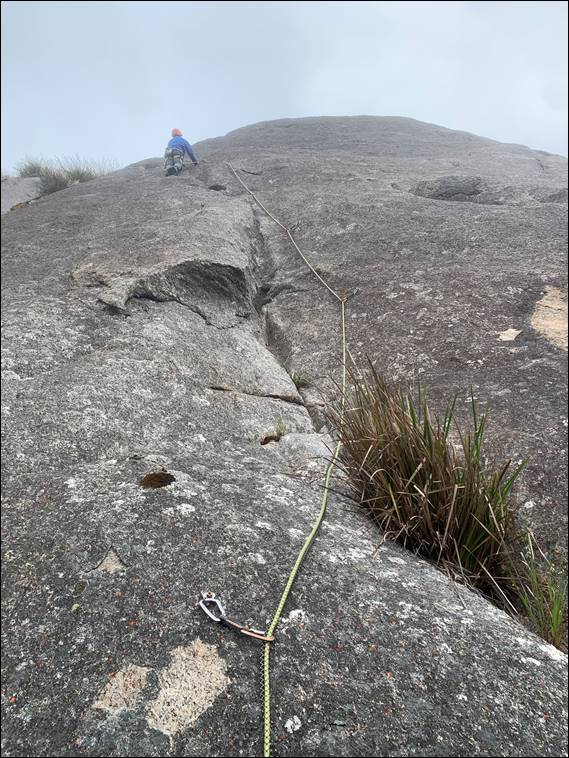
I may also be feeling my big day at Bob’s Hollow last weekend. My shoulders not being used to that kind of climbing. After all the bolt clipping of that trip, it was nice to get out with the trad rack. There is something satisfying about getting a piece of gear in, something that using bolts just can’t emulate. I also got to use my crag booty from Queensland, a long draw with a carabiner that has a built in roller. Poking out from under the final undercut headwall. The idea of the roller being to reduce friction as the rope moves through the carabiner:
For direct lines such as these there is little benefit. However, it would feel great not having to battle rope drag on climbs that meander about, and for which it is hard to keep the rope alignment relatively straight. These sort of climbs are very rare locally, which may be why I’ve never invested in this bit of kit. There are so many options for different types and styles of traditional climbing gear, and some people just can’t resist keeping up with the latest fad. A bit like a dedicated follower of fashion, who needs to change their clothes to stay in vogue:
The first line felt fairly damp and insecure. This meant the route that had been calling out to Howsie, before we got here, was now only whispering very faintly to him. Unsure of what to do next, I suggested heading to bottom end of the crag. Here the rock changes from clean slabs and faces to blocky three dimensional features. Cracks, flakes, corners, overhangs, and arêtes awaited us above. The climbs here don’t get much attention, but deserve more. Providing exposed and exhilarating climbing, which was enhanced today due to the dampness:
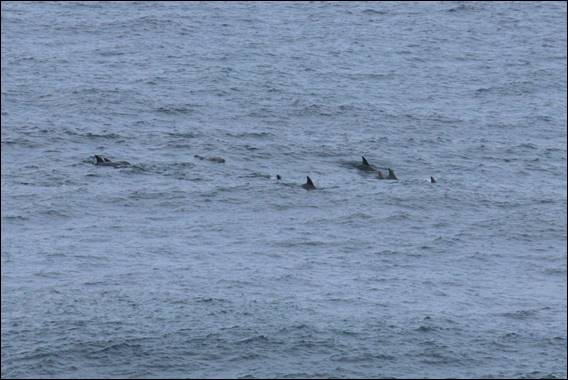
From our lofty stances at the top of each climb we looked out to sea. Dolphins cruised past when we first arrived, and the very occasional whale could be seen breaching way out. I was however, also looking at the shoreline. It was a relatively low 1.4m swell, and after my snorkel last weekend I had suggested we take our gear down just in case. The sun came and went, as the broken clouds blew in, while the sets of waves kept their own rhythm. There were certainly periods when the sun hit the water as it flattened out, making it look inviting:
Other times the wash and darker waters looked less inviting. As the conditions fluctuated our enthusiasm to snorkel also waxed and waned. On the plus side, with three routes in the bag Howsie was keen to jump on Totally Awesome. The climb that had been calling to him. This saw us move back to the vertical faces, which most climbers seem to like to stick to. It may seem a pretentious name for a route, but it is very good and deservedly popular. It certainly felt good today, made all the more enjoyable due to the open face having dried off nicely:
This was due to the onshore winds having picked up. Great for climbing, but no so great for snorkelling. A time check told us that we only had an hour left. Enough time for two lower grade routes we have done countless times, or a snorkel which we had never done here before. It was decision time. We plumped for a swim, heading to what had looked earlier on like a good spot to go in from. This was based on when we had arrived and it was calmer. I went in first but didn’t far, clinging onto the boulders as wave after wave pummelled me:
Undeterred I finally got out and we rock hoped along a bit further. Finding an abalone filled rock shelf, from where we could dive straight into the deeper water. Once in our focus constantly switched between watching the waves some of which we had to dive under; how close we may be to the boulders and whether they had barnacles on them; and of course looking underwater to see what life there may be beneath the surface. The water was reasonably clear but the fish were relatively absent, maybe hiding somewhere less turbulent:
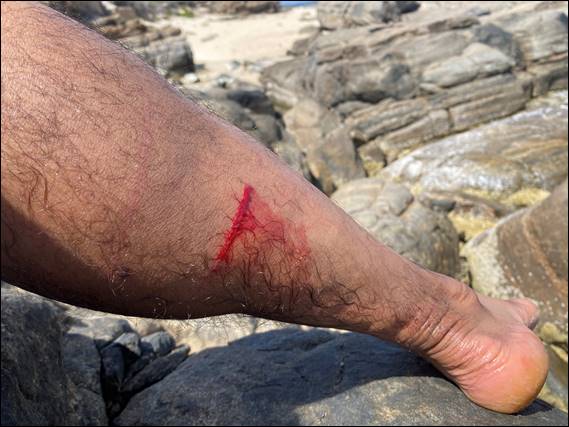
With our attention being pulled multiple ways, we didn’t see too much life. No matter, it was certainly fun and on a calmer day it would be a great place to do more exploring. At one point it seemed the waves were abating, so we headed to what looked like a good place to get out. Something I made much more of a meal of than Howsie did, but we got out unscathed or so I thought. And in case you were wondering about the reference to barnacles, well this is the reason. Unbeknown to me I much have brushed against one, resulting in a clinical cut:
Lisa was keen to see if the whales were back in action between Cape Naturaliste Lighthouse and Dunsborough. She is happy to kick back are stare out into the big blue, whereas I tend to get a bit fidgety and need to be a bit more active during my searches. However, a short video taken by one of the Peppy Plungers on Friday showed a whale playing about for well over half a minute splashing all over the place. As such my interest was piqued, and we headed out mid-morning hoping that the whales would again be out having fun:
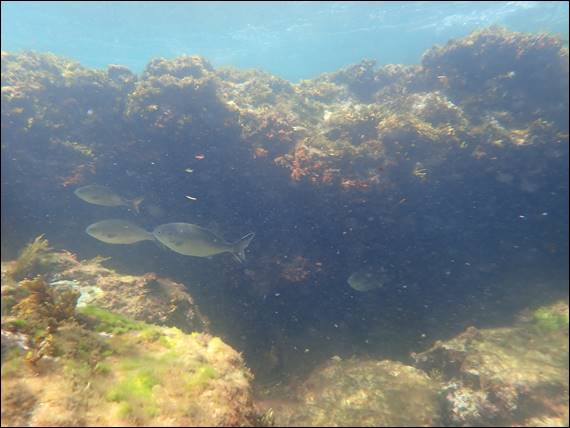
I of course took a backup plan with me, and as luck would have it the ocean was relatively calm. So leaving Lisa to scour the ocean for signs of life breaking the surface, I pulled my wetsuit and snorkel gear on and went to search for life underneath the surface. I can’t recall having been in the water in October before, and my image library indicates that could be right on that front. My local snorkelling season usually starts in November, I say that as when we have been holidaying up north the waters can be clear and warm enough year round:
The main reason for my snorkel season starting later in the year is however due to the waters of Peppy Beach taking ages to clear up. They are also quick to churn up when a larger swell comes in, so you need a reasonable length of settled ocean conditions. On this stretch of the Geographe Bay coastline, further to the west, there are no major waterways dropping fine sediments into the ocean. And the coarser bed sediments settle far quicker and so the water can be reasonable even in winter, and today it was lovely and clear:
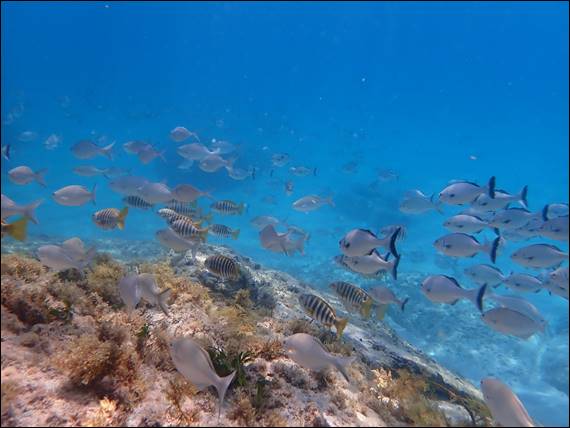
I did wonder if it would feel cold, but was pleasantly surprised. The initial shock was over quickly, and despite staying in for between half to three quarters of an hour I didn’t even have a chill when I came out. So why have I not started earlier before, round these parts you may ask. Simple, it seems like too much effort to drive all the way round the coast just for a snorkel. Maybe my logic is a bit skewed and I should make more of an effort, as while the whales were quiet the fish today were out in big numbers:
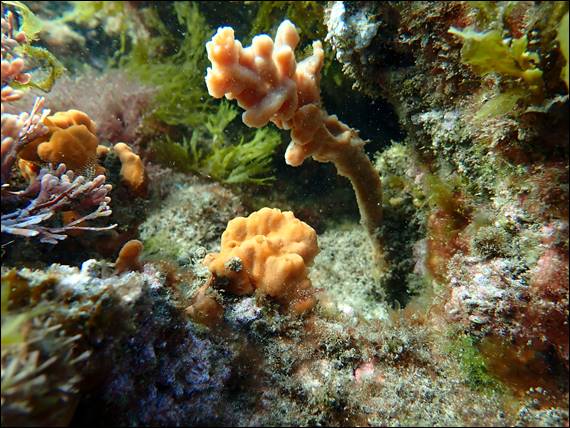
There were heaps of species, but nothing stood out as particular new. I did however like the above Bluespotted Goatfish (Upeneichthys vlamingii), which allowed me to get close. They can have a huge colour diversity. Even the brown snout to tail band is only found on some specimens. Some are also able to rapidly change their colour, and can be found to be more brightly coloured at night. And while all the fish were easy to identify, I’ve rediscovered the huge amount of time I can waste trying to unsuccessfully identify some other finds:
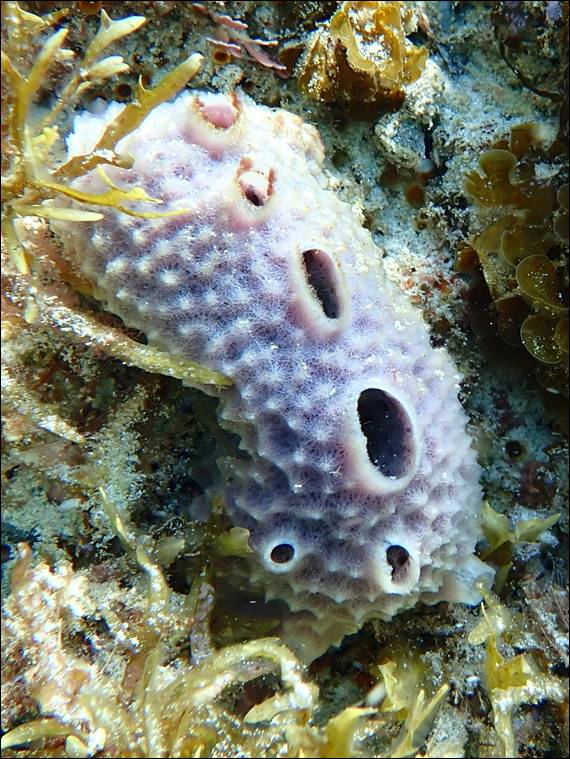
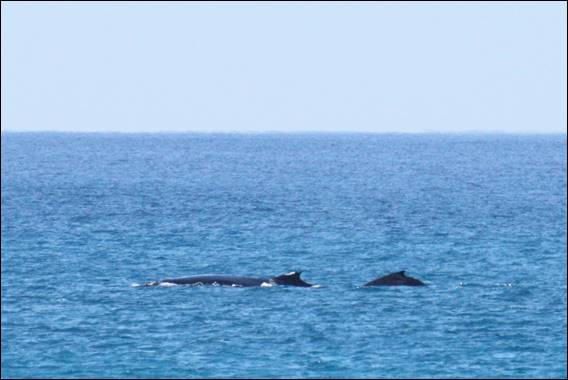
Such as the above sponge. Back on shore Lisa had not had any success, which we thought may be due to all the weekend ocean traffic. Boats and jet skis were all over the place, and some seemed to be honing. Then way out and just briefly a whale came up for a breathe, and was then gone. Undeterred we moved a little further up the coast and with less ocean traffic we had a bit more success. Spotting what may have been a mother and calf making their way northwards. There was no tail or fin slapping, and no breaching but it was nice to see them:
A late phone call, as opposed to a message, from Howsie could only mean one thing. Our planned trip out on Friday was off the table. I had previously also drawn a blank when asking the wider group if anyone was available on the weekend. Um, what to do. Then shortly after Howsie’s call, I got a message from a number that was not in my contact list. Asking if I was free for a climb. This is an unusual thing to happen to me, as I generally only communicate with people in my contacts. It took me a moment to realise it was Peter, whose contact I had lost when a close encounter with a king wave killed my phone:
I hadn’t heard from him since January, when true to 2024, Howsie, he, and I attempted a steep and pumpy grade 24 called Grunge Metal at the Terrace. In fact I have only climbed with Peter twice, both times in January this year. And if one thing sticks in my mind about those experiences, is that he climbs a solid grade with a calm head. Making things look relatively smooth and easy. Therefore, when he suggested Bob’s Hollow my message back may have appeared calm, but my head was bouncing about wondering what lines he might have in mind:
He is not one for early starts, finding me at the start of the walk track a bit before our agreed and uncharacteristic late time of 8am. Two cars were already there. Eight women were kitting up for a hike, heading approx. 22km to the south on the Cape to Cape track. This was a bit over how far Lisa and her fellow Peppy Plungers hiked on Friday. When they completed the 20km Coastrek event from the Naturaliste Lighthouse to Dunsborough. Rewarded with a magical display of whale antics. Unlike what any of them had seen before and lasting the entire hike:
Another car pulled up. It wasn’t Peter. Two climbers from Perth got out, and I wondered how busy it may get today. One reason I like first light starts on rock, is we generally have the place to ourselves for quite a while. And are leaving, with our minds and bodies satisfied with the climbs we have done, before there is the chance for the place to fill up. Peter rolled in as they were about to walk in, and I heard one of them say ‘I know him, I’ve seen him climb at the gym and he climbs strong’. So it is not just me that thinks that:
Hiking in during daylight allowed me to scour the track. There was not a hint of an orchid to be seen, either in flower or spent. At Manea Park, in Bunbury, The Leopard Orchids (Thelymitra benthamiana) are out, and last year they were one of the last to flower. A sign that the great orchid hunt of 2024 may be coming to a close. I have also heard the mercury will rise into the thirties for most of next week. The forecaster on the radio even went as far as to suggest we may not get any more rain, of note, until Autumn 2025. Some five to six months away:
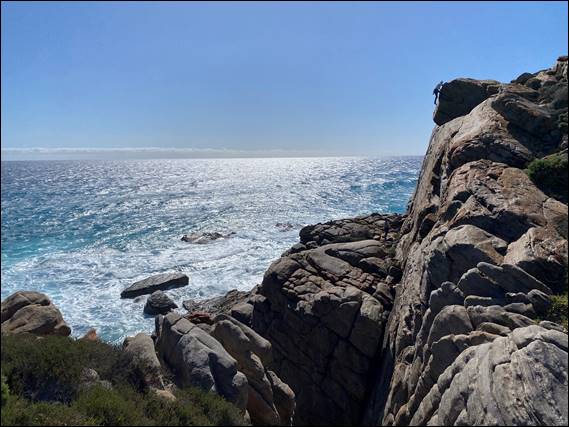
As such this post is going to be getting back to rock. I know there is, at least, one person out there eager to hear what routes we jumped on. Something that was also on my mind as we arrived at the mighty limestone cliffs. A warm up was in order. Something not too silly, to prepare the body for what may lie ahead. I suggested Peter jump on Escalade De Rasoir, a grade 18 with an, unusual for Bob’s, rising leftward traverse on mostly slabby territory. Saving the punch till the end, when you have to head straight up a steepening face on smaller holds:
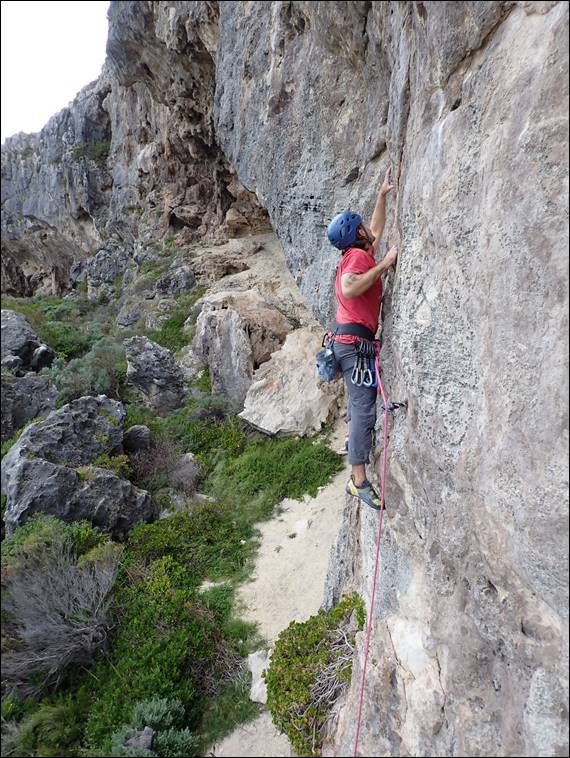
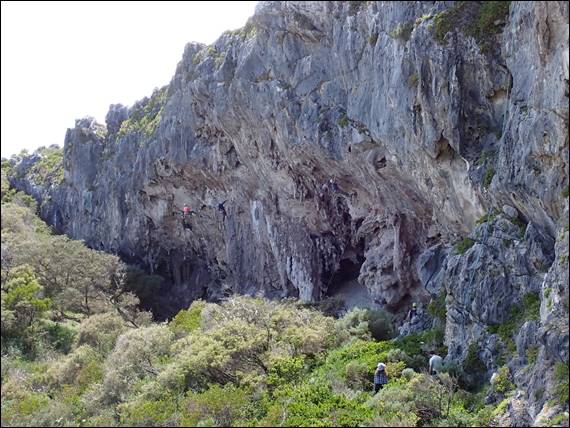
Before leaving the deck Peter said he hadn’t been outdoors to climb since May, so wasn’t sure how it would go today. I do however know that he is a regular at the climbing wall, so has been leading indoors to keep his body fit and mind sharp. He did however have to ponder how to complete the first route. In his usual manner finding a stance to calmly scope what lay in front of him. And when ready, launching into the sequence in a relaxed and smooth way. Above him, in the second image, you may be able to see a Nankeen Kestrel (Falco cenchroides):
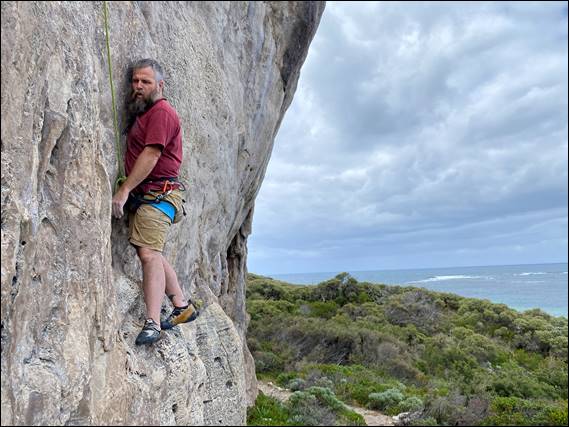
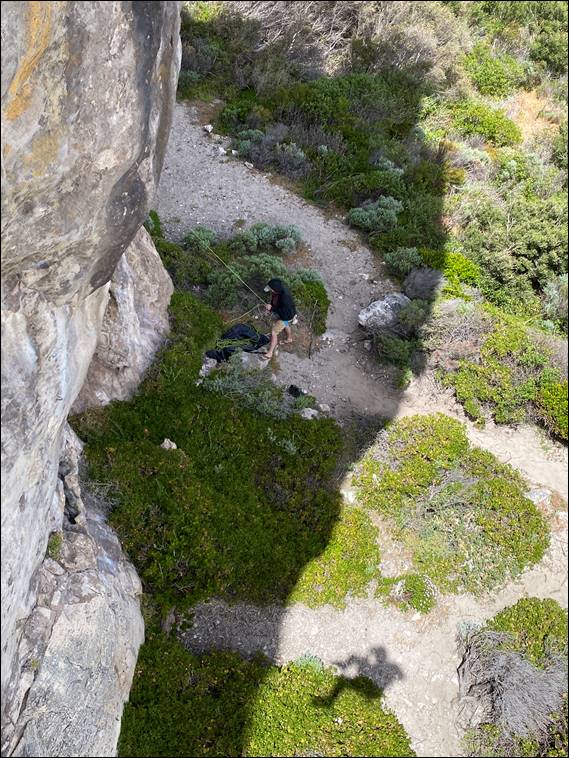
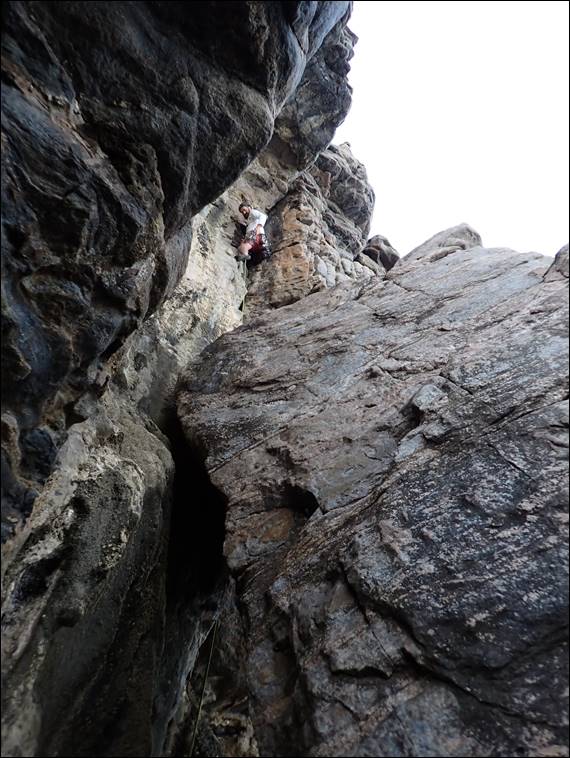
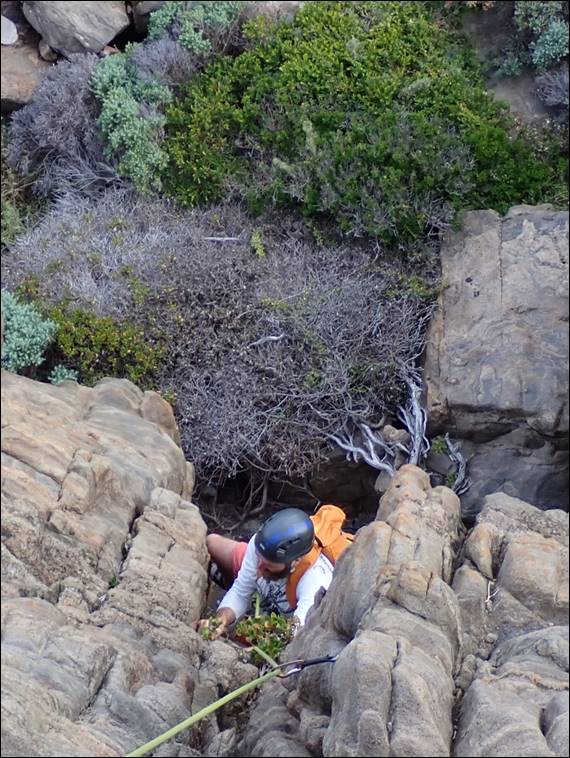
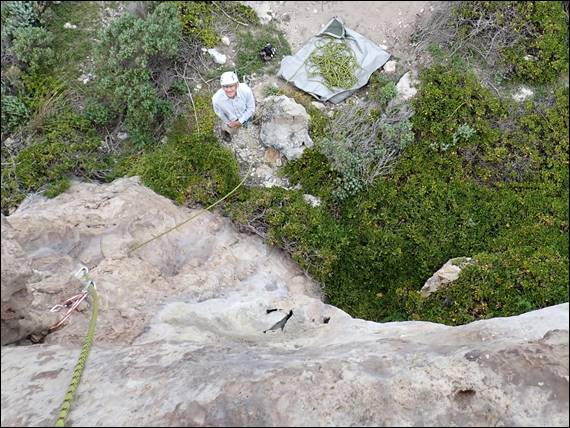
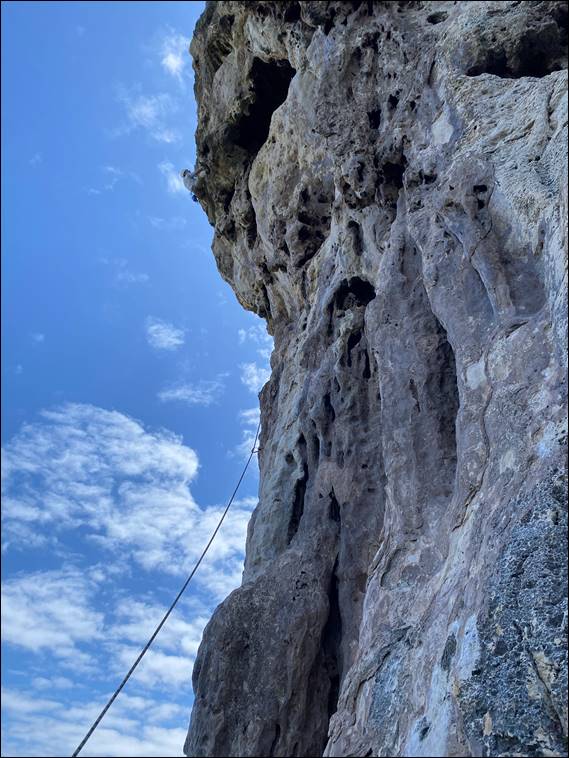
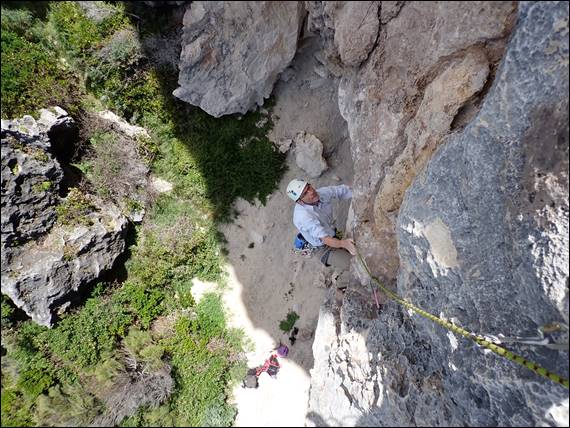
The sound of the kestrels, a high pitched chattering kee-kee-kee, could be heard most of the day. I observed their movements with interest, as they are known to nest on the cliffs. My focus was however diverted when I jumped on Juggernaut. Its first bolt is 20m up, and the insitu rope slings have been removed. We however had slings, allowing me to climb it while placing my own gear, see the third image. As I was being lowered down after my lead, Angus and Joel were starting up the route we had started on. I took a sneaky image with Angus in a red top, just getting going on the traverse:
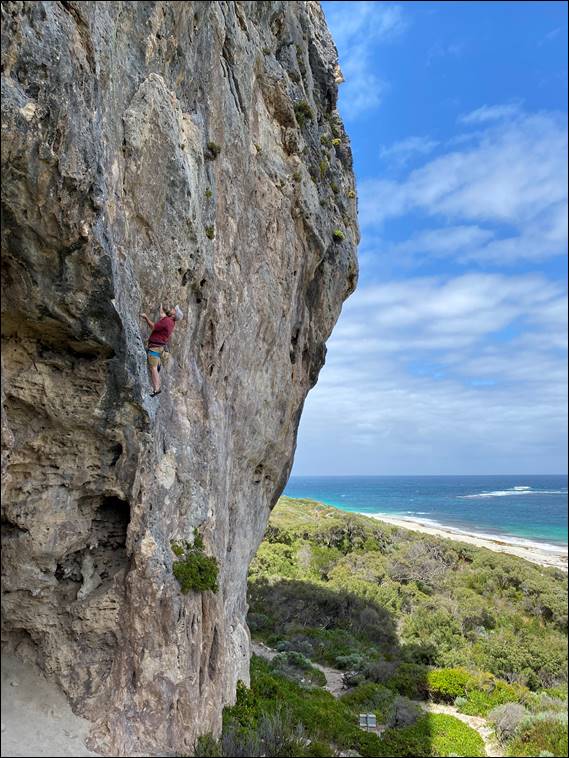
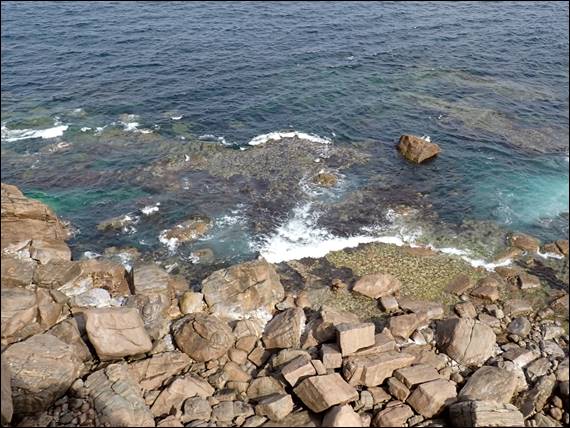
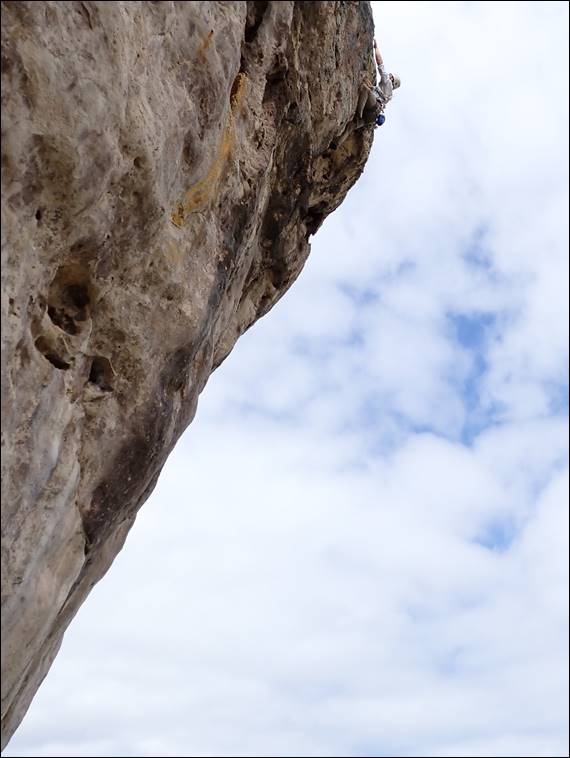
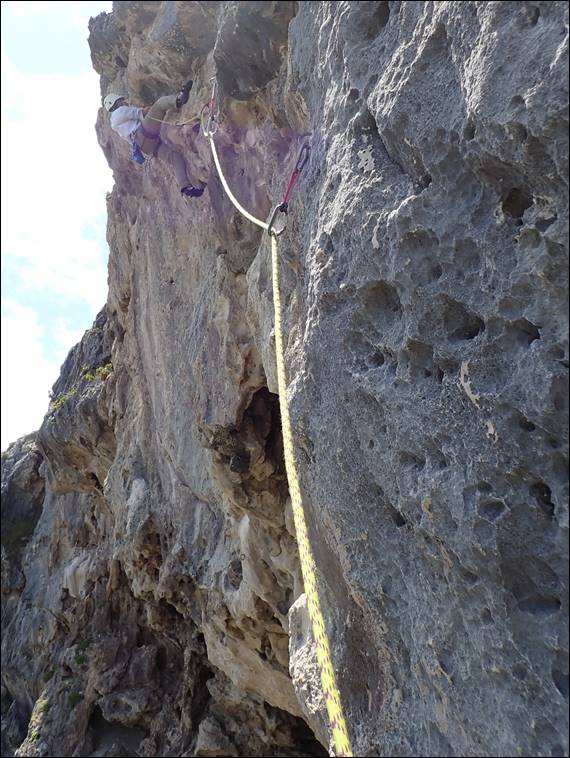
They were the guys who had walked in ahead of us. Very soon four became more, while Peter started up the route more people arrived. Check out the exposure on Juggernaut in the fifth image. It only gets grade 17 in my guidebook. The crag however suggests 18, which is probably fair. Peter relished the steep three dimensional climbing, having no memory of doing it before. Many people pass this line by, there loss I say. The next line to fall has no name, and again gets very little attention. The crag gives it 18, until you look at the comments that indicate it is a sandbag and should be 19:
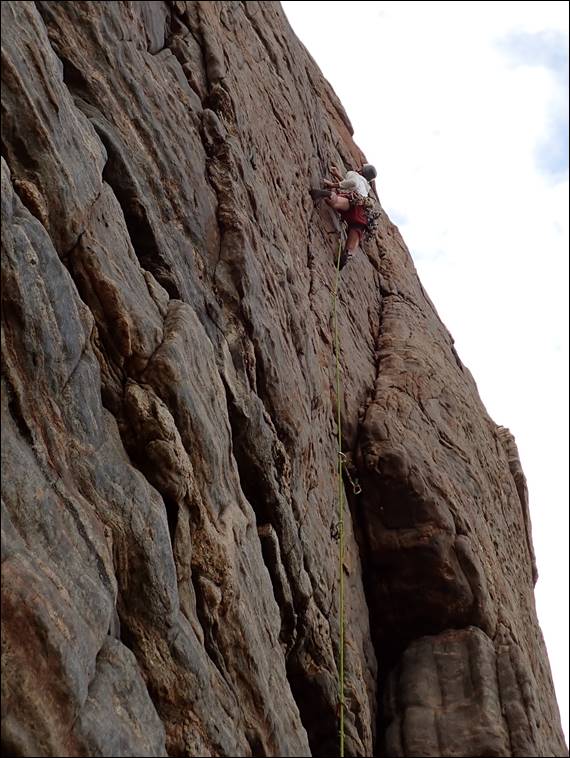
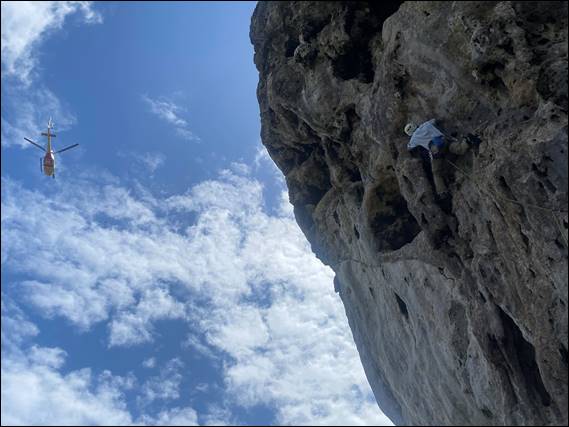
Maybe people should not rely on technology so much, and go back to the original information sources. My guidebook, as do all past ones, gives it 19. As Peter started on this line the Westpac Lifesaver Rescue Helicopter flew by, seeming to get much closer that it would normally. I couldn’t resist a second image of him on the route as it started to steepen up. I started to feel my arms at that part of the climb. So when it was suggested we could have a mileage day, indicting lower grades, that sounded good. That was until Mixed Grill was suggested as the next route, a route I’ve only been on once with Craig way back in 2006 or 7:
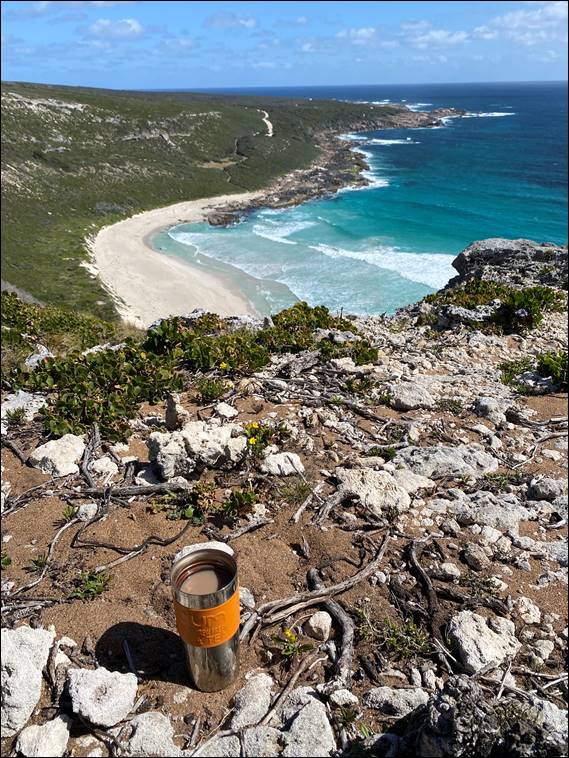
My memory was of it being steep, pumpy, and with sharp holds. All of which are true, but it is also epic and the way things fell Peter would take the grade 22 pitch. Plus after I worked the first pitch at grade 20, I would have a great hanging stance. Due to our later start I took over Craig’s job. Bringing a flask of tea, which tickled Peter’s fancy. So before we started we had a cuppa and rest. Once at the hanging belay I could see the crag was filling up, action was occurring on four lines to the left, in addition to two other parties at our end. Peter began up the second pitch, as Angus worked Shaved Cats to my right and I got busy with my camera:
I could hear the distant call of kestrels as Peter climbed. A pair is known to sometimes nest on the second pitch of this route. They breed between August and December so we were taking a bit of a risk, but I hadn’t observed any signs they were on the line. If there had been a nest, they would certainly have let us know about it. Swooping at us and getting within inches to ward us off. I’ve only experienced it once before in Alice Springs, and it puts the shivers up you. I managed a clean second, and Peter kindly said I made it look smooth. My arms were however tiring, and my mind ached even more when he suggested Dependence Day next:
Another grade 22 and my lead this time, so there was no getting out of it. He has the same ability I have, to encourage people to go for it. I had a good memory of the route and what lay ahead. So found myself on the floppy end, heading up what I knew would be a sustained climb with a tricky finish. I surprised myself, making a relatively smooth ascent despite my complaining arms. After which Peter still had gas in the tank, as mine was starting to ebb. As the sun was reaching further over the cliff, we hugged the last remaining shade on Black Lung and finally Constructive Vandalism both at grade 21. With bees filling the air above:
The warmth of the sun was waking up a big hive on this part of the crag just above the anchors, and the aerial activity was on the rise. Maybe we were too focused, or they were not concerned about our presence. Either way we avoided any close encounters, which we were pleased about. Satisfied with our tally of 160m, at an average grade of 20 over eight routes. We were content to leave the crowds behind and enjoy the walk back. Along the way we occasionally stopped to observe aerial displays by multiple kestrels, with as many as four at a time. Just before we got to the cars we found a spot with a view to enjoy a welcome and well deserved second cuppa:
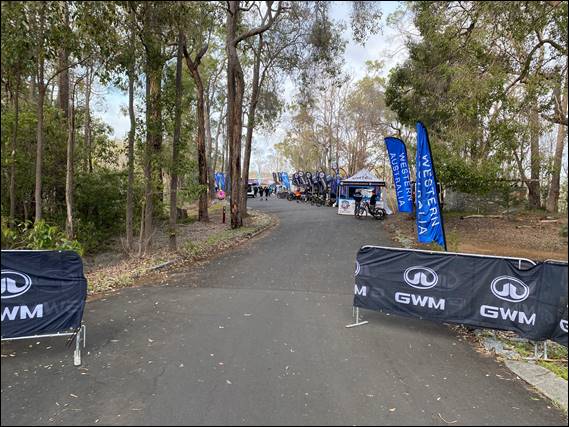
A few weeks back, when David posted that he was going to be camping up at the Honeymoon Pool this weekend, I was a little surprised to hear that there were only a couple of sites left. During school holidays it is certainly very busy, but outside of them there are usually ample sites available. And the reason for why became abundantly clear as got closer. Road closed signs blocked me getting to the quarry, and the upper carparks were quickly filling up. The 2024 AusCycling MTB Enduro National and Oceania Championships were being held:
And not just today, but from Thursday through till Sunday. As such it was good that I canned the potential catch up for the local climbers here on Sunday. With no car access to the quarry, it was all a bit uncertain as to what we might find down there. Along with David, and his son Malachy, a friend from way back had made the trip down from Perth on Friday to camp out and then climb at Welly Dam with David. I was a last minute gate crasher on their party. My other plans made ages back fell through, less than ideal coastal conditions had put Sam off:
While I say a friend from way back, I’m talking a long time. Adrian has clear memories of us climbing together in Alice Springs in 2004/5, although I had to confess I was having difficulty in recalling that. I’m pleased to say he wasn’t upset with my confession, but he definitely had it right as he could recall Lisa and Elseya I knew when we left to move west. Having reached out to get back in touch with me maybe six months back, this was the first time we have managed to get out for a climb. And I had warned him about what to expect, at the unforgiving dam:
Adrian and I walked down from the upper carparks and were pleased to see an empty quarry. Unlike the top there were no stalls, bike repair areas, first aid sites, or food vans, and this also meant that no one else was down here. While we could hear the noise of the goings on above us, this somehow washed into the background as we got down to business. It was only fair to point Adrian to the easier routes to start with. Allowing him to get a feel of what was on offer. And as he was starting up his second lead, David and Malachy wandered in:
Malachy had the whole place to run amuck. And we took turns being on the rock, belaying, and keeping an eye on and at time providing entertainment for him. Our own entertainment was single focused, and that was the climbing. Neither Adrian nor David had been here before, and until very recently neither of them had managed to get much lead climbing in for way too many years. So I was very keen to see how they would go here. They loved the climbing, but some of the bolt spacing they didn’t like so much. A common thing to hear:
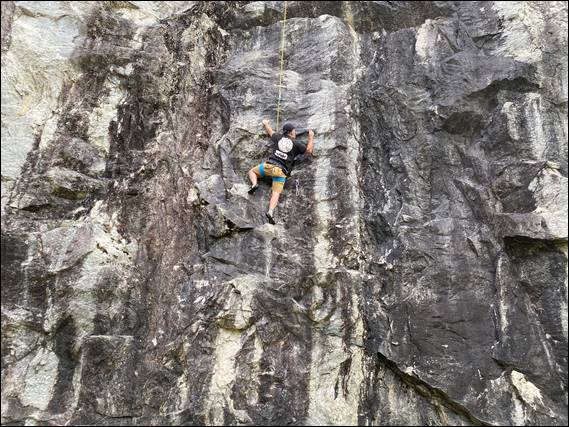
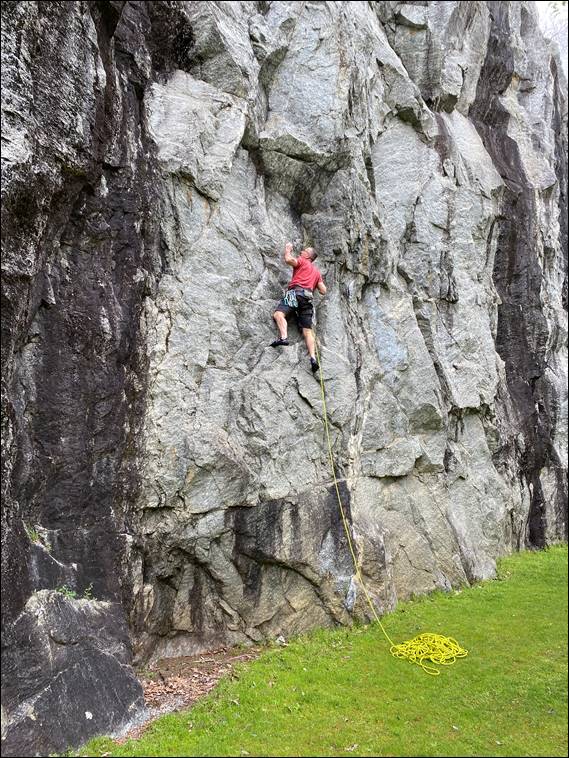
With each line they climbed they got to appreciate the place. Solid routes, at times a bit scary, but really good fun. And at the end of the day if you are not having fun climbing, you have to ask why bother. Adrian nabbing three onsight leads and David was happy to follow up with the security of the rope above him. The route below was however just that bit too much for Adrian’s head, and he was happy for me to lead it so he too could have the security of the rope above him. As such once the rope was up I took the chance to go for a wander:
I was keen to get back to the top of the face to look for those orchids that Howsie and I had seen just a week back. Hoping to see the Dark Bee Orchid (Diuris insignis) and get a better image. Alas it was no longer there, and many of the orchids were seemingly on their way out. I did however get to see the Twisted Sun Orchids (Thelymitra flexuosa) again, but the number of plants was less than half of last week. And again the buds were tightly clamped shut, except for one petal bravely sticking up:
Meanwhile, David was still battling his way up the most hotly debated route at the quarry. Is it an 18, is it a 20, or is it possibly harder. I was keen to hear what they had to say so made my way down as David got to the top, and it was time for Adrian to tie in. Putting the grade to one side they both loved it. Really liking the more three dimensional climbing that the route demanded. And required in my opinion to make it a grade 18, which they both agreed was fair. So Kym whatever the online trolls may be saying, on The Crag, we graded it fairly:
We didn’t have the quarry entirely to ourselves. A few families and people wandered through. Most didn’t stay long. Other than one mob that included a group of girls doing dance routines, as their music bounced noisily off the quarry walls. A little distracting , and taking away from the tranquillity of being outdoors. But if the social I had hoped to set up on Sunday had come off there would have been just as much noise from our group. However, with rain forecast tomorrow and having had my Welly Dam fix today, a social session can wait:
We got one more route in, or at least I did. David attempted it but after the first bolt he was feeling toasted. Adrian managed to get half way up, but he has been overdoing things in the indoor gyms and his elbow started to flare up. Being sensible he backed off, meaning I had to go up again to clean the route. After which I was more than content to call it a day myself too. It was getting on to one in the afternoon. Adrian was both in dangerous injury territory, and still needing to drive back to Perth. David was done, and as for Malachy:
I’m pretty sure he had enjoyed being out and about. However, after allowing David near to four hours of playtime he had more than deserved an ice cream from one of the many food vans. Wandering back to the top together, the commotion and mass of people hit us. Here we said our goodbyes, and we went three separate ways. I feel that both of them will however be keen to come back, to further sample the delights the quarry has to offer. And before I hit the road, I wanted to test my luck by looking for orchids one more time:
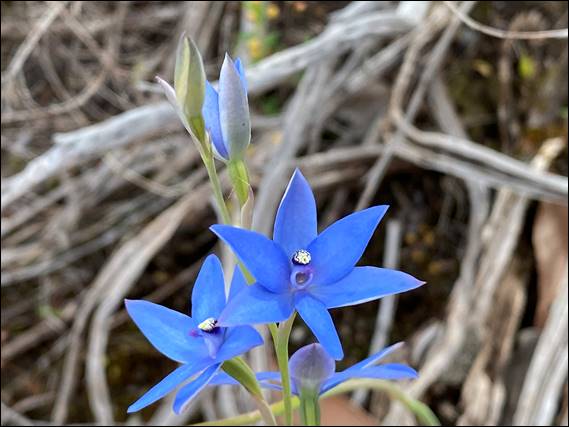
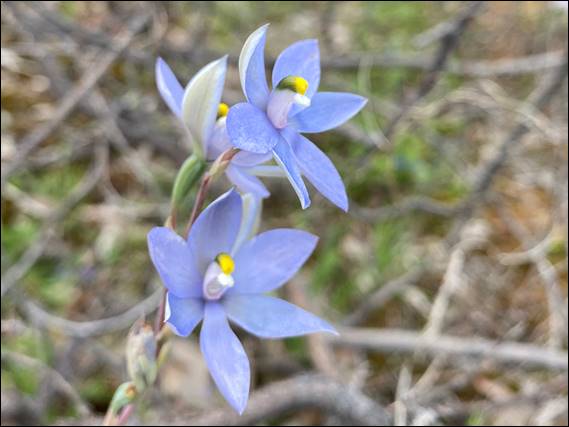
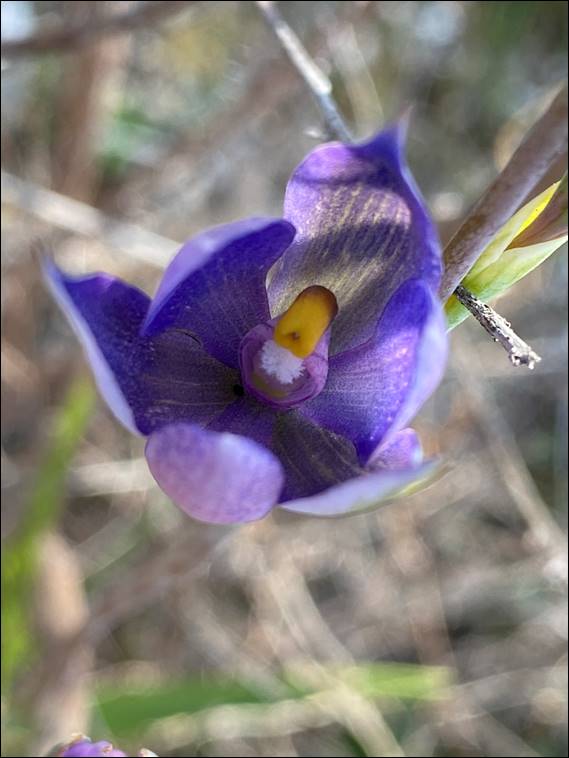
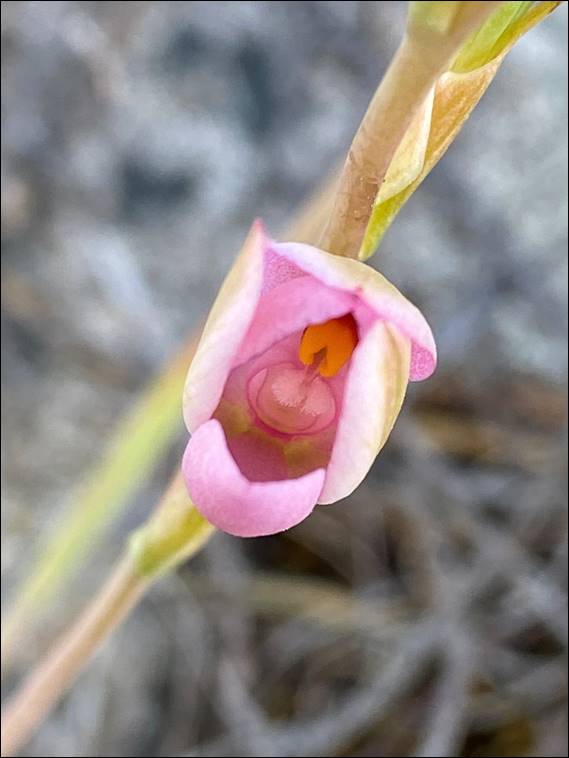
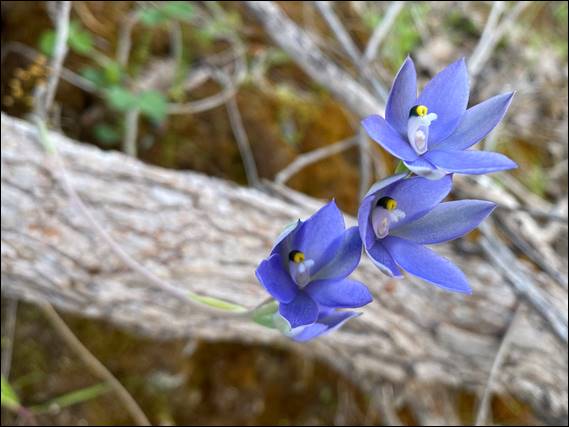
Checking the sun orchids that there out more closely, I managed to spot some Blue Lady Orchids (Thelymitra crinita). Shown three images up, with their distinctly different textured yellow column toppers, and purple tuffs. As well as three hues of the Plain Sun Orchid (Thelymitra paludosa). Being purple, blue, and the beautiful pink below. All with white tuffs, and yellow tipped columns, but behind this yellow tip the column of the pink was a stunning fluorescent orange as opposed to the black of the other ones, making it really stand out:
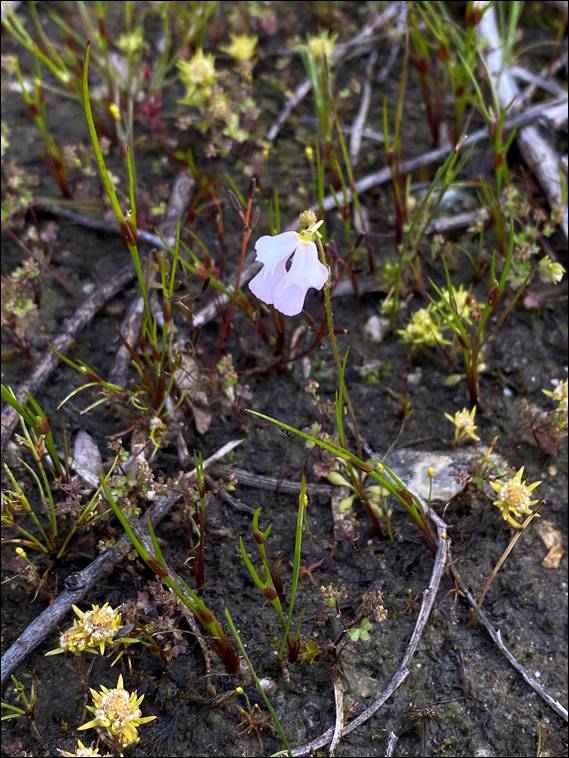
The Shy Sun Orchids (Thelymitra graminea) were also out, below. Looking very similar to the Plain Sun Orchids, having white tuffs under a black column with its yellow tip. The flowers are however notably smaller, and the tiny arm that holds the white tuffs have a very prominent ninety degree bend in them. Making the tuffs stick more upright. It was encouraging to see these opening up, which generally occurs on warmer days. And while it was a bit cloudy today, the sun was poking out every so often. Bathing the top of the wall in warmth:
The increasing temperature and occasional sun had also resulted in the Twisted Sun Orchid I had seen with a single petal unfolding, opening even more. Still not fully open, but enough for me to be able to clearly identify it. This dainty flower was the smallest of sun orchids, standing no more than fifteen centimetres high. This one was the only one that I could find with its small one centimetre long bud opening. It is a shame that it wasn’t just a bit warmer today, as it was clear that these particular orchids were simply waiting for the sun:
Despite waking up numerous times on Friday night to poke my head outside, I didn’t get to see another light display in the sky. It just goes to show how lucky Howsie and I were on Friday morning, and I’m still pinching myself about it. When the morning arrived Lisa headed to the beach for a plunge, while I stayed home waiting for someone to come round to start fixing our ceiling. On a not so lucky note, during my last night in Queensland Lisa heard a loud crack and part of the ceiling started to sag. The gyprock had separated from the joist:
Fears of water damage and termites raced through our minds, but it was simply that the fixings and adhesives holding the gyprock to the joists had failed. Things are sadly no longer built to last. Fortunately the area failing was above an air conditioner unit, which prevented a complete collapse. Over the last few weeks, with temporary props providing additional support, we have been waiting to get someone in to fix it. That was to begin today, so I stayed home allowing Lisa to crack on with plunging, study, and swimming lessons:
That is not to say that I wasn’t keen to get out. Lisa had a relatively full day planned, so as soon as the workmen had finished the first stage of works I headed out myself. Keen to mix things up with an orchid hunt and climb. Craig was busting to get out, but could only make an afternoon stint. Falling nicely into place with my day. My first destination was the Carbunup Reserve, to hunt a specific orchid I thought had alluded me over the years. I didn’t find it, but searching through my images realised I have seen at the Ambergate Reserve in 2021:
My uncle asked me a month or so back how many species I have seen. I guessed 50 to 75, but from a brief look at my images it could easily be double that. Maybe I should document all my finds to date, which would avoid me trying to find things that my leaky brain seems to be forgetting. It would be a massive undertaking, as my records are somewhat scattered and incomplete. Maybe it is a job for when I no longer have to work, although that is quite some time of yet.. For now I will enjoy the hunt, even if they are repeat finds:
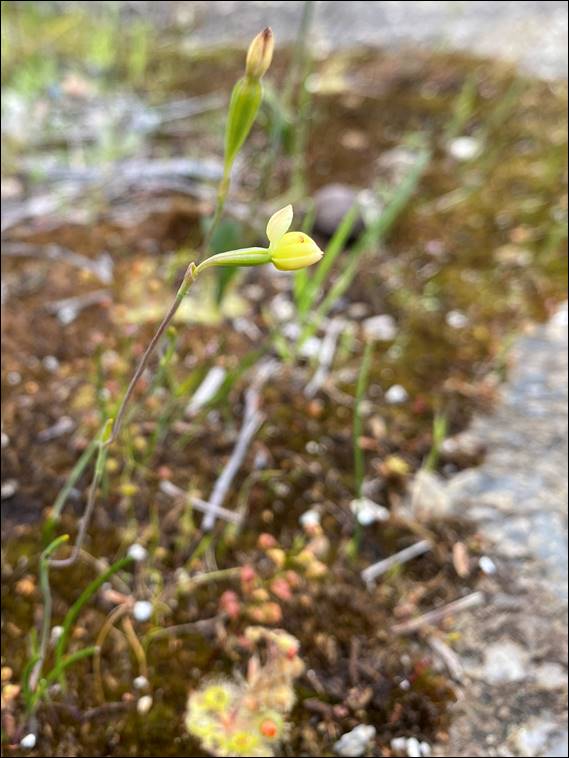
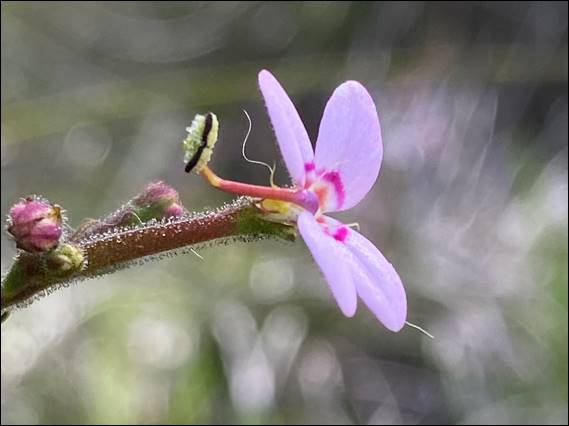
Moving along, I’ve recently referenced and shown plants in the genus Stylidium stating they are protocarnivorous. They produce a sticky mixture of sugar and water used to trap and suffocate small insects. Beads of this substance can be seen all along the stem behind the flower, in the first image. Stylidium is derived from the Greek word stylos, meaning column or pillar. This refers to the distinctive column of these plants, being pink and topped with a yellow and black club in the first image of a Thick-leaved Triggerplant (Stylidium crassifolium):
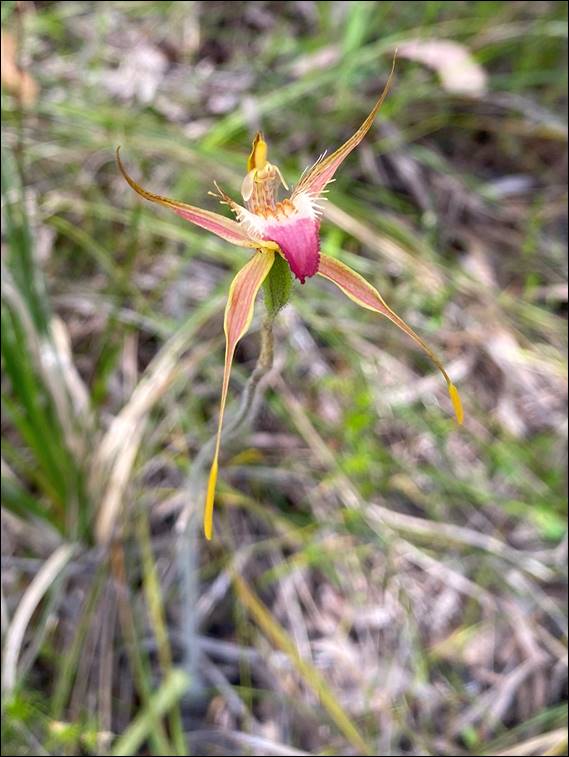
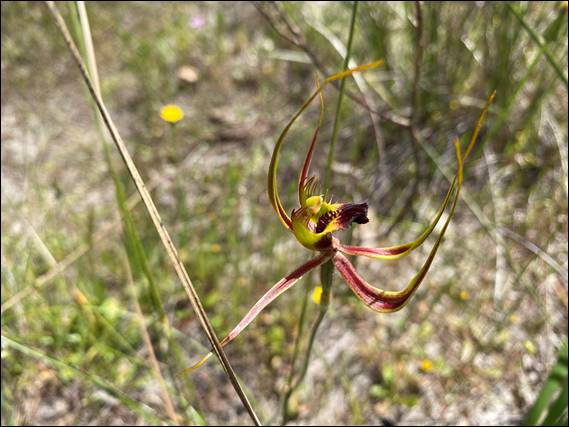
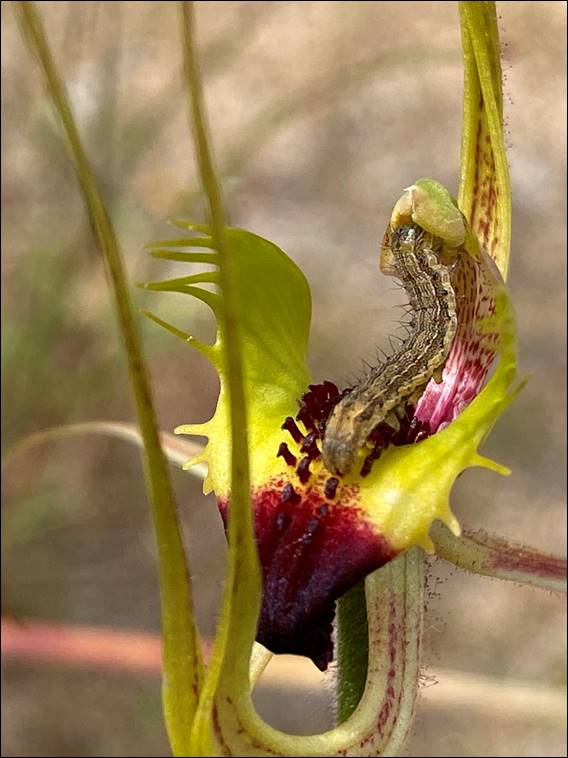
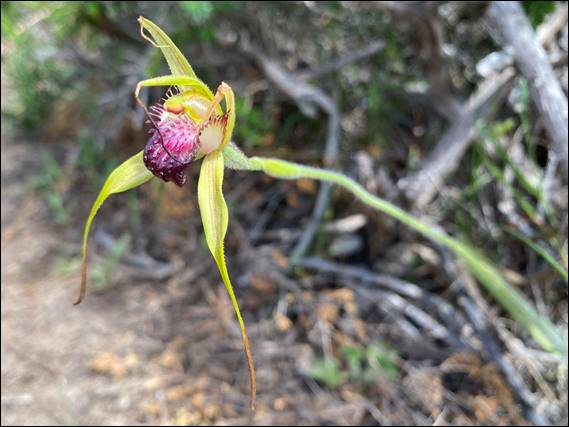
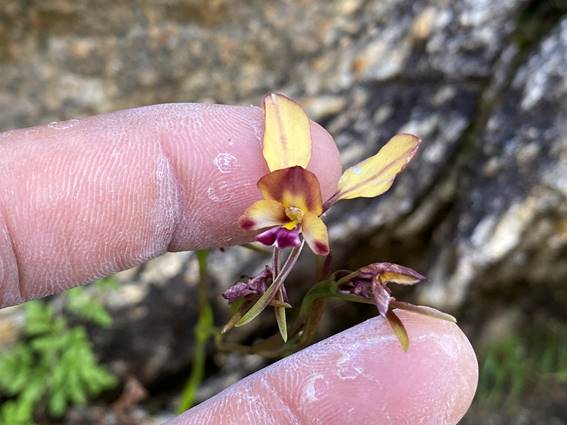
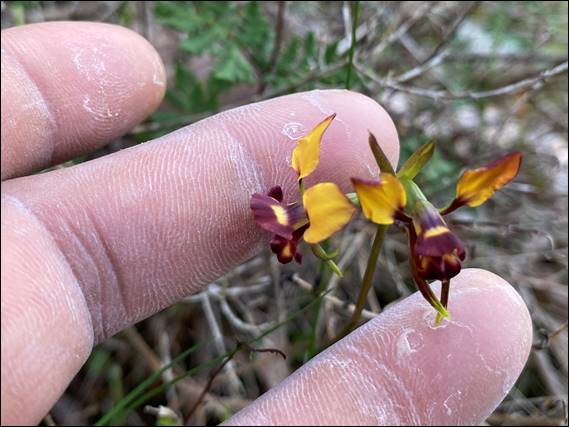
Larger insects can, unknowingly, activate the column to be released and thump them on the back. Another ingenious pollination technique created by nature. The second image had me a little excited when I was in the bush. It was however just another Rusty Spider Orchid (Caladenia ferruginea). The thick yellow clubbing on the three sepals had me foxed, because the specimens I have seen to date have had less pronounced brown clubbing. The third and fourth images being Forest Mantis Orchids (Caladenia attingens subsp. attingens):
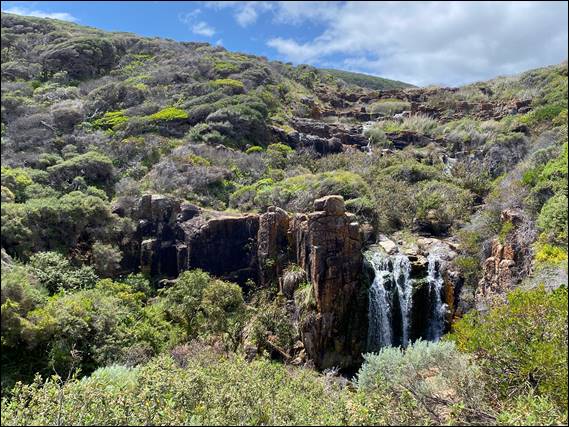
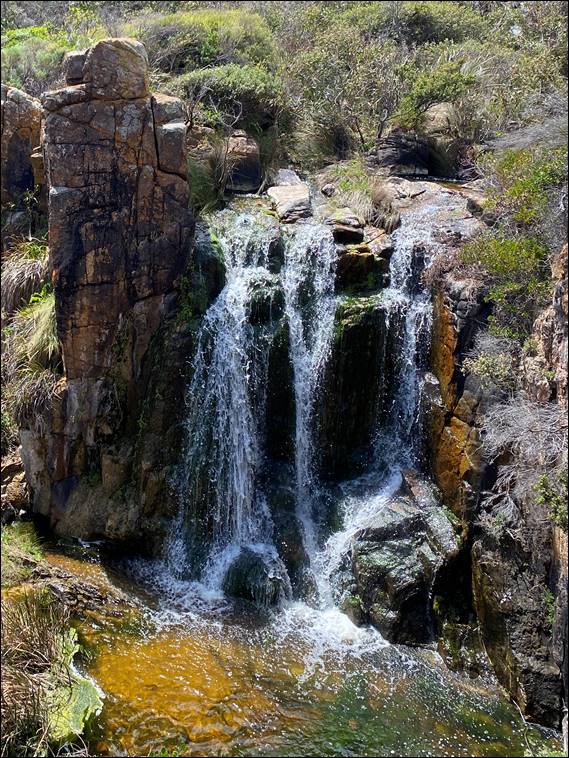
The hungry caterpillar is munching away on the anther, which is where the pollen is produced. Hopefully this orchid has had a chance to spread some pollen before this pest came along and spoilt its chances of aiding fertilization. At the second location I knew the specific orchid I wanted to see was in flower. Another enthusiast I bumped into during my walk with Lisa last weekend told me it was out. Saying it was located just off the path that leads to Quinninup Falls, a local spot made famous by social media. One I had not been to, until now:
Having seen many waterfalls in numerous countries, this one isn’t of a scale that would have been on my radar to see. But it is a relatively unusual sight in this landscape, and as such made a refreshing change to the mostly dry but no less beautiful sights. It is claimed to be ‘one of Western Australia’s most Insta-worthy and popular waterfalls’, and as such receives huge numbers of visitors. I somehow snagged a time with no one else about, so I could fully appreciate the tranquil spot. Taking in the soothing sound of the cascading water:
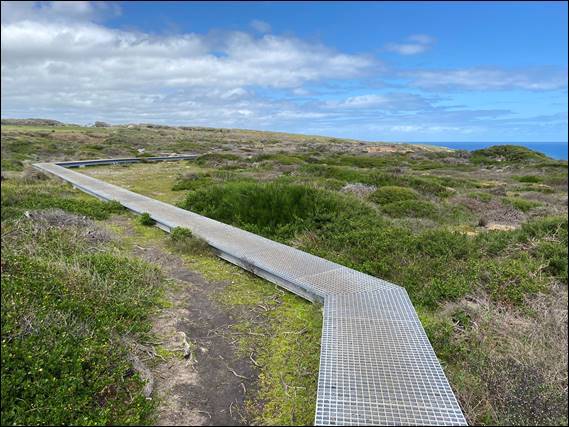
Carbunup Reserve is inland comprising a Marri woodland vegetation complex. A stark contrast to the Leeuwin-Naturaliste National Park with its coastal scrub, and vistas out across the Indian Ocean. This particular stretch of the park has several hillside seeps, which are very important to maintaining delicate and often very localised vegetation complexes. The path traverses these and boardwalks have been built to avoid our footfalls compacting the soil, and disrupting the natural flow of water through the thin layers of soil above the granite rock:
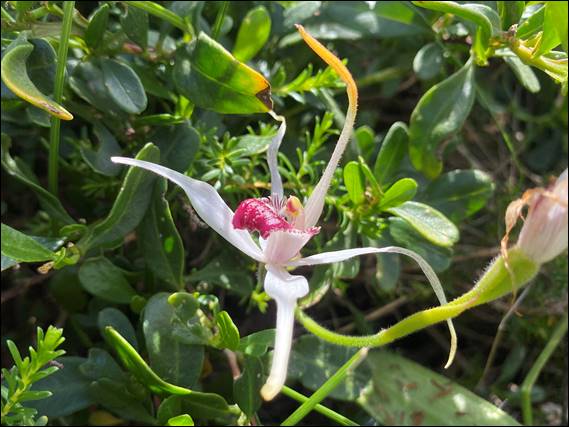
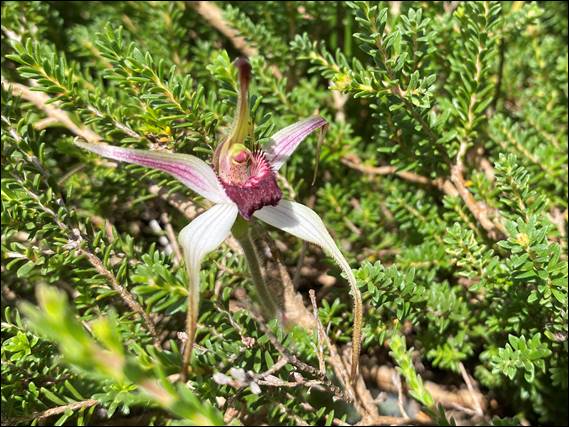
The risk had been heightened due to the popularity of Quinninup Falls, resulting in hundreds of visitors each day. While I got to enjoy the falls it in peace, on the two kilometre walk back, I must have passed in excess of fifty people making their way towards it. All focused on the destination, looking forward and not down. I however scanned the ground on the outward and return trip. Being rewarded by finding several Exotic Spider Orchid (Caladenia nivalis), which is another orchid I had forgotten about previously seeing, funnily enough again in 2021:
On the return leg I also found the above single and somewhat wilting Swamp Spider Orchid (Caladenia paludosa). I now had to quickened my pace, completing the 4km walk in a little over forty five minutes. Time was ticking and I had to meet Craig. We were heading to Moses Rocks, which happened to be a mere five minute drive away. He had a narrow window of opportunity, which had no bearing on why we choose this place. That was entirely my doing to allow me to go orchid hunting, but it is easy to get a few quick lines in here:
I was also quietly hopefully the low tide, along with a relatively low 2m swell, would allow us to get into the zawn. Initial impressions were it was not looking promising, but looking in from the top there were just enough boulders out of reach of the waves to make it work. Allowing us access to the southern face of the zawn, which Craig said he couldn’t ever recall climbing. It seems he too has a forgetful brain. I have images of him following me up this wall in 2006. It felt great to be climbing by the ocean again, with the waves adding to the atmosphere:
We started by making the likely second ascent of Howsie’s new route, Dry Spell. Maybe having climbed at Welly Dam yesterday didn’t help, but the start felt pumpy and nervous. Craig noted that it looked like I made a meal of it. Then the roles reversed as he went up the classic of the zawn, at the same grade. With Josh arriving just in time to take some images from above, with Craig’s slow progress giving him plenty of time to move round to get a variety of angles. The routes on this wall do feel nervous, despite the relatively low grades:
It is steep and all the hold slope the wrong way, making you work hard to stay in position. Josh had a narrower window than Craig, hence his slightly later arrival. Now with three of us it made sense to move to Hands Up Wall. Providing more room, as well as being free from the risk of an unexpected king wave giving us an unwelcome bath. In addition the rock striations on this wall are horizontal, making the climbing feel more secure than in the zawn. All up we managed three more lines:
With the sun on our backs as we sat at the base and while we climbed the warm rocks it felt just the right amount of toasty. This was in complete contrast to when we were sat on top. Here the bracing southerly wind buffeted us. Resulting in a good dose of goose pimples, and longing for warmer clothing. Making my way back from my longer distance photo shoot a King Skink (Egernia kingii) was basking on a rock taking in the warmth from both the sun and rock, only escaping into the crevice after I disturbed it:
It made sense that the lower to the ground you got the warmer it felt, and Josh was mimicking the skinks approach while Craig set up the belay above. Craig had thankfully done his usual and brought a thermos of piping hot tea, which went down very well. While it had been a bit of short time at the crag, everyone thoroughly enjoyed being out. Next weekend, if I get back to the coast for a climb I’ll have to remember to bring my Buffalo to fend off the wind. Um… maybe I should put a reminder in my phone, rather than rely on my memory:
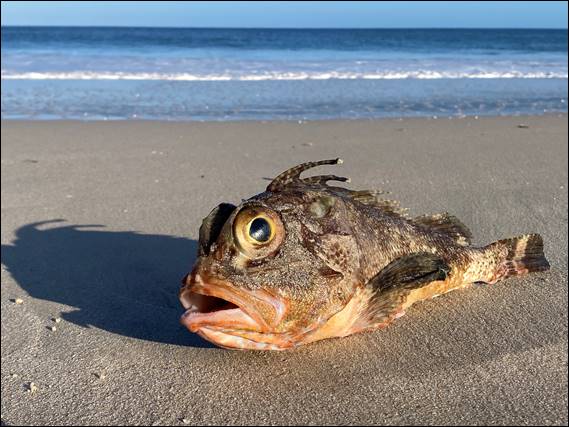
Now that Lisa is back at work, for the fourth and final term of the school year, my usual Thursday and Friday work from home days have kicked back in. Allowing the opportunity to join her morning beach walk on Thursday, when we found this unlucky Bighead Gurnard Perch (Neosebastes pandus). Based on its condition it had been recently washed up. I too have been feeling a bit like a fish out of water, not having been on rock for three weeks. And while I couldn’t save the fish by putting it back in the water, I fix my itch by touching rock:
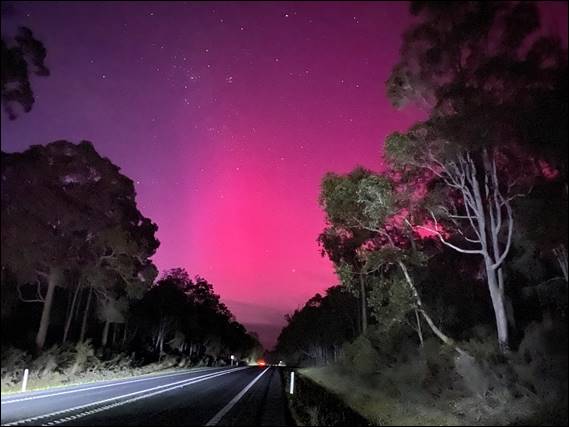
I was not able to take Friday off, things are a bit busy at work. But there was always the option of a quick climb at Welly Dam, and I knew Howsie wouldn’t be able to resist such a trip. So on Friday, instead of joining Lisa at the beach, Howsie and I were already out there climbing. Needing to get back for a meeting at ten, I had suggested a first light arrival at the crag. This saw me get up at three thirty, and unlike the fish luck was on our side as we drove eastwards. A reddish hue started to form in the sky, which gradually increased in intensity:
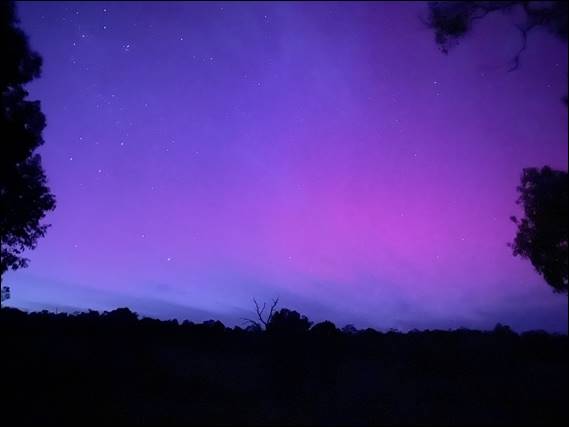
As we continued on the last leg of the journey, we were wowed by a great Aurora Australis light show. Massively more impressive than the one and only other time I have seen it. The camera picks up light waves not visible to us, so the image is enhanced. That said it was still an amazing spectacle, even to the naked eye. We stopped several times to take it in, while other drivers no doubt on their way to work pressed on. Unusual solar activity had been predicted to occur on Thursday, Friday, and Saturday night, not that we knew about it at the time:
The solar activity releases ‘solar winds’. If strong enough these can reach and affect the immediate space round earth, and subsequently the gas particles in our atmosphere. This is what results in the range of light patterns being formed. Exactly when this will happen is very hard to predict, so you have to be in the right place at the right time to see it, and in our case driving in the right direction. The stunning show lasted for approximately quarter of an hour, by which time we had arrived at the carpark and first light started to take over the sky:
We were both unsure how we would go today, and hence aimed for sensible grades. Being Welly Dam that doesn’t mean the climbing will be easy. Jumping on first lead, I could feel my joints stretch, muscle groan, and body feel a little clumsy and awkward. Howsie also found it a shock to the system. We pondered why it could be that we could head to Queensland and climb so many routes we have never been on, at this and harder grades, without too much of an issue. Yet the well-rehearsed routes here we have climbed countless time can, and still do, hit us hard:
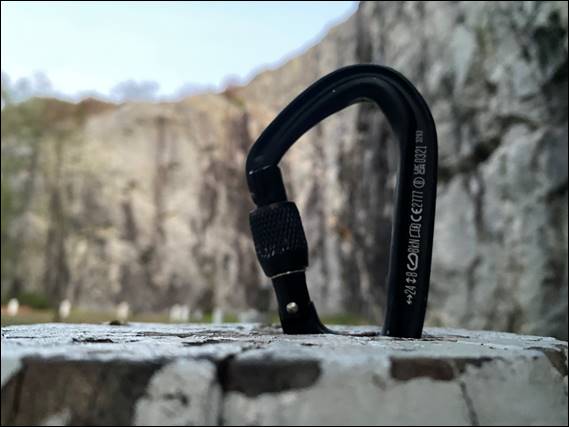
The first route was a good choice because my crag booty haul continues to grow when I found the above bail biner on the last bolt. Someone had probably found the final moves too committing, preferring to sacrifice a piece of hardware to allow them to get lowered back down. Based on how we were feeling we didn’t pull the rope so both of us to lead each climb, but on the plus side and as our bodies warmed up we started to feel more coordinated and comfortable on each successive route. The rock was also mostly in good condition:
Other than my lead on the above line, on which I was able to avoid most of the wet rock. And it was way better than my last visit here in August, when there were little waterfalls cascading down the faces being fed by huge pools of water along the top of the crag. Today in contrast was wonderful. Birds abound and at the top of one climb a Splendid Fairy-wren (Malurus splendens) hopped within feet of my head. Then on another climb an Australian Ringneck (Barnardius zonarius) greeted me, being equally nonplussed by my presence:
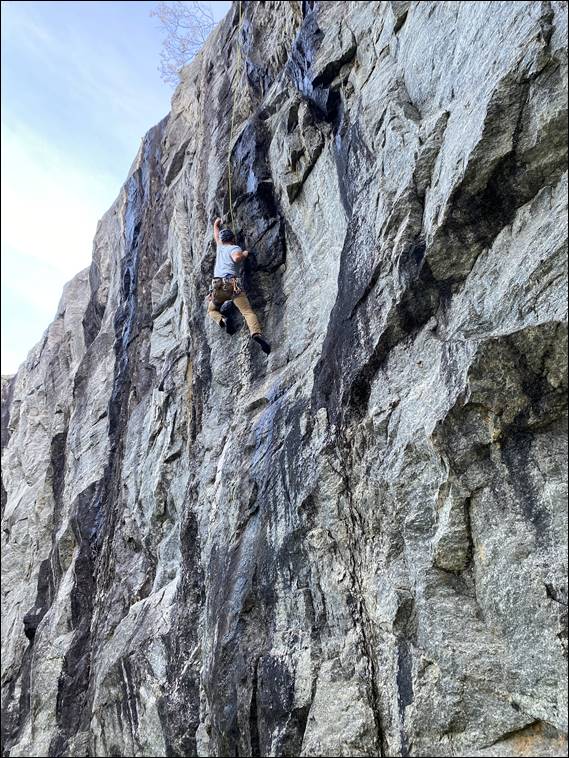
Despite our initial concern we racked up our six chosen routes in two hours. Howsie being on the last one above, and you may notice the a large carabiner hanging of the line next to him. And also the plants sticking out above near the top of the crag. The carabineer I’ll get back to, but the reason for finishing on this route was I wanted to check the plants out. This climb also requires you to top out, resulting in the need to walk back down. Allowing you to check out the top to see what may be growing, and we spent quite some time doing exactly that:
The top was littered with sun orchids, but being so early they had not yet opened up to the new day. I suspect that they were all Plain Sun Orchids (Thelymitra paludosa), whose name paludosa is a Latin word that means swampy or marshy, being the habitat they prefer. This may sound strange, but I mentioned that the top of this crag collects pools of water in winter. And these plants seem to like the, at times very thin, veneer of soil. The soil continues to get water into spring from seepages. In the wet soils we also found heaps of small trigger plants:
The above is a Book Triggerplant (Stylidium androsaceum), which like sun orchids close up at night. But rather than its petals forming a bud, the top petals fold downwards to partially cover the two lower petals. Closing up like a book. Below is another Plain Sun Orchid, with very different coloured petals to the other image I included. Some species of sun orchids have colour variations but this species takes that to the next level, ranging from blue to violet, pink, and even white. We also found one with alternating pink and white petals:
There was a more impressive range of orchids at this time of year than I have seen here before. This included Twisted Sun Orchids (Thelymitra flexuosa), a species I have never come across. Due to the buds being clamped shut, more tightly that the Plain Sun Orchids, I have not include an image of them. We also found lots of small donkey orchids, most likely to be Purple Pansy Orchids (Diuris longifolia). Their flowers were smaller than what I normally find, but were still within the size range that can be found for this species:
And then there was one plant that was much smaller. It had quite much darker colouration, and the way the dorsal sepal and labellum is held was also in contrast that of a usual donkey orchid. Checking it out with my orchid book next to me I am pretty sure it is Dark Bee Orchid (Diuris insignis), and is my first ever bee orchid sighting. I’m kicking myself that I didn’t take more time to get some better images, but we had spent nearly twenty minutes scouring the top of the cliff and we needed to get back:
Back down to the base of the cliff, not home just yet. I had sent a picture of the morning skies to Bigge, a friend in Ghana who I played volleyball with for two years back in the late nineties. In between the climbs we exchanged messages and I also sent him a picture of Howsie climbing, and this piqued his interest. Like my first time sightings of a couple of species today, climbing is a new concept to him and had him fascinated. Intrigued by the way we managed to hang onto the rock, which seemed improbable. To help suggested to Howsie we take a video:
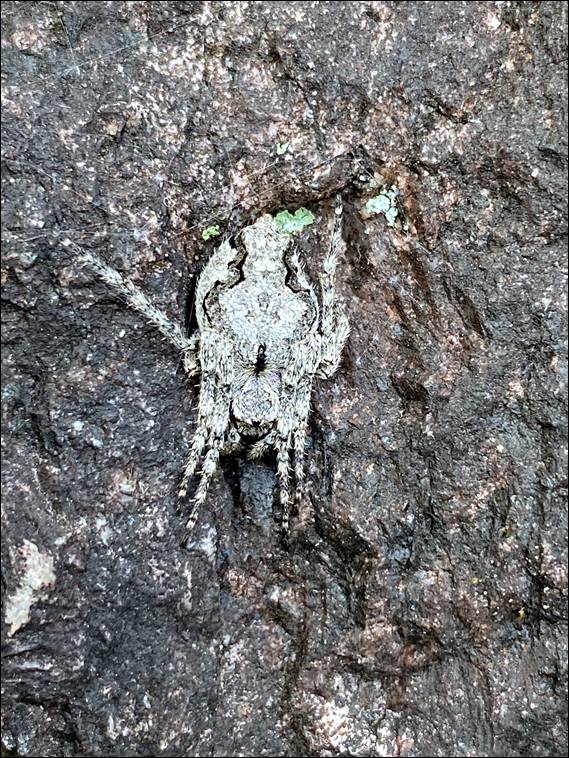
Still having plenty of time up our sleeves before needing to hit the road. That of course meant getting a couple more climbs in, to even the leads up. This led to the following video being sent to Bigge to give him a bit more of an idea of what we do. And us spotting some Dewdrop Spiders (Argyrodes antipodianus) that disguise themselves as water droplets, you’ll find images of them in this previous post: https://sandbagged.blog/2023/11/04/another-long-goodbye/. And the above well camouflaged Orb Weaving Spider (Eriophora transmarina):
You may notice the male Orb Weaving Spider has one leg outstretched, attached to a strand from its web to act as a doorbell should any prey get caught. Howsie took the last allowing him to increase his crag booty haul by grabbing the large carabineer mentioned earlier. With eight routes under our belt it was time to leave. After driving less than fifty meters, we spotted more sun orchids some with open flowers. Being the a third sun orchid species of the day, the Shy Sun Orchid (Thelymitra graminea). It is quite amazing how much we packed into, and saw during, our three hours at Welly Dam. What a wonderful way to start the day:





























 Sandbagged