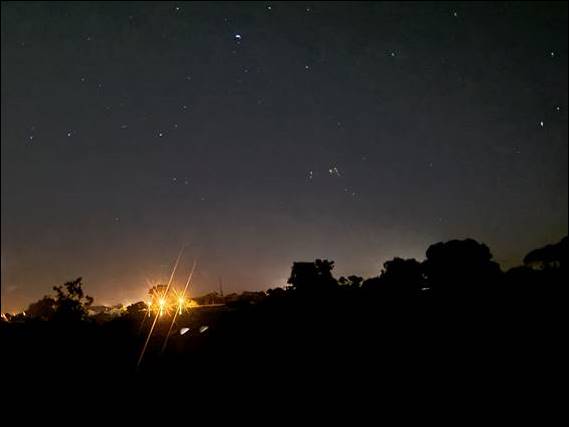
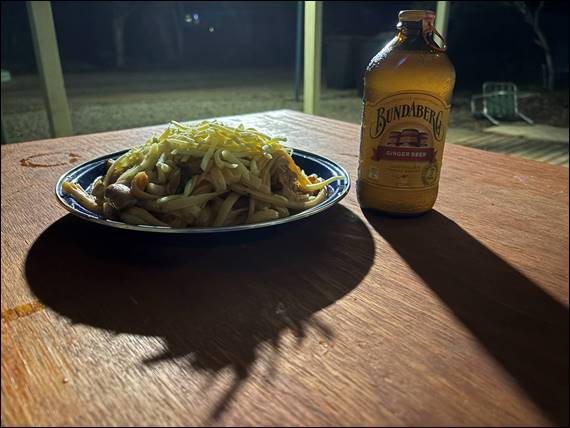
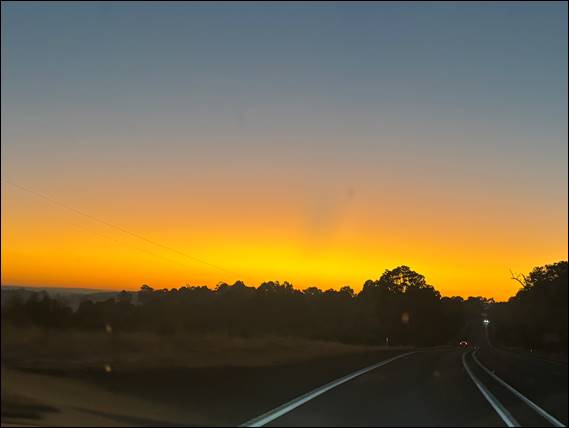
No we were not partaking in what is claimed to be Australia’s top breakfast drink. Yet another packaged and processed way to start the day, which advertising will claim is good for us. Instead a simple cup of tea sufficed to prepare Howsie and I for another Friday session. It’s been a stinker of a week, and it wasn’t about to ease up today so we were aiming for shade. And wanting to get to the crag at a sensible time. It was dark as I drove out at just after 5. The moon was but a sliver, wanning at 1%, and looking stunning. Not that you’ll see it below:
Wilyabrup was our destination, and it was a lovely cool 13 degrees on arrival. But as I have said so often this summer, it felt like the air weighed down on us. Just two hours later the mercury sharply rose by ten degrees. Continuing to creep up until we walked out in just shy of thirty degrees, well before the sun hit the west facing walls. This didn’t worry me too much as I was going to take it easy on my leads. The reason being that Howsie had put some though into what he wanted to attempt, picking a few goey lines that don’t get too much attention:
Better still he has only led each of the lines one or two times, so he didn’t know what to expect. The conditions meant he needed to have an extra positive mindset and level of determination and energy. Hence he needed a get-up-and-go attitude, as opposed to the afore mentioned product. The term itself is self-explanatory, but I was keen to see if it had any history. The first known, i.e. recorded, use was in 1871. I am not however quite sure in what context it had been used in the Annual Report of the Indiana State Horticultural Society:
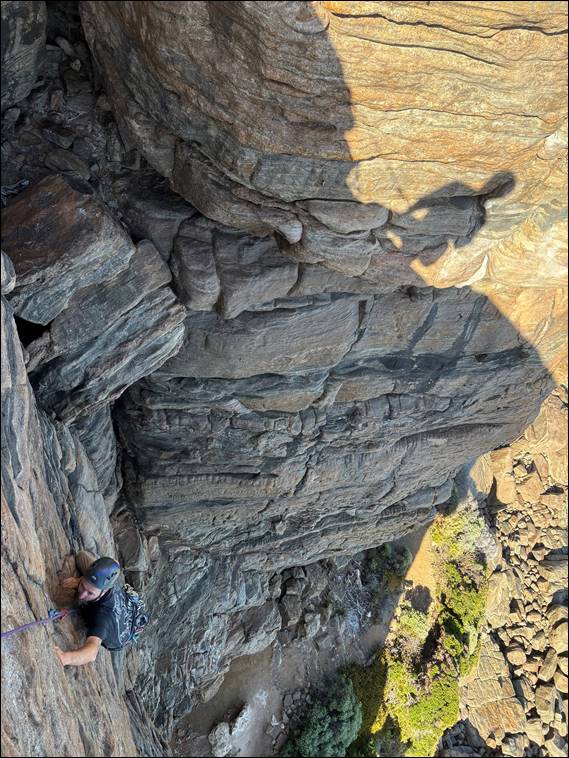
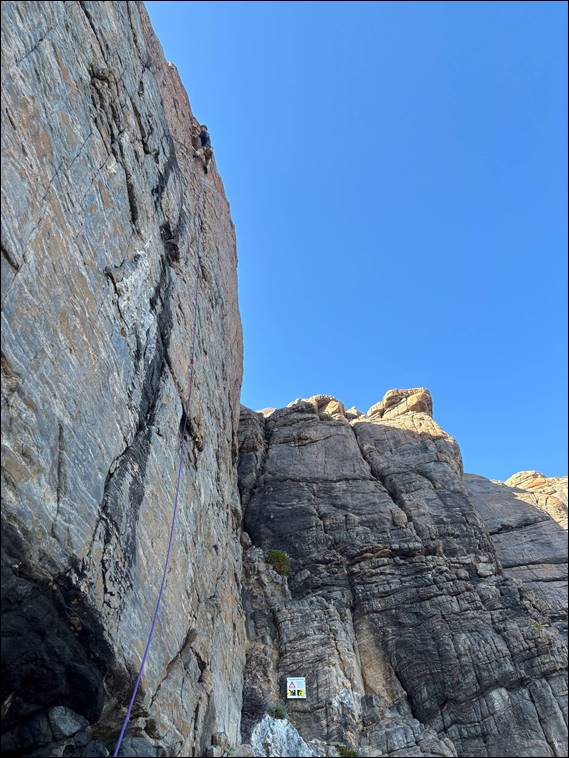
There was unfortunately nothing else of interest that I could uncover on the phrase. I was however interested in getting a few good images today. The three routes Howsie was having a bash on today each had a certain amount of spice. All having a bit of a runout, sustained technical sections, steepness, and an extra dose of exposure. As he climbed I wonder how much he was observing me, as I wandered this way and that. If he did he never complained about it as he successfully weaved his way up the first and then the second line:
Coincidently The Weavers wrote and first recorded the song called Get Up and Go. I couldn’t find a date but they recorded songs between 1948–1952 and 1955–1964. The reason for the break being the lyrics of their songs were considered by the authorities as being ‘Un-American’. This was during a period known as the Red Scare. My easier leads meant I had no scares and also allowed Howsie a more relaxed climb in-between each of his routes. Hopefully allowing him to recuperate a bit, so he had enough go-go juice for his next lead:
And would you believe the Go Gos did a cover of Get Up and Go in 1982! On my last climb shown above and despite being in the shade while on the route, we could both feel the heat and the rock getting more and more greasy. Not that this stopped Howsie taking on his third and hardest line, nor me wandering about below. He did however watch my antics more closely this time, especially when his arms started to tire and he prepared for a fall. The conditions were deteriorating fast, so we decided we would get up this route and go:
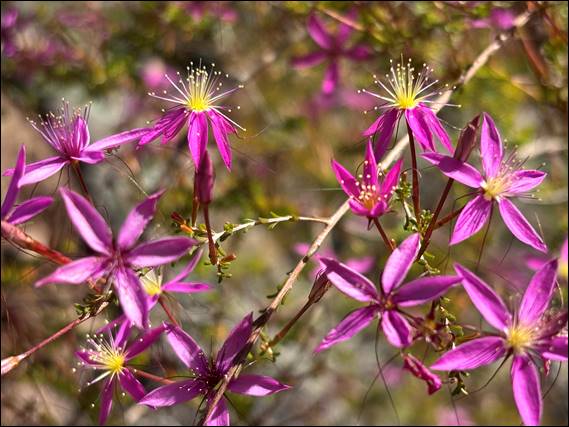
This will confuse Adrian. He’ll have no recollection of the opening image nor a few to follow. There are four orchids that are known to flower early, potentially popping up in March. Working from home on Friday meant an early finish and the chance to head into the Capel Nature Reserve to see what I might see. It was a bit toasty, being the hottest part of the day and after close to an hour I gave up. There was however a splash of colour with small shrubs called Pink Summer Starflower (Calytrix fraseri) brightening up the place:
The above is endemic to the south-west of Western Australia, whereas the below is not. The Golden Orb Weaving Spider (Nephila edulis) occurs in Cocos Keeling Islands, Papua New Guinea, New Caledonia, New Zealand and Australia. I kept looking forward and down as I continued my search. Fortunately the web of this spider is in excess of a meter across, and caught in the right light the silk glows a golden colour, so is easy to spot. Harmless as it is, I still didn’t fancy having a spider with a body up to 4cm long suddenly appearing on my face:
The name edulis is Latin for edible, which was given when in 1799 French biologist Jacques Labillardière observed native people eating this spider during his travels in New Caledonia. While not prepared to try this delicacy I was up for braving a plunge. Enticed by a seemingly calm ocean, I gave it a go a couple of times on Friday and Saturday going in with eyes wide open. There may have been no waves, but the distance the water swept up the beach was a tell-tale sign that the swell was still up. Surprisingly the clarity wasn’t however too bad:
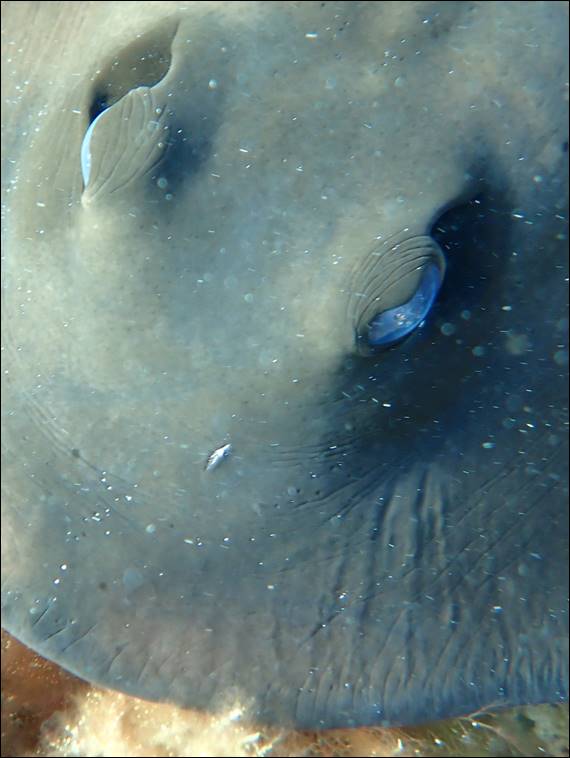
Before jumping in for the second dive a pod of dolphins swam past, and I missed my chance to see them while in the water. There was very little else to see, and there were even very few fish. So quiet that I only took four images during the two dives, which has to be a record. Three of which were of this Striped Stingaree (Trygonoptera ovalis). By no means a new find, but in view of the season I’ve had I got pretty excited. Each time I come across a stingaree end up needing to again familiarise myself with the distinguishing features of each species:
This one has a few, including being pale along the midline and down the tail and rear of the disc being heavily fringed. I may not recall all the details of the orchids, marine creatures, and other finds I come across and write about, but do however have an uncannily good memory for the holds and gear required on routes. This came in handy on Sunday when Adrian, who has finally made it into the post, asked about the lines I pointed him to as we climbed at Wilyabrup. Admitting to me that he generally doesn’t like running it out too much on trad:
To be more precise it is more the uncertainty of knowing where the next gear will be. With the routes we picked he certainly showed he was happy to run it out, when he knew where the placements were. At times running it out in excess of six meters. However, once he had to move past that point, and where the route was hard to read, his head would start to play games and hold him back. Endeavoured to explain what to expect as he got higher, the height worked against us as it started to make communications that bit more tricky:
This resulted in him backing off a couple of the steeper routes and offering me the lead, after giving it several good attempts. When I went up and placed the gear, he would say ‘oh you meant there, I’ll lead this one next time’. While some people like to have more knowledge of what they are in for, I have previously seen Adrian jump on some solid routes he has no knowledge of without fear. So I personally felt the mind games that were plaguing him today had been heightened because he was a tad weary:
The slower pace resulted in us not packing the routes in. Neither of us were particularly concerned about that, and we both enjoyed the climbs we got on. With no one else about we had the pick of the crag. Joking that other people would turn up as we were walking out, which would be when the sun hits most of the walls and gets uncomfortably hot. And sure enough on our final line, as we climbed out with packs, other people started to appear. We tried to work out their logic and gave up, we simply couldn’t see it:
Not for lack of trying it has been close to two and a half years since Kym and I have managed to catch up. To be honest I was a little shocked when I realised just how long it had been. My memory has failed me, and I have no recollection of what went wrong the last time in Nov 24. Luckily for me, Howsie had also been keen to tag along meaning that trip down south still occurred. We just didn’t see Kym. This time Howsie was again keen to join in the fun, as we again attempted to reconnect with our elusive south coast friend:
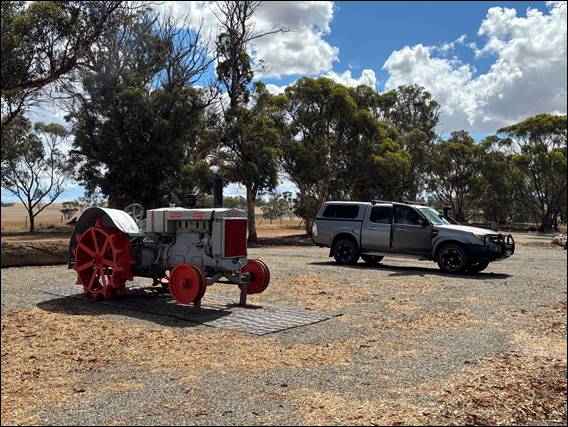
The journey was somewhat longer this time. Kym and his family having made a move from Albany to Ravensthorpe. This meant a slightly more inland road heading that bit further east for some six hours. With part of the journey following the Horsepower Highway helping to break up the scenery with a range of vintage and quirky tractors. There are currently twenty seven, not that we saw all of them as we didn’t drive the full 75 kilometre trail. Turning off when it headed south to the Stirling Ranges, so we could continue our journey east:
Our destination was not Ravensthorpe. Kym and Meg’s house was full this weekend with family visiting, so Howsie and I booked into a caravan park in Hopetoun. On the eastern edge of the mighty Fitzgerald River National Park. So vast that it stretches all the way back west to Bremer Bay, where Lisa and I had headed to a few years back for a very relaxing get away. The distance between the two towns being 85 kilometres, as the crow flies. The park covers some 330,000 hectares, but that is not the only impressive number it boasts:
It may not be the biggest national park in Western Australia, but it is the most botanically significant. In fact it is a well-known for being a haven for botanists. Containing a whopping twenty percent of the species described in Western Australia. And of the near 1,750 plant species identified here, so far, a staggering seventy five percent are endemic or in layman terms only found in the general area. With approximately 250 being very rare or geographically restricted. Needless to say a trip in spring time will definitely be on the cards:
As a result of its size there are three Noongar groups recognised as traditional owners of the Fitzgerald River National Park, being the Goreng, Menang, and Wudjari people. While the coastline was explored by the Dutch, British, and French in 1627, 1791, and 1792 the likely first non-indigenous explorer was William Baxter in 1823. Who was aptly a plant collector, lucky enough to stumble on what is now a listed International Biosphere Reserve. Kym is relishing all the amazing natural wonders in his new playground, and kept reeling off facts to us:
The only plant I will mention in this post is the above Royal or Lantern Hakea (Hakea victoria). It was first recorded by western society in 1847 by botanist James Drummond, who wrote ‘The variegation of these bracts is so extraordinary, that I almost fear to attempt a description’. The leaves may have a cabbage-like appearance, but seen at the right time of the year the leathery and veined leaves can display striking colours ranging from green to yellow, orange, and red. This plant is known to grow in quartzitic or lateritic soils:
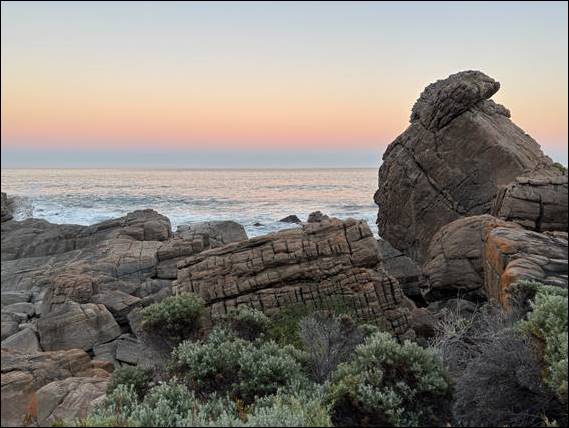
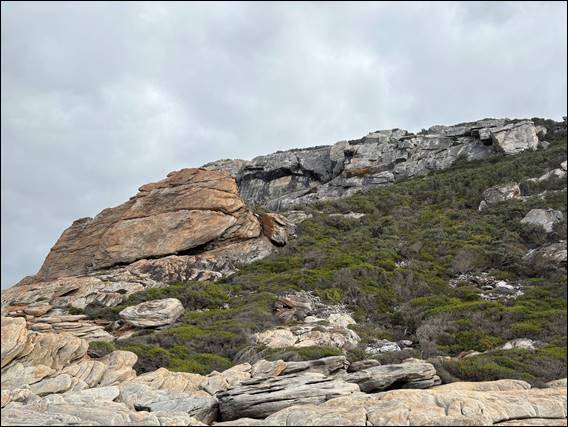
This gave us a hint as to the type of rock we may encounter, although just like the flora here the geology across the park is also quite varied. We were however sticking to the confines of the coastal crags. These are made from the younger rocks in the area, being a mere 1100- 1800 million years old. Best described as metasedimentary rock, they started out as siltstones and sandstones. After being placed under extreme heat and pressure they were transformed into Phyllitic Schist and Quartzite, in formations that tilt towards the land:
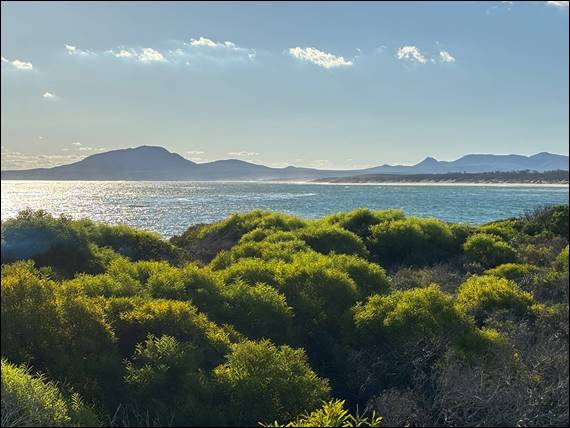
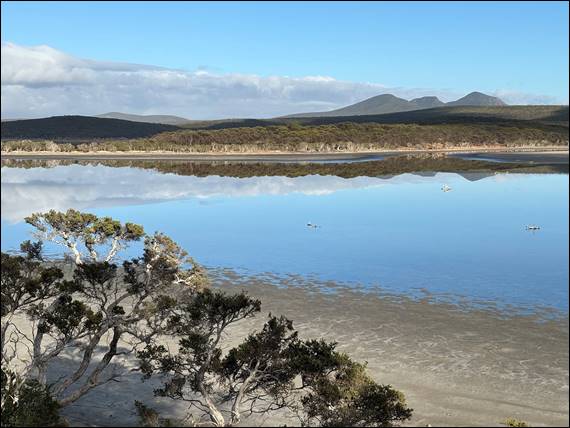
This was my first time of coming here, and Howsie had only driven through once when he was on the road with the family. As such both of our eyes were popping out of their sockets at the vegetation, while our minds were racing as to what we might encounter in terms of rock features to climb. And it has to be said the landscape is also pretty stunning, resulting in our drive in on the first morning being made all the bit longer due to stopping here and there to take it all in. The coastal foreshore is mostly elevated, providing wonderful panoramic views:
Steep inclines dip down to a mostly rocky shoreline that comprises bays in which beaches have formed. Erosion over time has resulted in scattered cliffs of various sizes, as opposed to a continuous rocky defence against the ocean. While this was all new to us, Kym had been provided some intel from Lord Jim. A long, long, long time explorer and climber of the amazing places the great southern region has on offer. As such we did have a notion of where to head and how to get there. That said we took our time and were careful:
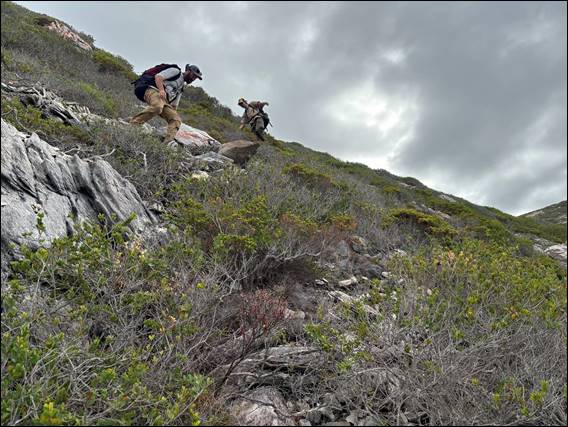
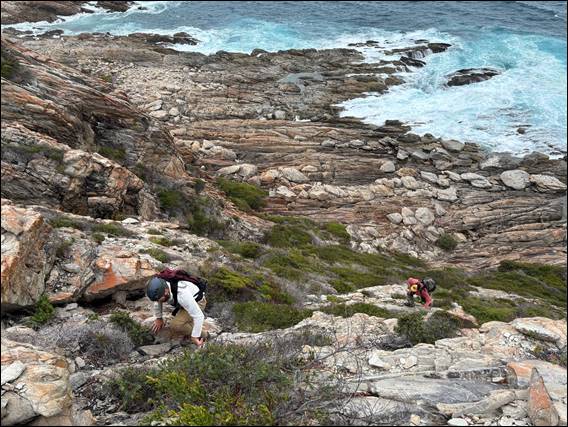
It was important not to go crashing in. The delicate environment here, as with so many placed we go, is at risk of Phytophthora dieback. It is recognised as the biggest threat to biodiversity in Western Australia. We needed to be, and were, cautious in our approaches. Scoping the way down to the shoreline to avoid vegetation and soil, by sticking to places with exposed rock, as much as possible. This was an adventure trip after all, and that meant slowing down. Our enjoyment being measured in far more ways than the meters we managed to climb:
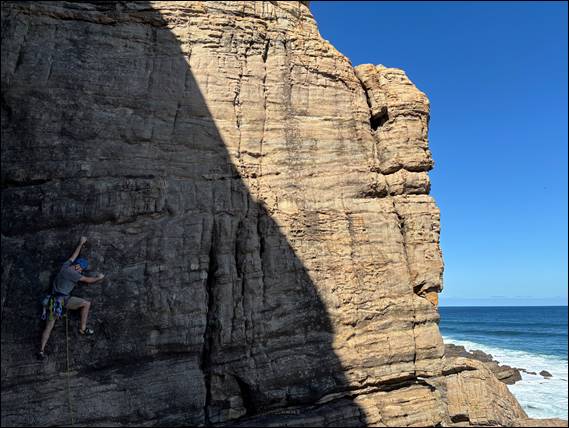
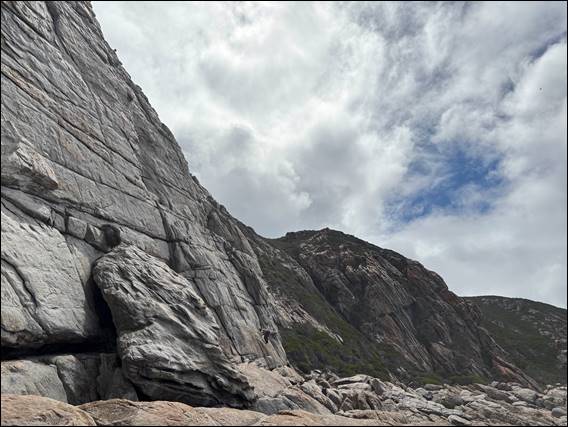
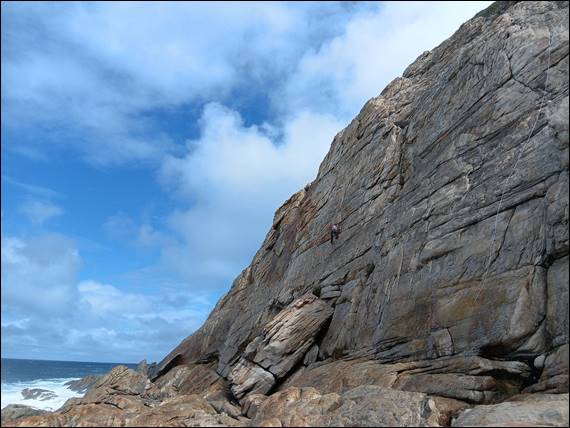
From the top of the ridge, the cliff we were aiming for looked small. The size seemingly growing as we approached, and with the finer features becoming more apparent our finger tips started to tingle at the thought of what might be possible. I was lucky enough to be first to rack up, and had my sights set on what looked like the line of the crag. Kym and Howsie looked at it a bit more cautiously, suggesting we should maybe start on something a little more forgiving. Holding my urges inside I went along with it, and so became Ease Up:
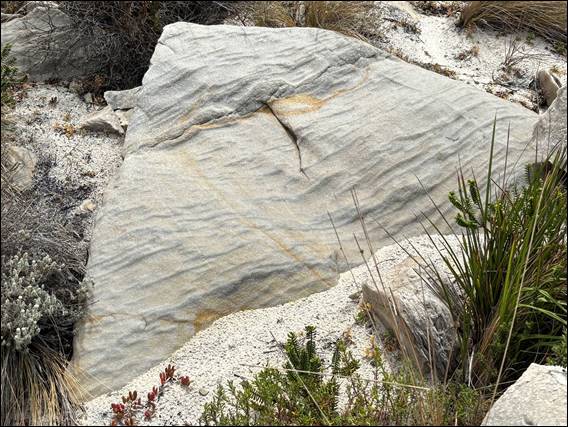
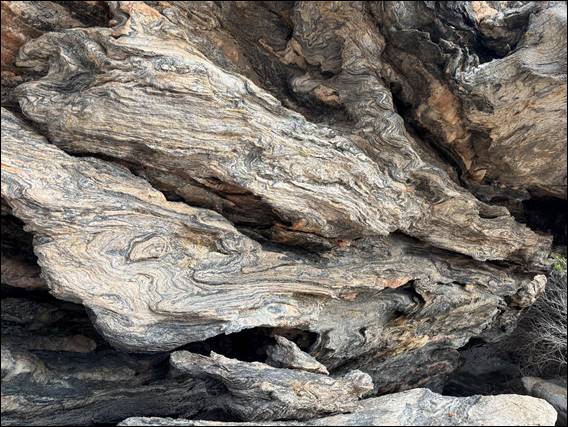
A nice gentle warm up at grade 10, or VD in UK grades, and being a nice 35m long. The bright rock felt on first touch solid and clean. There were of course some loose parts, but these were surprisingly few and far between for such a large untouched cliff and there was nothing to worry me for the whole climb. The rock seemed to be a quartzite. Nowhere near as hard as the Heavytree Quartzite I have climbed on in the Red Centre, and also having more texture and friction. The block below caught my eye and showed the features of the rock nicely:
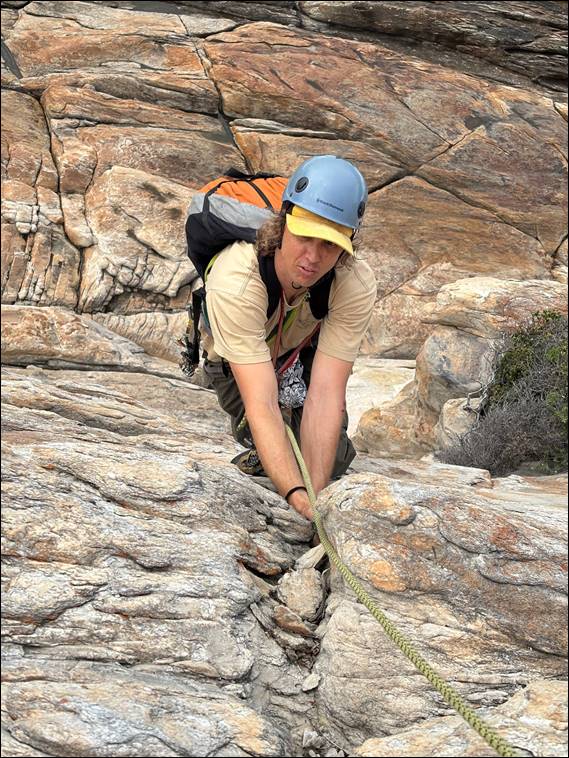
To avoid having to scramble down after each climb we set up a rap line, avoiding having to disturb any vegetation with multiple descents. Howsie was next up and had already spied his line. Again trusting his instincts and sticking with something that looked a sensible first sample of the rock on lead. It was again a nice clean line, the rock and the cliff was proving to be a bit of a gem in that regard. He lead a longer 45m route, that was nicely consistent and had some very pleasant sequences and moves and plenty of gear to make it safe:
We pondered the grade thinking 13 was fair, and it was not until after our trip that Kym found Lord Jim’s records. And only then finding out they had bagged the very line, over thirty years back in January 1994 and there was even a photo of them on it. They had named it Banish Misfortune at grade 14, VS 4c in UK grades. Having only ascended the first 30m, Howsie had at least lengthened it by 50% with equally enjoyable climbing. What with all the scoping we were going slow, the last thing we wanted was to rush a decision and end up in a pickle:
Kym had spied a line that was drawing him in, but on closer inspection there were elements that made him nervous. It is worth being aware that he hadn’t climbed in some four months, and as such jumping on the pointy end of a rope at a new crag on long routes was probably not the best way to get back into it. As such he offered up the lead and I jumped at the chance knowing exactly what I would climb. Just as the rain started to come in, not that the images give that impression:
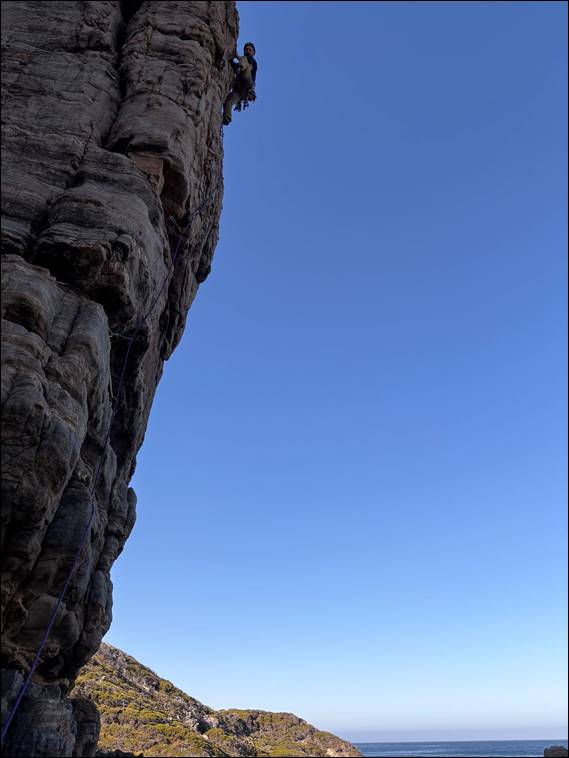
My mind was however set. While water dripped off the overlaps above me, and the rock was getting proper wet, I started up the line that had caught my attention when we first got here. It started behind a large block that was leaning against the cliff hiding a wonderful finger crack in the main wall. Above this and out in the open, as I was being hit by the elements, spaced horizontal breaks were separated by seemingly blank slabby sections. Water trickled down these as I tested my options, and Kym below suggested I wait till the rain eased off:
My mind was set and I pushed all that to the back of my mind. I’m not sure what Kym or Howsie thought when I started up the slab gingerly reaching as far as I could to curl my fingers round the horizontal breaks. Hoping to find a reasonable hold and also gear. Everything was quiet in my head as the first, second, and then third break was reached. Tentative, delicate moves being made between each, and each time being rewarded with good gear. Above a broken looking vertical crack, which I thought from below would be were the grade eased:
I was mistaken, this was where I spent most time, testing options. Also as the gear was already at my feet, I chewed up more time trying to fiddle in tiny brass RP wires to no avail. Finally plucking up the courage to go for it, when I spotted a number one wire placement, which could only fit half the head in. It was enough to push me through, as I reached as high as I could by twisting my hips and extending my ankle on the one marginal foot hold. While holding onto a low and very thin under cling that I could fit a third of my finger pads under:
Even then when the holds finally became big and chunky, it really didn’t easy up. Underclings allowed a traverse into side pulls, with feet at times on holds of pure friction. And then for the final section a wonderful series of flakes that made you switch your body from left to right to left as you weaved up the final wonderful finale to the top. You can probably guess that this line was all absorbing and totally amazing, and my finger tips are starting to sweat as I replay each move in my mind to describe it here:
So became Power Up, a nice long 35m route. In UK terms it was easy, I would give it E2 5b hands down. Earning it due to the multiple cruxes of differing styles, and beautifully varied and sustained climbing. With no move harder than 19 how do you translate the sustained nature into the singular numbered Australian system. We contemplated long and hard, as to whether it was worthy of 20 but went with 19. I would love to see someone else lead it. Can you tell I was on a high, it is up there with the best on-sight first ascents I have done:
I almost feel as light headed and euphoric as I did after completing the line, and have had to hold myself back from adding even more detail. The only dampener at the time being that rain came in again, and even harder this time. So we decided to bail despite Howsie having had his eye on what was likely another classic route. It may have been raining, but we continued with the slow and steady approach to the day as we packed up and made our way back up the ridge to the car. What an adventure, and we had another day in hand:
Kym headed home and Howsie and I settled into the campsite and cooked up another storm. A well-deserved almost overflowing plate full of pasta, which went down very well after such a great day in nature. That night our sleep was interrupted by the pitter-patter of rain on the canvas, but that seemed to ease and then hold off as light crept into the sky and we made our way out for a second day. In my usual fashion I was up before first light each morning and put a brew on. We saw some birds, but it was a relatively lack lustre dawn chorus:
We were also surprised not to see any other wildlife. Insects were about but there was little else, and not for want of looking. Taking on Sarah’s more enthusiastic approach to herping, we checked cracks and crevices as we went. Maybe the cooler and slight damper days had kept them all at bay. For our second day in the expansive park the approach to the coastline was much easier. It involved a very pleasant rock hop, passing numerous very impressive boulders before we came across our quarry. A series of cliffs, very different in appearance:
There were cliffs that were well in excess of a rope length, with huge foreboding roofs for which it was hard to see if it was possible navigate a way over them. As such we aimed for the shorter of the cliffs. Finding the shortest and easiest access, made possible by rocky outcrops and sections of scree leading up the slope to the base. And while the vegetation looked to be right up against the cliff, there was enough room to easily manoeuvre along the base. From here even on the lines that looked reasonable from the coast became more daunting:
Similar to the first day it was agreed to start slow and Kym picked the first line. His first lead in way too long. As such his nerves were tingling, and for good reason. The rock was slick even when dry, and water was seeping down the line in places. He kept going, working his way up a fine slabby corner, which included a few fun traverses under roofs before taking on the next corner system. The rock was smooth but the gear was plentiful, and we had somehow stumbled across another route that maintained a consistent grade for most of its length:
So became Army Surplus (14 40m), VS 4c in UK grades. Hats off to Kym for sticking at it and keeping his nerve. After enjoying hr lofty views we found a way down that included a couple of fun scrambles, and as with all adventure routes the down climb is part of the experience and makes it twice as fun. Back at the base the big question was what next. It all looked quite improbable. I had however spotted what I felt might be a fun route. But it did start in the same corner as Kym’s line:
I had suggested it to Howsie, and while he looked about at what else might be a reasonable route he finally came back to it and racked up. He was not put off by the start being the same. It was more that the higher up the corner he went, where Kym had move left into the next system, the wetter it got. And the top of the climb was an exposed traverse on a hand rail with what looked like not much, if anything, for your feet. Howsie will confess that when it comes to steep juggy lines his stamina is quickly eaten up:
He set off and soon passed where Kym had ducked off left, and from here up to the traverse it was soppy. Making it extra nervous, as he had no choice but to trust what little friction was on offer and step above his gear. I think I held my breath watching him make these moves, as I belayed. Then each time his foot slipped I sucked in that bit more air, preparing myself to catch a fall. He may not like steep jugging but Howsie has a talent for keeping a cool head when it gets like this. Reaching the traverse, it was time to get some more gear in:
He gingerly moved his hands out on the rail, keeping his feet so high on the opposite wall that he was practically horizontal. When it was no longer possible to reach that wall he started to heal hook the same crack his hands were in. It was not until he had to swing round the arête in a wonderful exposed position that his feet were once again below him. And when he was established on the slab and dry rock it was a short section to reach to the top. Here he allowed himself to breathe normally again, or was that just me as I watched from below:
It was a brilliant on-sight first ascent, and I feel that those lingering thoughts about the line he didn’t get on yesterday were washed away. After all there is always next time. I went next and it certainly was as slippy as my words above indicated. Several moves had me on edge, it would have been so easy to pop off the rock. Then traverse out was as wonderful as I had envisaged when I first spotted the line. A cracking lead indeed, made even more impressive because of the conditions. Once up I scampered off like a mountain goat to get some images:
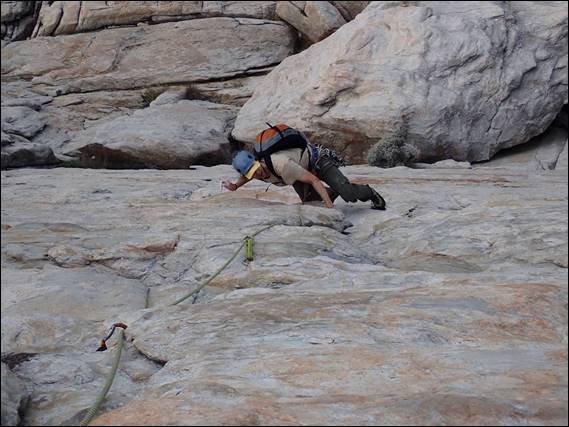
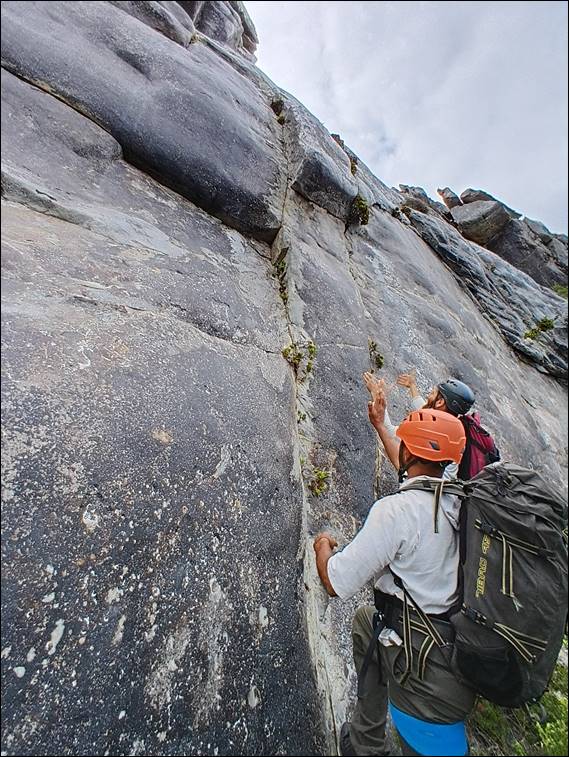
Howsie named that line Victorinox (18 20m), E1 5a in UK grades. A line that would be worth coming back for, but as for the other stuff on this upper wall it was hard to see much else. Two images up, Howsie and I were mentally climbing the crack system in front of us. Hands moving about in the air to show how we could tackle it, despite the fact that the system was closed and didn’t off any gear placements. The image does however show just how smooth the rock was on the lower part of this cliff, more akin to what I would expect quartzite to be:
Back at the coastline, we munched on some food before tackling a small outcrop halfway up the hill to where we had just climbed. A couple of low grade fun lines awaited us. Howsie jumped on first with a finger crack. Allowing me to snap some images of not just him but also some super impressive cliffs further down the coast. Kym and I have already been thinking about them, and when the next trip may be. Howsie named this line Ferrous Bueller (13 15m), HS 4b in UK grades. And while it was an easy line I couldn’t resist finishing on a lead:
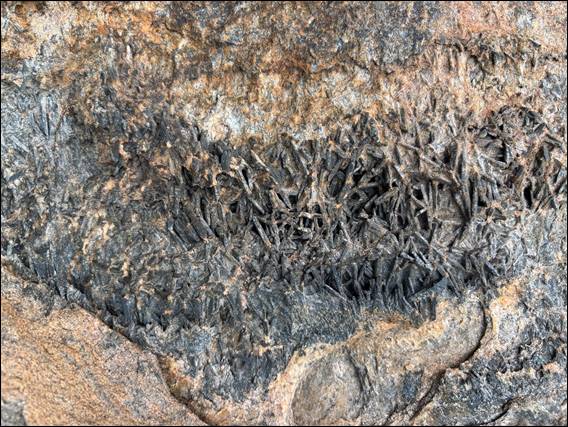
So became Iron Age (6 15m), which is classed M in UK grades and is the lowest UK climbing grade that can be assigned. However, as you may realise I don’t care about the numbers, it was a very fun climbing made all the more interesting by the rock we climbed on. Unlike yesterday’s cliffs and the upper walls today this little outcrop had bands of amazing crystals. I’ve unsuccessfully tried to find out what they may be called, but can say they have an iron component hence the route names. Each exposed needle being very sharp and strong:
So care was needed as we padded our way up. It felt a little sad to be walking out. We could however not complain as it had been a storming couple of days. For Howsie and I at least we also had a hearty pub meal to look forward to that evening. Kym headed back home, and as we said our goodbyes it was time to sort all the gear, as we aimed to have an earlier start in the morning. Not for climbing but to have a dip in the ocean. There was a great looking lagoon, and the conditions may be just good enough to make it worthwhile:
But as with most of this snorkelling this season, and climbing, a front had been pushing its way down from up north. Another tropical low had resulted in the cool wet conditions, just for this weekend, and the swell was up at 2m. You may think I am being a bit of a broken record about this, but just today a news article came out to say it has been the busiest cyclone season off the west coast in 19 years. And there is more to come. The image above is very deceiving, the sand was being pushed around obscuring our visibility way too often:
Still it was very refreshing being in the water, even if we needed to work hard against the channelling waters. I did however spot what may be a tubeworm that was holding its own against the shifting sands in the lagoon. Venturing further out we found an abundance of fish in both numbers and variety. Being that bit too surgy to get down, and claggy to take reasonable images, we admired them from above. Sadly we did have to face the fact there was a big drive ahead of us, and finally it was time to say ‘so long, and thanks for all the fish’:
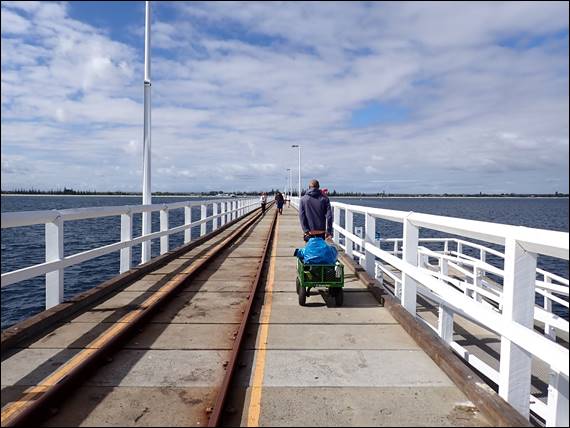
We have longed talked about going for a snorkel off the iconic Busselton Jetty. At 1841m long, in approx. 8m of water, and with no major rivers the general area to pump in fine sediments from the agricultural lands, the clarity of the water is generally better and more reliable than the shoreline waters of our local beach. Yesterday’s blip in the conditions resulted in a late check in from Gav about whether to go in or not. There may have been a near 2m swell, but the light winds forecast for the morning sealed the deal and it was finally happening:
Walking out at 8am, it was amazing just how many people were out already walking, running, or fishing along the jetty. But once kitted up and in the water there was no one else about other than Lisa, Moni, Gav, and myself. The jetty was built in 1865 stretching out 176m into the ocean. Since that time for various reasons including natural accumulations of sand and the bigger draughts of larger vessels using the port, the jetty has been extended numerous times. The shortest extension was a mere 16m in 1960 and the largest was 353m in 1887:
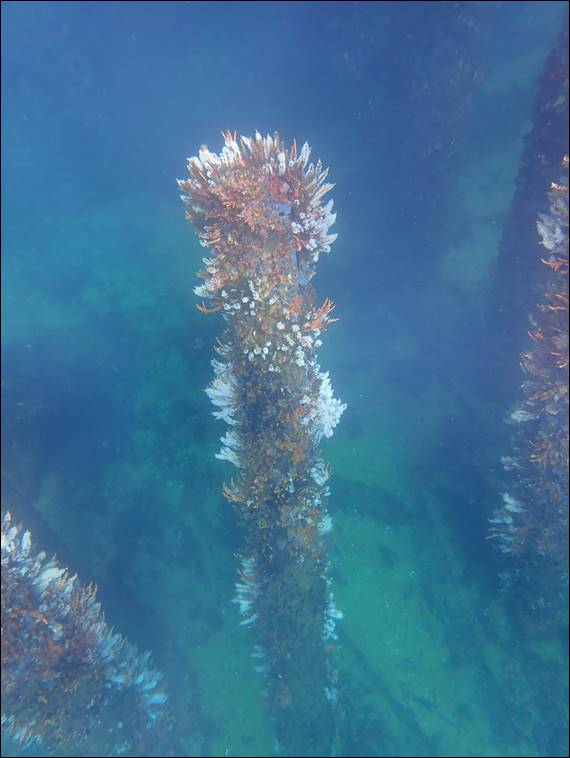
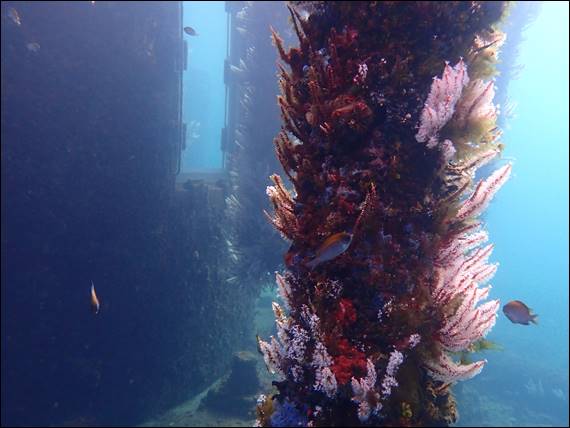
While 8m is pretty deep for a snorkel, the big attraction here are the timber piles of which there are 581. There are also 114 steel piles, which have been installed as part of more recent refurbishments, the most notable being in response to a significant fire in 1999. Another risk to the timber piles are marine borers that can weaken the structural integrity. One way to manage this was to scrape the marine communities off the piles. Then in 2015 a number of the piles were wrapped in a protective marine wrap, to avoid the need to scrap them:
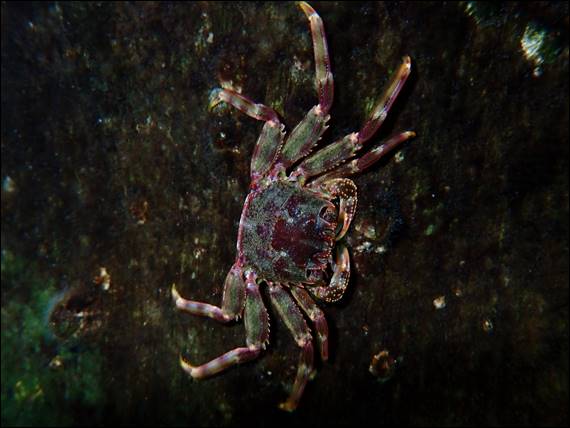
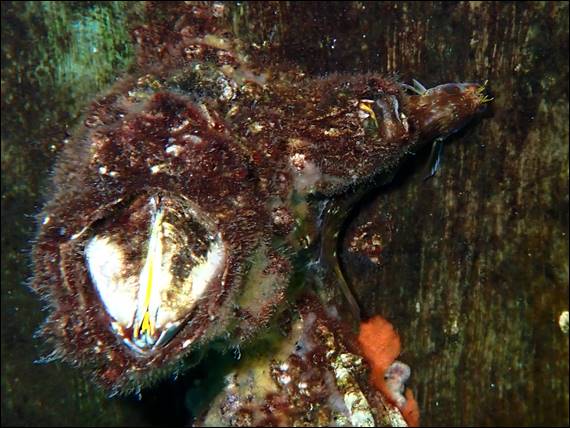
This then allowed the ecosystems that thrive on the piles to start to colonise and flourish long term. The swell made it a little tricky to stay still and take decent images but I had a bash at the less sponge and coral covered parts of the piles near the surface. Above is a Red Bait Crab (Plagusia chabrus) and below a False Tasmanian Blenny (Parablennius postoculomaculatus). Verity from Perth snorkels at her local jetty and last week found what is likely to be one of these fish with extremely long yellow antenna, whereas they are usually quite short:
There were hundreds of very skittish False Tasmanian Blenny, but none with such long antenna. They were in the brightly coloured sponges and corals, on bare timber, and at times made a home out of empty barnacle shells. Being Giant Rock Barnacles (Austromegabalanus nigrescens), the largest found in Australian waters and usual found at the near the low tide level. The larvae are free swimming and look like the larvae of a crustacean, which is not so surprising when you find out these static creatures are in fact related to crabs and lobsters:
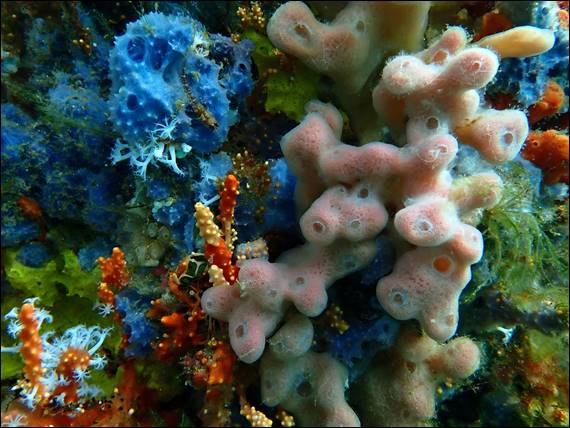
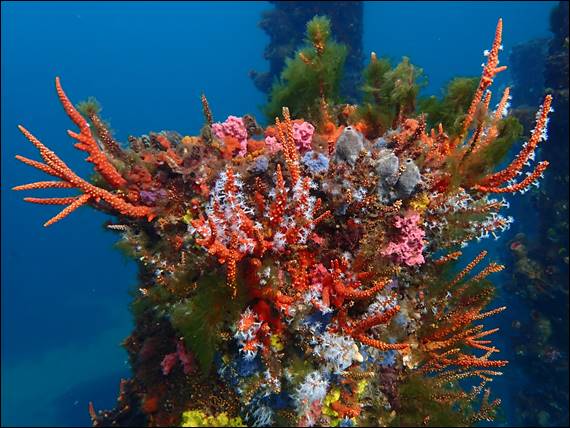
The variety of sponges and corals was stunning. Next time we head out there I may spend a bit more time exploring them, and the creatures that live amongst them. Looking at the collective display, one of the most striking was the Telesto Soft Coral (Carijoa), looking like orange antlers in the image below. The coral is made up of polyps, each being an individual animal, that lives in a tube within a white calcareous skeleton. This is coated by an orange sponge (Hemimycale), which provides protection from predators and rough ocean conditions:
The coral polyps each have eight white feeding tentacles, which sprout out from underneath the orange sponge. When the whole colony is feeding it completely changes the appearance, as shown below. The tentacles are tipped with stinging cells, which provide another defence mechanism this time for the sponge. As such the coral and sponge form a great symbiotic relationship. In this image you can see one of the observation windows of the underwater observatory, from which there is a 20m exclusion zone:
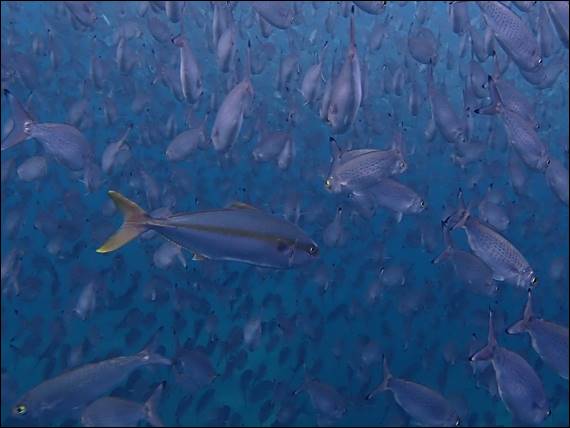
There were lots of fish, many however were low in the water column making identifications hard. Above a few Blackhead Puller (Chromis klunzingeri) circled a pile looking for food. The biggest shoal we saw by far, was a school of Australian Herring (Arripis georgianus). Probably in the thousands, which were somehow keeping a safe distance from where all the fishing lines were dangling in the water. These grow to approx. 40cm. Diving towards them they parted, allowing me to spot a bigger fish. A single Yellowtail Kingfish (Seriola lalandi):
Commonly found up to 1m, these can be as large as 2.5m. Young fish, like the Australian Herring, can form schools of up to several hundred. Juveniles are however yellow with black bands, so this one was an adult. Also detectable by the darker stripe along the top and lighter stripe along the bottom. A camouflage mechanism to make it harder to observe from above and below. Another reason people snorkel and scuba dive here is to follow a sculpture trail, with thirteen nautically themed structures. This one being the Bronze Mermaid:
While I’m not all that interested in these structure, which were installed a couple of years back, they have provided additional habitat for the marine life. Both to grow on and use for shelter, so are a worthy addition. My duck diving was somewhat hampered today. That said I’m not convinced, even when running on a full tank, that I could make it down 8m and stay down to check out the life. There was however plenty to keep us interested occupied in the higher water column, until it was time to get out and head back to shore for a hot brew and bite to eat:
It’s good to see a place with a fresh pair of eyes. Things we take for granted once again become fresh, interesting, and noticed. We had a relatively late arrival at the Wilyabrup carpark, which I didn’t complain about. With the sun up in the sky that bit more, the view back up the gravel road caught Sarah’s attention. The dust we had kicked up on the way in was still suspended in the air, giving the sunlight something to play on. There was hardly a breeze, and the late change in the forecast to hint rain would come seemed unlikely:
Sarah has been on the road mostly over east for some time, and it has been a long while since she has been to Wilyabrup. Like Howsie yesterday, despite being forewarned of the potential risk of getting out with me, the call of rock won out. It was also the only chance for a catch up. Confessing on the way down that she hadn’t roped up for some months, it was unclear how things would play out. Regardless of that, once we talked about a few of the possible lines she was game to have a lead. The first route did however have her questioning her choice:
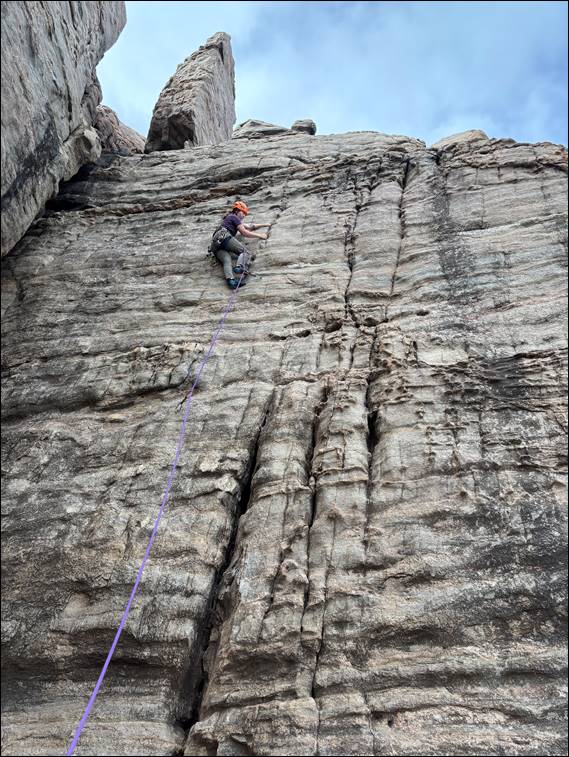
After much pondering just before the hardest sequence, and pushing back the mental thoughts holding her back, she went for it. The route is aptly named Twenty Questions, on which I have witnessed many a person considering the multiple approaches of getting past the crux. All of which have their element of insecurity and uncertainty. It was a good start, indicating I may get Sarah on the sharp end again. Without prompting she remarked on the winter like conditions of the ocean, seemingly out of character for this time of the year:
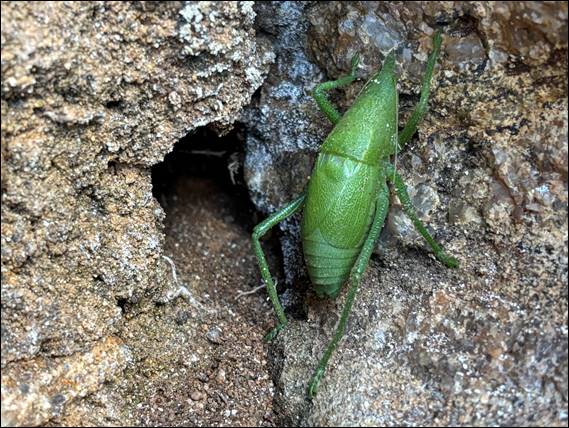
But at least there was no hint of the rain that had been forecast. To make things easier we set up a abseil anchor above the next wall. Once down we found this curious creature tucked away at the base of the corner crack. There are five species of Slender Snout-nosed Katydid in Australia, this one being Mygalopsis marki and confined to the south west of Western Australia with very few recorded sighting on the usual online databases. I did find a few details and both genders can be brown or green, but it is not known what triggers the change:
Some say it is for camouflage, which is clearly not working in this case. Others say they have only observed the male being green in January, so it could be linked to environmental conditions. This one is therefore likely to be a male. And the conditions were, so far, conducive for climbing so I put my leading head on. We were however sheltered by the north facing wall, and as I topped out the strengthening southerly winds hit me. Looking south clouds were rolling in but there were no signs of rain. Sarah was keen so it was a quick abseil:
And she jumped on a route that was the second hardest lead she would have ever done. It took a little encouragement, and despite the lack of being on the sharp end in recent times, she surprised herself with a clean lead. Feeling all upbeat, and rightly so, her eyes were then set on leading the first route she had ever been on https://sandbagged.blog/2022/09/22/d-mob/. The sky was looking more dicey now, but not put off she quickly racked up. Part way up, before any gear was placed, the rain started to fall. Quickly becoming harder and harder:
After a careful down climb we sheltered under a big overhang, watching the place get drenched. Only then realising at least three other parties were about as they also dashed for cover, some joining us. The walls were soaked and there was no sign of it relenting. We made the decision to pack up, walking out and leaving the other groups to decide whether it worth staying our not. Completely forgetting about the rap anchors we had set up until I got home. I guess it was my turn to give back, and offer up some crag booty for someone else to find:
When it comes to increasingly more common dangerous weather systems, we’ve really got nothing to complain about in our small party of the world. I may have had a moan about the generally more humid conditions and bigger swells this summer. These are however not even a drop in the ocean compared to what northern Western Australia and the eastern states have had to endure. Currently tropical cyclone Alfred is heading towards the coast of Queensland. The forecast does shift a bit, but it looks to be making landfall at Bribie Island:
Bribie Island was our base last year, when we popped over to visit and stay with Mikie. He and his family have done a massive tidy up to prepare, as it is the projectiles that become the most dangerous. On the plus side it is likely to be downgraded to a category one as it makes landfall, at close to midday tomorrow. With winds ‘only’ between 63–87 km/h. It also looks to bring with it over four inches of rain on both Saturday and Sunday. Fingers crossed they stay safe. Mario meanwhile is overseas for work, and a bit of play:
Making the most of a trip over to sample some of the local rock, and climbing on Aztec Sandstone in Nevada. As luck would have it, it rained for the first time in some three months while he was there. Only quarter of an inch, but even that is enough to put the kibosh on climbing. The sandstone soaks up the moisture and becomes more fragile. For this reason it is requested you don’t climb for 24 to 72 hours after rain, depending on a few factors. This is taken pretty seriously and there is even a website called the wet rock police:
Today there was not a drop in sight for Howsie and me. The morning hues were that bit brighter, not however due to lingering clouds but smoke haze hanging low from burn offs. We’ve had a couple of warm days and the air felt a little heavy, meaning that while there was no sign of a sprinkle from above, it didn’t take long for us to warm up and start sweating. Not ideal at Welly Dam. Today however I was taking it easy. Allowing Howsie all the leads and going up with a rope above me. Other than the times my mind went into auto pilot:
This only happened a couple of times, when instinctively I pulled the rope through after Howsie had completed the route and had been lowered. This was fortunately on the easier routes, not that this helped my state of mind. I felt nervous, even on them. You may recall at Moses Rocks I hinted at feeling a little woozy. Sure enough Lisa had kindly shared with me the lurgy that had wiped her out. Judging by the way she, and then I reacted, I feel pretty confident that it was indeed round three of COVID, not that our older tests picked it up:
Unlike poor Lisa who gets smashed, I was only a little weary and achy,. Allowing me to carry on regardless and work from home. Despite feeling like I was past the worse I still forewarned Howsie of the probable cause. The call of rock was however too strong for him to resist. We were at least a bit sensible, driving up separately as a precaution. It’s always great to be out and on rock and we had a great time. I have to admit though, that as I pulled moves, which would normally be a breeze, I certainly felt a tad washed out but give time and I’ll be right as rain:
For those that use Spotify, you may have noticed their algorithms for compiling your personalised playlists can get a bit samey after a while. Today driving out by myself I was keen for something a little different. Leading me to cautiously put my faith in the app to prepare a playlist based on an artist I saw play live many years back at music festival, and too not revert to the genres I more commonly listen too. Vin Garbutt was an English folk singer and songwriter, and I was not disappointed with the selection provided:
The speakers churned out many an ear pleasing ditty as I drove along. It made for an enjoyable drive down to meet Josh at Moses Rocks. One song stood out and stuck in my mind. It was by a band that was not surprisingly another English acoustic folk group. Called Show of Hands, who are now banging out the tunes as I type. I’m known for having left-right confusion. This is not too uncommon, with as much of 15% of people being afflicted with saying left when they mean right and vice versa:
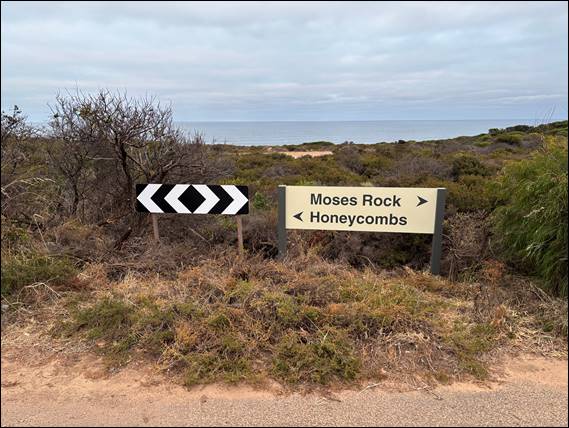
This means that when I give directions, whether to someone driving or which way they should move on the rock, it is best to check which hand I show. This would have been confusing today, if someone not familiar with where we were going had been chauffeuring me. I would have said left and shown my left hand, but a recently placed sign at the T-junction said Moses Rocks was a right turn. This is however referring to the names of the surf break, as opposed to the obvious stand-out crags we call Moses Rocks that you approach if you turn left:
I’ve just read, not that you should believe everything you read, that in the 1920s there was a wild stallion who roamed the Wilyabrup region. This mighty stead is said to have had an energy, spirit, and wild temperament that matched a local and popular surf break, called Moses Rocks. This does however sound suspect, as surfing didn’t start in the region until the 1950s. It would seem that a certain winery, may indeed be telling an hands-down ‘pork pie’ by spinning this fable probably as means of promoting their produce:
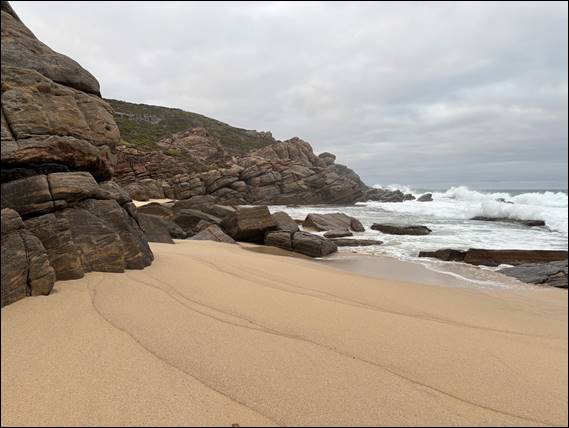
I would however agree that the crag called Moses Rocks has a great atmosphere, which is enhanced by the proximity to the energy, spirit, and wild temperament of the ocean. Today it had been the location of choice by Josh, who was camping down south and as such drove in separately. When I asked he said he did not noticing the sign, having driven in on autopilot. You could say it was handy that we both knew where to go. It was also handy that I have a bit of knowledge about fish species, to know that we stumbled across something a little unusual:
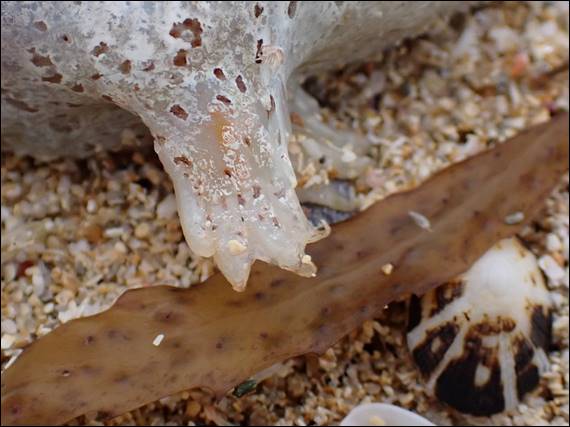
I immediately noticed the pectoral fins and it made me think that it may have been a handfish, which would have been a rare sight. Called as such as their pectoral fins resembling hands. These are used to help them move along the sea bed. Other distinguishing features include having a lure on top of its head like a fishing rod, used to attract prey close to their big mouth. The closest species I can find is the Cockatoo Handfish (Pezichthys amplispinus) but there have only been two sightings before, both in eastern Australia:
Furthermore they are quite a large fish. Unless it was a juvenile, which is not likely over here, it is probably not a handfish. The next option being an Anglerfish. A fish made famous as a result of a guest appearance in Finding Nemo, when Nemo and Dory venture into the abyss. They have similar body features, and the closest match I could find to what we stumbled across is a Rough Anglerfish (Kuiterichthys furcipilis). I suggested I should take the specimen home, and I wish I had now so I could check the fins for more distinguishing marks:
No doubt by now the decaying body will have been found by the myriad of scavengers on the beach, such as the crab we found a few images up. Another creature I have been unable to identify, maybe because it is not of interest to crabbers. That is despite finding an identical image online, which is merely titled unidentified. After the distractions we eventually made it to the crag. Heading to Hands Up Wall, as we felt the possible handfish had been a sign. Before roping up, again distracted, we wandered round looking for possible new routes:
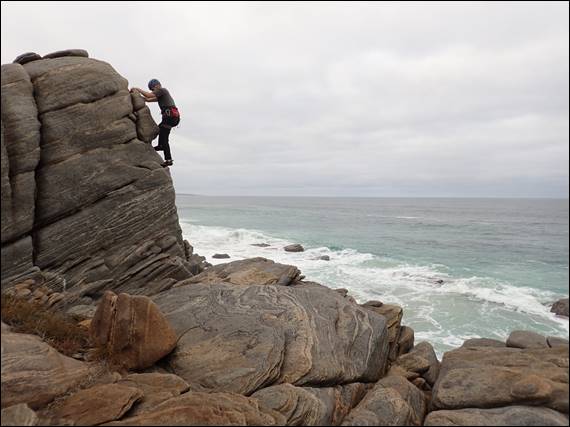
Nothing was tall enough to lead but Josh was keen to solo up a few of the more interesting features we found. This is certainly quite out of character for Josh. I am however not one to dampen enthusiasm when it comes to climbing. That is despite the at times nasty fall potential, and as such we allowed the distractions to continue. I did however ask him to very carefully check every hand, and foot, hold. Finally, roping up we focused on the obvious route of choice, called Many Hands. Both the right and left, which is shown below, variants:
After Howsie and my wonderful dry and cool climb a week back, today we were back into humid conditions as our not so normal summer continues. As a result we decided today was for fun, plus Josh was keen for a lead. To provide a fitting selection we moved to a small area with a fine collection of shorter lower grade routes. From here we could see the very non-summery ocean conditions churning up the sand in the near shore waves. We also spotted the fairly unusual sandy beach below Rumpoles Rocks, so our wandering day continued:
I was keen to get my hands on one particular route, and it was as good as I remember. Unfortunately, being that bit steeper Josh seemed to forget all the good control and footwork he had been displaying throughout the morning. Managing a clean ascent, but not in what he would describe as the best style. Leading us to consider yet another move, all the way back to the northern area. But not before we moved on I spotted some crag booty. This lived up to its name, when I spied a pair of climbing shoes that someone had left behind:
In honour of our original find we picked Hungry Fish to finish off the session, another one for Josh to lead. During which I’m please to advise his footwork and control returned, and unfortunately I started to feel a little woozy. It is possible Lisa had shared with me whatever had knocked her for six this week. Some may say it was handy we have a long weekend ahead of us, to allow me to recover before the working week starts a day later than usual. I guess I’ll just have to watch the hands of the clock, as only time will tell what will come of it:
It was time for Lisa and I to get away for night for another mini-break. We ummed and ahhed about where to head and what to do, and plumped for a trip to Penguin Island. The last time I went there was with my folks and Elseya back in 2008. Lisa sadly couldn’t join us as she was working. Just a year before that trip the population of Little Penguins (Eudyptula minor), which happens to be the smallest species of penguin, was approx. 1,600. A survey last year clocked in less than 120, indicating a decline of over 90%:
The small 31 acre island is a mere 660m off the mainland, so very accessible. It is hard to not consider that the human activity wasn’t in part to blame for this. That is despite the island being closed during the Little Penguin’s breeding period from June to September. Other factors that are considered to have contributed include changing migration patterns and climate change. Whatever the reason, there are now calls to close the island and keep it as a sanctuary although being so close to chore I’m not sure that will happen:
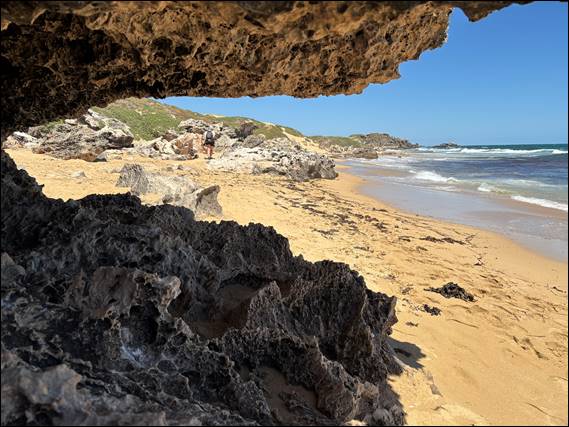
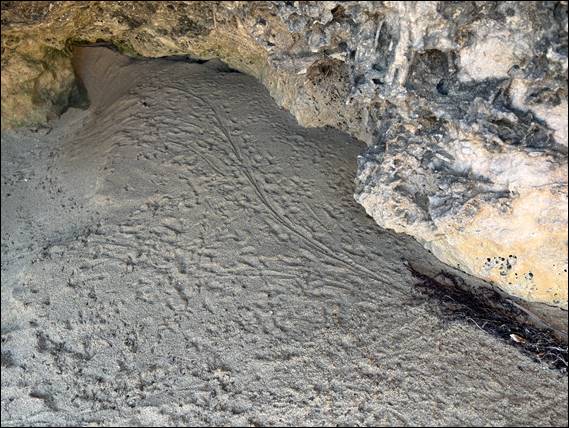
Not surprisingly we didn’t get to see any Little Penguins, not that we tried too hard to find any. Instead enjoying a wander round the mostly boardwalked trail, with short stretches of beach. Along the beach I did check the tracks in the sand to see if I could find signs of their little feet, without success. We did however see a bunch of waders and shorebirds including a few we commonly see down our way, such as Pied Oystercatcher (Haematopus longirostris), Sooty Oystercatcher (Haematopus fuliginosus), and Crested Tern (Thalasseus bergii):
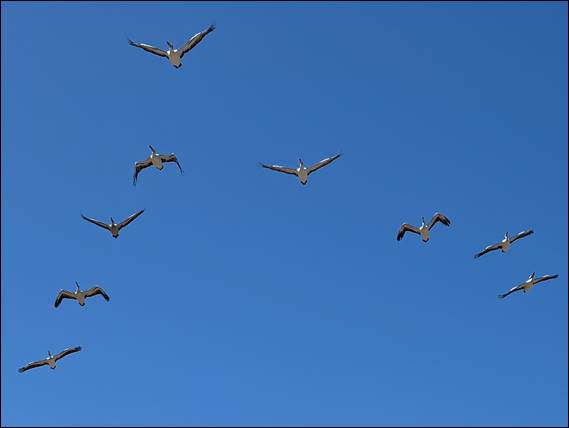
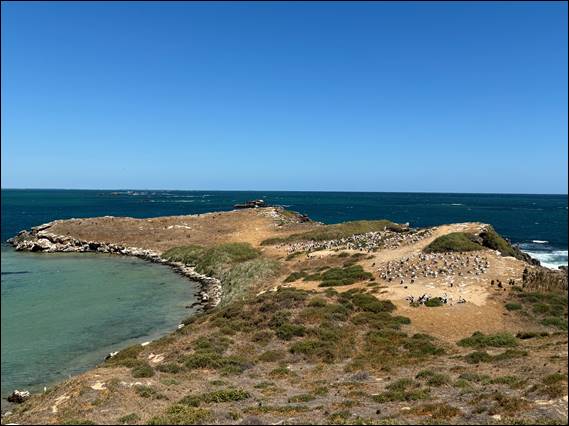
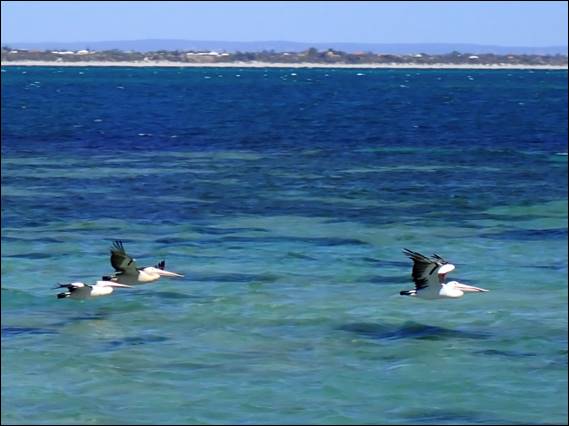
We also spotted a pair of Ruddy Turnstones (Arenaria interpres), and a single juvenile Bridled Tern (Onychoprion anaethetus) that was nestled just of a boardwalk. While these are fairly common coastal birds round most of Australia, I don’t recall seeing them before. And then there were the unmistakable Australian Pelicans (Pelecanus conspicillatus), definitely not an unusual sight other than seeing them in their hundreds and hundreds. One of the signs suggested that there are nine breading sites round Western Australia, and this was one:
They are colonial nesters. The size of these colonies can vary from ten to a thousand, so I’m guessing this was one of the bigger ones found in Western Australia. Unlike the Little Penguin that breeds in winter, the Australian Pelican surprisingly has no breeding season and can raise their young year round. I’ve read that breeding can be stimulated after rainfall has occurred inland, and in contrast to the other waders and shoreline birds we spotted the Australian Pelican can also be spotted across much of Australia’s mainland:
While hard to see in the images we got to spot some young. Their nests are very plain, a scraping the ground lined with a few bits of seaweed of feathers. Usually two eggs will be laid, and a couple of weeks after hatching crèches are formed by the chicks who gather into small clusters. These are also known as feeding pods, which maximises the chances of survival. It is probably fair to say that these social behaviours mean that the Australian Pelican will continue to do OK on Penguin Island, unlike the Little Penguin:
That is unless, or sadly maybe until, the colony is hit by Avian influenza (bird flu) in which case their social lifestyle could back fire on them. But for now it was lovely to see the big numbers, as they continual flew on and off the island. I also jumped in for a snorkel but it was no better if not worse than our local beach, with not one image worthy of inclusion. The dip did at least feel very refreshing. Soon after we caught the last ferry back to the mainland, got settled into our hotel, and headed out for a scrumptious meal to wrap up a lovely relaxing day:
While Howsie has for many years played in skater/surf punk bands, he has a wide range of music taste. I am not however sure this would extend to knowing Adrian Gurvitz. An English singer songwriter whose music career began in 1968, and is still recording and touring to this day. Not surprisingly his style has varied over the decades and has included pop, rock, and yacht rock. His biggest hit was a ballad that became the most played ballad on radio in England in 1982, despite only reaching number eight in the charts, which is why I know of him:
This song was quite simply called ‘Classic’, and today Howsie had an idea in mind to only jump on classic climbs. No doubt this was not inspired by Adrian Gurvitz, but it did bring the tune back into my head. And now knowing about the impressive near sixty years of recording achieved by this artist, I am delving into some of that as I type. So what makes a classic climb? There are many factors but it comes down to the technical challenge and aesthetic appeal, which may include the quality of rock, movement and sequences, or striking setting:
History also comes into it, and that is something that is becoming lost in time as we move from physical printed guidebooks to online guides. Online guides have however allowed everyone to be able to add their opinion based on their own experience. This is not a bad thing, as classic status should not be awarded until a general consensus has been reached that it is worthy, by the climbing community. It used to be a three star system, whereby one star is for a good route, two stars are for a notable route, and three stars is for one not to miss:
No stars would generally suggest you should only do the line if you run out of other routes at the grade you are comfortable to climb. However, in some places a five star system is creeping in just to make it more complicated, whereby one star can mean the line is considered poor quality or not recommended. I didn’t use a star system in the guide for Central Australia, and got a bit of a bashing by some for not using one. My rationale however was many of the routes had hardly had any ascents to consolidate the thinking:
Furthermore, being a printed guide I included detailed descriptions providing more than enough information to entice or ward people off each route. When I wrote the guide for the South West of Western Australia I used the standard three star system, and even reached out to the climbing community to ask if there were any changes required to the existing records and ratings. This again sparked some discussion and at times disagreement, but it resulted in landing on an a mostly agreed allocation of stars for routes deemed worthy:
Howsie’s idea was therefore to only hit the classic three star climbs, as detailed in the climbing guide that went to print in 2016. Admittedly there may now be more listed on the online database provided by The Crag. After all Wilyabrup is recognised as a brilliant place to climb. It is highly rated far and wide, and is included in many a coffee table picture book. So it comes as a bit of a shock that when I wrote the guide the main area was only thought to have nine three star lines. With only three routes below grade 20 being awarded this lofty status:
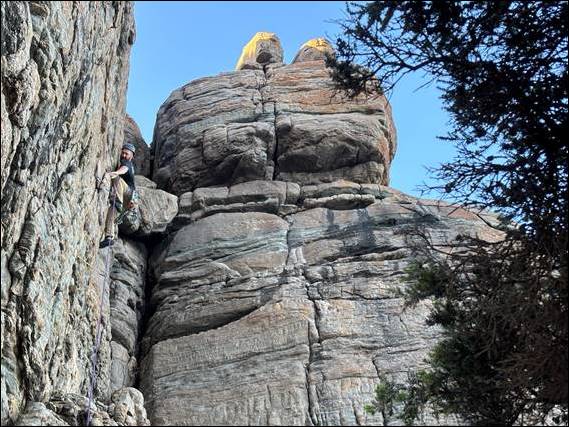
Personally I feel this is a bit of a reflection of the fact that most climbers in this part of the world treat climbing as a sport, and strive to climb harder routes. Despite his challenge where each year he wants to try incrementally harder climbs, Howsie and I treat our outdoor sessions as an adventure. Enjoying the great outdoors and all its treasures, which today included a young Australian Sea Lion (Neophoca cinerea) frolicking in the waves and a Nankeen Kestrel (Falco cenchroides) that was guarding one of the classic climbs in the third image:
And during our ascents we also came across a few Southwest Crevice-Skinks (Egernia napoleonis) and several skins of Southwest Carpet Pythons (Morelia imbricata). This was despite it being a cool breezy day, something that was very welcome after all the hot muggy days we have had for what feels like a month or two. The conditions brought dry rock and great friction, which was in Daniel and Shawn’s favour. They had made the much bigger trip to get here, having flown from Singapore for a few days to sample the rock in our local patch:
We picked off line after line, and after bagging five of the classics our arms were starting to tire. A change of course was required so we shifted our focus onto the two star routes. Opening up another thirteen climbs to choose from. Despite the choice of two star lines on offer, for the finale we dropped to a one star route mainly to allow us to climb out with packs. We had a choice of ten of lines awarded a single star, but we knew which one it would be and as with so many other routes here we reckon it deserves a higher ranking:
For more reasons than I can count it was another classic day out. We bagged as many routes as this little Bronze Rockhopper (Euophyrine), which I spotted as I followed Howsie up the final route, has eyes. Despite what my guide or The Crag may say, in our eyes every climb we jumped on today was worthy of being called a classic. Proven further by the number of people we see choose them. As I come to the end of this post, while a number of Adrian Gurvitz tunes may not be what I would regard as classics, I am however still enjoying them. At the end of the day that is what counts:
I can’t conclusively say my hair of the dog remedy yesterday worked. True my arms were not as achy at the start of today as they were on Friday. This may however have resulted from the muscles having naturally repaired themselves sufficiently for the achiness to subside. The arms seemed to feel ready for another trip out, but my head was feeling a bit groggy. Yet another saying that is linked to alcohol, this time originating from the substance itself. Grog being the rum, which was diluted with water, that sailors in the 1700s commonly drank:
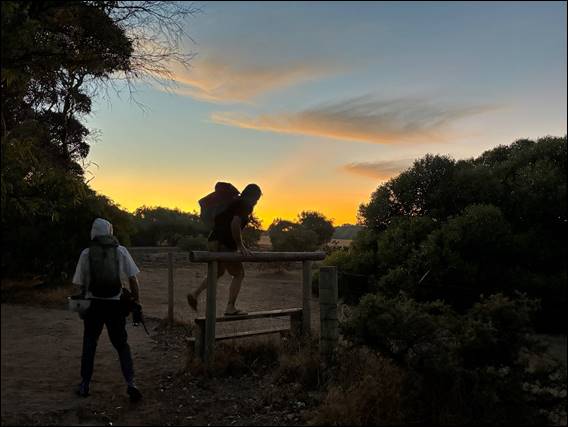
Feeling groggy is used to indicate a state of disorientation when your brain doesn’t seem to want to function. I’m happy to report my state of grogginess had nothing to do with alcohol, and was more likely due to sleep inertia and possibly being a little low on energy. With luck the sleep initiated state of mind would be shaken soon enough, which had possibly been exacerbated by getting up for yet another first light start. We didn’t start climbing at first light, although Craig, David did step over the style at the car park as the sky began to light up:
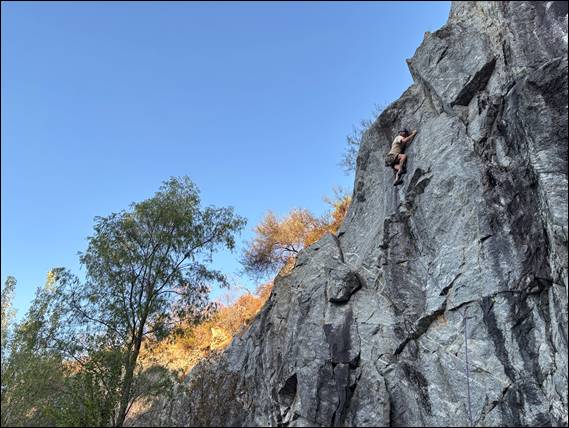
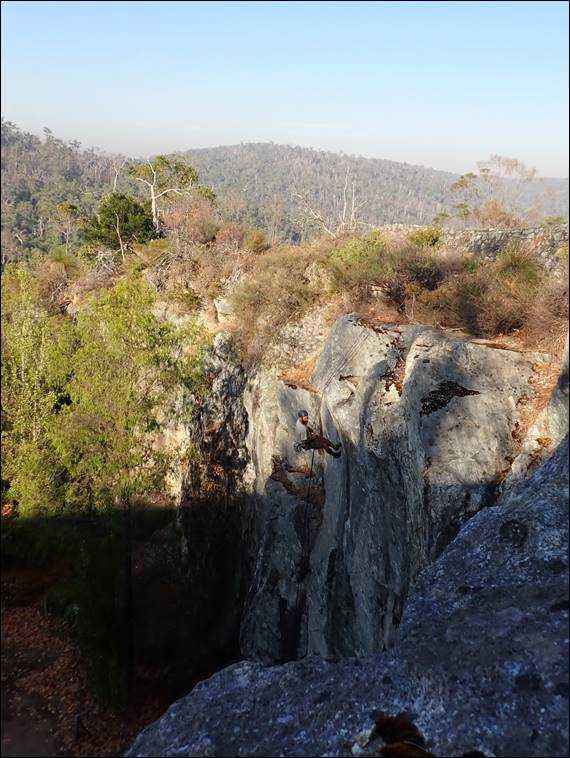
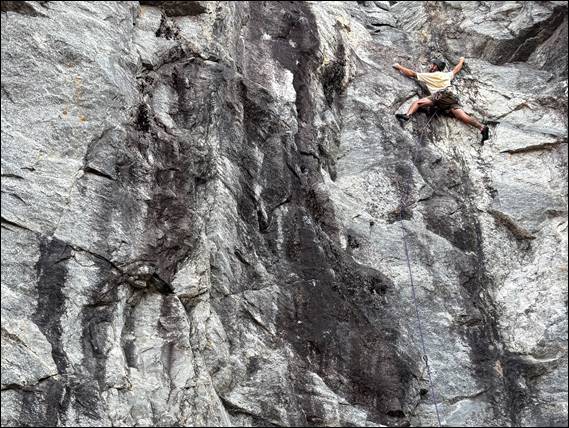
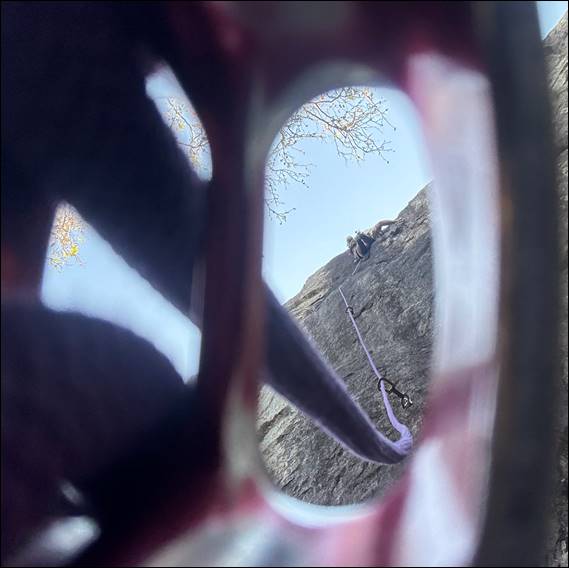
In fact, what with the walk in, ablution pit stop, general phaffing about getting ready, and a bit of chit chat with Mario and Adrian when they arrived not too long after us, daylight was well and truly upon by the time David finally started up the first route. He seemed keen to have a lead having already set his mind on the climb of choice. However, after placing the first piece of gear and then needing to run it out a bit before more gear came into sight. it was his turn for his brain to not want to play ball. It felt like it was going to be a slow day:
I’ve previously mentioned David’s psychological barrier, which he has not been able to fully shake. Instead of fighting it he came down, offering Craig the lead. Meanwhile, Adrian was also battling with his mind. He and Mario had packed in a big day at Bobs Hollow yesterday on steep limestone sport routes. Weary from that, he struggled to commit to the crux at the top of the route. Instead sneakily escaping off to the right. Something I caught Peter doing in early December, when he admitted having never topped out over the headwall:
Peter’s name came up a second time when I pointed Mario to line I thought he may enjoy, which he was unaware existed. While I have only climbed with Peter for just over a year, I first heard from him just shy of ten years back when I was pulling together information for the local climbing guide. Peter told me about a long forgotten climb that he had been involved in establishing. Making use of two existing routes, linking them via a steep and exciting traverse. Mario’s brain was firing as usual on all four, if not six cylinders, but other things plagued him:
He was picking the harder lines and it was a little sticky today, not a great combination here. While he rated the climb, he had to resolve to not getting it clean. The crew got bigger when Steve and Ange turned up. The last time Steve and I caught up was just over three years back, and I was pleased to say that his brain was also working just fine. Enjoying clean ascents helped by, like Craig, choosing moderate routes, unlike Mario. It was turning into a bit of a social event, and as predicted we were not moving particularly fast:
Craig and I alternated leads, with a fair bit of inaction in-between. This would normally irk me, instead I refocused my attention by scampering about taking images. My sleep inertia was long forgotten, but the stickiness that was Mario’s undoing was not helping my energy levels. Something that I really started to notice when I jumped on my second lead. One of my more gnarly traditional creations. Nervous moves in exposed positions, somewhat above the gear placements. Making the risk of a fall that bit more of serious a consideration:
It certainly had me on edge, but this is the stuff I relish as it hones your focus. Forcing you to switch off all the other things your brain may be trying to multitask on, including depleting energy levels, and only think about one thing. Pulling off the moves, which thankfully I did. Craig, David and I only racked up four climbs. We were however not alone and everyone else also seemed to be going in slow motion. I guess there are some days when you just have to accept the change of pace, kick back, and just enjoy being in such an amazing place:
































 Sandbagged