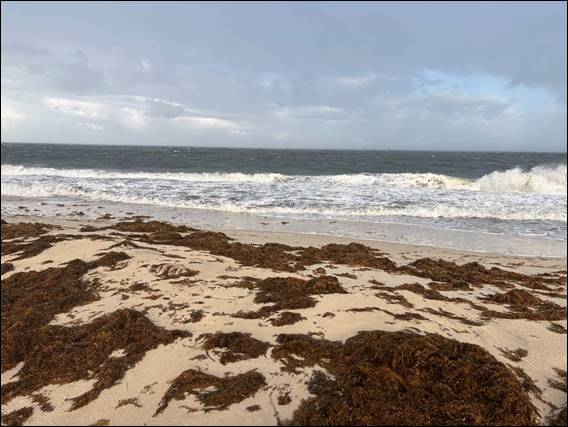
With a bit of luck the front this weekend will help to mop up some of the whale remains on the beach, to the point that it is official open again. Saturday morning the beach was strewn with weed that had been washed ashore, indicting it had come in reasonably hard overnight. The ocean was still pretty choppy, resulting in Lisa and the few Peppy Plungers willing to face the rain and wind only standing on the beach and watching the water. Not that they were supposed to be going in the water, or even standing on the beach, anyway:
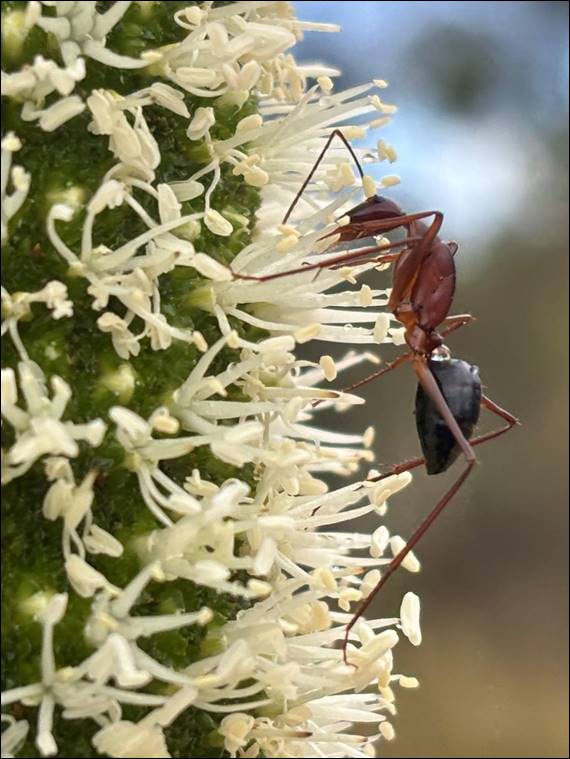
Meanwhile I went for a wander at the Capel Nature Reserve. Keen to see what might be out and about. Heaps of Grass Trees (Xanthorrhoea preissii) were in flower, and I found lots of what I believe are Black-headed Sugar Ants (Camponotus nigriceps) foraging on their flowers. The head of these ants can vary between dark brown and black, and this is likely a major worker. One of four castes in their colony that is also referred to as the soldiers, as they will defend the nest against intruders by spraying formic acid from their abdomens at them:
This species of Sugar Ant has relationships with at least three species of Azures Butterflies (Ogyris). With two species it is mutualistic. When massaged by the ants, the caterpillar’s dorsal nectary organs secrete a food source of a sweet, nutrient-rich honeydew. In return the caterpillars is provided shelter in the underground galleries and are protected when they go outside to feed. Another species is parasitic, using chemical mimicry to trick the ants into treating it as a nest mate. Once in, this caterpillar remains undetected and eats young ants:
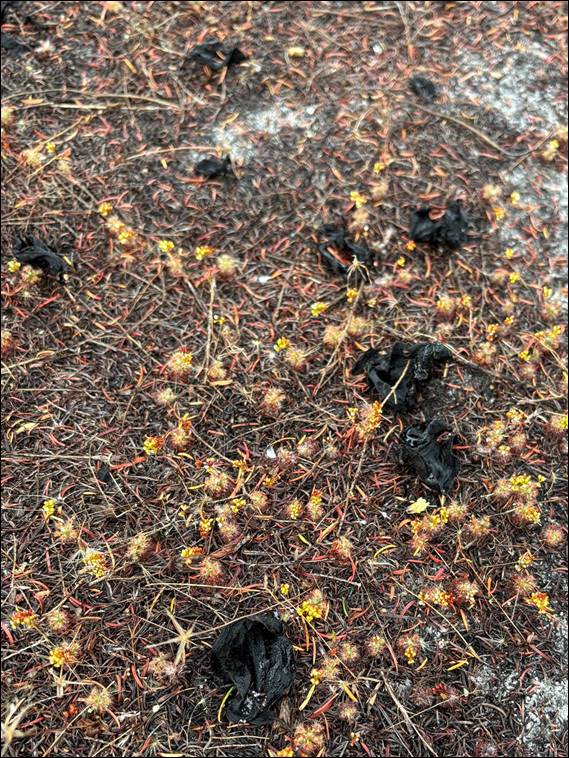
Above are the shrivelled, jet-black, and dried basal leaves of Red Beak Orchids (Pyrorchis nigricans) colony, which I check every year in the hope at least one will flower. This species spreads vegetatively via underground tubers so can form large and dense colonies, and this one has well over a hundred plants. In all the years I have been coming here that has not occurred, and it may lie dormant until a fire comes through. In contrast to the blackened leaves, this Twining Gompholobium (Gompholobium polymorphum) was very cheerful:
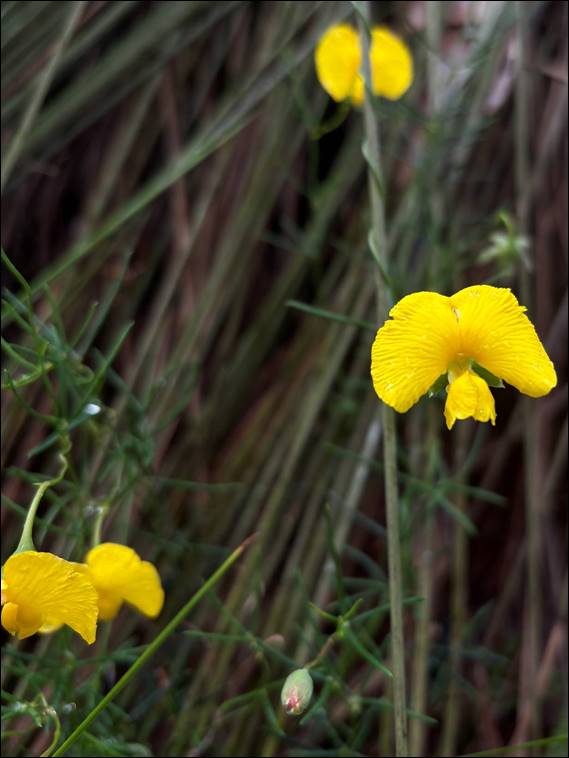
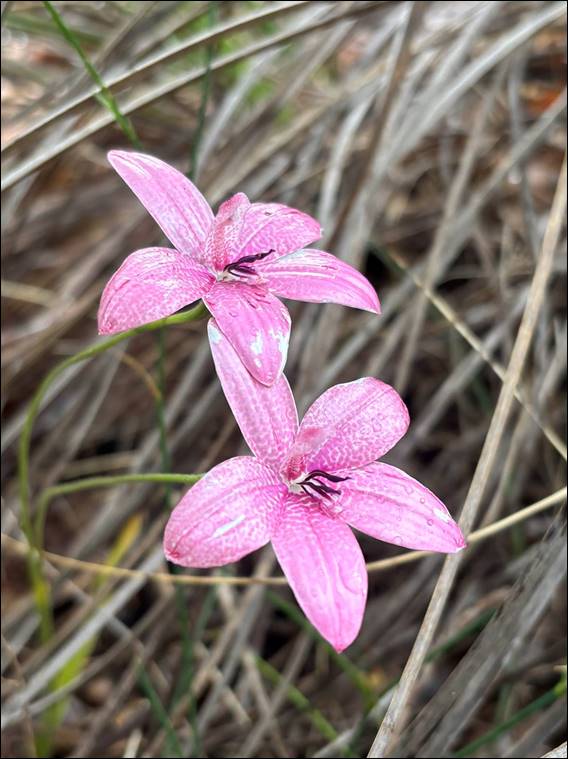
The flowers of this species can be shades of red, orange, or yellow, and the leaf shapes can also vary widely across regions. This is why it was named polymorphum meaning many-shaped, and coming from Ancient Greek words poly and morphē. Below I found lots of Pink Enamel Orchid (Elythranthera emarginata), not the first time I have seen them this season nor what I was hoping to find, but is another nice colourful addition. The species name of ēmarginātus is a Latin word meaning notched at the apex, referring to the two labellum calli:
The reason I came here was primarily to find the Christmas Spider Orchid (Caladenia serotina), and I managed to find just one. The species name comes from sērōtinus, a Latin word that translates to coming late, belated, or of the late season. Referring to it being a later flowering Spider Orchid. Better late than never I say, and I was not sure if I would see it here this year. It likes winter-wet areas, even flowering in shallow water, but this year it has been so dry that the wetland has not held water, so I feared the conditions may not have been right:
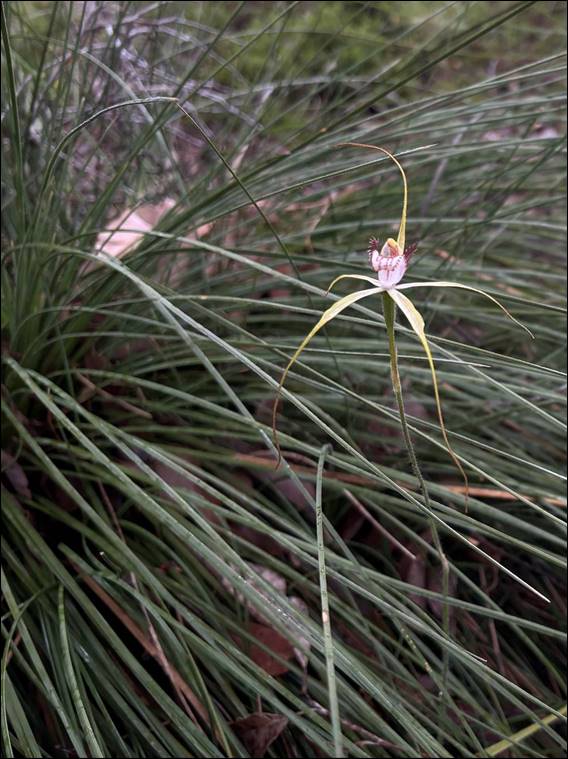
That is not to say it hasn’t rained, just not enough to wet up the landscape and fill the local depressions. Soon after coming across the above, the skies darkened and opened up. While it didn’t come out in the image below, big heavy drops rained down as I took shelter by nestling close to the trunk of the biggest tree I could find. While native Australian trees can provide partial shelter from rain, they are not often great. This is due to many species, especially eucalypts, having open, pendulous, or hanging leaves:
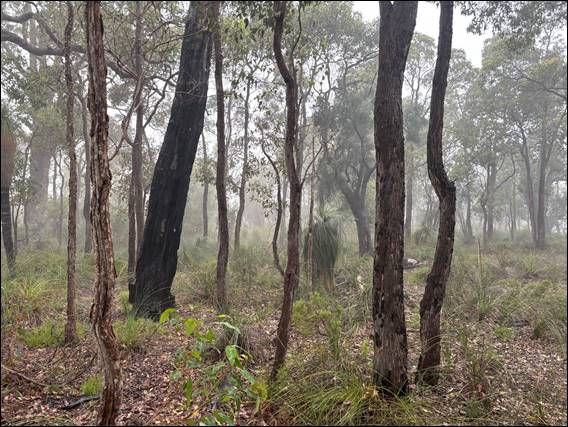
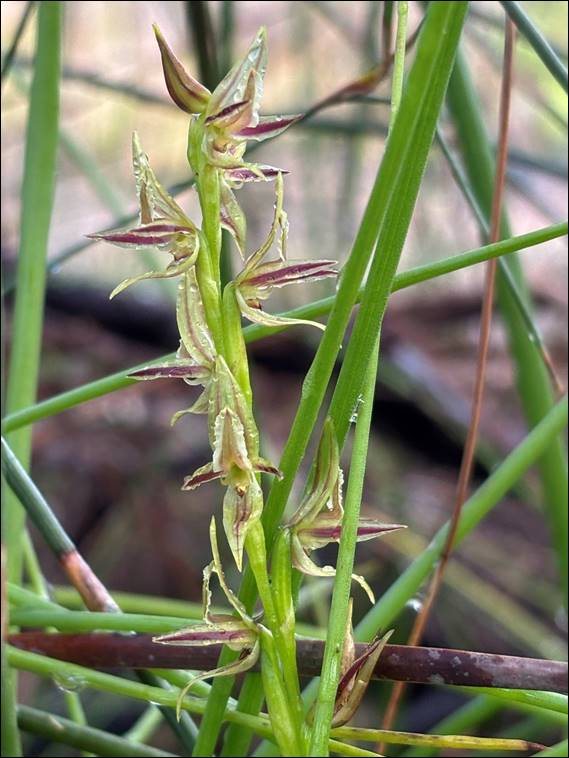
This form of leaf and canopy structure being more suited to maximise water capture and use. Allowing rain to fall near, and at times even directing it to, the trees roots. As well as avoiding heat damage in the relatively dry, high-sunlight climate by being angled to catch the less intense morning and afternoon light, rather than the full midday glare. Another orchid that loves wet conditions in the below Swamp Leek Orchid (Prasophyllum drummondii), which I again wasn’t sure if I would find but there were a just few plants in well covered shady spots:
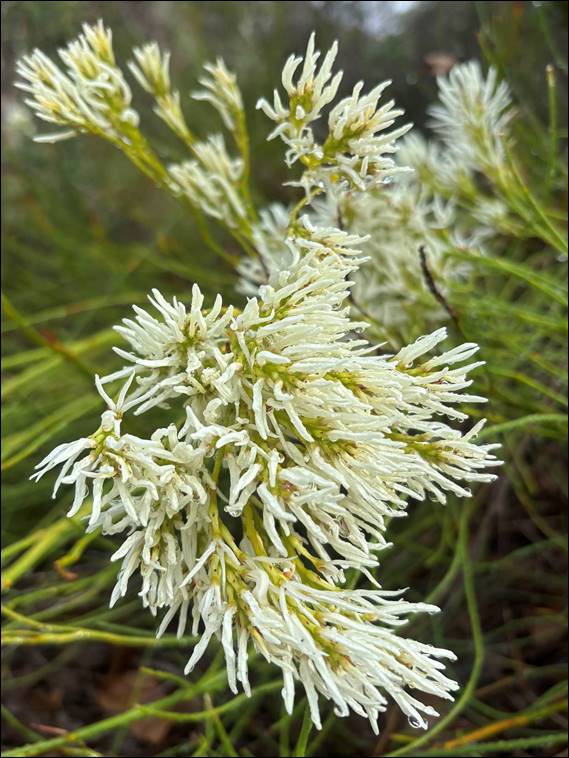
Pretty happy with my haul, and feeling just a little soggy it was time to head back. Along the way I liked this Spider Smokebush (Conospermum teretifolium), which I can’t recall seeing before. The flowers use a similar technique to some orchids, and Trigger Plants (Stylidium), whereby a spring-loaded style is released when an insect probes into the flower tube. The style picks up any pollen being carried, while the anthers simultaneously burst to coat the insect in fresh pollen. With a force that can stun or occasionally kill smaller insects:
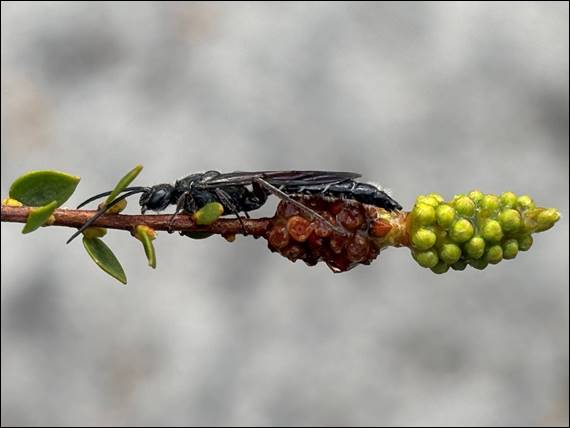
Somehow taking a wrong turn I ended up on the long way back. By the time I realised my mistake there was little point in backtracking. So continued on, enduring yet another passing shower. This time out in the open resulting in me feeling quite a bit soggier. Something I could maybe have avoided if I had attempted to shelter from the elements a second time, as this male Native Flower Wasp (Thynnidae) hugging the twig and woody seed capsules of a Lemon Honey-Myrtle (Melaleuca densa) had: