The ocean is too rough for the Peppy Plungers to dip today. A sure sign the weather has been and continues to be a bit naff. And as a result I’m not likely to get out for a wander in the bush, let alone touch rock this weekend. I have however had a couple of quick wanders during the week to see what may be out and about. Mostly because I wanted to find the one species of orchid that I wasn’t able to spot at the Capel Nature Reserve a few weeks back. I have seen it just once in the coastal dunes just out the back of our home, so I started there:
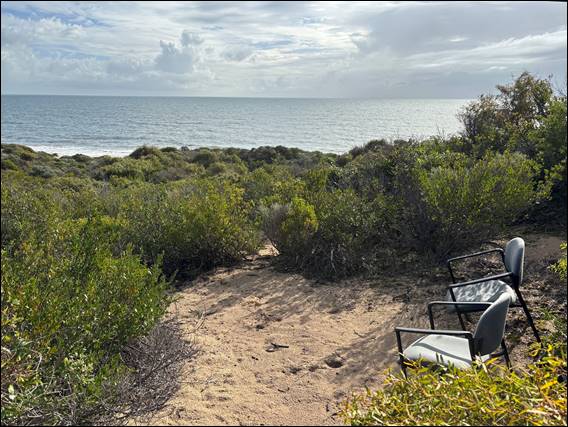
I didn’t have too much orchid success but stumbled across a little patch someone had cleared and popped a couple of chairs in. It seemed a little random. The track to get to them is fairly overgrown and they are tucked away from anywhere, but the chairs look to be in good nick so I’m guessing must have been placed there recently. While the orchids evaded me I did spy a slimy egg shaped bulb coming up, being a Common Rosegill (Volvariella gloiocephalus). The species name aptly coming from Greek words meaning ‘glue’ or ‘slime’ and ‘head’:
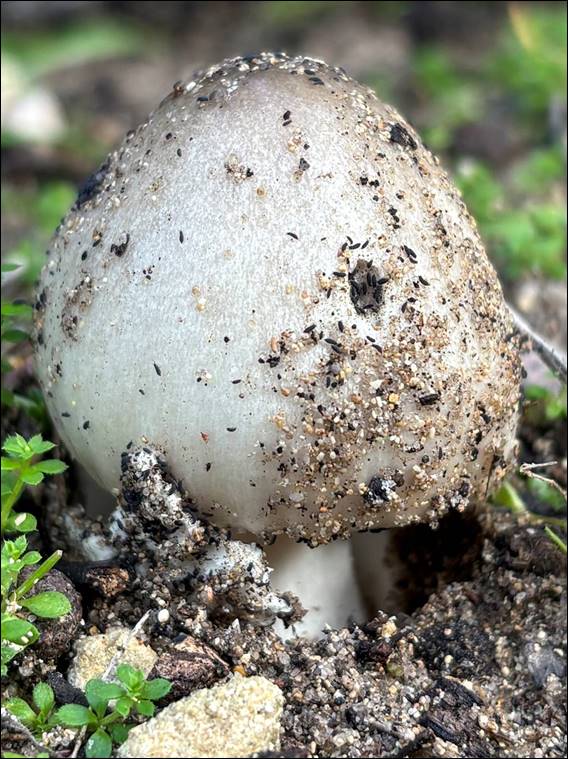
It was nothing special. Being a species that grows in temperate areas, is not too fussy about its habitat, and is found on every continent except Antarctica. Slugs and snails are the most notorious consumers of this fleshy mushroom, often leaving visible and irregular bite marks on the caps. No slugs or snail on this one, although I have no idea what insects were taking advantage of what may be a bite mark, which had provided them with a way through the defensive skin. My next image if of a Golden-eye Lichen (Teloschistes chrysophthalmus):
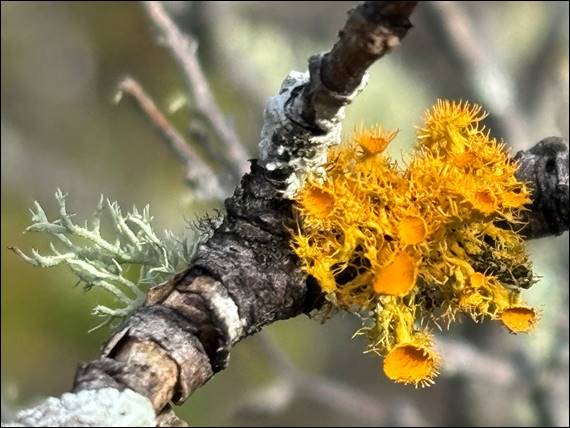
These are said to rely on highly specific coastal or temperate, sun-exposed habitats. Something we have in abundance, as such I do get to spot these every so often despite being considered highly localized and relatively rare in Western Australia. In the UK they were thought to have been extinct for over a century, until staging a quiet natural recolonization. While they may not be everywhere and are general small, it is hard to miss their incredibly bright and cheerful colour. As for the lichen to its left, I have had no luck in identifying that:
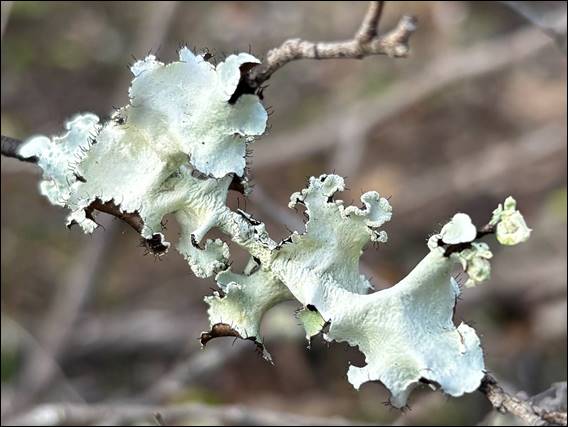
The above is a Powdered Ruffle Lichen (Parmotrema hypotropum). Several lichen found here have cup like structures that release spores, very clearly seen in the Golden-eye Lichen, but not this one. As the name suggests the margins feature a powdery edge, called soralia and these produce and release its spores. It also has distinctive black hairs along the edges. As mentioned before, lichen are a symbiotic relationship between fungus and algae or cyanobacteria. Being entirely fungal the purpose of these hairs has baffled botanists:
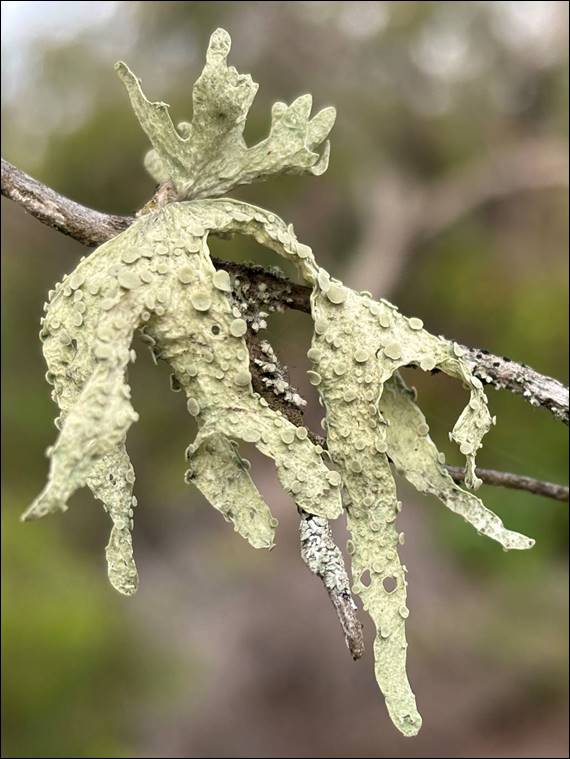
The next species shown above, Cartilage Lichen (Ramalina celastri), also clearly shows the cup or saucer like structures. As with all lichen because they have no roots they absorb trace minerals, nitrogen, and moisture directly from rainwater, dust, and the surrounding air. This results in them being high susceptible to poor air quality, making them a great indicator of how fresh the air is. They can be one of the first things in the ecosystem to die or disappear when the air quality degrades. We are lucky here and have an abundance of lichen:
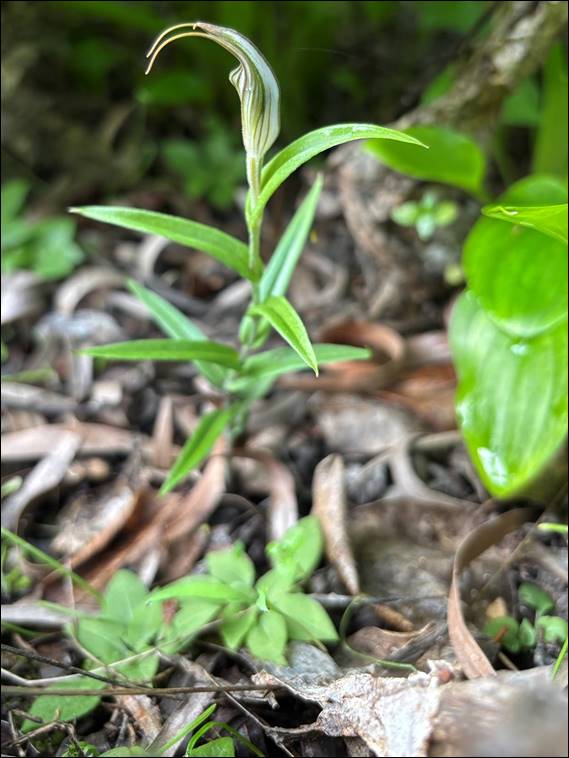
I was going to give up and head back when I decided to look for gems hidden under the blankets of the incredibly invasive weeds, the Arum Lily (Zantedeschia aethiopica), which were starting to take over big patches. Here I found a solitary Jug Orchid (Pterostylis recurva) with its flower preparing to emerge. This Greenhood species is a little different to most in that the labellum remains entirely hidden within the flower, rather than sticking out. On the flip side it is similar to others as they can from large colonies, but with few flowering plants:
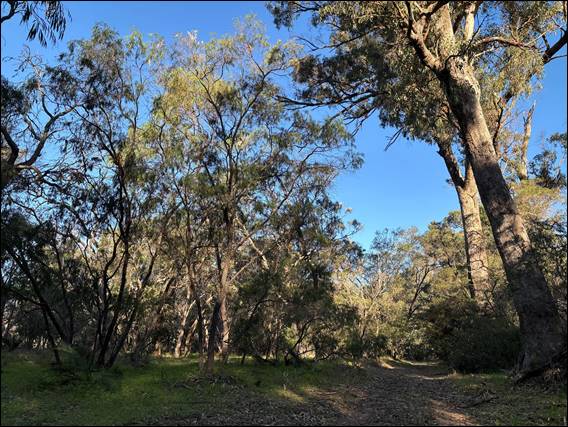
The non-flowering, or sterile, plants form a ground-hugging basal rosette of leaves. Whereas flowering plants will not have this feature. The leaves are instead above ground and distributed along its stem. The species of orchid I was really keen to find also displays this trait, and I found heaps of sterile plants in the area I have previously spotted a flowering specimen. The other weekday trip out was to the Minninup Tuart Woodland, with a mixture of tall Tuart trees and lower Peppermint trees. Here I could not resist taking this image:
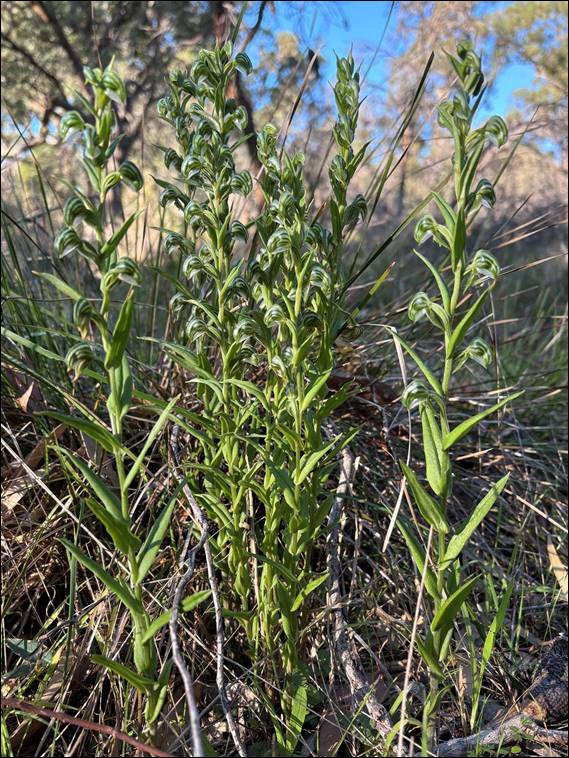
A very vibrant cluster of Banded Greenhood (Pterostylis vittata). The star was however the Brown-veined Shell Orchid (Pterostylis aspera), which I finally found. Only one small cluster came into view for me. They are quite low to the ground, that and their drab colours result in them being very well camouflaged. On this specimen there is a Spittlebug larvae (Bathyllus albicinctus). Partially hidden in the foamy white mass, often referred to as ‘cuckoo spit’, which they discrete to both protect themselves and avoid dehydration:
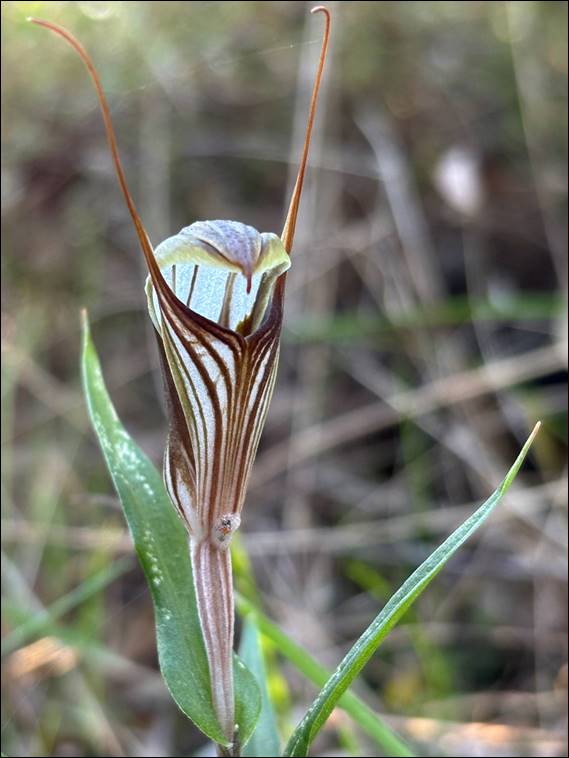
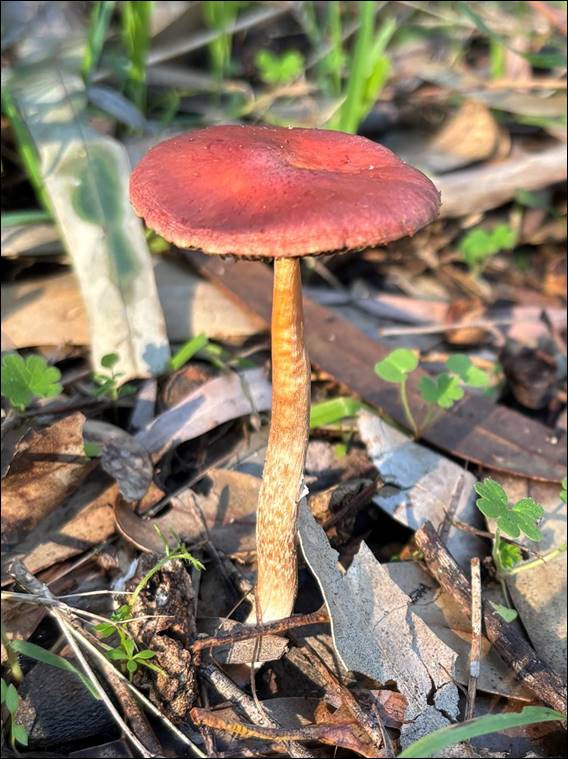
After finally finding what I wanted to, I headed off but will close with this Chip Cherries (Leratiomyces ceres). While native to Australasia it has taken advantage of the global landscaping trade. Australia has a massive wood chip export market forming one of the largest segments in the country’s forestry sector. This has allowed this species to spread to North America, Europe, and elsewhere. And as such can now be found over much of the world thriving in mulch and woodchip beds. Earning it the title of the ultimate ‘Woodchip Hobo’:
 Sandbagged