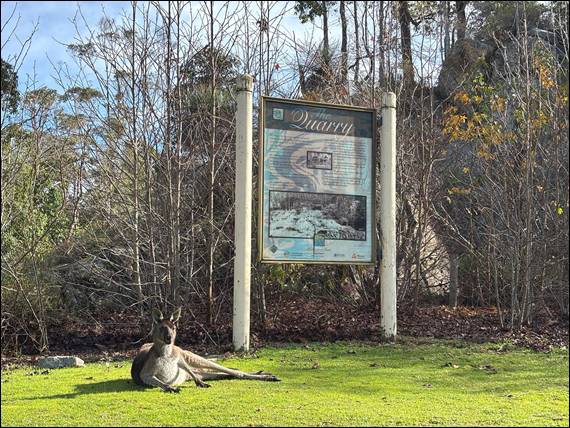
For several reasons Howsie and my fortnightly trip to the quarry was a much later start today. Arriving mid-morning under a mostly clear sky. This meant the sun bathed the lawns where Western Grey Kangaroo (Macropus fuliginosus) lazily switched between grazing and basking in sun. The main walls, where we started climbing, were tucked on the north east side of the amphitheatre and as such were in shade. The shadows extend that bit further this time of the year, due to the low winter sun. And as we prepared to start our session it felt cold:
Unlike yesterday, I pondered if I should have rugged up a bit more than I had. These walls never get any sun on them, and during winter once lost the thermal mass is not easily replaced. The rock gets cold and stays that way. A few more of the black streaks were starting to succumb to seepages, and it felt like the walls had a slight damp feel to them. Various mosses and lichens live on the walls, and the below is a Granite Moss (Andreaea). Individual black, dark brown, or reddish cushions form clumping colonies:
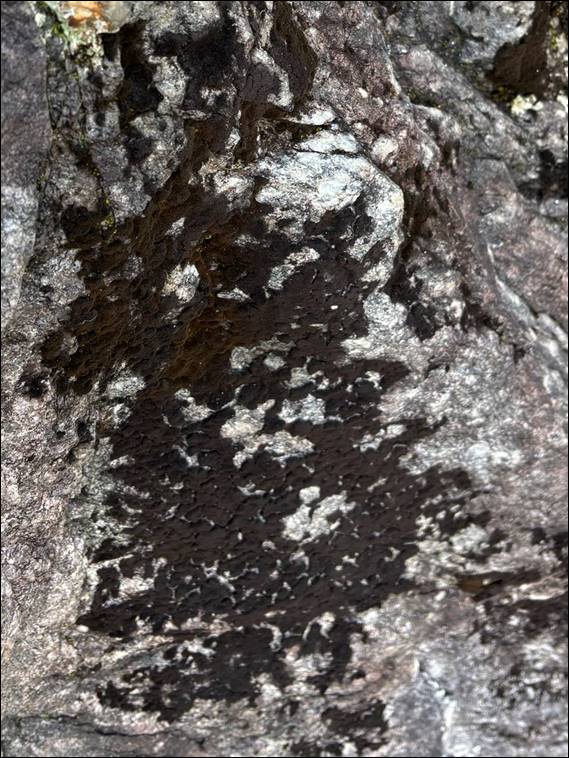
Brittle during dry periods, this patch was hydrated. With no root systems they absorb water directly through their surfaces. From the morning dew, direct rainfall, or the seepages that run down the steep walls. They are found primarily on acidic granite outcrops, and while these faces are quarried, as opposed to natural, the moss isn’t that fussy. The granite here is felsic. Rich in quartz and potassium feldspars results in it containing lots of silica, and gives it a pale look. The silica makes the rock naturally acidic, which also affects the local soil makeup:
These resulting slightly acidic soils aid in defining the ecology of the areas flora. Acid-loving native species like Jarrah and Marri trees thrive, as well as various understory species. Lichen, which is a composite organism resulting from a partnership between a fungus and algae or cyanobacteria, secretes acids that very slowly break down the granite. Which transfers some of the chemical composition, including the acidity, into the soils. The lichen shown below is likely to be from the Rock-Shield (Xanthoparmelia) genus:
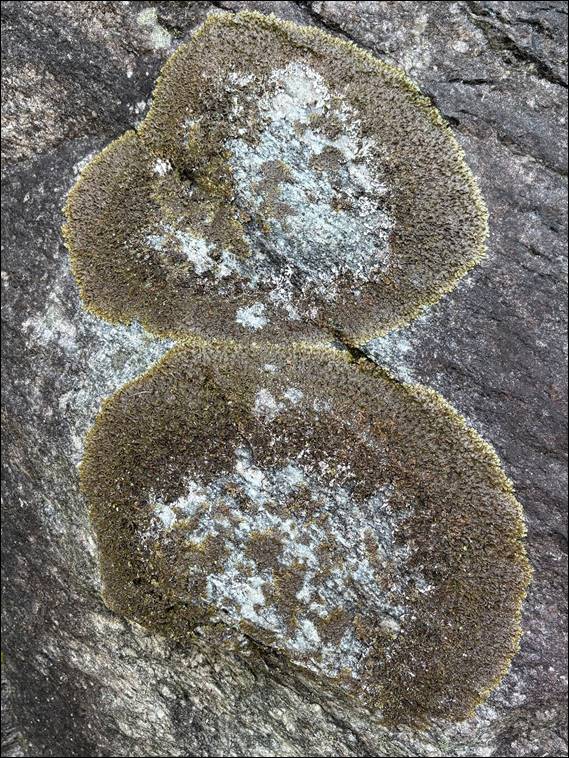
These thrive on exposed granite outcrops, and there are over 200 endemic species in the South West of Western Australia. Making it one of two global hotspot for its diversity, the other being southern Africa. Based on the darker colour of this specimen, I’m tempted to say may be a Xanthoparmelia pulla. A rebel of the genus, as it lacks usnic acid that is contained in most species of the genus. This results in it having a dark-brown colour, instead of the more usual yellow-green hue. Below is a close up of the poorly fringed cup-shaped fruiting bodies:
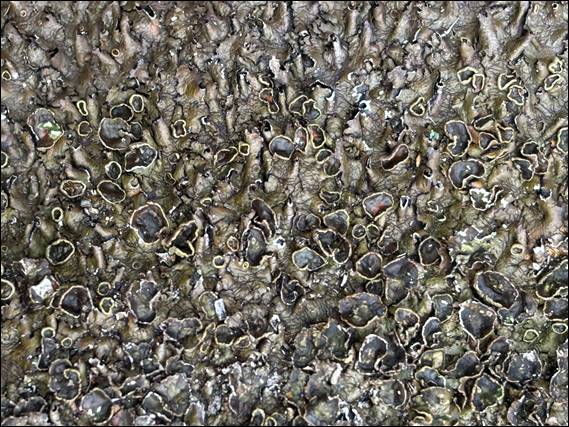
The lichen expands at just over 1mm a year, resulting in this one being between 80 to 100 years old. This aligns well with the age of this quarry, which was first mined in the 1930s. The granite was blasted and then crushed to provide the aggregate required for the concrete to build the dam wall. As demand for water increased the dam had to be enlarged, resulting in the quarry being reactivated twice in 1945 and 1956. This lichen was however closer to the outer walls, so I’m guessing may not have been disturbed during these two later operations:
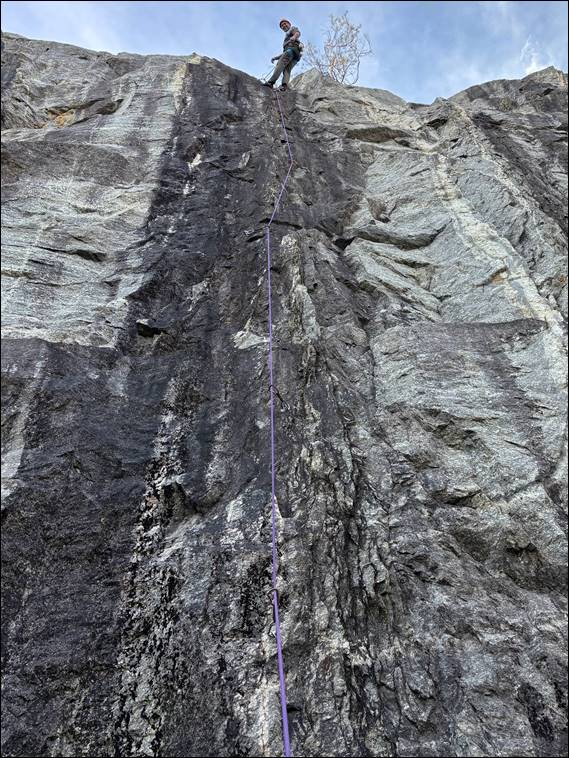
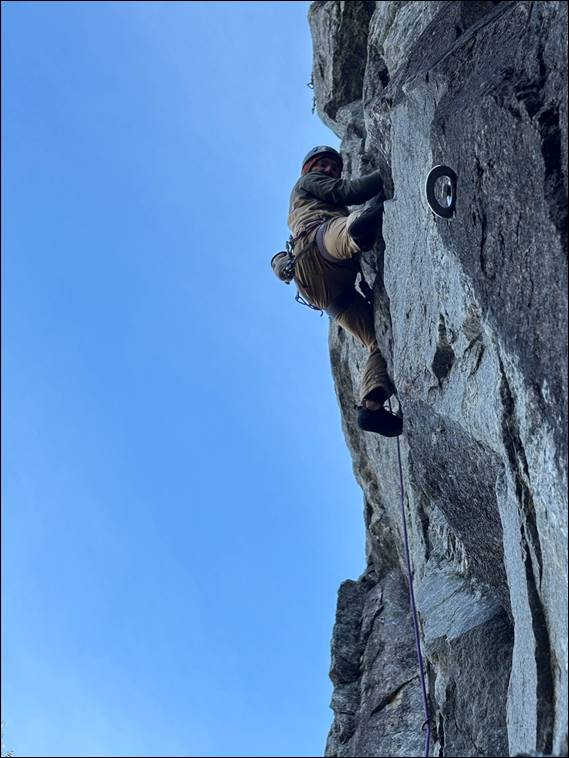
In 1960 the quarry was cleaned up and transformed into a recreational space. The dam engineers put their skills to designing and building the unique concrete and stone picnic shelters, which still stand strong today. After yesterday’s battle on the one and only tough route Seb and I climbed on the warm coastal environments, I was a little worried about how strong I was. Howsie looked at me questioningly, when I started proceedings on a spicy grade 20. Despite the coldness that numbed the fingers and wet moss ridden patch, I cruised it:
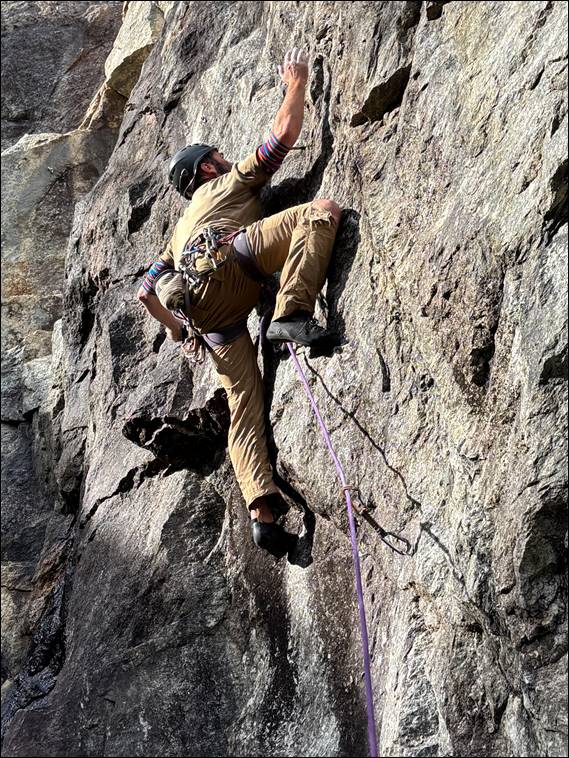
As did he. After that and due to Howsie’s chosen line we kept our sights on a few of the tricky grade 21s we have only in the last few visits started to attempt. With the blood starting to flow the fingers no longer felt numb, and the rock also felt, for the most part, dry. Today was my day, the next three 21s felt great. Howsie, was however having to battle hard and taking flight on several occasions. Next time the roles will no doubt reverse, as so often happens. Our last two line were in full sun, which reflected off the mica at the base of the last climb:
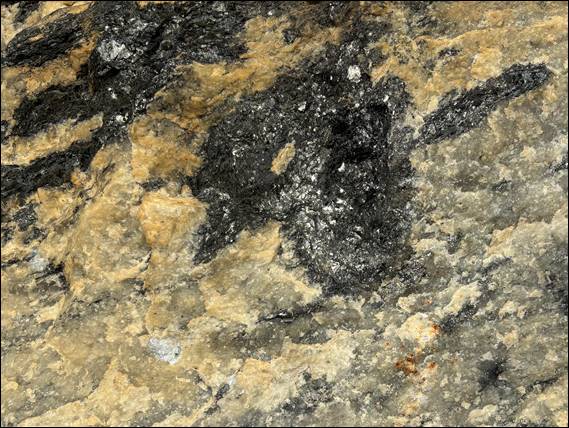
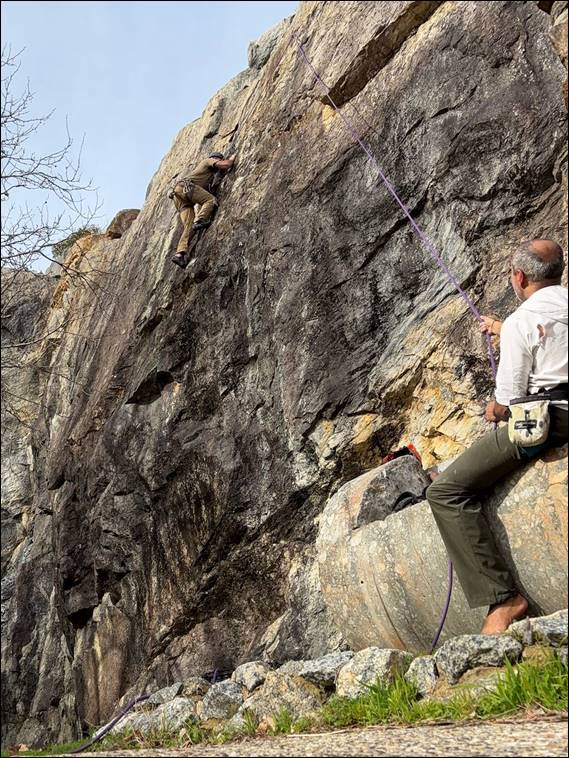
This route has a steep pumpy start, which didn’t pose any issues. At the end of the steep stuff it transitions to a selection of tiny crimps, with not a great deal to work with for footholds. From here the crux of the route is the transition onto a near featureless slab. Once the crimps are chosen it is hard to change the sequence, and several times I chose a sequence that led to a dead-end. Resulting in me taking several falls. Howsie decided in his exhausted state he was better off having the security of the top rope, which was a good call:
 Sandbagged