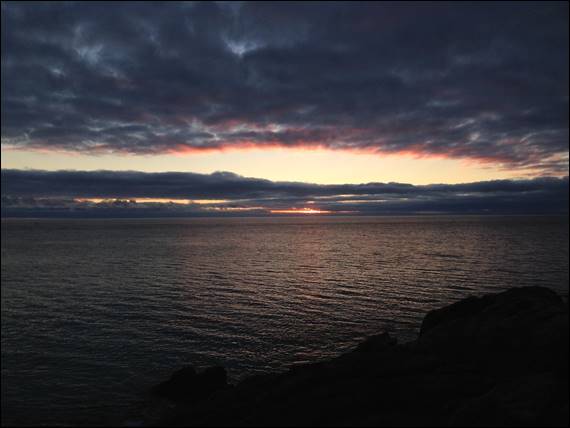
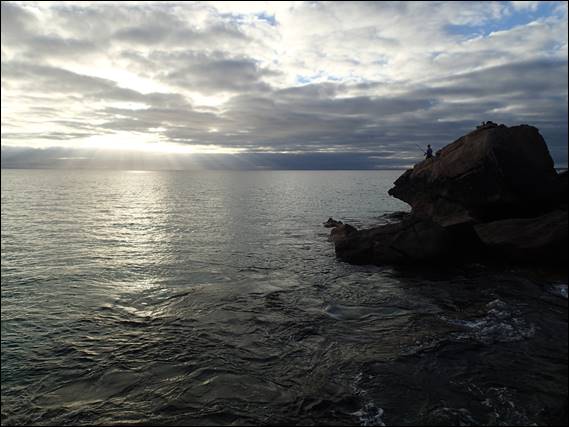
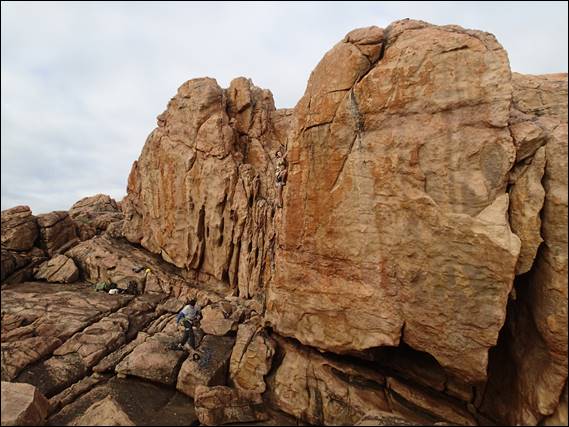
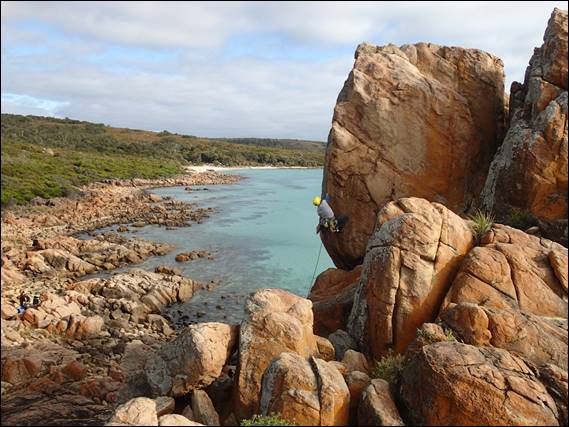
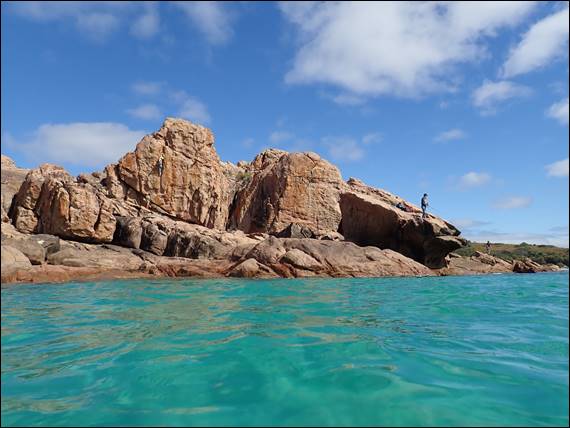
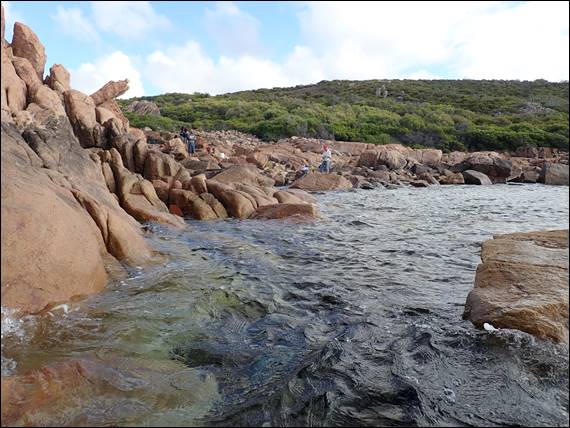
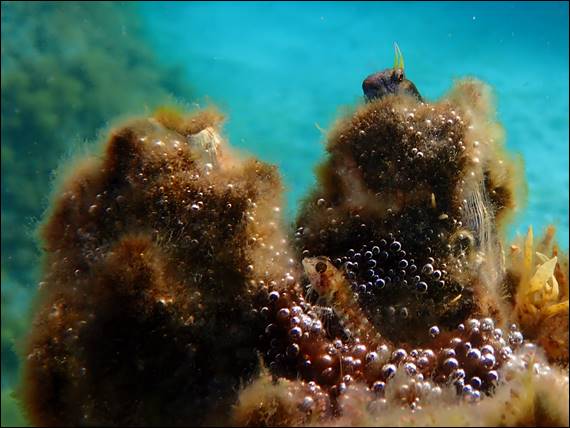
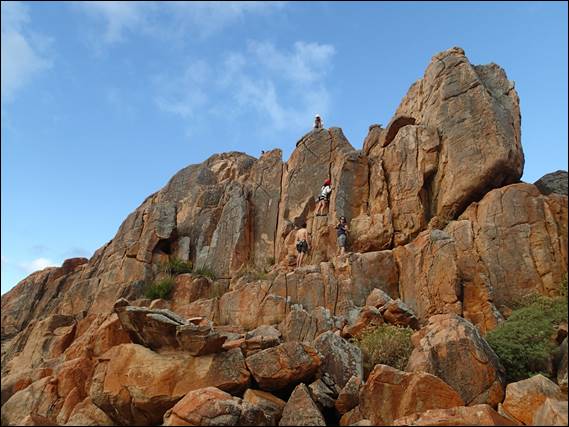
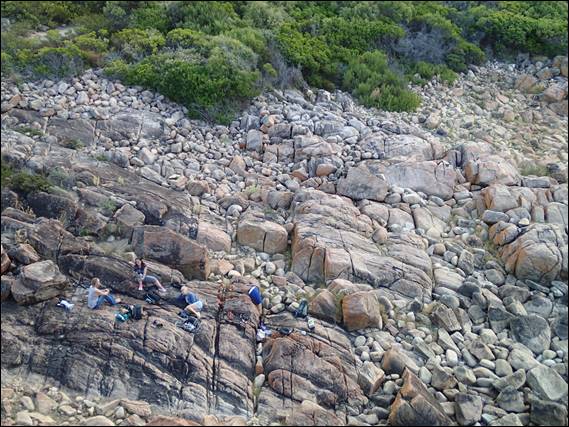
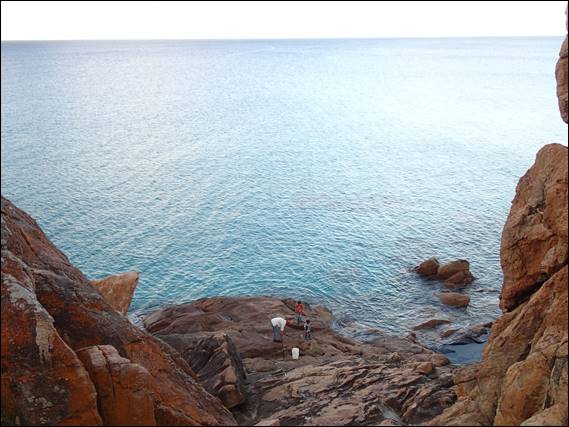
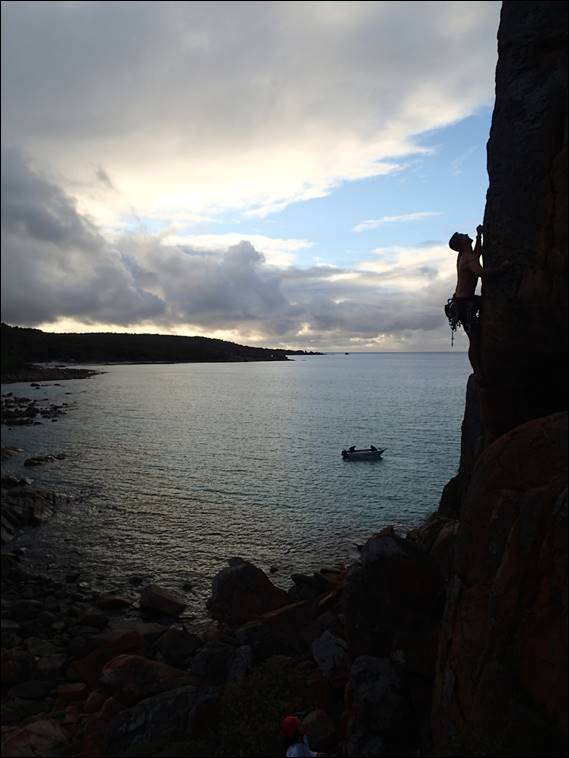
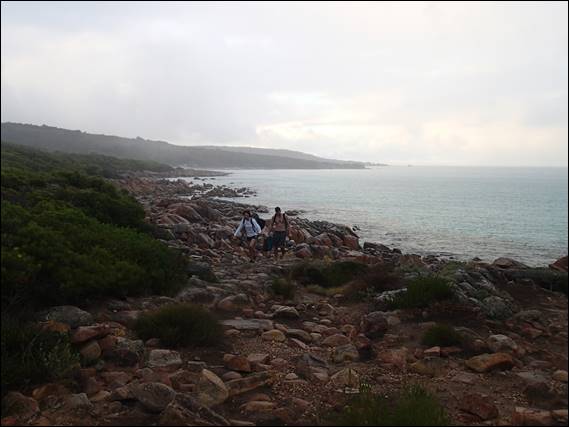
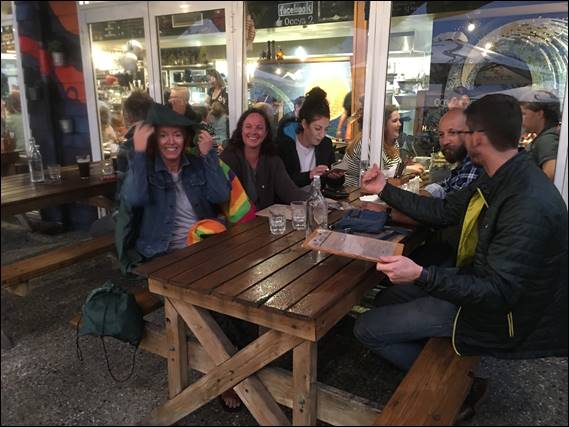
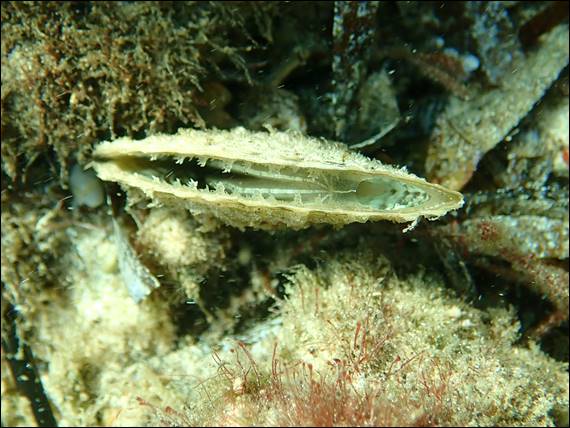
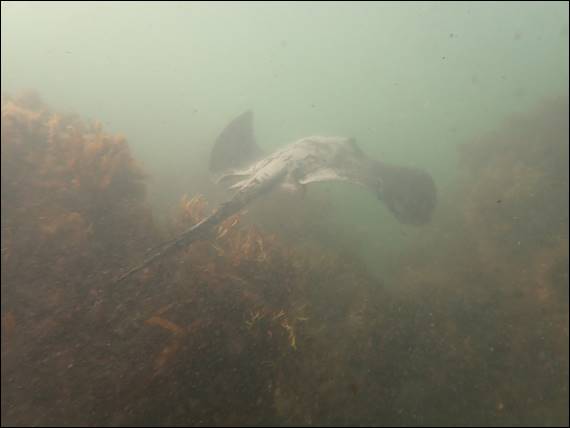
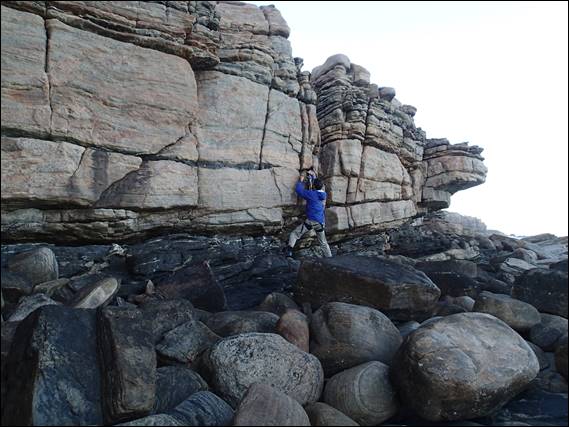
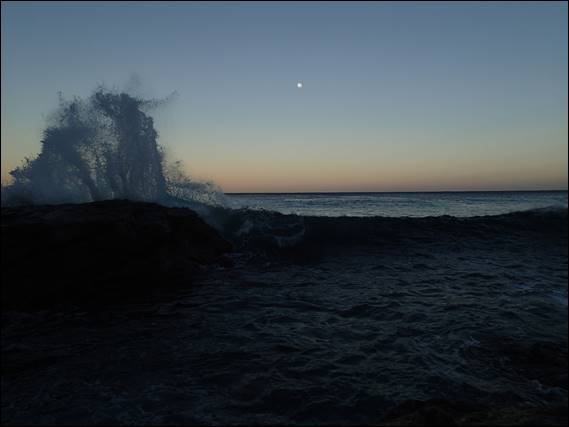
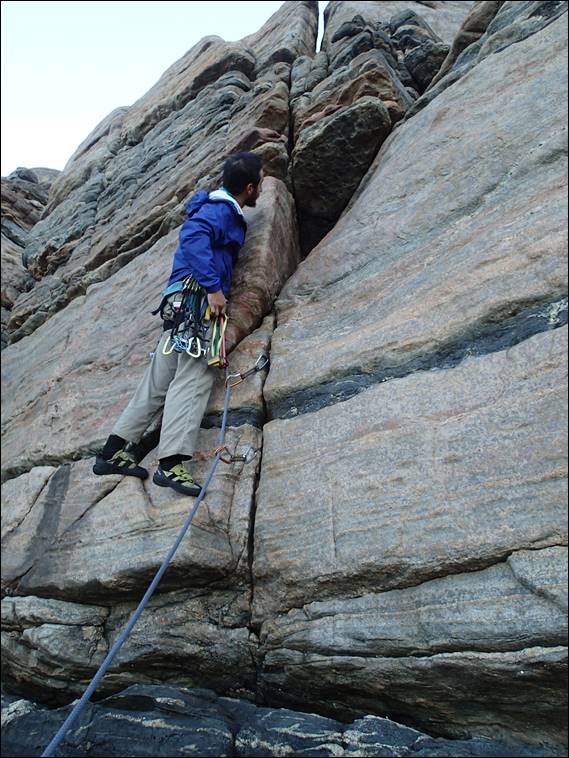
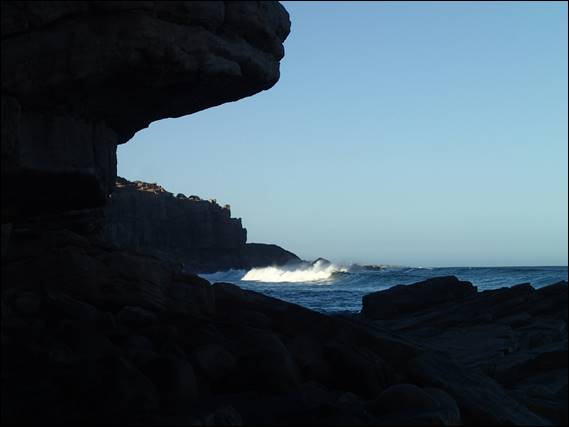
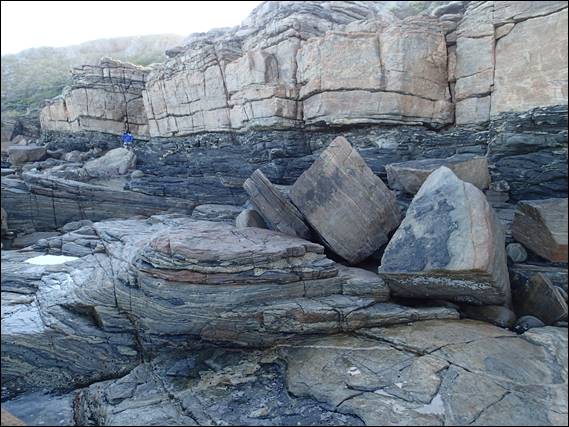
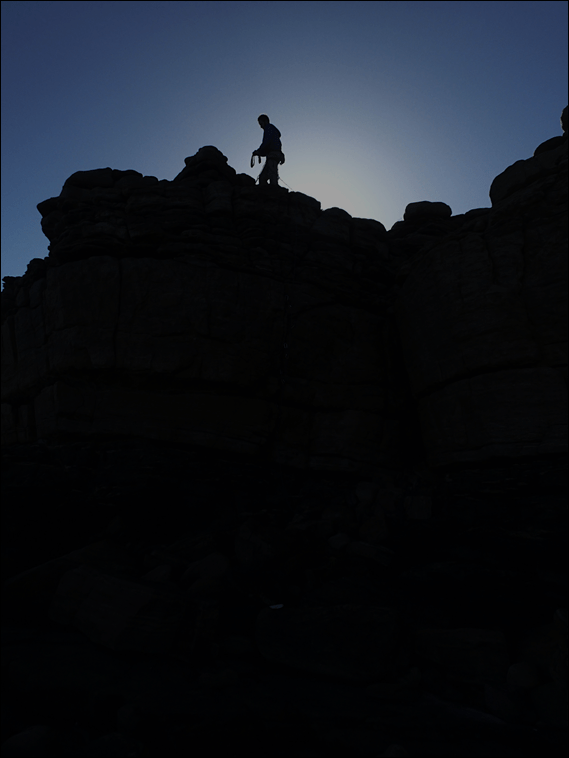
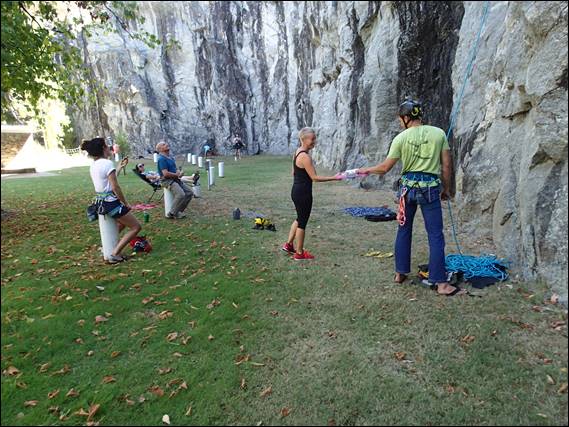
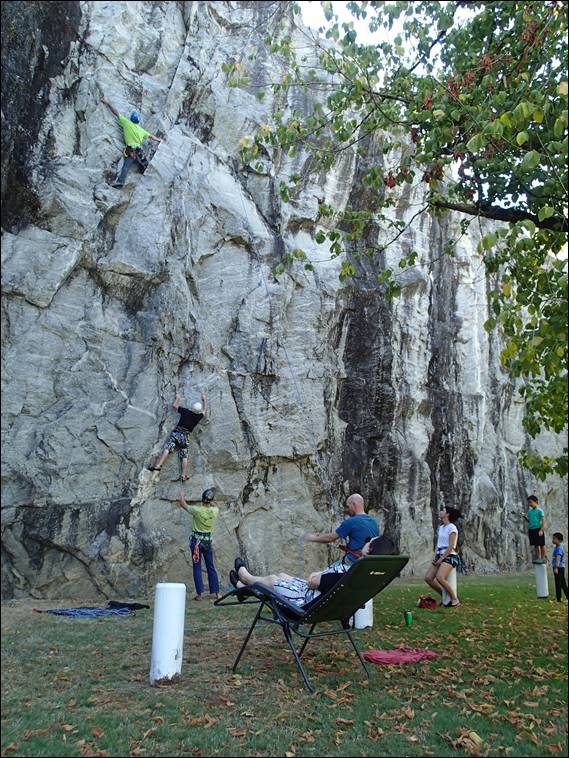
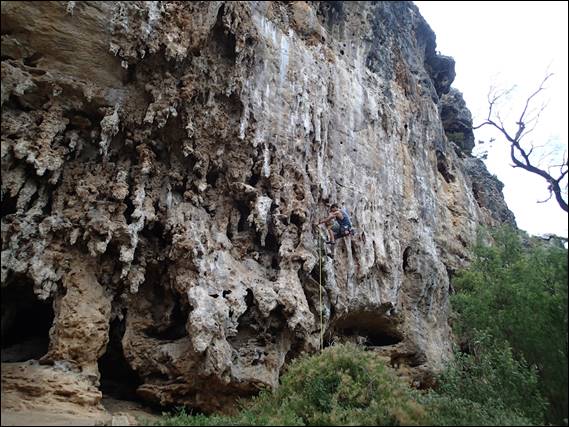
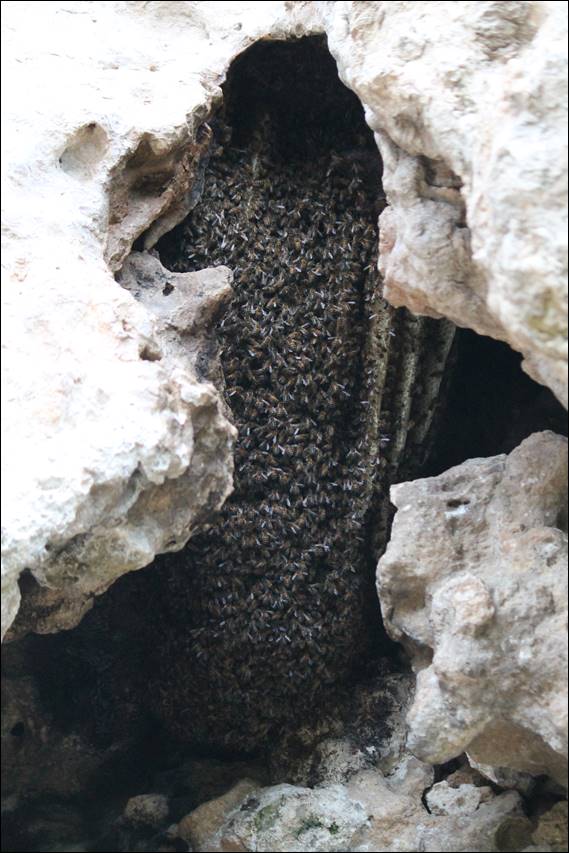
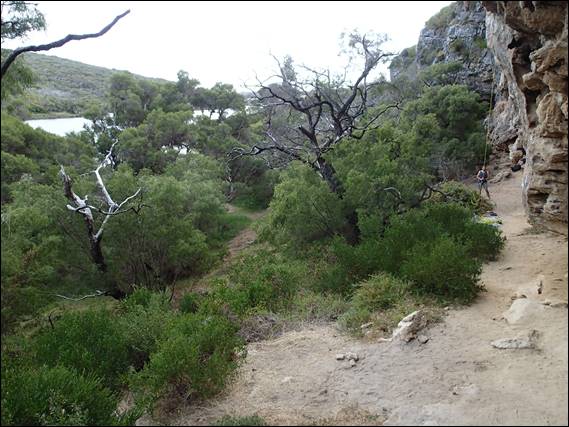
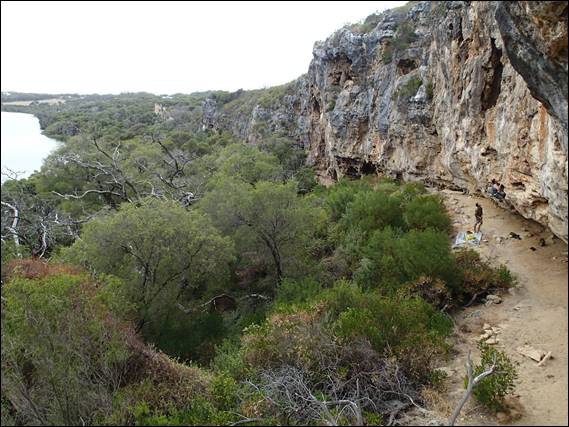
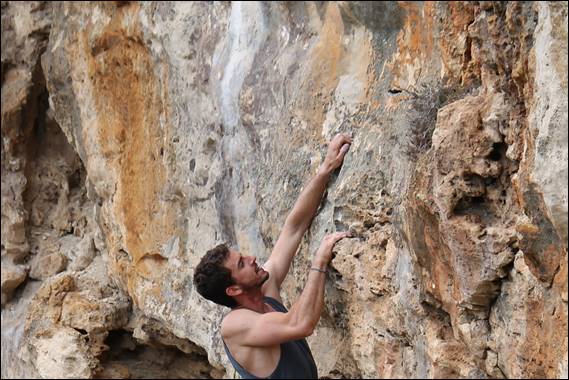
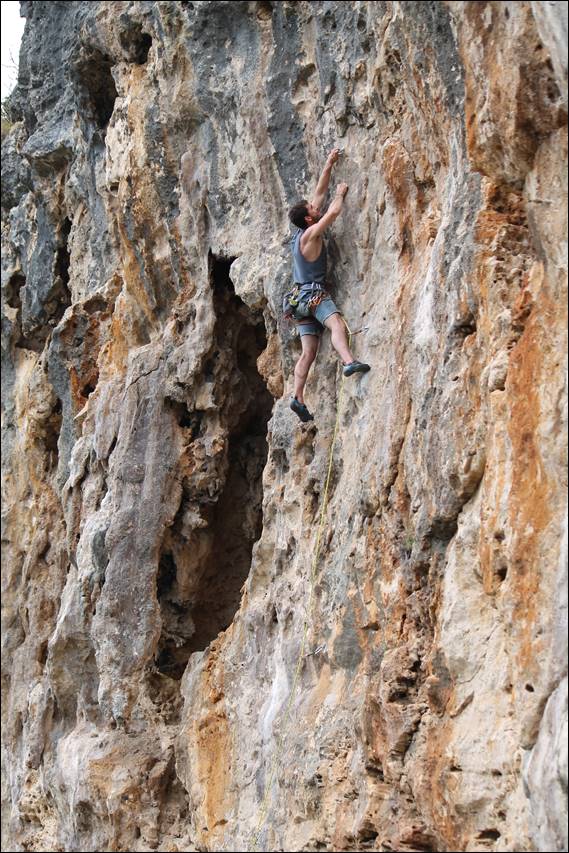
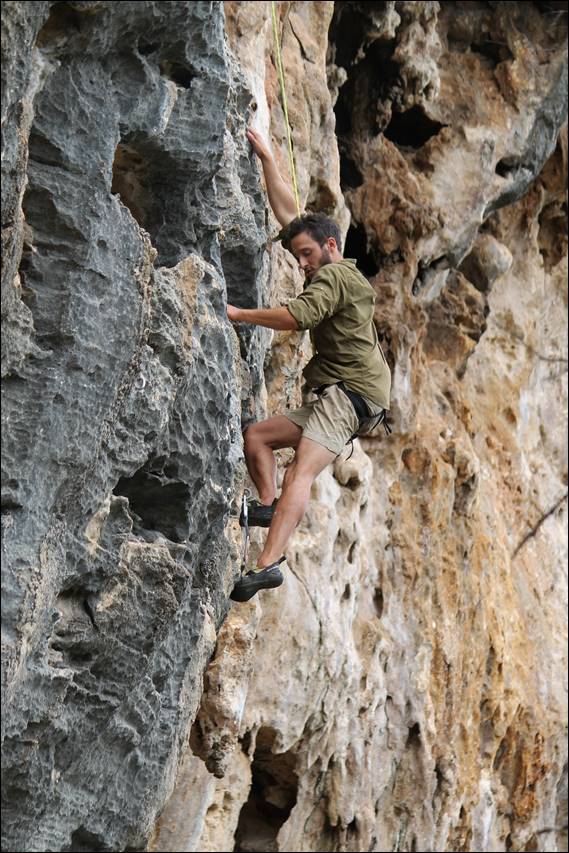
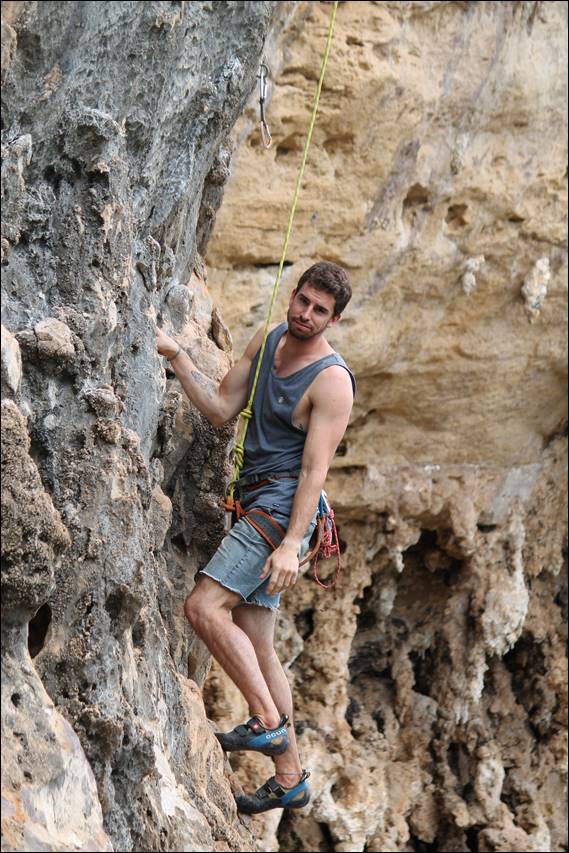
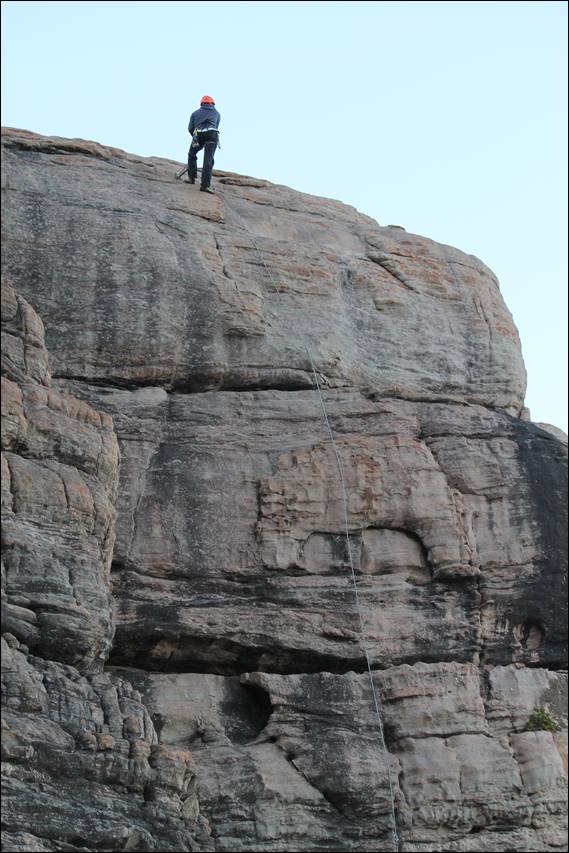
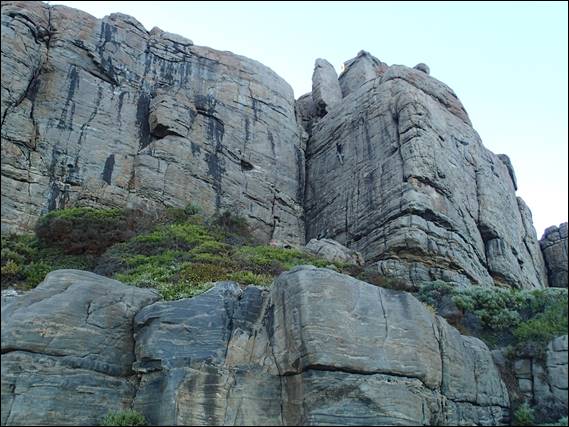
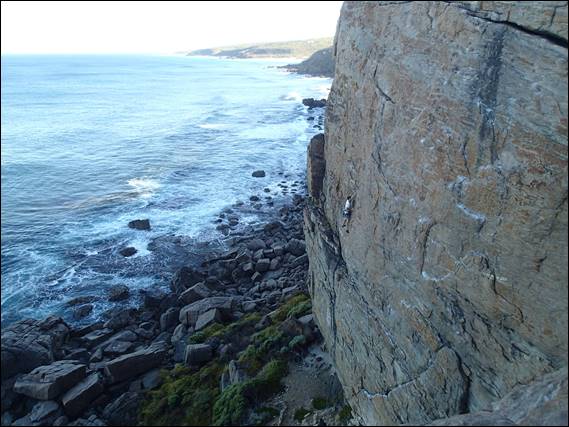
Last Sunday with a clear blue sky and the mercury hitting the mid-twenty it felt like spring was in the air, so Steve and I headed up to Welly Dam to have a stretch. Why here, well Steve is lacking wheels (again) so it was in the right direction to avoid extra travel time for me but also because we love the place. With spring in the air the flowers are starting to blossom and the hay fever symptoms are creeping up, but not bad enough to hold me back just yet:
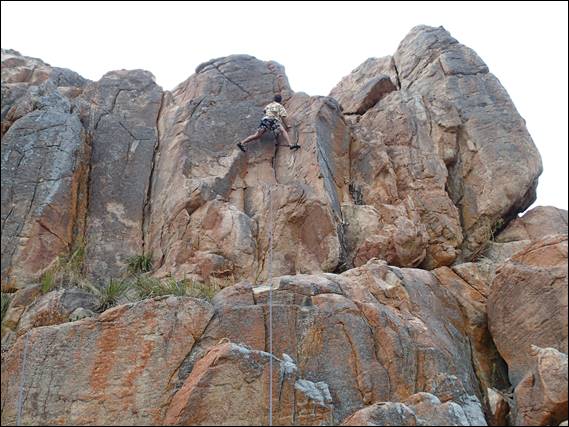
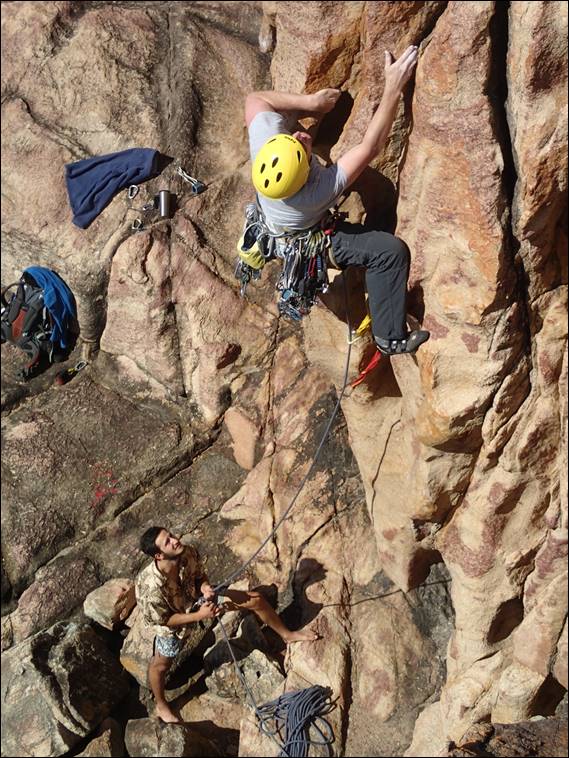
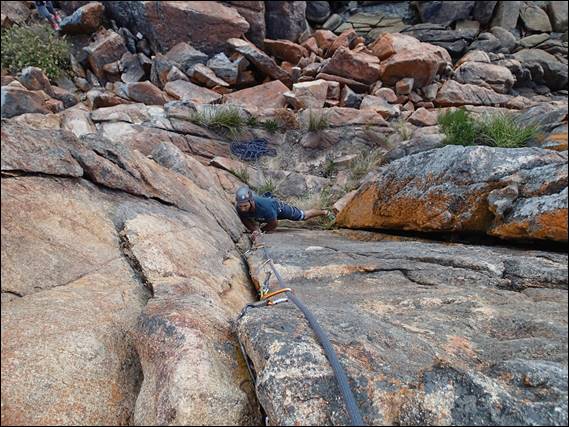
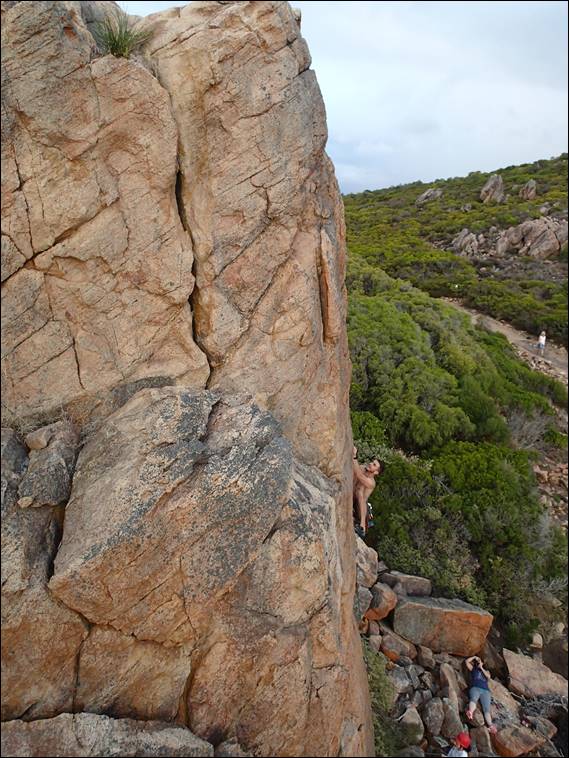
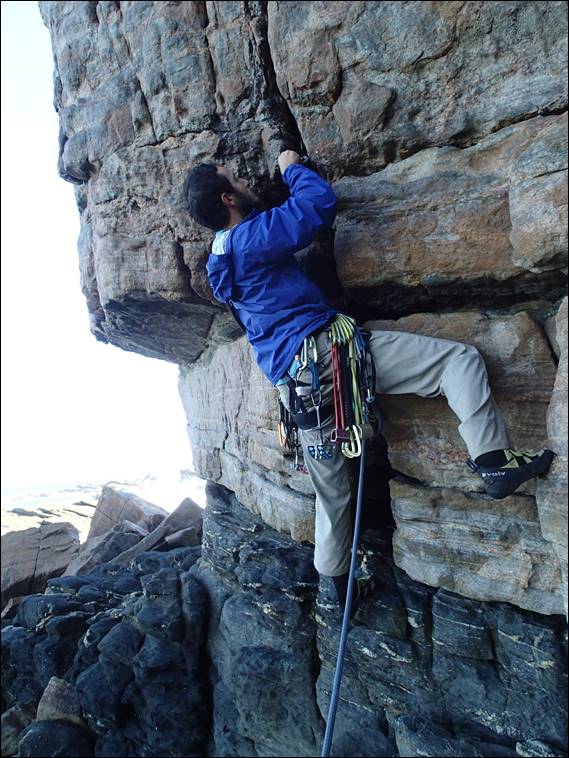
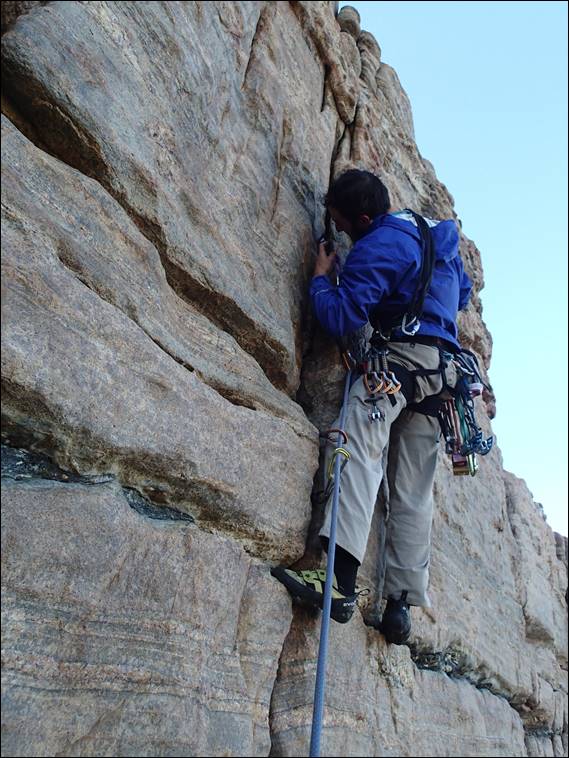
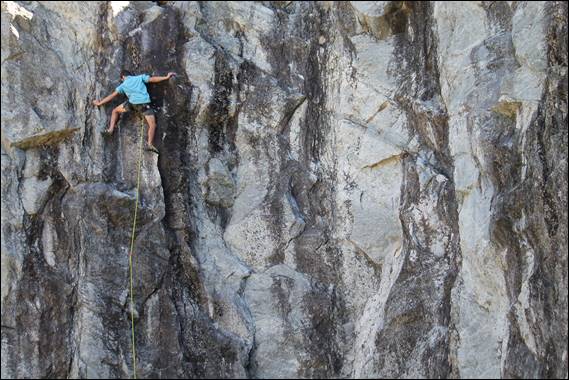
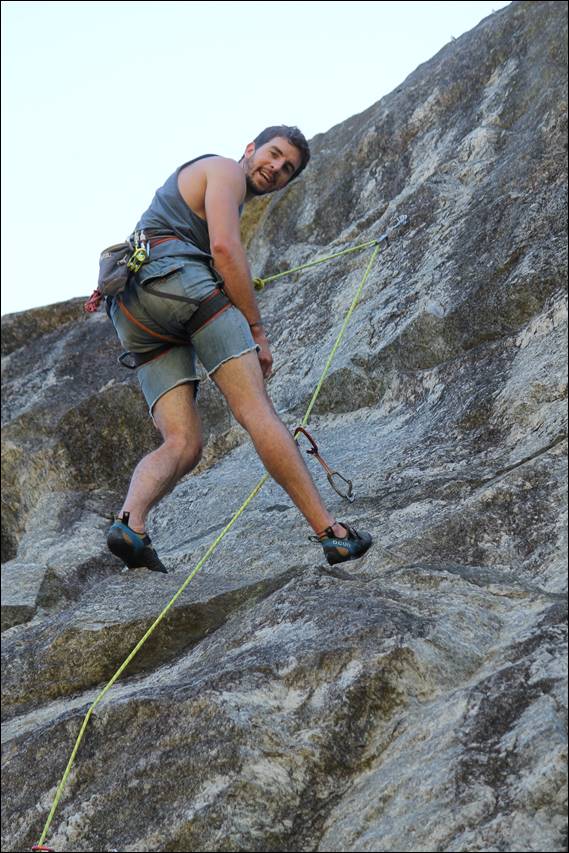
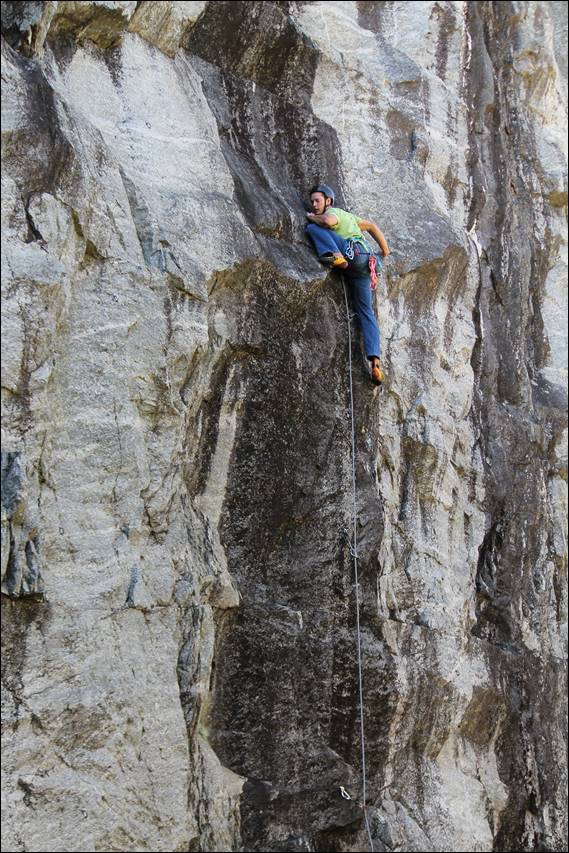
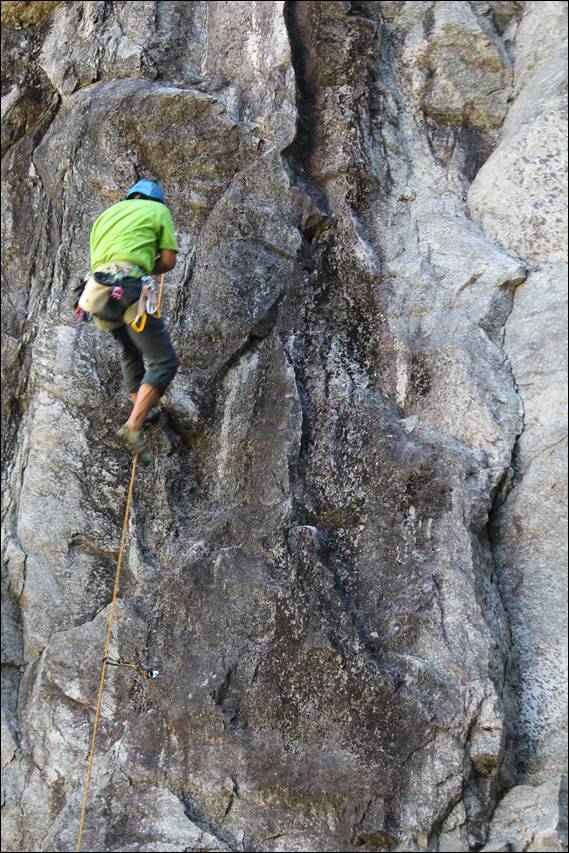
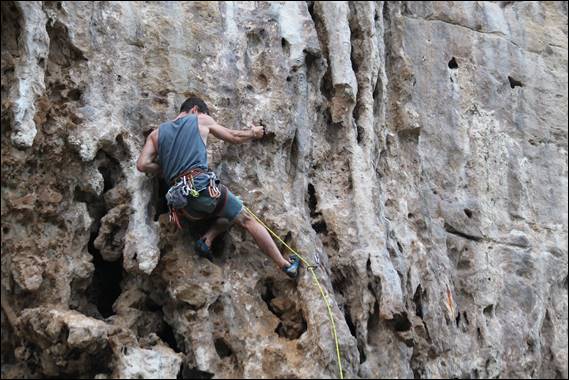
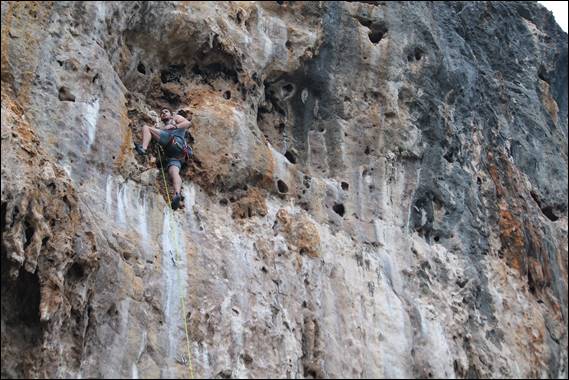
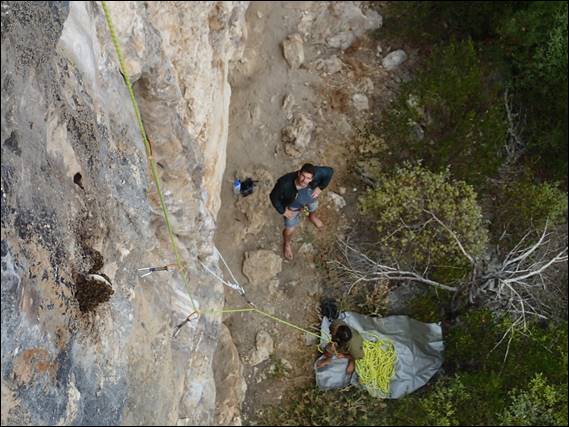
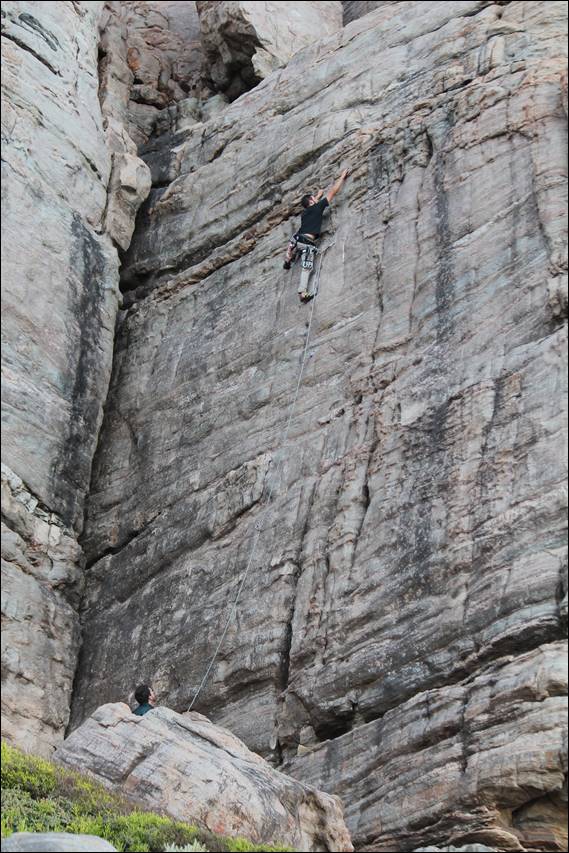
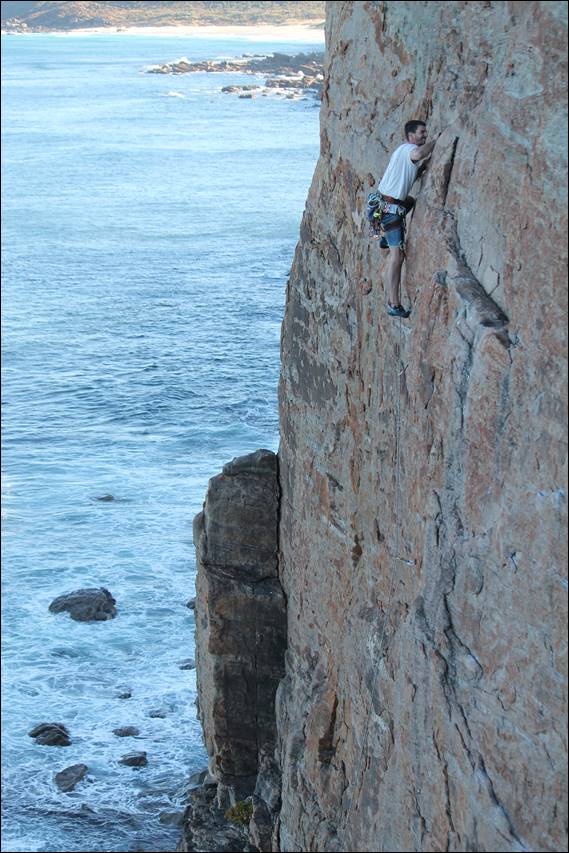
Steve is still getting ‘back into it’, and for those that remember his last trip out it ended with him chewing off a bit more than he should have. He was left dangling only to be lowered with his head hanging in shame, and gear that was welded into the rock. Now while Welly Dam is a pretty tough place to climb it is familiar, on bolts and escapable. So off he set all fired up and we started sensibly in This Murky Corner. Despite it having been a long while the muscle memory kicked in and he romped up. It was a good job he had no difficulties as to get the image angle and width I had to belay back a bit, and there is a significant weight difference between the two of us:
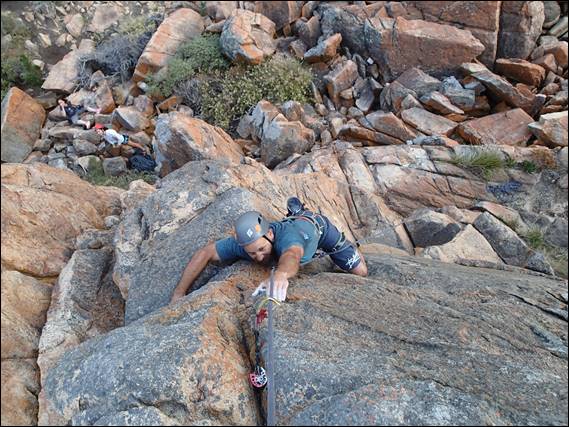
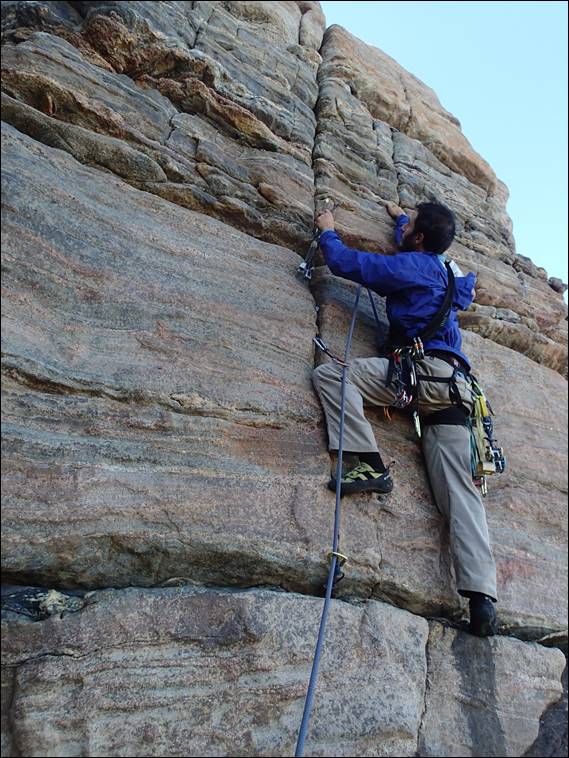
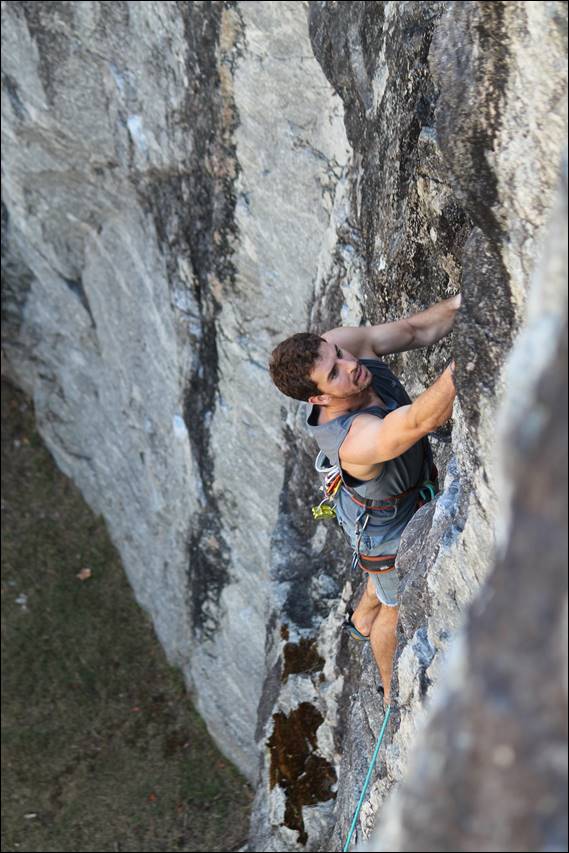
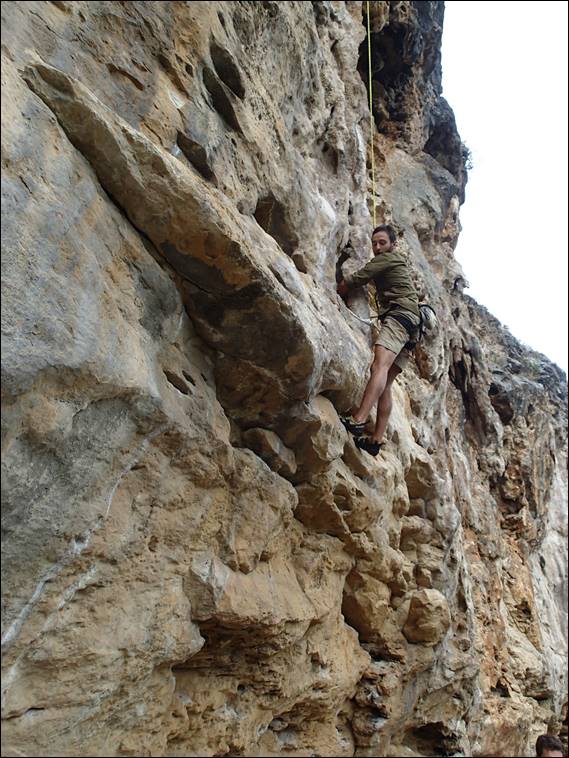
I followed up with my trusty weights vest having been dusted off and ready for use. I came up to Welly with Howsie on Friday and we spent three hours before work smashing out ten routes of which I wore The Vest on eight. Adding an extra nine kilograms it certainly makes the muscles work harder and also changes my centre of gravity (but still making me a light weight against Steve!). While I did get up the corner, I felt like every muscle, tendon and joint was fighting against me and several times my finger tips and toes slipped off their holds. Steve reckons that physiologically I would not have recovered from Fridays session so shouldn’t have been wearing The Vest again so soon. Needless to say I was more than happy to take this professional advice and The Vest went back to collecting dust:
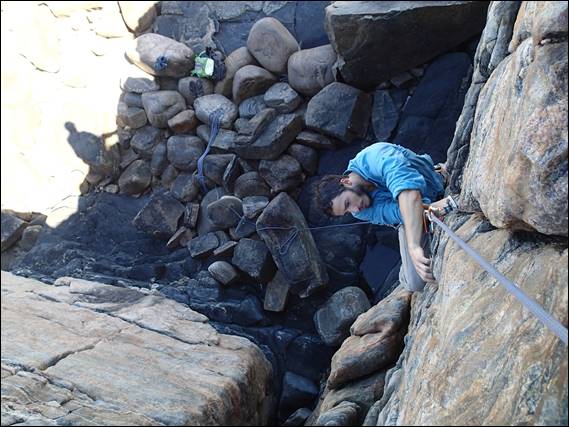
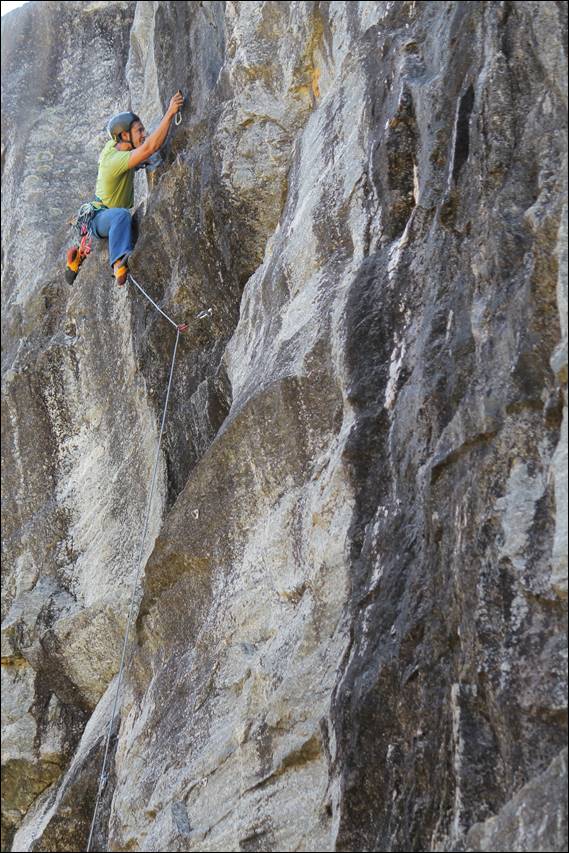
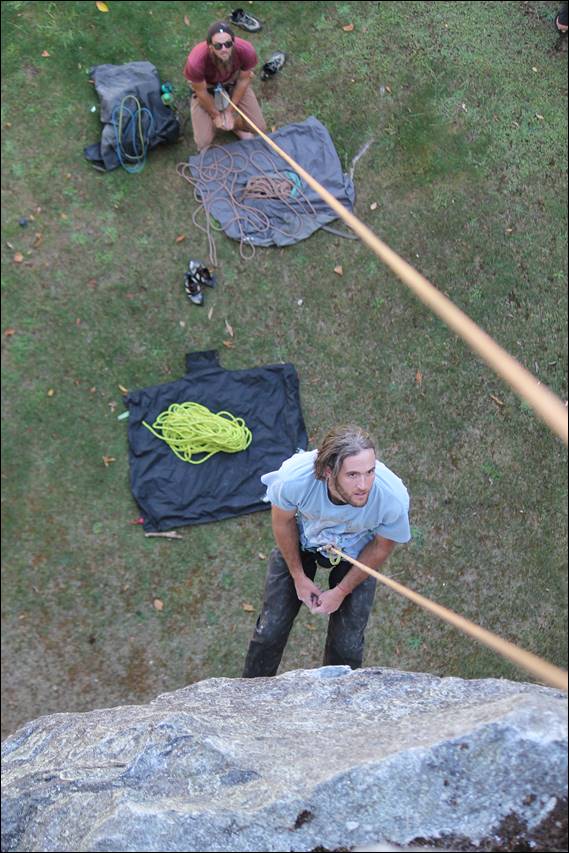
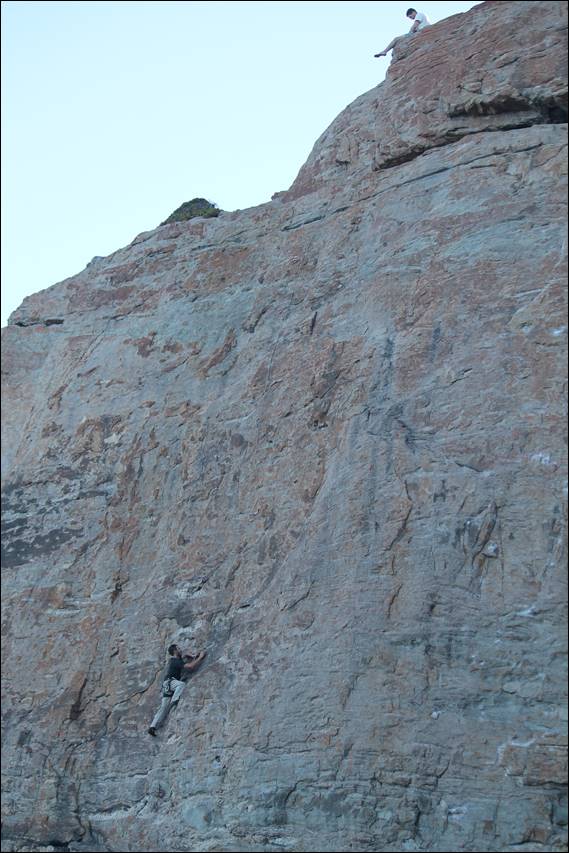
So feeling light as a feather we plumped for BBQ, an oldie but goodie. I lapped it up taking a more direct line that would be first ascentist do, and enjoying a less wearisome feeling without the extra weight. As I came down Mario rocked up. It was a while back that I first met him at Welly Dam and it was when I was here with Steve that we had. Last time he was here with his better half but this time he came alone intending to top rope a few lines. Instead he joined us and I set him to task by belaying Steve, which took a while. Steve’s motivation, desire and will good not be denied but at the crux the body, energy and headspace went limp. Eventually and in a very tired state he got up before Mario jumped on to clean the route:
Mario then fancied Lord of the Flies and this really had Steve beat, the tell-tale signs of elbows protruding outwards and the body failing to hug the wall lead to a bit of flailing about on the steep crimpy crux sequence. The holds were simply way too small for today and he had to bail and recover. Despite this as I cleaned the route Steve was contemplating his next move. At the same time he got chatting to some tourists and he offered to show them the ropes, to which Jess (I think) with the red hat jumped at the chance. So we belayed Steve up The Crack and then left him with a top rope and the tourists:
As we heard Jess whoop and holler her way up the route in very good style Mario and I jumped on an extra couple of routes, bagging the very fine Rock Therapy and then Ear of Fear. Now one thing that I have not mentioned yet was the amount of time I had spent flicking messages to Lisa, Elseya and Howsie. There was good reason related to a particular animal care course, but of course like Pringles once you pop you can’t stop. Steve found this hilarious and while I may have been occasionally not focusing on the person whose life was in my hands… when the going got serious I was able to detach myself from the technology:
Steve came back into the fold beaming and energised, so we picked one last lead and it was one Mario had not tried yet. I led Savage Sausage Sniffer because it was my lead, but also the first bolt had them both whinging about how high it was. Steve stalled at where he then started to discuss the perfect placement for a new first bolt… yeah, yeah. We all managed to get up the sniffer and despite the sun still being out and the rock being in primo condition it was sadly time once again to say goodbye to the ole faithful Welly Dam, a place that I doubt we will ever get tired of:
For all yokels Mario will keep in touch and when he is back down this way will be very happy to meet up at Welly to have another play on this awesome rock wall.
I feel a little bit excited about this one, while every place I went to had its own charm and appeal I’d regard the South West of the UK as being up there and as a close runner up to Swanage. I’ll skip round a few places in both Cornwall and Devon that make up the toe of the UK, so once again a bit of Googling may be required to keep up. My early memories of this area are from family holidays to quint seaside villages, nestled in coves with amazing coastlines. We’d hire a caravan in a big park and go out to the shops, walk along the coast and visits the many great natural tourist spots such as Lands’ End, The Lizard, St Michaels Mount, Dartmoor, etc. Then while at polytechnic (as the now Coventry University was then called) I went back there on both surveying and geology field trips, including one trip in which I visited Lisa’s home town of Torquay. The latter indicates it is a special area and the rock down this way gets both climbers and geologist equally excited:
During my move from working in the Lakes to working south of London in Leatherhead I convinced Gareth that we both needed a holiday. So we organised a ten day trip to Cornwall. We hadn’t been here before and there were so many places that appealed, making it hard to know where to go. But we had a few criteria being to try a few places, climb our hearts out, and bag as many classics as possible. On this trip I kept a route log so could real off all the lines we did, but I won’t subject you to that. Unlike where I climb now the classics in the UK tend to be well bedded in with generations of climbers having agreed that those climbs with that lofty status really were worthy, not rating them after the ink on recording the FA hadn’t dried yet. That said on occasion we did wonder if they got it right, and our first port of call made us think twice on that score. Chudleigh was just off the road that took us on our journey west, so it seemed like a good spot to break up the journey. Comprising a 50m limestone crag we had high hopes, but only did two climbs. Below Gareth is starting up Reek, and the other line we did was listed as one of the crag classics called Sarcophagus. It was an epic corner climb that required squirming, bridging, back and footing and all on the slippiest and slimiest limestone I have sampled. It was horrendous in so many ways that it felt epic, and reading about this crag now it says it is highly polished and feels much worse in humid conditions. I can certainly testify to that:
We didn’t hang about but jumped back in the car and headed a bit further along the road to Dewerstone. A much more pleasant place both to camp and to climb. We pitched our tent under cover of the trees and in the early morning we wandered along a babbling creek through the woodlands to find the main buttress of this area that comprised a 50m granite crag. Grippy solid granite, a delight to touch after the slimy limestone. We didn’t muck about and spied a number of lines that appealed, starting with the great Club Climbers Direct (probably the best) for which I’m on the first pitch below. Great jamming to get through the overhung start and then it just kept going in great style. We picked off route after route, alternate leads were the go and it was very rare for us to falter from that pattern. Mostly crack climbing so our jamming was tested, something we usually tried to avoid which in truth could be said about my climbing even today. Our criteria did not have in it the need to seek high grades, it was more about quality lines whether easy or hard (for us):
After a good number of leads we had some lunch and being conscious of the drive ahead to the next destination we decided to pick a couple of the easy lines that looked fun and have a solo. Gareth is coming up Mucky Gully below with full safety gear on, while we had tin pots with us they didn’t come out too often. Usually the tin pots were used when we went to places less frequented or on big mountain routes, and even then we were a bit carefree in our youth. We had picked a great time for the trip, sun every day but not so hot that it became unbearable. So after another long 50m solo it was shaping up to be a great start to our trip. We did however, have to get back on the road and so it was with reluctance that we left this place. There were plenty of other good looking lines and that combined with the great setting in amongst the trees gave it a really calm and tranquil feeling:
We kept heading west and got there in the dark, checking the maps for where we could camp and being cheapskates we were looking for sneaky spots to camp for free. Porthcurno Beach, which in the Cornish language means ‘port of Cornwall’ provided the perfect spot. It is a popular beach and had the usual no camping signs but we would get there late and leave early, so never had any issues. Some nights others would be on the beach, some stayed late into the night and left others stayed all night and were still sleeping off the woozy heads (they deserved based on how hard they drank the night before) as we left. Porthcurno is not only famous for this beautiful beach but also the Minack Theatre a unique open-air theatre with the mighty Porthcurno Bay as a back drop. It feels like it has been carved out of the rock that makes the headland, but that is not the case. We were also only 4km from Lands’ End the most westerly point in the UK but we didn’t bother going there, firstly you had to pay to get in and secondly it would be overrun with tourists:
On our first day out we sampled a small’ish 35m crag by the name of St Loy Cliff. We were now well and truly in granite country, the whole coast seemed to have rugged orange tinted granite buttresses that provided incredible scenery and a very rugged and quite dangerous coastline. This crag however sat above the ocean with a grassy and heather base, a good spot to kick back and make a brew and have lunch when we felt like it – well we were on holiday. Some lines were very intimidating with wide rounded cracks that had no other feature other than the crystalline surface of the rock. No crimps, edges, slopers just pure friction with cracks to wide for any gear we had. We tried one such climb and bowed down humbly admitting defeat. There were however plenty of other routes to jump on such as Cress Cendo below, and the best line of the day would have to be Chlorophyll Cluster. This climb had a steep wall that you had to gingerly work your way up to get into the steep slabby grove. Lots of footwork and balance, just my style. The granite also provided awesome flakes for lay-backing, something I really enjoyed but the place also offered good not too painful jamming cracks and airy horizontal traverses. Gear was plentiful as long as you stayed away from the wide cracks, so all in all it was a worthy crag and one described as having flawless granite (something true of many Cornish crags):
The next day we went truly coastal, for the first time on the trip. No trip to Cornwall would be complete without a stop at Chair Ladder. It’s a revered crag but claimed not to have a heap in the high grades, not that it was a worry to us. At this place you could feel the rush of the water below you, the roar of the crashing waves rang in our ears and the wind on the few times it did pick up would add to the excitement. Up to 70m epics on this solid granite buttress that is amply endowed with cracks and holds. The tides here can be big, 6m plus and as such knowing when it was safe and not safe to go for it was important. Below Gareth, as he followed me up Mitre, is suicide pool a beautiful calm rock pool at one time that can quickly turn into a raging boiling pot of white water. These are the aspects that drew both Gareth and I so much to sea cliff climbing. We hit classic after classic including what was regarded as one of Cornwall’s greatest VS’s Diocese. It is high in the grade and has a very airy technical hand traverse above a roof, the exposure was brilliant and every pitch on every climb at this crag was nothing but fantastic:
To finish the day we had our eye on the very fine Terrier’s Tooth, it started from a platform and we watched as the party ahead of us make their way up the first pitch. The tide was coming in and the belayer kept looking out to sea in case a big wave came in. The water started to lap higher and higher up the sides of the rock platform, but we didn’t go for it until they were both up the first pitch. We dashed out and it was my lead for which I was grateful, as the first pitch looked awesome. A steep but well featured wall, technically the hardest pitch but full of beautiful positive and solid granite holds. I was also grateful to not have to watch the waves, which I left Gareth to do as he also (hopefully) watched me. The water started to lap the top of the platform as I got up and set up a belay. He started to climb just as a wave swept over where he was stood. I doubt he was at risk from being washed off but the rope probably would have. Now with the water below us we could relax into the climb. Better still no one would be following up the popular climb so we really slowed down and savoured yet another good climb. The route was never too hard and a good way to end the day with the light fading and the promise of a good well deserved feed at the pub:
Now I mentioned a good feed at the pub, it was good but the dampener was the slow service. There were not many choices of where to go so we went to the same place each night. You’d think they would recognise us but each night we felt like they looked at us just as blankly as the night before, and then walked past to serve a local seemingly waiting till they absolutely had to serve us. It was almost like they didn’t accept ‘strangers’ too kindly. With no alternative without a descent drive we put up with it. The next target on our list was one that didn’t get a great write up in the guide. Maybe because the north facing wall commonly being damp and slow to dry. The routes however looked good, so we risked it. The image below is from atop Fox Promontory looking west towards Land’s End. The coast simply oozes cliffs some mega and some not that great, but all provide for a very spectacular coastline. It is also a dangerous one with currents ready to pull you out and unexpected big waves on occasion ready to sweep you off the rocks. In some ways the surroundings made every crag good, but I’m pleased to say the guide had downplayed this spot. The guide write up was good in keeping the crowds away and we had the place all to ourselves, unlike the last few places:
We had a blast and managed seven multi-pitch routes in a long day and everyone was great. They were all pretty sustained and kept you working the whole way up. The relatively steep walls were mostly ascended by vertical cracks, with the occasional need to face climb on large crystals in-between horizontals. With the good weather the rock didn’t feel damp and was super grippy, but for half the day at least we were in the shade and that did make it a tad chilly so unlike the T-shirt clad days before, here the buffalo needed to come out. Below I’m jamming deep into the cracks on Dark Deinzen, the only line we did here that didn’t gain a star but we couldn’t quite understand that as it was just as good as the rest. I wonder if it had been damp whether we may have walked away with a different view point about this place:
With no one else about the place was super peaceful, the swell was down and the water was crystal clear with that rich aqua colour that seems to invite you to jump in for a swim. I can still recall when I was belaying Gareth up Dark Whisker, below. I kept feeding the rope out as he worked his way up, but all I looked at was the water at my feet. You’ll maybe notice that while we may have been lax about tin pots we did tie in when required and I’m safely anchored to the wall just in case. The line of the crag for us had to be the last route, Gareth liked the look of the crux second pitch of The Muzzle that yields via a steep crack up a clean face to an overhang that is bypassed with an airy exposed sequence. But to get to the second pitch I decided to tackle the crux first pitch of Sports Plan, a thin left tending crack on a slightly overhung wall. Small wires, smears for feet and fingertip crimps up the crack. We left this till last, for better or worse, and my arms were burning as I moved along the crack. That familiar quandary of whether to keep moving or place gear playing on my mind. I did a bit of both and made it up, with Popeye forearms, feeling like they did when I had topped out on Darius on High Tor in the Peaks. The second pitch was equally brilliant, and I was glad to be on second with a rope above me:
Gareth was keen on a rest day, but I was not that keen so made a deal that we could on the basis that we did only two climbs. Both highly regarded but some distance away from each other so requiring a bit of walking. He agreed and so it was that we spent half a day walking and climbing two mega routes, the first was back at Chair Ladder. I’d spied it when we climbed there and it provided a direct line up from Suicide Pool with varied and absorbing climbing up slabs, an overhang, corner, overlaps, hand traverse and steep vertical jamming crack to finish. Woohoo it was brilliant and I did the three pitches in one, which with twin ropes and some careful use of long extenders worked a treat. I was super happy and this true classic amongst classics rated highly in my mind, but I was still keen on the other route too so we broke tradition and I did two leads back to back. The next line was on Zawn Kellys a bit of a hike but on days like this why head into a town, so we wandered along the coastline to our destination, from atop we had a great view across to Pendower Cove (below). Yet another place that looked inviting, but not for today:
American Dream provided a 40m single pitch up a steep pinnacle via a consistent and sustained rounded flake/crack. To get to it there was some steep territory through overlaps and shallow crack lines. From start to finish this route had class written all over it, untouched for some time I couldn’t avoid the many cobwebs but by the time I was up there were no cobwebs left in my head! It is regarded as being high in its grade but I didn’t notice and was fully absorbed from the moment I touched the rock and floated up this elegant line, almost as if in a dream. This route is most definitely up there with the very best routes I’ve ever done and I couldn’t talk it up enough. Could it get any better you may wonder, well yes it could. When I started up I noticed a couple of seals playing in the water below us, they would both pop up and look up at me and then jump out and slash back down. This continued as I climbed and then as Gareth followed me up, we packed up our gear and they still watched us and then as we walked back a bit they jumped out one more time and headed out to sea. As we walked along the coast we kept an eye out but they didn’t come back, sublime. We were both very happy with the two climbs and ready to head to the surfie town of St Ives expecting a bit of a lively night, but being midweek it was dead quiet and a letdown. Still we got served first up by friendly bar staff and also had a wash:
Sennen is very, very popular. Maybe because it has a rock shelf from which most of the routes go up, they are mostly single pitch and there are a host of sub-E grade lines. We were there early but the place soon filled up with climbers, which included the army. They said it was a regular training place for them to introduce their recruits to rock climbing. They wore black and all their gear was black including the ropes, harnesses, slings, wires, hexes, etc. It was weird but of course made sense, when you are climbing up a mountainside to mount a surprise attack on the enemy you need to be well hidden! Despite being super popular the routes were not as classy, being a bit more broken, less sustained and generally not as engaging. We still had fun and managed to find descents that at times made our hearts beat faster than the routes, such as Church Window which I am coming down below:
It was a bit of social climb here. People chatted, sat about, and watched each other climb but we motored on while gabbing. I was drawn to one line called Samson Arête, it followed a very fine and steep crack up an arête before another crack ascended the continuation slab. The lower crack was great fun but wet, water was seeping from the midway ledge and while I could see the move I just yo-yoed for what didn’t seem that long before backing off. So what to do but tackle another good looking line called Demolition. I’m not sure what I was thinking but it was a slab and of course I could do it, I got half way up but again while seeing the move struggled to commit. Reading the description online it says a pulse-enhancing and memorable pitch that features an extremely runout crux and gear just above half-height will protect the crux with a swift belayer, so psyche up and go for it. I again bobbed about for ages and backed off, Gareth was super patient with me and I found that the two failed attempts had eaten away just over an hour and a half! Mind you the second line was a lofty E6 6a, and I’m still baffled as to what I was thinking! For one climb we snuck away from the main crowd and went up this wet black slab, it looked alright and at the grade was sure to be fine. As I went up I kept saying that good holds would come, but my mind was still out of kilter and I had gone up the wrong line. At the time Slab Happy was graded E1 5a. It kept me focused and on edge all the way, and I notice it now gets E3 5b, I’m guessing something must have fallen off since:
We were heading back east now and making our way along the northern coast of the UK’s boot. On the way to the next crag we decided to drop into Carn Kenidjack that had a highly regarded climb called Saxon. Gareth was up and he set off but his head was not in it so after sometime attempting the first tricky section he backed off, not taking as long as I had the day before to decide on the right course of action. After letting him rest up and ponder what he wanted to do he decided not to go for it. I was of course more than happy to take on this very fine looking rope stretcher, the guide describes it as having equal measures of intimidating and amenable sections. Very true and a shame that Gareth hadn’t gone for it, but you get moments like that. It was a bit of a walk in for one climb but we both regarded it highly and thought it was worthwhile, other lines looked good but the grades stepped up so we headed for another location. So we moved onto a well frequented Cornish must visit crag called Bosigran, unless you are there on a long weekend and then you may find you are queuing for climbs:
We spent a day and half at this very fine crag, not at sea level but it feels like you are climbing over the ocean for much of it. Some routes were up to 70m so a great length and a good range of grades, but being late in the trip we were slowing down a bit. No matter this place has a very fine selection of the lower grade routes and we ate a good number up. As we walked in, the heather was all burnt and soil was smouldering with a watchful fire crew on standby. We had a chat with them and found out that the fire had been going for a week or two. It would burn the vegetation and then go down in the root systems, follow them until it found a patch of soil high in organics and then come back up. Amazing stuff! As we climbed one route here we were greeted by an elderly man with a rack full of cams happily whacking them into the cracks and beaming with a smile that matched the guy I had met in North Wales half way up a climb. We had a good old chat and he carried on his merry way laughing and loving life all the way. It’s moments like that which really stick with me:
With a day and half to play here we had a lot of fun and there was plenty to pick from. You may remember I mentioned that Bob had given me a stopper, well it was on a climb called Anvil Chorus that I found my first stopper as crag booty. It was wedged in the horizontal crack I’m at in the image below, I made sure I could get it out before going past it to make sure Gareth couldn’t claim it as his! Sadly I read that much of Anvil Chorus has fallen so the climb is no more, a shame as it was ripper. We had a bash at Suicide Wall. A climb with a reputation, but we climbed well on that and both of us styled it. It was regarded as a classic but we were left wanting more, it followed a line that moved about a fair bit, became disjointed with way too many pitches to avoid rope drag which meant it was way too stop-starty. For the last climb we came up Ochre Slab Route 1, a fine line that offers two totally contrasting pitches; the first technical and the second super steep. The climbing was great but it was the way the orange granite was glowing in the evening light that made it special. Looking back down the crag to the ocean with the sun getting lower and lower we finally packed our bags to head out:
The next morning we had to drive back, but before we did we decided to bag one more route and went to Gurnard’s Head to take on the fun Right Angle. This route is why most people know this place, it is never hard but the three pitches are super exposed and need a high degree of commitment. The first pitch is a traverse toward a zawn in which waves smash and reach high up onto the wall, then the second pitch goes further along into the unknown with a continuation traverse on a steep wall. This seems to take you into the very heart of the cliff and you eventually find a stance below a steep corner hearing nothing but crashing water. The final pitch takes you upwards on a superb 40m pitch ascending the corner in an unbelievable position. A great way to end the climbing on this trip and so worthwhile. Eventually however it was time to head home but before we did that we found a parking spot in town and emptied the pigsty of a car to clear it up a bit:
The South West seemed a place that was worth spending time when we made the effort to get there. So the next trip was also a few days and this time I headed there with Kate, not so far down the boot this time staying in Devon and heading first up to Baggy Point. It is described as a mid-range climber’s slab paradise and provides well protected, consistent climbing in fine positions. The slab on the Promontory goes right into the sink during high tide but there is a window of opportunity when the tide goes out and you can climb from the base of the crag adding about 7m of extra rock. Below Kate is starting off on the well-known Kinky Boots. It’s not a climb for the short as you have to fall into the first holds, which are fortunately good but you don’t know that until you do the move. It’s a great all tide access to this portion of the crag and we did the move a couple of time because it was so much fun. We did a stack of good lines here taking our time and munching after each climb, never going too hard but there was one line that I liked the look of. I was a bit too cocky and rushed into the crux sequence up a narrow and disappearing crack system and stuff it up. I didn’t fall but did have to down climb the sequence and go for it again, which for some reason annoyed me but I soon got over that as I followed the fine slab above to glory:
Blackchurch rock is made of the same rock as Baggy Point. The metamorphosed sandstone can be brittle in places but general was pretty good on the popular cliffs, and when we got to this spot the tide was in so we couldn’t get to the bit we wanted and headed instead for the Main Cliff. This tall towering face features many delights that include 100m XS routes that the online guide say features some splendid crumbly rubbish and imaginary protection. Perfect! So with Kate not so sure I plumped for Loose Woman as it offered some of the best rock and protection on the wall. I started up the first pitch, a wide crack with plenty of features and places to pop gear in. Then I heard that familiar cry of a seagull, not in flight but on a nest… yes I really could speak gull. I looked up and sure enough up and to the left, on the belay ledge a head poked out and wasn’t looking too impressed. I assessed the situation and reckoned I could avoid the ledge by linking the first two pitches. So despite veering a bit more right and at the same time singing gently to the gull to calm it down (honestly), the gull was not impressed. A few diving swoops came next and I knew I was on a hiding to nothing, so instead I traversed right and down climbed the route to the right. Kate seemed happy to follow my circular route and did so without the gull swooping but instead the bird just kept a careful eye on her. Um must have been a girl connection going on there, check out the image below. After all that the tide was working its way out so we bailed and left the crumbling pile of choss to the gulls:
We were not too worried about leaving the Main Cliff as where we really wanted to climb was the ultra-magnificent Blackchurch Rock. This cathedral style creation sits proudly on a bed of ribbed sandstone and is only accessible at low tide. It has to be seen to be believed and to top that the rock is solid and the routes are quality being both sustained, interesting and a good rope length high. We walked round the rock a few times taking it in feeling just a little bit in awe. Kate fancied something up the side as it didn’t look so shear and offered more rests, Right of Spring was great corner system up the layered sandstone with good gear awesome position and nice exposure. After that line I was drawn, and why wouldn’t you, to the impressive triangular face and the route description says it all… a majestic pitch of flawless quality. The whole trip would have been worth it if we had only climbed this one route, Sacre Coeur was right up my alley. A series of perfect finger cracks narrowing into nothing all the way up this stunning face. Small wires were the go and like American Dream I floated up this and was in ecstasy. I would love to have bagged another line on this face and had in mind which one but Kate was pretty pooped from a few days of fairly full-on climbing so we headed out, also not wanting to get stranded as the tide was on the way back up again:
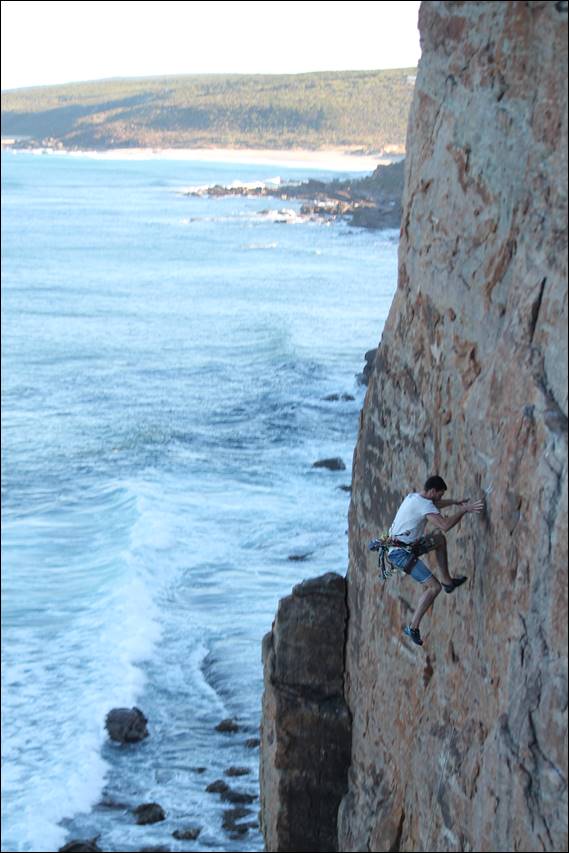
We went to another Devon delight by the name of Gull Rock. These places were at times a bit of the beaten track and required a walk-in, this one took us along Welcome Mouth Beach and navigated past some massive folds and cool rock formations. The landscape seemed to impress age on you and when you walked in places like this you felt very small, humble and privileged. It took well over an hour to get there and while we went here to climb we spent a fair bit of time exploring rock pools that were bursting with colour, checking out the rocks and on one beach there was an amazing waterfall from a cliff high above. This was yet another crag which was tidal and that also included the approach, the way we walked in you get a six hour window of opportunity, which was enough for us seeing it was also the day so we had to hit the road home:
The crag is yet again made of the metamorphosed sandstone, a steep slick slab with small crimpy holds very narrow cracks and not much else. The online guide talks of pegs to rap in and pegs on a couple of lines but I have no recollection of them, and checking through the images I have it seems that my memory is probably right on that score. We got to the base and the tide was going out meaning the occasional wave came pretty close, but soon receded and we racked up some fun climbs. On the slab proper the gear for the most part was small, micro wires and some routes didn’t require anything above a no.2 so some leads were a bit nervous with tiny gear and at times friable rock. Unlike the rock I had climbed in the neighbouring county of Cornwall, Devon had its fair share of ‘exciting’ routes on what some would describe as less than desirable rock quality. That said the lines were good if you had the head for them. We also did one that came out through the cave to the right of the slab, the tiered overlaps offered lots of scary moment as you need to use flakes that you hoped held, with gear behind the same flakes, pulling through onto a thin edges above before the next overlap hit you. It seems many of these lines are now significantly different due to rock falls, which doesn’t come as a surprise:
Below Kate following up Crazy Streak, and you can see the rock offered little for holds and gear, but enough for a slab connoisseur. We had a good look at the guide; Kate tacking the corners and more featured climbs which offered a bit more security while I went for the slabs. The classic, or so the guide stated was Lead Boots so we thought we would save that until the end and go out in style. We picked off a few lines but began on Walking on the Moon, it started well and gradually got harder keeping the pace with good delicate moves. The gear was small on this line with nothing greater than a 00 wire and it felt spaced, very exciting stuff and made us wonder what the classic would be like. After bagging a few more lines the tide was turning and heading back in so we jumped on Lead Boots, and was sorely disappointed. Maybe we had grown accustomed to what the crag offered and the spice of first taste had lessened, but whatever it was we both agreed that the first route had been the gem of the day. Funnily enough the online guide that I refer to, as I type away on these emails, says the same thing only now it seems Walking on the Moon has a couple of pegs in it:
Lisa grew up in Torquay Devon. So with each return trip we would head down there and I would get up early and walk along the coastline. It is not quite as rugged, tall and wild as other parts but offers good scrambling, rock hopping and views. There is one cliff at the southern end however that is well known for climbing and that is Berry Head. On our first trip back we happened to be there at the break of the bird season ban and Gareth came down so we could try our hand at The Old Redoubt area. It was summer so an early start was in order, and we arrived a little too early in the dark at the lonely carpark. With no point in heading in on the short walk due to an hour of darkness to go we stayed put, being disturbed only by a passing police car checking in as to why we were suspiciously sat there. At first light we went down to rack up, only to be mobbed by a huge university group who raced ahead of us. Not impressed, we left them to it and went across the water to the Coastguard Cliffs. Higher up above the water and not as spectacular in setting but we found some good lines and had fun:
The next day we decided to try again. One reason for our keenness was the guide suggested, as does the online guide, that the crag had the best HVS in the country. We were keen to get onto Moonraker to see if they were right, and obviously the uni group the day before had rushed in before us with some of them intent on that line. To get to the climb is a bit of a mission in its own right, you start from the sloping rock on the right in the image above scramble into the cave and then back out along the steep wall. It was effectively a deep water solo and pretty good fun, and this place has grown in popularity and boasts a high quality 700m solo traverse going at F7a/7a+. It took us a little while to find the belay perch for the first pitch and finally got comfy, three epic pitches awaited and we were excited. Better still we had the place to ourselves, the day was slowly waking up about us with fishing boats heading out to sea or were they already coming back in? The first pitch was OK a bit of a one move wonder but nothing to write home about. The rock was ish and the gear pretty average as the image below shows at times non-existent. Then Gareth headed off and the next pitch improved a bit, the rock was more solid but the line wasn’t grabbing us. The last pitch however was brilliant, up a steep corner that had great positions and exciting moves all the way up. Halfway up this corner we found a gull in its nest with a chick, I took a wide berth and it was luckily happy for me to pass by. Then as I topped out I found someone asleep on a bench, so we kept it quiet as Gareth followed up and we sneaked past him without walking him up. Definitely not the best HVS in the country but it was worth the effort for that top pitch:
The final place I want to show you is the first crag I visited in this area, Hay Tor. Dartmoor includes the largest area of granite in Britain, much of the rock is under marsh and bog comprising peat. In winter this place can be cold and heartless, it is high up and the wind can run right through you. On a geology field trip from uni we came here and it was impossible stand upright, if you tried and several did the wind picked you up and tossed you back. Today with OSH standards that field trip would never have happened. Dartmoor has a number of rock peaks called Tors, over 160, and the biggest of these is High Tor. It is provides 30m routes of great quality. Solid granite with big coarse crystals ready to take your skin off if you fall. Despite having been here a few times before with uni and family I didn’t climb here until I met Lisa, but I’ll get to that later. On a trip back to the UK I finally got to bag a few lines on this great chunk of rock, but not on the main cliff which was surrounded by tourists. We climbed on Low Man which is a stone throw away and equally good, the rock and climbing was as good as they say. All the climbs were sustained, interesting and lots of fun. Many felt exposed and nervous and the appeal to not fall was very high:
Below however is the route that I will always remember this place for. Raven Gully is a high-moorland classic that features crack-climbing in all of its guises, and what better route than this for Lisa to do her first ever rock climb. Soon after we met she was keen to try climbing and this was the gem that we did that on, we got here when the sun was low down to the east meaning this crag was in shade, not only that but it was cold. Frost was on the grass and the rock was finger numbing bitterly cold. The camera batteries decided it was too cold for them, but Lisa seemed to think that if I thought it was a good idea she would be fine. The route goes in three pitches but I ran them all together and didn’t really think too much about the fact that I had all this experience that made this route not too bad and in fact very, very enjoyable. When it was Lisa’s turn she got up and by the end was smiling, or was it grimacing. There were certainly some testing sections that she managed to pull through with a little help and in truth she did amazingly well to get up. We have been back since and while she is posing with a big smile and fond memories I am not sure she would have been keen to attempt this climb again. Strangely despite this experience we stuck together and she continued to trust my judgement on what climbs she could manage, but that will be another story:
Next time we will head across the channel to the isle or Ireland, we spent a week out there on a climbing holiday and experienced some epic situations.
We’ve had a clear run of sunny weather and Saturday (today!) was going to stay dry so Kym and I headed out. Unlike others Kym doesn’t mind getting out a bit earlier so I left home soon after six. Every day at this time during the week I have been greeted with a clear blue sky and daylight. But today the mist was thick and visibility was low:
Kym loves the Northern Blocks at Willyabrup and so we plumped for that location. It was warm and I wore shorts but kept a long sleeve top on, a good sign that spring is definitely moving in. That said as we approached the sky out to sea was looking ominous and the humidity was definitely up there. Not the best for Willyabrup a compact rock that doesn’t forgive sweaty fingers that result in any friction soon slipping away:
I jumped on first lead and plumped for the obvious warm up classic of Banana Slipt, a mega classic that has exposure and variety in the climbing styles. It is never too hard but it seemed like it had been a long time since I had put on a full rack and climbed anything long so I felt weighed down, maybe the humidity hanging heavy in the air didn’t help. That didn’t hold me back and the climb was as good as it has been every other time I’ve been on it:
Most of the routes at the Northern Blocks are steep and sustained, we knew before we got here that it would be a hard day. But Kym did say he wasn’t feeling that good so he only had one hard line in mind and that was Green Stone, which goes up the black streaked wall. He told me the other routes would all just be for fun. I’ve led Green Stone twice before and both time quivered and fell at the crux:
It was a battle and one that he eventually won once he figured out the crux, well crux sequence that goes on for a fair length. It’s a tough one where you layback off a rounded crack on a very steep wall and the only way to get gear in is to put it in blind and hope it is good (which is how I led it). However, we are all different and when Kym really went for it he kept going, and going running it out beyond the ground fall limit. Fortunately he didn’t fall from way above his gear, and I was super pleased myself as I cleaned the route on second:
The dark clouds seemed to be moving to the north and south of us but we were in a pocket where despite a couple of small drops we stayed dry and the rock seemed to improve as the morning wore on. The Northern Blocks don’t see the traffic of the other areas at Willyabrup so if you come here you are nearly always guaranteed a quiet day. Over on the main areas we could see a few groups milling about:
Now Kym lied, after his lead he encouraged a quick rap into the Terrace to try a line neither of us had ever been on and one that was 3 grades harder than the one he just led. Grunge Metal is a sport line and looks very steep and it was my lead. We rapped in and Kym looked up at the damp/wet rock and said we could bail and do something else. I was not convinced of his suggestion as while the line looked wicked and steep there were jugs all the way up, or so it looked. So up I went:
Damn it was great I took a rest or two pumping out and being nervous on wet holds but I managed all the sequences pretty easily and felt really good. In fact it was so good that I said to Kym to lower me so he could lead it too, and he did a better job than I did. It required lots of body movement and tension shifting this way and that, a top line. Mark you’ll be pleased to know this made me feel better about my ability before our up-coming trip:
Eager for more trad we went back down to the main walls, maybe a tad too hastily as I slipped on loose blocks and ended up giving a blood offering to the rock goddess. The tracks at the base of the cliff are scrappy and overgrown, evidence that few people come here. I wasn’t being quite so careful as I was still on high after the last route, which I had got to climb twice as I also seconded Kym up it:
My next lead was Corpus Delecti a great full trad line that has a spooky finish. Kym isn’t so keen on this one reckoning that it is a tad too run out. I could feel my arms pumping but lapped up the moves and then set up a top rope. We had both taken on a few climbs that were not quite beyond us, but coming out of winter and not being fully fit plus having our families to get back to we decided to finish off by top roping two climbs adjacent to the one I just led:
So we enjoyed Use No S.L.C.D.’s and finally Digital Delecti with the safety of a rope above us. I climbed with the full rack just as a bit of extra training, or was it that I was too slow to think about leaving it on top after my lead. The last climb felt way too hard for the grade, a sure sign that it was time to head out:
This will be the shortest section of my climbing emails, and focuses mainly on a little known area nestled on the border of Wales and England. The River Wye (or Afon Gwy in Welsh) is the fifth-longest river in the UK. It flows for over 200km from Plynlimon in mid Wales down the to the Severn estuary. A good deal of the river marks the border between England and Wales. So I guess the crag is in fact in England being on the east bank. In this email I will also touch on a few other locations in relatively close vicinity and in a way this email encompasses some of ‘The Good, The Bad and The Ugly’ of my experiences in this neck of the woods:
We start with the ‘Bad’. Further west from the Wye Valley on the southern coast of Wales is a great sea cliff area known as Pembrokeshire. I attempted on a few occasions to get here but never made it and when I did the weather turned on us. On one attempt I drove out with Johnny, Scott and Vince in the car, we left London late and in the darkness the other three snoozed practically the whole way. It was late and to avoid white line fever I munched on the very delicious packet of chocolate hobnob biscuits that Johnny had brought. We got there late and pitched our tents in torch light. Then I fell into a deep sleep only to be woken by that familiar and dreaded sound of rain falling on the tent, light to start with but it soon increased in intensity. Morning came but the light didn’t follow as it should and we were shrouded in mist. I’ve included this image for a few reasons, most importantly it shows my ‘Wendy-tent’ on the left (the ‘Cheese-block’ belonged to Vince). I had this tent for approx. 20 years and I can remember blustery trips to the lakes where the new-fad dome tents would crumple under the winds, due to being poorly put up, while my trusty tent, which gained scorn from many, never faltered. Better still in conditions such as below it also never leaked, the Cheese-block unfortunately didn’t fare so well. Johnny was in his Gore-Tex bivvy bag on this trip, which is when I decided I wouldn’t mind getting one. In the morning he awoke to the gentle nuzzling of sheep, they were either nibbling or licking the water off his bivvy bag:
On days like this there really was only one thing to do and that was to head to the closest wall and climb indoors. We hoicked the considerable distance to Bristol to climb as the wall there was supposed to be pretty good (and it was). It was on this journey that Johnny asked where the biscuits were, and I had to confess to having eaten the whole packet the night before – oops. As the rain continued to come down we climbed in the dry, leading of course. The rain was supposed to abate and improve the next day so stuck it out and went back to our tents. The next day was better but not great. We made it to one crag and I did one climb, I can’t recall the names but what I do remember is encountering a gull at two thirds height. I pulled my head over a narrow ledge to be face to face with a gull who promptly regurgitated (in three goes) all over me. I dropped back down on my arms and made a quick tricky traverse right into another line to continue up. The rope drag was horrendous and as I gulped for air all I seemed to take in was the hideous smell of decomposed fish and gut fluids. We didn’t do anything else as the weather turned, so with my buffalo wrapped in several layers of plastic bags we drove the three to four hours back. In many ways it was a fun trip, but I never got to Pembrokeshire. Johnny was more lucky and went one time with Gareth, they started with a ripper of a line and were looking forward to a great time in perfect conditions. As they walked back down for the second climb Johnny was eyeing up and waving to a couple of girls, he didn’t look where he was going and twisted his ankle. Gareth wasn’t too impressed, and it seems that I was not the only one to not have luck there:
Next we move onto the ‘Ugly’ and I’m not referring to Rob in the image below. He was one of my housemates when I was at uni in Coventry and on occasion I would catch up with him and Nick both of whom lived near Gloucester. In the image below I am belaying him up his first ever rock climb at Cleeve Hill called Hand Jam. His parents lived close to his place and the convenient 20m limestone crag provided some fun lines. On one occasion when a chance to climb with Gareth in North Wales came up I was in a quandary, it was the weekend of Rob and Emma’s wedding in Gloucester. I decided that I could do both so after climbing till mid-afternoon on the Saturday I drove the three and half hours (180km) to the wedding stayed till late and drove back. After a few hours’ sleep Gareth and I were back on the crag! I digress, back to the ‘Ugly’… the Avon Gorge. I’ve been here twice and climbed at the Amphitheatre and Suspension Bridge Buttress. Why ugly you may ask, well for me the highly polished soft grey limestone was not inviting, the sparse gear was not that great, the busy A4 road below in a trapped valley meant that the area smelled of car fumes and worse for me was that you were in full view of people being in the heart of a bustling tourist town. On one occasion with Dawn we climbed a few routes but it really didn’t appeal to either of us, then I went back with Gareth. On that occasion I forgot my harness, um no problem Gareth always has spare harnesses in his car. You may remember in North Wales he didn’t even know he had a spare car alarm key, his car was always a mess and I used to bag him out no end. As such it was just before this trip, and this trip only, that he decided to clean his car out and that meant no spare harness. So we made a harness up from slings and after playing on a few non-descript lines to make sure it felt comfortable and safe enough he lead the crag classic Hells Gate. Um it didn’t feel much like a classic to us and we bailed after the first pitch:
Now onto the ‘Good’. That is an understatement and I would rather say the ‘Magnificent’ Severn (well the river below it does flow to the Severn estuary!). I’ve climbed at a few places along the Wye Valley including Shorn Cliff and Symonds Yat, but it is Wintour’s Leap that is the one that is so amazing. The glory of the crag can only be seen from the river, as the road on the east bank provides no clue of what awaits due to the trees. You park up in small bays with only logs to tell you to stop the car, if you go too much further you would plummet about 100m. The sight is staggering and this place offers superb limestone, outrageous overhangs, technical faces, cracks, flakes. The tranquil nature of this crag just adds oodles of appeal, the tall trees and graceful river provide a great backdrop. Before I start mentioning climbing, the name of this place beckons to be talked about. It was named after a royalist by the name of Sir John Wintour who in the mid 1600’s was being pursued by parliamentary forces while on horseback. Legend has it he leapt off this mighty cliff and both he and horse landed safely in the Wye River; then swimming to the nearby Chepstow Castle. There is some truth in the story but he didn’t leap from here instead he escape from the Roundheads by crossing the river, without the leap, at less spectacular locations of Lancaut and Sedbury:
Below is an unknown climber (as a guide would say) on Let Us Pray a fantastic route stretching some 60m up the black limestone. These clean walls provide bold climbing with good gear when it is most needed and we did a good number of quality lines here. Some routes would look like vegetated choss piles but even these surprisingly kept to solid rock and provided great outings. On one occasion Kate suggested the climb called The Men in Black would be a good one to try. Well the film was damned good so why wouldn’t the climb be! The guide did warn that start was somewhat run out, but I was keen. I started up the groove that went for some 10m, and at the top I was to make a step left onto a rib. Only problem being that there was not much gear and a ground fall awaited, so I was somewhat nervous about it and pumped out while plucking up the courage to make the move. I finally went for it and with relief got some good gear in before the next groove, which proved to be the crux and pretty technical. I had a bash a few times but couldn’t work out the move, or was it that my arms were pumped out. So I did what I had never done before and asked Kate to ‘take rope’, to which she replied ‘what!?’. It was the first time that I had not either down climbed a route or taken a lead fall, and she was more surprised than me. As it was, after a quick recovered and I ate up the rest of the line and she had been right it was brilliant. Back then it was given E1 and some guys on an adjacent route said he felt it was more like E2, now the online guide tells me it is E3. Probably fair considering the runout nature:
During another trip here we were finishing up for the day and I had led the penultimate pitch to a big leaning tree that provided the perfect sling belay. I watched the light fade as the final pitch was led above me. When it was my turn to follow we had a problem, the lock carabiner had fully locked and try as I might I couldn’t get it to budge. I tried tensioning the system and knocking the gate but to no avail and the light was fading. The tree was big with a solid trunk towering over 10m above me so I couldn’t pop the sling over it. There was only one thing for it to snap the sling. This was at a time before I carried a knife on multi-pitches, something I started soon after but have since stopped doing again. So I tensioned the system with the sling over a rock edge and used a rock to smash it. It took what felt like eternity to get through the dyno sling, a good 20min of smashing with tiring arms. Since this occurred I have always had a very healthy respect for the strength of those slings, and that one was quite old. Back at the car we got some pliers and discovered that a grain of rock has got in the sleeve of the screw gate, with the pliers we could hear the grain grind and break up. The image below is, I forget who now on, Tigers Don’t Cry at Shorn Cliff, that cliff provides great routes but they are shorter single pitch lines so we spent most time heading to Wintour’s Leap:
Soon I’ll introduce you to Kashi, a friend from Bavaria. He came over once and stayed at a mates house in Bristol. His mate was a local hard sports climber and knew all the hidden/secret sports crags and the idea of visiting them appealed to Kashi. So instead of heading to one of the great tall trad cliffs we bush bashed to what felt like poor second cousin crags, while the routes were impressive to see they were way too hard for either of us to contemplate. It seemed a sad waste to me, as it was the only chance I had to climb with Kashi in the UK. On the main cliff of Wintour’s Leap the top out came up right into several back gardens. The people who lived here were pretty cool and they had separated out a pathway from their property to allow the climbers to top out and walk out back to the road. The separating fence line included dense plantings to provide them with privacy and small signs asking people to be respectful and not be too noisy. It’s one of the quirky things that I really liked about this place, and made we want to come back. There were no walk paths by which you could get to the base of the crag so we had to rap in. We would often take everything down to the base and then at the end of the day have to haul it all back up. I guess there was a level of security about leaving things at the base rather than in carpark just off a fairly well used road. This did however mean that on the last climb we would either haul or carry it all back up. Unafraid of being a pack horse I would pack everything into the biggest bag and offer to follow up on the last line, below on one such occasion I’m following up Zelda after another great day in this little hidden gem that never seemed to get too much attention:
Next time I’ll take you to the south west corner of the UK where there is an amazing array of geological formations, and more great climbing including two in particular that rate very high on my favourite climbs.
It’s been seven weeks since I have been climbing outdoors, and for this one the sun was forecast. It was the first good weekend forecast time in a few months so Lou, Steve and I took the chance to reacquaint ourselves to placing some gear. Neither of them claimed to be climbing fit so we started late and didn’t get to the crag until gone 10. Despite the late start the carpark was all ours:
The sky was clear and the rock dry except some cracks where seepage still had a hold. Better still it was a sea breeze so we were out of the cool wind and it was a great temperature. We found that we were not the first out and Mick had a couple of clients who he had playing about in the Fat Chance area. See if you can spot the climber:
We however headed for the easy slabs next to Steel Wall. Back in May there had been a rock fall and this area was cordoned off. The decent gully was still taped off but the rest of the area was open for use. My intention was not to lead anything and let Steve and Lou get back on the horse, so Steve with great gusto jumped on first lead. Seeing Lou was belaying I found a rock lounge and soaked up the rays while playing with a few settings on the camera:
I cleaned Dunlop Special on second to allow Lou to get her head into the game and have an easy top rope. The route has a tricky corner to start but after that the slab is a relaxed stroll, unless like Lou your head was still not sure about all this malarkey:
Then she had to dig a bit deeper and have a bash on lead. Starting nervously and not trusting her gear since her experience at Moses some time back. It was pretty clear as despite this big tri-cam being able to hold a house up she was still had to have a bit of a talk to herself:
With some gentle encouragement mixed in with ample portions of sarcasm, as could only be expected with both Steve and I there, she bucked up her game and was soon tackling the final crack system of Rattle snake:
Sitting in the warm sun atop Steve was hatching a plan, I wondered on the sense of it but had faith that if Lou was not keen that she would soon squash the idea. So I let the two of them wander back down, while I was left to tackle a small tri-cam that Lou had managed to place a bit too well and proved a tricky bugger to get out:
Lou had not squashed (in her words ‘not wanting to crush his dreams’) the idea and so Steve set off up the first pitch of Sirius, a great climb but also a nervy one that heads up the right trending crack and then back left along the break. An airy traverse at the grade:
At a slow and steady pace he made his way up and then out left. In fact it was a very, very slow pace that involved lots and lots of fiddling with gear and stacks of hand shaking to avoid the arms pumping out. Being sensible as only Steve can be he had omitted to take cams so was fiddling in passive tri-cams and wires:
At the end of the traverse before the crux move onto the ledge he fell, and came down dripping in sweat and completely stuffed. He was not keen to go back up so I offered to polish the lead off, as Lou was also not surprisingly not keen. While doing it I replaced all the tri-cams and with cams to make it easier to clean. I had trouble with one piece half way along the traverse that due to the fall had been wedged in. Despite sitting on other gear and bashing it with the nut key and the biggest hex I had, I couldn’t get it to budge:
I set up the belay and looked down to see Steve packing the bag, Lou was tied in so I belayed her up. But not very far and she fessed up that her head was not in it. Um, only one thing for it so I down climbed the route retrieving all the gear except that little pink tri-cam. That can now be treated as in-situ gear or to someone willing to hang about and bash the hell out of it to get some crag booty. If that person happens to be you let Steve know:
On the way out Lou was craving food and Steve was also keen to have a bite to eat, so for the first time ever they managed convince me to stop at the Beer Farm. We got a drink and then went to order food. Not only was there a 40min wait for food but they had sold out of veggie burgers, which Lou had been talking up the whole way there. So after finishing the drink we hit the road still starving:
Hopefully this weekend of rock entertainment will be the start of more regular outings, only next time both Lou and I will be more vocal about the sense of Steve’s imagination:
Scotland offers an amazing wilderness playground on an island that at times felt way to populated. Unfortunately it was a long way from most of the places I lived and as such I didn’t get to it much. Most of my time in Scotland was while on my deadly treadly in my youth. I have tackled the mountainous paths on two wheels on two occasions, once we had glorious sun the whole time and the other drenching torrential rain hammered down on us the whole time. It is a land of contrasts and very rugged beauty. When I finally made it here to climb I didn’t go to the east coast where I had cycled before but the west coast. From my home near London the two places I have climbed were a 10 and 13hr car trip, a long way but I’m so pleased I made the effort at least a couple of times:
On the first trip I teamed up with Andy. Well truth be told he had moved to Glasgow and as such I drove up to his and then we took his car up to the Isle of Skye. In those days you had to use a ferry to get to this mystical island; we arrived in the dark and set up camp in a pine forest off the side of the road. We didn’t have much of an idea of what we wanted to do other than some big not too crazy mountain routes. In the morning it wasn’t looking the best but we picked what was regarded as a long classic line and went for it. The climbing was never too hard and we worked our way up pitch after pitch, but the weather was closing in and Andy wasn’t too keen to keep going. So we had to reverse the route. I was pretty comfy with it so belayed him as he down-climbed and I went next with the rope below me. On one pitch there was a steep wall he was not keen to down climb so I anchored myself in and tensioned up to lower him, all went well until a couple of pieces popped. An almost perfect rectangular block the size of a small freezer slid out from the wall behind me. It went down the slab I was on and then tipped over the edge. My heart stopped and I kept screaming out to see if Andy was OK, and fortunately he was physically untouched, but I think mentally scarred for life. We eventually got down and headed out for food and a much needed pint. We both agreed that there was no way of knowing what happened would happen, but damn it was a scary moment:
Needleless to say we didn’t go back into the big hills, but Andy was keen to get onto some rock so we found some obscure crag/ridge and did a couple of lines on it. The two crack lines set back from the far left edge of the pillar above yielded, creating The Freezer, aptly named after our experience, and Krishando. Some years later I discovered that the two lines had made it into the new Isle of Skye guidebook and as such they were my first recorded FA. That said they were a tad obscure and I cannot find mention of them on Google. My next trip to this wilderness wonderland was some years later with Gareth, his work colleague Terry and his son. This time we drove onto the island via a bridge, the construction of which created some heated debate due to some wanting to keep the Isle as an Isle. We arrived in daylight and in glorious sunshine, the forecast was looking good and we were hopefully that we would achieved what we came here to do:
Late that afternoon we were packed up and walking in, it was a 6hrs hike up into the mountains. Our destination was Castelle, from where in the morning we would start the 12km ridge walk along this mighty range. It has 22 peaks, lots of grade 3 scrambling and a couple of serve grade rock pitches, and we had allowed ourselves a slow three days / two nights pace on the hill so carried with us plenty of provisions the heaviest being water. The Cuillin Ridge is the Holy Grail of British scrambling ridges and is highly regarded but at the same time not to be taken likely. Over the entire length there is a need to tackle 4000m of ascent and descent so you need to be up for the challenge, and we were! We found a good bivvy site and set up camp, ate dinner watching the sun go down over the ocean with a beautiful clear sky above. The stars came out and created an amazing sight, as the temperature dropped quickly. We tucked ourselves into our sleeping bags early:
I’d bought a Gore-Tex bivvy bag especially for this trip, being single and having a relatively cheap lifestyle I could afford to buy a few toys. I was very grateful that I had as being breathable I was nice and cosy and more importantly dry in the morning. The others hadn’t fared so well having used plastic in which condensation had soaked their sleeping bags. This was made worse by the sight we saw… not much. The cloud was in but we stay optimistic that is was the early morning mist that would lift soon. We had a brew to warm up and a bite to eat before shouldering our packs. We could see far enough ahead to know we were going the right way but the cloud soon thickened up and then drizzle started to fall. Despite having a map to guide and our trusty compasses, we soon hit a snag. We had not realised that the volcanic rock of the Cuillin was famous for its compass-baffling qualities. So with the cloud in and visibility declining, route finding became hard work, slow and dangerous. The ridge has many spurs and some drop away very quickly, and in the wet conditions we had to tread carefully:
With wet rock the scrambles became tricky and we had to rope up more often than we expected slowing us down even more. At each scramble and face we had to check and double check what we were doing. Soon Terry and his son started to get impatient with Gareth and I, as we wanting to make sure we were not going off track and being safe. They started to walk ahead before we broke each belay and then wouldn’t keep check of where we were. This meant that we were often getting spilt up. While I have been known as a bit of a larrikin on the crag, in situations like this I would become serious and intolerant of what I regarded as stupidity. Several times words were had that we had to keep each other in sight, and it would last for a while and then be forgotten about again:
By late morning there was no sign of the cloud clearing and we holed up in a cave to have some food. Gareth and I had a quiet chat about our thoughts and were becoming increasingly uncomfortable with the situation, visibility was down to tens of meters and often we hit a dead-end and had to backtrack. We pretty well made the decision for the group that it was not sensible to carry on and we were best to bail at the earliest opportunity, i.e. when we found a good gully to escape down. Terry and his son were not keen but we stood our ground and eventually they conceded that even if we kept going we may not have enough provisions at the pace we were going. So we agreed and soon found a gully and tentatively made our way down:
After a short decent the visibility cleared and we could see the gully was safe to go down. Once we could see it was safe I took advantage of my scree skiing practise with Bob in the Lakes, and motored down jumping from rock to rock and making use of the scree slopes with small rocks. I left the others behind and then got a great view of them making their way down the massive scree slope with a thick blanket of cloud above them. The temperature felt like it sky rocketed when we were out of the cloud, there was no rain falling and it even seemed that some bright patches were forming. Before we did anything else the stove was on and a brew was made:
After warming up and referring to the guide we sussed out where we were and also where we might find a crag to play on. We made our way towards Sron na Ciche, it involved a fair bit of scrambling across gullies one of which had recently saw a big rock fall. There was water running underneath blocks and fresh mud all across it, so we carefully one by one picked our way across it. Occasionally large bone breaking blocks would shift without warning and these often supported huge car and house sized blocks that seemed to be teetering on the edge, defying gravity. It was pretty stupid to have crossed that gully and when we eventually got back down to camp warning signs were saying that the area had been closed off, not surprising really. Eventually we made it to the crag, watching the sky the whole time to see if the cloud was going to lift but it didn’t until mid-afternoon:
At the crag we didn’t set our sights high and climbed a couple of fun clean 60m slab routes, above Terry’s son is climbing one of the early classics on the crag called Arrow Route. The rock was dry and in perfect condition and all was forgiven from the mornings escapades. I then jumped on Cioch Slab Direct and enjoyed it immensely. On top of the crag I set up a belay and allowed the other to follow up. It wasn’t until the first had followed me up that I realised I hadn’t actually tied in, I’d set everything up but hadn’t tied in! I quickly resolved that and thankfully there were no accidents or falls. Finally the skies were starting to clear but by then after a long day it was time for us to start our decent. Not however before we scrambled on top of the Cioch. This boulder was made famous in the film Highlander, when Connor was training in the art of sword work with the Highlander:
The next day the cloud had once more set in on the Cuillin, but despite that Terry and his son wanted to go back up from a different approach. Gareth and I were not convinced and instead we went to check out some of the island, starting with a hike up to Totternish Ridge where the Old Man of Stoer resides. The old man is the pinnacle on the right and looks pretty impressive, it even has climbs on it but the rock is a shaly pile of choss and after the day before we decided to enjoy the scenery and not be silly enough to pull the gear out. As we trudged up the slopes to get below the ridge there were a few boggy sections. At one there were some steeping stones that a large group of school kids were using, as they were coming down. With wet boots I didn’t care and walked through the bog only to realise that the school group stopped to watch us and then noticing that they were being led by none other than Cess. We had a chat but he couldn’t stop so we left him with the kids while we hiked upwards and had the place to ourselves:
We then made our way along the coast for a bit, there was a crag we had spied in the book that looked good and we made our way in that direction. The coastline was impressive with steep sheer faces falling into a calm ocean below. There were many great looking crags but we were not in the mood for hard stuff and so passed them by including this amazing looking cliff made up of hexagonal dolerite columns. Kilt Crag had some easier lines on there but mostly they were extreme and the guide indicated they were treacherous in the wet. We kept our sensible heads on and didn’t get drawn in:
We made it to Flodigarry eventually only to find that we hadn’t carried in the rap rope. It was my bad so I ran back to the car to get the rope while Gareth had the place for close to an hour to take in all in and scope the lines we should do. On my return he was ready and keen, the rap rope got thrown down and we made our way down the water’s edge. One thing was for sure and that was my legs were getting a serious work out on this trip. The rock was awesome, dry and super grippy and our hopes were high as we established the belay for the first route. We managed two rope stretching 50m climbs up this really good crag Spantastic followed by Lucy In The Sky:
The guide reckoned that the first route we tackled may be the only climb with a weight limit. It ascended the column that was held up by a relatively narrow base. It felt good to be climbing by the ocean and with a narrow inlet leading to the open ocean the waves crested up and occasional crash below our feet. A very exhilarating situation and made us both think of our time on A Dream of White Horses and of course just about every route at Swanage. After two very satisfying lines that were hard enough to keep us focused but not too hard, we headed back to the campsite. Terry and his son were there, they hadn’t last long on the mighty Cuillin and seemed a little down that conditions hadn’t been better. Gareth and I were however smiling inside from our great day out, we had made the right choice:
On the way back down south we stopped in near Ben Nevis and headed to a few small crags in the area including Pine Tree Wall. The walk in was beautiful, lush and green with a great creek line that created several stunning waterfalls. It was wet again, but we still got out there and then climbed The Gutter a mega three star Diff. Each time I put my hand up to a hold above me the water that was streaming down the crack ran right into my top, needless to say we were once again soaked. On the way out we found a small crag called Stac An Eich where Terry led Appin Groove before we broke out food and bouldering for a while before it was time to head back to the car for the long drive home. Gareth nor I never climbed with Terry or his son again, sadly we heard that his son and a friend of his came back to the big hills and while soloing his friend slipped near the top and fell to his death. A sobering thought:
On my next trip to the far north I did a detour into the Lakes to pick Bob up. We had a big trip planned that was to take in the longest rock climb in the country. That was Tower Ridge on the back end of Ben Nevis not far (relatively) from where I had climbed on the last trip. It is historic route first climbed in 1892. We didn’t hoick up in a day and stopped in a small village to get a pint in a pub, we asked where we could set up tent they said the footy pitch across the road. Maybe a ploy to get us to have another beer or two and it worked. Before we tackled the main mission we went for a walk, Bob was keen to bag a few Munros while we were in the big hills. Munro bagging is a well-known pastime whereby people hike up as many mountains in Scotland over 3000ft, of which there are 282. On this day we ascended Beinn Fhionnlaidh in Glen Etive at 959m. It was a great day, a tad cool but dry and pretty well fine weather for Scotland. However, on the way down Bob leaped and bounded his way like a true mountain goat and I managed to in my haste to keep up pull something in my thigh. That night I didn’t sleep that well and the ache seemed to increase:
The next morning however it was a clear sky and sun was out and there was no way we were not going to go for it. We hiked in starting on the tourist path to Ben Nevis, the Pony Track (below), before veering off and working our way round the back. We worked our way upwards and my leg felt good which was a relief. It was clear and cold, so cold the batteries in my camera gave up, so you will just have to trust me that we had the place to ourselves and it was amazingly beautiful. Snow was lying about shining brightly in the sun, and there were waterfalls with crystal clear water. The climbing is never too hard, and we made the 1,600m Tower Ridge 200m longer by starting up the Douglas Boulder. Climbing alpine style we tied together and moved at the same time. We didn’t often put gear in and made good time. Enjoying the serenity of the place and I’m still amazed that we were all alone on that massive piece of rock in perfect conditions:
At the top there is a narrow ridge to get you back to the main peak, with a gap that you need to get across. This is called Tower Gap and we roped up for this bit completely consumed in the situation until we were shaken from that place of beauty by a massive round of applause. Across from the ridge atop the mighty Ben Nevis (at 1345m) were what seemed like hundreds of people and they had all been watching us. We made it to the peak proper and a strange sensation came over me as we were once more immersed in a place full of people. We didn’t stay round too long instead heading off on a ridge to do a loop walk round to the next Munro. Bob was keen to bag a couple of peaks in one day, as well as the very classy tallest climb in UK. After the second Munro we had a steep descent back into the valley, and then I realised that going downhill was not that pleasant so I ended up going down on my bum. That night as soon as dusk came in we were in our tent; Scotland is not a place to be out when the midges are about:
The next day we headed for the Great Ridge, a long 400m climb/scramble that had a few more challenging parts for which we occasionally put some gear in. We stretched the rope on every pitch and within about just over 8 pitches we were up on top of Garbh Bheinn (885m). This mountain is a much more prominent peak than many of the Munros about but it didn’t quite make the mark slipping below the magically 3000ft by just under 100ft. No matter we made our way down with amazing scenery all around us and feeling extremely satisfied:
One last image of the great scenery during the most successful of my three climbing trips to Scotland. Not that we did much climbing but we bagged Munros, scrambled long epic lines, learned that on old routes the Scottish grades can mean anything, and of course savouring the awesome Tower Ridge in perfect conditions:
We will head back down south and take a short stop on the border of Wales and Britain to discover a hidden gem. The next email will be pretty short, as I don’t have many images, but I wanted to include this spot and it didn’t quite fit with any of the other locations.
In this part we venture further north to the Lake District. The area was made famous in the early 1800’s by the Lake Poets, a group of English poets who all lived in the Lakes. This group of literary people were considered part of the Romantic (Literary) Movement, which is fitting for the landscape they decided to reside in. The landscape is stunning with long valleys often occupied by long deep lakes and bounded by tall well featured ridges. It is located on the northwest coast of England, and that added to its mountainous landform makes it the wettest part of England. The annual rainfall on average is 2m but varies massively between 5m and 1.5m across this large National Park. It is in fact the second largest National Park in the United Kingdom, and the most visited with approx. 16 million people dropping in each year. Being such an expansive area you may get lost as to where I am talking about when you read through this email, and for the super keen you may need to do a bit of Googling as I discuss the various parts of the area. I mentioned in my first email that the Lakes is considered, by some, as one of the three areas where rock climbing originally started during the last quarter of the 19th century. In 1886 W. P. Haskett Smith ascended The Needle, the first recorded climb in the Lakes and this sparked the publicity that introduced rock climbing to the general public of Britain:
My introduction to the Lakes occurred in 1982, way before I started climbing and when I did heaps of cycle touring. With three mates from school we embarked on an epic four week cycle trek from Land’s End to John O’Groats, taking a meandering path up the United Kingdom that took in the eastern edge of the Lakes. We entered the Lakes via Kendal, where the famous and incredibly sweet Kendal mint cake is made, and worked our way northwards through Windermere and to Ambleside. From Ambleside a long steep road, with inclines of up to 25%, heads east’ish to Kirkstone Pass. This road is the scene of an annual car pull up, with permeant marks on the road to advise how far they’ve gone. The road takes you to the highest inhabited building in Cumbria and the third highest Inn in England; the 500 plus year old Kirkstone Pass Inn. Why is all this relevant, well it’s not really only that the Lakes was one of the places that really struck me out of all the amazing places in the United Kingdom we cycle through. That said I was not to return for a long time, and it was Sad Man Solo that suggested we head there to climb. So in late 1993 I found myself travelling that same road into the Lakes, this time by car. From Ambleside we headed west to Langdale and into the heart of the Lakes, where a national campsite is located surrounded by a number of crags. It is also right next to the a great pub called the Old Dungeon Ghyll. As I mentioned the Lakes is known for rain, and of all the places I used to go to climb this was the one that we most often would get it wrong. On these trips we would resort to hiking and on occasion, when there was an event close by, orienteering. It was on one of those really wet weekends that John and I went for a big hike in the hills, during that hike we huddled behind a huge boulder shivering while our camping stove was busy heating up a brew. Back at the camp we dumped our sacks and headed to the pub, it was heaving and the combination of wet clothes and a hot fire gave it a musty smell. There was not a seat available, until we stumbled across two vacant seats opposite Ansley and Gillian, our luck was in. Until we found out that the seats were taken by their respective husbands! Mel, who I introduced during the Roaches, being one and Mick the other. They squeezed up and invited us to join them and so began yet another great friendship, this time with way too much beer and heavy heads in the morning:
I caught up with Mel and Ansley heaps after that, and not just in the Lakes. However, I really enjoyed the Lakes and it became a place I would make the time to get too. The good thing about Mel was that he was keen and even on damp days we would hit the local crags unafraid of the wet rock, below I’m on the second pitch of Centipede on Raven Crag a short 10-15min walk from the pub so if the weather really came in we could easily head down for a pint. Mel liked a drink and he could sink a lot beer! So went many of our early climbing trips to the Lakes; Langdale offered a great location to park the car and not need to move it until we left. We enjoyed the longer less challenging lines, and were happy to have big walk-ins and enjoy the beautiful setting. There is a second pub in Langdale called the New Dungeon Ghyll, which is shown above, and behind it to the right is White Ghyll crag. On one occasion Hand Jam Rob, John and I headed out to this crag. From outside the pub the crag is not so obvious so taking the lead and not wanting to read the guide I reckoned I knew where to go. After over an hour plus of hiking up and down scree slopes with heavy packs we were almost back at the pub. I conceded that John was right to consult the guide, only to find out that the crag was an easy 30min walk along a mostly level path. Deservedly so it was my round when we returned to the pub after a great day out. On this crag we hit a number of three star VS’s including White Ghyll Wall, The Gordian Knot, Haste Not and Slip Knot. All good clean multi-pitch slabby lines and on a day when the rock was bathed in sun. On one of these lines when John led the second pitch that took on a roof he did his usual yo-yo thing and eventually piked out on a rope dragging deviation to avoid the move. Rob was getting nervous watching and I kept advising him not to worry about how other people climb, as it is such a head game. But unfortunately John’s escapades were deeply embedded in his brain and he too piked out. A shame as the move wasn’t that bad and they both agreed after getting back on line that the holds above were jugs and if they had known that they would have gone for it. I still encourage people to not take note of how other people climb or talk about routes and to trust in their ability, I’d like to think that most times I get it right:
On another trip John and I walked up to Gimmer Crag, it is only a 30min walk but the last section to the base is up a gruelling scree slope where for every step you took it felt like you slipped back two. The sky was grey and darkening and rain came and went, but we were heading to a climb that John had been keen to bag: The Crack. Regarded as yet another classic of the area and a great length at 74m this amazing looking line made use of a steep corner. As we walked in the rescue helicopter flew by, we hoped that it was on a reconnaissance flight but we found out later there had been an accident not far from us. Hence the general mood in the pub that night was less joyful. The weather and chopper did not put Johnny in the best of mindsets and he started to wain a bit as we approached the crag. I stayed positive and racked up to take first lead, making it to the stance and getting ready to belay him up. But it was not to be, I looked down and he was no longer keen. I took a few last looks up the impressive line that was begging to be climbed (or was it me begging to climb it) and came back down. We wandered back down and went for a hike instead. In truth I reckon I’ve done more hiking in Landgdale than climbing, and I have also drunk more beer during those trips than I have at any other climbing destination. Despite that and the many times we were rained out we still did a lot of great routes and the place holds many fond memories:
In Mile End I bumped into other climbers keen on the Lakes and this led me to explore a bit more of this huge area, and the next place that I started to get to was Castle Rock of Triermain and Shepherds Crag. The latter I’ll get to later but the first one really got my attention and I spent many great days at this impressive 75m crag. It was both steep and strenuous and many lines are bold and full of exposure. Some lines made reference to the use of creaky flakes, and I remember tentatively testing them before having to commit full weight to them in dauntingly exposed positions. Sadly I hear that the north crag has been subject to rockfall and it is advised not to climb here, a shame as there are/were so many great routes. It was a place that I would often visit with Dave, a tall and heavy set man who lived in London but also owned a cottage in the Lakes. On trips with Dave we would get a bed to sleep in, and a bountiful wine collection that seemed to reduce in size after each visit. These trips didn’t always go to plan and on one occasion the wine led to silly games, such as the cornflake box challenge. You had to pick the box up with your teeth while staying on your feet. The box is cut shorter with each success until we were left with the flat top of the box on the floor, unable to statically reach it I lunged and pulled my thigh bad enough to put a stop to any climbing on that trip for me. During another trip on the way up to Dave’s I managed to misread the road signs and hit a kerb at 70mph on the outside lane of a dual carriageway in busy traffic during heavy rain. I have no idea how I managed to avoid all the other cars and get to the inside lane but I did. Finton and a couple of other people I have forgotten the name of were a tad shaken up, but when the tow truck arrived we decided it should take us onwards to the Lakes. I had to leave my car in the Lakes for several weeks to get repaired, and picked it up on a return trip with John. Thinking back the Lakes in some ways was the place that we not only got rained out of most but was also where most incidents occurred, so I’m a little surprised I kept getting drawn back:
Now I better get back to some climbing talk. During a trip with Gareth, John and Dave we hit Castle Rock of Triermain on the first day. I mostly climbed with Dave and we aimed for some higher grades and set our sights on the E, for Extreme, routes. Another climber from Mile End, Cess, often went out with Dave and they aspired to lead E grades but didn’t usually get to them so Dave was super encouraging when I was feeling good. He was keen to be able to bag Cess out about all the great E lines he had been on. On a side story about Cess; during a climbing trip to the famous Scottish sea stack called the Old Man of Hoy he left his entire rack of friends atop the stack and didn’t realise until he got back home in London. I led a number of great climbs at Castle Rock on that day including Thirlmere Eliminate and Romantically Challenged. On one climb the second pitch took a rising left traverse, which I didn’t find too hard and was enjoying so much and that I forgot to place gear. Dave followed me up without falling but did suggest that on traverses I should be considerate of the second, oops he had a point. On this trip however it was the second day that really sticks in my mind as one of the best days out. Dave took us out to Gouther Crag, in Swindale. This crag was located in an amazing setting, and being relatively high up on a steep hill the exposure was awesome. The well featured Rhyolite rock offered great sustained lines. Below Dave is leading the very fine Kennel Wall, but there were two lines that really caught my eye. One of them I didn’t end up trying, One Step Beyond, which at E4 (a grade I never did attempt) I just didn’t have the gumption to try:
The other one that caught my eye and I did jump on was Blood Hound, a true classic line. Direct, clean, technical and damn run out. There really wasn’t anything else to put in and the first 10m or so was a solo, and as I inched my way up Dave kept asking if I was sure there was no gear. I reckon he was more nervous than I was. The slabby line kept going until you had to move left to a flake at half height, and there was a peg in small crack before the move. I pondered my choices for a very long time, part of my ethical standards were telling me not to clip the peg but I had no other gear in and was a long way off the deck. Eventually I clipped it and made the delicate move over without incident, so in theory I could have avoided using the bolt. Then a there was a small wire placement behind the flake that was OK, but as I had to run it out another 8m plus I’m not convinced. Finally I reached some good cracks which gobbled up a couple of solid wires. From here an exposed step into a corner and up the steepening wall. While it lasted so long when climbing, this absorbing and impressive line seemed to end way too fast. It goes down as one of the best routes I’ve ever climbed but that wasn’t the end of the day by any means:
Dave was eager to maximise his chances of bagging more E grades while I was in good form so we moved to Truss Buttress, another crag in the same area. Castration Crack was the hardest climb I attempted in the UK at E3 6a, the crack narrows up the higher you get on this steep face with the holds getting pretty small. It only gets two stars but the description indicates it is worthy of three stars if in condition, which it was on the day we were there. With each move I slotted in another wire, the crack while narrow could gobble up so much gear if you had small wires down to RPs. The higher I went the steeper it got and the smaller the holds got, within one move of the top and trusting RPs below me something gave way and I slipped. Damn… I jumped back on quickly and pulled the final fierce move to gain the slabby final face above. Dave followed me on this one and took a few rests along the way. Having not fully tensioned the belay back to the anchors, I felt like my harness was going to slice through my waist as Dave rested his 14 stone frame on the rope. Another lesson learnt, tension the belay every time. It was a shame we didn’t attempted this line earlier in the day rather than last, but regardless it was a ripper and looking back still ranks highly amongst the gazillion of classic lines I’ve climbed:
I learnt a lot in terms of good climbing practise and technique from people like Dave and Cess. They had a heap of cragging and alpine experience, so I was always grateful to be able to get out with them and pick up more tips. I probably also based a lot of my own ethics on their approach to ground up climbing, a preference for trad, rope work and (most times) a high regard for safety. This particular trip to the Lakes was a three day one and on the third and last day Gareth, John and I went off to explore yet another, for us, new crag. We went for Black Crag in Borrowdale, reputed to be one of the finest crags in Borrowdale and with a host of good looking lines up to 100m – perfect. Climbing with three on a multi-pitch can be slow work and so we only climbed a couple of routes here on this occasion. It was also biting cold so while we huddled on each belay ledge our teeth were chattering and hands shaking. Jubilee Grooves was an awesome line with four direct pitches going straight up, the first three of which being pretty consistent and sustained. Below Gareth is making the slight left traverse before heading up one of the crux groves on pitch 3. As Johnny and I sat below a small roof watching the rope feed out we heard grumblings from above. Gareth’s hands were so cold that he was not able to control them so well, and then it rained… wires! He managed to drop half the wires one by one as they slipped out of his grasp. I’m pleased to say he managed to climb the pitch and also linked in the final pitch. When we got back down and wandered to our packs we amazingly found all the wires had fallen within a 5m radius of bags:
For nine months of my working life I commuted to London spending anywhere from 3 to 5 hrs a day on trains and tubes. The length depended on the connection times, and inevitable delays due to things like (I kid you not) leaves on the tracks, the wrong type of rain, etc. During this time I wrangled a deal to gain me a three months paid holiday to Australia, which I returned from in the second half of 94’. On my return I struggled with my previous ‘professional’ lifestyle so I looked for a change and ended up moving and working in the Lakes. I lived on the west coast in a small village called Moresby Parks, just on the outskirts of Whitehaven. It was a beautiful time to be there with a white winter, followed by a glorious sunny and very dry summer. My previous weekend visits to the Lakes were spent on the eastern side due to the easier access and to keep the travel time from down south to a reasonable 5-6hrs. So when I moved to the west coast it provided the perfect chance to explore areas that I had not been to yet. Each morning I’d drive to work in a town called Wokington, on the way out it would mean going downhill while, on clear days, taking in a view of Scotland across sea. During winter the snow covered peaks were clearly visible. Then coming home I’d see the snow-capped peaks of the Lakes, I had made a good choice. Just a short 15min drive from home I could get to a lake called Ennerdale Water for great walks (see below), St Bee’s (which will get mentioned later), and Egremont which had a fun indoor climbing wall. The latter was a good place to meet other climbers and there I bumped into the two people that I spent most of my time climbing with, Bob and Gary. For those that have climbed with me, I bought a 20m indoor lead rope at this wall: So if you remember using a short light pink/purple rope of mine you now know that I bought it way back in 1994! You’ll be pleased to know that I officially retired that rope a couple of years back after some 20 years of good service:
While having all the magnificent Lake crags on my doorstep there was a second evening option and that was to climb at St. Bees Head. This westerly facing soft sandstone crag is protected from the ocean by a sandstone shelf, and being west facing is bathed in the evening sunlight. A perfect place to go and unwind, climb and watch the sunset. The cliffs are owned by the Royal Society for the Protection of Birds, and with the seasonal ban in place when I arrived it was not until later in the year after July that I got to explore them. Being soft sandstone they are fully bolted, but due to the awesome setting I accepted that and usually headed there with Gary. To get to the cliffs you had to cross private land and on occasion the sheep, more so during lambing, were not feeling that friendly and might chase us across the paddock before we could make the steep scramble down to the base of the cliffs. Living on the west coast also offered me easy access to Wasdale where the mighty Scafell Pike is found, the highest mountain in England at 978m. On cold or damp days I’d go on big walks, and the image below being taken from the saddle that separates Wasdale from Thirlmere to the east. In this view, looking west, you can just see the end of the lake called Wast Water which you have to drive past to get into Wasdale. Many a time I would see divers preparing to enter this lake, you may ask why anyone would dive in this freezing water but it is the deepest lake in England, 79m deep so a great training ground that has at time proved fatal:
I have to admit surprise that in my nine months of living in the Lakes not many people came to visit and climb. I guess it just went to show that for many of the people I climbed with I was the main driving force for many of our longer excursions, excuse the pun! During my time in the Lakes I still drove out to climb in other locations so I got to catch up with the usual crew. On a weekend when Gary or Bob wouldn’t be available and I didn’t feel like going too far I’d pick a random spot, walk up to the crags in the area and solo the easy classics. At times I’d get myself into a sticky spot but always managed to come out unscathed, sometimes backing off and when that wasn’t a safe option gritting my teeth and going for it. It is amazing how many crags there were to visit and I rarely returned to the same spot. One hike I did attempt a number of times was the horseshoe walk from Wasdale head, up to the saddle and then following the ridge to the south/west back to Red Pike (the peak on the right in the image above). It took three attempts before I completed that walk, as on two occasions I got caught out in a whiteout and it seemed too dangerous to go for it. Below Mike joined me for attempt number two and as we were crossing Wind Gap the clouds came in and we decide to look for an escape gully. The time I did complete the walk was with my mam in the last month of my stay in the Lakes. I needed to clean up the garden and she offered to help, I’d let it go wild and the grass was thigh high. We managed to tidy the garden up with the help of Bob’s lawn mower that we subsequently burnt out. When I explained what we had done he said not to worry as it was under warranty and he could get it replaced – but whether he did I never found out. On the second day of my mam’s visit we went on this walk, and the approx. 12 mile walk was awesome. The clouds came in but also cleared at the right times, and to boot it was the first time my mam had walked in the clouds so she was thrilled. The last decline down Red Pike was pretty steep, loose and hairy and by the time we got back to the head of Wasdale pass we felt like we deserved a pint in the Wasdale Head Inn:
The further north you go in the United Kingdom the longer and shorter the summer and winter days get, respectively. In summer the light would not fade until past 10pm, and Bob and I had a system going whereby we would on occasion pick a climb and meet after work to head out there. We would set our sights on usually only a few climbs, and for those crags that required a longer walk-in possibly only one. Bob was eager to seek out routes established by some of the early Lake pioneers, especially Bill Peascod (we eventually got onto his most famous route but you’ll have to wait for that one). During these evening trips we hit quite a few locations and climbed some mega classic Peascod lines such as Sinister Groves and Cleopatra at Honister Pass. However, the evening trek that sticks in my mind the most was when we tackled Engineer’s Slabs a classic three pitch line that ends up a smooth V groove. I thought it was a Peascod route but Google is unable to verify that for me, and I no longer have the guide book for that area (in the 90’s there were six guide book for the Lakes). The route we had our sights set on is located on Gable Crag, which is an hour and half walk-in. Bob was coming up the penultimate pitch, as I took the following image of the sun setting over Ennerdale. He still had that epic finale pitch to go up the almost featureless walls of the V groove with the light fading and our head torches safely stored in our packs at the base of the crag (oops). He made it with the biggest ear to ear grin and belayed me up, as the darkness really took hold. We were pleased for the head torches on the walk back out, but unfortunately on this occasion we didn’t make it back to a pub for a celebratory beer as we would usually attempt to do. No matter the climb was everything it was hyped up to be and more:
I managed to convince a few other people to get out there in the evenings and also introduced a few of the people I worked with to climbing, but it didn’t stick with any of them. The more populated towns of the Lakes, and probably more so the west coast, seemed to me to be a place that bred blokes who played rugby and drank beer (a combination that would often end nastily in the pubs of Whitehaven on a weekend night). I played hockey before moving to the Lakes, but you wouldn’t dare mention that while in a bar, well at least not back then. Below Siddle, from work, is being introduced to climbing as he followed me up Ardus at Shepherds Crag. This was a crag that I went back to numerous times and loved. This 50m hugely popular crag was very accessible and boasted many classics up to a reasonable standard. It also had heaps of very fine low to mid-grade lines and as such was a brilliant place to take beginners, such as Siddle and Mike(mentioned above and in the Peaks). Looking back I have climbed a fair portion of the routes here and many of them seem to have gained a good number of stars since the guide book I have got (1990) was published. There was a test piece at this crag called M.G.C which I never attempted but Gary did and he took a ground fall of it, which I’ll come back to in due course. Another great attraction of this crag was the very quaint café located in a narrow stone walled room that resembles a barn. It was traditional, no it was obligatory, to have a cuppa and some cake there after a climb here. On a fine evening the seats outside were elevated in the landscape enough to allow glorious views down the valley across Derwent Water:
In addition to the evening climbs I also got out with Bob for big days. On some weekends Bob and his family, Mary, Hazel and Jenny would go camping. I’d rock up for a day and drag Bob away from them. When I got to their VW camper Hazel and Jenny would poke their heads out from the top bunk to say hello before we would set off. Unafraid of walk-ins and keen to climb classics we would often find ourselves trudging in a pack a bit heavier than usual carrying food and drink enough to sustain us for a long day. Below is the final scree slope before getting to the base of DoW Crag near Coniston, this one had an hour walk-in which was considered a relatively quick access for a Lake’s mountain crag. The 100m Rhyolite buttress offered many quality lines in yet another remote setting. While the Lakes has on offer sedimentary, igneous and limestone formations. I mostly climbed on the igneous rock, sometimes on the sandstone and never on the limestone. On this occasion Jenny decided to join us, and brought with her a sketch pad and pencils. For some reason I didn’t start well and backed off when attempting, from memory, Leopard’s Crawl. My head needed re-adjusting so Bob suggested a classic Diff. Jenny put her sketch pad down and the three of us went up ‘C’ Ordinary Route. It was such fun and I came down refreshed and mentally reset:
Here is Jenny coming up ‘C’ Ordinary Route, and she managed the whole route amazingly well. After the one climb (noting it was 100m long) she had enough and went back to her sketch pad. I may be mistaken but think I then didn’t crawl but practically sprinted up Leopard’s Crawl, and I’m sure the next line we jumped on was Pink Panther. This line was somewhat harder than what Bob and I would normally go for but it looked good. The first pitch was a left rising traverse and I remember Bob being a tad concerned that I didn’t put much gear in. I am sure there wasn’t much to find but maybe my mind had been reset a little too far in the opposite direction. Next up was the crux pitch, a short right rising traverse to the base of a overhung crack. I placed some gear and then had to crank fiercely to get my feet up and work into a stance to get established and continue up the steep crack above. It was tough and awesome and I was feeling good, what a move and what a line. Bob followed me up cleanly and I wonder why we didn’t push the grades a bit more, probably because there was no need with oodles of classics at a far more relaxed pace to be found:
Bob is leading one of the pitches of Eliminate ‘C’ below, and you’ll note the sling he placed at his feet. His rack was pretty old and he had rigid friends and the originally stoppers, I’ve still got the one he gave me to complement my one and only stopper that I found as crag booty in Cornwall. Bob loved to place slings and I reckon that is why I too am keen on them even now. We didn’t wait till darkness descended on us on this trip, as with had Jenny with us but still managed to reach our 1,000ft of climbing in. When we had a day out the grades of the climb didn’t matter but we would try and climb a minimum of a 1,000ft, it just seemed a good round number and most times we managed it. On one occasion we got to the crag, I forget which one now, and Bob had forgotten his sticky boots. He climbed in walking boots and kept up with me the whole day. Another reason for remembering that day was that on one route there was a brand spanking new flexible friend at one of the belay ledges. Still in the crack and in no way stuck. Seeing there was no else at the crag it was a great bit of crag booty:
Gary too did not have a hankering for bagging grades and when we went out he was happy to enjoy just being there as much as the climbing. He was relatively newly married and a tradesman so worked long hours and wasn’t as often free to climb, and as such I would be led by his pace. He loved the Lake’s and had an amazing eye for detail. We could be walking past a clump of trees and he’d see a nest buried deep in the vegetation, and he hated nothing more than finding litter well maybe he hated finding someone who was littering. Our days out would often consist of hikes and longer classics. On this day we headed to Raven Crag in Combe Ghyll, a great crag reaching close to 200m in places. We climbed a number of good lines here and below he is on pitch 6, the hand traverse, of the extremely popular 1950 classic Corvus. It’s a route that I had previously solo’d and at that time after topping out I walked across the valley and entered the dark chimney to the left of what is Doves’ Nest crag. I managed to hike, scramble and climb out the back of this chimney but it was the one time that I thought I might have pushed my luck that bit too far. Climbing out of the chimney on slopey wet rock with a big drop into the dark crevices below was frightening:
On some occasions we would find a more challenging crag and below if the view of Derwent Water in Borrowdale from the top of Gowder Crag. This crag was great fun it looked steep and imposing as you approached but yielded to a number of fine mid-grade routes and the best of the pick on that day was Fool’s Paradise and Kaleidoscope. It was such a rarity in the Lakes for us to climb single pitch climbs (like at Gouther Crag) and most routes I did had a minimum of two pitches. Long routes became the norm and a 100m crag was not uncommon, these long routes allowed you to get into ‘the zone’. While the routes were so good I’m surprised to find many of my images are in fact of the surrounding scenery than the climbs themselves. It is easy to see why this place (in part) inspired the Romantic (Literary) Movement by the Lake Poets. Just a bit further along the valley shown below is Falcon Crag, and this crag required a bit more respect when we ventured there. I remember feeling intimidated by the steep black walls looming above us. It is also the only place in the Lakes that I remember feeling insecure on lead, the climb name has escapes me now and I reckon my brain has suppressed those memories:
I was so taken by Gouther Crag that I took Gary there, we repeated a few lines and added more to my tally of routes. I never got into the habit of using my guidebooks as a record, and in some ways I feel it is a shame that I didn’t keep track of the all the routes I have climbed. While it may seem that I can remember a lot of them there are far more that I can’t recall. Below he is following me up the very fun Hindleg Crack, it has to be climbed like this and does not have a heap of gear. For the grade of climb it provides a strenuous outing and your body knowns it has worked after you top out. We didn’t repeat Bloodhound, it didn’t jump out at Gary and I didn’t want to ruin the perfect moment I had on it the first time round. My main reason for including this image was not to revisit the crag for any particular reason but just because I liked the image:
Now here is a climb that I said I would get too. It has to be one of Peascod’s greatest achievements before he, funnily enough, moved out to Australia in 1952. I have just been reading up on this great pioneer I found the following recount that I thought was gold: Peascod was from the school of climbing where any form of belaying was unreliable. He and his generation operated on a simple principle known as the Tiger’s Rule: ‘The rule was simple. Never fall off and I never did; well, hardly ever did,’ he recalled when in his early 60s. I also noticed that Peascod helped establish some of the early climbs in the Warrumbungles in NSW Australia, which is high on my wish list of places to climb… one day. Back in the Lakes and Eagle Crag is a proud 150m buttress that stand out amongst the scree slopes above lake Buttermere. The line Bob was keen to jump on was Eagle Front, climbed in 1940 it tackles the front and steepest part of the crag and is surrounded by daunting classic E grades. The route meanders a bit to be able to get up this impressive crag at its mid-range grade, but despite that out of the eight pitches a good number are surprisingly consistent and all are on solid rock. Bob is following me up the great corner crack on pitch 7 as we near the top:
After such a great climb you would think we could retire to a pub for a beer, but why stop there so we scree skied back to our packs and then scrambled across to Grey Crag. This crag is more of a series of crags upon crags and the image of it provided is taken from the top of Eagle Crag. Bob and I picked a series of climbs that wove from the lowest point to the top, this time climbing with packs on. Hooking up three routes got us to the top and it was pretty easy to see how we could tally up a 1,000ft of climbing in a day. With still more light in the day we shouldered our packs and walked across to High Stile and then onto Red Pike (not the same as the one previously mentioned) before descending back to the base of the valley. On this trek the many walk paths could be seen zig-zagging up the steeper inclines and the impact of all the hikers was pretty scary. In fact erosion under the footfalls of tens if not hundreds of thousands of feet that plod up and down these hills every year is a massive risk to the area:
While I lived in the Lakes Tim and Finton caught a train up from London and the next day we jumped in my car and headed out to Ireland. While that is another story, on that trip I had my most serious fall and didn’t climb for a while. This occurred around the same time Gary took his worst fall to date, off M.G.C. at Shepherds Crag (mentioned earlier). So on my return from Ireland we both had dented bodies and lacked motivation. We decided that there was only one way to sort this out and that was to find a classic two pitch climb that would put us both back on the horse. We trawled through the guide books and plumped for Triemain Eliminate on Castle Rock of Triermain. At E2 5a, 5b we thought it was perfect as it wasn’t too namby-pamby and would make us focus and just get on with it. Gary drew the short straw so he kicked off the proceedings, moving well and not faltering once. Inspired by his lead I set off and while starting shakily soon got into the groove. Just in time as it was then my turn to lead and loved it, the memories of that 60ft fall being pushed into the darkest recess of my mind. It was the perfect tonic, on the perfect route, and as can be seen on a perfect day:
On one occasion sometime after I went out with Gary and his mate Sean. Gary had not climbed as much or hard for a while and had instead started fell running. They had plumped for a small crag called Bell Stand in Eskdale, and there I did the shortest routes I have done in the Lakes at less than 20m. But they were by no means poor quality and we knocked off a good number of fine lines. It was kinda funny as the 15min approach to this crag comprised a steep scree slope and these seasoned fell runners flew up this, leaving me panting my way up. Then on the rock it was a reversal of roles. It was yet another glorious sunny day and as I mentioned before the best summer conditions I could have had while I lived there. Crags that had not been in condition for years were perfect and it is with some regret that I didn’t climb anything on Scafell or Pillar Rock, two epic places that really should have drawn my attention. Still no complaints with what I did achieve and that included conquering the thin and sketchy but very cool Puzzle Book, which took all my focus with its technical bridging and the need to trust micro wires that didn’t always sink in as deep as I wanted:
In August 1995 my time in the Lakes was coming to an end, while I loved the area I was attempting to find work overseas. That required a change in my current working arrangements and a move back down south. For my last evening session with Bob we picked an absolute gem, located high up at the head of Wasdale. However, before I get to that on a previous visit up here with Bob I attempted a route with an overhung start. Without the guide I can’t recall the name. It was an old route from the 40s or 50s and with all my modern day protection and sticky boots was unable to make the hugely committing start moves. It certainly humbled me and also showed the sheer strength of mind and muscle that those old pioneers had when they ascended routes like that with hob-nailed boots and hemp ropes. On this last evening climb we headed up to the saddle and after climbing a great line on the main crag of The Napes we then climbed The Needle, which you may remember is reputed to be the first recorded climb in the Lakes (and probably the UK). It was truly awesome and a fitting way to end it, so with the sun sinking down we scree skied down as fast as we could to get in not one but two pints in at the Wasdale Head Inn:
My move down south didn’t directly result in me gaining overseas work, but I did eventually get a placement in Africa. After two years out there I really struggled with getting back into the UK lifestyle, so much so that I looked to move overseas on a permanent basis – to Australia. In that last year before I moved out I made an effort to revisit as many of the best areas as possible and that of course included the Lakes. On one of these trips I came in via the famous Hard Knott Pass, which can become impassable in winter. It is a steep incline from both directions and provides magnificent views of the valleys below, coming back made me nostalgic and I spent a fair but of time just driving about taking images with slide film, rather than climbing. I did however get to climb and that included getting out with both Gary and then Bob for one last Lakes session:
Gary ‘s life was changing and he was heading off to university to reskill. When I rocked up he was in the last stages of preparation before he too would be moving on. He was still keen to get out for a climb or two and for our big day we wanted to get to Esk Buttress, which sits behind Scafell Pike. I’d been here once before with Finton and had a great time, so I was keen to get there early and bag a few lines on this impressive 120m crag. However, Gary still organising himself before the move wasn’t quite ready and had to get the bank before we set off, then we had to swing by Bob’s to pick up a second rope (as Gary’s was packed away), and then it was a fair drive to Hard Knott Pass before an hour and half walk in. Bob was staggered when we got to his place and looked at me as if to say ‘why so late’, but what could I say other than it was what it was. Needless to say we didn’t get as much time at the crag as I had hoped but we did climb the classic Trespasser Groove and it was great. Lugging my pack back onto my back before the hike out it felt like a long way to come for one climb but it was still very much worth the effort:
It was only right that for my last climb I did in the Lakes I went out with Bob. We decided on a relatively local crag called Buckbarrow which overlooks Wast Water (the deep lake that some aspire to dive in). It was not a day for us to get our 1,000ft climbing in, but the sun was out, the rock was in prime condition, the routes were sustained and good quality – what more could you want. We took our time and enjoyed a few lines including Last of the Summer Wine a feisty steep crack and a good climb to wrap up the tales of my fabulous times in the mighty Lakes:
I’ll continue my journey northwards in the next instalment. A place I only venture to a few times but it is worthy of mention and will include the tallest route I have climbed.
In truth I should have made this part 3 instead of Swanage. The reason being that this is where I really cut my leading teeth; North Wales was where it started, the Roaches was my first lead and the Peaks is where I did most of my early learning. The reason for going out of sync was that I felt giving you back to back gritstone wasn’t the go. Hence now we find ourselves heading back into the heart of Britain, just a bit further north where the Staffordshire gritstone can be found in the Roaches. This email will show you the gritstone that you were probably expecting, but also a couple of the amazing limestone crags the Peaks has on offer. The gritstone crags provide routes in the 5-25m range but mostly about 10m, while the limestone can provide rope stretching lines and even offers some multi-pitching:
You may remember that my first taste of climbing here was when John took me to Froggatt Edge for my second day of leading outdoors. I remember hitting quite a few routes and finishing up on the hardest lead of the weekend. The line had a loose chockstone at half height that you had to make use off. But the name of that climb escapes me and with 445 climbs on this crag I’ve resided to not try and identify it. Froggatt is one of many stunning edges scattered across the Peaks, which nearly all overlook valleys. This one, after crossing the road to the south, transitions into Curbar Edge (607 climbs) and then Baslow Edge (254 climbs). The Peaks has more climbs than you can poke a stick at and I’ve only touched on three locations so far out of a multitude of possibilities. Unbelievably there are over 10,000 routes in the Peaks. Back to Froggatt and you may be surprised to hear that this crag has both natural and quarried buttresses, which results in a good variety of features. Below is Johnny Sad Man Solo during one of our last climbing trips together, and in this image he is following up The Brain:
There are a few reasons for having quarried sections. Gritstone was the main building material for a long time, not only for houses and cattle troughs but mile upon mile of drystone walls are made from this durable stuff. The other use for gritstone was for millstones, and in fact while worldwide from a climbers perspective it is called grit the rock is in fact referred to locally as Millstone Grit. It comprises a compacted sandstone, finer grained and more compact than it’s Staffordshire cousin found at the Roaches. Some may be wondering what a millstone is so… it is a circular rock that is used as a grinding stone and commonly used in old in cornmills (approx. 1.3m diameter and 0.3m deep and weighing in at a hefty ¾ of a ton!). Quarrying for this last purpose occurred mostly along the eastern edges of the Peak District. Millstone Edge, which I will get to later, was the major area but the remnants of quarrying can be found at Froggatt and Baslow and also Stanage. I find it amazing that despite the wonder of seeing abandoned millstones that were not quite perfect being scattered around these areas I never thought to take any images! I could take an image from the web, but feel like that is cheating so if you are keen to see them I’ll leave you to do that. Below, on an early trek to Froggatt, is John belaying Rob on the fine Sunset Crack. Hopefully the names are becoming familiar with Rob who was introduced in the Roaches, he was known to us as Hand Jam Rob. Why the nick names, in truth just for fun:
Above Rob is doing some fancy footwork on the slabby face, and below is one of the classic slab routes at Froggatt that is a must do. It has marginal protection and the name gives away the only features (other than friction) available. Three Pebble Slab has, you guessed it three small protruding nodules and that is all you get to make your way nervously up this route. One of the differences between Staffordshire and Derbyshire grit being that the latter has these nodules or pebbles and at times they are all that is available to use on the route. When they pop the route is gone, but luckily it is a hard wearing rock. There are numerous other classics at Froggatt but the one I want to mention is what is referenced to as a historic HVS, named Valkyrie. First climbed in 1949 by the legendary Joe Brown this route is near the top of so many hit lists, and is a brilliant climb. I waited some time to attempt this and when I did I savoured every move and position. Post war there was a club that was formed called the Valkyrie Club, it was short lived but this small committed group put up many great and often hard routes including Valkyrie, a name they used for a line both at Froggatt and the Roaches. The one at the Roaches is equally renowned but my experiences, due to trying to link the second and third pitch was less than enjoyable due to the massive rope drag despite having two ropes:
It is now time to mention the place that every climber should have on their wish list to visit, Stanage Edge. It was not the first place that climbs are recorded on. That was Wharncliffe in the mid-1880 and is reputed to be one of the birth places of UK rock climbing, looking back it is sadly a place I never went too. Stanage is however the longest crag in the Peaks stretching 3.5 miles and offering some 2000 routes, and could be regarded as the most popular crag in UK. On a day’s climb there would be hundreds of cars lined up along the road, and that was just at the popular right hand end. Climbing here started in the 1890’s but due to access issues development was significantly restricted. The crag was located on a private grouse moor and ‘the early pioneers of rock-climbing were forced to make secret visits or bribe the gamekeepers with barrels of beer’. This meant that the crag was not included in the first guidebook to the Peak District that was published in 1913. After the second world war access was opened up and the area received an onslaught. This all started with Peter Harding’s brilliant ascent of Goliath’s Groove in 1947 (I can testify that it is an absorbing line even today) and gathered pace in the 1950’s, which is when two icon climbers of Joe Brown and not long after Don Whillans came on the scene. The place has every style and grade of route imaginable and as such attracts climbers of all calibres, and due to the length (despite its popularity) there was always somewhere relatively quiet we could retreat too when we wanted:
Stanage Edge is where I met John, I happened to be there with Andy and was attempting a route near where John was climbing with Tom. We got chatting and stuck together for the day, Tom by far was the more willing to push the limits with leading. During this first meeting there was a fine but thin face climb that he had his eye on, so off he set. The gear was marginal above a small ledge but he pushed through. Above this he began to get nervous and eventually fell, his ankle hit the ledge as he came down making him summersault and come down head first. He landed wedged between a large detached flake and the wall. Our first thoughts were how lucky he was not to have split his head open, so as we de-wedged him and sat him down I put a brew on. I still remember sometime after, John recounted how when showing Tom’s mum an image of the scene she asked what that person (me) was doing in the background, and was then aghast to find out I was making a cup of tea! Tom never climbed again and had to use a walking aid for at least a year, due to severely damaged his knee. I bought his harness of him and John and I used that rope for many years to come. Despite yet another shaky experience I was not put off leading and enjoyed the thrill of runouts and exposure. John and I teamed up regularly, mostly on trips to the Peaks and the Lake District. The Peaks offered a great place to have a mob of people meet up and we built up a fun crew, sieging lines, bagging each other out and general loving life. It was this crew that dished out the nick names and mine was Layback. Below John is racked up and ready to tackle the fine Paradise Wall during one of our earlier visits to Stanage:
Climbing with John was a bit of a stop start experience, he lacked confidence on lead but was fine on second. So at times it may take some time to build up the courage to get going and then to complete the lead but most times he got there. Below he has just finished the traverse to the rib on Inverted V, yet another classic line on many an up and coming climbers tick list. With long summer days and the ability to pack in so many routes in the Peaks we didn’t always have to start early, so we at times would head over to the Grindleford Station café for early morning feed. This hugely popular café with climbers and walkers alike was always packed and offered the biggest ‘greasy joe’ breakfast meals I have ever seen at low prices, but make sure you never ever ask for mushrooms! The owner Phil was eccentric and not someone to cross, he had put up heaps of very blunt notices all over the cafe that might offend some. We would in our usual way have a chat and got on his good side. During one discussion, and I have no idea how the topic came up, we talked about the milk crate challenge. With the back of your head (not neck) on one chair and your ankles on the edge of another you have to hold a milk crate and pass it round your body without it or you touching the floor. It was a game I used to do at university and held the record, and it intrigued Phil to the point that he wanted to challenge me. So on my return from a long holiday to Australia he had a party going and invited us along were he sprung the challenge on me. He told me he had been training for months and subsequently smashed me. I have just read that Phil passed away in 2007 from a heart attack at the age of 63, which he sustained while dancing at a party (it is way he would have wanted to go):
Just up the road from the Grindleford Station café is Yarncliffe Quarry. A sandy crag with a splattering of routes from the disgusting to the very pleasant. We went there a few times due to its sheltered nature and proximity to food. It is at this crag that I witnessed outdoor speed climbing for the first and only time. A group having set up top ropes on two similar climbs on a slab were racing each other up the routes. Interesting but not my cup of tea, instead I soloed a fair few lines here and remember Sulu as probably the scariest solo I’ve done. As I was climbing the line someone was being given a guided tour of the routes and I heard them say that the route that guy (i.e. me) was soling is great but had the crux at the top. It was a steep 25m line up a narrow face with a tricky and steep lower half and bold top out, when I returned a few weeks later I tried to lead it and couldn’t even get off the ground! Back to Stanage and here I’ve just topped out on Crack and Corner, and Mike is about to follow me up. Another highly rated route, and great for novices of which Mike was one. The image shows how in a short distance it is easy to pick a myriad of lines up these walls. Not all of them were as featured, but we generally stuck to the easier ground:
There is snow above and I’m sure you’ll realise by now that I climbed year round and had a few people willing to follow me out even on those crisp and cold days. In 1995 there was one trip that sticks in my mind, I arrived at my usual haunt The Plough as darkness was falling and had a pint. I stepped outside and snow had fallen, just a few inches but it was coming down thick and fast. By the morning there was a solid foot of snow covering the car and we were immersed in a winter wonderland. Before I talk more about that weekend The Plough needs a mention, it was one of the few places in the Peaks for camping at the time and on a good weekend there would be in excess of 200 tents in their massive back area. The pub was a climbers haven, with a big log fire toasting the place up, great affordable pub food and an extensive array of beers on tap. I got on really well with Bob & Cynthia (the owners) and had my own tankard hanging from the bar and would on occasion pop by and have a cuppa in their home. I also got along well with all the staff and the head barman Tom will get a mention later on. My time in the Peaks was made special not only by the climbing but the great friends I made there and The Plough was like a second home in my early climbing years, so much so I’ve named a climb after it in the SW of WA at Moses Rocks:
It was not often there would be big whiteout and when it happened so unexpectedly it felt all the more special. On that weekend when we awoke to find everything covered in snow there was not much else to do but go walking. We would usually go away for a weekend prepared for any weather but that said I was able to endure most stuff in my woolly hat, buffalo and baggy bottoms. So instead of brooding in a café or pub about not getting out climbing we would along some of the tracks and ridges and then eat and drink our fill next to a roaring fire. There was also some poly bagging to be done, the cheap version of sledging. With not much between you and the ground this often led to bruised backs and bums when we tried it on rutted farm tracks. We would also wander into the village of Hathersage, which The Plough is on the edge of, to go into Outside. This climbing/outdoor shop had it all and we would browse the many wares always coming out with something we were not intending to buy, as a result weekends like this tending to get more expensive than others. Hatherage happens to be the name of the first route in SW WA that I attempted but backed off, as I was soloing it. Like the climb I named The Plough it is located at Moses Rocks:
Another place we once visited when the snow had fallen was Kinder Scout a moorland plateau in the north west of the Peaks. I toyed with the idea of adding an image of that place as the peatbogs gave it a moonscape feeling but none stood out enough. Luckily we had someone who knew it really well as the landscape looked similar everywhere you looked and there have been cases of people becoming lost and dying up there. On that day is was wild and the snow was driven at us almost horizontally, then when we got to Kinder Falls the water was being blown back up over the drop. The sun poked it’s head out briefly as we watched this spectacle and it was made more amazing as a rainbow formed in the water as it was driven against gravity upwards. Back to gritstone and the following image was taken on a day that was particularly special. It was Christmas eve and there was only one thing to do, go and climb Christmas Crack on Stanage. It is a tradition of the area that people would come and climb this route and place Christmas cards into the crack. The tradition was for this to happen on the big day itself but my family may have been upset if I wasn’t there so we went up the day before. There was still a queue of people waiting to have their turn on this fine route, while all other lines were empty. I took advantage of this and went up a few of them too, but on that day no one wanted to follow me up additional lines. So in looking back at my images, what seemed like something normal for me I ended up soloing them, probably thinking that the snow may soften any unexpected landings. Luckily I didn’t test the theory:
Now another one of our ragged band of merry people was Phil, or to us Phil the Flump. Phil was a walking guidebook in the Peaks, he lived there and knew the crags like the back of his hand. Phil could even provide advice on the type of protection climbs offered. This was made all the more amazing with the fact that Phil hardly ever led anything and never climbed that hard. Below you can just see Phil belaying me on Evening Wall at Burbage North. This edge provides relatively short routes as it horseshoes round the top of Burbage Valley, the routes to the south are harder and far bolder and while we went there a few times we more often went to the northern areas. Before I led the route below I had jumped onto Ash Tree Variations, a line that was protected by a gymnastically move which took some thinking out. After getting up it one of the non-climbers who had tagged along that day asked to have a go and instead of admitting defeat he continually jumped up and down on the rope shouting at me to take in and then claiming he had climbed the route. I was pretty angry watching my rope get abused like that and Phil saw it, so took me off to the side and allowed me to channel the energy into leading a few good lines. Thanks Phil:
Phil happened to share a flat with Tom the barman from The Plough for a year or two, located in the small village of Bamford. It sat below yet another edge not surprisingly called Bamford Edge. Bamford Moor in which this crag is located has access restrictions due to still being used as a grouse moor, like Stanage used to, and being located on land privately owned as part of the Moscar lodge. Restriction also apply in May and June due to being a nesting area for ring ouzels. Another aspect that keeps many climbers away is the fact that it has predominately mid to low grade routes, there is nothing too hard. Being not frequented means that it provides a uniquely unspoilt natural gritstone edge, better friction and no polished routes. With awesome views down a steeper valley towards a big reservoir and rock that dries super quick, it made for a great crag. On weekends when I stayed with Phil and Tom this would be a good place to go, not only to climb but also to just muck about on the many easier lines. Below Rob is soloing Hypotenuse, relatively new to climbing this was a good place to get his head into gear and we spent some fun afternoons pushing him:
There was a bit of a night scene in the Peaks and a few pubs had late night venues where the music would be pumping and beer flowing. Tom liked his night life, he wasn’t a climber and didn’t like mornings, and when I stayed at their place we would often end up stay out longer than I would normally. Tom didn’t drink and was a willing taxi service for us, but he would also be the one who wanted to stay out as late as possible so we were at his mercy to. Some mornings were fuzzy and on those occasions I’d be even more grateful for having Bamford Edge to be able to walk to from their place. On one such occasion Phil and Sue were not up for climbing but fancied some fresh air, so we hiked up there. I couldn’t help myself from soloing the classic and uncharacteristically long route of the edge, Gargoyle Flake. A great hugely exposed line that builds with momentum and requiring utmost faith in the gargoyle or chicken heads at the top lip. Phil was not too impressed with me on that day, with grumblings of my recklessness. Now just to prove the nick names I’ve been referencing were not just reserved for blokes Sue was known to us as Chockstone Sue:
While researching for this email I noticed that Burbage Edge was listed on the UK Climbing website as being a Yorkshire crag. Until now I felt like I had only once climbed on Yorkshire grit, and in truth feel that the grit at Burbage is more akin to the Derbyshire stuff. The one time I did climb on Yorkshire stuff was on a bouldering weekend. I went with a few lads from Mile End climbing wall, Finton was one but I can’t recall the names of the other two. It was a wild and windy Friday night as we drove up the M1 with visibility down to tens of meters, but once again the diligent checking of the forecast paid off. I can’t remember or locate the boulder fields we went too but can vividly remember the much sharper crystals of Yorkshire grit. It was brutal. We climbed for two days and went hard hitting many problems, and by the end our fingers were trashed. I had blood seeping from seven finger tips and the rubber from my new shoes had been sliced to the leather. It was a great trip but I never ventured back to taste any more of that unforgiving rock. Coming back to the Peaks I feel like I haven’t particularly talked up any of the climbs listed so far. It is hard to pick out the standout lines I did as there are just far too many absorbing and consistent routes I’ve done. However, below I have come up with four routes from Stanage that I would rave about starting with Hargreaves Original Route. This slabby route with shallow rounded horizontal breaks is awesome, with enough gear to make it feel safe (with modern gear) the slab keep you on your toes. I liked this one so much I did it a few times and even was known to solo it, it is certainly up there on the hit lists and better still provides for a wicked image with the mighty Stanage stretching out behind:
The next one is a Joe Brown mega route (he has a few to his name) and was first climbed in 1949, a pretty astounding feat back then. I’ve seen many historic images of these fearless people climbing with hob-nailed boots, hemp rope and very, very little in the way of protection. Even today with our sticky boots, cams and helmets many find their routes stiff opposition. In fact I want to rave about two lines both led by Joe Brown. These lines are worthy of gods and follow the right and left line of the big flake shown below. The image indicates it is slabby but it is far from that, steep lay-backing and jamming keep you engaged. My memory tells me I was out with Paul (who I introduced you to in Swanage) on this day, sorry if I am wrong Paul. We were keen to do both routes so picked straws, or flipped a coin, and Paul got the harder Left Unconquerable while and I took on the Right Unconquerable. Both were amazing and we did them in style, even avoiding the common belly-flop finish on the route I led. If you ever get to Stanage without a doubt these must be done:
Now it wouldn’t be right not to include Flying Buttress Direct when talking about Stanage. At the far right hand end it too provides a good vista of Stanage and the climbers milling about all over it. I finally had a bash at this route when I was climbing with Finton, I met him at Mile End as I did so many others but we unfortunately didn’t get out together too much. We climbed a pretty similar grade and also style, and as such pushed each other. I remember the first time we climbed together, after he followed me up the first lead his first thoughts were to comment on liking the neat rope work. Not only on the route but also atop, as I would often have the rope looped over a sling or my neck rather than chuck it on the ground. Not so much an issue on single pitch lines but on the multi-pitch routes it was important, I think I have got lazy with that nowadays. He had climbed this route before but didn’t give anything away and I nearly blew it when I tried to go direct-direct. The route takes a slight left dogleg along the lower rail, which I finally sussed out as my arms were burning up. As per the lines above this fine route makes many hit lists and was indeed a hugely satisfying lead:
Next up is the Quietus, it has to rank as one of the hardest grit routes I attempted. The climbing to get to the roof is never too hard but siting under the roof was super intimidating. Good gear in the roof crack was thankfully sunk in as I made my way out to the lip. From here two flared cracks in the headwall offered no protection and only hideous jamming to turn the lip, which I failed to use properly. I tried and tried but it had me beat, so eventually I was lowered back down. Thinking back in all my time climbing in the UK I cannot remember any other climb that I didn’t manage to finish off. Most times I had an ethic of ground up ascents and while at times I may have fallen I would have worked things through. While this was not the case with Quietus I still loved the climb, which in the end I dogged up on second after some Aussie who just happened to be walking past asked if he could have a bash. He walked it, but for me I was spent and even on second I struggled to make use of those jams:
With so many places to climb in the Peaks there are of course those that got away, and some that I really wish I had climbed at more often. One of those places was Millstone Edge, the premiere quarry in the Peaks with many quality routes some of which that are unnaturally long for the area. The clean sheer faces resulting from quarrying activities have left stunning arêtes, faces, slabs and crack lines. The reason I never did much here was that it was intimidating and mostly hard, too much so for most of my climbing partners. However, on one trip with Vince, Sheridan (remember Left Wall in North Wales) and a third person who was the person I climbed with, but can’t remember his name. It was yet another one of those trips where we drove through driving rain to get here, and during the nights it poured down onto the tents. However, daytimes were OK and on one of them we went to Millstone. It was a bit damp and while the wind was biting cold it dried the rock quickly. I was on fire and we gobbled up a number of great lines. This was the first lead I did here which Sheridan then led after me. The Great Slab is never too hard but poorly protected (remember the Peaks is a no bolt area you either have the guts to do it or back off) making it a slow and steady lead, but oh so good:
This was however my favourite line that I did here, Embankment 3 is an amazing splitter crack. While there were some friction holds on the faces it was for the most part fingers and toes in the crack. If I had to choose a climbing style I reckon my top three favourite would probably be finger cracks, slabs and layback moves. To add to the pain on this climb I had my stingers on, the only technical shoes I have ever owned. Once and only once have I bought a pair of shoes that were not comfortable and these were them. After this route I jumped onto Great Portland Street another 3 star classic, and very different climbing again being a steep corner with lots of sloping holds that keep you focused on your bridging and pumping out your calves the whole way up. The only saving grace being the awesome gear. We were on fire, but Vince and Sheridan were not so happy. The grades were stiff and the wind was cold so it was with much regret that we left by late morning and sadly went to a café to warm up. As we walked out I kept seeing lines I wanted to try but held my enthusiasm inside, walking out just a little way behind the others due to stopping and yearning to jump on just one more route:
After they had their fill of hot food and drinks we headed back out, but not to Millstone Edge but Burbage North. Much as I love this place it felt like a letdown after all those longer lines, but we did continue the pace and proceeded to jump on line after line. The haulage for the day included this short punchy line call All Stars Gold, which is the hardest technical route I’d climbed in the Peaks. However, due to being a one move wonder not what I would consider the hardest line:
While I am back at Burbage North I have to include the following image of this Romanian boulder I called Joe, on Wobble Stone. I managed somehow to agree to taking up a group of three Romanian climbers whose English was wanting but not as much as my non-existent Romanian! They were boulders not that we had bouldering mats back then, so once again there was not much use of the ropes. This trip stood out for several reasons but mostly that we slept in a barn loft across the road from a pub. I hadn’t heard of it before but they knew about it so I went along with it. It really was a just a loft of a small barn filled with straw, you crammed in with your sleeping bag and put your head down for the night. To get out you had to climb over anyone between you and the small door that was at one end, before climbing down a ladder. It was hilarious and unfortunately I can find no trace of the pub or these sleeping quarters on the internet today so maybe it is no more. I did pull the ropes out for one climb on this trip, and picked The Grogan. A feisty thin finger crack which I can almost claim that I had soloed as my belayer didn’t really know what they were doing. Then when they followed me up they hadn’t a clue how to take gear out so it was highly amusing. Needless to say the rope and gear then went away and we all stuck to bouldering and had a blast:
As promised now for something different, limestone. There are many great limestone crags in the Peaks and I don’t recall them ever being as busy as the gritstone crags. That is probably a good thing as the limestone here is softer than that found at Swanage and would soon become polished, looking at the websites now it seems that some of these crags are indeed getting that way. One crag we sampled was Stoney Middleton a real roadside crag and one with a reputation, I went there with Vince when a group of us did a manic road trip that took in the Roaches, Peaks and North Wales in three days. I was a bit of a sucker and if anyone was willing to get out I’d drive despite the distance. The line we picked was polished and grim and the experience didn’t encourage me to return there. I also frequented Wildcat Crag and Willersley Castle Rocks both of which are excellent, nice long routes of 40-50m in tranquil settings on good rock with great gear. We had heard a horror story of how the week before we first sampled Wildcat Crag a woman had to be helicoptered off after she fell and caught her wrist in a crack and was dangling from it after breaking it. I still shiver at the thought of the pain she must have been in. On a lighter note below Sheridan is leading the Sycamore Flake at Willersley Castle Rocks:
For me the premier limestone crag has to be High Tor. Some would argue it is the best limestone outcrop in the country, but how could it possible trump Swanage! On a side note I got a reply from Bob (who you’ll get introduced to in time) and he recalled taking an ice axe when climbing in Swanage to tackle the top outs, now why did we never think of that idea. High Tor is a serious crag with not much that isn’t given an E grading and deservedly so. Long steep and seriously sustained lines fire above the tree line with the River Derwent slowly flowing way below. It is not until you rap off the wall that the steepness hits you; you land on the ground from the top of some lines a good 5m plus from the base of the crag. A lot of lines go in two pitches, but that may have changed now that 60 and 70m ropes are more common. I spent a day on this awesome face with Sheridan, when we bagged some of the lower grade (for this crag) classics including Debauchery (below), Highlight and Original Route. There was however a line that I had my sights set on, and that was Darius. I was a little nervous as the day before we had passed the crag and I saw someone nearing the top of this route, we came past an hour later and they still hadn’t topped out yet. However, it is rated as one of the best E2’s in the country and up there with Left Wall in North Wales so I had to give it a go:
As I climbed Darius I took this image of someone on Original Route. On my line the route finding was a little problematic and my trusty guide book holder that I could unzip to have the book open at the page I needed came in very handy. It was a bit stop start with checking he guide and taking images but still mega. Definitely one that twin ropes was required as it wove left and then right, following groves, over bulges into cracks, up faces and finishing on a very airy corner. I took my time and worked the moves, placed my gear until I got the last part where technical polished moves were required to gain the final steep corner. A peg and wedged horizontal wire several meters below the start of the corner made sure both ropes had gear for this move, as I was tiring and it looked tricky. Sure enough I slipped and fell some 20ft with both ropes tensioning beautifully. This repeated several times but with each attempt I refined my moves, and finally managing to get a good hold at the base of the corner. The last few meters up that corner felt like they would never end, with arms so pumped out that placing gear felt like the wrong thing to do. I belly flopped over the top and it took me some time before I could use my hands well enough to set up a belay, what a line:
So here we are at the end of my tale of the mighty Peak District and the infamous gritstone. For many it is a place of tall tales and dicing with death, but for me it was mostly a place to cut my teeth, make good friends and enjoy their good company. I did stacks of routes here but not a sniff compared to the 10,000 or so available. Many people would only ever come here, maybe it was the number of routes, good access or familiarity with the place. However, for me while I did a lot of climbing, bouldering and soloing I also travelled to many other places preferring to mix up the rock types, climbing styles and settings. I probably didn’t push myself as much here as I did at other places but I sure did have a great time. The image below probably sums up my memory and experiences of the mighty grit, as I amble up Big Chimney Arête at Burbage North in a relaxed and happy state. Like my first 5.10 slippers, which I am wearing on this route, the Peaks was for me was a comfortable and easy place to slip into:
Next time I’ll take you to a place steeped in history and made famous at the turn of the nineteenth century by William Wordsworth and Samuel Taylor Coleridge, and has only just this month been named as a World Heritage Site.
It’s the last weekend of the school holidays and Lisa and I booked couple of nights in a hotel in the middle of the Karri Forests just an hour and half drive from our place. On the way we passed Nannup and dropped Elseya off at a good mate from dance, which meant that Lisa and I were for the first time in 14 years going to have a little holiday by ourselves:
The car was parked up and stayed there for 48hrs and the thought of not needing to drive was pure bliss. We had booked a lakeside room that had a balcony overlooking a reservoirs with tall karri tress along its banks. Miles from anywhere the place was quiet and peaceful, the trees had lights in them which gave us an amazing view at night:
As evening came we wandered to the restaurant, which of course also looked out over the water. We were armed with a room key and scrabble! The place had no Wi-Fi and better still no mobile reception so we really did manage to truly get away from it all. With scrabble on the go dinner time, which at home it usually a quick rush turned into a relaxing couple of hours:
Next morning we got the dice out before going down for breakfast, with nowhere to go and no plans we really slowed down. Well Lisa didn’t as she promptly got an unheard of five Yahtzee’s in a row giving her a whopping 726 point. Um time for breakfast I thought, where we this time took king cribbage along and yet again a meal time stretched way beyond an hour:
By the time we were back at the room it had turned and looked to be really setting in, so we put a film on and enjoyed another cup of tea. The day before I had suggested to go for a walk but Lisa wasn’t keen so I got her to pinky promise that if it was raining on the next day we would still go for walk:
So we headed out to see what we could see. The rain seemed to come and go and with the shelter of the trees it wasn’t too bad. The tracks were however sodden so by the end of it we had wet feet, but glad we had made the effort:
We walked round the reservoir so got glimpses of the hotel at various times. It was an hour’ish walk to go round but there was also an extra 45min trip to a walk-through tree. I was keen but Lisa not so much in the conditions so we left that for another time:
Half way round we came across a swing bridge over a Beedlup creek. Surprisingly Lisa was OK with walking over it, despite it’s very wobbly nature and height above the rushing water below:
From the bridge there was a great view of the Beedlup falls, but I couldn’t resist scrambling down the wet banks to get a better and closer view. We hadn’t met anyone else on the trail, no doubt the rain had put them off but in a way the wet weather made everything seem so much greener and fresh:
As we got close to the end of the walk the weather seemed to clear up and the water smoothed out making for some lovely views. The clouds didn’t part enough for the sun to poke it’s head out, so we didn’t hang about and headed back to our room to get changed and slob a bit more:
Seeing it has been so long since we have had a holiday like this we had a glass of bubbly to celebrate and watched another film and played some more Yahtzee. The evening drew on so we once more headed to the restaurant with the scrabble, and yet again Lisa beat me something that doesn’t usually happen:
Next morning was a bit clearer but it was also the day we had to head off, but before then we fed some parrots on the balcony, had a lazy breakfast with a game of king cribbage and chilled out. It was so easy to make a meal stretch out for a few hours here with such a relaxing view:
It was an amazing 48hrs and felt like soooo much longer than that. So when we picked Elseya up and headed home we were fully chilled out and now feel ready for next week when work, school and dance all kick off again:
I didn’t included these images above as it would have stretched on too long, but on the walk we did there were so many amazing fungi. Here literally is just a sample of the images I took:
Lisa laughed when we got home as we found these awesome mushrooms alongside our drive:
Along the south coast of the UK lies Durlston National Park Nature Reserve, a place of beauty and tranquillity. The land drops sharply into the ocean being guarded by a sheer limestone cliff, which forms a crag that has been described as feeling relatively untouched and in its natural state. As you read on you will maybe get an idea of why this impressive crag still feels like a newly discovered climbing haven for those brave enough to venture here. I would guess that this was the closest crag to London and on a good trip when the traffic was kind I could get here in less than 3hrs (if you ignore the Southern Sandstone crags, which while fun only offered top roping due to the soft nature of the rock):
My first trip here was with Andy, who you may remember from North Wales, and Scott the American stockbroker. Andy had recovered from his fall in North Wales and was keen to get out again. As we walked towards the coast, the undulating green hills provided some steep inclines that Scott felt we really had to roll down. Well why not? I remember this clearly because as we whooped and hollered tumbling down these slopes covering ourselves in bruises, in the next paddock there was a big group singing praise. They were playing tambourines and had a donkey or two all dressed up in harnesses covered in ribbons and bells. We were heading into the most easterly cliff called the Subluminal and Lighthouse Cliff. You are guaranteed to see other climbers here and it is known as the place everybody heads to for a first taste of Swanage steepness. For many, if not most, they never venture further. The crag has short 10m climbs that are relatively easy to access and escapable. We played on a number of fine lines and then watched a guy setting up a rap rope for his girlfriend to hang off and take images, while he led Stroof. It took them ages to set up and then he set off, unable to make the crux moves and getting cranky before pulling it all up and heading off. Scott and I reckoned we could see where he was going wrong, but foolishly were put off by his failure and so top roped it. A shame as we both cruised it and cursed that we hadn’t jumped on lead, as it was a great line:
The next day we went to Dancing Ledge, which is at the far west end of the cliff line. It’s an old quarry so a bit away from the ocean and you can walk to the base. Being a quarry the walls were steep and smooth and this place, wait for it, was a sports crag. What can I say, Scott was keen so we went there to play on hard technical 10m sport routes. The place didn’t inspire me and I never went back and no I won’t use any images from there in this email. These two locations are 3km apart and in-between them is where Swanage comes into its own, with a wonderful limestone cliff that is just shy of 50m. It is broken into different sections and on the afternoon of the first day we sampled Boulder Ruckle, where I took on the classic corner of Finale Groove and linked the two pitches into one rope stretcher. It got more and more exciting the higher I went, with the corner in the upper half narrowing up and becoming steeper with height. It was a ripper, and will get another mention later on:
The big walls had me hooked and I also found out that this was Gareth’s other favourite location, so when he was available to get out we would mostly head out to North Wales or this spot. In the first few years when we lived in the same town we would leave Bishop Stortford at 5’ish on a Friday heading down the M1 going against the traffic, as everyone poured out of London for the weekend. Then round the M25 until we hit the M3, then we would join the throngs as they slowly moved away from the big smoke heading west. They went slow for two reasons, the pure mass of traffic and on clear days the glare of the sun, as it dipped towards the horizon. My folks lived in Basingstoke a short way down, and just off the M3 so we would pop in for a visit, cuppa and bite to eat before continuing the journey once the traffic had eased. After hitting Poole we would turn south and head towards the coast, on these winding roads we knew we were close when we saw the spectacular sight of Corfe Castle. This castle ruin is lit up at night so seemed like a beacon calling us to it, but then we would pass it by always remarking on its beauty before carrying on to Swanage to camp for the night:
In the morning it would depend on who I was out with as to what the routine would be. Swanage is a thriving beach destination and gets packed, but despite having a strong fishing industry the café opening times were more attuned to the late night revellers opening at 8am even in summer. Most people I went with would want breakfast first, but not all. Then after the short drive to the Purbeck Heritage Coast information centre it was a brisk 20min walk to get to the bigger cliffs. It was mostly downhill which was great for going in but on the way back the legs felt it. Now I’ve talked the reputation of this place up a fair bit, and below is the second and third reason. Secondly: You need to bring a rap rope, as once you are down you can’t walk out and swimming can be treacherous so if you need to escape it would be a 50m prussic. Thirdly: The place is steep and intimidating. There is a horizontal break about half height, which is where many of the first pitches end and above this the wall gets steeper making for amazing exposure. Here Paul is rapping into Boulder Ruckle for another day of adventure. He is yet another one of my tall climbing friends and was often able to bypass sections that would make me stop and think. There was however one route I led here, and I think it was Cloud Nine, which did beat him due to being a compressed roof section that he simply couldn’t squeeze into. That route will pop up again for another reason:
Before I show you the first reason why many avoid this place, it seems timely for a small geology lesson. The cliffs are formed from the youngest limestone formation in the UK and are different to the limestone I have mentioned as being found in Derbyshire (Peak District). It is also different to the limestone in Pembroke and Wye Valley (South Wales) or Bristol and Torbay (Devon) that will all get a mention another time. It is one of the aspects that makes the UK such a brilliant place to climb, every trip can find you in a very different setting on very different rock. This helps with building up a full range of climbing styles and techniques, unless you tended to only go to set places which some people did. Occasionally as you climbed on the limestone at Swanage you would come across a fossil, and on even rarer occasions you’d find a large ammonite that would provide a welcome jug or sling placement. The limestone here is of a blocky nature and massive car to house sized fallen blocks protect much, but not all of the cliff base. The following image shows this well as Gareth follows me up the second pitch of Heidelburg Creature. Despite these blocks forming a great defence against the full fury of the ocean it’s not a place you want to get caught out during rough seas:
This is the first reason that puts most people off this area… the top outs. While there are a few clean rock top outs, but not many and none along Boulder Ruckle. Here as you walk along the top you’ll find star pickets driven deep into the earth. Despite their depth they can often be easily lifted out, but are firm enough for a sideways pull. Good job as you have to trust these as your abseil and belay anchors. The reasons being that the ground makes a sweeping arch towards the top of the cliff and the exposed top section of the limestone can be broken and loose. This means that after climbing you may have to navigate several meters of loose rock and then a steep scramble up the loose earth to reach the star picket, making at times for a 10m runout above your last piece of gear. This certainly adds to the excitement and for many I reckon it is simply too much, so they walk on by. That said in all the time we climbed here we never had an accident, nor heard of anyone else having had an epic during top outs:
So not surprisingly we hardly ever saw anyone else climbing on the big walls. We would see throngs of climbers at the smaller more friendly sections at the far eastern end, but there it would be us who walk on by. Thinking back I can remember one time we saw someone else on the big walls, it was so unusual that I took the image below. There were three sections of this wall that we went to most, going from west to east they were Guillemot Ledge, Cormorant Ledge and of course the mighty Boulder Ruckle. The last was the one we went to most and this 1km section boasts a girdle (or traverse) along its entire length, but we never did that as there were too many great routes plus since it had been established there had been section affected by rock fall. There is a climb I put up in Central Australia and I named after Boulder Ruckle, on that route there was a horizontal traverse along a jamming crack and as I made my way along that it was impossible to avoid dislodging loose rock onto my belayer. Something we never did at Swanage I might add, but it just made me think of those top outs! Now the pair below are on Gypsy, a climb I had seen and dreamt of (yes I really did) many a time, there is a picture of it in the guidebook and the line itself simply looks stunning and was calling out to be climbed:
Swanage offers a wide variety of climbing, but not many slabs. Below shows the amazing first pitch of Strongbow a clean steep corner with good rock and great gear, you can sink a whole rack into most of the routes here, except for the top or so 10m! Not all lines were straight from top to bottom and often involved a dog leg, traverse or zig zag through epic stacked roofs or rooflets. As such on most trips we took twin ropes to avoid drag but not always. However, long extenders were essential and there was none of this using quick draw rubbish; that would simply get you into trouble. Now I have to admit that on these walls there are a few pegs that can be found from earlier ascents, and being a sea cliff you have to tread carefully with these insitu bits of gear. Possibly a reason that Paul didn’t follow me up Could Nine cleanly may not have only been the compressed moves required below the roof of the second pitch, but the sight of the gear I had above it. The guide mentions a peg and as I held onto the lip of the roof and peered over it I saw not a peg but a rusty stump that looked like a Cadburys flake. With no other options I crow footed a sling to it and pulled through thankfully not testing it. When Paul saw it he just shook his head in disbelief:
Below I’m on Elysium a good example of the fine face climbing on offer. Flakes, cracks, horizontals, underlings, crimps, jams you name it and you’ll come across it at Swanage and often all in one route. Below I bathed in glorious sunlight, which for the UK may sound idyllic but not at Swanage and especially not on still days. The combination of a south facing cliff, mostly white rock and glassy blue ocean makes for one hell of a heat trap. It’s the one place I would guzzle water and we would make sure we brought plenty of it on those long summer days. You’ll notice my rack is all passive gear and this place lends itself to wires, hexes and stoppers and we hardly ever needed to use cams. In fact for my first three years of climbing I didn’t really like using cams preferring to fiddle a bit of passive gear in. I owned cams but just didn’t trust all those moving parts, a phobia that has long since disappeared:
As mentioned a few places had better top outs, and some also had more comfortable bases were on a sunny day it was possible to get comfy for the belay. On hot days these spots also offered safer access into the ocean and on occasion we were known to have a dip. Guillemot Ledge is one of those places and below Gareth is fighting off having a snooze while watching me lead Zo Zo. In truth we had a pretty relaxed attitude to climbing, which may seem a strange thing to say when all I’ve gone on about is early starts and long days. However, we didn’t chase grades and picked the lines that appealed. It meant at times we would pass by what the guide regarded as the better climb, and on other days we didn’t anything too (relatively) hard. One reason was the length of those long days that in mid-summer would provide us a full twelve hours plus at the crag, on these big days we would take a heap of food with us and have snack breaks while taking in the scenery. Due to being at the crag from first light to dusk we, Gareth and I, also had a routine for camping at Swanage, by arriving late and leaving early we snuck in and out of a camp spot in town and didn’t pay (others were not so keen). We considered that was okay as all we did was sneak in and use a small patch of grass for less than eight hours and maybe use the toilets:
The upper section of Boulder Ruckle got steep, and the exposure was at times heightened by the need to make a traverse out above a roof, such as on Lightening Wall below. We got used to having lots of air below our feet. The plus side was that mostly the holds were positive. This also meant that the need for chalk was limited, the general rule of thumb being the hotter it got the more you might use but we never used too much. Being a white rock even if there had been other parties you would never have noticed a trail of white signs leading the way up a route, and maybe that is one reason why the place seems relatively untouched and in its natural state. I still remember the hottest day we had a crew down and by mid-afternoon we couldn’t take the heat anymore so we wandered out. Near the lighthouse, which is passed as you walk-in there is a pub, well in truth it is more of a restaurant in Durlston Castle and if even more truth be told it is a little posh (for us). After the long morning in that hot sun my partners in crime all urged me to put my long sleeve top back on (used to keep the sun off me) to avoid me offending the other gentry that were using the establishment. We were all guilty of polluting the air and I’m not sure it worked as we still got a fair few stares and were grateful when we got out of there:
Here Kate is taking on pitch two of Silhouette Arête, which is accessed by another great traverse with plenty of air. I mentioned that many of the holds here were positive and you always knew they would be good when you found them on the grey nodules. If you flick through the images you will notice the white limestone has bands of grey, some sections more pronounced and denser than others. I’ve always referred to these as flint nodules, a great rock for making thin cutting flakes due to its structure but this also means that the edges you hold onto can be very sharp. However, I have been using the wrong term all this time and they are in fact chert nodules. Similar to flint as they are both formed through a chemical reaction whereby the calcium carbonate is replaced with silica. For those of a wont of real detail I found out that these nodules are cryptocrystalline or polycrystalline quartz, and called chert when formed in limestone (and other formations) and flint when formed in chalk or marl:
A few of the cliff sections had seabird names and as with most sea cliffs in the UK there are seasonal climbing bans. Swanage has sections that are open year round and others closed between 1 March to 31 July to help protect nesting sea-birds rare to this particular part of the coastline. Over 270 species of bids have been recorded in the Durlston National Park Nature Reserve ranging from the mega rare, scarce and common. Not all use the cliffs but the Shag, Fulmar, Great Black-backed Gull, Herring Gull, Razorbill, Kittiwake and Puffin can be seen here. It is also has one of the UK’s most productive Guillemots colonies with an average of 350 birds returning each year. On the walk path along the top of the cliff there are wooden markers, red zones mean a seasonally ban area and green is good to go. Despite the demarcation the birds don’t take notice and on occasion we had to change our plans, such as this time when we spotted a nesting Herring Gull:
Some may be foolish enough to climb regardless, but there is no wrath such as a nesting seagull that feels threatened. I’ll recount another such instance or two in other emails but on this occasion as Kate was leading Mistaken Identity when we unknowingly got a bit too close to a nest. Luckily not that close, so all we got were a few warning fly overs and screeching calls to say don’t come any closer. These birds can get pretty big and are not afraid to dive bomb you, which could lead to a nasty fall. This route is on a section of Guillemot Ledge that is a decent distance outside of the banned area. However, as I said birds don’t take notice of the coloured markers. I also wonder how they set when bans come into effect these days, considering how climate change is impacting on the breading cycles of numerous birds. Enough said about our feather friends, Kate and I moved onto another section of the cliff that offered plenty of quality routes:
I’m not one to rave about abseiling, in fact I’m really not that keen on it but there were some that we did here which were fun. At times the line would drop straight into the sink so the first one down would need to get back to the wall and secure the line for the next person. The abseil into the main area of Cormorant Ledge provided a great opportunity for the second person to enjoy a hands free ride, with just enough tension on the rope to control the descent, and on this occasion it was Gareth’s turn! The abseil access here was from Reforn Quarry, it seems a strange place and small in size for a quarry but it does provide the best top outs on the main cliffs. Clean rock from start to finish and onto a level grassed area, with a perfect niche at the back of the quarry to set up a belay, make a brew and sit with your back against the wall looking out. The area has a raft of great quality lines and the one that sticks out was Quality Street which tackled the clean face to the left of the obvious crack in the wall behind the abseil. During one trip we were contemplating this area but felt uneasy, as it didn’t have as much protection against the ocean as other areas. So we sat for a bit and watched the sets of waves come in, it looked ok so we started to rack up when we heard a massive crash and a big wave had engulfed the entire platform you need to abseil onto. Decision made, we moved on:
Oran, again at Cormorant Ledge was probably one of the easiest lines we climbed at Swanage, but as I found with all routes on this cliff it was nothing but quality. Flicking through the guide to re-familiarise myself with some of the finer details to include for you I’m impressed at just how many lines I’ve climbed at Swanage . There are of course a few that got away in particular Tudor Rose and the Buccaneer, but I can’t complain and this is one of those rare places where I really can say every route was awesome. That could be a biased opinion because I loved the setting and exposed nature of the routes, plus the added benefit of having the place to ourselves each time we visited. In fact it probably is bias, as I remember going up the wrong line once and having to climb past a fair bit of dodgy loose rock, but the line itself was impressive and I still got up it with a huge smile feeling very satisfied with my choice:
It was with Kate I finally had one of my dreams come true and climbed Gypsy. The guide talks about the upper pitch having been previously protected by two pegs which were removed by a falling leader, who survived. But it was still highly regarded and simply begged to be climbed. Pitch 2 was the glory pitch that followed a line of layback flakes that just kept coming at you, placing gear was pumpy but it never got too technical. In fact looking online they reckon it’s ‘never too desperate’ but I would add to that ‘if you have the required stamina’. On this trip despite so many previous visits there were still plenty of good looking lines to jump on, and the other one that I will never forget was the Grim Reaper. Kate had a bash at the first pitch but after being foxed for ages midway up she backed off and offered me the lead. After double and triple checking that she was sure I eagerly gobbled the route up, the first pitch ended at a roof and required a full hanging belay, what fun! The second pitch wove a wonderful line through roofs, I guess you can tell just how much I loved Swanage:
I couldn’t resist another image of the route I first led on the big wall, one reason being this shot really shows the way the upper wall steepens up. I forgot this guy’s name, he came out with us once and once only. It was summer and the light arrived early so we drove through town before any cafes or shops were open. We had warned him that it would be an early start and I think he thought we were joking, but as we arrived at the lonely carpark it dawned on him that he would not get a hearty breakfast or as a minimum a coffee. We had been open and honest the whole time, but that made little difference and I don’t think the food and water we took to the crag made up for it. When we abseiled down it seemed that all was forgiven and seeing his glee we offered the first lead to him. He fancied Finale Groove, a good choice. However on the way up he ‘tweaked’ his finger and he didn’t want to further aggravate it so opted not to climb any more. So we left him atop while we got some more routes in, I still saw him down Mile End and got on okay with him but this trip never got mentioned again:
That was the day that I also bagged Elysium on which there was an amazing bridging corner above the good face that I showed in an earlier image, so I just couldn’t resist including this image. There is nothing like an early morning stretch, but not sure if I am still able to go quite this far anymore. I’ve talked about Swanage being a bustling tourist destination with beaches packed, well in the evening it isn’t any different and there are arcades with flashing lights and music blaring. After a big day on the crag Gareth and I used to go to the arcades and play on the rafting and speedway bike games, the first was a killer and the arms and shoulders would complain no end the second was just pure fun. Then we would head to the Purbeck Hotel, which is really a good old fashioned pub. Here we would order a big meal that would set us up for the next day’s climbing, and wash it down with a couple of pints of good ales. On occasion we would hit the pool table and on one night we had a marathon 26 game session that remarkably ended in a 13-all draw. Then we would sneak into the campground:
Earlier I mentioned Dancing Ledge, a small sport crag abutting the trad mecca. Interestingly the guidebook comes as a double pack for both Swanage and Portland. Portland is not far away from Swanage and provides one of the UK’s best venues for well-bolted sport routes across the grades. There is also a mob of really good deep water soloing. While I have not seen the deep water soloing areas I have climbed twice at Portland, once with Gareth and another time when the climbing gym I used to frequent organised an outdoor trip. Both trips were fun and the routes were good but it was also bolt clipping and when offered the option of trad against bolts you can probably guess which one I would choose. A little side story… one night at the climbing gym not Mile End but one near Leatherhead (where I lived for nine months) south of London we had a bouldering comp and none other than Ron Fawcet walked in and joined in the fun. In the 70s he was the Yorkshire boy who stunned/upset the North Wales climbing community when he established Lord of the Flies on the right wall of Cenotaph Corner on Dinas Cromlech. I was feeling pretty smart when he failed on his first attempt of a route I flashed, but he then proceeded to smash everything else. He was a lovely fella and damn impressive climber:
Portland offers another two miles (3km) of limestone walls. These are high above the waterline and shorter in length allowing for a single rope descent from the rap anchors on most climbs, a few were longer. The limestone here is not of the same blocky nature as Swanage, and it is pretty well devoid of rooves. However, the steep pocketed more compact faces make for more technical climbing and minimal chances for using trad gear. The area that I enjoyed the most was not the pocket limestone, which reminded me of the stuff I’d climbed in Italy, but the flowstone routes. These formations have smooth surfaces and the funkiest holds making for really fun routes, below Gareth is tackling Slings Shot on Blacknor Cliffs:
As my move out to Australia loomed closer I was packing in trips to my favourite spots, and below we are rapping in on my last day in Swanage. Of course we picked Boulder Ruckle and we still found routes that we hadn’t been on before with my last lead being Heidelburg Creature, the image that I used near the start of this email. The mighty cliffs were once again devoid of anyone else, and this image is great for showing the scary earth runnel top outs that kept so many other climbers away. The guide says ‘the finish is often the most troublesome part of a Swanage climb irrespective of its grade’, however for those adventurous enough to take the plunge I would be surprised if it didn’t rank as one of the most exhilarating places to climb. Flicking through the guide as I write this so many route names jump out at me to say I’ve climbed them. I feel confident in saying that every one of them was precisely what the guide says ‘steep, exposed and dramatic’:
As we walked out one last time the sun was going down behind the lighthouse, and so ended yet another amazing trip to the stunning cliffs of Swanage. When Lisa, Elseya and I first went back to the UK I had selfishly organised to meet up with Gareth only a few days after landing in the country; I did the same when I returned from two years in West Africa, but being single on that occasion it wasn’t a selfish act. Lisa, Elseya and I went to Swanage and stayed in the top floor of a hotel in the summer of August 2003, which happened to be the hottest summer on record since the mid-1500s and reportedly lead to approx. 35,000 deaths across Europe. It was in the mid-thirties and the room we were staying in was like a sauna and we didn’t sleep well, the next day Gareth rocked up and while we managed a few good lines the rock was smouldering. We baked both on and off the rock but damn it was good being back at Swanage and a big thank you to Lisa and, at the time, four month old Elseya for letting me indulge my rock fettish:
The next stage of this journey will take us back into the heart of the UK to see more gritstone, as well as some of the limestone crags the Derbyshire Peak District has on offer.