Chatting to Rongy as we drove back from Moses Rocks just two days back he mentioned that he had yet to get to Cosy Corner, and seeing that both of us were on holiday we teed up a session for New Year’s Eve. Neither of us are afraid of early starts and so despite it being the furthest crag from us, we aimed to get there for 6am. Now I know what you are thinking, just a week back I put up a post from a trip here so this will just be like a rerun. However, don’t despair and read on:
As you’ll see in the image above it was not the same calm conditions that Mikey and Howsie had been lucky to have. We still belayed from the black dolerite band, but had to be a bit more careful, not only was it wet but the occasional wave would creep up on you. You’ll however notice that I was being sensible and wore my safety shoes, as I usually do. Rongy started with Cut Crystal. Prior to the morning he had been checking out the guide and rather than start on the usual lower grade lines he wanted to get stuck in:
We then moved across to two routes that Howsie and I had put up after the guide was published. Above is Three Little Birds, a great sustained grade 15, which Rongy rated better than Cut Crystal. So for those budding trad leaders take note should you come here! He then jumped on Away from the Nest which is Howsie’s spicy grade 18, Rongy also highly rated this line. This was, as far as I am aware, the second ascent of these lines. Despite having put them on Western Australia’s climbing forum, no one has ever replied that post:
Next Rongy was keen to tackle the epic traverse that Craig and I established on my very first visit to this place. I’ve been back here numerous times, including four times in the last year. There are not masses of routes but they are (mostly) all quality lines and the positions can’t be beat. But this one tops them all for atmosphere and exposure. As he gingerly stepped off the ledge to start the traverse he asked if he would regret his decisions, I said nothing and left him to get on with it:
He took his time working it out, and at the midway point stood up on the break wondering if he could finish it off by walking along the break. A bulging wall soon put stop to that idea and he had to come back down and continue to use the break for his hands. He had an issue with rope drag and I wonder if you can spot why that was occurring, unfortunately there was nothing I could do about that and he just had to suck it up, which he did:
Cosy Corner, excluding the crazily hard sport climbing area of Wave Wall, only has 16 routes but I never get bored of coming back here. It is such a calm experience whether you are climbing or watching the waves lapping at your feet as you belay, admiring the limestone features that are very unusually for this area, or just being mesmerised by the colourful weed swaying in the water and that covers the bommies which are almost exposed during low tide:
Now you may have noticed that so far Rongy has been on every lead, but from the end of the traverse (Sink or Swim) he did suggest that lead out up the Escape Hatch. A fun grade 16 that can be made more exciting by coming up the steep wall as opposed to the corner. As for Sink or Swim we had graded it 18, but the moves are probably no more than 16. That said Rongy felt, like we had, that the exposure and risks that come with a traverse in that positon warranted the grade:
I handed the lead back to Rongy and sent him up another of my creations, Indecision at grade 17 according to the guide. It may only be a 16 but what’s in a single increment eh. He climbed it avoiding the limestone coated wall that I had climbed on the first ascent, making it a little less scary, before relishing the large flake and fun finale. Next he jumped on Loose Lips (16, but probably worthy of 17) and finally Chick Point (17). However, seeing you recently saw images of Howsie and Mikey on those routes there are no photos included here:
Eight routes bagged and we were happy to call that a day. So we packed our recently washed gear and ropes, I’m pleased to say that Rongy too had washed his gear after our trip to Rumpoles Rocks, as the shark spotting helicopter flew overhead. I’m still wondering what sharks they think they might spot flying over land and not the coastline, but I’m sure they had their own reasons! Hope you enjoyed this rerun of Cosy Corner, a place that really does deserve more attention.
Being on holiday for two weeks I was keen to get out a couple of times a week. So I put the word out and found myself heading out with Rongy, Craig and Mikey on Sunday 29th December. I had started this trip off by chatting to Mikey asking if he was keen for another climb before he headed back to Queensland. When he said yes the next obvious question being where have you not climbed, and the decision was made that we would head to Rumpoles Rocks at the southern end of Moses Rocks:
The conditions were not ideal, a 4m swell with moderate westerlies. The sky was overcast and the waves were crashing messily to shore. Large amounts of saltwater spray were being carried by the wind directly at us. You could taste the salt when you licked your lips and could only imagine what it would do to our gear if left on it long enough. Some of our rock along the south west coast gets hopelessly slippery in these conditions. However, the granite at Rumpoles is that bit coarser that the main area of Moses Rocks and so we pressed onwards:
I paired with Mikey, as I mentioned he hadn’t climbed here before so I let him charge on. Craig as seen above was still texting Oyukha to let her know where we were climbing. She had been intending to walk down with their two boys to meet us. However, this place is not very kid friendly and so he wanted to warn her not to try and make it to us. This gave Mikey a head start and he was topping out on Hot and Spicy way before the other two had touched rock:
Rongy took the sharp end and I climbed alongside him as he took on one of my routes, Hexed. It was living up to its name, and the conditions were not helping. The move off the blocks need some thought and a bit of faith in slopey hand holds and not much more than friction for footholds. You can see the waves crashing into the rocks in the background, making for a great atmosphere. It had him stumped for a while but eventually he unlocked the sequence, but not before I was topping out and we were walking back down:
Mikey was not going slow and he was charging up Chillies and Garlic next, a very inviting looking hanging corner system. In view that I have led all these routes, several times, I had offered Mikey the chance to take every lead. Also as may be evident from my recent posts I have been getting out quite a lot, and I need to be mindful of a few injuries I am carrying. They are easier to manage while on second, so in a way we both win from the arrangement:
For Craig’s first lead, having been put slightly on edge by the route that Rongy had just made him second, he chose to follow Mikey’s first climb. A gentle warm up and a climb that doesn’t throw any nasty tricks at you. You might notice that as Craig was going up this we were already back down and Mikey was waiting patiently to access the left trending flake of Yogurt. While Craig was heading up the corner to the right Mikey’s line was to take him leftwards and over the blocks:
We then moved to the right hand end of the crag which has three fun lines that require you to negotiate a low roof. Each being quite different in their style. Craig meanwhile belayed Rongy up Chillies and Garlic. Every so often as the sets of waves reached their peak and water would crash over the rocks that were protecting us from the fully fury of today’s ocean. Craig didn’t seem too phased as he was coated in more than usual salt spray, as the remains of the wave washed down the large boulders:
Mikey was meanwhile heading up another of my creations. Finger Licking, not surprisingly requires some finger locks to get you over the rooflet and onto the upper shelf. It is probably the most forgiving technique that is require of the three lines up this wall, and didn’t pose too many problems for Mikey. He also scooted up the flake on the southern side of the buttress above. Giving it some good knocks to check just how solid it may be, and then realising if you want gear then you have to make use of it anyway:
As Craig came down for his second lead, up Jugs Galore, Rongy had suggested that Mikey try No Spinach for Popeye. There was a scheme being hatched here and he was upfront about it, the idea was to slow Mikey down as he was one climb ahead. This route is written up as “a true thrutch”, it requires body wedging and jamming techniques that are unique for Moses Rocks and the area we climb generally. It worked and while Mikey was working out the tricks not only had Craig topped out but Rongy had followed him:
Rongy decided that if he was going to convince Mikey to try this line he too should give it a go. In fact he confessed to enjoying this route! He showed off his jamming styles that he learnt during his travels climbing in various countries, including China where there was not much else but jamming cracks. It still looked less than comfortable or secure, as the wide flared crack provided no features to make use off other than friction. Interestingly all four of us tackled it with a slightly different approach, all of which were successful:
Mikey was chomping at the bit to hit the third line through the roof, Olive Oil. This one requires mantling as well as some lay-backing on a rounded edge. This slowed Mikey down as he figured out the best way to do it, which was not doubt hampered by tiring arms. In fact as he climbed the headwall above the roof he got so pumped he wanted to rest, but we wouldn’t let him so he had do down climb to shake out. After he watched Craig tackle the start of Finger Licking he jumped back on and polished of his route:
The frantic action was coming to a close. Mikey jumped on Jug Galore, which I had at the time thought was route number eight but was in fact route number seven. Rongy was keen to finish on Olive Oil, as he feels that the top headwall has the best climbing at Rumpoles Rock. It certainly provides the best photo opportunities. So with that it was a tally of seven routes for each party, and we were all happy with what we had climbed. The weather hadn’t changed and the grey sky occasionally sent rain on us while the sea spray was never ending:
While we coiled wet ropes and racked up the wet and salty gear, we realised that it was only 9:15. We had only been at the crag just under three hours, but despite the time we were content and happy to make tracks. Rumpoles Rocks had been great fun and the conditions hadn’t dampened the experience, if anything it had made it even better! Also before we had realised what the time was Craig had already messaged ahead to say we were getting ready to walk out, meaning that Oyukha and the boys would be waiting for us:
It was timed perfectly and they had just reached the boulders as we appeared. So we rock hopped the last few bounders together before the walk back on the beach. The wet sand was relatively firm underfoot making it easier to walk over, which we were pleased about. Walking through soft sand after a mornings climb can feel hard work. Henry and Charlie had been doing their bit for the environment collecting all the rubbish they could carry, just like the Wombles that supposedly live in Wimbledon Common:
I’m pleased to report that I did wash my rack and rope when I got home. While my gear has quite often come back wet from rain, today’s conditions were probably the worst I’ve been in for sea spray. So I felt it warranted a wash. Back in Peppy Beach the sun was shining so what with the early finish the rack and rope was washed, dried and put away by the end of the day and ready for the next adventures:
During a clear out Dave James had a mob of old guidebooks on offer and I was lucky enough to get some 1970 guidebooks for a range of places I have climbed in the UK, including the Peak District, Lakes District and North Wales. The thing about those older guidebooks, and dare I say the format of guidebooks in the UK, is that they are a great read. Unlike many quick access, minimal detail guidebooks of today these are packed with information that could make an armchair climber out of me. The reason for this email is because I started to muse upon some of the aspects that these 40-50 year old tomes were touching on.
Access
Back in the day many climbing areas were located on private property. Indeed even the status of being in a National Park did not secure access, as the land within these areas was not being secured by the crown. That would not happen until later. As such it all came down to good relationships and of course how to manage competing interests. For the Peak District the main conflicts came about due to limestone quarrying and conservation reasons. The guidebooks made no mention of the contrasting nature of these two interests in their own right. I’m guessing that the greater economic gains in quarrying may well have outweighed any conservation values back then. Then there was also the conflict with the grouse shooting enthusiasts, a much more gentrified, respected and supported activity of the time, and as the image below shows fun for all the family:
Hikers and climbers were attracted to certain locations, and this made businesses more profitable in those areas. Pubs and hotels were becoming more common in spots known to attract the outdoor enthusiast (as well as the “general” tourists), which only helped boost the popularity of these locations. It also meant that the more remote locations with no facilities received less visitors, and at times also slipped into obscurity. As the legislation for National Parks changed, more land was purchased for management by the crown and this provided an opportunity for more secure access to climbing areas. The change in legislation and the opportunity it brought required the climbing community to rally together to put a good position together to influence the management plans for these areas. One of the guidebooks stated that whatever you may think of the BMC (British Mountaineering Committee) in relation to access for climbing they are on your side, so support them. Over time the view of the priority for areas shifts, and we still lose access to areas even within National Parks such as Trephina Gorge in Alice Springs:
The environment
Back then just like now access is ultimately at the mercy of good relationships and the responsible behaviour of climbers. While I have often heard it said that people who undertake outdoor pursuits have a greater respect for the environment, these old guidebooks talk about issues that are commonly frowned upon now. Fires and damage to property were key issues that were cited but more surprisingly litter was also mentioned. This included specific mention of “discarded fag packets, broken bottles and discarded socks”. The broken glass did surprise me. While it is something that I certainly associate with Australia, I never came across broken glass in the UK or other countries I’ve climbed. I was not however surprised to hear about socks, which were placed over the shoes on wet days to soak up the moisture. Also fags packets wasn’t a big surprise, as this old image of Joe Brown shows climbing while smoking was not uncommon:
Then there is the matter of the issue of “over cleaning of routes is striping once life filled crags into bare rock deserts”. Particular attention was paid to this in the guidebooks of North Wales and the area that offers the unique environment required for the rare Snowdonian Lilly, which was only found specific crags. Originally these plants receded to mountain areas as the climate started to change (yes these old guidebooks mention climate change!). They then receded further to three specific crags that offered sanctuary from grazing animals as well as being hard for the avid botanist/collector to get to. These plants favour more basic soils high in lime, which with agricultural practises on the slopes changing the soils could then only be found on the ledges and in the cracks of these crags. Originally vegetated lines were not looked at by past climbers, but as options for new routes reduced these vegetated areas were being explored. I found reference in two guides that requested the activity of “gardening” being minimised and if at all possible avoided. Today over enthusiastic cleaning of lines still occurs, and I too have been guilty of cleaning lines while attempting an FA such as the aptly named Where’s the Gardener in the East McDonalds of central Australia:
Indoor walls
Ok I admit that these guidebooks did not mention the practise of indoor climbing, but to make this ditty flow it is an important consideration. In 1960 Ullswater School in Penrith in the Lake District had a purpose built climbing wall made. One wall of the school’s new gym used bricks and stone to create hand and foot holds, it even had a metal bar along the top to allow top-roping. The first known finger-board or campus-board came into effect shortly afterwards in 1961, when wooden slats were glued to the wall of the sports hall of Royal Wolverhampton School in West Midlands. These were used to build finger strength and maintain stamina in the off-season. Then came the iconic wall at the Leeds University in 1964. Commonly thought to be the first wall, this one used glued-on rocks and stones on an existing brick wall to simulate movements that climbers would make outside. So why is all this important, well it shows a distinct shift in the approach to climbing. Previously a pastime of the real adventurer, this marked a change to more of a sport mentality:
Why and how we climb
Having learnt to climb in the UK, where traditional climbing far outweighs sport climbing, I have a passion for ground-up ascents. Although admittedly that has changed a bit since being in Australia, for a variety of reasons. All of the guidebooks I read focused on the same changes that were starting to occur. These included the “rigging of routes, resting in the harness, pre-placing protection and/or placing pegs”, they go on to say these practices are frowned upon and “reduce the standard of the route”‘. Interestingly they do not say that the difficulty of the route is reduced but hint that the ideology of climbing is being threatened. Also with indoor climbing starting to take hold the use of gymnastics chalk was occurring and this was viewed as “another objectionable trend” that “results in the crag looking like a zebra”. Ultimately in these guidebooks the editors were still pushing the previous era’s ethics of ground up ascents:
However, things were changing and that could not be ignored. So with a growing focus of climbers on building stamina and strength, more demanding routes were being established, at times with less and harder to place protection. The guidebooks recognised that there was more emphasis being place on steepness of routes, to increase difficulty, even if the routes no longer lead anywhere. There are arguments put forward that the old routes had merits such as “fine positions” and “at least led the party to the top of the crag”. Tremadog in North Wales had very steep walls and lent itself to the practice of pre-placing gear, abseiling in, top roping, placing pegs and also the practice of what was called yo-yo. This was described as “to be lowered from a difficult section and then re-climbing back up to that point” and was equally frowned upon. It was also noted that with steeper climbs being developed elsewhere the “old style of balance” required for slabs had “fallen into disuse by many”. Even today slab climbing is a style many are not comfortable with. This resulted in “a call to upgrade some areas that have led some people into false illusions and created fatal outcomes”, notable Idwall Slabs in North Wales:
There was however resistance to changing grades on such a scale, and the debate as to the changing expectations of the modern climber came into play. Slab climbing in particular was noted as “maybe not offering such high grades (but) often beat back the parties with high aspirations, after success in other areas, in part due to the more spaced protection and less holds”. All the aspects of slab climbing that makes it what it is! Climbs and/or areas that were “being left idle” were omitted from the guidebooks, on the basis that the “climbing public is served better by a guide book that is not cluttered by descriptions of routes which are unlikely to be repeated”. What was not detailed is whether these climbs/areas were not frequented due to changing practices and expectations or indeed ease of access or close by facilities. It is also worth noting the guidebooks identified better quality routes using stars, which were given based on other routes in the entire area and general consensus. Today starred routes are often used to identify the best lines in a local area or on a single crag, and new routes are awarded stars before anyone else has climbed them. Finally, the guidebooks mention that some areas received very little light and as such the holds often “have a little grease and moss” which is said to “add to the fun”. These areas were not frequented by the modern, more sport orientated, climber left instead only to the adventure climber. Some of us still go out and enjoy these less predictable and “perfect” conditions:
Protection
I mentioned above the practice of cleaning routes. There was very little discussion about the old day tools that were used, such as hobnailed boots, that certainly left their mark on the rock faces. Scarring them and often resulting in more rock being dislodged than if a normal walking boot had been used. I mention this as the wire brush was a tool that was being introduced, it came alongside the use of chalk and the changing practice of focusing on harder lines and needing to make sure they were both safe and in condition. There were some who had nothing less than loathing for the new climber, who came along and vigorously cleaned routes before attempting them. Pete Livesey raised the bar during the 1970s, and is reputed to be one of the finest climbers the UK has ever produced. He was known for his professional (indoor) training regime and was accused (but not proven) of not only wire brushing but also chipping the rock to create edges to make the line of Downhill Racer at Froggatt Edge in the Peak District achievable:
The guidebooks make many references to the introduction of pegs, used of course for decades in alpine climbing but now starting to be used on the crags in the UK. This was evident as far back as 1936 when the Munich School visited North Wales and found nothing hard enough, so created they own route using three pitons on their 230ft route called The Munich Climb. The guide said that these pitons “had to the removed”. The guidebook goes on to accept things are changing but the author made it clear that the use of pegs and wedges was considered to be “out of place for the area”. Indeed some of the classic hard-man routes of North Wales used all of the techniques frowned upon including the use of pegs. Ron Fawcett was one of the first climbers to receive sponsorship, recognition of his unfathomable talent. When this Yorkshire boy visited North Wales in the 1970s and established Lord of the Flies (still a test piece today), it was the ethics of prior inspection and use of a pre-placed peg, not his achievement, that was discussed by the locals:
Stronger words were used when research for the guidebook found that “some valley classic climbs had been defaced by pitons”. On one route a climber was witnessed placing sixteen pitons on a classic climb established in 1919 and led countless times since without them. The guidebooks suggested that the attitude was shifting and people who had technical ability, but not the mental ability were guilty of placing additional protection where it was not previously used. They went on to state that “clearly we have reach a point of crisis” and while “our pitonless ethic is the envy of climbers throughout the world, all of whom are striving to get their crude beginnings and get their cliffs into a piton-free state” it was also conceded that this situation was something too difficult to unravel in a guidebook. That said one guidebook stated “the instincts of a the climber to do his own thing and reject those who tell him to conform to a group pattern”. As such who is to say the ethics of the former years should be adhered to as we move forward. So should the new ethics result in former classics being “defaced” as a result of the modern ethics? One of many examples I’ve come across being the classic fully trad line of Juluka at Peak Charles in Western Australia, which someone in recent years decided to bolt:
Looking forwards
The discussion of access and ethical purity will continue to change and challenge the climbing community. Today climbing is viewed as a national sport in some countries, but in other places it is considered a reckless and pointless activity. So the strong words each guidebook used on the need to do the right thing to continue to secure access is still very relevant. While the guidebooks suggested that some of the areas have been “climbed out”, they also acknowledged that with changing ethics no doubt more routes will continue to be established.
I wrote A Guide to Rock Climbing in WA’s South West. This guide was published in January 2016 and has been out of print for some years. As such for areas not well represented on The Crag I have provided Mini-guides for crags of the south west of Western Australia.
For those who will never climb here and as such will not endeavour to search out a rare available copy of the guide, but are interested, below is a full copy of the history section plus a more recent addition just to keep the records up to date:
The history of Rock Climbing in WA’s South West up till 2015
Dave Wagland did such a great and entertaining job of capturing the early history that his text has been unashamedly lifted word for word out of the Margaret River Rock topo guide, published in 1996:
Back in early 1973, a wild red-haired dropout by the name of John Waterfall unexpectedly ‘discovered’ Willyabrup while looking for surfing breaks. The Perth climbing community of the time were thus treated to a feast of hidden treasures and soon the crag emerged as one of the State’s premier climbing areas.
In February 1973, a goldrush mentality pervaded. Initially, lines such as Orryjohn 8, Northwall 11 and Banana Split 14 were climbed by Peter and John Waterfall, Andrew Hobbs and Jill Clarke. Banana Split derives its classic status from a historical perspective and its quality as a powerful line, (being a curving banana shaped chimney). Unfortunately, the flared nature of the chimney tends to try and ‘spit’ prospective climbers out onto the face – a most unsettling concept. Towards the top, however, there is a layback and jam sequence to test the moderate leader.
In April 1973, a two day siege by the infant Climbing Association of Western Australia (CAWA) of the grand line on the main buttress, resulted in Mobjob. This slightly bottomless right-angled corner initially required some shady aid in the form of an old wooden ladder found by Steve Lumsdaine amongst flotsam on the beach. The aid used was not an aluminium ladder as described in the old CAWA Guidebook, although this possibly became a piece of standard equipment prior to the first free ascent. The problem in those days was placing initial protection high up in the awkward sized (and shaped) crack at the first overlap. The use of a ladder enabled decent gear to be placed at a high level, essentially allowing the hard sections to be top-roped. In January 1974, the talented and wiry Eastern States climber, Joe Friend, passed through on his way to Africa and freed Mobjob at grade 19 (now 20), establishing the hardest route in Western Australia for some time to come.
By late 1974, more routes had been climbed at Willyabrup and CAWA now included a large following of fringe – climbers consisting of hippies, folk-singers and Morris dancers. Groups of climbers apparently used to camp near the crag and engage themselves in pagan activities such as abalone gathering and tempestuous folk traditions. Original access to the crag was through the Cullens’ property, down the Biljelup Brook gully via the waterfall to the small cove just north of the northern buttress. However, today access is via a public right of way which skirts along the boundary fence. After about 20 minutes, this leads to the cliff top which is nominally enclosed by a thin strip of the Leeuwin – Naturaliste National Park.
In 1975, John Watson produced a rough hand written guide to Willyabrup, which was superseded by the typed interim guide in 1976, containing about 50 routes. In the late 1970’s, the next major line to fall, One For The Road 19, was finally cracked by Robin MacArthur (known to all simply as ‘Mac’). He recalls that after many attempts and an abseil inspection, he put his finger strength to use by locating a good edge to the right of the cracked roof. Using an unconventional technique, he threw his left foot high, locking it in the crack, and to great surprise, was able to lever and mantelshelf onto the headwall.
It is interesting to note that many of the ‘Old Guard’ active in the 1970’s (including the Waterfall brothers, MacArthur, Steve Lumsdaine, as well as the up and coming Mike Smith) were all craftsmen in the true-sense. They were men with love of wood and rock – wood turners, cabinet makers and carpenters, possessing skilled and powerful hands. Coincidently, many were of British emigrant stock or emigrants themselves. A comparison of the occupations and backgrounds with today’s hard climbing elite would make an entertaining Ph.D. thesis for someone interested in social anthropology.
The late 1970’s and the early 1980’s saw a new generation of climbers further developed some powerful climbs at Willyabrup. The often contemplated and imposing line on the left wall of Mobjob was climbed by Mike Smith and Robin MacArthur in a partly aided state over a day, resulting in Chariots of Fire 20 A2. Mike recalls that he was fresh from overseas and interstate climbing, and as powerful as he ever was. The initial moves required a cairn to be built (which is still used) to reach the rock and a few points of aid to get established in the rounded crack above. The first pitch went to an obvious roof at half height. The second pitch required a point of aid to negotiate a thin crack through this roof. Superb free climbing up the flaky orange wall led to an upper roof conclusion (under a block that Mike had previously tried to lever off with a log). The ascent contained some amusing antics. Midway through the second pitch, Mike Smith took a break and abseiled down for lunch. When MacArthur followed on the second pitch roof, his attempts to free this feature left him cutting loose to eventually wilt and drop into space on the tight rope, much to the disappointment of the crowd below. The ensuring attempts to gain the rock with a prussic cord on other double ropes was apparently highly entertaining to the group of rubbernecks which had gathered for a view of this talented duo in action.
Peter McKenzie stormed onto the scene in 1982, initially adding a direct climb to the right of Mike Smith’s Block and Tackle 18 on the northern buttress called Corpus Delecti. This climb was incorrectly reported in the old CAWA Guidebook as having caused McKenzie to take a big winger due to a loose hold. Peter actually pumped out after failing to get gear in and took a 10 metre plummet. McKenzie also aided and freed some overhang problem starts, typical of the nature of Willyabrup. These routes included Peaches 17 M2 and Exodus 20, both climbed in 1983. McKenzie is also proud of his first ascent of Silver 19 on the northern buttress in 1982 – a longstanding problem, being a layback crack that is difficult to protect. In typical style, and akin to McKenzie’s gambler approach to life, he put in one piece of protection and went for it. McKenzie thrives on these ‘out on a limb’ situations with committing moves and minimal protection high up. A true adrenaline addict.
Perhaps the most preposterous McKenzie project was Ulster Madness (originally 17+) with aid on Steel Wall. Peter climbed the first pitch on aid in wet conditions. When his partner, an inexperienced young Irish lad by the name of Chris Cartwright reached the first belay on the Sirius ledge, McKenzie looked up at the rightward ramp on the blank wall above. With his usual flamboyant fearless flair McKenzie said “There’s a route up there. What do you think?” Cartwright trusted McKenzie implicitly (who wouldn’t in this type of situation?). The youngster was subsequently urged to lead (one of his first), after being shown how to place knifeblade pitons and tie them off with hero loops. “Just head up there – looks easy” were the words uttered. So began (unknowingly at the time) the most serious lead a novice may have ever undertaken on the face of our planet.
Higher up the ramp, Cartwright found to his dismay that the vertical cracks were often closed seams. He bashed in the odd knifeblade piton to find every piece bottomed out. He tied them off with those great sounding psychological aids – ‘hero loops’. McKenzie could hear the dull thud with each piton placement (which were later pulled out by hand). When asked nervously by Cartwright how he was going, McKenzie could only reply “bomber – go for it”, realising the committed plight of his naive companion. Needless to say, Cartwright trembled his way up the unprotected grade 17 moves to survive, and eventually moved back to Ireland. Even today with one bolt for protection on Still More Steel, the second pitch of Ulster Madness is a commanding lead in a superb position.
In 1983, Eastern States climber Mark Colyvan finally climbed Blondes Have More Fun 22 during a whirlwind tour. This difficult overhanging crack had been attempted many times by McKenzie and Ron Master. In April 1985, David Wagland briefly visited the cliff whilst working in Western Australia. In precocious style, he free climbed (with Chris Leach in tow) and renamed (unknowingly) Chariots of Fire as Rape and Pillage 23 – a name more in keeping with Mobjob. The second pitch roof was solved by relying on hanging flakes to the left of the crack. Other smaller routes to fall included English Ethic 20 and Gritstone Reminiscence 18. During this period, Wagland introduced Mark Gommers to the sins of bolting and the necessity to use stainless steel fixed protection on sea-cliffs. Thus, in December 1985, the protracted project of Stainless Steel 21 was completed, with Gommers having to painstakingly hand drill bolt holes using a masonry drill bit held in vice clamps. The orange wall to the right of Mobjob now had a 3-star modern face climb classic with a perplexing cracked rooflet finish.
Wagland returned in early 1986 and found that the Future Grins 22 on the northern end of the crag. He then went on to climb the overhanging and cracked arête to the left of Ulster Madness, resulting in the fingery Delving Devoids 25 (today, the grade of this route has substantially increased as a crucial flake at the crux has been snapped off). Shortly afterwards, Kim Carrigan (another Eastern States bagman) moved in and completed or freed some of the last major problems in March 1986. These included KGB 26 and Escape Hatch 24 – two roof cracks that had previously received only light hearted free attempts by Neale Hayes and Wagland. Carrigan’s other great efforts included the elegant Heavy Metal 24, freeing Ulster Madness at 24, and the obscure Northern Roof at 25, as well as on-sight ascents of the horrible off-width Pas de Levitation 23 and the serious Finish Finale 22. One climb that Carrigan and subsequent hopefuls still haven’t been able to free is Peaches.
The pace of development slowed somewhat over the next few years. Willyabrup, was then, the only known climbing area in the whole Margaret River region and most of the obvious lines of the crag seemed to have been climbed. It wasn’t until early 1989 that other crags in the area started to be developed. Moses Rocks, a small crag to the north of Willyabrup began to receive the attention it deserved, when the inspired Curt Hofmann, having just returned from a sunny stint of climbing in Britain and still dreaming of perfect gritstone of Stanage Edge, felt the uncontrollable urge to splurge his new ‘megas’ over virgin granite. Within a few short months, Hofmann and his band of merry men, (Roland Tyson, Mark Turner, Lindsay Hart, Jo and Alex Hofmann), established a swag of routes on the short, but demanding walls. One of the first routes to be climbed was Tyson’s Wet Dream On Elm Street 13; a thin crack and big jugs guaranteeing some easy thrills in the atmospheric Zawn Area (a place with all the appeal of meeting Freddy Kruger on a blind date!). Tyson’s best efforts can be found on the Hands Up Wall where he bolted a number of fine faces including the popular Twist Till You Lock 21; a brain drain face route, reminiscent of Stainless Steel at Willyabrup. With the frenzy subsiding, Dave Wagland, now living in WA, founded the final cherry when he climbed the thin and technical face of the aesthetic Red Wall to give the slightly run out Body Belches 23.vv
At around the same time as Moses Rocks was being developed, routes on a number of other crags were also being established. To the south, near Augusta, Ian McCann found a few easy routes at Cosy Corner and then, to the north, Matt Rosser bolted and climbed some of the obvious lines on the little crag of Gracetown. Later (in 1992), Shane Richardson and Trevor Messiah continued to develop this crag with Space Face 25 emerging as a hidden gem. By the end of 1990, the CAWA had produced ‘The Guidebook’ which listed some 80 climbs at Willyabrup and sparked a renewed interest in the cliff. With the aid of bolts, many of the previously overlooked faces were now being climbed. Visiting Canberra climber, Roark Muhlen-Schulte left his mark on the Stainless Steel wall with Washed Up Punks 23; a pleasant variant to Heavy Metal. He also added the consumer classic route Rockfish Dreaming 20, a jibe at the eternal optimist Alan Rokich.
However, Rokich soon got his own back with the very popular Fat Chance 20. The next few years saw a steady stream of development. Shane Richardson climbed the much admired wall left of Banana Split resulting in the modern day classic; Dessert 25. On the Stainless Steel wall he added to the collection of elegant face routes with the superb Acid Didj 25, as well as a very pleasurable Blowjob 24; an alternative second pitch to Mob Job. At around the same time, the young up-and-coming local boy, Andrew Corbe climbed the powerful M.A.S.C.’ed Boschman 25. Meanwhile, Rob Hayns, a wandering British hippy was introduced to the craft of bolting and soon discovered why Dolphin Smiles 20.
Development was not only confined to Willyabrup. In the early 1990’s, the potential of the steep limestone walls of Wallcliffe was just beginning to be realised. Peter Greenwell, an Englishman living in Margaret River was first to use the crag for bouldering and in the beginning of 1991 started the ball rolling when he established the first two routes on the crag; Kyle 22 and Banana Bender 24. A number of other climbs quickly followed. John Pinkard added Ebb And Flow 24, Andrew Dunbar discovered I’m Too Sexy For My Python 24 and Eastern States blow in, John Smoothly found Banana Arma Rama 23. The different rock and style of climbing found at Wallcliffe was unique to the area and at first proved unpopular with all except a handful of climbers. However, development continued unabated and soon the steep walls, with their lack of natural protection, began to emerge as the State’s first bolted ‘sport climbing’ crag. In 1992 and early 1993, another visiting Brit, Trevor Messiah along with Shane Richardson added a number of routes. Perhaps the best being Fun Love And Joy 24; a very popular route swinging through a large roof and finishing up a deceivingly pocketed headwall. A few months later, in August 1993, Richardson succeeded on his project to give the superb Be Free 27, a powerful and sustained route epitomising the climbing at Wallcliffe. (N.B. a few weeks later, visiting Eastern State climber, Malcom Matherson H.B., repeated this route and then unknowingly renamed and claimed the first ascent). With 1993 drawing to a close, the future access to the cliff came under threat. Private land owners and commercial operators opposed climbing and the Margaret River Council started to take steps towards banning climbing. (The cliff is on Council land and is zoned as a recreation reserve). In 1994, with the issue still unresolved, attention turned to Bob’s Hollow (another limestone crag ‘discovered’ by Messiah and Richardson in 1992). The obvious lines were climbed with the best being Derek Toualalan’s Hollow Promise 25 and a route originally bolted by Messiah, but eventually climbed by an anonymous Englishman (Duncan ?) resulting in the excellent Toyshopping 26.
It is quite staggering the level of detail that Dave was able to collate for the first 20 or so years of climbing activity in the region. Overall, rate of activity in terms of number of routes developed didn’t slow down in the next 20 odd years. Unfortunately the detail and stories associated with those ascents have not been documented in anywhere near the same level of detail, with very limited records of any activity in the late 1990s.
Witham revisited Bob’s Hollow soon after the Margaret River Topo Guide was published in 1996 adding Puk Puk Sen 20, Lovers Nuts 17, Burswood Road 18 and the superb Shaved Cat 20. At the same time Chipper was also busy creating some very fine and popular climbs including Dependence Day 22, Altered States 23, Bottomfeeder 25 and Spatular Man 26. While Chipper equipped the last climb it took a few years before Boyd McNamara came along and sent it.
In 1997 attention was aimed at Welly Dam, which was bolted in a hurry. This was undertaken by a number of climbers that included Perth climbers Amanda Watts, Adam Coffee, Glen Henderson, Jeremy Scott, Boyd McNamara and Bunbury local Matt Tiller; although the first ascent details of many of the early routes here are not known. Unlike other quarries Welly Dam was cleaned up after mining for granite during the construction of the dam was completed. The area was set up with BBQs, shade structures, benches, walk trails, car parking, toilets, shady trees and a level grassed area making it the perfect picnic spot. It is also therefore the best place to go climbing when the family tags along. These early developments resulted in seventeen new lines being established in 1997. This included many fine routes including the brilliant T4 24 and T3 23, very fine and sustained Savage Sausage Sniffer 20 and crag classic Ear of Fear 22. One year later McNamara came back and sealed his mark at this fine quarry with two very slick and smeary slab climbs aptly named Impossible 27 and Infeasible 24. These remained a test piece for any aspiring slab climber, but unfortunately a large section of the critical flake on Impossible fell away in late 2012 probably making it a much harder proposition.
Things came to a head with regard to access for Wallcliffe around 2000, and CAWA did a fine job of working through the appropriate channels to secure access to this great crag. Despite the access issues being put to bed, or so it seemed, the area didn’t attract attention for a number of years to come by those seeking out new projects. The first recorded event in the new century was at Bobs Hollow by Toby Mack and Pat Turner who had fun establishing Thyeses’ Feast 19 in 2001. Shortly afterwards in 2002 Nathan established the hardest route in the area Lucid Dreams 31. This climb was located in Golgotha Cave, and several other high quality hard lines are known to have been established in close proximity to the cave. While the 2015 Leeuwin-Naturaliste Capes Area Parks and Reserves Management Plan permits climbing on southern section of Bob’s Hollow; climbing is prohibited on all other limestone rock, including the Golgotha Cave and area so these climbs are now off-limits.
Just one year later, Patrick Turner provided an alternative and accessible test piece for any aspiring hard climber at Bob’s Hollow, with the impressive Mr Grey 31. This line remains the hardest open climb in the area. Just to the left of Mr Grey is another hard line of a similar fashion, however it has never been sent. Logan Barber managed all the moves but felt it was too contrived to actually stay on route, so didn’t bother finishing it off.
Records of development continued to drip-feed in with Pascal Camison adding Pascal’s Route 20 during 2003, another good line to the great selection of climbs on the iconic Steel Wall at Willyabrup. This was around the same time someone took an angle-grinder to Gracetown, a registered Conservation and Land Management (now DPaW) abseiling site, as well as peppering the crag with bolt holes. Camison was wrongly accused of being the perpetrator but quickly had his name cleared. Meanwhile, Richard and some other CAWA members helped the local ranger repair the damage at Gracetown greatly assisting with rebuilding relationship to enable the crag to stay open.
While not a significant route, Hole World 16 at Wilyabrup, recorded by Ross Weiter and Dinah Pantic in 2004, kicked off some debate on first ascent rights. It would have been funny if it hadn’t got quite so heated; the end of it was a rationale that it is a case of publish or perish. Krish Seewraj moved to the area in late 2005 and soon started picking off lines here and there. He teamed up with Craig Johnson, who he met at Wilyabrup on his first climbing trip in WA after Mick Dempsey had stood him up (turning up three hours later). Focusing on traditional lines and nothing too hard, this started with adding a few climbs down at Cosy Corner where Johnson took the lead on the very exposed and thrilling Sink or Swim 18. Also worth a note is Rhys’s Rapid Retreat 17, a sneaky line at Willyabrup that had gone unnoticed. It was named after Rhys James (the son of David James, for those who know their old CAWA history) took an unexpectedly sudden fall on the route during the second ascent, luckily escaping with no injuries except to his pride.
One day in May 2006 Rob Wall and Ashley Clementi visited the area with an eye on the potential on Sugar Loaf Rock. They swam out with their gear in a waterproof bag and climbed Pirates of the Carabiner 15. This may seem like nothing unusual for climbers to do, but in this case they had a chat with a couple of rangers before heading out, who then watched the whole event even taking a few photos. The rangers seemed fine with the whole show, and never felt it was necessary to mention that the rock is a Nature Reserve and bird sanctuary. Around the same time rumour has it that George Firth and Mick Dempsey did think that something might come back to bite them when they bolted and named the fine Stormbringer 22 at Wilyabrup. The climb has two sections: a serious, pumpy and strenuous start followed by a balancy and smeary face to tackle after all your strength has been sapped. Whatever the worries may have been, no waves were created over this route. Firth soon after also gave us the fine Flow Selecta 21 at Wallcliffe, and a few years later once again teamed up with Dempsey to add Escalade de Rasoir 18 at Bob’s Hollow. This line followed the line incorrectly marked up as Mixed Grill 20/22 in the 2002 Western Australian Rock Guide.
Neil Gledhill and Kate Swain also joined in the bolting game during 2006 and into 2007, they focused their attention on the Northern Blocks founding Grunge Metal 24, Bearded Dolphin 21 and the very good line of Digital Delecti 18 the companion sport version of Corpus Delecti. Eager for more action they headed to Bob’s Hollow to provide us with the very tricky Elongate 22, plus Revenge of the Luftwaffe 24. Ross Weiter was also quietly drilling away adding the fine line of Top Gear 19 at Wilyabrup, with a gnarly move to gain the upper arête that is likely to make most people stop and think.
Just like Hofmann back in late 1980s, Seewraj was also drawn to Moses Rocks because of its similarities to gritstone. With regular trips, a number of lines were added. The Zawn was of particular interest because of the atmosphere it provided. In 2010 on a December morning and much to his and Ryan Doe’s surprise, the usually wave washed bouldery base was a beach of sand that was high and dry. The normally wave washed and slimy walls were also in perfect condition and so they climbed Hallucinations 16 and The Beach 16. These two lines have never been in condition again since to allow a second ascent. Seewraj continued his search for traditional climbing opportunities and in late 2010, while out for a walk, spied the walls at Smiths Beach. After checking for info about this impressive and aesthetic looking area he found that Kym Hartley had also recently stumbled across this hidden gem and jumped on a couple of lines. The only other records were from Brett D who said he had climbed and named about half dozen routes ranging from 12 to 18 a few years previously, but records of these routes have as yet not been forthcoming. So during the 2010/2011 summer Seewraj went back numerous times with Doe, Hartley, and Johnson as well as Chris Wiggins and Justin Harrison. In the space of a few months the crag boosted 34 lines all climbed in true traditional ground up style. This big brother crag to Moses has rounded holds on steep walls, requiring a steady leg and level head; a great place to test just how keen you are for traditional leads. The crag classic has to be Cape to Crack 17, bagged by Hartley, but other notable climbs are The Holy Grail 21, Excalibur 19 and Billowing Sails 17.
Weiter popped up again with Fishing With Dynamite 19 and The Booze Bus 21 at Wilyabrup, two climbs that started a bit of discussion about bolting ethics. Not so keen on bolting, Seewraj continued to spy traditional lines that had not been bagged and promptly climbed and named The Unbolted and The Beautiful 17 and soon after the sketchy feeling A Pocket Full of Nothing 18. Hartley, not being so keen on the popular and busy nature of the main buttresses of Willyabrup spent a lot of time at the Northern Blocks and was busy scoping a number of lines. Two of these fell in mid-2011: Time and Space 19 and Missing Frog 16, but the others he had his eye on were a bit trickier and he had to wait a few more years before bagging them.
The year of 2012 saw a few notable changes occur in the south west. The climbing network moved into the 21st century with the assistance of Rob Crowder when he set up the Margaret River Climbing Buddies Facebook page. It was and remains a great place for visiting climbers to see what is about and get in touch with those active in the area. The spotlight also fell back onto Welly Dam, quite literally at times. Dan Meester, a regular climber at the quarry would bring his family here during the day and some nights was known to bring a generator and lights to get even more climbing time in. Over the next eighteen months he equipped another eleven climbs, making this a great accessible sport venue. Attack of the March Flies 22 is the pick of the bunch but is closely followed by many other great climbs such as Taj Vs The World 21, Chasing Mason 23, Ebonie Road 20, Pole Voltz 22 and Shock Therapy 20. Hartley also turned his drill towards Welly Dam and added four more fine additions which included Silverback 21 a fine steep line with a super thin crux move.
Hartley didn’t stop there and was also spying up lines at Wallcliffe. Having enlisted the help of Seewraj with some of the new lines at Welly Dam, he then allowed Seewraj to nab the first ascent on his Motion Builder 19 at Walcliffe (but only after Doe failed to get the final holds). Seewraj was in luck again when soon after Rob Crowder, who was not up to leading his own creation, allowed Seewraj to take the glory on Borrowed Souls 17 even lending him his climbing shoes for the event. By early 2013 Seewraj had had enough of sport climbing and went back to seeking out traditional opportunities. Over the next eighteen months he picked off lines at Driftwood Bay with Alan Browne and Steve Sterling such as On the Face Of It 17 and Sure Footed 15 and Moses Rocks with Hartley and Wiggins including Rude Awakening 17 and Finger Licking 16 amongst others. Hartley and Crowder meanwhile also drifted towards traditional paths finding and cleaning up Lost Buttress. It had obviously seen action before with some dodgy bolts on top of the crag but there were no records of any routes there. They had a great time with a number of lines including the excellent Jenga 14 and two very fine climbs that worked their way round the massive and impressive square cut roof of the crag Overexposed 16 and Airtime 17. Dempsey had recollections of visiting this place way back and also agreed that these relatively short lines managed to give a great experience and disproportionate feeling of exposure. Seewraj was invited to reap some of the booty from this no longer hidden crag adding the fine Washing Away the Blues 15 and thought provoking As the Crow Flies 22 that requires you to step into the unknown.
Jonas Hollingworth’s name started to appear on the scene during 2014, and he brought with him great enthusiasm by the bucketful. Hollingworth probably has the neatest bolting you are likely to find and soon he left his mark with The Scream 21 at Bob’s Hollow, Working Bee 18 at Walcliffe and Victim of Authority 19 and Lord of the Flies 21 at Welly Dam. It seemed like everyone was having a go at bolting as Wiggins popped his bolting cherry with Pocket Knife 19 another fine addition to Welly Dam. More surprisingly Seewraj overcame his phobia of bolting and equipped the very fine The Long Goodbye 22 leaving it for Doe to claim the first ascent. They had worked it together and it was named after Doe had multiple farewell parties and delayed departure dates for his much anticipated long term climbing trip over east. After Lost Buttress, Hartley was once again busy with his drill with two good additions at Walcliffe, creating Damage Control 20 and Headbutt 19.
As 2015 rolled in Seewraj started work on the revised guide for the South West, the timing was great as DPaW had just released the new management plan for the Leeuwin-Naturaliste National Park in which the majority of climbing areas are situated. The task was kept all the more interesting by having to keep track on the continual new routing that was going on early in the year. Hartley finally completed his projects at the Northern Blocks of Wilyabrup with the powerful Ain’t no Slouch 20, and very tricky and technical Naming Rights 22. He also continued to prove his generosity when he let Wiggins take first ascent of the very fine Graciousness 18. Seewraj still snuck out away from the computer once in a while and one morning while out with his old partner in crime Johnson they decided to play on a short crag just past the Northern Blocks. Much to their surprise they managed 23 lines, the best of them being Monkey Bar 20, Smear Factor 20, Cracked Pepper 16 and A Cracking Line 12; and while most of the other lines were lower grade routes they still provided a great day out. They returned the following weekend with Hartley, Sterling, Browne, and Leanne Dunlop, Ram Hareli, Lou Fischer, and Jake Kirsten. With their help The Book Shelf was completed with more fun lower grade traditional climbs that included the fine Grease Gun 20 and The Mechanic 18.
While all this traditional climbing fun was going on Hollingworth was hard at it with more projects at Bobs Hollow and Walcliffe, including a great line called Honey Splash 24 and Vagitarian 24 at Wallcliffe. Hollingworth also helped Oli Morell complete his test piece, Hand Job 25, at Willyabrup just in time to be included in this guide. As development of this guide came to a close the access issues for Walcliffe, that CAWA had worked hard to resolve fifteen year ago, resurfaced. So once again CAWA were working to ensure continued access. The region now boasts 9 different climbing areas each with their own unique climbing style, rock type and setting, offering a selection of close to 500 climbs. The centre piece being Willyabrup which hogs close to half of the climbs, spread across a varied range of crags with something for everyone.
The history of Rock Climbing in WA’s South West from 2015 till 2023
Since 2015 the pace of establishing new routes has plummeted, amounting to only a handful of lines being developed each year if averaged out. The reduced pace is likely to be due to the area having been climbed out, but also a significant change in focus to bouldering brought about by an explosion of bouldering gyms in Perth. After his work at Walcliffe, Jonas established his last route in the South West at Bob’s Hollow in February 2015, The Power of Negative Thinking (22). Soon after this he was drawn to the tall and lofty crags of the Stirling Ranges in the Great Southern, where he continues to explore and develop routes to this day. Seewraj remained at the forefront of seeking out new lines, applying his traditional ground up style to nearly all his first ascents. Even encouraging this etiquette in others, such as Doe and the Howe brothers, as they sought new lines. The highest concentration of routes established was at the Organ Pipes. The first being an impressive on-sight first ascent by Fischer, considering the level at which she was climbing at the time, which she named New Kids on the Block (14). Then some four months later she took a nasty ground fall at Moses Rocks, making the local papers and needing to be air lifted to the Royal Perth Hospital.
In the same year Logan Barber was back in the region during a break from his struggles on The Cobra Crack in Squamish. During which he made a trip down to the Northern Blocks and climbing off one of the last climbs he had his eye on at Wilyabrup, Peaches (28). And, in so doing claiming the second free ascent of this line, which was first free climbed by Turner 15 years prior. Seewraj continued to pick away at much easier lines at Castle Rock, Moses Rocks, and Cosy Corner, and the outlier crags of Wilyabrup, including enabling Mikie Howe to claim some routes during his self-imposed ten kilometre challenge. Setting a target of leading 10,000m of routes, needing to be clean leads without counting any one climb more than once, before he reached 30. Each time he came over from Queensland, Seewraj would have an itinerary laid out and ready to enable Howe to clean up and bag anywhere up to 500m a day.
The only other notable work was by Lance Gelden between 2018 and 2020. His first was more of an accident, as he tried to find the path of The Book of Funk (26) at the Northern Blocks, and instead put up the Book of Confusion (23). He also found an alternative to Lovers Nuts (17) at Bobs Hollow that deviated after the first two bolts before coming back to the same anchors, but his best work was the discovery of a couple of new lines, again at Bobs Hollow. He claimed the first, Grilled Direct (23), in late 2020 a time when Western Australia closed its borders due to COVID-19. Visitors were not allowed in, and residents were not allow out. This resulted in climbers not being able to get away to Thailand for their fix of steep limestone sports climbing, and the obvious substitute was Bob’s Hollow. A place where previously you might have come across a handful of climbers and if you were unlike maybe just breaking double digits, but during the boarder closures it would not be uncommon to see forty plus people and draws hanging off most lines.
Wilyabrup was another crag that saw a huge increase in climbers, and at times it looked like Christmas was upon us, with the cliffs covered in chalk liberally being applied by the hordes of people venturing out from the gyms. Added to this, and driven by a State Government initiated a campaign to counter for the complete loss of Inter-state and international tourists, Wander out Yonder was released. And adverting campaign encouraging locals to enjoy what the state had to offer, while they were not able to easily travel outside of Western Australia. This hugely successful program resulted in many more people heading out. So much so that since the boarders have reopened, two years after they closed, the increase in social media fame has resulted in some crags being visited by just as many non-climbers as climbers, most it would seem visiting just to capture images for their social media feeds. And so the cycle continues.
Gelden’s second line at Bob’s Hollow, which provided an alternative finish to Grilled Direct, wasn’t climbed until November 2022 when Henry McNamee sent Illusion of Choice (27). McNamee was one of many strong climbers appearing on the scene coming out from all those new boulder gyms in Perth, while the South West continues to patiently wait for its first gym to arrive. Not long after he snagged Illusion of Choice, McNamee bagged an impressive successful send of Mr Grey (31) at Bobs Hollow. A route for which there are only three recorded successfully leads, the second ascent being by another strong local climbing coming out of the Perth gyms, Will Atkinson who sent the line in Dec 2018. While McNamee was working Gelden’s project, Gelden hunted for possible new routes and started to work a line at the Organ Pipes, providing a slightly more direct line to the open project called The Reaperman (19) that Seewraj had previously attempted. During a visit to the crag, the tell-tale marks of where bolts were proposed to be placed spurred Seewraj on to finally drum up the courage to lead his project.
Seewraj broke with tradition in 2023, bolting three new lines at Welly Dam. One being called Building Bridges (20), named in part because of all the fuss that was made about the height of first bolt on Raging Torrent, which Seewraj had helped Hartley establish. A line that has resulted in the most discussion, and often whinging, and people forget that stick clipping is an accepted sport climbing practise. Building Bridges will hopefully start to abate some of the torrent of malcontent, providing the most protected line at the quarry sporting seven bolts in addition to the lower-offs. However, one of Seewraj’s other new routes could now start to see some different discussions emerge. Peanut Brittle (21) follows a blast hole and while this results, as the name suggests, in a lot of brittle rock the path weaves its way up on good rock. But as with all routes at the quarry, it can take some time to work out where the line goes.
The last couple of routes to be developed may seem like not much, but The Stormtrooper (13) at the Bookshelf is worth a mention. Seewraj had spied this line and was waiting for Fischer to recover from her a serious fall at Moses Rocks and get back into climbing, hopefully to lead the route. When it was clear she was not likely to climb again, and certainly would not lead, Seewraj sent the route and named it after Fischer. Who, while wearing her full bodied slatted white plastic back brace, after the fall, overhead a kid in a shop whisper in awe to his mum “we are standing next to a Stormtrooper”.
Despite the relative lack of new routes due to the issues at Walcliffe coming to a close with the removal of the bolts in May 2023, as detailed in the Crag intro, the region still boasts 8 different climbing areas each with their own unique climbing style, rock type and setting, and still offers a selection of close to 500 climbs.
A few words about Walcliffe and showing respect:
In the 90s the local government passed legislation banning climbing, indicating the objective of the ban was centred on minimising disturbance to the area and preserving Aboriginal heritage, although the area was not listed as an Aboriginal site of significance until 2012. Through an application under Western Australian Freedom of Information Act 1992 it was revealed the legislation had been driven by Mark Hohnen, then owner of Wallcliffe House, and Helen Lee, owner of Bushtucker River and Wine Tours. As they disliked sharing the area with another user group, even though the reserve was gazetted for public recreation.
At the time CAWA made a submission to the parliamentary committee on the basis the local government had discriminated against one user group, and this resulted in the legislation being overturned. As the first edition of this guide was being developed access to all crags was investigated, and it came to light that the local government had since again passed legislation. This time prohibiting the placement of any new bolts and only permitting climbing on a cliff face on local government managed land if prior written approval had been received from the local government. There had again been no communication from the local government with CAWA or the local climbing community, although it did not seem to be actively enforced and climbing had continued.
During the access investigations it was also identified that the site had been registered as an Aboriginal site of significance in 2012, and therefore CAWA’s official position from 2015 onwards was been that all climbing activities at Wallcliffe should cease, until further notice. Since that time and to the climbing community’s credit no further routes were developed, which was in keeping with CAWA’s code of practice regarding aboriginal cultural heritage. In 2018 the local government started to take steps to have the bolts removed, which when presented to the local council included claims that climbers were responsible for activities including littering, graffiti, and destruction of riverside vegetation. These were strongly refuted in CAWA’s submission to the agenda item at the council meeting, and were clearly a result of other user groups of the area. CAWA also endeavoured to engage with the local custodians and early discussions suggested that climbing may be able to continue on some areas of the cliff. This was however not pursued in the interest of building relations, and in May 2023 the local government had the bolts removed, bringing over thirty years of climbing at Walcliffe to an end.
After having written a number of mini-guides for areas in the south west of Western Australia, I was encouraged to write an article describing climbing in the area for Australia’s climbing magazine Vertical Life. I forget now which edition the article was included but it would have been in late 2012, I also do not recall which images were used and as such below I have only included the text from that article:
Wait Awhile
After five years of racking up first ascents in Central Australia, where it seemed every trip we bagged a new line, the pace of Western Australia’s sleepy South West corner seemed positively sedate. It didn’t take long to realise why WA is often referred to as ‘Wait Awhile’, but then again, eventually all good things come to those who do precisely that.
The southwest of Western Australia is probably best known to climbers for the impressive Steel Wall at Willyabrup, near Margaret River, mostly thanks to Simon Carter’s spectacular photos in Rock Climbing in Australia. Many visiting climbers make a beeline straight for it, however, the shame is they often miss the amazing settings and great variety at smaller, less well-known areas nearby. Once you start to look you realise it is possible to crank overhanging limestone sport routes, balance up smeary faces on gneiss, levitate using faith on rounded, granite holds or crimp down hard in a granite quarry all within one-hour(ish) of Bunbury. Each location offers at least several days’ worth of great climbing.
To spread the word about all these great places I have been busy producing a number of miniguides to capture the latest development and to help both local and visiting climbers. These are available on the Climbing Association of Western Australia website (there have been issues with this website, and you can now find them here Mini-guides for crags of the south west of Western Australia).
When I first arrived here in late 2005 it seemed all the possible climbing areas had been discovered and developed. Then in late 2009, during a walk from Smiths Beach (not far from Dunsborough), I stumbled across an impressive-looking wall. After checking out what was known of the area it was obvious this place had been spotted before but had received little attention, and only Kym Hartley had recorded any first ascents. Six weeks holiday gave me a chance to grab a couple of sessions a week to visit the crag, which I dubbed Smiths Beach Rocks, dragging long anyone who was keen and within a few months over 30 routes up to grade 23 had been established.
We kept Smiths Beach Rocks a fully traditional crag, with all my first ascents bar one being ground-up with no prior inspection. The one that eluded me was the very bold Holy Grail (21), its crux sequence is protected by two small RPs and so it felt very sketchy. However, this is not characteristic of the crag and the protection here is bomber and plentiful. I am especially fond of all the routes on Camelot Wall, which sports some very heady leads on rounded holds through steep terrain like the my first route here Lady Guinevere (16) and other blind cracks King Arthur (17) and the brilliant Excalibur (19).
The other walls at Smiths Beach generally provide less heady climbing but equally impressive lines – how no one else who visited this area realised its potential still surprises me. Cape to Crack (17) is a great line and once you launch into the final crack it keeps going until the very end on smeary feet and slopey hands. While I did my best to jump on all the worthy-looking lines some were simply too hard and remain unclaimed.
Moses Rocks is the first place I climbed in Western Australia, and with only a few harder lines it does not attract the same attention as other crags. In some ways it is the little brother to Smiths Beach, being less steep and for the most part having easier lines – a place to go when you just want to have a bit of fun in an awesome setting. I was originally attracted to the place by a climb named Hathersage (15), which is a village in the heart of the English Peak District where I used to camp. The climbing here does have similarities to grit with excellent friction. However, the boldness of many of the lines has been tamed because, unlike true grit, bolts make for a safe experience.
Another aspect of Moses Rocks that caught my attention was the Zawn. While there are no hard lines the climbing starts with the waves lapping at your feet. The walls in the Zawn are steeper than the rest of the walls at Moses and offer great positions and more sustained climbs. In December 2010 I visited the crag with Ryan Doe and, as usual, popped my head over the edge to see if the Zawn was an option only to be greeted with an amazing sight. Not only was the tide out further than I had seen before and the rock was bone dry but nearly the entire base was covered in sand rather than the usual boulders. I have only ever seen this that one time and it gave us a chance to try the great-looking lines on the outer edge of the northern wall which is normally sopping wet. On that day we put up the two hardest lines in the Zawn, Hallucinations (16) and The Beach (16). Both have great technical starts and the latter has a continuously steep headwall to negotiate on slopey holds that all seem to be angled the wrong way. While nothing too serious they proved worthy additions to the growing number of lines established at Moses, which now sports over 70 routes up to grade 23.
While Moses Rocks is detailed in the 1996 Margaret River Rock guidebook, it has been out of print for some time and is becoming increasingly difficult to come by. So I started to ponder whether I should pull all my records together and develop a miniguide. However, it was not until I again came across Kym Hartley in late 2011 that I decided it was a worthy thing to do. This was in part due to Kym also deciding to give something back to climbing by rebolting numerous crags in the South West, including Moses. The first time Kym and I actually met, we headed out climbing together and established Rude Awakening (17), a very aptly named climb for Rumpoles Rocks, which is located at the southern end of Moses. I won’t give too much away, so you will have to head out there to see what all the fuss is about.
As 2012 wore on my family life seemed to get busier and finding time get out climbing was getting harder. Reluctantly, I decided it was time to investigate the crag closest to home, Wellington Dam Quarry. I had visited it handful of times before but had never paid it much attention, partly because it is a sport crag, but probably more a result of the scuttlebutt that implied the bolt placements at the Quarry were thoughtless, leaving the potential for some nasty falls. However, after several trips out there the place started to grow on me, and as I worked my way up the grades and chatted to other climbers I felt that other than a few lines the bolts seemed well placed. There are a few tenuous clips but the landings are usually safe enough if you don’t make it.
The great attraction for me was that I could get up at the crack of dawn in summer and get several hours of fun, hard climbing in and still get to work at a reasonable time. Around the same time I started to frequent the quarry I came across Dan Meester. Dan, a seasoned quarry climber had recently started to investigate and equip a heap of high-quality new lines. Dan would email me the details of what he had been up to and then I would head up there to attempt the second ascents and verify the grade. I didn’t contemplate getting involved in route establishment at the quarry, having only ever placed one bolt in my climbing career and that was done by hand drilling. However, Kym liked the idea and turned his drill towards the quarry. The main wall was getting pretty congested but we managed to find a great feature and set about equipping it in one session during the pouring rain. As such we called it Raging Torrent (19), a fine line more reminiscent of traditional techniques than the crimping and cranking of so many sport routes.
With relentless energy Dan pumped out enough lines to increase the offerings by over 50 percent and the quarry now has over 30 lines up to grade 27. The selection provides an opportunity to jump on relatively easy juggy walls, test your traditional techniques on fine features, push your finger strength to the limit with thin, technical and sustained wall climbing and check to see how much you are prepared to trust your feet on smeary slabs. With all this activity it seemed only right to let others know what was happening so I developed yet another miniguide. This was not only to provide details of the new routes, but also restore faith in the bolt placements from the late ‘90s by the earlier pioneers of the area including Amanda Watts, Adam Coffee, Glen Henderson, Jeremy Scott, Boyd McNamara and Matt Tiller.
So, now I have the miniguide bug and the big question is where I should focus my attention next. I mentioned earlier the South West offers overhanging limestone sport routes, and many will have seen the impressive photos of Bob’s Hollow and Walcliffe. These places have seen a lot of development work since publication of the 2002 Western Australian Rock, which covers both crags, if not in abundant detail. While I‘m not convinced I have what it takes to crank up Bob’s Hollow and Walcliffe’s harder lines (yet), maybe this is the next area for documenting. You may just need to ‘Wait Awhile’ before to give me time train up.
Important update as of May 2022 for anyone intending to climb in Central Australia:
Access is an ongoing issue at many of the climbs around Alice Springs. Some consultations have occurred in the past for climbs but there is a lack of clarity around the status of many places. Rock climbers of Central Australia (RoCA) was a climbing club formed in part to clarify which places are culturally approved to climb at via consultation with the traditional owners. It is unclear if RoCA is still in existence, as such it is recommended to contact local climbers to find out the current situation regarding access. This can be done via the Alice Springs climbers Facebook group.
I published Rock Climbing in Central Australia in March 2005, which is now sold out. If you are keen you can download a copy from my post that includes Alice Springs newsletters and guides (note that this is a large file at approx 100MB). If you do not want to download the full document, but are interested, below is a full copy of the history section:
The history of Rock Climbing in Central Australia up till 2005
The history given in this section comprises extracts from old records and snippets from more recent events. These are historical records and some of the routes mentioned here are in areas where climbing is currently banned and therefore, the route and often crag descriptions have not been recorded, see Section 4.
Climbing in Central Australia has been a bit like the rock of the area, erratic. Many climbers have passed through, some stayed a few days and others years. With no consistent core and ever changing faces there have been many small groups of climbers, some active at the same time but unaware of what others have been doing. The area is vast and offers an abundance of rock, much of which looks good from afar but after battling with spinifex ridden, rocky approaches are disappointing. There are however some great climbing areas that have been found since climbing activities have been recorded in the area, with the earliest recorded events occurring in 1968.
The following extract is taken from the “Guide to Rock Climbs in the Northern Territory” written by Helen and John Griffiths in September 1973. It is recounted in its entirety with occasional editors notes made in bold.
“The earliest recorded climbs in the Northern Territory date back to 1968-1969 when Gordon and Pam Oates were living in Alice Springs. An English girl Pauline Mason also climbed with them during this period. All their climbing was in the immediate vicinity of Alice Springs, Honeymoon Gap, Wigleys Waterhole and Standley Chasm. Apart from the one climb at Standley Chasm, all the routes were free climbs. As accurate route details are not available, these climbs have not been included in the main text of the guide (the records were very scant and of little use, and have not been included).
After 1969, no more climbs were recorded until July 1972 when Garth Powell and Keith Seddon put up “Sunday Morning” (grade 5) a climb at Robin Falls in the Top End of the Northern Territory. This year marked the start of concentrated climbing in Central Australia, the next event being an attempt on “Kangaroo Tail” (Ngaltawaddi – Digging Stick) at Ayers Rock (Uluru) in July, by Andrew Thomson and Keith Lockwood. They succeeded in climbing about 140m before one of the park rangers ordered them down and made them leave the park (climbing at Uluru (Ayres Rock), Kata Tjuta (the Olgas) and Watarrka (Kings Canyon) is now banned).
Climbs began to be recorded with some regularity when Helen and John Griffiths moved to Alice Springs in August 1972. Their first climbs were in the MacDonnell Ranges close to town: Heavitree Gap; Emily Gap; Jessie Gap and Burt Bluff. During this time Fergus Hughes also began climbing with them and the three attempted to climb Chambers Pillar, a fantastic monolith that rises 68m from the plain on the edge of the Simpson Desert. Lack of necessary equipment and psychological problems (caused by extremely poor rock) forced a retreat (climbing at Chambers Pillar is now banned).
At the beginning of 1973 Keith Seddon arrived in Alice Springs and teamed up with John Griffiths (Helen Griffiths being absent for nearly three months). Together they investigated Serpentine Gorge, putting up “Terrapin” (grade 15 M1), and then spent time doing climbs in Jessie Gap. When Helen Griffiths returned to Alice Springs, the three climbers opened up many new areas: North Face of Mt Gillen, Ooraminna Pinnacle, Corroboree rock, Trephina Gorge and Glen Helen. These three also did the first ascent of Chambers Pillar (grade 14) in June 1973 a few weeks after the completion of “Kangaroo Tail” (grade 16) in May by Lockwood & Thompson. These last two climbs are the most serious undertakings, so far in the Northern Territory.”
Between 1973 and 1989 there are no written records of climbing in Central Australia, however the following extract is taken from an account given by Bill Delano for the period of June 1974 to December 1976.
“I learned to rock climb thanks to some climbers passing through the Alice with whom I no longer have contact. We survived the brittle sandstone and lurking snakes, and did numerous climbs, including ascents at Heavitree Gap (beside the tracks), Emily Gap, Trephina Gorge, Simpson’s Bluff, and one particular climb to the East of Alice on a prominent pinnacle that was quite a showpiece. We were devout followers of Chouinard clean climbing dogma – placed no bolts, and didn’t use chalk. The group of climbers active in Alice Springs at the time were: Ken Jones, Jill Watkinson, Ted Malthouse, John Hart, Tom Moore and Peter Walton.”
Any climbing that was carried out between 1976 and 1989 now only exists in the memories of those who made the ascents. Rick White, Doug Scott and Sharu Prabhu visited the centre in 1989 and were known to have done two lines in Watarrka (Kings Canyon). They also wrote up another route on Mt Conner but the description was somewhat vague. About the same time a small group of young school leavers including Danny Brennan, Danny Priester and Shane who was known as Snowy, started climbing. Between 1989 and 1992 they visited local areas including Charles Creek, the Quarry Wall, Emily Hills, Jessie Hills and Benstead Creek. They top roped and soloed most routes until they met a local tree surgeon known only as Mike, who introduced them to lead climbing and bolting. Together in 1990 they probably placed all the bolts at Charles Creek and later on placed the “D” shackle bolts that used to exist on the climb now known as “Lord of the D Shackles” (21); unfortunately there are no written records of their achievements. In the same year that Charles Creek was bolted two other climbers came to stay in the town, but they are not known to have climbed together. Catherine Fitzpatrick took novices out to the cliffs teaching them as they climbed, there are again no records of these activities. The other was Roark Muhlen-Schulte, an experienced climber with a reputation for putting up hard, bold routes.
It is rumoured that Roark was responsible for placing most of the bolts at Tjilka, Ormiston Bluff and the Quarry Wall. The only published material comes from Simon Mentz’s annual visits coming to the centre to climb with Roark. Together they moved Central Australia climbing into the modern era with the highly controversial first ascent of “Tjilka” (26) in 1992, see Section 14.7. Simon Mentz also climbed with James McIntosh and Jan van der Meulen putting up new routes at the Unknown and Trephina Gorge, including two lines at the Unknown that they part bolted one being the excellent “Superfreak” (20). Roark married and left Alice Springs in 1993 but not before climbing “Pre-Nuptual Adventures” (23).
Kieran Culhane came to town in 1992 and in 1993 joined forces with newcomers Damian Auton and Libby Evans. They repeated local routes and put up many new climbs, old and some new friends joined this small climbing team and they became known as the Yerbas. This group of people was incredibly devoted to climbing and the construction of the YMCA climbing wall in 1994 can be attributed to their enthusiasm, especially Damian Auton who designed the wall and oversaw its construction. In September 1994 a climbing competition/fun day was held at the rock wall. This brought renewed interest from retired climbers and kindled interest from plenty of beginners; as such the climbing community in Alice Springs grew larger than ever before. In March 1995 the Yerbas put out a local climbing rag called ‘Crank It’ of which six issues were produced over 18 months.
Another prominent climber, making annual trips to the centre from 1995, was Goshen Watts who originally completed many new routes by teaming up with the Yerbas. However, Damian, Libby and Kieran left Alice Springs for cooler climates in late 1996 and the era of the Yerbas left with them, but not before Damian and Goshen placed the bolts on the visionary “Non Stop Action Groove” (28) a climb that was not to be ascended until five years later. In 1996, the next significant step in centralian climbing occurred with a whirlwind tour by a group of high profile Victorian climbers including Malcolm Matheson (HB), Glen Tempest, Simon Mentz, Chris Peisker, Michael Hampton and quite a few more. Many new climbs were put up, notably “Downwind of Vomit” (18) and “The Nose” (24). New areas that were opened up during this tour included Kings Canyon, Mt Conner and Ross River.
Between 1996 and 1998 local climbers including Jock Morse, Sam Latz, Dan Ewald, Steve Greig, Paul Cooke, Jo and Nick Isgro continued to climb, repeating many existing climbs and putting a up a few new ones. Sam Latz was the most active climber getting out regularly and putting up a number of good climbs. However, it wasn’t until Mark Rewi arrived in 1998 that climbing was again pushed up a level with some bold climbs being ascended such as “Faceless Enemies” (21) and “Liquid Sky” (24). Mark returned on an almost annual basis. In-between his visits climbing in the Centre continued to be kept alive through the efforts of the small, but keen, local crowd. Not many new areas were developed, but the established areas received many visits and some quality lines were put up. Chris Hogarth and Iain Paterson also left their mark during a short period in the latter half of 1998, concentrating their efforts in putting up new climbs at the Unknown, the most serious being “Little Drum Machine Boy” (24).
In March 2000, interest was renewed when Krish Seewraj came onto the scene. Teaming up with anyone that could get out, the number of recorded climbs in the centre was increased by fifty percent in two years. Old areas were revisited and a few new areas were established with first ascents of old problems like “Oedipus Shmoedipus” (19) and the direct finish to M&M’s (16) called Mee-Gwitch (19). New climbs like “Pure Delight” (19) and “Hidden Courage” (21) are just a few of the worthwhile climbs established. The local climbing area of Stegar Road received an onslaught of visits in 2000 and 2001 including one from Mark Rewi, when he convinced some friends to help drag a generator up to the Quarry Wall and Left Wall to create the hard and sustained “On Seas of Desire” (25) and tricky “One for the Girls” (25).
Members of the local climbing community continued to fluctuate as people came and left. Some of the more significant climbers who graced the area include Justin Harrison, Jason Geres and Pat Spiers. In late 2001 Goshen Watts made another trip to the centre with Richard Lodge and finally completed his long-standing project “Non Stop Action Groove” (28), which remains the hardest climb in the centre. During this trip they also bolted and climbed the fun “Mini Cooper ‘S’” (24) and, unfortunately “Areyonga (Permit Only)” (24) which should never have been done, see Section 14.7.
From mid 2001 until the end of 2002 Mark Rewi, Pat Spiers, Jason Geres and Krish Seewraj were the main driving force of the area with ascents of classic new climbs such as “Gnome Napper” (20) and “Avoiding a Greek Wedding” (23). Unlike Mark, Pat and Krish preferred hand drilling when they put up “Come On Face!” (24) and “Spooked” (23) on Left Wall, which also gained the brilliant “Fight to be Free” (23) and possibly the hardest natural line in the centre “Git Face” (25). This completed the development of the Stegar Road area and has made it the perfect location for visiting climbers, being close to Alice Springs and sporting a wide variety of grades and climbing styles.
Climbing activity in the centre slowed down significantly at the end of 2002 when Mark, Pat and Jason left town. Karl Godden and Claire Helm came to town for six months from the end of 2002 and repeated and confirmed the grades of many of the recently established harder lines. Krish kept the climbing community going by introducing a number of locals to outdoor climbing and helping new comers find the best areas. Some of the longer term climbers included Steve Warren, Warwick Beever, Steve Thornton (who originally starting climbing in the area when the Yerba’s were going strong) and Garn Cooper.
Garn, a seasoned Tasmanian climber who had previously worked in the area for short durations, arrived for a longer stay in early 2003. During the next couple of years, with the help of Dave Koskuba and various friends who came to visit, he repeated many existing routes and put up some good lines. Unafraid of long walks and keen to find new locations he established several crags around Serpentine Chalet, Serpentine Gorge, the Davenport Ranges and most significantly Boggy Hole. Of the many new climbs established some of the best are “Come Back to the Light” (17), “The Fateful Lightening” (18), “Projective Space” (17) and the gothic line of “Hammer” (17).The Northern Territory bouldering championships were held at the YMCA climbing wall on Saturday 21st August 2004. This was the first time the competition had been held in Alice Springs and Mark Baker came to set the routes and judge the competition. Eleven people entered, with ten of them coming from Alice Springs. The only entrant from out of town was a Singaporean called Johann Annuar. He just happened to be in town for a few days on a break from his mammoth round the world cycle trip.
Important update as of May 2022 for anyone intending to climb in Central Australia:
Access is an ongoing issue at many of the climbs around Alice Springs. Some consultations have occurred in the past for climbs but there is a lack of clarity around the status of many places. Rock climbers of Central Australia (RoCA) was a climbing club formed in part to clarify which places are culturally approved to climb at via consultation with the traditional owners. It is unclear if RoCA is still in existence, as such it is recommended to contact local climbers to find out the current situation regarding access. This can be done via the Alice Springs climbers Facebook group.
During my time in Alice Springs a dedicated band of merry climbers decided to start a newsletter for the local climbing community. As with all such things it didn’t outlast time and over a period of approx 16 months four editions were released. Rather than allow them to get lost and forgotten copies of the newsletters, in all their glory, can be accessed via the links below:
I had already started additional articles for RACK 5, which including the next edition of Krish’s Corner; an article on the true rock legends of Central Australia; and a tale that I felt provided a good insight into what really goes on in a climbers head while on the pointy end of the rope. These are provided in the file linked below:
Part of the reason for starting the RACK was that I published Rock Climbing in Central Australia in March 2005. The 500 copies I had printed sold out in October 2018. As such if you are keen to have a copy of this guide I have linked the PDF version (note that this is a large file at approx 100MB):
Before leaving Alice Springs we decided to release an addendum to Rock Climbing in Central Australia. It only covers a handful of lines, but again not too loose record of what we did this addendum is linked below:
Finally to wrap up this post… so as not to loose a piece of history below I have provided a link to the original guide to rock climbs in the Northern Territory, written by Helen and John Griffiths in September 1973:
This was supposed to be the first yarn to be placed on my new blog. Lisa had worked for many hours to get a first draft of the site set up, surprising me with it on Christmas Day. Today I spent a good number of hours working the software out, only to discover one slight issue. I’m not able to upload my previous emails with text and images, of which I have one or two. This is an issue for me and so the blog will have to wait until I can overcome that hurdle. Hence, this trip out with Dan, Jo Lee and Craig on Monday this week comes to you in old fashioned email:
Dan and Jo Lee are over from Melbourne for Christmas with the family, and it is customary for me to get to meet up with them for at least one climb during their visit. I offered Dan the choice and he was keen for somewhere he had not climbed before, and so it was we found ourselves heading to the Northern Blocks. Due to not having a car they were reliant on a lift to Capel, which got them there at 6am. Take note Glen and Lou a reasonable start time! Craig however was keen to get out early, so he made his own way down and met us there:
On our arrival he was laying on the rock shelf by the water’s edge, kicking back. When we rapped down we found out that he had arrived well over an hour ago, and in that time had visited the Book Shelf. There he had spied a piece of crag booty, real gold! The sling of the No.2 Camalot shone against the relatively dull granite and he had to have it. So he solo’d the line, and we still have no idea what it was as it sounds and looks like nothing in the guide. There he chiselled away to claim his trophy, just in time for a hand hold to break and send him down:
The Camalot was well and truly munted, the lobes were stuck at maximum extent and the wires were all corroded. So was it worth it… well if it was me I’d be with Craig and say absolutely! We will however need to get back to this area and figure out if there are any worthy lines here, as the image above indicates there maybe. Craig came out of his adventures unscathed, but was still more than happy for me to take first lead. I plumped for Corpus Delecti, which you may recall was the line that saw me lose my bottle and hand every lead of my last visit here to Rongy:
I’m pleased to say that despite a bit of a clunky start, up to the first shelf and then the awkward corner, I climbed the flake with no fear. I even took my time and checked out possible placements, neither of which were really any good, but I put them in regardless to enjoy the exposed and runout stance. While I was climbing this line Jo Lee was getting fully stuck into the peapod of Banana Split, which is the obvious warm up climb. She hadn’t climbed outdoors since May so it was only right to allow here the proper warm up climb, while I reclaimed my dignity:
It was then Craig’s turn to jump on Banana Split, despite my many efforts to steer him to another line that I know he really would have loved. Jo Lee and Dan rapped down as Craig was entering the peapod, and as such he got to have a much better image taken of him than Jo Lee did. Craig may claim that he hasn’t climbed all that much, and that is why this was the perfect grade for him. This was however his fifth time out in a matter of months so he really can’t use that excuse any more. That said it is a pearler of line and we both thoroughly enjoyed it:
As soon as we had arrived here and rapped down, I showed Jo Lee and Dan the lines on the main buttress. It was obvious which one Dan wanted to bag. I too think that Use No S.L.C.D.’s is the best line here, an awesome finger crack followed by a fine flake and then face climbing. I waited for Craig to set up the belay and chatted to Jo Lee to see what she had in mind. She was keen to jump on a two star corner she had spied in the guide book. That could only mean one climb and as such we decided that we would haul all the gear out and shift the rap line:
For sensible people like Jo Lee, Dan and myself we rapped down and left all the gear at the top. Craig however had walked down and as such had his pack with water, a thermos of tea and climbing gear at the base. So I followed him up with his pack pulling me backwards, it certainly changed the route for me and I could feel myself holding on that bit harder than I should be. At least there are rests on the route, and so I was able to hold on and watch Dan on the more exciting and steeper sections of his line, where his lanky features definitely gave him an edge:
Craig and I pulled the rap line and set it up to access the Terrace, where Jo Lee’s two star “corner” was to be found. So while they were finishing off their line before rapping down Craig and I got a head start. I didn’t fancy anything too silly so plumped for the very fine Thrice Bitten. A line that keeps you holding on and has some exciting sequences where you have to keep moving. It always takes me a few moments to collect my thoughts at the base of the bottomless groove, knowing that once you go for it there is no turning back (or gear for some time):
Craig certainly enjoyed himself following up on that one. Once on top he did a quick time check. He had to be back by midday to pick his boys up, so was on a time limit. He reckoned there would be enough time for one my route, so we jumped on the rap line to go down. I however held things up and hung there for some time as Jo Lee was enjoying the so call “corner” of Silver. It is in fact a steep hanging flake, which is what the editor of the guide had described it as. No matter she looked to be very focused and, in that strange way climbers do, enjoying it:
It’s another line that keep throwing it at you till the end, so one you really have to conserve your strength for. It was very impressive to watch her work her way up the route and eventually with a huge sigh of relief and joy top out. The on-sight was a pretty damn good effort for someone who hasn’t climbed since May! There was no time for lots of congratulations and chit chat, as we needed to get down so Craig could jump on another lead. So we left Jo Lee to set up the belay and headed back down:
Craig knew the clock was ticking and so decided not to go for the vague seam that he had spied, as he was checking the place out before we had arrived. On close inspection that seam, not a line in the guide, didn’t look to have any worthy gear and in view of limited time he decided on Thin Crack. It looks deceptively easy, but the middle wall get steep and requires good technique to get up and to hold on while placing gear. I think this may have surprised Craig, in a good way and he relished the challenge. I scampered up making sure I didn’t waste any more time:
We hauled the gear and rope back to the packs and to save him some time I told him to leave most of it for us to carry out, sending him packing with a light sac. This allowed him to jog out and when I got home I saw that he had managed to get to the boys at 11:57, so it seemed that he didn’t lose more than a few minutes of the time he had available to him for the mornings’ climbing. While he hoicked his way out, I went back down to meet Dan and Jo Lee. Before following Craig up I had pointed Dan to a route I thought he would like and I too was keen on:
I got down just as he was topping out of Bearded Dolphin, I was shocked to see him already finishing off, having assumed that this line would have stumped him a little bit. I’ve only been on it a few times and only once on lead that I can recall. It’s fingery, reachy and pumpy all at the same time. There are a few somehow rests but not really until you get to the upper wall. Jo Lee was next up and as she had been belaying Dan the wind changed direction and got really cold, and she was starting to shiver needing to get into the sun:
It took her a bit of time to warm up, as on the Terrace there was no escaping that wind and it was sucking the heat from us. She is much shorter than Dan and was really struggling with the roof and overlap, long reaches between good holds made the sequences that much more powerful and tricky. As it was Dan had been able to reach past some of these difficulties and both of us cursed his lankiness! There was just enough rope for us to both climb out without throwing it back down, a good job as the wind would have made that tricky:
I came up last and much as I tried to get a clean ascent the lower roof had me foxed. I missed a crucial hold and was well and truly spat off. Tall people could keep their feet on the wall under the roof, while shorties such as Jo Lee and myself had to smear them up on the roof. This resulted in a super compressed position from which it was hard to move up due to small and the spaced holds. Soooo much fun! We decided that while we did not need to watch the clock ourselves, it was getting too windy and so we followed Craig out almost an hour behind him:
Both Dan and Jo Lee managed impressive on-sights, so I’ll have to think hard about where to take them next year to see if we can’t do it all again.
On the morning of Christmas Eve the waters were looking inviting. Just a few days before our part of the world will be engulfed in madness. On Boxing day there is a mass influx of tourists visiting the area and it can last until the end of the school holidays, right till the end of January. During this time more 4WDs are parked on the beach, gazebos are set up, boats and jet skis hoon about in the shallows making snorkelling hazardous. So while it is still quiet I took advantage of having a personal beach, shared only with silver gulls and western terns:
I have been experimenting with how to get through the stingers. During calm days they have been hovering near the beach, and there are two solutions. One is to swim very slowly and they actually move out of your way. However, there is no guarantee that they don’t use a pincer tactic and get you from behind or the side. The other is to duck dive and go under them, which comes with a much higher degree of success. This morning the duck dive worked a treat and soon I was over the reef poking about to see what I could see:
Unlike previous seasons, this time I’ve seen a globe fish almost on every snorkel. They are very observant and tend to duck into a cave or weed to get away. However, having cornered the unfortunate one above in a nook with no weed I took a quick snap and moved away. I also couldn’t resists including the following image of the common purple urchin. The clarity and light today was really good providing a really crisp image of the banded colours in the main spines, with small black bristle like spines covering the body:
I also found the tell-tale signs of someone’s antenna poking out of a cave. I have not found a crayfish for a while. Earlier this season there were loads of boats out, as everyone scrambled to catch them for a feed. Then just a week back we spied a commercial operation dropping pots out, so my hopes of finding one was low. This fella seemed to have avoided capture, or more likely it was an undersized one and hadn’t been caught by some bogan who doesn’t care about such matters:
My next find was a biscuit sea star, quite different from the more well-known sea stars as it has stubby legs that don’t look anything like limbs. They grow to the size of a biscuit, approximately 5cm and this one was only an inch tops. The pattern looked so intricate and delicate, a bit like a stain-glassed window with the putty between each fragment of colour just visible. After picking it up for this image it stuck to my hand and I had to very slowly encourage it to let go before putting back on the sea bed:
In such good conditions it is easier to spy anything that may be trying to hide in the weed, there was a bit of swell moving the weed to and fro but not by much. I saw the tail first, which is a giveaway but then the head appeared as the weed swayed the other way. I couldn’t resist and had to get down there for a closer look. I came across this creature on my first snorkel at Peppy Beach back in 2006’ish I picked up by the tail not knowing what it was. That time I was lucky and it was sleepy, as I let go it slowly swam back under the weed:
Commonly called a Wobbegong this is a Carpet Shark, of which there are twelve species. From the colouration I’m going to take a stab and say that this is a banded Wobbegong. If I’m right then they can grow to two and half meters, but this one was only a meter long. They are not considered dangerous, but will go for you if provoked. I’ve heard their teeth point backwards, so if they latch onto you, and you try to wrench free, it will be at the expense of your skin and flesh. Luckily this one was OK with me checking it out:
As I went back to shore I disturbed this blue swimmer crab, it had a start before taking on its defensive position of pinchers stretched out as far as they go to make it look big and menacing. As soon as I gave it some room it used its two paddles, that stick out of its rear, to rapidly swim away from me. I did head back in the water on Christmas morning but the swell was up and the water was murky, Craig and I then headed out later that day and got smashed by the stingers that like everything else were not visible in those conditions:
It’s the Christmas school holiday and as is customary for this time of the year the ocean at our beach is blessed with a particular sea creature. I hear that they prefer calm warm waters and can lurk both at the surface and at depth, also they can at times be close to shore or as far out as you may dare to venture. So what I am trying to say is that there is no escape, and if you want to snorkel you have to toughen up and just get on with it. I’m not talking about the innocent Weeping Toado that I came across as I first put my head under the water:
I’ve been in the water twice since my last collection of images, but this time do not expect anything too spectacular. The swells picked up a bit and with that so did the weed and sand, visibility was dropping and the ones that you can’t escape seemed to increase in numbers with each dip. Making it a less comfortable experience. I did however come across a familiar friend, the Truncate Coralfish. My field guide indicates it doesn’t venture here but the black mark at the top of the single dorsal fin gives it away and also indicates that it is not quite an adult yet:
I’ve probably mentioned it several times but in years gone by the local beach was drag netted by commercial fisher folk. This destroyed much of the reef and corals, but if you look around there are still some corals that can be found. This one is from the Faviidae family, the small raised circular pattern giving it away. Looking close up each circle comprises a number of tiny prongs that I assume are searching the water for microscopic nutrition, as the swell pushes it back and forth across the brain like structure:
That was it for this snorkel and as I made my way back to shore I was not looking down at the sandy bed in case there was an interesting find, but looking in front of me and where I was going. Dodging the small jelly fish with their four, fortunately not too long, tentacles that are lined with stinging cells filled with poison. It seems the South Western Stinger realises that with school holiday there comes a feast of people on which to prey. Although that said they actually feed on zooplankton and other small organisms that live in the upper water column:
The weekend before Christmas and it was claggy underwater. The surface looked relatively calm, but underneath the swell was doing its destructive business of stirring up a storm. The small innocent waves rolled onto the beach relatively clean and transparent, but you could tell by looking at the colour of the deeper water that it was not likely to be very good. Regardless of what I saw I just wanted to get my head under water. It was the first morning of my break from work over Christmas and I wanted to feel like I was holiday and do something fun:
While water was like the a thick soupy cold winters day when the mist was down, a few duck dives soon revealed life. Shoals of tiny baby fish huddled amongst the weed, their sharp eyes spotting me as I snuck up on them. Keeping a safe distance from me but always hugging the safety of the weed and not venturing out into the open. As I potted about I also spied a shoal of herring swim past me, but within a breathe they were lost from vision. Some might question my sanity for being out here in conditions like this, and whether I have a strange sense of fun:
Needless to say I didn’t stay too long and those that will tell you the South Western Stinger is only found in calm water is sadly misguiding you. I could feel the tentacle brush across my skin releasing poison from their stinging cells. There were not too many but I could feel them, even if I couldn’t see them. It makes you wonder what else I might not be seeing past the few meters of visibility that this day was offering. And when your mind start to play those tricks it is best to head back to shore, but not before watching this colourful display:
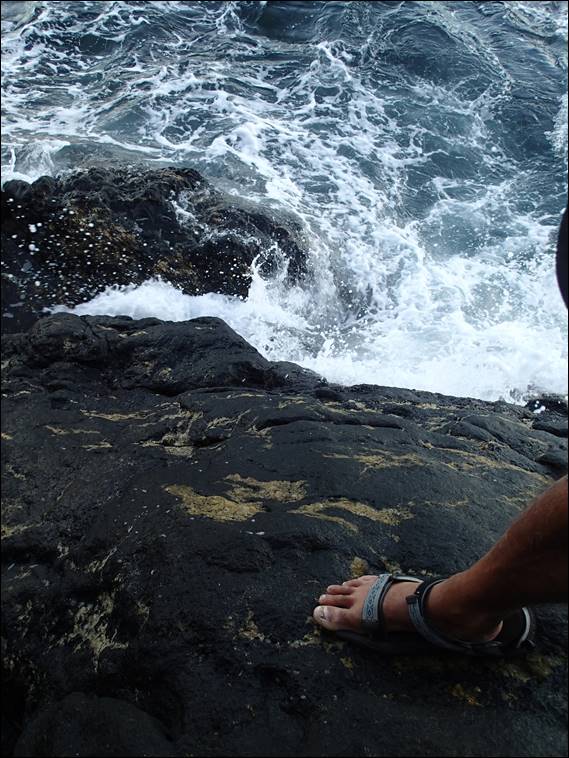
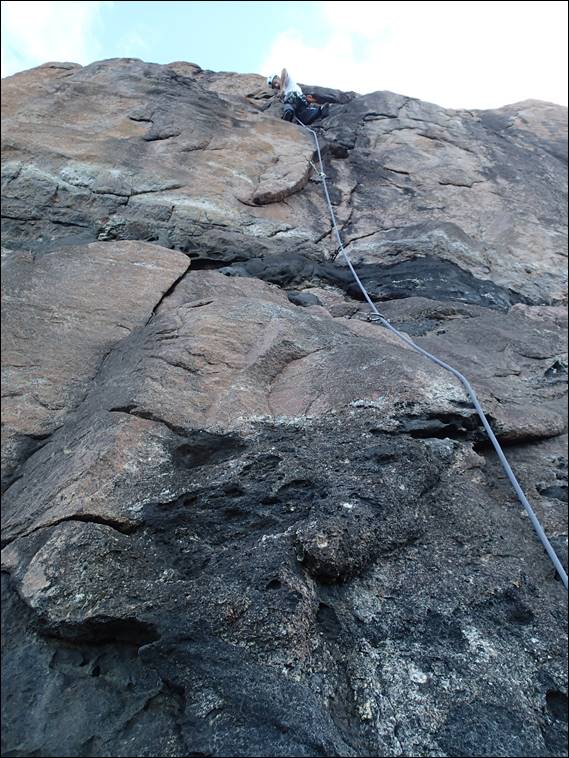
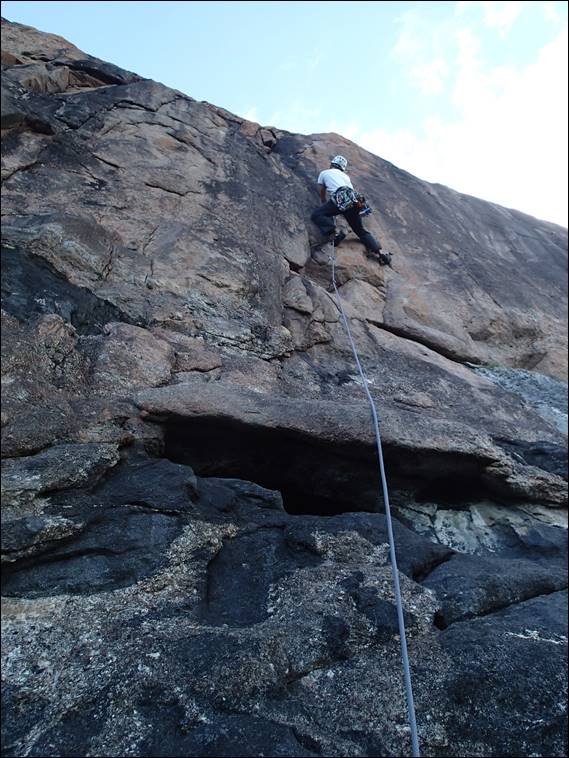
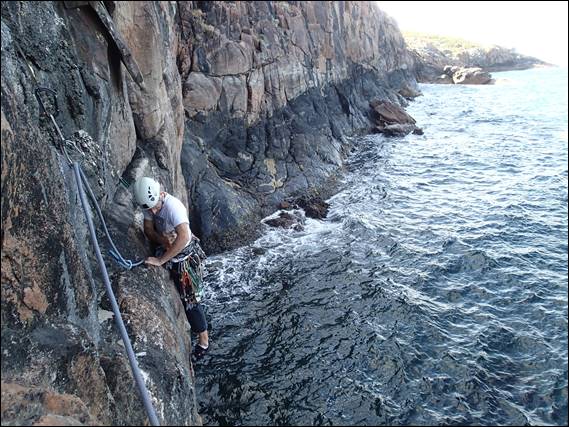
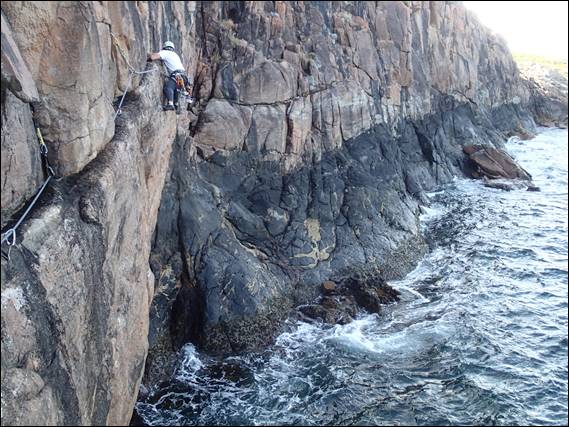
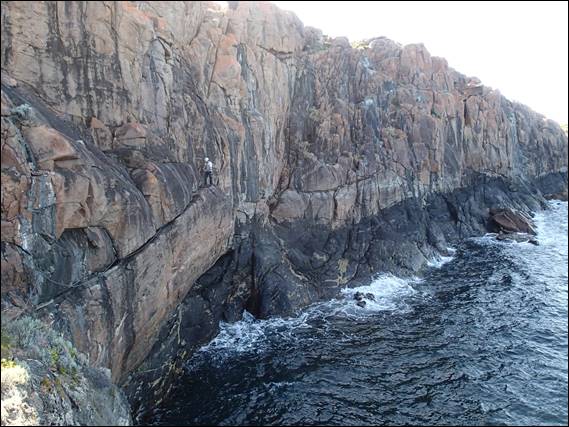
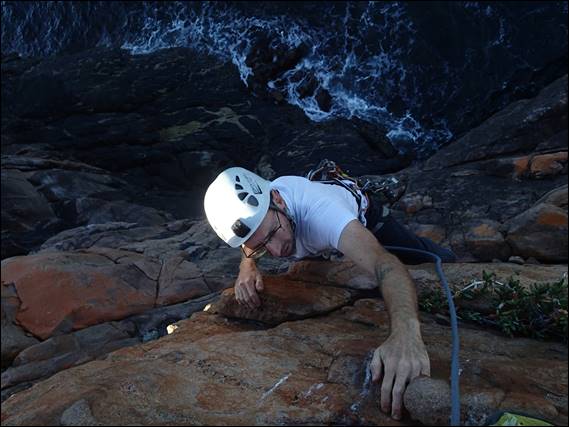
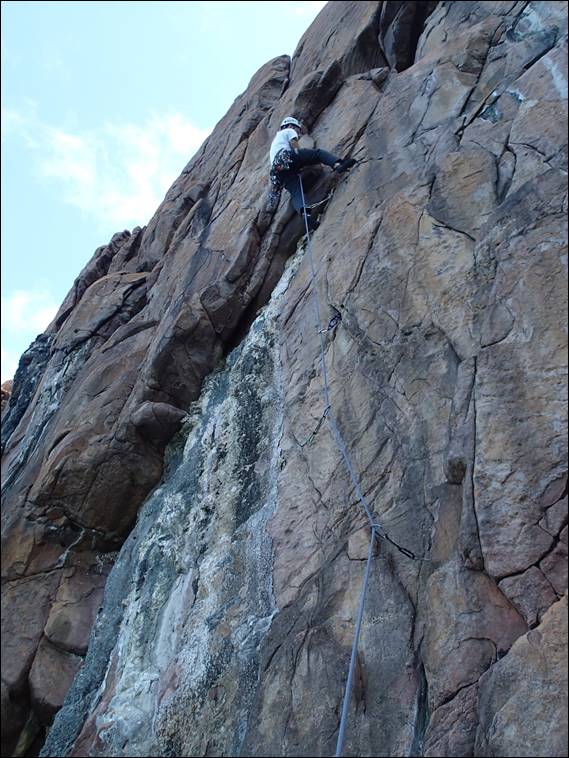
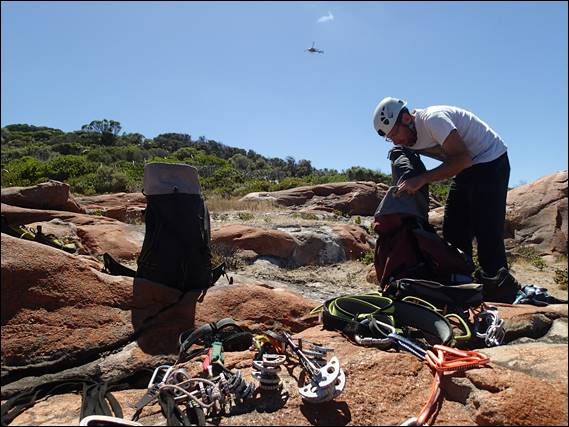
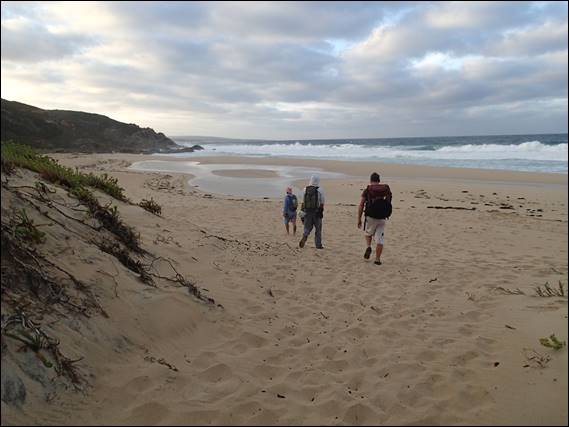
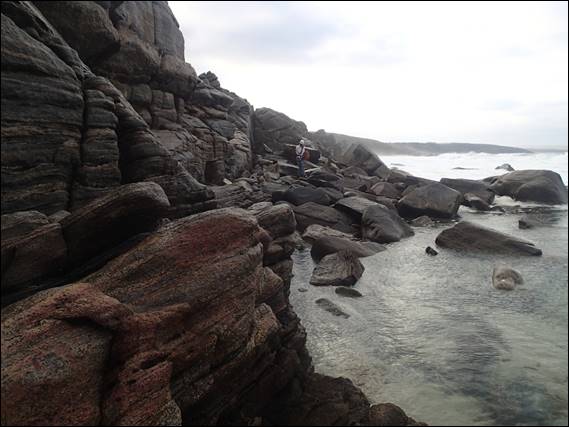
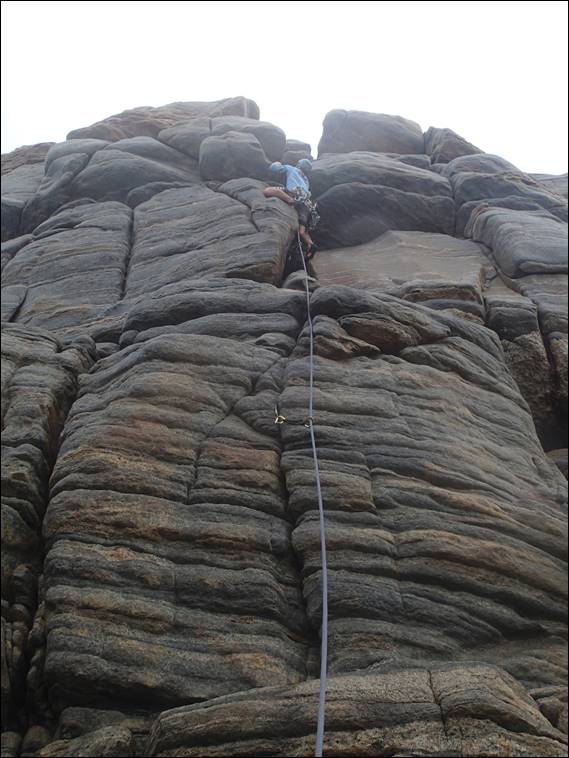
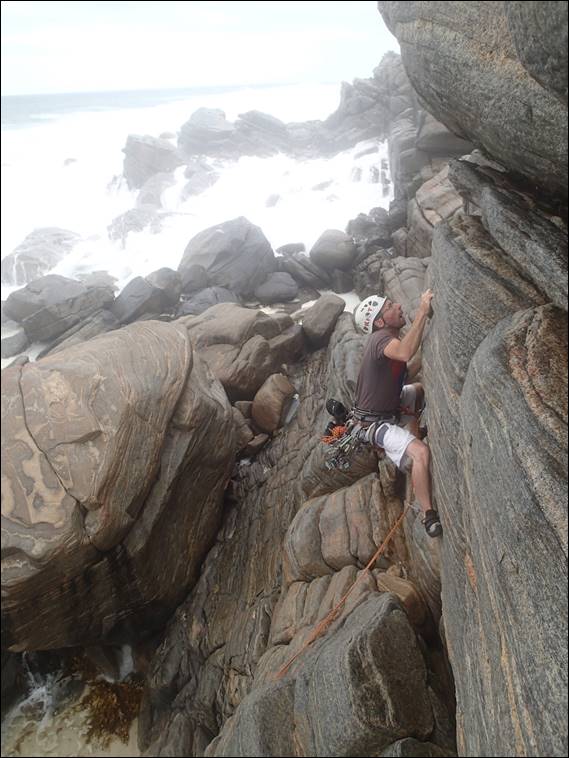
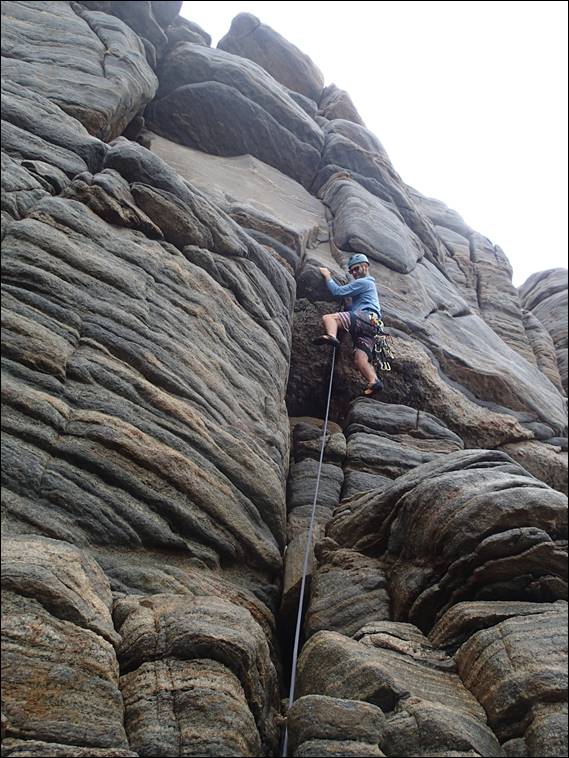
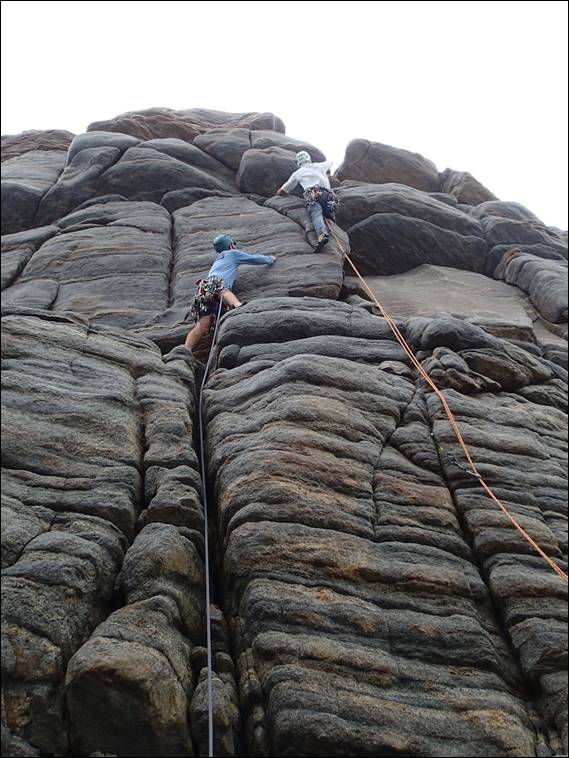
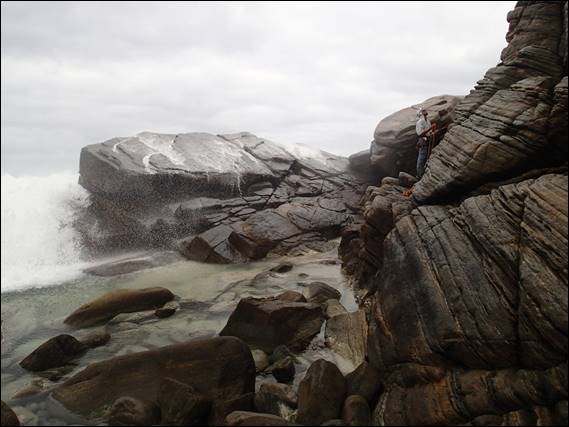
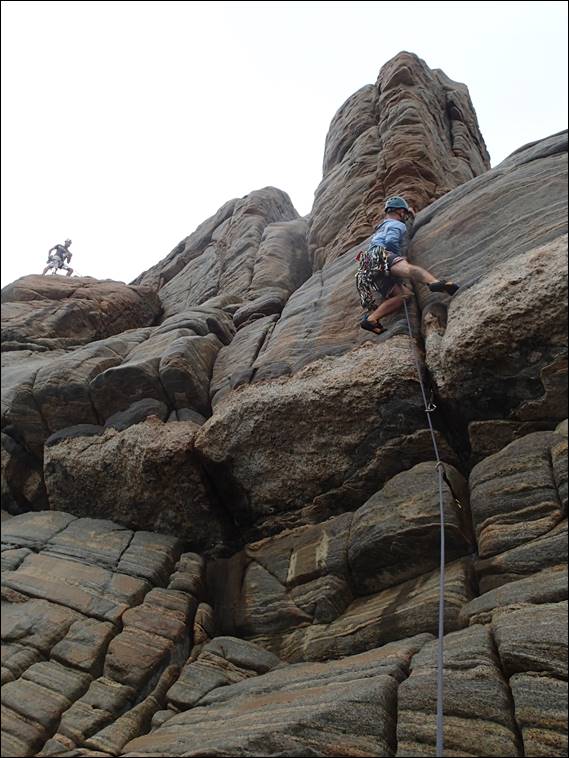
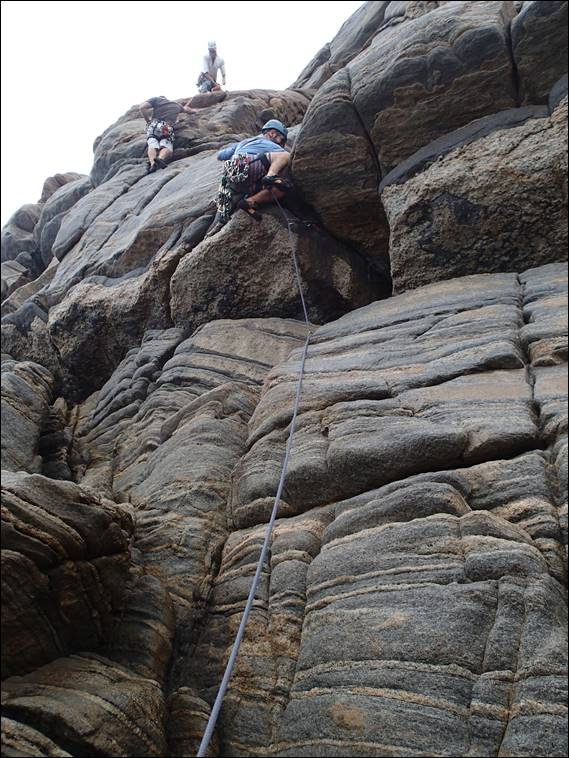
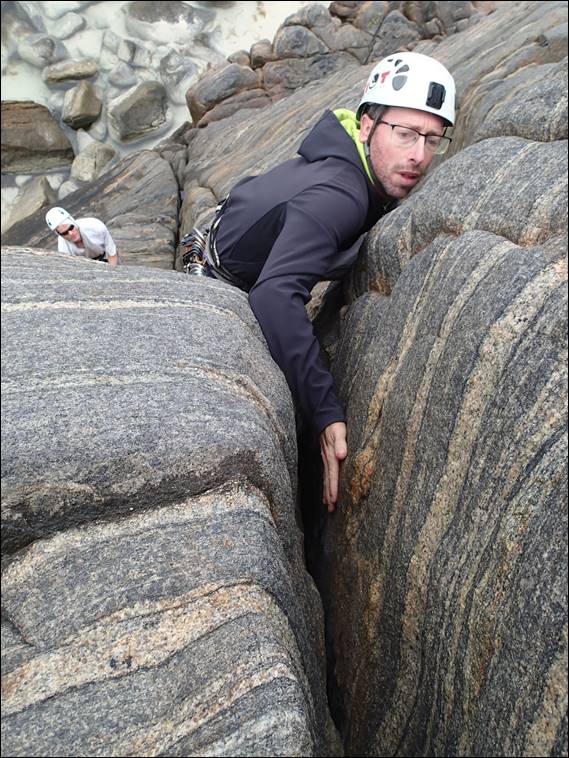
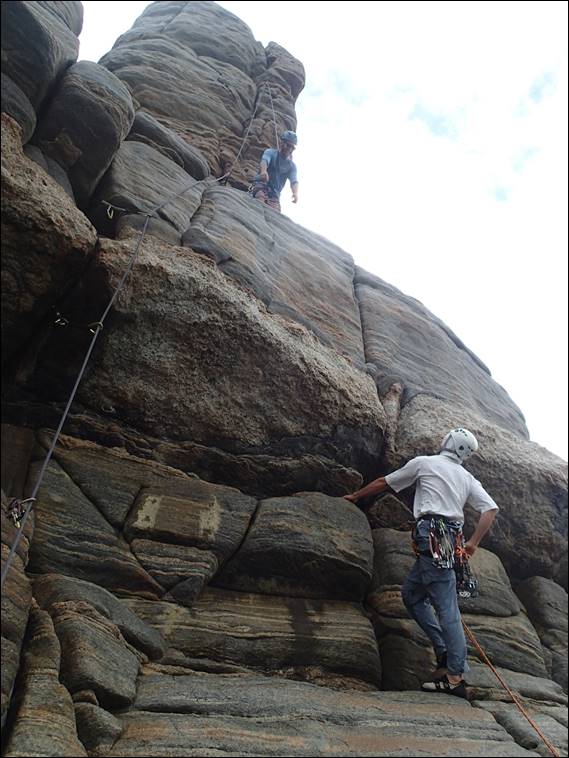
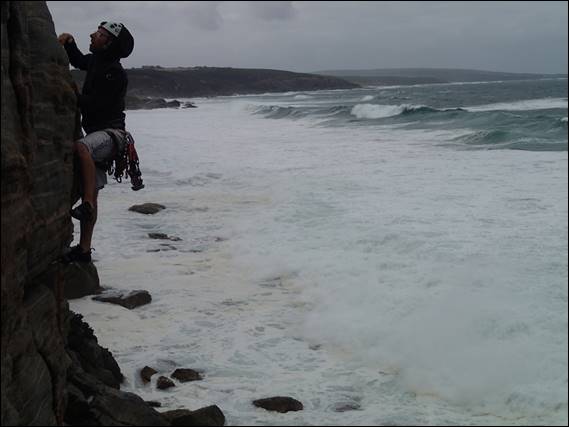
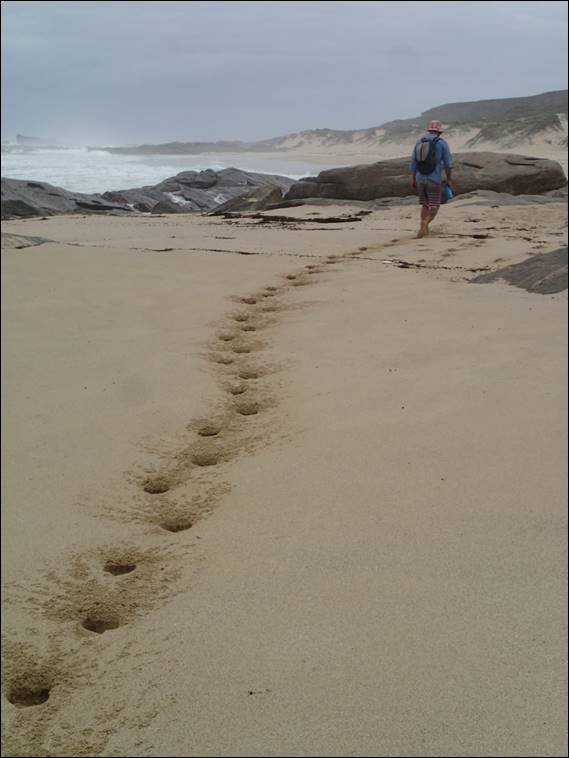
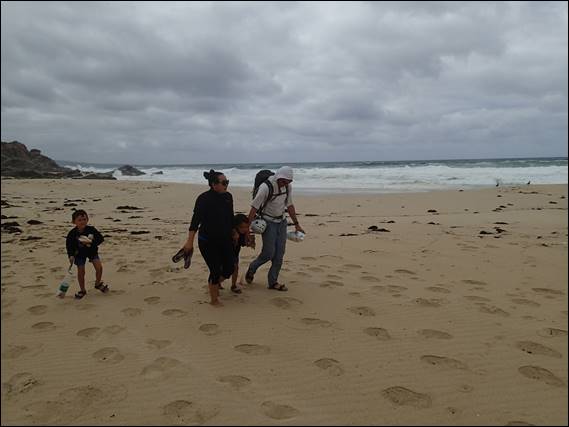
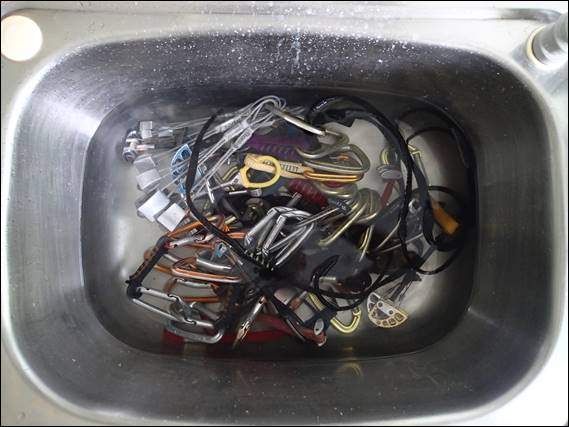
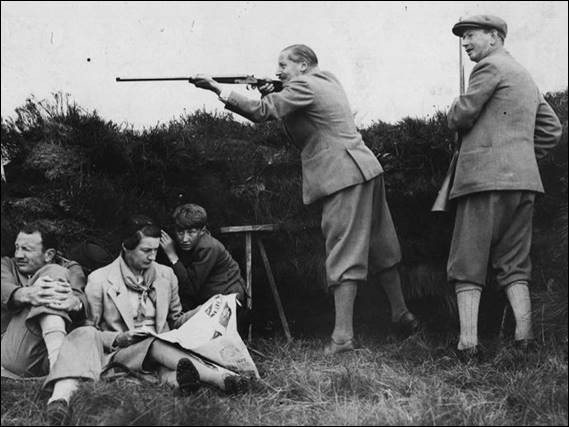
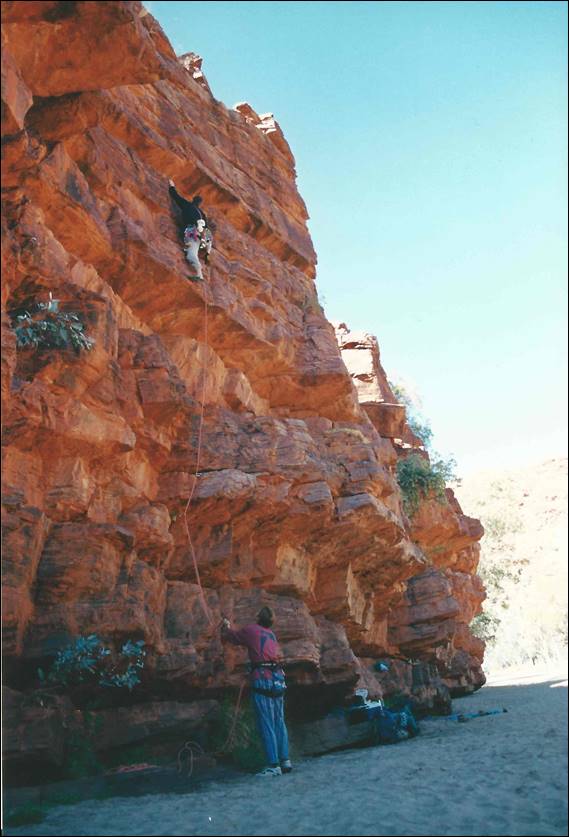
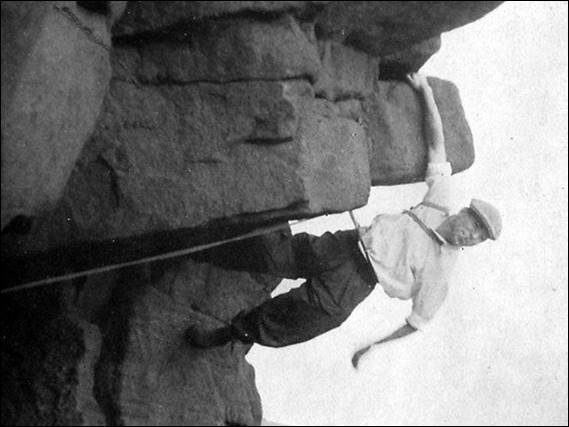
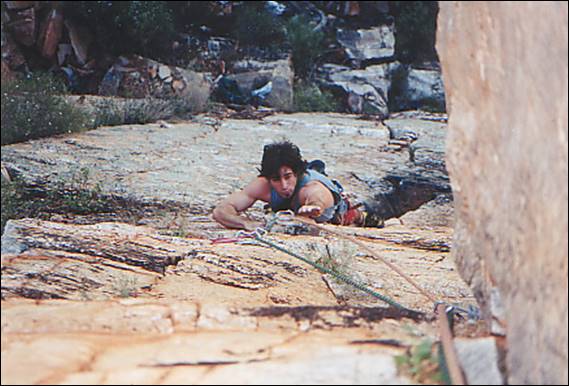
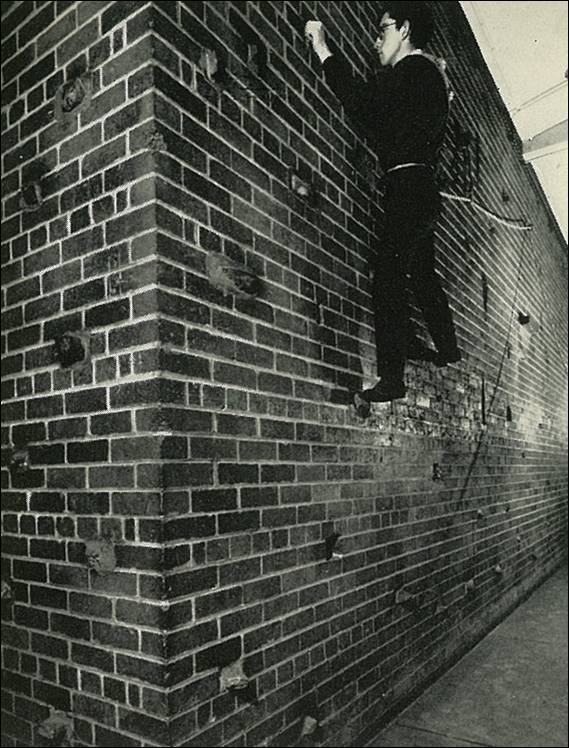
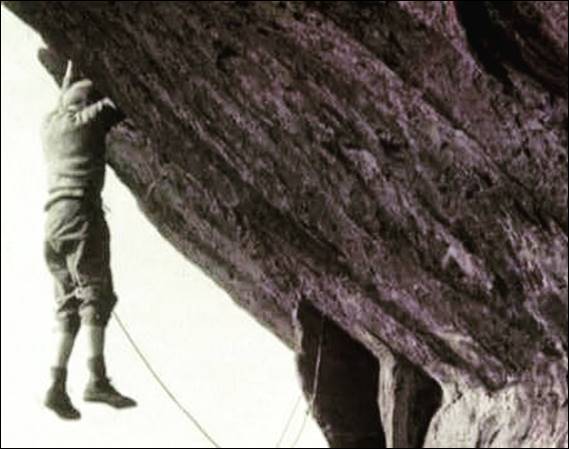

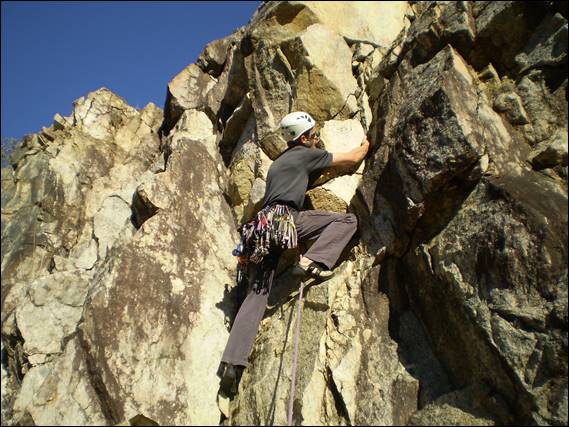
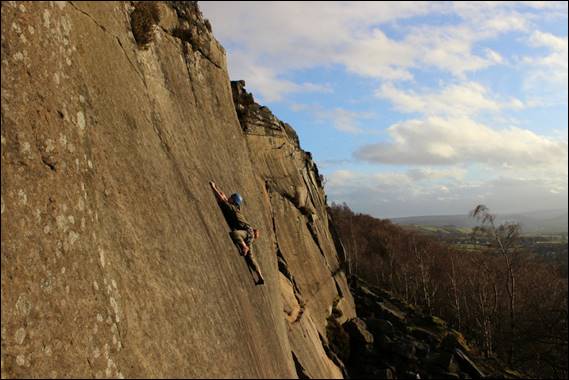

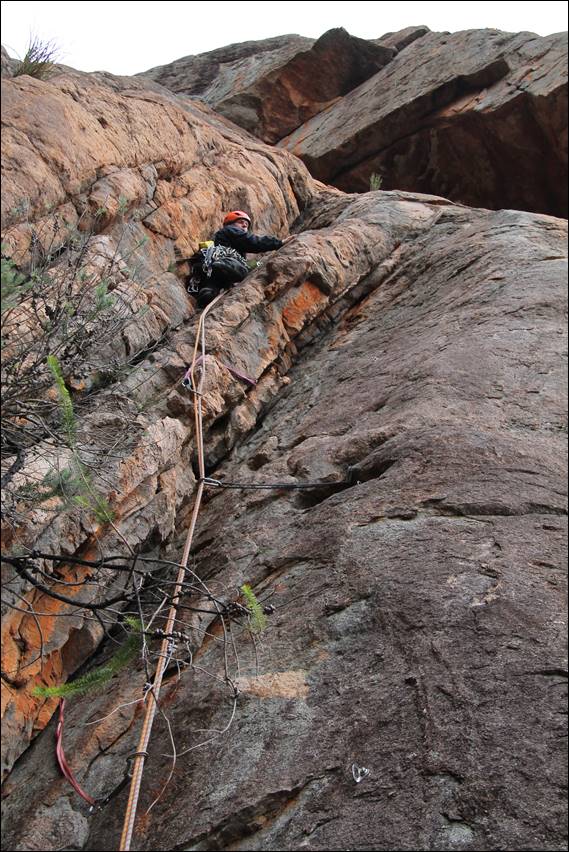
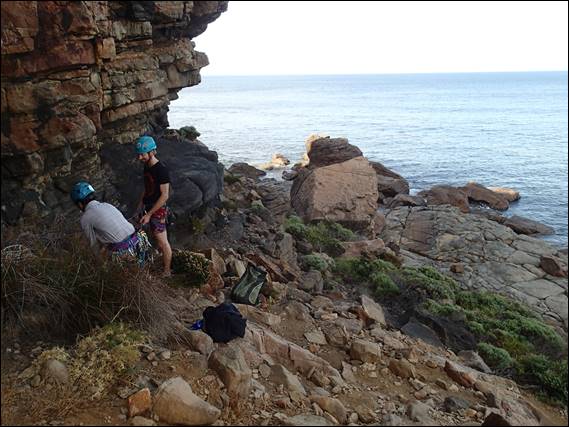
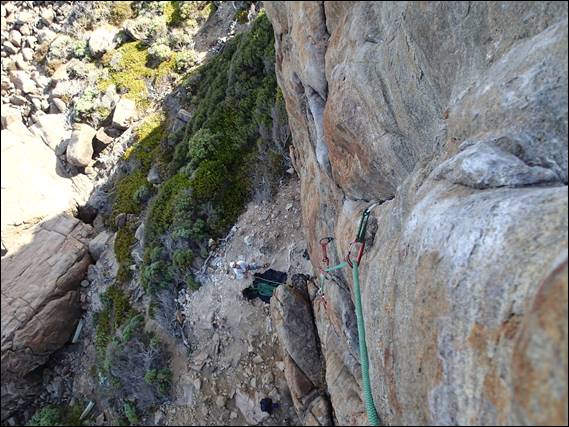
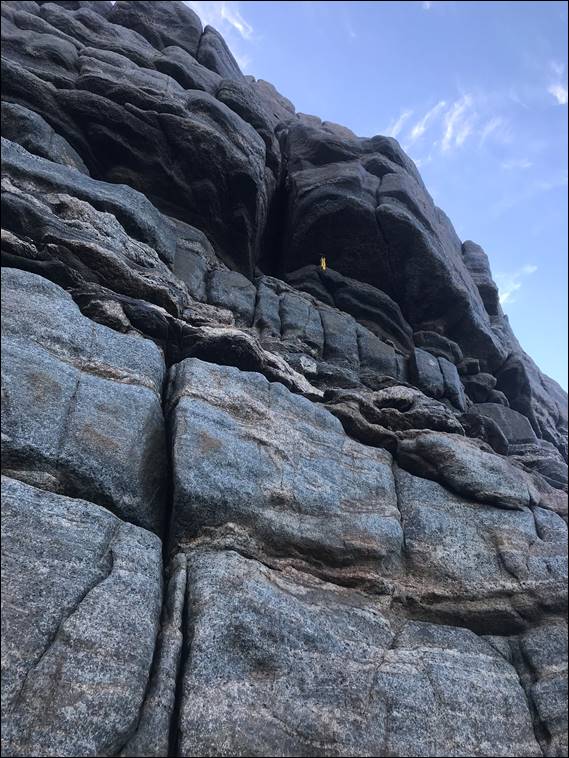
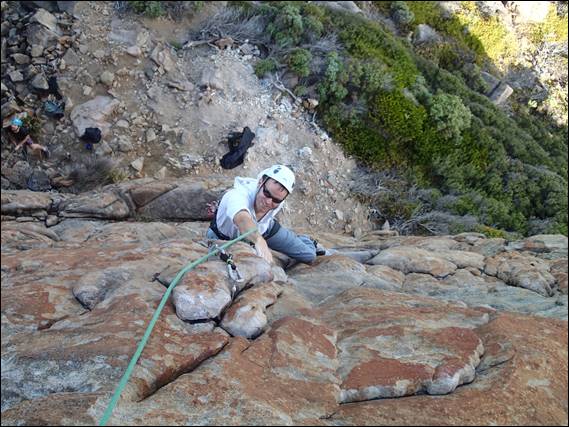
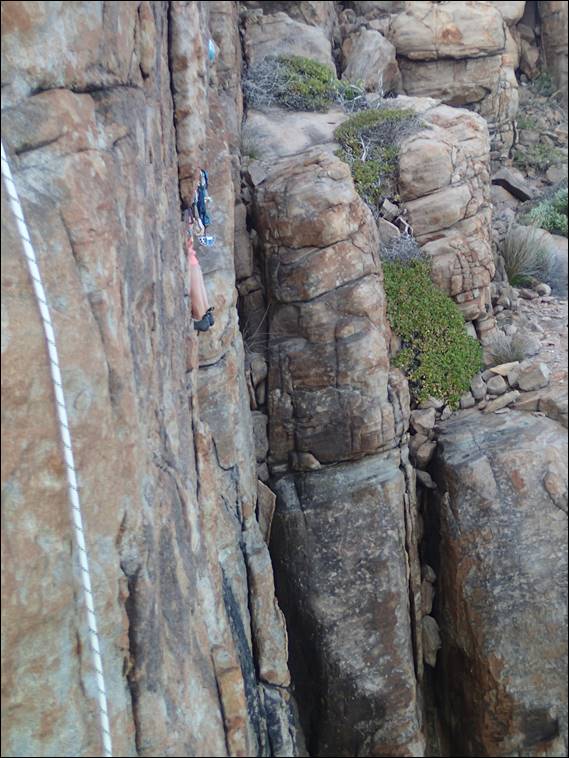
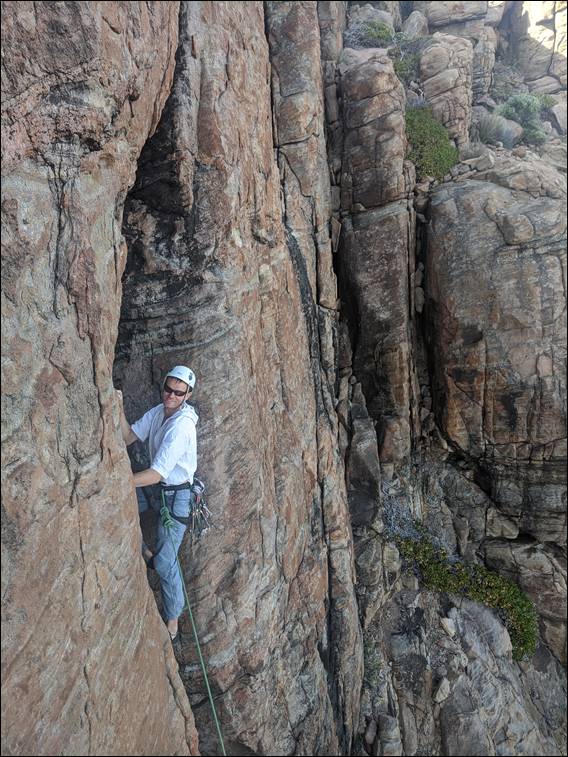
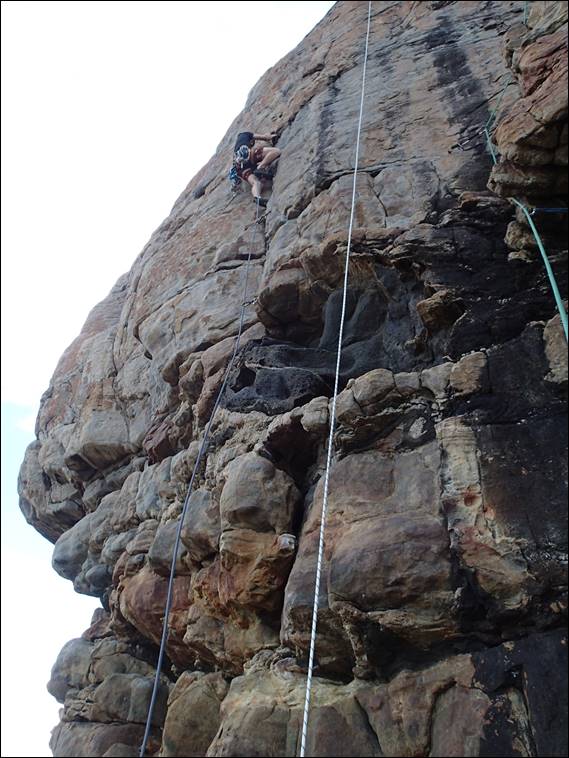
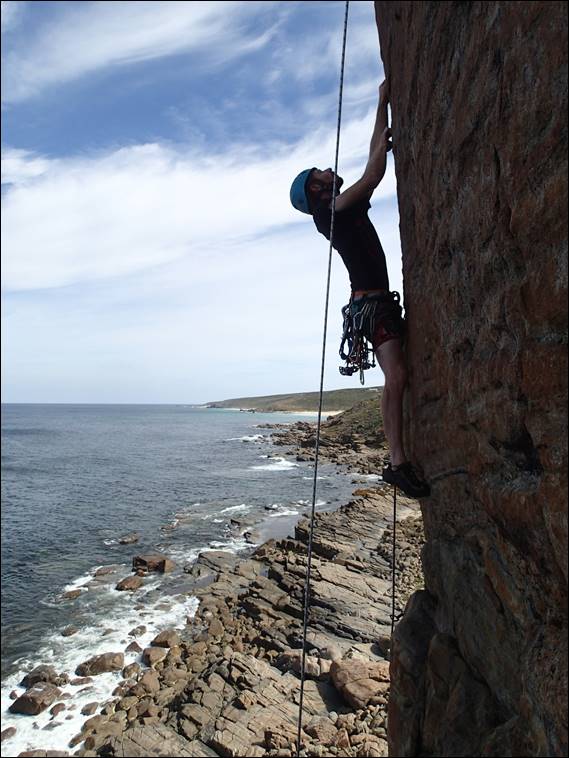
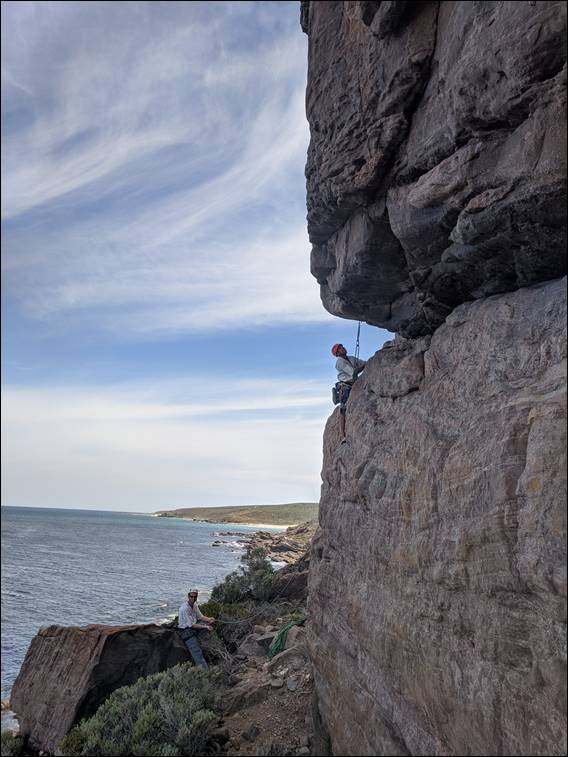
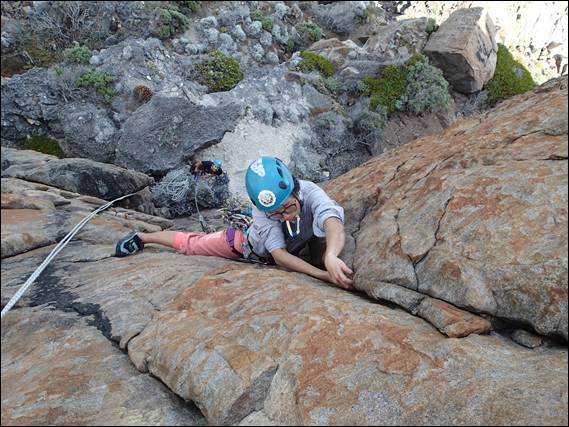
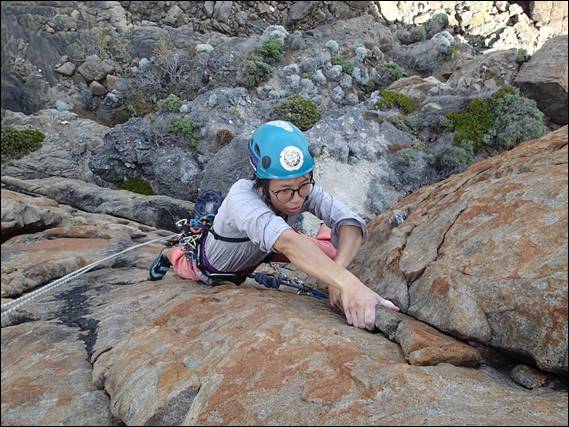
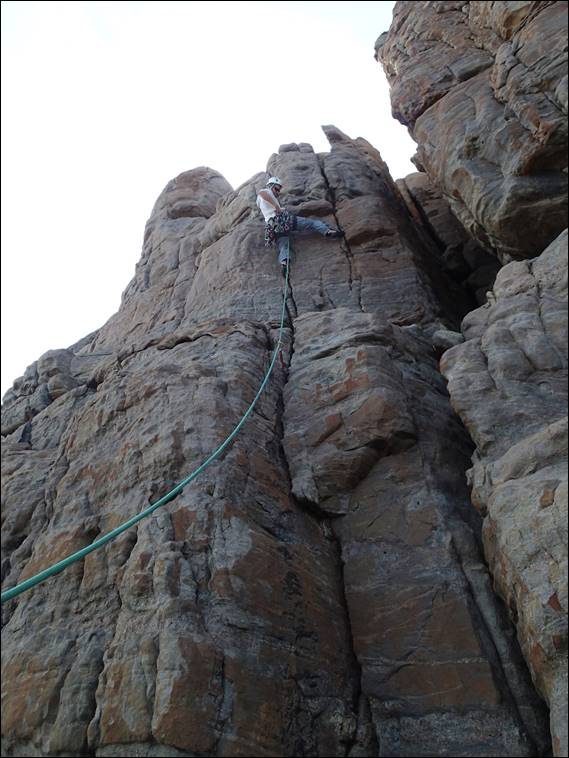
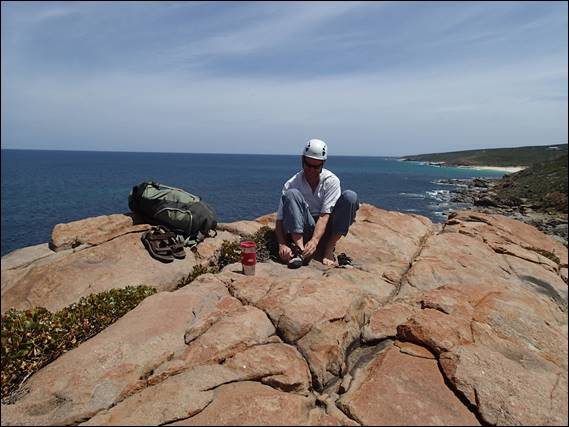
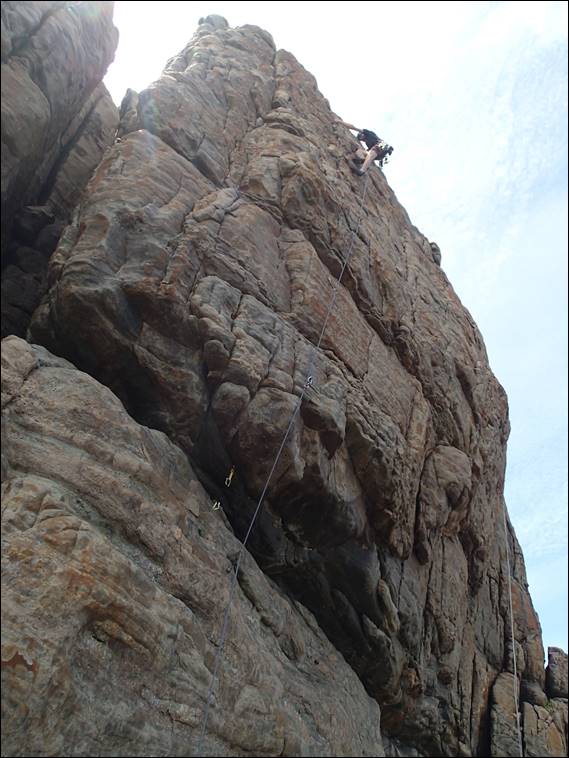
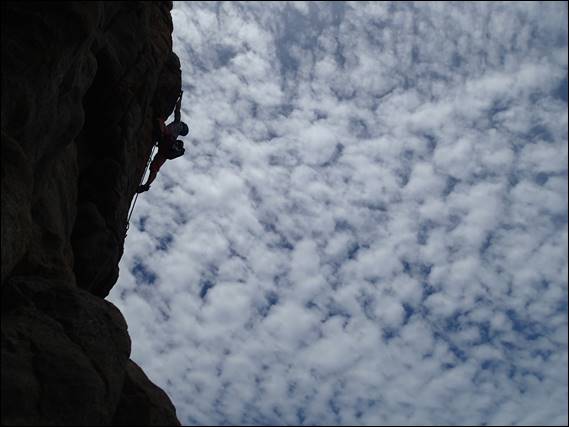
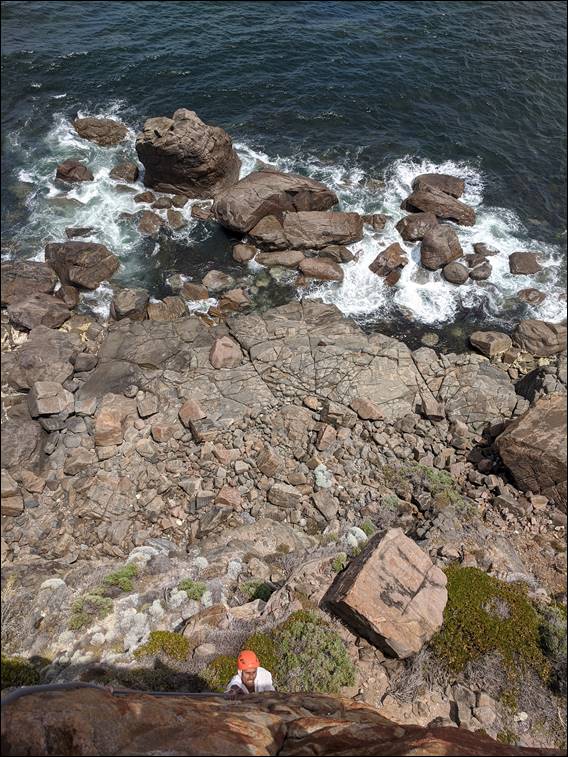
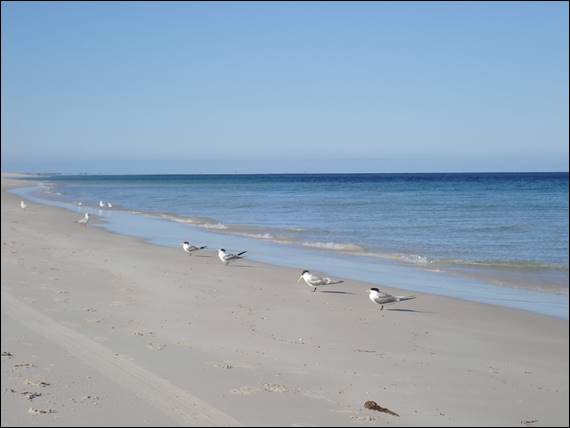
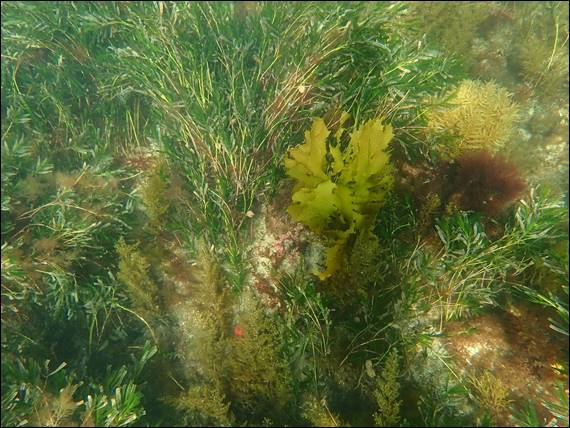

 Sandbagged