The Missing Man

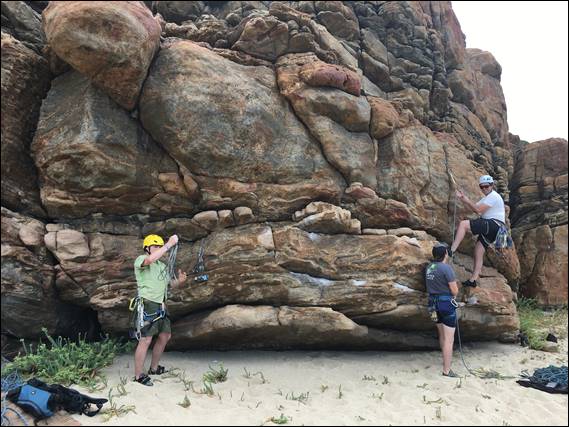
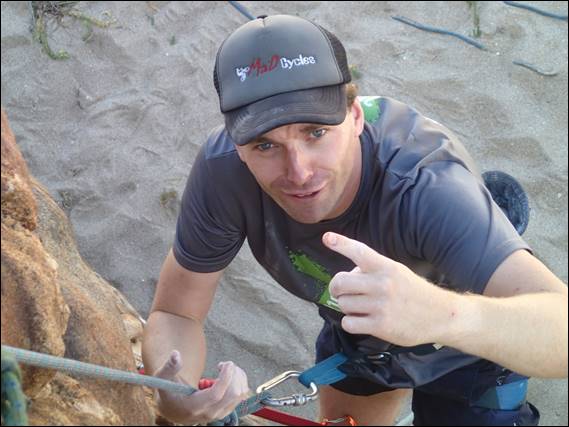
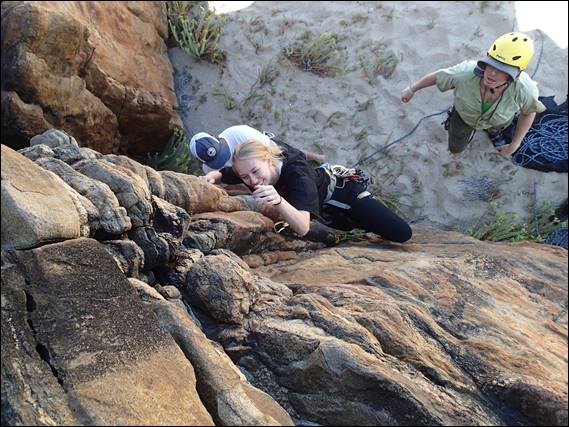
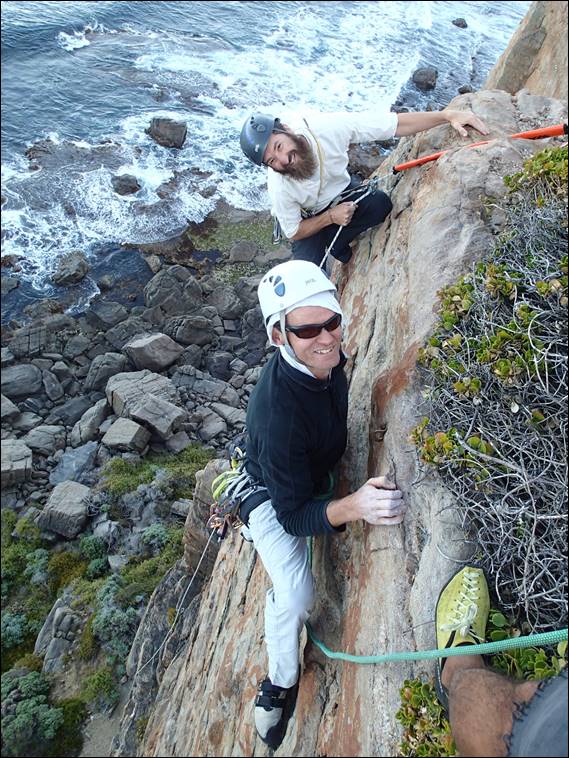
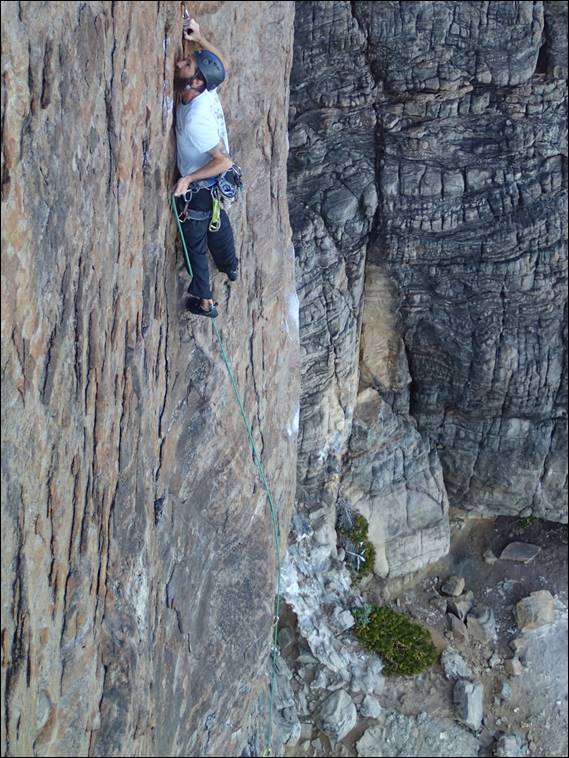
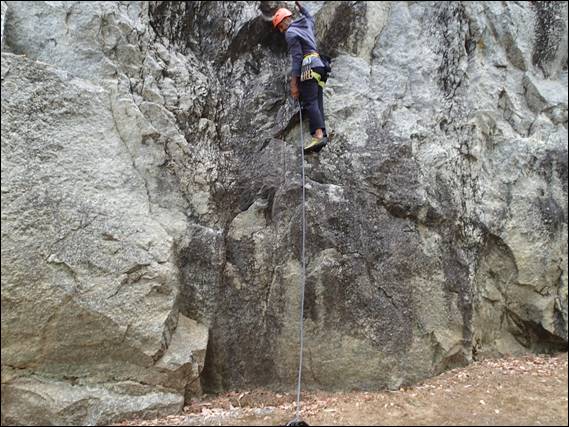
After an abstinence of climbing during the long weekend there was need to get back out there, and that opportunity arose on Sunday when Rongy, Steve, Alan and I headed down to the main area of Wilyabrup.  The choice of location was based on my one request for some longer routes.  Normally Rongy or I would have a game plan and tick list in mind, but today it was a relaxed and low key affair.  So much so that we were umming and ahhing about who would take first lead, who would climb with who and what we should climb:
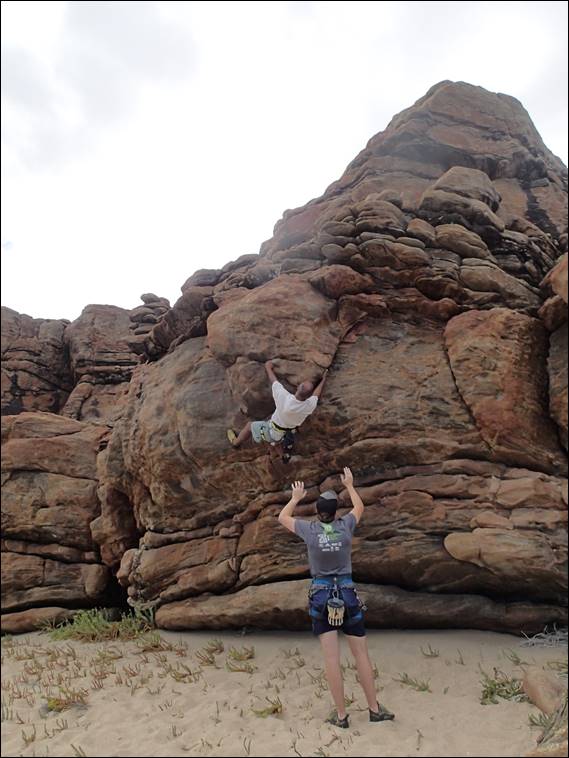
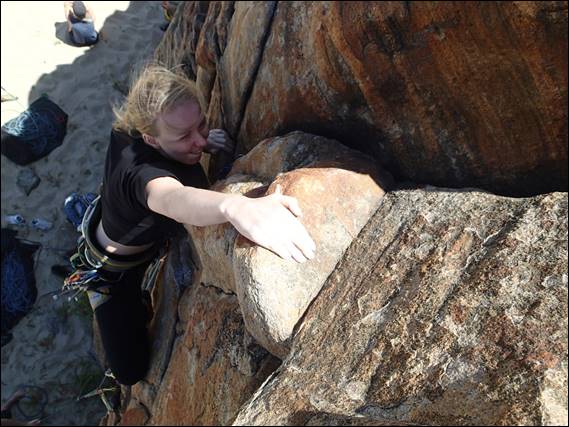
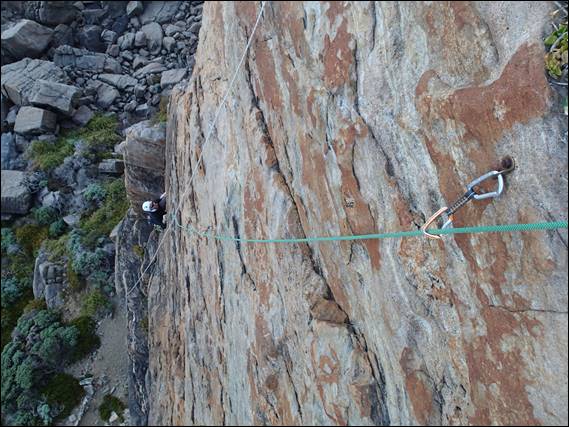
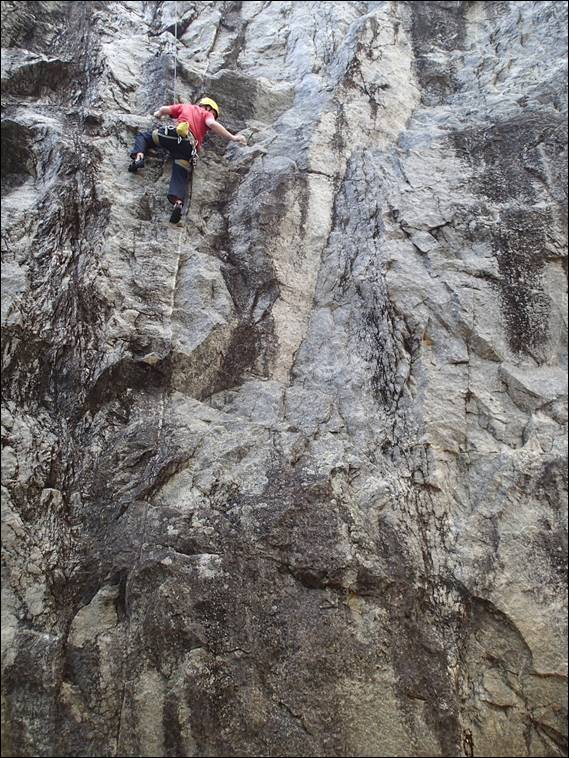
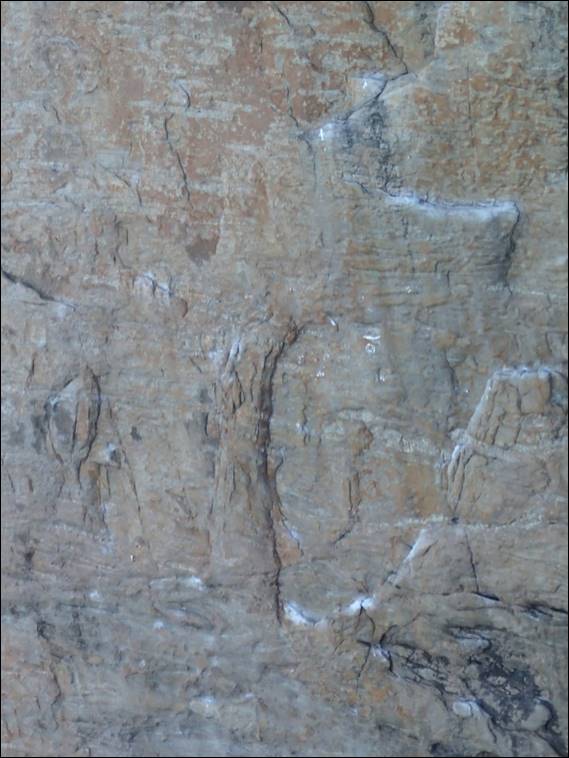
Rongy broke the stalemate and started the first climb of the day on First Climb.  Meanwhile Steve was keen to jump on Hope, so he racked up.  Now you may be wondering about the next image and its relevance.  There is none other than on the last weekend the WA climbing association had a trip down here, and as is usual with gym climbers the place was splattered with chalk.  Hold being marked with ticks and one even being indicated by a smiley face, seeing this it is not surprising why some complain about climbers disfiguring rock faces:
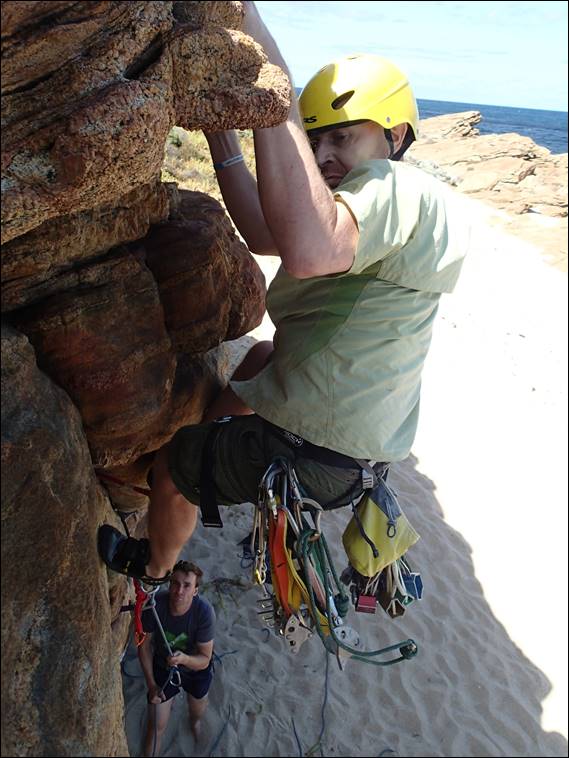
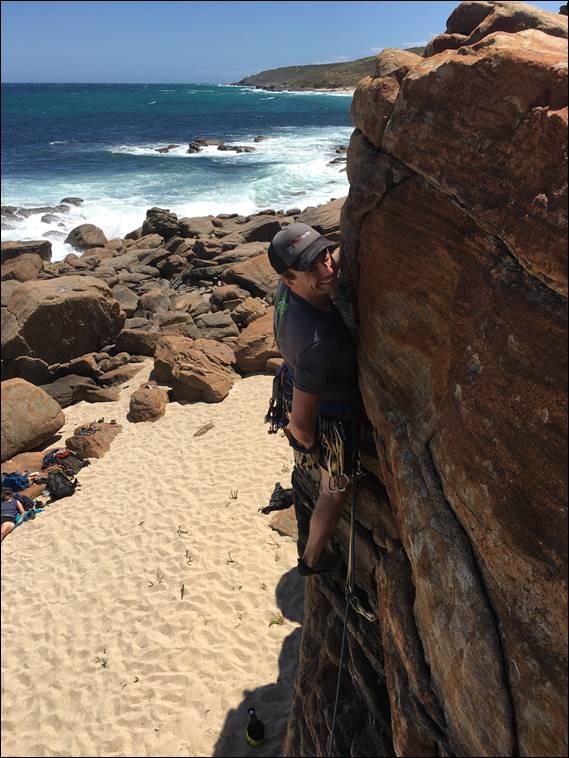
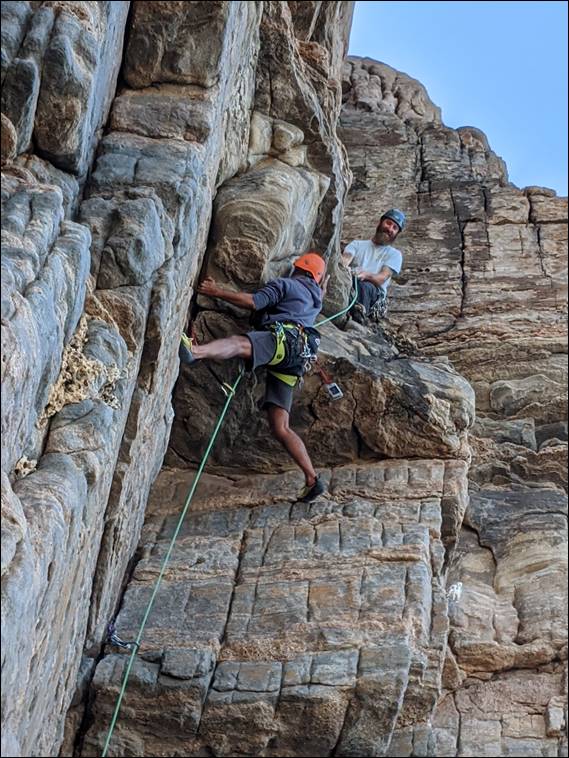
Now Steve was physical ready to roll, but mentally he seemed not altogether there.  A third of the way up he looked down at me and confessed to just not being in the right frame of mine.  So he down climbed and I took the lead, and while he managed to second up he decided that he would not climb any more today.  Chemo and other things were clouding his focus and he felt it better not to continue, a shame but at times you have to do the sensible thing.  Walking down we found Alan also wondering if he was being sensible as he tackled Twenty Questions:
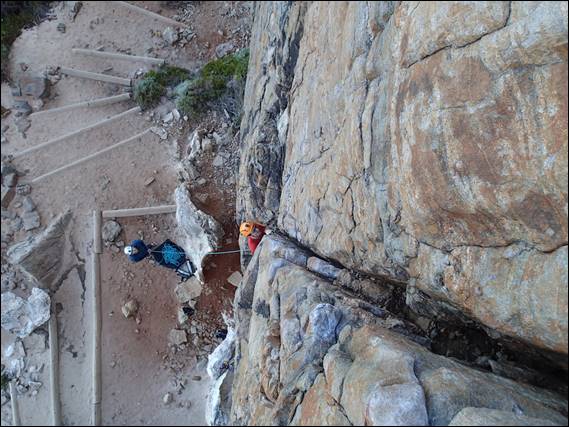
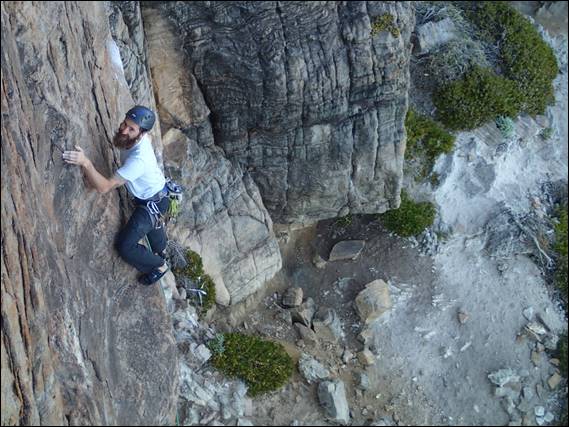
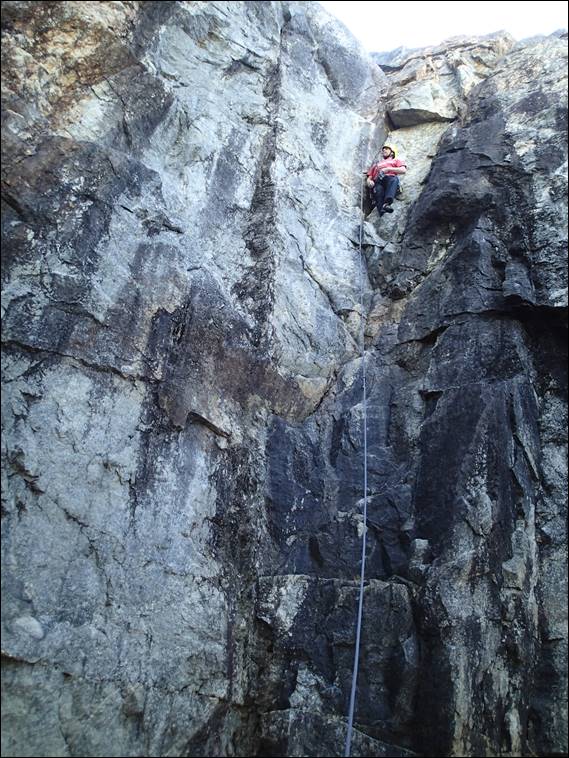
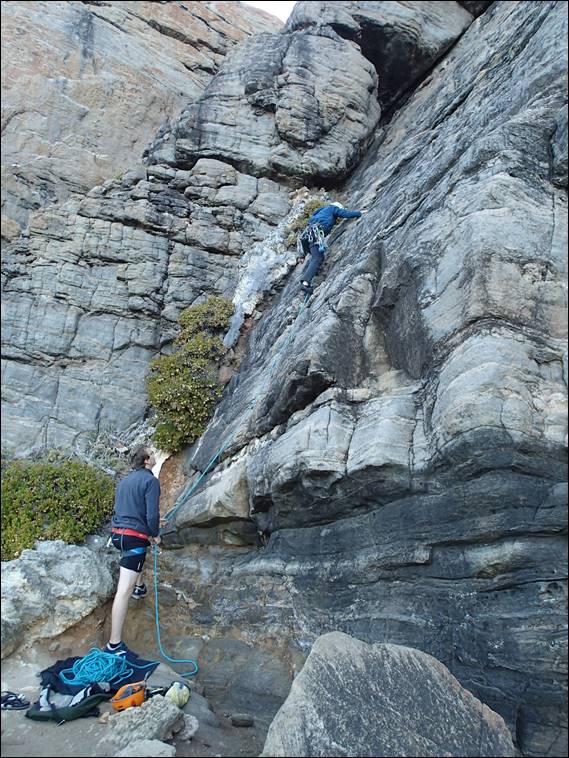
He certainly had to stop and talk to himself a few times but he never rested on the rope or fell, nor did he even indicate he might back down from the lead.  Slow and steady won the race and after he made the crux move he continued to keep his cool on the last exposed section before topping out.  It was a great lead considering it is his second lead on trad in years, Lou take note!  Rongy and then I followed up checking his gear, which at times he was nervous about, but it was all bomber:
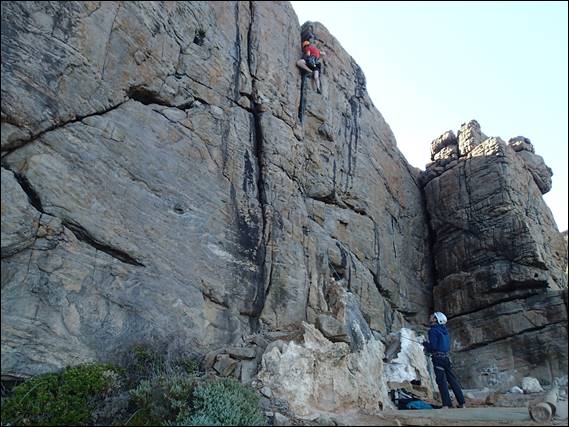
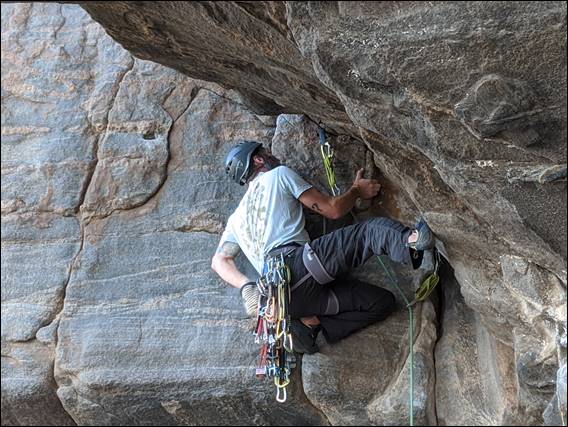
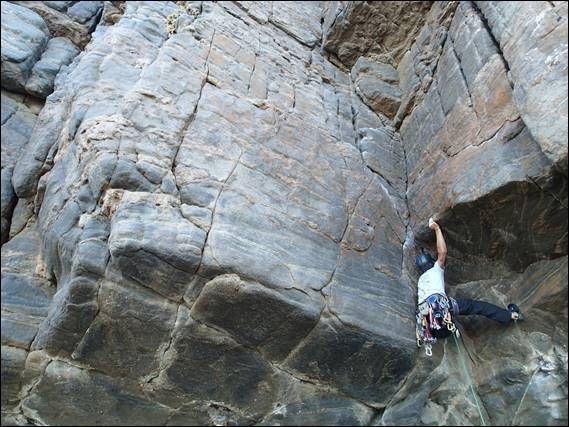
Now to the left of that crack is wait for it… Left Crack.  A well protected and challenging climb at the grade, which can be made harder and longer by traversing left.  You may recall it from a recent trip here I did with Howsie when I led it.  It is a route I often talk up and I’m not sure but it felt like Rongy didn’t believe that I could or have climbed it .  So I gave into the pressure and jumped on it one more time.  The last time was it was sopping wet and a bit of a horror show, but at least today it was all dry and the friction was great:
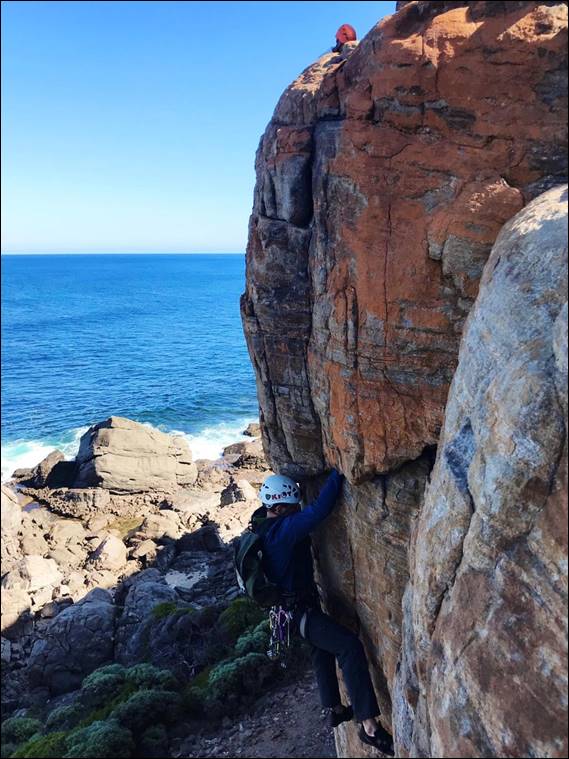
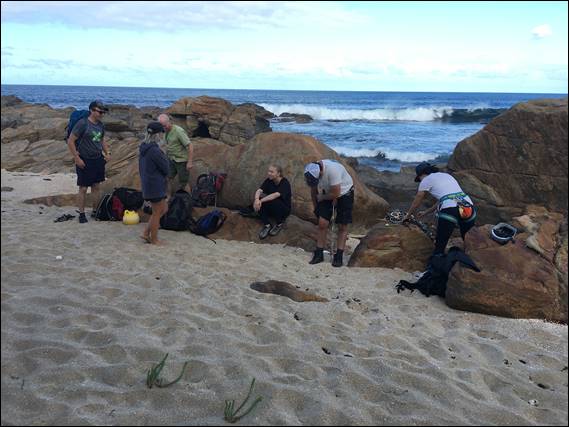
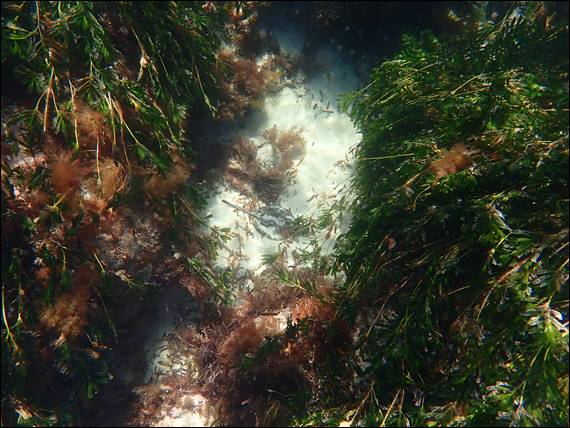
I have to confess to having huffed and puffed along the traverse, stepping high and having to use unseen hand jams while making use of the better higher footholds.  It’s a pumpy line and steeper than it looks, and I was grateful when I got to the end.  Alan took one look and decided that this was not for him so only Rongy followed up.  Below on the rocks Steve had collated all his gear, but he was missing.  We were not too worried as he wouldn’t have got far and so we moved on for the next line:
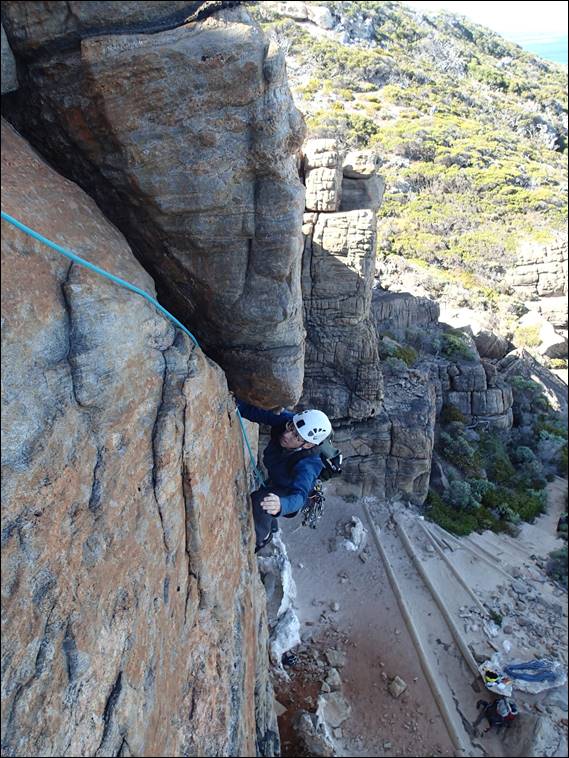
After having been up Blubber Boy twice on second it was finally time for Rongy to give it a go himself.  Alan was certainly looking on very apprehensively as Rongy took his time fiddling with the gear and doing a bit of yo-yoing trying to figure out the moves.  On second with the safety of the rope above you this climb never feels too serious, but on lead it is a whole new ball game.  At one point he climbed down to a ledge and had to shake out confessing that on lead the climb felt a lot more pumpy:
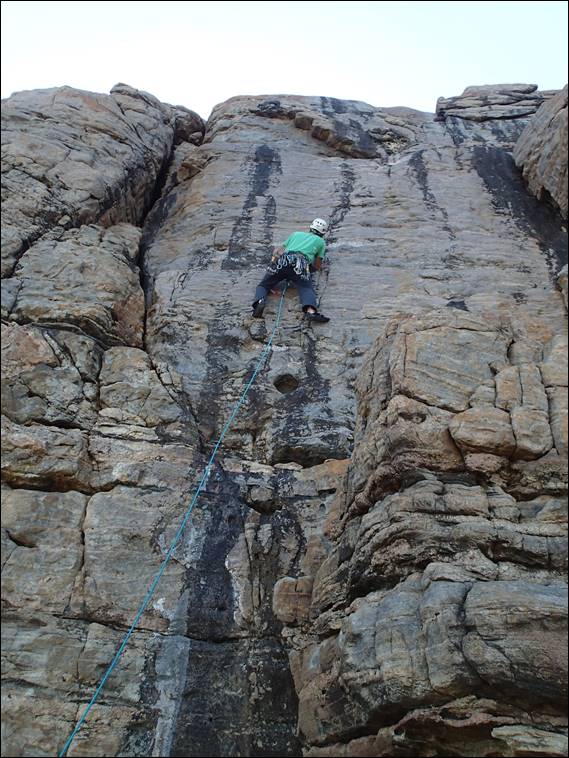
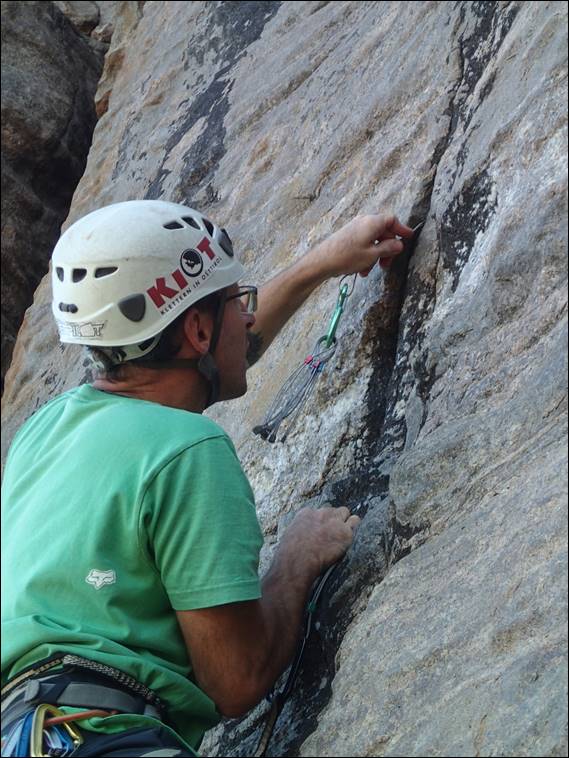
It is for good reason that it can feel pumpy, the gear is small in the bottom of the slab, which is also the crux section.  RPs are the only choice and you really have to trust them as it is not until higher up the slab that the holds become more positive and gear bigger.  This explains the yo-yoing and the possible over gripping that Rongy was now experiencing.  He kept going and in his usual style enjoyed and soaked up the experience, as oppose to allowing it to get to his head:
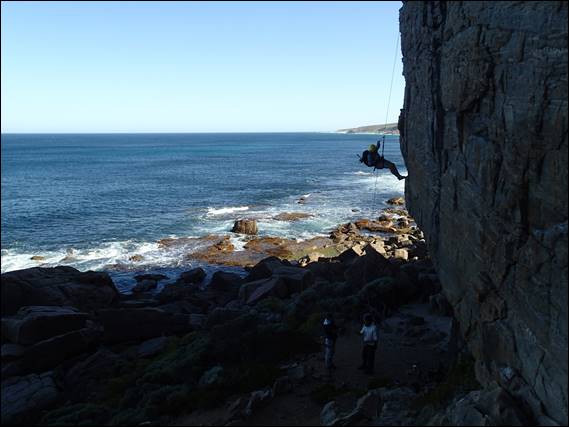
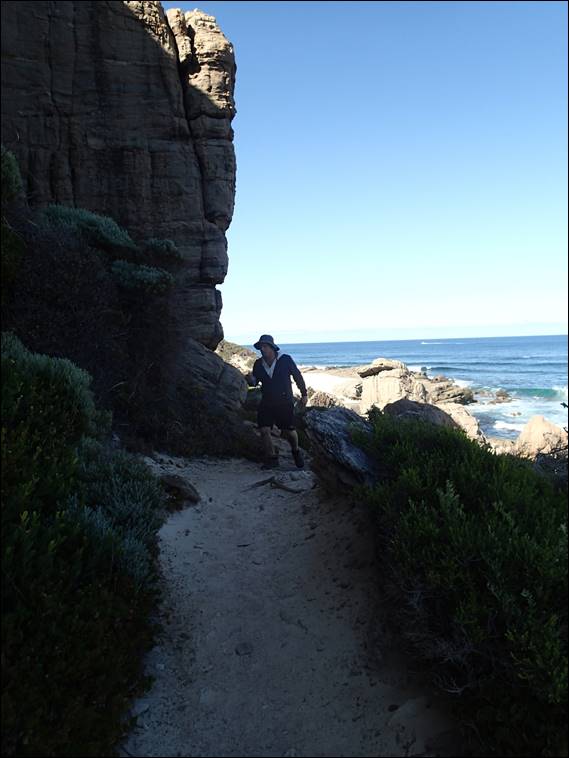
Steve ambled down the path as I was belaying Rongy up the last sections.  He was happy pottering about and had been wandering about up top, and was now just about to head down to the boulders along the water’s edge.  His best mate Mark, from the UK, had really liked this area when he had come out to visit.  He had sadly and only recently passed unexpectedly and Steve was using his time today to collect some footage to use for the eulogy.  So as he wandered down to the boulders we continued to focus on Rongy:
Alan was feeling very unsure about this one, but both Rongy and I had confidence that he could give it a red hot go.  Looking particularly nervous and clunky at the start he soon found a rhythm and managed to pull off the crux moves with relative ease.  There was one moment when he asked Rongy to take and that he would rest, to which I hollered encouragement to make the next move where the holds really did improve.  He did as told and was not surprisingly, and deservedly so, very chuffed to have climbed it clean:
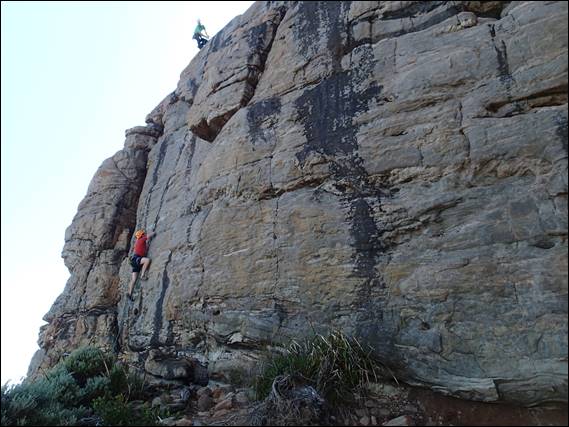
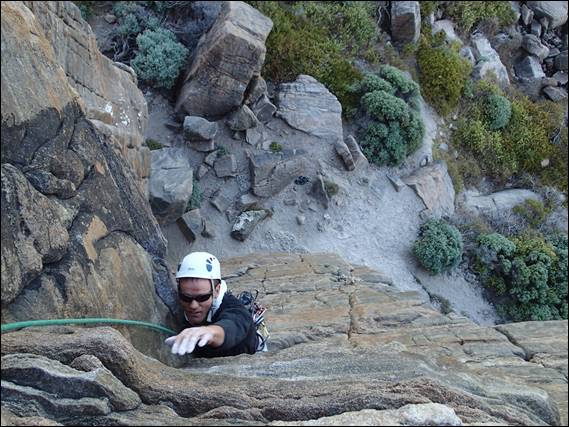
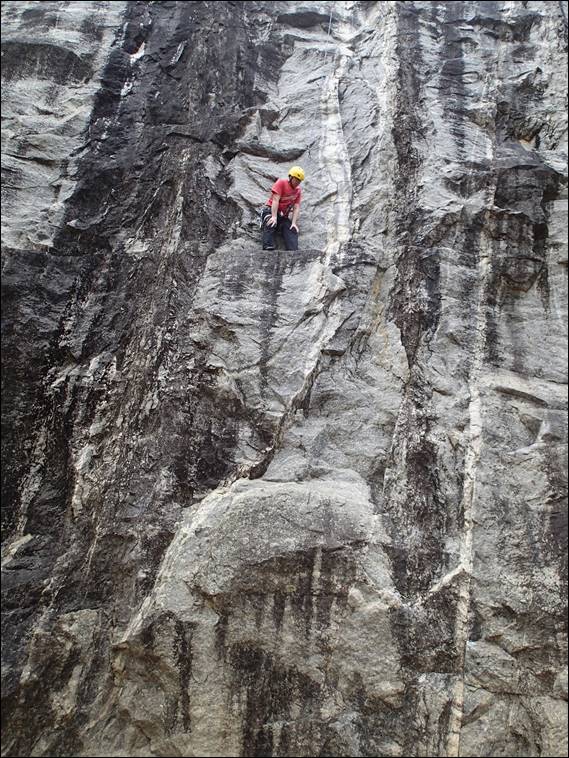
We could see Steve lurking between the boulders and decided that one more climb was on the cards.  My lead, as Alan put his foot down and said he was not leading anything after that last climb.  So to slow the pace down and make the most of the last climb we aimed for Verbosity.  It is one we have all three led before so there were no nasty surprises.  However, the main reason for picking this line was that it is the longest route here.  It was as always great fun and I had an awesome view from the top:
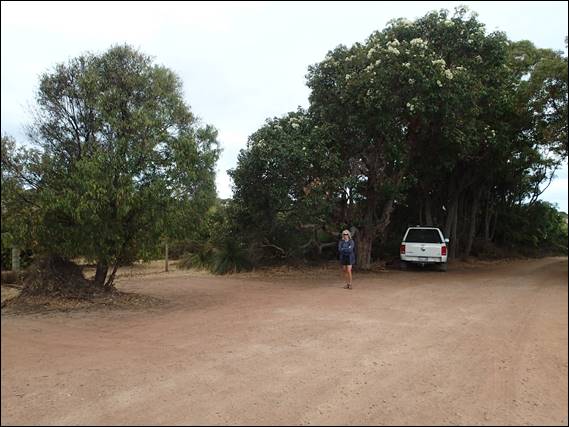
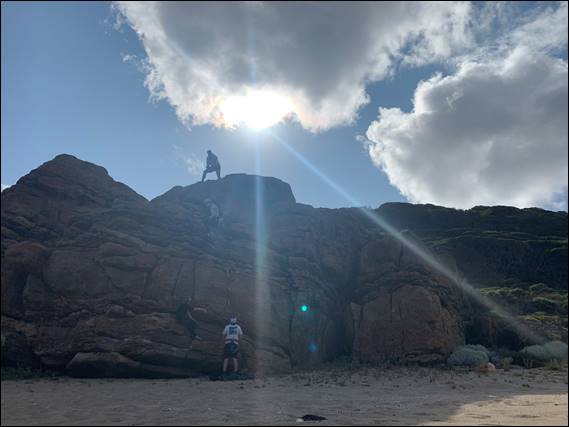
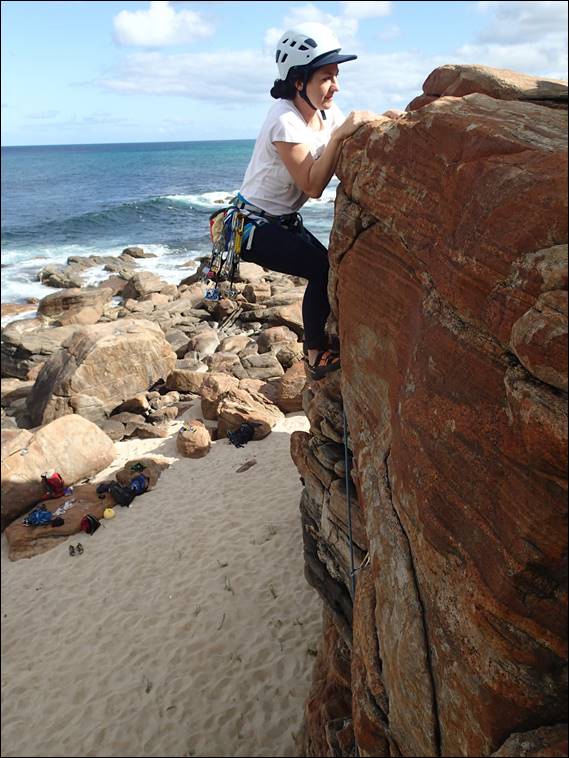
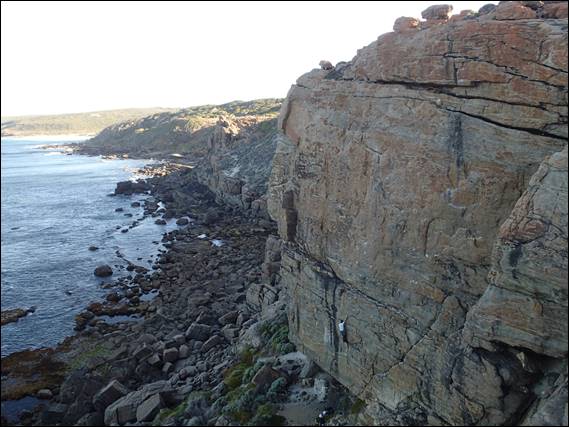
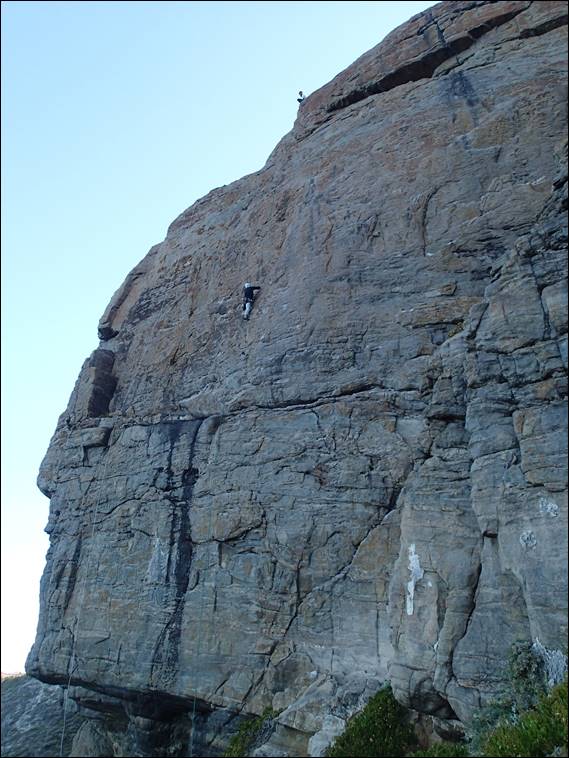
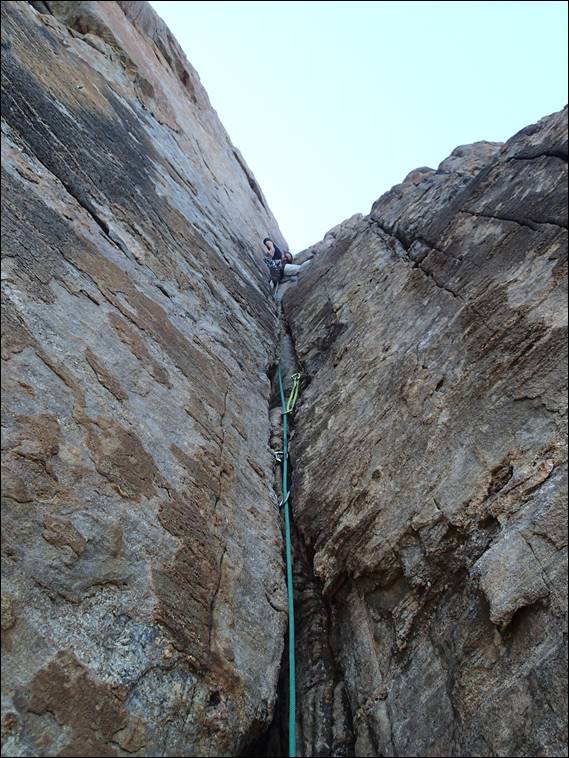
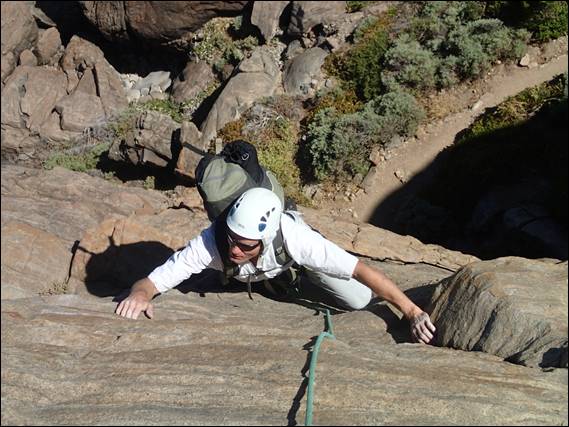
Alan came up second tied in part way along the rope, and while we had a 60m rope this route is so long that Rongy had to start climbing before Alan had topped out.  You can just make out Rongy with his white helmet getting to the top of the crux corner that guards the more relaxed upper wall of this route.  With that climb under our belt we went back down and packed up, Steve was ahead of us having got  ahead start as he was starting to feel the heat.  It was a warm hike out and we finally found the missing man under the shelter of the trees by the car:
The old stomping ground

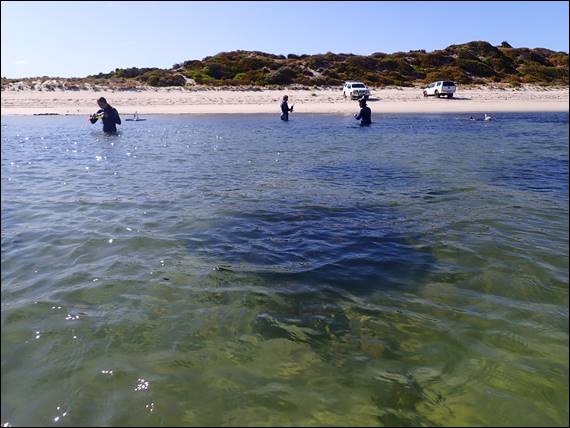
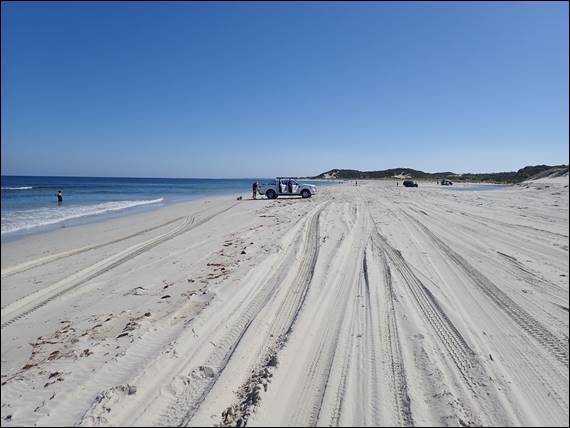
The last day of the long weekend and in view of the beach having been crazily busy on Sunday, we thought it would be safe to head out this morning without the crowds.  Sure enough the plan worked like a dream and today Rongy and Alana tagged along, with Lisa and I.  It was always going to be a short dip due to other things that needed doing, but that didn’t deter us.  Having got over my little bogging incident we ventured back on the beach past the point, as Rongy was very keen to check the area out:

Not far out and the fish and rays were out, Rongy also spied a Heteractis Malu or more commonly called a Malu, Delicate or Sand Anemone.  I’ve seen three in all my years of snorkelling here, and today I doubled that.  Much as these look like harmless creatures they are in fact carnivorous and any small creature that happen upon them, such as fish, crabs or snails, will be paralysed and then drawn into the mouth at the centre of the disk to be digested:

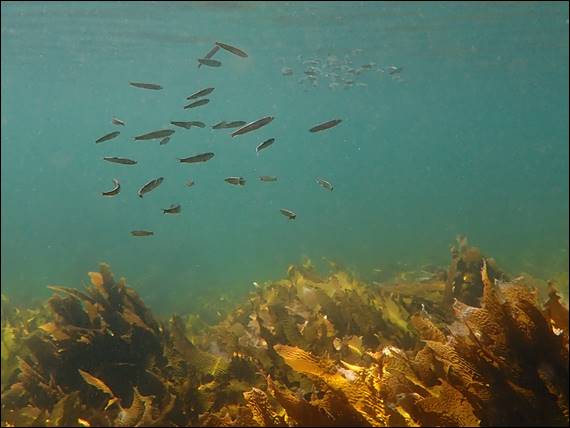
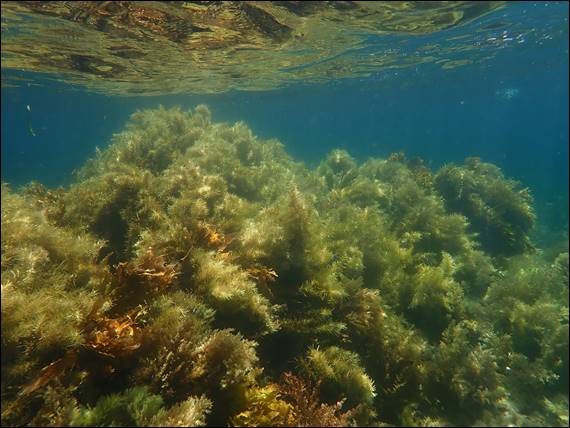
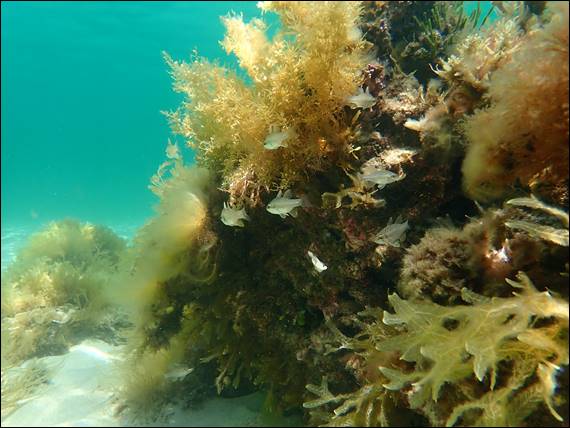
I drifted off leaving the three of them to watch the myriad of fish that were about including Wrasse, Pomfrey, Leatherjackets, Sweeps, Morwongs, Globefish and many more.  The visibility was good and the ocean bed below was like a garden in bloom.  I didn’t chase any fish and was content to simply drift along checking out the ground that varied from flat sea grass, shallow reef covered in kelp to deeper crevices with sandy bottoms:

My patience finally paid off and I spied one of the creatures I had been hoping to one day stumble across.  An octopus was on the sandy bottom, obviously focusing on something which may well have been a prey.  I stayed very still, knowing that this very intelligent creatures will quickly disappear if it saw me.  It was of course inevitable and it slunk under the weed and rocks, then despite looking around all over I was unable to locate it again:

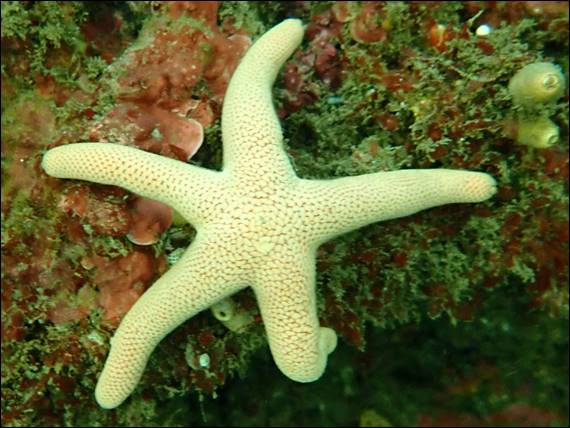
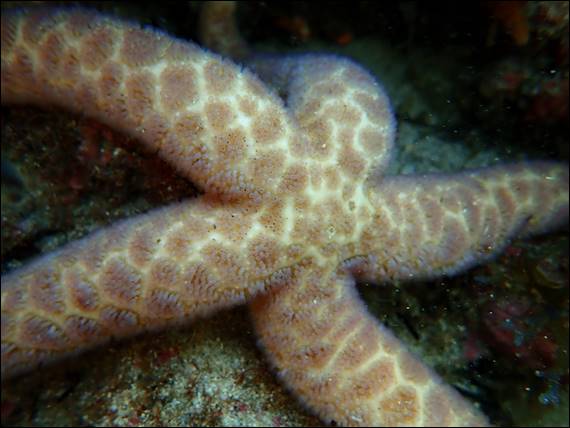
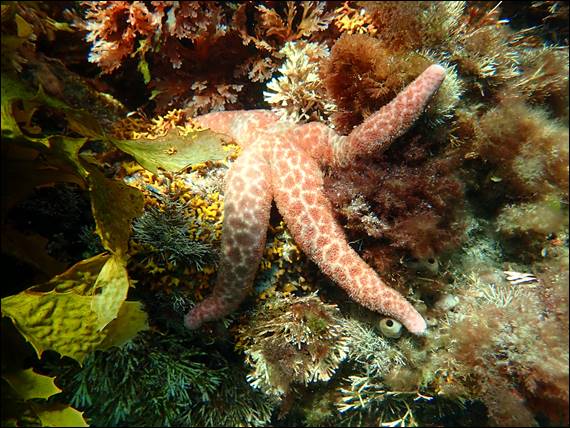
After that I started duck diving and getting more adventurous by going into caves and through swim throughs.  There are usually fish lurking in these areas but the light is not that great and as such getting a good image of them is hard.  I did however find this creamy coloured sea star, the shape is similar to the Echinaster genus of sea star but I’ve struggled to find any info on ones that are this colour, most being orange or red:

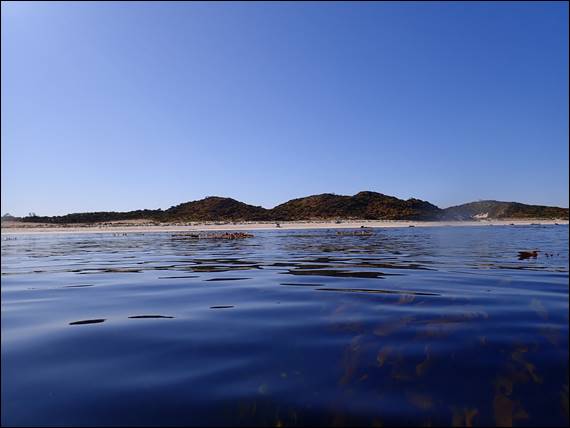
Today the water was pancake, a tiny swell but not a ripple on the surface.  The car was far, far way on the beach and while it is hard to say I reckon we were close to 200 meters out.  Despite being so far out a ridge of reef provides a great playground that goes from at surface to 5m deep in a short few meters.  I worked my way round this area looking for more ledges and crevices to see what I could find:

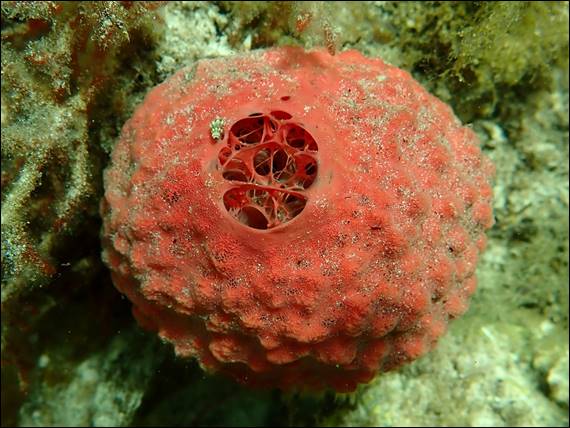
Under one I found what I think is a Cup or Barrel Sponge.  There are many sponges but they all have the same basic structure.  An organisms that has no tissue or organs and is effectively a body full of pores and channels.  Like a chimney they take water in from their base and it is piped through these channels to be ejected out of the top.  Filtering out food particles as the water goes through these channels, while oxygen is absorbed and waste products ejected:

It was great fun diving up and down checking out the area and not really being too fussed with taking images, however soon the allotted hour we had available was coming to a close.  Rongy was already out of the water and the girls were heading in so I made my way back trying not to get distracted and taken of course by the many sights that there are too see out here.  The area impressed Rongy and Alana them and it sound like may be keen for a revisit next weekend:

We got home, with no issues driving off the beach this time, and after a quick freshen up went about our errands.  As Lisa and I were driving back from Busselton late in the morning the ocean looked flat and clear.  So when we got home, much as I needed food, I was pondering whether to go down to our local beach.  It felt like I hadn’t been here for a very long time, and seeing it was so convenient to be able to walk down I decided to get one last quick dip in:

The water was still very clear but the surface wasn’t flat anymore and I bobbed up and down.  This area felt deeper and far more exposed than past the point.  That said it still had some nice areas and I again took to going up and down to see what I could see.  The above Golf Ball Sponge, yes it really is called that, drew my attention.  The image shows the intricacy of the internal structure of sponges, but something else caught my eye:

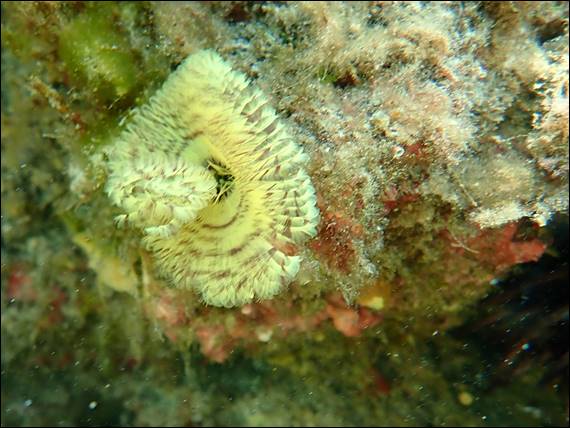
The above image is the after-image and the before-image is below.  My guess is that this is a Feather Duster Tube Worm, as you can no doubt guess rather than force the water through its body to collect food these allow the water to simple flow through the fine filaments making up the feathers.  Despite the natural water movement it doesn’t take much human (or animal) created movement to spook them, and they very quickly retract back into the tube shown in the image above:

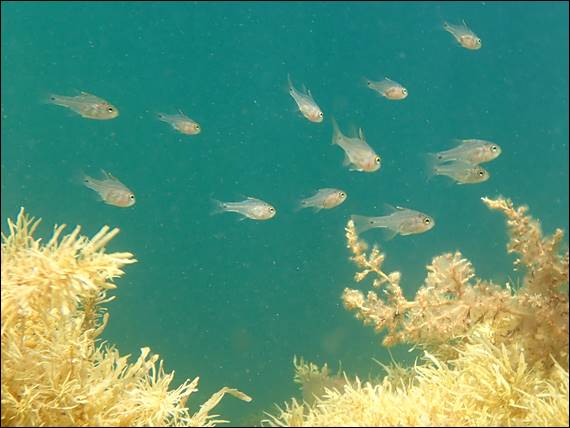
I spent a lot of my time looking very closely at the weed checking for signs of Pipefish or Sea Horses.  We have on rare occasions found their desiccated bodies on the beach, but as yet I’ve yet to find a living one.  Having been told they are very hard to spot I don’t fancy my chances.  At least this afternoon when I was looking for them there were plenty of shoals of small fish to distract me, such as what I assume are young Gobbleguts:

I was about to head in when a cuttlefish drifted below me, and just like when I saw the octopus in the morning I froze.  Another intelligent creature that belongs to the class of Cephalopoda, which includes squids and of course octopuses.  I was hoping it would get curious and come to me, as I have heard they can.  But instead it slid into the weed changing colour as it did, and disappeared from sight.  I tried to find it again but once it was under the weed it was an impossible task:

Eventually after an hour in the water and a total of 6 to 7 hours of snorkelling during this long weekend I headed back to shore.  Roll on next weekend and fingers crossed the conditions are good again.

Feeling green

It is the last weekend of the summer school holidays, which also happens to coincide with the Australia day weekend.  It is a day when everyone feels there is a need to get to the beach, especially on the big day itself which this year fell on Sunday.  As such we were expecting it to get busy, and so I took a day off on the Friday when it would be a bit quieter:

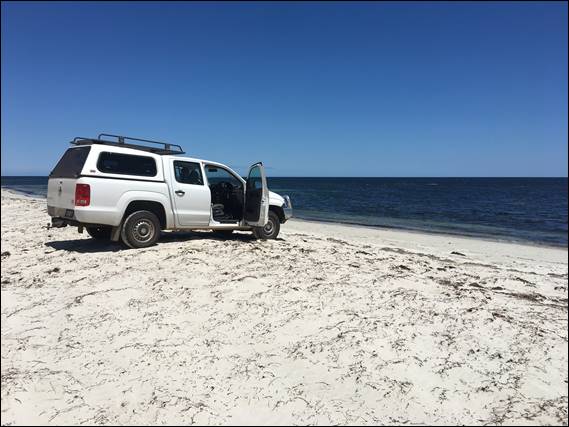
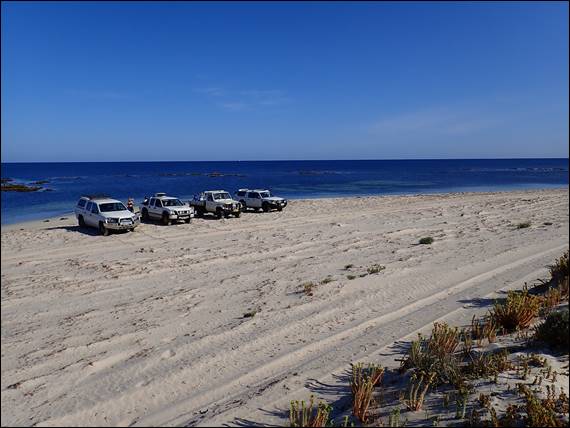
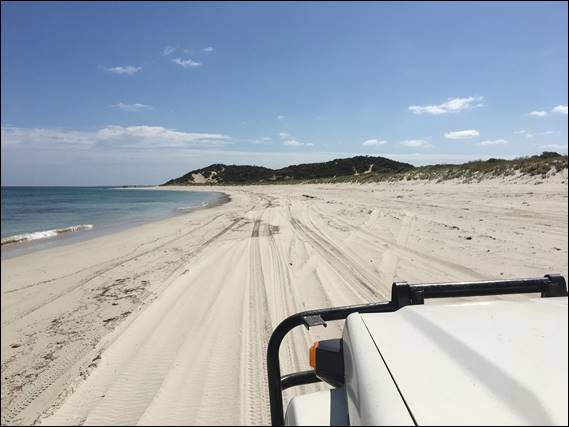
The reason was in part to have less people around but also as I intended to drive down myself.  While I’ve driven off road and on sand before, it has been on rare occasions I will confess that I’m not the most confident at it, and don’t really enjoy it.  However, now we have a real reason for doing it and that is to get to places like this:

It is also only a short drive in the grand scheme of things, so on Friday we went down and Esky drove out too.  We went to the next bay along from where Geoff and Nana took me, and with a very low tide this area was so shallow in parts Lisa got beached.  Above the Western Pomfrey, which are a bit of a regular now, but as the image was photobombed by a Western Striped Trumpeter I had to include it:

I’m getting behind here and in the above image is a shoal of Weeping Toado, which is part of the Pufferfish family and often called a blowflish or blowie.  These remind me of my dad, as they are the fish that were in the water when we got him to have a go at snorkelling in extremely shallow water.  However, as he is afraid of being in the water I don’t think he got to see them in his panic:

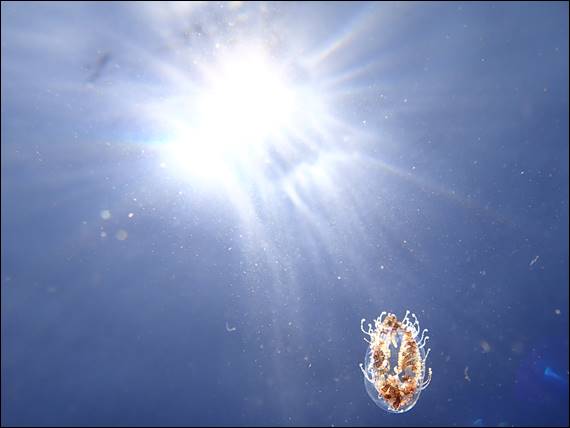
Esky came out with Megan, and they were trawling the reef looking for fish but also crays.  Above his catch bag is floating behind them as they are lost in the distance.  It is not always the big stuff that is worth seeing.  Occasionally it is the very small things that catch your attention, such as this jellyfish that is no more than a centimetre in size.  We also saw what looked like spiders floating about that were much smaller:

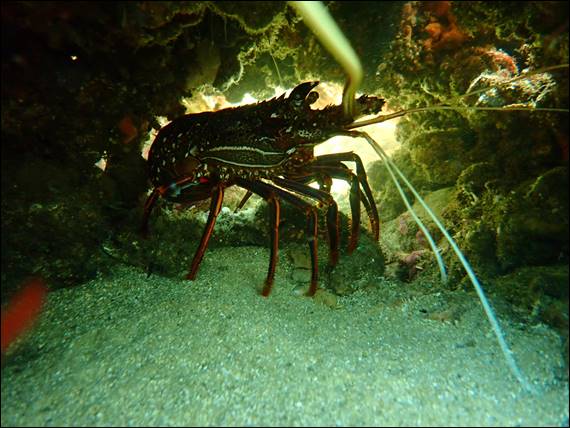
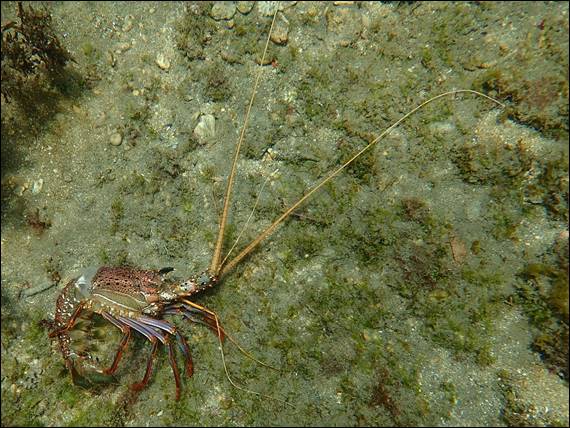
Nana was taking the place of Geoff, who couldn’t make it.  She was up and down like a yoyo checking out any nooks and crannies she could find.  She scored and found a Rock Lobster, or crayfish as they are commonly called, and better still one that had nowhere to hide unlike last time.  It was tucked under a little tunnel and stayed put allowing me to get a few snaps before leaving it in piece:

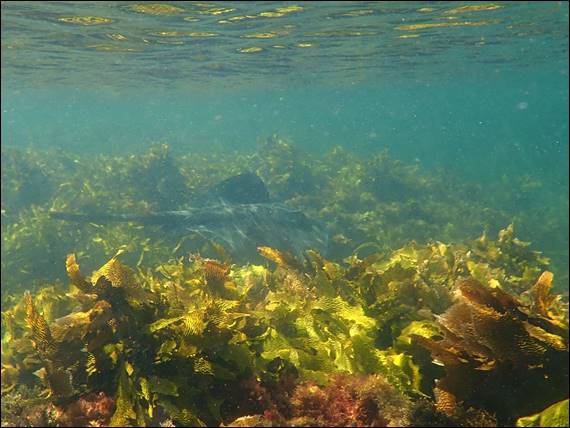
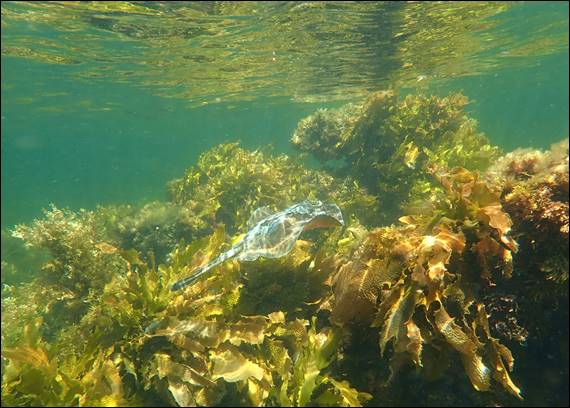
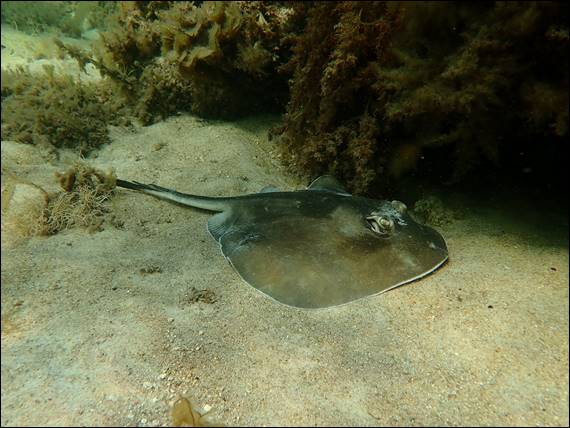
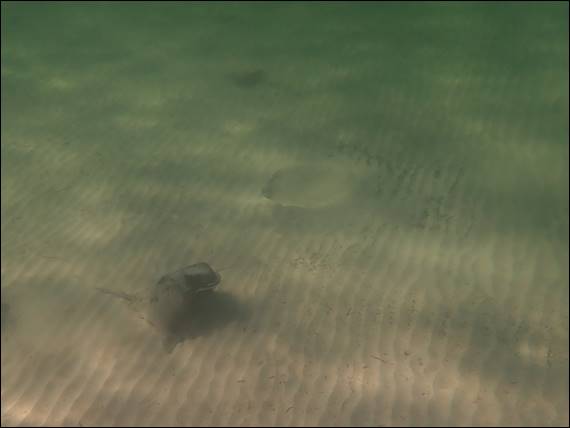
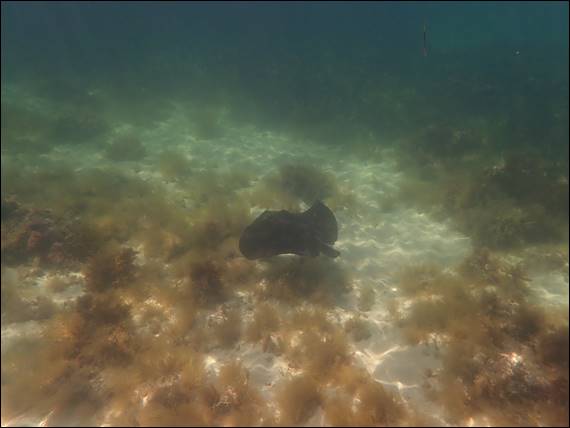
At one point Lisa was shouting out, with her snorkel in her mouth, Eksy called Megan to his side in case it was something not too friendly that she had spotted.  I looked round just in time to see a big Smooth Ray glide effortlessly, and too fast to keep up, over the kelp.  While they get much bigger, this is the biggest we’ve been lucky to see this year:
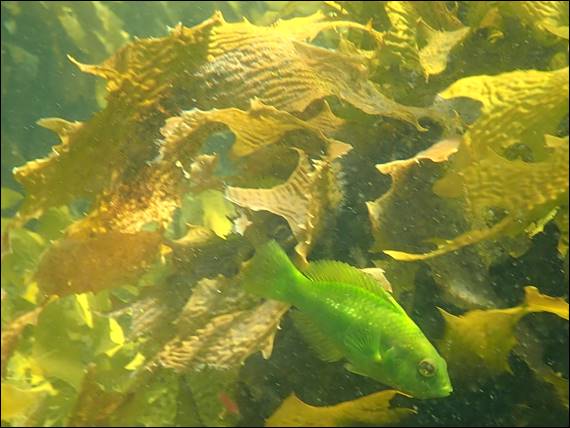
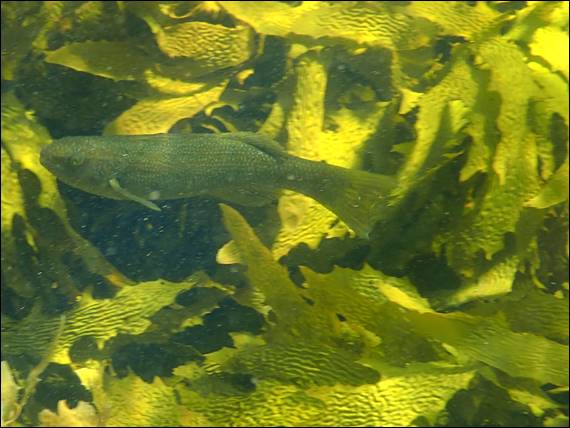
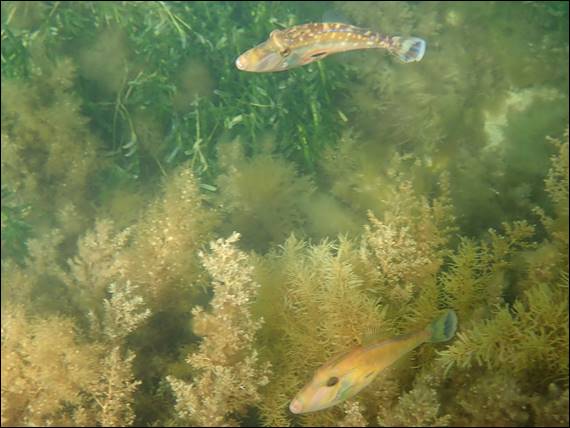
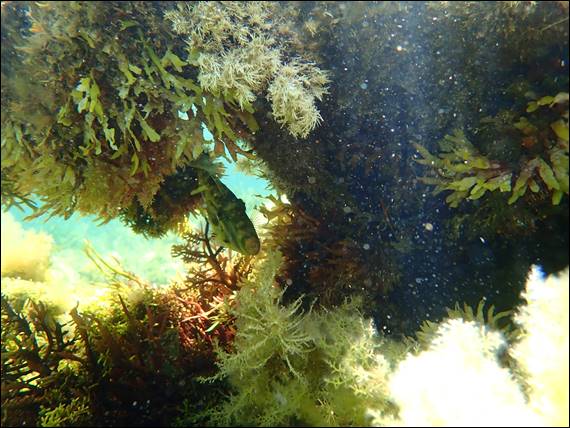
Below is a fish that I’ve spied a bit in the last few dives.  It seems to potter about in the kelp and is not one to sit around, a bit like Wrasse do but I was sure it was not a Wrasse.  Once seen it moves on pretty quickly, and this is the best image I managed to get.  Based on the shape, colouration and section of the dorsal and anal fins being clear I’m going to guess at a juvenile male Herring Cale, which funnily enough is part of the wrasse family:

As I carried on my way I found a sea star that I have seen once before many years back.  I’ve checked as much as I can and am pretty sure it is an Echinsaster Arcystatus.  The technical name is a bit of a mouthful but I can’t find any information that alludes to a common name for it.  It looked like it was covered in fluffy fur that created a blue hue:

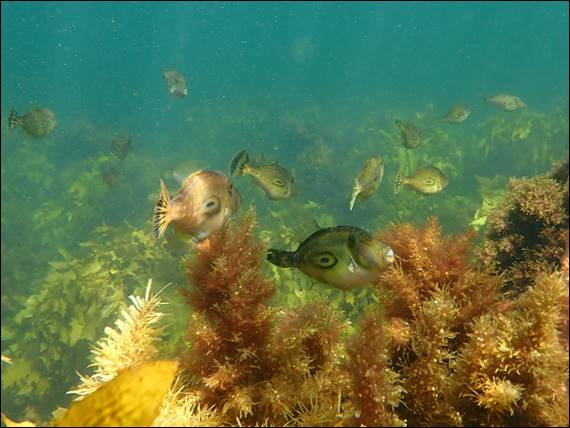
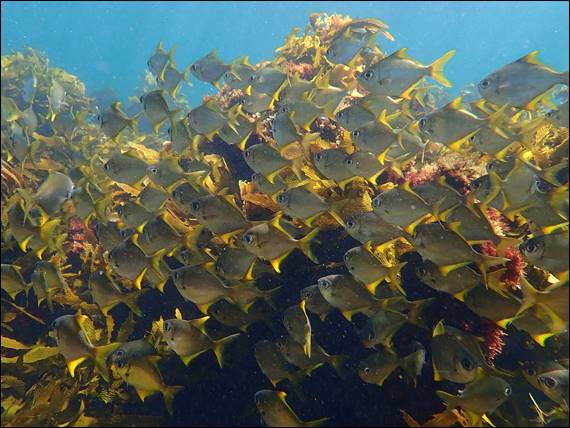
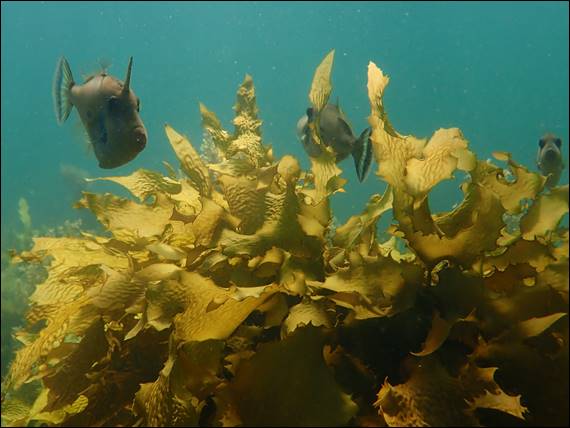
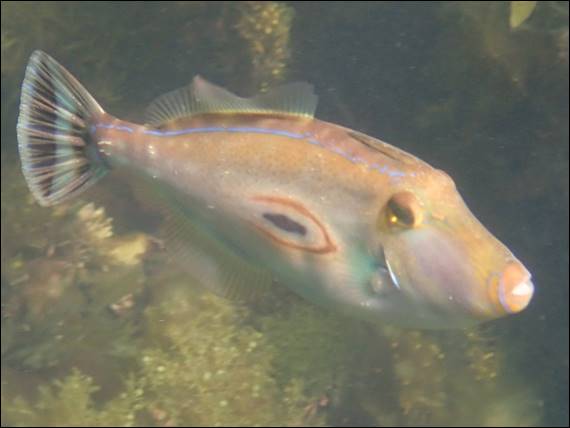
After all my efforts on the other reefs to snap the Horseshoe Leatherjacket, in this area there was an abundance of them.  They were not shy and hung about, it seemed on this dive that there was an abundance of many variety of fish where ever you looked.  Over each dividing ridge of coral there was something new to spy:

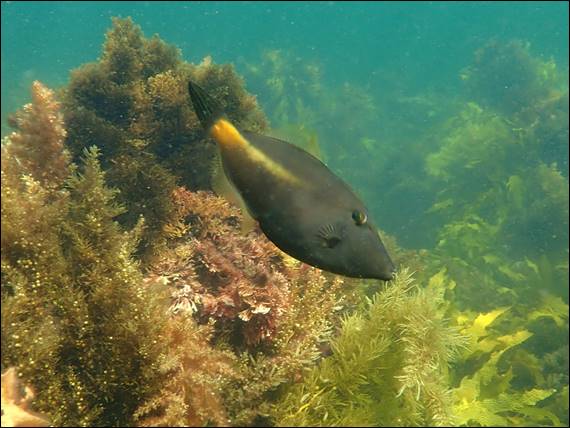
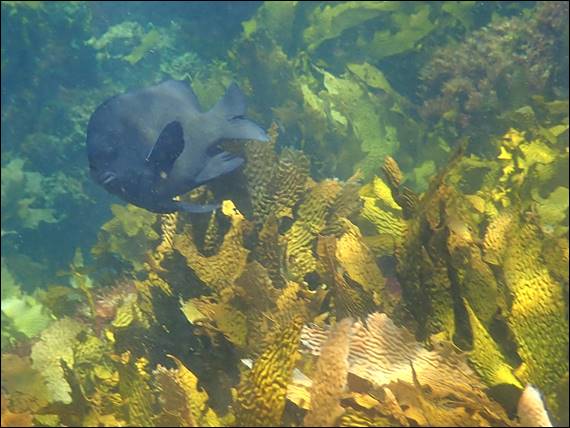
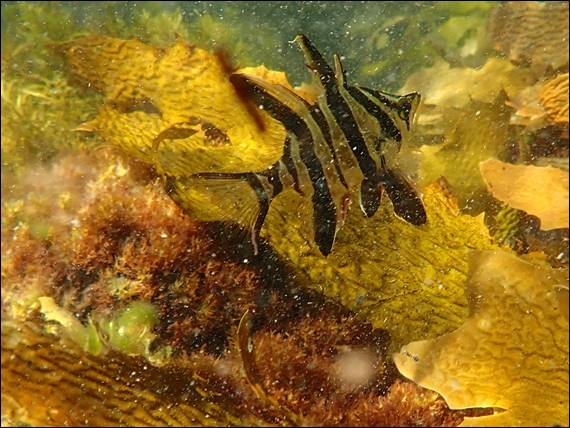
In amongst the shoal of Horseshoe Leatherjacket there was one that was very different, and I followed it about.  It didn’t seem to mind my presence and eventually broke free of the pack allowing me this solo shot.  When I got home I was at first excited to think I’d found a Barred Filefish, but now I realise that I got it wrong and it is in fact a Yellow Stripe Leatherjacket:

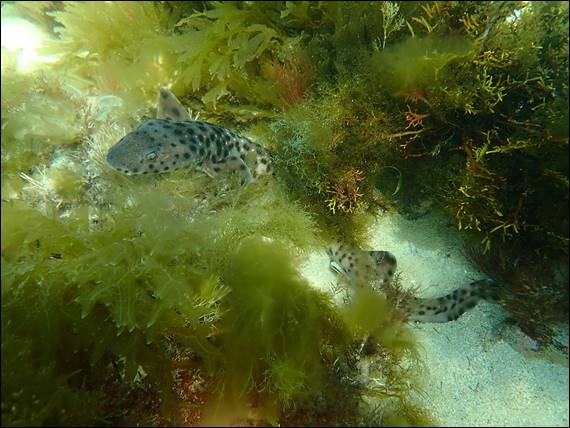
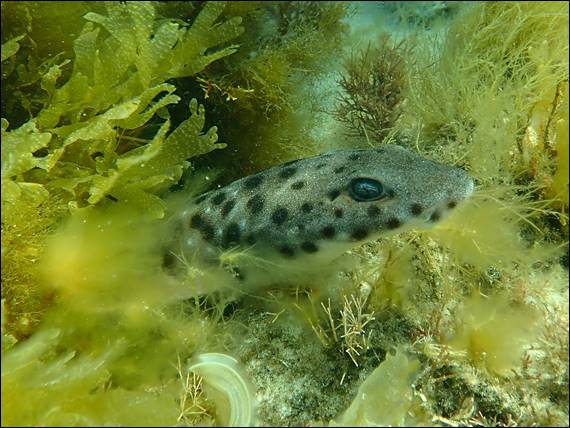
Speaking of getting things wrong, I have heard there are species of Catshark that live in the more shallow waters.  During recent dives we’ve come across them five times, but am still excited when I see them.  I can also confirm that I was on the money with the small colourful fish in my last post and they were in fact Yellowhead Hulafish, but can also go by the name Prettyfins:

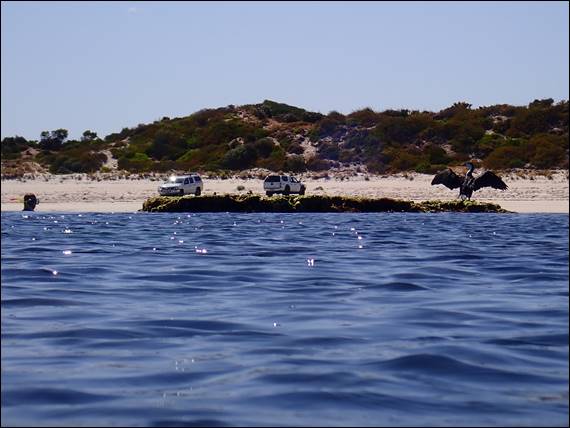
The Banded Sweeps, above, are present on every dive no matter the conditions.  Even when all other life hides away these fish come out to say hello, so it seemed only right to include them at least once.  Back on the beach Lisa was getting ready to make a cup of tea, yes we had come prepared, and as I drifted back in Megan was watching a Cormarant dry it’s wings:

Almost as soon as I got out of the water a dolphin cruised past just metres off the beach, we tried to coax it to stay about but it kept going.  It was then time to warm up and catch-up of what everyone had seen.  In addition to Catsharks and Wobbegongs, which I hadn’t spied, the one that I was most jealous of was Monica coming across a Cuttlefish!  I’ve seen one before but would love to see them again:

Esky and Megan drove off leaving us to some decadence of a fresh brewed tea to warm us up.  I however was keen to get back in so left the girls to have a brew while I went to see what else lurked below.  In the first dive I had worn my short wetsuit and also a weight belt, which I had only just bought.  It certainly helped me with staying down and not floating back up, but this time I went in without it:

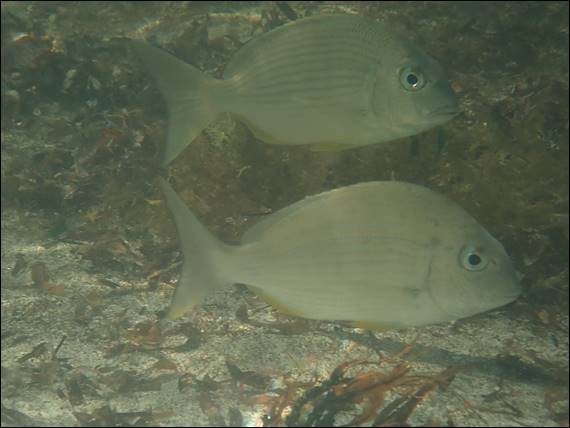
This time I did get to see a Catshark, but no Cuttlefish.  The water was just starting to turn as I was out there, but the conditions held enough for me to have another god dive.  Almost immediately off the beach I snapped a couple of Tarwhine, very similar to the bream family but with a more rounded forehead and slightly different pattern.  These were little ones and they can grow to close to half a meter:
I also found a second Echinsaster Arcystatus, this time is much shallower water allowing me to take a better image of it.  I’ve read that it resembles Plectaster Decanus (the Mosaic Sea Star) but is bigger in size, less brightly coloured, has a pattern that comes across as more mottled and has arms that are thicker and more round.  Um I’m not sure how it resembles a Mosaic Sea Star it at all:
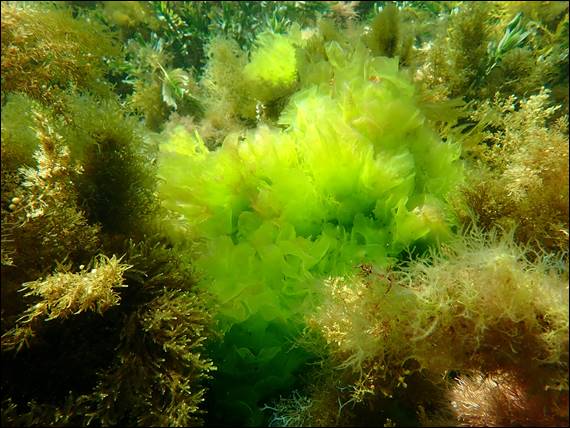
I’ve also seen a fair bit of what I believe to be Sea Lettuce.  You may recall the post in which I had lots of photos of various sand gobblers, often call sea cucumbers.  Well like them I’ve read sea lettuce is edible not just to sea creatures but also humans.  If it is, then I could in theory harvest it not just for use in salads and soups but also make ice cream and medicine:

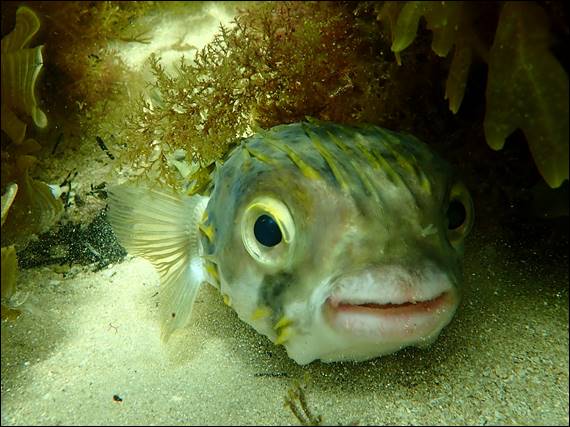
During the first dive Nana had found a Globefish in a nook, one that it could not escape from.  While I have seen loads of these fish, I rarely get to see them face on.  It was however a bit deep and so the light wasn’t that good.  This time I lucked upon one that was not trapped and seemed happy to say hello.  It didn’t even swim away when I got this close, so I left in it piece before finally getting out:

There was a cuppa waiting for me, which was very welcome.  The wind had started to turn and the glassy flat water was gone.  We packed up and drove out, being a Friday there were very few people on the beach and it was an easy drive out on the more compact sand.  It got a bit soft at the end but we sailed over that.  Back home the gear was cleaned and prepared for the next trip, which happened to be the very next day:

Come Saturday we had a bigger convoy, starting with four cars and ending up with seven.  We ventured a bit further along the coast, and as we drove out Lisa and I were wondering how far we had gone and at what point we had passed the bay from the day before.  The coast goes on and on like this for some 6km like this and there is reef the whole way:

With yet another very low tide there was lots of reef sticking out of the water.  These created labyrinths to explore but at times they led to dead ends and you had to reverse out.  If there had been a swell I image you could get knocked about a bit, and possibly also cut up.  Today I had my wetsuit on offering a bit of protection in the narrower parts I venture.  I also had the weight belt on allowing me to sink and float along the bottom, sneaking up on fish:

Hidden amongst the weed there are so many different fish.  Often you just get to see them out of the corner of your eye, as they dash for cover.  But today these Brownfield Wrasse above were not quick enough to hide.  They are usually very fast to go under the weed.  I also spotted the follow fish, and I am stumped with this one.  I was hoping the body shape and large eyes would give it away but I’ve had no luck:

Here is another fish that is usually quick to hide, an Old Wife.  Something I didn’t know was that the dorsal and maybe the other fins have a spine that has venom in them, and they have also been known to set up “cleaning stations” where they remove parasites from other fish.  So you could say the film Shark Tale, in which fish set up a cleaning business was loosely based on real events (ha ha):

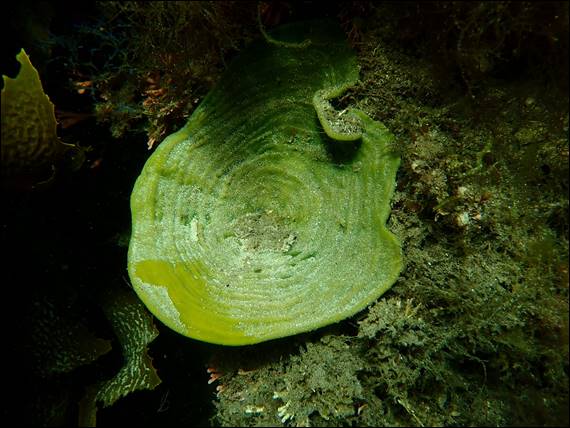
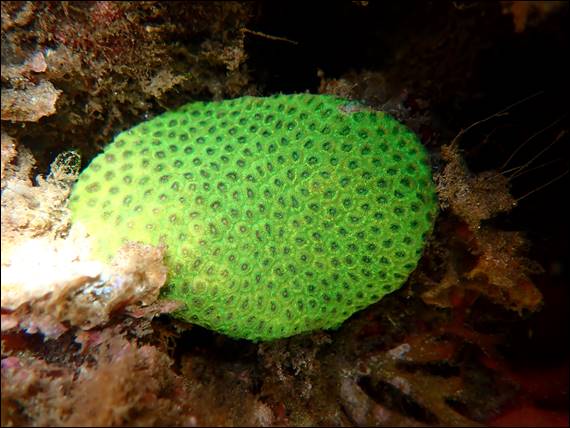
There is only so much sitting on a beach that I am capable off, and it seemed like no one was in a hurry to leave.  So like the day before, after warming up on the beach, I went out for a second snorkel.  I again found something green, this time it was a fluorescent green coral.  I’ll take a punt and suggest that it may be a Diploastrea Heliopora, or more commonly called Brain or Honeycomb Coral.  If correct these corals can become enormous, but this one was only ten centimetres long at best:

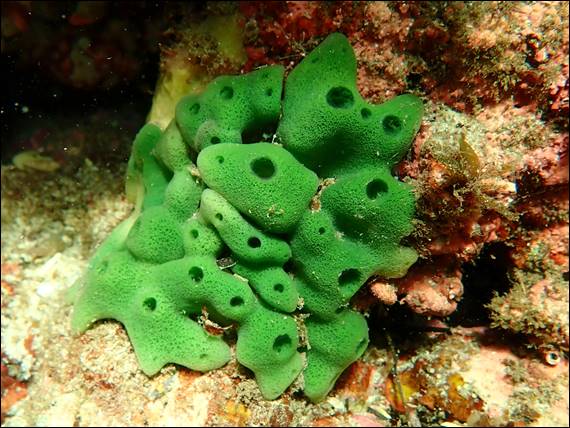
The green theme continued, as I found what I can say with more certainty is from the Chalinidae family of sea sponges.  It is a Haliclona but breaking it down any further is impossible, as there are over 400 species.  Sea sponges are very complex, created by a cluster of cells each organized to perform specific functions.  If the cluster of cells is split up it can be possible for them to reorganise to create a new sponge:

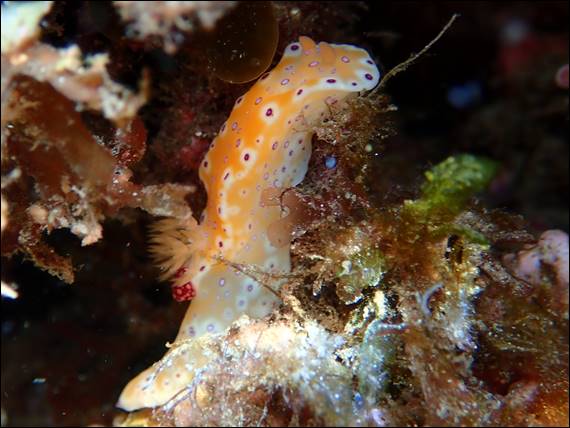
My next find was the best of the two days.  This is a Short Tailed Nudibranch named due to the strawberry looking tail behind the gills.  Whilst these may be common it is the first nudibranch I’ve seen this season.  They feed on sponges and the tail is actually a gland in which the toxic chemicals extracted from the sponges are stored.  The brightness of the tail lures any predators and hopefully deters them due to tasting really bad:

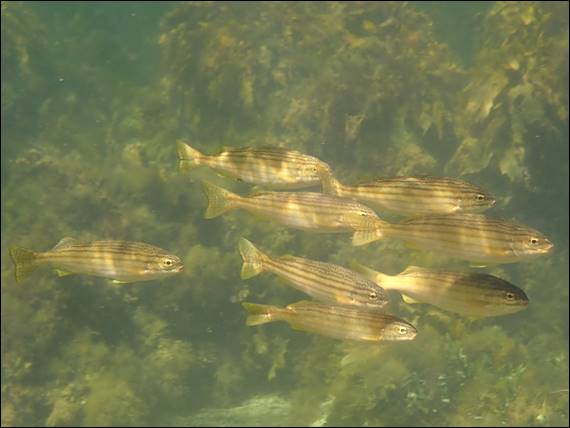
As I started to head back in for the second time a small shoal of Western Striped Trumpeters circled me.  So in view that they put on such a good show I had to include an image of them.  They are part of the grunter family, a name that comes from the croaking sound it makes when stressed, a sound created by expanding and contracting muscles attached to the back of the skull:

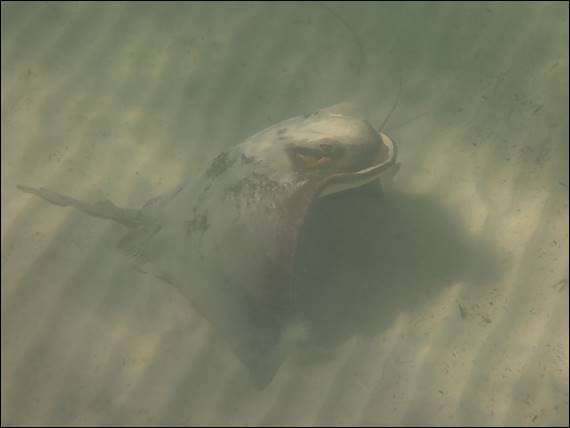
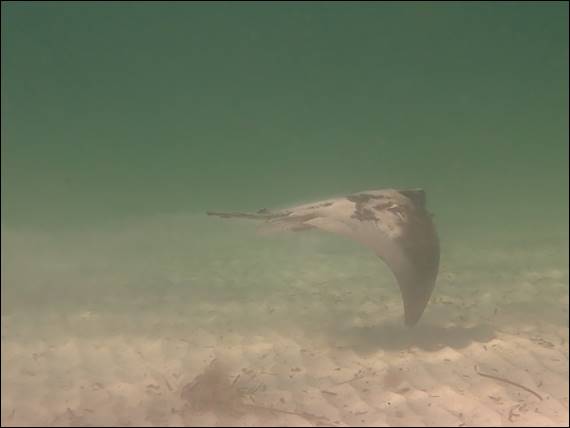
One final image.  Yet another smooth ray, which swam past me on the final leg of my four snorkels in two days.  I was in no great rush to get out so followed him for a bit, and he seemed fine with that allowing me to swim next to him instead of behind as usually happens.  While I got very close I particularly like this image just because of all the colours and how the light is dancing on the rays back:

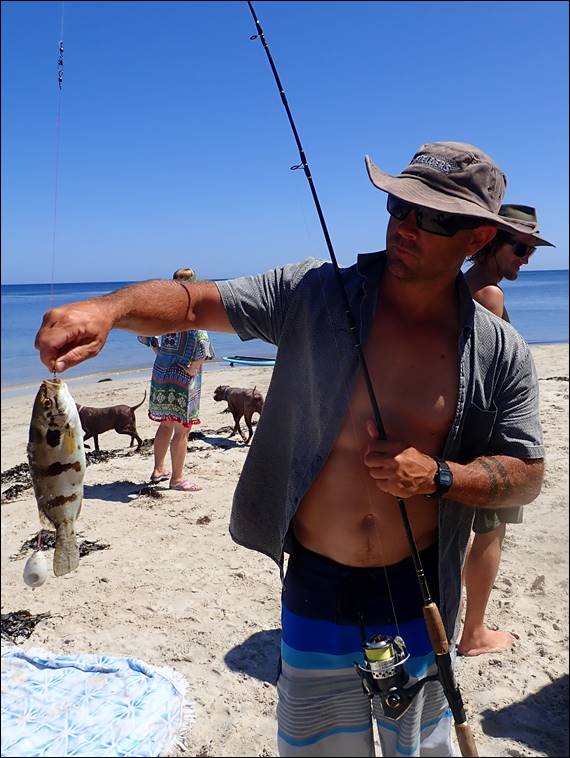
Back on the beach, I found Gav still trying to catch a feed.  He hadn’t been too successful having caught a Blowie and this fish, both destined to be put back in the ocean.  We were not sure what this one was, so I said I’d try and identify it.  However, despite the distinct pattern I’ve not managed it name it so will put it out there, if anyone can help:

As Lisa and I drove out, and me being a bit of a rookie to beach driving, I made a few basic mistakes at the last section.  There were heaps more cars on the beach and the last section had been churned up, making the sand much softer.  With just ten or so meters of soft sand to go I managed to get bogged, fortunately the crew were not far behind so with some helpful tips and support from Gav I got out.  It was my turn to feel a bit green.

Lisa Tags Along

Being school holiday I thought I would take Friday off and have a short week.  No reason other than it would be nice to spend a bit more time at home with the girls, and ease into 2020 more gently.  On the flip side the weather has been good for a few days with off shore winds and low swells.  So I took advantage of the conditions with three snorkels in three days:

On Friday morning while Lisa was out at cross fit I mentioned that I was likely to head out for a snorkel.  I took a chance and messaged Geoff and Nana to see what they were up to and my luck was in they were home and keen to get out.  Better still they were happy to drive past the point.  I’d heard tales from several people about the great snorkelling here:

Straight off the beach it looked similar to where I go off my local beach.  I was however greeted by a shoal of Robust Garfish.  The extended snout and distinctive black spot give this species away.  Not to be confused with the Southern Garfish, which is not found so easily due to over fishing.  So much so that in 2017 and 2018 then banned people from fishing them:

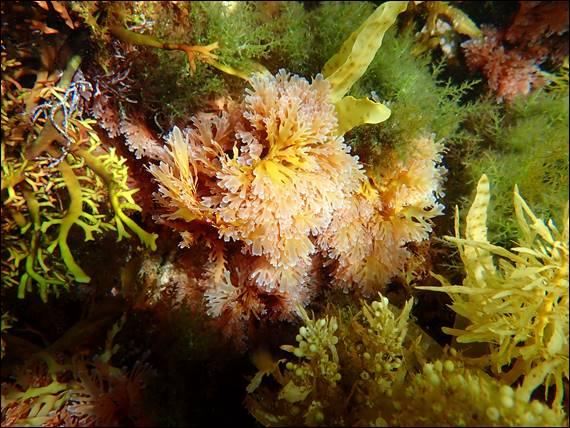
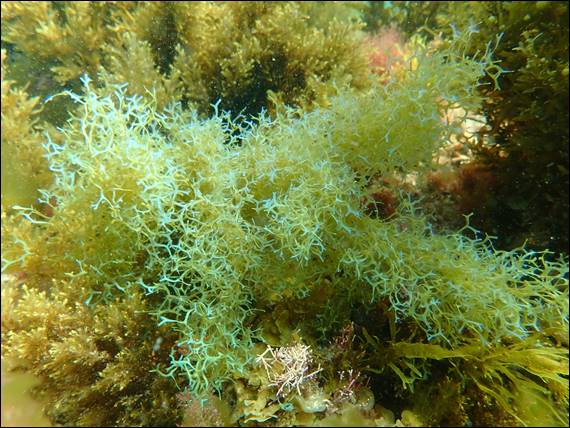
Not too far out from the shore I was greeted by a sea of green, and there was no obvious end in sight.  There was weed as far as the eye could see, the lush kelp was interspersed with many varieties of weed, the one that caught my eye the most being this plant that had fluorescent blue tips at the end of each leaf.  It looked like a Christmas tree:

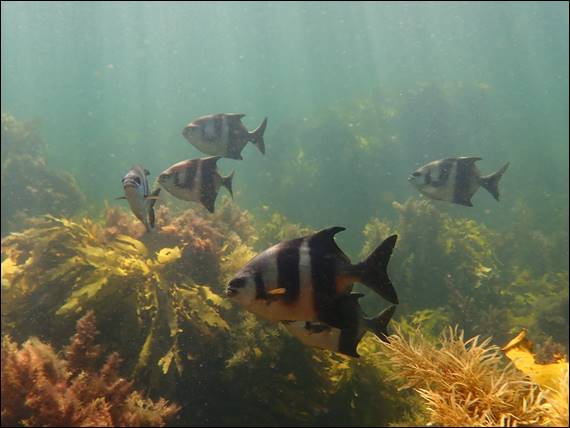
For some time there seemed to be no fish about.  I spied the odd Wrasse playing hide and seek but not a lot else.  Then it changed and there seemed to be fish everywhere.  It started with huge shoals of bait fish, and then something a bit bigger.  A large shoal of Southern Silver Drummer came past, and every so often would come back round for another look at us:

I also spied a McCulloch’s Scalyfin, an elegant looking fish that is more often than not solitary and while common round these parts are wary and keep a safe distance.  I feel like they are also inquisitive, as they will watch you and poke their head out to see what’s happening, only hiding away if you try to get too close:

The reef in this area was mostly shallow but every so often, a crevice would open up and the walls would be covered in a variety of weed.  Below Nana is sporting her anti stinger outfit, and while we didn’t see too many I think she maybe onto a good thing.  Here we found a swim through, something I’m not particularly keen on mostly because I can’t hold my breath for too long:

Geoff however was up and down like a yoyo, not as covered up as Nana but he was sporting some robust gloves.  He wasn’t afraid to dive down and stick his hand about in the hollows in case there happened to be an unsuspecting cray fish, not that he had brought a catch bag in case he had a lucky find.  One was spotted but it was too quick and too deep in the reef:

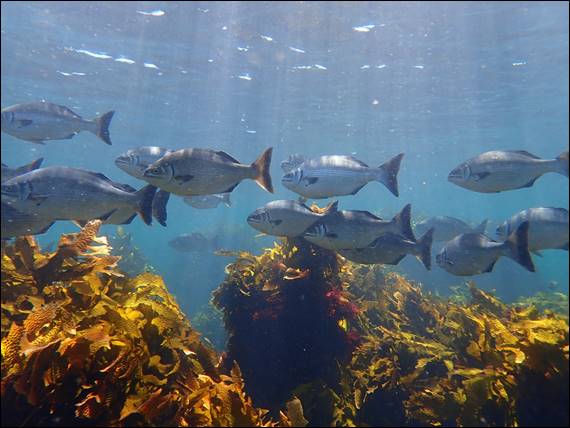
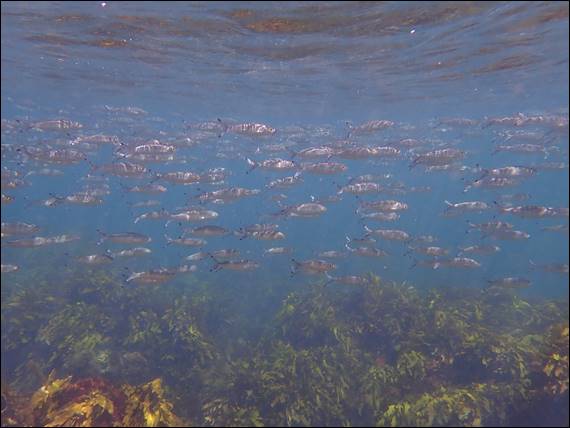
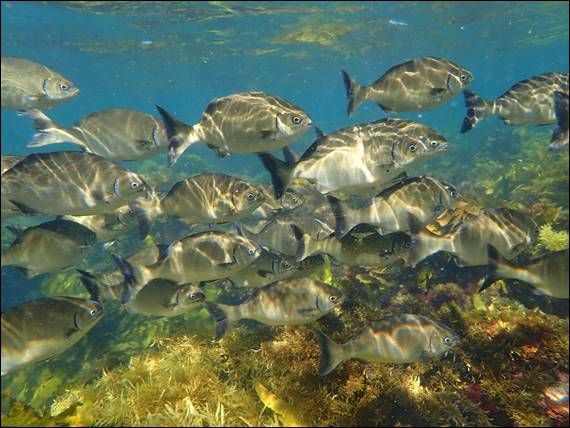
While it was good fun to duck dive down and check out what lay beneath there was also plenty to see just below the surface.  There were several large shoals of Western Pomfred.  They were really well camouflaged by the kelp despite their large numbers, but when you got the right angle they created a beautiful mosaic pattern:

There was also large numbers of the Australian Herring, interestingly I can’t find this in either of my fish books.  It is also known as a Tommy Ruff, but even that didn’t come up in the books I had.  It is the fish that most people are after when they are fishing off the beach.  It is not in fact a Herring like the in the northern hemisphere Herring, and is part of the Perch family:

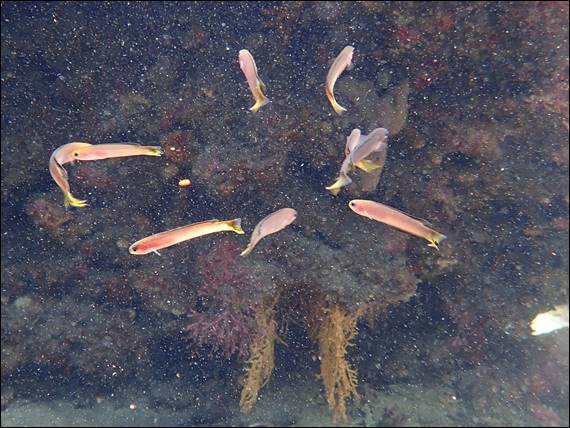
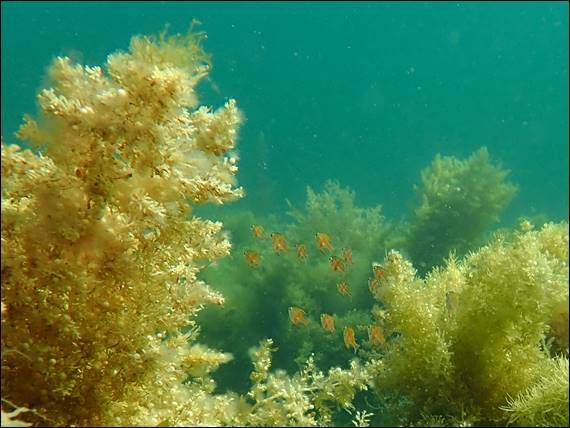
I had to include this next image.  While there were many shoals of small fish, these ones in particular caught my eye.  Very distinctive colouration and body shape, but do you think that helps me to identify them!  I have given up and am not sure what they are.  The shape seems to me to resemble a Hulafish more than any other species, but the colouration doesn’t match:

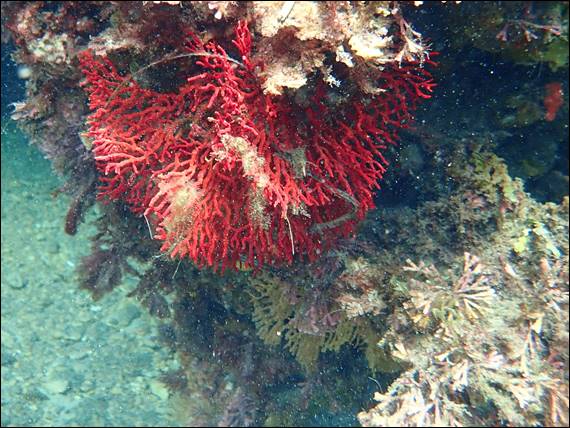
I spied the above fish at the bottom of a deeper crevice, here the walls had a myriad of Sea Fans and this red one caught my eye.  You can also see some in the image above.  By now I was starting to feel the cold and my ability to duck dive down and hold my breathe was reducing, so it was time to consider making my way back in:

However I had to go down a few more times as Geoff spied a cray fish shell.  They are known to usually moult once a year, although the frequency reduces as they get older.  After shedding their protective shell two things happen, firstly they need to hide away until their new shell hardens up and secondly they become hungry and need to feed.  A prime time to catch them:

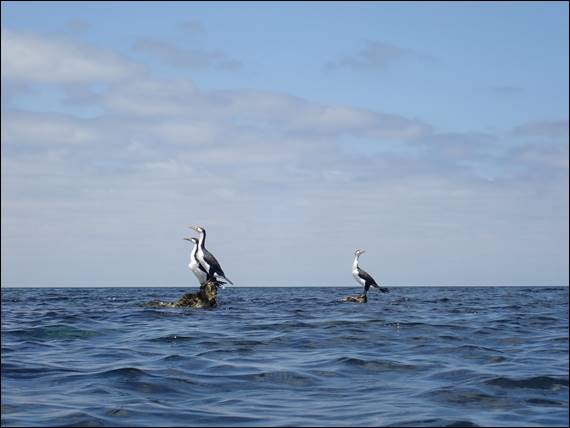
Despite going out up to 150m, the reef can still be very shallow and there are even patches that stick out above the surface.  This image was taken as I was making my way back in, I was hoping that these Cormorants were going to fan their wings to dry them but no such luck.  Not wanting to disturb them I didn’t get any closer and wandered back in:

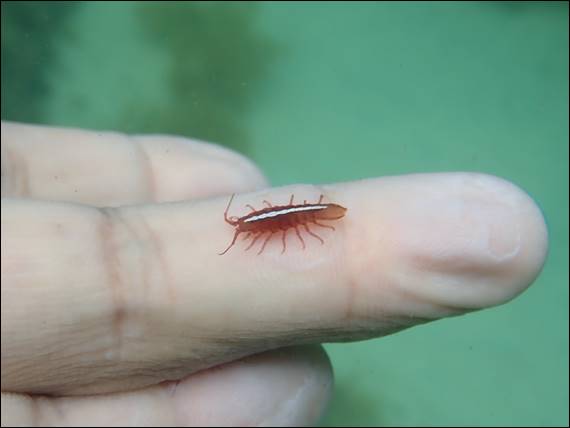
Back over the sandy patch before the shoreline I saw a small creature bobbing about in the water.  It seemed to be waving it’s body back and forth to generate movement and was going up and down as well as along.  It was not until it rested on my finger that I realised it had legs.  I’m not convinced but it may be a Polychaete Worm, as they can have legs but usually more than this creature:

On Saturday morning Lisa and I headed out to meet up with the climbing crew.  It was a great morning but she caught a bit too much sun so when I mentioned that I intended to go for a dip in that afternoons off our local beach she declined.  As I got ready to get in I saw a pod of dolphins.  So I whacked the flippers on and went straight out, and bingo timed it perfectly:

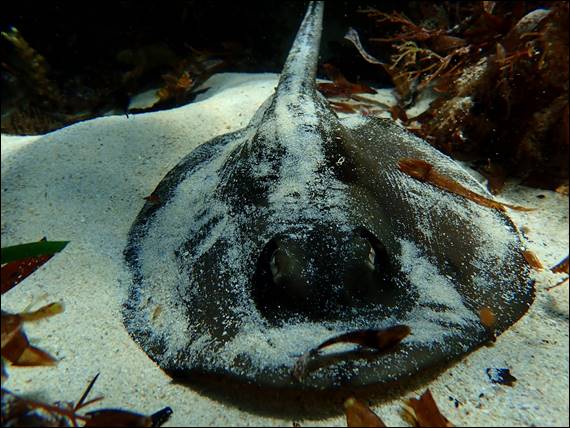
After witnessing the life beyond the point the little patch of reef that I visit so often now seems pretty drab.  However, after seeing dolphins I felt like it had been a worthwhile dip.  Then I noticed a whip like tail sticking out of a ledge.  When I investigated a Stingaree that I think is a Sparsely Spotted Stingaree, due to the colouration and fringing white edge, popped out:

With two great finds already I was happy and I just bobbed about checking out what else may be lurking.  Other than a few shoals of small fish, which I won’t even try to identify there wasn’t much else.  I did run into a particular stingy bunch of stingers.  So with a slightly sore forehead from bumping into them I decided it was time to head in, content with my finds:

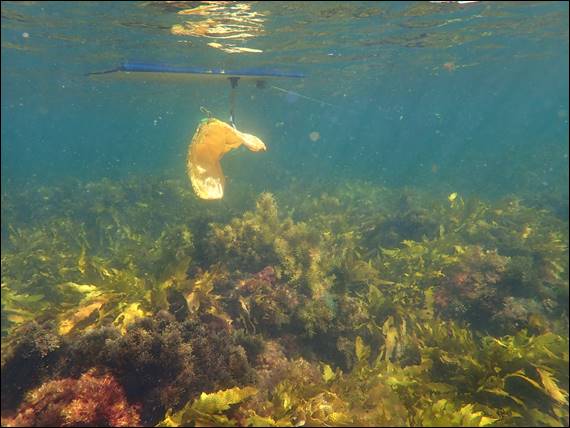
Sunday morning Elseya was at work, so after dropping her off we met up with Esky and he drove both Lisa and I out past the point.  A bit further from where Geoff and Nana had taken me.  It was Lisa’s first snorkel this season, and in truth probably for a several years.  Esky had his float and marker in tow, under which his catch bag hung in case he found crays:

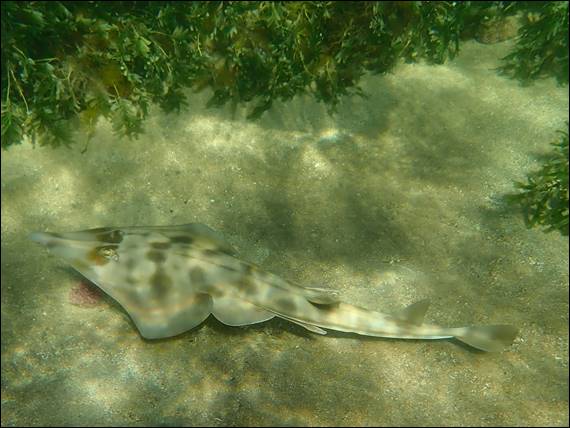
The water was clear and immediately a Western Shovelnose Ray swam under Lisa and I and allowed us to follow it.  We probably disturbed it as we swam over it, and we are lucky it didn’t bolt in a different direction.  This allowed us to watch it for some time but eventually it had enough of prying eyes and swam away:

The reef here was extremely shallow, so much so you could stand up in the water.  This suited Lisa as it was her first snorkel in a long time.  The only problem with it being so shallow was that it was possible to seemingly trap yourself in the labyrinth that the reef created.  And then had to work your way back out and around, which did happen to Lisa at least once:

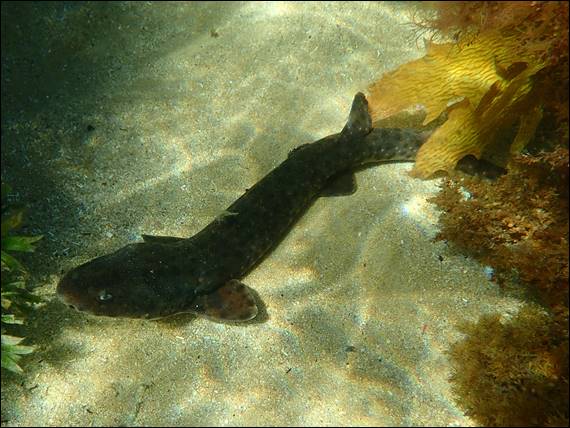
Our next big fund was another Catshark.  I thought it was a Black Spotted Catshark, but it is much darker than the previous one I found and the field guide doesn’t indicate that they can be this dark.  Regardless of that it was a great spot by Esky, and Lisa was having an awesome first snorkel.  She didn’t however fancy going out much further so we left her in the shallows:

The fish life increased as we went out, slightly deeper but still shallow enough in places to be able to stand up if needed.  A shoal of Southern Silver Drummer’s stayed close, and in the clearer water the patterns on their face were much more distinctive.  They again didn’t seem too afraid, I’ve heard they are not good eating so maybe it’s because are not at risk of being speared:

As I checked out mostly what was close the surface Esky was busy looking underneath, ever hopeful that a cray may be in reach.  He had a weight belt on to help him stay down, something that can be, and I find is, tricky.  That may be something that I could invest in, possible also a wetsuit which would keep me warm and allow me to stay out for more than an hour:

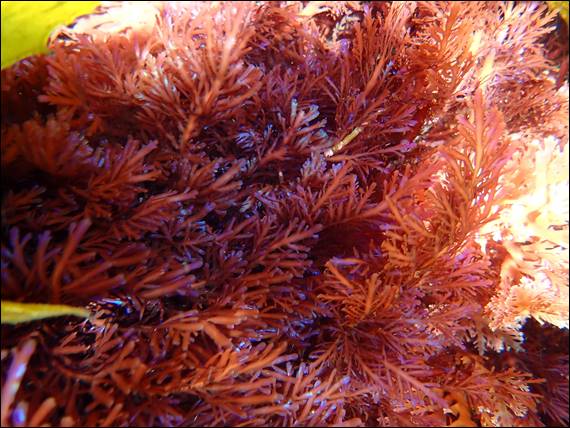
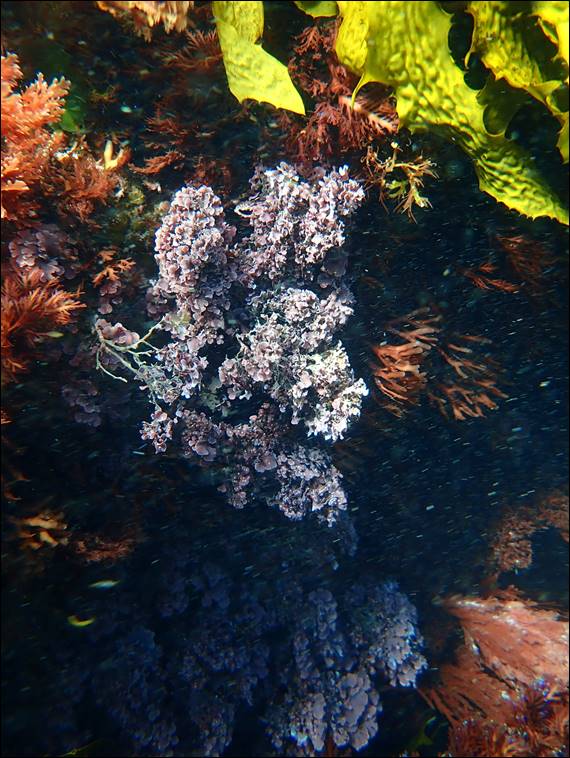
Again there were different types of weed to the last spot, the one that I really liked was this purple cabbage looking one.  It was a strikingly different colour to the more common greens and reds, making it stand out.  But also the leaf shape and clustering was quite unique, but not unique enough for me to be able to figure out what it was:

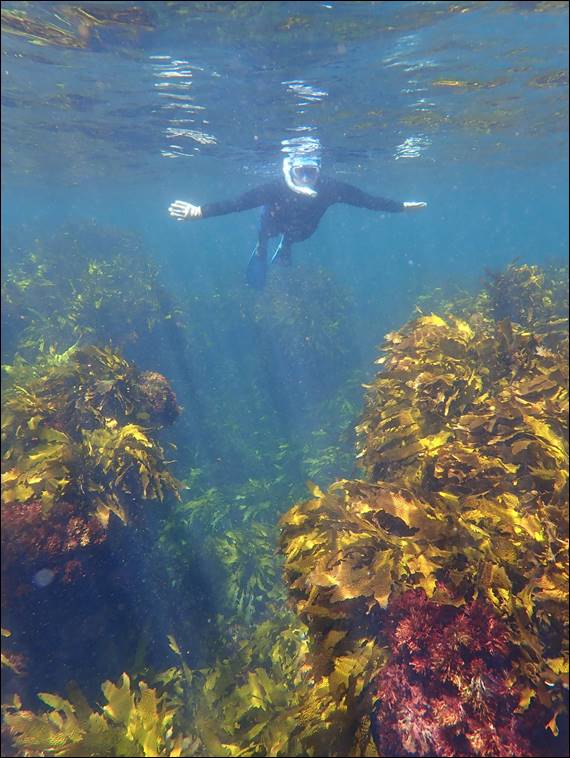
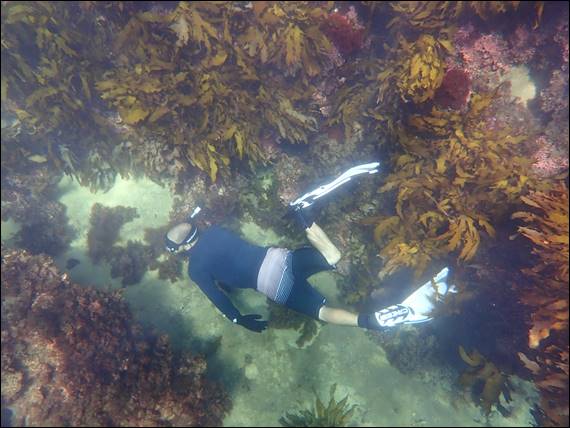
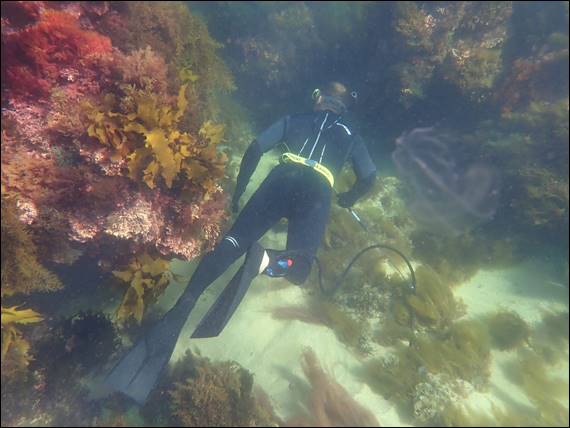
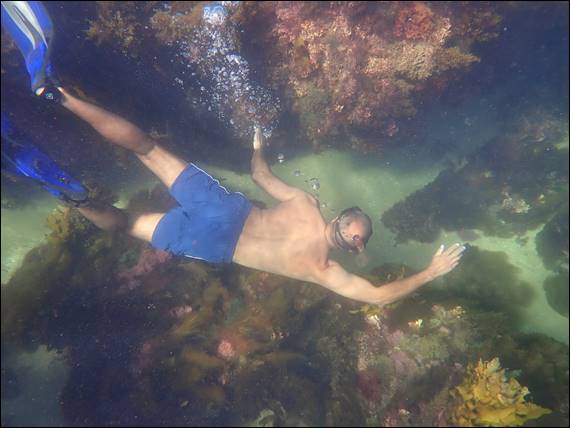
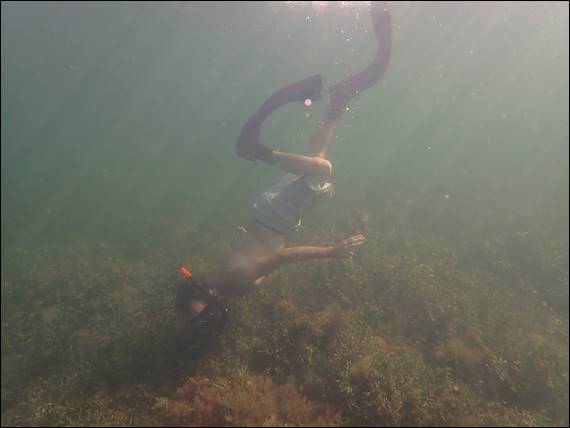
Finally an image of me as I was duck diving down to check out one of the many deeper sections.  This was yet another great location and I can see that we are going to have to come out this way more often.  There is certainly a greater abundance of life, more variety of locations and to boot also less people.  Also Lisa has already expressed an interest in getting out again soon:

On our way back in I spied a coral that I liked and this is the last image.  It was hidden under a cave and it was my last duck dive.  I headed back in, as Esky tried fruitlessly to find and catch a cray.  He came back empty handed.  Lisa was already on the shore but had spied a Smooth Ray, Flathead and also what she thinks may be a tube anemone.  It has certainly been great weekend in the water:

There’s gold in them there hills

After way too many messages by Glen to try and delay the start of Saturday’s events we eventually landed with what Lou and I had agreed at the very start.  A 7:30 meet at the crag for a bit of very relaxed “get back into it” morning of climbing.  Today was about being a bit more social and not so much about the climbing, although we had in mind yet another person’s self-imposed challenge for 2020.  Being a more relaxed social gathering even Lisa came out with us, which hasn’t happened for some time.. We arrived at an empty carpark at 7am:

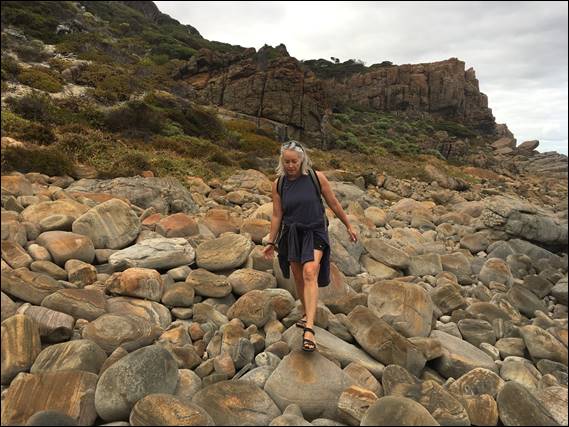
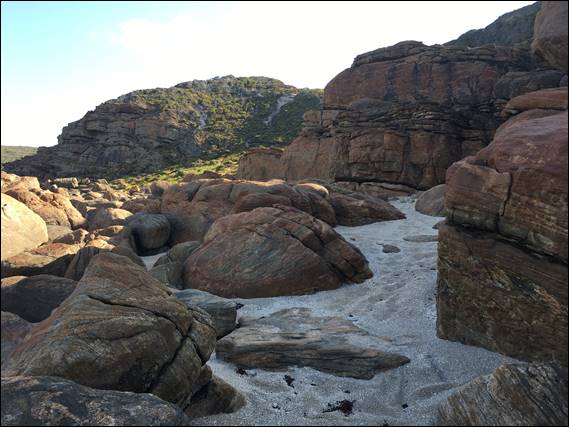
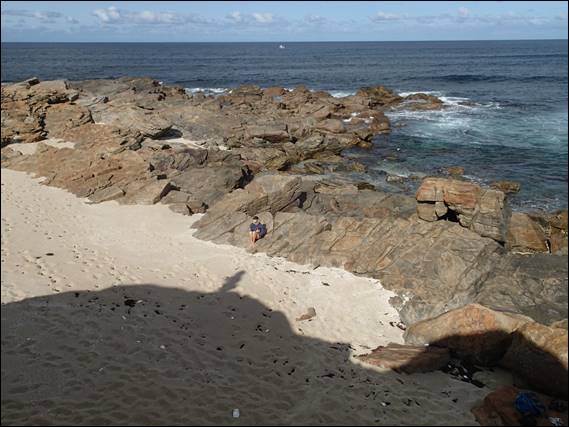
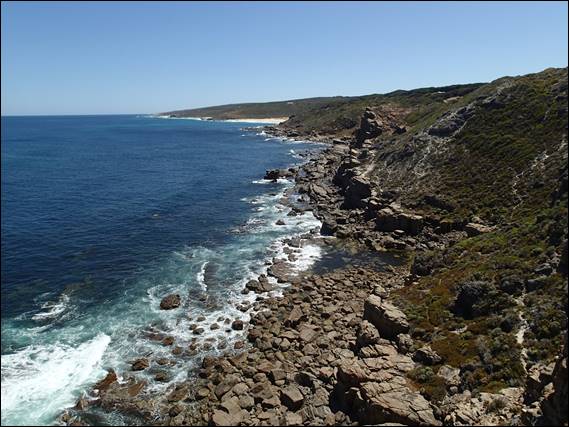
Unlike the others Lisa and I decided to walk in from the normal Wilyabrup carpark.  While the car is more than capable of negotiating the access track to the crag, I’ll admit I’m not a fan of 4WDing and secondly I like the walk-in.  It’s was a 40min walk from the car to the crag, but most of that is along the coast, hopping along boulders or strolling along rock shelfs.  The whole way you get an undisturbed view of the ocean, the familiar smell of the weed and a great spectacle of rock architecture that varies along the way:

The tides have been very low of late, and the areas where the boulders can get wave washed were all bone dry.  These sections can get a bit dicey when the tide is higher, as you both want to take your time on the slippery rock but also don’t want to go too slow so as to avoid getting caught out by the waves.  Today we didn’t have that problem and that was probably a good thing, as Lisa would confess she is not the most well balanced person on this terrain.  Even though. like me, she is wearing the appropriate safety footwear:
We got to the crag late by 10min but still managed to get their first.  In the background you can see a crag with a big roof, which is Lost Buttress.  There is some good traditional fun to be had on that crag, but the routes there were a bit too long and get a bit more serious for kicking off today’s challenge.  We were going to have a play on the Playground, a short but fun crag with a sandy base allowing for both a bit of not too hard roped climbing and as much bouldering as you can manage:

In the image above you’ll have to squint pretty hard to see it, but the cars had just rolled in at the top of the hill.  Just above the white scar that cuts through the vegetation.  Another reason I don’t like driving in here is that the access track is straight down that scar and it is susceptible to erosion.  It only gets used on the rare occasion by climbers, as this is not a well frequented area, but does get used by people fishing who want a sneaky place to camp overnight.  The troops were soon in attendance and the fun could begin:

It was a relaxed start, and Alan has finally come out to play on rock.  He’s been fixated on mountain biking and also more recently road biking.  While I have to confess to having indulged in that activity a lot, mostly in the UK, climbing has taken over my life and any other sport that dares eat into that valuable time on rock.  There is a long traverse along the base of the crag, it is probably about 60m in total with some pretty steep sections that keep you on your arms.  Alan’s noodle arms, as he will call them, were no match for the entire traverse:

The main reason for coming here was to kick start Lou into 2020, and her goal to lead climb Twenty Questions at the main cliffs of Wilyabrup by the middle of the year.  It has been maybe 4 years since she took her ground fall at Moses Rocks, and she has not been out much since then.  While always on the peripheral this is the year that she has decided to get back into it and set herself a gaol.  So she was the first one on the floppy end and we kept a close eye on her encouraging her to trust her gear, which is hard when you have witnessed it rip out before:

She kept a cool head and we made her test every piece by fully weighting it, discussed direction of fall and rope work and eventually she popped out on top.  Better still she placed a range of passive and active gear, there is definitely a need to build her trust in the active gear which had been her downfall previously.  As the image above shows there is not much respite from the sun at this location, Lisa was taking in the view of the activity from the rocks protecting us from any waves and was in full sun already:

Today we were not at risk from any waves, in fact I had also brought my snorkel gear in case it was calm enough to go in.  Unfortunately it was not and there was just that bit too much swell to make it worth trying.  Lisa while joining us was content to kick back, watch us for a bit, have a chat and then immerse herself into books.  There were even dolphins that cruised past a few times early on, something Lisa never tires of seeing.  She is the queen of the rock armchairs and this place has not just armchairs but full on recliners, it was her kind of heaven:

Steve too fancied getting in on the leading action.  The last time I took him out to Welly Dam we decided that maybe he should not be leading but seconding was alright.  However, today he had already set his sights on a line.  I found out afterwards (as in when I got home) that he was chatting to Lisa and Alan and pondered whether it was better to ask for my permission or forgiveness.  The reason being that he had picked a steep rounded corner and I could see straight way that it was be a bit of a battle and would have advised against it:

Still he got up it and the merry band of climbers all had a bash at following him up it.  It was a very traditional style of climb and as such had some people a little puzzled, the line can be seen at the left-hand end of this image.  Glen was next up on the floppy end and he too was testing his gear.  Being in much of need as some practise as Lou, as he has to get both his body and mind back into climbing fitness for a trip over to Arapiles later this year.  As you can see it was a very relaxed time with lots of stopping, even when on lead, to have a yarn:

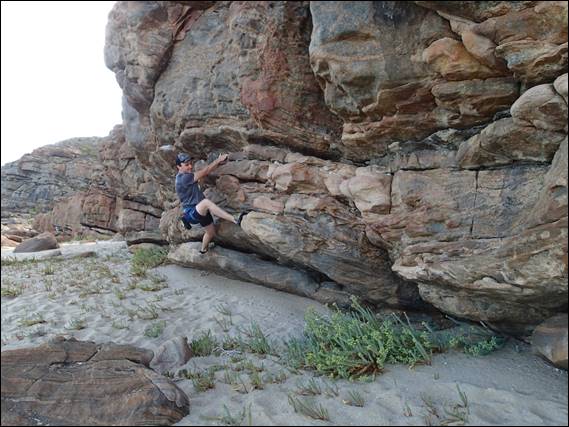
I confess to not leading anything, other than Lisa I was the only one.  I had travelled light with just the essentials, which had made it possible to fill the bag with the snorkel gear that I didn’t end up using.  My intention for the day was to watch, encourage and have a boulder.  The traverse, a few problems and following (soloing) people up their chosen lines was enough to keep me moving and to stretch the body.  The only semi-serous boulder problem I did was Slime Ball, that was as hard as it needed to get on a day like today:

Steve was soon at it again, and again had managed to pick a line that was a little feisty.  I have to admit that this time I had steered his eye, as he was looking for possible routes.  I had intended and tried to get Alan to have a bash at this one, but I turned my attention to other goings on and Steve snuck in and grabbed the gear.  It was more of a battle than his first line and he took a few rests on the gear, eventually pulling through the roof onto easier territory.  All I can say is that it is a good job that these lines are short:

Everyone else had a bash at this route and managed to haul themselves up with a rest or two, and poor Alan hurt his finger.  Again Lisa didn’t partake, in fact she had fallen asleep for a little while, a dangerous thing to do in the sun.  The only other person who didn’t get up this one was Masie, but that was entirely understandable.  While she had climbed in a gym many years back, and only stopping due to the gym closing, this was only her second time on real rock.  She had already followed up a few lines and this one was just a bit too hard:

Masie while not getting up Steve’s route had been tutored by Steve on how gear works and how to place it.  So she was next up to take on a lead, not bad considering it’s only her second trip out!  Under the watchful eye of many she placed the gear and made her way up Chimpanzee, which also happens to be Tom’s first ever lead on trad!  For those unaware of Tom, he’s a very talented and powerful climber who learned the ropes with us.  Masie was going well placing good gear and looking comfortable:

The route has a very fun finish up a crack on a steeper wall that has good holds above it, but you can’t see them.  As such it is a heady climb and even more so as a first lead.  However, if Masie was nervous you would never have noticed it.  She smiled the whole way up and topped out in fine style.  Something tells me she will be back out with us again to have another bash at leading.  Now you may also be wondering why I haven’t given you the names of all the routes, well that is because none of the others mentioned have been written up before:

This crag really is not frequented by many people, the routes are never too serious in the grand scale of things.  That said they are fun and for this band of good climbing folk it was the perfect tonic that was needed to get the new year started.  And just when I thought Alan wasn’t going to have a lead today there he was, having got over his injury and was romping up the line that Lou had started on.  It was to be the last climb of the day and I think it is fair to say that everyone had a fine ole time at the Playground:

Lisa and I left the crew as they packed up, well as we were leaving Steve and Glen were actually fossicking for gold having found a band of black dirt with quartz in it.  A sure sign that there’s gold in them there hills, or so they reckoned.  The walk back along the rocks was over way too quick, and as soon as he headed inland and up the steps to gain the ridge it felt like the heat had turned up.  Back at the previously desolate carpark there was not a space to be found, the main crag was no doubt pretty busy today, so we had made a good choice of location:

The Little and Large Show

This weekend the forecast was looking good to get out for a snorkel, but having planned a climb for Saturday it had to be a Sunday morning dip.  The conditions were supposed to be so good that I had suggested Lisa come out with me, and it would have been her first snorkel this season.  Sunday morning she was however far too comfortable in bed with a good book, so I wandered down by myself to take a dip.  The forecast had got it wrong and there was a landward breeze that was starting to pick up and the small but not insignificant waves were starting to roll in:

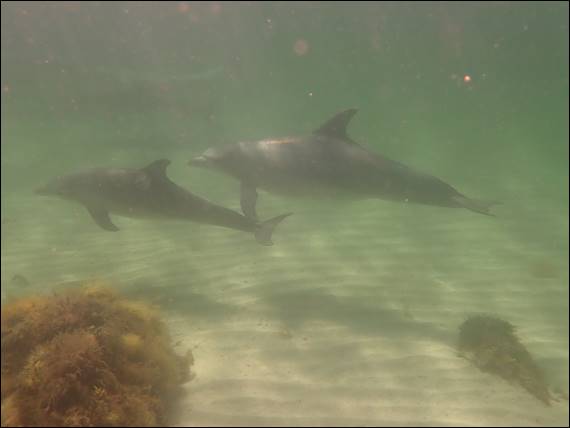
It was now or not at all this weekend, so I went in and bobbed about.  The longer I stayed in the choppier it got and my snorkel occasionally took in water.  It was a very low tide today and that meant I drifted out a bit further than I would normally when it is not so clear.  There wasn’t much to see until I came back up from a duck dive and looked in the right direction to see a family of three dolphins effortlessly glide past me.  There was a calf and two adults, no more than five metres from me but in today’s conditions the images I got aren’t that great and they quickly disappeared out of sight:

We get bottlenose dolphins along our coast and they grow to over 2m.  I have not come across them very often when in the water but each time I do they seem very big.  The calves are usually born between February and May and are approx. 80cm long, and the one I saw probably bigger than that so maybe last year’s young.  Despite such interactions, as today’s, only lasting seconds it created a real buzz that lasts all day.  Hopefully one day I’ll get to see them in clearer waters and if I am really lucky they won’t be in such a rush to keep cruising down the coastline:

The experience made me keen to stay out and check out what else there may be to see, although I have to admit that I was quietly hoping the dolphins would come back along.  Often we see them cruise back and forth along a stretch of the coast so it was possible.  In the meantime I came across three Horseshoe Leatherjackets.  Unlike previous times when they haven’t got very close this time they kept circling under me.  However, when I dived down they would move away and keep a safe distance.  Facing me as if to keep an eye on my next move, while their prominent dorsal spin, above the head, was moved into the upright position:

These fish can grow up to 60cm long, but I have only ever seem them at about 30cm.  The dorsal spin is serrated on the rear edge, no doubt a defence mechanism but it is unclear to me why only the rear edge would be serrated.  I’ve read that there is a second much smaller spine, located immediately behind the main spine, which can lock the main spin in the upright position.  They were just over a nice bit of reef covered with kelp and I dived down several times checking underneath it.  I found a variety of other fish hiding in dark crevices not brave enough to venture out, so I let them be and moved on:

After swimming round the reef and weed for some time and seeing nothing more than the usual suspects, it was time to start heading towards the beach access track and over the open sandy areas.  The dolphins had not passed by me again, or at least not while I was looking, so I was quietly hoping to see a ray after coming across both a Smooth Stingray and Bight Stingaree during my last snorkel.  I was not to be disappointed, and came across a Southern Eagle Ray.  The wide wings, wider than they were long, and angular raised head are clear signs of which ray this was:

I was interested to see it was in what seemed to be a sitting position, something I have not seen before.  I stayed on the surface watching for some time, not wanting to dive down and disturb whatever it may have been up to.  I’ve been unable to find out why it was in this position, but it stayed there for a considerable time.  However, after a while I could sense that it was getting nervous with me hoovering above.  So I decided to go down and see if it would let me get a bit closer:
Not surprisingly it was off, I didn’t even bother to try and keep up with it.  Instead checked out where it had been “sitting” upright, but found no obvious signs as to what it was doing.  Eagle Rays like many rays have venomous barbs, but that is not why I didn’t follow after it.  The main reason was that they are very fast swimmers and it would have left me for dust.  They have even been known to jump out of the water.  While the reason for jumping is not fully understood, there are some theories such as getting rid of parasites and females avoiding interested packs of males:
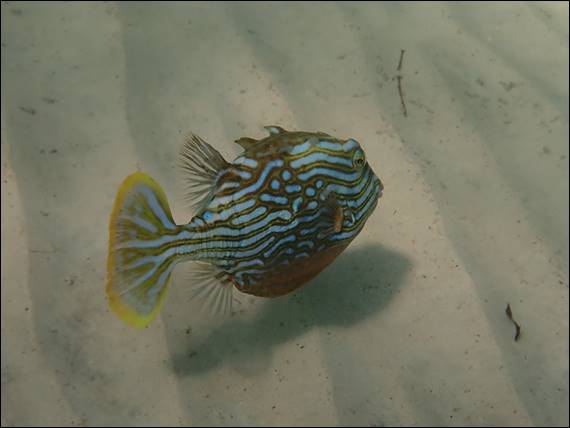
Before I reached the shore I came across a Western Smooth Boxfish and also this beautiful male Shaw Cowfish.  Box and cow fish are closely related and are often confused, they both have a hard shelled body made up of bony plates that gives it the distinctive boxy shape.  Being benthic feeders I often see them in these open spaces, as they blow jets of water at the sandy floor hoping to expose prey.  I mostly see the female of this species so it was nice to come across the very colourful male for a change:

Speed Climbing

From outset it was agreed that both Craig and Howsie would need to be home by midday to ensure they were balancing their time and got some quality family time in, as well as quality rock time.  This meant we had to be walking out by 10:30, which in turn warranted an early start.  Howsie had crashed at the Willyabrup car park due to having band practise in Margaret River the night before, and as Craig and I arrived we found him making a brew.  The day was only just waking up as we walked towards the crag, and the moon was slipping below the horizon as we rapped in just after 5am:

Howsie had set himself a challenge for 2020, he wanted to bag every grade 20 in the guidebook.  This had helped set the scene for today, and we were focused on the iconic Steel Wall, a crag that has been included in many coffee table climbing picture books.  We of course needed to warm Howsie up and Craig started the proceedings with the first pitch of Sirius.  He climbed well and never looked in strife, and soon the three of us were on the ample belay ledge from where I had a choice of pitch 2 of Sirius or one of two grade 18’s:

I asked Howsie which one would be best to make sure he was properly warmed up before he started his 2020 challenge.  The second pitch of Sirius at grade 14 was never considered and he plumped for Unclaimed, a clean sport line that is far more fingery and sustained than the second option of pitch two of Delving Devoids a climb that provides a spicy traditional experience.  As Craig came up third on this line, Howsie was already getting ready to rap back down and commence his preparations for his first lead.  Time was short today and we had to keep moving:

Howsie had decided on two routes he wanted to tick, Simply Suicide was the first.  He had considered Pascals Route, one we had climbed together a while back.  He had gassed out on that route back then, and hadn’t managed to lead it clean.  The reason for going for Simply Suicide was that while it has moves just as hard, it is not as sustained.  There are however bigger runouts so requires a calm and collected approach.  He ate up the bottom wall and was soon at the ledge, which is about one third of the way up.  This meant that the first crux had been completed successfully:

The second crux is the meaty one, above the ledge there is a carrot bolt and from there it’s a steep and sustained fingery wall that requires good footwork and technique.  He got past this and was not surprisingly very happy with himself, the route is far from over but the difficulties after this point reduce.  The hardest moves are over but this is where the route gets runout, so if you start to tire on these upper sections the potential for big falls can play games with your confidence.  Howsie however took the rests when they came and inched his way up methodically:

This image give you an idea of the runouts, the last piece of gear can be seen well below him just over the lip of the bulge.  There is nothing of worth between that and the next piece that his eyes are fixated on, just above him.  Underneath the following image I’ve decided to copy the route description for Simply Suicide, it is a route that several people lay claim to.  The reason for including this description is that today the line sported one new ring bolt and there seems to be an alternate line on which another new ring bolt has been placed, muddying the history and line of this climb even further:

This is taken straight from my guidebook: “This climb shares the second pitch of Ulster Madness and has a bit of a chequered history.  The first ascent of the upper section was claimed in May 1983 by McKenzie and Cartwright as mentioned in the description for Ulster Madness below.  Then in March 1986 Carrigan and Marshall approached it by traversing up and left to the ledge, so avoiding the hard start of Ulster Madness and named it Simply Suicide (19).  Next and only one month later in April 1986 Wagland and Gommers approached it via the Sirius traverse, and this time it sported 1 BR (plate required) to protect the start moves from the ledge.  This suggests they ascended the steeper section of the upper wall and named it Still More Steel (20). Today there are 2 BRs before you reach the ledge and 2 BRs (plates required) for the upper wall, who placed the additional three is unclear.  That said if started as Simply Suicide but using the more direct line of Still More Steel this is a grand climb although regardless of all the BRs the top half of this climb still feels pretty run out”:

It is important to note that the challenge that he has set himself is that he must climb each grade 20 clean, no falls are allowed.  While in theory it was my lead next, I had felt somewhat clunky following Howsie up so was in two, if not three or four, minds as to what to climb next.  Craig too was being non-comital and indecisive, so Howsie had decided he would lead back to back climbs and jump on the second line he had in mind to bag today.  Due to this, while the time restriction weighed on our minds, Craig pulled out the compulsory flask of tea:

As the boys sipped tea to allow Howsie a moment to prepare, Steve dropped in on us.  He had hinted that he may join us, as having started his next round of chemo just last week he was in need of exercise and fresh air.  The early start and thought of harder lines on Steel Wall had not been very appealing to him, so he arrived later and had brought with him his fishing rod.  His timing was perfect and the banter started, as I started to drop a few comments about needing to get ready to keep moving.  Soon Howsie was racking up once again:

His second grade 20 to be tackled for his 2020 challenge was Mobjob.  This is a very classy route, completely traditional, both in that it has no bolts and it requires tradition techniques of bridging and lay backing.  It has a bit of a reputation for being hard because of this, but it really is only a grade 20.  Some time back I heard mention that a hold had come off and grade was more like 21.  I didn’t mention this to anyone and decided to see how things went and if I could find that broken hold:

The start to Mobjob is the crux, and is awkward.  Howsie cramped himself under the first roof and after placing some bomber gear he prepared to turn the roof.  It’s a nervous move as you can’t see what’s above you, but he made it look smooth and straight forward.  I noted that he had smeared his foot on the right wall under the roof to balance himself, something I have not done before.  It looked a much better way to tackle it and sure enough it unlocked the crux making it feel the smoothest I have ever climbing it:

There are two more rooflets to negotiate.  Although the pace eases the climbing is superb and the position is always full of exposure.  After Howsie had so elegantly climbed the crux and second rooflet it was interesting to see that he had forgotten his traditional techniques making the last rooflet much harder than it should be, by not bridging.  He still managed to pull it off and having reached the belay he had made it two out of two and bagged his second grade 20.  There was no broken hold in sight and it is definitely still one a grade 20:

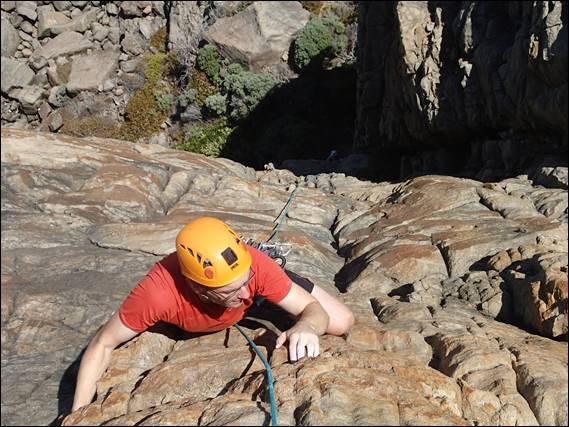
I particularly like this route as it reminds me of Swanage, a place I used to climb at along the Dorset coast in England.  Towering 50m vertical walls that stretch for miles of blinding white limestone.  That crag is full of corners and roofs that have the sort of exposure that you can see below Craig, as he launches for the holds above the final rooflet and the welcome belay ledge above.  Once he arrived we organised the gear before Craig set off above us:

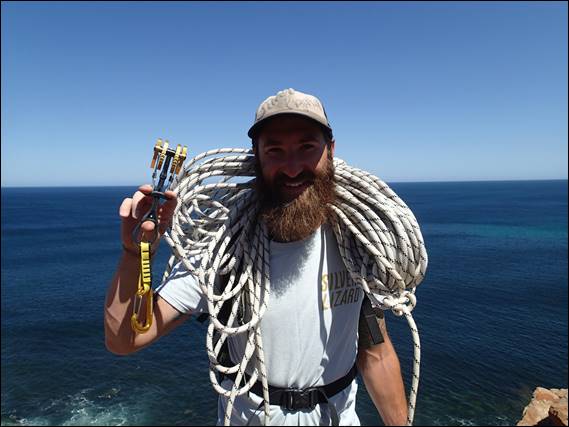
The second pitch goes at grade 14, and is a sustained and very fine corner.  Before Steve had left us to go fishing he had handed Craig a set of wires that he believed really needed to be used today.  He had a similar fascination with these wires at Welly Dam last weekend.  So Craig, aiming to satisfy, used the all of these wires on his lead.  They have a strange curved shape that almost makes them lock in like a camming device.  While Craig did place everyone he later claimed to not have trusted most of those replacements, sorry Steve:

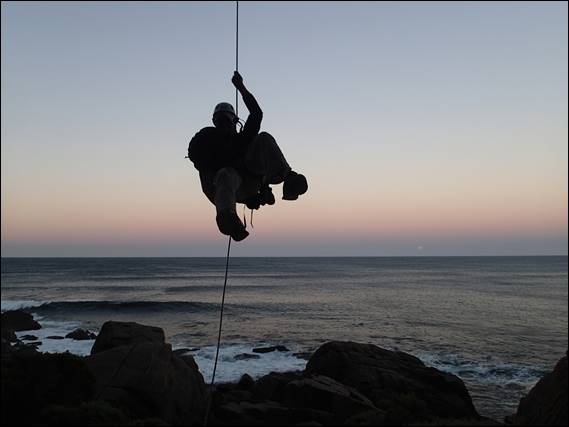
As Craig was setting off I had noticed that we only had just over an hour before we were to be walking out.  As such after he had set up the belay I gunned up the route and pulled all the gear of his harness, rapping down before Howsie had even started to climb up.  As we had left our packs at the base we had two choices walk out or climb out with packs, and the latter appealed more.  So I decided to lead up Hope with all the gear, which was way too much, as they followed up with the packs.  I sorted the gear as the other two finished off the climb and rapped down:

Conscious of time we cracked on and too our surprise all three of us were at the top of Hope within just fifteen minutes of me starting to lead it!  So we eased off the pace as we pulled the rap line and sorted the gear, which included the crag booty that Howsie had claimed.  A gold ultra-light camelot, that was at the belay of the first pitch of Mobjob.  It looks almost new and was not hard to get out, so it seems that someone had just forgotten it.  An expensive oversight:

Needless to say the boys got back on time for some quality family time, having bagged two leads each and Howsie having started his challenge with a bang knocking off two great leads.

Climate Change

I’m coming to the end of my two weeks holiday and with the return to work my posts will slow down, but before they do one last tale of a dip in the ocean.  On Saturday morning it wasn’t that great and it felt like everything was in hiding, and as the day wore on it just got worse.  Sunday morning I strolled the short walk from our house to the beach, with a hot cup of tea in hand and no snorkel gear.  The trees round the house indicated a fresh easterly breeze and that could, and did, mean that the water was not calm.  So I went back home sipping my tea:

As the day wore on, and for the first time in weeks, the wind didn’t pick up but dropped to almost nothing.  Today there was also a very low swell and so in the early afternoon I went to have a second look and decided it was worth going in.  I headed back to the river mouth end of our beach, where I was greeted with calm clear waters.  I could see more shoals of tiny juvenile fish bobbing about next to the security of the weed, way too small to be captured in an image.  Occasionally there were also groups of more mature and less skittish Western Gobbleguts:

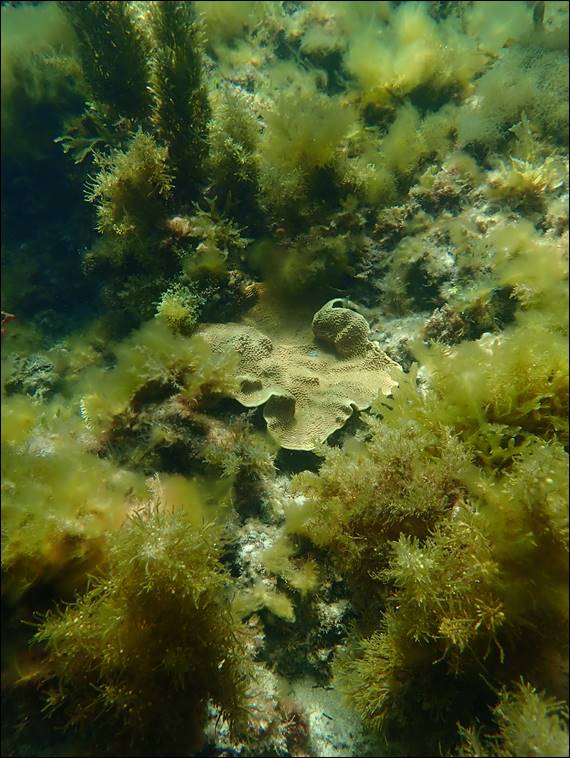
There were certainly more fish about, not in large shoals but I noted a greater of variety of them.  It’s always interesting checking at my images when I get home, in the one above just underneath the reef it looks like there may have been a small ray.  Not so clear in this compressed image but the full resolution image certainly shows a distinct smooth curve of the edge of its body.  While I didn’t see that out there I did spy a coral that I don’t often see, the obvious thought being that it was a plate coral:

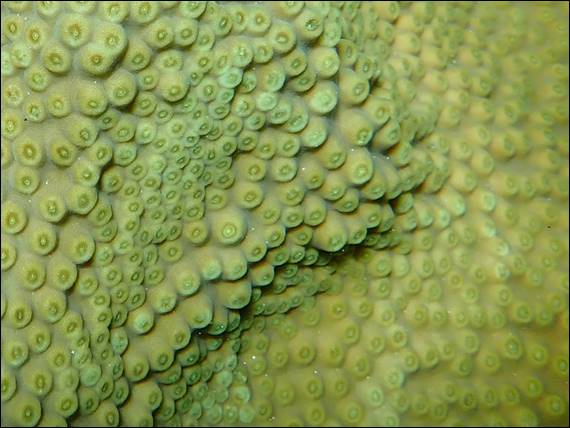
Doing a bit of research my first thought was its a hard coral of the Monitpora genus but it is in fact of the Astreopora genus.  These corals can form many shapes including plates, branches, vases or even just encrusting the area it resides.  The real giveaway are the corallites, which are the bony houses in which the coral polyp resides.  The polyp is the part of the coral that collects food, it is effectively the mouth.  The corallites on Astreopora corals are more distinct, can be raised or depressed and form a circular texture that makes the coral look like a net:

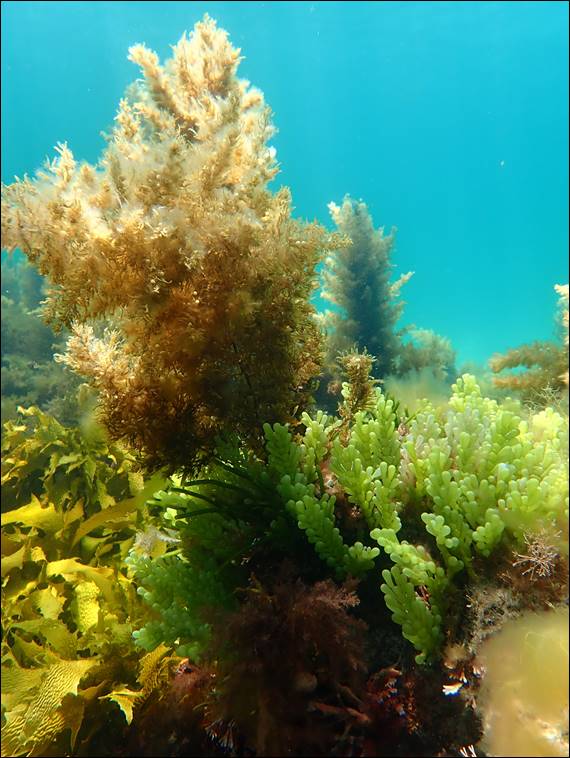
Like my last dip in these waters I spent a lot of time looking at the larger variety, in shape, size and colour, of marine plants.  These green bulbous plants really caught my eye, but I have no idea what they may be.  The closest thing that I can find online are Sea Grapes, but the shape and appearance suggest they are not these.  Sea Grapes are also called Green Caviar.  They have little bubbles that grow on their stem, which are quite delicate and open up on your tongue releasing a slightly salty taste.  Needless to say I didn’t try that with these plants:

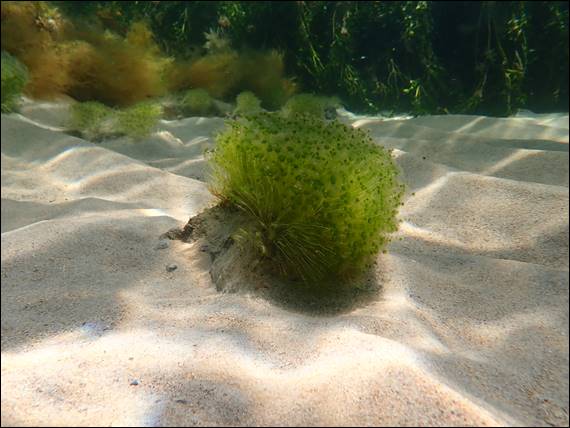
My next find were clumps of soft flowing weed, isolated from the main areas of reef ,most of these clumps were on the sandy bottom.  The long flexible stems resulted in the entire plant swaying very gently with the low swell of the day, and I wondered how they would survive in rougher conditions being exposed in these open sandy areas.  At the end of the stems are what look like upturned caps or umbrellas leading me to think that it may be a type of Acetabularia, commonly called mermaid’s wine glass:

As I came back to the surface after taking the above image, I turned round to see a large Smooth Stingray glide within metres of me.  This one had been in a tussle with something, as the tail was missing.  It did not hang about to allow me a good look at it, and kept a steady pace out to sea.  It is the first ray that I have seen this season so I had to include the image despite it being a tad murky are far off.  It took a little for me to react and take a snap.  The conditions for snorkelling are with luck far from over so hopefully I get to see more rays this season:

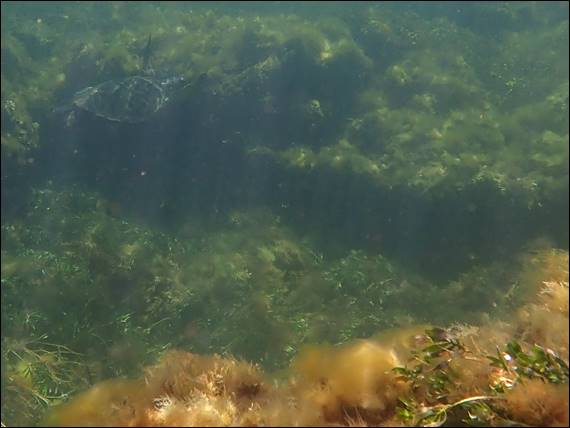
It is amazing that a creature of that size could have come so close to me and if I hadn’t turned my head I would never have known it was there.  Then as I swam over the next set of reef I saw a Green Sea Turtle.  As soon as it saw me it propelled itself at an incredible speed and within moments was lost in the distance, there was no point in attempting to follow it.  It is very rare to see sea turtles this far south, it is certainly my first sighting off our beach.  This season there has been a strong Leeuwin current and this is likely why this turtle had come so far south:

The Leeuwin current stretches from northern Australia and runs down the west coast, before heading east along the southern coast.  When it is stronger it brings warmer temperatures, and this year the sea is approx. two degrees warmer.  It is both the strong current and warmer water that is why some unusual species can be found this year.  With climate change the ocean currents will continue to change and the whole make up of our local marine life will change with it.  So maybe over time I’ll see more turtles:

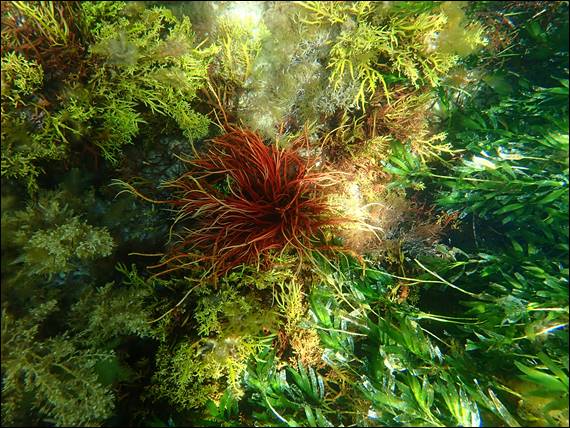
Couldn’t resists the above image with the red weed standing out in stark contrast to the greens.  Now I walk along the beach for half a kilometre or so before going in, and this time to save me the walk back along the beach I kept drifting towards the beach access road.  In one area the waters got very shallow, less weed and plants, and not so many fish to be seen.  It was so shallow that I had to weave my way over the area to avoid becoming beached.  Some formations created ledged and under this one spied a Horseshoe Leatherjacket:

These leatherjackets, I’ve heard, are certainly not favoured by people fishing.  Regardless of their dislike for them the Horseshoe Leatherjacket in particular has a very striking pattern.  Unfortunately they never stay still long enough to allow me to take a decent image.  I eventually got into deeper water, and was almost at the point I would exit.  Below me the landscape had changed again and was now sea grass covering reef, with the occasional sandy hollow.  It was in one of these that spied a small ray:

This Bight Stingaree, and unlike the Smooth Stingray I had seen earlier, allowed me to get up close to take a few snaps and properly identify it.  After duck diving a couple of times to get a good look at it, I bobbed about above and watched it slowly move into a more sheltered area out of view of curious eyes such as mine.  It was then, after 75min in the water,  finally time to head back to shore and go home.  While I had seen so much, as I drove back, I was hoping that I had been successful in capturing a half decent image of the Green Sea Turtle:

Staying in Control

Steve has been away for about a month visiting family and friends in the UK, and has a couple of weeks before the last rounds of chemo kicks in.  So rather than catch up in town we decided on a trip to Welly Dam.  It was a lazy start and we were in no rush to pack the routes in.  I’ve been making the most of my holiday and getting out heaps, so did not feel the need to go hard.  And Steve has not been climbing for quite a while, plus is a little more rotund from the Christmas tradition of eating and drinking more than is really necessary:

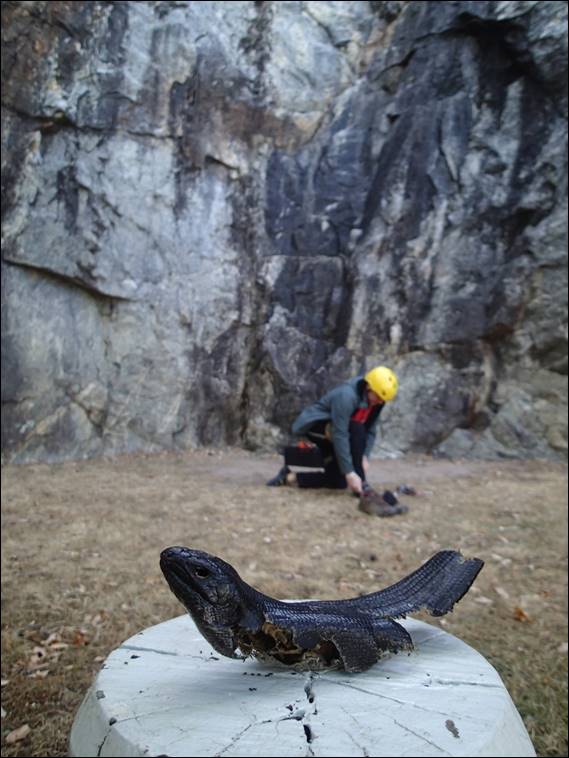
For those interested the above image is of the remains of a king skink.  There was only one leg remaining and the tail was nowhere to be found.  It was in fact mostly an empty shell with only a few bones still intact.  There is no real reason to include this gory image, other than it was a fascinating find!  Steve was keen to lead Murky Corner, and looked a little perplexed at the crux.  He needed to take a moment once he got past that section.  Leading us to pondered on the sense in him leading, and deciding that he would do no more:

So unlike my last three trips out, it was my turn to be the lead slave and Steve took my camera and subjected me to what I do to others.  Taking images while not putting me on belay until I had clipped the first bolt.  I didn’t mind too much, after all I’ve been known to boulder up to the first clip on every route and then down climb, so I should know the routes pretty well.  While Steve’s leading head wasn’t ready he followed up with style, knocking Pocket Knife and then Raging Torrent on the head:

Next we plumped for Gumby Goes Bolting, a route that messes with my head and one that Steve has very little recollection of doing.  While he was on this route a fire truck pulled up and two fire fighters came across to us and started to apologies.  Thoughts of bushfires immediately came to mind, the national park had been closed for a number of days before Christmas due to them.  It was fortunately nothing like that, all they were going to do was put the sprinklers on as the timer unit had given up on them:

We had a good old chin wag with them before they turned the sprinklers on and left us too it.  We knew from the early morning trips here that we would stay dry even when belaying.  Steve continued up Gumby and was looking confident and flowing, so we then moved onto Savage Sausage Sniffer.  During all this time we had a tea break and copious amounts of chatting between climbs, we would normally rattle a climb off every 30 min but today it was more like one every hour.  This was the last route on the main wall and was too savage for Steve, he simply ran out of juice:

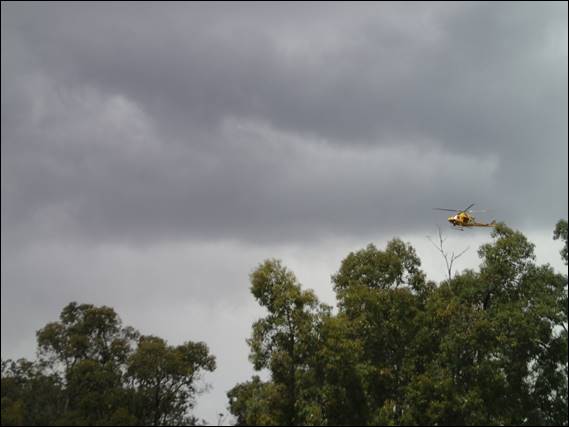
I cleaned the route and as I was getting ready to lower back down we could hear the sound of a chopper coming up the valley.  No doubt checking the condition of the prescribed burns that were scheduled for the day to make sure they stayed contained.  While I’ve seen the shark spotter helicopters along the coast almost every time we’ve been out recently, this is the first time I’ve ever seen a chopper at Welly Dam.  Maybe a sign of how nervous they are of not having a repeat of the fires that hit here before Christmas:

A Lucky Find!

On New Year’s Day Lisa and I went down to river mouth end of our beach, which meant we jumped in the car and drove the 3km to the most eastern carpark.  The reason for this was purely because I wanted to have a snorkel at this end, my first dip in these waters where the reef is very different from the beach close to our house.  It was early, but there were still a number of 4WDs parked up and driving up and down the beach:

The water close to the shore was not very clear but as I got further out it improved.  This area has more pronounced bommies with sandy patched in-between.  With a 2m swell and slightly murk water it was not possible to get images to show the formation of the bommies clearly.  It was however good enough to snap some images for the different plants:

The area is far more colourful and has a greater variety of both soft and hard corals, as well as marine plants.  It can also be known for having more big shoals of fish, but today I didn’t find any in great numbers and those I did see were quick to hide away from me.  Still I was happy just to have a snoop about:

In poor visibility it can feel sketchy snorkelling above the sandy patches between bommies, not knowing what lurks beyond your vision.  But I stuck at it and as I came to the end of one sand patch I saw what looked like an eel near the base of a bommie.  Expecting it to shoot off I took a few snaps from above, before duck diving down:

Once I got closer I knew it was a shark, and can now say with certainty that it is a Black-spotted Catshark.  My field guide suggests that these types of sharks are usually found in deep water, with them being found in shallow water only very occasionally.  Shallow being less than 60m, so I feel very lucky to have seen this one:

As you can see it allowed me to get very close, in fact it never flinched and I went down to check it out several times getting almost eye to eye with it.  Eventually I started to swim off, and as I took one last look back it slowly moved to find refuge under the bommie.  I drifted off continuing to check out the colourful marine plants, with no intention of trying to identify them:

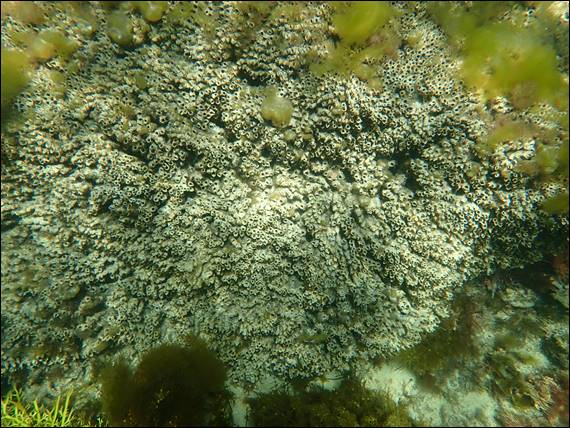
As I headed back to shore the swell was picking up and I got caught in a shallow section where the formations completely changed, from limestone bommies to boulder type formations.  These seemed to be made up of what looked like thousands of tubes.  It was getting too rough to safely get close and check out what might or might not being in the tubes, somewhere for me to check out on a calmer day: