Set your alarm clocks

With only a few months left this year Howsie was in need of a boost to keep his 2020 challenge on track, so we headed down to Wilyabrup to allow him to tick off a couple more 20s from his list.  And as predicted last week the starts are getting earlier, as he suggested meeting in Capel at 5am.  We arrived, not surprisingly, to an empty car park and found a bunch of track markers and signs.  A running event was to start at 7am, at Hamelin Bay and finish at the Cheeky Monkey Brewery not too far from Wilyabrup.  A whopping 80km!  I wonder if Alan or any of his mates were aware of it and entering:

Today the focus was on supporting Howsie and we had already set out a plan of attack, mapping out what routes we would tackle and in which order.  Most of the climbing was to be at the Inner Space wall, and we decided that a couple of warm up climbs would be sensible to make sure he was both mentally and physically ready for his first grade 20.  This wall, while not as tall as the other areas at Wilyabrup has a bunch of very fine routes.  We started with Inner Space.  The rock felt good and we were both moving well, so I was feeling optimistic:

Today the swell was down considerably from last weekend and the ocean looked like it was starting to clear up, a good sign for snorkelling.  We also kept an eye on the water just in case there were any dolphins or whales, which resulted in us hanging about at the top of each climb a little longer.  After Inner Space, that helped get Howsie’s head into leading and also prepare him to keep a calm mind when there was a need to run it out between protection, I jumped on Totally Awesome.  Bumping the grade up a couple of notches, this one is a bit more sustained, fingery and technical.  For those with local knowledge we also threw in the direct start to add a bit more spice:

Now as a bit of aside note, about a month and a half back Howsie was playing dinosaurs with his sons.  As all good dad and son games go it sounds like it got a little fast and furious, resulting in Howsie smashing his little toe on the kitchen table leg.  His toe is still a bit swollen and sore but climbers are generally a hardy and determined sort, so that wasn’t stopping him today.  To ensure Howsie had the best chance of bagging the grade 20s we took our time between climbs to allow some recovery, but not so much as to cool down.  This allowed time for the climbing shoes to come off between routes to give all of our toes a bit of a rest:

Midwall Crisis was the next route, the first grade 20.  It’s a route he had attempted two months back, before the toe bashing incident, when we came out with Rongy and it spat him off on each attempt.  This was due to his dilly-dallying on the airy traverse, pondering and stressing over the protection with his feet on smears and flat top handholds that somehow never feel that positive.  As such there was some trepidation in the air as he set off.  But once he set off there was none of that indecisiveness, and that added to the notes he had made on his last attempts about what gear goes where (yes he is taking the 2020 challenge pretty seriously) resulted in him cruising up it:

The itinerary had been set such that the next climb would be just enough to keep the body moving but not so hard as to drain it of any remaining strength.  So it was that I led up Waterfall Second Folly Direct Start.  With the nervy and pumpy start below me, a group of 15 to 20 climbers wandered past.  It transpired that the Climbing Association of Western Australia (CAWA) was running a bit of a trad leading course.  We came back down and it seemed like we still had the place to ourselves, due to the course thankfully being run at the far end of the crag.  This allowed Howsie to psych himself up for Real Woman Accept it for What It Is:

Howsie hadn’t led this route before, but had been up it on second.  After much mental preparation he set off and was looking good until half height.  His elbows started to come away from the wall and he was looking stiff and awkward, a sure sign that his arms were getting pumped.  He fell off and in the process tested a rust old piton that is likely to be 35 years old.  We stopped for a snack and drink break to allow his arms to settle down before trying again.  On the second and then third attempt he got higher but each time fell off.  Maybe to retest that old piton or was it just that his arms were toast.  He conceded the latter so I led up the route, allowing him to follow me, work the moves and assist in his note taking to ensure he is ready to send it when we come back:

The last route of the day was going to be Fishing With Dynamite, with packs so we didn’t have to hike out with them.  But it seemed that this might have been asking a bit much of what remained of Howsie’s arms, so we plumped for The Unbolted and the Beautiful for some more trad action.  And needless to say without the packs.  As we wandered across to the Dolphin Smiles wall we came across Mark with a few climber and had a bit of a catch-up.  We then immersed ourselves amongst the throngs of CAWA climbers on the course, who were wandering round the base of the crag learning about the tricks of placing gear: 

It seemed apt that from the top of the Dolphin Smiles wall I spied a large pod of dolphins cruising about, Howsie stopped for a while on the route to check them out.  As he carried on upwards I continued to enjoy watching them bob about.  Howsie confessed that the route was just enough and anything harder would have been too much.  A sure sign that it was time to call it a day, so we watched the dolphins a while before heading down.  When we did we came across a huge group of 40 plus teenagers on an adventure camp.  They were teaming all over the upper tier and dropping down abseil lines over the Inner Space wall like an invading army.  It seems we were wrapping up our session just in the nick of time:

Walking out a group of 10 or so boulders looking a bit like hermit crabs, as they were hauling their pads, were making their way in.  As yet there was no sign of any runners on the track out, and what with the bite of the sun now high in the sky we wondered how they would fare on the gruelling 80km course.  It seemed that the carpark had been extended up the gravel road, and as we drove out another three cars came in.  It was going to be a very busy afternoon at Wilyabrup.  While Howsie had not managed to bag the two 20s it was a great morning out and the early start proved worthwhile once more in allowing us to avoid the busy period at the crag.  So if you are aiming to get out with me over summer be prepared to need to set your alarm clock nice an early:

Slow and steady

With one day left before Lisa and I head back to work, after a great relaxing two weeks off, Craig and I headed out for a climb.  I groaned a bit when he suggested a 5:30 pickup time at his house, and dreading the drive out in the dark I was a little surprised that it was already light when I got up.  The sun was well and truly up when we rolled into the carpark, and I can foresee the start times only getting earlier and earlier for the next few months:

Both Craig and I had managed about five hours sleep the night before, so we were both a bit slow to start and spent time walking up and down the crag trying to decide what we should climb.  It was going to be one of those days when the brain doesn’t want to make any decisions, and just have someone else make them for us.  Problem was we were both wanting that.  In fact I was feeling so lazy that I didn’t take any images of us climbing, and the camera only came out four times:

The first was the carpark shot because the sunlight streaming through the trees looked so cool and the second was as Craig was getting ready to lead his first route, and only then because we spotted a couple of whales cruising past.  Due to the lack of images of the day I have gone through my archives and thrown a few images in that I feel show the experience that each of our chosen routes provided.  I started on Golden Buttress and above Rongy is making the nervous moves up the super exposed hanging arête, with the closest gear well below his feet:

It was a muggy start to the day, and that combined with the lack of sleep made the route feel harder than it should have.  I was dripping in sweat at the top, wondering how the rest of the session would go.  Before we headed back down we looked out at just the right time to spot a big pod of dolphins, some thirty plus, surfing in on the clean and clear waves in great numbers.  They jumped out the waves and waited for the next wave, next wave and next wave.  It was a great spectacle but sadly my camera was at the base of the crag still in my pack:

Finally after stopping at the top of my route and then at the bottom of Craig’s, he jumped on Hitching.  Trad was the order of the day and we were after routes that gave that real trad style climbing.  This one has a great technical and thin runout section, which Steve is showing us above how to avoid.  Craig however likes these situations and kept a cool head sticking to the arête.  As he was setting up his belay the camera came out for the third time, to try and get a good shot of the Bull Ants carry our materials from a new nest they were building:

When Craig and I were organising this trip I hinted that either Willyabrup or Moses would be good.  But then suggested that maybe Mob Job was calling us, which Kym is climbing below.  When we first arrived we inspected it and it was looking wet.  But a plan is a plan, and despite feeling tired I jumped on lead.  This three dimensional climb requires muscles that some will have forgotten exist.  It was a huge battle and felt pretty sketchy in places.  Digging deep I managed a clean ascent, finishing with Popeye forearms that were complaining intensely:

Craig led up the second pitch, of which I have no images of anyone climbing it other than Craig from earlier this year.  So instead we will jump to the fifth route of the day, which Dan is displaying below.  This is starting to sounds like a swimwear ad!  I’m not sure what possessed me to climb Stainless Steel, however I suspect it may have been Craig hinting that he really enjoys this climb as we were walking in.  Again it was a slow plod with ever tiring arms on a steep technical line that never seems to relent.  I’m not really sure how I held on for the entire route:

Below the final capping roof I was nervous, it used to stump me.  As I launched up it the first holds felt good and I just kept talking to myself that I have previously and can climb it cleanly, and this seemed to work.  Craig was toast after that climb.  I had hinted he should finish on Verbosity, to which I can hear those that know the climb groan.  But he decided to be sensible and instead we climbed out up Hope, with our packs.  A less mentally demanding climb, but one that is consistent and fun.  Craig managed a safe ascent but like me was done for the day:

The camera came out for the fourth and final time as we packed up, below.  We could feel the bite of the sun and it felt hot on the walk out, however we were not lucky enough to come across any Carpet Pythons on Hope today.  This was fine as we were content with the surfing dolphins and whales we had seen.  Car to car we were out for six hours, so we really had taken our time to bag what I would regard as six great trad pitches.  We hadn’t even stopped to drink a cuppa during the session, but did fill the cups up for the walk out:

Fire and water

Over this last couple of weeks I have inundated you with posts, however both Lisa and I will be back at work next week.  That means there will be less time for adventures and of course less posts coming through.  Being the last weekend of our holidays we headed back to Wellington National Park, with the intention of walking the Kurliiny Tjenangitj Trail.  This trail includes a bit of the track along the Colie River and then veers off up the granite hills for some specky lookouts before looping back to the riverside track:

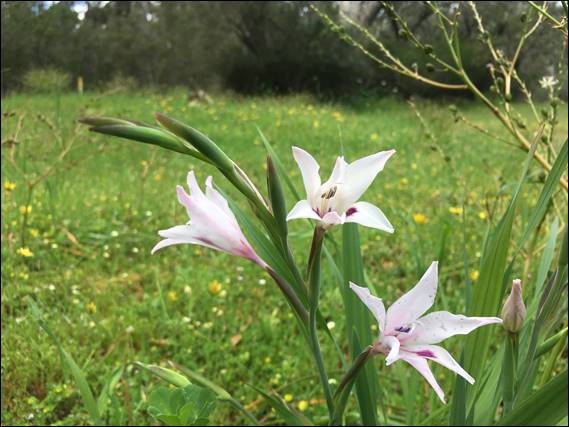
As it was the lookout loop section of the walk was closed, as well as the trail we had done last week.  Despite it being school holidays, a weekend, glorious weather and every campsite in the park booked some clever person decided to close some of the trails and do a controlled burn.  We did however have a backup plan and that was to take the Jabitj Trail, which followed the Collie River upstream all the way to the café near where I usually climb.  As you can see we were immediately greeted with some stunning flowers:

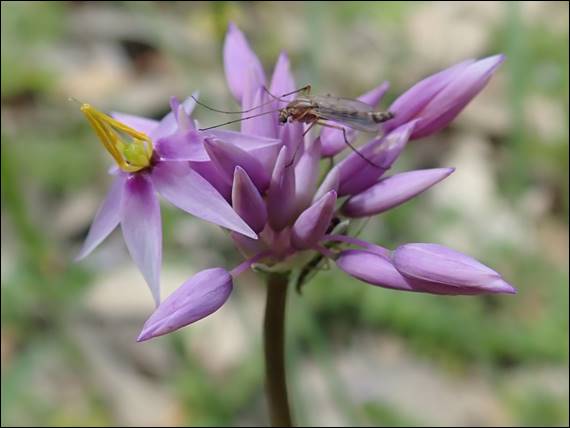
The first two images are of Scented Sun Orchids, which can come in a variety of colours.  I’ve had to do some investigative work for this post and can say that what makes me sure of these is that unlike the Blue Lady Orchid the petals are less rounded and more pointy shaped.  Continuing on our walk Lisa somehow spotted these two skinks hidden behind a small shrub.  We watched them for a while, one can be seen biting the other and they ended up coiled together in a tight knot and we assuming they were mating:

The trail followed the Collie River, but didn’t run right along the water’s edge.  It instead wove along the bank through tall trees in the gullies and then over open rocky areas, as it went over the ridges that dipped from the top of the valley down to the river.  The gurgling sound of the river as it cascaded down the rocky channel came and went, as we moved further and closer to the channel and also at times being masked by the vegetation:

Despite a late start, having left the car at 11:30, and it being predicted to be a warm 23 degrees the shade of the trees made it a lovely temperature to be walking in.  While the images may not show it there were flowers all over, and the next find was what I think may be a Beautiful Donkey Orchid.  I have to admit to struggling with this one, and have come to this conclusion due to the mauve-tinged labellum:

It is also different to the Common Donkey Orchid, as you will see later on.  Below is the first open section we came across and the ground and lower storey shrubs were littered with flowers.  We spied a Splendid Fairy Wren in the shrubs, but these little birds rarely stay still so we just enjoyed seeing it briefly before it went on its way.  Out of the shade you could feel the bite of the sun, a warning that summer is on its way:
Regardless of that bite went spent a bit of time checking out all the flowers in this area, and of course I managed to find yet another beetle to photograph.  I have joined QuestaGame, a global web based platform on which you can post any flora or fauna findings and other people using the system can help identify them for you.  This is one of the ways that Howsie has helped me before, so now I will be popping some of my better finds that have me foxed to see if I can get an answer:
In addition to the Splendid Fairy Wren we saw the usual suspects including Willie Wagtails, Fantails, and both the Long Billed (below) and Red Tailed Black Cockatoos.  Most kept their distance and could be heard but were hidden from sight in the tall trees, but this one was quite low down allowing us to get a really good look.  It was hard to know whether to look up or down, and on this trail it seemed whichever we chose there was so much to see:

The great flower, or more precisely orchid, hunt was what really drew my attention.  And as such I was super excited when I found a small patch of these very dainty Rabbit Orchids.  It is also possible to find Bunny Orchids and Hare Orchids, and I first thought that I had found the latter.  It was not until checking the various guides at home that I learnt more about the three very different types, so there is no mistaking that this one was a Rabbit Orchid:

Lisa was also getting into it spending time to get that perfect picture and marvelling at all the finds.  We were maybe going a little over the top with her phone camera (which is actually pretty damn good), my little point and shoot, as well as the big SLR.  But when I get home I need a range of images to check all the fine details of each flower, including their stems and leafs.  Without that level of inspection it can be near impossible to narrow down what we have actually seen:

I’ve got a field guide for orchids, which is now a bit outdated but still acts a good first check.  Glen has put me onto a more contemporary and comprehensive web based guide that has loads of images that allow me to compare what we have seen.  Below was the solitary Little Pink Fan Orchid we discovered.  We also came across just one of these last time we came to the area, and I couldn’t resist including this image just because I feel these are very beautiful.  The compressed image in this post may not show it clearly, but the outside of the petals and sepals are covered in fine hairs:

Using this new resource that Glen sourced, I reckon that the next find was a Twisted Sun Orchid.  The colour made me think of a sun orchids, of which there are a few variety.  While it is hard to see, due to the glare in the image, it has a slight purple colouration at the rear and top of the column, the bit in the middle of the petals and sepals.  While only just visible in this image, in other sun orchids this colouration is far more pronounced with a couple of prolonged purple antenna visible:

Below is the Common Donkey Orchid, another one that we saw on the last walk in the area.  If you flick between this image and that of what I believe to be the Beautiful Donkey Orchid you should see the differences I pointed out, i.e. the mauve-tinged labellum (which is also slightly differently shaped).  We came across a couple more repeat finds including stacks of Cowslip Orchids and one Purple Enamel, which made Lisa happy. 

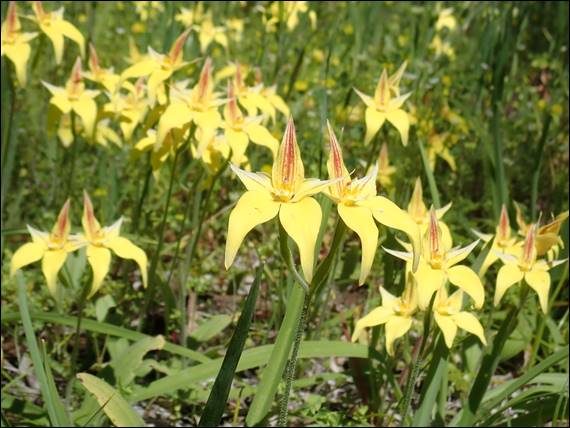
It was a bumper find of orchids on this walk, but there was still one more that we found.  I could immediately tell this was a little different, and due to the stripes on the side of the fringe I was thinking it may be a zebra/spider cross.  But it is in fact a Leaping Spider Orchid, and I can be sure of this not only due to the petal and sepal configurations and distinct wide and plainly coloured sepals, but also the densely packed black calli on the apex of the labellum.  The bit that looks like caviar:

We had seen all of these amazing flowers and other fauna in the first three kilometres of the walk.  By now Lisa was getting peckish so we found a spot where the path got close to the river and found a boulder to perch on for a snack.  While my trick photography makes it look like we had the place to ourselves, that was not the case.  There were a number of others out walking on the trail, and at this spot a bunch of people who had parked on the other side of the river were picnicking:

That was the busiest spot that we came across, so I was pleased to leave it and carry on with the walk.  From here the track got more rocky with more outcrops and a few steeper inclines and declines, but nothing too serious.  We seemed to go a bit faster on this stretch and it wasn’t too long before we could see Wellington Dam.  The trail ends at the café, which we were not interested in going too.  So rather than hoick up the final hill just to turn back we carried on until we got close to the base of the dam before starting the return trip:

As we spun round and checked out the trail in reverse we could see the plume of smoke lifting from where they had decided to undertake a controlled burn.  This changed the afternoon light and we could on occasion smell the smoke.  Part way back we came across a couple of ladies who had taken a different walk trail from the café, and almost without warning walked into where the controlled burns were being undertaken.  It seems that not only was the timing probably not all that sensible, but the warning signs were not adequately put out:

We didn’t hang about anywhere near as much going back, no snack breaks and only stopping if we saw something really worthwhile.  Before we knew it we were on the homerun with another 10km wander under our belt and a heap more orchids found.  I do wonder how many orchids were out there that we didn’t spot.  I guess that is all the more reason to come back for another looksee, but maybe when they have finished with their controlled burns and opened up Kurliiny Tjenangitj Trail:

Heading to shore

Today Lisa was feeling much better but we didn’t head up to the forests, instead the poodles got a well-deserved beach walk.  During term time they get walked practically every day, but this holiday their walks have been less frequent.  So they were hankering to get down for a run.  Walking down towards the beach the water looked strange, huge glassy patches could be seen in-between the more expected slightly rippled surfaces:

We decided to wander southwest, due to the crowds that were milling about in the other direction.  That way the poodles could stay off the lead without us worrying about who they might start to worry.  I’ll be honest and say that beach walking, along the flat and mostly featureless coast that is on our doorstep, is not all that exciting.  Lisa loves the sound of the ocean and just seeing the water but I like vistas, plants and animals in case you hadn’t noticed:

We were however lucky to come across a pair of White Bellied Sea Eagles, they were far off but we spied them in time to stop the poodles haring after them.  Watching them take off was pretty cool, it was just a shame that they headed away from us otherwise I would have included that image.  Lisa used to, and maybe still does, stress a little that they might see the poodles as a tasty treat and carry them away:

After a while I started wandering closer the dunes, looking at the plants and hoping to spot a reptile.  But there was no such luck, I even ducked inland a short way to check out the above freshwater lagoon.  Closer to the water’s edge it was probably tiger snake heaven, and being bare foot I decided to keep a safe distance.  Somehow Lisa managed to convince the poodles to stay with her on the beach as I went on my little detour:

After approximately three to four kilometres we stopped to give the poodles a drink before turning round to head back.  There are no rocky headlands on this coastline and the dunes behind the beach are open to the full fury of the wilder storms.  Monitoring has shown that they are slowly being eroded away, at a greater rate in some parts than others, and the long term threat from sea level rise is pretty real here.  For now however we will continue to enjoy what we have got:

The only other birds we spotted were Cormorants.  We saw them flying over the ocean, bobbing about on the water, and the above three were drying out their wings on the beach after diving down for a feed.  Some species of Cormorants have been recorded as diving up to 45m, using both their feet and wings to propel them down to those murky depths.  Here the water is no deeper than 6m for a long way out, making it ideal for me when I go snorkelling:

On our return there were still lots (for our beach) of people.  They had not come down for the usual swim, body board or fish, instead they came to check out the whale carcass.  It was spotted early yesterday morning, and has since then been slowly drifting to shore.  A number of large sharks have been seen gorging on the blubber, from which the oil that was being released was what was giving the water that glassy look I mentioned before:

Back home we could hear more regular vehicle traffic than normal, with an occasional plane and helicopter also made an appearance.  So after two to three hours I snuck over the dunes to have a look to see what was going on.  The carcass was rolling back and forth on the shoreline.  People were getting up close to have a picture taken, as the shark spotter helicopter flew up and down the coast.  One good thing that has come out of this is that the sharks have had a good feed, which will keep them content for a while, and I’ve heard they have also been able to tag a few of them:

Stuffed jalapenos

The theory was for Lisa and I to head up to Wellington National Park for a wander, overnight camp and then hit a second walk tomorrow.  But plans change.  It was not that we were put off by the fact that it had bucketed down the night before, the forecast from this morning onwards looked great.  It was due to Lisa being hit by a migraine, and despite being laid out all day yesterday it was sadly still persisting today.  She was however determined to get out, so dosed herself up with painkillers as we hit a coastal path:

As can be seen above evidence of the rain the night before was about, and for the first half of the walk the sky above couldn’t seem to make its mind up.  That said the cloud cover, when it did pass over, provided some welcome relief from the rays of the sun.  We had headed out to the Meelup Regional Park, a place I have been to heaps to climb at Castle Rock.  But today the intention was to wander along the coastal path starting from Dunsborough and seeing how far north we would go:

The path is a well-trodden and mostly level path, perfect for Lisa today.  On the first stretch to Castle Rock we were passed by many runners and families with children keen to scamper ahead.  We however took our time and checked out the plants, colour was splattered all around with some familiar and some new ones to find.  This area is the only place where it is possible to find the Cape Spider Orchid, and there are only six known populations and their location is a well-kept secret.  Needless to say we were not lucky enough to find any of them:

As we walked along I kept a keen eye out, but didn’t see any orchids.  I did however spot a big round rear end of an animal with brown fur and a slim short tail, which makes me pretty sure that it was a Quenda, or Bandicoot.  Normally a nocturnal animal I was a little surprised but am convinced that is what I saw.  We also came across something a little slower.  This Red Headed Cockchafer beetle was laboriously hobbling along the path, I have previously come across their larvae when walking out from Bobs Hollow and it is considered a native pest:

Shortly afterwards we came across the first orchid, one that many would possibly walk past like Lisa would have.  This is a Mignonette Orchid, also called an Onion Orchid.  It has a single onion like leaf and a single stem, being nearly all green I believe it is the common variety and as such can have up to 100 flowers. Each of them only being about 5mm in length.  The flowers do not portray the distinctive orchid sepal and petal configuration.  On these flowers these parts are much smaller and the main distinguishing feature of the tiny flowers is the labellum that sticks out like a tongue and has a frilly end:

We passed Castle Rock and as we approached the next headland I suggested a little detour out to Copper Rocks.  Not to climb, but just because it is such a lovely spot.  Here Lisa had a snack and lay down to chill for a bit while I explored the nooks and crannies.  The best find being this King Skink basking in the almost sunlight on the beautifully coloured granite that gives the boulders here their name.  Just as we were about to move on Aaron and some from the Forest Adventure crew rocked up intending to have a boulder, so we had a quick chat and left them to it:

The next headland we passed was Sail Rock, and along the way we spotted a Purple Enamel, Cow Slip and Pink Fairy orchid.  Only one population of each, and the Cowslip was a variety that didn’t show the familiar patterning, just being a plain yellow flower.  The next find was a single Forrest Mantis Orchid, the green upright fringes and deep red pointy labellum giving it away.  Not forgetting the two upright sepals at the front that mimic a praying mantis:

There were lots of other types of flowers in abundance, but we didn’t find any more orchids.  The next landmark was the centre piece of the regional park, Meelup Beach.  This is where most of the tourists end up, and it was pretty busy, so we didn’t hang about and carried on passing the headland of Gannet Rock.  Shortly afterwards you come to Point Picquet, which we decided was far enough.  By this time the sky was mostly clear and the bays separated by each of the headlands we had passed was the sort of turquoise colour that you had to see to believe.  The images simply don’t do it justice:

On the way back we decided on another slight detour.  This time taking the Meelup lookout path, which wove it’s way uphill.  Near the start of this path I spied a stink bug, the intricate patterning of the shell was stunning and had what looked to be a couple of false eyes.  Maybe to trick would be predators as to where the head was, and allowing it to run the other way.  With Howsie’s assistance it has been identified as a Nymph of Gum Tree Shield Bug. Not quite an adult yet (adults have wings, nymphs are wingless), and is likely a later instar nymph (3rd or 4th) by counting the segment of its antennae. The nymphs go through 5 instar stages before they become adults:

The path took us high enough to get a great vista of the bays.  As we made our way uphill and along the crest we came across quite a lot of Purple Enamel Orchids, but no others.  Some may recall these are Lisa’s favourite orchid and I feel that they were rewarding her for managing to get out and about today.  After soaking in the views we followed the path back down which eventually took us back to the masses at Meelup Beach, which we passed through quickly once again leaving the crowds behind us:

For most of the walk we had the company of birds hiding in the undergrowth, this included the New Holland Honeyeater that seemed to be ever present and not as shy as the others.  We passed Copper Rocks just as Aaron and the boys were just packing up, so I said a quick hello as we moved on.  We didn’t stop as much on the final leg of the walk, as we were getting hungry and the stuffed jalapenos at Occy’s were calling us.  Hopefully Lisa will be feeling up to getting out for another wander tomorrow:

There she blows

Walking back into Wilyabrup today it looked like we might have lucked out.  We were heading to Driftwood Bay as Rongy had never climbed there.  Despite having been out here top rope soloing only last weekend I was of course happy to return.  The place has a charm to it, one that resonates with me and this time we would be leading and that always feels different.  Approaching the crag we could see a rainbow starting to form and as I set the rap line up the rainbow, like the dark clouds out to sea, seemed to expand:

Unperturbed we set off, and while I said leading would make it feel different I of course meant for Rongy.  Having lead all of these routes myself before, some numerous times, I was more than happy to offer up the pointy end.  While it rained as we rapped down when Rongy was ready to set off the sky opened up above us.  The rock was damp but not too bad.  However, the black lichen on the granite was best avoided and any attempt to hold onto that stuff would surely have resulted in a fall:

Pick Pocket was a good warm-up route for this crag, never too hard and nicely consistent with ample gear opportunities.  The rock certainly needed to be treated with respect, due to the dampness, but also checking for loose holds.  Sat atop the crag we looked to the south west and the next bank of clouds were rolling in.  This time we couldn’t see an end to them, but we put any thoughts of heading home to climb in the shed, with a hot cuppa, to the back of our minds and instead went back down the rap line:

Sure enough the sky opened again, this time not with blue sky.  It was the sort of rain that even Craig would call rain.  It didn’t take long before water was streaming down the rock and it felt we were under a waterfall.  The grades here are however reasonable and so we cracked on.  Old Crate was the next line for the picking, again because it seemed to offer plenty of gear as it followed an obvious crack and flake system.  Rongy climbed the route almost entirely in the rain, and it started to ease off as I prepared to follow up:

Things looked to be brightening up and Rongy was incredibly upbeat with the climb he had just done, having really enjoyed the fine natural features.  So we decided to forget the shed and stay for another line or two.  This time I went first, enjoying a gentle ramble up Crab Slab.  The route was first climbed in 1970 before camming devices were available, which didn’t arrive on the scene until the late 70s.  The upper slab would have been a bold lead back then.  Today while it still has a move or two the security of a cam slotting into the slightly flared parallel crack system made it safe as houses:

The sky was now playing nicely and so we went back down for the crag classic.  Water still dribbled down the two cracks, and they felt slimy to touch and less inviting than normal.  Despite this the holds are positive enough to still use in these conditions, plus it has awesome slots that can gobble up wires providing an extra layer of comfort.  This climb was also put up in 1970, and with loads of passive gear options I imagine this would have been a safer proposition despite being technically harder:

As Rongy was enjoying the delights of Integrity I was watching the sun creep round and hit the crag.  With a bit of wind and sun, it doesn’t take long for the clean granite to go from sopping wet to bone dry.  So I was eyeing off Turkish Delight, a route that stood out for me when I was here last weekend.  It does make use of a fair bit of the black lichen covered rock, but I guessed that by the time we came back down the sun and wind would have worked enough magic to make it feel OK.  That it did, and it was great fun:

Rongy managed to pull a reasonable sized plate of the wall as he came up, which landed on his leg before tumbling down.  He held on, but it is never a great experience when a hold comes away on you so I thought that he was ready to call it a day.  But as he climbed the top section I could see him looking over to the slabby finish of Sure Footed.  So it didn’t take a lot of convincing that we should maybe squeeze one more route in, that plus I knew he would enjoy the start of the route up a jamming crack:

When it was my turn to follow I was just loading the inverted jam, which just doesn’t feel right, when I heard Rongy shout out WHALE.  Holding onto this jam I twisted my body looking out waiting for a flipper, tail or full breach.  Eventually and without seeing the whale I knew I had to keep climbing or fall off.  As soon as I pulled up the jam slipped, and the stretch of the rope resulted in me gently landing on the deck.  As I pulled past the tricky moves on the next attempt I looked round in time to see a big tail slap, after which the whale disappeared from sight:

Turf-n-surf

All fired up after a couple of great walks and good number of orchids under my belt, I decided to test what the home turf had on offer.  So jumping over the back wall of our garden I trudged through the small reserve to see what I could find.  There were lots of Pink Fairy Orchids about but no other ones.  We live on a sand dune and so the next day I thought I’d try out the lower lying local Tuart Forest National Park and see what that had on offer:

We drive past and through the National Park to get in and out of Peppermint Grove Beach, and it is the largest remaining pure forest of tuarts.  While it is a very special place it is overrun with Arum Lilies and pasture grasses, just like the little reserve behind our house.  It is possible to find small pockets where the wildflowers managed to survive, and these areas spring to life with colour:

I’ve worked in river restoration for many years and a key aspect is the rehabilitation of the banks with appropriate flora.  The biggest struggle is managing the weeds, which grow at such a rapid rate.  We have spent close to 200 years perfecting the landscape for agriculture, and with these successful grasses and clover abound, it is incredibly difficult to reverse the process to give the native plants a chance:

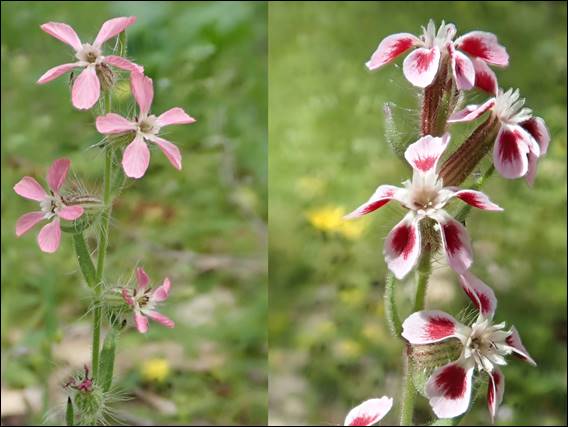
Undeterred by the battle of the lower storey, which is mostly won by the invasive weeds, I wandered under the tall tuart trees checking out what I could find.  I’m sure these two flowers are related, both with stripy and spiny receptacles and five similar shaped petals.  The flowers are less than one centimetre across so had to get down on my knees and get in pretty close to get the images.  I only found the one on the right in one location, whereas there were more places with the left hand variant:

With so many weeds over here it is hard to know what is and isn’t a weed.  Quite often the more leafy plants with larger flowers are weeds, such as this Long Tubed Painted Lady.  Originating from South Africa and introduced as a garden plant, it is now viewed as being high on the priority list for removal due to its ability to spread quickly.  Something pretty evident in this National Park:

Now it may seem that I was having a fine old time of it in the tuart forest, but… there was one pest here that really was very aggravating.  The mozzies.  It seemed like there were none about but as soon as you stopped moving they would close in.  Wasting no time in landing on any exposed skin, ready to stick their proboscis in to suck out some blood.  They even dive bombed a few images such as this one of a Purple Tassel Flower:

The purpose of this walk was once again to see if there were any orchids, and indeed there were.  Lots and lots of Pink Fairy and Cowslip Orchids.  Having seen a fair few already I didn’t stop to observe them due to the clear and present danger of being attacked by clouds of mozzies.  I did however have to take this image, as there were bucketful’s of Cowslips more than I have ever seen in one spot:

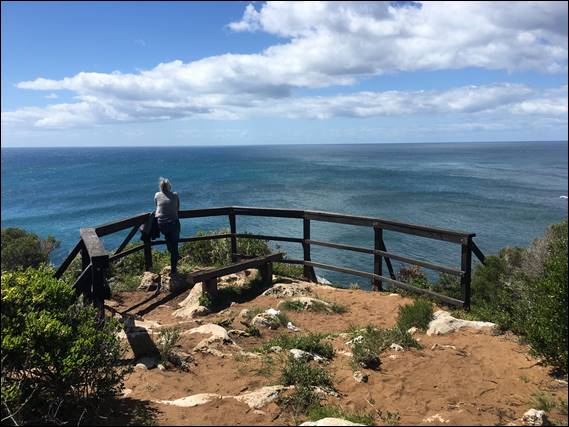
Lisa was wise and didn’t join me on the two backyard walks.  She did however tag along today for a wander up to Cape Naturalist.  There were two very good reason for why she was keen to head here.  Firstly she has some new walking shoes that needed a test run to see how they treated both her fused toe and the other arthritic one.  The second reason was to get a chance to spot some whales:

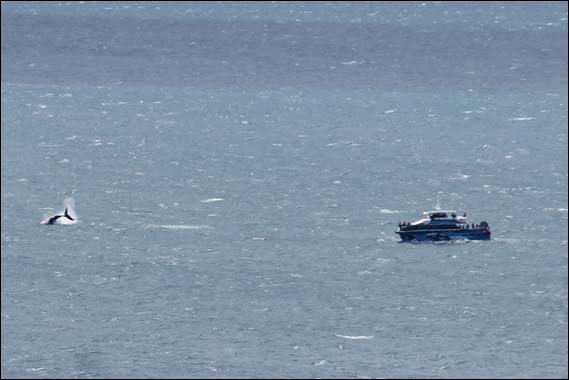
Sure enough they were out there, quite some way off but we could make them out with the naked eye and with a 200mm zoom could just about take an image that was worth including here.  The Naturalist Charter whale watching tour was out on the water and finding plenty of flipper and tail action and the occasional breach.  Maybe one day Lisa and I will jump on board to get a bit closer:

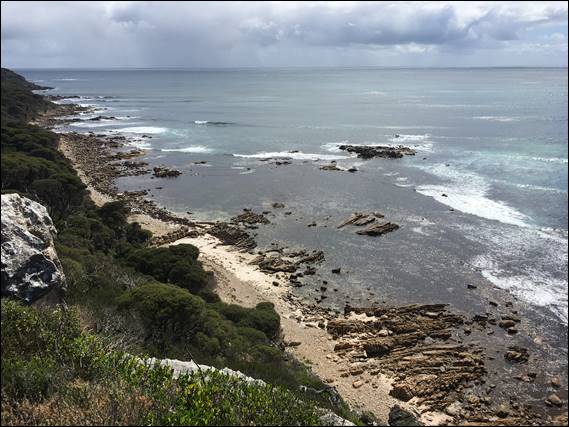
Being school holidays and a weekend the carpark was packed, but we managed to avoid most of the crowds and even lucked the lookout to ourselves for a period.  Unlike my last few wanders there were no mozzies here to annoy us, but on the flip side there were also no orchids to be found.  Some flowers were out but I’ll spare you any more close up images in this post:

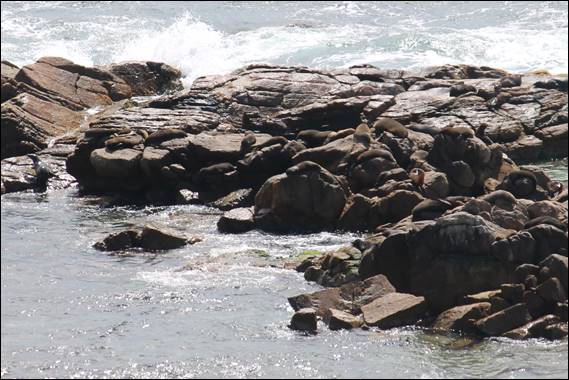
From the lookout there is a large rock outcrop that is far enough out to always be surrounded by the ocean.  This rock is home to a seal colony, and with seals about you tend to also have a good chance of finding larger sharks.  It’s not surprising to therefore hear that sharks sightings, near misses and attacks in this area are not uncommon.  This doesn’t seem to stop people taking to the water for a surf in relatively close proximity to this area, and they say I’m crazy climbing rocks:

I got all excited when I could see a sea lion swim towards the rocks, clamber up and waddle along.  You can make it out on the left-hand side of the image below.  The image, like that of the whale, is not great but I had to include it.  Both Lisa and I were very surprised when we got home to see how many fur seals, which we had not noticed while out there, were lounging on the rocks.  We are home now and it our time to lounge about:

Counting steps

Having lived in this area for close to fifteen years you would have thought we would have hunted out the local spots to go for a wander. However, there are still a few places left for us to explore, one being Wellington National Park. I have climbed here, way too many times, in fact it is probably the crag that I have been to the most and my number of trips would likely be in the triple digits:

However, neither Lisa nor I have really explored the park and we kept hearing about some great walk trails.  But… they are certainly not well advertised.  When we first came over from Alice Springs there was nothing, and even now it is hard to find information out about them.  There are a few boards up at the park but they are not overly informative, and there is limited information online with only a couple of the marked trails being noted:

So yesterday we finally went out there for a wander, we had in mind to hike the Silka Trail and approximate 10km loop walk.  The reason being that information as available for this one online, and Lisa isn’t all that keen on just winging it.  It was very different from our wander earlier in the week, the landscape was filled with tall Jarrah and Marri trees.  The understorey wasn’t thick but there were lots of Cycads and Grass Trees, formerly call blackboys until that was deemed too racist:

The Cycads remind us of Alice Springs.  With thick leathery leaves, too tough for any animals to gnaw on.  As the first image shows there were lots with seed cones forming, and these plants are reputed to be the oldest seed plants about.  Also out were plenty of flowers and so once again it was not a fast walking pace, the place was littered with Karri Cowslip Orchids (the second image).  Distinguishable from the more common Cowslip due to the flower growing on a long stem:

I’m pretty sure the second orchid image is of a Blue China Orchid, and these too seemed to be plentiful.  In fact I thought they were all the same until we got home and I started to look at them in more detail at noticed the differences.  Maybe I need to take my field guide out with me, but if I did that we would walk even slower:

For a good chunk of the walk we could hear the majestic Red Tailed Black Cockatoos, gentle cawing above.  As the image shows there were young about and the parents were feeding them.  We stopped for a bite to eat early on, which gave us a bit of time to sit and watch them.  Hoping to get a glimpse of the flash of red as they fanned their tails open:

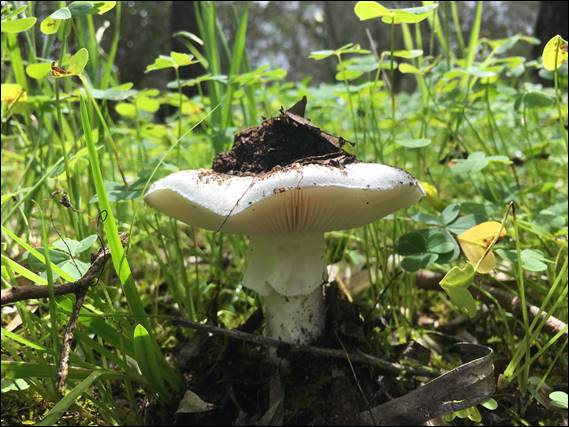
We managed to see the bright red, but the images I got were not that fabulous.  So instead, as I scoured the area, you instead get an image of a mushroom coming out.  It feel it is a little late in the season for them but I always like seeing fungi so had to stop and lie on the ground to get a good look.  And above I am taking an image of the water drops decorating a web, in which you can make out the entrance to the spiders home:

The day before Lisa and I had been in town and due to the prospect of getting out walking more often I started to think about getting a new lens for my SLR camera, possibly a macro for close up images.  But I decided not to get one yet, and am glad of that as today I took out my waterproof point and shoot camera that I use for snorkelling.  This has a macro setting and it was the first time I used it, needless to say I don’t think I need to bother with the new lens for my SLR:

I am pretty happy with the image quality of the above Jewel Beetle.  I took a few more that were equally good.  One was of a moth that had the same stunning colours when you looked at it from the right angle, but from other angles it just looked a dull dark brown.  The treasures kept appearing and the next one was a Pink Fairy Orchid, the white flora tips are what makes me sure I have got this one right:

I only found one of the above orchids, but the next one was a little more common.  This was the one that I was confusing with the Blue China Orchid, but it is obviously very different, and I’m still a little embarrassed to admit I didn’t notice it while we were out.  This one is a Silky Blue Orchid the speckled patter and more upright column, as well as pale colour being quite different:

I found a few of these, and on one I noticed a tiny spider on the back of one of the petals.  It crawled out into full view allowing me to get some great images, testing what I found out to be the battery guzzling macro setting a bit more.  I’ve had a quick look on Google but don’t think I have a hope of finding out the name of the spider, which was only half a centimetre in size:

Seeing this walk was a little long we came prepared with snacks and, better still, a hot flask of tea.  Just over half way round we stopped for a cuppa, and soaked in the silence of the forest.  We only came across one other group, and we knew they were out as we saw them head off.  Not that we are completely antisocial but we decided to walk the loop in the opposite direction to them:

The first half of the trail was on lower ground, near but never close to the reservoir.  The ground was mostly dry and in summer this place would heat up like an oven, with not a drop of moisture to spare so the amount of flowers out was a little surprising.  The second half of the walk was on higher territory and felt even drier, the narrow path of before became more of a fire track as it went up and down the gentle hills:

In this are there were also Banksia trees with their very distinct and ornate cones, but the taller Marri and Jarrah trees stayed with us for the whole hike.  As we approached the magically 10,000 steps Lisa was waiting for her Fitbit to congratulate her with a display of fireworks, but due to me wanting to get an image of her technology she missed the chance and there is also no image, she might have had a little moan:

I can’t complain though, as she carried the pack for the whole walk.  I did offer but she feels that she isn’t doing as much exercise at the moment, so considered that this would help her out in getting a bit fitter.  Now I mentioned the Grass Trees before, well they were also in spring mode, but they do not flower every year.  There were lots that were and the flowers were coming out on some of the tall spear like spikes:

The small spiny flowers were poking out from the spike, and these are known to produce a lot of nectar that attracts insects and birds alike.  Some had several spikes, and not all were standing tall and straight.  Instead woven into curves and at times coils.  It was in the last few kilometres that we got a few vistas, with no soil covering the granite rock here the tall trees were not able to grow:

As we made our way back under the trees we came across a clump of Little Pink Fan Orchids.  The dorsal sepals, or in more understandable language bottom two petals, are joined which is one of the features that gives it away.  There were not many of these ones about, and in truth I thought that this would be the last variety I would find as Lisa’s Fitbit was indicating that we should be close to 13,500 steps and the 10km mark:

All of a sudden I gave Lisa a scare when I spotted something on the side of the track and jumped across her path.  She was probably thinking it was a reptile most likely a snake, but today it had been overcast and quite cool with even a bit of drizzle.  So it was not a scaled friend but a Wallflower Donkey Orchid, one of my favourite orchids to find and on this walk it was also the last:

As we trudged along the final part we noticed rusted barrels, which I swear would have been a still in the days when it was an illegal it have alcohol.  Our very last find was an old banger.  Left here to rust away, which will no doubt take many decades and by the look of it its been here a great many already.  We made it back to our car and the Fitbit told us we had walked approx. 17,000 steps and a little over 10.5km, a great walk and we will come back to experience the other trails another day:

Flower power

While I realise this isn’t about climbing or snorkelling I didn’t feel there was any harm in diversifying the topics of my blog.  So after coming across my first orchid of the season down at Wilyabrup yesterday I thought Lisa and I should do something we haven’t done for a while and that was go out for a wander somewhere new.  I’ve had a place in mind for several years that isn’t too far away and is renowned as a great wildflower spot:

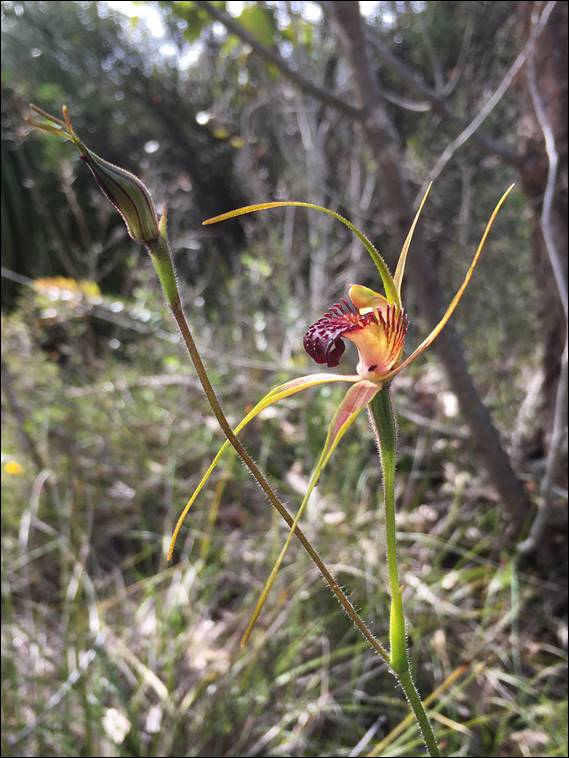
So it was that we found ourselves at the Ambergate Nature Reserve.  I said in yesterday’s post that I do not have a wildflower guide for this area, but I do have an orchid guide and this place is quite well known so Google has helped with a couple of images but not all.  Our first find was a spider orchid, and for those that know there are heaps of different spider orchids so I’m going to take a stab and say this one was a Carbarup King Spider Orchid:

The main reason I took the above image, which didn’t turn out as great as I hope, was due to the spider that that was sleeping inside the labellum.  It had also craftily used its web to pull the petals and sepals together to create a more protective house.  In the image below Lisa went off the beaten track to check what was hanging in a tree, which turned out to be a bat box:

Stepping off the path you do need to watch where you step and it probably not a good thing to do, but this place had little goat tracks all over the place so at times it was hard to resist.  No doubt avid orchid and general wildflower hunters scour every inch of this 75 hectare reserve, which volunteers have helped make accessible with a 4km circular track:

Above is a Red Ink Sundew, one of the many types of sundews we saw.  Most were of a creeper variety but this one was a ground dweller.  It could be found lurking in the undergrowth and leaf litter awaiting unsuspecting insects foolish enough to be attracted by the sweet sticky meal that exudes from the hairs on the leaves:

I have to confess that while we saw lots and lots of spider orchids we didn’t pay enough attention to identify the different varieties.  The above is a Karri Spider Orchid.  You may be thinking I’m just spouting names, but for each image I have carefully checked the leaf and sepal configuration, size and colours, as well as that of the fringe and calli (the parts of the striking centre piece):

We also came across heaps of variety of what I think are pea flowers, there were way too many of them to take images of and then try to identify.  Lisa and I love these small but striking flowers as they remind us of our time in central Australia, not the same variety but similar in shape.  It was then we came across a completely new orchid, the Rattle Beak Orchid:

In days gone past it would have been me slowing us down on our walks.  Checking for new finds and then when I had discovered one looking at it from every angle trying to get the perfect framing for an image.  However, times are changing and Lisa also seems to have started to follow suit, even hinting that she might convert some of the images into artworks at a later date:

As I type this post Lisa is rearranging the “art room”, so hopefully she will spend a little more time in there creating some more amazing artworks.  Back to our walk and below is an image of a flower that I can’t identify, but I liked it due to the insect that for once wasn’t camera shy.  The sun was fully out now and as it heated up more bugs were starting to show themselves:

We started to spot more and more of them feasting on the nectar that the spring weather was bringing out.  These beetles are no more than a few millimetres long, but on such a sunny calm day I managed to get a pretty neat image of yet another unknown flower.  The reserve is split by roads to form four quadrants and each one had a very different feel to it:

The variety of upper, middle and lower storey varied and this diversity resulted in us finding new flowers and plants as we continued on our journey round this magical place.  We then came across this Rose Coneflower, probably the most stunning flower we found.  At the end of each what I assume is a sepal a small flower sprouts from the bud, with some just starting to come out:

One of the orchids that Lisa likes the best is the Purple Enamel Orchid.  While I agree the purple coloured petals are stunning and even more so when the sun hits them, I was more taken today by the back of the petals which have a great pattern that I have never noticed before.  It took us a while to find one but after seeing one they seemed to pop up everywhere:

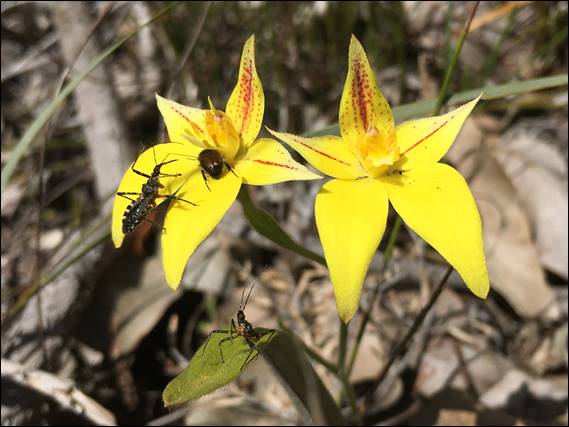
The Purple Enamel Orchid is almost as common in the south west of Western Australia as the Cowslip Orchid.  Not that the bugs seemed to mind that it was so common.  We watched the two larger critters fighting over possession of this food source knocking each other off, like playing king of the castle.  Meanwhile the small beetle simply buried it’s head deep into the flower and gorged away, ignoring the other two as they carried on:

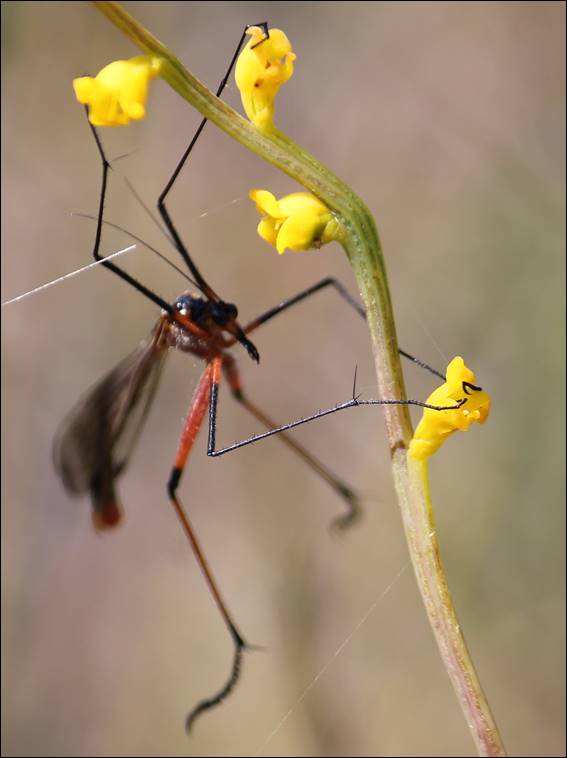
One last image of what I first thought was a dragonfly, but now I am not so sure.  I don’t even have the foggiest as to what the flower it is hanging off is.  It was pretty amazing to see how it would hang off three flowers with its gangly legs, which this would then position it perfectly to get a feed out of a fourth flower.  It was no fluke, as we saw it fly to the next plant and do the same thing:

Of course where there are bugs, there are the next creatures in the food chain.  We didn’t see too many, but a few small skinks did cross the path and hurriedly scamper into the undergrowth as we approached.  This one didn’t see me as I crept closer and closer, while it seemed to be sunning itself.  It was a great walk and the 4km took us three hours to complete, but we both spent a lot of time checking out the sights above and so many more:

Happy holidays

Finally the school holidays have arrived!  And seeing my trip back to the UK had to be cancelled I am staying home for the two weeks, as we are being told at work that we have to keep using our leave.  While many are complaining about this I don’t mind a couple of weeks at home, time to kick back and head out for a few walks and just maybe a bit of climbing.  It didn’t start off too well on this long weekend, with no one available for a climb.  I was however not perturbed and picked a destination and headed out, but not until I had a cuppa or two with Lisa who this time hadn’t had any vivid dreams for me to recount:

As I drove past Busselton there was a stunning cloud formation ahead.  It looked like the front drum of an old style lawnmower.  Cylindrical in nature, low to the ground and dark and ominous, it extended a long way from south to north and was an amazing sight.  I can’t show you and even if I had stopped to take an image I doubt it would have done it justice.  Sure enough as the drum rolled over the rain fell, I was however feeling optimistic and drove onwards.  As I closed in on my destination the clouds were still low, so low that at times there was a mist, and peeking through I could see the blue sky fighting to break through:

It wasn’t an early start, and two cars had beat me to the carpark of Wilyabrup.  There was also a signed at the start of the gravel road, just off the bitumen, warning drivers that the unsealed road that led to the carpark could be slippery.  It seems that more and more city dwellers are heading out to these kinds of places and need reminding of the obvious.  Indeed as I drove out later on I came across a couple of cars coming in, unprepared to give way until I made it clear I wasn’t stopping seeing in both situations they were on a straight and wider section than I was:

The walk in was slower than normal, there were so many flowers out.  Red, blue, purple, white and yellow abounded and it was hard to walk past without spending a bit of time soaking them up.  I came across my first orchid of the season, a pink fairy and I always marvel when I see an orchid.  We used to scour the Stirling Ranges looking for orchids every spring time, and have amassed a photo library of some twenty plus species.  There were also large clumps of the above Clematis, a creeper plant that looked to almost be suffocating it’s host.  I don’t recall seeing this plant before but it is a native to the area:

In view of the long weekend, I had decided on a place that I was ninety-nine percent certain that no else would go to.  In the South West guide I described this place as “likely to appeal to those die-hard traditional climbers”.  The rock can be variable and you have to use holds that may comprise gneiss, flowstone and at times a mica-rich weakly cemented, crumbling choss.  Below is probably the scariest hold you have to put all your faith in as both a hand and then foot hold.  I’m probably not selling the place and in view that the ground underneath the first two lines was completely covered with greenery I’m guessing that Wiggins and I may have been the last people to climb here, back in June 2019:

I started on Sure Footed a route I put up on my first visit here in 2013 with Alan.  Next up was one of the original routes of the area Turkish Delight and I was pleasantly reminded of the great moves and positions of this line.  It was so good that I took a short video of my second lap.  Then I climbed a creation of Steve, Old Crate and that too was very fun.  It’s been a while since he has been out and I’ll have to encourage him a bit more persistently to hit some rock.  After that I turned my attention to another one I put up, during a different trip here with Wiggins.  On the Face of It is the route for which you have to use the above hold.  Looking back it was a bit of a crazy lead and I doubt anyone else has ever touched it:

As I rapped down and climbed up the great cliff of Driftwood Bay I checked every pocket, break and gully I could find.  Sadly there was no sign or clues to suggest the presence of a snake, lizard, or even beetle.  But I did stumbled across the above molted exoskeleton from a huntsman spider.  It was lazily twisting and turning from the single silk thread that attached it to the rock, as the gentle breeze blew it about.  Sorry to anyone who suffers from arachnophobia, but I just couldn’t resist including the image and probably should have warned you in advance:

The last two climbs were the crag classic Integrity, and the only route on which a hold broke on me, and yet another one of my routes Cauliflower Soup again put up with Wiggins.  It is certainly not for gym junkie or sport climbers, and while there is nothing too hard here it is also not for the weak hearted.  Like I said only die hard traditional climbers would enjoy this place, not only the variable rock but also the occasional long runout.  I have however introduced a number of local climbers to the delights of the place, including those mentioned above and Lou, Glen and maybe a few others.  Some have even returned for a second helping:

It wasn’t until I topped out on the last lap of the last line that I saw anyone else.  Two people were preparing to climb at the main cliffs of Wilyabrup and above were the tourists, I could see them with their selfie stick taking images.  Judging by the location of the two climbers I guessed they were going to tackle Stormcock.  It would have been fun to watch them from my vantage point from where I had a great view and it had, as I had hoped, turned into a glorious day.  But they were phaffing about taking forever to get ready and I was tiring, so headed out:

It was a slow walk out as I admired the flowers again, only this time in sunlight.  Checking the images back home, to try and put a name to the many flowers I saw, I was amazed to realise that we have not got a flower identification book for our local area.  We have them for the South Coast, Stirling Ranges, Dryandra, Central Australia and several other places but not the South West where we live.  On the final approach to the car the familiar call of the Black Cockatoos, I think they were the long billed variety, was louder than normal.  As I passed underneath a tree, ten or more of them erupted from the canopy some of them holding onto the gum nuts they had been feasting on: