The burley or chum effect of the whale carcass was poorly timed, not just for the Peppy Plungers but also myself. Going for a morning walk the ocean on Saturday looked amazing. Completely unexpected after seeing the murky conditions on Thursday. Our local beach usually requires half a week or more of settled conditions for the water to improve from murky to clear enough conditions to be considered snorkelable. In just two days it had going from somewhat soupy to crystal clear:
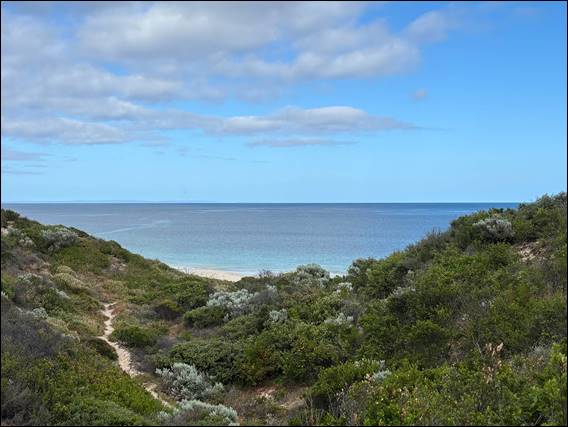
I was however not going to be able to take advantage of the opportunity to have the first swim with the fish of the season. The lipids, fats, and oils from the carcass, as well as the decomposing scent and oil plumes that leak into the water and surrounding sand, were still lingering enough to make it too risky. I thought that this would have been attracting predators from far and wide. They can, however, generally only detect the scent of a whale carcass from one to four hundred meters. Due to the scent plume becoming diluted:
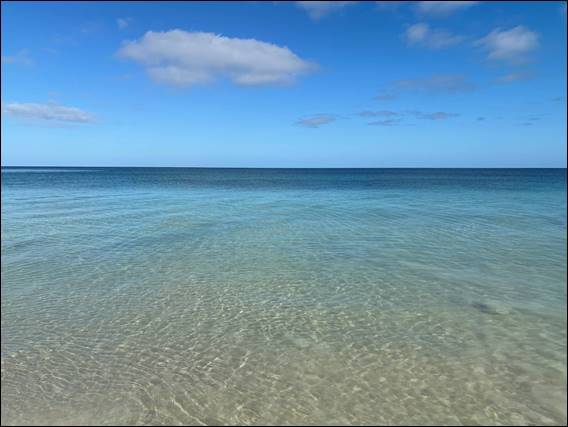
That is even though they have specialized nasal cavities that can pick up microscopic organic compounds and blood at extremely low concentrations. The distance they can detect these signals is however very much dependent on the ocean conditions. Their hearing capability is what can attract them from bigger distances, as much as several kilometres. As such a whale carcass beaching definitely presents a heightened risk, but you could also argue that simply swimming in the ocean is likely to draw just as much interest:
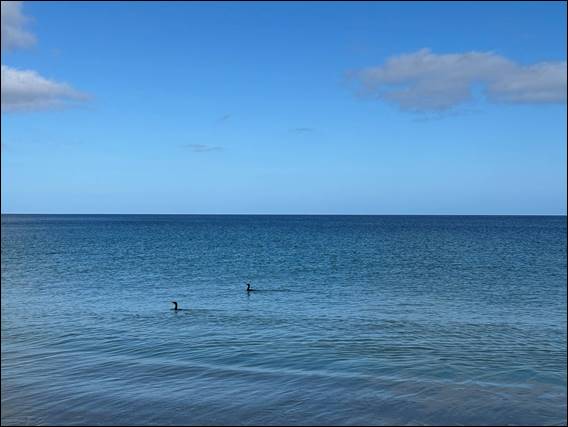
I did not get to see any sail like dorsal fins breaking the pancake like surface, as I looked out regularly. Whether from a dolphin or shark. I did however see lots of Little Black Cormorant (Phalacrocorax sulcirostris), close to the shore. Swimming along and regularly disappearing below the surface for a dive to chase and hopefully catch a feed. On Sunday while the ocean had more of a ripple to it, the water clarity would still have been worthy of a dip. Instead I felt the shorebirds to enjoy watching the fish, such as this Fairy Tern (Sternula nereis):
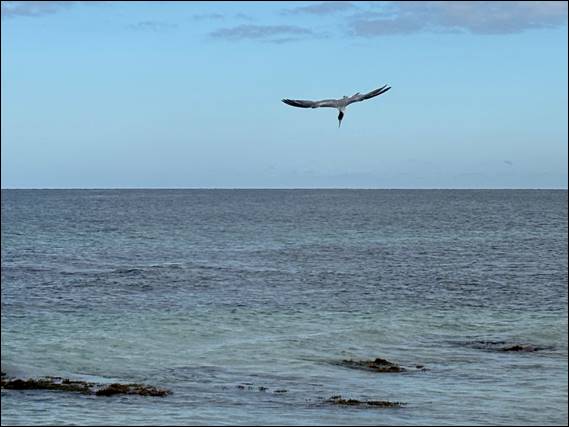
This bird observes potential prey from above. Diving down in a targeted attack, as opposed to swimming about underwater chasing the fish as the Little Black Cormorant had been. Again there were no signs of any bigger fish or mammals in the water. The beach remains closed, so I’ll have to hope these conditions were not a flash in the pan. Maybe in a week or so I’ll be able to pull my snorkel gear out for a dip. And hopefully the season this time will be a bit more settled than the last few, allowing for more regular successful outings:
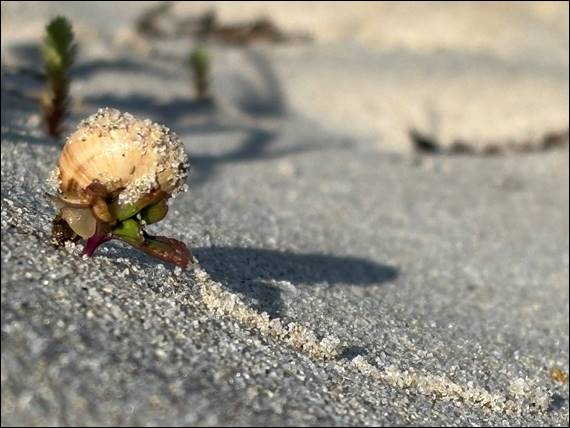
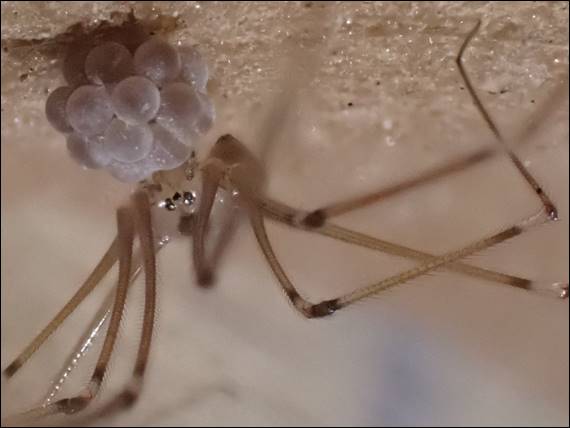
It is also the season to see lots of White Italian Snails (Theba pisana), as above, so many that it is hard to avoid crunching some underfoot. There were tell-tale signs of them all over the beach near the dunes. Leaving the beach to head home, this one had left a long trail long the sand before perching on a plant. Presumably for a feed. Back home opening the shed for a boulder, I found another introduced species, a female Daddy-long-legs Spider (Pholcus phalangioides). Not having a feed but carrying her egg sac, which she’ll hold onto for three to four weeks before they hatch: