It has been a while since Howsie and I have graced the coastal cliffs that skirt the edge of the Leeuwin-Naturaliste Ridge together. Something we aimed to put right today. An early morning sprinkle meant we were both feeling OK with a slightly later start. Driving out and arriving in daylight, but still with not a sole in sight. We did however spot a couple of Pink Fairies (Caladenia latifolia) walking in. Adding a small splash of colour to the duller green and browns of the scrub either side of the track. I was going to include them but decided against:
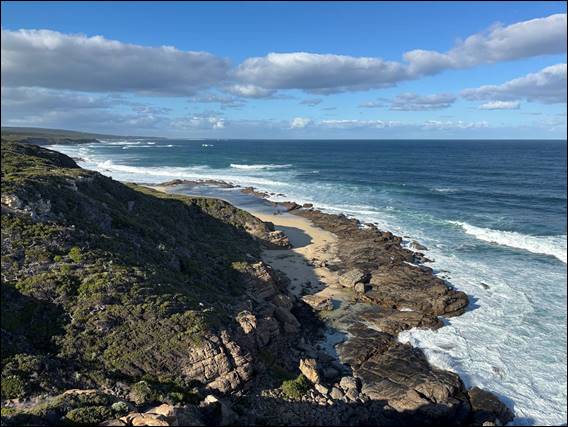
Having snapped more images than usual on a morning trip out, I was left to make some tough calls on what stayed in and what was dumped. The fairies lost out for reasons that will become apparent later. We would often have had a little chit-chat about what may be tickling our fancy. In the lead up to today nor during the drive out was there any mention of what we may be keen to hit. I did however find out that Howsie had purposely not spilled the beans, as in the past when he has let me know of his lofty ideas I have held him to account:
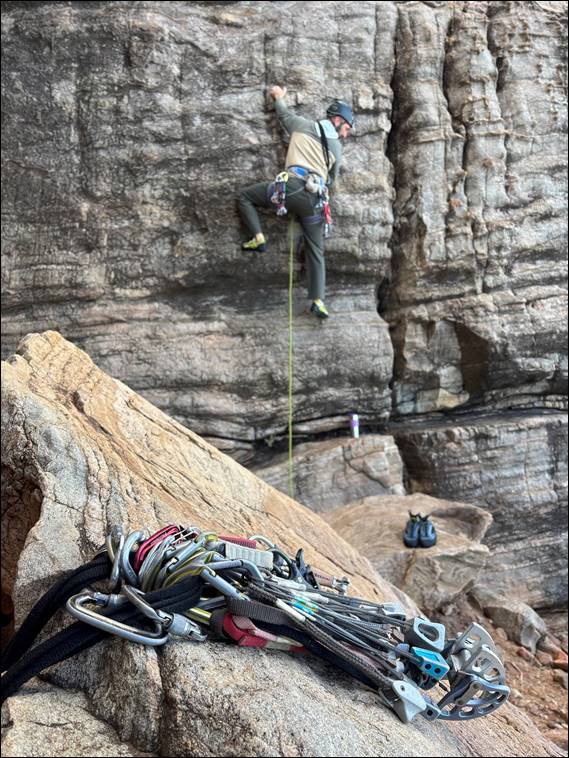
On arrival at the base of the cliff he did give some hints away. Standing and peering up at the walls, eyeing up a couple of tricky routes. None of which we ended up climbing. He was not entirely sure where his leading head was at. Due to having not done too much climbing of late, other than a few quick before work sessions clipping bolts. As such the idea was to start easy. And while we intended to jump on some fun routes to place trad gear, the first two did include a few bolts. The third was all trad, and that was also when the rain started to fall:
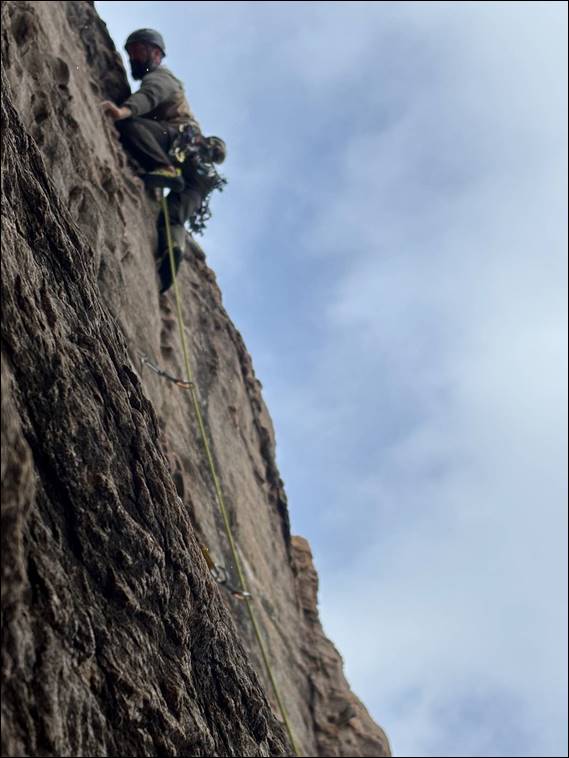
Just as he was running things out as can be seen above. Holding it together he avoided the long whipper that awaited below. Four routes in and we moved to another wall. The sun may have come back out for the next climbs, but on this face we were directly in the path of the wind. Something we had been protected from on the first wall. It was whipping up from the south, biting cold. As such we stayed rugged up never sure if we were feeling cold or hot, as the weather seemed to flip and flop about. Keeping us on our toes as we made each ascent:
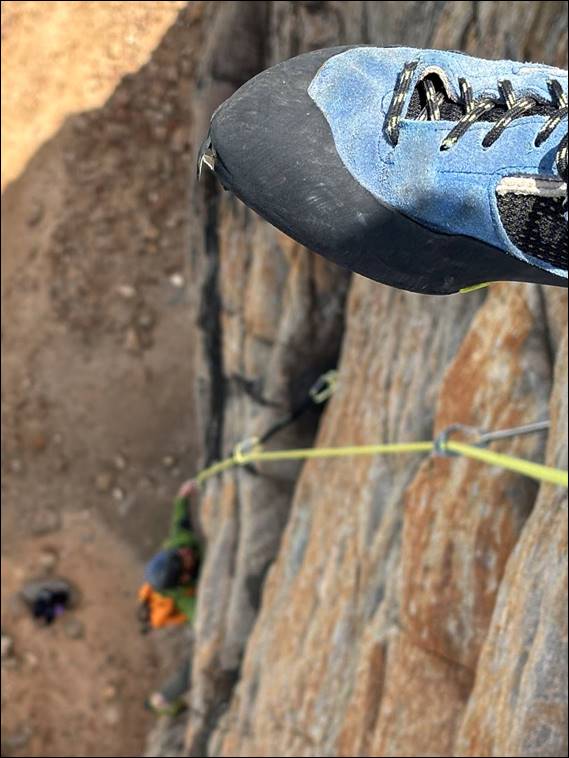
And Bob, as you’ll see above, I too have blown a toe in my Jokers. Reckon I’ll keep wearing them for a while, as I seem to be able to bag a reasonable grade even in these aging shoes. There were no slips or misses today, and we certainly didn’t miss the surprise that awaited us on the last two climbs. A Southwestern Carpet Python (Morelia imbricata) lay there soaking up the sun as we climbed, and from both lines we were able to have a real close up stickybeak of it. It didn’t budge the whole time, other than to make some slight body adjustments:
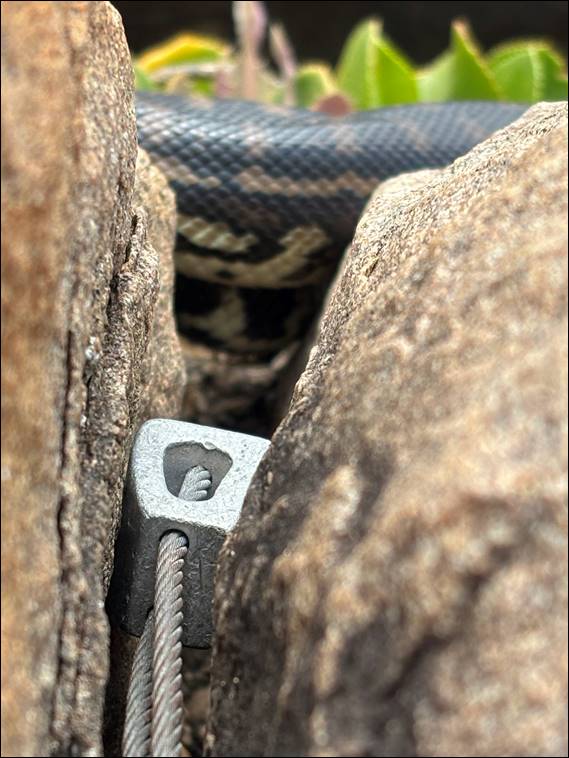
We do not often to get to see these nocturnal snakes out in the open. This one looked really dark, not showing off its normal lovely carpet type patterning. The dark scales are better at absorbing heat, so it may have been thermo-regulating itself. Being able to slightly adjust how light or dark they look or appear, and allowing it to absorb more heat when required. Not a true colour change but a physiological shift. It may also be preparing to shed its skin, after which it will return to its lighter base colours. Cloudy eyes is another indicator of this:
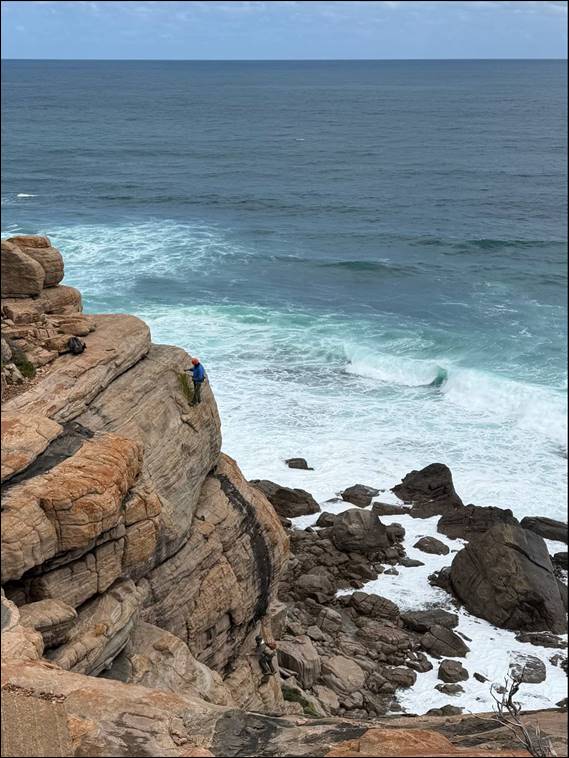
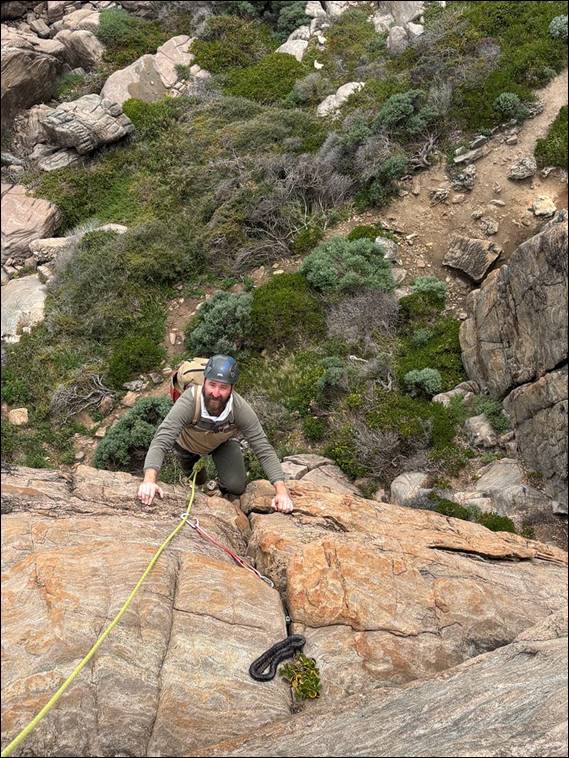
The head was however buried in its folds, so we were not able to check the eyes to see if it was preparing to shed. On the last climb, a group of tourists walked by and took images and videos of Howsie following up, which is where the above picture came from. Taken just before the next one of Howsie about to get his last look at the snake, before we packed up and headed out. It had been another stellar day on rock, and as we drove out I suggested a quick stop to check the little patch of bush that had provided me with a fun spider orchid recently:
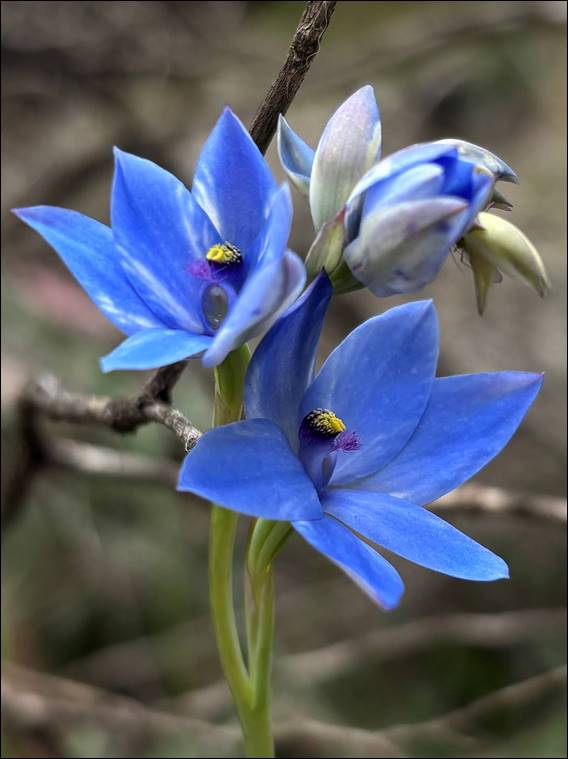
We found seven species all up, including one specimen of the Scott River Spider Orchid (Caladenia thinicola). Not the ones I found last time, they were fully wilted although both looked to have been pollinated so that was a good sign. We also found a few Blue Lady Orchid (Thelymitra crinita), one of which had its flowers open. The species name crinita comes from a Latin word meaning hairy. This was used to describe the tiny, finger-like yellow tufts or crests sitting on top of the central column, as opposed to the finer hairs of the purple tuffs:
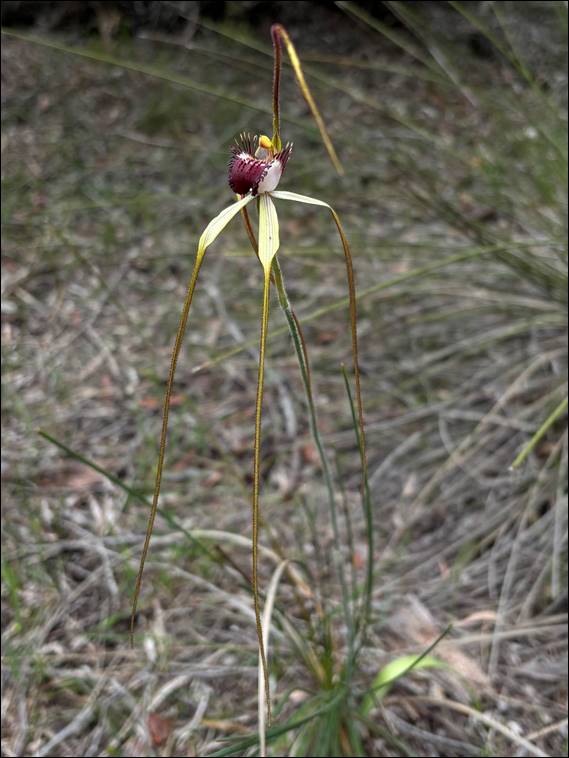
There were also a couple of spider orchids that I did not recognise. Very distinctive and long pendulous petals and sepals and a lovely highly featured labellum, as shown below. I wasn’t able to work it out so had to wait till I got home to see what we had found. Yet another local orchid that due to development, weed invasion, grazing, and prescribed burning practises is listed as Threatened Flora by the Western Australian Government and Endangered by the Australian Government. There sadly seem to be too many that are at risk in our local areas:
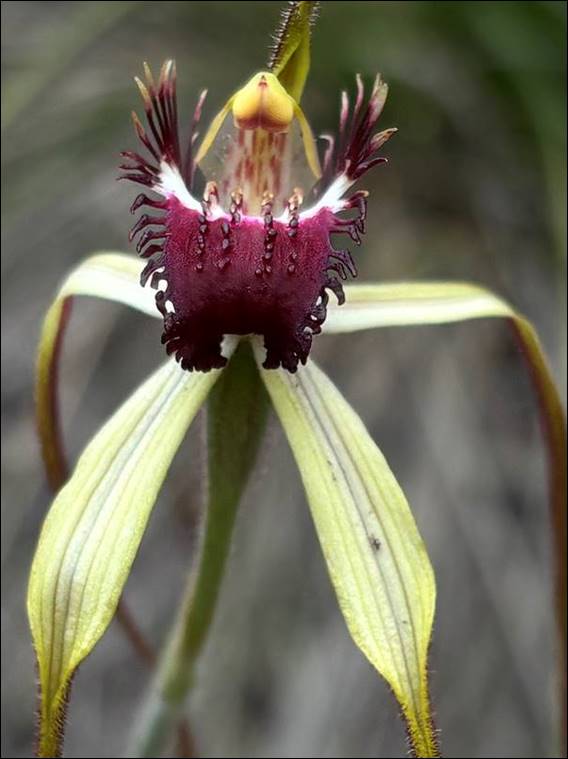
On a more positive note, for me at least, this was a first time sighting. One I have had on my radar for many years now. Thinking I should have been able spot it, as it is one of the tallest spider orchids in Western Australia. It also has the largest flower alongside one other spider orchid, one I have been able to find before. This one being the Giant Spider Orchid (Caladenia excelsa), and very worthy of its name. Despite the continued threats, hopefully these gentle giants will continue to inhabit the earth for many years to come: