It feels like I have gone off the boil on the search for orchids this season. I’m not alone and a few others at work have expressed the same lull. In an attempt to reinvigorate the energy a trip out to the Capel Nature Reserve was in order. Here lost in my own thoughts and nature I whiled away a couple of hours, with three species on my wish list. The first two came to view within the first ten minutes, starting with the Banded Greenhood (Pterostylis vittata). Oh so very common, but there is something special about this species:
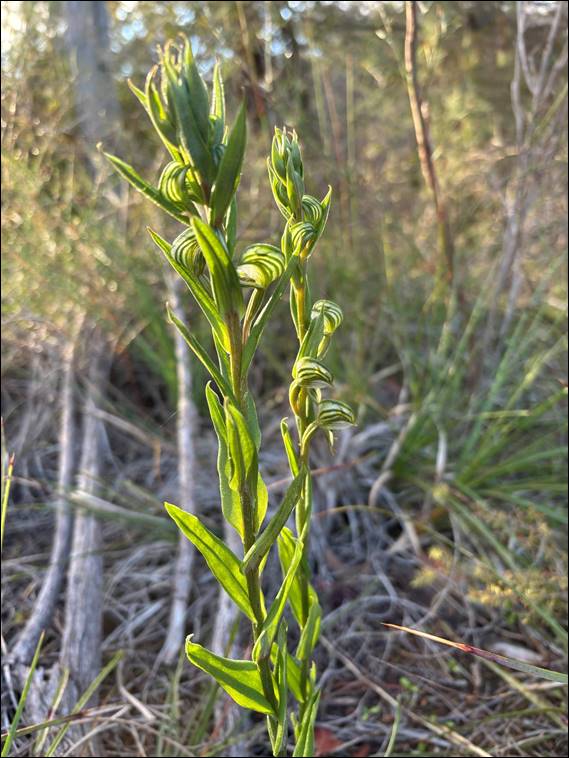
It is described by some as an overachiever. Not in terms of how many plants will regularly flower nor in terms of how long they can remain in flower for. It is because of its ambitious bloom output, standing up to 45cm high with as many as 25 flowers. There are other species that can match the flower power, Leak and Sun Orchids in particular. The Banded Greenhood is however different in that it also has a greater number of relatively large leaves, which extend up the stem. Making it look more fleshly and even weedy, unlike any other species:
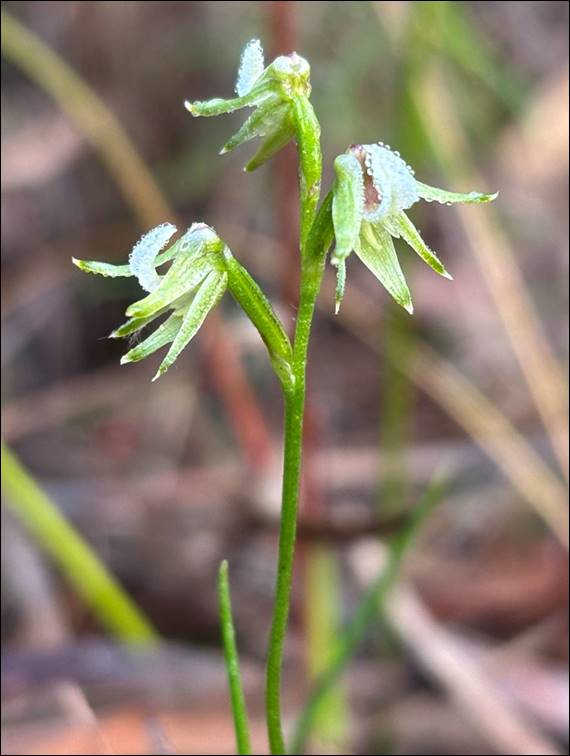
The second quick find was one of many Autumn Scented Leek Orchid (Prasophyllum sp. ‘early’). The last few years I have struggled to find these, but this year there are heaps out. Many of the leak orchids do not have a particular pleasant odour, but this species is known to have a ‘delightfully sweet and perfumed flowers’. Not that I was able to detect it as it was masked by the stronger scent of the Peppermint Trees (Agonis flexuosa) on this dewy morning. The closely related Autumn Leek Orchid (Prasophyllum parvifolium) is also about:
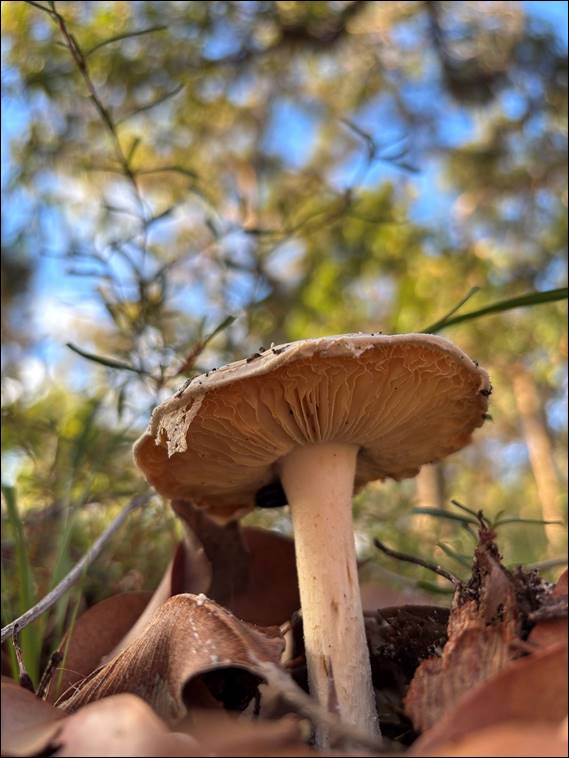
But I have not seen that yet. Interestingly the latter, which has more colour in the flowers, usually blooms a month or two after the former. Scouring the floor there were some fungi starting to pop up. The above has given me no end of pain in trying to work out what it is, and I eventually gave up. Whereas the below with it’s white flap on the margin of cap yielded more easily, being a Golden Wood Fungus (Gymnopilus allantopus). Being a very common wood-rotting fungus found in forests across southern Australia:
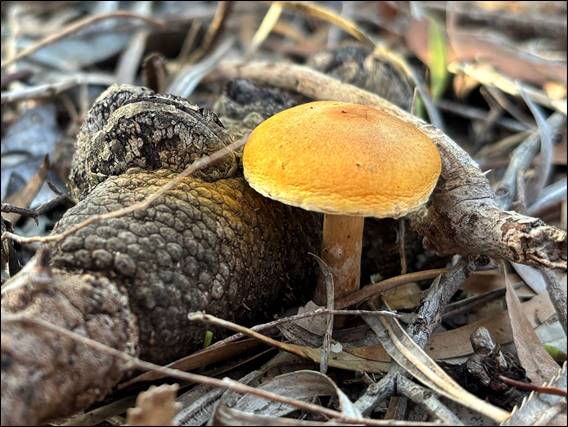
In Western Australia the species is particularly fond of feeding on fallen Banksia logs and branches, as this one was. The below Rhubarb Bolete (Boletellus obscurecoccineus) was also an easy identification, one that I no longer need to look up. I saw mature specimens but the young are equally fun. They can change colour over time, which may be triggered in differing ways. The first being age. As the velvet-red cap dries and splits, it reveals a bright yellow layer of skin similar in colour to the pores on the underside of the cap:
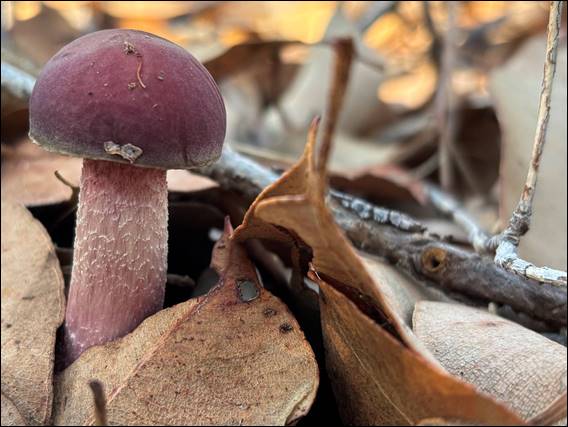
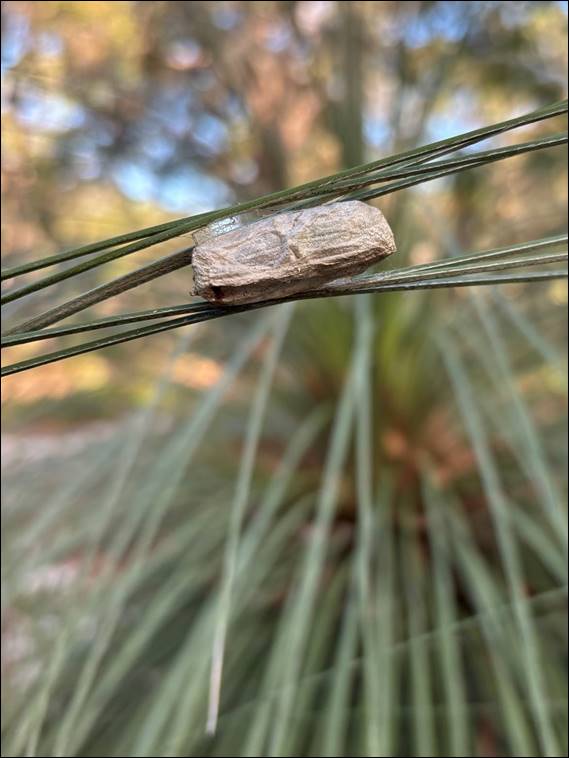
The colour of these pores can also change, but only when they become bruised. The change in colour depends on where it is located, and unfortunately in Western Australia we do not get to see this transformation into a blue colour. Next up is one of several cocoons I found sandwiched between the leaves of a Grass Tree (Xanthorrhoea), which I assume is from a moth. There are few local moth species that favour grass trees for their cocoons, and this may be from a Bag-shelter Moth (Ochrogaster lunifer). Although I am not convinced:
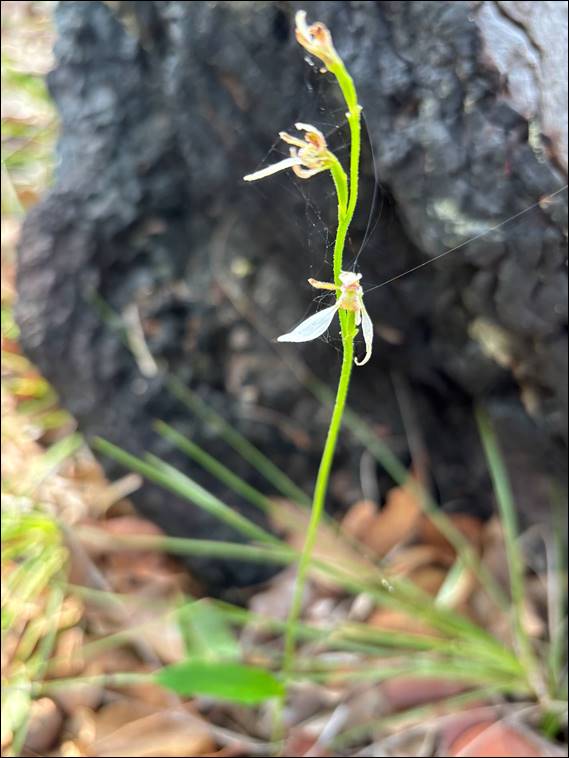
I’m also sitting on the fence with this find. Could it be a White Bunny Orchid (Eriochilus dilatatus subsp. dilatatus), or am I just living in hope. The distinguishing feature of the dilatatus subspecies is the leaf. Being either a egg-shape or narrowly lance-shape, the leaf is the longest of all Bunny Orchids measuring up to 29 to 100mm long and 4 to 15mm wide. It also generally sits a bit higher up the stalk. Seeing I didn’t find the third species I was hoping too, and based on the evidence, I’m going to count this one as a positive identification:
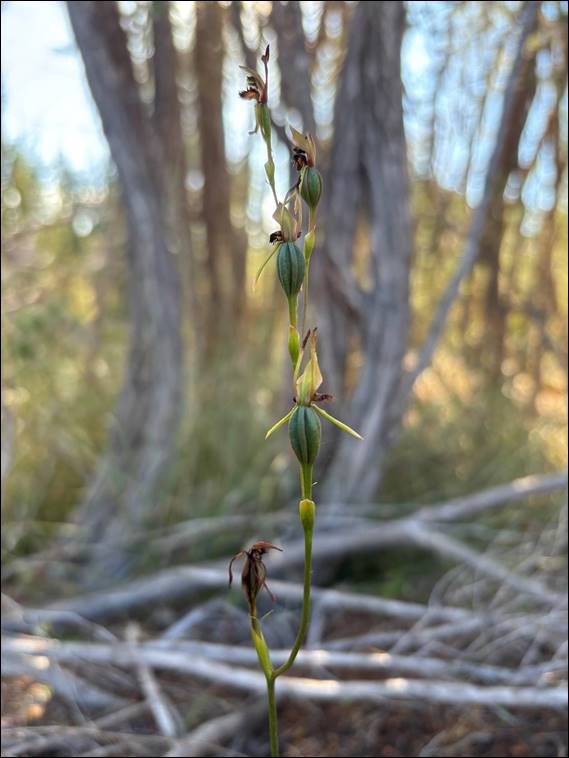
Last but not least I have included a repeat find of a Hare Orchid (Leporella fimbriata). I found a clump of them right at the end of my walk. This one is well past it’s best but was still a special find. Typically they have one to three flowers. Four flowers can be found if you are very lucky. However, to see five is a rarity and very uncommon. Going to prove that sometimes quantity is better than quality. Needless to say I was chuffed to bits, as this orchid should be with three flowers having been pollinated, and also possibly a fourth:
 Sandbagged