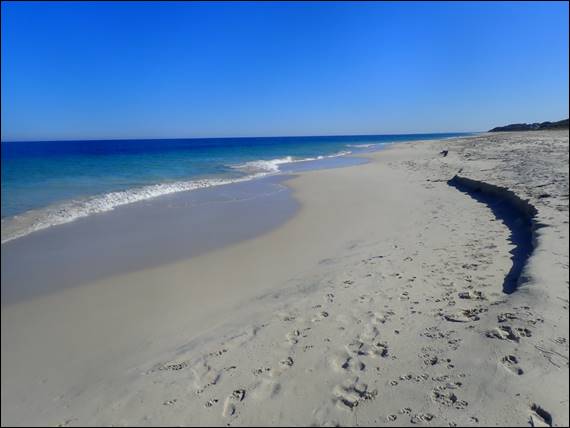
Meh, meaning uninspiring or unexceptional, is how I would describe the water this week. The swell conditions were affected by what is called a groundswell. This occurs when winds far out to sea covering long distances transfer its energy to the water, and normally results in a longer swell period. On a summers day we usually experience a windswell, which is when the winds are closer to shore, but only in the afternoon when the land is hotter. The air moves from the cooler waters towards the shoreline, and results in a shorter swell period:
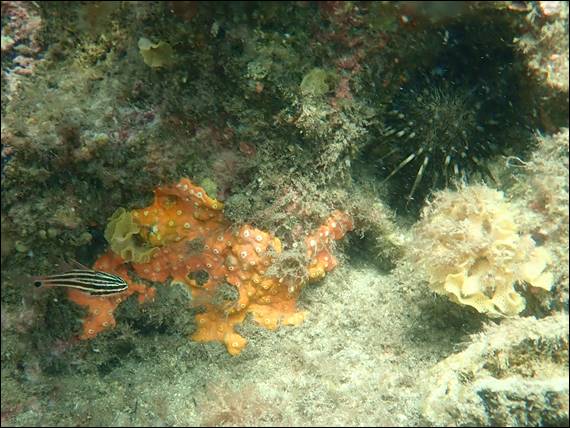
Thursday and Friday Lisa’s before work routine was at the dog walking stage. She sends me a picture of the ocean but today it was a video. The slow and deliberate water movement was evident, but overall it looked reasonable flat. Working from home meant it was a three minute walk to jump in, and while it was looking meh I decided to do it. The most prolific fish I saw was the above Western Striped Cardinalfish (Ostorhinchus victoriae). Usually a nocturnal species but out today in greater numbers and larger sizes than I would normally expect:
I have discovered the scientific species name comes from Victoria Settlement in the Northern Territory, which was established 1838 and named after Queen Victoria. Proposed to be a strategic port for trade, it was not as successful as hoped and only remained operation for eleven years. What’s strange about all this is that the Western Striped Cardinalfish range only extends along the western coast. A different species called the Striped Cardinalfish (Ostorhinchus fasciatus) is found along the northern coastline, including Victoria Settlement:
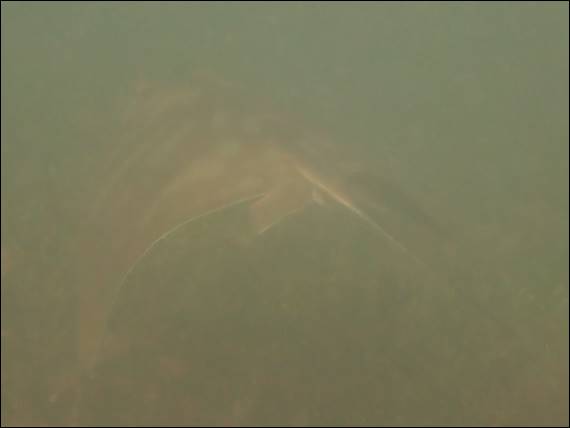
In my second image I got to see a very majestic full sized adult Southern Eagle Ray (Myliobatis tenuicaudatus), I spotted it in the gloominess and started to follow it out to sea. Gliding with intent, but no great purpose, away from me. This species is named after its whip-like tail, from the Latin tenuis and caudatus meaning thin or slender and tailed. They can have a variable pattern of greyish-blue spots and bars, and this one was displaying a very clear and beautiful pattern. So while not a clear it is the best image I got, as it lured me further out:
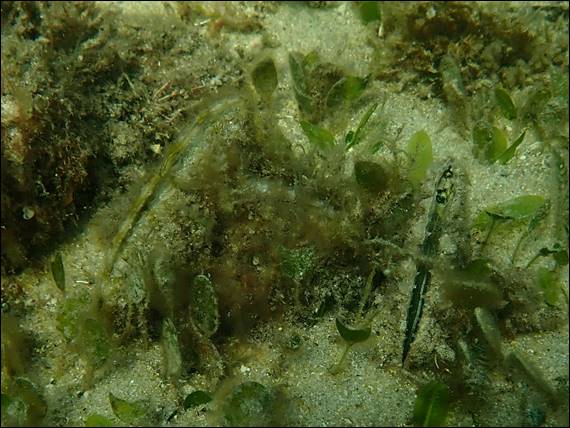
I eventually stopped following it, and only then realised just how far out I had gone. Without the ray to focus on suddenly I felt a tad lonely out there, so made my way back to shallower waters where the bottom was at least visible. A couple of images above is a collection of not two, but three Razor Clam (Pinna bicolor). You’ll need to look hard to see the third. These are like icebergs. They can reach a ripe old age of eighteen years and while the shells can reach fifty centimetres in length, I usually see no more than five centimetres above the surface:
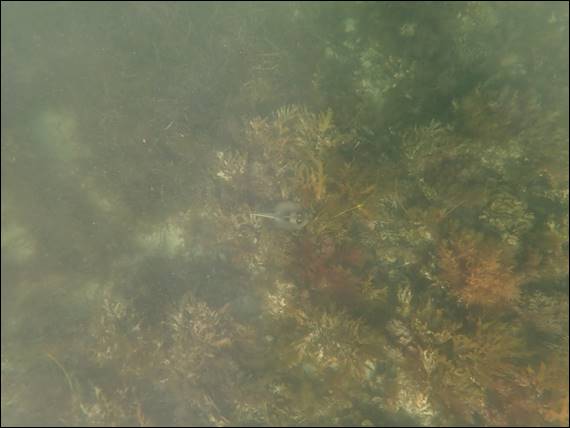
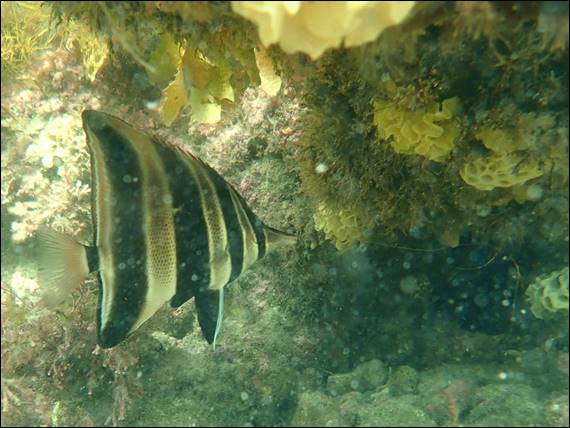
Two images up, as I was wrapping up my first snorkel, I came across a lovely Masked Stingaree (Trygonoptera personata). Diving down to say hello, it wriggled about to bury itself a little deeper in the weed, kicking up a heap of sediment. This along with the low amount of light making it down that far made the chance of a close up image impossible. It is a little surprising at times how gloomy it can be, when there is a clear blue sky. That said it was worth going in just to cool down. And on my second swim I was rewarded by seeing another handsome stripy friend, a Western Talma (Chelmonops curiosus):
 Sandbagged