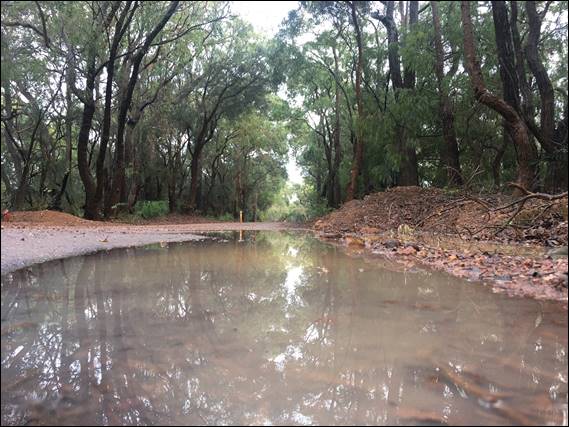
Having started climbing in the UK, I’m fairly accustomed to climbing in all kinds of conditions. But there are not many people in this part of the world that are keen to climb when conditions are inclement. As such with back to back days of a 90% upwards chance of rain forecasts, since Wednesday and stretching as far as the forecast dare go, I didn’t fancy my chances of getting out for a climb this weekend. Josh however can only get out every second weekend, and this was one of them so despite the dreadful forecast we went for it:
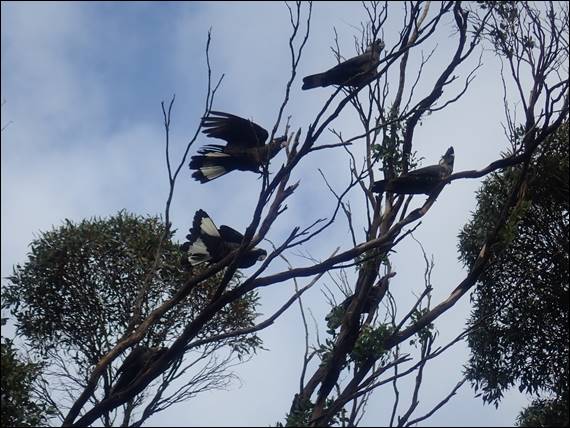
On arrival at Wilyabrup, the sensible place to climb as it has good ledges to hide under if the weather happened to come in, I was greeted by a flock of Carnaby’s black cockatoo (Calyptorhynchus latirostris) feasting on fallen honkey nuts by the side of the gravel road. These are recognised as a threatened species and protected by law. Whilst they didn’t appreciate my arrival, they only alighted to the trees allowing me to sit and watch them until they became brave enough to go back to their foraging on the ground. These birds are often confused with Baudin’s cockatoo, however their shorter upper beak gave them away:
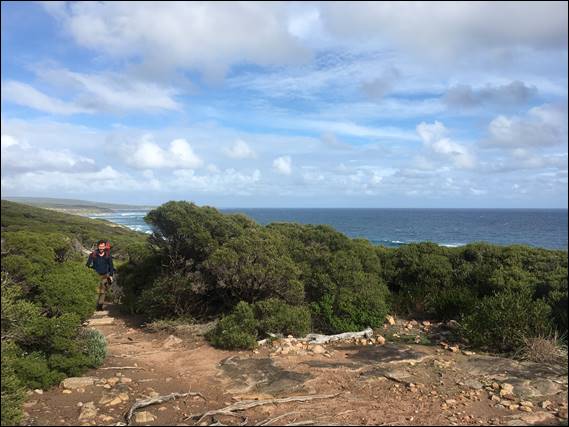
Josh arrived shortly after me and we shouldered our packs. Due to the forecast and what the weather radar was showing, we had been messaging each other this morning, right up to the time we decided to head out. As such we came prepared to take on the elements, and were not surprised to be the only ones out. As we walked towards the coast we marvelled at the sight out to sea. The clouds were high, light and broken allowing sunlight to intermittently stream through. In part due to expecting less than ideal conditions I had already thought of a tick list for the morning:
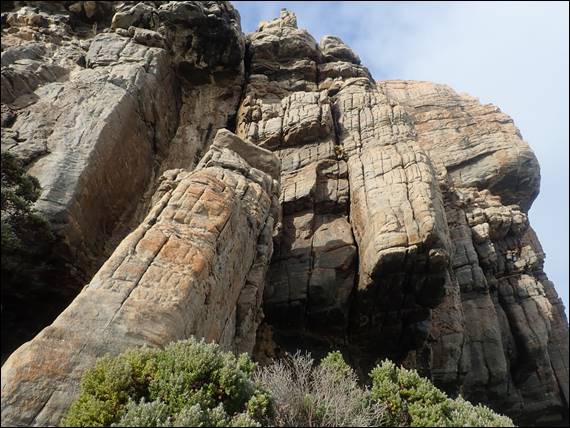
This started with Stormcock, one of the first routes established and recorded at the crag in 1973. That was not the reason for picking it, which was due to the lower grade of the climb plus the fact that I have never climbed it. While only a grade 10, or Very Difficult in UK grades, there was a very exposed traverse that wasn’t entirely straight forward. Plus if I had been using protection that would have been available in the early 70s it would have been very spooky. It is not all that unusual to, every so often, come across an older line that seems tricky for the grade, the climbers of “days gone by” were fierce and bold:
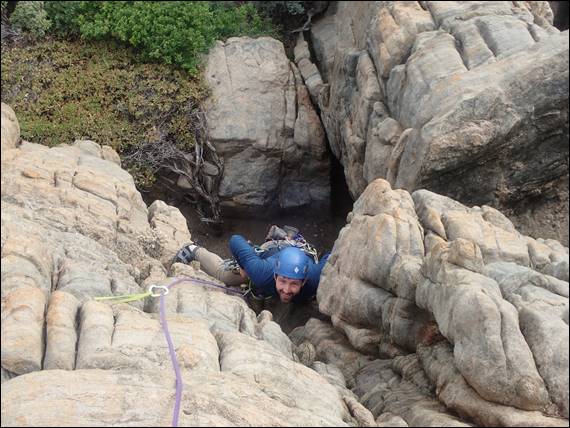
Josh followed me and despite the wind howling down the coast I could sense he was nervous, as he inched across the traverse hidden from view by a roof. It was a sigh of relief for me when he popped out from under the roof beaming. I’d hate to have put him on edge with the first climb of the day. This route was developed by John Waterfall, who more by luck than design had established all three of the routes we did today. It was also by luck that he had found the crag in 1973, he was checking out the coast looking for surf breaks. After which it didn’t take long for the climbing community to start frequenting and developing this place:
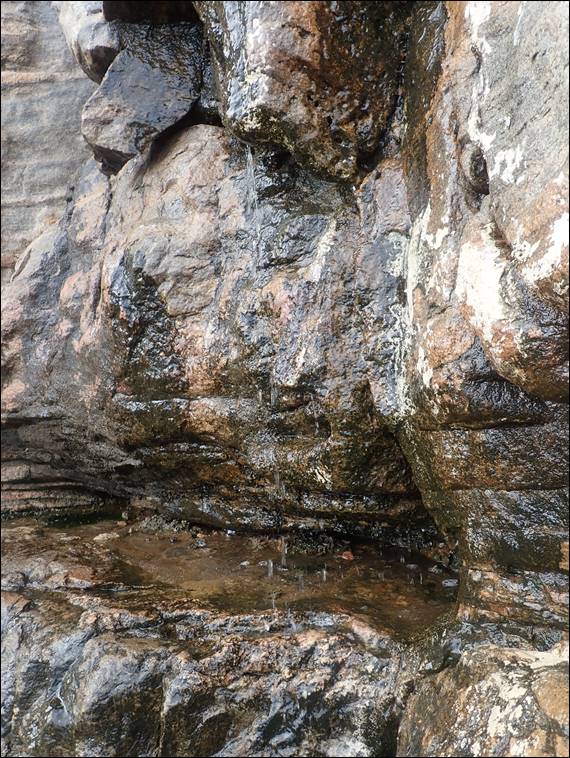
It seemed a little apt that today, as a result of all the rain in previous days, and just that morning, that small waterfalls could be found cascading down the cracks, corners and slabs below low points in the top of the cliff. The water was being channelled down these features, but as is the case here the rock dries quickly, so in between the watery spectacles was beautiful dry rock. This was great and meant that Josh was keen to take the lead on Tom Thumb, which is recorded as having been developed in the early 1970s:
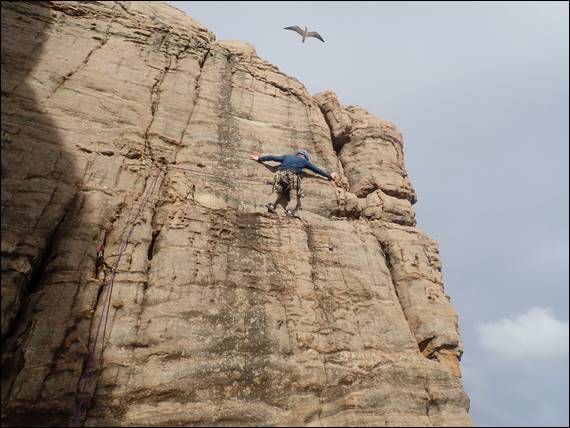
Whenever I have climbed this route we have taken a more direct line from directly beneath the prominent feature of the chimney and chock stone that start half way up the wall. However, in the early 70s it was climbed by using the cracks in the centre of the wall before making an exposed traverse to the base of the chimney. Not having climbed it this way I had no idea what Josh would experience, and I was mightily impressed at how he held his cool. Due to the length of the unprotectable traverse there was a very real risk of a big pendulum and ground fall if he slipped:
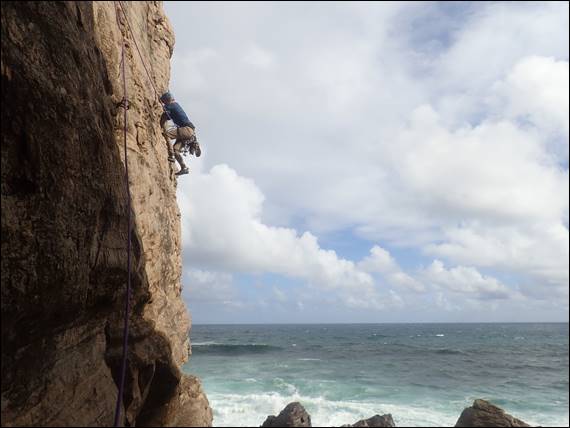
The next climb on my list was one that had been developed on the very first recorded climbing trip here, in 1973. Orryjohn, at grade 8 or a Difficult in UK grades, should be a walk in the park. Today however water was running down the line, but we both agreed to go for it. The original line stepped in from the right, but that part of the face was sodden so I climbed the dry direct start that is considerably harder. This alternate start made Josh work hard, slipping several times. Eventually he made it past this steep section to get into the meat of the original line where he, like I had been, was continuously being dripped on:
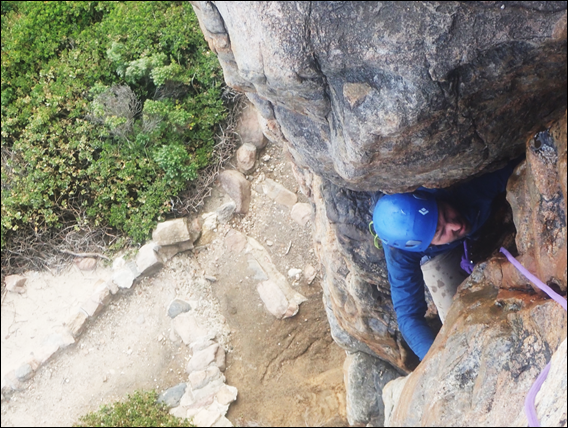
While it may sound strange the wet nature was in part what attracted us to the line, and we both loved it. It had however used up any juice Josh had left. So we didn’t get onto the last route I had in mind for today called Waterfall’s Second Folly, which despite the name was not established by John, nor his brother Peter, Waterfall. Instead, we packed up but before walking out Josh went for a dip in the ocean. You might recall he had a dip two weeks back after climbing and he wants to make it a regular event. Last time it did however mean he missed out on seeing the Wedge tailed eagle being chased by a couple of gulls:
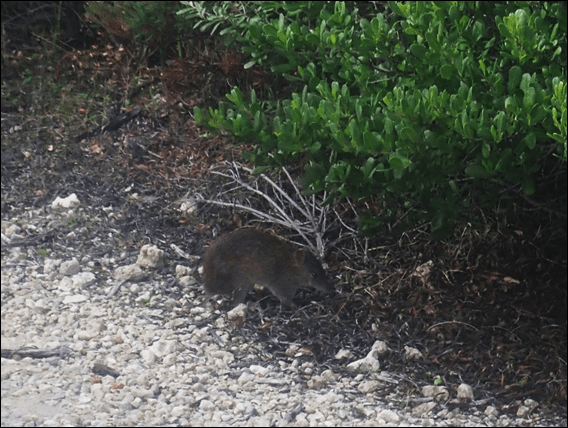
This time he didn’t however miss out what I believe to be a Quenda (Isoodon fusciventer), which I was very pleased he spotted. It was a lucky find, as while this endemic species to south west of Australia can be active at any time, they are normally only seen at dawn or dusk. This species is often mistaken with the Southern Brown Bandicoot (Isoodon obesulus), and I have struggled to find out what features are used to distinguish between the two. So the rationale for my identification is purely based on size, with the former generally being slightly smaller:
 Sandbagged
Felt a darn lot harder than an 8!!
LikeLike
Ha ha it’s all about the mind set, and the holds not being too slimy 😬
LikeLike