After a great mornings climbing at Smiths Beach Rongy and I had always intended, if the conditions were good, to head out for a snorkel. The intention being to check out some new territory. Just along the coast from where we had been climbing is a place called the aquarium, a local secret before social media came along and told the world. We intended to go there but got a little side tracked and instead ended up at Canal Rocks. In rough conditions this place is spectacular with the swell sending crashing waves through this channel, today it was calm:
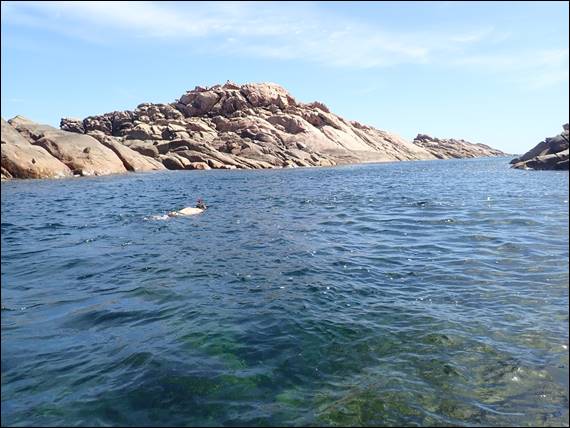
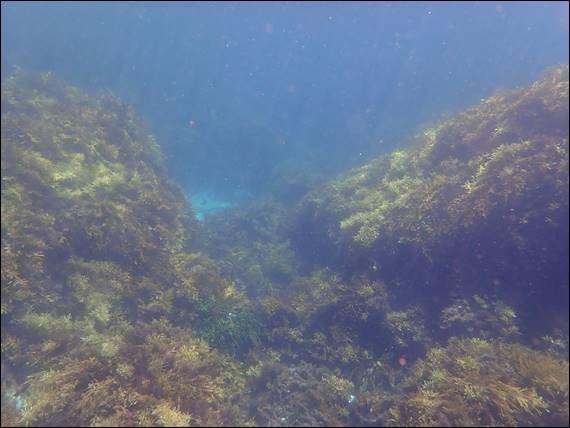
We really had no idea of what to expect once our heads were under the surface, and it took me a little by surprise. The channel was deeper that I thought it may have been in places 6 or more meters. On either side were steep slabby walls descending into the depths, covered mostly with weeds. The base varied from weedy to open sand patches, boulders were strewn haphazardly creating a varied landscape for the fish below to feel safe in. There were many fish but being so deep it was hard to get down before they swam off:
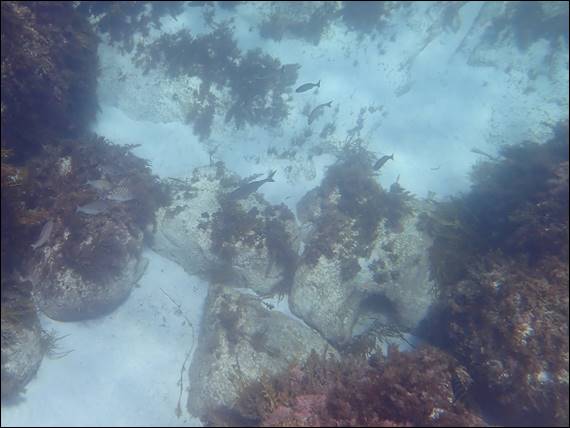
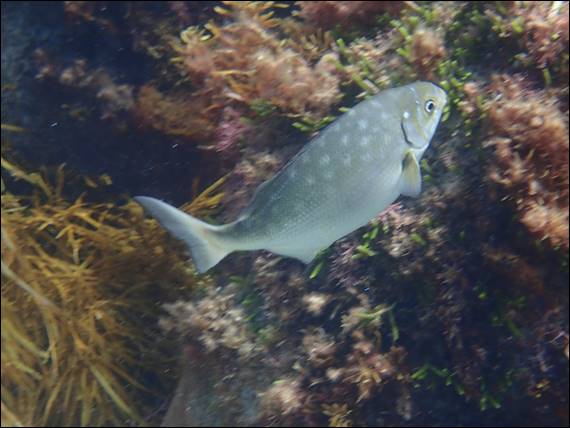
In the image above I’m pretty sure these were Western Drummers, but if you look closely you’ll see one towards the left hand side which has what looks like yellow spots. Getting closer this is what I found, the facial marks are more akin to a Southern Silver Drummer. And the way the others flocked about his one fish, getting as close as they could and even pestering, it I am assuming that this was a female. If not then I’m a bit baffled at the behaviour that I witnessed, as the spotted one didn’t make any attempt to flee the pack:
We continued on our journey up the channel, and after all my snorkelling off the beach this felt cavernous. Duck diving down to the base was hard work and I wasn’t able to stay down for very long at all. A shame as there were lots of fish at the floor, many I could make out such as Scalyfins, Drummers, Zebra Fish, Wrasse, Sweetlips, Sweeps, Old Wives, Cales, etc. There were also many I didn’t recognise and a good number of large fish too:
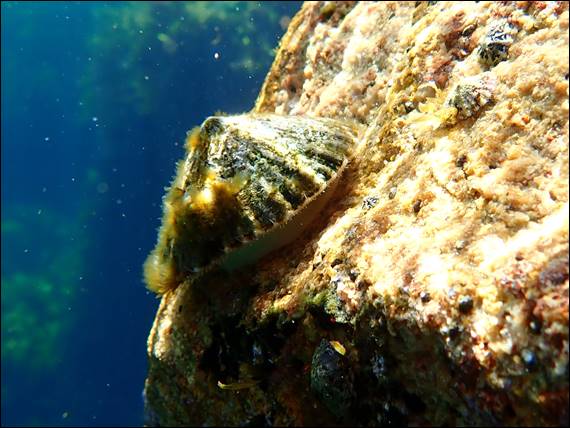
On the slabby granite walls I found this limpet, while in the snail or gastropod family it actually descends from a different species. They are quite different to snails with a single muscular foot and no discernible head or tail. Not to say they do not have these features, and in fact while most of their body is made up of the digestive system they are very complex creatures. I’ve never seen one with so much of its body exposed, so couldn’t resist taking a snap:
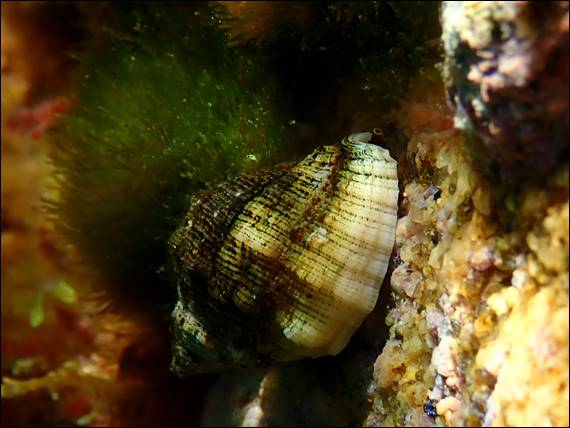
Searching along these rocks I also found a true gastropod, this one too had not recessed into its protective shell. At the base of the conical shell its siphon is sticking out. Water is drawn through this tube and is used for many purposes including movement, feeding and breathing. The limpet on the other hand has teeth for feeding, using them to scrap material off the surface, it can have as many as 100 teeth although on a handful are used at any one time with the others ready to replace the worn out ones, a little like shark teeth:
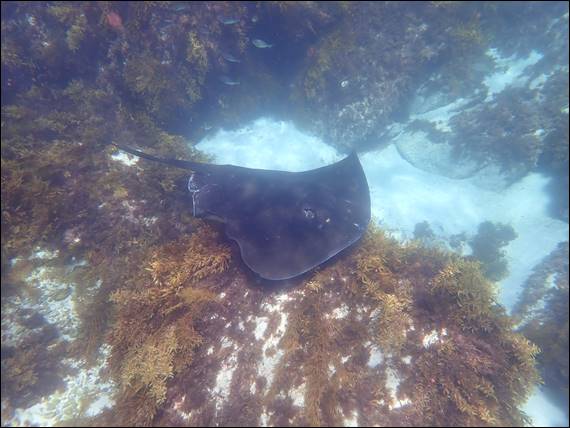
I happened to look back at one point, being in such deep water I felt it was prudent to be aware of my surroundings. While I had seen lots of larger fish down in the depths I was also quietly hoping to see something much bigger. I was not disappointed and below along the surface a huge stingray was gliding along at a relaxed pace. This one had a wingspan in excess of 2m, much larger than the rays we have seen off the beach. Rongy was thinking to duck dive down to it to get some scale into the image but while it was only cruising along it was too fast for that:
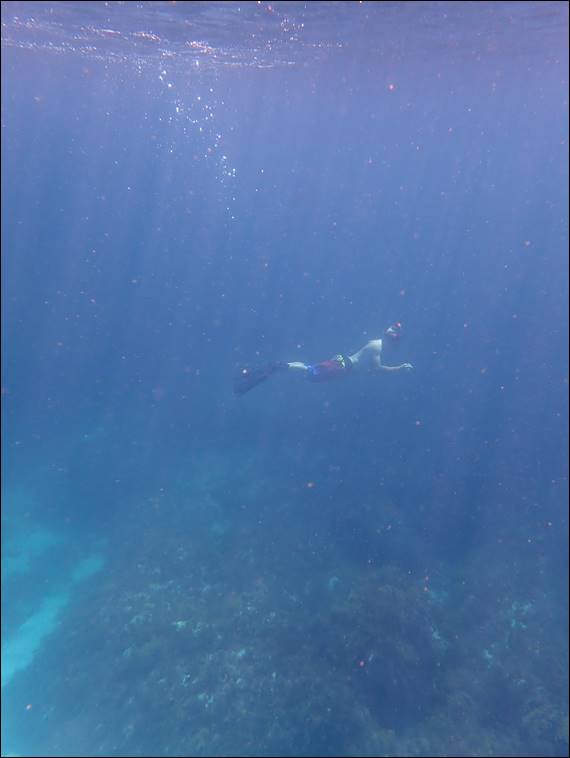
We continued up the channel to where a little bridge crosses over a narrow gap in one side of the valley. Here during rougher conditions the water gushes through the narrow gap providing a spectacular wave action on the surface. Not surprisingly just downstream of the narrow channel it got very deep, too deep to make it all the way down for us. It is certainly an eerie feeling being is such deep water, but that said I reckon I would be tempted to come here again for another looksee:
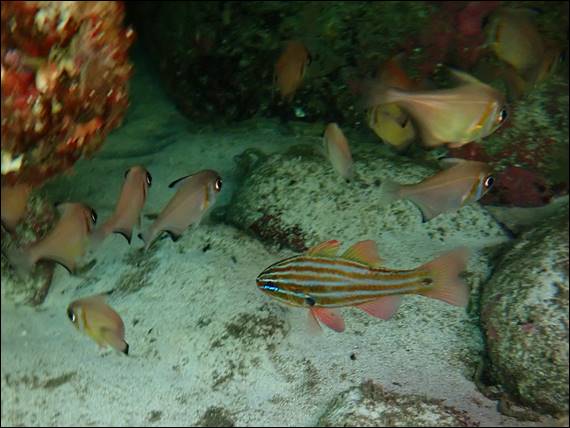
After we made our way under the bridge, with the tourists above us looking down, we popped out into the bay that separates Canal Rocks from the place we had been climbing in the morning. We followed the shoreline of the bay only a short distance to the boat ramp. It was very shallow here allowing a closer look at some of the fish. Here I found a very skittish shoal of what I believe are Small Scale Bullseye, who just didn’t want to settle down for a family photo. The single Western Striped Cardinal Fish was however not so phased by my presence:
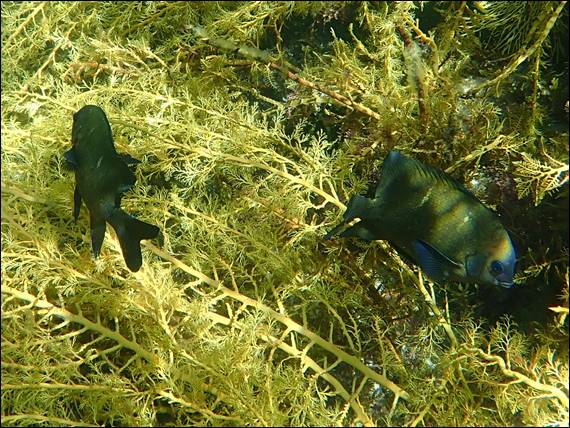
Rongy was getting pretty cold now and had scooted ahead to the boat ramp, while I was getting absorbed by the opportunity to see a bunch of fish up close in the shallow waters. Fish that would normally dart away quickly at our local beach seemed more at ease with me floating about next to them. That includes these McCulloch’s Scalyfin, a fish that I have so often chased round the reef without being able to ever get too close too. Here they seemed to be in abundant numbers and all very relaxed:
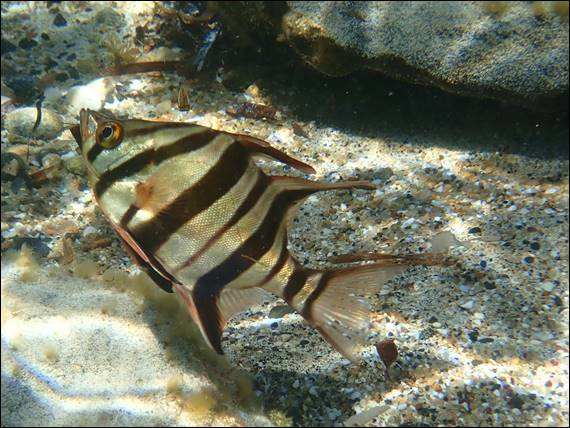
Another one that would usually run for cover but not here was Old Wifes. So for the last image I’ve included the Old Wife that was right next to the boat ramp before I got out. This fish is endemic to Australia, and is the only listed species in the family. It does bear visual resembles to a number of other species, such as boarfish, but no link has been proven. I didn’t want to get any closer than this as the dorsal fin has a spine that carries venom:
 Sandbagged
GREAT SWIM
LikeLike