In the topsy-turvy world of weather these days, which is a self-inflicted phenomenon, the reason I got wrapped up in the topic of autumn weather having only just starting to feel like it has arrived in my last post was justified. The forecast was for warmer-than-average days and nights and a high chance of below-average rainfall, which has been proven right. The bad news being that this brings with it increased risk of bushfires. The good news is that we have been enjoying an extended period of better weather for enjoying the great outdoors:
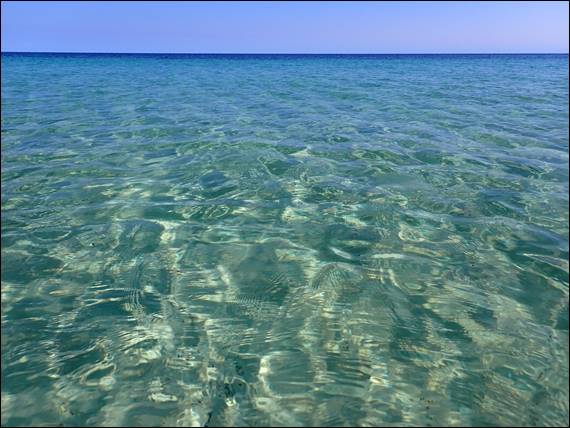
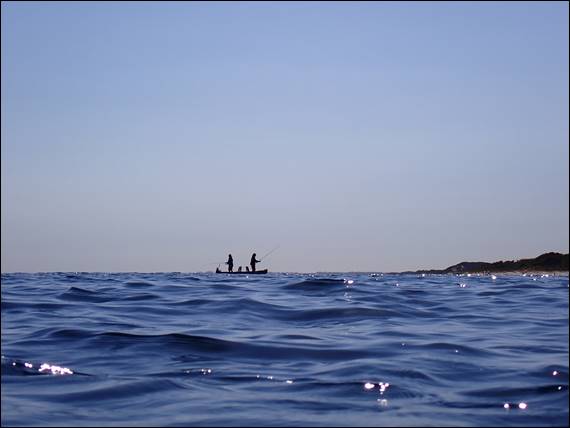
And not only for time on rock. This uncharacteristic period has arrived with a more stable and less active pattern than normal. Importantly with less cold fronts. Resulting in wind and ocean conditions that are at times more settled than they have been over the usual snorkelling season. This weekend brought another pocket of very calm conditions, so I took advantage with a couple of local dives. The first being on Saturday, having to share the water with people fishing off both the shore and boats. And like my dive I hear they didn’t have much success:
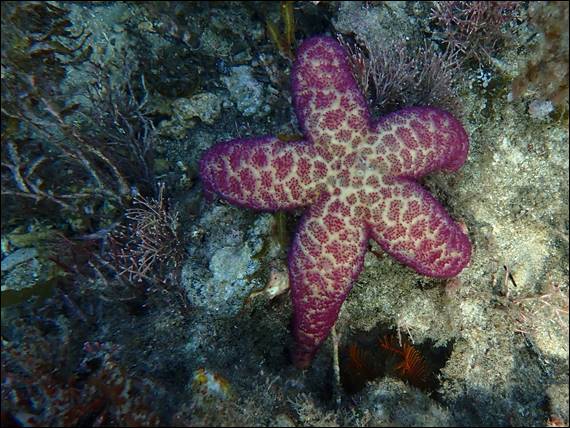
I did however see some other marine creatures worthy of mention. Starting with this Pale Mosaic Seastar (Echinaster arcystatus), of which I spotted a few. Not a new find, but one that I always enjoy. When it comes to diet, and once an adult, this carnivorous seastar is mostly a predator. However, species in the genus Echinaster are also known opportunistic feeders. When prey are scarce they have been known to feed off the dead, and are also able to switch their diet and sustain themselves by absorbing nutrients from decomposing organic matter:
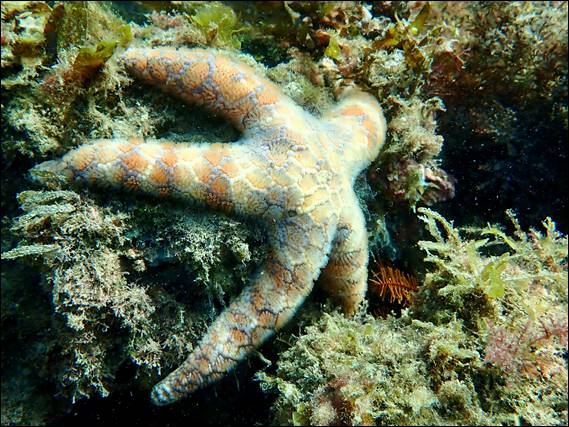
Next up is the Mosaic Seastar (Plectaster decanus), which happens to be the only species in the genus Plectaster. This is one of just a few poisonous sea stars. It is not a huge risk to humans but if handled for too long can cause numbness. It is believed the toxicity comes from what they eat. This seastar is again a carnivore but is also a specialist feeder, nourishing itself on stationary invertebrates. Mostly sponges and bryozoans. Absorbing the chemical defences of the sponges they eat, which is considered to then persist in the seastar making it poisonous:
I was also pleased to come across one of the largest species of Comb Jellies (ctenophora). With an estimated 60 species in Australian waters, approx. only 35 have been named. This being one, the Winged Pocket Comb Jelly (Neis cordigera) that often exceeds a foot in length. I’ve previously talked about how they propel themselves using tiny hairs called cilia. Comb Jellies are the largest animals to swim using this technique. Another distinguishing feature separating these from jellyfish is they do not have stingers. They do however have colloblasts:
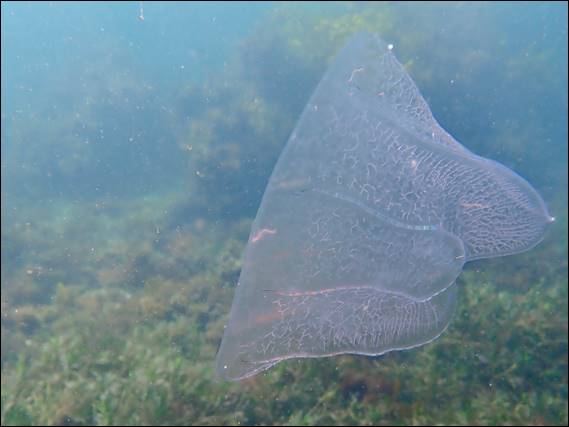
While jellyfish have cnidoblasts. Both are similar, comprising a spring-loaded spiral tether that shoots out to capture prey. Cnidoblasts are harpoon-like and deliver a toxin to immobilise the prey, hence the stinging sensation we can feel to varying degrees. Whereas cnidoblasts form a sticky pad after firing, as the granules at its end rupture to quite literally glue itself to its prey. Next was my first sighting of a jellyfish of the Aequoreidae family, or many-ribbed or crystal jellyfish. There are a quite few species in Australian waters, and can be difficult to identify:
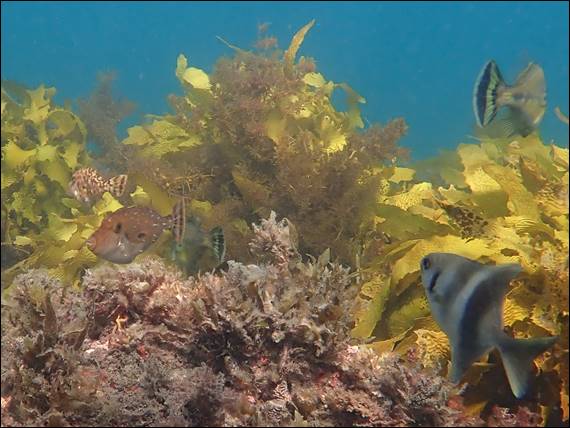
This one I am however pretty sure is a Southern Crystal Jellyfish (Aequorea australis). Detailed as a common and smaller species often found in temperate southern Australian waters. The bell of these are usually up to 2.5cm, but can reach up to 8cm. With over 100 tentacles reaching 250mm trailing below the bell, so fine that they are hard to see until the light catches them. And as can be seen below, I did spot some fish. The ones that stood out the most were the Horseshoe Leatherjacket (Meuschenia hippocrepis), in varying life stages:
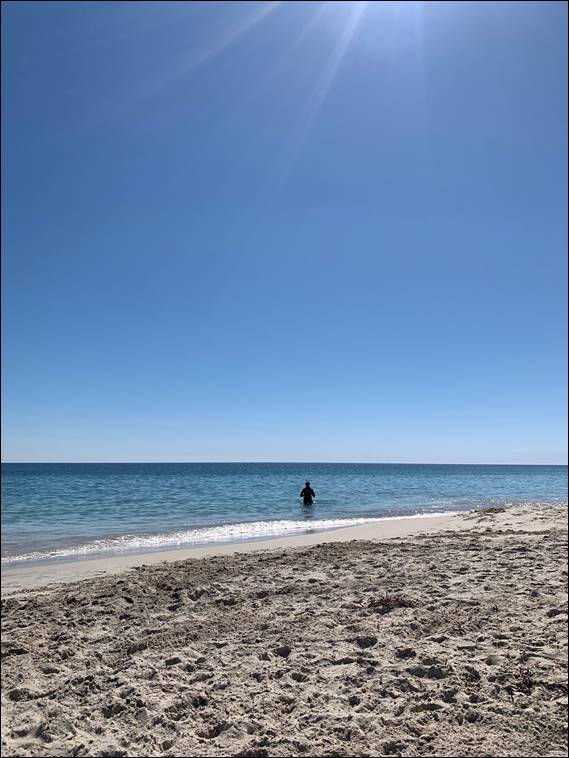
Then on Sunday after a morning out, clinging off the walls of the quarry at the Welly Dam, Lisa and I headed to the beach with the poodles. I didn’t feel bad when I left her on the shoreline. She’d come armed with her backpack chair and intended to relax, plus by chance a few people she knew were down with their dogs. As the dogs played and humans had a dip or too, this human lost himself in another underwater adventure. Soon finding myself several hundred meters out, which I later heard made the others ask Lisa if she ever worried about me:
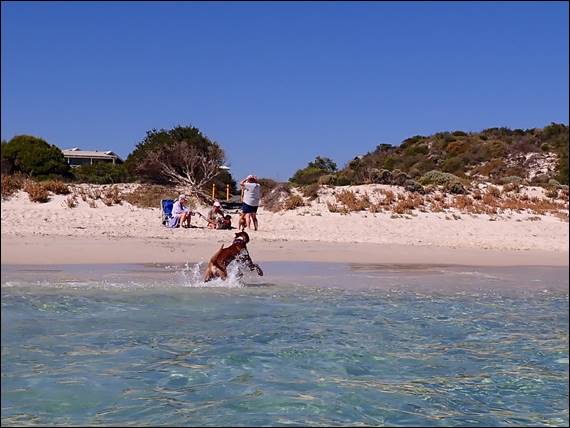
Lisa replied to them that she is used to me heading out solo, and has ‘given up’ worrying. Before I got that far out, in the relative shallows, a Southern Eagle Ray (Myliobatis tenuicaudatus) lazily swam underneath me. I got the feeling it was watching me with as much interest as I watched it. Aptly named, as it swims by flapping the pectoral fins up and down. This is different to many other rays, which use an undulating motion. It is also different in that it has a very obvious frog-like head and duck like bill, used to hunt for prey in the sand:
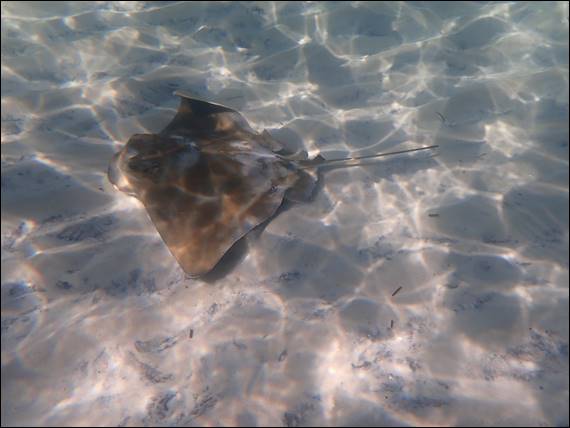
Quite a few other locally found rays use the same method of ‘hydraulic mining’ or ‘hydraulic jetting’, to uncover buried prey. None of them however display the same, or even similar, modified head to assist with this process. I was even more chuffed when I came across a solitary Short-Tailed Nudibranch (Ceratosoma brevicaudatum). It’s not been a great season for finding these colourful creatures. This species grows up to half a foot in length, and is one of the largest nudibranchs commonly found in Western Australia. But not the biggest:
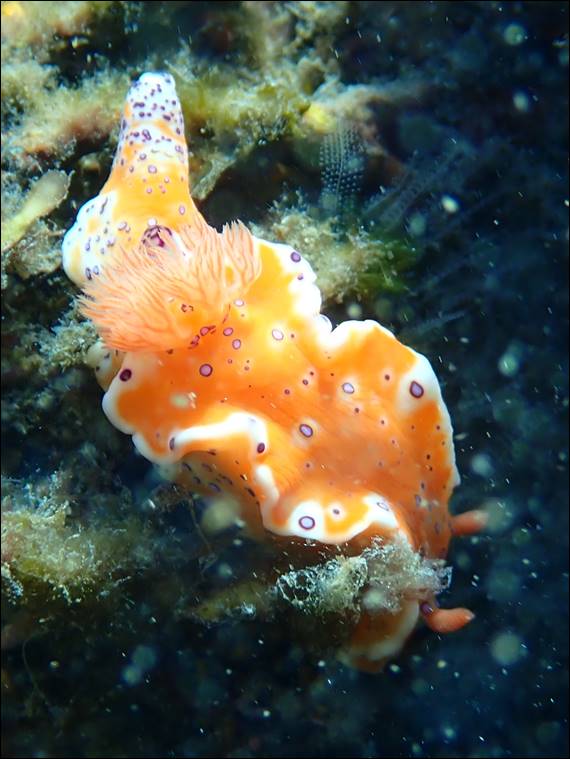
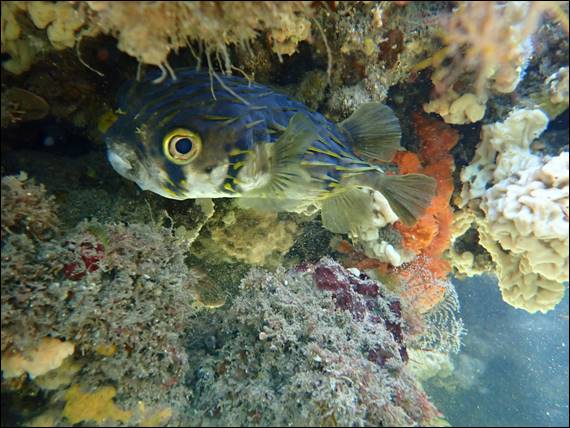
That title is held by the Spanish Dancer (Hexabranchus sanguineus). Not one I am likely to see, as it is found in the tropical waters much further north. It is also quite elusive being primarily nocturnal. Despite the varying ground I covered and how far out I went, it was again surprisingly quiet on the fish front. The only image I’ll include is of a Globe Fish (Diodon nicthemerus), hidden in a cave and unable to escape my camera. I did however come across a heap more Southern Crystal Jellyfish, including one that had a tiny fish hiding in its bell:
I wasn’t able to get a clean image of that and also struggled with my next two finds, but had to include them. The first is a very young Comb Jelly, for which I’m not game to work out which species. They have a quick and basic life cycle, and can reach maturity in a few months. Usually at night they release thousands of eggs and sperm,. Fertilization results in a free swimming planktonic larval stage. Then during several stages they develop into adults. You may notice that this one has tentacles, these are lost as it transitions to its final adult form:
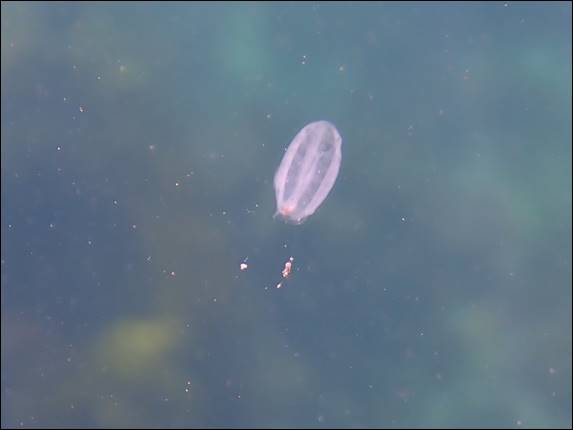
The above find was no more than 1cm in length, so it took some effort to get a clear image. My next find was even smaller and probably half the size. I had to get an image, being a first time sighting for me. One that does not get many reported observations. A Crimson Jellyfish (Turritopsis rubra) is in its adult form, which can reach a whooping 7mm. The name comes from its bright red stomach and gonads, clearly visible inside the bell that is fringed with its tentacles coiled up. Most jellyfish are classified as carnivores but this one is a rare omnivore:
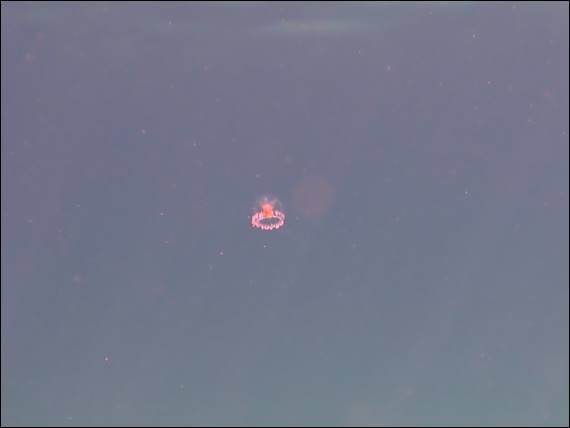
Along with us, only about 3% of the animal kingdom are classified as omnivores. This species needs to feast on things small enough for it to capture and digest, so will go for plants and animals alike. It is closely related to the Immortal Jellyfish (Turritopsis dohrnii), which is the only member of the animal kingdom proven to be biologically immortal. Being able to reverse aging by transitioning from a fully mature adult to a juvenile form, to restart life. While not proven through research, some believe the Crimson Jellyfish may also possess this ability:
 Sandbagged