For those old enough to remember when the original film came out in 1981. It’s more engaging story and the iconic cinematography of the day means it well and truly trumps the modern 2010 remake. The newer film heavily relied on CGI for impact, taking away from the plot and resulting in a cookie cutter action-styled focused film typical of the early 2010s. This week we were preparing for our own Clash of the Titans. A strong cold front was expected to hit the south west of Western Australia, as the weekend encroached:
As it made its way eastwards, tropical cyclone Narelle was heading west. Skimming the northern coast of Australia. It is the first cyclone in 20 years to make landfall in three states or territories. First coming in as category five before changing into a tropical low, and then re-intensifying above Western Australia back to category 4. It reached the western edge as the cold front approached. Resulting in it swinging south and making landfall further down the coast than usual. A phenomena that has only occurred twice since records started in 1970s:
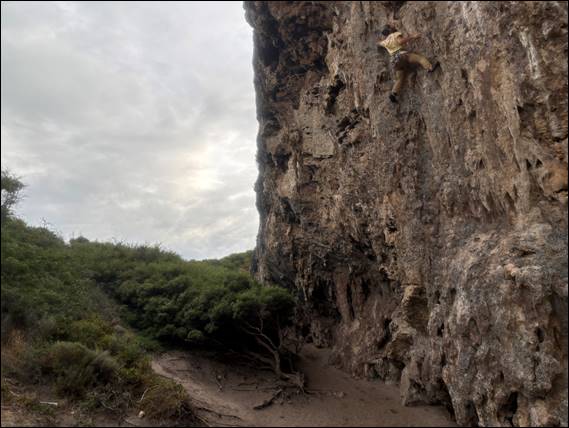
Howsie and I had been plotting our own course way before any of this was on the radar, for a day out on Friday. Watching the forecast change daily as the week progressed, we decided that regardless of what may come we would stick to our guns. Heading to Bobs Hollow, where we were certain there would be no clashing of titans. The impressive and intimidating limestone cliffs, with its steep pumpy routes would no doubt smash us mere mortals. But we suspected a clash or two with the rock if we pushed things that bit to the point of falling:
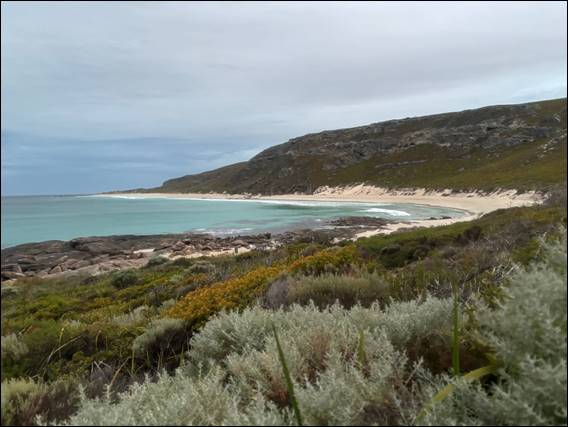
Parking up just after first light, allowed us a walk in without the need for head torches to avoid stumbling on the at times rocky path. Keeping a good pace, it was a still and cool morning. Not a breeze was in the air, maybe the foreboding of the calm before the storm. While the sky had a high blanket of cloud stretching far and wide without a break, it looked like we may be lucky with our timing. The occasional drop or two of rain left their mark on the mostly sandy track, but they were few and far between. We kept our hopes up, or at least I did:
As I have previously hinted at a few times, the climbing here intimidates Howsie. For someone who can be remarkably cool and calm on technical, sketchy, and runout face climbing, on overhung stuff he is quick to crumble. Whether it was the big weekend he just had, germs his kids were showing signs of having, or band practise the night before, he was wavering as soon as the looming white limestone walls were above us. I personally feel he has a knack for allowing the prospect of climbing here getting to him before we arrive:
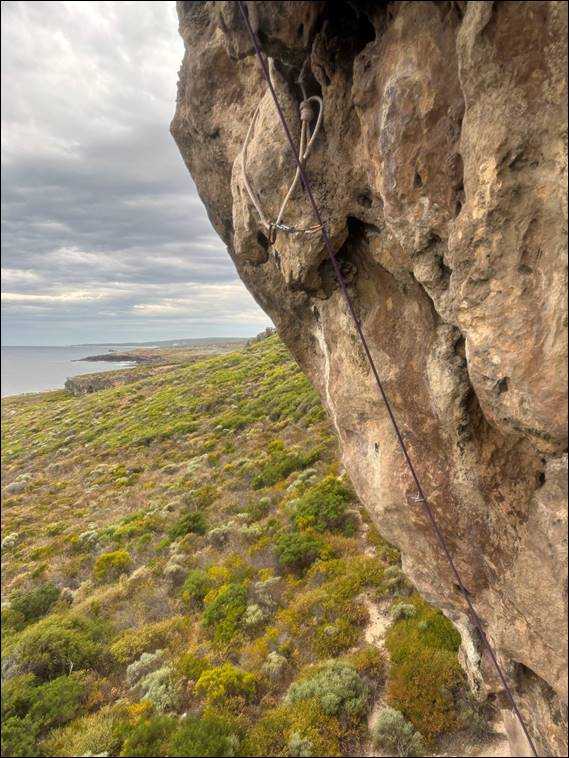
I kicked things off, as it was my turn to take first lead. Picking what I felt was a sensible warm up grade on a line that was nice and long, offering a gentle first half before steepen up. There are not many lines that are not steep for some of the climb. It is part of the attraction of the place. During and since COVID times the areas popularity surged when those who climb in Thailand were not able to fly. So they came here for their jug haul fix. In his book of climbing in Australia, John Morris recently rated Bob’s Hollow as the best limestone cliff in the country:
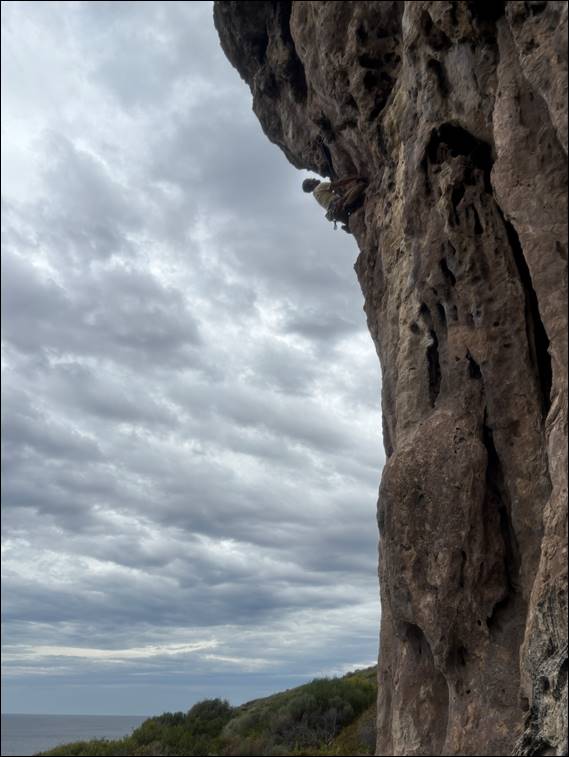
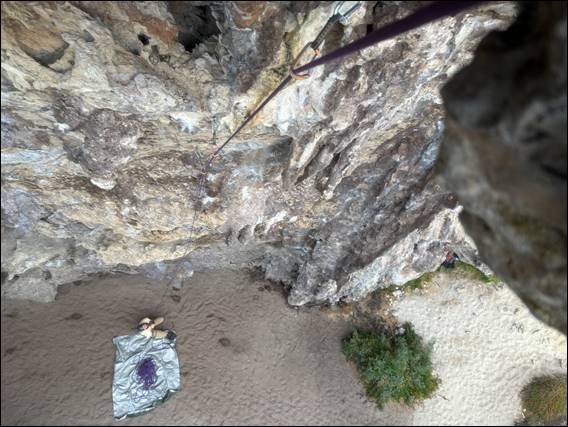
Not that there are too many limestone crags for it to contend against, despite the size of Australia. Howsie, looked to be going OK on the first line until the overhung section. Here he battled with his head more than the steepness. But once your head takes hold you start second guessing yourself, which results in you hanging on the holds too long and pumping out. This it set the scene. We found less steep routes for him to lead, as I wasn’t going to allow him to forego his leads. And I bagged the steeper ones without pushing the grades:
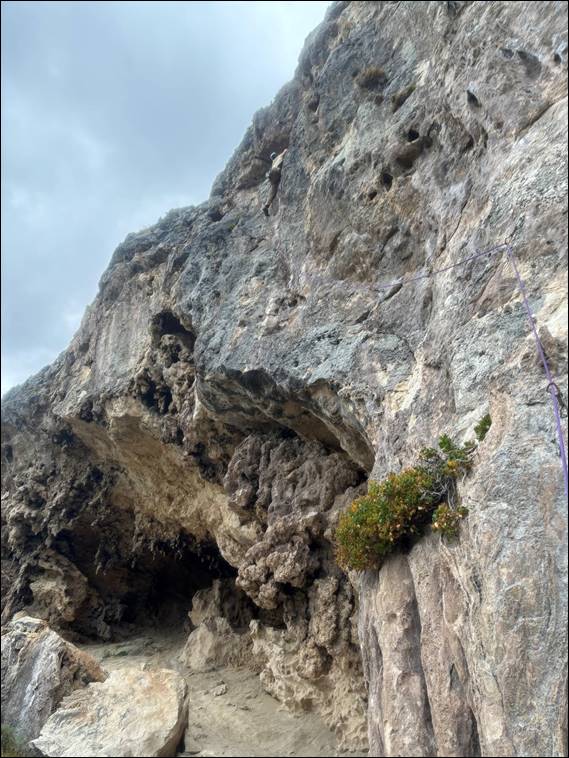
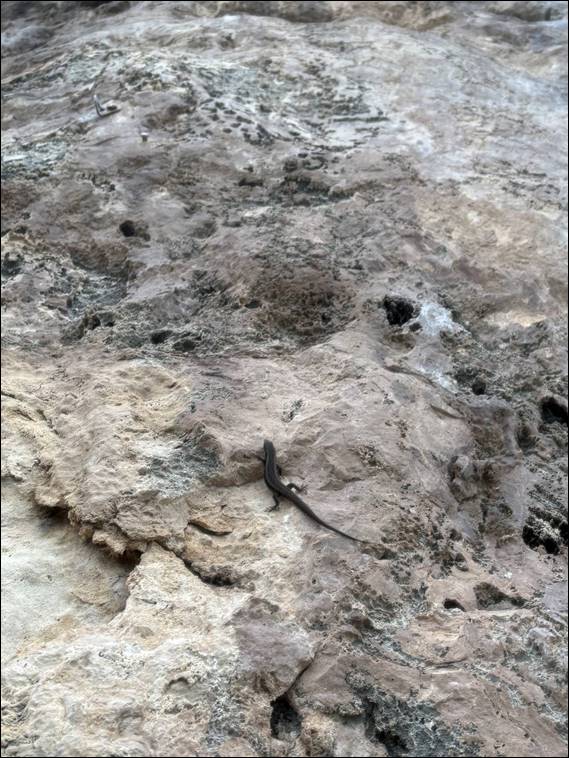
This of course didn’t detract from our enjoyment, and we racked up seven fine lines. As the morning wore on, despite us wearing ourselves down physically, Howsie confessed to finding that he was becoming more comfortable with the climbing style. We may well have thought this before, but we talked about how we should make an effort to come here a bit more often to allow him to build on the progress. Time will tell, although neither us of think we will ever have the climbing skills of this Southwestern Crevice Skink (Egernia napoleonis):
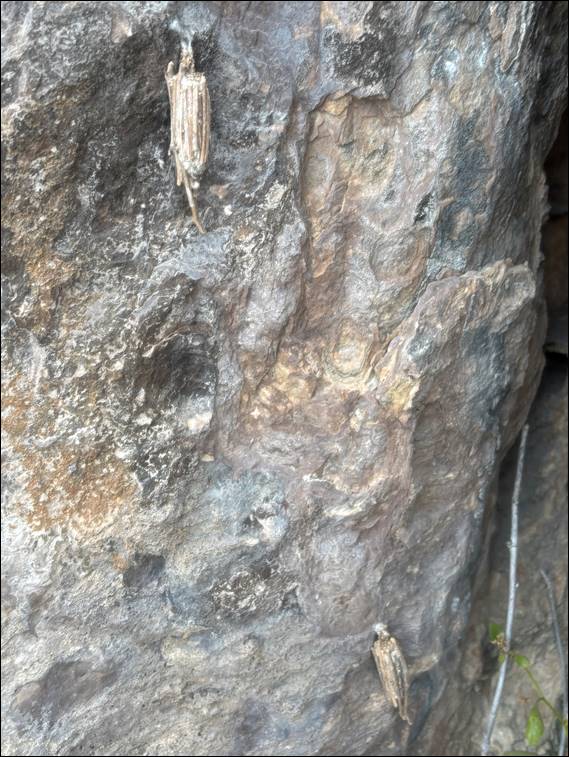
Another creature we found clinging off the rock were these larvae stage Faggot Case Moths (Clania ignobilis). Being a case moth, the larvae builds a home of twigs that it takes from the plants it feeds off. The ends of each are meticulously shaped removing any sharp edges and from one end the head and thorax, with hardened skin, protrudes. Only males transform into moths. The females remain flightless and never leave the protection of the case. Their home differs, as it include two twigs longer than the rest and we found both male and female cases:
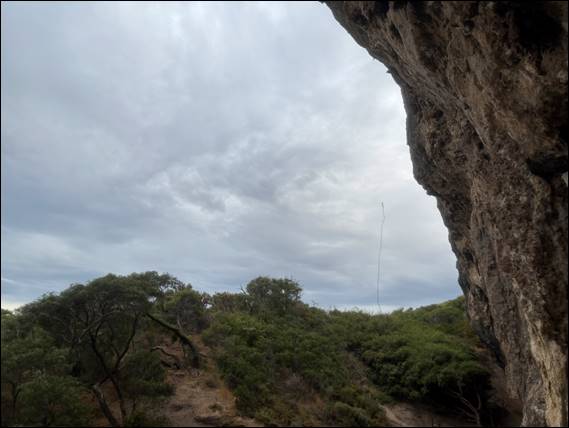
As can be seen the weather was perfect. Staying dry, cool, and calm all morning and only on the last climb did we start to feel the humidity start to creep upwards. The near shore ocean was a crystal clear aqua colour, and from the crag we spied pods of dolphins in the shallows and what looked likely to be a large shoal of salmon. The 2026 great salmon run has started, with increasing activity being observed along this coast. The fishing folk will be getting excited about this but not just them, and we spied a couple of others too on the walk out:
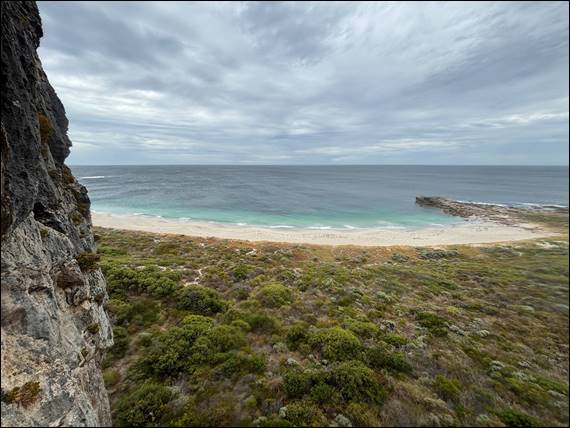
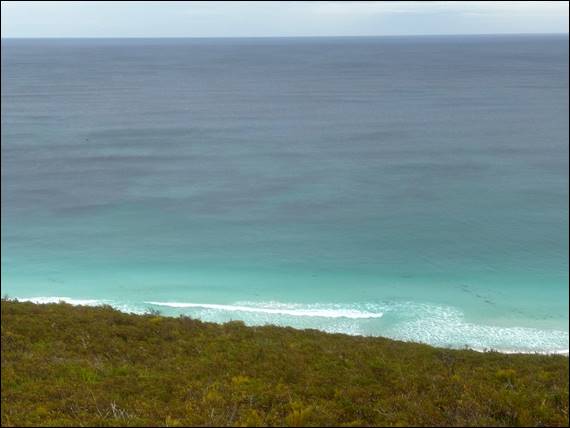
The image below was taken as we walked out. It is probably impossible to see, but we saw at least two sharks in the shallows that at times came into the surf zone. Shallow enough to force their fin and tail to be be clearly seen thrashing about in the water. While they may not be Bronze Whalers (Carcharhinus brachyurus), they particularly known to enter the shallows when feeding on schools of migrating fish like salmon. While watching the water we also had to watch where we stepped, as there were quite a few processionary caterpillars out:
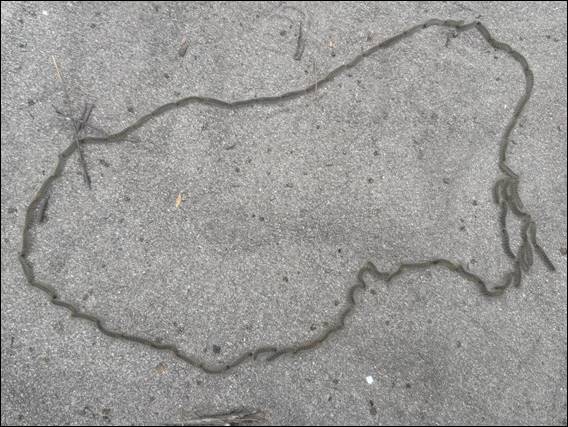
If they survive these will transform into the Bag-shelter Moth (Ochrogaster lunifer). From approx. December to May the caterpillars moult 7 times, resulting in 8 instar stages. They remaining in a silk nest for the first seven. For the 8th instar stage they leave the nest and form these single-file lines, at times including a hundred or more. Each one keeps contact with the tail hairs of the one in front, and as can be seen below the procession was on a collision course. When this happens they form a circular mass of confusion:
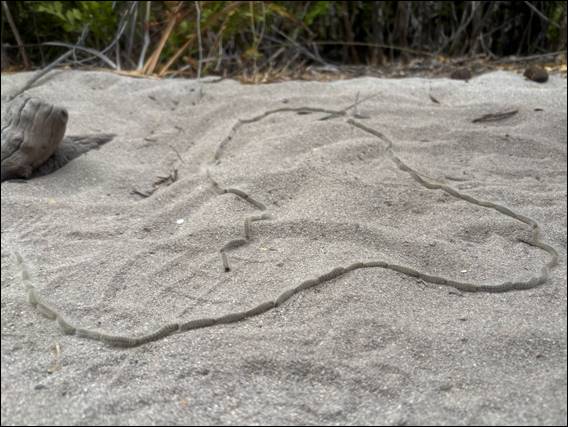
We simply had to watch for a while to see how it all unfolded. At the point of impact they started to bunch up, unsure of which way to go. For us the way forward was clear and after watching the display for a bit, we left them to it and made a beeline for the car. It was not until midday that the drops started to fall on the windscreen. The combined effect of the cold front and tropical cyclone Narelle, still approx. 800km to the north, started to hit. Since the first drops the slow and steady rain hasn’t abated as I type this 18 hours later, but there have been no strong winds. For our area at least, maybe the clash of the weather titans had a bit of a cancelling out effect:
 Sandbagged