With no one able to make it out on rock over the weekend and not feeling like a solo mission I was at a bit of a loose end. Typing up my finds from earlier in the week Lisa headed down to the beach for her weekly bob with the Peppy Plungers. Sending me images of what looked like a relatively flat and calm ocean. There was certainly more movement than I experienced during the week but it looked slow and sluggish. Decision made. I suited up, drove down to the other end of Peppy Beach, and started to walk aiming to go past the point:
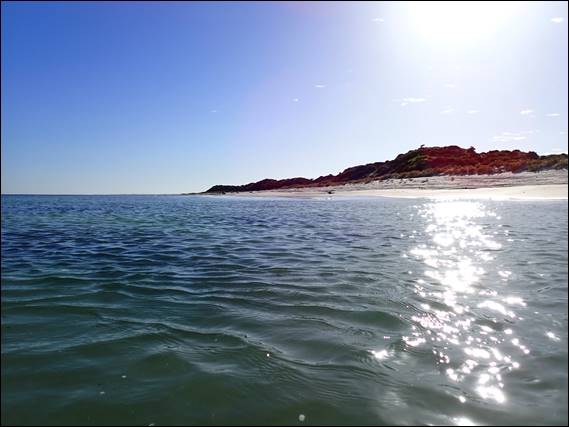
There were just a couple of cars on the beach, one towing a boat slowed down as it went past and they offered me a lift. I said thanks and passed on the offer, telling them I enjoyed the walk. While true, at the back of my mind was the fact that with my sedentary job I needed to take every opportunity to move about. Going just shy of a mile I caught up and passed the people who offered me a lift, as they prepared to launch their boat. Thanking them again and saying that in all the years of heading this way they had been the first to offer me a lift:
This got me thinking whether everyone else who had driven past me, over the many years, have simply observed me walking with my gear and thought he’s not going to want a lift. That said very few have ever waved or acknowledge me. As such maybe, as appears to be the growing trend in modern western life, they are just focused on themselves. Indeed there are studies that suggest social media, technology, and the more fragmented family ties have affected social cohesion and resulted in people having a greater interest on their own wants:
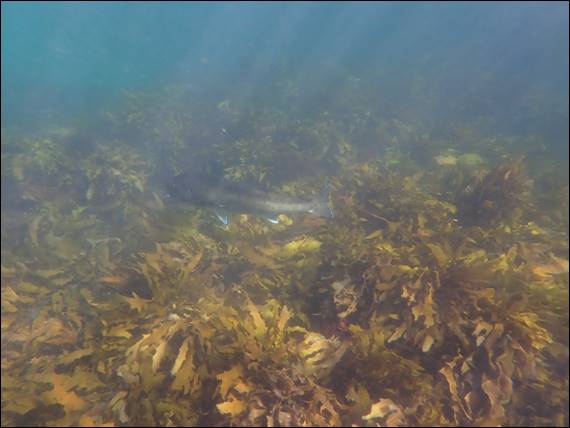
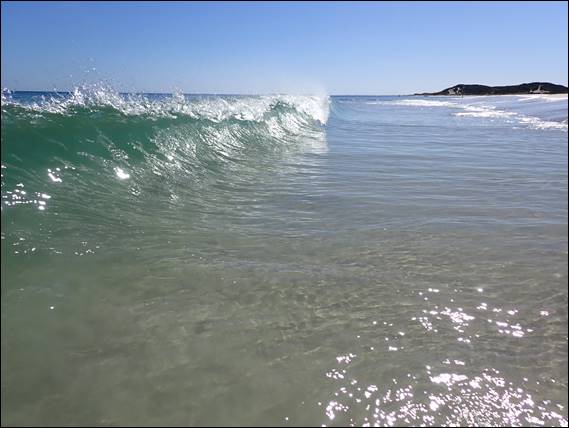
Before I go any further down what may be a dark and dangerous road, which someone else got me going down. The first image shows the near shore waters were somewhat cloudy, the slow sluggish swell was stirring things up. But being hopefully I dove in and swam the approx. 200m out to the reef, where it was better in patches. In the second image I only saw the Dusky Morwong (Dactylophora nigricans) when it moved on. Building on my observation of human interactions, was it a gut instinct that made the fish swim away or was there more to it:
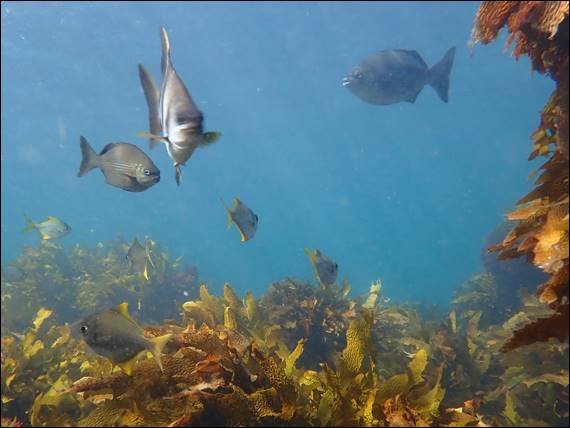
There are many studies to test the cognitive ability of creatures. Checking their aptitude to recognise themselves, others, and/or responding to being looked at. Did the Dusky Morwong detect my shape as a risk, as opposed to that of a dolphin or seal? In the second image Banded Sweep (Scorpis georgiana) and Western Pomfred (Schuettea woodwardi) would often meet me face on. Making their bodies look thin, as if to become invisible. While Silver Drummers (Kyphosus sydneyanus) didn’t seem to care if I saw them, just taking a wide berth:
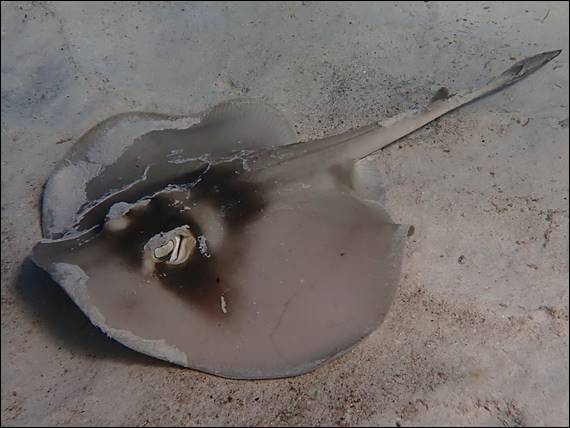
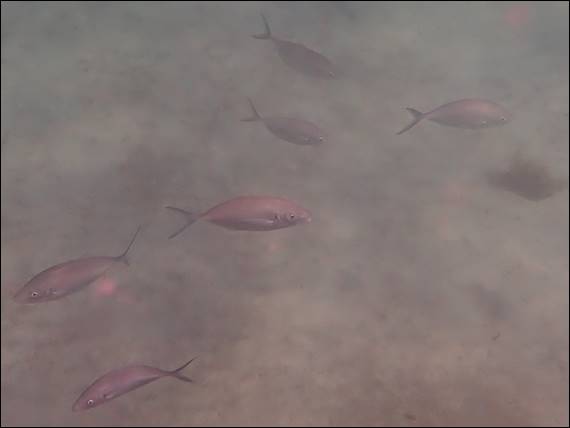
The Silver Trevally (Pseudocaranx georgianus) were also fine with my presence, when above them. Each time I went down they would disperse to a safe distance, returning as I went back to the surface. The above Masked Stingaree (Trygonoptera personata) took on a different approach. Simply freezing like a statute once I looked at it. Putting faith into its camouflage I guess. Most showed signs of scopaesthesia, a phenomenon of sensing that you are being stared at. Not just an awareness of another form but also that the form is looking at you:
The above good sized Smooth Stingray (Bathytoshia brevicaudata) seemed happy to swim round me. Then as I looked towards it, it reassessed it’s options and took on the approach shown in the video. Seemingly deciding hiding was the better option. This seems to go against most research I’ve found that explores different creatures ability to focus their attention on threats based on another’s gaze or focus. It is suggested this higher-order cognitive ability is generally limited to mammals, birds, and some specific social animals:
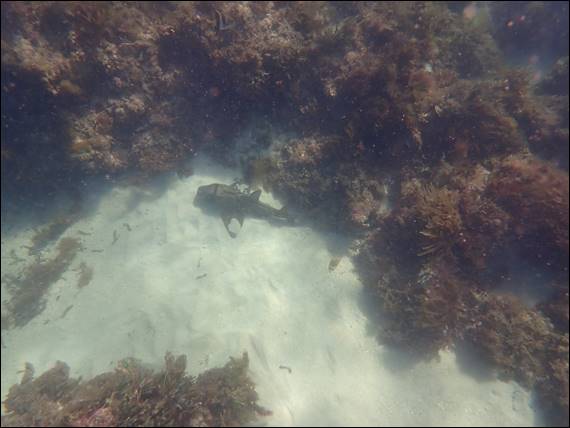
It was Verity that led me down this path when she sent me an article released less than a week ago. Detailing a study of fish in Lake Tanganyika in eastern Africa that explored this very trait. They found the fish in the study did display scopaesthesia and responded differently depending on whether you looked at or away from them. It was my last test specimen that I was most excited about. It was impossible to miss the outline of the Port Jackson Shark (Heterodontus portusjacksoni) on the sandy base, which I approached with great caution:
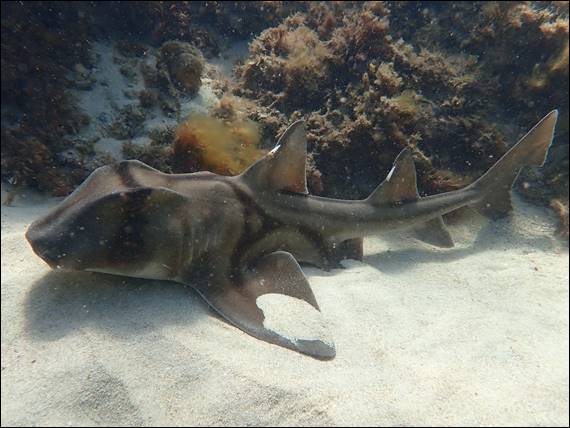
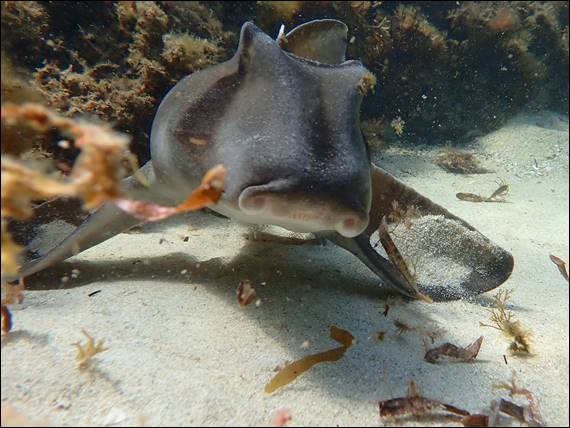
Not because I was afraid of it. Their teeth are small and they are benthic feeders. Sucking up the sediment along with sea urchins, crabs, starfish, and at times small fish. I just didn’t want to scare it away. First swimming alongside to get a close up view as above. It didn’t move a muscle. Then wanting to get a little closer to get a front on image of its large nostrils, which enable it to multitask. Both smelling for prey and breathing, while sucking up the sediments through its mouth. This time I was not so happy turning and swimming away in no great rush:
Normally I have a few bits with me that I stash on the shore but not today. This allowed me to follow the reef all the way back to where I accessed the beach. Taking about an hour and half. Covering a variety of ground both deep and shallow. Over reef, weed, sand, and broken ground. It was a lovely peaceful snorkel. The only human disturbances, even though I was 200m out with my head under water, was when I heard someone driving like an idiot on the beach. Fortunately not too often, despite how many cars were now out:
 Sandbagged