Fortunately during my wander round Crooked Brook on Wednesday I came across a female Milky Flower Spider (Zygometis xanthogaster). At a hefty 6.5 to 8mm, as opposed to a mere 2.5 to 3mm the males can reach, I was able to get a somewhat reasonable image. These spiders can be found in a vast array of hues and patterns, often leading to confusion when identifying them. This one however was the cream-white that the common name relates too. The species name sake feature was also on display, as it hung upside down:
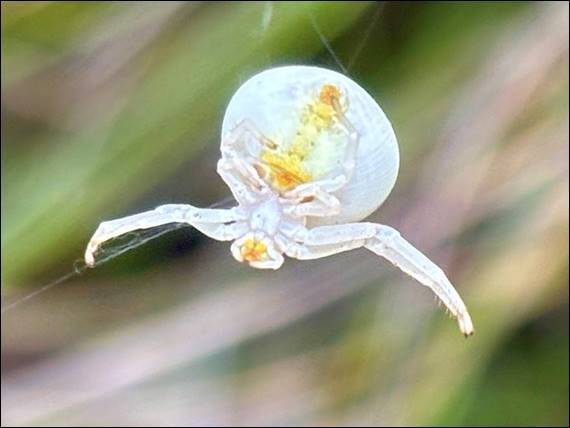
The Greek prefix xantho is an old word meaning yellow or golden, while gaster means belly or stomach. I was hoping to find something else yellow, or more precisely custard, coloured. Sadly the Custard Sun Orchids I spotted just before my car started to play up were all gone, not even a shrivelled up stem remained. So I came away with very few images, one being of this Woodbridge Poison (Isotoma hypocrateriformis). In 1840, this plant was blamed for stock losses, believed to be due to them eating a toxic plant. This one, which is actually toxic:

James Drummond jumped to this conclusion when it resembled a toxic European plant. They trialled various plants on livestock, and it is said even a dog died after eating the meat of livestock that didn’t fare so well from this approach. Through the trail they deemed Woodbridge Poison was not the culprit, and it was a pea-flowered plant in the genus Gastrolobium. There is however literature to say Woodbridge Poison can be a lethal risk to livestock if eaten. Containing fluoroacetate, which is used to manufacture the poison 1080:
Fast forward to Friday morning, when Howsie and I were indulging in our own poison. A phrase used to mean the negative consequences resulting from one’s own actions or choices. Before we get to that, and as Howsie kicked off the proceedings, I was busy trying to get images of yet another ridiculously small spider. I have included an image of the Australian Dewdrop Spider (Argyrodes antipodianus) before, again from Welly Dam. This was several years back https://sandbagged.blog/2023/11/04/another-long-goodbye/:
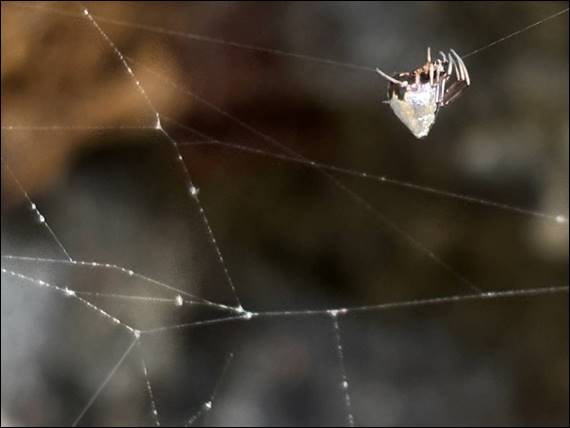
Check the previous post to find out a bit more about this kleptoparasite species. They only grow to 2-3mm, and are easily identified by their silvery metallic looking abdomens. Said to typically have legs that are light brown with darker tips, which the specimen last time certainly displayed. But not todays find. The above spider looks to have a metallic abdomen and legs, maybe a trick of the light but I’m not convinced. I do however believe that the spider in the previous image was a female, while the above is a male having a smaller abdomen:
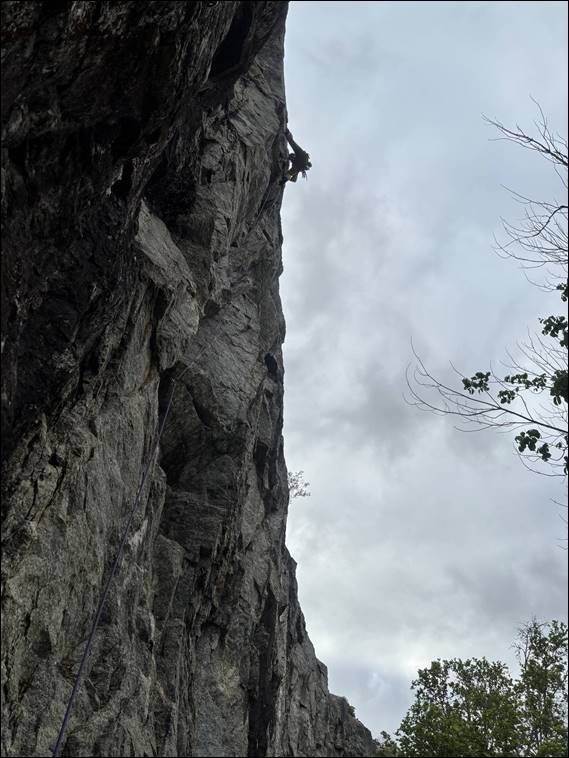
Today we stuck to the big walls. There was no sneaking off to climb shorter and less taxing lines. As the sky above shows it was a grey day, hence why I am not so sure the light had played tricks when I took images of the spider. And once the games began there were only pictures of the spidermen on the walls. It felt chilly when we arrived, and it struggled to reach double digits. This meant it took several routes to really get moving freely. It was not until we bagged the last two, of our customary six lines for a before work climb, that I was warming up:

Being sensible I took my harness off, as Howsie rapped off the last line. So as to avoid the temptation of tying in for ‘just one more climb’. I think he was relieved While my body felt like it was just getting into the swing of it, his was wearing down and saying that it was time to call it. After all, Howsie had to get back to the office and make it through a day of work. I meanwhile had the day off. In part as I am watching my hours but also because I purposely work the hours to allow me to have a nine day fortnight:
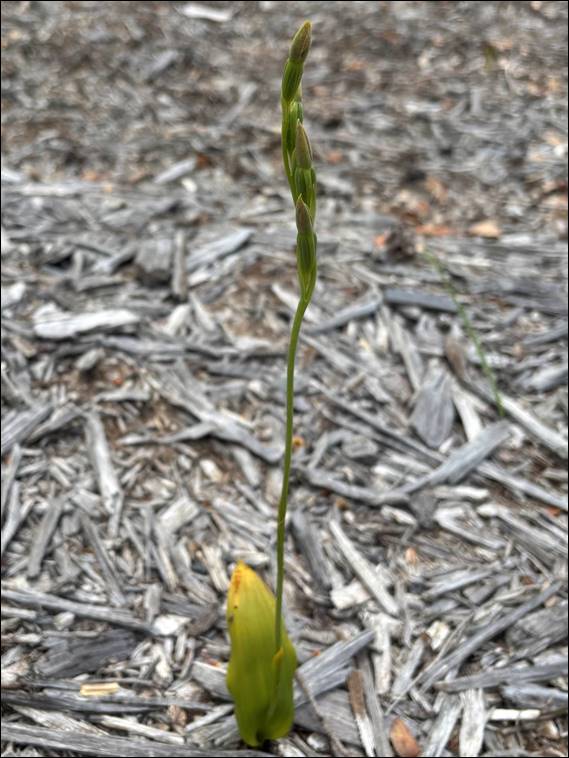
As we started the drive out I spotted a Leopard Orchid (Thelymitra benthamiana). Still yet to flower, unlike the ones at Manea Park that were all done and dusted way back. This species can bloom anywhere between September to December, and I guess the cooler than average spring weather has resulted in a few plants waiting that bit longer. This find got my mind thinking about where I could pop into, before I headed home to get on with a few domestic duties. Plumping for the Minninup Tuart Woodland to see if there was anything left to see:

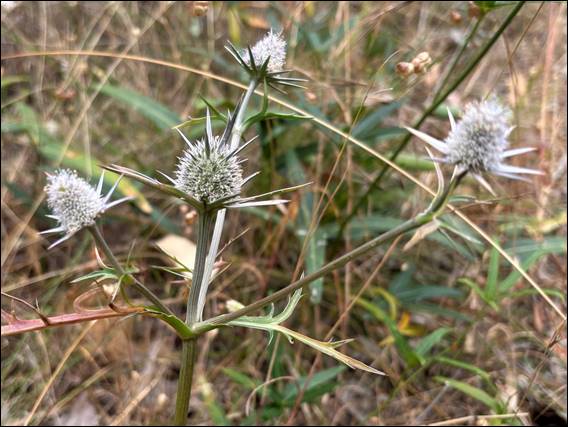
During my one and only trip here https://sandbagged.blog/2025/10/02/a-sticky-ending/, which proved very fruitful, our guide had hinted at a November flowering orchid being present. As with other recent places some nice plants were out, but I saw no orchids to start with. The above Narrowleaf Mulla Mulla (Ptilotus drummondii) really caught my eye, and initially I thought I had found a type of thistle like weed below. It is however known as Blue Devils (Eryngium pinnatifidum), and is endemic to the south-west of Western Australia:
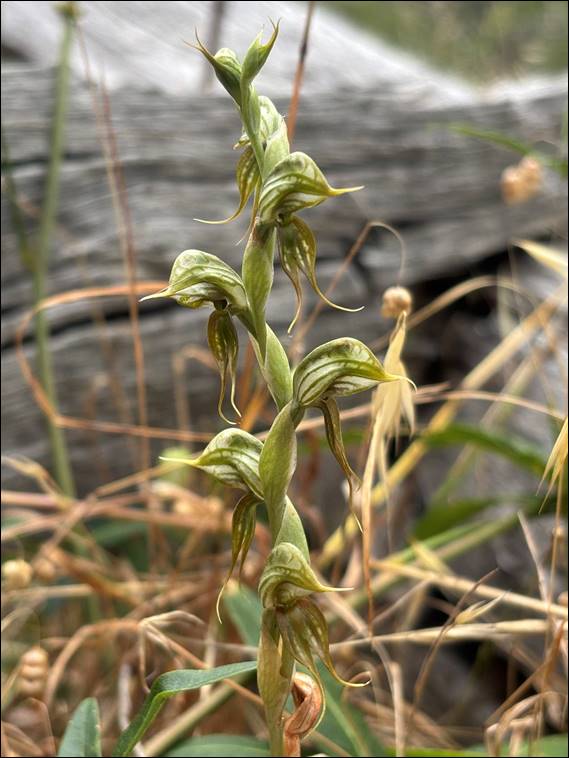
And as hinted to above, I did find something. A repeat find or so I thought. But turning out to be a first time sighting for me, of a Tuart Rufous Greenhood (Pterostylis frenchii). Going to show that looks can be deceiving, just like the above find. This is a later flowering species of the eighteen variety of rufous greenhoods in my orchid book. It was a great find, being classified as Priority Two under the Western Australian Biodiversity Conservation Act 2016. This means it is poorly known and only found in one or a few locations, this now being one:
 Sandbagged