It felt a little too blustery and wet for a solo trip to touch rock. In these conditions I would have been more motivated if someone else had shown an interest, but that was not the case. Instead, in part as I had accepted the challenge, I spent an hour or two checking out the Capel Nature Reserve. It felt like a role reversal from yesterday at Manea Park. Pink Enamel Orchids (Elythranthera emarginata) were popping up more frequently than the Bushy Boronia (Boronia fastigiata). This time however it is the latter that made the image cut:
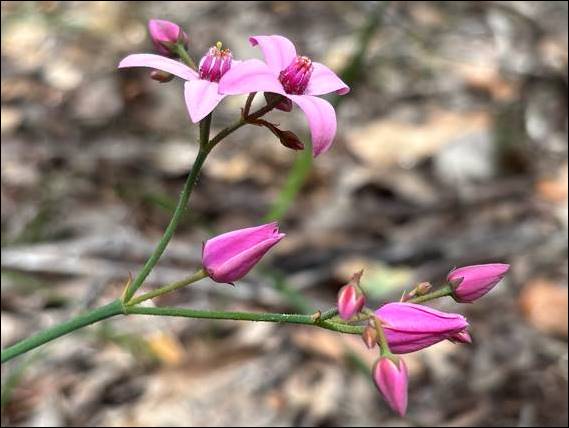
This pretty native is part of the citrus, or Rutaceae, family. A family of plants that generally have flowers with a strong scent. Bushy Boronia is no different, exuding a sweet citrus-like fragrance. However, quite a large portion of the population would not be aware of this. The medical term anosmia describes a complete loss of smell and can also include an impact on taste. And Boronia anosmia is a specific alignment related specifically to the fragrance of Boronia flowers, and a surprising eighth to fifth of the population is affected by it:
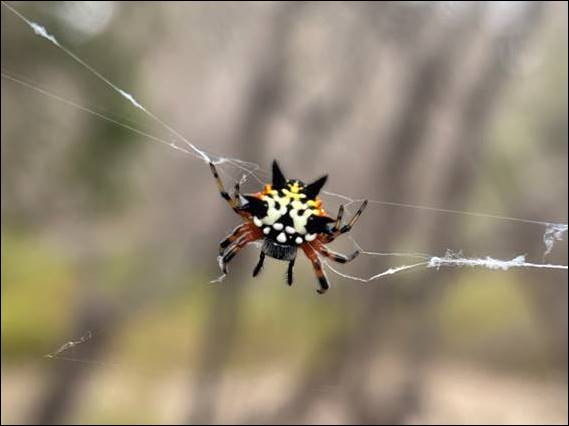
The above image, and a few others in this post, is a little out of focus. As I mostly take my images with a phone, I’m not apologising. The tiny spiders at approx. 10mm wide are hard to focus on at the best of times, and even more so when it is windy. The true common name is a Jewel Spider (Austracantha minax subsp. minax), for the obvious reason. The origins of the names are worth a mention. The genus coming from the Latin auster and Greek ákantha, meaning south and thorn, and species from the Latin mināx meaning jutting out or projecting:
The more widely used common name is however the Christmas Spider. They are about all year but unlike most spiders, which will remain active during the cooler and wetter months, these are more active when things heat up. They are quite social and form groups, often sharing webs to catch prey. Looking like a string of decorations hanging mid-air, and there were lots of them out today. The females grow to 12mm and, as is common, the males are smaller at a mere 5mm. I had to keep an eye out as I walked to avoid collecting them:
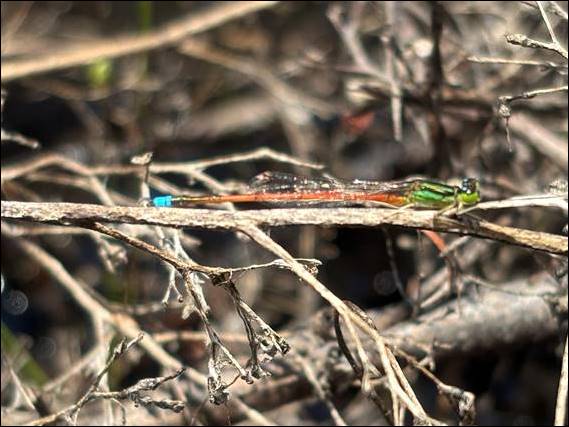
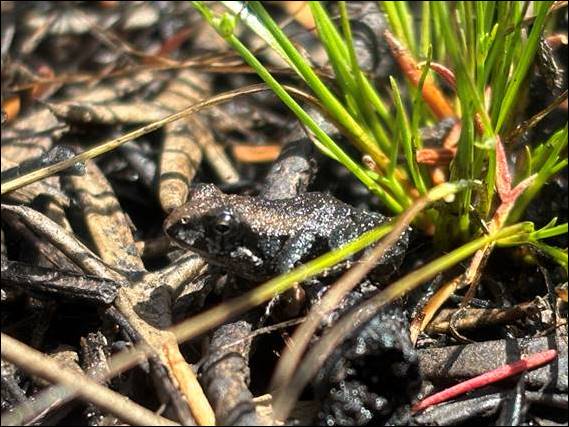
Today I went to the wetlands area. Not surprisingly, after the rainfall we’ve had this year that has continued long into spring, there was plenty of water about. As such I had to watch my path ahead as well as where I was putting my feet. I gave up trying to avoid getting wet feet, but every so often I’d see things rapidly moving away. Loads of ting froglets, with a body no bigger than my thumb nail were frantically getting out of my way. Too difficult to even try and identify, while the Aurora Blue-Tail Damselfly (Ischnura aurora) was an easy identification:
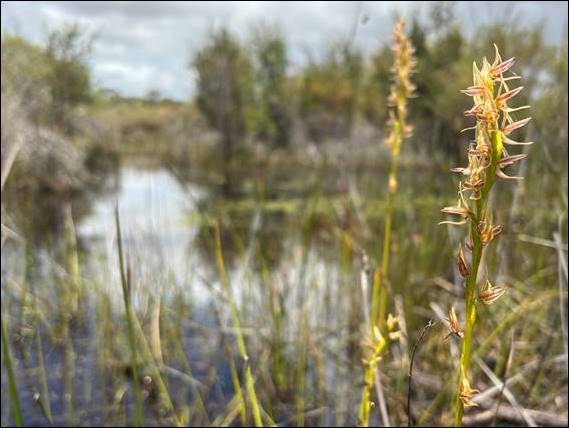
Quite an apt find considering the recent aurora events we’ve experienced. I found lots of males displaying their a stunning array of colours and just a few females, which are a pale grey. Trudging through the water another apt find was the Swamp Leek Orchid (Prasophyllum drummondii), shown above. Often found growing in standing water, as it was today, and worth getting my feet wet for. This is a species I do not recall seeing before so a good find, and today there were hundreds out. There was however only one of these:
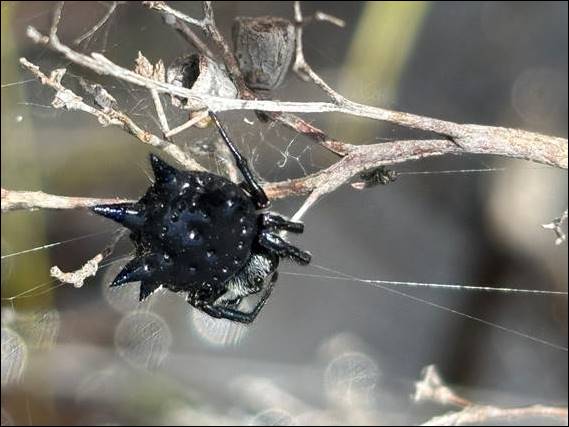
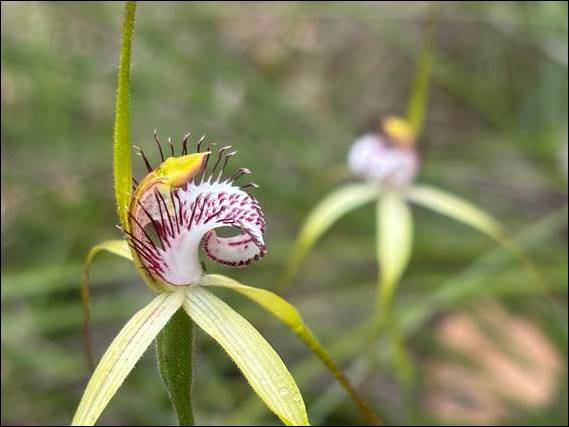
A completely black Christmas Spider, which is called a melanistic form. This occurs as a result of a the birth defect, when too much melanin pigment is generated in an organism resulting in a dark form specimen. This is the opposite of an albino, which has little to no melanin pigment. Following on with the Christmas theme, I was extremely lucky to stumble on a patch of three Christmas Spider Orchids (Caladenia serotine). It felt like a present. They were the only ones I found and I can now say, again the words of Barney Stinson, ‘mission completed’:
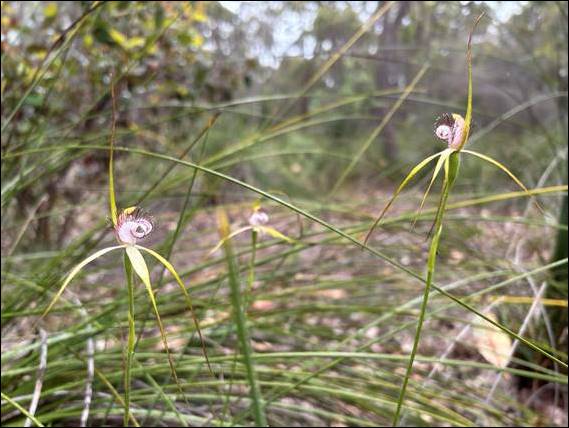
Confused by some with the White Spider Orchid (Caladenia longicauda subsp. longicauda), this species however flowers later and holds its petals and sepals more stiffly. The wander had a distinctly festive feel to it, making me think of the words blared out in Slade’s ‘so here it is Merry Christmas’, which is almost the case. The first serious contest to bag the top of the charts on Christmas day was in 1973. Two bands made a conscious decision to get there. One was Wizzard who released ‘I Wish It Could Be Christmas Everyday’, but Slade pipped them:
 Sandbagged