I’m pleased that Howsie and I headed to the Dam on Friday for a climb. As despite finally having the car back in operation, the opportunities to get out this weekend became limited for other reasons. Another cold front, with lightning and thunder, started to sweep across the south west from the early hours of Saturday; threatened to continue till Monday. In addition pre-planned social stuff meant that Saturday was out also. That said I did squeeze in a quick walk at Manea Park, before needing to hit the road north to the big smoke:
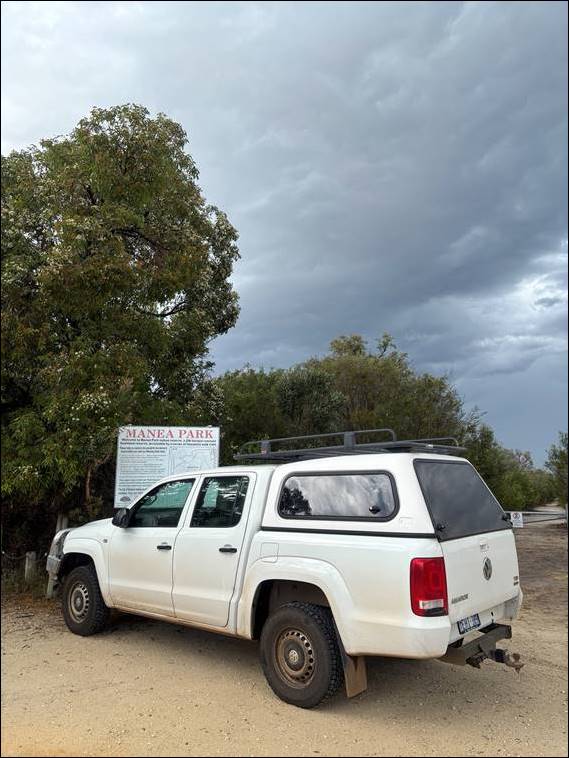
Before we headed north I dropped Lisa off in Bunbury for a massage, and then drove straight towards the darkening clouds. Fortunately, they skirted to the south allowing me a wander in the dry. Not expecting to see much on the orchid front, it was lovely just to back in nature. Below are Drumsticks (Dasypogon bromeliifolius), a small shrub growing to 30cm. Some literature I have found suggest they are also known as Pineapple Bush. This is however the common name for Dasypogon hookeri, another shrub but one that reaches heights of 3m:
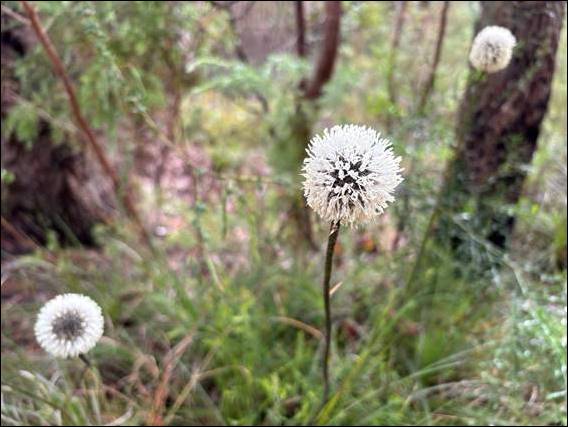
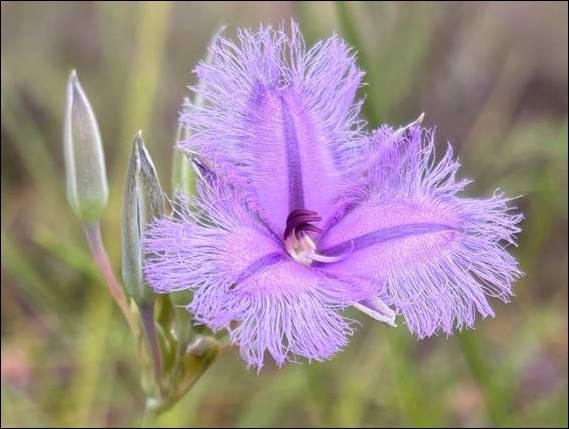
The genus name Dasypogon coming from Greek words dasys and pogon, meaning thick with hair or rough and beard. Used to describe the flower heads, of the three species that are all endemic to Southwest Australia that are similar looking. Next up is a Many-Flowered Fringe (Thysanotus multiflorus), again endemic to the Southwest Australia. There are approx. 50 species are found in Western Australia, nearly all of which being native. This one is most commonly found, hence also known as the Common Fringe Lily but also the Purple Fringe Lily:
The upper canopy also had splashes of colour, with many Candlestick Banksia (Banksia attenuate) out in bloom. Flowering from as early as September they are considered a sign of spring in the Perth region. The flowers can still be around as late as February, providing a food source for a wide range of creatures. From insects to birds, as well as mammals including the Honey Possum (Tarsipes rostratus). These small possums are the only marsupials that feed on nectar, not honey as the common name suggests, making them an important pollinator:

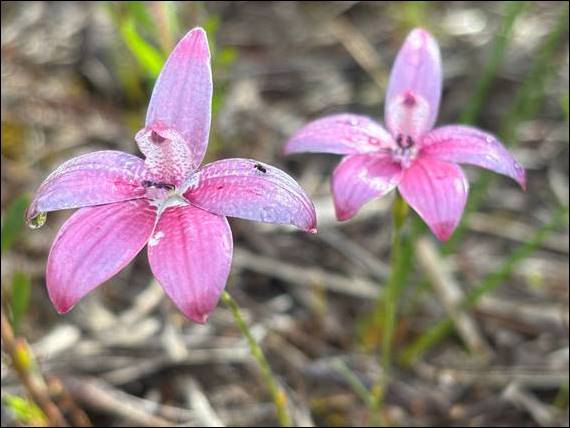
Honey Possum’s are pretty high on my list of mammals to see. And while I kept an eye out for any signs of movement on the bright yellow candlesticks my hopes were not high, as they generally emerge at dusk and feed at night. In the shade of the trees to the right in the image below is one of many Bushy Boronia (Boronia fastigiata) I found in flower. Seeing so many of these small pink flowers, I almost didn’t pay any attention to the two pink flowers near the base of the image that are Pink Enamel Orchids (Elythranthera emarginata):
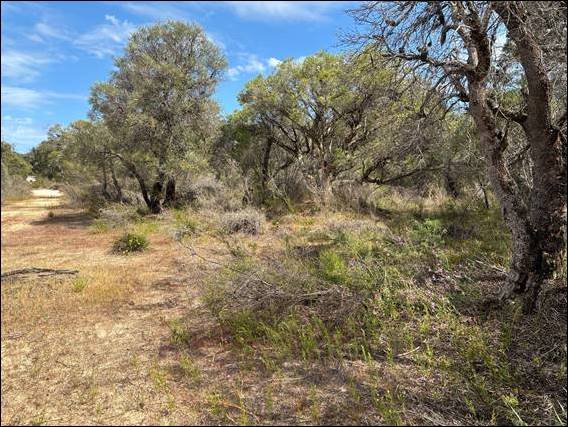
A late flowering species that can be found from October to December, and a great find as they are the first ones I have seen at Manea. Finding three flowering plants all up. There were also Common Mignonette Orchids (Microtis media subsp. media), which can be found in flower across five months from September to January. And the Slipper Orchids (Cryptostylis ovata) were starting to form buds, with a flowering period that starts later from November to February. There is another late flowering species of spider I’ll have to keep an eye out for:
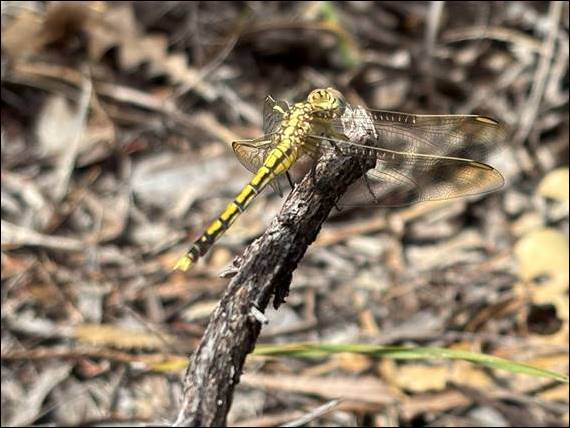
Aptly named the Christmas Spider Orchid (Caladenia serotina), of which there is a single recorded observation at the Capel Nature Reserve. In the words of Barney Stinson ‘challenge accepted’. My last find at Manea was a Female Blue Skimmer (Orthetrum caledonicum). When they emerge from the nymph they all have yellow with black makings. Females mostly stay that way, while the males turn blue as they mature. The name skimmer however relates to a two flanges near the tip of the females abdomen, used to scoop water when laying eggs:
Much later that day on the last stretch home, after Lisa and my trip to the big smoke, a mob of magpies were harassing what looked like a monitor. Going back we found not a monitor but a Southwestern Snake-necked Turtle (Chelodina oblonga). Called a turtle but technically a terrapin, and the species name has also been subject to debate. In 2006 the International Commission on Zoological Nomenclature ruled the northern and southern species were oblonga and colliei, this was then changed in 2020 to rugosa and oblonga:
 Sandbagged